What Is the True Cost of EV?

Standard

The battery electric vehicle (EV) versus the internal combustion engine (ICE) powered debate is one of the most irrational of our time. On both sides of the discussion, you have those frothing-at-the-mouth types who attack the moment you disagree. And this is exactly the response that I got after I had casually mentioned that ICE is 1/3 the cost under a click-bait post…

Model Y starts at $43,990 FYI.

One just called me ignorant, but others tried to make an argument, including this response:

I’m trying to figure out what car cost 1/3 of the price of a Tesla🤔🤔? The long range Model 3 (the one you want for a roadtrip) is $42,500 – $7500 tax credit is $35,000. This is not factoring in gas savings. Please tell me what new car is availability for under $12,000 (that’s the 1/3 cost of a Tesla you mentioned)?

Fair enough question.

Note, I never said new, but assuming that I did…

Believe it or not, and even in this inflationary age, there are still reliable sedans that come in under $20,000. Starting with a Mitsubishi Mirage G4 ($18,500), the Kia Rio ($17,875), and the Nissan Versa ($17,075), the lowest-priced option is half of even the subsidized price of the Tesla base model.

But you can’t exclude the subsidy from the cost of the EV, the government doesn’t have a magic wand to create value and we all end up paying for their expenditures in our taxes or by inflation due to money printing. And it only begins with that “tax credit” (so-called) given directly to privileged people who can afford a new luxury car.

What is the true cost of subsidies?

According to a study by the Texas Public Policy Foundation, the cost to us is nearly $50,000 for every EV produced:

Federal and state subsidies and regulatory credits for EVs totaled nearly $22 billion in 2021, or nearly $50,000 per EV, socializing the true cost of these vehicles to taxpayers, utility ratepayers, and owners of gasoline vehicles

Tens of billions of dollars have been spent trying to make EVs viable, and yet still the average cost of these vehicles is $65,000, compared to $48,000 for ICE. Why haven’t these subsidies leveled the playing field? It is simply the fact that batteries require tons of extra material and a much more complex process to produce.

So we can at least double that visible “tax credit” subsidy and already the true cost of an EV is close to three times a comparable ICE sedan.

We could stop there—the 1/3 number reached—but let’s continue…

What is the true cost of production?

The cost of a vehicle isn’t just the window sticker price or the money that it takes to manufacture. The bigger question—given the reason many say we should switch to EVs is about emissions—is what the increased environmental impact is of producing the batteries that go into these cars. Is this a trade-off we are willing to make?

Lithium batteries are costly, they require an enormous amount of water and also leave a toxic legacy that will grow exponentially as EV is adopted. Is it worth this cost to only marginally reduce carbon emissions?  That is to say, around 17-30% less emissions according to European Energy Agency? 

Sure, it could get better with a heavy investment in electrical generation and transmission—yet that is another huge cost financially and environmentally…

What is the cost of infrastructure demand?

This is where the conversation is the most interesting. We have the refining capacity and distribution network already built for ICE vehicles. Gasoline and diesel fuel have the advantage of being energy-dense and can be moved around using the existing highways. But what about EVs?

There is an illusion that comes with plugging something in. The load we put on the system is invisible. But there is no magic to it. Electricity is something that must be produced somewhere and then transmitted to the charging stations. If everyone adopted EV technology the grid would collapse.

We’re currently nowhere even near what it would take in capacity to convert everyone to EV. The easiest route to more electrical generation is to go anuclear. So how many new nuclear power plants would it take? Well, if we use miles driven and the number of cars on the road today, then we would need to build 250 additional nuclear power plants as big as the largest plant in the US, and the supporting infrastructure to keep up with this demand.

So are you willing to have a Palo Verde in your own backyard?

It cost 5.9 billion dollars to build one in 1988 (the equivalent of 13.9 billion in 2023) and we needed to start building 250 of them yesterday.  The solar and wind equivalent would be even more costly to build and maintain.

The costs would be astronomical and that’s just considering only passenger vehicles. Switching Class 8 trucks would take even more of these massive power plants and spending—the cost of switching would be insane.  Not to mention you would need more trucks to do the same work as you did with diesel.  And remember, every dime that we spend on this mass EV conversion could go to health care or education instead.

Can you now see how extremely costly EVs will become as they are adopted?

But it does not end there…

Why is the cost of wear items greater?

Batteries are heavy and weight is the enemy of “wear items” like brakes or tires—which is not to mention the additional damage to the highway infrastructure.
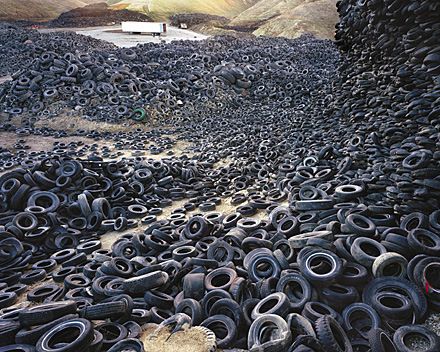
EV tires wear 20% faster than comparable ICE vehicles.  That is a cost out of your own pocket and also a concern for the environment. And do not forget, to be safe you’ll need those heavy-duty EV-specific tires. Sure, maybe this is not a very big problem for those who can already afford the premium cost of a new EV?  However, for that waitress struggling to make ends meet she will have to make the choice between safety and home utilities.

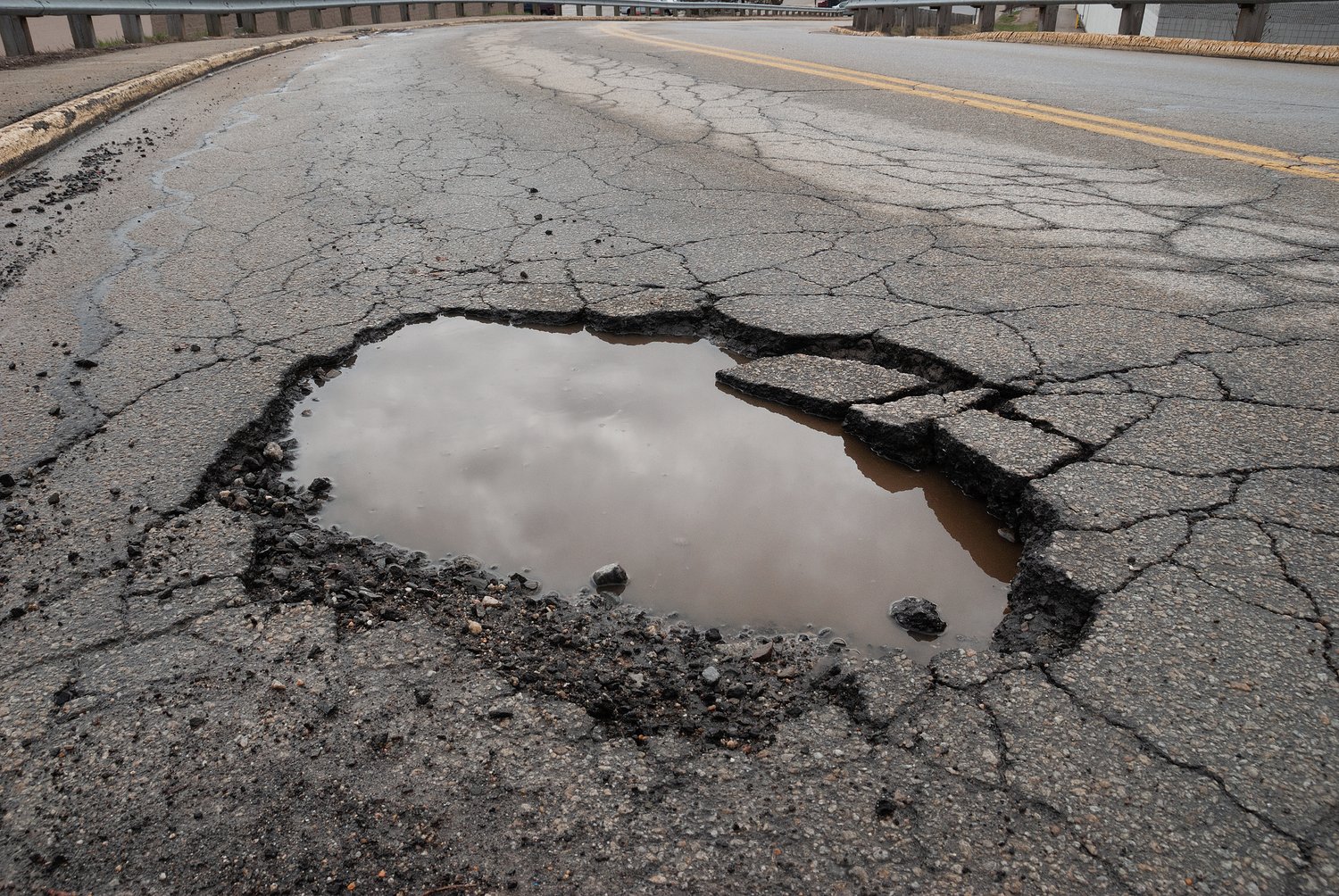
Next up is excess road wear.  Big trucks are obviously the leading cause of damage to roads. However, EV proliferation will start to cause problems for existing infrastructure:

A 6,000-pound vehicle causes more than five times as much road damage as a 4,000-pound sedan. A GMC Hummer EV, which weighs 9,063 pounds, will cause 116 times as much road damage as a Honda Civic, weighing 2,762 pounds.

The article cited above isn’t about EVs yet does apply given it is about the vehicle weight. Even the Model 3 is a whopping 3,862 to 4,054 lbs. Sure, one vehicle is not going to do a whole lot by itself, but the volume over time will significantly impact bridges and parking garages that were designed for lighter ICE vehicles. This EV vehicle weight bloat caused by batteries will require very costly upgrades to prevent catastrophic failures—like the Ann Street Building Collapse:

Speaking of disasters. With EV there is potential for a thermal runaway or reaction that can’t be stopped—like an ICE fire—by simply denying the source of oxygen. This hazard will result in more damage to road surfaces, more time spent in traffic jams after incidents, and additional toxic emissions. This is a cost to be seriously considered with all of the others.

Cost of time, capability, and resale value…

Many of the costs and drawbacks of EVs are hidden under a pile of subsidies or are moved upstream like the emissions—out of sight out of mind.

But what cannot be ignored is performance in terms of range. Time is by far our most valuable resource and nobody wants to spend hours in a place they don’t want to be because their vehicle battery is drained.

As far as capabilities, even EV trucks are useless for towing, both the Tesla Cybertruck and the Ford Lightning—both costing around $100,000 in the higher trim levels—aren’t so good at doing typical truck things. Sure, they produce a ton of low-end torque and are very fast. But the F-150 EV only went 90 miles pulling a camper and the Tesla only fared a little better.
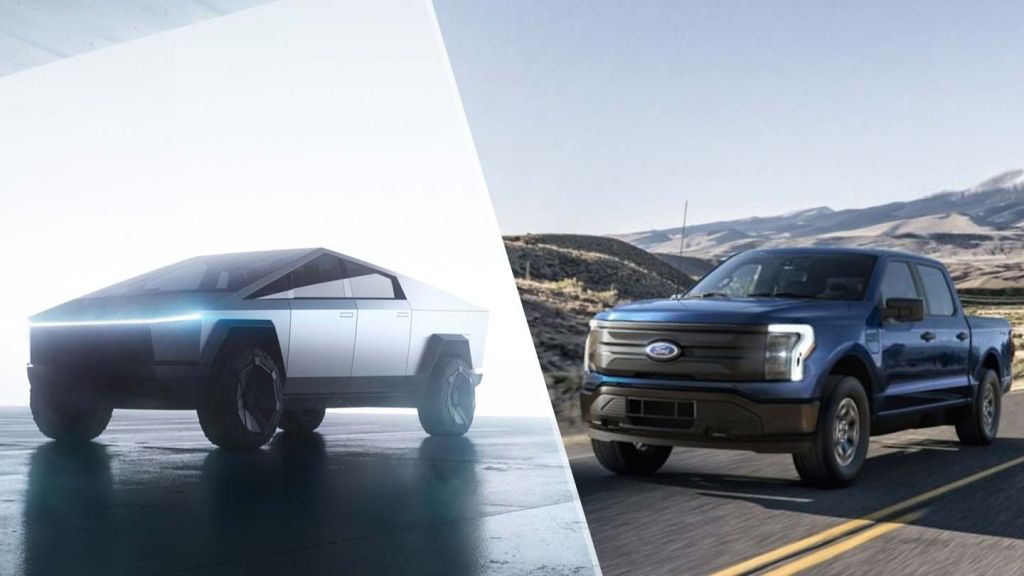
7000lb luxury land yachts

And finally, we need to talk about plunging resale values. For a while EV was a novelty, the “way of the future” every suburban geek needed to virtue signal. But it appears that this is now starting to fade and reality is starting to take over again—46% of EV owners in the US plan to ditch EV to return back to ICE—and many will not recoup their cost because the floor is dropping out for used EVs:

A recent study from iSeeCars.com showed the average price of a 1- to 5-year-old used EV in the U.S. fell 31.8% over the past 12 months, equating to a value loss of $14,418. In comparison, the average price for a comparably aged internal combustion engine vehicle fell just 3.6%.

That’s bad news for the EV industry.  That is probably why Ford, after losing billions on their EV investments, has made plans to pivot back to hybrid.  Toyota, ever conservative, never made the mistake of getting sucked into the EV mania.  My wife’s C-Max (hybrid) has no range anxiety, saves fuel, and has a plug-in version that can go on battery for a length of a commute.  This is the right compromise.

ICE costs less to build, but the hybrid will likely emerge as the winner for being the best of both worlds. It has range like ICE, and torque like an EV, while also keeping its value and not requiring vast new expenditures to upgrade the electrical infrastructure. If costs are reflected in the market hybrid will come out victorious in the end.  Some can afford EVs today, but only because others are absorbing more than half of the real costs.

As a footnote, I’m not opposed to EVs nor do I think they are destined to go extinct. If resale values continue to drop I would even consider owning one. The whole point of this article is simply to give a bit of pushback against the Pollyannaish sentiments that would lead to an ill-advised mandate. There would be an enormous cost, and opportunity cost, that would come with this. Just the fact that EVs need massive subsidies to be sold should tell us enough. If it isn’t viable in the market it isn’t viable.

“All We’re Saying Is Give Peace A Chance”

Standard

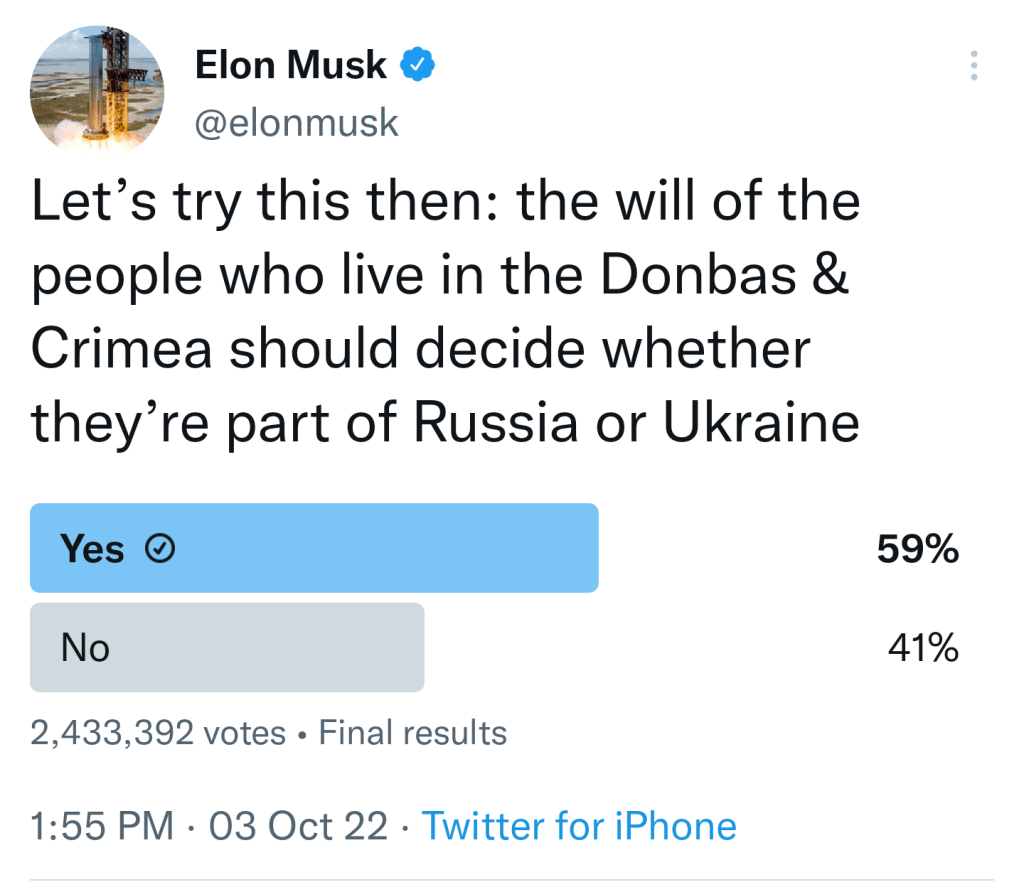
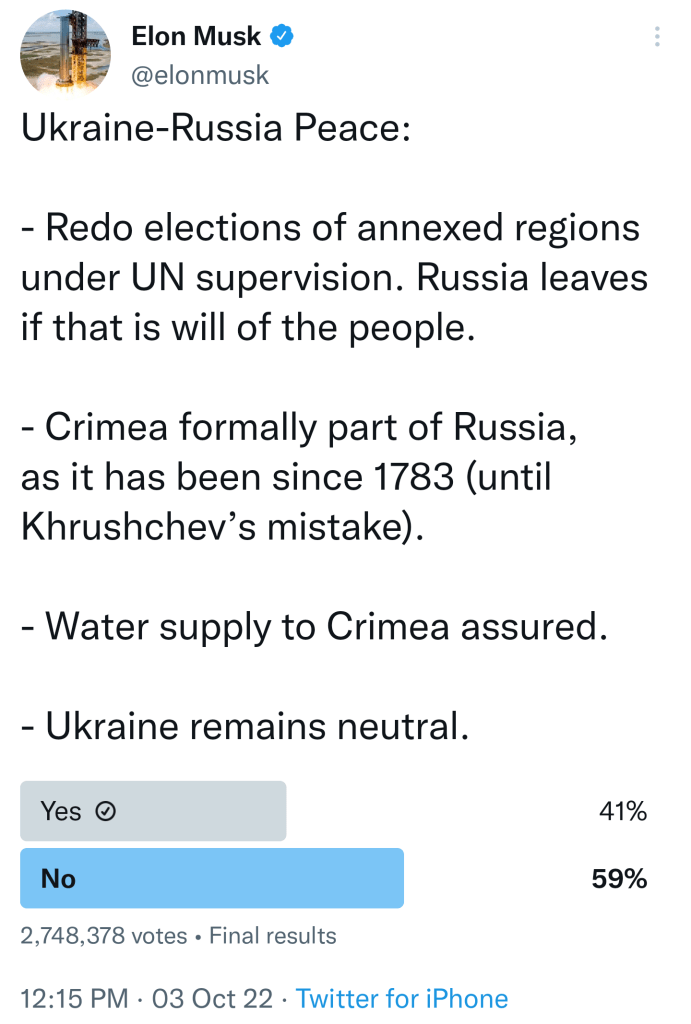
Elon Musk did what he does best and that is he disrupted the status quo.  This time he took on the conventional argument that the war over Donbas must be fought to the very last Ukrainian.  

His Tweets:

If you thought Trump was a mean Tweeter, you should see some of the nastiness in response to these polls.

Of course, social media midwits everywhere, full of sanctimony and rage, took to their usual easy explanation of any perspective that challenges their own: Musk is an idiot or Putin’s puppet and certainly doesn’t have the credentials to comment on geopolitics!  

And yet Musk’s own call for resolution very closely mirrors that of Henry Kissinger from months ago who called for the government of Ukraine to come to the negotiating table and be willing to cede territory for sake of peace.  

This is from an editorial written back in 2014:

The West must understand that, to Russia, Ukraine can never be just a foreign country. Russian history began in what was called Kievan-Rus. The Russian religion spread from there. Ukraine has been part of Russia for centuries, and their histories were intertwined before then. Some of the most important battles for Russian freedom, starting with the Battle of Poltava in 1709, were fought on Ukrainian soil.

(“Henry Kissinger: To settle the Ukraine crisis, start at the end,”Washington Post)

Kissinger, a diplomat of diplomats, former Secretary of State, and a renowned foreign policy expert, is no slouch when it comes to geopolitics, and that his sage advice was so quickly dismissed says more about the true lack of understanding and blind fanaticism of the hardliners.

It seems that some are plain vengeance driven and would rather punish Russia than find a way to peace that would end the destruction and save countless lives.  

They are either a) products of Western propaganda who knew next to nothing of the complex regional history and brutal shelling by Ukrainian partisans for eight years prior to the Russian intervention or b) Ukrainian nationalists who looked the other way when ethnic Russians were murdered in Odessa and then sought to impose their will on Donbas.

Musk and Kissinger, along with Emanuel Macron who warned not to humiliate Russia (as was done to Germany after WW1 and led to WW2), are only saying what an informed and responsible person should say when seeing an escalation that very well could lead to nuclear war.

The Boomer warmongers, the hawks like neocon Lindsey Graham or imperial-lib Joe Biden, are still very much stuck in the Cold War and would not think twice about sacrificing your sons or daughters for their latest power trip.  

They don’t tell you about how they personally profited from provoking a coup in 2014, like their predecessors did in pre-revolution Iran and all across South America.  

The United States has meddled in all parts of the world, both in form of covert CIA destabilization efforts to the too numerous to list overt brutal military invasions and occupations.  The political establishment and military leaders of the West have never thought twice about bombing those who do not submit back to the Stone Age:

The racial dehumanization of the Vietnamese found its classic expression in the words of General Curtis LeMay, head of the Strategic Air Command, who said that America’s aim must be to “bomb the Vietnamese back to the stone age.” And Washington tried to do just that: From 1965 to 1969, the U.S. military dropped 70 tons of bombs for every square mile of North and South Vietnam — or 500 pounds for each man, woman, and child.

(“Bomb them back to the stone age: Racism, genocide and denial at the heart of the American Way of War,” Milwaukee Independent)

Of course, this was done in the name of “democracy” and “freedom,” which justifies all violence, right?

Anything said about Putin is a projection. The war in Ukraine is not completely unprovoked, as our own propaganda says. No, it is the direct result of the US and NATO interfering in Ukrainian’s domestic politics. Back in 2014, the late Senator John “bomb bomb Iran” McCain, along with our current Under Secretary of State, Victoria Nuland, planned who would replace Ukraine’s President *before* he was overthrown in a coup.

The US only like democracy so much as the votes are counted our way and freedom so long as it benefits our current political establishment or their sponsoring banks and big corporations—that’s just the truth.

Like the jeering of our American hypocrisy by Serbian soccer fans—who saw their own country partitioned after NATO took the other side of the conflict, that of the separatists—holding a banner listing the dozens of places the US has attacked, invaded and occupied since the 1950s: All we’re saying is give peace a chance.

The world sees it, why don’t we?

Dangerous Complexity: What To Do About the Complex Problem of Complexity?

Standard

Air-travel has become safer than ever and that due, in large part, to the increase in automated systems in the cockpit. However, with this advanced technology there comes a downside and the downside being that an otherwise perfectly functional aircraft (I.e., mechanically sound) with competent operators, can be lost because of a small electronic glitch somewhere in the system.

This issue was discussed, at length in response to the crash of Air France flight 447, an Airbus A330, in 2009, when an issue with an airspeed indicator and automated systems led to pilot confusion—which, in the end, resulted in a plunge into the ocean and the loss of all 228 people on board. The pilots were ultimately responsible for not responding in the correct way (they were in a stall and needed to push the nose down to recover lift) and yet the reason for their failure is as complex as the automated systems that were there to help them manage the cockpit.

It is this problem with advanced electronics that is summarized as a “systemic problem with complexity” in the quote below:

One of the more common questions asked in cockpits today is “What’s it doing now?” Robert’s “We don’t understand anything!” was an extreme version of the same. Sarter said, “We now have this systemic problem with complexity, and it does not involve just one manufacturer. I could easily list 10 or more incidents from either manufacturer where the problem was related to automation and confusion. Complexity means you have a large number of subcomponents and they interact in sometimes unexpected ways. Pilots don’t know, because they haven’t experienced the fringe conditions that are built into the system. I was once in a room with five engineers who had been involved in building a particular airplane, and I started asking, ‘Well, how does this or that work?’ And they could not agree on the answers. So I was thinking, If these five engineers cannot agree, the poor pilot, if he ever encounters that particular situation . . . well, good luck.” (“Should Airplanes Be Flying Themselves?,” The Human Factor)

More recently this problem of complexity has come back into focus after a couple disasters involving Boeing 737 MAX 8 and 9 aircraft. Initial reports have suggested that at an automated system on the aircraft has malfunctioned—pushing the nose down at low altitudes on take-offs as if responding to a stall—and with catastrophic consequences.

It could very well be something as simple as one sensor going haywire. It could very well be that everything else on the aircraft is functioning properly except this one small part. If that is the case, it certainly not something that should bring down an aircraft and would not have in years past when there was an actual direct mechanical linkage between pilot and control surfaces. But, now, since automated systems can override pilot inputs and take away some of the intuitive ‘feel’ of things in a cockpit, the possibility is very real that the pilots simply did not have enough time to sift through the possibilities of what was going wrong enough to diagnose the issue, switch to a manual mode, and prevent disaster.

The FAA, following after the lead of China and the Europeans, has decided to ground the entire fleet of Boeing 737 MAX 8 and 9 aircraft pending the results of the investigations. This move on the part of regulators will probably be a big inconvenience for air travelers. Nevertheless, after two incidents, and hundreds dead, it is better to take the precaution and get to the bottom of the issue.

https://twitter.com/realDonaldTrump/status/1105471621672960000

President Trump’s off-the-cuff Twitter response, basically stating “the complexity creates danger,” was met with the usual ridicule from those who hate the man and apparently do not understand hyperbole. (It ironic that some, who likely see themselves as sophisticated, have yet to see that through Trump’s putting-it-in-simple-layman’s-terms shtick.) However, technically incorrect is not the same as totally wrong and there is absolutely nothing ridiculous about the general point being made—there are unique (and unforeseeable) problems that come with complex systems.

The “keep it simple, stupid” mantra (aka: KISS principle) is not without merit in an age where our technology is advancing beyond our ability to control it. If a minor glitch in a system can lead to a major disaster, that is dangerous complexity and a real problem that needs to be addressed. Furthermore, if something as simple as flight can be made incomprehensible, even for a trained professional crew, then imagine the risk when a system is too complicated for humans alone to operate—say, for example, a nuclear power plant?

Systems too complex for humans to operate?

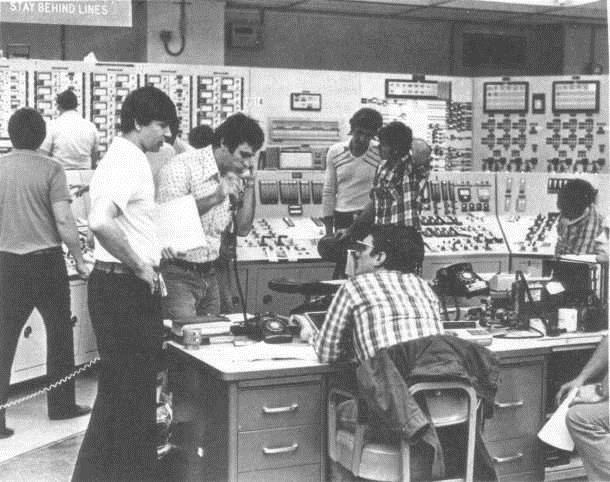
On the topic of dangerous complexity, I’m reminded of the meltdown of reactor two at Three Mile Island and the series of small human errors leading up to the big event. A few men, who held the fate of a wide swath of central Pennsylvania in their hands, made a few blunders in diagnosing the issue with serious consequences.

Human operators aren’t even able to comprehend the enormous (and awful) potential of their errors in such circumstances—they cannot fear to the same magnitude or to the proportion of the possible fallout of their actions—let alone have the ability to respond correctly to the cascade of blaring alarms when things did start to go south:

Perrow concluded that the failure at Three Mile Island was a consequence of the system’s immense complexity. Such modern high-risk systems, he realized, were prone to failures however well they were managed. It was inevitable that they would eventually suffer what he termed a ‘normal accident’. Therefore, he suggested, we might do better to contemplate a radical redesign, or if that was not possible, to abandon such technology entirely. (“In retrospect: Normal accidents“. Nature.)

The system accident (also called the “normal” accident by Yale sociologist, Charles Perrow, who wrote a book on the topic) is when a series of minor things go wrong together or combine in an unexpected way and eventually lead to a cataclysmic failure. This “unanticipated interaction of multiple factors” is what happened at Three Mile Island. It is called ‘normal’ because people, put in these immensely complex situations, revert to their normal routines and (like a pilot who has the nose of his aircraft inexplicably pitch down on routine take off) they lose (or just plain lack) the “narrative thread” necessary to properly respond to an emerging crisis situation.

Such was the case at Three Mile Island. It was not gross misconduct on the part of one person nor a terrible flaw in the design of the reactor itself, but rather it was a series of minor issues that led to operator confusion and number of small of mistakes that soon snowballed into something gravely serious. The accident was a result of the complexity of the system, our difficulty predicting how various factors can interact in ways that lead to failure and is something we can expect as systems become more and more complex.

And increased automation does not eliminate this problem. No, quite the opposite, it compounds the problem by adding another layer of management that clouds our ability to understand what is going on before it is too late. In other words, with automation, not only do you have the possibility of mechanical failure and human error, but you also have the potential for the automation itself failing and failing in a way that leaves the human operators too perplexed to sort through the mess of layered systems and unable respond in time. As the list of interactions between various systems grows so does the risk of a complex failure.

[As a footnote, nuclear energy is cleaner, safer and far more reliable than wind and solar farms. And, in the same way, that it is safer to fly than to drive, despite perceptions to the contrary, the dangers of nuclear are simply more obvious to the casual observer than the alternatives. So, again, with the fierce opposition to nuclear power by those who are unwittingly promoting less effective and more dangerous solutions, the human capacity to make good decisions when faced with the ambiguous problems created by the interaction of various complex systems does certainly come into question.]

Has modern life become dangerously complex?

There is no question that technological advancement has greatly benefited this generation in many ways and few would really be willing to give up modern convenience. That said, this change has not come without a cost. I had to think of that reality over the past few weeks while doing a major overhaul of how we manage information at the office and considering how quickly years of work could vanish into thin air. Yes, I suppose that paper files, like the Library of Alexandria burned, are always susceptible to flames or other destructive forces of nature. But, at least fire (unlike the infamous “blue screen of death“) is a somewhat predictable phenomenon.

Does anyone know why the Bluetooth in my car syncs up sometimes and not always?

Or why plugging my Android phone into the charger causes my calls in Facebook Messenger to hiccup (I.e., disconnects and reconnects multiple times) sometimes but not always?

I’m sure there is a reason hidden somewhere in the code, a failed interaction between several components in the system, but it would take an expert to get to the bottom of the issue. That’s quite a bit different from the times when the problem was the rain and the solution was cutting down a few trees to create a shelter. That was also true in the early days of machines as well—a somewhat mechanically inclined person could maintain and repair their own automobiles. However, the complicating factor of modern electronics has put this do-it-yourself option out of reach for all but the most dedicated mechanics.

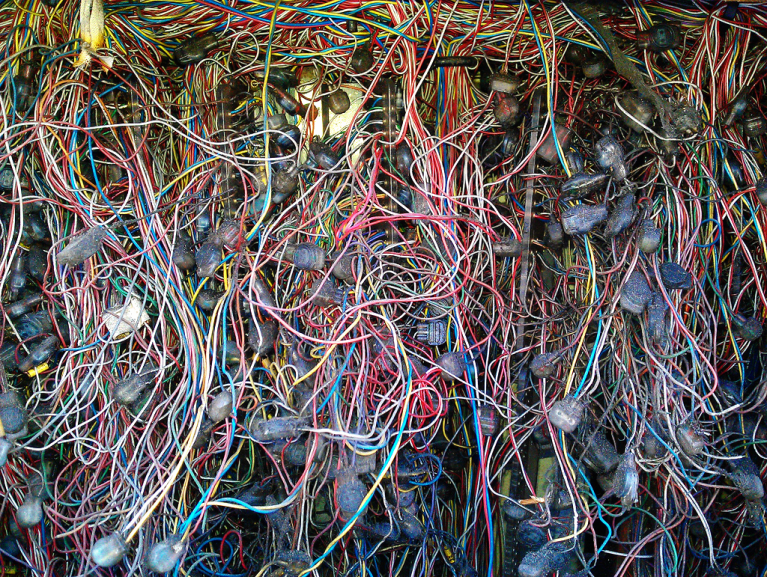
Life for this generation has also become exponentially more complex than it was for prior generations when travel was as fast as your horse and you were watching your crops grow rather than checking your Facebook feed updates every other minute. It is very easy to be overwhelmed, as individuals, by information overload. The common man is increasingly over his head in dealing with the technological onslaught. We have become increasingly dependent on technology that we cannot understand ourselves and fails spontaneously, without warning, at seemingly the most inopportune times.

Advanced modern technology represents a paradigm shift as much as the invention of the automobile was a revolution for personal transportation. We have gone from analog to digital—a change that has opened a whole new realm of possibilities and also comes with a new set of vulnerabilities as well that go beyond the occasional annoyance of a computer crash. We really have no idea how the complexity of the current system will fare against the next Carrington Event (a solar storm that caused widespread damage and disruptions to the electric grid in 1859—a time of very basic and sturdy technology) nor are we able to foresee the many other potential glitches that could crash the entire system.

It is easy to be lulled into thinking everything will be okay because it has been so far. But that is a false security in a time of complex systems that are extremely sensitive and vulnerable. As when a pilot of a sophisticated airliner fails to comprehend the inputs or like the flustered operators of a nuclear reactor when the alarm bells ring, our civilization may be unable to respond when the complex systems we now rely on fail in an unexpected way that we could not predict. It is not completely unlikely that a relatively small glitch could crash the entire system and lead to a collapse of the current civilization. That is the danger of complexity, having systems that are well beyond our ability to fix should they fail in the right way at the wrong time.

The last human invention will be too complex to control and could be our demise…

Computers far exceed the human capacity to process information. We’ve come a long way from Deep Blue versus Garry Kasparov in the 90s and the gap between man and machine continues to grow wider after our best representatives were surpassed. Yet, while vastly faster in their abilities, computers have long only been able to do what they were programmed to do and thus their intelligence is limited by the abilities of their human programmers.

However, we are on the cusp of development of this technology and the implications far beyond the finite capacity of the human mind to grasp. We could very soon couple the processing speed of a computer with a problem-solving ability similar to that of a human. Except, unlike us, limited by our brain size and relatively slow processing speed, this “machine learning” invention (a video on the progress so far) could continue to expand its own intellectual abilities.

Machine learning is a massive paradigm shift from the programmed computers we currently use. It would lead to super-intelligence beyond our ability to fathom (literally) and, any more than a monkey can control us, could not be stopped. Imagine something that is always a hundred steps beyond any scenario we could imagine and has less in common with us (in terms of raw intelligence) than we do with an ant—would it have any reason not to treat us better than bacteria?

There was a time when I would not have believed that artificial intelligence was possible in my lifetime and a time after that when I would’ve thought it is something we could control. That was naive, artificial intelligence would, at very least, be unpredictable and almost totally unstoppable once the ball got rolling. It could see us as a curiosity, solve cancer simply because it could in a few nanoseconds—or it could kill us off for basically the same reason. Hopefully, in the latter case, it would see our extermination as not being worth the effort and be on to far greater things.

It remains to be seen whether artificial intelligence will solve all of our problems or see us as a problem and remove us from the equation. This is why very intelligent men, who love science and technological advancement, like Elon Musk, are fearful. Like the atomic age, it is a Pandora’s box that, once opened, cannot be closed again. But unlike a fission bomb that is dependent on human operators, this is a technology that could shape a destiny for itself—an invention that could quite possibly make us obsolete, hardly even worth a footnote in history, as it expanded across our planet and into the universe.

Whatever the case, we will soon have an answer…

Neural nets, the key component to artificial super-intelligence, are already here…

In fact, it is in your smartphone, it enables facial recognition and language translation. It also helps you pick a movie on Amazon by predicting what might interest you based on your prior choices.

Artificial intelligence technology could be our future. It could be that last invention that can finally manage all of these dangerous complex systems that modern convenience is so dependent upon and allow us to return to our simple pleasures. Or it could be a dangerous complexity in and of itself, something impossible to control, indifferent to our suffering and basically (from a human perspective) the greatest evil we ever face in the moments before it ensures our extinction.

Artificial super-intelligence will be complexity beyond our control, a dangerous complexity, and comes with risks that are humanly unimaginable. It could either solve all of our problems in dealing with disease and the complexity of our current technology—or it could make our woes exponentially greater and erase our civilization from the universe in the same way we apply an antibiotic to a pathogen. It is not ridiculous or absurd to think a little about the consequences before flipping the “on” switch of our last invention.

Should we think about simplifying our lives?

It is important, while we still reign supreme as the most inventive, intelligent and complex creatures on this planet, that we consider where our current trajectory will lead. Technological advancement has offered us unique advantages over previous generations but has also exposed us to unique stresses and incredible risks as well. Through technology, we have gained the ability to go to the moon and also to destroy all life on this planet with the push of a button.

Our technologies have always come as two-edged swords, with a good side and bad side. Discovering how to use fire, for example, provided us with warmth on a winter night and eventually internal combustion engines, but has often escaped our containment, destroyed our properties, cost countless lives, and creates air pollution. Rocks, likewise, became useful tools in our hands, they increased our productivity in dramatic fashion, but then also became a means to bash in the skulls of other humans as a weapon. For every positive development, there seems to be corresponding negative consequences and automation has proved to be no different.

The dramatic changes of the past century will likely seem small by comparison to what is coming next and there really is no way to be adequately prepared. Normal people can barely keep up with the increased complexity of our time as it is, we are already being manipulated by our own devices—scammers use our technology against us (soon spoof callers, using neuron networks, will be able to perfectly mimic your voice or that of a loved one for any nefarious purpose they can imagine) and it is likely big corporations will continue to do the same. Most of us will only fall further behind as our human weakness is easily used against us by the use of computer algorithms and artificial intelligence.

It would be nice to have the option to reconsider our decisions of the past few decades. Alas, this flight has already departed, we have no choice but to continue forward, hope for the best, and prepare for the worse. We really do need to consider, with the benefits, the potential cost of our increased dependence on complex systems and automation. And there is good reason to think (as individuals and also a civilization) about the value of simplifying our lives. It is not regressive or wrong to hold back a little on complexity and go with what is simple, tried and true.