
The Myth of an Indestructible Building

Standard

It was November 29, 1900, and fans filled the stadium in San Francisco for the annual Thanksgiving Day game between California Golden Bears and Stanford Cardinal. Some, not wanting to pay the entry fee (one dollar then, $40 in today’s money), climbed on a nearby glass factory roof to get their view of the action on the field.

The newly built factory roof collapsed about twenty minutes into the game. One hundred people fell as it gave way and plunged four stories down—many landing on the 500° F oven below. It was a horrific scene. Young people being cooked alive. What happened? The building roof wasn’t designed to hold a mass of spectators. It failed. Those who had climbed up were oblivious or did not have enough concern for the stress they were adding to the structure.
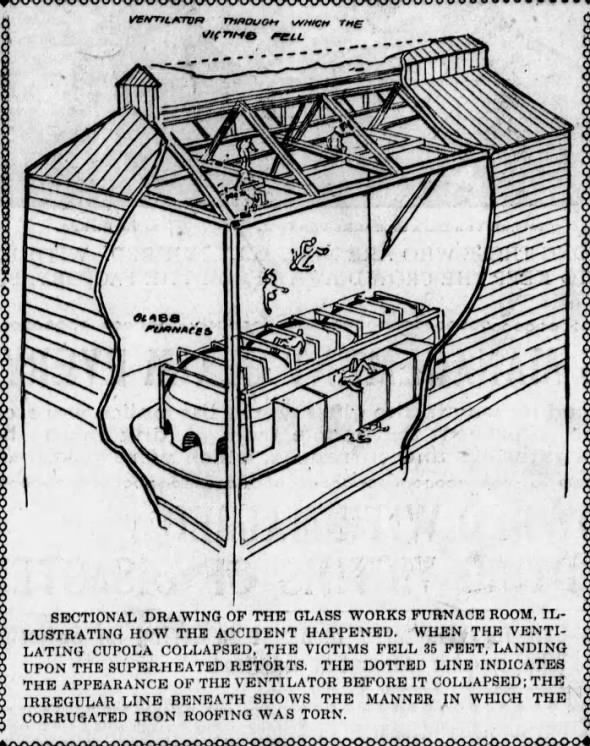
This tragedy wasn’t just a failure of design; it revealed a deeper misconception that buildings should be invincible, a myth that shapes our reactions to collapses even today. It goes further than engineering or physical buildings as well. Our models of reality are oversimplified at best and flat-out wrong in too many cases.

There is a common misconception and an unrealistic expectation about structures—many people seem to assume they are like blocks of granite. From those who believe that every building collapse is a conspiracy to those who think every failure demands stricter government regulations, the myth of an indestructible building continues due to a lack of understanding of engineering and the limitations.

Design Limits Are Not Defects

One key misunderstanding is design limits. Engineering is not about making a building too strong to ever fail. Unless we’re talking about the Great Pyramids, it’s all about trying to meet certain established parameters. An engineered building is designed to meet the expected conditions as defined by regional building codes. If the wind, snow, or loads exceed the designated standards, then there will likely be a collapse.

Earlier this year, after a heavy snowfall in upstate New York, many buildings had their roofs cave in (including this fire hall) because the weight of the snow was that much greater than the design weight. Sure, most engineers build an extra safety margin into their components, but eventually these limits are too far exceeded and you’ll end up with a tangled mess. This is why there are sideline roof shoveling businesses in these places where large snow accumulations are a regular occurrence.

Sure, code could force people to build to a much higher standard, making a collapse due to snow load virtually impossible. But this would increase the costs so much that it would price many people out of building a new house or barn. Engineering is all about compromise, more precisely about making the right compromises given the expected conditions. Yes, there is a case for making adjustments based on observation or after studies, but ultimately we build for what will work most of the time.

More Is Not Always Better

In the aftermath of the earthquake that had struck Myanmar and neighboring Thailand, there was a comment made to me in a chat hoping for more layers of regulation. This is a sentiment, in the specific context of rapid development of Bangkok, that seems more reflexive than reflective. It is a progressive impulse to believe that more interventions and rules are the answer.

The collapse of an unfinished tower in Bangkok, during the earthquake, sparks questions about building codes.  Was it missing sheer walls?  Did the contractor rush to ‘top it off’ quickly?  I want to know what the investigation finds.

But, for me, as someone who works in the construction industry and has occasionally needed to sift through these layers, I could not disagree more. Sure, better regulations may be needed. However, legalism doesn’t work in building standards any better than it does in churches. Sure, you need a code of some kind. And yet onerous regulation will add to the cost of construction, not necessarily improving the end results, and only making new housing less accessible.

It is, at best, the same trade-off discussion we can have about self-driving cars and the need for LIDAR. Sure, this expensive laser ranging system may marginally improve the results, but at what cost? Self-driving cars with cameras alone are already safer than human drivers. Keeping these systems at a price that is affordable will save more lives than pricing them out of reach for average people. It is, therefore, optimal to rollout the less expensive and safer tech even if it could be slightly improved.

At worst there is only more expense and no benefit to more layers of red tape. The real problem with rules is that they are written in language that needs interpretation. Unlike a classroom theoretical setting, in the real world you can’t just memorize the correct answers and pass the test. The ability to make a judgment call is far more important than adding to the pile of regulations. More rules can mean the more confusion and the truly critical matters get lost in the mess.

I see it over and over again, when different customers send the same job for a quote and all of them interpreting the engineering specifications their own way. It is the tire swing cartoon, a funny illustration of when the customer wants something simple and yet the whole process distorts the basic concept until it is unrecognizable. That is where my mind goes when we talk about adding layers. Is it increasing our safety or merely adding more points of failure?

This one stuck with me and should be standard equipment in every design department.  I first saw it as a child while visiting the engineering department of the construction company my dad worked for.

Some of it is just that some people are plain better at their jobs than others with the very same credentials. I am impressed by some engineers, architects, contractors, and code officers—not so much by others. I’m willing to bet the intuition of some Amish builders is probably more trustworthy than a team of engineering students’ textbook knowledge, full of theory, with no real or practical world experience. In the end any system is only ever as good as the users.

Theory Is Not Reality

My work relies on truss design software. I enter information and it does those boring calculations. When I started, I assumed that it was more sophisticated than it really is. I thought every load was accounted for and nothing assumed. But very soon the limits of this tool started to reveal themselves. It is only as accurate or true to reality as the engineers and developers behind it—and on the abilities of the user (me) understanding the gaps in the program.

When it comes to mental models—the kind of physics involved in engineering—only a few people seem able to conceptualize the force vectors. Things like triangulation, or compression and tension loads, are simply something I get. Maybe from my years of being around construction or that curiosity I had, as a child, that made me want to learn what holds a stone arch up or why there are those cables running through that concrete bridge deck. My model was built off of this childhood of building Lincoln Log towers (arranging them vertically) and occasionally making mini earthquakes.

I’m exasperated by this expectation that people have for skyscrapers to be indestructible or to topple over in the same manner of a tree—as if they’re a solid object. It also seems that the big difference between static and dynamic loads is lost on most people. They don’t understand why a building could start to pancake, one floor smashing the next, or how twisting due to extreme heat could undermine the structural integrity of a building without ever melting the steel. Of course this has to do with their beliefs or mistrusts that are not related to engineering—nevertheless it shows their completely deficient understanding of how the science works.

The concept in their head is off, their brain modeling is inaccurate, and their resolution may be so low they simply can’t grasp what the reality is. You try to explain basic things and their eyes glaze over—sort of like when Pvt. John Bowers tried to explain why the plants need water, and not the electrolytes in Brawndo, in the movie Idiocracy. Ignorant people will scoff before they accept a view different from their model of the world. The theory they believe rules over all evidence or better explanation.

On the other side are those who trust every established system without understanding it. They “believe science” and see more as an answer to every question. More rules, a larger enforcement apparatus, faith in their experts, without any feel for the problems encountered by the professionals or those in the field. If they had, they would question much more than they do. Human judgment is still at the base of it all. Or at least that is what the lead engineer told me while we discussed the limits of software and the need to be smarter than the tool.

Not even AI can give us the right balance of efficiency in design versus safety factor or what should be written in the code. It may be a better reflection of our own collective intelligence than any individual, but our own limits to see the world how it actually is are not erased by the machines we create. We are amplified, never eliminated, by the tools we create. So we’ll be stuck wrestling with our myths and theories until we take a final breath—only our flaws are indestructible.

Models of a Messy World

If truss software taught me anything, it’s that no model nails reality perfectly—not beams, not buildings, not life. We lean on these frameworks anyway, because the world’s too wild to face without a map. But just like those fans on that San Francisco roof in 1900, we often climb onto flimsy assumptions, mistaking them for solid ground. The myth of an indestructible building is just one piece of a bigger distortion: we think our mental models—of faith, of power, of people—are unshakable truths, when they’re really sketches, some sharper than others, of a reality we’ll never fully pin down.

Take religion. For some, it’s a cathedral of certainty, every verse a load-bearing beam explaining why the world spins. Others see it as a rickety scaffold, patched together to dodge hard questions. Both are models—ways to grapple with life’s big “why.” Politics is messier still. It’s like designing a city where everyone’s got their own codebook. One side swears by tight regulations, convinced they’ll keep the streets safe. Another group demands open plans, betting that freedom builds stronger foundations. Both sides act like their own ideological model is bulletproof, shouting past each other while the ground shifts—economies wobble, climates change, and people clash.

Then there’s prejudice, the shoddiest model of all. It’s like sizing up a beam by its color instead of its strength. Prejudice, always a shortcut to save us from the effort of real thought, fails because it’s static, blind to the dynamic load of human individuals. Good perception, like good engineering, adjusts to what’s real, not what’s assumed.

All these—religion, politics, prejudice—come down to how we see. Perception’s the lens we grind to make sense of the blur. Some folks polish it daily, questioning what they’re fed. Others let it cloud over, stuck on a picture that feels safe but warps the view. I think of those fans in 1900, not asking if the roof could hold them. They didn’t mean harm—they just saw what they wanted: a free seat, a clear view. We do the same, building lives on models we don’t test, whether it’s a god we trust, a vote we cast, or a snap judgment we make. The distortion isn’t just in thinking buildings won’t fall—it’s in believing our way of seeing the world is indestructible.

What makes a model reliable? Not that it’s right—none are. It’s that it bends without breaking, learns from cracks, holds up when life piles on the weight. In construction, we double-check measurements because we know plans lie. In life, we’d do well to double-check our certainties—about the divine, the ballot, the stranger next door. The San Francisco collapse wasn’t just about a roof giving way; it was about people trusting a picture that didn’t match the world. We’re still climbing those roofs, chasing clear views on shaky frames. Maybe the only thing we can build to last is a habit of asking: what’s holding this up? And what happens when it falls?

The Church With A Leak In The Roof

Standard

There was this elegant old structure, in the countryside, a tall pointy steeple beckoning the passers-by to gaze upward at the blue skies.  It had been around at least a century, the doors still open to all.

One day a tradesman moved into this rural community and admired this building.  He loved the sturdy timbers holding beneath the slightly weathered clapboard siding, and then that ever-reliable stone foundation keeping it all square.

But one concern, as he did his inspection, was the missing roof shingles.  The wind and storms having taken their toll.  It would be a shame, he thought, to have the contents all get ruined and eventually see the church itself destroyed by this neglect.

So he thought to get involved.  He showed up one Sunday morning and met the pastor and congregation.  Good people.

The building inside was as beautiful as it was outwardly.  Fine craftsmanship at a level rare to non-existent anymore.  The stained glass in the sanctuary gave an ethereal feel and the beauty of the whole experience was breathtaking at times.  And yet, he could see the signs of a leaking roof, the water spots in the ceiling, and his concerns grew.

It was a few months later, after becoming a regular and joining the church, that there was a members’ meeting.  Taking the chance to raise the issue of the roof, he stood up, described the problem, and offered to help coordinate the repairs.  

There was a hush that came over the room.  An elder thanked him kindly for the suggestion and yet seemed slightly bothered.  

A week or two later the minister, a stately yet friendly man, took the tradesman aside, putting an arm on his shoulder, “Hey, brother, we’re glad you come here.  We love that you participate in all we do.”  He paused, trying to search for the right words.  “There has been some concern, umm or rather, I appreciate your perspective, as a man who works with his hands and I don’t want to discourage that.”  Stopping again. “However, the church is a spiritual place and, no offense, I know you meant well, but you need to have more faith.  If you see a problem, rather than be consumed by doubt or despair, looking for man-made solutions, pray about it, okay?”

Now a bit stunned, but still respectful, the tradesman did not argue.  He instead agreed to pray and did.

More time passed, things continued as usual, the roof continuing its deterioration, until one day the congregation was having a service and a chunk of the ceiling fell and squarely on the tradesman’s head.  Adding insult to the injury, as he began to brush the debris from his suit jacket, a stream of water from the rain shower outside completely drenched him.  

He was now upset.  Enough is enough!  We really need to do something about the roof, he decided, and approach the pastor again, after some small talk he announced, “You saw what happened today, right?”  And then continued, “I know a Christian must remain committed to prayer and that God is always in control, but we have the means to fix that roof and should!”

Disappointment swept over the pastor’s face as he considered this statement.  But, rather than lash out, he tried to be diplomatic, “I can hear your frustration.  And nobody likes to be humiliated.”  Smiling warmly to lighten the mood before getting serious, “Have you ever considered that the roof isn’t the real issue here?  I noticed you only wear a suit coat, it is okay and yet a bit underdressed for services.  Have you considered wearing a tie?”

The tradesman wore a tie from then on.  And, after a few more awkward encounters, where he was eventually forbidden from trying to throw a tarp over the growing holes and told to tithe more instead, he would do his best to keep his exasperation from showing.  It was none of his business, he was told, that we come to church to worship God together and prayer would provide all of our needs.

Eventually, the congregation of country folk would be left standing on top of the rubble.  They would spend the winters shivering in the cold and wind-driven snow, summers in the blazing heat, wondering why God had taken their wonderful building, yet serenely sure this was just a test of their faith and devotion to Providence.

Christian Love Is Not Asceticism

Standard

Christianity prioritizes the spiritual without sacrificing physical practicality.  It is about faith that expands possibility and potential rather than limit it.

Many religious people teach some form of asceticism.  This an idea that individuals who empty themselves totally of physical desire will find something spiritual and redemptive.

In the early church many did give up their material possessions (Acts 2:45) and were willing to sacrifice their all in faith as Jesus taught:

“If anyone comes to me and does not hate father and mother, wife and children, brothers and sisters—yes, even their own life—such a person cannot be my disciple.  And whoever does not carry their cross and follow me cannot be my disciple.” (Luke 14:26-27)

Paul builds further on the same theme while encouraging the early church:

“Therefore we do not lose heart. Though outwardly we are wasting away, yet inwardly we are being renewed day by day. For our light and momentary troubles are achieving for us an eternal glory that far outweighs them all. So we fix our eyes not on what is seen, but on what is unseen, since what is seen is temporary, but what is unseen is eternal.” (1 Corinthians 4:16-18)

This is acknowledgement of reality.  This world, our life in it, is temporal and will pass away.  But in faith we can see what cannot be known through physical means.  Through the Spirit, through the mysterious backdoor of our consciousness, we are able to see spiritual reality greater than what physical senses can detect.  It is for this reason that we adjust our priorities according to what we know as the greater transcending reality.

But this is not asceticism in the sense of merely our emptying ourselves as an individualistic spiritual pursuit.  No, this is intentional self-sacrificial love that compels us to go beyond our own individual gain and love as God loves.  Our cross is not suffering for the sake of suffering, it is not a Gnostic self-loathing of our physical bodies, but is rather a means to the end and expression of deeper divine love.

Many practice asceticism as a means to judge their neighbors.  Many deny themselves as to prove themselves superior to others and earn their salvation.  However, this is not the way of Jesus.  Jesus did not need to die to save Himself from sin or earn God’s favor.  He did not sacrifice to prove our inferiority and bring judgement or condemnation:

“For God did not send his Son into the world to condemn the world, but to save the world through him. Whoever believes in him is not condemned, but whoever does not believe stands condemned already because they have not believed in the name of God’s one and only Son.” (John 3:17-18)

It is simply reality that we will all eventually die a physical death.  That is true by default and not something inflicted upon us for sake of manipulation.  This is scientific, a result of physical processes, something with causal explanation, and established.  You will not physically die because you reject Jesus, but rather you will eventually physically die (with or without Jesus) and the only way to eternal life is faith in Jesus:

“For God so loved the world that he gave his one and only Son, that whoever believes in him shall not perish but have eternal life.” (John 3:16)

We are saved because we believe in Jesus and through our belief are empowered to love in a way that transcends individualism and becomes all things to all people (1 Corinthians 9:19-23) so they too might be saved.  Jesus explains obedience succinctly:

“Love one another. As I have loved you, so you must love one another.  By this everyone will know that you are my disciples, if you love one another.” (John 13:34-35)

It is that simple.  This is not denial of physical desires for sake of individual spiritual gain or asceticism.  This is denial of self for the collective good, as directed by the Spirit in those who believe, and so the lost can be saved.

It is not sin to enjoy life.  It is in no way wrong to enjoy sexual pleasure (in appropriate context) and relationships based in biology.  Having friends because of our physical proximity and the community we were born into is not inappropriate.  However, when our preference for what is familiar supersedes Christian commitment, when we prioritize temporal pleasure over eternal gain, then we must repent.

Ultimately, what we do or do not possess individually and materially is of little consequence.  It is not sin to have a successful business, big family or nice car.  What ultimately does matter is that these pleasures of physical life do not distract and blind us.  We must find our security in God rather than our possessions or other worldly pleasures.

To be in this world but not of it doesn’t mean a life of misery and complete abstinence from pleasure.  Rather it is to possess the transformation of mind (Romans 12:2) that enables us to love more completely and experience greater joy than the world offers.

If you sell all or leave family behind, do it out of genuine love for your neighbor and not asceticism.  Give freely because you believe in the eternal life Jesus promised and love God.

Christian Humanism: An Oxymoron?

Standard

Humanism, the idea that people are capable of bettering themselves or society through effort, has in modern times become a term monopolized by secularists.  That is probably why the words “evangelical humanism” jumped out to me when used to describe Menno Simons.

What does humanism have in common with a leader in centuries ago Christian movement?

Today many Christians (including those claiming “Menno” as their namesake) seem to have a terrible fatalistic streak.  There are token forms of ‘outreach’ that appear only marginally interested in creating real lasting solutions to practical problems.  There is also no shortage of negativity about the world and cynicism about our ability to change it.  It could seem resignation to the current state of affairs is even view as the epitome of faith.

Dreams Beyond the Status Quo

“The future belongs to those who believe in the beauty of their own dreams.”  (Eleanor Roosevelt)

It was that quote of the illustrious first lady on a motivational poster that stirred my thoughts again.  What it describes could be both humanistic and evangelical faith.  Secular humanism is motivated by doing good for the sake of good, while religious faith is supposed to be about doing good for the sake of God.  Both are concerned with humanity and aim for a better future.

The difference could be that the religious are too often less practical in aim than their secular counterparts and this could be because the promises of eternity deadens the urge to be an agent of change in the world today.  The secular humanist, on the other hand, is committed to practical change today and attempts to deliver more than just promises of future paradise.

Knocking at doors at 7:30 am to tell people about Jesus might have a ring of faithfulness to it.  However, unless you show up with coffee and an egg sandwich to give, you probably just created another annoyance—a door slammed in your face might be your just reward.  It could be you are getting the cart ahead of the horse.

Eternity Can Wait, Love Practically Today

Without practical love Christianity loses the strongest evangelical tool that it has.  Jesus was extremely practical.  Jesus was so practical that many of those following him thought he would lead a revolt against Rome.  He did practical things like provide beverage for a wedding, healing sick people and feeding thousands.  He promised a kingdom soon at hand that would change practically everything:

“Repent, for the kingdom of heaven has come near…”  (Matthew 4:17 NIV)

The “kingdom of heaven” isn’t just some future ‘pie in the sky‘ ideal.  No, it is something that must be lived out practically today.  And, not as a purely informational campaign or token help either.  Christianity should be about making heaven a literal reality for as many people as we can today and in as many ways as humanly possible.  When we have faith and pray as Jesus did, this is not just wishful thinking:

“Our Father in heaven, hallowed be your name, your kingdom come, your will be done, on earth as it is in heaven.  Give us today our daily bread.  And forgive us our debts, as we also have forgiven our debtors.  And lead us not into temptation, but deliver us from the evil one.”  (Matthew 6:9-13 NIV)

We act on what we believe is possible.  We should not wait to free ourselves from temptation, we should not hesitate to forgive others if we want to be forgiven and we certainly cannot expect bread to come to us without our own effort.  So why do we assume ourselves powerless to bring to “earth as it is in heaven” and instead practice fatalism as if it is faith? 

We would be much more convincing if we put our money where our mouth is and gave people a taste of heaven rather than give them hell.

Humanist and Christian Hypocrisy

Ironically secular humanism often breaks down the same way religions do, in that adherents become less practically oriented and more ideological only and lazy.  People look to institutions and charismatic leaders to show the way rather than do their part by fully living their ideals.

This is how Al Gore ends up in a sprawling mansion while preaching climate change dogma.  This is how Christians preach Christ Jesus and leave many sharing the same sentiments of Joe Hill or of the quote below:

“I like your Christ, I do not like your Christians. Your Christians are so unlike your Christ.”  (Mahatma Ghandi)

If you want to convince others of your dreams or ideals start first by living them and if you are Christian especially.  If your faith does nothing for real human needs, and is only about future rewards and glory, then it is just theory.  Being like Jesus requires you to change the world for good with the talents you are given.

Be a Human Example of Good

Don’t ask anyone (including God) to do anything on your behalf.  Leadership is not pointing out how others are doing wrong.  Leadership is being an example and laying down our own life for sake of love for humanity and God.  Be a leader for Christ’s sake.

Don’t wait on conditions to improve before acting; act to improve the conditions.  Be an evangelical humanist.  Endeavor to do what is impossible by acting in faith in a power greater and beyond your own comprehending. Bring heaven to earth today.

Christian humanism might or might not be an oxymoron, but faith without practically applied love for humanity is certainly an oxymoron.

Dream big, be practical.

Mennonite Millennials and the Good Samaritan

Standard

Jesus was a great story teller.  Those raised in conservative Mennonite homes and communities are very familiar with his stories. 

Ask any of us about ‘the parable of the good Samaritan’ (Luke 10:25-37) and we will tell you of a man who was traveling, who was attacked by bandits, left for dead, ignored by two passersby and finally helped by a good man.  The man, a good Samaritan.

Some of us might even be able to explain how the Samaritans were looked down upon by the audience Jesus was addressing.  And also that those two who passed this man in desperate need of help (even crossed to the other side of the road) were important religious leaders and might have not wanted to risk defiling themselves by touching a man who by appearances was dead.

The moral to the story is in the question it answered.  Jesus was being questioned by a person identified as an “expert in the law” who was asking initially about how to gain immortality.  Jesus asks him what the law says and the man quotes the part of their law where it says to love God and your neighbor.  But, when Jesus tells the man he’s correct the man (being a legal expert) needs further definition of terms, he asks:

Who is my neighbor?

The typical definition of neighbor is those people who live next door to us.  Those people with the annoying yappy dog who you might wave to while pulling out of the drive.  Good Americans where I live and the kind who will offer to help push when your car is stuck in the snow.

But Jesus uses the parable to extend the definition of neighbor.  When he finishes the story he asks which of the three was the neighbor and the expert tells him it was the one who had mercy.  So, simple, cut and dried, we help a couple people with a broke down car or give a twenty to some homeless guy, pay our taxes on time and we are a good neighbor, right?

Well, maybe, maybe not…

Samaritan today means a helpful stranger.  The Samaritans when Jesus spoke were despised people and an enemy to those listening.  I think the parable might be told differently today. 

If Jesus were speaking to a conservative audience he might have the story of the two responsible gun owners, the stupid irresponsible traveler (who got what he deserved) and a good illegal immigrant.  If he was telling it to a liberal audience it could be about the two politically correct professors, the aborted black inner-city child and a good redneck.

More interesting is that the enemies of Israel today, Palestinians, have Samaritan blood.  So even after two thousand years the story is relevant in the place and religious setting it was originally told to.  In today’s language it could be told as the story of the good Palestinian or good Muslim. 

It could be any scenario where a person who has a historical grievance lays it aside to care for the ‘privileged’ person who may have previously treated them like dirt.  It is a story for a downtrodden and unimportant person helped a stranger when the people who should’ve helped didn’t.

So what does this have to do with Mennonite Millenials?

It is a quirky thing, but we probably have an easier time flying to the opposite side of the world than we do with being neighborly with our actual neighbors.  We may travel to some far away place to spend a week or two cleaning up from a typhoon.  It is exciting to experience a new culture.  The more dedicated may even spend years in a remote village somewhere or some other exotic outpost.

Yet, if we were asked to do something we personally find dull or undesirable, if there were a task we considered beneath our abilities, would we do it?

The men who passed by the beaten man were probably men with vision.  They had important tasks to do that could not be compromised by the needs of a person who probably should’ve known better anyhow.  They were missionaries, the equivalent of church leaders and had big things on their minds.  They also lived in a world of abstraction or theory and neglected practical application.

“Truly I tell you, whatever you did for one of the least of these brothers and sisters of mine, you did for me.” (Matthew 25:40 NIV)

Who’s least or greatest changes with cultural context.  We probably don’t think of a Samaritan as being lower than us.  We may not harbor animosity or a superior attitude to other races.  But we still do have our prejudices.  We still have our own religious rites or rituals that take precedent over practicality.  We still look too far down the road.

Think globally, act locally!

This generation is better equipped with technology, has greater access to information and the world.  But it is also a very narcissistic and self-absorbed generation.  With some of us the problem is not fear, the lack of opportunity (like prior generations) or the complacency that is common today, but for us the problem could be arrogance.  We need to be reminded that there is nothing too small for us to do.

Don’t be too important to do little things.  Indeed, sometimes it is a small amount of humility that does the world more good than the grandest of visions or best of experiences.  Don’t be aloof, don’t be a religious idealist, don’t be prejudicial against anyone, be a neighbor!