Law as a Tool, Not a Tyrant: Reclaiming the Spirit of Justice

Standard

There are many ways to get things wrong and one of those ways is to detach the law from its most foundational purpose.  That is a part of a legalistic mindset—which always will end up producing bad interpretation and misapplication of law.  

Law is not an entity separate unto itself or something stand alone.  It is a political tool, a guide or instrument for application of an agreed upon principle or cultural value, and application of the intended use requires a common set of assumptions to the creator.  It cannot float in space—never treated as an independent truth—it must be moored to a mission or the common good.

It’s the law!!!

I’ve been in conversations recently where some involved are in denial of the political nature of the law and treat it as if the words on a page somehow have their own life.  It is a misunderstanding of language.  There is nothing static or unassailable about any written code.  Everything depends on having an interpreter with values they are similar or basically the same as the originator of the law—the power of law, therefore, is in the interpretation and application.

When a person assumes that the law can speak for itself they’re delusional, they don’t grasp what law is or what it is for at a very basic level and end up using it to create a system of legalistic prescription rather than understand it through a practical lens.  They have essentially made dead words (applied in any way they want or are most familiar with) a focus rather than cutting through to the underlying principles that make correct application possible.  Their obsession over the letter of the law comes at the expense of following the spirit behind it.

Most people can’t read cursive let alone know what the founders truly intended.

This is what the Pharisees did and Jesus corrected.  He didn’t question the legality of his servants breaking Sabbath rules, rather he gave an example of when David did what was unlawful (only lawful for the priests) to show exceptional circumstances allowed a written law to be set aside.  It is at this point Jesus declared: “The Sabbath was made for man, not man for the Sabbath.” (Mark 2:27 NIV)  This is a higher principle not ever stated in the law but describes a purpose of the law that cannot be separated from the application.

Biblical law may not be relevant to matters of the US Constitution, but both the law of Moses and the law of the Constitution were established to safeguard a nation.  It was a law for the common good of the people and not something absolutely set in stone.  And, in fact, in the earliest days of the US, it was a matter of disagreement how much power should be in the judiciary—which led to the Judiciary Act of 1802 and to courts being dissolved by Thomas Jefferson.  

The point being is the law can’t be properly handled apart from the foundation it is built upon.  Law should serve the common good and needs a reset if it goes astray and ends up becoming a cumbersome burden that is in the way of pragmatic concerns.  Letter of the law people enforce a system for sake of the system alone—they claim the slightest deviation will destroy everything good and right—and end up with ridiculous results.

Don’t cross the street!

Suppose a child is told not to cross a street by their parent.  It is a busy highway and too risky for them to cross.  That’s the law and it is a good one.  However, if some unusual event were to happen, a real emergency, is it important that the child remain on their side of the road even at risk of death?

Those on the legalistic side would argue the law is what it is.  And that making a change based on this circumstance will only lead to more exceptions being made until nothing is left.  This is a slippery slope fallacy based on an assumption there is no authority that is higher than the law and that the system we is basically optimized.  But this idea that the current regime represents some perfect balance that should not ever be challenged is dumb.  There is nothing sacrosanct about the current business as usual.

A system of checks and balances requires some dispute and conflict.  Activist judges that obstruct the role of elected leaders— with an ever expanding definition of “due process” at our expense—hinder progress and might need to be checked.  

Worse yet, when the attention is selective.  It is nothing but loopholes for some and the lawfare for others.  Which is the irony of legalists.  They apply a withering standard for others while always finding exemptions for themselves—they may declare “nobody is above the law” and yet are always given an excuse when it is their turn.

There is a place for precedent or principle, tradition is a better guide than ideology, but then there is a time when a deterioration of values and good faith application bogs the country down and justice becomes slave to a system of perverse priorities.  It is when the application of law no longer serves the common good, but only the lawyers, corrupt prosecutors and jurists who all gain at our expense.  The legal experts claim to uphold the law and yet undermine public trust with their shenanigans that defy our values.

Lawless regimes

Law is a tool, and the hands wielding it are what matter more than what is written in it.  Words on a page are a weak defense when those tasked with applying them are evil or compromised.  A hammer can be used by a carpenter to build or by a criminal to kill and law is no different.  A nation of attorneys is potentially as lawless as country without a written law and enforcement mechanism—our moral constitution matters more than a jot and tittle legalism.

Jesus took on the legal system of his day and not to abolish the law.  No, he exposed the experts.  They strained on gnats while swallowing camels, missed the forest for the trees, and are like those today who will punish us with regulations while rewarding those who flout our laws.  We are shown no mercy while simultaneously the favorites of the political establishment need not worry about a day in court.  Law for thee, not for me.  It serves the elites, not the people.

Law is about setting boundaries and due process depends on the situation.  When the British invaded, in 1812, there was never a thought of applying the Bill of Rights for those who rose in defense of the nation.  In times of war the due process is pointing rifles at the invader.  And foreign gang members who crossed into this country illegally shouldn’t be allowed to abuse asylum laws.  Abraham Lincoln suspended the writ of habeas corpus or due process for citizens during the Civil War—a free ride home for non-citizens is a great deal compared to Union Army detention.

Lincoln was hated by Democrats for his use of executive power

Having dealt with the USCIS, I am not a big fan of paperwork and most especially not when they offhandedly reject your mother-in-law’s tourist visa (as they have done for years, see the time stamps) after all the fees are paid and a visit to the US embassy—and you can rest assured there is no grandstanding by US politicians about due process and assumed right to be in the country on the behalf of those who do it the right way. 

No law might be more fair than our currently convoluted regime—that does many times more to protect gang members than grandmas merely wanting to visit their children or grandchildren.  Sure, we can’t take lawful order for granted and we deal with this inconvenience for the sake of stability and security, but when we show excess concern for those who broke the law while then applying the letter to those trying to abide by it the law has become an immoral instrument and the current corrupt application of law should be set aside for a saner approach.

The perfect law is no law… 

In an ideal world there would be no laws, no borders, no governments.  Instead we would have a law written on hearts—where we voluntarily only do good for people based on internalized values—and have no need for legislation, enforcement or courts.  Borders would be unnecessary and airport screening an unthinkable invasive of personal space.   This is why we have a Bill of Rights to limit the power of government—more law tends to increase injustice rather than serve the common good. 

In the end, just as the Judiciary Act of 1802 sought to realign the law with the common good by curbing an overreaching judiciary, we must continually ensure that our laws remain tools for justice, tethered to their foundational purpose of serving us, not as rigid idols that enslave us to legalism.  We need to understand the limits of resources and get our priorities right.

Philosophical Candidates

Standard

Remember, as a child, those day-dreams of a life unrestricted by parental control, where it would be video games all night, ice cream, pizza, and soda all day?  What is amazing is upon reaching adulthood the thought of this lifestyle is disgusting.  First off, it would be horribly unhealthy—in the sense that those who indulge bulge.  Second, a party every day is totally unsustainable, someone has to do the work to keep the lights on and put food on the table.

Many people become more conservative as they mature and start to realize the value of the limitations they once spurned.  Yes, an adult will modify what was taught to them by their parents and community.  And some grew up in social environments where there was not much worthy to be preserved.  But to totally throw away everything inherited from prior generations is a terrible mistake.  Only an ideological extremist believes stripping it all bare is necessary and good.  It is wiser to build on what works.

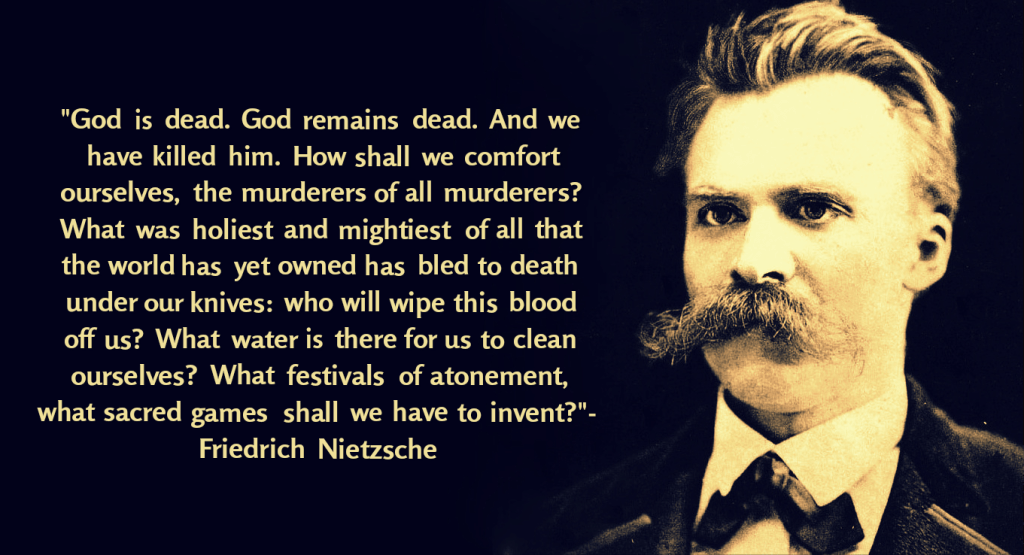
That is not to say that the tradition passed down can’t become stifling and overbearing or limiting our potential either.  There must be a bit of flexibility, some Oikonomia, or means to adapt the rules as the need arises.  However, the opposite ditch, of discarding everything and starting from scratch very quickly becomes chaotic, everyone does what is right in their own eyes, and it soon requires authoritarian measures to enforce the vision.  This is the thing Nietzsche warned about—our morality is not self-evident and we should think long and hard about those monsters that we will release with our neglect.

This wasn’t a sacrilege, it was a lament of what happens when you yank the foundational rug out from under a moral system.

Cultural revolution, while always promising to upend systems of oppression and usher in a new utopian age, ends up being worse than what it is replaced.  Yes, “All animals are equal” may be the founding cry, but is very soon after modified by opportunists who sadly are now unrestrained by those institutions despised and yet there for a reason.  The only good thing is that this out-of-balance off-kilter, ‘we know better than all who came before’ attitude, tends to implode on itself if given time.  The Soviet Union only lasted as long as it did because of Christian ethics within the population.

Two Visions For Our Future 

Recently, with the decline of Joe Biden and a failed assassination attempt against his rival, the Democrats decided it was time to make a change up top.  It is her time now—that is to say Vice President Kamala Harris—and there is plenty that could be said about her career thus far, but there is one peculiar repeat statement she has made that really deserves our attention:

“What can be, unburdened by what has been.”

This strange little mantra has been widely panned by the right.  This is more Kamala word salad, they chortle, and yet—while she does sometimes explain things like a school teacher talking to a kindergartener—it is not gibberish.  This is something Harris has apparently put some thought into and is something with a meaning that we should try to unpack.

What does it really mean to be unburdened by what has been?

I’m not going to sinisterize.

Most on the left I know have a glowing hope for the future and could never imagine that their philosophy could lead to Gulags.  I do not believe Harris intends it this way, but it does hint heavily of Marxist thought where we are to be liberated or emancipated from all that came before.  On the surface, this is an inviting thought.  Imagine a world with no abuse, no poor, everyone has their needs provided and has complete freedom.  This would be wonderful—and this is what every cookie-cutter college leftist has in mind as the end product of their efforts.

So how does the unburdening begin?  Well, it already has.  If you have been paying a bit of attention, everything normal is now being called fascist.  Believe that women exist as a category and isn’t something a man can ‘transition’ to?  Fascist!  Maybe you like the nuclear family and see it as a praiseworthy social convention?  Fascist!  How about a border where there is reasonable control over who is allowed in and who is kept out?  That makes you literally Hitler!  And Harris has embraced this side of the debate, she announced her pronouns and the nature of her politics.

None of this is to say that Harris is a terrible person.  I simply don’t want a leader unbound to existing ethics or any standard of decency, or who can write off Constitutional law as being a “what has been”  product of wealthy white men with some of them slave owners and thus should be discarded.  Sure, it may be a document with flaws, and could possibly use more amendments too, but it is better than nothing and represents the will of the people who signed onto this national project to this very day—white, black, Native, or immigrant alike.

What was established is for our benefit.  It is no more a burden than a wool coat in the blistering cold.  To think that we know more than every other generation that came before us, that science and technology have made us into gods, is delusional. 

Furthermore, the left’s unboundness means they do not care about precedents (except as a tool to restrict their rule-obeying opponents and the ends justify the means.  And they mean well.  They plan to fight injustice.  But this script has played out many times before and is the very thing that tradition is a bulwark against.  At the very least those who believe what “has been” has value will hesitate and consider before they destroy the foundations of civilization.

Make America Great Again

Donald Trump rolled out his red hats and MAGA slogan in his 2016 campaign.  The message was simple, a repeat of Ronald Reagan’s “Let’s make America great again” encouraging answer to the total economic disaster of the Carter years.  As he said, in the 1980 Republican convention:

For those without job opportunities, we’ll stimulate new opportunities, particularly in the inner cities where they live. For those who’ve abandoned hope, we’ll restore hope and we’ll welcome them into a great national crusade to make America great again.

Trump knows a good brand and borrowed it from the best Republican leader since a guy named Abraham Lincoln.  The progressives lost their minds.  They dug up the one time it was used by the KKK.  And couldn’t decide to condemn with “America was never great” or be offended because “America is already great and how dare Trump suggest anything otherwise!”  If you were playing a game of “wrong answers only” this harsh criticism of MAGA as white supremacy would make a bit of sense.  

MAGA is not hateful.

When the left says, “Do you know who else said make America great again?” and then goes on to associate this benign statement with all manner of evil, they’re poisoning the well.  There is zero reason to interpret this slogan as Trump’s desire to bring back Jim Crow or the racial policies that were once championed by Democrats.  But this does whip the left into a frenzy and it keeps them from deviating and making an independent decision whom to vote for based on the actual positions of candidates.

What does Trump mean by “make America great again”?

Trump is a businessman, his interests are mostly economic, rebuilding our industrial base, bringing back gainful employment for blue-collar workers lower taxes, and less red tape standing in the way of entrepreneurial spirit.  My wife, who opened a store in her home country, complains that the US is not a free country and is appalled by the many layers of taxes and requirements.  This is what dooms many to working for “the man” or corporations that can afford compliance costs while drowning their competitors with cheap imported foreign goods.

The legalism of US law would make a Pharisee uncomfortable.

From a 2016 Trump campaign speech on jobs and the economy:

Jobs can stop leaving our country, and start pouring in. Failing schools can become flourishing schools. Crumbling roads and bridges can become gleaming new infrastructure. Inner cities can experience a flood of new jobs and investment. And rising crime can give way to safe and prosperous communities.

Had Trump’s first term not been sabotaged by COVID and blue state shutdowns, there is no doubt this would have been fulfilled.  In fact, by the third year of his presidency the minority unemployment rate reached record lows.  Even NPR, while downplaying it, could not deny these numbers Trump touted were real.  Biden’s only success comes from not rolling back those tariffs the fear-mongering media had so roundly criticized.  It is strange how the success and failure of policies is determined only by who is employing them, isn’t it?

No, Trump’s not woke.  He believes in hiring based on qualifications.  He doesn’t want to continue world policing and the massive expansion of government programs.  This is why he is the enemy of those who derive all of their power from the administrative state and sap our resources.  He is keenly aware that a free flow of cheap labor, while it helps elites who want nannies and landscaping at a discount, pulls down wages for those who do not come from wealth.  Even a Senator named Barack Obama understood this:

If this huge influx of mostly low-skill workers provides some benefits to the economy as a whole—especially by keeping our workforce young, in contrast to an increasingly geriatric Europe and Japan—it also threatens to depress further the wages of blue-collar Americans and put strains on an already overburdened safety net.

Make America Great Again is not about a swerve in the direction of Nazism or some new form of ethno-nationalism.  It is about restoring the economic conditions that had allowed our grandparents to buy their home and a car on a single income.  Back in 2015, Bernie Sanders had blamed open borders on a right-wing conspiracy, that will make everyone poorer, but now the left is saying that normal border security is racist.  What changed?  Why are these Democrat policies, like the immigrant cages during the Obama administration, demonized under Trump?

Compassion means disincentivizing illegal crossings where human trafficking is a concern requiring sorting facilities.

It is really disorienting for those who soak propaganda like a sponge.  They never see that Democrats did this full 180 on multiple issues where they had been right.  Trump is right about the border.  It should be the top priority.  Just the Fentanyl overdoses alone are a reason.  I’ve lost a former high school classmate and football teammate this way— 83,000 Americans died in 2022 alone—and it had ironically played as much role in the death of George Floyd as a knee on his shoulder.  Why do we even talk about that dozen killed in a school shooting or Ukraine in light of this?

Reform, Not Revolution 

Progressives tear at the fabric of civilization without understanding the consequences of their actions.  They believe that the erasure of history, destruction of monuments, or the degrading of religion (see Paris Olympics) is a path to a better future.  But this amounts to cultural vandalism and is ignorance of the positive contribution of these religiously created values we’ve internalized.  There is truly nothing that is written on the substrate of the universe that says slavery is wrong or that genocide is evil—the stopping point to “unburdened by what has been” is a return to animalistic impulse.

By design, not accident.

The frontal lobe of the brain is developed by the myths and moralities that progressives do everything in their power to destroy with ridicule and sacrilege.  And it will inevitably go much further than anticipated.  We rarely have enough appreciation for what we have been given.  Everything is taken for granted until it is gone.  And when there is a vacuum that is left to fill, and the ‘demons’ waiting in the wings will come rushing in:

When an impure spirit comes out of a person, it goes through arid places seeking rest and does not find it.  Then it says, ‘I will return to the house I left.’ When it arrives, it finds the house unoccupied, swept clean and put in order.  Then it goes and takes with it seven other spirits more wicked than itself, and they go in and live there. And the final condition of that person is worse than the first. That is how it will be with this wicked generation. (Matthew 12:43-45 NIV)

Christianity led to equal rights in the West, the abolition movement, is a product of St Paul advocating for Onesimus or telling the Galatian church, “There is neither Jew nor Greek, there is neither slave nor free, there is neither male nor female; for you are all one in Christ Jesus.”  The left assumes the values it has are universal.  They see only the faults without giving credit.  

“You will not surely die!”

The progressive left, by contrast, denies all limits and conventions.  Their “can be” may seem good at first glance.  But is opening Pandora’s box, it is releasing what previous generations have built social structures to contain and could end up being more like a trip on Event Horizon.  America has been good and bad, had moments of greatness and failure.  We should tune the ideal it was founded on, not tear it down to start all over again.  There is much to conserve in “what is” with an eye to improvement.  Veer not too far to the right or left.

At least with Trump, morally corrupt as he may be, he comprehends that our inheritance is not a burden. For him, there is something that can be recovered “again” from the past generations even if those lessons were not perfectly applied to him.  He’s a grandpa, he has seen trends come and go, old enough not to care about what is currently popular.  Trump may have some narcissistic traits, at least that is the character he plays on television to the roar of the WWE crowd—but he isn’t trying to be God.

The Rise of the Christian Influencer

Standard

The man had charisma.  He wore a swanky grey sport coat and a shiny pair of quality brown dress shoes, that all went along with his well-manicured hair.  He stood out in this crowd of mostly Amish gathered for the seminar. 

I tend not to pay for such things.  I have a knack for learning through non-conventional means, namely running into walls until I get to the correct answer, and have also learned quite a bit from observation.  My own ticket had been provided by my company and I was there with the rest of the office staff to hear what this life-coaching speaker had to say about customer service and listening. 

The content was good.  It seemed worthwhile advice for those seeking to improve their customer experience and grow their business.  However, I kept thinking about the Christian themes mixed into his message.  This son of a missionary did not preach a sermon nor did he mention the Gospel of Jesus Christ.  Still, there was definitely an attempt to relate to the audience at a level of their religious values.

This sort of thing, good or bad, seems like the latest development in Christian missions.  In times past, the church was the church, those ordained and sent were more open about their underlying goals, urging repent and be baptized, and those personally profiting off the message were condemned:

“Unlike so many, we do not peddle the word of God for profit. On the contrary, in Christ we speak before God with sincerity, as those sent from God.”

(2 Corinthians 2:17 NIV)

Now, the man before us, he represented a non-profit entity and was giving advice that pertained to sales and serving customers.  Still, he did reference Scripture amongst his quotes of self-improvement gurus and even used the phrase “word of God” at one point in his presentation.  He would use our familiarity with the “good book” to bolster his claims and even shared some theological perspective. 

Again, I have no problem with this man nor the particular presentation.  In the business world this kind of consulting and advice is likely key to reaching the next level of sales and I’m sure we will do many of the things that he recommended.

However, what did stand out, and is the reason for writing this blog, is this trend towards a mission of influence rather than open proclaiming of the Gospel and, in many ways, I was at the forefront of this evolution.  My blogs, often a mix of theology, philosophy, and personal observation, is not openly declared as a Christian mission.  Still, I have used this media, and my understanding of Scripture, to do pretty much the same thing (minus the monetization) of this life coach of Anabaptist background.

So here’s some thoughts…

Where Did It All Begin?

The church has always had influential men and inspiring women.  Some rose in prominence, even have their writings and stories recorded in the canon of Scripture for our benefit.  The Orthodox have many noteworthy figures, Early Church Fathers, including St John Chrysostom, the archbishop of Constantinople, a man who took on the abuses of ecclesiastical and political authorities of his own time, and whose Divine Liturgy we celebrate to this very day, his name means “golden-mouthed” in Greek and he definitely had a way with words to match the description.

However, those in Scripture, as well as St John Chrysostom, were themselves all under the authority and guidance of the other Christians.  They were also very open about their mission.  They were unabashed preachers of the Gospel of Jesus Christ.  They weren’t your life coach using Christian themes to decorate a business oriented daylong consulting session for $150 a head.  St Paul may have made tents to support himself and his ministry, yet I’m not sure that he sold them using Christian themes.  Just saying.  His ministry was ministry and business was business.

But there is a sort of murkiness to many modern-day efforts, where they aren’t part of the church per se nor even announcing themselves as a ministry, and it is by design.  So how did we get here?

The starting point of the current Western paradigm is obviously the Protestant schism with the leadership in Rome.  The intention of Martin Luther, ordained by the Roman Catholic Church, was not to start a denomination.  He wanted reforms and had good reason for his critiques.  And yet his written protests quickly became a catalyst, many took things much further than he had ever intended and we have the multitude of denominations as his most significant accomplishment.

Still, despite this, the church, even or especially with those of the radical reformation, remained a collection of individuals with accountability to each other.  Sure, the Anabaptists were more localized, led by shared statements of faith, and collectively agreed upon congregational rules rather than by a hierarchical structure, but it was never every-man-for-himself or a free-for-all.  Those who spoke were ordained by various means, not simply a man full of his own ideas and finding a following.

The turning point? 

I think around the turn of the last century represents a shift.  The whole tent revival circuit, where a dynamic speaker, an Evangelist, would get up in front of the crowd and wow the audience with his polished salvation message.  Many were sold the Gospel in this manner, walked the sawdust trail, the circus would eventually leave town and life would go back to normal or the new normal, I suppose?

The next stage in development was the parachurch missionary organization.  By parachurch, these organizations are run seperately from the denomination, are often subject only to their own board members, and seek funding for themselves.  Basically, any ambitious person, with some natural musical or speaking talent, interested in travel, can start a prison ministry, missionary training institute or what have you, and only with as much ties to the existing church structure as they want.  All one must do is set up their nonprofit, find investors, buy the bus, and be on their way to preach the word as their adoring wife glows beside them.

Yet, as all things, the traveling Evangelist and other obvious Christian missionary efforts, including openly Christian contemporary artists, have become tired old tropes.  The in-your-face presentation, the lack of follow-up or one-dimensionality of the presentation, the realization that the novelty had worn off of the original form, the scams, and scandals, has led to a third wave of influencer and that’s the one that doesn’t even announce the Christian intentions at all.

Sometimes this lack of openly expressed intention is to avoid legal prohibition.  For example, teaching English in Asian countries that would not otherwise invite Christian missionaries.  Other times it is to add a practical element, after preaching and charities failed to help solve many underlying conditions, which gave rise to micro-lending groups.  Sometimes this repackaging is to sell the mission itself as something exciting, an adventure rather than some kind of dull service opportunity, and part of an effort to make Christianity relevant to the next generation.

After watching the presentation the other day, I suggested to a left-leaning Mennonite friend that we go on tour together for sake of racial reconciliation and healing.  Why not?  I think I could probably work the crowd, with a little practice, and definitely believe in the cause, could leading faith-related seminars be my calling too?

In theory, this cause-oriented Christian influencer thing seems great.  We can have sportsman’s banquets, business seminars, and TED Talk the unsuspecting heathens (or even the more traditional religious types) with a flashy Powerpoint presentation, funny stories and down to earthiness.  And yet, this does seem to get things out of order, it puts values first and repentance second. 

More troubling, from the Evangelist of the past century, to parachurch missionary organization of the past decades, to the influencers of the present, the distance between the activity and actual purpose has grown.  The Evangelist preached without providing adequately in discipleship.  The missionary went without being sent or accountable to the church.  And the motivational speaker, while referencing the Bible, never announced a Christian intention.  And it makes me wonder, how far can we detach values or ministries from the Church, and cause of Christ, before it becomes entirely self-interested and divorced from Christ?

At what point is it all just a moneymaking scheme, devoid of actual spiritual substance?

I mean, we’ve all seen it, the shyster, the con man, the ministry with a board of directors full of families and “yes man” friends, the Televangelist, the guy selling a product, an ideology, a Ponzi scheme.  There is sometimes a very fine line between the less scrupulous, eyebrow-raising efforts, and the more accepted manifestations.  Are we someday going to have Christian pornography, subtle Christian themes, maybe an actor pick up a Bible and read a passage before the main event, to hopefully plant that seed of influence? 

Where does it end?

The Rise and Fall of the Christian Influencer

David Ramsey, James Dobson, Ravi Zacharias, Ken Ham, and Bill Gothard are familiar names in conservative Mennonite circles.  Ramsey with his financial advice, Dobson with his focus on the culture war, Zacharias with his appeals to reason, Ham for his fundamentalist theme park, and Gothard an earlier version of life coaching seminars.  The point of all of these men, at least as expressed, was to advise, consult, and influence.  They are all men who took aspects of their religious values and turned it into an enterprise.

None of the men above represent a church denomination.  They rely on selling merch, the loyal support of people like you, and donations to expand their reach.  They have built ministry campuses, a literal ark in the state of Kentucky, a few massage parlors here and there, and are only accountable to their own ministry boards.  Usually the focus, at least initially, is around one illustrious character, a strong personality, who is too often surrounded by the cult he has created rather than those who will challenge.

There now seems like a parachurch organization for every niche.  The list of bloggers, authors, evangelists, producers of all sorts, continues to grow and especially now in the age of social media.  It costs me nothing but time to set up my account on WordPress and start spewing out my perspectives.  Perhaps, if I were a bit more ambitious, I would write a book, do a book tour, and eventually be at your Lady’s Tea event sharing what I learned about life and love from the book of Ecclesiastes.   Book your reservations now as available slots are filling fast!

But the parachurch is the downfall of the church.  Too often these ‘ministries’ have come at the expense of the local body of believers, submitting and serving each other in love.  Too often it is something guided more by the spirit of Diotrephes, wanting things our own way and seeking those who agree, rather than by Christ.  That is why we have seen a growing number of scandals come to light, of leaders forced to resign by outside pressure or disgraced after death for their hidden sinful deeds.  I know, speaking for myself, it is too easy for me to shun deeper involvement in the actual church because it is difficult, not determined by my feelings of inspiration, and this is something that must be repented.

Jesus was willing to serve, but he didn’t determine the cross he was required to carry and, instead, submitted to the will of the Father.  The disciples, and St Paul, likewise, were not Lone Rangers, doing it their own way, without accountability or oversight.  Those with gifts aren’t to use those gifts to serve themselves or build their own empires.  They were sent and commissioned by the church, under the umbrella of those ordained to lead, and not independent contractors pursuing their own pet causes.

The Christian life is not about values, certainly not about self-promotion or having the right program either, but is about our Communion together with other believers, both past and present, and with Christ.  From that, the Holy Spirit, from our accountability to each other, our true obedience, transformation will come from inside out and love will flow out to change the world.  The values and culture come from that rather than being taught at seminars, religious institutions, or Bible schools.

We don’t need more influencers.  We don’t need more parachurch organizations or a return to tent revival meetings either.  Many of these things are mere human efforts that will ultimately fail.  What we really need is the body of Christ, to partake and participate together in the life of the one true Church. 

What Are ‘Christian’ Values?

Standard

The culture war continues. 

The latest salvo in the fight is over the current segregation of public restrooms.  The proponents of change and traditionalists battle it out for control on social media and in the public arena. 

Both argue the moral inferiority of the other side.  Both claim to be defending the security of their loved ones.  Both threaten to take punitive measures against those who do not comply with their demands. 

It is a fight where nobody seems to win and everyone comes out a loser.  But what if this two sided debate is actually false dichotomy?  Could there be a third option solution where all could win? 

Perhaps, if all sides of this struggle for control could put down their rhetorical and political weapons for a moment, there is a better example to follow?

I believe there is a better ‘third’ way that is neither dogmatically religious nor demandingly progressive.  I believe there is an alternative where all can win and none lose. 

However, before I can get to the solution I need to discuss where the other options fall short and to do this I have defined a few categories. 

(Please understand in advance that there is overlap between my categories and many people may not fall neatly into one or another.)

1) Liberal ‘progressive’ or secular values are marketed as love, tolerance, inclusion and open-mindedness.  The promise is a more fair or high-minded society, but the result is often as petty and even more divisive than what it seeks to replace.  It is morally incoherent, in one breath claiming to be non-judgmental and making more allowance for free expression, but in the next moment enforcing strict dogmas of politically correct language and behavior. 

Those who do not comply with the moral edicts of progressives should be prepare to be shamed, belittled and bullied into silence.  Those who fall away, question or challenge the new orthodoxy will be labeled as a bigot, racist, homophobe, misogynist, hateful or insensitive.  The shouts of “don’t judge me” are often only a tool to drown out dissent and not a consistently applied principle.  These bleeding hearts are out for blood as much as those they accuse of lacking understanding or compassion.

2) Conservative ‘nationalistic’ or established values are the present cultural norms and current notions of common sense.  This is the flag waving proud patriotic perspective held by those who believe their own values (football, freedom and frequent beer consumption) represent the greatness of the American past, present and future.  These are the biggest defenders of the status quo, their status quo, and never minding that their current cherished culture was formed yesterday.

These are the people who complain about outsourced jobs while simultaneously shopping at Walmart and criticizing as lazy those who aren’t as successful as them.  This is the moral majority of the moment that sees their own privileges and preferences as fundamental rights without respect or consideration of those who see differently.  They have also abandoned the traditional values of their parents and grandparents yet still condemn those who go a step further than them.

In their eyes America was almost always right.  Historic injustice is white washed with a brush of romanticism.  Slavery, racial inequality, segregation of schools, massacres and other abuses against native people are forgotten.  The sins of our modern imperialistic aggression and global hegemony are downplayed.  “It’s ‘merica, baby, land of the free, home of the brave!”

3) Religious ‘fundamentalist’ or traditional values are those out of the mainstream who claim to represent God’s will and freely judge all people—especially those outside of their own sub-cultural group.  These self-proclaimed sanctimonious gatekeepers to the realm of moral truth annoy everyone who doesn’t share their own interpretations.  People call them the “Bible-thumpers” and they come with a “holier then thou” attitude that is a major turn off to those outside their own cult.

They pose as authorities on spiritual matters.  However, their knowledge doen’t seem to know much beyond their proof-texting and dogmas.  They use “the Bible says” and selectively quote the Old Testament when it suits their own agenda.  But gloss over and don’t deal honestly with other culturally inconvenient Biblical realities like captured brides, naked prophets and daughters sacrificed in God’s name.

They make fun of the sensitivity of the progressives and then cry “persecution” when they themselves are opposed.  They feel entitled to a special privileged position in society as God’s favorites.  They use grace as a cover for their own sins without extending the same to those who sin differently or disagree.

4) Faithful ‘Spirit And In Truth’ followers are those who pick up the cross and live to be a consistent example of self-sacrificial love.  These are those who seek to be the literal embodiment of Jesus Christ. This means they follow his commandments to love their neighbors as themselves, to do unto others as they would have them do for us and, while seeking to purify themselves of evil, leave judgment outside to God. 

It is a way that doesn’t seek power to impose on others and instead is committed to self-sacrificial love and leadership by example.  It is the beautiful alternative to the endless cycles of reaction, retaliation and repeat again.  It forgives and frees others of their sin debt to us.  It builds a new identity in Jesus and is a truth that is lived more than preached.

How are Christian values different from progressive values?

There are some similarities.  Jesus broke from the established religious and cultural standard.  He identified with the societal outcasts and was full of compassion for hurting people. 

But Jesus did not turn to more law or greater regulation of offending behavior as the solution.  He did not urge a political fight or demand his voice be heard by government authorities.  He did not lead massive protests against the privileged and powerful.  Instead Jesus showed the example to follow, he offered his own life as atonement for the sins of others and forgave offenses.

How are Christian values different from ‘traditional’ American values?

There are many who characterize America as a ‘Christian’ nation and really do a disservice to the truth in this.  America does have some ‘Christian’ values reflected in its history and did certainly provide a haven of religious freedom. 

However, this conveniently glosses over the fact that founding fathers were not faithful.  Thomas Jefferson, for example, cut out portions of the Bible he found disagreeable.  Ben Franklin lived immorally according to a Christian standard. 

The individualism, materialism and entitlement mentality of modern America is not in the least bit reflective of the teachings of Jesus.

How are Christian values different from religious and Biblical fundamentalist values?

Oftentimes it seems those who are closest to the truth who are the furthest away.  Or, at least, this was the case with those who inherited the Scripture in Jesus day and thought of themselves as experts in morality.  But human efforts, even the most diligent of human efforts, cannot bring anyone a step closer to the truth. 

The truth, as found in Jesus, is not an accumulation of knowledge and careful application that leads to moral superiority.  No, the way of Jesus is acknowledgement of our inability—it is humble, repentant and is fully dependent on the grace of God.

Putting down Peter’s sword

We could have everyone forced to use the ‘right’ restroom without accomplishing anything more than Peter’s sword:

“Then Simon Peter, who had a sword, drew it and struck the high priest’s servant, cutting off his right ear. (The servant’s name was Malchus.) Jesus commanded Peter, ‘Put your sword away!  Shall I not drink the cup the Father has given me?'” (John 18:10-11)

Peter thought he was defending the truth and mission of Jesus, but actually stood in the way of God’s plan.  Peter, who was rebuked on several occasions for his lack of understanding and overzealousness, treated the servant as sword practice.

By contrast, the John’s account treats the man Peter wounded as a unique individual with a name: Malchus.  And, in a parallel account (Luke 22:51) Jesus demonstrates a different way, he heals the ear of Malchus—a man sent to bring him to his death—and showed the true Christian value.

Peter was fighting a losing battle.  He had his own vision different from that of Jesus.  He thought he was defending truth when in reality he was a part of the problem.  He thought his act was one of total commitment to the cause when it was in fact the opposite.

Peter’s act is perfect a metaphor of what happens when those of us who claim faith in Jesus go out militantly defending our own religious values with political force—we cut off ears.

And picking up the cross to follow Jesus…

“From that time on Jesus began to explain to his disciples that he must go to Jerusalem and suffer many things at the hands of the elders, the chief priests and the teachers of the law, and that he must be killed and on the third day be raised to life.  Peter took him aside and began to rebuke him.  ‘Never, Lord!’ he said.  ‘This shall never happen to you!’  Jesus turned and said to Peter, ‘Get behind me, Satan!  You are a stumbling block to me; you do not have in mind the concerns of God, but merely human concerns.'” (Matthew 16:21-23)

Here Peter was completely willing to fight for the kingdom of God, but for his enthusiasm is called small minded, a stumbling block and mouthpiece for Satan.

Can you imagine how Peter felt? 

Jesus continues…

“Then Jesus said to his disciples, ‘Whoever wants to be my disciple must deny themselves and take up their cross and follow me.  For whoever wants to save their life will lose it, but whoever loses their life for me will find it.  What good will it be for someone to gain the whole world, yet forfeit their soul?  Or what can anyone give in exchange for their soul?'” (Matthew 16:24-26)

This was not what Peter or the other disciples had in mind.  They pictured themselves as co-rulers of a worldly kingdom and had been arguing things like who would sit on the right hand of Jesus on his earthly throne when they finally defeated Rome.

But Jesus paints a picture entirely different.  He’s predicting his death, a painful and humiliating death on a Roman cross, while urging them to follow the same path of self-sacrificial love.  He was trying to explain a reality bigger than their worldly political visions and values.

What are Christian values?

Jesus, after being baptized, after receiving the Spirit’s anointing and being tempted in the wilderness, announced the start of his ministry by quoting the prophet Isaiah:

“The Spirit of the Lord is on me, because he has anointed me to proclaim good news to the poor.  He has sent me to proclaim freedom for the prisoners and recovery of sight for the blind, to set the oppressed free, to proclaim the year of the Lord’s favor.”  (Luke 4:18-19)

That is where we start.  That is Christian values in a nutshell. 

“For God did not send his Son into the world to condemn the world, but to save the world through him. Whoever believes in him is not condemned, but whoever does not believe stands condemned already…”  (John 3:17-18)

That’s the good news.   Jesus didn’t come to condemn anyone, but to heal the sick, restore sight to the blind, forgive impossible debts, reconcile relationships with God and bring freedom to those condemned to death.  It was a message of restoration and hope, not condemnation.

Christian values begin and end in living out the example of Jesus Christ.  Jesus was not a progressive, not a defender of cultural status quo nor a religious fundamentalist, his values were higher and spiritual.  He was not seeking legal power or political advantage so he could impose on others, that wasn’t his fight.

“Jesus said, ‘My kingdom is not of this world. If it were, my servants would fight to prevent my arrest by the Jewish leaders. But now my kingdom is from another place.'”  (John 18:36)

Having Christian values means one shares the same priorities as Jesus.  It means talking up the cross of self-sacrificial love and showing the way of grace.  Jesus was not a cultural warrior seeking to impose values by force of law or a sword, instead he is an advocate for those lost in sin. 

Ultimately it doesn’t matter what restroom your neighbor uses, that is an argument where both sides lose and a distraction. What matters is how our own attitudes and actions reflect those of Jesus Christ. 

We must put our rhetorical swords down. We must love our (political) enemies and heal rather than cut off ears.