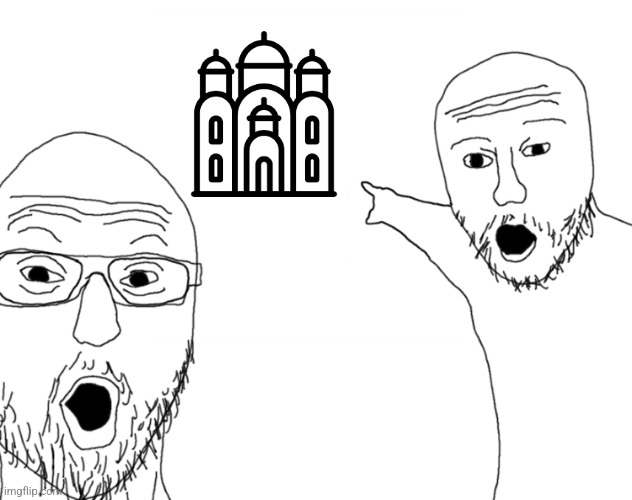
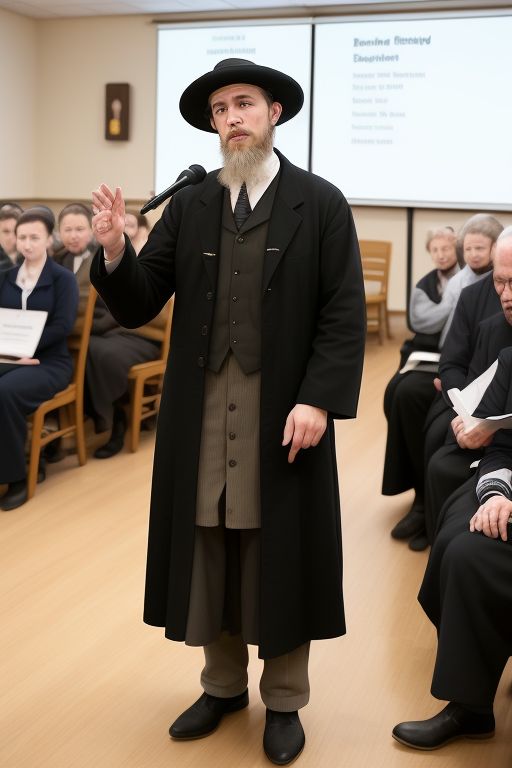
I awoke this morning to a message from Fr. Siewers. He shared a NY Post article, “Young men leaving traditional churches for ‘masculine’ Orthodox Christianity in droves,” which I read with my coffee. This is a trend within Orthodoxy, and arguably I’m part of it, where (relatively) young men are leaving the consumerist ‘Big Box’ and the compromised traditional churches for a weird alternative that feels foreign to most Americans.
I know, in past blogs, about Orthodox growth, I’ve done a sort of victory lap about Orthodoxy and in doing so left out valid counterpoints. Yes, indeed, many young men are finding Orthodoxy. But it may not be as big a trend as articles like this NY Post story or the Orthodox faithful make it out to be. The growth from fundamentalist reactionaries is limited—most especially if it is only drawing in males. It is difficult to sustain this if no accompanying young women are willing to procreate with these transplanted men.
The truth is that Orthodox, in the United States of America, only number around 6-7 million. Who knows how many show up on Sunday? For sake of reference, that is less than the estimates for illegal immigrants who currently live in this country, around 11.7 million, and basically makes the Orthodox contingent a demographic drop in the bucket. Yes, growth is good, but is this sustainable? Or is it just a blip driven by those desperate to do something a little different from everyone else and destined to fade like Hipster fashion after a decade?
My own conversion to Orthodoxy was not the same as the template laid out in the NY Post article. I wasn’t running from a church with a ‘woke’ or social justice agenda that replaced the Gospel. Yes, maybe I was a bit disgruntled with a feminized church culture where marriage and family were sacrificed for impossible ideals and visible missions. But it wasn’t in reaction to liberalization. I had done it from a conservative Mennonite church and was attracted to Orthodoxy as it was different from fundamentalism.
Ironically, this new flow of reactionary men to Orthodoxy may come at the expense of the attitude of the church that had initially drawn me. While adopting the Orthodox worship ritual, some bring their Protestant or Catholic baggage with them, there are too many Ortho-bros or those simply trying to be edgelords and unique. It is part of the Alt-right vibe, those who have rejected the far-left’s absurdity on one hand and yet are still looking for a reaction more than they are serious about their faith.
There will always be that small percentage of people who will buy a Tesla Cybertruck to be strange. Those who do things to piss off everyone else with normal tastes. And the growth of Orthodoxy is as much a rejection of the political mainstream as it is about seeking God. It feels more like cosplay, in my experience, than it is something born of a repentant spirit and desire to truly submit to the authority of Christ vested in the church. It is a bunch of dressed-up Protestants.
Case and point? The parish I left has an old Baptist convert as a priest who offended a couple (very fragile extremely idealistic homeschoolers) and the mom of this union made it her personal mission to pull as many people away as possible through lies and attacks. That’s where much of the new growth in the ROCOR parish down the road has come from and why I’ve been inclined to stay home on Sunday to be away from all of it. Not all growth is good growth.
As a postscript, my wife and I do not share the same perspective as far as worship and what church is ideal. She got along with the folks at Holy Cross. But didn’t get much out of the preaching (which was fundamentalist in flavor more than Orthodox) and practice. We sometimes attend a generic Protestant consumerist church, with a rock band and a coffee shop, because it is what reminds her most of her own generic Evangelicalism in the Philippines. My son and new daughter remain unbaptized.
My own views have migrated from spiritual imagination to sustainable compared to the unsustainable. Civilization was built by the participation of many who assumed roles that fit their qualifications and now is on the brink of collapse as we deny nature. We’re on a path that is unsustainable because we deny nature.
What is nature?
Nature is that, as we mature beyond the age of childhood, inborn sexual desires lead us to seek a partner. And, when successful, “A man leaves his father and mother and is united to his wife, and they become one flesh.” (Gen 2:24 NIV) The purpose of this joining of man and woman? A multiplication from two to three, four, five, or more. That is to say that in marriage we’re fruitful.
The point of this blog is not to be preachy or tell anyone what to do, rather it is to outline a problem and share a few Bible references for fun. Scripture is part of the tradition and foundation of our civilization and could help us to diagnose where things are possibly going wrong as we stumble. All across the developed world population collapse looms and it will be a disaster for little old you.
This is a topic even more important if you’re irreligious, think this is all there is, and aren’t aiming for “treasures in heaven,” because it could impact your retirement plans. This is purely a numbers game how it plays out, if there aren’t enough people to make stuff or provide services, there is nothing for you to buy—your current lifestyle might be the high point of your life.
But even if you are ‘heavenly-minded’ there is still plenty of reason to reconsider some of the attitudes that I’ve witnessed within conservative groups. Truly, fundamentalists need to fix their courtship gambit more than anyone else. There are plenty of women in those circles who are ‘married to Jesus’ and are really only married to themselves, their idealistic visions—and in total denial of the real cause of their lack of success.
I call out women, in particular, because they are the true gatekeepers of romance. If you are a half-ambitious guy you just know this, I’ve been turned down so many times that I have lost count. There were some, basically average, girls who would sooner get cancer and die than go on a first date with me or a man who did not fit a long list of superficial or social status requirements.
Yeah, it worked out for some of them, but a great many wasted their fertile years trying for unattainable perfection.
What does the Bible say?
This know also, that in the last days perilous times shall come. For men shall be lovers of their own selves, covetous, boasters, proud, blasphemers, disobedient to parents, unthankful, unholy, without natural affection, trucebreakers, false accusers, incontinent, fierce, despisers of those that are good, traitors, heady, highminded, lovers of pleasures more than lovers of God; having a form of godliness, but denying the power thereof: from such turn away. For of this sort are they which creep into houses, and lead captive silly women laden with sins, led away with divers lusts, ever learning, and never able to come to the knowledge of the truth. (2 Timothy 3:1-7 KJV)
I don’t think this is the end of all, but it might be the end of us. Typically verses like those above get applied to those who are outside the group. It is “the world” that is full of narcissistic self-seeking types. And indeed the secular-minded have led the way as far as being unbound to any natural responsibility. But the church is often guilty of the same things albeit covertly and wearing a righteous disguise—in the manner of the Pharisees:
And he continued, “You have a fine way of setting aside the commands of God in order to observe your own traditions! For Moses said, ‘Honor your father and mother,’ and, ‘Anyone who curses their father or mother is to be put to death.’ But you say that if anyone declares that what might have been used to help their father or mother is Corban (that is, devoted to God)—then you no longer let them do anything for their father or mother. Thus you nullify the word of God by your tradition that you have handed down. And you do many things like that.” (Mark 7:9-13 NIV)
What Jesus is addressing is how the most pious of his day would use sanctimonious claims to override practical commands. In the example he gives they were claiming to be saving their resources to give to God and thus not able to take care of their parents. It was an excuse. They used the missional as a cover for their big neglects closer to home and, likewise, many today say that they are fully dedicated to God’s kingdom by doing fun projects in Uganda—but are they loving their brothers and sisters in Christ?
I suppose we could blame St Paul for being seemingly all over the map on marriage and if we should pursue it. Then again, maybe the point of 1 Corinthians 7 where he makes singleness a higher calling is simply for the sake of encouraging those who did not find that special person and basically reminding them they have greater freedom to do God’s work while not married. But it is abundantly clear that church growth comes through the production of children. And women, those most likely to be led astray, play the most vital role in this:
I do not permit a woman to teach or to assume authority over a man; she must be quiet. For Adam was formed first, then Eve. And Adam was not the one deceived; it was the woman who was deceived and became a sinner. But women will be saved through childbearing—if they continue in faith, love and holiness with propriety. (1 Timothy 2:12-15 NIV)
Again, I don’t expect anyone to believe this, this could simply be the misogynistic blathering of an entitled Jewish guy who found Jesus as a means to advance his social agenda. But, if you’re a Christian, then what exactly does “Women will be saved through childbearing” mean so far as the church today?
First, this is an allusion to Mary and her role in the salvation of the world. According to the Gospel, God chose to come into the world through the natural means of pregnancy and birth. Second, it tells us something about the vital role of women in the church and matches or supersedes any speaking role. This absurdity that shaping the world comes only through opening our mouths is why many women sacrifice their potential as the literal creators of the future.
Motherhood Is Most Important
Feminism measures value in only the most masculine terms. It tells us that the natural and traditional role of women is worthless and that women need to compete with men for money and political power. But the core of this ideology is an attack on motherhood and doing that one thing no man could ever do—only a woman can give birth.
But the degrading of motherhood is not only a matter of women being told that they need to be toxically independent of men economically, but also in turning children into a burden, a parasite and something to be exterminated before they have a chance to say, “Momma.” Birth control and abortion send a message that the next generation is not important, that it is a liability rather than an asset, and there is nothing further from the truth.
During COVID the same people who told us to mask up or we’re killing Grandma or had made shrines to George Floyd continued to lead the assault on the youngest and most vulnerable population. It makes no sense, old people will die no matter what we do to protect them. Black women terminate their pregnancies five times the rate that other women do, but the topic of the day is black lives matter and protecting others through our own self-sacrifice?
The reality is that the war on motherhood is sacrificing our own future. We really should be thinking of our Grandma and what the world will be like if we don’t follow in her footsteps by raising the next generation. The reality is that Social Security is a Ponzi scheme and can only be sustained through population growth. Even if it were paid for, money has no value unless there is someone to offer their labor in exchange for it. That savings of dollars is useless without any qualified people to fill positions.
Our narcissism will catch up to us one way or another. The short-sighted pursuit of a career will have consequences. Taking the pleasures while denying the responsibilities that nature has intended will inevitably lead to a snapback. We can artificially cheat the system for only so long before nature starts to push back to eliminate a threat. History is littered with those who thought themselves to be gods only to be humbled.
The Sustainable Church
Evangelicalism, in particular the focus on conversionism, the Bible out of context of the religious tradition that formed it, and a focus on activism, has eroded communities and put the primary conduit of the Gospel (children of Christians) in second place to information distribution efforts. The true Church is about Communion, about bringing a little of the heavenly kingdom to Earth, it is about households being saved. And that is where a woman’s role of bringing new life into the world—which is what sustains any ‘spiritual’ movement.
We need less talk. Rather than push more speaking roles or more of those glamorous foreign adventures, as if this wasn’t only what St. Paul and a handful of others did in the early Church, there should be a move to what has been most effective for centuries and truly where grows a community of the faith. We need to give the men who wish to be married and provide for their wives and families the opportunity to be fathers. We do it by normalizing the natural good again.
There is an overabundance of glory-seeking men and women, desperate for higher social rank and more attention. They love to have their name on a prayer card while living on the dime of others. They’re too busy with information warfare to realize that the most powerful witness of Christ is love closer to home. It was the ‘important’ people who Jesus had condemned for ignoring the bloodied man left for dead along their path or stepping over Lazarus as they went about their business—they thought themselves righteous and were on the road to hell.
There are many reasons why the Christian West is dying and declining birthrates are the biggest contributing factor. This is partly due to the emphasis on missionary work rather than the ministry of motherhood. We would save more people—save even our own future—if we shifted back to fruitfulness and being multiplied. If you have a worldview to spread you don’t do it with tracts shoved in faces. No, you do it by doing it or good old-fashioned procreation. So get married young, have many babies, and you’ll be blessed in your old age.
The role of mothers is as important as any man in the church and most will find out too late why that is. Don’t be one of those who has only regret to accompany them in their twilight years. You’ll need to decide if holding out for Mr Right is truly worth postponing your greatest calling. Many men, currently banished to singleness, would make good husbands and fathers if given a chance.
After reading a review of Gran Torino, a Clint Eastwood movie from 2008, that dismissed it as shallow in its exploration of racism, I’ve decided to explore some of the depth of the movie that was missed. It was a great story about finding common ground, that takes a bit of twist at the end from the typical Clint Eastwood film. My family (mixed race and culture) could appreciate the themes more than the average viewer—yet is a beautiful redemption story that all people can enjoy as well.
“Get off my lawn!'”
The story is about an angry old man who is not dealing well with change. Walter ‘Walt’ Kowalski, a Polish-American retired auto worker, Korean War veteran, and recent widower—his beloved wife passing right before the start of the narrative.
In the opening frame, he fits a stereotype of an elderly homeowner defending their patch of turf from an encroaching world. It seems every small town has one. That guy who trims his front lawn with scissors and does not deal well with the trespasses of the younger generation, the snarling “get off my lawn” line from the movie became an instant meme.
Why?
It is just too familiar.
The expression captures the essence of a fading dream. The American middle class values property ownership. A lawn, once a complete luxury and exclusively for wealthy estates, had become the mark of post-WW2 affluence. Walt was the beneficiary of this period of economic growth. He had lived a quintessential suburban life.
But now it had become a nightmare. It is not the same neighborhood anymore. The once tidy little homes, owned by people like him, had fallen into disrepair as a new group of immigrants took over. The woman who he built a home with was gone. His sons bought foreign brand vehicles and betrayed the legacy their father had built working at Ford. The world Walt had known was falling apart and he was bitter.
That patch of land, other than the ghosts of his past, was all Walt really had left. To set foot on it was to violate his sacred space. It was a shrine. And his 1972 Gran Torino in the garage likely represented the pinnacle of his productive career. Since the Korean War ended in 1953, this would put this car purchase around two decades into civilian life with a young family and point when the future looked bright. So he was clinging to what was left of his identity and willing to defend it with deadly force.
Demons of the Past
Early on we see Walt, the tough guy, who is playing a part. His racist language is a part of the facade—a barrier he puts up—because the alternative is to be vulnerable—or a victim. He is still haunted by his war experience, in the beginning using it as a threat, saying he could kill without remorse:
“Yeah? I blow a hole in your face and then I go in the house… and I sleep like a baby. You can count on that. We used to stack fucks like you five feet high in Korea… use ya for sandbags.”
However, later, when it comes to stopping the neighbor boy from taking revenge, we see the reality under the surface:
“You wanna know what it’s like to kill a man? Well, it’s goddamn awful, that’s what it is. The only thing worse is getting a medal… for killing some poor kid that wanted to just give up, that’s all. Yeah, some scared little gook just like you. I shot him in the face with that rifle you were holding in there a while ago. Not a day goes by that I don’t think about it, and you don’t want that on your soul.“
Just like today, where Russians are called “Orcs” and portrayed as subhuman by propagandists, racial and ethnic slurs were used against various Asian enemies of US policy in the region. But for Walt, he knew better, he knew that it was not a demon at the receiving end of his rifle. He had murdered a human child and he felt immense regret. Note how he says “poor kid” rather than all of the racist terms he used freely throughout his conversations. It is almost as if, up to this point, he had to reinforce the dehumanizing descriptions to keep ahead of his shame. The truth is Walt didn’t sleep like a baby. No, he was running his sins his entire life and exhausted.
War propaganda then and now. Enemies are always portrayed as evil and subhuman.
Walt’s racism was part of his pretty much equal-opportunity disdain for other people, including the young parish priest, and his own family. He was a broken and hurting man, who had driven away his children and was hiding his own terminal illness. What he needed was some compassion, a safe place where he could finally let his guard down, and it was the persistent effort of a young Hmong neighbor that finally broke through his wall of insults.
Finding Common Ground
The review, that sparked my response, tried to overlay a “white savior” trope on the story and completely missed that it was Walt who was being saved!
*spoiler alert*
Yes, ultimately, Walt sacrificed himself for the sake of the Asian family next door. But this only after Sue, played by an actual Hmong actress (some critics panned the amateurism, others praised), went above and beyond to disrupt his dismal world.
She was his savior.
It was by her effort that he would face the demons of his past and could be at peace with his Creator. It was a redemption story, a story of an old man who had lost his wife, lost his children, lost his religion and even lost his neighborhood, but finds life again by learning to love his enemies.
I can feel this character. My own life didn’t go as planned. I had to leave the religious culture where my hopes had been built. I had a beautiful Asian woman who was patient with me while I was still lost in delusion and did not give up when times were difficult. Now we have a blended-culture home. Yes, my Filipino wife and son are different from me in many regards. However, after seven years of knowing each other and now over a year of being married, our love has only continued to grow. Some of my happiest moments were with her family in the Philippines and recently while visiting her relatives in Canada.
I am Walt.
My ‘Sue’ did save me.
The real story of Gran Torino is an old man who finds more common ground with those he had thought were strange than he does with his own children. Once Walt had got past the superficial differences he realized he had more connection to these Hmong people than many who looked like him. Unlike the war, he was now defending real people and not political ideologies. He was fighting for the local community, against those within who are destroying it, and not gunning down random boys thrown into a conflict not truly their own. The storyline is a comparison between perspectives and shows us what really matters in the end.
It is about relationships, not race.
It is about building bridges.
The ongoing dialogue between Walt and his priest demonstrates this. The priest, who is of European descent based on appearance, is at first scoffed at by the grizzled military veteran for his youthfulness. The baby-faced “Padre” is bluntly rejected by him:
“I think you’re an overeducated 27-year-old virgin who likes to hold the hands of superstitious old ladies and promise them everlasting life.“
But, despite this insult, Father Janovich will not go away. And eventually, with his persistence, he does earn the respect of Walt. The bond, built over a few beers, culminates with Confession and Walt is finally able to have the guilt that had plagued him since Korea absolved. Now he is free and at peace, ready for a last act that goes contrary to expectations and confirms the redemptive arc.
It was faith that saved Walt, both that of the young woman who withheld judgment and didn’t allow his wall of nastiness to stop her and finally of the persistent outreach of the Church. And it is only because of this concerted effort that we get to see the protagonist do what is right. By the end of the film, Walt has overcome those demons driving his anti-social behavior and also has gained a son worthy of his prized Gran Torino.
Now To Review the Reviewer…
Why did the critic miss the obvious?
The reviewer who inspired me to write my own was projecting their own worldview onto the script. Eastwood is a rare conservative Hollywood producer. In fact, so conservative he spoke at a Republican National Convention and gave a mock interview with an empty chair, used to represent Obama, and he calls Biden “a grin with a body behind it.” Perhaps it is this that the review is responding to? But I think it goes a bit deeper than that.
The Marxist left sees the world as being a zero-sum game, or that for some people to gain others must lose, and thus everything is a competition for power. But, not only this, but everything is divided up into strictly bounded categories based on their skin color, financial status, or sexual classification. If someone cooperates across these lines then they are an “Uncle Tom” or traitor. So the themes of Gran Torino just do not compute. Asians are collaborators. Walt is an irredeemable privileged white man, he needs to be canceled—not humanized.
So, since we can’t have everyone come out as a winner, the only thing the woke reviewer has left is to hallucinate something color-coded and negative. Thus they see a movie that tells us to reach across lines of age, culture, and race as just another “white savior” trope. It is bizarre, such a narrow and distorted perspective, to entirely miss everything and then to insert what is not actually there. Yes, Walt saves, but in the context of others saving him, and that’s not even the point. The point of is that color (or age) doesn’t matter, finding our common ground and community does.
Gran Torino isn’t a perfect movie. It may go a bit overboard with ethnic slurs at times. But, then again, the comedic relief of the barber and Walt exchanging these insults as terms of endearment is also great commentary. Why do we let words be “violence” when the same utterances can be laughed at in another context? It is because these words have the power we give them. What this is suggesting is that we can go further when we reframe the conversation.
The left wants to believe that our behavior is determined by what others have done to us—Eastwood says we can be free to live above their rules.
Politics may be all about power, in-group and out-group, but love overcomes all.
One of those fun things to do after church, as a child, when the adults had left the auditorium, was to go up and play preacher. We could mimic the motions of our elders in a convincing enough way to be funny and yet really had no idea what we were doing. And this reality would be quite obvious the moment we were asked a serious question.
Part of becoming an adult is the realization that many don’t really know what they are doing. Sure, some might enthusiastically perform their roles, and they have the necessary qualifications, but they either lack practical experience or simple aptitude. Not every doctor or engineer is equal, for example, some are more competent, and others—not so much. But none of these ‘professionals’ have an authority that should be unchallenged.
Reflecting on the priorities, and performative religion, I can’t help but come to the conclusion that some are really only concerned about looking the part and lack any real spiritual substance. It is disheartening when getting customs right is of greater importance than welcoming children. When leaders can answer on matters of trivia but are unable to offer any real wisdom or direction when it comes to the practical application of the clichés they preach, they’re phonies.
I’ve concluded that many participate in church as a sort of social club. And it goes all the way to the top. They have clout in the organization. They can wear the costumes and get the recognition that they so desperately need. But, in the end, they are empty vessels, a noisy gong or a clanging cymbal. It would be better to be a child going through the motions, in play, than to take yourself seriously and offend the little ones in the faith. Jesus wasn’t talking about pedophiles in Matthew 18:6.
I ran across two stories the other day, one of them about a mixed race man who looks like a female and another about a child with ‘werewolf syndrome’ who looks like the missing link—in both cases I thought about the negative attention this brings. In the later case, given the current awareness push, a young man who looks very feminine faces presumptuous comments about his ‘transitioning’ and I wondered at what age this happy kid would realize that he was a genetic freak? School children don’t need to be taught cruelty.
While I’m certainly not on board with the current “I identify as” phase, I also am not for alienating or adding to pain others have from being odd. What I’m talking about is the exceptions who are the exceptions by no fault of their own. Starting with those who are visibly different, dwarfs, albinos, Down Syndrome, conjoined twins, chimeras, Klinefelter syndrome (boys and men with extra X chromosomes), intersex people (born with ambiguous genitalia) or Turner syndrome. There are many chromosomal abnormalities and many issues that do put some in a “none of the above” category that is apart from what is most common.
We accept that physical abnormalities exist, it is pretty much impossible to deny, but the controversy begins when someone who has all of the physical characteristics of a man demands that other people use a female pronoun to describe them or competes as a woman. Genitals don’t tell me what goes on in someone’s head. My wife says that I’m “like a woman” in how I am expressive and emotional. My little sister was a “tomboy” growing up. I suppose today that would be proof that we deserve special protection or rights? How far can we tolerate people who do not meet expectations for their gender?
You don’t need a biologist to tell you that men tend to have a very distinct advantage over women in strength and size. It is not fair or safe for women to be in competition with those born with an XY chromosome no matter how they identify. I mean, isn’t that why women’s sports were created in the first place?
And, contrary to what the “Muh rights! You can’t make me wear a stupid mask in your private establishment.” people think, it is perfectly okay for groups to exclude those who have willfully refused to conform to the established standards. Try to walk into any church naked. They probably won’t even let you get to your explanation about material making you itchy or how Biblical prophets ran around butt naked. We set rules. We define categories. We decide if those with Swyer Syndrome are men or women. Click the link and give me your own answer in the comments.
Include or exclude?
It is our cultural bent to be more inclusive of the exceptions. We are taught that we must show empathy and understanding for those who are “born eunuchs” as part of Christian love. Then again, the Gospels are a sort of square peg being fit in the round hole of Scripture and it is easy to comprehend why the ‘chosen people’ rejected Jesus given how he mingled with the impure.
Biblical Exclusion
One reason why to be sympathetic towards those Jews who rejected the message of a teacher who ate with sinners is the Biblical tradition itself and the system it established to exclude those deemed defective:
The Lord said to Moses, “Say to Aaron: ‘For the generations to come none of your descendants who has a defect may come near to offer the food of his God. No man who has any defect may come near: no man who is blind or lame, disfigured or deformed; no man with a crippled foot or hand, or who is a hunchback or a dwarf, or who has any eye defect, or who has festering or running sores or damaged testicles. No descendant of Aaron the priest who has any defect is to come near to present the food offerings to the Lord. He has a defect; he must not come near to offer the food of his God. He may eat the most holy food of his God, as well as the holy food; yet because of his defect, he must not go near the curtain or approach the altar, and so desecrate my sanctuary. I am the Lord, who makes them holy.’ ”
(Leviticus 21:16-23 NIV)
And repeated:
No one who has been emasculated by crushing or cutting may enter the assembly of the Lord. No one born of a forbidden marriage nor any of their descendants may enter the assembly of the Lord, not even in the tenth generation. No Ammonite or Moabite or any of their descendants may enter the assembly of the Lord, not even in the tenth generation.
(Deuteronomy 23:1-3 NIV)
Discrimination against the abnormal wasn’t only suggested or caught in a round about way be misinterpretation, but a command from God. Talk about a kick in the nuts (or lack thereof) for those already suffering an undesirable condition. Be born the ‘wrong’ ethnicity or suffer an unfortunate accident and you’re out. Not much of this is actually explained, giving opportunity for apologists to explain around it, but Christian religion (along with modern science) has certainly taken things in a very different direction.
If a woman is ‘barren’ nowadays we try to treat the condition rather than assume it is a curse from God. I mean, yes, the woman in the Philippines who had the hair covered son with ‘werewolf syndrome’ may believe that it had something to do with eating a cat during pregnancy, the popular notion of “you are what you eat” manifesting, but we’re not as likely to see it as punishment from God—we do not tend to attribute things blindness or misfortune to sin. It is harder to exclude those who are imperfect when you realize it could’ve been you.
Any more than I need to know why Islam is different from Christianity, where someone was clearly copying some else’s notes, I’m not going to attempt to theologically explain the transition from Old to New Covenant. It is clear enough that those who had lawfully been excluded, the leprose, lame and blind, Jesus healed. The result of his ministry two millennia ago was a wave of tolerance that started with his Jewish converts. Peter had his pigs in a blanket vision (while hungry out on the road) and now we eat bacon despite Biblical command:
About noon the following day as they were on their journey and approaching the city, Peter went up on the roof to pray. He became hungry and wanted something to eat, and while the meal was being prepared, he fell into a trance. He saw heaven opened and something like a large sheet being let down to earth by its four corners. It contained all kinds of four-footed animals, as well as reptiles and birds. Then a voice told him, “Get up, Peter. Kill and eat.” “Surely not, Lord!” Peter replied. “I have never eaten anything impure or unclean.” The voice spoke to him a second time, “Do not call anything impure that God has made clean.” This happened three times, and immediately the sheet was taken back to heaven.
(Acts 10:9-16 NIV)
This, along with the Jerusalem Council, is a huge departure from Jewish Biblical religion and, again, it is no big surprise this new cult was rejected by the faithful. Even today some observant Jews continue the tradition, like that Orthodox chaplain who declared loudly as he took a seat (next to me) on a crowded airliner with mixed races, “I’m a racist and don’t care what you think!” My own cringe at this statement is born of an indoctrinated sensitivity, years of Christian influence, and not values arising naturally from thin air. Or, rather at least not without a sheet to carry it down from heaven.
Bacon To Bisexuals
The other day I saw a post, from a Muslim friend, and it listed the problems with eating pork meat, their unique parasites, what pigs eat, etc. Of course the winning comment was “but fried bacon is so delicious” and it basically for this reason why no Baptist will ever depart from pork consumption. If it is pleasurable to us, we do it. However, don’t dare use that reasoning with these same Biblical fundamentalists when it comes to things they’ve not be acculturated to. And not at all to say that bisexuality is now in that big blanket of tolerance coming down.
No, it is just interesting to me how Biblical law is largely ignored except where it makes sense to us. Don’t like tattoos? Well then it is okay to misapply those laws that pertain to specific ancient pagan practices. But if you like shellfish, then “freedom in Christ” exempts you from having to obey these outdated and irrelevant laws. The energy in the room is completely different when it comes to the violations of Scripture we’re unaccustomed to or don’t apply to our own circumstances. Sexual deviation is a whole can of worms that I’ll avoid until or at least until a good explanation of Swyer Syndrome is given to me.
One eyebrow raising moment, during a Bible study, while being brought into Orthodoxy, was when the topic of veiling (1 Corinthians 11) came up for discussion and how the old ethnic Russian priest dismissed it as being custom or cultural. I never had the chance to ask him about the explicit quotes of Saint John Chrysostom on the topic. But, like all things, what is important is a matter of our perspective. The cradle Orthodox follow after the mainstream of Protestantism as much as anyone else, whereas the converts from Protestantism are more strict about preserving Orthodox tradition. It’s amazing how culture influences our applications of Scripture.
All this to say that I don’t know where the precise dividing line is between pure and impure, acceptable or unacceptable. But believe there is much more value in being merciful as our Father is merciful. That is to apply the Golden Rule to those who struggle in ways that we can’t fathom or begin to understand. Where it was once okay to stigmatize and treat left-handed people as second-class or evil we now accept them and think it is strange it was a problem for past generations. There are many things that aren’t an identity we choose or a matter of “feel this way” (like a man who claims to be transracial) that require that us to show some grace.
“Ew, Brother Ew”
You’ve probably seen the meme. A Muslim preacher lamenting those who abandon the Islamic practices of eating on the floor and growing a beard. His comical expression of their disgust gets to the heart of what most of these religious do and don’t rules come from. There is a continuum when it comes to gender and normalcy, taboos change, as do ideas of what real men do. It’s funny to see how these standards have evolved over time. From the time pulpits had spittoons to the current time of rainbow flags, we are not the same as our ancestors.
There are natural aversions. We’re naturally disgusted by bodily fluids and it is for good reason. Disease travels in blood, saliva and waste. We are also attracted to beauty, the healthy form or good hygiene, this is about instinct and survival. Sexual promiscuity is also risk as well. So being grossed out can be beneficial if it protects us from negative outcomes. However, this can malfunction, sort of like an autoimmune disorder, where we can overreact and exclude on the basis of things that aren’t a danger to us. Bigotry and prejudice, like middle school fears of cooties, are often as sign of immaturity or lack of self-awareness. Attributing every unfortunate condition to a moral failure is not sound judgment.
Just because something is strange or ugly to us is not a reason to recoil. If a person is not trying to draw attention to themselves it is important to acknowledge their humanity rather than their odd appearance. We didn’t choose to be ‘normal’ anymore than it was a decision they made to be different. We do not need to pretend everyone is beautiful or affirm every exception as glorious. There is healthy, there is deformity and disorder, we can love the person who overcomes or does not give up for their character. It is possible for inner beauty to shine when we truly get to know the person rather than only see the outward appearance.
Over the past couple of decades the liberal end of the conservative Mennonites and a few others get together to navel gaze about what it means to be them. This “Anabaptist Identity Conference” (an annual event which some of us have dubbed the identity crisis) is truly a product of this time where nobody is sure of who they are as they once were. There is a strong urge to seek out others, like us, as to bolster our shaking foundations.
In this year’s event there is a line up of many meme worthy topics, like “The Anabaptists: Continuation of the Ancient Faith,” where ol’ David Bercot, a man who truly knows where his meal ticket comes from, will try to make the case that Anabaptism (as they define it) is somehow a direct lineage to the Apostle’s church. This connecting the dots to make it fit narrative, of course, will play right into the confirmation bias of his audience who fawn over an educated outsider. Maybe this year he’ll have pictures of whoopie pies painted in the catacombs?
Anyhow, some may believe that the first Anabaptist Identity Conference was held in 2007, in the Amish vacation Mecca called Sarasota, but there was one before this way back in 1536. It occurred in the aftermath of an event that left Anabaptists then trying to find a path forward. This is the Bocholt meeting that brought together survivors of the Münster rebellion and other factions in the Anabaptist movement:
In August 1536, the leaders of Anabaptist groups influenced by Melchior Hoffman met in Bocholt in an attempt to maintain unity. The meeting included followers of Batenburg, survivors of Münster, David Joris and his sympathisers, and the nonresistant Anabaptists.[4] At this meeting, the major areas of dispute between the sects were polygamous marriage and the use of force against non-believers. Joris proposed compromise by declaring the time had not yet come to fight against the authorities, and that it would be unwise to kill any non-Anabaptists. The gathered Anabaptists agreed to the compromise of no more force,[5] but the meeting did not prevent the fragmentation of Anabaptism.
No discussion of Anabaptism is complete without a little discussion about this crazy polygamous uprising. Sure, the revisionist historians of the denomination may tell you otherwise, but the association is definitely there and the Wikipedia summary is accurate. Menno Simons, in his 1539 Foundation Book, called the Münsterites “dear brethren” rather than claim they weren’t truly Anabaptists. So are we really in a better position today to decide who is truly representative of the Anabaptist identity? No, we’re not.
What is the Anabaptist identity?
In America it is mostly an ethnic group with a similar religious lineage. Some within this category have openly lesbian pastors while others cling to traditional dress and buggies for transportation. Unlike in the first 1536 identity conference, when their big debate was over use of violence, now the surviving Anabaptist groups agree on that and really not a whole lot other than that. Even those who organize and attend the conference in the current year only represent a subset of the conservative Anabaptist groups. The ‘spiritual’ lineage, while all claim it as their own, is too vague to put a finger on.
Men like Bercot and their ilk may want to declare the boundary lines even stricter than the early Anabaptists did, but that is just adding delusion upon a delusion. No, I am not saying they aren’t Christians, that’s not my purveiw, but for one to claim they’re some kind of special remnant of the remnant is just plain grandiose. And what comes to mind, at this juncture, is the “Stop It, Get Some Help” meme.
Newsflash: You’re not even representative of the early Anabaptist —let alone the ancient church.
This conference can’t speak for the plurality of the groups today who trace their roots the so-called “radical reformation” and do not have a voice in this identity rumination project. What is hard to miss, for those outside looking in, is that this is an effort to preserve their distinction and not to seek the the unity in Christ that St Paul commanded (1 Corinthians 3) when some in the early church were busy commending themselves for their special identities.
I don’t have a problem with having an ethnic identity that is cherished. I’m German, still Mennonite in many regards, and absolutely adore Old Order people. I have no problem with having our own culture or celebrating our heritage. It is why I encourage my son to keep his Igorot language and ways rather than have it all be erased in the American monoculture. But there’s a vast difference between that and those basically arguing that they’re saved through heritage.
Saying that Anabaptists are a “continuation of ancient faith” is only a half step away from being as crazy as the Schizophrenic who thinks they’re the second coming of Jesus. The denominational ground you’re standing on is not sacred simply because you currently stand on it. It is spiritually equivalent those Anabaptists in Münster declaring their own project to be the New Jerusalem. We should know better than to live in that kind of self-delusion. We should not condone or encourage it.
There are questions that frame an issue the wrong way and are only answered by asking another question. One of them is: How can you raise another man’s son? The only real question for me is how could I claim to love my wife and then not love HER children?
Maybe I simply look at the world differently from other men. But the initial question to me comes off as sounding like “how can you love another man’s daughter?” Answer: “Well, we are the same species and it just happens naturally, I suppose?”
I believe the real issue is when someone is looking at step-parenting from a detached or deconstructionist view. In this framing it is all about biology and evolution. In other words, we should be like lions who kill the offspring of male rivals, not raising them as our own. It is a sort of Social Darwinistic construct where a man should only ever be concerned about raising the product of his own immediate genetic insemination.
But I think this is truly a very naive view of human relationships. We get along with our relatives as far as we relate to them and not after we DNA test them for our paternity. It is the same for my son and I. Probably a bit over six years ago I met this goofy kid with a bit of a crooked grin. He was endearing to me for his energy and his incredible ability to make friends anywhere. And, a few years later, when he asked me if he could call me “Daddy,” the die was cast.
The thing is, when I learned my bhest had a son I knew any romance with her would be a two for one deal. It was never a question for me. I did put considerable thought to it, worried more that this young person would accept me for this important role.
There was assurance, along the way, that helped me settle my worries and came from a stepdaughter who absolutely adored her stepfather. She told me that the fact he had choose to love her like a daughter made it a special love. Good step-parents don’t make a mistake when they bring a child into their lives. By contrast, there are many biological parents who become parents because they were unable to control sexual impulses.
In conclusion, my question is to those who ask the question: How could you not love a beautiful child, a wonderful miracle of life, who makes no judgement of you for your own multitude of faults? A child can form attachment to any adult who loves them as a parent loves and the same works for men who are committed to love.
Despite our variety of gifts and superficial differences of appearance, we’re all genetic cousins. My wife comes from the opposite side of the world, like our son, yet we are a couple very much compatible. Sure, there are differences in cultural expectations, or personality conflicts that come along, but it is really what you’re willing to put in as far as building the bond that matters.
If you could not love or even raise a child simply because they aren’t genetically your own then my only advice is to step up your game. Any man, who still has a functional reproductive system, can impregnate fertile women. That doesn’t make him a father or worthy of raising a child. No, it is always a choice to take responsibility for the needs and future of another unique individual.
It was our joint love for Ydran that helped us to push through years of waiting. If it were only the future of two adults going separate ways would have been easier. But when he called me “Daddy” on the phone, something changed in me and after that there was no way I would simply abandon him to fate.
Sitting in “The Well,” a coffee shop within the campus of Christ’s Wesleyan, a local mini mega-church. Why a coffee shop? It is pretty much the same reason a Target store has a Starbucks. It is a trendy and cool place to chill out as the service plays out on the big screen. The ‘church’ here is as American as a big box store. It is quite the production, with many programs tailored to children and all needs in the congregation. The wonderful thing is that you are free to participate to the level that you want. I’m not alone as I sip my caramel frappe while the administrative pastor goes over bulletin announcements and the highlights of Miami versus Kansas City play on the small screen.
The thing is, I was once threatened by this, the professional musicians mimicking rock stars on the stage. How could this really be called a church? And, as they currently ruin “How Great Thou Art” with some ridiculous contemporary rendition, I would definitely be tempted to pile on. There’s certainly a kind of consumerist hokeyness to the whole enterprise. I mean who looks at Walmart and an Alanis Morissette wannabe, then says, “Wow, this is the perfect model for the church!”? It’s all as cheap and throw away as the American culture in general. Nevertheless, this is the place most people are today and also as close to an actual community as many get in this age of suburban sprawl.
Yes, I’m a worship snob. To me, nothing can rival true Orthodox worship. Old hymns, like those in a traditional Protestant church, and the Psalms and Scripture of the liturgy feel much more meaningful. But is this really a substantive difference? Is the worship here more or less about our personal preference than it is there? Even Orthodoxy, with its simple images and chanted theology, was trying to make the message accessible to the people at the time. Would Jesus have filled a stadium had he had the opportunity to do so? Maybe so. Certainly, the church has always taken some of its form from the local culture. But then shouldn’t the church create the culture rather than the other way around?
The thing is the biggest problem that I have with all of this is that it exposes religion for what it is. The reason some of us need to stay traditional is because if worship is allowed to change then we start to question. Could it all be fake? We find our security keeping it all the same. If it has a timeless feel then we don’t need to struggle with the foundation of our faith. My cynicism takes over because this chintzy architecture exposes the framework that some of us would rather keep hidden under the ornate historical facade. It works like satire to undermine my confidence. Oh well, as the couple prepares in front of the lights and cameras in the lobby, like television reporters, I suppose it is time to wrap this blog up.
Postscript: I attended with my wife, out of convenience due to our busy afternoon, who prefers this style of service as it is similar to her church in the back in the Philippines. I was reflecting on the similarities of this to Orthodoxy, in that you have “coffee hour” after the Orthodox church. The biggest difference really is the size and organization. One models itself after the Byzantines and the other off a shopping mall or shopping plaza. And yet both require donations from viewers like you. What really is the big difference between dropping money in the offering plate and tapping your credit card to pay for the brew? The church calendar and the many programs to help make the Gospel accessible? Being in awe of the temple and being impressed by the light show? It all basically serves the same purpose.
That night Jacob got up and took his two wives, his two female servants and his eleven sons and crossed the ford of the Jabbok. After he had sent them across the stream, he sent over all his possessions. So Jacob was left alone, and a man wrestled with him till daybreak. When the man saw that he could not overpower him, he touched the socket of Jacob’s hip so that his hip was wrenched as he wrestled with the man. Then the man said, “Let me go, for it is daybreak.”
But Jacob replied, “I will not let you go unless you bless me.”
The man asked him, “What is your name?”
“Jacob,” he answered.
Then the man said, “Your name will no longer be Jacob, but Israel, because you have struggled with God and with humans and have overcome.”
Genesis 32:22-28 NIV
With that definition, once again, Israel is less who you are and more what you do. Jacob’s life up until that point was a struggle. He wrestled even in the womb with his twin brother Esau and we’re told was grabbing the heel of his elder sibling who emerged first. He came up on the short end of the stick then, but managed to fool his father and get the blessing that was supposed to go to the eldest son. And even that plot ended up leading him to more struggle. He went from trickster to being tricked (karma?) when Laban, his employer and then father-in-law, did the ol’ bride switcharoo on his wedding day and he got the other sister rather than the one he had worked for. He ended up working seven more years to have the woman of his choice. The episode above comes as he returns to face Esau after many years and is still looking for a blessing from God.
Struggling is part of a sincere walk of faith. As Fr. Seraphim, my parish priest likes to say, “If you ain’t struggling, you ain’t Orthodox.” And like Jacob, the Christian certainly has to wrestle and contend for their blessing from God. Yes, salvation is a gift, but it is one that we work out with fear and trembling, that comes with the fruit of repentance:
John said to the crowds coming out to be baptized by him, “You brood of vipers! Who warned you to flee from the coming wrath? Produce fruit in keeping with repentance. And do not begin to say to yourselves, ‘We have Abraham as our father.’ For I tell you that out of these stones God can raise up children for Abraham. The ax is already at the root of the trees, and every tree that does not produce good fruit will be cut down and thrown into the fire.”
Luke 3:7-9 NIV
Note that John the Baptist didn’t put much weight on the genetic ties the crowds had to the patriarch Abraham, dismissing it by saying that God could replace them with stones, but he puts weight on the fruit of repentance instead. Likewise, Jesus, in praising the Centurion, a Roman soldier, for having greater faith than all of Isreal (Matt 8:10) is very significant—especially when the Lord follows up by saying many of the current subjects of the kingdom will be thrown out. So this heresy of saying some get a blessing from God without having to struggle, without needing to have faith in Jesus, is dangerous. Those comfortable aren’t Israel, those building a worldly kingdom aren’t Israel, only those who are spiritually like Jacob and striving for their place against the odds.
People who are obsessed with eschatology tend not to share the attitude of Christ and are, at very least, more consumed with their own pet theories then practical application—I tend to avoid such people:
I urge you, brothers and sisters, to watch out for those who cause divisions and put obstacles in your way that are contrary to the teaching you have learned. Keep away from them. For such people are not serving our Lord Christ, but their own appetites. By smooth talk and flattery they deceive the minds of naive people.
Romans-16-17-18 NIV
There are many who fancy themselves as being wise and able to decode the cryptic language of Biblical revelation, who gather a following for themselves, but are not doing God’s work:
As I urged you when I went into Macedonia, stay there in Ephesus so that you may command certain people not to teach false doctrines any longer or to devote themselves to myths and endless genealogies. Such things promote controversial speculations rather than advancing God’s work—which is by faith. The goal of this command is love, which comes from a pure heart and a good conscience and a sincere faith. Some have departed from these and have turned to meaningless talk. They want to be teachers of the law, but they do not know what they are talking about or what they so confidently affirm.
1 Timothy 1:3-7 NIV
Revelation in the hands of these kinds of people is as useful as a Marvel comic and that meaning it is strictly for entertainment value. Feel free to laugh as they confidently spew their speculative garbage. Let them accuse you of being a scoffer for not buy-in to their nonsense. Sure, these people may believe they have special insight, but are not qualified to speak and would be better off to keep their mouths shut.
Slapping a label of “Malgog” on a modern state and then running with it doesn’t make you a great Biblical scholar. No, you’re just another Harold Camping or William Miller and more likely to be a disappointment than to see the end of a dispensation. It should be ridiculed and mocked as it has nothing to do with living out the Gospel of Jesus Christ and is a distraction at best—and, at worse, a cause for others to stumble.
If your focus is on Christ you will not fail no matter if the anti-Christ is the Pope George or your own beloved mother. So why would we fritter away our time promoting theories that are not essential and often wrong?
But the real evil in this kind of endless end times speculation is how it too often turns other people into pawns rather than those we are commanded to love. Obedience does not require a God’s eye perspective or foreknowledge, it takes a child’s heart and full trust that all things will work out for the good of those who live in faith. Anyone can make a horoscope or fortune cookie apply to themselves—few love their enemies.
When we should be praying that both sides of the Israeli and Palestinian conflict repent, many who profess Christ are cheerleaders for their own predictions instead. They’re vultures, like Jonah wanting to see Nineveh destroyed because they don’t care about the people involved, and not like the Jesus who wept over Jerusalem knowing the city was going to be totally destroyed. We don’t need to know the future, we simply need to live in faith and do good to all people.
Camping admitted in a private interview that he no longer believed that anybody could know the time of the Rapture or the end of the world, in stark contrast to his previously staunch position on the subject. In March 2012, he stated that his attempt to predict a date was “sinful”, and that his critics had been right in emphasizing the words of Matthew 24:36: “of that day and hour knoweth no man”. He added that he was now searching the Bible “even more fervently…not to find dates, but to be more faithful in [his] understanding.”
At least Camping lived to see the error of his own ways and change his focus. But how many did he trip up before he reached this conclusion?