Zionism: Dismantling the Cross, the Judeo-Christian Deception

Standard

There was an act of vandalism in Wales.  A Christian cross made of stones, which had been on a hill in the countryside for half a century, was torn apart by Jewish tourists who used the stones to create the ‘Star of David’ or hexagram shape.  This act goes beyond total disrespect and destruction of a Christian display, but it is also symbolic of what Zionism is and what it has been doing to Christianity in the West.  

Zionism isn’t Jewish.  Many Jews, even who live in the Holy Lands, are as fully opposed to the ethno-supremacist state called Israel as their Christian and Muslim neighbors.  It is not something allowed by their religion, they insist, and I’ll let Jewish people debate their theology for themselves.  But the vast majority of Zionists aren’t Jews nor do they live in Israel.  Most Zionists were American Protestants who have become ensnared in this political ideology that rearranges parts of the Bible to justify taking property from a population who have lived in the birthplace of Christ since his birth.

Christian Zionism is an oxymoron.  It takes two opposites, the kingdoms of the world offered to Jesus during his temptation that he rejected and acts like Gehazi, the servant of Elisha, who goes back deceptively to get the gifts Naaman tried to give to his master and was then struck down with leprosy by the curse of his master.  There are many in church pews today who have betrayed their master and have rearranged the timeline of Scripture to embrace an evil replacement of the way of Christ.  They dismantle the cross and support Zionism instead.

Schofield’s Coup: Dismantling the Cross

In 1909 a new Bible was published.  It used the same English translation of the popular King James version and yet added notes of commentary written by a man named Cyrus Ingerson Scofield.  Dispensationalism is a relatively new interpretation of Biblical texts that started in the early to mid 19th century, initially invented by John Nelson Darby and the Plymouth Brethren in Britain, but it took Scofield’s in text commentaries distributed widely to finally sell it.

We could get into questions of exactly who Scofield was, his character, that he was a Confederate soldier (deserter?); who was an alcoholic who abandoned his family; a man who had defrauded several prominent Republicans with a railroad scam; who was arrested and jailed in St Louis for forgery and embezzlement, then had a dramatic conversion to Christianity and yet this essay will stick to the work he was known for: His popularization of a novel theological stance dividing Israel and the church in Scripture.

In the Christian Bible there’s a fairly obvious shift in tone between the Old Testament (or Jewish Torah, prophets, etc) and teachings of Jesus in the Gospels.  The conventional Christian perspective is that Jesus came as fulfillment of the law and supercedes the covenant that was given to Abram who became Abraham.  But Scofield turns the clock back, he ignores what the Epistles tell us about correct understanding, and he adds an idea that there are essentially two paths to God—one going through Jesus and the cross, the other by the Old Covenant.

Christianity, according to the Apostles, is the faithful remnant.  Israel is now the Church and the Church is the true Israel.

Where this was just an amateur mistake or an intentional deception doesn’t matter.  It has resulted in a battle between those who basically claim that “one way, Jesus” is anti-Semitic statement and smear it as being “Replacement Theology” (ironic, given this was, is, and will remain the only orthodox Christian perspective) for saying that the New Covenant continuation of God’s plan and necessary for salvation.  It ignores the New Testament books where St Paul and others give a correct Christian perspective of the covenant given to Abraham.

Always Through Faith, Never Bloodlines…

Jesus answered, “I am the way and the truth and the life. No one comes to the Father except through me.

(John 14:6 NIV)

I’m not nearly as dogmatic as some when it comes to passages like John 14:6 (above) and yet do see it as foundational to correct application of Scripture from the Christian perspective.  Jesus was making a definitive statement about who he is and the absolute requirements for salvation.  

The promises were spoken to Abraham and to his seed. Scripture does not say “and to seeds,” meaning many people, but “and to your seed,” meaning one person, who is Christ.

 (Galatians 3:16 NIV)

1) The passage above makes it very clear that the seed of Abraham is singular: Christ Jesus.  St Paul is saying that Jesus is that promise given to Abraham, that the promise is what bestows grace and continues:

So in Christ Jesus you are all children of God through faith, for all of you who were baptized into Christ have clothed yourselves with Christ. There is neither Jew nor Gentile, neither slave nor free, nor is there male and female, for you are all one in Christ Jesus. If you belong to Christ, then you are Abraham’s seed, and heirs according to the promise.

(Galatians 3:26-29 NIV)

2) We all become Abraham’s seed though faith in Christ and there is no distinction by religion (keeping the law) or race.  In other words, Jews and Gentiles are both saved in the exact same way and the old distinctions become moot in fulfillment of the promise:

It was not through the law that Abraham and his offspring received the promise that he would be heir of the world, but through the righteousness that comes by faith.  For if those who depend on the law are heirs, faith means nothing and the promise is worthless, because the law brings wrath. And where there is no law there is no transgression.  Therefore, the promise comes by faith, so that it may be by grace and may be guaranteed to all Abraham’s offspring—not only to those who are of the law but also to those who have the faith of Abraham. He is the father of us all.  As it is written: “I have made you a father of many nations.” He is our father in the sight of God, in whom he believed—the God who gives life to the dead and calls into being things that were not. 

(Romans 4:13-17 NIV)

3) Faith in Christ, nothing else, saves.

The Church and true Israel are the same, it is a group that is defined by faith both when those the Jews looked forward towards the promise and also in the Gospel fulfillment of the promise in the seed of Abraham that is Jesus.

Scofield, however, to justify Zionism, tries to drive a wedge between Christ and being the full fulfillment of promise or the seed of Abraham.  His footnotes take a passage like Genesis 12:3, addressed specifically to Abraham, about blessing those who bless him and cursing those who curse and then just hallucinate that it is speaking about all who ever have descended (but only through Isaac) from Abraham—no matter if they are faithful or not.  But this is in direct and total contradiction to the passages quoted above and simply meaning inserted into the text by a man fooled himself or just a fraud.

The Judeo-Christian Deception 

Do not be yoked together with unbelievers. For what do righteousness and wickedness have in common? Or what fellowship can light have with darkness? What harmony is there between Christ and Belial? Or what does a believer have in common with an unbeliever? 

(2 Corinthians 6:14-15 NIV)

Judeo-Christian is a term originally coined to describe a Jewish convert to Christianity, a Jewish Christian, but the usage has since evolved to become an oxymoronic coupling of religious traditions that formed up in full opposition to each other.  There is overlap, certainly, both started as religions rooted in the Hebrew Bible.  But one of the sides has rejected Christ, and is anti-Christ, while the other believes that the Torah can truly only be understood through the lens of Christ.  If your values start with something other than Christ then they’re not the same values as a Christian.

Starting with Jesus instructing his followers to let their ‘yes’ be ‘yes’ and ‘no’ be ‘no’ (Matt 5:37) or to use simple honest language.  So much dishonesty comes in from of a subtle twist of words.  For example, calling majorly invasive surgeries and hormone treatments “gender-affirming care” is just not the plain reality of what is being done.  Semantics is all about describing reality, but can also be about distorting the perspective and an art of deception.  There is no similar rule about using honest speech in Talmudic or Zionist Judiasm.  Mossad, the intelligence agency of Israel, used “By way of deception, thou shall do war.

Stratagem is part of war theory and tactics.  But it is not part of Christianity.  St Paul tells us:

For our struggle is not against flesh and blood, but against the rulers, against the authorities, against the powers of this dark world and against the spiritual forces of evil in the heavenly realms. 

(Ephesians 6:12 NIV)

The Christian doesn’t overcome the ‘enemy’ with deception.  They overcome them with good, with honesty and love, this is to reject the methods and means of those who see those outside their religio-political group as being terrorists to be destroyed or resource to exploited.  We are not required to reason with animals, we herd them, slaughter them, shoot them for sport, and impose our will—and is exactly what the Zionists do to those who get in their way.  There is no command to love enemies or good to those who those who hate you as there is in Christianity:

But to you who are listening I say: Love your enemies, do good to those who hate you, bless those who curse you, pray for those who mistreat you. If someone slaps you on one cheek, turn to them the other also. If someone takes your coat, do not withhold your shirt from them. Give to everyone who asks you, and if anyone takes what belongs to you, do not demand it back. Do to others as you would have them do to you. 

(Luke 6:27-31 NIV)

Interestingly enough, Islam has a similar teaching, but we would never call this area of confluence Islamo-Christian values.  So why do we attempt to add the leaven of the Pharisees through this linguistic maneuver that marries us to a religion that has values completely different despite a similar origin point?  The “Synagogue of Satan” (Rev 2:9, 3:9) has never stopped hating Christ or His followers, they have simply committed to a long-game strategy of subversion or using the naive to do their bidding.  This isn’t even a value judgment, I’m not saying you should not be Jewish if that is what you believe is, but you can’t be a Judeo-Christian because it is a contradiction of terms.

If a suggestion of “Islamo-Christian values” causes you to erupt in riotous laughter, then the combo of the way of Jesus with that of Zionism is doubly as ridiculous.  

Philosophically there is zero compatibility in these perspectives.  It is impossible to love and bomb your enemies.  You cannot claim to follow Jesus, who rejected worldly power, and then support the violence being done in the name of Israeli statehood.  Zionism is a “blood and soil” nationalist movement, and is all about land, all about ethnicity, whereas the kingdom of heaven is about repentance, self-sacrifice and meekness.  The only thing that is sacrificed in ‘Christian’ Zionism is the Gospel of Jesus Christ and the credibility of our collective witness—so our partners can slather themselves in misguided pride for being the chosen race.

Not good, especially when one is pulling the other backwards…

The real purpose of a term “Judeo-Christian values” is political and propaganda.  It is to throw a yoke on the neck of Christians and force them to work together.  It is simply a way to control one side and normalize the other.  There is no backward compatibility, a believer in Christ does not share values with those who reject him, with those who cling to national pride rather than the cross, and subjugate rather than serve.  Jesus opened his arms to children—Zionists justify killing children by starvation, by denying them care or even by burning them alive and gunning them down.

Origen, who is considered to be a church Father, may have toyed with universalism—an idea that all would be saved in the end.  But there is no parallel path that is given for anyone according to Jesus or the Apostles, most especially not for those who are far removed from Jesus as the Nazis—despite their claims to the contrary.  We cannot let the cross of Christ be rearranged into the symbol of a worldly kingdom.  Having some things in common with those who rejected Christ doesn’t make us the same.

The Cost of Treachery: Israel’s Surprise Attacks and the Erosion of Global Credibility

Standard

Suddenly the surprise attack has become cool again. When Hamas launched their incursion, on October 7th of 2023, to take hostages to exchange for Palestinians who were taken by Israel, this was portrayed as proof of their derangement. This was used as an excuse for a brutal air campaign that has turned Gaza into rubble. To this today dozens are being slaughtered, while the rest of the population of over a million souls is subjected to a starvation death. But we’re told even the babies burned head to toe are acceptable collateral damage—Israel has a right to defend itself, right?

The sucker punching lion, Israel, decided to end Trump’s nuclear talks early with what is called a preemptive strike. Netanyahu has been warning, for decades now, that Iran is just two years from a nuclear bomb. Much to his dismay, however, the US population—having been fooled once by his talk of Iraq being an imminent threat—is war weary and was not ready to make a move. So like old Thanos finally saying, “Fine, I’ll do it myself,” and executing his plan to destroy half of the life in the universe, Netanyahu gambled and surprise attacked, Pearl Harbor style, while peace attacks were ongoing and Iran was making major concessions.

Much like the Six-day War, when Israel went on an offensive before a war even started, it is the modus operandi of the IDF to hit first, to simply declare neighboring people to be an imminent threat and then attack. There is no other country in the world permitted to do this. Only Israel can and then, when they draw reprisals, portray themselves as being a victim. This notion that Iran should just surrender it’s sovereignty to Netanyahu or the US is incomprehensibly absurd. I hope this is just part of the “big ask” strategy of Trump before a deal, but all bets are off at this point where this goes.

However, Iran is not an open air prison with only small arms and home-made rockets—if the IDF hoped to send them into complete disarray with this blitzkrieg, then they failed miserably. Yes, Iran is back on its heels, yet even while being struck while having guard lowered by treachery, effectively blinded by a vicious rabbit punch, they will managed to land an effective counterpunch. The bully, accustomed to ‘winning’ against opponents that were virtually fish in a barrel, made a huge miscalculation. Israel can bleed, with parts of Tel Aviv looking like they belong in Gaza, and it ends the illusion of invincibility that has cowed other nations in the region into compliance.

Half of the power Israel has in the Middle-East and the US in the world is a notion of legitimacy, that they can’t be beat, and this is now compromised. How did Israel know where to find the leading nuclear scientists of Iran? Well, the Iranians, had been fully cooperating with the IAEA and thus by this had given the location of these men. It is treachery that won’t soon be forgotten. The US and Israel are losing their credibility on multiple fronts. Decades of reputation are being erased with each broken promise and every thunderous hypersonic impact. Even if Iran is hit with a nuke or the US hangs on to global control for another decade, there is writing of our end on the wall.

Writing on the Wall 

Unlike past elective wars where Russia and China remained on the sidelines, both of these countries are signalling that they will not put up with it.  In recent days two Chinese surveillance ships have arrived in the region, massive cargo planes also landing in Tehran, and Putin (while chiding the leadership in Iran) for not taking his offer of a more advanced air defense, won’t hesitate to get some payback against the imperial West.  It only gets worse if the US, were to employ some tactical nukes in trying to destroy bunkers.  It would only open that Pandora’s box in Ukraine.  The best option would be stepping back from the brink to save face and move on.  Unfortunately this better end is unlikely to happen.

Netanyahu has been arrogant and he is now overextended, Trump betrayed negotiations entered in good faith and he will never be a trusted deal maker anymore. The fallout from Israel’s audacious preemptive strike on Iran, much like the Hamas attack on October 7, 2023, has reshaped the geopolitical landscape in ways that may prove irreversible. Netanyahu’s gamble, driven by a decades-long obsession with Iran’s nuclear program, has not only failed to deliver the decisive blow he envisioned but has also exposed the fragility of Israel’s perceived invincibility. The counterpunch from Iran, though delivered under duress, has left Tel Aviv scarred and the myth of an untouchable Israel in tatters. This was no mere military miscalculation—it was a strategic blunder that has eroded the legitimacy Israel and its ally, the United States, have long relied upon.

The treachery of exploiting Iran’s cooperation with the IAEA to target its nuclear scientists has shattered trust in international negotiations. Iran, far from the disarmed prisoner Gaza has become, proved resilient, landing blows that revealed Israel’s vulnerability. This betrayal, coupled with the U.S.’s complicity in undermining Trump’s own peace talks, has tarnished America’s reputation as a global mediator. Trump’s “big ask” strategy, if that was the intent, has backfired spectacularly, leaving him sidelined as a dealmaker and the U.S. further isolated on the world stage.

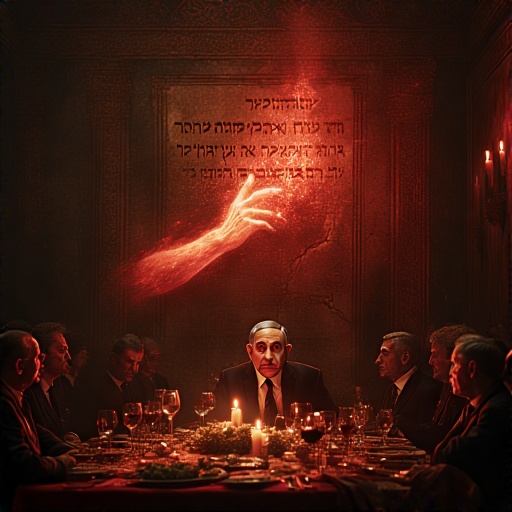
“This is the inscription that was written: mene, mene, tekel, parsin “Here is what these words mean: Mene : God has numbered the days of your reign and brought it to an end.  Tekel : You have been weighed on the scales and found wanting. Peres : Your kingdom is divided and given to the Medes and Persians.”

(Daniel 5:25-28 NIV)

The broader consequences are dire. Israel’s modus operandi—preemptive strikes justified by vague claims of imminent threats—has long been tolerated by the West, but the world is growing weary of this exceptionalism. The rubble of Gaza, the starvation of its people, and now the reckless escalation with Iran have stripped away the moral veneer Israel once claimed. Each hypersonic missile and broken promise chips away at the credibility of both Israel and the U.S., hastening the decline of their influence. Even if tactical victories are won, the writing is on the wall: arrogance and betrayal have set the stage for a new era where their dominance is no longer assured. The question now is not whether this decline can be stopped, but how swiftly it will unfold and what new powers will rise in its wake.

And Jesus Had Compassion…

Standard

I’ve frequently been appalled and dismayed by the things I see coming from my former religious peers.  It is very well-meaning, but so horribly misguided.  And recently I saw a post like that, and imagined an incredulous Jesus: “You are Israel’s teacher, and do you not understand these things?”

*sigh*

What I’m talking about is the intellectuals of the conservative Mennonite cloister, those who teach the Gospel of Niceness and side with Judas and Social Justice who confuse Jesus with a political figure who is seeking to install a Marxist regime.  They ride on the leftist bandwagon, believing it makes them countercultural—when they’re simply going along with the powerful elites of our time.  Hypocritical elites who have mandates for us and exceptions for themselves.

The offending post was one of such glaring false equivalency that I can hardly fathom a thinking person would come up with it.  The misleading commentary is that Elon Musk resharing a meme in support of his efforts to remove waste, fraud, and abuse from the government is the same as Hillary Clinton applying a nasty label to those who dared to vote against her.  This is the statement:

Clinton called millions of ordinary Americans a “basket of deplorables.” 

Musk called millions of ordinary Americans “the Parasite Class.” 

When Jesus saw the crowds, he had compassion for them, because they were harassed and helpless, like sheep without a shepherd. (Matthew 9:36)

First of all, the first part is true, Clinton did indeed call ordinary Americans a “basket of deplorables” saying that half of those who were voting against her were “racist, sexist, homophobic, xenophobic, Islamophobic.”  It is to say that over thirty-one million people who got tired of the glib “We came, we saw, he died” imperial-lib establishment that she represents are just horrible people.  

Not only is she punching down, attacking a bunch of ordinary people for voting against her, but the reason she is demonizing then is to terrify vulnerable people.  It is a cynical divide and conquer strategy, purely for sake of securing political power for herself, and part of a campaign to turn Trump’s simple effective “Make America Great Again” into something divisive and scary rather than an inclusive unifying message.

Elon Musk, by contrast, merely reshared a post.  He did not say half of the Democrat party support is parasites.  What he did say is “90% of America loves @DOGE.”  In other words, he is speaking for the crowd rather than against it.  Furthermore, the meme is not about legitimate social programs and those who benefit.  Nobody in the Trump administration is calling for slashing the rightful entitlements of Social Security or Medicare and Medicaid.

Name calling!  Accusing elites of exploitation!  Jesus would never do that, right?

What DOGE has taken aim at is the totally ridiculous and absurd, obviously fraudulent use of public funds, which 90% of America (if properly informed) supports.  The ‘crowd’ would be fully on Musk’s side if they weren’t being lied to or blinded by partisan bias.  It is compassion for those truly “harassed and helpless” that is drives the effort to increase government efficiency—and the social elites who willfully take advantage of taxpayers should be called out.

To those doing apologetics for waste, fraud and abuse, who are pushing this dishonesty take and misrepresentation: I would find it so much more tolerable if it was a forthright endorsement of sending money for far-left causes.  Just come out with it and say that you want money funnelled through USAID to pay for global promotion of transgenderism and pro-imperialist propaganda—you want this, be honest.

Compassion for the Brood of Vipers?

“You snakes! You brood of vipers! How will you escape being condemned to hell?” (Matthew 23:33 NIV)

Jesus had compassion for the crowds, but he spoke very condemningly of social elites who used their positions of influence to put heavy burdens on the shoulders of others—while not offering a finger to help.  

Jesus pretty much describes the telescopic philanthropy, the virtue-signaling and pearl-clutching of modern social justice.  

Jesus did not show compassion for these moralizing frauds.

Nice Jesus is upset about mean Tweets calling out social elites.  Real Jesus was killed because he wouldn’t stop insulting the people who thought they were above the ‘deplorable’ unwashed crowds.  Nice Jesus only would affirm and accepts everyone without ever requiring a change.  Real Jesus once compelled a tax collector (and cheat) to give back his ill-gotten gains—he greeted the promise of restoration by pronouncing salvation had come to this house.

If Jesus walked the streets of Manhattan today he would be accused of being very meanspirited, labeled as hateful, and likely cancelled by the woke elites.  They would whip up the crowd by taking things he said out of context, by calling him a homophobe, sexist or racist.  After all, he used the word “dog” to describe a foreign woman.  That is what the critics of Jesus did, he called them out and they false accused him.  He would most certainly be diagnosed as being a cult leader and narcissist for his claims.

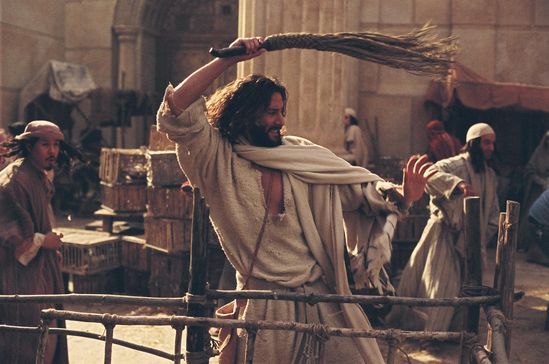
Not saying a pair of trolling billionaires are the same as Jesus.  But they certainly do take after the character of that man who was overturning the tables of the money changers and chasing out of the temple.  Lest we forget, the money changers were those who took advantage of the poor who were obligated to pay the tax.  This money was supposed to go to the upkeep of the temple and yet teams of grifters, offering a service, were being parasites:

Jesus entered the temple courts and drove out all who were buying and selling there. He overturned the tables of the money changers and the benches of those selling doves. “It is written,” he said to them, “ ‘My house will be called a house of prayer,’ but you are making it ‘a den of robbers.’” (Matthew 21:12-13 NIV)

The Gospels contain differing accounts of this event, some scholars believe it may be about two separate times when Jesus went charging in on a little ‘insurrection’ rampage, but interestingly his explanation of authority to do this cleansing was later misconstrued and used at his trial.  

Sounds familiar, doesn’t it?

The corporate media has taken fabricated tales and normal diplomacy with a foreign power—and they spun it into an incredible “Russian collusion” narrative.  Trump talked about the “very fine people” on both sides of the Charlottesville statue controversy, and he took great pains to qualify his statement—by very specifically condemning the white nationalists and Nazis in the crowd.  But it didn’t stop the media from running the story “Trump Calls Nazis ‘Fine People'” and Joe Biden, along with many other Democrat partisans, have continued to repeat this lie.

Where Trump, and MAGA, clearly delineate between legal and illegal immigration, their detractors muddy the waters.  The left takes Trump’s desire to keep America safe from the flow of Fentanyl and of unvetted foreign nationals and twists it into xenophobia and a threat to legal immigration.  It is deliberate deception.  The far-left wants to keep brown and black people terrified that’s how they’ve always won—by fear-mongering the crowd, they deceive the sheep and, when that does not work, they will imprison or assassinate their opponents.

Remember ‘kindness is everything’ my leftist friends, right?

Evil doesn’t like to have a light shown on it and when you see all of the screeching in response to DOGE taking a look behind the walls of bureaucracy you do really start to wonder why.  Why are they treating Musk as if he’s just some Nigerian scammer trying to get our information?  Is it because he’s from Africa?  It is totally ridiculous.  Lawmakers circle the wagons and tell us we have no right to know how our money is spent!  It’s time to drive out those who have used us to enrich themselves.

There is always a spy versus spy aspect to this where accusation is met with a recrimination.  Both Jesus and those elites questioning his authority claimed that their counterpart was demon possessed or of the Devil.  It would require some wisdom and discernment to know which of the two sides to believe.  But the religious frauds of our day still side with the elites against the crowd.  They defend the status quo and the corrupted established system.  It is always the beneficiaries of fraud that fight against the reform.

What Is Biblical Israel?

Standard

There is a nation in the world that identifies as Israel.  And, as we all know, if a person or group of people identify as something then this is what they are.  If I say that I’m a ham sandwich you better believe it!  Israel is what calls itself Israel.

That out the way, is that Israel the same as the Biblical Israel established by God?

If you were raised under Zionist teachings this isn’t even a question.  Of course, it is!  What else could it be?  Biblical criteria or qualifications, what are those?  I mean, how exciting would those end times novels be without our favorite backdrop???  And next, you’ll be telling us reality television is fake and that Caitlyn Jenner is a man and not a stunning and brave woman!?! 

Isn’t everyone who identifies as something that thing?

However, for those slightly more literate, and not born yesterday, the question of what the Biblical Israel is and if the state by the same name is the same thing is important.  For a Christian, up until the time of the reformation and a little after, this answer was quite clear and that is that Israel today is the remnant of the Jews who remained faithful—as well as those Gentiles converted. 

From the perspective of New Testament writers Israel is the Church or the body of those who believe—a religious affiliation and not a particular race.

About Religion, Not Race…

While still a member of a Mennonite church, I was not happy to have my religious identity be classified as an ethnic group.  In my own opinion I wasn’t born a Mennonite, it was my religion and something that I had to choose to participate in.  And yet there was truth to the claim.  There is was an ethnic component to being part of the group.  We shared a culture, and have our own common surnames, and many converts don’t fit in well.  

However, the most damning evidence, other than having unique genetic disorders, is the broad range of beliefs and practices under the Mennonite banner.  Those calling their church Mennonite span from those who are progressive and ordaining lesbian pastors to those very traditional still using horses and buggies for transportation.  So, when the only true common bond between all of these Mennonite groups is a sprinkling of Yoders, Gingrichs, Millers, or Barkmans, can it really be a religious belief system?  

Rev Michelle Yoder, a charismatic lesbian pastor of the Mennonite faith, sitting comfortably with partner in her electric Mennonite buggy as she makes her way through Africa

Okay, like a Facebook relationship status, it’s complicated.  People can and do convert to become Mennonite.  And, surprisingly enough, since a few decades ago, an African version of the Mennonite denomination has been growing rapidly to the point there are now more Mennonites in Congo than in Canada.  I mean, who knows if their doctrines or religious practices are anything that a North American conservative would recognize, nevertheless they do carry the name of Menno Simons in a direction he probably never imagined.

That’s one thing that the Orthodox generally put up front.  If you are Orthodox in Greece or a Greek community, then you’re a Greek Orthodox.  The liturgy and general practice are the same, established by canons, but there is also room for ethnic expression and use of the language common to the people.  In the Arabic world, for example, they use “Allah” where we use the Roman pagan word ‘God’ and have been using it before Islam even existed as a religion.  Anyhow, in Orthodoxy, unlike Mennonites, the identity is built from the substance of something established and a faith that is ancient.

Absurdly, when it comes to Judaism, we no longer care if they’re practicing or apostate, we slap that big ethnic label on them all and claim all of them have a claim to the land by their DNA.  To us, they’re all the same.  But that’s certainly not the case when it comes to Biblical Israel, not every part of the assembly was blessed, some were literally swallowed up by the earth, while others were put to death for disobedience, and the whole would end up in exile: 

But if you or your descendants turn away from me and do not observe the commands and decrees I have given you and go off to serve other gods and worship them, then I will cut off Israel from the land I have given them and will reject this temple I have consecrated for my Name. Israel will then become a byword and an object of ridicule among all peoples. This temple will become a heap of rubble. All who pass by will be appalled and will scoff and say, ‘Why has the Lord done such a thing to this land and to this temple?’ People will answer, ‘Because they have forsaken the Lord their God, who brought their ancestors out of Egypt, and have embraced other gods, worshiping and serving them—that is why the Lord brought all this disaster on them.’ ‭‭‭‭

1 Kings‬ ‭9:6‭-‬9‬ ‭NIV

It is quite clear that the covenant was even conditional for those who were biological offspring of Abraham.  Not only this, but people could become part of Israel who were not blood descendants of Abraham, Ruth the Moabite, or Rehab the prostitute, a Gentile, for example.  So it was never about ethnicity, it was always about obedience and the covenant conditional based upon obedience rather than bloodlines.

Chosen For Abraham’s Faith

The children of Israel were not picked for their superior genetics.  That’s not to say there aren’t very intelligent and extremely talented people of Jewish religious heritage.  Abraham was picked for being a righteous man:

And the LORD said, Shall I hide from Abraham that thing which I do; seeing that Abraham shall surely become a great and mighty nation, and all the nations of the earth shall be blessed in him? For I know him, that he will command his children and his household after him, and they shall keep the way of the LORD, to do justice and judgment; that the LORD may bring upon Abraham that which he hath spoken of him.

Genesis 18:17‭-‬19 KJV

It was Abraham’s righteousness and how he would guide his children to “keep the way of the Lord,” that God picked him.  God went on to set Israel aside through religion, not race, and those who did not keep the law would soon find themselves entirely cut off from the assembly of Israel.  There was never a blessing for simply being a blood relative of Abraham.  It was always conditioned on a faith that produced the work of obedience and this remains the case.  

Those born to keep the law of Moses must recognize their Lord and Savior or they’re no more blessed than the Benjamites put to the sword for their evil:

The tribes of Israel sent messengers throughout the tribe of Benjamin, saying, “What about this awful crime that was committed among you? Now turn those wicked men of Gibeah over to us so that we may put them to death and purge the evil from Israel.” But the Benjamites would not listen to their fellow Israelites. […] The Lord defeated Benjamin before Israel, and on that day the Israelites struck down 25,100 Benjamites, all armed with swords. […] The men of Israel went back to Benjamin and put all the towns to the sword, including the animals and everything else they found. All the towns they came across they set on fire.

Judges 20:12‭-‬13‭, ‬35‭, ‬48 NIV

If this were a Covenant merely about blood or genetics, then the Benjaminites really got shafted.  I mean, I’m not sure how anyone could construe being slaughtered wholesale as being a blessing or some special thing to be chosen for, “Congratulations, you’ve been selected to be purged!”  So this idea that anyone will ever be saved simply for their chosen race is wrong and there is only one true religion which is founded in Abraham’s seed, through the law of Moses, and is fulfilled in Christ.  

My favorite Jewish writer explains:

Those who want to impress people by means of the flesh are trying to compel you to be circumcised. The only reason they do this is to avoid being persecuted for the cross of Christ. Not even those who are circumcised keep the law, yet they want you to be circumcised that they may boast about your circumcision in the flesh. May I never boast except in the cross of our Lord Jesus Christ, through which the world has been crucified to me, and I to the world. Neither circumcision nor uncircumcision means anything; what counts is the new creation. Peace and mercy to all who follow this rule—to the Israel of God. 

Galatians 6:12‭-‬16 NIV

After Christ, even the law of circumcision becomes secondary to what St Paul describes as being “the new creation.” 

So it was the righteousness of Abraham, which was followed up with their being set aside by careful obedience to the law—which was the test of the Old Covenant—and finally, reconciliation through Christ that is salvation for all. 

It was NEVER only about ethnicity or race.  Modern descendants of the Jews must do the same as anyone else, repent and accept their King or perish. Repentance is the first step to salvation and that is what distinguishes true Israel from the counterfeit.  The first followers of Jesus were Jewish.  Christianity is the part of the assembly that remained faithful to their Lord while the others who rejected their rightful king are called anti-Christ:

Dear children, this is the last hour; and as you have heard that the antichrist is coming, even now many antichrists have come. This is how we know it is the last hour.  They went out from us, but they did not really belong to us. For if they had belonged to us, they would have remained with us; but their going showed that none of them belonged to us. […]  Who is the liar? It is whoever denies that Jesus is the Christ. Such a person is the antichrist—denying the Father and the Son.  No one who denies the Son has the Father; whoever acknowledges the Son has the Father also.” ‭‭

1 John‬ ‭2:18‭-‬19‬ ‭NIV‬‬

There are a great many who call themselves Christian today who have Scripture and yet no discernment whatsoever.  You don’t even need to believe in Jesus to understand what is being said in the passage.  Who is identified as the liar and anti-Christ?  1 John 2 very plainly tells us who: “It is whomever denies that Jesus is the Christ.”  That is to say those unfaithful to the covenant made with Abraham through their rejection of the Son—God in the flesh.

To say that some can deny the Son and still have a Covenant with the Father?  It is to basically throw out the entire Gospel of Jesus Christ.  It is completely moronic and a sign that someone was never truly part of the assembly of God.  If they truly belonged they would see their Lord as the fulfillment and not be so easily led astray.  When Jesus says “Salvation is from the Jews” he is not talking about an ethnic group, he is talking about himself and how he is the Messiah that was promised through the faithful seed of Abraham.

Chosen by Christ

It is really a form of idolatry to hold a race or ethnicity up as chosen by God for no reason other than their genetics.  That is not what the “Israel of God” ever was.  The assembly (or ‘ekklesia’) was always about those who were faithful, a remnant of Abraham’s seed that included Gentile converts, and turning it into an ethno-nationalist state is a perversion of what the original covenant between God and Abraham actually entailed.  A covenant is a two-edged sword, while it comes with blessings for those who obey there is also a list of curses for those who do not hold up their own end.

‭‭Jesus spoke to them again in parables, saying: “The kingdom of heaven is like a king who prepared a wedding banquet for his son. He sent his servants to those who had been invited to the banquet to tell them to come, but they refused to come. […] “But they paid no attention and went off—one to his field, another to his business. The rest seized his servants, mistreated them and killed them. The king was enraged. He sent his army and destroyed those murderers and burned their city. “Then he said to his servants, ‘The wedding banquet is ready, but those I invited did not deserve to come. So go to the street corners and invite to the banquet anyone you find.’ […] “For many are invited, but few are chosen.”

Matthew‬ ‭22:1‭-‬3‬,5-9,14 ‭NIV‬‬

Any guess which of those on the guest list killed the servants sent by the King?

The Biblical Israel, for those who believe in the Gospel of Jesus Christ, is that remnant of Jews who obey and follow after the Word of God incarnate.  This is always how Israel worked.  Some were pruned off the tree and others grafted in.  There were never special exceptions made for anyone merely on the basis of ethnicity or race.  The Church is the nation of those faith to the work of God that started with a Covenant with Abraham and needs no worldly state or rebuilt temple of stones.  Christians are the chosen people.

This essay doesn’t mean that there should be no modern state of Israel or that the mistreatment of any group of people in the world who have rejected Jesus is ever acceptable. We just need to know there’s a big difference between “identifies as’ and what is actually being referred to in the Bible.

Biblical Reversionism

Standard

I’m dismayed by the number of people who profess Christ as their Lord and Savior yet fall for the most brazen of heresies.  The one which is the topic of this post turns the Bible on its head.  It diverts attention from what is important and undermines the Gospel Jesus preached first to the Jews, for their salvation, before it was spread throughout the world by way of his disciples.  Biblical reversionist heresy elevates the Old Covenant to be equal with the fulfillment of these promises in Christ. It is, in the end, a rejection and mockery of Christ.

The Resurrection of Old Defies the New…

The reversionist believes that, despite Jesus coming to save both Jews and Gentiles, according to Romans 1:16, the Old Covenant continues in parallel for those who have rejected Christ. It is ignorant of the fact that the New Testament talks about both those who are cut off from the vine (which is Christ) and those who are grafted in:

If some of the branches have been broken off, and you, though a wild olive shoot, have been grafted in among the others and now share in the nourishing sap from the olive root, do not consider yourself to be superior to those other branches. If you do, consider this: You do not support the root, but the root supports you.  You will say then, “Branches were broken off so that I could be grafted in.” Granted. But they were broken off because of unbelief, and you stand by faith. Do not be arrogant, but tremble.  For if God did not spare the natural branches, he will not spare you either.

(Romans 11:17-21 NIV)

The Old Covenant law does not save:

For what the law was powerless to do because it was weakened by the flesh, God did by sending his own Son in the likeness of sinful flesh to be a sin offering. And so he condemned sin in the flesh, in order that the righteous requirement of the law might be fully met in us, who do not live according to the flesh but according to the Spirit.

(Romans 8:3-4 NIV)

It was only ever a shadow:

The law is only a shadow of the good things that are coming—not the realities themselves. For this reason it can never, by the same sacrifices repeated endlessly year after year, make perfect those who draw near to worship. Otherwise, would they not have stopped being offered? For the worshipers would have been cleansed once for all, and would no longer have felt guilty for their sins. But those sacrifices are an annual reminder of sins. It is impossible for the blood of bulls and goats to take away sins.

(Hebrews 10:1-4 NIV)

Which is made obsolete, in Christ:

But in fact the ministry Jesus has received is as superior to theirs as the covenant of which he is mediator is superior to the old one, since the new covenant is established on better promises. For if there had been nothing wrong with that first covenant, no place would have been sought for another. But God found fault with the people and said:

“The days are coming, declares the Lord, when I will make a new covenant with the people of Israel and with the people of Judah. It will not be like the covenant I made with their ancestors when I took them by the hand to lead them out of Egypt, because they did not remain faithful to my covenant, and I turned away from them, declares the Lord. This is the covenant I will establish with the people of Israel after that time, declares the Lord. I will put my laws in their minds and write them on their hearts. I will be their God, and they will be my people. No longer will they teach their neighbor, or say to one another, ‘Know the Lord,’ because they will all know me, from the least of them to the greatest. For I will forgive their wickedness and will remember their sins no more.”

By calling this covenant “new,” he has made the first one obsolete; and what is obsolete and outdated will soon disappear.

(Hebrews 8:6‭-‬13 NIV)

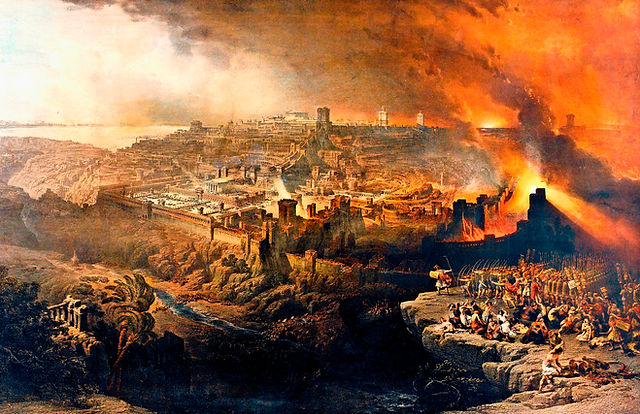
The outdated covenant *did* disappear with the destruction of the Temple.

From John the Baptist:

But when he saw many of the Pharisees and Sadducees coming to where he was baptizing, he said to them: “You brood of vipers! Who warned you to flee from the coming wrath? Produce fruit in keeping with repentance. And do not think you can say to yourselves, ‘We have Abraham as our father.’ I tell you that out of these stones God can raise up children for Abraham. The ax is already at the root of the trees, and every tree that does not produce good fruit will be cut down and thrown into the fire.

(John 8:7-10 NIV)

At no point does Jesus say that there will be multiple paths to salvation or that there will be a tree of salvation that stems only from being biologically linked to Abraham. There is one true vine, that is Jesus, some are cut off and destroyed, others are grafted in and saved. There is nowhere where it is said that the Old Covenant will be resurrected to provide another way for those who have rejected and continue to reject Christ. To preach that is heresy, it is reversionism, and replaces the true Israel (that is to say those who believed or the church) with a secular nation borrowing the name.

The New Covenant is not about an ethnostate or the Haaretz of Israel. No, it is about the heavenly kingdom, a kingdom where there is no Jew or Gentile, that is defined by faith rather than biological pedigrees. Our blessing, eternal life, comes through Christ Jesus alone.

Blessings of the Anti-Christ?

The reversionists base their entire interpretation on a misuse of this blessing given to Abram:

“I will make you into a great nation,
    and I will bless you;
I will make your name great,
    and you will be a blessing.
I will bless those who bless you,
    and whoever curses you I will curse;
and all peoples on earth
    will be blessed through you.”

(Genesis 12:2,3 NIV)

They ignore everything St Paul said to explain the seed of Abraham as being singular (Christ) in his rebuke of the foolish Galatians trying to revert back to the Old Covenant. Over and over again Scripture tells us of the failure of those who try to do things through means of the flesh and yet here we are again.

But even the passage itself is spoken specifically about Abram (later Abraham) and those who bless or curse him. It doesn’t say anything about those who bless or curse this “great nation” promised nor does it seem to be talking about nations period. It is a promise to Abraham specifically and then ends by saying that “all people on earth will be blessed through you” which is to say him or his seed, which again is Christ—who didn’t require blind allegiance to a worldly nation.

Furthermore, the modern state of Israel, with a powerful military and foreign backing, does fit the criteria of the nation God said must be fully dependent on Him. Israel is a progressive state, ranked 7th in the world for gay happiness, and one of the least religious countries in the world, and God’s Covenant with the nation of Israel was always conditional. Both Leviticus and Deuteronomy make this quite clear: If they obey God will bless them and if they do not they will be destroyed. Zionism, the Jewish version, makes the Jews themselves the saviors of the world and totally replaces Christ.

This being our own Christ and denying the true Christ is exactly what is being referred to when New Testament writers use the phrase anti-Christ:

Who is the liar? It is whoever denies that Jesus is the Christ. Such a person is the antichrist—denying the Father and the Son. No one who denies the Son has the Father; whoever acknowledges the Son has the Father also.

(1 John 22-23 NIV)

If there is a temple rebuilt, it will be the seat of the anti-Christ:

Don’t let anyone deceive you in any way, for that day will not come until the rebellion occurs and the man of lawlessness is revealed, the man doomed to destruction.  He will oppose and will exalt himself over everything that is called God or is worshiped, so that he sets himself up in God’s temple, proclaiming himself to be God. […] The coming of the lawless one will be in accordance with how Satan works. He will use all sorts of displays of power through signs and wonders that serve the lie, and all the ways that wickedness deceives those who are perishing. They perish because they refused to love the truth and so be saved.  For this reason God sends them a powerful delusion so that they will believe the lie and so that all will be condemned who have not believed the truth but have delighted in wickedness.

(2 Thessalonians 2:3,4,9-12 NIV)

And what a powerful delusion some believe, that puts the Church established by Christ behind the nation that rejected Him, this we’re told:

Dear children, this is the last hour; and as you have heard that the antichrist is coming, even now many antichrists have come. This is how we know it is the last hour.  They went out from us, but they did not really belong to us. For if they had belonged to us, they would have remained with us; but their going showed that none of them belonged to us.

(1 John 2:18-19 NIV)

Ultimately, choose whatever Israel you want. But you can’t have both. You can’t have your worldy Israel, that is rejected even by observant Jews who call it fraudlent, and then claim to be a part of the kingdom of Christ Jesus. Reversionism is in no way a Covenant with the God of Abraham. It is only a counterfiet of the original promise and one that draws many away from their only means of salvation. Don’t be one who is decieved by this new version of the same old heresy, don’t be like Judas looking for his worldly fulfilment. There is only one Israel where Christ is king and that’s His Church.

The saddest part about reversionism (or ‘Christian’ Zionism) is that it muddies the waters and sends mixed messages to those who need salvation. So many professing Christ and then supporting the brutal reality of what it takes to create a Jewish state on land that was inhabited is a slanderous and degrading witness of Christ who would have had no problem establishing a worldly kingdom through use of violence over two millenia ago. So many are like Gehazi, servant of Elisha, dishonoring the example of their master and inheriting the disease that was healed: “For what shall it profit a man, if he shall gain the whole world, and lose his own soul?”


Are We Saved Through Our Consciousness?

Standard

Let’s talk about consciousness and infant Baptism, shall we?

My entire life, as a child of Anabaptism, I was taught a doctrine called “Believer’s baptism” (or credobaptism) which a) tied Baptism to church membership and b) teachings that Baptism requires a conscious or adult decision.  The irony of that is that many Mennonites are Baptized as children, as a result of indoctrination, and not after an exhaustive search for truth that ends with Christ.

It makes sense, at one level, that a believer in Christ must be able to “count the cost” (Luke 14) of discipleship, right?

And yet, if we look at the Apostles themselves, were any of them actually ready when they were picked by Jesus?

No, if Peter had counted the cost, if he truly understood what it meant to enter the kingdom, he would never have denied Christ.  The doubts of Thomas, and the betrayal of Judas, all point to a group of men who did not fully comprehend the words of Jesus prior to their Baptism.

#1) We don’t choose, we’re chosen and drawn to Christ:

No one can come to me unless the Father who sent me draws them, and I will raise them up at the last day.  It is written in the Prophets: ‘They will all be taught by God.’  Everyone who has heard the Father and learned from him comes to me. […] The Spirit gives life; the flesh counts for nothing. The words I have spoken to you—they are full of the Spirit and life. Yet there are some of you who do not believe.” For Jesus had known from the beginning which of them did not believe and who would betray him. He went on to say, “This is why I told you that no one can come to me unless the Father has enabled them. 

(John 6:44-45,63-65 NIV)

#2) We did not decide the hour of our first birth nor do we decide the second birth:

Jesus replied, “Very truly I tell you, no one can see the kingdom of God unless they are born again.”

“How can someone be born when they are old?” Nicodemus asked. “Surely they cannot enter a second time into their mother’s womb to be born!”

Jesus answered, “Very truly I tell you, no one can enter the kingdom of God unless they are born of water and the Spirit. Flesh gives birth to flesh, but the Spirit gives birth to spirit. you should not be surprised at my saying, ‘You must be born again.’ The wind blows wherever it pleases. You hear its sound, but you cannot tell where it comes from or where it is going. So it is with everyone born of the Spirit.” 

(John 3:2-8 NIV)

#3) We were dead, dead people aren’t conscious to make adult decisions:

As for you, you were dead in your transgressions and sins, in which you used to live when you followed the ways of this world and of the ruler of the kingdom of the air, the spirit who is now at work in those who are disobedient. All of us also lived among them at one time, gratifying the cravings of our flesh and following its desires and thoughts. Like the rest, we were by nature deserving of wrath.  But because of his great love for us, God, who is rich in mercy, made us alive with Christ even when we were dead in transgressions—it is by grace you have been saved. And God raised us up with Christ and seated us with him in the heavenly realms in Christ Jesus, in order that in the coming ages he might show the incomparable riches of his grace, expressed in his kindness to us in Christ Jesus.  For it is by grace you have been saved, through faith—and this is not from yourselves, it is the gift of God—not by works, so that no one can boast.  For we are God’s handiwork, created in Christ Jesus to do good works, which God prepared in advance for us to do. 

(Ephesians 2:1-10 NIV)

By adding the requirement of adult comprehension, the teachers of credobaptism turn Baptism into a work and base salvation on our consciousness of the need.  That’s rational, yet humanistic and not the process we see outlined in Scripture.  Lazarus, dead for four days, did not have the mental capacity to listen to the command of Jesus, “Lazarus, come out!”  No, we understand that this would be impossible.  And, likewise, when the Rich Young Ruler (asks “what must I do to be saved,” the final answer is not “sell all and give to the poor,” as some Anabaptists believeit is “with man this is impossible, with God all things are possible.”

The real problem with this idea that Baptism requires a certain level of consciousness (and the invented concept of an “age of accountability”) is that it is totally arbitrary and would exclude those not fully capable of making an adult choice.  I mean, truly, will we refuse to Baptize the mentally disabled because they can’t count the cost of discipleship?  Should we have an IQ test?  Maybe make applicants provide proof of their faith?  At the very least, if this notion of Believer’s baptism is correct, and adult consciousness necessary to appreciate Christ, then should we cut this silliness of a baby leaping in the womb (Luke 1:41) out of the Gospel narrative?

There is evidence, in Scripture, of whole households being Baptized.  But there is little to support this idea that one must reach a certain level of consciousness to be Baptized.  It is really like some people think they’ve saved themselves and this misunderstanding of the significance of Baptism, starting five centuries ago, got turned into theological hubris.  If Baptism is about being born again or spiritual rebirthand our first physical birth was not a willful choicewhy would we ever conclude that Baptism must be a choice, a matter of age or adult comprehension?

What is Baptism truly about?

Baptism is the start of a journey of faith, like birth, and something to accompany repentance.

But wait, there’s more…

Baptism and the Nuptial Bath

Up until very recently, being unfamiliar with Jewish wedding traditions, I would never have made the connection between Baptism and a Jewish bride’s nuptial bath.  A friend of mine shared a podcast that dove into that topic (listen here) and the parallels seem to be very real.  Upon further research, this ‘other” meaning is also something understood historically by the church and quite clearly implied in this passage:

Husbands, love your wives, just as Christ loved the church and gave himself up for her to make her holy, cleansing her by the washing with water through the word, and to present her to himself as a radiant church, without stain or wrinkle or any other blemish, but holy and blameless. 

(Ephesians 5:25-27 NIV)

Baptism, in effect, is a symbolic representation of the start of this ritual cleansing that doesn’t end with the act.  The Christian life is a life of repentance, of continually turning towards Christ.  Our spiritual cleansing doesn’t end with the water of our physical Baptism either.

After this, Jesus and his disciples went out into the Judean countryside, where he spent some time with them, and baptized.  Now John also was baptizing at Aenon near Salim, because there was plenty of water, and people were coming and being baptized. (This was before John was put in prison.) An argument developed between some of John’s disciples and a certain Jew over the matter of ceremonial washing.  They came to John and said to him, “Rabbi, that man who was with you on the other side of the Jordan—the one you testified about—look, he is baptizing, and everyone is going to him.”

To this John replied, “A person can receive only what is given them from heaven. You yourselves can testify that I said, ‘I am not the Messiah but am sent ahead of him.’ The bride belongs to the bridegroom. The friend who attends the bridegroom waits and listens for him, and is full of joy when he hears the bridegroom’s voice.  That joy is mine, and it is now complete. He must become greater; I must become less.” 

(John 3:22-30 NIV)

It was directly prior to this that we have the encounter between Jesus and Nicodemus where we get the phrase “born again” and where Jesus tells the perplexed Jewish religious leader about this rebirth “of water and the Spirit” like the wind that goes wherever it pleases.  That is an indication of the mysterious origin of Baptism, that it is not something that comes about through our own rational thought processes.  

So what is this “ceremonial washing” about? 

And how does Baptism relate to brides and bridegrooms?

A few months back I worked on a truss layout for a religious building project, a Mikvah bath, and learned more about the Jewish ritual cleaning process and something observant women of that religion must do on a regular basis.

Mikvah bath

However, most significantly, it is something they do prior to marriage, which seems to be the connection between the quarrel about everyone getting this ceremonial washing and the response of John the Baptist. 

The point and purpose of John’s ministry, like the pre-marital ritual washing of a bride when her groom arrived, Baptism was to make people ready for the marriage to Christ. It was not symbolic of the commitment itselfrather it was only a part of the process leading up to the commitment.  So, sure, Baptism is the start of an important transitionary moment and yet our salvation comes through a life-long Theosis, through our being washed, sanctified, and justified by the Spirit of God until the time we depart this world.

One last point, and related to this nuptial bath tradition and the parallels to Baptism.  Jewish brides did choose their partners nor the time of their wedding like we do.  No, they practiced arranged marriage and the arrival of the groom was at the appointed time of his father once the preparations were complete.  So again, where does this idea come from that the bride must choose the time or place of this meeting and bath?  Wouldn’t responsible Christian parents want to prepare even infant children for their groom? 

The expanded consciousness that comes through our prearranged nuptials with Christ can come after the ritual washing of Baptismas it did for the disciples who didn’t know what they were being signed up for when they began their journey of faith.

And, yes, apparently Jewish infants are immersed as a part of their religious conversion process.

Oh, and also, the groom (Jesus) gets washed too prior to the wedding ceremony…

Divorce and the Purpose of the Law

Standard

Much of what we believe is inherited and that includes how we interpret certain passages of Scripture.  It is just the way things are, we do not independently arrive at our own conclusions and could very well have been taught wrong.  Those who believe that the ground they stand on is sacred simply because they’re standing on it have no potential for growth in understanding or perspective.

Many in a purity culture would squeal their displeasure at the term “legalism” being used to describe their ‘Biblical standards’ and hide behind mantras such as “God Said It, I Believe It, That Settles It!”  Unfortunately, while this kind of obstinate stance may be good as far as resisting temptation, it basically amounts to confirmation bias on steroids in a search for truth.

This is exactly the attitude of those who took issue with Jesus breaking the Sabbath and how they absolutely refuse to see their own application of Scripture as entirely missing the point:

At that time Jesus went through the grainfields on the Sabbath. His disciples were hungry and began to pick some heads of grain and eat them. When the Pharisees saw this, they said to him, “Look! Your disciples are doing what is unlawful on the Sabbath.” He answered, “Haven’t you read what David did when he and his companions were hungry? He entered the house of God, and he and his companions ate the consecrated bread—which was not lawful for them to do, but only for the priests. Or haven’t you read in the Law that the priests on Sabbath duty in the temple desecrate the Sabbath and yet are innocent? I tell you that something greater than the temple is here. If you had known what these words mean, ‘I desire mercy, not sacrifice,’ you would not have condemned the innocent. For the Son of Man is Lord of the Sabbath.” Going on from that place, he went into their synagogue, and a man with a shriveled hand was there. Looking for a reason to bring charges against Jesus, they asked him, “Is it lawful to heal on the Sabbath?” He said to them, “If any of you has a sheep and it falls into a pit on the Sabbath, will you not take hold of it and lift it out? How much more valuable is a person than a sheep! Therefore it is lawful to do good on the Sabbath.” Then he said to the man, “Stretch out your hand.” So he stretched it out and it was completely restored, just as sound as the other. But the Pharisees went out and plotted how they might kill Jesus.

(Matthew 12:1‭-‬14 NIV)

The Pharisees, like religious fundamentalists today, believed that they were the experts and examples of righteousness.  They would know that Moses, by order of the Lord according to Numbers 15:32-36, had a man put to death for picking up sticks on the Sabbath.  It is very likely that many of them were very sincere in their saying that Jesus was possessed by a demon.  How dare this teacher allow his followers to break the law and then defiantly double down in response to their concern!!!  Weren’t there six other days to heal?!?

Now some commentators may try to square this legalistically, by claiming that Jesus was not truly going against Scripture.  But I do not believe this is the case.  The Pharisees were obsessed with the letter of the law and technically right in their complaint against his breaking the Sabbath.  Jesus, by contrast, was focused on the reason behind the law, or spirit of the law, and pointed to Hosea 6:6, “I desire mercy, not sacrifice,” to establish the vast difference between the ritualistic devotion to a set of religious rules and genuine love for people.

Legalism, by this standard, is a use of the law that is negligent of the purpose.  What is the purpose of law?  The law is supposed to be for our own good, to protect us from harm, and thus the exceptions that Jesus mentioned in response to his critics.  A legalist, in their strict adherence to rules, loves their rules, and yet they lack love and mercy for people.  Thus, a legalist, in their no-compromise application of the law, defies the actual purpose for which the law was established and, therefore, are no longer under the law themselves:

Speak and act as those who are going to be judged by the law that gives freedom, because judgment without mercy will be shown to anyone who has not been merciful. Mercy triumphs over judgment.

(James 2:12‭-‬13 NIV)

Legalism: Divorced From the Issue

This blog is not meant to be a theological tome.  For a more exhaustive look at the divorce and remarriage topic, especially for those of an Anabaptist background, I would suggest reading Dwight Gingrich who has covered the issue exhaustively in a series of blogs.  I’ve already covered Biblical proof-texts in prior postings as well.  Instead, I’ll stick to a discussion of the hardness of hearts and economia (special exception) as it applies to divorce and remarriage.

First of all marriage, by original intent, is until death do they part and there’s no exception to this.  If men and women would live up to their vows, not make promises they not keep, this would solve the entire issue.  If people would act responsibly and remain faithful in relationships then there would be no broken homes.  That is certainly ideal, it was also the privilege of being born into conservative Mennonite culture for me—in that my parents were encouraged, through peer pressure, to overcome doubts and make it work.

However, this ideal simply is not available to many in the world.  Many do marry, or have children, with someone whom they intend as their soulmate and it doesn’t end in a happily ever after for them.  This failure of adults can have disastrous consequences for the next generation, the less desirable outcomes for children of single-parent homes are the evidence:

Children who live with only one of their parents do less well in school, obtain fewer years of education, and have trouble keeping a steady job as young adults. Children from single parent families are six times more likely to be poor.

“Single Parenthood and Children’s Well-being,” Wisconsin Family Impact Seminars

Now maybe this is genetic, that the children have the same commitment issues as their parents, and this strong correlation of single-parent homes with poor outcomes for children does not automatically equate to environmental causation.  Maybe we need an adopted twin study?  But it is pretty safe to say, without a complex analysis, that the insecurity and chaos of a home with one parent will have an impact on children that is undesirable.

So there’s a question: If the law is there for our good and single-parent homes are bad, what should happen after divorce or abandonment?

In the culture that I came from, there was a hardline stance on divorce and remarriage that even nullified the “exception clause” of Matthew 19:9.  This perspective, from my personal experience as one who defended it, is about the preservation of an ideal and even at the expense of people.  I could reason, like Moses having the man killed for picking up sticks, that allowing one exception would be a slippery slope and lead to far greater social disorder.

And yet this “greater good” logic is exactly why Jesus was put to death:

Then the chief priests and the Pharisees called a meeting of the Sanhedrin. “What are we accomplishing?” they asked. “Here is this man performing many signs. If we let him go on like this, everyone will believe in him, and then the Romans will come and take away both our temple and our nation.” Then one of them, named Caiaphas, who was high priest that year, spoke up, “You know nothing at all! You do not realize that it is better for you that one man die for the people than that the whole nation perish.” 

(John 11:47-50 NIV)

They both missed out on Jesus, their king, and also did not save temple worship. Also equally ironic is that the high priest unintentionally spoke the truth.

Anyhow, maybe, in the time of Moses, sacrifices of animals and the sons of Abraham were needed for the health of the nation.  But now, after the death and resurrection of Christ, we are clothed in his righteousness and thus free from the letter of the law that kills:

He has made us competent as ministers of a new covenant—not of the letter but of the Spirit; for the letter kills, but the Spirit gives life.

(2 Corinthians 3:6 NIV)

You’ll need to read further about the context of that statement to fully grasp what St Paul is saying in that letter.  But the short version is that he’s contrasting the understanding of the law prior to Christ with that which only comes with the Spirit and seeing the intent behind laws as being greater than the laws themselves.  This is different from the Pharisee men who carved out legalistic exceptions for themselves to divorce and were confronted by Jesus for their hardness of heart:

Some Pharisees came to him to test him. They asked, “Is it lawful for a man to divorce his wife for any and every reason?” “Haven’t you read,” he replied, “that at the beginning the Creator ‘made them male and female,’ and said, ‘For this reason a man will leave his father and mother and be united to his wife, and the two will become one flesh’? So they are no longer two, but one flesh. Therefore what God has joined together, let no one separate.” “Why then,” they asked, “did Moses command that a man give his wife a certificate of divorce and send her away?” Jesus replied, “Moses permitted you to divorce your wives because your hearts were hard. But it was not this way from the beginning. I tell you that anyone who divorces his wife, except for sexual immorality, and marries another woman commits adultery.”

(Matthew 19:3‭-‬9 NIV)

The audience is men.  The ideal is marriage until death do they part.  And the rebuke is against the hardness of hearts.  This is what makes it so egregiously wrong that men, in fundamentalist communities, will apply this passage (usually excluding the exception clause) to women who were abandoned by their husbands.  It is, at the very best, taking the words of Jesus out of context and it is too often used rather hard-hearted response to those who have no chance of restoring what is ideal.

Jesus was not answering the question of what a woman is supposed to do when left to raise her children alone.  And I’m also quite confident that he was not intending for his prescription to these men to be applied in the same dogmatic manner as they approached the Scriptures.  It was their lack of mercy and compassion, how these men would misuse of the law of Moses (which did allow divorce) to escape their own responsibilities, that is the focus of his words.

As was explained to me concerning the Orthodox position on divorce and remarriage in contrast to that of fundamentalists:

As to sticking with what is written, I think here you can see the difference in how the Orthodox view the Scriptures—as part and parcel—but never the entirely of the whole Tradition—all of which has been handed down to us. The Orthodox do not take divorce and re-marriage lightly—it’s a complicated process to get a bishop’s blessing to undertake second and third marriages and the blessing is not always given. But the primary issue here is that the Orthodox confess God to be a God of mercy, love, and forgiveness—not a law-obsessed judge who keeps a record of pluses and minuses in order to play “gotcha” with those who fail.

Father Anthony Roeber

That statement above, part of an email that so profoundly reframed my understanding of divorce and remarriage, cuts right to the heart of the issue.  Married or single, first marriage or second, what matters more than anything else is will if help us in the journey of faith or will it hinder.  And that’s the true intent behind the law, it was a tool to steer us in the direction of doing what is good and merciful, like our Father, and yet would never be sufficient to save us.

Be merciful, just as your Father is merciful.

Luke 6:36 NIV

Evolution: From Genesis To the Gospels

Standard

If you read the Gospel narratives and get to the end of these books, you come across some very interesting passages.  It is after the resurrection and right before Jesus ascends that we read this:

Again Jesus said, “Peace be with you! As the Father has sent me, I am sending you.” And with that he breathed on them and said, “Receive the Holy Spirit. If you forgive anyone’s sins, their sins are forgiven; if you do not forgive them, they are not forgiven.” 

(John 20:21-23 NIV)

And according to St. Luke:

Then he opened their minds so they could understand the Scriptures. 

(Luke 24:45 NIV)

What strikes me, in both passages, is how this final transformative step took place after a long-drawn-out process of teaching and showing by example.  Why go through this protracted effort if ultimately their minds needed to be opened by the Holy Spirit?

Furthermore, why even go through the centuries, from the time of Abraham on, leading these stubborn Israelite people, if the real plan is to send Jesus and rely on the power of the Holy Spirit?  If all of this eighth day of creation could have been accomplished with God merely saying the word, why not skip steps A to Z or cut to the chase?

In the Beginning…

There are many who believe that anything other than a ‘literal’ interpretation of the word days in the first chapters of Genesis takes away from God’s power.  In their mind it must be twenty-four-hour, the earth spinning a full rotation on its axis, days and nothing else.

Of course, knowing the little I do about language, and how words like “gay” can evolve from happy to men who prefer men, it makes very little sense to die on the hill of one particular translation from archaic language.  It does not seem necessary to turn this into an either/or and especially considering that none of us were there to witness the events described.  There is a sort of poetic metre to the opening chapter of Genesis, it could certainly suggest we could see this as a summary rather than something exhaustive.

All that the long way around to saying that this opening act of Scripture culminates at this moment:

Then the Lord God formed a man from the dust of the ground and breathed into his nostrils the breath of life, and the man became a living being. 

(Genesis 2:7 NIV)
Creation of Adam, mosaic, 12th century. Monreale, Cathedral

The interesting part is that this is the second account of the creation of man, whereas this is the first version of this significant event:

Then God said, “Let us make mankind in our image, in our likeness, so that they may rule over the fish in the sea and the birds in the sky, over the livestock and all the wild animals, and over all the creatures that move along the ground.” So God created mankind in his own image, in the image of God he created them; male and female he created them. 

(Genesis 1:26‭-‬27 NIV)

In the above account we have both male and female, or mankind, being created simultaneously on the “sixth day” and yet in the very next chapter we have Adam naming all of the animals, not finding a suitable match for himself amongst all of the creation, and this *before* Eve being formed.  At best that was one heck of a long day, at worse the first two chapters of the Bible directly contradict each other.

Of course, then we get into what a “day” really is without a sun, as celestial bodies weren’t created until the fourth day according to the Genesis account.  Time is not some immutable thing, it passes faster and slower depending on the reference frame, the Palmist tells us that a thousand years is as a day from God’s perspective.  So I’m not sure what is gained by insisting on the one interpretation that most conflicts with the scientific evidence.

A Biblical Preference for Process

It does not take a deep dive into theology to realize the importance of ritual.  Whether Namaan’s seven dips in the river Jordan before being healed, the march seven times around the walls of Jericho before they fell, or Jesus spitting in mud and rubbing it into a blind man’s eyes before the miraculous, there’s a distinct pattern of the creation doing and the God coming through to complete the work.

Maybe the repeating record of Scripture is trying to tell us something?

First, the elongated process does not eliminate or even diminish God.  Sure, many of us want immediate results, we want everything to materialize, fully formed, rather than have to wait days, weeks, or years.  And many do conclude after a prayer is not immediately answered or according to their own timeline, that this does rule out the possibility of God.  But the clear Biblical pattern is that everything is always in the fullness of time:

So also, when we were underage, we were in slavery under the elemental spiritual forces of the world. But when the set time had fully come, God sent his Son, born of a woman, born under the law, to redeem those under the law, that we might receive adoption to sonship.

(Galatians 4:3‭-‬5 NIV)

St. Paul likens the spiritual transformation, made possible through Christ, to the two sons of Abraham—one of them the result of rushing the process and the other of truly Divine origin.  The law is a foundation and yet not the fullness or complete fulfillment.  Even now, even for the believer, we know we are not a completed work until that day we hear “well done, good and faithful servant!”

Cutting to the chase, the “formed a man from the dust” of Genesis doesn’t tell us much about the process behind that formation.  But the “breathed into his nostrils the breath of life” of Genesis does parallel with “he breathed on them”  in the Gospel of John.  The disciples, like Adam, had some kind of form prior to this transformation and enhanced spiritual life.  The time they had spent with Jesus prior to their mind being opened was not purposeless.

God could have created without a process.  Still, the overwhelming pattern appears to be that God catalyzes things that are already underway or set in motion.  It would therefore not be all that surprising if forming out of dust alludes to an evolutionary process, which was finalized in Adam and this special spiritual life breathed into him.

What Makes Us More Than Animals?  

Truly, in terms of biology, we aren’t different from animals, we have instincts that drive us, and can lose our humanity too.  Indeed, we can be degraded to an animalistic existence through our actions and lose that element of being created in the image of God:

But these people blaspheme in matters they do not understand. They are like unreasoning animals, creatures of instinct, born only to be caught and destroyed, and like animals they too will perish. 

(2 Peter 2:12 NIV)

So the Bible tells us about evolution (and de-evolution) from the perishable fleshly form or physical body to those are quickened in spirit and being transformed:

So will it be with the resurrection of the dead. The body that is sown is perishable, it is raised imperishable; it is sown in dishonor, it is raised in glory; it is sown in weakness, it is raised in power; it is sown a natural body, it is raised a spiritual body. If there is a natural body, there is also a spiritual body. So it is written: “The first man Adam became a living being”; the last Adam, a life-giving spirit. The spiritual did not come first, but the natural, and after that the spiritual. The first man was of the dust of the earth; the second man is of heaven. As was the earthly man, so are those who are of the earth; and as is the heavenly man, so also are those who are of heaven. And just as we have borne the image of the earthly man, so shall we bear the image of the heavenly man. I declare to you, brothers and sisters, that flesh and blood cannot inherit the kingdom of God, nor does the perishable inherit the imperishable. 

(1 Corinthians 15:42‭-‬50 NIV)

It is this spiritual component—this ‘breath’ of God both in Genesis and the end of the Gospels—that sets us apart from the animal.  We’re essentially on the same journey as Pinocchio, who wanted to be a real boy, in this pursuit of the Divine transformation.  We have evolved, even if not in the Darwinian sense, from that first cell in our mother’s womb to the learning of our childhood, and this is a creative process guided by the Holy Spirit from start to finish.

Icon of Jesus pulling Adam and Eve out of the grave on the mystical eighth day of creation, which is to say His victory over death and the resurrection of the dead.

Freedom In Christ, Consistency, and Conscience

Standard

It is often disheartening to see differences of application within the Church. I’m not only talking about the tens of thousands of Protestant denominations either, no, even those within the Orthodox tradition see things vastly different at times.

A few weeks ago, and adding to my consternation over the past weeks, which included an estrangement from a close friend, another trusted friend caught in his double life, as well as my continuing wait for Charlotte, still indefinite due to Covid restrictions, impending neck surgery, and other painful physical ailments, I had reached out to Fr. Anthony for council.

Now, I have suspected (but do not know and do not need to know) based on hints, that Fr. Anthony’s politics are a little different from mine. So when I shared about my own struggles with relationships within the parish family he shared a bit of his own. It turns out that his diocese is pushing vaccines (oops) and, evidently, he is in full support. My own bishop, by contrast, and fortunately for me, has issued a don’t ask don’t tell policy and basically forbade it from being an issue.

The thing is, I would never argue with Fr. Anthony over something like this, he is a wise and humble man, I have nothing but respect for him. Still, that doesn’t change my own opinion, my own hesitancy is not without good reason and I’m certainly not comfortable with this kind of medical decision being imposed on anyone. So there is a bit of cognitive dissonance while contemplating this difference in perspective. Can I have it both ways?

This was on the back burner until the other day, when a good friend, asked me to parse this:

I’m assuming you’re aware of the sentiment running around right now that Christians are supposed to be compassionate and care for their community.  Therefore they should gladly submit to the vaccinations.  Assume the vax is as effective as they think it is.  What is the CORE philosophical/theological/moral flaw in that thinking?

I never actually answered the question. I honestly don’t know how to answer. But I suppose caring can cut many different ways and including being compassionate with those concerned about the risks of vaccines. My mind immediately went to that email exchange with Fr. Anthony where I had wanted to reconcile the opposite positions on vaccines, within Orthodoxy, and didn’t have the mental energy at the time.

My own rough position was that the whole debate, to vaccinate or not to vaccinate, was a secondary issue and there were others of primary importance.

Early on, last year, aware of the disease, still uncertain about the deadliness, I had stayed home a couple of Sundays because of my feeling sick and wondered about the wisdom of partaking from the Chalice. I’m not ignorant of virology and everyone being served from the same cup seemed to be a potential super spreader event in the making. Despite some saying otherwise, that we can’t get sick, I’m not completely convinced that disease can’t be communicated in this manner.

However, at some point, I decided that life or death, partaking of the body of Christ is more important than my own understanding of the spread of contagious disease. Besides that, my own risk of dying was relatively low, so why give up the practice of my faith on the basis of this risk? To live is Christ, to die is gain, right?

Why worry?

So, here’s the thing, if my parish did require me to vaccinate in order to partake, again, why worry? If faith means not being afraid of disease, then doesn’t it also mean not being fearful of vaccine side effects? New virus or new vaccine, we should not fear death.

But still, how do we reconcile one group using conscience as a reason why we should not even ask others about the vaccine status, while another uses it as a reason why all should vaccinate?

Why can’t Christians agree on this simple matter of application?

Christian Conscience and Meat Offered to Idols

Sometimes it is best to take a step back to gain some perspective. It is very easy to prioritize our own reasoning (and self-righteous indignation) above relationships and should remember what the Christian life is truly about. Is it about winning debates? Having our own way? Can we be technically right, as far as our own position, and wrong in spirit?

Looking back to St Paul, as far as how to handle the vaccine debate or other hot-button issues, I do believe that the answer is clear. In his first letter to the Corinthians he speaks to one of these issues of disagreement, pay attention to how he starts, what he priorities:

Now about food sacrificed to idols: We know that “We all possess knowledge.” But knowledge puffs up while love builds up. Those who think they know something do not yet know as they ought to know. But whoever loves God is known by God.

So then, about eating food sacrificed to idols: We know that “An idol is nothing at all in the world” and that “There is no God but one.” For even if there are so-called gods, whether in heaven or on earth (as indeed there are many “gods” and many “Lords”), yet for us there is but one God, the Father, from whom all things came and for whom we live; and there is but one Lord, Jesus Christ, through whom all things came and through whom we live.

But not everyone possesses this knowledge. Some people are still so accustomed to idols that when they eat sacrificial food they think of it as having been sacrificed to a god, and since their conscience is weak, it is defiled. But food does not bring us near to God; we are no worse if we do not eat, and no better if we do.

Be careful, however, that the exercise of your rights does not become a stumbling block to the weak. For if someone with a weak conscience sees you, with all your knowledge, eating in an idol’s temple, won’t that person be emboldened to eat what is sacrificed to idols? So this weak brother or sister, for whom Christ died, is destroyed by your knowledge. When you sin against them in this way and wound their weak conscience, you sin against Christ. Therefore, if what I eat causes my brother or sister to fall into sin, I will never eat meat again, so that I will not cause them to fall.

(1 Corinthians 8:1‭-‬13 NIV)

We have many knowledgeable (and proud) in the church today, they studied theology, they have all the answers and will use “freedom in Christ” to exempt themselves from anything they don’t like. They have their “rights” and don’t you dare tell them otherwise. But they seem to have completely missed on the love part.

St Paul picks up on the meat theme again and drives home the point:

“I have the right to do anything,” you say—but not everything is beneficial. “I have the right to do anything”—but not everything is constructive. No one should seek their own good, but the good of others. Eat anything sold in the meat market without raising questions of conscience, for, “The earth is the Lord’s, and everything in it.”

If an unbeliever invites you to a meal and you want to go, eat whatever is put before you without raising questions of conscience. But if someone says to you, “This has been offered in sacrifice,” then do not eat it, both for the sake of the one who told you and for the sake of conscience. I am referring to the other person’s conscience, not yours. For why is my freedom being judged by another’s conscience? If I take part in the meal with thankfulness, why am I denounced because of something I thank God for?

So whether you eat or drink or whatever you do, do it all for the glory of God. Do not cause anyone to stumble, whether Jews, Greeks or the church of God—even as I try to please everyone in every way. For I am not seeking my own good but the good of many, so that they may be saved.

(1 Corinthians 10:23-10 NIV)

Those who went to the discount rack, who bought the meat offered to idols, had logic and reason on their side. Meat is meat, right? Why not save a little? So it was offered to some false god and the proceeds go to pagans, what difference does it make? He even gives Psalm 24 as a proof text of this position.

However, he doesn’t stop there. He goes on to say that we should respect the conscience of those who do have a problem with the cheap meat and therefore abstain when the origin of the meat is known. In other words, our own personal freedom is secondary to the good of others, and even when our own position is more rational, or even Scripturally correct, than those of a more sensitive conscience.

He never says to argue our side or condemn their lack of knowledge. It’s not even something considered. His focus is on being respectful to others where we agree with them or not. Live or die, we yield in love, as St Paul writes in Romans:

Accept the one whose faith is weak, without quarreling over disputable matters. One person’s faith allows them to eat anything, but another, whose faith is weak, eats only vegetables. The one who eats everything must not treat with contempt the one who does not, and the one who does not eat everything must not judge the one who does, for God has accepted them. Who are you to judge someone else’s servant? To their own master, servants stand or fall. And they will stand, for the Lord is able to make them stand.

One person considers one day more sacred than another; another considers every day alike. Each of them should be fully convinced in their own mind. Whoever regards one day as special does so to the Lord. Whoever eats meat does so to the Lord, for they give thanks to God; and whoever abstains does so to the Lord and gives thanks to God. For none of us lives for ourselves alone, and none of us dies for ourselves alone. If we live, we live for the Lord; and if we die, we die for the Lord. So, whether we live or die, we belong to the Lord. For this very reason, Christ died and returned to life so that he might be the Lord of both the dead and the living.

You, then, why do you judge your brother or sister? Or why do you treat them with contempt?

For we will all stand before God’s judgment seat. It is written:

“ ‘As surely as I live,’ says the Lord, ‘every knee will bow before me; every tongue will acknowledge God.’ ”

So then, each of us will give an account of ourselves to God.

Therefore let us stop passing judgment on one another. Instead, make up your mind not to put any stumbling block or obstacle in the way of a brother or sister. I am convinced, being fully persuaded in the Lord Jesus, that nothing is unclean in itself. But if anyone regards something as unclean, then for that person it is unclean. If your brother or sister is distressed because of what you eat, you are no longer acting in love. Do not by your eating destroy someone for whom Christ died. Therefore do not let what you know is good be spoken of as evil. For the kingdom of God is not a matter of eating and drinking, but of righteousness, peace and joy in the Holy Spirit, because anyone who serves Christ in this way is pleasing to God and receives human approval.

Let us therefore make every effort to do what leads to peace and to mutual edification. Do not destroy the work of God for the sake of food. All food is clean, but it is wrong for a person to eat anything that causes someone else to stumble. It is better not to eat meat or drink wine or to do anything else that will cause your brother or sister to fall. So whatever you believe about these things keep between yourself and God. Blessed is the one who does not condemn himself by what he approves. But whoever has doubts is condemned if they eat, because their eating is not from faith; and everything that does not come from faith is sin.

(Romans 14:1‭-‬23 NIV)

The ‘meat’ of St Paul’s point is that the other person’s conscience must be honored over our own, so that we do not create a “stumbling block” through our exercise of freedom. Even though he believes that there’s nothing unclean, in Christ, he strongly argues that we respect the conscience of others. In fact, he says it is sin for those who have a conscience against eating, and therefore we would be causing others to sin through our inconsiderate exercise of freedom.

To Vaccinate or Not to Vaccinate?

We no longer have controversies over meat offered to idols. But we have had some intense debate over vaccines and there are reasonable points made on both sides of the argument.

Generally speaking, vaccines have saved lives. We have, for the most part, eradicated some debilitating and deadly diseases through traditional vaccines and, therefore, we could offer protection to those most vulnerable by being first in line. It could be an act of Christian service to get vaccinated.

However, for some, the idea of using a vaccine derived from aborted fetal cells is completely reprehensible, a terrible evil. Would it be Christian to force these people to comply with our own understanding of science and violate their own conscience?

Is it ever right to tell another person to take on the risk of a medical intervention against their will?

My own position on the new Covid vaccines is that the risks outweigh the rewards and especially for those who already have antibodies through infection. According to some estimates, at least a third of Americans have natural immunity to the virus, and therefore the new vaccines (with the serious side-effects some suffer) are an unnecessary risk for these people. Why would we ever require these people to put their own health at risk for sake of our own conscience? Let people choose for themselves.

At the same time, are the moral objections we have to the vaccines actually as important as we make them. I mean, so some of the vaccines (not all) were tested on a cell line called PER.C6, would we ask as many questions about donated organs or if we should inject blood from another person? Do we raise the same ruckus when shopping for an iPhone, refusing to buy so much as a T-shirt if it may have been manufactured by sweatshop labor? Do we apply the same level of scrutiny to other products that enter our bodies?

Is it actually conscience or is it selective outrage, finding any excuse to be defiant, to stand on the ‘principle’ of our position because we need to win the debate, that keeps us from cooperating on vaccines?

This can cut both ways. One could say that we should never let a bad substance enter us, the temple of the Holy Spirit, and yet Jesus, in Matthew 15, says very clearly that what enters our bodies cannot defile us. Furthermore, in Mark 16 we read an assurance of what is possible with faith, “when they drink deadly poison, it will not hurt them at all.” So should we really be so fixated on accounting for every molecule that enters our body? Are we not going to die eventually regardless? If you weren’t afraid of Covid, why be so terrified of a relatively safe vaccine?

Why do you oppose St. Paul when he says to put the other person’s conscience above your own?

The “You’re Not the Boss of Me” Attitude

If you’re an independent American, who wants to always do things your own way, then you probably won’t like my answer.

Nobody wants to be told what to do and especially not by those whom we do not believe are up to the task of leadership. It is not unusual, amongst siblings, for a child being ordered around by another, for the phrase “you’re not the boss of me” to rise in protest. And, it is true, in most circumstances it is not the role of one child to tell another what to do.

That attitude carries into adulthood, We don’t want to be told what to do. How many times have we heard “this is a free country” and people declaring their rights, as Americans, especially over the past few years?

Early in the pandemic, a security guard was murdered for his enforcement of a state mask policy in Detroit by a man who would not have his girlfriend suffer the “disrespect” by being told what to do. It was one of two shootings that I know, another in Denver, where a simple request, in a private business, was treated as if it was an unpardonable offense and a reason to murder.

Now, to be clear, I do not believe that government officials have authority over the law. It seems that many have a misconception about the structure of our government and seem to believe that Presidents or state governors are the equivalents of kings. They are not, this country is supposed to be one where rule of law trumps any official in government. There is nothing ungodly or rebellious about challenging illegal use of power in the courts. St. Paul himself took Roman jailers to task for their abuse of his rights as a citizen.

However, the Church is not a democracy, like it or not, and is ruled by a benevolent dictator with His ordained ministers. It is simply astounding to me that so many people take their understanding of American civics and apply this to the Church. The Church is (and always has been) patriarchal with Christ as the head. And just as a parent may give an elder child the authority to act on their behalf, as a stand-in, the same is true in the Church as well. No, this doesn’t mean that these ministers can rule in a manner different from their Lord. Indeed, they will give a greater account. Still, we are to obey those who are given charge over us:

Have confidence in your leaders and submit to their authority, because they keep watch over you as those who must give an account. Do this so that their work will be a joy, not a burden, for that would be of no benefit to you.

(Hebrews 13:17 NIV)

When Peter spoke, and the Jerusalem council decided, that was what the Church did. They overruled those who were trying to apply Jewish law to converts and, unless you want to throw out this part of New Testament canon, the book of Acts, then this was within their authority to do. This is what Jesus was talking about, in the Gospel of Matthew, as far as giving the Apostles “the keys to the kingdom” and authority to bind and loose. It is the role of the Church, the collective body, led by those ordained by Christ, to help guide us. Many individualize the work of the Holy Spirit and I do believe that it does lead individuals, yet Jesus said where two or three are gathered I am in their midst.

Submit to one another out of reverence for Christ.

(Ephesians 5:21 NIV)

It is not submission if we only go along with what already agrees with us or goes along with our own conscience.

Church shopping to find one that suits you is not obedience.

Ultimately, I’m okay with contrary positions on vaccines from diocese to diocese. For those concerned only about the kingdom, this should amount to little more than a toilet seat up or down type of preference. It should be spiritual death that is our concern, prioritizing those things on a higher plane and not being so caught up in having our own way that we can never submit to those of a different conscience.

Christian love solves the paradox. It doesn’t actually matter vaccinate or unvaccinated. What matters is that we respect each other, that we submit to the conscience of others even when we do not agree. For some this means we love by not imposing a newly developed pharmaceutical product against their objections, for others it means obeying those who are given the responsibility to decide such things.

Many say that they would do anything God asks of them and yet aren’t willing to give an inch in love for their brothers and sisters, maybe they don’t hate and yet they certainly don’t love:

Whoever claims to love God yet hates a brother or sister is a liar. For whoever does not love their brother and sister, whom they have seen, cannot love God, whom they have not seen. And he has given us this command: Anyone who loves God must also love their brother and sister.

(1 John 4:20‭-‬21 NIV)

Mary and Restored Womanhood

Standard

A great sign appeared in heaven: a woman clothed with the sun, with the moon under her feet and a crown of twelve stars on her head. She was pregnant and cried out in pain as she was about to give birth. Its tail swept a third of the stars out of the sky and flung them to the earth. The dragon stood in front of the woman who was about to give birth, so that it might devour her child the moment he was born. She gave birth to a son, a male child, who “will rule all the nations with an iron scepter. (Revelation 12:1‭-‬2‭, ‬4‭-‬5a NIV)

Mary is described in splendid terms in the account above. She is wearing a crown with twelve stars symbolizing the tribes of Israel, clothed with divinity and standing above creation. As she gives birth the dragon stands ready to “devour her child the moment he was born,” an allusion to Herod who ordered male children to be killed after Jesus was born to prevent a potential challenge to his throne, yet she prevails. It takes a queen to give birth to a king and Mary is described in precisely those terms.

Growing up in a Protestant fundamentalist church the role of Mary was almost always dismissed or downplayed. While nobody in these churches would argue against the significance of Abraham, Elijah, King David, John the Baptist or the Apostle Paul, many do brush off the significance of Mary in the Biblical narrative and, despite claiming that Jesus is their king, would scoff at the idea that Mary should be regarded as Queen Mother. In this view, Mary is basically interchangeable with any other woman and nobody special or worthy of the veneration given to faithful men.

The disregard for the example of womanhood that Mary embodies is not without consequence. In fact, it is a disrespect that I would argue leads to male abuses, abuses that lead to female reactions and greater dysfunction. In other words, feminism is a response to traditional female roles being dismissed and downplayed in the same way that Mary’s role is disregarded. Many women feel that the only way they can be recognized is by thriving in what has historically been a male domain and it is no wonder that they do. Why pursue womanhood when only male roles are worth celebrating?

Mary, the answer to Eve…

One Biblical character Protestant fundamentalists have no problem talking about is Eve. They have no problem talking about how Eve was the one first deceived or quoting verses about male authority over women. I know many men who spend an awful lot of time discussing bad female characters, like Jezebel, or any woman who would dare challenge their authority, and continually attempting to blame women for their own failures.

For example, I recall a morbidly obese man who faulted his wife’s cooking for his condition and I know many more men who try to use female immodesty as a means to offload responsibility for their own lusts and abuses. And so it goes. These men are imposters rather than Christian leaders. They want to claim authority for themselves and yet, at every turn, blame women for their failures. They resemble Adam who blamed Eve more than Jesus who took up the cross despite being blameless.

To solve this age-old problem we should go back to the beginning and right after the fall of mankind:

I will put enmity between you and the woman, and between your offspring and hers; he will crush your head, and you will strike his heel. (Genesis 3:15 NIV)

This was what God told the serpent who deceived Eve. It is a prophecy about “the woman” and also specifically a woman. This woman would produce a child that would crush the head of this serpent and this is exactly what we read happened in the book of Revelation:

The great dragon was hurled down—that ancient serpent called the devil, or Satan, who leads the whole world astray. He was hurled to the earth, and his angels with him. (Revelation 12: 9 NIV)

The woman with “enmity” towards the serpent triumphed over the dragon through her offspring and that woman is the answer to those still deceived and stuck with Eve. The parallels between Eve and Mary, the antidote, are too great to ignore and were well-understood by the faithful in the early church:

As Eve was seduced by the word of an angel and so fled from God after disobeying his word, Mary in her turn was given the good news by the word of an angel, and bore God in obedience to his word. As Eve was seduced into disobedience to God, so Mary was persuaded into obedience to God; thus the Virgin Mary became the advocate of the virgin Eve. (St Irenaeus of Lyons, “Against Heresies” [A.D. 175-185])

This is the logical extension of what St Paul’s exposition in his letter to the Galatians about slavery under the law and freedom in the Spirit:

His son by the slave woman was born according to the flesh, but his son by the free woman was born as the result of a divine promise. (Galatians 4:23 NIV)

The comparison above is between Abraham’s two sons, one born by human effort to the slave woman and another by divine origin to his wife Sarah, but the greater context Paul speaks of is of our own divine sonship and salvation. The sons of Eve lives in bondage, they are subject to the law and perpetually trying to escape the condemnation of the law through their own efforts. But he writes of another son “born of a woman” who provides an opportunity for us to be an heir of God and a son of the free woman.

Jesus is understood to be the new Adam. Or the Adam who brought the “life-giving spirit” rather than death like his predecessor (1 Corinthians 5:45) and salvation from sin. And, his mother, in the same way, is understood to be the woman whose obedience overcame the curse of Eve’s disobedience and undoes the curse upon women. It is through the man Jesus, born of a woman, Mary, that we are saved. But it was not any woman, it was not a woman under the bondage of sin—it was a free woman.

“Behold your mother!”

There are those who use references to brothers and sisters of Jesus as proof that Mary, after giving birth to Jesus, conceived to Joseph and didn’t remain a virgin. This is another subtle way to belittle her and the significance of her role in the story of our salvation. It is also something routinely used by men to undermine the authority of the church. The perpetual virginity of Mary, for that reason, is important as a theological point and a misunderstanding of Scripture that is easily cleared up.

First of all, because it was not uncommon for older men to marry younger women in Biblical times, Ruth and Boaz for example, and it is widely accepted that there was an age differential between Mary and Joseph. It is quite possible, even probable, that Joseph was an older widower and had other children to another woman. So, in other words, the references to the “brothers” and “sisters” of Jesus could be step-brothers and step-sisters rather than other sons and daughters of Mary his mother.

Second, it is possible that we are misunderstanding the words used. Indeed, the same words translated as “brothers” and “sisters” could denote a close relative as Aramaic, the language being spoken, didn’t distinguish between brother or sister and a cousin. It seems similar to how Filipinos use the word “Tito” (literally uncle) and “Tita” (literally aunt) to also refer to a cousin or respected elder. So we may be dealing with a language translation issue.

Whatever the case, it is definitely not advisable to take our cues from those who were in doubt of Jesus, who identified him as “the carpenter’s son” and didn’t accept him as God’s son:

Isn’t this the carpenter’s son? Isn’t his mother’s name Mary, and aren’t his brothers James, Joseph, Simon and Judas? Aren’t all his sisters with us? Where then did this man get all these things?” And they took offense at him. (Matthew 13:55-57 NIV)

Note, the passage does not say that Mary is the mother of the other “brothers” and “sisters” mentioned.

If we should not be offended when Jesus claims to be God’s son rather than that of Joseph, then we should not be apt to resist the idea that his brothers and sisters could be from another woman and the real possibility Mary remained a virgin. This is the view of early church writers:

The Book [the Protoevangelium] of James [records] that the brethren of Jesus were sons of Joseph by a former wife, whom he married before Mary. Now those who say so wish to preserve the honor of Mary in virginity to the end, so that body of hers which was appointed to minister to the Word […] might not know intercourse with a man after the Holy Spirit came into her and the power from on high overshadowed her. And I think it in harmony with reason that Jesus was the firstfruit among men of the purity which consists in [perpetual] chastity, and Mary was among women. For it were not pious to ascribe to any other than to her the firstfruit of virginity. (Origen, “Commentary on Matthew 2:17” [A.D. 248]).

And the doubt of this answered emphatically by St Jerome:

[Helvidius] produces Tertullian as a witness [to his view] and quotes Victorinus, bishop of Petavium. Of Tertullian, I say no more than that he did not belong to the Church. But as regards Victorinus, I assert what has already been proven from the gospel—that he [Victorinus] spoke of the brethren of the Lord not as being sons of Mary but brethren in the sense I have explained, that is to say, brethren in point of kinship, not by nature. [By discussing such things we] are […] following the tiny streams of opinion. Might I not array against you the whole series of ancient writers? Ignatius, Polycarp, Irenaeus, Justin Martyr, and many other apostolic and eloquent men, who against [the heretics] Ebion, Theodotus of Byzantium, and Valentinus, held these same views and wrote volumes replete with wisdom. If you had ever read what they wrote, you would be a wiser man. (Jerome, Against Helvidius: The Perpetual Virginity of Mary 19 [A.D. 383]).

We believe that God was born of a virgin, because we read it. We do not believe that Mary was married after she brought forth her Son, because we do not read it. […] You [Helvidius] say that Mary did not remain a virgin. As for myself, I claim that Joseph himself was a virgin, through Mary, so that a virgin Son might be born of a virginal wedlock. (ibid., 21).

If that isn’t enough to clear up the issue, the emphasis that even Joseph became purified through Mary’s virginity (similar to what Paul says about believing spouse “sanctifying” their unbelieving partner and children in 1 Corinthians 7:14), then we should consider again what Jesus did on the cross:

Now there stood by the cross of Jesus His mother, and His mother’s sister, Mary the wife of Clopas, and Mary Magdalene. When Jesus therefore saw His mother, and the disciple whom He loved standing by, He said to His mother, “Woman, behold your son!” Then He said to the disciple, “Behold your mother!” And from that hour that disciple took her to his own home. (John 19:25-29 NIV)

Jesus, in agony on the cross, soon to say “it is finished” and give up his spirit, and his concern is who would care for his mother. Not only does this highlight how important Mary is to Jesus, but it would also be completely unnecessary for Jesus to assign someone to care for his mother if she had other sons and daughters. What we do know is that Jesus had to assign someone to care for his mother, to a disciple, and that would be odd if she actually had many children.

But there’s a twist…

Mary, in the same way, we have become sons of Abraham through faith (Galatians 3:29) and similar to how Jesus became a son of Joseph through adoption, has also become our mother. If we are coheirs of Christ, sharing in his divinity through our adoption, then we are, likewise, are sons and daughters of Mary his mother. So, rejoice, our inheritance through Eve (sin and death) has been overcome through the Blessed Virgin and by her Son!

“From now on all generations will call me blessed…”

And Mary said: “My soul glorifies the Lord and my spirit rejoices in God my Savior, for he has been mindful of the humble state of his servant. From now on all generations will call me blessed, for the Mighty One has done great things for me—holy is his name. His mercy extends to those who fear him, from generation to generation. He has performed mighty deeds with his arm; he has scattered those who are proud in their inmost thoughts. He has brought down rulers from their thrones but has lifted up the humble. He has filled the hungry with good things but has sent the rich away empty. He has helped his servant Israel, remembering to be merciful to Abraham and his descendants forever, just as he promised our ancestors.” (Luke 1:46-55 NIV)

It is sad that those words above do not carry much weight in some quarters who claim a ‘literal’ understanding of Scripture. I suppose they may think that Mary, a young woman, should not be taken seriously and her words are merely the product of unchecked female exuberance?

In that case, these doubters should look at a declaration made by Elizabeth, full of the Spirit, in the verses right before Mary’s exclamation:

When Elizabeth heard Mary’s greeting, the baby leaped in her womb, and Elizabeth was filled with the Holy Spirit. In a loud voice she exclaimed: “Blessed are you among women, and blessed is the child you will bear! But why am I so favored, that the mother of my Lord should come to me? (Luke 1:41-43 NIV)

If the witness of two women and the Spirit isn’t enough, what will be?

Mary is most certainly blessed among women. If we should believe anything else said in Luke, then we must accept this is the reality, that it is something spoken through Elizabeth by the Spirit, and should join the generations of the faithful who call Mary blessed.

Mary is the Ark of the New Covenant!

Mary is blessed because she, set apart by her parents, allowed herself to be a vessel. Mary is referred to as the “Ark of the New Covenant” and that is because of the direct parallels in Scripture made between her and the holiest of vessels in Israel…

Mary is overshadowed and filled:

The angel answered, “The Holy Spirit will come on you, and the power of the Most High will overshadow you. So the holy one to be born will be called b the Son of God. (Luke 1:35)

As the ark of the Lord (in the tabernacle) was overshadowed and filled:

Then the cloud covered the tent of meeting, and the glory of the Lord filled the tabernacle. Moses could not enter the tent of meeting because the cloud had settled on it, and the glory of the Lord filled the tabernacle. (Exodus 40:34,35 NIV)

***

David, a man after God’s own heart, revered the ark:

David was afraid of the Lord that day and said, “How can the ark of the Lord ever come to me? (2 Samuel 6:9)

Likewise, righteous Elizabeth says the same thing about Mary:

But why am I so favored, that the mother of my Lord should come to me? (Luke 1:43)

***

David, to the scorn of his wife, celebrated the ark of the Lord:

Wearing a linen ephod, David was dancing before the Lord with all his might, while he and all Israel were bringing up the ark of the Lord with shouts and the sound of trumpets. (2 Samuel 6:14,15)

Likewise, unborn John the Baptist, in defiance of those who do not honor the mother of our Lord, also leaped at the sound of Mary’s voice:

As soon as the sound of your greeting reached my ears, the baby in my womb leaped for joy. (Luke 1:44)

***

Finally, the ark of the Lord took a detour:

He was not willing to take the ark of the Lord to be with him in the City of David. Instead, he took it to the house of Obed-Edom the Gittite. The ark of the Lord remained in the house of Obed-Edom the Gittite for three months, and the Lord blessed him and his entire household. (2 Samuel 6:10,11 NIV)

And that parallels this:

At that time Mary got ready and hurried to a town in the hill country of Judea, […] Mary stayed with Elizabeth for about three months and then returned home. (Luke 1:39,56 NIV)

So, given these clear parallels, it is only right Mary is called the “Ark of the New Covenant” and Theotokis (“Bearer of God”) and to say otherwise is to be ignorant of Scripture.

And, yes, all those filled with the Spirit do, in a way, parallel Mary in this regard. Christians are told, by St Paul, that they are the “temple of the Holy Spirit” and to “glorify God in your body” by remaining free of sexual immorality (1 Corinthians 19:18-20) and this is following the example of Mary in being a vessel. However, Mary literally carried our Lord and Savior in her womb, we are told she is blessed among women and for that she is worthy of our honor and veneration—in the same way as the Ark of the Covenant.

Mary, like that Ark, is also set apart as holy and not to be touched.

“Do whatever he tells you.”

Mary was also an example of motherhood. She did not keep her son for herself by refusing to let him go or holding him back and enabled him to fulfill his purpose instead.

I’ve never thought much about this before listening to Dr. Jordan Peterson a few months ago and the contrast he makes between Mary and the devouring (or Oedipal) mother or mother who over-protects her child, attempts to keep them for herself and is a hindrance rather than a help to healthy development.

Peterson says Mary is the archetype of a good mother for offering her son to the service of God and as a sacrifice to the world. That is what good mothers do, rather than hoard (or, heaven forbid, destroy) the blessings of their womanhood, they give their children for sake of the world.

Anyhow, let’s take a look at the events leading up to the first miracle attributed to Jesus in Scripture:

On the third day a wedding took place at Cana in Galilee. Jesus’ mother was there, and Jesus and his disciples had also been invited to the wedding. When the wine was gone, Jesus’ mother said to him, “They have no more wine.” “Woman, why do you involve me?” Jesus replied. “My hour has not yet come.” His mother said to the servants, “Do whatever he tells you.” (John 2:1‭-‬5 NIV)

Some Protestant commentators take the inflection of the English translation (when Jesus says “woman, why do you involve me?” in response to Mary) as evidence that Jesus didn’t have any special regard for his mother. This is to suggest that Jesus would blatantly disregard the commandment to “honor your father and mother” (Exodus 20:1–21, Deuteronomy 5:1–23) and go against his own words rebuking those who defied God’s command (Matthew 15:3-9) and basically make him a hypocrite.

This word “woman,” according to what I’ve read, is more to the effect of “madam” than the English translation suggests and is also the same word used to denote a man’s wife elsewhere in Scripture. There is no reason to suspect that Jesus would be disrespectful of his mother and those who suggest that this is the case should probably consider the actions that accompanied his words.

We know what Jesus did immediately thereafter. He, like a good son, does and honors his mother by doing what she requests of him. Mary, for her part, does what a good mother does, she prompts her son to action and encourages others to give her son the respect he is due. We should not forget that Mary, in the same way as God the Father (yet as a human mother), also willingly gave her only son.

More on sons and their mothers…

Mary, mother of the King?

When Bathsheba went to King Solomon to speak to him for Adonijah, the king stood up to meet her, bowed down to her and sat down on his throne. He had a throne brought for the king’s mother, and she sat down at his right hand. “I have one small request to make of you,” she said. “Do not refuse me.” The king replied, “Make it, my mother; I will not refuse you.” (1 Kings 2:19‭-‬20 NIV)

It is interesting how good mothers intercede and especially on behalf of their sons. We see how Bathsheba (treated with reverence by Solomon) brought a petition to him and his response. There are also many stories of faithful mothers who prayed, with tears, every day for their wayward sons and I do believe that God hears their prayers. We also see this in the story of a mother who made a request to Jesus on behalf of her sons:

Then the mother of Zebedee’s sons came to Jesus with her sons and, kneeling down, asked a favor of him. “What is it you want?” he asked. She said, “Grant that one of these two sons of mine may sit at your right and the other at your left in your kingdom.” (Matthew 20:20‭-‬21 NIV)

This account is told differently in Mark 10, where the sons of Zebedee, James, and John, to the indignation of the other disciples, make this request themselves rather than through their mother. I’m not sure how to reconcile the two accounts, but I do see the role of mothers as significant. Let’s not forget that it was Bathsheba who prompted King David to name her son, Solomon, as his successor:

Then Nathan asked Bathsheba, Solomon’s mother, “Have you not heard that Adonijah, the son of Haggith, has become king, and our Lord David knows nothing about it? Now then, let me advise you how you can save your own life and the life of your son Solomon. Go in to King David and say to him, ‘My Lord the king, did you not swear to me your servant: “Surely Solomon your son shall be king after me, and he will sit on my throne”? Why then has Adonijah become king?’ (1 Kings 1:11‭-‬13 NIV)

Now, clearly the prophet Nathan could’ve gone directly to the king himself and made this request on behalf of Solomon. But it seems Nathan, as a man of God, knew a little about the persuasive power that a woman has over a man and therefore makes his request to Bathsheba instead. Good men, like good Kings who listen to their Queen Mother, listen to women, especially their wives and even more especially their own mothers.

Honor goes to the humble…

Going back to the question of who sits at the right and left hand of Jesus. We read the answer Jesus gave:

“You don’t know what you are asking,” Jesus said to them. “Can you drink the cup I am going to drink?” “We can,” they answered. Jesus said to them, “You will indeed drink from my cup, but to sit at my right or left is not for me to grant. These places belong to those for whom they have been prepared by my Father.” (Matthew 20:22‭-‬23 NIV)

Unlike worldly leaders who privilege themselves, in God’s kingdom “the last will be first, and the first will be last” (Matthew 20:16) or, in other words, those who have suffered most in this life will hold the highest places of honor in the kingdom.

My own thought is that there is one person who fits this description of suffering more than any other and that being the mother forced to watch her precious child, literally the perfect son, be falsely accused, brutally tortured, viciously ridiculed, and murdered in the most horrible method.

Can you imagine how Mary, a mother, would’ve felt as Jesus hung there dying?

I’ve heard that women, due to their giving birth, have a higher threshold for physical pain than men. Since pain is subjective, I’m not sure if that is true. But I do know, from personal experience, the sound of a mother’s wail upon the loss of her only and most beloved child. It was something that cut me to my soul.
It would be quite ironic, given that men argued for the honor to bestowed upon them, if the humble mother of our Lord and Savior was given that seat of honor beside her son. We can recall Peter boldly saying to Jesus, “Even if I have to die with you, I will never disown you,” (Mark 14:31) and how the other disciples quickly agreed. But this male bravado quickly faded away as Jesus was taken away to be killed. It was Mary, not Peter, who remained beside Jesus until the end.

Can you think of anyone more worthy of sitting at the right hand of Jesus than his mother?

Anyhow, regardless of where Mary sits in the minds of some, she is the Queen Mother and worthy of our honor or Jesus is not King. Because if we deny this we are basically joining those who used “king of the Jews” as a mocking description. But, if Jesus is Lord, and the lineage to David coming through his mother, then we ought to show due respect to the queenship of his mother. And, given that Jesus listens to his mother and since we already do ask others to pray for is all the time, it doesn’t like a bad thing to follow the lead of Nathan.

Mary, the prayerful mother

Had anyone a few years ago asked me about the importance of Mary I would’ve probably said she was a good woman and shrugged. I would not have understood why Orthodox Christians venerate her (with all the saints) and would say that all we need is Jesus.

However, I was ignorant. Of course, Jesus is the center of our faith, he is our Lord and Savior, we worship only the Father, Son, and Holy Spirit. But that doesn’t mean the other examples in Scripture (and in the history of the church) are worth nothing for us. No, their unique stories of faith are there for our benefit, to encourage us, and as examples that we can emulate.

Mary stands out as one of these faithful examples. Her contemplation, how she “treasured” things and “pondered them in her heart” (Luke 2:19,2:51), and her strength in remaining with her son, her willing response to the angel (“I am the Lord’s servant” Luke 1:38), the proper honor she is given by the faithful, provides a restored vision for womanhood.

Certainly, there are many good women. Many have even seen their children martyred for the sake of the Gospel. But Mary was the mother of our Lord and Savior, the vessel God chose for his son, and (like Eve) not just any woman. She should be honored, her true feminine strength should be praised, and it is through her womb that salvation came to the world.