Trump: The Man and the Myth

Standard

A fellow Christian (and conservative) friend asked me to list the problems I had with Donald Trump as a Republican candidate. The hard part is knowing where to start.

Trump claims to be conservative. He is definitely saying things that resonate with those who are concerned about jobs, border security and immigration. But, I believe proven character and integrity is far more important than what a person claims about themselves.

Trump supporters are convinced he is genuine simply because he says things they want to hear. Yet seem to forget that the art of demagoguery is to say what plays well with a particular crowd. Trump is shrewd enough to make a sale, but is he honest?

Myth #1—Trump ‘says it how it is’ and is honest.

Trump’s claim to fame is not personal integrity or conservatism. He is known for salesmanship and a bestselling book, “The Art of a Deal,” where he talks about creating a big impression. In other words, try to create an appearance of success and dazzle.

image

Trump parroting popular prejudice doesn’t make a him honest anymore than me moonwalking makes me Michael Jackson. There’s a strong possibility he may just be saying what some want to hear in order to make the sale. Those saying that Trump ‘says it how it is’ might want to consider who they are dealing with.

Trump, like the used car salesman who sold you that clunker, is trying to make a deal with you.

image

Sure, he might not be saying what ‘they’ want to hear, just as a used car salesman might also act like he’s at odds with the management because the deal he is making with you is going to cost ‘them’ too much. But that doesn’t mean you take the salesman at their word on it!

From a Christian perspective, there is even more need to be discerning and skeptical of claims that sound good to us:

“For the time will come when people will not put up with sound doctrine. Instead, to suit their own desires, they will gather around them a great number of teachers to say what their itching ears want to hear. They will turn their ears away from the truth and turn aside to myths.” (2 Timothy 4:3-5)

Trump has claimed a mythological net worth of near nine billion dollars, but Trump’s actual net worth is half of what he claims according to Forbes. So is Trump clueless about his own business holdings? Or does he know that the attention span of the average person is short and that he can dazzle people with a huge number that they’ll never check?

Even Trump’s business prowess seems as grossly exaggerated. Yes, he’s extremely wealthy, but he also had a huge head start and his daddy’s fortune to build from. It is said that the first million is the hardest and there’s some truth to that. You are far ahead when you can reinvest rather than spend your income on necessities. Trump had that advantage.

The real way to measure Trump is to put his accomplishments in perspective of his own peers:

image

Reality check: Trump’s success really is not as impressive when put in proper context. Trump is trying to make a sale, he is out to make a big impression with his target audience and willing to deceive.

Myth #2—Trump is rich and therefore he cannot be bought.

John D. Rockefeller, the world’s wealthiest man, was once asked: “How much money is enough money?”. His reply: “Just a little bit more.”

Rockefeller’s answer should be the end of this myth that the rich man cannot be bought or bribed. G.K. Chesterton took it a step further and said:

“You will hear everlastingly that the rich man cannot be bribed. The fact is, of course, that the rich man is bribed; he has been bribed already. That is why he is a rich man.”

I could understand how a secular person could be fooled into believing that wealth is a virtue. But a Christian has absolutely no excuse, Jesus makes mention of the “deceitfulness of riches” (Mark 4:19) and may well have been paraphrasing the book of Habakkuk:

“Wealth is deceitful. Greedy people are proud and restless—like death itself they are never satisfied.”

Could it be that Trump is rich because he has already been bought?

The wealth of a man does not prove anything positive about his character or integrity. There are good wealthy people, but there are also many wealthy people who would steal from their own grandmother and wouldn’t think twice about scamming you.

Is every wealthy person a crook? No, certainly not! I disagree with those who automatically equate wealth and greed. However, in many cases great wealth can be a sign of moral bankruptcy.

One of Trump’s holdings could say a bit about his philosophy in business and in life. That is that he’s in the Casino business. Sure, this is a perfectly legal enterprise, gambling is an activity many people enjoy, but it is also a game stacked against the participant, the house always wins, and the people who can least afford it are often the losers.

Reality check: Trump’s wealth may be legally acquired, but that doesn’t mean it was acquired through morally upright and non-exploitative means.

Myth #3—Trump is a political outsider and not an ‘establishment’ candidate.

During the debate Trump was asked:

“You’ve also supported a host of other liberal policies, you’ve also donated to several Democratic candidates, Hillary Clinton included, Nancy Pelosi. You explained away those donations saying you did that to get business related favors. And you said recently, quote, “when you give, they do whatever the hell you want them to do.”

Trump answered:

“You better believe it… I will tell you that our system is broken. I gave to many people. Before this, before two months ago, I was a businessman. I give to everybody. When they call, I give. And you know what? When I need something from them, two years later, three years later, I call them. They are there for me. And that’s a broken system.”

Now some may say such a brazen admission is a ‘breath of fresh air’ and refreshing honesty. I suppose a serial killer bragging about how he outwitted investigators could also be considered the same. But I’m not sure a shameless corruption is an improvement over the run of the mill variety.

If Trump were a poor person gaming the welfare system to his own advantage and bragging about it, would we applaud his shameless corruption or condemn it?

If Trump were a politician, would an ‘everyone else is doing it’ rationale and a witty response about the Clinton’s attending his wedding absolve him of guilt for being complicit in corruption?

Then there’s the matter of Trump’s attempts to use eminent domain for personal gain. As a National Review editorial puts it:

“Donald Trump’s covetous nature is not in dispute, but what many may forget is that he’s no great respecter of the admonition not to steal, either: The man has a track record of using the government as a hired thug to take other people’s property.”

Trump tried to use government power to force a widow from her property and was struck down in court. That is the modern day equivalent of king Ahab seizing Naboth’s vineyard (1 Kings 21) and is the kind of crony capitalism that is the problem.

There are two sides of the political establishment. One side is the politicians and the other side is men like Trump who work tirelessly to corrupt politicians. Men with money, like Trump, who exploit the system for personal gain, are just as much the problem as crooked politicians who take their money.

image

Trump is as much a part of the political establishment as a Bush or a Clinton. He is not an ‘outsider’ by any stretch of the imagination. So, it is time to see past the sales pitch, do not be dazzled by a man who has never proven himself loyal to anything besides his own self-interest.

Reality check: Trump shows no sign of having embraced Christian ethics. Trump’s confessions of his own corruption come without any sign of remorse and repentance.

Myth #4—Trump will govern differently than he does business.

If we have not learned by now maybe we will never learn. But every manipulator on the planet claims that they will change if only you give them what they want.

Trump shows no sign of remorse or repentance for exploiting the system for personal gain, yet we are supposed to believe he would never abuse government power for personal gain if he secures the White House?

If you believe that, I have a bridge I am selling…

The People Want a King…, Part 1

Standard

I felt like the dog who finally caught the car.  I was perplexed with a question: Now what?

My goal in blogging is to make a difference with the ideas that I share.  I know ideas are powerful.  I want to share good ideas and debunk or discourage destructive ideas.  It has been my goal from the beginning to write things worthwhile in hope of creating dialogue.

It was exciting when Good Men Do Not Blame Women quickly surpassed my previously most viewed blog in a matter of hours.  It was also terrifying that my words were being read by hundreds of people rather than just the usual handful of friends and followers.

But, amid worries about if I had proofread enough and given fair treatment to a complex topic, I enjoyed my new found popularity.  I enjoyed it so much that I worried that I enjoyed it too much.

I worried that maybe I was ‘going negative’ instead of sharing something helpful and constructive.  Just a week or so prior I had remarked to a friend that people who criticize other people (not like them) seemed to build a fan club quicker than those who shared good ideas.

I had to think there’s a danger of becoming a different version of what we preach most passionately against.  I do not want to contribute in an overreaction in the opposite direction and abandon what is good in proper order or at the right priority level.

I had a taste of power that I both liked and that I did not like.  It provoked many questions in my mind about what would happen if I gained a following.  Would I be an example of the ideals in my mind of leadership?  Or would I insulate myself from criticism and become arrogant?

“Power tends to corrupt, and absolute power corrupts absolutely.  Great men are almost always bad men.”  (Lord Action)

The good news is that my blogger stardom was very short lived and—besides a few new friends—I’m back to blogging to my usual small audience.  It means less pressure.  I feel I can share again without worrying as much about my imperfections being amplified over a large audience.

The people want a king to lead them…

In the beginning God was sufficient to lead his people.  The patriarchy of Abraham gave way to tribal elders and officers.  Later Moses acted as a prophet and arbitrator in disputes. However, eventually it was too much for Moses, the task was taking all of his time from “morning to evening,” which led to his visiting father-in-law to ask him why:

“Moses answered him, “Because the people come to me to seek God’s will. Whenever they have a dispute, it is brought to me, and I decide between the parties and inform them of God’s decrees and instructions.”  Moses’ father-in-law replied, “What you are doing is not good. You and these people who come to you will only wear yourselves out.  The work is too heavy for you; you cannot handle it alone.  Listen now to me and I will give you some advice, and may God be with you. You must be the people’s representative before God and bring their disputes to him.  Teach them his decrees and instructions, and show them the way they are to live and how they are to behave.  But select capable men from all the people—men who fear God, trustworthy men who hate dishonest gain—and appoint them as officials over thousands, hundreds, fifties and tens.  Have them serve as judges for the people at all times, but have them bring every difficult case to you; the simple cases they can decide themselves.  That will make your load lighter, because they will share it with you.  If you do this and God so commands, you will be able to stand the strain, and all these people will go home satisfied.”  (Exodus 18:15-23)

Moses took the advice, he delegated the task of settling disputes to other capable men and that became the system for hundreds of years. 

It was a sort of anarcho-theocracy.  The prophet was the liaison between God and the people, the messenger of God, but not a ruler per se.  The laws handed down by Moses were the standard for judgment.  Enforcement of the law was carried out by the people rather than delegated to a few people and judges a final arbitrator between parties as needed…

“At that time the Israelites left that place and went home to their tribes and clans, each to his own inheritance.  In those days Israel had no king; everyone did as they saw fit.”  (Judges 21:24-25)

There was a time after the Exodus of freedom from oppression and obligation.  Judges came and went as heroes who did God’s work to save the people from captivity.  Judges were representatives and deliverers of the people, but not rulers like a king.  However, eventually, when a worthy successor could not be found for Samuel amongst his sons, the elders of the people made a fateful demand:

“So all the elders of Israel gathered together and came to Samuel at Ramah. They said to him, “You are old, and your sons do not follow your ways; now appoint a king to lead us, such as all the other nations have.”  But when they said, “Give us a king to lead us,” this displeased Samuel; so he prayed to the Lord . And the Lord told him: “Listen to all that the people are saying to you; it is not you they have rejected, but they have rejected me as their king. As they have done from the day I brought them up out of Egypt until this day, forsaking me and serving other gods, so they are doing to you. Now listen to them; but warn them solemnly and let them know what the king who will reign over them will claim as his rights.”  (1 Samuel 8:4-9)

Samuel went on to warn how kings would take their sons for wars and daughters as workers.  He spoke of how the future kings would take the best of their possessions for themselves and for their own purposes.  Still, despite the warning, he did not persuade them, the chapter continues:

“But the people refused to listen to Samuel. “No!” they said.  “We want a king over us.  Then we will be like all the other nations, with a king to lead us and to go out before us and fight our battles.”  (1 Samuel 8-19-20)

The people were delusional just like their forefathers who begged Moses for a return to slavery and Egypt.  Despite Samuel’s warning of conscription, they apparently had an idea a king could miraculously do all the fighting for them and they ignored all rational concern.

A couple of the kings were good, David and Solomon notable examples, but a majority were more concerned with themselves, they all took special privileges for themselves and loaded the people down with increased burdens.  The prophecy of Samuel became reality—the people traded their greater freedom for a false security and eventual rule of tyrants.  Instead of protecting against oppression the kings became oppressors themselves.

Consequence #1: Increased Burden

“A government big enough to give you everything you want is a government big enough to take from you everything you have.”  (Gerald R. Ford)

Kings and government leaders promise big things to their people.  But what often is forgotten by the enthusiastic crowds is that nothing is free.  When a Pharaoh promised a pyramid for the glory of Egypt Pharaoh, he wasn’t planning to build it on his own time with godlike powers.  No, the people paid the price of a king’s grandeur with their own backs and we still bear the weight of the audacious promises of our leaders. 

The burdens never seems to be lightened either. Consider when Rehoboam took over after his father Solomon and was confronted by the people:

“Your father put a heavy yoke on us, but now lighten the harsh labor and the heavy yoke he put on us, and we will serve you.” … The king answered the people harshly. Rejecting the advice given him by the elders, he followed the advice of the young men and said, “My father made your yoke heavy; I will make it even heavier.  My father scourged you with whips; I will scourge you with scorpions.”  (1 King 12:4-14)

King Reheboam was more concerned with pleasing his young peers than he was in listening to the people or the elders.  As a result some did not accept his rule over them and the nation was divided.  It is interesting to see this same pattern play out today.  Leaders pursue their own vision, they increase the burden on the people without ever easing up, which leads to division and eventual rebellion.

Consequence # 2: Increased Corruption

“Our country is now taking so steady a course as to show by what road it will pass to destruction, to wit: by consolidation [of power] first, and then corruption, its necessary consequence.”  (Thomas Jefferson)

Kings and government leaders represent a consolidation of power and with consolidation of power comes increased opportunity for corruption.  Many leaders rise to power on their idealistic vision, but once they have power the vision fades and the desire to hold or increase power becomes the bigger priority.  We may call it “special interests” and political pandering today, but here’s how the Bible describes it:

“See how the faithful city has become a prostitute!  She once was full of justice; righteousness used to dwell in her—but now murderers!   Your silver has become dross, your choice wine is diluted with water.  Your rulers are rebels, partners with thieves; they all love bribes and chase after gifts.  They do not defend the cause of the fatherless; the widow’s case does not come before them.”  (Isaiah 1:21-23)

Described above is the chipping away of principles.  Many institutions of men are founded with good intentions but become corrupted over time.  Corruption is a natural product of consolidation of power.  When power is given to one person (or a small body of people) they seem to inevitably try to use that power to secure more power for themselves.  There is no system of external controls that seems to be able to keep it in check.  Those in power have the tools to manipulate the rules for their own gain.

Consequence #3 Loss Without Gain

“If the people cannot trust their government to do the job for which it exists – to protect them and to promote their common welfare – all else is lost.”  (Barack Obama)

Kings and government leaders are established to protect the people against harm.  But, not only do they fail to be able to protect a people from harm, they themselves often another source of harm.

The strength of a king is not in themselves as much as it is in the strength of their people.  As Samuel had warned, a king takes and can only give back what is taken and thus a corrupted people produce corrupt leaders:

“You are destroyed, Israel, because you are against me, against your helper.  Where is your king, that he may save you?  Where are your rulers in all your towns, of whom you said, ‘Give me a king and princes’?  So in my anger I gave you a king, and in my wrath I took him away.”  (Hosea 13:9-11)

Installing a king ultimately did not solve anything.  The people still ended up taken captive by other nations as they had before, they also endured the abuses of power hungry and corrupt leaders when not in captivity.  They gave away freedom for security and got captivity because they were corrupted themselves.

People want a king to blame…

The paradox of kings is that kings need strong people to maintain power—but strong people don’t need kings.  Weak people turn to leaders to do their work for them, but a man wearing a fancy crown and holding a scepter is only empowered by those who do his bidding.

It feeds a vicious cycle.  When things go wrong people blame the king.  As a result the king is driven to take more power upon themselves or risk losing power they already have.  Of course, since their power is derived from other people this means taking more from the people who are able to give.  It can only last so long as their are enough strong people to take from—when the weight of dependents comes closer to outweighing those able (or willing) to provide there is nothing a king can do but manage the decline.

Only, it is worse than that, because as already mentioned, consolidation of power is like a petri dish for corruption.  So, not only do these kings give a convenient scapegoat, they also are too often the goats among the sheep and motivated by their own gain rather the good of all in the herd.  In other words, if a couple sheep get thrown to the wolves and it saves a goat from an undesirable outcome and nobody notices, what sheep, right?

It is exactly what king David did to Uriah.  David goofed, he got Uriah’s wife (Bathsheba) pregnant.  He evidently didn’t want to suffer the political repercussions and attempted to hide the adultery.  So plan ‘A’ was urge Uriah to spend some quality time with Bathsheba and thus disguise the origin of the pregnancy.  Unfortunately Uriah, a true warrior, would not go home to his wife while his comrades were still fighting and David needed another plan.  Plan ‘B’ was to deliberately set Uriah up to be killed in battle.  It worked, except the prophet Nathan knew and he confronted the king with a story about a wealthy man who killed a neighbor’s pet sheep.

And David was one of the good kings and probably mostly because he could admit his sins…

This post is about faith, not kings…

My point here is not purely political or just historical.  I am using kings and government leaders as a metaphor for anything (be it an institution, a system of philosophy or theology, a man, etc) that replaces our own obedience to God. 

We cannot expect the world to be good if we continually delegate the tasks of our own conscience to others.  Faith is about being the solution ourselves and not sending others (who we can conveniently blame for the eventual failure) to do what is impossible for them to do alone.  We cannot expect the fullness of God’s blessing when we look to men to lead us.  If God is alive in us then we must be the agents of good in the world with our own abilities and be faithful to our calling.

This is not a call for a return to anarcho-theocracy and judges either.  Kings and governments rise in prominence because the people aren’t doing their jobs.  Therefore, the solution is not to reform government, the solution is to reform people and make government irrelevant.  If we were taking care of the widows and fatherless as we ought, for example, what need would there be for corrupt welfare programs?  If fathers weren’t leaving their sons to be raised by the brutal streets, what need would their be for police as brutal?

“Every country has the government it deserves.”  (Joseph de Maistre)

It is a collective problem when the people demand a king.  It becomes an individual problem when the people finally empower a man to do their dirty work.  There is always someone all too willing to seize power—those with an appetite for power—who will take the glory for themselves and then delegate responsibility for failure to others, exploits position, etc. 

It is a spiritual problem.  It is often only our own sloth, envy, pride, mistrust, fears, poor judgments and overreactions that are reflected back to us in the immoral whims of our leaders.  We delude ourselves when we abandon accountability to God for kings that are no better than us.

Now, enough said for now, back to chasing cars for me…

Gothard: Messenger or Manipulator?

Standard

I was walking across the mall with no time to waste.  Up ahead was one of those Dead Sea salt kiosks staffed by Israelis trained to intercept passing Gentiles. 

My intentions were to stride on by, keep my eyes focused ahead and totally avoid the high pressure sales tactics that make men of less mental fortitude into suckers.  I am not a sucker.

But as I passed I failed.  She spoke sweetly with an irresistible accent.  I was too nice to not answer a friendly greeting.  Sales people are human after all.  I let a reply slip.  “Thank you,” I said, “but, I’m in a hurry…” 

She was ready with an answer before I had even opened my mouth, my forward progress had somehow stopped, and she was rubbing lotion on my hand before I could think to protest.  My higher cognitive functions suddenly neutralized by the sensory input filling that primal need of physical touch.

I still was determined to resist.  I refused to make a purchase.  I am a consummate saver, a responsible spender, only buy things I need, and have no need of lotion, deep cleansers or any of that overpriced slime.  And, no, not for my mother, nor my sister, and what girlfriend, right?

“You’re really good at your job.”  I said, as I as I paid penance to the wiles of a soothing seductress, and contemplated male stupidity, and wondered what I would do with all the clutter she left in my hands, as if I had an obligation to spare her embarrassment of failure to sell. 

She never gave me the satisfaction of being right about her insincerity. 

What is manipulation?

To manipulate is to bend, form or move something and make it conform to your will.  We use a hammer as a persuasion device to manipulate steel or to pound a nail into a block of wood.  We try to manipulate our environment to make it more suitable to our own desired ends.

There are also people who manipulate other people, like my temporary friend at the mall kiosk, and try to control people through false means or fear.  This goes beyond simple persuasion.  Psychological manipulation, according to Wikipedia,“is a type of social influence that aims to change the perception or behavior of others through underhanded, deceptive, or abusive tactics.”

In the political sphere there is fear-mongering, demagoguery and pandering as manipulative tactics.  The manipulator plays on the emotions of the target audience.  He set himself up as an authority or in the know and trustworthy.  She poses as a concerned friend, a common person standing up against the bad people, or a heroic altruist.  But beneath the rhetoric is often a cynical calculated effort to buy votes and control people.

This is also an unfortunate aspect of religion.  Jesus warned of those who “tie up heavy, cumbersome loads and put them on other people’s shoulders,” and yet, “they themselves are not willing to lift a finger to move them.” (Matthew 23) These people, he goes on to say, are “hypocrites,” who “strain out a gnat but swallow a camel.”  He’s speaking of the religious experts, the “teachers of the law” and Pharisees.

The Pharisees were outwardly righteous, they followed many rules trying to please God, they would continually ask, “what must I do to inherit eternal life?”  But, despite their “diligent” study of the Scripture, we are told, “the Father who sent me has himself testified concerning me. You have never heard his voice nor seen his form, nor does his word dwell in you, for you do not believe the one he sent.” (John 5)  They missed the answer standing literally (literally) in front of them.

They were deceived, self-decieved, and destroyed the very people they ‘won’ over by their dedicated missional efforts, making them “twice as much a child of hell” as they are according to Matthew’s account.  They posed as gate keepers to the “kingdom of heaven” and, unfortunately, did not enter themselves.  They are “blind guides” who neglected more important matters of actual spiritual weight.  These were men full of themselves and not the Spirit of God. 

Who is Bill Gothard?

Bill Gothard, PhD is a teacher popular in some Biblical fundamentalist communities.  He is known for his seminars which give “principles” loosely based on the Bible.  He is an elderly man now, he was never married (although he does give marriage and child rearing advice) and founder of Institute in Basic Life Principles.  He recently resigned from his organization amid sexual harassment allegations.

image

(Read the “about me” on his website: http://billgothard.com/about )

I was asked for my thoughts about Gothard after my last blog post.  I had made a passing mention of him as one who rationalizes sexual abuse as a product of female immodesty or rebellion (kind of like earthquakes in Nepal) and I was also criticized for jumping on the bandwagon against him.  The link I provided was written from a “victim’s perspective” and apparently (in the critic’s opinion) the only right response for those who suffer abuse is forgiveness.

Well, I am not a victim of Mr. Gothard.  I have never met him in person.  I will leave it for God and others to judge Gothard’s personal life.  But, as one committed to “rightly dividing the word of truth,” (2 Timothy 2:15) I feel I must examine his teachings against Scripture.  I am familiar with his teachings. My church has hosted his seminars. I have had questions about his ideas and long before the Duggar family sexual molestation controversy put Gothard’s Advanced Training Institute in the spotlight.

My primary concern in this essay is with Gothard’s Scriptural hermeneutic and his theology, not his person.  There is some obvious overlap between the influence of his teachings, his behavior as a person and what he believes.  However, I prefer to stick as much to what is verifiable.  I do, as always, recommend looking for yourself rather than just take my word for it.  So I will give my perspective as an invitation to study for yourself and find the truth.

Gothard‘s teaching manipulates Scripture.

There are many different perspectives on Scripture and many opportunities to be wrong about what the Bible says.  I’ve made my share of mistakes when it comes to correctly understanding written texts.  I cannot fault a person for an occasional error in their interpretation and application of the Bible.  The Bible is a complex book and difficult to understand according to what is written in it:

“Bear in mind that our Lord’s patience means salvation, just as our dear brother Paul also wrote you with the wisdom that God gave him. He writes the same way in all his letters, speaking in them of these matters. His letters contain some things that are hard to understand, which ignorant and unstable people distort, as they do the other Scriptures, to their own destruction. (2 Peter 3:15-16 NIV)

Gothard’s teaching goes beyond just a simple misinterpretation of Scripture.  He makes fundamental and systematic errors in his Biblical exegesis.  He reads his own presuppositions into the text of the Bible and in ways that go directly against the actual explanations supplied within the text itself.  His understanding of Scripture seems to revolve around his own established ‘principles’ rather than go the other way around.  He neglects important concepts of faith while emphasizing his own prescriptions at the expense of whole truth.

This is not a perspective of Gothard’s work unique to me.  In a paper, “Issues of Concern—Bill Gothard and the Bible: A Report,” published May 30, 1984, Ronald B. Allen, ThD expressed the following evaluation:

“Gothard’s approach is not that of the careful exegete who wishes to determine the meaning of the text, but of the engineer who wishes to use the material in his own programmatic approach which is mechanical and not personal, mechanistic and not dynamic. Gothard does not really teach the Scripture; he really uses the Scripture to fit into his own categories.”

Gothard seemingly throws out the baby (what the Bible explains) to keep the bathwater of his own preconceived notions and prescriptive formulas.  His analysis of the book of Job is a glaring example of his editorial manipulation of a text.  Gothard actually comes out on the side of those who are rebuked by God for their false attribution of reasons for Job’s suffering, as Allen explains:

“The clear teaching of the Book of Job is that a mechanistic, cause-and-effect, approach to life may be way off base! Is it any wonder that Gothard tries to evade the clear teaching of the Bible that Job was a righteous man (the only reading on which the book works!), and finds many sins and character flaws in him (overwork in Christian causes, neglect of his family, embittered sons, estranged from family, wrong attitudes toward the workers). In this way the book is turned inside out and by this strange alchemy Job supports Gothard’s lists.

There is nothing in the Biblical text to suggest Job brought his suffering upon himself for something wrong he did.  In fact it was the righteousness of Job that was the theme of the book. At the end of the book God vindicated Job and rebuked his persecuting comforters:

“After the Lord had said these things to Job, he said to Eliphaz the Temanite, “I am angry with you and your two friends, because you have not spoken the truth about me, as my servant Job has… My servant Job will pray for you, and I will accept his prayer and not deal with you according to your folly. You have not spoken the truth about me, as my servant Job has.”  (Job 42:7-8)

Gothard is repeating the folly of Job’s falsely accusing friends and does so despite having the end of the book where God sets them straight.  So, why would Gothard take the Job story and turn it upside down?  Well, perhaps it is because he over-applies an idea of sowing and reaping (or cause and effect) to every circumstance?  It becomes quite evident in Gothard’s teaching that every bad thing that happens to a person is a result of their own sin.

This erroneous idea is nothing new or unique to Job’s friends or Bill Gothard, the disciples of Jesus made the same mistake when they encountered a blind man in this Biblical account:

“As he went along, he saw a man blind from birth. His disciples asked him, “Rabbi, who sinned, this man or his parents, that he was born blind?”  “Neither this man nor his parents sinned,” said Jesus, “but this happened so that the works of God might be displayed in him.”  (John 9:1-3)

Sometimes bad things are the result of nobody’s sin.  Jesus made a similar point as why we should show grace to all people when he reminded that God“causes his sun to rise on the evil and the good, and sends rain on the righteous and the unrighteous.”  (Matthew 5:45)  In other words, sometimes (or even most times) a rainstorm is just a rainstorm and not judgment or a reward for behavior from God.  Not every good thing that happens to a person is a reward, not every bad thing that happens is a punishment.

Gothard’s teaching manipulates people.

One of the responses to my last blog came from a woman molested by her own father at age nine.  She did not invite that upon herself by something she did.  Sexual abuse victims often feel a sense of guilt or shame and need to be freed from that to be able to move on.  But, if she goes to Gothard, this may be the tenor of the advice she gets:

image

Note the fourth point, “Why did God let it happen?”  In that there is “Result of defrauding by” and that followed by a list of four subpoints: Immodest dress; Indecent exposure; Being out from the protection of our parents; Being with evil friends?

I spoke at greater length about what the Bible actually says about modesty in my last post and there is absolutely nothing in the Bible that says sexual molestation or rape is a result of female immodesty.  That woman molested at nine years old did not dress to draw her own father’s attention, she was in her own home, she was molested by a parent and, again, in her own home!  So that is quite the exception to the logic of “defrauding” laid out by Gothard’s counseling literature.  There should be a big exception clause at very least.

But Gothardism doesn’t allow for exceptions to his own rules.  In Gothard’s view, as with his mistreatment of Job’s suffering as somehow self-inflicted, if a young woman is raped then she must’ve done something to deserve it.  In his “character sketches” he twists the Biblical account of Dinah by attributing wrongful attitudes to her that cannot be found anywhere in the text.  Gothard makes Dinah out to be a rebellious daughter and thus responsible for what happened to her.  Then he turns the opposite direction and is critical of Tamar for actually obeying her father’s request.  Gothard’s logic is self-contradictory and contradicts the Bible.  Worse, it shames sexual assault victims by implicating them and it adds a weight of guilt undeserved.

The Bible doesn’t support the false dichotomies and overly simplistic principles of Gothard’s teachings.  But, rather than admit his thinking is flawed and repent, Gothard attempts to manipulate the Bible to fit his own preconceived ideas.  That is to elevate his own opinions above the very explanations given in Scripture.  Gothard manipulates Biblical evidence in the same way Satan twisted God’s words to deceive Eve and in the same way Satan later misused Scripture to tempt Jesus.

Gothardism attempts to manipulate God

It also appears Gothard thinks of God like a vending machine: You insert devotion to a list of basic principles, you turn a few levers, pull a few knobs and out pops a blessing.  This is a mechanical view of God.  Another blogger critiquing Gothard put it this way:

Perhaps the most disturbing aspect of Gothard’s heterodoxy is what it does to God. Not only does God plays little or no part in a believer’s life through omission, but Gothard actually teaches that God’s grace is bound to the limitations of our own abilities. It is not simply that God helps those who help themselves, but that God will not and cannot help anyone who is not already practicing the right principles.”

It is an underestimate of God that essentially makes us our own savior and that is antithetical to the Gospel of Jesus Christ.  Sure, I see many good things in what Gothard teaches, his textbook contains many interesting anecdotes and observations about human nature, but it is missing something.  It reminds me of when Jesus said to the Pharisees, “go and learn what this means: ‘I desire mercy, not sacrifice.’” (Matthew 9:13)

The quote Jesus used was from the sixth chapter of the book of Hosea.  At the time there was a complex ritual of sacrificial devotion to God and in that chapter the people, treating God like a vending machine, give a superficial repentance.   But God is not impressed.  God answers with “I desire mercy, not sacrifice” and doesn’t accept their religious devotion.

Gothard seems intent on trying to please God by his devotion to a set of life principles.  Unfortunately, in that he seems to have gotten off track and is so concerned about tithing spices of his own system that he neglects the weightier matters of spiritual life (Matthew 23) and that being genuine relationship with God.  God is not a machine.  Faith is not mere religious devotion to a set of principles.

What is missing from Gothard’s teaching?

Grace is the wild card in a black and white world of determinism’s cause-and-effect dictates.  The Gospel without grace is like a car without wheels.  Over and over again in the critique of Gothard’s work is mention of a lack of his proper understanding of grace.  Yes, there is mention of grace in Gothard’s work, but there seems to be a difference between what he means by grace and what is spelled out in Scripture.  Grace is not a mechanical process of our careful application of correct principles, it is a mysterious paradox of God’s love:

“But because of his great love for us, God, who is rich in mercy, made us alive with Christ even when we were dead in transgressions—it is by grace you have been saved. And God raised us up with Christ and seated us with him in the heavenly realms in Christ Jesus, in order that in the coming ages he might show the incomparable riches of his grace, expressed in his kindness to us in Christ Jesus. For it is by grace you have been saved, through faith—and this is not from yourselves, it is the gift of God—not by works, so that no one can boast. For we are God’s handiwork, created in Christ Jesus to do good works, which God prepared in advance for us to do.”  (Ephesians 2:4-10)

This is the work of religion…

“Do not let anyone who delights in false humility and the worship of angels disqualify you.  Such a person also goes into great detail about what they have seen; they are puffed up with idle notions by their unspiritual mind.  They have lost connection with the head, from whom the whole body, supported and held together by its ligaments and sinews, grows as God causes it to grow.  Since you died with Christ to the elemental spiritual forces of this world, why, as though you still belonged to the world, do you submit to its rules: “Do not handle! Do not taste! Do not touch!”? These rules, which have to do with things that are all destined to perish with use, are based on merely human commands and teachings. Such regulations indeed have an appearance of wisdom, with their self-imposed worship, their false humility and their harsh treatment of the body, but they lack any value in restraining sensual indulgence.  (Colosians 2:18-20)

This is the work of faith…

“What good is it, my brothers and sisters, if someone claims to have faith but has no deeds?  Can such faith save them? Suppose a brother or a sister is without clothes and daily food.  If one of you says to them, “Go in peace; keep warm and well fed,” but does nothing about their physical needs, what good is it?  In the same way, faith by itself, if it is not accompanied by action, is dead.  But someone will say, “You have faith; I have deeds.” Show me your faith without deeds, and I will show you my faith by my deeds. You believe that there is one God. Good!  Even the demons believe that—and shudder.  You foolish person, do you want evidence that faith without deeds is useless?”  (James 2:14-20)

Christianity, authentic Christian faith, is about love and not manipulation.  Jesus told his disciples:

“A new command I give you: Love one another. As I have loved you, so you must love one another.  By this everyone will know that you are my disciples, if you love one another.”  (John 13:34-35)

Is Gothard a false teacher?

I wish matters like this were as simple as the Dead Sea salt kiosk where it was quite obvious I was being manipulated.  My initial reaction is that Bill Gothard is a false teacher.  It is not because he does not have some good insights or points either.  I was reminded of the time when Jesus rebuked Peter, saying “get behind me, Satan!” (Matthew 16:23)  Peter went on to be a powerful example of God’s grace.

I worry about the tendency of fundamentalist’s to ‘circle the wagons’ when it comes to someone who claims to uphold ‘Biblical principles’ and conservative values.  The same people who repost scary internet memes about “Charlie Charlie” will welcome a man like Gothard into their church or home without stopping to consider that he could be a false teacher and potential traitor to the Gospel.

“For the traitor appears not a traitor; he speaks in accents familiar to his victims, and he wears their face and their arguments, he appeals to the baseness that lies deep in the hearts of all men.”

That above is part of the warning Marcus Tullius Cicero gave in Roman times.  He was speaking about threats to nations or governments from within them, but his words could also easily apply to the church today.  We need to be aware of the enemy within the gates.  Satan was described as subtle, are we looking for the subtle deception or only the obvious threat?

As far as Gothard, I have stepped back from my initial reaction.  I am content to let God judge him and his teachings.  However, for myself I will go to another source of authority rather than him, I believe there is a primary source greater than even the best of commentators and it is that wisdom I seek.  For you who teach, I leave this:

“Not many of you should become teachers, my fellow believers, because you know that we who teach will be judged more strictly.”  (James 3:1)

Be careful teachers what you teach!

Baltimore: Race, Rage, and Reality

Standard

As fires rage in Baltimore, my thoughts go to the many good people of all races harmed by those who excuse their own destructive and abusive behavior. Mob violence only adds to injustice.

A (Completely Open and Honest) Conversation About Race and Violence

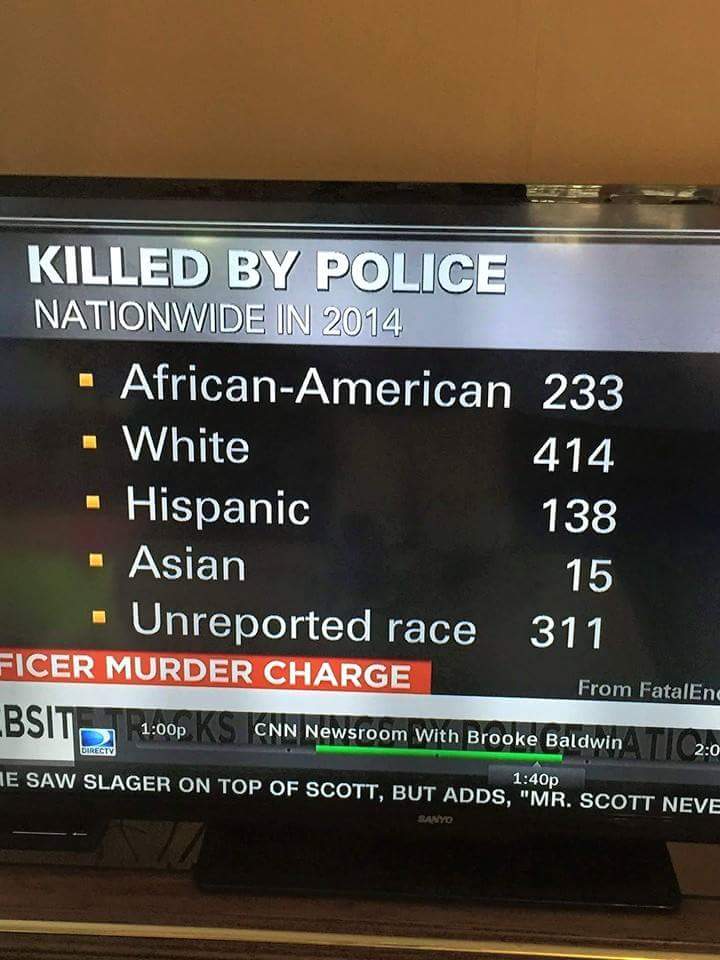
Many, including President Obama, have urged a conversation on race. I have avoided speaking in terms of black and white because I didn’t want to feed existing prejudices. Unfortunately, by my silence, I am also feeding into a dangerous ignorance about the root causes of violent behavior. There is a real elephant in the room when it comes to discussion of race and statistics, here’s a part of it:

image

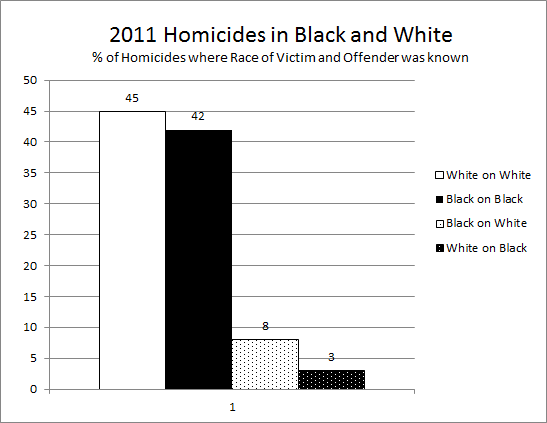
It seems to me there could be a connection between that and the disproportionate violence here:

image

And this is how it breaks down as far as who is murdering who:

image

Media Fueled Ignorance and the Bigger Threat to Black Lives

A few weeks ago I read an article, “I Fear for Our Black Men,” and then began reading the comments in response. I was shocked. Instead of shared sympathy from other black women there was a lot of anger towards black men. From what I gather the complaint is that when a police officer harms a black man it is an outrage and a cause for civil unrest, but when a black man beats his wife or girlfriend nobody cares:

image

Why do we focus on stories about men being victims of police and yet ignore a far bigger problem of women and children victimized by men? Police brutality, while a matter of real concern, is a drop in the bucket of violence in general society and the black community. And the real disproportion is how much attention is focused on their failures rather than the bigger problems. It is straining on the gnat while swallowing the camel.

Which leads me to the topic of government and media complicity. Much is said about disproportionate arrest statistics or incarceration rates. But very little is mentioned about the disproportionately higher levels of violence I highlight above. Apparently we are supposed to obsess on the race only as an explanation and ignore all other factors—factors like resisting arrest, criminal records, dysfunctional homes, etc.

Why Not Build Identity Around Good Behavior Instead of Race?

I would rather talk about behaviors than race. I would rather good people of all races identify with other good people of all races. However, since shared race is how some people choose to build their identity, then I need to address the issue of racial tribalism directly: If you take the side of a person simply because they share your racial tribe identity, then you need to take complete ownership of the bad they do as well and you are a partner in it.

But I would rather we didn’t do that. I say we lose the tribalism motif. I say we stop focusing all of our attention on race and historical grievance. I say we start to address current behavior instead. That is fairer. It is fairer because the vast majority of people (all races) are not criminals. If we are not criminals we should not lump ourselves together with bad actors and defend them simply because we share their skin tone.

Disturbing the Status Quo: “And who is my neighbor?”

Standard

The one thing I did not cover in my recent post on the Good Samaritan story (and came up in a discussion with a friend afterwards) is that Jesus never did answer the question of who.  The man asked who his neighbor was, but Jesus answered the question of how to be a good neighbor and told him to “go and do likewise.”

Not my neighbor, not my problem…

I was reminded of that again when discussing my frustration with social media.  I’ve noticed how cute pictures and funny stories get dozens of likes or shares.   However, when I posted a link to a woman with a real need and asked people who couldn’t give to like or share it the response was astonishing.  It was zilch, nada, nothing…

image

I was lamenting that lack of response to another friend.  They defended it saying that people get many requests for help and that I could sympathize with.  But what was said next disturbed me coming from a person familiar with the story Jesus told about how to be a good neighbor.  They suggested the “Biblical method” is that this woman’s family or local church should provide.

“If you love those who love you, what reward will you get? Are not even the tax collectors doing that?  And if you greet only your own people, what are you doing more than others? Do not even pagans do that?  Be perfect, therefore, as your heavenly Father is perfect.”  (Matthew 5:46-48 NIV)

That doesn’t seem like the ethic Jesus was describing.  I don’t think the Samaritan cared much about jurisdiction or if it was his turn to give.  I believe he saw a need, saw a person who needed help and simply gave it.  That’s what it means to love your neighbor.  That’s the example Jesus told the legal expert to follow.

On the other hand, I assume those men who passed by the battered man along the road were in good standing in their own communities, provided for their own families and gave tithe.  But doesn’t everyone do that?  We take care of our own because it is natural to do so, it is reciprocal altruism and a way to ensure our own survive. 

Loving beyond the tribe of race, gender or denomination…

Yet Jesus was describing something far more radical.  Jesus went as far as to tell his followers to hate their own families (Luke 14:26) and give all they had to the needy.  This goes beyond the normal religious obligation of his day.  This goes beyond defending our own biological progeny.  It is a love bigger than nation, denomination and tribe.

Jesus preached (and those who continued to carry his message) against tribalism.  They forsook their own wealth and families to preach a revolutionary message about a kingdom made up of all tribes and nations.  They spoke of a kingdom where allegiances didn’t fall around race, gender or economic status.  A kingdom of good neighbors.

Disturbed by visions too superficial, self-interested and small…

“Disturb us, Lord, when
We are too pleased with ourselves,
When our dreams have come true
Because we dreamed too little,
When we arrived safely
Because we sailed too close to the shore.

Disturb us, Lord, when
with the abundance of things we possess
We have lost our thirst
For the waters of life;
Having fallen in love with life,
We have ceased to dream of eternity
And in our efforts to build a new earth,
We have allowed our vision
Of the new Heaven to dim.

Disturb us, Lord, to dare more boldly,
To venture on wilder seas
Where storms will show Your mastery;
Where losing sight of land,
We shall find the stars.

We ask you to push back
The horizons of our hopes;
And to push back the future
In strength, courage, hope, and love.”
(Francis Drake)

Anyhow, it does disturb me when social media prefers a political cause (showers attention both for and against a pizza shop owner caught in an artificial controversy) and then ignores a real need.  Our priorities are messed up when we are more concerned with scoring political points and fighting culture wars.

It disturbs me when millions will be poured into political campaigns rather than used to meet real needs. Frankly, if you conservatives don’t think we need socialized medicine or if you liberals truly have a heart of compassion, then prove it with more than talk.  Help somebody you can help rather than wait for others to take the lead for you.

It disturbs me when churches spend thousands on missions of questionable value to give young people an experience.  If you are truly zealous and motivated by love (not self-interested like a kid on spring break trip justified by a thin veneer of religion) then be a good neighbor.

It disturbs me when our love is superficial.  Our love is only superficial when we like cute pictures, comment on funny stories, advocate for political ideologies, seek donations so we can go on an adventure around the world and then aren’t disturbed by unfilled needs well within our reach.

As it stands, the account for this nurse and young mother with severe neck issues stands at $360 and only a fraction of the need.  Does that disturb you?

Politics, Religion and (Media) Bias

Standard

Here I go again talking about politics and religion.  Well, truthfully, this post is more about ideas, inquisition, how stories are presented by the media and alleged bias.

It seems everyone complains about media bias.  There is endless controversy over what stories get covered, how they are covered and why, with charges of favoritism from all sides.

I suppose I am just another voice adding fuel to that fire.  But hopefully I add a bit of helpful reason and rational to the discussion rather than just one more partisan crying foul only when his own side is (in his own mind) treated unfairly.

Two things got me thinking about media bias.  The first a couple cartoons and social media comments about the shootings in Chapel Hill that allege it was not being covered adequately.  The second the off-topic questioning of an American politician and the way it was presented.

Ho-hum, no story here…

I first heard about the three students killed in North Carolina the morning after (as evidenced by my blog post yesterday) and on the CNN website via my smart phone.  The shooting took place “just after 5 p.m. on February 10” and, according to the New York Times, it was early the next day before specific information was available about the shootings:

“In fact, the police did not release the names of the victims or the accused until after 2 a.m. Wednesday; Mr. Hicks turned himself in to sheriff’s deputies in Pittsboro, a few miles away, but it was not clear when. During a court appearance Wednesday, a judge ordered him held without bond. By that point, most major American news organizations had reported the story, but that did not slow the allegations of news media neglect.”

So basically a local homicide became a national news story overnight and that is likely something to do with the unusual nature of the crime.  But many complained within that time frame that the story was being ignored and that this was an example of media bias.  Here are a few examples I have found from those alleging media bias:

image

image

image

Not every homicide receives widespread attention.  It took over a week before the Trayvon Martin shooting was picked up by Reuters and became a hot topic.  So, with that as a basis of comparison, the murder of Deah Barakat, Razan Abu-Salha and Yusor Abu-Salha was relatively quick.

Favoritism and presumptions…

If anything the murder of these attractive and ambitious young Americans will receive more attention than similar cases.  Beautiful people with promising futures are often are shown preference.  Add to that the man who confessed to the murders is an outspoken atheist, the victims identifiably Muslim, and that feeds speculation.

Having myself been raised in a tradition (Christian) where women veil, and having a dear friend (Muslim) who dresses similar to those pictured, I couldn’t help but take interest and wonder if their appearance played a part.  I have worried for my sisters and my Muslim friend because of prejudicial views I have heard expressed.

It is probably their appearance, the fact they were killed in the manner they were, the race and the views of the man, that made this a big story.  It is understandable the Muslim American community can feel embattled at times and unfairly blamed for the acts of people who do not represent them (terrorists) and thus afraid of reprisals.

However, this case is not necessarily a ‘hate crime’ as some speculate.  Yes, the shooter did openly share his views that blamed religious people for violence and (ironically) proclaimed atheism as the solution, but that doesn’t equal a motive. 

From available evidence he seemed to be an unreasonable and angry man who may have murdered over a parking dispute. Whatever the motive, it is an act beyond my comprehension and I mourn with those who have lost loved ones to this senseless act of evil.

Trading topics…

The other story concerns the Governor of Wisconsin (and potential candidate for President) who was on a visit to discuss trade with British officials.  The story headline, “Wisconsin Gov. Walker refuses to answer evolution question,” centers on a question asked that has nothing to do with trade.

The question if Walker “believes in the theory of evolution” seems a rather odd thing to ask a politician.  Doubly interesting is that the Associated Press writer felt it necessary to mention Walker’s faith and the occupation of his father, as if those two facts were relevant to the story:

“Walker, an evangelical Christian and the 47-year-old son of a Baptist preacher, also declined to answer a series of questions about foreign policy…”

Huh? 

I’m not really sure how his faith comes into play here, especially as it relates to the Governor trying to keep on topic of trade by not answering irrelevant inquisitions.  Maybe somebody can explain the connection between his father and foreign policy, but I’m not understanding it.

What I do suspect, both as the reason scientific theory is being asked about and also why religion is being mentioned, is an attempt to construct a label or pigeonhole Walker.  I think it is a classic example of dog-whistle politics in that the intend recipients are supposed to read between the lines and apply a particular stereotype. 

The intent is likely to paint the fiscally conservative Walker to voters, who are tired of government expansion and yet not religious, as dogmatic and ignorant.  I could be wrong, but when a story that should be about trade becomes one about refusal, theory of evolution and religion, there seems something to be amiss.

Bias is in the eye of the beholder…

If beauty is in the eye of the beholder, perhaps bias is as well.  What we think deservers more or less coverage is probably as much a matter of our own biases as it is of anyone else’s. 

Muslims, understandably, take immediate interest when three who share their faith are killed ‘execution style’ by an irreligious man.  Me, being a political conservative and religious, know too well the presumptions often made about those of faith and saw some sort of prejudice at work in the Walker story.  We take notice when people we identify with in some way are targeted unjustly and we probably miss many instances that counter our own narratives.

The media is undoubtedly biased. The media is produced by people and people are inherently biased.  But our personal biases also mess with our own perception of what is important and our judgment of presentation.  We need to be as aware of our own potential biases to the same degree we believe others are guilty.

Keeping Things In Perspective

Standard

The problem with writing about a complex topic is that anything I write often feels incomplete. 

Good writing is succinct.  However, some ideas are hard to reduce to a few words.  The difficulty of writing for me is often knowing what to include in an explanation and what to leave out.  A writer can simultaneously say too little and too much.

When I finished my post last night I felt I had rambled a bit.  Part of the problem is that I’m writing on a smart phone.  I write between distractions and editing is not my forte.  I know I have more I could say, but that post was already long and I could probably have left stuff out of it without losing much.

Besides that, I worried about alienating parts of my audience by speaking about a political figure and would rather not lose one of the handful of readers.  I was dissatisfied with the result and enough that I nearly removed the post, but then I do not want to be a coward who only says what will win him the approval of peers or takes positions where he is most comfortable.

One of those things I did leave out was context.  The history I mentioned of Christian and Biblical violence needs to be understood in the context of the times it took place.  For example, the Crusades were not inexplicable or unusually brutal for the time, they were a response to the rapid expansion of another religion.  Likewise, in Bible times, things like child sacrifice, slavery and exploitation of women were the norm—even more than today.  Lest we forget, crucification was used by the ‘civilized’ Romans to punish crimes like theft. Torture was not a crime for much of human history.

I do believe, in context, the treatment of women, slaves and children was improved vastly by the teachings of Jesus.  I believe Christian thought, despite the corrupted use of the religion, is a large part of why we in the west are experiencing the long peace that we are.  That’s how movements work, results aren’t instant, there are relapses, counter movements and yet it is the long term trajectory that matters.

The more I study history the more I feel privileged to live in the world I do.  In times past, even many places in the world today, I would have little time to fret about my writing skills or lack thereof.  If it wasn’t shortage of food to worry about it would be the constant threat of being killed by the rival tribe or clan across the river.

Progress, like my writing, is always incomplete, but hopefully it is headed in the right direction and there are some things in the world worth celebrating.  That these words could potentially reach someone on the other side of the world one of them.

God bless!

Religions of Peace and of Violence

Standard

Okay, I’m breaking a rule here, I’m going to mention a political figure and have tried to avoid politics on this blog.  Still, I do feel inclined to weigh in on a recent furor over something President Obama recently said:

“So how do we, as people of faith, reconcile these realities — the profound good, the strength, the tenacity, the compassion and love that can flow from all of our faiths, operating alongside those who seek to hijack religious for their own murderous ends?

Humanity has been grappling with these questions throughout human history.  And lest we get on our high horse and think this is unique to some other place, remember that during the Crusades and the Inquisition, people committed terrible deeds in the name of Christ.  In our home country, slavery and Jim Crow all too often was justified in the name of Christ.

The President continued on to talk about religious violence in India.  (Click here for the transcript)  But, it is the remarks highlighted in bold above that are the center of controversy, it has offended some of my Christian friends and initially annoyed me for various reasons.  Obama has this propensity for lecturing or condescension and I’m not sure he’s earned the right to speak about high horses.  However, on second thought, after reading some of the commentary in response and what seems to be either ignorance or denial of history, I am reconsidering my first impression.

There is, among my Christian friends, widespread denial or downplaying of violence done in the name of Christ.  That alone would be excusable, but that coupled with harsh judgments against Muslims and demands they denounce terrorism, seems a bit hypocritical.  Many Americans do not want themselves to be associated with the foreign policy of present and past US Presidential Administrations, let alone told they themselves need to apologize personally for every misdeed an American has done.  So why do we ask others to do what we don’t do?

What is the/a religion of peace?

One of those litmus test questions I see frequently asked as it pertains to terrorism and Islam, is “do you think Islam is a religion of peace?”  The phrase “religion of peace” is also often used sarcastically or to parody government leaders who use that phrase as part of trying to distinguish between terrorists and other Muslims.  But one place I don’t see that question asked is as it pertains to Christian history and Biblical religion.  Would Christianity pass the same test and be considered a “religion of peace” to an objective observer?  The answer might change depending on perspective.

Is Christianity a religion of peace?

Many Christians will claim that the Bible is their ultimate authority.  But then I have to wonder if they have ever actually read their Bibles when they recoil in horror at the mention of Sharia law.  The Christian Bible is full of bloodshed in the name of God.  There are instructions to kill every inhabitant of conquered lands, specifically every man, woman, child, sometimes even the livestock, and often times sparing the virgin women as war brides.  You can read this for yourself in the books of Numbers 31 and 1 Samuel 15.  By Biblical law disobedience to parents, picking up sticks on the wrong day of the week, adultery and blasphemy merited a death sentence by stoning. 

I can anticipate, because of prior experience in discussions, that the paragraph above could elicit howls of protest and that Jesus marked a change.  Yet, if we look at Christian history after Christ, it is evident many did not get the memo and the it is hard to even know where to begin.  History like the Salem witch trials, Gnadenhutten massacre, Manifest destiny, Jewish persecution, Anabaptist persecution, countless bloody wars between Christian people groups and many other examples besides the Crusades and the Inquisition or slavery and Jim Crow could be cited as Christian violence.  Much of it, from slavery to antisemitism, justified by Biblical passages and perspectives.

For those who would argue this use of Scripture is wrong and that Jesus taught peace rather the sword, that too could be questioned.  Christian theology is not very tolerant of unbelievers.  The Gospels teach that one must repent of sin, they must accept Jesus as Savior and Lord or they will be condemned for eternity.  Beyond that, consider Matthew 10:34 where he says: “Do not suppose that I have come to bring peace to the earth. I did not come to bring peace, but a sword.”  That doesn’t sound very peaceable. 

If the Bible and Christian history is so awful, why be a Christian?

I think that would be the next good question after all I just described.  After all, if I value woman’s rights, oppose genocide and slavery, shouldn’t I be looking elsewhere for my answers?  The simple answer is that I do look elsewhere.  I am not a Biblical fundamentalist, in that I do not see the Bible as the ultimate authority and instead look to the Spirit of God that was found in Jesus.  It is true, Jesus, as I quoted, did not promise peace on earth, but Jesus did set a different example to be followed:

“Jesus said, “My kingdom is not of this world. If it were, my servants would fight to prevent my arrest by the Jewish leaders. But now my kingdom is from another place.”  (John 18:36 NIV)

Jesus gave a different kind of leadership model to his followers:

“Jesus called them together and said, “You know that the rulers of the Gentiles lord it over them, and their high officials exercise authority over them.  Not so with you. Instead, whoever wants to become great among you must be your servant, and whoever wants to be first must be your slave— just as the Son of Man did not come to be served, but to serve, and to give his life as a ransom for many.”  (Matthew 20:25-28 NIV)

Jesus did not just build off of existing traditions or reform Hebrew religion, he changed the entire paradigm of faith and turned the established system upside down.  He supersedes the law of Moses with a standard radically different, in the ‘Sermon on the Mount’ he goes beyond retributive “eye for an eye” justice of Biblical law and totally rewrites the script:

“You have heard that it was said, ‘Eye for eye, and tooth for tooth.’  But I tell you, do not resist an evil person. If anyone slaps you on the right cheek, turn to them the other cheek also.  And if anyone wants to sue you and take your shirt, hand over your coat as well.  If anyone forces you to go one mile, go with them two miles.  Give to the one who asks you, and do not turn away from the one who wants to borrow from you.  “You have heard that it was said, ‘Love your neighbor and hate your enemy.’  But I tell you, love your enemies and pray for those who persecute you,  that you may be children of your Father in heaven. He causes his sun to rise on the evil and the good, and sends rain on the righteous and the unrighteous.  If you love those who love you, what reward will you get? Are not even the tax collectors doing that?  And if you greet only your own people, what are you doing more than others? Do not even pagans do that?  Be perfect, therefore, as your heavenly Father is perfect.”  (Matthew 5:38-48 NIV)

This was not just an amendment, it was a radical departure from the law of Moses and the establishing of a completely new system.  Christianity was never intended to be built on institutions, hierarchies of men or religious texts and any other form of top down power.  It was to be defined by grace, forgiveness, servant leadership and respect for all people, as Paul explains:

“Bless those who persecute you; bless and do not curse. Rejoice with those who rejoice; mourn with those who mourn. Live in harmony with one another. Do not be proud, but be willing to associate with people of low position. Do not be conceited.  Do not repay anyone evil for evil. Be careful to do what is right in the eyes of everyone. If it is possible, as far as it depends on you, live at peace with everyone.”  (Romans 12:14-18 NIV)

And goes further…

“So in Christ Jesus you are all children of God through faith, for all of you who were baptized into Christ have clothed yourselves with Christ. There is neither Jew nor Gentile, neither slave nor free, nor is there male and female, for you are all one in Christ Jesus. If you belong to Christ, then you are Abraham’s seed, and heirs according to the promise.”  (Galatians 3:26-29 NIV)

In light of everything else Jesus said and did, I doubt his comment “I did not come to bring peace, but a sword” was to inspire Christian use of the sword. He was sharing a message that was a threat to the order of the day. His message split Judaism into two and changed the world.

Why did Christianity become so violent?

“There is a history of Christianity: the first three centuries of Christianity; it was a radical pacifist religion, which is why it was persecuted, it was the religion of the poor and the suffering, and Jesus was the symbol of the poor and the suffering…” (Noam Chomsky)

My faith is simple.  History is complex.  Christianity started as “a religion of women, children and slaves,” according to an early critic, but somewhere along the way it was corrupted (or “hijacked” in the words of the President) and became another excuse for violence.  To me the corruption begins whenever the leading of Jesus through the Spirit is replaced by anything, be that a charismatic leader, a dogma, a committee, and even the books of the Bible themselves.  If Jesus (what he represents) is not the center of Christian faith, then what is left is nothing but a ritual, a dead religion and a reasoning that soon becomes an excuse for violence.

So, President Obama, while I disagree with him on many things, does make a legitimate point and it would be biased for him to exempt those who have corrupted Christianity for their own “murderous ends” from his critique.  I am not personally offended, because my own faith is not violent and therefore I know those who used the name of Christ as their justification do not represent me. 

I likewise do not judge Muslim individuals by what others do in the name of their religion.  It is not my job to judge, it is my job to show the true way of Jesus and bring forgiveness and love to all people.