Seeing October 7th Through the Lens of January 6th

Standard

When dates like January 6th or October 7th become synonymous with events, it’s not just shorthand—it’s propaganda.

These dates are weaponized to anchor emotions, shape narratives, and erase inconvenient context. For MAGA supporters, understanding January 6th’s framing offers a lens to see through the manipulation surrounding October 7th.

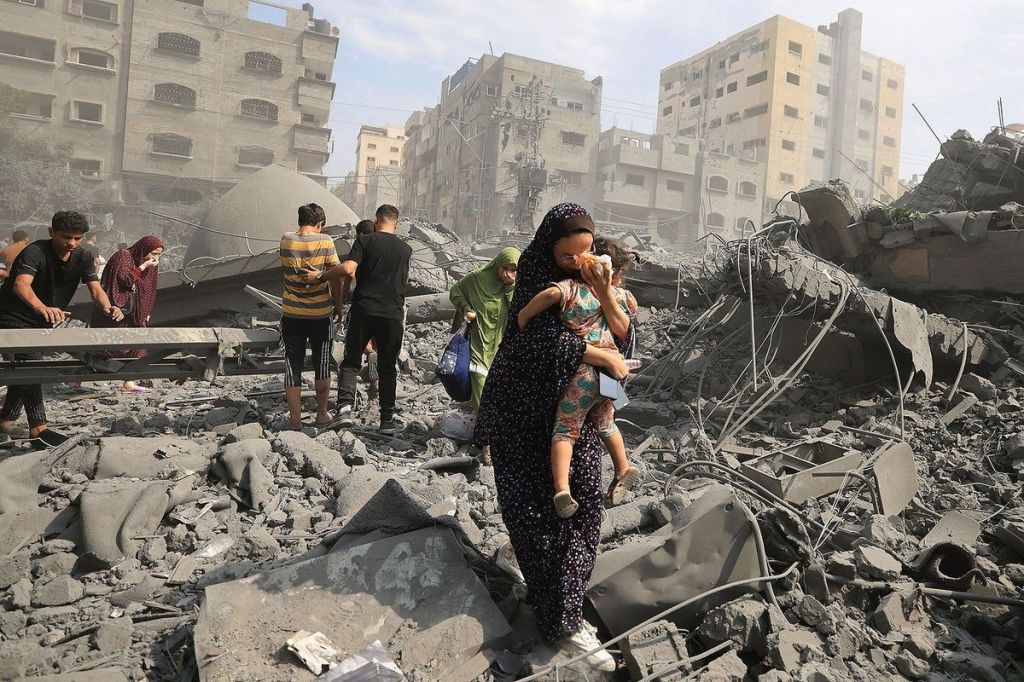
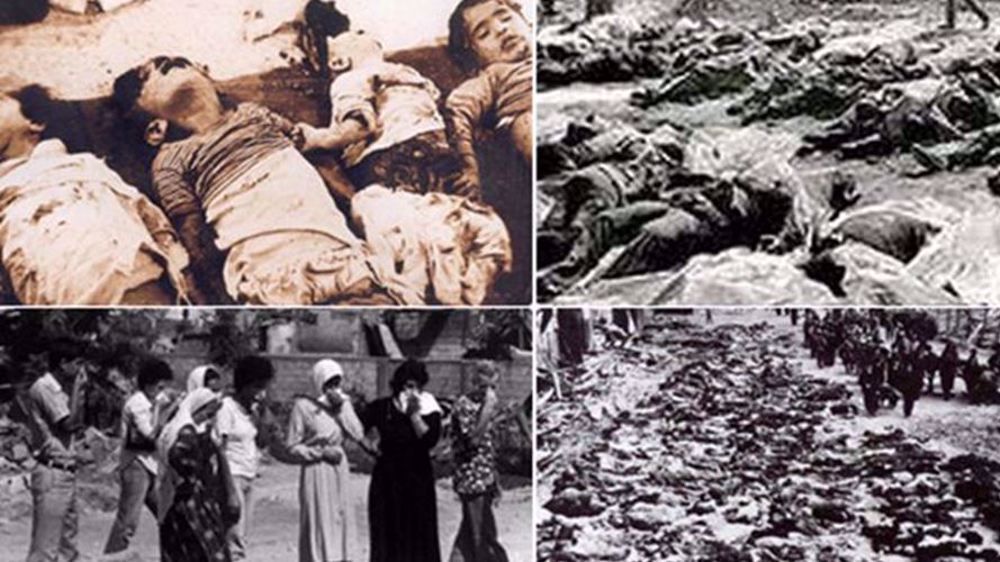
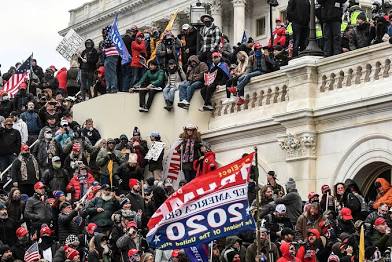
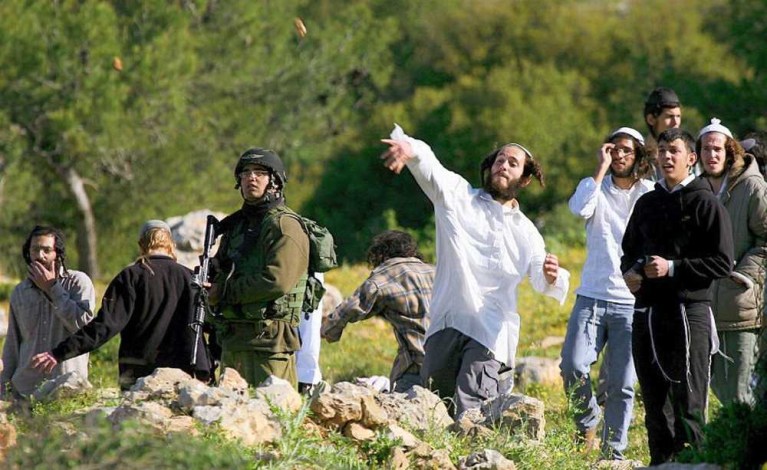
What you see in this picture depends on whose branding and narrative you accept.

Both events, though different in scale, follow a similar playbook: start the story at a moment of crisis to paint one side as the ultimate victim and the other as irredeemable villains, sidelining the deeper grievances that led to the outburst.

January 6th: A Reaction, Not an Insurrection

The MAGA movement views January 6, 2021, not as an “insurrection” but as a response to perceived electoral theft. Years of distrust in institutions—fueled by media bias, dismissive labels like “deplorables,” and a sense of being marginalized—reached a boiling point after the 2020 election.

Supporters saw anomalies: Biden’s 81.3 million votes outpacing Obama’s 69.5 million (2008) despite a lackluster campaign; late-night vote “dumps” in states like Michigan (e.g., a 3:50 AM update with 54,497 votes for Biden vs. 4,718 for Trump); bellwether counties favoring Trump yet not predicting the outcome; and reports of poll watchers being denied access in key locations like Philadelphia and Detroit’s TCF Center.

Beware of accusations like “threat to our democracy” coming from elites and government officials.  More often than not this is just a propaganda technique.  Representatives aren’t the ‘demos’ and sometimes don’t represent the true vote, will or interests of the people.

For example, in Philadelphia, observers were kept 20–100 feet from counting tables, citing COVID-19 protocols, raising suspicions of unmonitored ballot handling. Stories of unsecured voting machines and trucks allegedly delivering ballots further stoked fears of fraud, especially given mail-in ballots’ known vulnerabilities (e.g., 43% of 2020 ballots were mail-in, per Pew Research, with historical cases of fraud like New York’s 1948 scandal).

Whether these concerns held up in court (over 60 lawsuits were dismissed for lack of evidence) is beside the point—what matters is the reality of widespread distrust. MAGA supporters felt their votes were at risk, and “Stop the Steal” was a peaceful rally that spiraled when a massive crowd moved to the Capitol. Some, like a Hill staffer I met, called it terrifying, advocating lethal force to stop it. But this ignores 2020’s context: months of “mostly peaceful” protests with burning buildings and broken glass were tolerated, even celebrated, by liberal elites.

All summer long—never called an insurrection.

Why was January 6 different?

Because the crowd—rust-belt workers, veterans, and ordinary Americans—challenged the establishment, not the usual activist class. The “insurrection” label was swiftly applied, despite no police officers dying that day (Officer Sicknick died January 7 from strokes, not direct injuries, per the D.C. Medical Examiner). The only immediate casualty was Ashli Babbitt, an Air Force veteran shot by Capitol Police while trespassing. Yet, the FBI hunted participants with unprecedented zeal, suggesting a need to brand the event as a threat to democracy. Questions linger: Were agitators like Ray Epps, seen inciting the crowd but lightly investigated, planted to escalate chaos? The lack of transparency fuels suspicion.

Remember this image of Capital Meemaw, supposedly an example of ‘white privilege’ as an alleged participant in the Capital Riot?  Turns out she wasn’t even there, she was in Kansas.

October 7th: A Culmination, Not a Random Attack

Similarly, October 7, 2023, was not an unprovoked act of “terrorism” but a desperate escalation after decades of Palestinian grievances. Since Israel’s 2007 blockade of Gaza, 2.3 million Palestinians have lived in what critics call an open-air prison. The IDF’s practice of administrative detention—holding Palestinians without trial, sometimes indefinitely—denies basic rights.

From 1948’s Nakba to ongoing settlement expansion, Palestinians face systemic displacement, with Gaza’s conditions (e.g., 50% unemployment, per UN data) fueling unrest. Hamas’s stated goal on October 7 was to capture hostages for prisoner swaps, a tactic rooted in this context, not mindless savagery.

Yet, the Zionist narrative, amplified by Western media, starts the clock at October 7, framing it as an attack on innocent Israelis. Embellished claims—like debunked reports of “beheaded babies” (retracted by outlets like CNN)—flooded headlines to evoke horror and justify Israel’s response, which killed over 40,000 Palestinians by mid-2025, per Gaza Health Ministry estimates.

Like January 6, where police allowed some protesters into the Capitol, reports suggest IDF guards were ordered to stand down or skip patrols before the attack, raising questions about foreknowledge or incompetence. Much of the October 7 death toll (1,200+) may stem from the IDF’s panicked response, with the ample evidence of these “friendly fire” incidents, per Haaretz investigations. This mirrors January 6’s selective outrage: Babbitt’s death was excused, just as Palestinian casualties are dismissed as collateral damage.

The Propaganda Playbook

Both events reveal a shared propaganda strategy:

  • Date Branding: Naming events by dates—January 6th, October 7th—creates emotional anchors. It’s no coincidence that “9/11” or “October 7th” evoke instant reactions, stripping away context like Gaza’s blockade or 2020’s electoral distrust. This glittering generality tactic makes the date a rallying cry, as seen in how “January 6th” became synonymous with “insurrection” despite no legal convictions for insurrection among over 1,200 charged.
  • Selective Starting Points: Propagandists begin the story at the moment of crisis to paint their side as blameless. January 6 ignores years of disenfranchisement; October 7 erases decades of Palestinian oppression. This cherry-picking ensures the narrative serves power—whether the U.S. establishment or Israel’s government.
  • Accuse the Other Side: Both cases accuse the aggrieved of the very crime they protest. MAGA supporters, rallying to “save democracy,” were branded anti-democratic. Palestinians, resisting occupation, are labeled terrorists. This mirrors the projection tactic, where the powerful deflect their own failures onto the powerless.
  • Amplify and Suppress: Media and political actors amplify selective details (e.g., Babbitt’s death downplayed, “beheaded babies” hyped) while suppressing context.  The FBI’s aggressive pursuit of January 6 participants, contrasted with leniency toward 2020 rioters, parallels Israel’s disproportionate response to Hamas versus settler violence.

Countering the Narrative

Critics might argue that January 6 was a clear attack on democracy, with 140 officers injured and $2.7 million in Capitol damage, or that October 7’s 1,200 deaths justify Israel’s retaliation.

But this misses the point: the issue isn’t the events’ severity but how they’re framed to obscure root causes. January 6’s crowd wasn’t plotting a coup; they were reacting to perceived fraud, fueled by denied access to vote counting and anomalies like Virginia’s consistent 55/45 vote splits.

October 7 wasn’t random terror but a response to Gaza’s strangulation, Palestinians tired of oppression—wanting self-determination. Both are distorted to vilify the disenfranchised and protect the powerful.

Conclusion

Dates as names aren’t neutral—they’re propaganda tools to erase history and rally emotions.

MAGA supporters see through January 6’s “insurrection” label because they know the context: a frustrated populace, denied transparency, reacting to a system they distrusted.

Apply that lens to October 7, and the parallels are stark: a people under siege, their grievances ignored, all inhabitants branded as terrorists to justify annihilation.

Question the narrative, seek primary sources (court records, UN reports, firsthand accounts), and use the ABCs of Propaganda Analysis (Ascertain, Behold, Concern, Doubt, Evaluate, Find, Guard) to uncover the truth.

The political establishment wants you to start the story on their date of choice, to dictate the terms of discussion—don’t let them.

The Moral Hypocrisy of Justifying Child Killing: Abortion, Gaza, and the Danger of Playing God

Standard

The deliberate killing of children—whether through abortion or in conflict zones like Gaza—is often defended by opposing ideological camps using eerily similar logic.

Both sides, whether progressives celebrating abortion or conservatives excusing the civilian deaths in Gaza, rely on hiding their atrocities under a thick blanket of dehumanizing language, while using speculative reasoning to justify their positions.

I’ve walked away from online friendships over this hypocrisy: “progressive” friends who are vegetarian and biology-savvy yet loudly cheer for abortion, or those self-proclaimed Christians who shrug off thousands deaths of Palestinian kids as mere “collateral damage” and a normal part of war.

This blog dives into how both sides use the same flawed reasoning, spotlighting the Freakonomics future peace case for abortion, and argues why it’s always wrong to kill a child—no matter the excuse—and why we must stop playing God.

Dehumanizing Through Words

Words are powerful, and both groups wield them to hide the truth. Abortion advocates use terms like “fetus” or “reproductive choice” to make the act sound clinical, distancing themselves from the reality of ending a human life. I’ve seen friends who’d cry over a harmed insects dismiss a fetus as a “clump of cells,” despite knowing it’s a developing human.

Pro-abortion folks may do as the pro-genocide folks do and say that this is AI-generated.  But their denial doesn’t change the truth.

Similarly, those defending the killing of kids in Gaza call it “counter-terrorism” or frame it as a response to October 7th, glossing over decades of Zionist violence against those who are indigenous to Palestine.  This linguistic sleight-of-hand—whether medical jargon or military euphemisms—strips away the humanity of the victims, making it easier to stomach the brutality.

The Freakonomics Trap: Justifying Death with What-Ifs

The Freakonomics argument, laid out by Steven Levitt and Stephen Dubner, is a prime example of how this reasoning works.

They claimed legalizing abortion after Roe v. Wade cut crime rates in the ‘90s by reducing “unwanted” kids who might’ve grown up to be criminals. It’s a cold, numbers-driven pitch: kill now to prevent hypothetical future problems. This mirrors the logic of those who justify dead kids in Gaza as a necessary cost to stop future terrorists.

Zionist voices have taken this to extremes, with figures like Moshe Feiglin, leader of the Zehut party, declaring, “Every child in Gaza is an enemy. We must occupy Gaza until not a single child remains there.

Others, like US Senator Lindsey Graham, have suggested nuking Gaza, stating, “Give Israel the bombs they need to end the war that they can’t afford to lose.” Israeli leaders on i24NEWS have echoed this, calling for the extermination of everyone in Gaza, including babies, as “every child, every baby in Gaza is an enemy.” These statements reveal a chilling willingness to annihilate children based on speculative fears, just as Freakonomics justifies abortion by imagining future criminals.

They’re not sleeping.  They were targeted for elimination.

Both hinge on a false dilemma: either kill now or face catastrophic consequences later. This binary ignores alternatives, like the IRA peace process in Northern Ireland, where dialogue and systemic change brought decades of conflict to a halt without resorting to mass killing. Peacebuilding, not extermination, addressed the root causes while preserving lives.

Why Consequentialism Fails

This kind of thinking—called consequentialism—puts outcomes over principles. It assumes a kid in the womb or a warzone is a potential threat, not a person with potential. But life doesn’t work that way.

Plenty of people born into poverty or conflict grow up to do great things. The Freakonomics logic ignores that, just like the idea that a Gaza kid will inevitably become a terrorist. 

Plus, it’s unfair to punish a child for what they might do or for what adults—like their parents or community leaders—have done. A fetus isn’t responsible for its mom’s situation, just as a Palestinian kid isn’t to blame for Hamas. Killing them shifts the burden of adult failures onto the innocent.

Do we truly want to live in a Minority Report world where governments choose who lives or dies based on predictive algorithms?

The Sanctity of Life Over Playing God

Every major ethical tradition, religious or secular, values human life, especially the most vulnerable. Kids, born or unborn, embody that vulnerability.

When we justify their deaths with fancy words or stats, we’re opening a dangerous door. History shows where this leads—think Holocaust or Rwanda, where dehumanization fueled mass killing.

The Freakonomics case and Gaza justifications risk the same moral rot, treating some lives as disposable.

Our job isn’t to play God, deciding who’s worthy of life based on our fears or predictions. It’s to act with justice and protect the defenseless, not to end their lives to fix society’s problems.

Wrapping It Up

The hypocrisy of cheering abortion while mourning other forms of life, or calling yourself Christian while excusing dead kids in Gaza, reveals a shared flaw—believing their creative semantics or future self-defense reasoning can remove the stain of their sin.

The Freakonomics argument and genocidal rhetoric from figures like Feiglin and Graham both reduce children to pawns in a bigger game, ignoring their inherent dignity. It’s always wrong to kill a child—whether for an adult’s choices or a fear of what they might become.

Instead of playing God with false dilemmas, we need to follow examples of taking a third option—like the IRA peace process—and focus on real solutions: respect for a legitimate grievance over stolen land and diplomacy, in support of moms and investment in communities. 

Only by valuing every life can we build a world that’s just and safe for future generations.

Naboth’s Vineyard: A Biblical Mirror to the Injustice of Land Theft in Palestine

Standard

A disturbing Penn State poll conducted in 2024 revealed that 83% of Israelis support ethnic cleansing, with nearly half expressing approval for the complete killing of Palestinians in Gaza.

This level of consensus is chilling, arguably surpassing the public support for such policies in Nazi Germany between 1933 and 1945. The roots of this sentiment can be traced to the founding of Israel itself, where Zionist militias employed tactics of rape, murder, and terrorism to expel Palestinians from land they had inhabited for centuries. This violent dispossession undermines any claim to respect for property rights—a principle often championed by those who defend Israel’s actions.

The hypocrisy is particularly stark among American conservatives, who in one breath decry property taxes and champion the sanctity of life—down to the frozen embryo—yet in the next, justify the deaths of Palestinian women and children as “deserved” because 2% of Gaza’s men resisted occupation. This contradiction mirrors the selective outrage of a nation founded on the cry of “no taxation without representation,” yet which now supports a cruel occupying colonial power denying Palestinians self-determination and basic human rights.

The erasure of Palestinian identity is a key tool in this moral failure, with many Zionists claiming Palestinians “never existed” despite historical evidence to the contrary. Palestine is referenced as far back as Shakespeare’s Othello (1603): “I know a lady in Venice would have walked barefoot to Palestine for a touch of his nether lip.” Early Zionist cookbooks, from the 1920s (to teach European settlers how to use local spices and oils unfamiliar to them) have “Palestine” in the title acknowledging the region’s distinct cultural heritage.

https://blog.nli.org.il/en/hoi_cooking_in_palestine/

This ongoing effort to remove inhabitants echoes a biblical story of greed and injustice:

Some time later there was an incident involving a vineyard belonging to Naboth the Jezreelite. The vineyard was in Jezreel, close to the palace of Ahab king of Samaria. Ahab said to Naboth, ‘Let me have your vineyard to use for a vegetable garden, since it is close to my palace. In exchange I will give you a better vineyard or, if you prefer, I will pay you whatever it is worth.’ But Naboth replied, ‘The Lord forbid that I should give you the inheritance of my ancestors.’ So Ahab went home, sullen and angry because Naboth the Jezreelite had said, ‘I will not give you the inheritance of my ancestors.’ He lay on his bed sulking and refused to eat. His wife Jezebel came in and asked him, ‘Why are you so sullen? Why won’t you eat?’ He answered her, ‘Because I said to Naboth the Jezreelite, “Sell me your vineyard; or if you prefer, I will give you another vineyard in its place.” But he said, “I will not give you my vineyard.”’ Jezebel his wife said, ‘Is this how you act as king over Israel? Get up and eat! Cheer up. I’ll get you the vineyard of Naboth the Jezreelite.’ So she wrote letters in Ahab’s name, placed his seal on them, and sent them to the elders and nobles who lived in Naboth’s city with him. In those letters she wrote: ‘Proclaim a day of fasting and seat Naboth in a prominent place among the people. But seat two scoundrels opposite him and have them bring charges that he has cursed both God and the king. Then take him out and stone him to death.’

1 Kings 21:1-10 NIV

This evil plan succeeded, and Naboth was murdered for his land with the complicity of a manipulated mob. The parallels to modern times are striking: Palestinians are dehumanized as “wild,” “barbaric,” or “terrorists,” just as Naboth was falsely accused to justify his execution.  In the West Bank unarmed Palestinians are being driven off their land—even a US citizen was recently beaten to death by settlers.  Jezebel and Ahab eventually faced divine judgment, but not before their treachery destroyed an innocent man.  Today’s leaders, spurred by similar greed and power, rely on a complicit public—modern “useful idiots”—to enable ethnic cleansing and cultural erasure.

Suspicion surrounds the events of October 7, 2023, when Hamas launched a devastating attack on Israel. Reports indicate that IDF guards were ordered to stand down from their normal patrols an hour before the incursion, despite Gaza being one of the most heavily surveilled regions in the world. This raises questions about whether the attack was truly a surprise. Historical parallels, like the shorting of airline stocks days before the September 11 attacks, suggest insider knowledge rather than direct orchestration. While there’s no concrete evidence that intelligence agencies planned the October 7 attack, circumstantial factors—such as the “dancing Israelis” linked to Mossad during 9/11—fuel speculation that Israel’s intelligence may have known of Hamas’s plans and allowed them to proceed. Unlike conspiracy theories that overcomplicate events, the simpler explanation is that the attack was permitted to serve as a pretext for escalating military action.

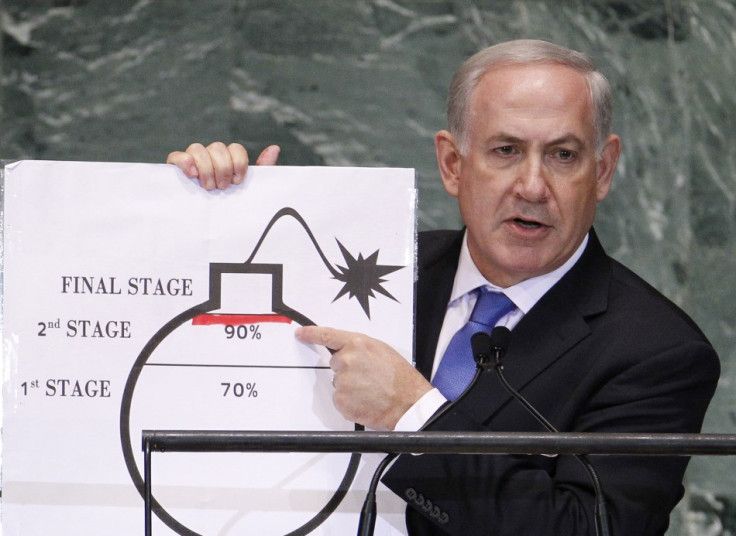
This pattern of exploiting crises is not new. The 9/11 attacks, carried out primarily by Saudi nationals, were used to justify the invasion of Iraq, despite no evidence linking Saddam Hussein to the plot. The invasion served special interests seeking to eliminate a regional rival, much as Israel’s current actions align with the Likud party’s long-standing goal of a “final solution” for Palestinian territories. Israeli Prime Minister Benjamin Netanyahu, who had covertly supported Hamas to weaken Palestinian unity, likely saw the October 7 attack as an opportunity to galvanize public support for extreme measures. By allowing Hamas’s unprecedented success, he manufactured consent for policies that would otherwise be unthinkable.

The world’s leaders rarely let a crisis go to waste. Through propaganda, they direct public anger to serve their agendas, erasing the humanity of the oppressed in the process. Just as Naboth was slandered and killed for his land, Palestinians face cultural erasure and violence, enabled by a global audience too quick to accept the narrative of their dehumanization. To learn from history, we must discern the truth and reject the lies that justify such atrocities.

Cultural Erasure in the Age of Corporatism: Preserving Local Identity and Sovereignty

Standard

Cultural erasure is often discussed in the context of dramatic examples. Communist efforts to eradicate religious practice or the forced assimilation of Native Americans are two clear instances. Another is the British schoolgirl punished for wearing a Union Jack on a day meant to celebrate cultural diversity. Yet, a more insidious form of cultural erasure is sweeping through the United States, infiltrating every small town under the guise of free markets and capitalism.

What I’m referring to is corporatism, partnered with consumerism. This country was once defined by businesses owned by average people—those “mom and pop” shops. That is no longer the case. Capital and control are increasingly concentrated in the hands of a few (see this video on BlackRock), and choice is largely an illusion in this age of mega-corporations. We have become a nation of employees. Yes, small businesses and boutiques still exist, but they are the exception. Our regulatory regime favors economies of scale, benefiting established players who can absorb compliance costs.

Illusion of choice

On the road—hauling commodities—this economic transformation is alarming to anyone who cares to notice. Local mills and grain elevators have been bought up or are in the process of being acquired by major players. Businesses where locals once knew the owner have been transferred, one after another, to corporate boards far removed from the operations.This trend spans every industry. Thriving downtowns and corner stores have been replaced by Walmarts. Ironically, when communities regain a “local” option, it’s often a Dollar General. The impact extends beyond retail. Doctors can no longer afford to practice independently, and hospitals are absorbed by larger systems to manage ballooning compliance costs. Local communities have lost true choice as corporate brands dominate.

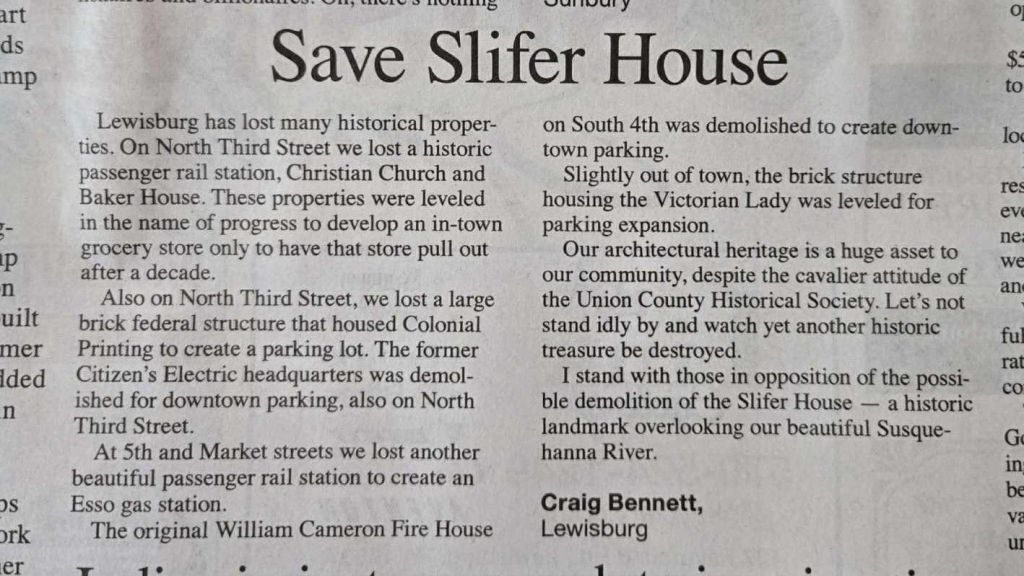
Even decisions within our towns are outsourced. Consider the plan to bulldoze Slifer House, a local landmark designed by a notable architect, listed on the National Register of Historic Places, and honoring a man who played a significant role in the town’s history. This building, originally a private residence, later an orphanage, and then a hospital, faces demolition. The board deciding its fate is disconnected from the community, concerned only with maximizing revenue at the expense of our shared heritage.

https://www.change.org/p/save-the-historic-slifer-house-from-demolition

I spoke with a township supervisor, a relative, and received the typical canned response about property rights. But this boilerplate conservatism fails in an era where BlackRock owns vast swaths of the economy, and we all now owe our souls to the company store. It’s not a free market when Larry Fink can mandate DEI policies across every place we shop or work.  Consumer choice doesn’t exist when all options on the shelf (see this video on BlackRock) are owned by the same entities.  Property rights may have built the middle-class, but appeals to them cannot address this systemic erosion of agency and destruction of ownership society by the current corporatism.

A town known for its Victorian charm and yet can’t protect this heritage from corporate interests.

This corporatist-consumerist machine erodes local identity and sovereignty by homogenizing communities. Regional dialects, traditions, and histories are drowned out by standardized corporate aesthetics and practices. The local diner with its quirky charm is replaced by a chain restaurant with identical menus and decor nationwide. The family-owned hardware store, where the owner knew your name, gives way to a big-box retailer staffed by transient workers. These shifts strip away the unique character of our towns, leaving behind this sanitized, generic, board approved and predictable landscape that could be anywhere—or nowhere.

Retaining local identity and sovereignty requires deliberate resistance to this tide. Communities must protect what matters to them, prioritize policies that support small businesses, such as giving tax incentives for independent retailers (rather than Jeff Bezos) or simply streamlined regulations that don’t disproportionately burden the little guy. Local governments should not side with entities outside of town, but rather should empower residents of the community to have a say in decisions affecting historic landmarks like Slifer House, ensuring that distant corporate interests don’t override community values. Grassroots movements can foster local pride by celebrating regional festivals, preserving historic sites, and promoting artisans who embody the town’s heritage.

Better options closer to home?

Sovereignty also means reclaiming economic agency. Communities could explore cooperative business models, where locals collectively own and operate enterprises, keeping profits and decision-making power in the hands of residents. Supporting farmers’ markets, local craftspeople, and regional supply chains can reduce dependence on corporate giants. Education plays a role too—teaching younger generations the value of their town’s history and traditions fosters a sense of ownership that no corporate boardroom can replicate.

Ultimately, the fight against cultural erasure through corporatism and consumerism is a fight for self-determination. It’s about choosing to preserve what makes our communities distinct, even when the deck is stacked in favor of scale and sucking out profits. By valuing local identity over corporate convenience, we can reclaim the soul of our towns and ensure they remain places worth calling home. Property rights were meant to protect local control—not to consolidate then outsource all decisions to out-of-towners.

Why Do Holocausts Happen? A Case Study in Gaza

Standard

Holocausts and genocides occur because atrocities are obscured by layers of justification, propaganda, and denial. Historically, these layers have enabled mass violence by fostering ignorance or apathy among populations. In Nazi Germany, the genocide of six million Jews was justified through antisemitic propaganda blaming Jews for economic woes and civil unrest, despite only a small fraction being involved in communist movements. Most Germans did not need to endorse the “Final Solution”; they only needed to remain ignorant or in denial, facilitated by censorship, secrecy, and moral rationalizations.

This pattern of denial and justification is evident in other genocides, such as the Communist purges in the Soviet Union, China, and Cambodia, where millions were killed to eliminate perceived threats to a utopian vision. The logic behind these atrocities often follows a “utopian cost-benefit analysis,” akin to the Trolley Problem in ethics: committing a painful or immoral act is justified if it promises immense societal benefits. For example, in Stalin’s purges, an estimated 680,000–1.2 million people were executed to “secure” the revolution, with the promise of a classless society outweighing individual lives. This reasoning holds that if a perfect society is achievable, no sacrifice is too great.

This same moral calculus can be applied to the ongoing conflict in Gaza, which constitutes a genocide. By examining the mechanisms of denial, propaganda, and prejudice, we can see how atrocities are enabled today, just as they were historically.

The Gaza Conflict as Genocide

The situation in Gaza meets the criteria for genocide under the UN Genocide Convention, which defines it as acts committed with intent to destroy, in whole or in part, a national, ethnic, racial, or religious group.

Since October 7, 2023, when Hamas attacked Israel, allegedly killing 1,200 people and taking 250 hostages, Israel’s military response has resulted in over 43,000 confirmed Palestinian deaths (as of June 2025, per Gaza Health Ministry estimates) and displaced 1.9 million people, or 90% of Gaza’s population, according to UN reports. The scale and nature of these actions—targeting civilian infrastructure, restricting aid, and statements of intent—suggest genocidal intent.

Israeli Prime Minister Benjamin Netanyahu’s 2023 reference to Palestinians as “Amalek”—a Biblical group the Israelites were commanded to exterminate—signals intent to dehumanize and destroy. This rhetoric has been followed by actions: the bombing of 70% of Gaza’s healthcare facilities (WHO data), the blockade of food and water leading to starvation (UNRWA reports of 1 in 5 Gazans facing acute hunger), and incidents like the February 2024 attack on a crowd seeking aid, killing 112 civilians (per Gaza authorities). These actions systematically target the conditions necessary for Palestinian survival, aligning with the Genocide Convention’s criteria.

Layers of Denial and Propaganda

Genocides thrive when atrocities are hidden or justified. In Gaza, denial is facilitated by restricting information. The unprecedented killing of 185 journalists since October 2023 (Committee to Protect Journalists data) limits independent reporting, while Israel’s control over access to Gaza restricts international observers.  The proposed U.S. TikTok ban, justified on national security grounds, may also suppress unfiltered footage from Gaza, as the platform has been a key source of firsthand accounts. For example, X posts from Gazan users often share videos of destruction, but these are dismissed as unverified or biased, while Israeli military statements are rarely scrutinized with the same skepticism.

Does Israel deserve destruction because they voted for a terror sponsor named Netanyahu?

Propaganda further obscures the truth. The narrative that Gazans “deserve” their suffering because they elected Hamas in 2006 ignores key facts: only 8% of Gaza’s current population (given the median age of 18 and population growth) could have voted in that election, and no elections have occurred since. Collective punishment of civilians, including children who comprise 47% of Gaza’s population, is justified through this lens of collective guilt, a tactic reminiscent of historical genocides.

Prejudice and Moral Reasoning

Prejudice fuels apathy. In Western discourse, Islamophobia often leads to skepticism of Palestinian claims, even when supported by evidence from groups like Amnesty International or Human Rights Watch. For example, reports of torture in Israeli detention centers, corroborated by Palestinian Christians and secular activists, are dismissed, while IDF explanations face less scrutiny. This selective skepticism mirrors the antisemitic prejudice that enabled the Holocaust, where Jewish suffering was ignored or blamed on the victims.

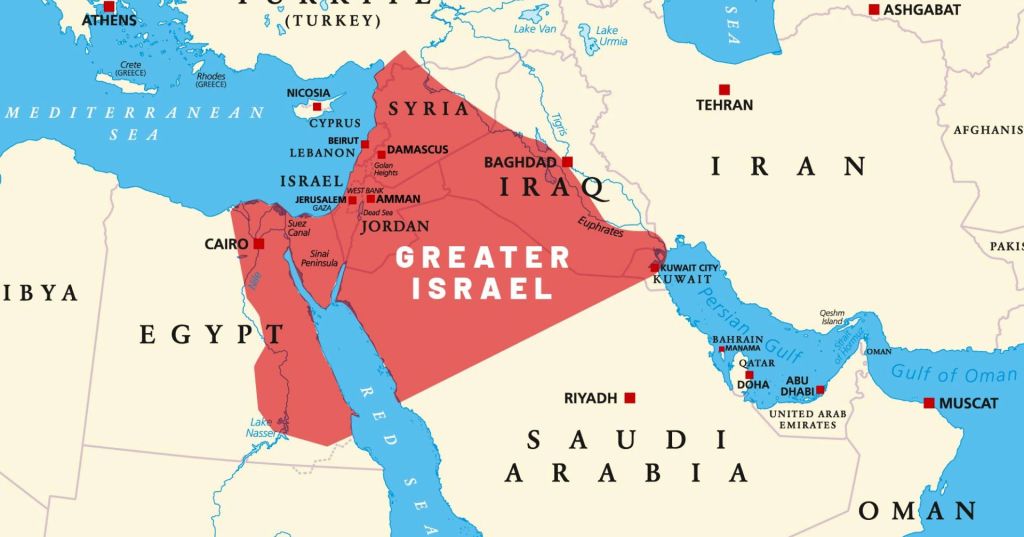
The “utopian cost-benefit analysis” in Gaza is tied to ideological goals, such as fulfilling religious prophecies (e.g., Zionist visions of a Greater Israel) or ensuring Israeli security and long-term peace. These goals are presented as justifying extreme measures, much like the Nazi vision of a “pure” Germany or the Communist dream of a classless society. The logic posits that eliminating Hamas, even at the cost of civilian lives, will bring lasting peace. Yet, this ignores the disproportionate harm: 70% of Gaza’s casualties are women and children (UN data), undermining claims of precision targeting.

Addressing Counterarguments

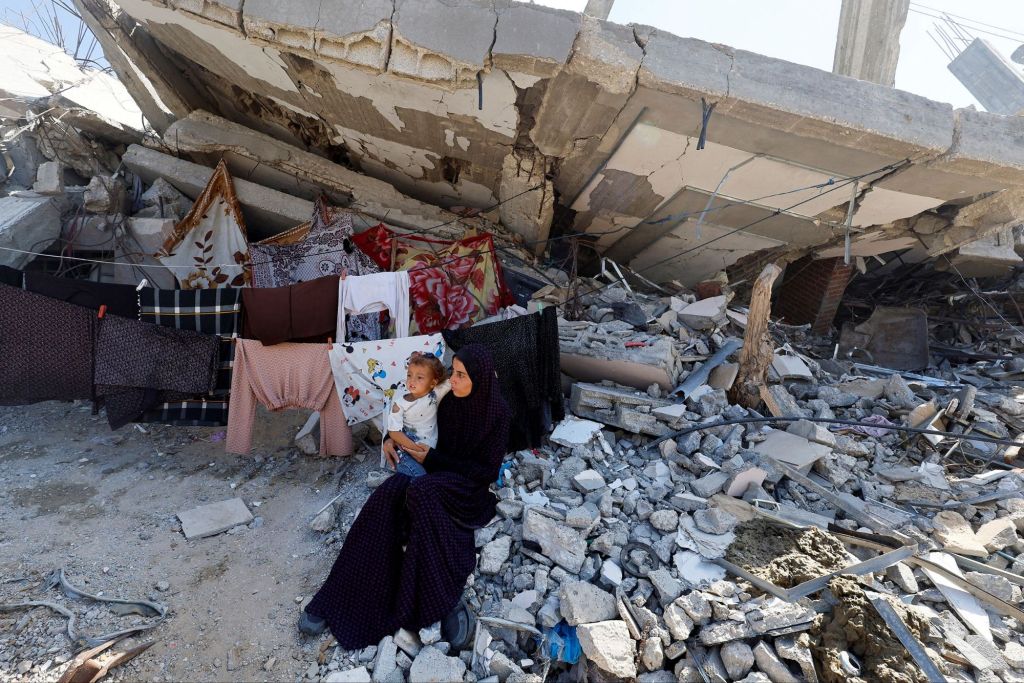
Critics argue that Israel’s actions are defensive, targeting Hamas rather than Palestinians as a group. They point to Hamas’s use of civilian areas for military operations, which complicates urban warfare. However, the scale of destruction—leveling entire neighborhoods, as documented by satellite imagery—and the blockade’s impact on non-combatants (like the malnourished dying baby in the featured picture) suggest a broader intent. While Hamas’s actions are indefensible, they do not justify collective punishment, which violates international humanitarian law.

Others claim the genocide label is inappropriate because Palestinians are not being exterminated on the scale of the Holocaust. Yet, genocide does not require total destruction; the Rwandan genocide, for instance, killed 800,000 Tutsis in 100 days, and Gaza’s death toll, combined with deliberate starvation and displacement, fits the legal definition of targeting a group “in part.”

The Role of Silence

Silence enables genocide. In Nazi Germany, many who knew of the camps chose not to act, fearing repercussions or believing the propaganda. Today, those aware of Gaza’s suffering often choose apathy, swayed by prejudice or the promise of a greater good. This is not to equate all silence with complicity—some lack access to reliable information—but ignoring well-documented atrocities, such as those reported by the UN and NGOs, perpetuates harm.

Conclusion

Holocausts and genocides persist because societies allow them to, through denial, prejudice, and flawed moral reasoning. The situation in Gaza, with its systematic destruction and dehumanizing rhetoric, bears the hallmarks of genocide, enabled by global silence and selective outrage. To prevent history’s repetition, we must challenge propaganda, demand accountability, and reject the notion that any utopian goal justifies the sacrifice of innocent lives.  Speak out, seek the truth, and act—because silence in the face of atrocity is a choice with consequences.

The Christian and Civilized Slaughter

Standard

In the aftermath of the Israeli sneak attack on Iran, this being only the lastest of many provocations, some of my friends defended this move as necessity for the protection of Christian civilization. I mean, after all, there are crowds that chant “death to Israel” and “death to America” and couldn’t possibly be talking about the foreign policies or political regimes, right? It’s not like we dream about draining the swamp ourselves, is it?

But of the outrages of the Iranian response to yet another act of aggression—a missile landing near a hospital had the Zionist state going full propaganda mode. They called it deliberate, criminal, barbaric and gave this as the reason why there needs to be regime change in Tehran. The only thing is, only a day or so earlier the IDF had struck several Iranian hospitals and they have continued to do so even while calling it uncivilized for their enemy to do the same in response.

The American ‘Christian’ public is bigoted and easily bamboozled. They couldn’t tell you the difference between a Persian or an Arab—yet will tell you with total confidence that Iran has it coming while totally ignoring all of the atrocious acts of their own side in this conflict. When Israel began their Gaza campaign and deliberately struck a hospital, they justified it by claiming that there was a Hamas tunnel under it. The claim was not independently verified. Since then 31 of the 36 health care facilities in this occupied and besieged Palestinian territory have been severely damaged or destroyed.

It is hard not to see a systematic effort to eliminate access to food and medicine in Gaza. Children with limbs blown off from IDF bombs or sniper bullets endure surgery without anesthesia if they get help at all. If you’re okay with that, maybe you’re also fine with beating detained medical personnel and an orthopedic surgeon being raped to death while detained by the IDF? This is a pattern, it is not accidental, in Gaza they’ve killed more Palestinian journalists than were killed in all of WW2. They’ve attacked and slaughtered EMTs, burying them along with their ambulances—who does this?

https://dataverse.harvard.edu/dataset.xhtml?persistentId=doi:10.7910/DVN/QB75LB

There has been no accountability for what Israel does. The indiscriminate campaign in Gaza has potentially taken hundreds of thousands of lives, the vast majority of the casualties civilians and children given that Hamas represents only a fraction of Gaza’s population. Only 7% voted for them to rule. There is absolutely no justification for what is a campaign of collective punishment and annihilation of a native people. And this did not all start October 7th—the daring and deadly incursion currently being used as an excuse for the brutal destruction that has taken place since then—it has been the pattern for decades.

The question that one must ask is this: What is so civilized about bombing children in tents?

What is Christian about starving them to death?

This is all by design — not an accident.

This one-way outrage and pretending to have the moral upper hand while doing the same or worse is a feature of the Zionist doublethink.

Israel can take boys and then detain them indefinitely for merely throwing rocks at the occupation’s military vehicles—even rape or mistreat them—but Hamas is evil for taking captives mostly as a means of bargaining to get their own people back?

Zionists cloak themselves as the defenders of democracy while using hate speech law to crush those who dissent to the collective punishment of whole populations.

Zionists will wail over the Bidas family, act as if it is the most heinous of crimes when we don’t have an independent investigation to verify the claims, and then will say nothing of the scores of families that their favorite terror regime has buried under rubble.

They claim that Islam is barbaric, both cruel to women and intrinsically violent, but then ignore the millions of innocents that they’ve starved, delimbed or incinerated—building their fake Zion on the pile of corpses.

Do not take revenge, my dear friends, but leave room for God’s wrath, for it is written: “It is mine to avenge; I will repay,” says the Lord. On the contrary: “If your enemy is hungry, feed him; if he is thirsty, give him something to drink. In doing this, you will heap burning coals on his head.” Do not be overcome by evil, but overcome evil with good.

Romans 12:19-21 NIV

The Cost of Treachery: Israel’s Surprise Attacks and the Erosion of Global Credibility

Standard

Suddenly the surprise attack has become cool again. When Hamas launched their incursion, on October 7th of 2023, to take hostages to exchange for Palestinians who were taken by Israel, this was portrayed as proof of their derangement. This was used as an excuse for a brutal air campaign that has turned Gaza into rubble. To this today dozens are being slaughtered, while the rest of the population of over a million souls is subjected to a starvation death. But we’re told even the babies burned head to toe are acceptable collateral damage—Israel has a right to defend itself, right?

The sucker punching lion, Israel, decided to end Trump’s nuclear talks early with what is called a preemptive strike. Netanyahu has been warning, for decades now, that Iran is just two years from a nuclear bomb. Much to his dismay, however, the US population—having been fooled once by his talk of Iraq being an imminent threat—is war weary and was not ready to make a move. So like old Thanos finally saying, “Fine, I’ll do it myself,” and executing his plan to destroy half of the life in the universe, Netanyahu gambled and surprise attacked, Pearl Harbor style, while peace attacks were ongoing and Iran was making major concessions.

Much like the Six-day War, when Israel went on an offensive before a war even started, it is the modus operandi of the IDF to hit first, to simply declare neighboring people to be an imminent threat and then attack. There is no other country in the world permitted to do this. Only Israel can and then, when they draw reprisals, portray themselves as being a victim. This notion that Iran should just surrender it’s sovereignty to Netanyahu or the US is incomprehensibly absurd. I hope this is just part of the “big ask” strategy of Trump before a deal, but all bets are off at this point where this goes.

However, Iran is not an open air prison with only small arms and home-made rockets—if the IDF hoped to send them into complete disarray with this blitzkrieg, then they failed miserably. Yes, Iran is back on its heels, yet even while being struck while having guard lowered by treachery, effectively blinded by a vicious rabbit punch, they will managed to land an effective counterpunch. The bully, accustomed to ‘winning’ against opponents that were virtually fish in a barrel, made a huge miscalculation. Israel can bleed, with parts of Tel Aviv looking like they belong in Gaza, and it ends the illusion of invincibility that has cowed other nations in the region into compliance.

Half of the power Israel has in the Middle-East and the US in the world is a notion of legitimacy, that they can’t be beat, and this is now compromised. How did Israel know where to find the leading nuclear scientists of Iran? Well, the Iranians, had been fully cooperating with the IAEA and thus by this had given the location of these men. It is treachery that won’t soon be forgotten. The US and Israel are losing their credibility on multiple fronts. Decades of reputation are being erased with each broken promise and every thunderous hypersonic impact. Even if Iran is hit with a nuke or the US hangs on to global control for another decade, there is writing of our end on the wall.

Writing on the Wall 

Unlike past elective wars where Russia and China remained on the sidelines, both of these countries are signalling that they will not put up with it.  In recent days two Chinese surveillance ships have arrived in the region, massive cargo planes also landing in Tehran, and Putin (while chiding the leadership in Iran) for not taking his offer of a more advanced air defense, won’t hesitate to get some payback against the imperial West.  It only gets worse if the US, were to employ some tactical nukes in trying to destroy bunkers.  It would only open that Pandora’s box in Ukraine.  The best option would be stepping back from the brink to save face and move on.  Unfortunately this better end is unlikely to happen.

Netanyahu has been arrogant and he is now overextended, Trump betrayed negotiations entered in good faith and he will never be a trusted deal maker anymore. The fallout from Israel’s audacious preemptive strike on Iran, much like the Hamas attack on October 7, 2023, has reshaped the geopolitical landscape in ways that may prove irreversible. Netanyahu’s gamble, driven by a decades-long obsession with Iran’s nuclear program, has not only failed to deliver the decisive blow he envisioned but has also exposed the fragility of Israel’s perceived invincibility. The counterpunch from Iran, though delivered under duress, has left Tel Aviv scarred and the myth of an untouchable Israel in tatters. This was no mere military miscalculation—it was a strategic blunder that has eroded the legitimacy Israel and its ally, the United States, have long relied upon.

The treachery of exploiting Iran’s cooperation with the IAEA to target its nuclear scientists has shattered trust in international negotiations. Iran, far from the disarmed prisoner Gaza has become, proved resilient, landing blows that revealed Israel’s vulnerability. This betrayal, coupled with the U.S.’s complicity in undermining Trump’s own peace talks, has tarnished America’s reputation as a global mediator. Trump’s “big ask” strategy, if that was the intent, has backfired spectacularly, leaving him sidelined as a dealmaker and the U.S. further isolated on the world stage.

“This is the inscription that was written: mene, mene, tekel, parsin “Here is what these words mean: Mene : God has numbered the days of your reign and brought it to an end.  Tekel : You have been weighed on the scales and found wanting. Peres : Your kingdom is divided and given to the Medes and Persians.”

(Daniel 5:25-28 NIV)

The broader consequences are dire. Israel’s modus operandi—preemptive strikes justified by vague claims of imminent threats—has long been tolerated by the West, but the world is growing weary of this exceptionalism. The rubble of Gaza, the starvation of its people, and now the reckless escalation with Iran have stripped away the moral veneer Israel once claimed. Each hypersonic missile and broken promise chips away at the credibility of both Israel and the U.S., hastening the decline of their influence. Even if tactical victories are won, the writing is on the wall: arrogance and betrayal have set the stage for a new era where their dominance is no longer assured. The question now is not whether this decline can be stopped, but how swiftly it will unfold and what new powers will rise in its wake.

Law as a Tool, Not a Tyrant: Reclaiming the Spirit of Justice

Standard

There are many ways to get things wrong and one of those ways is to detach the law from its most foundational purpose.  That is a part of a legalistic mindset—which always will end up producing bad interpretation and misapplication of law.  

Law is not an entity separate unto itself or something stand alone.  It is a political tool, a guide or instrument for application of an agreed upon principle or cultural value, and application of the intended use requires a common set of assumptions to the creator.  It cannot float in space—never treated as an independent truth—it must be moored to a mission or the common good.

It’s the law!!!

I’ve been in conversations recently where some involved are in denial of the political nature of the law and treat it as if the words on a page somehow have their own life.  It is a misunderstanding of language.  There is nothing static or unassailable about any written code.  Everything depends on having an interpreter with values they are similar or basically the same as the originator of the law—the power of law, therefore, is in the interpretation and application.

When a person assumes that the law can speak for itself they’re delusional, they don’t grasp what law is or what it is for at a very basic level and end up using it to create a system of legalistic prescription rather than understand it through a practical lens.  They have essentially made dead words (applied in any way they want or are most familiar with) a focus rather than cutting through to the underlying principles that make correct application possible.  Their obsession over the letter of the law comes at the expense of following the spirit behind it.

Most people can’t read cursive let alone know what the founders truly intended.

This is what the Pharisees did and Jesus corrected.  He didn’t question the legality of his servants breaking Sabbath rules, rather he gave an example of when David did what was unlawful (only lawful for the priests) to show exceptional circumstances allowed a written law to be set aside.  It is at this point Jesus declared: “The Sabbath was made for man, not man for the Sabbath.” (Mark 2:27 NIV)  This is a higher principle not ever stated in the law but describes a purpose of the law that cannot be separated from the application.

Biblical law may not be relevant to matters of the US Constitution, but both the law of Moses and the law of the Constitution were established to safeguard a nation.  It was a law for the common good of the people and not something absolutely set in stone.  And, in fact, in the earliest days of the US, it was a matter of disagreement how much power should be in the judiciary—which led to the Judiciary Act of 1802 and to courts being dissolved by Thomas Jefferson.  

The point being is the law can’t be properly handled apart from the foundation it is built upon.  Law should serve the common good and needs a reset if it goes astray and ends up becoming a cumbersome burden that is in the way of pragmatic concerns.  Letter of the law people enforce a system for sake of the system alone—they claim the slightest deviation will destroy everything good and right—and end up with ridiculous results.

Don’t cross the street!

Suppose a child is told not to cross a street by their parent.  It is a busy highway and too risky for them to cross.  That’s the law and it is a good one.  However, if some unusual event were to happen, a real emergency, is it important that the child remain on their side of the road even at risk of death?

Those on the legalistic side would argue the law is what it is.  And that making a change based on this circumstance will only lead to more exceptions being made until nothing is left.  This is a slippery slope fallacy based on an assumption there is no authority that is higher than the law and that the system we is basically optimized.  But this idea that the current regime represents some perfect balance that should not ever be challenged is dumb.  There is nothing sacrosanct about the current business as usual.

A system of checks and balances requires some dispute and conflict.  Activist judges that obstruct the role of elected leaders— with an ever expanding definition of “due process” at our expense—hinder progress and might need to be checked.  

Worse yet, when the attention is selective.  It is nothing but loopholes for some and the lawfare for others.  Which is the irony of legalists.  They apply a withering standard for others while always finding exemptions for themselves—they may declare “nobody is above the law” and yet are always given an excuse when it is their turn.

There is a place for precedent or principle, tradition is a better guide than ideology, but then there is a time when a deterioration of values and good faith application bogs the country down and justice becomes slave to a system of perverse priorities.  It is when the application of law no longer serves the common good, but only the lawyers, corrupt prosecutors and jurists who all gain at our expense.  The legal experts claim to uphold the law and yet undermine public trust with their shenanigans that defy our values.

Lawless regimes

Law is a tool, and the hands wielding it are what matter more than what is written in it.  Words on a page are a weak defense when those tasked with applying them are evil or compromised.  A hammer can be used by a carpenter to build or by a criminal to kill and law is no different.  A nation of attorneys is potentially as lawless as country without a written law and enforcement mechanism—our moral constitution matters more than a jot and tittle legalism.

Jesus took on the legal system of his day and not to abolish the law.  No, he exposed the experts.  They strained on gnats while swallowing camels, missed the forest for the trees, and are like those today who will punish us with regulations while rewarding those who flout our laws.  We are shown no mercy while simultaneously the favorites of the political establishment need not worry about a day in court.  Law for thee, not for me.  It serves the elites, not the people.

Law is about setting boundaries and due process depends on the situation.  When the British invaded, in 1812, there was never a thought of applying the Bill of Rights for those who rose in defense of the nation.  In times of war the due process is pointing rifles at the invader.  And foreign gang members who crossed into this country illegally shouldn’t be allowed to abuse asylum laws.  Abraham Lincoln suspended the writ of habeas corpus or due process for citizens during the Civil War—a free ride home for non-citizens is a great deal compared to Union Army detention.

Lincoln was hated by Democrats for his use of executive power

Having dealt with the USCIS, I am not a big fan of paperwork and most especially not when they offhandedly reject your mother-in-law’s tourist visa (as they have done for years, see the time stamps) after all the fees are paid and a visit to the US embassy—and you can rest assured there is no grandstanding by US politicians about due process and assumed right to be in the country on the behalf of those who do it the right way. 

No law might be more fair than our currently convoluted regime—that does many times more to protect gang members than grandmas merely wanting to visit their children or grandchildren.  Sure, we can’t take lawful order for granted and we deal with this inconvenience for the sake of stability and security, but when we show excess concern for those who broke the law while then applying the letter to those trying to abide by it the law has become an immoral instrument and the current corrupt application of law should be set aside for a saner approach.

The perfect law is no law… 

In an ideal world there would be no laws, no borders, no governments.  Instead we would have a law written on hearts—where we voluntarily only do good for people based on internalized values—and have no need for legislation, enforcement or courts.  Borders would be unnecessary and airport screening an unthinkable invasive of personal space.   This is why we have a Bill of Rights to limit the power of government—more law tends to increase injustice rather than serve the common good. 

In the end, just as the Judiciary Act of 1802 sought to realign the law with the common good by curbing an overreaching judiciary, we must continually ensure that our laws remain tools for justice, tethered to their foundational purpose of serving us, not as rigid idols that enslave us to legalism.  We need to understand the limits of resources and get our priorities right.

Models That Shatter: Air Crashes, Dental Bills, and the Burden of Bad Ideas

Standard

Last time around, I dismantled the myth of indestructible buildings—people dream of granite fortresses, their mental models blind to necessary trade-offs—meanwhile ballooning the cost of new construction and keeping more people are stuck in older less safe buildings.  That same flawed thinking now fuels a frenzy over air disasters and my wife’s legitimate grumble over dental bills and paperwork that could choke a horse.  Whether it’s planes plummeting or crowns now costing thousands, folks cling to busted models—piles of regulations, their wild conspiracies, or broken systems—that splinter when reality bites. In my truss design world, I double-check software because it’s half-baked; we should also scrutinize the narratives and red tape the same way, and not add more wreckage.

Air Disasters and the Partisan Haze

The wacky left, not to be outdone by the kook conspiracy right, keeps blaming air disasters on deregulation. Start with January 29, 2025: a Bombardier CRJ700, American Airlines Flight 5342, slammed into an Army Black Hawk over D.C.’s Potomac River, claiming 67 lives. Then a Canadian Dash 8 skidded off a snowy Quebec runway—no deaths, but headlines aplenty. 

Now the April 10, 2025, Bell 206L-4 chopper crash in New York’s Hudson River, six gone, including Siemens exec Agustín Escobar and his family. X posts scream Trump’s crew gutted FAA rules. Never let truth get in the way of a partisan narrative, right? But the facts don’t bend. D.C. hit nine days into his second term—too soon for policy shifts to ripple. The Hudson chopper passed a March 1, 2025 inspection, clean as a new nail. NTSB points to D.C.’s air traffic staffing woes, Canada’s pilot error, New York’s likely mechanical failure—not slashed budgets.

Stats cut the haze. FAA data shows U.S. aviation incidents down since 2020, though Potomac’s toll spiked fatalities. Crashes in media hubs like D.C. or NYC feel like a deluge, but it’s perception, not reality. I’ve seen this hysteria before—folks panicked over food processing fires, but as someone who supplies building components we see many ‘fire jobs’ and not a surge.  Fires due to hot bearings, bad wiring, heaters or dust are quite common and to be expected.  The funny thing none of these food processing fire alarmists reported on the new feed mill near me—non-confirming news doesn’t go viral.  

Then the tinfoil-hat crowd spins BlackRock plots because Escobar was aboard. What are the chances a Siemens exec’s on a chopper? Pretty high, honestly—they’re the ones dropping $500 a seat, not me touring the harbor for free, with my family, on the  Staten Island Ferry. BlackRock’s got stakes everywhere; a link’s no bombshell. As far as the in-flight breakup of the Bell helicopter, my pilot brother snorted, “Never buy an air frame that does 30+ takeoffs and landings per day.”  That is to say there’s a difference between a vehicle with highway miles and the one used as a weekend racer.  Seized gearbox or stress fractures, not sabotage. The SEAL pilot’s fuel call was logistics, not a scream. Yet they weave a blockbuster rather than look at a shop log.

This echoes the indestructible building myth—deregulation won’t make planes drop tomorrow, nor do cabals rig bolts. More FAA rules don’t sharpen mechanics’ wrenches, just like overbuilt trusses don’t scoff at storms. That ELD mandate for trucks?  It jacked costs, no safer roads. D.C.’s staffing gaps brewed for years; New York’s airspace is a madhouse, and always has been. Good design—trusses or aviation—leans on more clarity: sharpen skills, focused goals, while also acknowledging the risk baked in. Pilots should scan skies, not bury their heads in binders. But folks expect oceans to swallow us if one desk job’s cut, their models deaf to reality’s groan.  Failures aren’t a secret plot nor will more rules prevent them all.

Healthcare’s Paperwork Quagmire

That same broken model—thinking more rules fix it all—bleeds us dry in healthcare, where compliance piles up and costs push higher.  My Filipino wife got sticker shock: Over $2,000 for a crown!  What???  Her gut said yank the tooth, but the doc—and me—aren’t keen on losing one of those original equipment food grinders. Before we hit the chair, she was annoyed by those butt-covering forms—shields for liabilities (“We asked about novacaine allergies!”) and traps to hunt you down if you don’t pay their yacht lease. 

Earlier this year, my son’s middle school emailed another form, they’re playing dental cop to prove his exam. We lucked out—they took our word his Philippines checkup happened, sparing me need to send their paperwork to Baguio for my in-laws to wrangle.  There, we’d stroll into a clinic, no appointment, $20 for a cleaning or filling. Ain’t swanky, but it’s sterile, does the job, and fits a $8/day wage world. Here, insurance bloats costs like student loans—dentists hike prices ‘cause the check’s guaranteed.  The poor folks get Medicaid, rich get their implants—me: never had dental insurance in my life, other than my couple year subscription to a scam “discount” that did squat unless I was already shelling out.

Since the Affordable Care Act (ACA) was turned into law, healthcare costs per capita soared from $10,620 in 2010 to $14,570 in 2023—37.2% up, inflation-adjusted, per CMS. Life expectancy sagged, 78.7 to 77.5 years, says CDC, while costs kept climbing. Rather than keep your own doctor was the promise, choice is diminished.  Big players like UnitedHealthcare—had controlled 15% market share, Statista—grew hungrier and doubled it.  Locally, Evangelical Community Hospital is now under WellSpan, and Geisinger sold to Kaiser Permanente, a $95 billion beast, both 2023 deals. Less choice, more denials, like truss software spitting out only one overpriced and deficient design.

https://paragoninstitute.org/paragon-pic/american-life-expectancy-fell-for-three-straight-years-after-acas-key-provisions-took-effect/

It is easy to forget the undemocratic way the ACA was formed. It was rushed to get around the results of a special election that would cost Democrats their filibuster-proof Senate. The Democrat Congress rammed through a trainwreck bill to circumvent their loss of Ted Kennedy’s seat.  The last thing we needed, in healthcare, was another layer of management.  Upset Americans—54% of the country wanting repeal—rose up in the mid-terms in opposition to this government takeover of their healthcare choice. 

Unfortunately the oligarchy won and we were stuck with a deeply flawed bill, sold with lies, passed in the dark of night, that nobody wanted—results in more mergers while costs continue to explode.

Obama, getting creative to deal with the botched rollout of HealthCare.gov, created what was called United States Digital Service to fix the issues. This basically gave the Executive Branch a backdoor access to the newly minted government agency that was convenient for the Democrats at the time it was formed. And this, ironically, is now what gives DOGE the authority to do what they have been doing over the past few months.  Whether you see DOGE as a phoenix rising from the ashes or a monster coming from the abyss—you have Obama to thank for it. 

It’s like engineers, for compliance, ditching practical talks for nonsense specs that lead to an incoherent mess of conflicting interpretation—it produces more hassle for everyone downstream, not a sturdier roof or better structure.  This compliance Kabuki—fancy waiting rooms, school nurse cops—doesn’t make better teeth or safer streets, it just bloats our bills and increases our taxes for nothing in return. Philippines clinics run lean on cash, keep it real. Here, we’re buried under a pile of paper. 

Good design—trusses, planes, healthcare—cuts the fat, bets on need of good judgment over more forms.  Models that preach more rules will save us or seeing secret plots are as off as thinking properly engineered roofs can never cave.   The FAA didn’t fix Boeing’s focus on DEI over properly installed bolts in doors and the ACA only added to the cost of healthcare.  We must quit chasing fixes that will only add more dead weight to an already strained structure—and ask: what’s propping this whole mess up? And why’s it heavy enough to crush a man’s soul?

A Different Blueprint: Stripping Away the Myths

Things on the periphery are tough to flesh out, like trying to find out what is happening beyond the event horizon of a black hole. We all live in this big bubble—a commonly shared safe space—where folks will bicker over set topics, blind to how both sides are tangled in a bigger myth. The structures we take for granted, holding us up, are just assumptions we gotta question. These bad models—rules to save planes, forms to fix teeth—are flawed assumptions like thinking buildings never fall. If we want to see reality clear, we’ve got to strip away these biases, prejudices, blind spots, layer by layer. That’s my design philosophy: ask silly questions, and then take ‘em seriously. I mean, why don’t banks handle healthcare instead of employers? Why can’t we get checkups at the local bar? No rule says payers have to be governments or bosses.

Most folks can’t see past their battle lines, let alone a third path. But if we look beyond the forms we know, we might find a better way. It’s about exploring our foundations—digging into the functional fixedness of old ideologies, dusty processes, and our creaky systems. In truss work, I don’t simply trust software math ‘til I test it; in life, and I don’t buy models ‘til I poke ‘em. We can do better by imagining something different—say, healthcare that’s cash-simple, like Baguio, or an aviation culture that trusts pilots over paper. Models preaching conspiracy plots or encouraging more red tape are as wrong as thinking roofs don’t cave. 

In Japan, the electronic toll system on the Tomei Expressway and other routes crashed for 38 hours across Tokyo and six prefectures. The toll gates froze, smart interchanges shut, congestion piled up. And the operator, Central Nippon Expressway Company, had no fix in sight, so they threw open the gates, let drivers pass free, and simply asked them to pay later online. Most places, you’d expect folks to floor it and forget it. But over 24,000 drivers—some say 28,000—went online and paid up, no cops, no fines.  An honor system.

That’s not just a country; that’s a different approach to problem solving. They didn’t lean on a coercion model—chasing violators or piling on rules. The culture is what made the difference.  They could trust people to square up and people did. It’s a glimpse of what happens when you question our own status quo.  Why are our systems so heavy, so distrustful, in the first place?  Why does a Christian nation need government to solve all problems yet Japan does not?  This may be a difference between our individualistic frontier mindset and their group harmony formed of rice cultivation.  But it’s also the communal approach of Amish as well.

Mutual aid in Amish country is organic, not institutionalized, they don’t need bulky and wasteful organizations.  They have built an identity together (like the Japanese have) and thus they voluntarily go along with the program.  This may sound stifling, but is it really?  Americans pay a boatload of taxes so that their bought off national leadership can bomb Gaza’s hospitals.  Did we ever vote for that?  No.  The general public is just as indoctrinated and controlled by ideologies as a strict religious sect.  The big difference is that Amish get their barn back days after a fire whereas the rest of us will spend the year sifting through insurance paperwork. 

It isn’t just the Amish who self-organize for sake of immediate needs in their community.

A sustainable future requires effective and efficient resource allocation that does not rely on costly bureaucracy or enforcement agencies.  Governance is best internalized—something we do voluntarily as part of our collective identity or being part of a larger group.  This will require discarding models and myths that aren’t beneficial.  This idea that the world’s problems are either solved by some undefined ideal regulatory regime or are all caused by it’s evil twin of a secret world spanning scheme is simply fantasy that prevents reasonable discussions and pushes away from solutions that will better harness our human potential.

Cooperation doesn’t need to be top down or cumbersome and artificial.  No, love for our own and self-sacrifice love is as coded into human DNA as conflict.  And we should be taking a closer look at Japanese and Amish blueprint.  Honor, a common code of ethics, shared cultural values, an internalized joint identity and being respectful to others can’t outsourced.  Diversity is only strength when it harmonizes and follows the same tune.  It is a combination of building a familial trust, deeper human relationships, and a societal mission that is worthy of fuller investment—not more programs, systems and rules.  

The Myth of an Indestructible Building

Standard

It was November 29, 1900, and fans filled the stadium in San Francisco for the annual Thanksgiving Day game between California Golden Bears and Stanford Cardinal. Some, not wanting to pay the entry fee (one dollar then, $40 in today’s money), climbed on a nearby glass factory roof to get their view of the action on the field.

The newly built factory roof collapsed about twenty minutes into the game. One hundred people fell as it gave way and plunged four stories down—many landing on the 500° F oven below. It was a horrific scene. Young people being cooked alive. What happened? The building roof wasn’t designed to hold a mass of spectators. It failed. Those who had climbed up were oblivious or did not have enough concern for the stress they were adding to the structure.

This tragedy wasn’t just a failure of design; it revealed a deeper misconception that buildings should be invincible, a myth that shapes our reactions to collapses even today. It goes further than engineering or physical buildings as well. Our models of reality are oversimplified at best and flat-out wrong in too many cases.

There is a common misconception and an unrealistic expectation about structures—many people seem to assume they are like blocks of granite. From those who believe that every building collapse is a conspiracy to those who think every failure demands stricter government regulations, the myth of an indestructible building continues due to a lack of understanding of engineering and the limitations.

Design Limits Are Not Defects

One key misunderstanding is design limits. Engineering is not about making a building too strong to ever fail. Unless we’re talking about the Great Pyramids, it’s all about trying to meet certain established parameters. An engineered building is designed to meet the expected conditions as defined by regional building codes. If the wind, snow, or loads exceed the designated standards, then there will likely be a collapse.

Earlier this year, after a heavy snowfall in upstate New York, many buildings had their roofs cave in (including this fire hall) because the weight of the snow was that much greater than the design weight. Sure, most engineers build an extra safety margin into their components, but eventually these limits are too far exceeded and you’ll end up with a tangled mess. This is why there are sideline roof shoveling businesses in these places where large snow accumulations are a regular occurrence.

Sure, code could force people to build to a much higher standard, making a collapse due to snow load virtually impossible. But this would increase the costs so much that it would price many people out of building a new house or barn. Engineering is all about compromise, more precisely about making the right compromises given the expected conditions. Yes, there is a case for making adjustments based on observation or after studies, but ultimately we build for what will work most of the time.

More Is Not Always Better

In the aftermath of the earthquake that had struck Myanmar and neighboring Thailand, there was a comment made to me in a chat hoping for more layers of regulation. This is a sentiment, in the specific context of rapid development of Bangkok, that seems more reflexive than reflective. It is a progressive impulse to believe that more interventions and rules are the answer.

The collapse of an unfinished tower in Bangkok, during the earthquake, sparks questions about building codes.  Was it missing sheer walls?  Did the contractor rush to ‘top it off’ quickly?  I want to know what the investigation finds.

But, for me, as someone who works in the construction industry and has occasionally needed to sift through these layers, I could not disagree more. Sure, better regulations may be needed. However, legalism doesn’t work in building standards any better than it does in churches. Sure, you need a code of some kind. And yet onerous regulation will add to the cost of construction, not necessarily improving the end results, and only making new housing less accessible.

It is, at best, the same trade-off discussion we can have about self-driving cars and the need for LIDAR. Sure, this expensive laser ranging system may marginally improve the results, but at what cost? Self-driving cars with cameras alone are already safer than human drivers. Keeping these systems at a price that is affordable will save more lives than pricing them out of reach for average people. It is, therefore, optimal to rollout the less expensive and safer tech even if it could be slightly improved.

At worst there is only more expense and no benefit to more layers of red tape. The real problem with rules is that they are written in language that needs interpretation. Unlike a classroom theoretical setting, in the real world you can’t just memorize the correct answers and pass the test. The ability to make a judgment call is far more important than adding to the pile of regulations. More rules can mean the more confusion and the truly critical matters get lost in the mess.

I see it over and over again, when different customers send the same job for a quote and all of them interpreting the engineering specifications their own way. It is the tire swing cartoon, a funny illustration of when the customer wants something simple and yet the whole process distorts the basic concept until it is unrecognizable. That is where my mind goes when we talk about adding layers. Is it increasing our safety or merely adding more points of failure?

This one stuck with me and should be standard equipment in every design department.  I first saw it as a child while visiting the engineering department of the construction company my dad worked for.

Some of it is just that some people are plain better at their jobs than others with the very same credentials. I am impressed by some engineers, architects, contractors, and code officers—not so much by others. I’m willing to bet the intuition of some Amish builders is probably more trustworthy than a team of engineering students’ textbook knowledge, full of theory, with no real or practical world experience. In the end any system is only ever as good as the users.

Theory Is Not Reality

My work relies on truss design software. I enter information and it does those boring calculations. When I started, I assumed that it was more sophisticated than it really is. I thought every load was accounted for and nothing assumed. But very soon the limits of this tool started to reveal themselves. It is only as accurate or true to reality as the engineers and developers behind it—and on the abilities of the user (me) understanding the gaps in the program.

When it comes to mental models—the kind of physics involved in engineering—only a few people seem able to conceptualize the force vectors. Things like triangulation, or compression and tension loads, are simply something I get. Maybe from my years of being around construction or that curiosity I had, as a child, that made me want to learn what holds a stone arch up or why there are those cables running through that concrete bridge deck. My model was built off of this childhood of building Lincoln Log towers (arranging them vertically) and occasionally making mini earthquakes.

I’m exasperated by this expectation that people have for skyscrapers to be indestructible or to topple over in the same manner of a tree—as if they’re a solid object. It also seems that the big difference between static and dynamic loads is lost on most people. They don’t understand why a building could start to pancake, one floor smashing the next, or how twisting due to extreme heat could undermine the structural integrity of a building without ever melting the steel. Of course this has to do with their beliefs or mistrusts that are not related to engineering—nevertheless it shows their completely deficient understanding of how the science works.

The concept in their head is off, their brain modeling is inaccurate, and their resolution may be so low they simply can’t grasp what the reality is. You try to explain basic things and their eyes glaze over—sort of like when Pvt. John Bowers tried to explain why the plants need water, and not the electrolytes in Brawndo, in the movie Idiocracy. Ignorant people will scoff before they accept a view different from their model of the world. The theory they believe rules over all evidence or better explanation.

On the other side are those who trust every established system without understanding it. They “believe science” and see more as an answer to every question. More rules, a larger enforcement apparatus, faith in their experts, without any feel for the problems encountered by the professionals or those in the field. If they had, they would question much more than they do. Human judgment is still at the base of it all. Or at least that is what the lead engineer told me while we discussed the limits of software and the need to be smarter than the tool.

Not even AI can give us the right balance of efficiency in design versus safety factor or what should be written in the code. It may be a better reflection of our own collective intelligence than any individual, but our own limits to see the world how it actually is are not erased by the machines we create. We are amplified, never eliminated, by the tools we create. So we’ll be stuck wrestling with our myths and theories until we take a final breath—only our flaws are indestructible.

Models of a Messy World

If truss software taught me anything, it’s that no model nails reality perfectly—not beams, not buildings, not life. We lean on these frameworks anyway, because the world’s too wild to face without a map. But just like those fans on that San Francisco roof in 1900, we often climb onto flimsy assumptions, mistaking them for solid ground. The myth of an indestructible building is just one piece of a bigger distortion: we think our mental models—of faith, of power, of people—are unshakable truths, when they’re really sketches, some sharper than others, of a reality we’ll never fully pin down.

Take religion. For some, it’s a cathedral of certainty, every verse a load-bearing beam explaining why the world spins. Others see it as a rickety scaffold, patched together to dodge hard questions. Both are models—ways to grapple with life’s big “why.” Politics is messier still. It’s like designing a city where everyone’s got their own codebook. One side swears by tight regulations, convinced they’ll keep the streets safe. Another group demands open plans, betting that freedom builds stronger foundations. Both sides act like their own ideological model is bulletproof, shouting past each other while the ground shifts—economies wobble, climates change, and people clash.

Then there’s prejudice, the shoddiest model of all. It’s like sizing up a beam by its color instead of its strength. Prejudice, always a shortcut to save us from the effort of real thought, fails because it’s static, blind to the dynamic load of human individuals. Good perception, like good engineering, adjusts to what’s real, not what’s assumed.

All these—religion, politics, prejudice—come down to how we see. Perception’s the lens we grind to make sense of the blur. Some folks polish it daily, questioning what they’re fed. Others let it cloud over, stuck on a picture that feels safe but warps the view. I think of those fans in 1900, not asking if the roof could hold them. They didn’t mean harm—they just saw what they wanted: a free seat, a clear view. We do the same, building lives on models we don’t test, whether it’s a god we trust, a vote we cast, or a snap judgment we make. The distortion isn’t just in thinking buildings won’t fall—it’s in believing our way of seeing the world is indestructible.

What makes a model reliable? Not that it’s right—none are. It’s that it bends without breaking, learns from cracks, holds up when life piles on the weight. In construction, we double-check measurements because we know plans lie. In life, we’d do well to double-check our certainties—about the divine, the ballot, the stranger next door. The San Francisco collapse wasn’t just about a roof giving way; it was about people trusting a picture that didn’t match the world. We’re still climbing those roofs, chasing clear views on shaky frames. Maybe the only thing we can build to last is a habit of asking: what’s holding this up? And what happens when it falls?