From False Flags to Fortress Minds: The Politics of Fear

Standard

We don’t see things as they are, we see them as we are.

Anaïs Nin

In today’s world, discerning what is real from what is manufactured is a formidable challenge. Suspicion abounds, particularly among the political right, that groups like Patriot Front—openly fascist—are not grassroots movements but rather orchestrated operations, possibly by federal agencies. The MAGA base can’t even spell the word “fascism” let alone embrace it as a guiding philosophy.  Yet, this suspicion fuels the leftist “anti-fascism” narrative, which is wielded as a justification for aggressive tactics and bullying.

Fear is a potent tool for control, and political operatives exploit it to manipulate public sentiment. When voter turnout wanes in critical demographics, staged provocations—such as groups wielding tiki torches to “Unite the Right”—can galvanize a larger, more powerful group into action. These events often attract a few genuine extremists, but their true purpose is to provoke a broader reaction.

A pony motor.

This strategy mirrors the “pony motor” in early diesel engines, where a smaller gasoline engine was used to heat and start the larger one. Similarly, false flag operations—whether orchestrated or permitted—serve as catalysts for sweeping agendas, such as justifying military invasions of countries or enacting restrictive laws. While I’m not convinced that 9/11 was a government-orchestrated plot, evidence suggests some knew in advance and that it was exploited to advance a wishlist of wars against unrelated nations and to pass laws that would not have prevented the attack. This reflects the mechanics of how to “manufacture consent” in our modern democracies—where fear is leveraged to unify and control populations.

The creation of a common enemy is a time-tested method for fostering unity. During the Cold War, the specter of communism was used to rally the public. After the Soviet Union’s collapse, Islamic terrorism became the new focal point. The 9/11 attacks, likely executed in part by Osama bin Laden’s organization, were real but were exploited to amplify fear. Domestically, this pattern persists: Democrats emphasize the threat of right-wing extremism, while Republicans fixate on “wokeism” and DEI initiatives. These are deliberate strategies, rallying points designed to consolidate support. Even more effective is provoking hatred from opponents—forcing one’s base to fight for survival and justifying the consolidation of power.

What do you think the point of The Handmaid’s Tale really is?

We Create Our Own Enemies

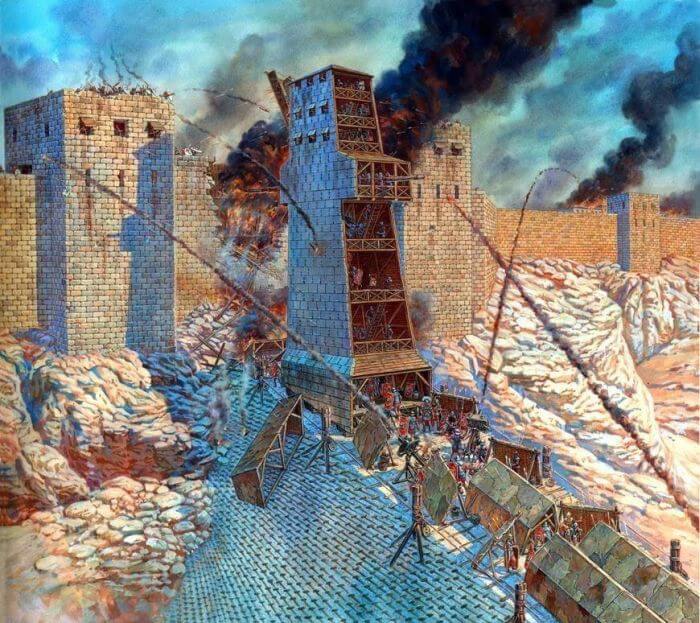
This dynamic extends beyond politics into cultural and religious identities. Jewish identity, for example, is partly shaped by what’s known as “Masada syndrome,” a collective memory of the Jewish defenders at Masada in Roman Judea (later renamed Syria Palaestina in 135 CE), who chose suicide over captivity. This narrative of the siege mentality is reinforced during the Passover celebration with texts proclaiming to the faithful, “In every generation, they rise up against us to destroy us.” Such beliefs foster an “us against the world” mentality, where hatred is seen as inevitable, reinforcing group cohesion.

Similarly, in the Anabaptist tradition that I grew up in, the reading of Martyrs Mirror cultivates a persecution complex. Likewise, Kanye West’s controversial remark about slavery—“When you hear about slavery for 400 years… that sounds like a choice”—touches on a deeper truth about locus of control. As my mother would say, “You can’t stop a bird from landing on your head, but you can stop it from building a nest.” Paranoia and defensiveness can alienate others or invite their suspicion, while believing you’re inherently excluded can lead to antisocial or even criminal behavior. It’s as if we seek to validate the fears that define our identity.

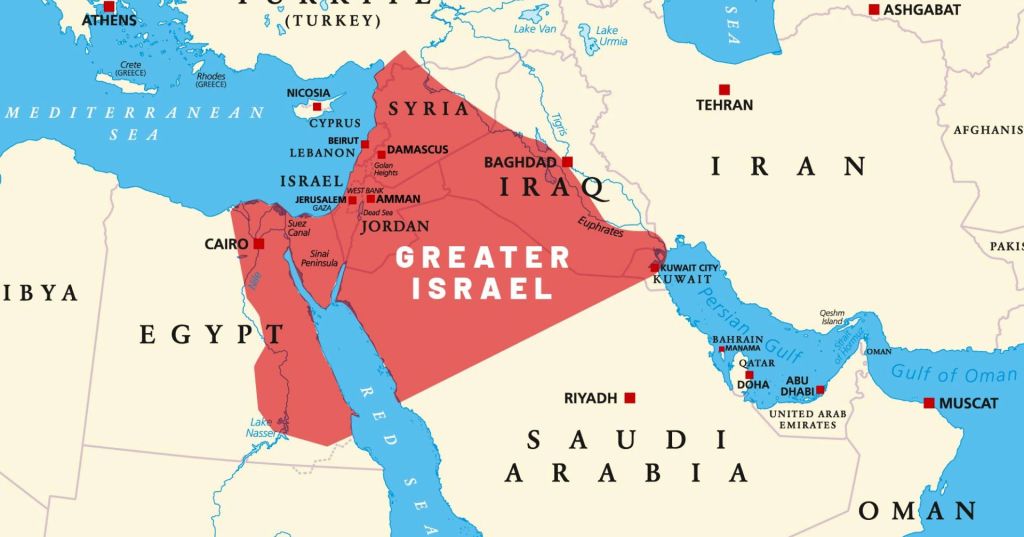
This pattern is evident in contemporary conflicts. Hamas, for instance, was probably willing to sacrifice innocent lives in Gaza to highlight the Palestinian plight—anticipating Israel’s brutal and disproportionate response. Yet, why does Israel fall into this trap? One possibility is that it aligns with certain political goals. Israeli Prime Minister Netanyahu, facing corruption charges, may benefit from war as a distraction. The Likud party’s vision of a Greater Israel—encompassing Palestinian territories, Jordan, and parts of Saudi Arabia and Egypt—could also be a factor. Some speculate this violence is a deliberate provocation to unify Jews through fear, and possibly tied to messianic expectations.

Netanyahu is a Revisionist Zionist, this is their long-term plan.

This self-fulfilling prophecy is reflected in online discussions, such as an Israeli subreddit where users lament being hated globally. They attribute this to irrational antisemitism, dismissing the role of the Israel Defense Forces’ actions, such as killing children, which fuel international outrage. This mindset—“They’ll hate us regardless, so we might as well give them a reason”—makes them vulnerable to exploitation by corrupt leaders like Netanyahu.

Breaking the Fear and Control Cycle

The fear of the Lord is a fountain of life, that one may turn away from the snares of death.

Proverbs 14:27 ESV

We must guard against siege mentalities like Masada syndrome. By convincing ourselves that the world is inherently against us, we risk acting in ways that bring about the very persecution we fear. Focusing on external threats to define our identity can lead us to become what we dread, fulfilling a prophecy of our own making due to our own unacceptable actions. 

Breaking this cycle requires rejecting fear-based narratives and fostering a sense of agency over our own actions and beliefs.

To guard against exploitation, we must shift our focus from the fear of man to the fear of God.

Human fears—stoked by manufactured enemies and self-fulfilling prophecies—keep us trapped in cycles of division and control.  A reverent fear of a perfect moral agent beyond us offers a higher perspective, grounding us in principles of justice, compassion, and accountability. By prioritizing a divine wisdom earthly manipulation, we become less susceptible to the provocative tactics of those who thrive on our fear, fostering a resilience that unites rather than divides. Establishment of this spiritual foundation empowers us to reject their deadly paranoia and act with clarity, so we break free from those divisive narratives that political systems use exploit to consolidate power.

Zionism: Dismantling the Cross, the Judeo-Christian Deception

Standard

There was an act of vandalism in Wales.  A Christian cross made of stones, which had been on a hill in the countryside for half a century, was torn apart by Jewish tourists who used the stones to create the ‘Star of David’ or hexagram shape.  This act goes beyond total disrespect and destruction of a Christian display, but it is also symbolic of what Zionism is and what it has been doing to Christianity in the West.  

Zionism isn’t Jewish.  Many Jews, even who live in the Holy Lands, are as fully opposed to the ethno-supremacist state called Israel as their Christian and Muslim neighbors.  It is not something allowed by their religion, they insist, and I’ll let Jewish people debate their theology for themselves.  But the vast majority of Zionists aren’t Jews nor do they live in Israel.  Most Zionists were American Protestants who have become ensnared in this political ideology that rearranges parts of the Bible to justify taking property from a population who have lived in the birthplace of Christ since his birth.

Christian Zionism is an oxymoron.  It takes two opposites, the kingdoms of the world offered to Jesus during his temptation that he rejected and acts like Gehazi, the servant of Elisha, who goes back deceptively to get the gifts Naaman tried to give to his master and was then struck down with leprosy by the curse of his master.  There are many in church pews today who have betrayed their master and have rearranged the timeline of Scripture to embrace an evil replacement of the way of Christ.  They dismantle the cross and support Zionism instead.

Schofield’s Coup: Dismantling the Cross

In 1909 a new Bible was published.  It used the same English translation of the popular King James version and yet added notes of commentary written by a man named Cyrus Ingerson Scofield.  Dispensationalism is a relatively new interpretation of Biblical texts that started in the early to mid 19th century, initially invented by John Nelson Darby and the Plymouth Brethren in Britain, but it took Scofield’s in text commentaries distributed widely to finally sell it.

We could get into questions of exactly who Scofield was, his character, that he was a Confederate soldier (deserter?); who was an alcoholic who abandoned his family; a man who had defrauded several prominent Republicans with a railroad scam; who was arrested and jailed in St Louis for forgery and embezzlement, then had a dramatic conversion to Christianity and yet this essay will stick to the work he was known for: His popularization of a novel theological stance dividing Israel and the church in Scripture.

In the Christian Bible there’s a fairly obvious shift in tone between the Old Testament (or Jewish Torah, prophets, etc) and teachings of Jesus in the Gospels.  The conventional Christian perspective is that Jesus came as fulfillment of the law and supercedes the covenant that was given to Abram who became Abraham.  But Scofield turns the clock back, he ignores what the Epistles tell us about correct understanding, and he adds an idea that there are essentially two paths to God—one going through Jesus and the cross, the other by the Old Covenant.

Christianity, according to the Apostles, is the faithful remnant.  Israel is now the Church and the Church is the true Israel.

Where this was just an amateur mistake or an intentional deception doesn’t matter.  It has resulted in a battle between those who basically claim that “one way, Jesus” is anti-Semitic statement and smear it as being “Replacement Theology” (ironic, given this was, is, and will remain the only orthodox Christian perspective) for saying that the New Covenant continuation of God’s plan and necessary for salvation.  It ignores the New Testament books where St Paul and others give a correct Christian perspective of the covenant given to Abraham.

Always Through Faith, Never Bloodlines…

Jesus answered, “I am the way and the truth and the life. No one comes to the Father except through me.

(John 14:6 NIV)

I’m not nearly as dogmatic as some when it comes to passages like John 14:6 (above) and yet do see it as foundational to correct application of Scripture from the Christian perspective.  Jesus was making a definitive statement about who he is and the absolute requirements for salvation.  

The promises were spoken to Abraham and to his seed. Scripture does not say “and to seeds,” meaning many people, but “and to your seed,” meaning one person, who is Christ.

 (Galatians 3:16 NIV)

1) The passage above makes it very clear that the seed of Abraham is singular: Christ Jesus.  St Paul is saying that Jesus is that promise given to Abraham, that the promise is what bestows grace and continues:

So in Christ Jesus you are all children of God through faith, for all of you who were baptized into Christ have clothed yourselves with Christ. There is neither Jew nor Gentile, neither slave nor free, nor is there male and female, for you are all one in Christ Jesus. If you belong to Christ, then you are Abraham’s seed, and heirs according to the promise.

(Galatians 3:26-29 NIV)

2) We all become Abraham’s seed though faith in Christ and there is no distinction by religion (keeping the law) or race.  In other words, Jews and Gentiles are both saved in the exact same way and the old distinctions become moot in fulfillment of the promise:

It was not through the law that Abraham and his offspring received the promise that he would be heir of the world, but through the righteousness that comes by faith.  For if those who depend on the law are heirs, faith means nothing and the promise is worthless, because the law brings wrath. And where there is no law there is no transgression.  Therefore, the promise comes by faith, so that it may be by grace and may be guaranteed to all Abraham’s offspring—not only to those who are of the law but also to those who have the faith of Abraham. He is the father of us all.  As it is written: “I have made you a father of many nations.” He is our father in the sight of God, in whom he believed—the God who gives life to the dead and calls into being things that were not. 

(Romans 4:13-17 NIV)

3) Faith in Christ, nothing else, saves.

The Church and true Israel are the same, it is a group that is defined by faith both when those the Jews looked forward towards the promise and also in the Gospel fulfillment of the promise in the seed of Abraham that is Jesus.

Scofield, however, to justify Zionism, tries to drive a wedge between Christ and being the full fulfillment of promise or the seed of Abraham.  His footnotes take a passage like Genesis 12:3, addressed specifically to Abraham, about blessing those who bless him and cursing those who curse and then just hallucinate that it is speaking about all who ever have descended (but only through Isaac) from Abraham—no matter if they are faithful or not.  But this is in direct and total contradiction to the passages quoted above and simply meaning inserted into the text by a man fooled himself or just a fraud.

The Judeo-Christian Deception 

Do not be yoked together with unbelievers. For what do righteousness and wickedness have in common? Or what fellowship can light have with darkness? What harmony is there between Christ and Belial? Or what does a believer have in common with an unbeliever? 

(2 Corinthians 6:14-15 NIV)

Judeo-Christian is a term originally coined to describe a Jewish convert to Christianity, a Jewish Christian, but the usage has since evolved to become an oxymoronic coupling of religious traditions that formed up in full opposition to each other.  There is overlap, certainly, both started as religions rooted in the Hebrew Bible.  But one of the sides has rejected Christ, and is anti-Christ, while the other believes that the Torah can truly only be understood through the lens of Christ.  If your values start with something other than Christ then they’re not the same values as a Christian.

Starting with Jesus instructing his followers to let their ‘yes’ be ‘yes’ and ‘no’ be ‘no’ (Matt 5:37) or to use simple honest language.  So much dishonesty comes in from of a subtle twist of words.  For example, calling majorly invasive surgeries and hormone treatments “gender-affirming care” is just not the plain reality of what is being done.  Semantics is all about describing reality, but can also be about distorting the perspective and an art of deception.  There is no similar rule about using honest speech in Talmudic or Zionist Judiasm.  Mossad, the intelligence agency of Israel, used “By way of deception, thou shall do war.

Stratagem is part of war theory and tactics.  But it is not part of Christianity.  St Paul tells us:

For our struggle is not against flesh and blood, but against the rulers, against the authorities, against the powers of this dark world and against the spiritual forces of evil in the heavenly realms. 

(Ephesians 6:12 NIV)

The Christian doesn’t overcome the ‘enemy’ with deception.  They overcome them with good, with honesty and love, this is to reject the methods and means of those who see those outside their religio-political group as being terrorists to be destroyed or resource to exploited.  We are not required to reason with animals, we herd them, slaughter them, shoot them for sport, and impose our will—and is exactly what the Zionists do to those who get in their way.  There is no command to love enemies or good to those who those who hate you as there is in Christianity:

But to you who are listening I say: Love your enemies, do good to those who hate you, bless those who curse you, pray for those who mistreat you. If someone slaps you on one cheek, turn to them the other also. If someone takes your coat, do not withhold your shirt from them. Give to everyone who asks you, and if anyone takes what belongs to you, do not demand it back. Do to others as you would have them do to you. 

(Luke 6:27-31 NIV)

Interestingly enough, Islam has a similar teaching, but we would never call this area of confluence Islamo-Christian values.  So why do we attempt to add the leaven of the Pharisees through this linguistic maneuver that marries us to a religion that has values completely different despite a similar origin point?  The “Synagogue of Satan” (Rev 2:9, 3:9) has never stopped hating Christ or His followers, they have simply committed to a long-game strategy of subversion or using the naive to do their bidding.  This isn’t even a value judgment, I’m not saying you should not be Jewish if that is what you believe is, but you can’t be a Judeo-Christian because it is a contradiction of terms.

If a suggestion of “Islamo-Christian values” causes you to erupt in riotous laughter, then the combo of the way of Jesus with that of Zionism is doubly as ridiculous.  

Philosophically there is zero compatibility in these perspectives.  It is impossible to love and bomb your enemies.  You cannot claim to follow Jesus, who rejected worldly power, and then support the violence being done in the name of Israeli statehood.  Zionism is a “blood and soil” nationalist movement, and is all about land, all about ethnicity, whereas the kingdom of heaven is about repentance, self-sacrifice and meekness.  The only thing that is sacrificed in ‘Christian’ Zionism is the Gospel of Jesus Christ and the credibility of our collective witness—so our partners can slather themselves in misguided pride for being the chosen race.

Not good, especially when one is pulling the other backwards…

The real purpose of a term “Judeo-Christian values” is political and propaganda.  It is to throw a yoke on the neck of Christians and force them to work together.  It is simply a way to control one side and normalize the other.  There is no backward compatibility, a believer in Christ does not share values with those who reject him, with those who cling to national pride rather than the cross, and subjugate rather than serve.  Jesus opened his arms to children—Zionists justify killing children by starvation, by denying them care or even by burning them alive and gunning them down.

Origen, who is considered to be a church Father, may have toyed with universalism—an idea that all would be saved in the end.  But there is no parallel path that is given for anyone according to Jesus or the Apostles, most especially not for those who are far removed from Jesus as the Nazis—despite their claims to the contrary.  We cannot let the cross of Christ be rearranged into the symbol of a worldly kingdom.  Having some things in common with those who rejected Christ doesn’t make us the same.

Models That Shatter: Air Crashes, Dental Bills, and the Burden of Bad Ideas

Standard

Last time around, I dismantled the myth of indestructible buildings—people dream of granite fortresses, their mental models blind to necessary trade-offs—meanwhile ballooning the cost of new construction and keeping more people are stuck in older less safe buildings.  That same flawed thinking now fuels a frenzy over air disasters and my wife’s legitimate grumble over dental bills and paperwork that could choke a horse.  Whether it’s planes plummeting or crowns now costing thousands, folks cling to busted models—piles of regulations, their wild conspiracies, or broken systems—that splinter when reality bites. In my truss design world, I double-check software because it’s half-baked; we should also scrutinize the narratives and red tape the same way, and not add more wreckage.

Air Disasters and the Partisan Haze

The wacky left, not to be outdone by the kook conspiracy right, keeps blaming air disasters on deregulation. Start with January 29, 2025: a Bombardier CRJ700, American Airlines Flight 5342, slammed into an Army Black Hawk over D.C.’s Potomac River, claiming 67 lives. Then a Canadian Dash 8 skidded off a snowy Quebec runway—no deaths, but headlines aplenty. 

Now the April 10, 2025, Bell 206L-4 chopper crash in New York’s Hudson River, six gone, including Siemens exec Agustín Escobar and his family. X posts scream Trump’s crew gutted FAA rules. Never let truth get in the way of a partisan narrative, right? But the facts don’t bend. D.C. hit nine days into his second term—too soon for policy shifts to ripple. The Hudson chopper passed a March 1, 2025 inspection, clean as a new nail. NTSB points to D.C.’s air traffic staffing woes, Canada’s pilot error, New York’s likely mechanical failure—not slashed budgets.

Stats cut the haze. FAA data shows U.S. aviation incidents down since 2020, though Potomac’s toll spiked fatalities. Crashes in media hubs like D.C. or NYC feel like a deluge, but it’s perception, not reality. I’ve seen this hysteria before—folks panicked over food processing fires, but as someone who supplies building components we see many ‘fire jobs’ and not a surge.  Fires due to hot bearings, bad wiring, heaters or dust are quite common and to be expected.  The funny thing none of these food processing fire alarmists reported on the new feed mill near me—non-confirming news doesn’t go viral.  

Then the tinfoil-hat crowd spins BlackRock plots because Escobar was aboard. What are the chances a Siemens exec’s on a chopper? Pretty high, honestly—they’re the ones dropping $500 a seat, not me touring the harbor for free, with my family, on the  Staten Island Ferry. BlackRock’s got stakes everywhere; a link’s no bombshell. As far as the in-flight breakup of the Bell helicopter, my pilot brother snorted, “Never buy an air frame that does 30+ takeoffs and landings per day.”  That is to say there’s a difference between a vehicle with highway miles and the one used as a weekend racer.  Seized gearbox or stress fractures, not sabotage. The SEAL pilot’s fuel call was logistics, not a scream. Yet they weave a blockbuster rather than look at a shop log.

This echoes the indestructible building myth—deregulation won’t make planes drop tomorrow, nor do cabals rig bolts. More FAA rules don’t sharpen mechanics’ wrenches, just like overbuilt trusses don’t scoff at storms. That ELD mandate for trucks?  It jacked costs, no safer roads. D.C.’s staffing gaps brewed for years; New York’s airspace is a madhouse, and always has been. Good design—trusses or aviation—leans on more clarity: sharpen skills, focused goals, while also acknowledging the risk baked in. Pilots should scan skies, not bury their heads in binders. But folks expect oceans to swallow us if one desk job’s cut, their models deaf to reality’s groan.  Failures aren’t a secret plot nor will more rules prevent them all.

Healthcare’s Paperwork Quagmire

That same broken model—thinking more rules fix it all—bleeds us dry in healthcare, where compliance piles up and costs push higher.  My Filipino wife got sticker shock: Over $2,000 for a crown!  What???  Her gut said yank the tooth, but the doc—and me—aren’t keen on losing one of those original equipment food grinders. Before we hit the chair, she was annoyed by those butt-covering forms—shields for liabilities (“We asked about novacaine allergies!”) and traps to hunt you down if you don’t pay their yacht lease. 

Earlier this year, my son’s middle school emailed another form, they’re playing dental cop to prove his exam. We lucked out—they took our word his Philippines checkup happened, sparing me need to send their paperwork to Baguio for my in-laws to wrangle.  There, we’d stroll into a clinic, no appointment, $20 for a cleaning or filling. Ain’t swanky, but it’s sterile, does the job, and fits a $8/day wage world. Here, insurance bloats costs like student loans—dentists hike prices ‘cause the check’s guaranteed.  The poor folks get Medicaid, rich get their implants—me: never had dental insurance in my life, other than my couple year subscription to a scam “discount” that did squat unless I was already shelling out.

Since the Affordable Care Act (ACA) was turned into law, healthcare costs per capita soared from $10,620 in 2010 to $14,570 in 2023—37.2% up, inflation-adjusted, per CMS. Life expectancy sagged, 78.7 to 77.5 years, says CDC, while costs kept climbing. Rather than keep your own doctor was the promise, choice is diminished.  Big players like UnitedHealthcare—had controlled 15% market share, Statista—grew hungrier and doubled it.  Locally, Evangelical Community Hospital is now under WellSpan, and Geisinger sold to Kaiser Permanente, a $95 billion beast, both 2023 deals. Less choice, more denials, like truss software spitting out only one overpriced and deficient design.

https://paragoninstitute.org/paragon-pic/american-life-expectancy-fell-for-three-straight-years-after-acas-key-provisions-took-effect/

It is easy to forget the undemocratic way the ACA was formed. It was rushed to get around the results of a special election that would cost Democrats their filibuster-proof Senate. The Democrat Congress rammed through a trainwreck bill to circumvent their loss of Ted Kennedy’s seat.  The last thing we needed, in healthcare, was another layer of management.  Upset Americans—54% of the country wanting repeal—rose up in the mid-terms in opposition to this government takeover of their healthcare choice. 

Unfortunately the oligarchy won and we were stuck with a deeply flawed bill, sold with lies, passed in the dark of night, that nobody wanted—results in more mergers while costs continue to explode.

Obama, getting creative to deal with the botched rollout of HealthCare.gov, created what was called United States Digital Service to fix the issues. This basically gave the Executive Branch a backdoor access to the newly minted government agency that was convenient for the Democrats at the time it was formed. And this, ironically, is now what gives DOGE the authority to do what they have been doing over the past few months.  Whether you see DOGE as a phoenix rising from the ashes or a monster coming from the abyss—you have Obama to thank for it. 

It’s like engineers, for compliance, ditching practical talks for nonsense specs that lead to an incoherent mess of conflicting interpretation—it produces more hassle for everyone downstream, not a sturdier roof or better structure.  This compliance Kabuki—fancy waiting rooms, school nurse cops—doesn’t make better teeth or safer streets, it just bloats our bills and increases our taxes for nothing in return. Philippines clinics run lean on cash, keep it real. Here, we’re buried under a pile of paper. 

Good design—trusses, planes, healthcare—cuts the fat, bets on need of good judgment over more forms.  Models that preach more rules will save us or seeing secret plots are as off as thinking properly engineered roofs can never cave.   The FAA didn’t fix Boeing’s focus on DEI over properly installed bolts in doors and the ACA only added to the cost of healthcare.  We must quit chasing fixes that will only add more dead weight to an already strained structure—and ask: what’s propping this whole mess up? And why’s it heavy enough to crush a man’s soul?

A Different Blueprint: Stripping Away the Myths

Things on the periphery are tough to flesh out, like trying to find out what is happening beyond the event horizon of a black hole. We all live in this big bubble—a commonly shared safe space—where folks will bicker over set topics, blind to how both sides are tangled in a bigger myth. The structures we take for granted, holding us up, are just assumptions we gotta question. These bad models—rules to save planes, forms to fix teeth—are flawed assumptions like thinking buildings never fall. If we want to see reality clear, we’ve got to strip away these biases, prejudices, blind spots, layer by layer. That’s my design philosophy: ask silly questions, and then take ‘em seriously. I mean, why don’t banks handle healthcare instead of employers? Why can’t we get checkups at the local bar? No rule says payers have to be governments or bosses.

Most folks can’t see past their battle lines, let alone a third path. But if we look beyond the forms we know, we might find a better way. It’s about exploring our foundations—digging into the functional fixedness of old ideologies, dusty processes, and our creaky systems. In truss work, I don’t simply trust software math ‘til I test it; in life, and I don’t buy models ‘til I poke ‘em. We can do better by imagining something different—say, healthcare that’s cash-simple, like Baguio, or an aviation culture that trusts pilots over paper. Models preaching conspiracy plots or encouraging more red tape are as wrong as thinking roofs don’t cave. 

In Japan, the electronic toll system on the Tomei Expressway and other routes crashed for 38 hours across Tokyo and six prefectures. The toll gates froze, smart interchanges shut, congestion piled up. And the operator, Central Nippon Expressway Company, had no fix in sight, so they threw open the gates, let drivers pass free, and simply asked them to pay later online. Most places, you’d expect folks to floor it and forget it. But over 24,000 drivers—some say 28,000—went online and paid up, no cops, no fines.  An honor system.

That’s not just a country; that’s a different approach to problem solving. They didn’t lean on a coercion model—chasing violators or piling on rules. The culture is what made the difference.  They could trust people to square up and people did. It’s a glimpse of what happens when you question our own status quo.  Why are our systems so heavy, so distrustful, in the first place?  Why does a Christian nation need government to solve all problems yet Japan does not?  This may be a difference between our individualistic frontier mindset and their group harmony formed of rice cultivation.  But it’s also the communal approach of Amish as well.

Mutual aid in Amish country is organic, not institutionalized, they don’t need bulky and wasteful organizations.  They have built an identity together (like the Japanese have) and thus they voluntarily go along with the program.  This may sound stifling, but is it really?  Americans pay a boatload of taxes so that their bought off national leadership can bomb Gaza’s hospitals.  Did we ever vote for that?  No.  The general public is just as indoctrinated and controlled by ideologies as a strict religious sect.  The big difference is that Amish get their barn back days after a fire whereas the rest of us will spend the year sifting through insurance paperwork. 

It isn’t just the Amish who self-organize for sake of immediate needs in their community.

A sustainable future requires effective and efficient resource allocation that does not rely on costly bureaucracy or enforcement agencies.  Governance is best internalized—something we do voluntarily as part of our collective identity or being part of a larger group.  This will require discarding models and myths that aren’t beneficial.  This idea that the world’s problems are either solved by some undefined ideal regulatory regime or are all caused by it’s evil twin of a secret world spanning scheme is simply fantasy that prevents reasonable discussions and pushes away from solutions that will better harness our human potential.

Cooperation doesn’t need to be top down or cumbersome and artificial.  No, love for our own and self-sacrifice love is as coded into human DNA as conflict.  And we should be taking a closer look at Japanese and Amish blueprint.  Honor, a common code of ethics, shared cultural values, an internalized joint identity and being respectful to others can’t outsourced.  Diversity is only strength when it harmonizes and follows the same tune.  It is a combination of building a familial trust, deeper human relationships, and a societal mission that is worthy of fuller investment—not more programs, systems and rules.  

The Myth of an Indestructible Building

Standard

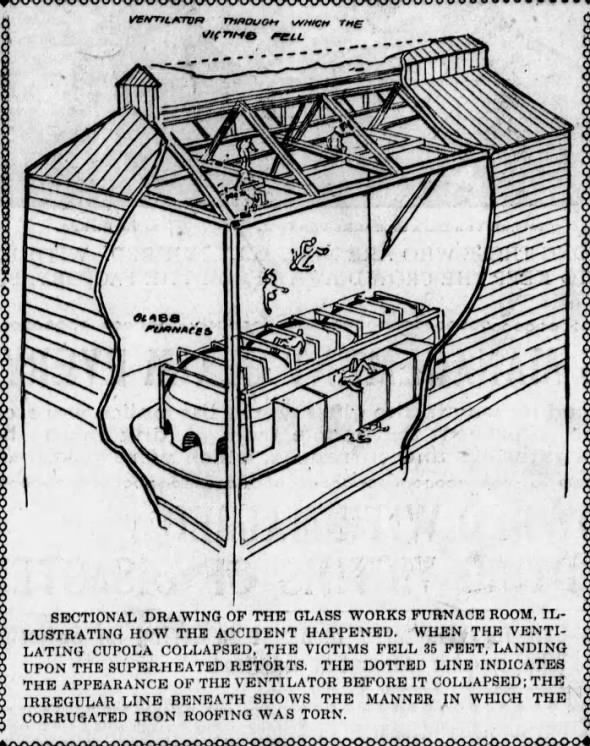
It was November 29, 1900, and fans filled the stadium in San Francisco for the annual Thanksgiving Day game between California Golden Bears and Stanford Cardinal. Some, not wanting to pay the entry fee (one dollar then, $40 in today’s money), climbed on a nearby glass factory roof to get their view of the action on the field.

The newly built factory roof collapsed about twenty minutes into the game. One hundred people fell as it gave way and plunged four stories down—many landing on the 500° F oven below. It was a horrific scene. Young people being cooked alive. What happened? The building roof wasn’t designed to hold a mass of spectators. It failed. Those who had climbed up were oblivious or did not have enough concern for the stress they were adding to the structure.

This tragedy wasn’t just a failure of design; it revealed a deeper misconception that buildings should be invincible, a myth that shapes our reactions to collapses even today. It goes further than engineering or physical buildings as well. Our models of reality are oversimplified at best and flat-out wrong in too many cases.

There is a common misconception and an unrealistic expectation about structures—many people seem to assume they are like blocks of granite. From those who believe that every building collapse is a conspiracy to those who think every failure demands stricter government regulations, the myth of an indestructible building continues due to a lack of understanding of engineering and the limitations.

Design Limits Are Not Defects

One key misunderstanding is design limits. Engineering is not about making a building too strong to ever fail. Unless we’re talking about the Great Pyramids, it’s all about trying to meet certain established parameters. An engineered building is designed to meet the expected conditions as defined by regional building codes. If the wind, snow, or loads exceed the designated standards, then there will likely be a collapse.

Earlier this year, after a heavy snowfall in upstate New York, many buildings had their roofs cave in (including this fire hall) because the weight of the snow was that much greater than the design weight. Sure, most engineers build an extra safety margin into their components, but eventually these limits are too far exceeded and you’ll end up with a tangled mess. This is why there are sideline roof shoveling businesses in these places where large snow accumulations are a regular occurrence.

Sure, code could force people to build to a much higher standard, making a collapse due to snow load virtually impossible. But this would increase the costs so much that it would price many people out of building a new house or barn. Engineering is all about compromise, more precisely about making the right compromises given the expected conditions. Yes, there is a case for making adjustments based on observation or after studies, but ultimately we build for what will work most of the time.

More Is Not Always Better

In the aftermath of the earthquake that had struck Myanmar and neighboring Thailand, there was a comment made to me in a chat hoping for more layers of regulation. This is a sentiment, in the specific context of rapid development of Bangkok, that seems more reflexive than reflective. It is a progressive impulse to believe that more interventions and rules are the answer.

The collapse of an unfinished tower in Bangkok, during the earthquake, sparks questions about building codes.  Was it missing sheer walls?  Did the contractor rush to ‘top it off’ quickly?  I want to know what the investigation finds.

But, for me, as someone who works in the construction industry and has occasionally needed to sift through these layers, I could not disagree more. Sure, better regulations may be needed. However, legalism doesn’t work in building standards any better than it does in churches. Sure, you need a code of some kind. And yet onerous regulation will add to the cost of construction, not necessarily improving the end results, and only making new housing less accessible.

It is, at best, the same trade-off discussion we can have about self-driving cars and the need for LIDAR. Sure, this expensive laser ranging system may marginally improve the results, but at what cost? Self-driving cars with cameras alone are already safer than human drivers. Keeping these systems at a price that is affordable will save more lives than pricing them out of reach for average people. It is, therefore, optimal to rollout the less expensive and safer tech even if it could be slightly improved.

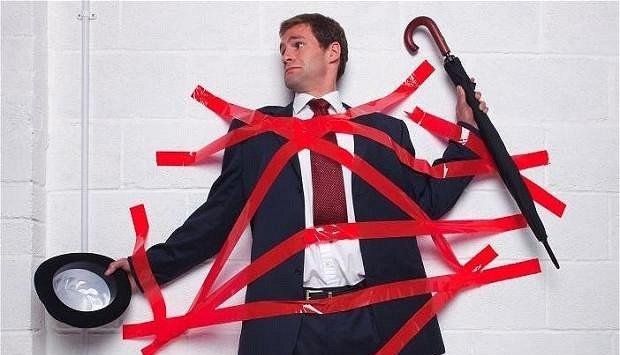
At worst there is only more expense and no benefit to more layers of red tape. The real problem with rules is that they are written in language that needs interpretation. Unlike a classroom theoretical setting, in the real world you can’t just memorize the correct answers and pass the test. The ability to make a judgment call is far more important than adding to the pile of regulations. More rules can mean the more confusion and the truly critical matters get lost in the mess.

I see it over and over again, when different customers send the same job for a quote and all of them interpreting the engineering specifications their own way. It is the tire swing cartoon, a funny illustration of when the customer wants something simple and yet the whole process distorts the basic concept until it is unrecognizable. That is where my mind goes when we talk about adding layers. Is it increasing our safety or merely adding more points of failure?

This one stuck with me and should be standard equipment in every design department.  I first saw it as a child while visiting the engineering department of the construction company my dad worked for.

Some of it is just that some people are plain better at their jobs than others with the very same credentials. I am impressed by some engineers, architects, contractors, and code officers—not so much by others. I’m willing to bet the intuition of some Amish builders is probably more trustworthy than a team of engineering students’ textbook knowledge, full of theory, with no real or practical world experience. In the end any system is only ever as good as the users.

Theory Is Not Reality

My work relies on truss design software. I enter information and it does those boring calculations. When I started, I assumed that it was more sophisticated than it really is. I thought every load was accounted for and nothing assumed. But very soon the limits of this tool started to reveal themselves. It is only as accurate or true to reality as the engineers and developers behind it—and on the abilities of the user (me) understanding the gaps in the program.

When it comes to mental models—the kind of physics involved in engineering—only a few people seem able to conceptualize the force vectors. Things like triangulation, or compression and tension loads, are simply something I get. Maybe from my years of being around construction or that curiosity I had, as a child, that made me want to learn what holds a stone arch up or why there are those cables running through that concrete bridge deck. My model was built off of this childhood of building Lincoln Log towers (arranging them vertically) and occasionally making mini earthquakes.

I’m exasperated by this expectation that people have for skyscrapers to be indestructible or to topple over in the same manner of a tree—as if they’re a solid object. It also seems that the big difference between static and dynamic loads is lost on most people. They don’t understand why a building could start to pancake, one floor smashing the next, or how twisting due to extreme heat could undermine the structural integrity of a building without ever melting the steel. Of course this has to do with their beliefs or mistrusts that are not related to engineering—nevertheless it shows their completely deficient understanding of how the science works.

The concept in their head is off, their brain modeling is inaccurate, and their resolution may be so low they simply can’t grasp what the reality is. You try to explain basic things and their eyes glaze over—sort of like when Pvt. John Bowers tried to explain why the plants need water, and not the electrolytes in Brawndo, in the movie Idiocracy. Ignorant people will scoff before they accept a view different from their model of the world. The theory they believe rules over all evidence or better explanation.

On the other side are those who trust every established system without understanding it. They “believe science” and see more as an answer to every question. More rules, a larger enforcement apparatus, faith in their experts, without any feel for the problems encountered by the professionals or those in the field. If they had, they would question much more than they do. Human judgment is still at the base of it all. Or at least that is what the lead engineer told me while we discussed the limits of software and the need to be smarter than the tool.

Not even AI can give us the right balance of efficiency in design versus safety factor or what should be written in the code. It may be a better reflection of our own collective intelligence than any individual, but our own limits to see the world how it actually is are not erased by the machines we create. We are amplified, never eliminated, by the tools we create. So we’ll be stuck wrestling with our myths and theories until we take a final breath—only our flaws are indestructible.

Models of a Messy World

If truss software taught me anything, it’s that no model nails reality perfectly—not beams, not buildings, not life. We lean on these frameworks anyway, because the world’s too wild to face without a map. But just like those fans on that San Francisco roof in 1900, we often climb onto flimsy assumptions, mistaking them for solid ground. The myth of an indestructible building is just one piece of a bigger distortion: we think our mental models—of faith, of power, of people—are unshakable truths, when they’re really sketches, some sharper than others, of a reality we’ll never fully pin down.

Take religion. For some, it’s a cathedral of certainty, every verse a load-bearing beam explaining why the world spins. Others see it as a rickety scaffold, patched together to dodge hard questions. Both are models—ways to grapple with life’s big “why.” Politics is messier still. It’s like designing a city where everyone’s got their own codebook. One side swears by tight regulations, convinced they’ll keep the streets safe. Another group demands open plans, betting that freedom builds stronger foundations. Both sides act like their own ideological model is bulletproof, shouting past each other while the ground shifts—economies wobble, climates change, and people clash.

Then there’s prejudice, the shoddiest model of all. It’s like sizing up a beam by its color instead of its strength. Prejudice, always a shortcut to save us from the effort of real thought, fails because it’s static, blind to the dynamic load of human individuals. Good perception, like good engineering, adjusts to what’s real, not what’s assumed.

All these—religion, politics, prejudice—come down to how we see. Perception’s the lens we grind to make sense of the blur. Some folks polish it daily, questioning what they’re fed. Others let it cloud over, stuck on a picture that feels safe but warps the view. I think of those fans in 1900, not asking if the roof could hold them. They didn’t mean harm—they just saw what they wanted: a free seat, a clear view. We do the same, building lives on models we don’t test, whether it’s a god we trust, a vote we cast, or a snap judgment we make. The distortion isn’t just in thinking buildings won’t fall—it’s in believing our way of seeing the world is indestructible.

What makes a model reliable? Not that it’s right—none are. It’s that it bends without breaking, learns from cracks, holds up when life piles on the weight. In construction, we double-check measurements because we know plans lie. In life, we’d do well to double-check our certainties—about the divine, the ballot, the stranger next door. The San Francisco collapse wasn’t just about a roof giving way; it was about people trusting a picture that didn’t match the world. We’re still climbing those roofs, chasing clear views on shaky frames. Maybe the only thing we can build to last is a habit of asking: what’s holding this up? And what happens when it falls?

Philosophical Candidates

Standard

Remember, as a child, those day-dreams of a life unrestricted by parental control, where it would be video games all night, ice cream, pizza, and soda all day?  What is amazing is upon reaching adulthood the thought of this lifestyle is disgusting.  First off, it would be horribly unhealthy—in the sense that those who indulge bulge.  Second, a party every day is totally unsustainable, someone has to do the work to keep the lights on and put food on the table.

Many people become more conservative as they mature and start to realize the value of the limitations they once spurned.  Yes, an adult will modify what was taught to them by their parents and community.  And some grew up in social environments where there was not much worthy to be preserved.  But to totally throw away everything inherited from prior generations is a terrible mistake.  Only an ideological extremist believes stripping it all bare is necessary and good.  It is wiser to build on what works.

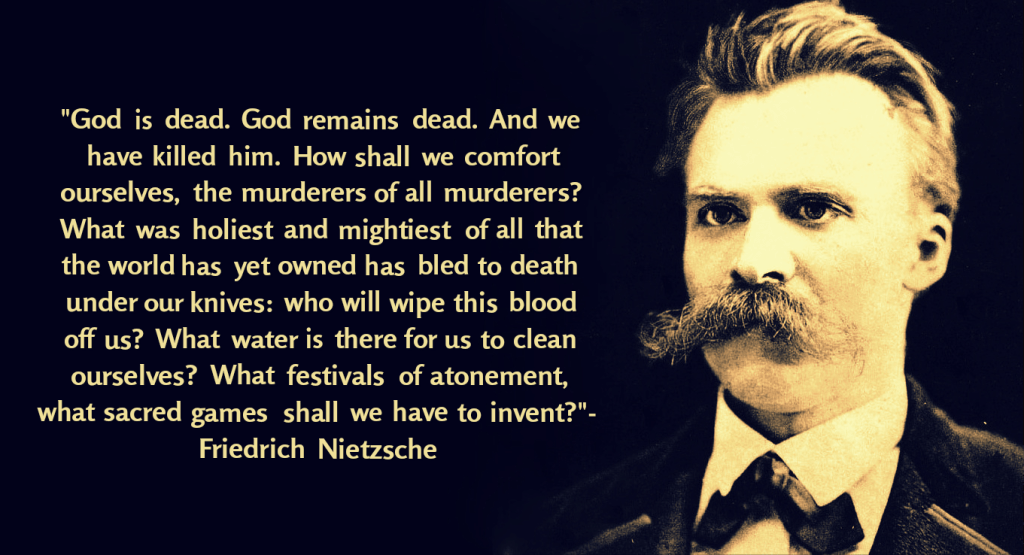
That is not to say that the tradition passed down can’t become stifling and overbearing or limiting our potential either.  There must be a bit of flexibility, some Oikonomia, or means to adapt the rules as the need arises.  However, the opposite ditch, of discarding everything and starting from scratch very quickly becomes chaotic, everyone does what is right in their own eyes, and it soon requires authoritarian measures to enforce the vision.  This is the thing Nietzsche warned about—our morality is not self-evident and we should think long and hard about those monsters that we will release with our neglect.

This wasn’t a sacrilege, it was a lament of what happens when you yank the foundational rug out from under a moral system.

Cultural revolution, while always promising to upend systems of oppression and usher in a new utopian age, ends up being worse than what it is replaced.  Yes, “All animals are equal” may be the founding cry, but is very soon after modified by opportunists who sadly are now unrestrained by those institutions despised and yet there for a reason.  The only good thing is that this out-of-balance off-kilter, ‘we know better than all who came before’ attitude, tends to implode on itself if given time.  The Soviet Union only lasted as long as it did because of Christian ethics within the population.

Two Visions For Our Future 

Recently, with the decline of Joe Biden and a failed assassination attempt against his rival, the Democrats decided it was time to make a change up top.  It is her time now—that is to say Vice President Kamala Harris—and there is plenty that could be said about her career thus far, but there is one peculiar repeat statement she has made that really deserves our attention:

“What can be, unburdened by what has been.”

This strange little mantra has been widely panned by the right.  This is more Kamala word salad, they chortle, and yet—while she does sometimes explain things like a school teacher talking to a kindergartener—it is not gibberish.  This is something Harris has apparently put some thought into and is something with a meaning that we should try to unpack.

What does it really mean to be unburdened by what has been?

I’m not going to sinisterize.

Most on the left I know have a glowing hope for the future and could never imagine that their philosophy could lead to Gulags.  I do not believe Harris intends it this way, but it does hint heavily of Marxist thought where we are to be liberated or emancipated from all that came before.  On the surface, this is an inviting thought.  Imagine a world with no abuse, no poor, everyone has their needs provided and has complete freedom.  This would be wonderful—and this is what every cookie-cutter college leftist has in mind as the end product of their efforts.

So how does the unburdening begin?  Well, it already has.  If you have been paying a bit of attention, everything normal is now being called fascist.  Believe that women exist as a category and isn’t something a man can ‘transition’ to?  Fascist!  Maybe you like the nuclear family and see it as a praiseworthy social convention?  Fascist!  How about a border where there is reasonable control over who is allowed in and who is kept out?  That makes you literally Hitler!  And Harris has embraced this side of the debate, she announced her pronouns and the nature of her politics.

None of this is to say that Harris is a terrible person.  I simply don’t want a leader unbound to existing ethics or any standard of decency, or who can write off Constitutional law as being a “what has been”  product of wealthy white men with some of them slave owners and thus should be discarded.  Sure, it may be a document with flaws, and could possibly use more amendments too, but it is better than nothing and represents the will of the people who signed onto this national project to this very day—white, black, Native, or immigrant alike.

What was established is for our benefit.  It is no more a burden than a wool coat in the blistering cold.  To think that we know more than every other generation that came before us, that science and technology have made us into gods, is delusional. 

Furthermore, the left’s unboundness means they do not care about precedents (except as a tool to restrict their rule-obeying opponents and the ends justify the means.  And they mean well.  They plan to fight injustice.  But this script has played out many times before and is the very thing that tradition is a bulwark against.  At the very least those who believe what “has been” has value will hesitate and consider before they destroy the foundations of civilization.

Make America Great Again

Donald Trump rolled out his red hats and MAGA slogan in his 2016 campaign.  The message was simple, a repeat of Ronald Reagan’s “Let’s make America great again” encouraging answer to the total economic disaster of the Carter years.  As he said, in the 1980 Republican convention:

For those without job opportunities, we’ll stimulate new opportunities, particularly in the inner cities where they live. For those who’ve abandoned hope, we’ll restore hope and we’ll welcome them into a great national crusade to make America great again.

Trump knows a good brand and borrowed it from the best Republican leader since a guy named Abraham Lincoln.  The progressives lost their minds.  They dug up the one time it was used by the KKK.  And couldn’t decide to condemn with “America was never great” or be offended because “America is already great and how dare Trump suggest anything otherwise!”  If you were playing a game of “wrong answers only” this harsh criticism of MAGA as white supremacy would make a bit of sense.  

MAGA is not hateful.

When the left says, “Do you know who else said make America great again?” and then goes on to associate this benign statement with all manner of evil, they’re poisoning the well.  There is zero reason to interpret this slogan as Trump’s desire to bring back Jim Crow or the racial policies that were once championed by Democrats.  But this does whip the left into a frenzy and it keeps them from deviating and making an independent decision whom to vote for based on the actual positions of candidates.

What does Trump mean by “make America great again”?

Trump is a businessman, his interests are mostly economic, rebuilding our industrial base, bringing back gainful employment for blue-collar workers lower taxes, and less red tape standing in the way of entrepreneurial spirit.  My wife, who opened a store in her home country, complains that the US is not a free country and is appalled by the many layers of taxes and requirements.  This is what dooms many to working for “the man” or corporations that can afford compliance costs while drowning their competitors with cheap imported foreign goods.

The legalism of US law would make a Pharisee uncomfortable.

From a 2016 Trump campaign speech on jobs and the economy:

Jobs can stop leaving our country, and start pouring in. Failing schools can become flourishing schools. Crumbling roads and bridges can become gleaming new infrastructure. Inner cities can experience a flood of new jobs and investment. And rising crime can give way to safe and prosperous communities.

Had Trump’s first term not been sabotaged by COVID and blue state shutdowns, there is no doubt this would have been fulfilled.  In fact, by the third year of his presidency the minority unemployment rate reached record lows.  Even NPR, while downplaying it, could not deny these numbers Trump touted were real.  Biden’s only success comes from not rolling back those tariffs the fear-mongering media had so roundly criticized.  It is strange how the success and failure of policies is determined only by who is employing them, isn’t it?

No, Trump’s not woke.  He believes in hiring based on qualifications.  He doesn’t want to continue world policing and the massive expansion of government programs.  This is why he is the enemy of those who derive all of their power from the administrative state and sap our resources.  He is keenly aware that a free flow of cheap labor, while it helps elites who want nannies and landscaping at a discount, pulls down wages for those who do not come from wealth.  Even a Senator named Barack Obama understood this:

If this huge influx of mostly low-skill workers provides some benefits to the economy as a whole—especially by keeping our workforce young, in contrast to an increasingly geriatric Europe and Japan—it also threatens to depress further the wages of blue-collar Americans and put strains on an already overburdened safety net.

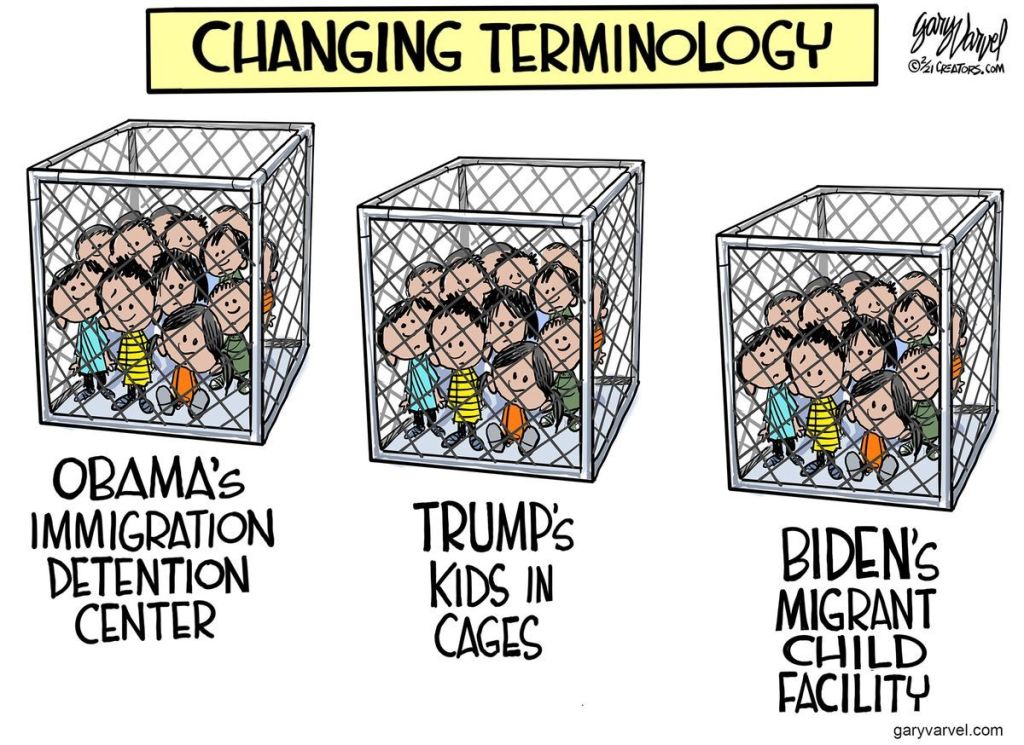
Make America Great Again is not about a swerve in the direction of Nazism or some new form of ethno-nationalism.  It is about restoring the economic conditions that had allowed our grandparents to buy their home and a car on a single income.  Back in 2015, Bernie Sanders had blamed open borders on a right-wing conspiracy, that will make everyone poorer, but now the left is saying that normal border security is racist.  What changed?  Why are these Democrat policies, like the immigrant cages during the Obama administration, demonized under Trump?

Compassion means disincentivizing illegal crossings where human trafficking is a concern requiring sorting facilities.

It is really disorienting for those who soak propaganda like a sponge.  They never see that Democrats did this full 180 on multiple issues where they had been right.  Trump is right about the border.  It should be the top priority.  Just the Fentanyl overdoses alone are a reason.  I’ve lost a former high school classmate and football teammate this way— 83,000 Americans died in 2022 alone—and it had ironically played as much role in the death of George Floyd as a knee on his shoulder.  Why do we even talk about that dozen killed in a school shooting or Ukraine in light of this?

Reform, Not Revolution 

Progressives tear at the fabric of civilization without understanding the consequences of their actions.  They believe that the erasure of history, destruction of monuments, or the degrading of religion (see Paris Olympics) is a path to a better future.  But this amounts to cultural vandalism and is ignorance of the positive contribution of these religiously created values we’ve internalized.  There is truly nothing that is written on the substrate of the universe that says slavery is wrong or that genocide is evil—the stopping point to “unburdened by what has been” is a return to animalistic impulse.

By design, not accident.

The frontal lobe of the brain is developed by the myths and moralities that progressives do everything in their power to destroy with ridicule and sacrilege.  And it will inevitably go much further than anticipated.  We rarely have enough appreciation for what we have been given.  Everything is taken for granted until it is gone.  And when there is a vacuum that is left to fill, and the ‘demons’ waiting in the wings will come rushing in:

When an impure spirit comes out of a person, it goes through arid places seeking rest and does not find it.  Then it says, ‘I will return to the house I left.’ When it arrives, it finds the house unoccupied, swept clean and put in order.  Then it goes and takes with it seven other spirits more wicked than itself, and they go in and live there. And the final condition of that person is worse than the first. That is how it will be with this wicked generation. (Matthew 12:43-45 NIV)

Christianity led to equal rights in the West, the abolition movement, is a product of St Paul advocating for Onesimus or telling the Galatian church, “There is neither Jew nor Greek, there is neither slave nor free, there is neither male nor female; for you are all one in Christ Jesus.”  The left assumes the values it has are universal.  They see only the faults without giving credit.  

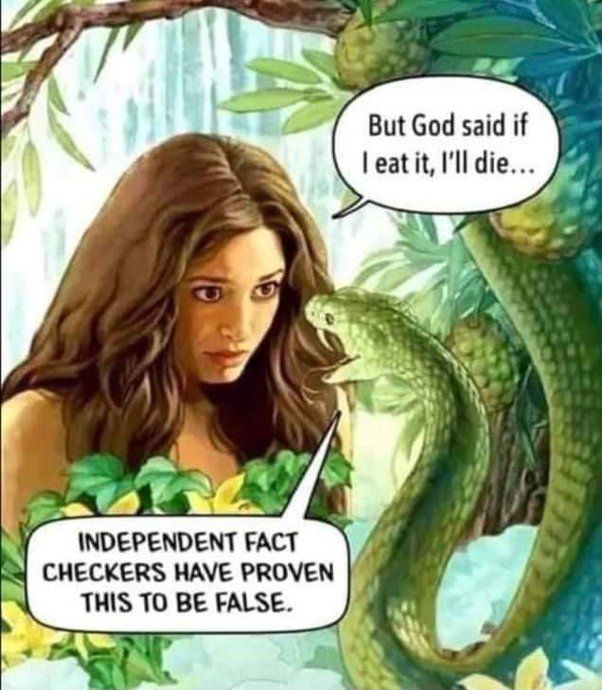
“You will not surely die!”

The progressive left, by contrast, denies all limits and conventions.  Their “can be” may seem good at first glance.  But is opening Pandora’s box, it is releasing what previous generations have built social structures to contain and could end up being more like a trip on Event Horizon.  America has been good and bad, had moments of greatness and failure.  We should tune the ideal it was founded on, not tear it down to start all over again.  There is much to conserve in “what is” with an eye to improvement.  Veer not too far to the right or left.

At least with Trump, morally corrupt as he may be, he comprehends that our inheritance is not a burden. For him, there is something that can be recovered “again” from the past generations even if those lessons were not perfectly applied to him.  He’s a grandpa, he has seen trends come and go, old enough not to care about what is currently popular.  Trump may have some narcissistic traits, at least that is the character he plays on television to the roar of the WWE crowd—but he isn’t trying to be God.