The Dangerous Lie of Shut Down or Die

Standard

False dichotomies pop up everywhere in the political discourse. You are either pro-life or you are a raging homicidal baby-killing feminist monster and, alternatively, you are either pro-choice or you are “at war with women” and would turn the world into “The Handmaid’s Tale” if ever given the chance. Of course, both sides of that dichotomy are grossly misrepresenting those on the other side. Some of the most vocal proponents of pro-life that I know are of the female gender, would rather not have their lives ruled by men or be treated like baby-making slaves. Likewise, many on the pro-choice side are intelligent and compassionate people who follow a different dogma as far as what does or does not constitute a separate human life.

Where you stand on the recent Covid-19 forced closures probably has much more to do with your politics than it does with your personal level of scientific sophistication. Sure, there are many, blinded by their own confirmation bias, who see everything they believe as being scientifically based and rational, but that is to be in denial of the role that their own emotions play in their judgment. The decision to shut down the economy due to the virus had has much to do with fear as fact. How do I know? Well, there weren’t a whole lot of reliable facts to go on when the decisions were being made. We had models, yes, but models are only as reliable as the data entered and the accuracy of the assumptions that they contain. Their predictions are not facts. What likely had a big influence is the scary stories coming from Italy and the lack of good information from China.

The Changing Understanding of Covid-19

I had been in favor of the shutdowns, initially, to give time to make a more accurate assessment of the actual threat and also to give time for our medical professionals to gear up amidst global shortages of personal protective equipment. Sure, many Americans are of the pigheaded mentality that they will drive eighty miles per hour into a blinding fog bank and then have massive pileups as a testament to their inability to slow down for anything. But it is only prudent to enter into a potentially deadly new situation, with many unknowns, with an abundance of caution. The arrival of Covid-19 onto the world scene was such a circumstance. The idea of social distancing to “flatten the curve” made sense at the time.

However, as a couple of weeks morphed into a month or more and the language of state politicians mysteriously shifted from slowing the spread (as we were told was the reason for the shutdowns) to trying to stop it entirely, while at the same time the there was growing evidence that the virus was not as deadly as first thought, was likely here earlier than had been previously known and may have actually reached the peak (unflattened before the shutdown measures had been implemented) in some places, I kept waiting for decision-makers to shift their policies according to the actual evidence. But they did not. Frozen by fear or too stubborn to revisit their previous decisions (or maybe even wanting to punish those opposed to their lockdowns and show who is boss, who knows?) there was no change. They were determined to plow ahead with their prior decision based on bad data, economic consequences be damned, so wear your masks, go to Walmart like good little citizens and shut up.

We all have an idealogical team we are pulling for, whether we realize it or not, and it can cloud our perspective of an issue. Sure, you might believe that your ignorance of virology is “common sense” (which, unfortunately, is probably common and yet good sense is not always common) and refuse to take reasonable precautions. Or you might think your own opinion (and that of the experts whom you agree with) is some kind of “scientific consensus” and an irrefutable fact. But the reality is that you might just be too arrogant (in your little knowledge or, rather, knowing just enough to be dangerous) to understand that there could be perspectives greater than your own. The frustrating part for me was always being caught between the false choices put out by those on either side of the political debate. Those calling the virus a hoax, dismissing the effectiveness of masks, and being generally ignorant only armed those pushing for control with a false moral imperative to double-down on their shutdown or die mantra.

Covid-19, while certainly deadly for many and even if those terrifying early estimates of a 2-4% death rate had held true, is nowhere near the Spanish flu. The real number, given growing evidence gathered by antibodies testing and from various ships where everyone was tested, shows a true death rate closer to 0.5% which isn’t too different from the seasonal flu over the course of an average year. Yes, it did certainly stretch our medical resources thin, and likely would’ve with or without the shutdowns, yet there is little evidence to show that our economic self-sabotage actually saved lives. No, if anything, we may have simply destroyed opportunity for those most vulnerable here and around the world for no real gain. It is quite possible, even probable, that more will die as a result of the forced shutdowns than were saved. In the end, the decision to shut down the economy was never a question of shut down or die. For many, it may very well be shut down and die.

False dichotomies are dangerous. They are lies. This polarization of our many choices can come with tragic results.

Economic Shutdowns Also Kill People

In my many discussions about Covid-19 I’ve run into many reoccurring and economically illiterate sentiments, like this one: “I’m sorry but I can’t believe I’m reading this. No compassion for human life and suffering?” That in response to a well-written article weighing the benefits against the costs of the economic shutdown. Apparently, in this person’s emotion soaked and one-dimensional brain, the only way you can show compassion for human life and suffering is to keep people caged in their homes and unable to feed themselves?

As a starting point, there was never a scenario where there could be zero deaths from Covid-19. That ship had sailed long ago, in China, when the authorities there continued to let people from the epicenter travel around the world (although not domestically) and sailed when many Western leaders were more concerned with things like “xenophobia” than the virus. Maybe had Europe joined the Trump administration in banning travel from the source of the outbreak there may have been a chance of containing it. But it was already too late by the time concern about the virus and death tolls had finally exceeded worries about political correctness and virtue signaling about race. Places like New York City and Los Angeles were going to see tens of thousands dead regardless of what was done at that juncture.

When the shutdowns began, in earnest, the virus was already deeply entrenched. The first verified case in France, for example, has been recently discovered to have been back in December already and much earlier than initially thought. It had likely spreading while some politicians here were still encouraging people to crowd the streets of Chinatown and was definitely being passed around while Italian leaders were telling people to hug Chinese people (from Wuhan, no less) in a misguided effort to prove they weren’t racist. The die had been cast and we were in for a wild ride.

But what we did have a choice over is how we responded to the threat. Certainly, the virus had not reached us all, and we could not know (without significant testing) if the peak of infections was a couple of weeks out or still months ahead. If the virus had reached relatively few of us and the death rates were already skyrocketing then the most desperate measures were completely justified even if it cost some lives. On the other hand, if the virus had already been in circulation for months and the hospitals weren’t already jampacked, there was very little to be gained and plenty to be lost from sweeping anti-economic measures. Those with strong social networks and a fat wallet, like the Hollywood celebrities urging us plebes to stay at home while they sip martinis in their hot tub, might not get it, but there are serious consequences to economic shutdowns even if you do not personally experience them.

For those who still think that there’s no harm done by shutting down (simply because they are amongst the privileged less affected and able to put food on their own tables), keep reading.

This idea that the economy is about Wall Street and stock portfolios is complete and utter nonsense. The concern many have about the shutdown has nothing to do with the fiction you hold of Scrooge McDuck swimming in his vault full of gold coins and perpetually worried about losing his wealth. Not at all. First, no billionaire (other than the Hollywood fantasy villain version) actually has moldy money, billionaires are billionaires because they make good investments and their investments are often in life-sustaining industries, like healthcare. Second, most of the economy is Y-O-U. The economy is, simply put, our transactions together, the labor we use to produce things of value to trade with others for our wants and basic necessities.

That out of the way…

Domestic Abuse, Drug Overdoses, and Suicide Rates

Shutdowns have consequences and the consequences are often much more devastating for those most vulnerable. I think often of my waitress and waiter friends, people in the restaurant industry, who have suddenly without warning had their entire income stream dry up by the executive fiat of someone who gets their paycheck via the state treasury or through an accumulation of assets. Sure, Trump and Congress have taken action to offset some of these losses by direct payments, unemployment compensation has been extended to many who might not otherwise qualify and yet that will do nothing for those permanently unemployed.

For many in the world, in the same way that Covid-19 is deadly to those with comorbidities, an economic shutdown is (or will be) that proverbial straw that broke the camel’s back. Sure, you can say that the guy devastated by the bills piling up and his bank account drying up, his business being shuttered, should see the bigger perspective. But that is no different from saying that we should not care about Covid-19 deaths because those most impacted were dying anyway and that their comorbidities actually killed them. The fact that not everyone is as financially healthy as you are or as emotionally able to weather the storm caused by the shutdown doesn’t undo the damage done to those who are more vulnerable.

The socio-economic cost of the shutdowns should be factored into the decision as much as the potential gain. Sure, there is a possibility (although it is not proven) that the shutdowns may spare a few that would otherwise have perished from the virus and accompanying complications. But there is definitely an uptick in things such as domestic violence and child abuse that comes with forcing weak and emotionally vulnerable people to stay confined together, away from their sources of stress relief and friends, for months. Believe it or not, not everyone shares your advantages in mental health, not everyone can keep doing their work via Zoom, we aren’t equal in this together as some will proclaim, some are isolated alone, and with only their suicidal ideations to keep them company for the duration.

And, for those of you looking down your noses in condemnation of the shutdown protestors at state capitals, thinking that your own rationality and compassion is what is guiding you, think again. True compassion would have some sympathy for those who are suffering from the economic consequences of the hasty and arbitrarily enforced shutdowns. Unlike you, they might not be able to afford to shelter in place for months at a time. The truth might be that you, in your fearful overreaction to Covid-19, simply do not care enough about their livelihoods being ripped out from under them and are too ignorant of the economic consequences, the increase in domestic abuse, drug overdoses, and suicides that accompany economically dire circumstances.

It is certainly no more dangerous to do a couple of laps around a state capital, than it is to go to Home Depot, Walmart, or the grocery store. I suspect the real issue some have has to do with political affiliations. It is a moral superiority contest between them and those who decided that the risk of government overreach and economic ruin is greater than the virus. Some would rather live in denial of the serious economic consequences they’ve imposed on others, ignore the evidence of the suffering caused by their selfish demands for safety at all costs (to their neighbors), and maintain their dangerous tunnel vision?

Of course, who knows, in the current political climate, maybe some would rather the protestors killed themselves than peacefully vent their pent up frustrations?

But this is far bigger than domestic politics…

Economic Downturns, Food Shortages, and Starvation

The most troubling and continuing consequences of the imposed shutdowns is the impact it is having on the agricultural industry and food supply chain. It was very early on when the stories started to cross my newsfeed about small farmers, in the Philippines, being forced to dump their produce. If one understood the labor that it took (most Americans can’t even imagine), that these farmers would give up their meager profits, it is hard to understand. But that is what happens when the market is closed down, there is no refrigerated warehouse to store their vegetables until things reopen again. And, sure, some of it is distributed to their neighbors, and yet the real demand comes from the cities. So the cities are cut off from their suppliers and the poor farmers from their buyers and only source of income.

Vegetables dumped in Benguet

I’ve realized recently that many people can’t understand logistics even at the most basic level and see the actions of agricultural producers here as being greedy or suspicious. When I mentioned how producers were culling herds due to processing plants being closed over Covid-19 concerns and the possibility of people starving, I had a guy respond with the following, “If we don’t want people to starve let’s start by distributing this food that is being wantonly destroyed by the factory farms.” His ‘solution’ may seem reasonable at first glance. I mean, why not? But then you have to considfer that these big producers would not just throw away their profits. They aren’t that stupid. And if they can’t process this protein then you can be 100% sure that government or anyone else is going to replace their production capacity. They are the specialists.

Sure, like in rural parts of the Philippines, the neighbors to these massive barns will get all the pork or poultry they will ever need. However, that’s nibbling around the edges of the problem. The real reason we have these “factory farms” is not to supply Union County and the surrounding communities. No, not at all! The real market for this meat is the big cities. So, while it is great that some rural neighbors get to fill their freezers at a below-market price, that is going to do very little for the needs of those downstream and cut off from their food source. A couple of “community gardens” in Brooklyn can’t offset the literal tons of beef, pork, and vegetables that are imported into that city every day. Don’t get me wrong, I love a ‘feel good’ story as much as the next guy, but this isn’t an issue that will be solved by a couple of generous farmers.

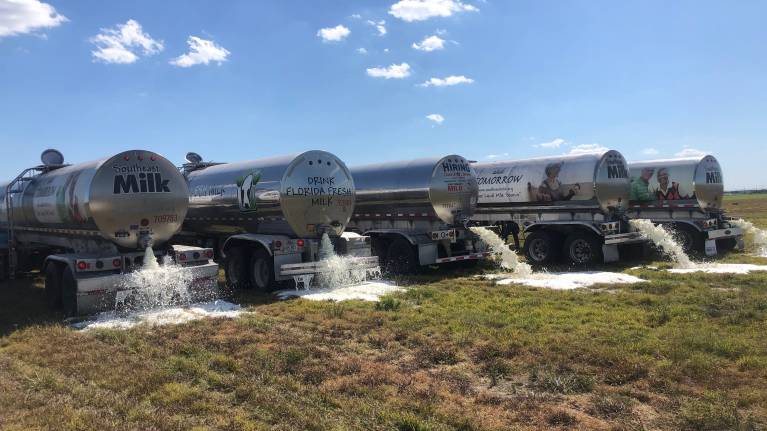
The abrupt shutdowns and closures are causing incredible bottlenecks that cannot be easily resolved overnight. Closing down schools and restaurants, for example, meant that all of the food in that pipeline, packaged for that kind of usage, was now jammed up. There are some grocery stores now selling meats that were originally intended for restaurants. But the retooling cannot happen like the flip of a switch. That is why some dairy processors, what specialized in supplying schools, had to dump their milk at the same time grocery shelves had run dry of the staple. That is why potatoes are piled up to rot in Idaho. When networks within the supply chain break down, when the market is majorly disrupted without warning, there are shortages in some places and over-supplies in other places.

Those big animal operations need to keep moving things along, the whole process can’t be held up for long before there are major problems, finished pigs need to be moved along or there is no room for the feeder pigs to go. Sure, they can change the feed to try to keep the finished pigs at a particular weight for a period of time. But eventually, something as to give. That is why there are piles of dead pigs a hundred feet long, going to waste, and soon enough the shelves will run empty as well. It will seem strange. Many won’t understand how it is possible, but it is happening and it is happening like a slow-motion train wreck.

That all said, I’m not afraid for myself or most Americans. We might miss out on a steak or pork chop. We will likely pay a little more for our food in the coming months. However, my real concern is for those in the many places around the world where people work hand to mouth. The rickshaw driver in Mumbai can’t afford to pay more for his family’s food and especially not after being locked in his own house for months. The person in a Manila slum, already living on “pagpag” (a Taglog term meaning “garbage chicken” or literally food pulled from the trash) will not do well when others are fighting over the disappearing scraps as food becomes scarce. Many in the world live on a very small ration, meat is a luxury to them, and now have been deprived of their income in a desperate fight against a virus that may not even be stopped by their sacrifice.

Making the Right Trade-offs…

There is no question about the seriousness of Covid-19. I have a close friend in NYC who lost two friends. They were both my age and died in their own homes. It is not a virus that should be laughed off or treated as no big deal. Tens of thousands have died and tens of thousands more will likely die and in a relatively short period of time. Sure, many of these people may have had comorbidities and yet they would very likely have been with us for many more years had they not had their encounter with this deadly virus.

It is possible that some could be saved from Covid-19 through the shutdowns. There is no solid evidence that this is the case. Nevertheless it is possible. That said, it is also possible that our efforts only prolonged or even worsen the pandemic by preventing “herd immunity” from ever happening, which means we could suffer more deaths from Covid-19 and also the experience the hardships of the economic shutdown.

Whatever the case, the “shut down or die” mythology needs to be confronted. Those looking for a perfect solution here are living in fantasy land. The hope that a vaccine will be developed quickly and then become widely available is (sorry, anti-vaxxer conspiracy theorists) basically a Hollywood fiction. We still don’t have a vaccine for SARS or MERS and may never have a vaccine for Covid-19. So, this idea that we can just hunker down and wait this out is not realistic. Sure, I would be glad to be proven wrong, it is possible, but there are also huge trade-offs to our waiting that need to be discussed.

Speaking of trade-offs: According to ASIRT, 1.35 million people die in car accidents every year (over 38,000 in the US) and an additional 20-50 million are injured (4.4 million US), some with permanent disabilities as a result. This, unlike Covid-19, is a ‘pandemic’ that disproportionally impacts the young and with no pre-existing health conditions. We could, quite easily, in the name of safety, ban all automobiles and save far more lives in a couple of years than the shutdowns ever would. Of course, we would never do that, we have valued the freedom of movement and economic advantages over the risk of serious injury or death. I suppose people feel more in control behind the wheel, but if we were really in control of the outcome of our trip then nobody would leave home knowing that they would get into a fatal car crash, would they?

Based on what we now know about the virus and death rates we should not have shut down the to the extent that we did. We may have saved a little on the front end, compared to Sweden who remained open, and yet will very likely end up in the same place as far as Covid-19 and far worse off in terms of the economic consequences. My fear is that many more will perish as a result of the shutdowns than from the virus. Millions of the world’s young and most vulnerable are suffering right now, as I write this, and could die of starvation. A good analysis must weigh all factors. We cannot be zoned in so much on one problem and only one solution that we cannot see any others. The virus from China is bad, but the panicky response of governments around the world may have made it many times worse.

Depressed, But Not Desperate…

Standard

It is supposed to be the most exciting time on the Christian calendar, the time when Jesus rose from the dead, and here I am. Meh. The shut down, tolerable at first, is starting to weigh down on me and I just feel a bit down.

I mean, not that anyone should worry about me, I’m fine and have a good support network. And yet the excitement of something unprecedented has worn down. My routines of work, the gym, eating out, and going to church, have all been disrupted and I barely need to leave my bedroom.

And then there’s the stupid politics, on both sides, TDS on one side and conspiracy theorists on the other, and I’m even starting to doubt my own perspective. I felt I had covered all angles. But, then, I’m no different from anyone else, I’m working with my own set of biases and blind spots like anyone else in the discussion.

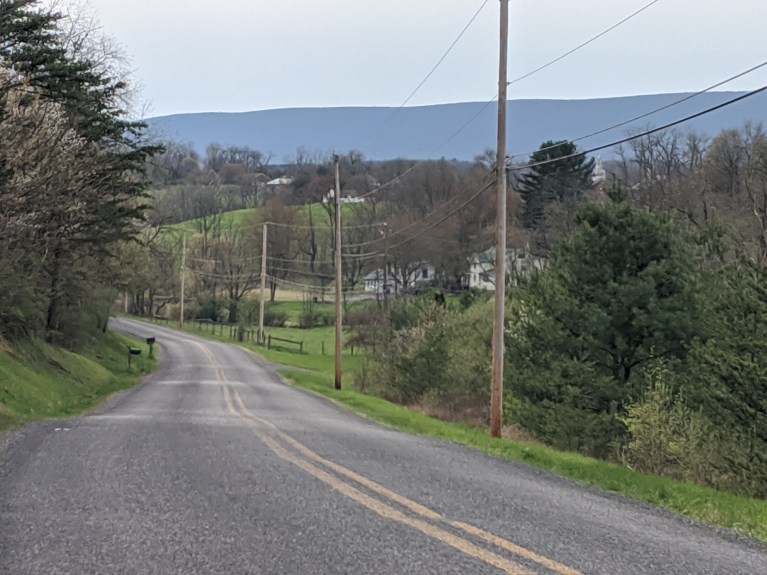
So here I am, walking alone, down a windy rural Pennsylvania road, everything turning green despite the cool air, a couple cars on the road, and did I mention that I’m alone?

Today is the day that I typically (yes, even now) spend at my parents house, with my sister, and enjoy a Sunday dinner. But they decided to go to a State Park for the day and I stayed home because that’s what Charlotte wants. Well, I’m not home, actually, I’m at my parents house, for the change of scenery, the bench press, and the sandwich and pie my mom left in the fridge to show her love.

Charlotte, for her part, is doing okay in the Philippines, despite the lock down in her country (far stricter than our own) and has even found a way to get to her new job. She was tired of being cooped up in her little apartment, with Y-dran and her sister, and refuses to accept that I’m fully capable and willing to backstop her until this is over. That said, I’m completely proud of her and her determination to support herself and her son. I think I found someone even stronger willed than I am!

The bleh and blues come somewhat due to the lack of progress in bringing my little family together. With government offices shut down there, in the Philippines, the indefinite time frame of the whole process of her coming her has been stretched even longer. And, given my luck romantically, my doubts about the happily ever after loom always and even larger now. Could this pandemic be part of that invisible barrier, that impossible to overcome obstacle? For now, and as long as I am able, I will cling to my hopes.

What else can I do?

Last, and probably least, the one thing that could have brought me a little smile only left me a few hundred dollars in the hole and that’s only the first week. For the first time in my life, I decided to put some money in the stock market. There’s practically no interest earned by savings, I wanted to help along my goal of financing a kitchen remodel, what could possibly go wrong, right? Since then I’ve run into nothing but negativity, that the market may drop by another 50% and that’s just typical for me: Too little, too late. Too much, too soon.

But then again, I’ve made it this far down the road and at least I’m not going through this one alone. In a few more weeks things will begin to be a bit more normal again. My plans to visit Charlotte in December will hopefully work out and I’ll even be able to stay longer now that it is a proven fact that working remotely is possible. It does make me sad that everything seems to take so long, that those whom I love are stuck on the opposite of the world from me, but them being here with me some day soon will make it all worth the wait!

Even the economy, bad as it seems now, will eventually come back. Most of us will not die from this virus (or the misguided policies to keep us safe from it) and the world will likely come out better on the other side. There is no need to panic, no reason for despair, this too shall pass and everyone will soon find something else to complain, theorize and argue about. The world is not ending, or at least not that I know, and the sun is still shining…

No, Your Faith Will Not Spare You…But God Is Still Good!

Standard

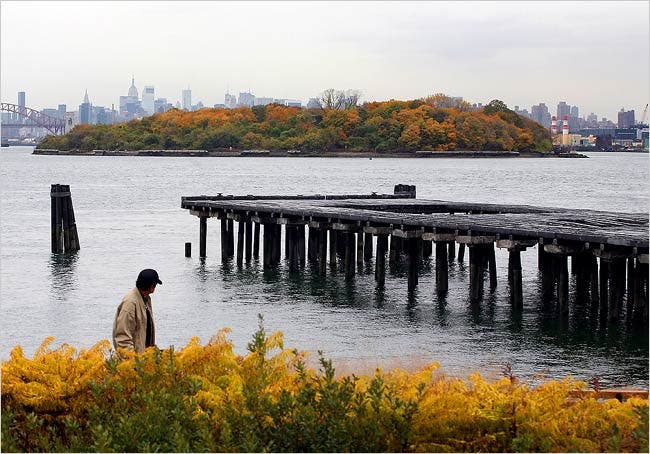
There are many things largely forgotten in history, one of them a horrendous tragedy that took place on June 15th, 1904, near “Hell’s Gates” on the East River, which would forever change one ethnic community in New York City, and that being the General Slocum ferry disaster.

What had started as an annual church excursion of German-Americans, mostly women and children, from their community in the city’s East Village to Long Island, ended with terror and over 1000 deaths. The poorly maintained boat caught fire, while underway, fire fighting equipment failed and the wooden craft quickly became an inferno.

Helpless mothers, unable to swim themselves, especially not in the heavy clothing of the time, put life preservers on their children only to see them sink like rocks into the river as the cork in the flotation devices had degraded. The Captain, likely trying to avoid causing a more devastating fire on shore, decided to head for some islands, into the wind, which only made the wooden ferry into a blow torch before it fell apart.

The result of this hell on earth was the eventual dissolution of the German-American community in New York City and one can only imagine the personal torment this left for the survivors and the fathers and husbands left behind.

My worst nightmare is not being able to help those whom I love. I had, in casual conversation with a psychiatrist, been told that I showed symptoms of PTSD after the unexpected death of Saniyah and judging from my current awful feelings and tears right now, from writing this, I would guess that they were right in their analysis.

If only seeing someone I loved deeply wail the loss of their daughter could rip the fabric of my being to such an extent, I can’t even begin to imagine what seeing them roasted alive would do. Lord have mercy!

My Covid-19 Mini-Crisis

Being raised in an American culture that too often confuses health and prosperity with God’s favor, the idea that someone that I love could be felled by a virus seems obscene. But, faith, right? Shouldn’t faith prevent my family members and loved ones from dying prematurely from a virus?

But it seems that the truly Orthodox have no such delusion. True, Fr. Seraphim expressed his belief that one cannot become sick through their participation in the body of Christ. However, even still, that does not preclude the possibility of our becoming sick during the fellowship and interactions afterward, does it?

It was in the contemplation of father’s words that I ran across the story of early Christians who, unlike their pagan neighbors who fled, deliberately went into harm’s way to attend to their plague suffering neighbors. They attended to the sick, taking the illness upon themselves in many cases and succumbing in as much agony as anyone else.

How could this be?

Did their faith mean anything at all?

My own thoughts continued an ongoing internal discussion about the evidence (or lack thereof) for a God that actually cares. In my American-tinted perspective, they should have been protected from disease to prove God’s sovereignty over all of creation and show the truth of their Christian testimony, that’s only logical, right?

I can’t claim to understand. All I know is that many of them died, yet the stories of their extraordinary faith spread throughout the Roman world and you can still read of their testimony even in Foreign Policy articles published in our time. They died and yet they also demonstrated an example of love that has lived on to this very day and have defied my own logic in that.

We have but one life to live, all people die eventually, yet it is said that all people have two deaths: The first death being their physical death, when their body is put into the grave. Then a second ‘death’ at some point in the future when their name is said for the last time. And, I would argue that, in that light, those who, in faith, sacrificed their lives for their neighbor’s sake have actually outlived those who fled in fear.

It turns out that the Christ of Christianity only ever promised a life of suffering for others to those who would follow him. The ‘faith’ of those seeking health and wealth is shallow and will fall apart in times of crisis. But true faith lives for the good of others, despite uncertainty and fear, the proof is not in their own health so much as their faithful and lasting impact on the world.

No, your faith will not spare you, but if you live in love you will find God waiting on the other side of your suffering.

Crisis averted.

How I Have Seen God At Work

This may be a strange way to make an announcement of sorts, but I’ve never professed to be anything other than strange. I mean, I’ve tried to act normal, yet it never seems to work out for me. And so I guess I work with what I’m given, right?

Anyhow, I mentioned a bhest in past blogs, including my last blog, and haven’t really explained what bhest really means.

Right now, on the opposite side of the world from where I am currently writing, lives a beautiful flower, her name is Charlotte. I found her in a moment of great faith, when my life remained consumed in my Mennonite identity and struggle with the father of a young woman, and had agreed to participate in her life as only an encouragement. She had moved to Taiwan, from her mountain home in the Philippines, as a means to support her son and secure an annulment from the father of her son.

Given her marital situation (along with my Mennonite and purity culture priorities) and my continued faithful pursuit of the impossibility, I told her that our relationship would have to remain platonic (which is something she allowed without any protest) and offered to be her encouragement. My commitment was to show her that someone still cared about her life, despite her being separated from family and not having anyone else to turn to at the time. At the time I was also on the road, away from home, so I understood the loneliness that comes with separation from family and friends.

There was a bit of a pattern that developed. I would be her faithful wake up call, to wish her a wonderful day, but later (with the stress of a high-pressure work environment and conflicts with coworkers) she would come back online with the crying puppy emoticon, which was my signal to get to work, and I would make it my mission to cheer her up again. Soon, by whatever miracle, I would have her laughing and smiling again.

At some point, pretty early on, she asked me if it was okay if she would call me “Bhest” and (after a momentary hesitation to consider the potential damage of letting her use a term of endearment in our context) I decided to give her permission. It is a term that I had no idea what it meant really then and still am not entirely sure. But, eventually, it felt dumb to let her be alone in using that term, there was no term and thus she too became my Bhest.

Bhest, according to Charlotte, meant this: “the very best best person, who is my friend, who is always beside me, to pray for me, advise me, cheer me up and who really shows care for me.”

Bhest, best explained, is a word mystical in meaning, has become a sort of joint identity and not something my words can easily explain. But I do know that it stands for a commitment to care. And, when my own road reached an end in the Mennonite church, like hitting a brick wall, it was the hand of my bhest reaching through, telling me in a moment of suicidal darkness, “if you go, take me with you,” and demonstrated a level of commitment to me even greater than my mother. It was then that I decided to stay to serve this lost sheep that I had found and if only for her good.

Charlotte’s happiness, I decided, was worth my suffering through another day of this life. The seed of faith that I gave to her months before, in my pure concern for her, grew into a limb that I could hold onto until my own feet again. She was the one who told me to “be strong for her” and gave me the courage to walk through the doors of Holy Cross, in Williamsport, on the road to my Orthodox conversion. And it was Charlotte who finally gave me that reason to no longer be “thirty years old living in Milton” (as the faithless alternative explained) and compelled me, months later, to board a Boeing 747 headed for the other side of the world.

Bringing This to the Present

There is so much I could say about Charlotte and her son. So many moments, from profound moments of sadness together (after the murder of her uncle Roland) to those of our greatest joy and many others somewhere in between. Her family has embraced me, reposed uncle Roland especially, welcomed me with open arms, and made me feel right at home twelve timezones from my current residence. I honestly felt like I had experienced a taste of heaven in Baguio City and in our various excursions.

Now that country, like my own, is experiencing the same Covid-19 lockdown (albeit stricter than my own) and our hopes for the future are overshadowed with even greater uncertainty than before. But at least Charlotte is stranded, for once, with her son Ydran, whom she loves deeply despite being separated from him for years. He’s a real handful, a biter when I met him (who learned quickly that, unlike his grandma and aunts, I bite back), and has since matured to a bright (while still completely energetic) eight-year-old. His wide smile always welcomed me and I’ve missed him since our first meeting.

More recently, due to his history of illness, and a recent bout with pneumonia (he’s still coughing), along with the spread of Covid-19 worldwide, along with my own struggles due to some history of my own mentioned earlier, it has been exceedingly difficult for me to rest easy and trust God in this moment of chaos.

In one of my silly, more romantic moments, after Charlotte watched one of my favorite movie classics, “The Last of the Mohicans,” I recited to her the words of Hawkeye, “You be strong, you survive! You stay alive, no matter what occurs, I will find you! No matter how long it takes, no matter how far, I will find you!” Which was a promise said with a little smile and laughter, nevertheless pretty accurately represents the commitment that I’ve made to her. I’ve nearly had to make real on that once when she called me after almost being abducted by two men, while in Taiwan, and our current situation has left me wondering what extreme measures might be necessary to bring her here to my side, with her son, our son, Ydran?

As of today, upon the request of Ydran (a shortened version of his full name, pronounced Eee-drun) himself, that I will begin to call Ydran my son. I had worried a few months ago whether or not a young Igorot boy, with his own biological father, would ever accept this goofy overwrought religious refugee American. But we hardly even speak the same language yet (although he was actually using sign language today and will likely learn English far quicker than I learn Tagalog and his tribal tongue) and yet he has asked me if I could be his father. *gulp* I really didn’t know how to express all my excitement, he had completely preempted all of my preparations for the future where I would need to explain this, where I would have to walk gingerly to avoid undermining the man that is his biological father, and now I do not have to worry about that.

Prayer answered.

And, speaking of prayer, unprompted, Ydran, after all that, requested that I lead the prayers before he went to bed. So, being as Orthodox Christian as I know to be, I gathered myself and my phone, we went to the prayer corner of my house and led in the Lord’s prayer before praying for our future together, that it may come quickly and that he can remain healthy until then.

Dreams and Prayers

I have big dreams of what to do as a father with his son. But I also have a fear that hangs over me. My own life has been full of hopes ripped away from me right at the time when I thought things were in the clear. Now, before I can have my happy and simple life, with a little broken and repaired family, there is this monster called Covid-19 lurking in the darkness. I have full awareness of the terrible tragedies that have cut down the faithful and heathen alike, sometimes on a bright sunny day, like that day those German-Americans boarded General Slocum before their final hellish terror.

However, come hell or high water, I am determined, as determined as I am to pursue impossibility in faith, to not live my life in fear. I believe that God exists and that God is good because I have not alternative. I believe in God because without God there is no good. Logic and reason cannot explain away the feelings I have for my precious Bhest and her livewire son. Even if we are cruelly kept apart for many more years, due to legal nonsense or plague, I know we will be together again and someday soon.

May God have mercy on us!

Only will tell if my dreams for this life will ever come true. It is easier for me to predict a global pandemic than to know if my next few days, weeks, or years on this planet will be happy or harrowing. Maybe my battered faith will finally meet its match, in something awful yet to come, and my hopes finally drown in a sea of despair. Nevertheless, as long as I’m alive, let my hymn be this: “Let Thy mercy, O Lord, be upon us, as we have set our hope in Thee.” And, in the perilous days ahead, may I cling all the more to the words of St Paul:

“Who shall separate us from the love of Christ? Shall trouble or hardship or persecution or famine or nakedness or danger or sword? As it is written: “For your sake we face death all day long; we are considered as sheep to be slaughtered.” No, in all these things we are more than conquerors through him who loved us. For I am convinced that neither death nor life, neither angels nor demons, neither the present nor the future, nor any powers, neither height nor depth, nor anything else in all creation, will be able to separate us from the love of God that is in Christ Jesus our Lord.” (Romans 8:35‭-‬39 NIV)

P.s., Y-dran, like his father, is also a fan of Dunkin donuts, which they do have in the Philippines, so the apple really doesn’t fall far from the tree!

My New Normal, For Now…

Standard

It is official.

I cooked my first meal using a gas oven.

Well, that’s if you don’t count those canned soups that I heated.

Anyhow, it was in the midst of my dinner preparation that I discovered that I had accidentally purchased “angel hair” rather than my normal “thin spaghetti” noodles, which there was also a box of the latter as well and, besides that, another box of regular spaghetti.

So, apparently, in my panic buying “just buying a few things” (to use the words of a classmate I bumped into stayed a safe six foot away from at the grocery store) I had grabbed a couple of different spaghetti noodle varieties from my usual. So this apocalypse I will have to deal with the mix up and be more careful in my panic buying routine restocking for next apocalypse.

But, as a general rule, I’ve been pretty lucky throughout this Covid-19 event. First, I’m not dead yet. Second, I had purchased a pack of eighteen “mega rolls” of toilet paper before the hoarders emptied the shelves. I also got a haircut while it was still safe and legal. Add to that, my having a D-Link router installed weeks prior made the shift to working at home rather than forty-minutes drive away a smoother transition.

Truly, the timing of everything has been fortuitous, so far, and I hope that streak continues.

Things had been overwhelming at work.

Now, with an extra hour of sleep at night and some flexibility to meet obligations during the day (by making up for the time lost in the evening) I feel more productive and relaxed.

Sure, I do miss my three big screens at work. But nothing beats rolling out of bed and getting right to work. And I’m not really sure how I would’ve gotten through all of the necessary steps to get a renter into my old house had I needed to run back and forth from the office right now, it would be next to impossible and, considering my current workload, completely stressful at very least.

Oh, and did I mention that my new renters (recently unemployed) are awesome???

Yeah, they spent last week raising the value of my property and are anxious to do more. They do great work, he can do the laundry list of small items the home inspector found, and I’ll consider keeping them employed to help me get some projects in my new house wrapped up. I mean, it just so happens that they’re currently unemployed.

I honestly don’t know how I would’ve gotten everything done there without them and hope they are as happy with the arrangement as I am. It will be interesting to see how long we are off work, I’ve already told them there would be flexibility as far as move-in dates, given the current unforeseen circumstances. yet (given Congress finally did get their act together) they are set to receive a check for the US Treasury soon and their state compensation, so we should be good to go.

My anxiety-prone nature also gives me an advantage in times of crisis when the confident people are feeling lost. I mean, it is a sort of “welcome to my world” type of scenario for me. When your whole life is basically a crisis there’s no big adjustment needed for the end of the world, it’s just another day and you know you’ll figure out a way through or die.

And, so long as I don’t get a bad strain of Covid with my Dunkin coffee, I’m not dead yet!

Anyhow, it was nice to at least get a practice run working remotely, I think I might take my work on the road this winter, at least if we get that far, and make my second trip to the Phillippines to visit my bhest again…

What is a bhest, you might ask?

That is a topic for another blog…

Martha, Take a Deep Breath…

Standard

And just like that, everything stopped.  A little over a month ago I had started to follow a story developing in Wuhan, China.  A virus, a novel virus, had somehow driven the industrial heart of China to a standstill.  It is astonishing how something not even considered to be a living organism (since it doesn’t reproduce without our help) can defeat the best measures that us ‘intelligent’ creatures could throw at it.  

We are fortunate, at this time at least, that the Covid-19 isn’t as deadly as some viruses.  Unfortunately, it is very contagious, it is serious enough that it could easily overwhelm our medical infrastructure and, if there were no effort made to slow or contain the virus, it is very likely that Covid-19 would kill far more than the seasonal flu.  As a precaution against a worse case scenario many governments around the world have ordered a suspension of unnecessary commerce and non-essential events as a means to blunt the spread.  

For me personally this comes at a time when I was close to being overwhelmed by my workload and falling further and further behind.  I had worried (and perhaps not nearly enough) about how I would meet deadlines, particularly as far as my income taxes, and stay ahead of the growing stack of truss layouts.  The economy had, in three years, gone from pedestrian growth to bullet train speed.  I dreamed about not having to drive my long commute, freeing time to finish dozens of waiting projects or basically gaining a little time somewhere in my busy schedule to finally breathe again and relax a bit.

Church, entering the Lenten season, did not seem to offer much relief for this breakneck pace.  No, if anything the additional services were only adding to my already impossible list of obligations and stress.  Looking back over the past months and years, at my growing list of responsibilites, my life was on a trajectory that could not be sustained.  I needed a break.  I needed a push back against all those who depended on me and would pressure me to perform at a higher and higher level.  

Lent was supposed to be about the withdrawal of Jesus into the wilderness for forty days, how had it become yet another thing to cram into an already overcrowded schedule?

Going Nowhere Fast…

That seems to be the world we live in.  

Busy, busy busy and many don’t even know why anymore.  

I’m amazed by how traffic flies on the interstate.  I tend to set my cruise at or right above the speed limit and get passed like I’m grandma out on a Sunday drive.  It makes no sense.  Of course, then, I’m really no better in that it is next to impossible for me to focus on one thing even while hurdling through the early morning darkness or traveling back in the full grid of pushy tailgating morons.  Would it really hurt them that much to slow down?  

Perhaps (while ironically using the device to write this) it would be good for me to put the phone down for a moment?

The same people snicking about toilet paper hoarders, a week earlier, have about lost their minds when the governments of various states started to tell them to close shop for a bit and stay home.

Those infected with the restless American spirit pile up wealth for themselves, more than anyone else in the world, and yet the thought of taking a few weeks off for sake of their vulnerable neighbors will induce a panic.  “How will we eat?”  Cries out the guy, with three properties, to the guy who recently bought a brand new truck when the old one was just fine.  We, unlike many others in the world, could afford a week off to reflect on ourselves and our cultural priorities.

We could be the busiest, furthest traveling, civilization in all of human history, but we aren’t the first people scurrying about our various responsibilites and fretting about the lack of help.  A few weeks ago, while contemplating the fevered pace of modern life and the justifications given for it, I had to think of the example of a stressed out woman who lived two millennia ago and finally expressed her exasperation about the lack of help to Jesus:

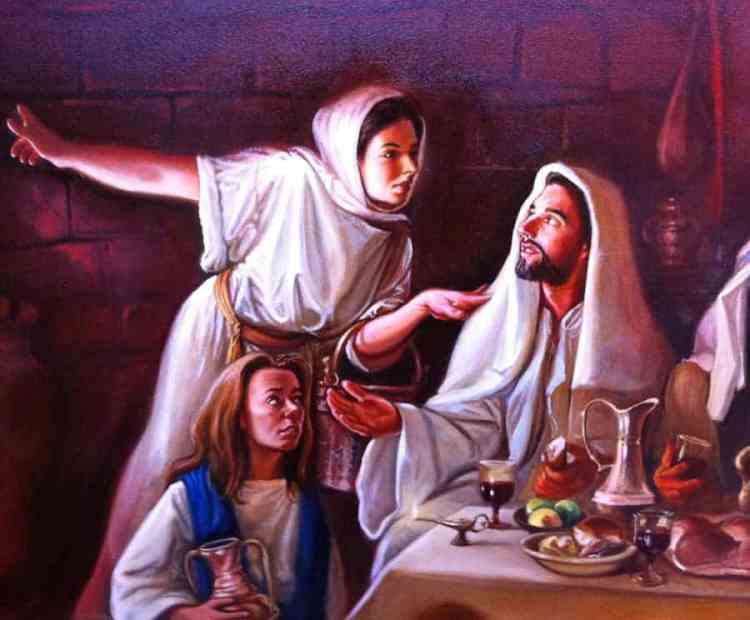
As Jesus and his disciples were on their way, he came to a village where a woman named Martha opened her home to him. She had a sister called Mary, who sat at the Lord’s feet listening to what he said. But Martha was distracted by all the preparations that had to be made. She came to him and asked, “Lord, don’t you care that my sister has left me to do the work by myself? Tell her to help me!”  “Martha, Martha,” the Lord answered, “you are worried and upset about many things, but few things are needed—or indeed only one.  Mary has chosen what is better, and it will not be taken away from her.”

(Luke 10:38-42 NIV)

Mary and Martha

There are many anxiety-ridden people in our society today and that fact has become all the more clear in the past few weeks.  There are many who, like Martha, are working at their full capability, struggling to keep up with their seemingly ever-increasing workload and begging for help.  From those panic buying to those complaining about their favorite events being cancelled, both are missing the perspective of Mary, who sat listening, and really do need to take a deep breath and maybe just appreciate that they are still breathing rather than be so worried about things that will pass away soon enough anyways.


Be Still and Know…


Everyone, from government leaders to those who think that they know better than government leaders, wants to be in control.  And that is what drives the frantic pace of our lives.  We think, “if I just could have that one more property” or “after this year I’ll kick back and relax,” yet when we get there there is always that one more thing that needs to be done before we can feel secure.  There are many who pursue this sort of material completeness until the day that they die.  Some do better than others at accumulating their pile of stuff, some are like this foolish rich man Jesus describes:

Then he said to them, “Watch out! Be on your guard against all kinds of greed; life does not consist in an abundance of possessions.”  And he told them this parable: “The ground of a certain rich man yielded an abundant harvest.  He thought to himself, ‘What shall I do? I have no place to store my crops.’ “Then he said, ‘This is what I’ll do. I will tear down my barns and build bigger ones, and there I will store my surplus grain.  And I’ll say to myself, “You have plenty of grain laid up for many years. Take life easy; eat, drink and be merry.” ’ “But God said to him, ‘You fool! This very night your life will be demanded from you. Then who will get what you have prepared for yourself?’ “This is how it will be with whoever stores up things for themselves but is not rich toward God.”

(Luke 12:15‭-‬21 NIV)

Listen up, folks!  This shutdown may be the last wake up call you get from God.  Instead of complaining about your schedule being upset and all the things that you want to do, including church services, maybe it is time to be like Mary and do some serious contemplation instead? 

When Jesus told the crowds, “take no thought for tomorrow,” he was likely talking to an audience with many who lived hand to mouth (like many still do in the world) and had every reason to worry about where the next meal was coming from.  While we fret and fuss about the inconvenience, fight over toilet paper, some will literally be going hungry while trying to wait this virus out.

This Lenten shut down can be a very good thing to sort out what is truly life sustaining from the truly frivolous.  My design work has aided in the construction of many barns over the past few years and there had been a great deal of optimism before everything came crashing down a little over a week ago.  Suddenly, much like that ambitious fool whose life was required of him the very night he felt satisfied, we too have been forced to take inventory over our lives and it would be a good opportunity to reorder our priorities.  When is the last time you’ve thanked God for the chance to work and have food on the table?  Have you noticed the sun still shining as the stock values plunge?

We may have BMWs to show our prestige and iPhones (emphasis on the ‘i’) to keep our schedules straight, but we aren’t the first self-important generation that needed brought to it’s knees and reminded that it was not sovereign over anything, that their power over the earth was only an illusion.  It is the wise person who lives in awe of the mystery of everything that the foolish take for granted.  It is the very thing that the Psalmist tells us to be still and know:

God is our refuge and strength, an ever-present help in trouble.  Therefore we will not fear, though the earth give way and the mountains fall into the heart of the sea,  though its waters roar and foam and the mountains quake with their surging.  There is a river whose streams make glad the city of God, the holy place where the Most High dwells.  God is within her, she will not fall; God will help her at break of day.  Nations are in uproar, kingdoms fall; he lifts his voice, the earth melts.  The Lord Almighty is with us; the God of Jacob is our fortress.  Come and see what the Lord has done, the desolations he has brought on the earth.  He makes wars cease to the ends of the earth. He breaks the bow and shatters the spear; he burns the shields with fire.  He says, “Be still, and know that I am God; I will be exalted among the nations, I will be exalted in the earth.”  The Lord Almighty is with us; the God of Jacob is our fortress.

(Psalms 46:1‭-‬11 NIV)

Time to Reset and Refocus…

We are not in control.  And, “except you become as little children,” (Matt. 18:3) everything you accomplish in this life will eventually be wiped away and forgotten.  All of those barns my long hours and overtime have made possible will eventually, maybe in less than a century, be reduced to rubble, rot away or be burned.  Nothing we have built with our hands, no great intellectual endeavor, should take our eyes off of the true sustainer of life.  That sustainer being that which has set this universe in motion and holds it together while we frail critters delude ourselves, imagining our own invulnerability, and will some day need to face the reality of our own situation.

I was writing this blog (afterall, you, my audience, are too important to wait) as my dad toiled with the landscaping outside.  There had been many times where I had intended to buckle down and help for a little, despite questioning if all the work was ever worth it, but got swept away in my own projects before actually lending a hand.  Today, with no gym ritual or other routine to keep, I decided it was time to haul a couple wheelbarrow loads of mulch before finishing this blog and borrowing my dad’s truck to haul a few loads out of my old house in preparation for the new tenants.  

I do not believe Covid-19 will be the end of us.  But let it be the end of this paradigm we are in.  Let it be a time to slow down, to respect our fellow man and to, most importantly, be in awe of God.  It is truly, in these reminders of our own mortality, that God’s mercy is made manifest.  We can be the hands that help, the ears that listens, and the voice of calm in troubled times.  We live surrounded by chaos on all sides, it is terrifying if you stare into that abyss of uncertainty of the days and months ahead, but those who have faith in God never have a reason to fear and will always bring hope as long as they have breath.

So, take a deep breath, Martha, get your soul right and even Covid-19 cannot snuff out the light that you’ll bring into the world.  For a Christian there is beauty even in death.  Live in love, not fear, my friends, because in love there is a breath of life that cannot be extinguished.  Stop ‘adulting’ for a little, stop being like Martha, and learn to be a bit more like Mary.  Use this Lenten season to be still, to sit at the feet of Jesus, and set your eyes on what is greater than our daily grind.  All of the activity here will eventually come to an end, what have you done of eternal value lately?

Fear Is Contagious. Fear Is Deadlier Than Coronavirus.

Standard

Spanish flu of 1918 was unusual, amongst modern influenza outbreaks, because it killed young and otherwise healthy people.  One of the possible reasons for this is an immune reaction called “cytokine storm” in which overreaction of a bodily system leads to a cascade of other failures and eventually to death.  I’ll let my friends who are medical professionals correct me on the details, but that is the basic idea and sufficient explanation to set the stage for this blog post.

The Herd Reacts…

The psychology of human behavior, in particularly how it pertains to people in groups, is a fascinating study.  We are social creatures and because of this our own response to anything can be easily influenced by the reaction of group.  If one person or several, who are considered credible by the group, start to do something new, it won’t be very long before there are many others copying them.  That is how fads and fashions are born, that is why religious people conform, we want to share in the credibility of the credible by doing what they are doing.  We do this unconsciously, like the contagious yawn, and can help explain what happened last week.

All of the cancelations of the past few days may very well come down to the actions of one man.  Rudy Gobert, days before becoming the first NBA athlete to positive for the Covid-19 virus, decided it would be funny to deliberately touch all the mics and recording devices in a news conference.  This led to the NBA suspending their seasons and, like Mrs O’Leary’s cow kicking over the lantern starting the Great Chicago Fire in 1871, one man’s caviler attitude could very well have triggered the response of the NBA and the long list of other cancelations that soon followed.

It goes like this: The NBA canceled because 1) a few of their players tested positive, 2) they realized they were no longer in control of the situation, and 3) they could possibly be held liable if the death of someone’s grandpa could be traced back to one of their sporting events.  So, in the name of public safety and all things good and right, they decided to approach this unknown risk by abruptly ending their season.  This, in turn, very likely influenced other leagues to follow suit for fear of their own inaction, despite knowledge of risk, becoming a heyday for trial lawyers everywhere or simply a public relations disaster.

The more leagues and events that cancelled, the more others felt pressured to do the same.  Sure, this was something rationally justified, the idea of “flattening the curve” or slowing the spread of a disease by “social distancing” soon became common parlance, and yet the spread of this idea to start canceling events seems also to be very much like the simultaneous run on toilet paper.  Anxiety disorder is something I know a little about and, while I’ve never been tempted to hoard toilet paper, it certainly has gotten in the way of my better judgement. 

So is the reaction to Covid-19 wholly rational or was it post hoc rationalization and basically a collective panic attack?

Nothing To Fear But Fear Itself…

I have a friend who was an Air Force medic during the First Gulf War.  He told me an anecdote you’ll never hear reported in the news, a behavior that doesn’t make any rational sense and yet is something he encountered a few times in the lead up to combat in Iraq. 

Apparently some of the young soldiers were so keyed up and anxious that they couldn’t take the pressure of the wait anymore, they would find a place where they had a little privacy (the porta-potties as I recall) and take their own life using the firearm issued to them.

It makes absolutely no sense.  Why would someone, facing the danger of death, be so anxious that they would actually kill themselves?

In times of crisis people want to do something, anything, to lose that feeling of powerlessness.  That is probably the reason why many people have recently started to stock up on things that really would not help them.  That is why young soldiers, concerned about losing their life, took their own life rather than continue to wait in fear.  Fear often leads to an irrational response.  And our most educated and elite, given responsibility to make decisions, are not immune to this kind of irrational “do something” impulse either.  Our leaders are capable of panic as much as any of us.

It reminds me of the story of Easy Company, told in the series “Band of Brothers,” where the Company Commander, 1st Lieutenant Norman S. Dike Jr. (or “Foxhole Norman”), was portrayed as being frozen by combat and unable to make a decision.  He had obviously been talented enough to rise up through the ranks and become an officer, but apparently he lacked the calm and collectedness to be an effective leader outside of a controlled predictable environment.  He had to be replaced by a more common and practical man, with the right instincts to get the job done:

During the assault on Foy, Dike had ordered a platoon to go on a flanking mission around the rear of the town. During their charge, he ordered them to take cover. His subordinates informed him they were going to get killed because they were sitting ducks.  At the same time, Captain Richard Winters, former commander of Easy Company and the Battalion executive officer, tried radioing him to tell him the same thing. Having no idea how to control the situation, Dike froze. Carwood Lipton, at that time the company’s first sergeant, later put it: “He fell apart.” He was relieved during fighting at Foy by First Lieutenant Ronald Speirs under orders from Captain Winters, then moved on to become an aide to Maxwell Taylor, 101st Airborne Division.”

Military Wiki, Norman Dike

Could it be those whom have power in our institutions are men (and women) of similar caliber to Dike?  Smart, capable of working their way up through the established system, and yet lacking the courage necessary to lead society through uncharted waters?  Some of them freeze in fear, others overreact in their anxieties, while others (seeing the bigger picture) are more more able to make good decisions and navigate the stressful circumstances of the present moment.  Running the NBA or being at the top of a government agency does not mean that a person is qualified to manage a crisis and in some cases those in those positions are probably going to make matters worse rather than better.

Self-sabatoge, Fear-based Overreaction and Titanic Failures…

It is really hard to know, actually, in a politically polarized time, when many are willing to cut off their nose to spite their face, what is a real crisis and what is merely an opportunity to try to undermine a political opponent.  In fact, there are some in this country who seem quite willing to destroy the economy in a desperate bid to get their power back and a few who even seemed to cheer the plunge in the markets.  When some see personal benefit in feeding hysteria and panic, it is hard to know who too trust when clearly not everyone is on the same team anymore.  

But that said, I would tend to see the fear as being real and the reaction a sincere effort to prevent the worst case scenario from happening.  It was easy, as Covid-19, ravaged China, to deny the severity of the situation.  For one, the Chinese government is not the most trustworthy source of information (add to the that they had every reason to minimize the outbreak as not to scare away investment dollars) and, two, it is very easy to dimiss China as a them rather one of us.  The real wakeup call was Italy, a country clearly on par with our own in terms of medicine, and how quickly a few isolated cases suddenly exploded.  And, unlike China, where the government kept a tight lid on information, the truth was allowed to escape.

What has happened since I see as being similar to when a driver dozes off, wakes up while crossing the rumble strips, and reactively jerks the wheel.  Their immediate reaction may spare them a trip into the trees, but it could also be an over-reaction that takes them head-on into an incoming tractor trailer.  It could be too little too late.  There are those right now who call the idea of “flattening the curve” a “deadly delusion” an that only complete containment strategy will make a difference.  But then I begin to wonder has the opportunity to save those most vulnerable been missed a month or so ago when we failed to close our borders when it was clear that China was dealing with something unprecedented in our own times?

They say had the HMS Titanic ran straight into the iceberg, rather than barely grazed it, some would’ve died from the violent collision and yet the ship would likely haved stayed afloat.  It is also strong possibility that they could have avoided a collision with the iceberg altogether if they had only used the rudder rather than try to reverse the engines.  The Titanic, unlike many ships of the period, had two outer propellers run off piston engines and one in the center that was powered by a turbine.  The outer propellers could be reversed quickly, the inner could not, and the result of their attempt to reverse being turbulence over the rudder which made the magnificent ship unresponsive.

Sometimes I wonder if it is too late to spare the lives that will be lost if we slam headlong into Covid-19 and let be what will be.  Yes, people will die.  But people will die regardless and crippling the economy may only add to the death count.  Don’t get me wrong, I believe cancelling unnecessary activities and avoiding large group gatherings is a precaution worth taking, as is practicing good hygiene, washing hands, wearing masks and self-quarantine.  However, I would also argue that wrecking the economy will only make matters far worse and must also be avoided at all necessary costs.

In my own mind there is a vast space between paralyzing fear or irrational over-reaction and blinding arrogance.  We can and should be getting prepared, but with deliberate calm.  We are at war, the strength of our enemy is not fully known, we must not recklessly expose our vulnerable flanks, we dare never freeze in fear.  It would be wise to buy some time, to allow better countermeasures to be deployed and that does mean social distancing, less travel, more cleanliness, and really what should be common sense.

What Is Coming?

Despite our best effort, war is coming. We can expect that in the coming weeks that case numbers will jump dramatically and, not only that, but ICU beds will begin to fill at an alarming rate.  We could see abandoned shopping centers and malls converted into makeshift hospitals.  We will probably see some “wartime medicine” or triage, where those most likely to survive are given access to treatment over those who have only a slim chance are basically left to die, so snap out of your dismissive stupor and conspiratorial denial now or you will not be prepared for the battle of the coming days.  

That is the truth. 

We are emotional beings, not wholly rational. 

We make poor decisions, both collectively and individually, that can turn a dire circumstance into an absolute disaster.

If you are seeing this only in terms of politics, who gets blamed or who benefits, you are the problem more than the virus.  If you have filled your cart with toilet paper because suddenly you feel vulnerable and don’t know what to do, stop thinking only about yourself and stop feeding into the anxieties of others.  It is time to buckle down, put aside partisan differences, selfish ambitions, and act together as one nation again.

In the end, remember, like the case of many who caught Spanish flu and died because of their strong (yet unhelpful) response, overreaction can be more deadly than the actual threat.  We cannot bring the economy to a grinding halt out of fear, instead we must thread the needle with a prudent and properly measured reaction.  There is no point in stopping the virus by killing the patient.  We should pray that our leaders are given extraordinarily wisdom and calm for this unprecedented event.

God bless!

My Final Position On Covid-19

Standard

I’ve never been one to get caught up in the latest hysteria.  I tend to be a skeptic of everyone from fundamentalist doomsayers to their secular climate catastrophe counterparts. 

There are many things are not worth getting worked up about, things that I can’t really change myself or prevent, and it takes discernment to know what we should or should not be concerned about. 
The media tends to turn everything into a crisis.  Sensational headlines invite clicks and clicks produce ad revenue.  So, yes, minor problems or statistically unlikely scenarios do too often get blown out of proportion.  Politicians, for their part, love to capitalize on anxieties and fears of the public as a means to gain power for themselves. 

These false prophets of the corporate media and political establishment do a terrible disservice to the public, they are like the boy who cried wolf and eventually paid the price for his deception.

The cynical exploitation of the public by those who should be making them aware and leading out against real threats eventually leads to distrust of authority and an apathetic response.  Many take to heart the adage, “Fool me once, shame on you; fool me twice, shame on me,” and use it as a reason to reject all warnings from all established sources or at least those that do not comport with their own political alignment.  Unfortunately, an overreaction against all authority can also leave the ‘sheep’ vulnerable when the real ‘wolf’ finally does arrive.

My own concern over Covid-19 did not originate with the recent media hype over the story and the foolish efforts to politicize it against the current administration.  My concern began weeks ago and originated from my own personal analysis of the characteristics of this particular virus and the extreme Chinese response in trying to contain it.  Those who continue to trivialize the threat do not understand it, they are only reacting like those townsfolk fooled one too many times, and need to take a step back, take off their jaded lenses for a moment and reexamine the evidence.

No, Covid-19 is not the same as SAR’s, Swine Flu…

There are many silly memes out there about all the public scares that we have survived.  And all that is true.  But, while it is important to see the current claims of the media in the context of their previous record, it is also important to remember that even a broken clock is right twice a day and therefore must be able to discern for ourselves.

When I first became aware of the new (or novel) “Coronavirus” outbreak in Wuhan back in January there were several things that initially jumped out to me then and continue to stand out.  Covid-19, as it has more recently been designated, is not nearly as deadly as Ebola or some other flu viruses, nevertheless the Chinese effort to contain it has been extreme.

Chinese authorities have taken unprecedented steps to try to stop the spread, going as far as to quarantine huge industrial centers of millions of people and building massive new hospitals.  Why?  Well, probably because they have a reason to be concerned.  A country does not deliberately cripple their own economy to the extent that the Chinese have done without there being a good reason to do so. 

One reason to be concerned is that the Chinese, not wanting to scare away foreign investment, also have plenty of reason to try to conceal or downplay the reality on the ground.  That is why they made efforts to silence those who brought broader attention to the situation by sharing what they saw on social media.  They accused an optometrist, Li Wenliang (who himself would later would become infected and die while in treatment) of “spreading rumors” for telling the truth, so can we trust that they are telling us the full extent of what is happening now?

Li Wenliang

What we do already know is that Covid-19 is not as deadly as Ebola and other viruses.  But, according to current estimates, it still kills an alarming number of those who become infected:

“On Tuesday, WHO said the global death rate for the novel coronavirus based on the latest figures is 3.4% — higher than earlier figures of about 2%. The World Health Organization’s director-general, Tedros Adhanom Ghebreyesus, said that the new coronavirus “is a unique virus with unique characteristics.””

However, it is not the death rate or that Covid-19 is extremely deadly that caught my attention. 

No, it was how transmissible and impossible to contain that it has proven to be.  In many cases, the most deadly viruses are less dangerous, on a world scale, because they kill their host quickly enough that it cannot spread far or they are not easily transmitted.  Covid-19, by contrast, does spread through the air, it has a long incubation period that makes it hard to detect those infected, it does kill a significant number of those infected, and has successfully spread around the globe in a matter of weeks.

But doesn’t the flu kill X amount of people per year?

One of the dumbest reoccurring comments I’ve encountered is of those who point to the higher death count of the flu as a reason not to be concerned about Covid-19.  Many have reasoned that since the flu has killed more people than Covid-19 this past year that therefore the flu is a bigger threat.  Of course, those making this claim have obviously not paid attention in probability and statistics or simply fail to grasp the difference between those killed previously and future death rates.

Sure the flu has absolutely killed more last year before Covid-19 arrived on the scene, but it only kills a fraction of a percent and nowhere near even the low estimates for Covid-19.  In other words, if Covid-19 were to continue to break containment, as it has consistently, and spreads around the world, it will likely kill millions of people worldwide.  In fact, if you multiply the current estimate of death rate out to the US population, that’s well over 11 million Americans, and that’s assuming everyone else who becomes seriously ill, needs to be intubated and weeks of ICU treatment or would probably die, is getting good medical care.

Responding to the news that a grizzly bear has escaped containment by pointing out that a mountain lion also killed last year only shows how little a person understands the situation.  Sure, the grizzly isn’t going to kill everyone in the neighborhood, but it is certainly a bigger threat than the mountain lion, it actually compounds the danger, it only adds another deadly creature when one was bad enough and certainly isn’t going to improve the experience for those living in the neighborhood of where it now roams free.  

Grizzly vs Cougar

At very best Covid-19 being on the loose only adds to the misery of flu season and, at worse, well…

Do I think it is the end of the world?

My cousin Mel suggested that there are two ditches that people fall into, those who see it as “the normal flu here, move along,” and the “Run!!!!!” 

I’m not sure what camp he would place me in, but I believe that there is definitely a middle ground between those two extremes.  My own position is that Covid-19 does present a unique threat to the ‘normal’ flu, in that it is a novel virus and currently killing by at least a whole order of magnitude greater or more.  But, at the same time, I’m not in that window of those most vulnerable and most people will survive. 

So, no, it is not the end of the world.  Humanity has come through many similar events, many plagues far worse than a virus that potentially kills 3.4% of the current population, and here we are.  Covid-19 won’t kill us all.  As of March 6th, at the time I am writing, the virus has already killed 14 here (in America) and 3,300 worldwide.  Not much when you consider how many die in automobile accidents, etc.

Do I think it is a big joke?

No, absolutely not!

If Covid-19 continues to get past all containment lines, as it has, and spread into the general population the death rates could be much higher as our medical infrastructure would reach capacity, as supply chains break down (watch this video) due to the extreme worldwide demand coupled with decreased production, and more people, afraid of the infection, began to stay home rather than go to work and risk their health.  

In an era of just in time deliveries and global supply chains, we are actually more vulnerable than ever if the proverbial excrement were to hit the proverbial fan and would very soon learn how very dependant we are on those who produce, transport and distribute our goods.  Even those in rural areas cannot escape the potential fallout if there was a breakdown of the systems that we take for granted as potentially millions would flee urban areas in search of basic necessities or simply to get away from the chaos.

Even if the social order didn’t collapse and death rates remained at current levels, are you really going to say that burying three out every hundred people you know is not a big deal?  That could include your grandparents, your parents, possibly close friends, and coworkers.  It could also mean that you spend weeks in the ICU, as medical bills pile up, gasping for breath and wishing to die, thinking you might and possibly even being right.  I would not do anything where there is a three percent chance of death for myself or a friend, would you?

Should you panic?

I’m reminded of the refrain of a movie “Bridge of Spies” where Tom Hanks plays a lawyer defending a captured KGB spy and asks his client, who is likely facing death at the hands of the Russians if he’s turned over or the Americans if he is not, “aren’t you worried?”  To which the old spy answers, with a deadpan expression, “would it help?

Bridge of Spies

Panic would do absolutely nothing to help a person trying to survive a deadly viral outbreak and is something that must be avoided.  It is why you see the true experts (not the talking heads on the media) taking a measured approach and treating Covid-19 as if it is not a big deal.  Ultimately, what will be will be and tanking the economy ahead of time, with dire predictions, would only make matters worse.

If the worse case scenario were to play out fear would likely be as big a threat as the disease itself and that is why I say…

Prepare Now!

The best way to prevent future panic is preparedness.  No, I’m not talking about taking things to an extreme, you probably won’t need that hazmat suit and I’m doubtful converting your life-savings to gold is a good idea.  But having a few weeks of food stocks (canned goods, dried beans and rice) along with purified water, iodized salt, ethyl alcohol, and other disinfectants, some N95 masks, all things that could be good to have around anyways, could be enough to ride out the worst case scenario.  

Remember the parable about the wise and foolish virgins (Matthew 25:1-13) where some came prepared with extra oil, thus were ready for the bridegroom, while the others had run out and desperate?  That story has some general application and can be applied to our attitudes pertaining to Covid-19.  It is better to have some foresight, to be aware of the various scenarios that could play out, and plan accordingly, rather than wait until the last minute when it is already too late.  There is still time (at least as I write this) to be reasonably prepared and that is my suggestion.

Failure to anticipate and plan accordingly can be fatal…

As 339 students boarded the MV Sewol, a Korean ferry, for a school outing, I’m doubtful any of them could’ve imagined the nightmare that would soon play out.  I’m still haunted by the videos made as they chattered nervously while the stricken ship began to list.  They had been told, by those in authority on the vessel, to stay put in their cabins—and that is exactly what they did up until those final moments of terror as the ship capsized.  Had they been proactive, had they disobeyed and went on the deck rather than allow themselves to be trapped, they would have easily avoided a terrible fate.

MV Sewol

People would do many things differently had the chance. The ill-fated OV-099 Challenger would never have left the launch pad had warnings about potential O-ring failure not been ignored.  Likewise, had those trying to tell the Titanic about icebergs been heard rather than told “shut up” by the overworked radio operator, or had the lookouts decided to break the lock for the binoculars rather than squint into the darkness without them, countless lives would have been saved and the Titanic not become a symbol of excessive human pride.

OV-099 Challenger

We are able to make predictions based in available evidence.  But many are distracted (or just plain oblivious) and otherwise unable to sift through the information to find the signs of danger and make the correct call.  I would venture a guess that those thousands who have contracted Covid-19 had no idea, when the first symptoms started to show, that they would have their lives upended.  Those who died probably thought this was just another flu, like the many they had experienced before, and their lack of awareness would not save them.  

And yet we can’t prepare for everything...

We can’t know the future. An asteroid could collided with our planet tomorrow, end life as we know it, and there is very little we could do now to be ready for that.  

But, that said, there are many things we are able to anticipate and should.  If you are not concerned about pandemic, I suggest you do some reading about the Spanish flu or Black Death and consider that we would not necessarily be any better off the day that the ‘perfect storm’ flu finally does arrive. Vaccines cannot be developed overnight (sorry, antivax conspiracy theorists) and a third of world population (including you) could be gone before an effective solution was found.

That is reality.  There are many who had their lives planned out, they had hopes and dreams, before meeting their unexpected demise.

Death is coming, are you ready?

Sounds dark and yet it is true.  If it isn’t Covid-19 it will be something else and it is good to live with a little awareness of our true vulnerability and eventual end.  We might make better use of our time if we were a bit more mindful of death.  

Fools laugh when they should be sober and consider their time is short.  There are many things that are easily take for granted could be wiped away in an instant.  Those of us born at the top can have a tendency towards arrogance.  But neither God nor the universe care about your feelings of self-importance and one only needs to consider how many powerful civilizations have collapsed as fast as they rose in prominence.  Oftentimes the “writing on the wall” was there and had they not been too drunk with their own hubris they may have changed course.

I’ve needed to deal with my own regrets for having not taken an illness seriously enough.  It simply did not occur to me that an eighteen month old child could die from what had seemed to be mundane and easily treated medical issues.  Had I known what would happen to her I would have moved heaven and Earth to be sure that she received top notch treatment.  I’ve dealt with years of post-traumatic stress symptoms as a result of my own failures then.  And even today it is a reminder to be vigilant and to do today what is too easily put off until tomorrow.  Being ready for death means living a worthwhile existence in the present moment.

So what is my final position of Covid-19?

In the end, I’m not losing any sleep over Covid-19, it is still something on the horizon and what would it help to get all worked up about it?  

At the same time, I do believe it is a serious threat and am glad for the resources being directed to combat and contain the virus.  We should be taking precautions for the good of ourselves and our communities.  A little more conscientiousness in our society could do a whole lot of good.  Consider the example of the Japanese who, because of measures taken to stop the spread of Covid-19, had a far less severe flu season this year.  Think about it.  If we were to practice a little better hygiene and show a little more respect to the reality of our environment we could, at very least, avoid suffering through a few days of sickness.

I really do not know for sure what will happen in the coming weeks, months and years.  The disruptions caused by Covid-19, already being experienced, will probably be short-term.  We might even forget about the whole story by April.  Soon enough, by the diligent efforts of some, a vaccine will be developed and those skeptical of the attention being brought to this virus can convince themselves this success is proof they were right not to be concerned.  But it is very likely that millions around the world will not see next Christmas. 

If you are a man over fifty it very well could be you.

Are you ready?

Why the Princess Had to Kiss a Frog

Standard

Those who had early success in the romantic realm can be excused for thinking of it as some sort of magic. For them the “right one” comes along, his awkward introduction goes well enough, then very soon they are entering that world of “meant to be” and marriage.

That was the world of my own teenage fantasies and remained a hope resilient enough to carry me through a decade of disappointment. Reality would slap me in the face over and over again. But, after some moments of despair, I would always refuse to believe the evidence and go with my heart instead: Eventually that mythical creature would come along, the one who loved me for my heart rather than my status or stature, and finally prove my hopes.

Hope, even hope at the level of magical thinking, serves an important role in our survival. Too much concern about the chances and a man might never get out of bed (or leave the cave) and confront the challenges ahead of him. Life requires faith and courage or the ability to overcome fears (based in our previous experience and/or a reasonable assessment of outcomes) and plunge blindly forward into the unknown. It was a bit of foolish hope that enabled our ancestors to continue the species.

Hope Is Not a Strategy

Unfortunately, hope is not a strategy and a positive attitude, while often attractive, is not a guarantee of success. For every miraculous rescue, there have been countless others who likely clung to their hopes until the last hour. Like those students on the ill-fated MV Sewol, desperately clawing for a chance to save themselves to the point of broken fingers as the ferry boat capsized, many have fought hard to survive against the odds and died cold and alone. The lucky ones didn’t spend their last moments in sheer terror and desperation.

Fortune may favor the bold, but if you are a man, in America, standing 5′-2″ tall, and you want to experience happily ever after, then you better be rich or dripping with charisma. Because, whether we like to admit it or not, women (like men) are selective and statistics tend to favor a particular height range in men. First of all, women state their preference for taller men outright and, second, the numbers seem to bear this reality out—taller men have a distinct advantage. Again, this doesn’t mean that men on the average or shorter range have no chance, but it may mean that they will be less sought-after and thus, to be successful, they need to be less selective.

In the religious context that formed my expectations, the above reality was something that I could accept for “the world” and yet wanted to deny as it applied to the women whom I consider to be virtuous. I mean, I’m not extremely short or anything, I’m also in decent physical condition, but I’m definitely not above average in any regard and certainly did not draw as much interest from women as some of my friends who only needed to show up to make the list of the swooned after. It could be a bit nauseating, at times, when women would use me as their means of intelligence gathering about a “hot” friend, but at least I could be a good wingman for my friends, right?

Still, despite my knowledge of how things really worked and a growing number of failures, I remained a hopeless romantic. In fact, as a final act, before everything went totally sideways, rather than retreat or settle (a strategy that had never worked for me anyway) I decided to double down in faith and act in a way that I knew was irrational. For the first time in my life, I would ignore the odds, hope against hope, and find victory over my old nemesis of agnosticism that had always nipped at my heels. This young woman, the impossibility, became symbolic of my struggle to preserve my Mennonite identity and cling to the child-like innocence that had begun to fade over the years.

A Bitter Pill of Truth

What I found, in the end, is that Mennonite girls are really not that different from their secular counterparts. Sure, they wear a different costume, they also have some unique culturally-specific expectations, but being “thirty years old living in Milton” was still something unforgivable to a young woman full of her own ambition. And the more damning truth came in retrospect and in my further consideration of how a medical professional characterized this quixotic pursuit as mere sexual attraction. I had bristled at this. How dare this doctor say such a thing? But I was, like so many others, a victim of my own delusion.

The paradigm of my Mennonite identity came crashing down, despite my best efforts to preserve it, the night that I realized that she was dating and would marry taller more prototypical Mennonite guy over this hopeful fool. The gig was up. And, to pour salt on my wounds, this generically luckier fool, had the audacity to take to social media and crow about his success as a sign of God’s special favor—where did that leave me as the one who had put forward a truly faithful effort and failed? Of course, I didn’t lash out directly against his childish exuberance, I mean had I been successful you may have never heard the end of it. That is some of the reason why I started this blog, to chronicle my irrational belief that the impossible could be made possible and as a means to prove wrong some cynical faithless naysayers.

The hard truth, the wall that I hit, was that my faith could not overcome my lack of tangibles (at least tangibles that mattered) even amongst those seemingly most sincere. On top of that, despite my initial thoughts of this girl having a sort of strange or alien appearance, the reality is that she was a hot commodity amongst many guys. In other words, the very idea that my admiration of her was something special or spiritual fell flat against the clear contrary evidence. I had fought against my cognitive dissonance, refusing to accept things were not as I had imagined they should be, not as I was told they would be, and no amount of faith would change what was true about my culture.

The Rejection of Average

Anyhow, my sentiments aside, the trends that I encountered in selectiveness reflect a growing inequity in the dating economy of our time. This selectiveness is found in the data of various dating sites and as it turns out, is a phenomenon especially true of women. That according to studies cited in an article, “Attraction Inequality and the Dating Economy,” bearing this reality out. The summary is that around 80% of women consider about 80% of men to be of below average attractiveness and thus are competing for the top 20% of men.

It doesn’t take a degree in probability and statistics to see the problem. As a result of a variety of factors (our affluence, ability to travel, exposure to marketing and media, etc) our expectations have gone through the stratosphere. A young woman believes she can afford to wait and is thus willing to turn down a dozen potential suitors who she deems to be too average for her tastes. I mean, why settle for the frog, doesn’t every princess deserve her prince?

Sadly, for women of high expectations, this increased selectiveness does not correspond with increased numbers of above-average men. What it does mean is that fewer men, born with the right physical features and charm, have more women at their disposal. It also means that there are many other men of average stature or appearance who get very little attention. And, whereas marriage used to take some off the market (at least on paper) that is no longer the case. So, as it goes now, many women are eagerly awaiting the opportunity with those few of exceptionally attractive men who do not need to take them seriously and, meanwhile, are ignoring those whom they have a real chance with.

Mennonites Raise the Threshold

In the conservative Mennonite world where I came from the expectations are even more stringent. Not only do we have the influence of Hollywood, but we also have an increased starting commitment that comes with the purity culture teachings that crept in with the embrace of Protestant fundamentalism. In other words, not only are Mennonite young women as superficially selective as their secular counterparts, but they are also afraid to so much as having coffee with an average guy lest they are somehow defiled by this frog—accidentally marry him or something?

But the big difference is that, in the conservative Mennonite world, the guys are also as selective as the girls. Basically the threshold of commitment has been raised so high that a guy wouldn’t dare risk his reputation by dating that average girl. No, he’s going to go for that cherub-faced icon of Mennonite beauty and that’s because he already knows that the average girl will likely reject him as well. So, unlike the secular situation, where the problem is that 80% of the women are only attracted to 20% of the guys, with conservative Mennonites it is also 80% of the guys who are after 20% of the girls.

In such circumstances it is amazing anyone gets married at all. Of course, it helps that conservative Mennonites often marry younger when they are still too dumb to have established their impossible standards. It also helps now that there are more opportunities for Mennonite young people to humanize their other gender counterparts through fun group activities, like global missions or Bible schools. Nevertheless, there are many of average attractiveness who are left behind in the current Mennonite paradigm and I was one of them—there simply was not a path for me to romantic success within that context.

Willingness To Kiss Frogs

Fairytales are not only fun stories, but many of them are also full of meaning waiting to be unpacked and applied like a Biblical parable. And such is the case with the fairytale about the princess who kisses a frog and ends up with a prince. Sure, that never happens literally in real life, but it does illustrate the utility of taking a chance on an unproven commodity and the potential for a change of perspective. That awkward guy in the youth group or in the gym might not seem like much of a catch from a comfortable distance, I mean he can’t even protect himself from tripping over his own feet let alone be that dragon-slaying hero of female fantasies, right?

But sometimes those average guys have something beneath the surface that those other catered to “top 20%” guys don’t have and that is a thing called character. I mean, it isn’t easy being last picked in gym class. A clumsy guy is indeed very aware of his shortcomings and especially while he’s tripping over his words, despite a large vocabulary, to talk to the slightly above average girl (in his eyes) who treats him with that carefully hidden distain. If he just had a chance, if he would just be allowed to show a little of his heart, then maybe he would start to look more and more like a handsome prince rather than an ugly frog?

And not at all saying that we should not take the opportunity to better ourselves. There are plenty of guys and girls who refuse to make any effort to change themselves or adjust their approach to reality and end up repeating the same failure over and over again. They are a lost cause.

But there are many more, like me, who do shine when given a chance. There is a beautiful woman (not Mennonite) who allowed this frog an opportunity to speak into her life. She learned about some of my better qualities. However, more than that, her mere presence in my life created a new kind of strength in me. She gives me something to protect, she gives me a specific purpose and a reason to develop my abilities. I love her because she calls me her “average bhest” and uses that as a reason to embrace rather than disqualify me. It is because she knows that I am dedicated to her, that I am not like the guy who took from her yet never provided the security she needed for herself and her son.

The metaphor of a princess kissing a frog comes from the reality that women need to be selective and the other reality that most men need some catalyst to reach their full potential. The tragic part is that when impossible expectations are allowed to creep in the result is impotent men and dissatisfied women. Even those who are successful in getting married, who do not shed their romantic perfectionism, could very well end up with a relationship on the rocks. We need to renew a practical love, the ability to love people who are just average, like we are, or we will end up missing out on the opportunity for romances that go deeper.

It is time to show some faith where it actually matters. Most men aren’t six feet tall with the face of a Hollywood lead man. Most women don’t look like Ariana Grande or whomever else the entertainment industry puts on their billboards. Most women, whether they know it or not, are more frog than princess. Most men, even the decent ones, are not as worthy as they think themselves to be. Most of us are average. It is time to stop being so full of ourselves and start kissing some frogs. Or we could just keep hoping for that magical prince (or princesses) to show up and love us for no reason other than that we exist. Your choice.


Missing Mennonites and Misallocation of Care

Standard

I recall my tears shed after the Nickel Mines school massacre, an incident where a man decided to take his disgruntlement out on some Amish girls, shooting them in the head one by one, before taking his own life. They were targeted, no doubt, for their innocence and vulnerability, what normal person would not be deeply troubled by such horrendous thing?

My emotion was wholly appropriate, especially for someone living in Lancaster County at the time, and yet was quite a bit different from my response to other very similar incidents. For example, when a deranged individual slaughtered dozens at Sandy Hook Elementary School, I did not shed a tear. I can’t tell you exactly why that is, it was very similar to the public school that I had attended and a child is a child, but somehow I was simply more removed from the tragedy and had to contemplate why I would value the Amish girls higher than those other children.

20061002_115450_ND03_amish2

Of course, the key to understanding this is my identity: 1) I was born and raised Mennonite, 2) the Amish are the slightly more peculiar religious cousins of Mennonites and, 3) as someone with an Amish surname, they are actual (albeit very distant) cousins in my case. Sure, I had never met those girls nor did I know their particular families, but I could certainly identify with their culture. I could see something of my own childhood, of my family and of my religious identity in them, I mourned my own loss of innocence as much as their suffering a terrible evil.

Sandy Hook, by contrast, while tragic and as terrible, involved people who were less connected to me and thus my reaction was more muted. It just was not as personal to me and therefore I did not feel the same depth of pain. Had I known a child in the school my reaction would have been quite a bit different and perhaps a bit more like the day the child of a close friend died—that is simply the reality of our limited human perspective: One death, if it is made personal to us, will overrule the millions worldwide who have died in similar circumstances.

“A single death is a tragedy; A million deaths is a statistic.”

For Better Or Worse, Nobody Loves Everyone

Many Americans, back in the days when bumper stickers were more common, had “God bless America” message stuck to the backs of their automobile. It was one of those ways a person could show their care for all of their American neighbors and regardless of party affiliation, religious identity, country of origin or gender. Nearly all reading that message (given that it was displayed on American soil and not shared worldwide) shared that same identity and thus should have felt equally blessed by the message.

However, there is that small, hyper-competitive segment of the population, who (like Topper in the Dilbert cartoon above) simply can’t appreciate what other people appreciate and are determined to outdo their neighbors with their superior virtue. It is that spirit that seems to be behind the bumper stickers in retort to the “God bless America” variety, and proclaiming with great piety: “God bless the whole world, no exceptions!”

Of course, that “no exceptions” part at the end is necessary in case their less sophisticated neighbors, who only expressed love for those actually present and able to read the message, wouldn’t catch the drift.

It has made me wonder, does that same person never tell their spouse or significant other that they love them specifically?

Wife: “I love you, Barry!”

Husband: “I love all women, including you!”

Nothing smug or sanctimonious about that, nope, nothing at all demeaning of the other person either, it is simply a man with a far bigger love than that which can be exclusively reserved for one particular woman and is therefore extended to all women in the world.

Right…

Anyhow, I question if someone who claims to love everyone actually loves anyone.

Yes, certainly, the “God so loved the world” of John 3:16 doesn’t exclude anyone. We are also told that following after Jesus means that our loyalties to our family are secondary (Luke 14:26) to our calling to bring God’s love to the world. Still, we are also told that a man who doesn’t provide for his own family is worse than an unbeliever (1 Timothy 5:8) and also see love expressed for particular groups and individuals. So God loving the world doesn’t mean that our own love is not especially for some. In fact, while we are instructed to do good to all people, there is also special emphasis given:

Let us not become weary in doing good, for at the proper time we will reap a harvest if we do not give up. Therefore, as we have opportunity, let us do good to all people, especially to those who belong to the family of believers. (Galatians 6:9‭-‬10 NIV)

Love starts locally. Loving our neighbors means caring about those who cross our paths, preferring those right in front of us over some theoretical duty to all of humanity that is never made manifest in real life. In the story of the good Samaritan, remember, it was those who were too important or thinking of responsibilities down the road, who didn’t attend to the suffering soul beside the path of their greater ambitions. In other words, it is the simpleton, with heart, who stops to help you jump start your car and not the self-important pretentious snob, with a global vision and yet can’t see what is right in front of them.

Bottom line: It is good to love those who are close to us and even to prefer investing in those who, like us, are members of the household of faith. If a person cannot especially love their neighbors across the street, whom they have met, then how could they possibly love those whom they have never met around the world?

For whoever does not love their brother and sister, whom they have seen, cannot love God, whom they have not seen. (1 John 4:20‭ NIV)

Of Igorot and Mennonite Tribes…

When uncle Roland, a man I had met during my stay in the Philippines, disappeared and was later found murdered in an empty lot, the call for justice went out across social media. It spread like wildfire amongst a certain part of the Filipino population and that being the members of his Igorot tribe. The amazing part is that this collective effort very quickly located the stolen van and only potential lead for this vicious crime. The people who located the van? They were Igorots too, they happened to be on holiday in the “low lands” and spotted the abandoned vehicle.

Mennonites, like Igorots, also take notice when one of their own is missing or harmed. There have been several cases over the past few years that have exploded across the Mennonite online community and made a few individuals into household names. I mean who, in the Menno-sphere, can forget that young married couple, Marco and Mary Ann Kauffman, his life cut tragically short by home invader? Or the disappearance, and later reappearance, of Rodney Sweigart? When a Mennonite is in trouble it is natural that others of their religious tribe, even those who have moved on, respond with extra care and concern.

I was reminded of this once again when I could not resist sharing the story of a young woman, Sasha Krause, who vanished from a Mennonite outpost in Farmington, New Mexico.

Dozens of similar posts about missing persons have crossed my newsfeed, there is likely very little that my sharing (as someone on the other end of the country) will do to help, and yet there is this sort of tribal solidarity that compels me to take an interest, to be somehow involved and share. This young woman could as easily be my sister, my cousin, or any of the number of young Mennonite women whom I know and care about.

Tribal identities, like family identities, are a good thing in that they provide individuals with the protection of a group. The world we live in can be a very rough place and not a place that is very easily navigated alone. We, in the developed world, have a wide range of social programs that attempt to fill individual needs, but the best efforts that government put forward rarely come close to what can be offered by a community of those who share a religious, cultural or tribal identity in common. We have finite resources and prefer to distribute them amongst those who share our common biological heritage or cause.

The Two-edged Sword of Tribally Allocated Care…

Both Jesus and St Paul showed a heightened concern for those who shared their religio-cultural background. They certainly did not hold back in terms of criticism. In fact, their commentary on their Jewish people could be very easily misconstrued into anti-Semitism and very soon was quickly used that way once the Scripture became a subject of individual interpretation in the wake of the Protestant movement in Europe.

Likewise, when a concern goes viral on social media, especially when it involves a particular religious minority group, the feedback can quickly turn very negative. Prejudice can rear its ugly head, those with an ax to grind see an opportunity to promote their own grievances. There are always those who had an unfortunate encounter with that particular tribal group and it was the only bad thing that ever happened to them. So, in the minds of these offended folks, that tribe has become the root of all evil and representative of everything bad in the world. Those full of toxic bitterness will, in the guise of empathy and concern, sow their seeds of destruction.

Very rarely does publicly broadcast dirty laundry do much good when it comes from a tribal outsider without a real or personal connection to those involved. When you leave a tribe you pretty much lose any credibility within the tribe, you have made yourself an outsider by rejecting the group identity and therefore your opinion does not need to be taken seriously by the in-group anymore. To those in that in-group you will be viewed with suspicion, as an external threat to their group cohesion, and summarily dismissed. I’m not saying that is how it should be, that’s just how it is, people do not like judgments coming in from the outside and react defensively in most cases.

Tribal identities very often come with tribal obligations. Those who are showered with concern from within the tribe, even those who did not ask for it, in many cases are expected to give something back in return. Tribes have a sort of “I scratch your back, you scratch mine” arrangement that can go terribly wrong when the devotion to an individual from the tribe does not match the commitment that is reciprocated or vice versa. Feeling betrayed by your own is some of the deepest pain a person can feel. Indeed the world is a very lonely place for those who have been neglected or abandoned by those whom they expected would love them.

But, worse than that, tribes, while easily able to spot sin in all other tribes, too often shelter their own abusers or never see their own shortcomings as a group. Some tribes will, too often, send into exile those who dare to confront or challenge their status quo of the group. This is one thing Mennonites and motorcycle gangs have in common, albeit in different forms, the criminals enforce a “snitches get stitches” code” and too often Christian denominations misallocate forgiveness (for only those who have learned how to exploit their system) rather than follow the order of St Paul in 1 Corinthians 5:13: “Expel the wicked person from among you!”

There is also something more insidious when tribes become too insular or only concerned with protecting their own and that being their lack of care for those that are outside of their identity group. This misallocation of care is up last on my list, but it is certainly not the least as far as things that should concern a Christian.

Tribal Misallocation of Care…

I understand why people prefer their own families and tribes. It is something we are biologically hardwired to do. Religions are forced to hijack familial language, like “brother” and “sister,” in reference to fellow members in hopes of capturing that level of relationship within their ranks.

I’ve observed (and years before a book with Why Are All the Black Kids Sitting Together in the Cafeteria in the title) that my high school cafeteria would segregate along racial lines.

Tribalism has long frustrated me as a force of division and strife. What side of the OJ Simpson case someone came out on, for example, had much to do with a person’s race. The evidence available was the same, yet 67% of black Americans (polled in 1995) thought Simpson was innocent while a vast majority of whites saw him as guilty, that gap has since narrowed. But what that shows is how our perspectives are skewed by our tribal identities and the potential for terrible injustice this presents. The same is true of other identity divisions, such as gender or political affiliation, we tend to see only what is good for our tribe.

Over the past few years wished that I could somehow harness some of the tribal love that is on display in the various GoFundMe campaigns involving one identity group or another. An American, with the right group connections, can easily raise thousands or even hundreds of thousands and despite having insurance, government programs, etc. Meanwhile, a far greater need overseas will often only get a mediocre response because the people don’t look like us, we don’t know them, or simply cannot identify with their struggles being too far removed. That and, given the number of scams out there, we can’t trust outsiders.

Still, we should consider those less fortunate, those less fortunate than the unfortunate members of our own tribes, and love them too. That is the greater implications of Christian love, that our love will erase some of those disparities in care. If we truly believe Galatians 3:28, that “there is neither Jew nor Gentile, neither slave nor free, nor is there male and female,” and that we (as a church) “are all one in Christ Jesus,” then will we ever be satisfied with misappropriation of care based in those listed identities? Can a person be a feminist, a nationalist or an activist for lessor identity groups and a Christian?

When a Mennonite goes missing or is harmed it is easy to understand why other Mennonites take special notice. The idea of having equal love for all of humanity, even those whom you never met, is silliness. That said, when our tribal identities mean indifference or lack of equal empathy for other people whom we encounter who are outside of our group, then we are also putting our Christian identity second. It means we have made an idol of ourselves, our own identity, and should consider the words of Jesus:

If you love those who love you, what credit is that to you? Even sinners love those who love them. And if you do good to those who are good to you, what credit is that to you? Even sinners do that. And if you lend to those from whom you expect repayment, what credit is that to you? Even sinners lend to sinners, expecting to be repaid in full. (Luke 6:32‭-‬34 NIV)

Tribal Expansion…

Love starts locally, it means loving our own tribes. We must learn to love our own, those close to us are sometimes the most difficult to love or hardest to hold accountable. We should love our Trump-supporting neighbors as much as we love the Congolese refugee, the Democrat party loyalist as much as we do the unborn. Christian love has a global reach, it must reach across partisan lines, and should always make us wish to expand the borders of our tribe.

I believe Jesus would weep as much for Muslim children killed by a drone strike as I did for those Amish girls. God loves the missing or exploited Filipino worker overseas, who is only known by their family, as much as the Mennonite online community hopes for the safe return of Sasha Krause. We have our favorites, but God does not.

Christian love, in purest form, turns a world full of misfits and outsiders into one family where everyone belongs and nobody is left behind.

The Church In the Age of Narcissism

Standard

The idea of individual rights and liberty has evolved into a defiant “nobody can tell me what to do” attitude. This toxic individualism can be in reaction to abuse, a response to the failures of authority figures or simply a person’s naturally narcissistic disposition.

As a product of American culture, I’ve always believed that people should be free and still believe this. It seems that totalitarian states, while certainly able to build great monuments and copy the innovation of their rivals, do often stifle creativity and limit the potential of individuals. A right to self-determination has enabled many to pursue their passions and helped in bringing about progress in terms of technology and medicine.

However, there does seem to be a point where unchecked individualism begins to be a threat to our collective advancement. And we are now to the point that it is not safe to so much as assume an individual’s gender based on the evidence without potentially triggering a violent, over-the-top and completely abusive backlash.

In this age of narcissism, it does not matter what has been established for centuries. It also doesn’t matter what the consensus is on a given topic or what the various authorities tell us. No, all that matters is how the individual imagines themselves.

Narcissism Enters the Church

In the church, this narcissism is often hidden under a mask of spirituality and sanctimonious blather. Sure, many will claim the Bible as their ultimate authority, yet they will reject anything it says about respect for the elder and submission when it is convenient for them and their own ends.

It is absurd, truly, that people are rejecting the very foundation of the rights that they assume. They tear down structures and institutions without realizing that they are unraveling the very things that have produced and protected the concepts they take for granted. They are dangerous in that they are too dumb to realize that everything they believe currently did not originate within them. Everything, even their ingratitude, and resentment of authority is a product of the times they are in,

They are not free, they are just ignorant of the collective consciousness that nourished and created their grand delusion of independence. Or, worse, they only recognize the negative contributions of the system without ever considering the benefits. They are not so pure or undefiled either, they have their own motivations and are woefully lacking in self-awareness. It is only a lack of humility, an idea that there is nothing to be gained in deferral to an elder or expert, that the individual knows all simply because they have basic reading comprehension and elementary knowledge.

Sadly, the erosion of confidence in the collective, mistrust of authority in general, does not make the individual any more competent than the system that created them. It doesn’t mean that they are themselves better qualified to be arbiters of truth than the hierarchies of flawed individuals that they aim to replace with their papacy of one. But it does destroy our chance for unity, it does make individuals extremely vulnerable to the deceptions of their own ego (“The heart is deceitful above all things and beyond cure.” Jeremiah 17:9 NIV) and boiled down is nothing more than self-worship.

How the West Was Lost

In the West, this ego trip may have started with the Pope asserting his own authority over the church, to unilaterally decide matters for himself without counsel and led to the Great Schism. But eventually, it trickled to ordained men doing the same in protest, relying on their own individual authority and understanding of church tradition to start their own denominations—before their attitude spread to the laity who rejected their authority as well.

The reformers, in their exuberance, eventually denied the very tradition that established the canon of Scripture and yet, through circular reasoning, still clung to the book as being authoritative simply because they believed it to be so. This led to others, more enlightened, who saw the irrationality, went a step further, rejected even the book as written by men and written by men whose authority they could not accept. The cold might be preferable to those lukewarm, at least they can’t use “well, the Spirit led me to [insert whatever]” and must attempt a rational argument instead.

At least the secular scientist is subject to peer review. They can’t simply declare something for themselves or rely on their cohort of like-minded advisors, like king Rehoboam who reject the advice of the elders, ran with that of his unwise cronies, and ended up creating division. A biologist, unlike the windbag pontificator in the men’s Sunday school class, has at least had to earn his credentials and must carefully make a case with evidence or will be treated as a joke by colleagues. Those feeding their own individual tastes from the Biblical smorgasbord, oblivious to their own biases being read into the text, can’t be made accountable.

Unfortunately, science and human rationality have also reached their limits. The intellectual enterprise could never answer questions of why we exist, an accumulation of facts could never fill the void left by religion, most people can’t keep up with the brightest minds in various fields and yet many (on both sides of any issue) speak more boldly than those who have spent years of rigorous study, confident because they read something on the internet. There is a growing mistrust of all authority and structure. Political ideologies push the research and echo chambers have replaced serious discussion.

For example, in climate science, there is plenty of grey area between Greta Thunberg’s emotional alarmism and the actual evidence. Sure, there may be some consensus on a current temperature trend and human contribution, but there is no such thing as settled science. At very least there is no reason to assume that warmer weather is automatically a catastrophe or the cause of all things bad. And there’s definitely some hysteria involved when you have a CNN anchor speculating, on-air, about a possible connection between an asteroid and climate change. Is it any wonder that more are dismissing the whole thing as nonsense?

On the opposite side of the coin are those who use the above, the misuse of science by media sensationalists and political activists, as a reason to dismiss all science. I’m talking, of course, of those (often religious fundamentalists) who deny what is well-known about the general shape of the planet and physics. They use a form of reasoning, they are not wholly irrational individuals and yet seem to be motivated more by their mistrust of all authority and undying trust in themselves. They are much like the far-leftist who refuse to see gender differences as real (while, in contradiction to themselves, claiming that a man with feminine traits is transgendered), they have made their own opinion an article of faith.

Eventually, if things do not change, we may soon not be able to hold civilization together and return to our roots of tribalism. Christendom was the force that once brought Jew and Greek, man and woman—people of vastly different social status—into fellowship with each other through their allegiance to Christ. From the beginning, the church had a definite structure and also ordained leaders to decide the weightier matters. But that order has dissolved, often in reaction to abuses and always to be replaced with increasingly arrogant smaller entities. The current narcissism is only the final step before the total collapse.

How To Break the Trend Towards Narcissistic Chaos

Groups of people, institutions, can certainly fall victim to their own collective confirmation bias. Again, authoritarian regimes that stifle independent thought destroy innovation and limit potential. But the individual, especially the individual who resists all authority, is even more vulnerable to being blinded their own biases.

Yes, certainly authorities do fail, alas even the President of the United States is human and makes mistakes, but that does not mean that individuals are all equally qualified for every role. It is always good to question the experts. Doctors, lawyers, and engineers can miss the obvious, laypeople are not all total idiots because they lack a degree. At the same time, this overreaction to abuses and failures is even more dangerous.

No, the Titanic disaster does not mean engineering is untrustworthy nor does the 737 MAX being certified by the FAA before a couple of deadly crashes make the whole institution a waste. The alternative of everyone being right in their own eyes, being their own expert, will do absolutely nothing to improve the quality of life. The reality is that we are better off with authorities, those who have made a career trying to understand specific issues and can be held accountable. Sure, even the professionals can be wrong, but there are greater consequences that go along with their license.

The church also needs elders and examples. The church should have those ordained and more respected. The idea that spirituality is a free-for-all is utter nonsense, not founded in Scripture nor the church tradition that canonized and established what is Scripture. The person who sees no need for any authority in their lives besides their own understanding or that of their cohort are the dumb beasts condemned by Peter:

This is especially true of those who follow the corrupt desire of the flesh and despise authority. Bold and arrogant, they are not afraid to heap abuse on celestial beings; yet even angels, although they are stronger and more powerful, do not heap abuse on such beings when bringing judgment on them from the Lord. But these people blaspheme in matters they do not understand. They are like unreasoning animals, creatures of instinct, born only to be caught and destroyed, and like animals they too will perish. (2 Peter 2:10‭-‬12 NIV)

True Christianity starts with repentance. Repentance comes with an attitude willing to voluntarily sacrifice some self-determination and take advice. It means humility and realizing that the universe does not revolve around your own individual understanding of things nor is truth a matter of your own personal opinion. It isn’t so hard to submit to an elder—even when you do not fully agree on everything—when one realizes their own fallibility and need of a savior.

Sure, hierarchies do fail and especially when they cease to be accountable to the bodies that they represent. A Christian leader always had authority, like Peter or Paul who spoke in a manner that commanded respect, but was never supposed to be a tyrant like Diotrephes. Leaders, like individuals, can be terrible failures and must be disciplined or removed as needed. But to overreact, to pretend everyone is on the same level, is no different than the pride that led to the fall of heaven’s highest-ranking angel. To reject authority besides one’s own is to repeat that same sin.

We need order, we thrive when we are able to specialize and let individuals reach their full potential, and that requires us to acknowledge our own limitations. We need an order that keeps authorities even more accountable than others, that does not give them a free pass as part of a good ol’ boys club, and actually requires that they are more submissive (as an example) than those who they hold charge over. Ultimately a church with no submission to others is a church without love, only self-love, and will offer nothing to those trying to escape the narcissism of our age.