The Madness of Nietzsche and Amish Mothers

Standard

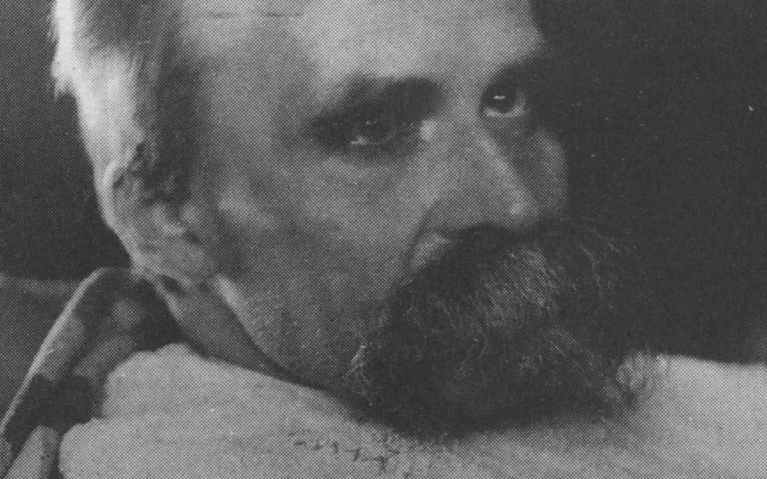
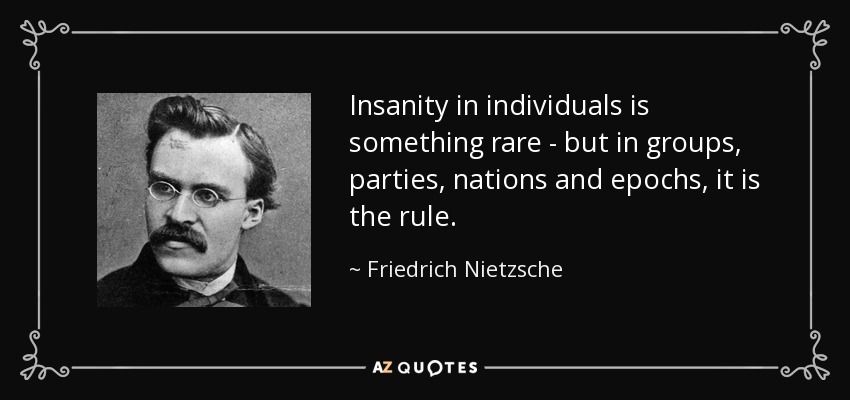
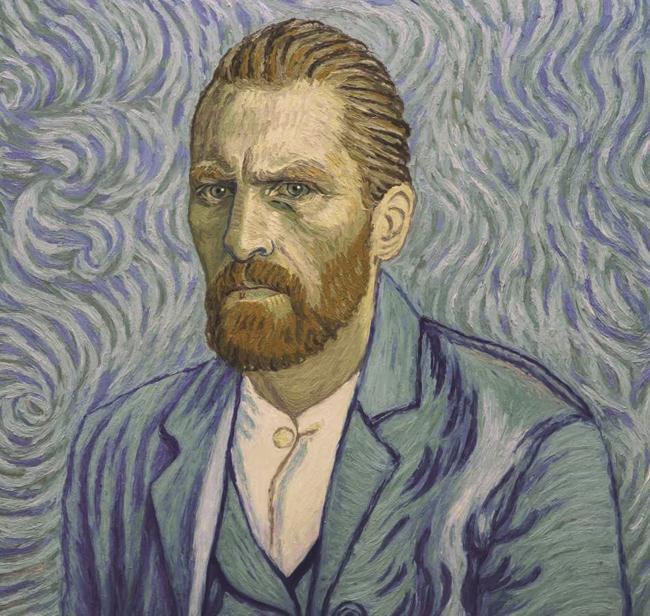
A religious fundamentalist might see Nietzsche’s “Madman” parable as an attack on faith. The German philosopher Friedrich Nietzsche’s mental decline and tragic end could seem like an obvious consequence. His bold claim that “God is dead” would naturally lead to madness, wouldn’t it?

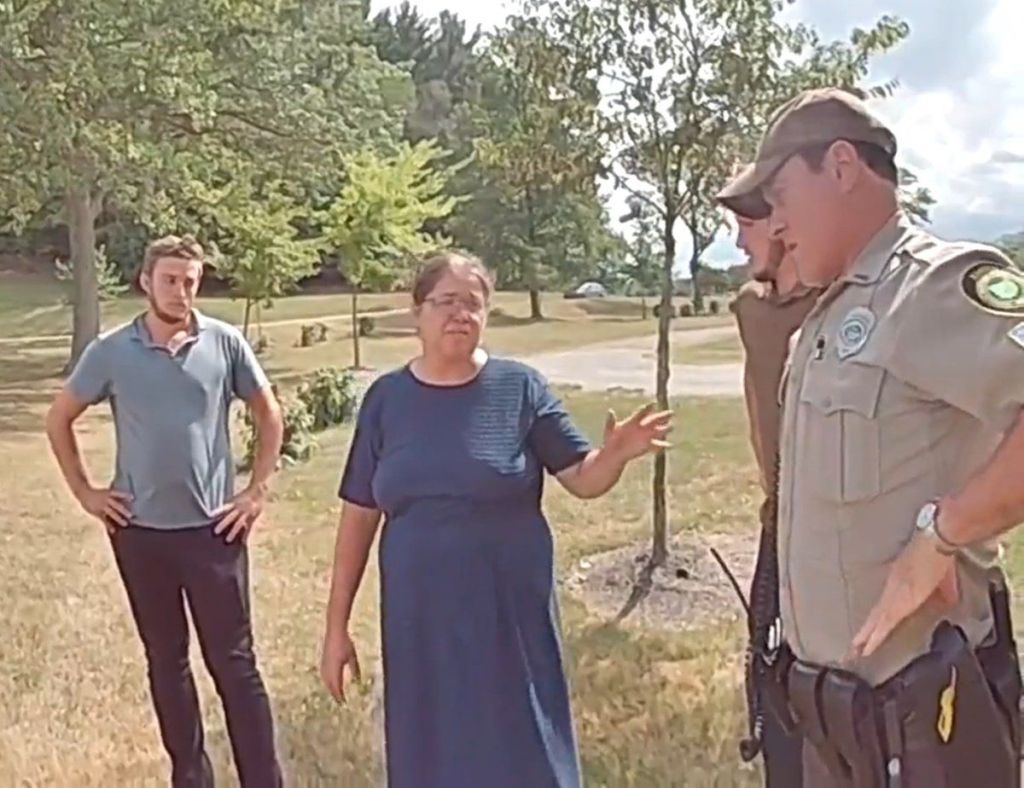
Recently, I came across the story of Ruth Miller, an Amish woman whose religious convictions led to an unthinkable act. In a state of spiritual delusion, she drove her 4-year-old son, Vincen, to a lake and “gave him to God” by throwing him into the water resulting in his drowning. This awful tragedy following immediately after the accidental drowning of her husband Marcus during a failed attempt to swim to a sandbar in an effort to prove his faith.

Both belief in God or disbelief really does not make a difference as far as our mental health. We can attribute beliefs to actions, like the divisive assumption—of black and white thinkers—that Decarlos Brown Jr. was motivated by racial animus. Or realize that our human psyche is capable of dangerous misfires no matter our skin color category or ideological affiliation. Black, Amish or Atheist, all can have psychological breaks from reality originating from family history or environmental factors.

In the case of Nietzsche, who suffered from a breakdown at the age of 44—while seeing a horse being flogged—the theories of why he declined range from neurosyphilis to the possibility of frontotemporal dementia and a brain tumor. It could be a combination of factors, and maybe the very thing that made him brilliant also part of his downfall?

Nietzsche had a busy and relentless mind, his “will to power” philosophy itself perhaps a way to cope with a world that didn’t align with what his cultural heritage told him. He had to take things to their ends, he was not content with the answers he was given and this tendency of his mind being rooted deep in the composition of his brain—progressive disease and circumstances finally pushing him over the edge into insanity?

Likewise, the Amish mother, a pious woman by appearances, didn’t process her religious teachings the same as others in her church and tradition. For better or for worse, most claim to take the Bible literally would never attempt to do the things that they’ve read in the book. In a modern context a parent who is willing to sacrifice a child to God is rightly considered mad. But for Abraham it was a proof of his righteousness:

By faith Abraham, when God tested him, offered Isaac as a sacrifice. He who had embraced the promises was about to sacrifice his one and only son, even though God had said to him, “It is through Isaac that your offspring will be reckoned.” Abraham reasoned that God could even raise the dead, and so in a manner of speaking he did receive Isaac back from death.

(Hebrews 11:17-19 NIV)

That’s one way to explain away an irrational act of Abraham tying up his child, and then putting him pyre to be a sacrifice to God. It is just plain madness otherwise. Is it really any wonder a delusional mind would follow this pattern in the Holy texts? I mean, truly, the crazier part is how we can read through this in Sunday school class without being a bit disturbed. Only when someone starts to act in this kind of ‘faith’ does anyone notice it is completely unacceptable.

Faith or lunacy?

But then we’re all mad. Half of us claim it is okay to dismember a living human being in the womb because their existence is a big inconvenience for an adult woman. While the other half thinks it is okay dismember a living human being in Gaza because of what Hamas did a couple of years ago. All seem willing to sacrifice little children in the ‘right’ circumstances. We’ll praise those who end the life of the innocent when this aligns with an imagined ideal outcome or future. We’ll all say the other is irrational and evil while justifying our own violence.

But, I digress, we should not blame the blackness of Decarlos Brown Jr. for his evil deed any more than the Amishness of Ruth Miller for what she did. The idea that we should not change our standards based on race should come with the general non-judgment based on race. Mental illness is mental illness, unbound by category. To judge actions without prejudice—based on race, faith, or even agnostic philosophy—requires us to comprehend the universal fragility of the human mind and our own susceptibility to delusion.

“You’re Thirty Years Old Living In Milton”

Standard

The quote in title, an unintentionally honest comment from a pious young woman, will continue to ring in my ears for decades to come. Scripture describes the word of God being “sharper than any two-edged sword,” but her romantic rejection came more like a hammer blow to my Mennonite worldview where spiritual was supposed to outweigh physical gain. I had patterned my life, up to that point, around a sort of practicality over flash and suddenly realized what I thought was an asset was actually liability.

I was reminded of these words again as my wife’s glowing approval of the monstrosity in my driveway, a Ford Explorer ST, still feels out of place for me. I mean, granted, I was not keen on transitioning to family life with a pedestrian option like a minivan or boring SUV. But I didn’t expect my always frugal—cost conscious—female counterpart to go along with it 100%. She was supposed to pump the brakes and did not. I’ve realized, in this, that every woman is happy with the nice things and won’t say no if you provide it for them. We’ve both agreed to blame the baby for our reckless financial decision.

So, back to Milton, a place I’ve since moved on from and to the higher cost town across the river. Up until the words from the mouth of this wholesome girl, I had thought having a little house completely paid off would be worth something—even attractive. After all she claimed to be interested in missionary service and what better place to get a start, right? From what I had believed, there are needs anywhere there are people and where better to start than a deteriorating industrial town? Milton is an example of the rust belt, a place of declining opportunities and costs of outsourcing production.

The phrase “you’re thirty years old living in Milton” was simply accurate conveyance of her underlying priorities. There’s always the difference between what we say we are and the actual truth. Even in the secular culture there’s a romanticization of the love of two impoverished people who stand together in desperate circumstances. And those raised in an environment where Christian mission is supposed to be first, living as one poor as a church mouse amongst common people would seem the ideal.

But it is not. No, this young woman, like the one who had rejected me for not pursuing a title of “missionary” or “pastor” years prior, was clearly after status. They will not say it outright, probably are not even aware, but it is a kind of glamour they seek in service. A call to some exotic location to impress their religious peers. Sure, a Bentley may not be status in a conservative Anabaptist church, but the ability to jet around the world (often on someone else’s dime) is thrilling where it is considered sacrifice. It is currency, a way to gain status in a community of faith or be seen as righteous.

Resources are showered on the ministry or mission. Sure, it comes with stress, my 9-5 does as well, but the payoff is proportional. And not talking about “treasures in heaven” or God’s favor. A pastor has access to the community resources. It is social power as much as it is a position of responsibility and there are always those who want to curry a little favor. Again, it also comes with more scrutiny as well, but most tend to minimize the costs when they set off in a particular direction. Besides that, for the Mennonite woman, this is for the broad shoulders of her husband to bear, right?

The high expectations of my wife have been a little surprising to me. To her credit, she has been putting up with a partly finished remodel of old house since marrying and moving in. But yet, despite coming from the Philippines, her standards are now close to that of an American woman. We comment about our son’s demands for what the other kids have, but often fail the test ourselves. I mean, is it at all coincidence that I decide to finally pull the trigger on a new vehicle after a Mennonite workmate showed up with his new truck? Probably not.

And that’s the bottom line here. We are all after power in different forms. Be it money, be it land, access to resources or just status in our peer group. What I’ve found is that a religiously trained (or ‘spiritual’) person is no different. No, all they do is give a righteous cover to their personal ambition. They live in a delusion. Materialism is bad, they will say, but they are fine with your donation of money so they can buy a bigger missionary compound in Southeast Asia. And, under the fluff of my own pursuit of love was the same sexual motivation of all men.

I hated when a physiatrist summarized my obsession with the impossibility as being a “sexual attraction” and dismissed it initially as a woman who knew nothing of my heart as a man of God. But now I realized this is undoubtedly the correct assessment. Men want sexually attractive women and women want high status men. This is an essential part of our nature—a matter of survival for our genes—a young healthy woman is able to bear children and a wealthy or connected man can give them much more than a thirty year old living in Milton.

I’ve moved on from Milton, but cannot move on from the reality I have encountered head on, we’re sexual creatures living in material reality and can’t escape this by denial. I had been better to learn this decades ago rather than cling to a naive notion of love where it ends like a storybook. But I am now living the best life available to me and hope that my wife is happy with her decision. She’s won my heart asking for the “simple and happy life” and now I want to give her that and everything else wonderful this world offers. The best thing we gained was the child born almost a year ago now…

It’s never too late to live the life that you should—which is more about perspective than what you possess—even if you were denied love for being thirty years old and living in Milton.

Biblical Reversionism

Standard

I’m dismayed by the number of people who profess Christ as their Lord and Savior yet fall for the most brazen of heresies.  The one which is the topic of this post turns the Bible on its head.  It diverts attention from what is important and undermines the Gospel Jesus preached first to the Jews, for their salvation, before it was spread throughout the world by way of his disciples.  Biblical reversionist heresy elevates the Old Covenant to be equal with the fulfillment of these promises in Christ. It is, in the end, a rejection and mockery of Christ.

The Resurrection of Old Defies the New…

The reversionist believes that, despite Jesus coming to save both Jews and Gentiles, according to Romans 1:16, the Old Covenant continues in parallel for those who have rejected Christ. It is ignorant of the fact that the New Testament talks about both those who are cut off from the vine (which is Christ) and those who are grafted in:

If some of the branches have been broken off, and you, though a wild olive shoot, have been grafted in among the others and now share in the nourishing sap from the olive root, do not consider yourself to be superior to those other branches. If you do, consider this: You do not support the root, but the root supports you.  You will say then, “Branches were broken off so that I could be grafted in.” Granted. But they were broken off because of unbelief, and you stand by faith. Do not be arrogant, but tremble.  For if God did not spare the natural branches, he will not spare you either.

(Romans 11:17-21 NIV)

The Old Covenant law does not save:

For what the law was powerless to do because it was weakened by the flesh, God did by sending his own Son in the likeness of sinful flesh to be a sin offering. And so he condemned sin in the flesh, in order that the righteous requirement of the law might be fully met in us, who do not live according to the flesh but according to the Spirit.

(Romans 8:3-4 NIV)

It was only ever a shadow:

The law is only a shadow of the good things that are coming—not the realities themselves. For this reason it can never, by the same sacrifices repeated endlessly year after year, make perfect those who draw near to worship. Otherwise, would they not have stopped being offered? For the worshipers would have been cleansed once for all, and would no longer have felt guilty for their sins. But those sacrifices are an annual reminder of sins. It is impossible for the blood of bulls and goats to take away sins.

(Hebrews 10:1-4 NIV)

Which is made obsolete, in Christ:

But in fact the ministry Jesus has received is as superior to theirs as the covenant of which he is mediator is superior to the old one, since the new covenant is established on better promises. For if there had been nothing wrong with that first covenant, no place would have been sought for another. But God found fault with the people and said:

“The days are coming, declares the Lord, when I will make a new covenant with the people of Israel and with the people of Judah. It will not be like the covenant I made with their ancestors when I took them by the hand to lead them out of Egypt, because they did not remain faithful to my covenant, and I turned away from them, declares the Lord. This is the covenant I will establish with the people of Israel after that time, declares the Lord. I will put my laws in their minds and write them on their hearts. I will be their God, and they will be my people. No longer will they teach their neighbor, or say to one another, ‘Know the Lord,’ because they will all know me, from the least of them to the greatest. For I will forgive their wickedness and will remember their sins no more.”

By calling this covenant “new,” he has made the first one obsolete; and what is obsolete and outdated will soon disappear.

(Hebrews 8:6‭-‬13 NIV)

The outdated covenant *did* disappear with the destruction of the Temple.

From John the Baptist:

But when he saw many of the Pharisees and Sadducees coming to where he was baptizing, he said to them: “You brood of vipers! Who warned you to flee from the coming wrath? Produce fruit in keeping with repentance. And do not think you can say to yourselves, ‘We have Abraham as our father.’ I tell you that out of these stones God can raise up children for Abraham. The ax is already at the root of the trees, and every tree that does not produce good fruit will be cut down and thrown into the fire.

(John 8:7-10 NIV)

At no point does Jesus say that there will be multiple paths to salvation or that there will be a tree of salvation that stems only from being biologically linked to Abraham. There is one true vine, that is Jesus, some are cut off and destroyed, others are grafted in and saved. There is nowhere where it is said that the Old Covenant will be resurrected to provide another way for those who have rejected and continue to reject Christ. To preach that is heresy, it is reversionism, and replaces the true Israel (that is to say those who believed or the church) with a secular nation borrowing the name.

The New Covenant is not about an ethnostate or the Haaretz of Israel. No, it is about the heavenly kingdom, a kingdom where there is no Jew or Gentile, that is defined by faith rather than biological pedigrees. Our blessing, eternal life, comes through Christ Jesus alone.

Blessings of the Anti-Christ?

The reversionists base their entire interpretation on a misuse of this blessing given to Abram:

“I will make you into a great nation,
    and I will bless you;
I will make your name great,
    and you will be a blessing.
I will bless those who bless you,
    and whoever curses you I will curse;
and all peoples on earth
    will be blessed through you.”

(Genesis 12:2,3 NIV)

They ignore everything St Paul said to explain the seed of Abraham as being singular (Christ) in his rebuke of the foolish Galatians trying to revert back to the Old Covenant. Over and over again Scripture tells us of the failure of those who try to do things through means of the flesh and yet here we are again.

But even the passage itself is spoken specifically about Abram (later Abraham) and those who bless or curse him. It doesn’t say anything about those who bless or curse this “great nation” promised nor does it seem to be talking about nations period. It is a promise to Abraham specifically and then ends by saying that “all people on earth will be blessed through you” which is to say him or his seed, which again is Christ—who didn’t require blind allegiance to a worldly nation.

Furthermore, the modern state of Israel, with a powerful military and foreign backing, does fit the criteria of the nation God said must be fully dependent on Him. Israel is a progressive state, ranked 7th in the world for gay happiness, and one of the least religious countries in the world, and God’s Covenant with the nation of Israel was always conditional. Both Leviticus and Deuteronomy make this quite clear: If they obey God will bless them and if they do not they will be destroyed. Zionism, the Jewish version, makes the Jews themselves the saviors of the world and totally replaces Christ.

This being our own Christ and denying the true Christ is exactly what is being referred to when New Testament writers use the phrase anti-Christ:

Who is the liar? It is whoever denies that Jesus is the Christ. Such a person is the antichrist—denying the Father and the Son. No one who denies the Son has the Father; whoever acknowledges the Son has the Father also.

(1 John 22-23 NIV)

If there is a temple rebuilt, it will be the seat of the anti-Christ:

Don’t let anyone deceive you in any way, for that day will not come until the rebellion occurs and the man of lawlessness is revealed, the man doomed to destruction.  He will oppose and will exalt himself over everything that is called God or is worshiped, so that he sets himself up in God’s temple, proclaiming himself to be God. […] The coming of the lawless one will be in accordance with how Satan works. He will use all sorts of displays of power through signs and wonders that serve the lie, and all the ways that wickedness deceives those who are perishing. They perish because they refused to love the truth and so be saved.  For this reason God sends them a powerful delusion so that they will believe the lie and so that all will be condemned who have not believed the truth but have delighted in wickedness.

(2 Thessalonians 2:3,4,9-12 NIV)

And what a powerful delusion some believe, that puts the Church established by Christ behind the nation that rejected Him, this we’re told:

Dear children, this is the last hour; and as you have heard that the antichrist is coming, even now many antichrists have come. This is how we know it is the last hour.  They went out from us, but they did not really belong to us. For if they had belonged to us, they would have remained with us; but their going showed that none of them belonged to us.

(1 John 2:18-19 NIV)

Ultimately, choose whatever Israel you want. But you can’t have both. You can’t have your worldy Israel, that is rejected even by observant Jews who call it fraudlent, and then claim to be a part of the kingdom of Christ Jesus. Reversionism is in no way a Covenant with the God of Abraham. It is only a counterfiet of the original promise and one that draws many away from their only means of salvation. Don’t be one who is decieved by this new version of the same old heresy, don’t be like Judas looking for his worldly fulfilment. There is only one Israel where Christ is king and that’s His Church.

The saddest part about reversionism (or ‘Christian’ Zionism) is that it muddies the waters and sends mixed messages to those who need salvation. So many professing Christ and then supporting the brutal reality of what it takes to create a Jewish state on land that was inhabited is a slanderous and degrading witness of Christ who would have had no problem establishing a worldly kingdom through use of violence over two millenia ago. So many are like Gehazi, servant of Elisha, dishonoring the example of their master and inheriting the disease that was healed: “For what shall it profit a man, if he shall gain the whole world, and lose his own soul?”


My Great Pumpkin Moment

Standard

Linus believes.

Peanuts could be profound.

I’ll never forget the gang of characters visiting Normandy, with Linus reciting the poem In Flanders Fields and turning to his companion, “What have we learned, Charlie Brown?”

Having this most thoughtful conscientious character spend his time in a pumpkin patch, vainly waiting for the Great Pumpkin to arrive, had to be a self-reflection of the creator regarding his own religious faith.

I can identify with this struggle.

In particular, in the cartoon special, when Linus accidentally says “If the great pumpkin comes,” and then proceeds to beat himself up for even doubting the possibility that the Great Pumpkin isn’t true:

Linus: [to Sally as she walks away with everyone else] Hey, aren’t you going to wait and greet the Great Pumpkin? Huh? It won’t be long now. If the Great Pumpkin comes, I’ll still put in a good word for you!
[realizes what he just said]
Linus: Good grief! I said “if”! I meant, “when” he comes!
[calmly]
Linus: I’m doomed. One little slip like that could cause the Great Pumpkin to pass you by.
[calling out]
Linus: Oh, Great Pumpkin, where are you?

https://www.imdb.com/title/tt0060550/quotes/

It perfectly captures this idea that if you only had enough faith then you would finally see. This is a prominent feature of religious folks in my life and their advice. It is really a nasty manipulation that makes the fault of every disappointing outcome somehow our own fault.

Charles Shultz, in an interview in 1999, described his philosophical views as having evolved and that he considered himself to be a secular humanist. But, like his title character, the message of the comic strip seems to be to keep trying despite failures and the football being pulled away once again.

There has always been a part of the dismal, melancholy, and yet somehow still hopeful tone of Peanuts that resonated with me. Shultz, now dead over 23 years, left a legacy that masterfully captured his own life experience and lingering questions.

My own religious and spiritual life has taken a turn similar to if Linus finally wakes to the delusion of his blind faith and comes out unscathed in the end. I’ll never rule out any possibilities. I do believe that my life has taken a wonderful turn despite the wilderness I had to cross.

However, I won’t be sitting in the pumpkin patch anymore. There is no moment where it all comes together, where all doubt is completely washed away, and it doesn’t matter how much you believe that your own deliverance is close at hand, but we can keep going even after the collapse of delusion.

Unapologetic — What Is the Real Proof of Resurrection?

Standard

True or false: The truth of the entire Gospel message depends on the bodily resurrection of Jesus.

I’m pretty certain that this is something that both Christians and non-Christians alike, after reading the Gospel accounts, would agree on.  If Jesus remained in the grave, a dead man, then doesn’t that make the entire account of these books a lie?

Recently I was invited to watch a lecture by Gary Habermas, a professor, historian Christian apologist, and author of various books about Jesus.  This after I had expressed a thought on how difficult this central claim of the Gospel would be to accept for a true skeptic.  Presumably, this recommendation was to help me bridge the gap between the claims and reasons to doubt them.

It seems reasonable that Habermas, an expert who believes, would come out with his best argument.  I mean, why waste an opportunity by holding the most solid proof of resurrection for a later date, right?

So, after watching, and taking notes, this is the outline of the arguments made along with my own counterpoints:

1) Most Contemporary Scholars Agree

Habermas spends considerable time talking about the changes in perspectives in the last 30-40 years in academic circles.  Apparently, most theologians are conservative now and he cites a skeptic who has warmed to even the claims that the disciples saw Jesus after his death on the cross.

However, the first thing I see, when someone uses “experts agree,” is an appeal to authority, which can be a logical fallacy if being used as evidence of a claim.  The fact that a majority of doctors had once believed that bloodletting was good therapy does not actually prove anything as far as the reliability of the practice.

So, to a critical thinker, this is a red flag.  He is starting with an appeal that is not a true argument for his further claims or at least not any more than “a consensus of scientists believe” disproves the outliers who disagree with their conclusions.

Everyone else is here, can’t be the wrong place…

But, more than that, the devil is always in the details and there is a bit of a bait and switch in his presentation.  The acceptance of any empty tomb is not the same thing as the real issue at hand which is resurrection.  It is possible that something else could explain the disappearance.  An empty tomb is not itself proof of the miraculous.

So what about this shift in thinking?  

Well, it is no secret that the Western world is falling into unbelief, Christianity is losing influence, and to the point that the ‘liberals’ may have long left the room.  In other words, it could be polarization, where nobody in the moderate middle ground survived, and thus only ‘conservatives’ see theology as being a worthwhile pursuit.

When something falls out of popular favor, like eugenics or white supremacy, then it is not really a big surprise when the hardliners are all that remains.

As a young person, I remember an Evolution versus Creation debate at a local university campus.  Such an event would not even be hosted by such an institution.  The 2014 Ken Ham vs Bill Nye rhetorical battle was held at the Creation Museum for a reason.  And it is not because either of these men are taken seriously or viewed as credible by the mainstream.

The point is most people may simply have moved on and the plurality of those remaining, the current theologians, are the fundamentalists.  There is much talk about the collapse of the center and this change Habermas mentions could be a product of that rather than anything related to the evidence.  

We also have a resurgence of flat earth theories (and the rise of Socialism on the other) which is certainly not an argument for those beliefs.  I guarantee more than 350 pages have been written in defense of Marxism and yet that does not convince me in any way, shape, or form that this ideology is the right way forward.  No, this does not prove or disprove anything as far as the resurrection, but why waste time on this kind of appeal if there’s better evidence?

2) Paul Is Generally Accepted, Even By Skeptics

Of all the writings in the New Testament those of Paul, the Apostle, are the most compelling and probably because this man (despite his own claims to the contrary) is so eloquent in his presentation.  I do find his focus on spiritual transformation to be more inviting than Mathew, Mark, or Luke.  And also his ability to be the odd one out as far as important matters of the faith.

He was a controversial figure, even in the early church, and often put on the defensive by those fighting to preserve the Jewish tradition from Gentile converts.  The account of his Damascus road encounter obviously convinced the right people of his change of heart.  And this acceptance is significant, it is at least an answer to those modern-day Pauline skeptics, namely feminists and contemporary Judaizers, who would have us believe he was in conflict with Jesus.

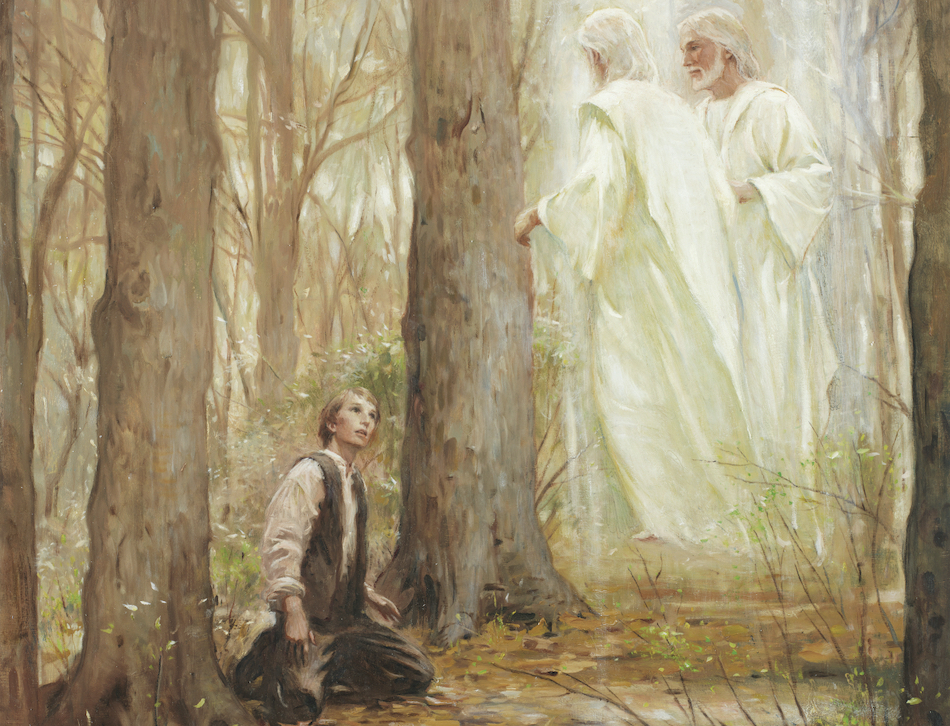
That said, both Joseph Smith, the founder of Mormonism, and Muhammad claimed to have had dramatic encounters.  Both were committed to these revelations they had received and able to convince a large body of people of these claims.  It is always amazing to me how even a fundamentalist Christian can scoff at claims of angels delivering inerrant teachings or laugh off the flight to Medina on the Burāq, all the while accepting Biblical claims.

An undeniably beautiful image, right?

In short, I absolutely believe that Joseph Smith and Muhammad existed as real people.  I also have no reason to doubt that they did not believe what they claim to believe or even that they had some sort of trip and conversion experience.  But the truth of their existence and conviction does not mean their most extraordinary claims are actually reliable.  It does not matter how many people recorded their lives or believed what they said.

So, of course, a man named Paul existed, and perhaps he did have an encounter with an apparition.  I will accept that he was brought into the church.  There is no reason to take issue with any of this.  And I’m sure, if he was indeed out there killing Christians, this was a very welcomed development.  And yet there are also those raised Christian who become Muslims or atheists.  A conversion experience does not prove the extraordinary claims of a particular religion.

3) More Sources Than Alexander the Great

Habermas spends significant time in his lecture discussing the typical criteria for accepting a source.  There is more proof of Jesus, according to what is acceptable by normal academic standards, than there is of Alexander the Great.  Which is no surprise given that Jesus arrived on the scene later and spawned a religious movement through his teaching.

And yet while most everyone agrees that George Washington was a real person, that he crossed the Delaware river, this doesn’t mean that they must accept his ideological perspective or believe the mythology about the cherry tree.  Historic texts, like reporting of events in our own time, can be almost entirely fact, yet also be embellished or just incorrect on details.  

The biggest lies are always laced with facts.  It is how so many people are snookered.  A charlatan will make many credible claims to establish themselves.  They may have credentials and compelling stories.  The New York Times reporter, Walter Duranty, won a Pulitzer Prize for his glowing coverage of the Soviet Union.  That he included many verified facts in his accounts does not mean his writing was not deceptive.

The reality is that extraordinary claims require extraordinary evidence.  If I were to list off my activities for the day, that I went to Dunkin for coffee, to the gym after that, and then broke Usain Bolt’s 100 meter sprint time, would finding independent verification of the first two claims bolster the last claim that I’m now the fastest man alive?

Most of the Bible being reliable does not mean every claim being made is true.  Being correct on a million mundane facts does not prove any of the most extraordinary claims contained.  No, it does not even suggest we should be less skeptical.  Maybe this makes some of us uncomfortable, but this is a normal burden of proof that we place on those who are outside of our own belief system, why not use the same standard for ourselves?

The big difference between Jesus and other historical figures is that nobody is telling me to devote my life to Alexander the Great.  It is one thing to believe that Abraham Lincoln existed as a real person and a significant figure, and quite another to say that he resurrected from the dead and ought to be worshipped as God.

4) We Can Trace the Narrative Back

Most of the New Testament was written down long after the events took place, this is something generally agreed on by all sides, and Habermas does have an interesting response for those who would use this as a basis for skepticism.  This, I believe, is where a general consensus is good enough.  It is silly to argue that Jesus did not exist or that the narrative was entirely fabricated well after the fact.

Close is not the same as complete. Not even close.

And yet, again, this tracing narrative back, using catchy phrases to suggest that these things had been established early and then were passed along made me think of modern memes or protest chants that are created in response to real events.

Michael Brown, for example, was shot by a police officer in Ferguson, Missouri.  Soon a phase, “hands up, don’t shoot,” became the rallying cry and is a short version of this idea that Brown was gunned down while simply trying to surrender.  However, both a St Louis County grand jury and a US Department of Justice investigation cleared the officer of wrongdoing, the actual evidence points to the teen being in a physical altercation with the officer, and the catchy chants, therefore, are not an accurate representation no matter how popular.

The thing is, if we can’t get things right even days after the actual event, does gap or no gap matter? 

It really does not.

5) Why Die For A Lie?

Joan of Arc was an extraordinary young woman.  She managed to inspire her people to fight and is a wonderful icon of faith and courage.  But eventually, she fell into the hands of the English, who had every reason to hate her guts, and they put her on trial for ‘heretical’ exploits.  There is every indication that she was cooperative to the point that there was no justification for her execution and had likely been forced to violate the terms so they could kill her.

The martyrdom of the disciples of Jesus is something many Christian apologists tout as being hard evidence of the resurrection.  As in who would die for something that they know is a lie?  And this is indeed is proof of the commitment that these men had made to the Gospel message.

But let’s consider what happened to the Millerite movement when their prophecies about the Second Coming proved to be false.  Did they give up their delusion or even entirely reject the teachers that had misled them?  Some did.  But, as with Harold Camping, who spiritualized the prediction post hoc rather than admit being wrong, this is what is now the Seventh-day Adventist denomination.

So why do people remain committed to something despite overwhelming evidence to the contrary from an outsider’s perspective?  

It is this little thing called confirmation bias, we become emotionally attached to the things we believe and to the point of being blind to the obvious.  As the saying goes, “A man convinced against his will is of the same opinion still.”  And people who have had their belief system falsified will simply modify as much as necessary and then move on as if nothing happened.  Why?  Well maybe because it is too hard to start from square one, to admit being wrong, or perhaps because the community and values feel too important to give up?

So, since I have my skeptic hat on, and we already know that the disciples had been looking for a literal earthly kingdom, what is to say they did not pick up and run with an alternative rather than return to the lives they had before.  I mean, even most agnostics will claim that Jesus was a good teacher, so this could be justification for building a mythology to sell this better way.  For radicals the ends often justify the means, lying is not forbidden if for a righteous cause in Judaism.

Anyhow, if backed in a corner, if you’re likely killed even if you do recant, why not refuse to go along with what your persecutors want?  I doubt Joseph Smith would have given his tormentors the satisfaction of admitting that he never had his angelic encounter.  That doesn’t make Mormonism true.  No, this is just how we are.  Pathological liars are so convincing because they believe their own lies.  What Jesus taught was revolutionary, people die for less all of the time.

Is That Really the Best We Have?

I know that I’m not going to win many fans amongst my Christian audience by giving an honest answer to the apologetics they offer.  I’m sorry, it may work for many who already buy-in, it may be enough to convert a few, but I simply cannot be impressed.

That said, I do appreciate Habermas for his admitting that the Gospels do not always agree perfectly, and also admire those who can engage in the long form of argument too tedious for my own tastes.  

Still, all said and done, these sorts of arguments can never span the gap between the extraordinary claims and the most capable skeptics.  It is nibbling around the edges of proof and really only ever evidence that is convincing to those who come in with the right presuppositions—like those claims of the miraculous as an explanation to things not yet explainable.

In his questions and answers follow-up, Habermas mentions how many do not believe for emotional (rather than rational) reasons.  He points to C.S. Lewis as someone who fell away from faith over the death of his mom before his eventual rise as a Christian thinker.  However, the same is also true for why people believe.  We want a world with purpose and meaning, and the Gospel narrative provides this.  It is harder to give up a comprehensive belief system, even if it makes no truly testable claims.

It just feels like apologetics always relies on strawman versions of skepticism.  Even if I fell totally into unbelief, I could never dismiss all of Scripture.  But I also have seen, first hand, how incapable people are at getting the facts right, how they see what they want to see and delude themselves.  I know because I’ve made the error of pursuing something, in sincere faith, that could be falsifiable and was forced to swallow the hard reality of my self-deception.

Most who profess belief in Jesus will never be so bold as to risk it all on something that can be disproven.  They believe things that are written in a book, they attribute their good fortune to God’s goodness or try to accept the bad as being loving discipline, without ever putting it to the test as they would if they had actual faith.  It is as if they hope if they never question then maybe the dream of eternal reward will come true and thus run from any chance of encountering a serious refutation.

The thing is if the resurrected Jesus needed to appear to Peter, James and Paul before they would believe, then why not appear to us all? 

Is there an answer to this that doesn’t come off like an excuse?

It isn’t like the creator of the universe lacked the budget.  And that the most important decision in our lives would come down to believing the eyewitness testimony of a handful of first-century men, this seems rather odd.  Don’t get me wrong either, the Biblical narrative is quite fascinating, the miracles, angelic visits, and promise of life after death to those who believe, it is wonderful. The teachings of Jesus have led to a more compassionate era. Still, the claims like the virgin birth, walking on water, and raising the dead aren’t exactly things a rational person would accept without seeing these miraculous events for themselves.

The biggest problem with the apologetics of Habermas is that it relies on a false dichotomy.  A reader doesn’t need to be able to accept that a source is perfectly reliable to believe some of it is true.  There is a multitude of possibilities as to why the disciples would go with the resurrection narrative.  First, it is much easier than saying they wasted their last few years.  Second, it sells the teachings of Jesus better than anything else.  And third, it can’t be falsified, how does anyone disprove what they claim to have seen?

The possibilities are endless.

This is not to say that the disciples were delusional or lying either.  My point is that it is too easy to see an argument as being stronger than it is.  It is annoying, perhaps, that we can’t rely on apologetics to do the heavy lifting of the Gospel, nevertheless, the only resurrection of Jesus many people will see is that which is embodied in us.  What that means is self-sacrifice and bridging the gap of unbelief with the substance of love. 

Talk is easy, actually taking up the cross is not…

North-South, East-West

Standard

One of my favorite love stories, the BBC adaptation of a Victorian era novel, North & South, features two very strong and compelling characters.  

The first, Margaret Hale, the cherub-faced daughter of an English clergyman, is forced to move to the industrial North after her father’s resignation over a matter of conscience.  The other is John Thornton, a mill-owner, a handsome man with piercing eyes, brooding and intense, and interest in the demure young woman.

Things started fairly well.  But, that doesn’t last as the differences in their perspectives becomes clear.  Margaret, compassionate and having lived a sheltered life, interprets the actions of John in a negative light and pulls away after witnessing his harshness towards an employee caught smoking.  What she sees as just cruelty was actually Thornton’s concern for the safety and wellness of his workers given the extreme risk of fire.

It is in the last and final act where there’s a scene where the tension between the two finally disappears.  Throughout the middle-act Thornton’s truly good character is slowly revealed.  And, Margaret, having returned South, has reconsidered her own idealistic notions, now sees the merits to living in Milton, and decided to return North again.  Meanwhile, John is going South, the two cross paths at a station near the midpoint and cue the music.

North & South

There is this wonderful part of the soundtrack in this climatic station scene, Northbound Train (listen here), that so perfectly accompanied the moment.  It is understated and elegant, reflective, that builds in waves to crescendo and then slips away as wistfully as it came.  Thornton’s steadfast devotion is finally rewarded with a kiss and happily ever after begins despite the painful struggle to get there.

When the Story Goes South…

During my pursuit of the impossibly (a preacher’s daughter, like Margaret) this story brought a little hope with the similarities to my own.  It wasn’t that we were so terribly different in our desires as it was she never heard me.  Her conclusions formed before the conversation even began.  She had pronounced “you’re thirty years old living in Milton” (the actual name of the town) meaning, in translation, that I would hinder her big plans.  And could not understand it was her boldness and ability to get out that attracted me.

My thesis then was that a composite of our unique strengths, seemingly incompatible, bound together by Christian love, would exceed what those of similar abilities could accomplish. My thinking outside the box combined with her represention of the Mennonite standard.  And, while I’m never good at getting things started (hence being stuck in Milton) I’m extremely loyal and willing to sacrifice for the team.  I knew my age and life experience was an asset.  But she could not see my value.

Still, for the year or so following her initial rejection I believed.  What a wonderful story we would have when all was said and done, right?

Anyhow, that music, Northbound Train, had seemed like the perfect bridal march.  Partly in innocent faith, partly to bolster my failing confidence against the deluge of rational fears, this image of the impossibly walking the church aisle dressed in white.  As would be the case in real life, tears would stream down my cheeks as the nightmare of the past decade was replaced by this wonderful dream of marital companionship and completeness.  

The strong emotions that came with that gentle harp being replaced with one violin and then two, have now disappeared.  The music is still beautiful, but my feelings of numbness have long replaced that panging desire for a well-defined conclusion to over a decade of struggle.  What I got instead was a world more complex.  The cynicism that I had fought tooth and nail was confirmed.  

The sunshine through the clouds, endings sweet and perfect are not for everyone.  And the reason we tell such lovely tales is probably because they’re so uncommon, the exception, and not the rule.  Sure, we can see ourselves as the characters.  But the impossibly will likely go on seeing me as the villain in her movie, her conventional guy as the hero, and has never once shared in my fairytale that love would prevail over our differences.

As Far As the East is From the West

It is hard to believe that nearly another decade has passed and I’m still alone.  I’ve moved from Milton, left the religion of my childhood behind, even traveled to the complete opposite side of the world twice, and have changed from that guy perpetually unsure of how to find direction.  No, I’m not a missionary, but I do genuinely love people and probably accomplish more of actual value than those duty-bound Evangelical types who see ‘the lost’ as their get-into-heaven projects.

More importantly, I’ve found another impossibly, a beautiful Filipina flower, a little lost sheep when I found her (struggling abroad, in Taiwan, to support her son back home) and now the one who keeps me strong despite our torturous wait.  Unlike the Mennonite impossibility, we do not share a cultural or ethnic identity, our lives have been very different, yet we have our simple and devoted love in common—which has been just enough to sustain us through these past years.

East & West

However, after all I’ve been through, holding on to hope is hard.  Could my visions of her arrival at the airport, on American soil, with Y-dran in tow, also be a delusion?  

It has been over two years and eight months since we’ve held each other that one last time before we parted ways in Taoyuan International Airport.  I had known the immigration process would be difficult, but could not have anticipated the pandemic and travel bans that make it nearly impossible to be with Charlotte.  It really does start to bring those worries that I might be cursed to the forefront again and sometimes the despair does win.

The eternal optimism of youth wiped away by the rejection of the Mennonite ideal, now facing my rational fears and the fact that I’ve been hoping longer than Jacob worked for Rachel and without so much as a Leah in between, I can now fully identify with the wife of Job, “Are you still trying to maintain your integrity? Curse God and die.”  The frustration is real.  How long does one go on dreaming?  When is it justified to wither away into bones, with life never to return again?

As far as the East is from the West is an expression, in Psalms 103:12, used to describe an impossible distance that cannot be bridged.  And it could seem that, despite the abiding love of my bhest to encourage me onwards, I’ve jumped straight from the frying pan into the fire.  We have had a bit of good news since I’ve last published a blog here, the USCIS approved the application, and yet will this impossibly ever become possible?

I see the successful couples. So lovely together. To them it feels preordained, meant to be, a dream come true. For me, on the outside looking in, there is now more uncertainty than certainty, not everyone gets that music at the end.

What Wears Me Out

Standard

I’ve always been a sort of magical thinker, my hopes always far outpacing my realities, and to the point that sometimes when my dreams would finally come true the pleasure had already been exhausted.

I had so wanted a go cart growing up.  On the school bus ride home my mind would start to wander into the fantasy realm.  I would picture a shiny new go cart, like the ones in the catalog, waiting for me at the end of the driveway and would actually be disappointed when it did not end up being true when we would finally pull up to to my stop. 

That’s not to say that I didn’t love the old go cart that my dad would finally weld up, using a rusted frame as a starting point, and an old lawnmower engine.  Anything with four wheels, that ran on gasoline, that could be slid around corners, definitely scratched that itch.  Still, my vivid world of make-believe did not always end with any fulfillment.

In my adulthood this tendency to be way out ahead of myself did not get any better.  I’ve cried, on more than one occasion, thinking of my beautiful bride walking towards me up the aisle.  And not in sadness either, it was in bliss having momentarily put myself in that wonderful place.  Of course, given that I never even so much as went on one date with this young woman, I pretty much ruined that music.

The world between my ears can be a paradise.  A place where there’s such thing as innocent love and anything is actually possible.  I used this as an escape.  My school years spent doodling and hoping for some kind of rescue from the mundanity of the classroom.

These visions were often grandiose.  A child scaled B-17 would land in the school yard.  I would run out to meet my faithful crew as the teacher and 5th grade class would watch in disbelief, stunned, as we revved the engines and were on our way to the nation (later a planet with two suns) that I benevolently ruled along with my brother Kyle and cousin Mel.

Truly, I had always thought that Kyle and I would always be together, build a house with a chimney in the center, like the ruins that I saw on a Civil War battlefield.  I’m not sure why, but it didn’t seem possible then (despite our fights) that we ever be separated, let alone hours apart, and I really can’t claim to have gotten over that disappointment yet.  He moved on, it seems that I could not.

And I have lived a sort of Peter Pan existence.  Holding on, hoping that some day the love that had eluded me, child-like and innocent, would finally magically arrive to rescue me from my torment for having failed to achieve.  I long overstayed the youth group.  Until I had my happily ever after, what choice did I have?  Get old by myself and alone?

Unfortunately, hope is not a strategy and I lacked the necessary social tools to approach an attractive young woman—let alone convince her to date me.  

Years would go by, where I would convince myself, “this time will be different,” and end up leaving the church retreat no closer to my goals and disappointed.  These beautiful wonderful thought going in would slowly morph into a nightmarish reality as opportunity would pass me by and I would be left with only my profound loneliness again.

It was only in my mid thirties that this optimism would crack and the pattern of hope followed by disappointment would finally overwhelm me.  Brimming with outsized expectations, I would arrive at the weekend, and suddenly shut down.  The wheels came off, I would collapse into the nearest couch, curl up, unable to push myself to try again—eventually ending up a sobbing mess.

The pressure had become too much.  The difference between my hopes and reality too insurmountable. 

Sure, I could entertain my delusions, the right one was going to finally arrive, we would look at our feet, shy at first, we would talk, she would smile at my earnest thoughts, I would finally be at ease and soon enough we would be walking hand in hand out the back of a church.  But the chances of that were as good as Gatsby somehow being able to turn back the hands of time and Daisy would be his.

My collapse from exhaustion came at the tail end of decades of forced optimism and sweeping aside my rational fears.  I did not want a world where my being 5′-8″ tall and rather unathletic disqualified me.  Love, to me, especially pertaining to my female religious counterparts, was supposed to be something transcendent.  Unfortunately, what I got instead was a brick wall of rejection.

Life is especially cruel to those with a high ideal.  If I were less able to see the marvelous maybe I could have more easily moved on to more practical aims.  But I could never get my head out of the clouds nor was I willing to acknowledge the harsh truth about romance.  The young women were also chasing their version of perfection and that perfect man wasn’t me.

Somehow, despite a mind that could span universes, I ended up being thirty years old living in Milton and thus ineligible for that kind of love.  How does a dreamer, still holding to those childish notions of escape, ever recover from that terrible pronouncement?

They don’t. 

It wears me out thinking about it.  

It makes me think of another novel and protagonist, Ethan Frome, an injured ruin of a man.  His house reduced in size as he limped, painfully, through what remained of his life.  Not even granted the merciful end to his suffering of that suicide pack those many years before.  Perhaps my life would have been better had my secret world been a little more stark, desolate and devoid of life?

Diary Of A Tortured Soul

Standard

What makes me a forever tortured soul is that I’m standing on the knife’s edge.  On one side my ideal, my hopes, dreams and faith.  On the other side my rationality, my anxiety, my knowledge and fears.  

The current cultural paradigm tells me the prior things are built upon social construct, the latter upon science.  They have first deconstructed meaning and purpose, now moved on to trying to even erase categories built upon biology, constantly destroying the rule by highlighting the exception.

The problem with me is that I’m not able to dismiss one or the other.  In many regards I am a postmodern thinker, having rejected modernism, and yet not in the way of those out to destroy every religious tradition or cultural institution.

My own understanding is that social structures, like family, gender distinction or nation, do exist for a reason.  Sure, they should not be an excuse for injustice or unfair exclusion.  However, those who only see these things in negative terms or as unnecessary are severely mistaken.

There are things that can’t be viewed under a microscope that are as needed for human thriving as oxygen or water.  Sure, it is easy to dismiss religion as superstition or redefine terms to suit the current demands of outliers.  

But being unable to appreciate the balance of forces that keep a bridge from falling doesn’t mean that someone can keep removing structural members without consequences.

While being a critic of abuses by these institutions of culture and religion, my point has never been to destroy them.  Sure, it is not acceptable, for example, that the word “modesty” in the Bible is misused to blame women for male lusts, nevertheless tearing down all expectations is an abuse as bad or worse.

Perhaps there are benefits to promoting healthy masculinity or a distinct feminine role?

Those trying to erase all difference in the name of equality are the most controlling and unpleasant people.  In the name of tolerance, they are literally at war with everyone present and past trying to preserve an identity they cherish.  They worship the exception while making life miserable for everyone else.

That’s where I differ from the ‘woke’ and the virtue signaling masses that empower their tyrannical edicts.  Sure, I believe in recognizing disadvantages of some and making wrongs right.  But that’s not what social justice is truly about.  It advertises itself as being a solution, yet is only the same evil of intolerance in a new more ‘colorful’ form.

Still, I am not capable of being fully engulfed by the teachings of Christianity either.  I tend to be philosophically in alignment rather than spiritually and that’s because I’m continually dismissing my own experience as invalid.  I mean, so what if I got the warm fuzzies at a church service, right?  I’ve also experienced euphoria on Adderall.  Been manipulated by music, a rousing speech or what have you.

I can identify fully with H.P. Lovecraft:

“We all know that any emotional bias — irrespective of truth or falsity — can be implanted by suggestion in the emotions of the young, hence the inherited traditions of an orthodox community are absolutely without evidential value…. If religion were true, its followers would not try to bludgeon their young into an artificial conformity; but would merely insist on their unbending quest for truth, irrespective of artificial backgrounds or practical consequences. With such an honest and inflexible openness to evidence, they could not fail to receive any real truth which might be manifesting itself around them. The fact that religionists do not follow this honourable course, but cheat at their game by invoking juvenile quasi-hypnosis, is enough to destroy their pretensions in my eyes even if their absurdity were not manifest in every other direction.”

But this writer of horror, who lived in his own existential crisis hell, does not seem like an example to follow.  What is the point of being ‘rational’ if it keeps one in a state of constant dread about how insignificant and out of control they are?  Is this holding to an agnostic and meaningless interpretation actually intelligence or simply another form of ignorance?

I vote the latter.

Command of language, the ability to pull together a vast amount of information and sift science from superstition, these are things seen as signs of intelligence.  And certainly they are measures of a particular kind of capability of mind.  But, as a person can be knowledgeable and unwise, saying things that bring us pleasure or purpose are not real is simply ignorant.

Serotonin is as real as the stars in the sky, the feelings this hormone produces are no different from light.  It would be stupid to argue that light waves are less important because they lack mass.  Likewise, to say that the spiritual is non-existent, because it cannot be weighed or otherwise measured, is not brilliance either.  Lack of appreciation or ability to comprehend things of emotional value is not intellectual strength.

Nevertheless, there is a sense in which seeing behind the veil changes things, there are things that can’t be unseen.  And those Lovecraftian monsters do exist even if only in the mind of the author.  

My own experience, unfortunately, has left me untethered from the comfortable and floating in space.  My sincerest hopes rejected as being delusion by the very people who I had thought would appreciate such things.  It is difficult to cling to the belief that “with faith all things are possible” when your former pastor’s daughter, encouraged by him, supposedly missionary minded, tells you she can’t love.

It is that disconnect between profession and action that keeps me still precariously balanced on bloodied feet.  

Orthodoxy has brought me a firmer foundation than the ever shifting sands of Protestant theology and practice.  It is certainly more ancient and authentic than the alternatives.  Still, that loss of identity and innocence, that process of degradation of my child-like faith over time, makes restoration of my soul seem as possible as a return to my mother’s womb.  How to become less cynical again?

I do envy the simpletons who can ignore such things.  They suffer without swaying in the belief that God is in control.  Wouldn’t we all live that way if we could?

At some point doesn’t logic dictate we take the advice of Job’s wife, curse God and die, rather than continue to push through the pain against all odds?

This blog site, Irregular Ideation, was a product of my dilemma.  That is what to do when the happily ever after and meant to be fairy tales are insufficient to get us beyond our fears.  What does happen when those teeth of quiet desperation and endless angst finally gnaw through what remains of the moral foundation.  The eternal abyss opens beneath our feet, the inscription over our heads: “Abandon all hope, ye who enter here.”

Fr. Anthony, the spiritual mentor that met me in my time of need, boiled it down to a choice, either we choose to live a life of meaning or we do not.  Charlotte, my bhest, has also urged me to be strong and that likewise suggests that we decide what is worth the effort.  But none of that makes the choice easy or pain free.  Adam and Eve never lost that awareness that biting from the forbidden fruit of knowledge gave them, the thistles of doubt and despair still remain.

It is both assuring and terrifying that the most notable characters in Scripture were tormented.  Elijah, having witnessed literal fire from heaven, fled terrified into the wilderness because a wicked queen threatened him.  John the Baptist, suffering in prison, sent his disciples to ask Jesus, “Are you the one who is to come, or should we expect someone else?” (Matthew 11:3 NIV)  And Jesus himself, in angish, speaking of his coming trials, prayed “take this cup away, and on the cross felt forsaken or abandoned by God.

St. Paul, with his undisclosed “thorn in his side,” suggested a division within, the ‘spirit’ being willing while the ‘flesh’ is weak.  The book of Psalms and other Biblical poetry, a great comfort to many today, suggests the writers were experiencing travails and torment.  In no way were these ignorant people living a life of bliss.  They were fully aware, they had their moments of failure, and choose to keep going on in faith despite this all.

As my parish priest reminds us, “If you ain’t struggling you ain’t Orthodox.”

So while my life would be so much easier if I could be agnostic and accept that we’re all products of random chance, biological robots plotting a predetermined course, that everything is about sex and power.  But I don’t give in to that existential dread and will stand against those who, with seeming sadistic pleasure, tear at the foundation of meaning and purpose.

I’m tortured soul because I am able to both see the fullness of beauty and also stare into the void of emptiness.  I live with keen awareness that many have died, clinging to breath and hope, thinking their salvation was right around the corner.  It could all be for naught.  Still, I fight.  I’m not in control, I never will be, and long for that final peace when my journey is complete.  For now, though, I’ll dance on this blade, my persistent uncertainty on one side and strong desire for God on the other.

I can pretty much rationalize around any moral boundaries, maybe eventually embrace a life of self-indulgence and not giving a crap about those whom I’ve stepped on to gain a small advantage.  I could, more easily, give in to self-pity or be overwhelmed by cruelty and give up.  Lord have mercy!  Still, something within, not even sure how to define it, pushes me to endure through hardships.

At some level it makes no sense, why must we go through hell to get to heaven?

It doesn’t make sense.

But then neither does my existence.  How did I come to be?  If my life is finite and time stretches infinity in both directions, there is essentially zero chance of being on this moment right now.  So our existence is not rational nor that we extrapolate, from our pleasure and our pain, that there is something greater.  Maybe belief in the divine realm, where all is made right, is merely a survival mechanism—so why then do we question it?

And so it goes on.  There is no growth without pain, not triumph without suffering, our moments of glory would not be such a pleasure if there was nothing required to attain.  So why not extend this pattern and conclude that our torment, if righteous, will be rewarded…

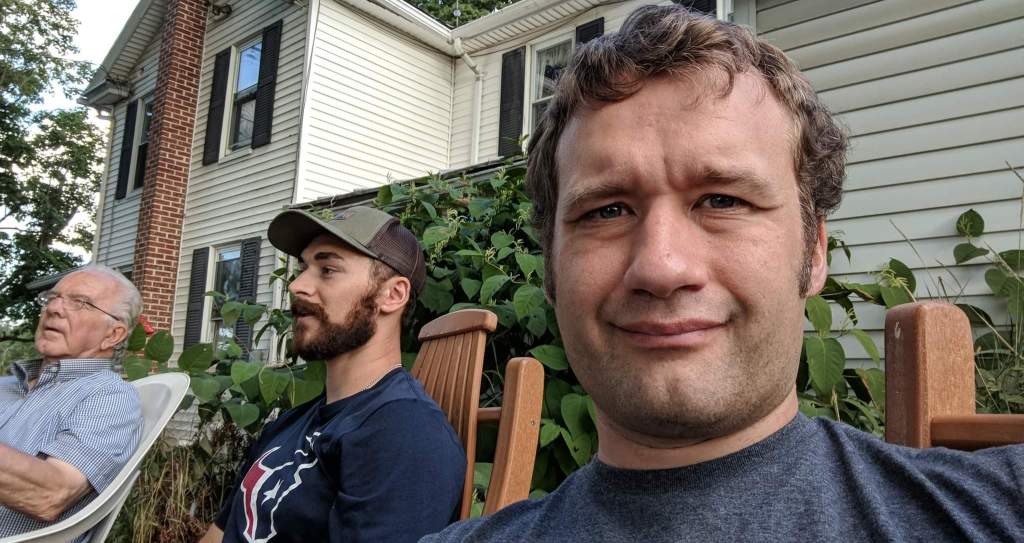
A picture I snuck of my grandpa, Uriah and myself…while contemplating life…

When To Give Up?

Standard

The past few weeks have been painful.  I had a bad toothache on top of my chronic neck issues.  Sleeping and eating became extremely difficult.  Like a city that still hasn’t been able to repair the flood walls after the last devastating storm, it did not take much time before waves of despair washed over me.

Yes, I knew that eventually this round of suffering would likely end.  Antibiotics did finally do their thing for the infected root after a few days of excruciating pain.  But I’m also more keenly aware than ever of my own deteriorating condition.  I have gone to the gym faithfully for years, live a generally healthy life, and yet it is all simply a matter of time before I’ll succumb to old age.

It’s been a rough year, maybe even a rough decade, as the strong have fallen and yet another romance seems to be up against impossible odds.  The death of Uriah, despite my best efforts to prepare for the outcome of the terrible prognosis he received, is still difficult.  And now the unexpected circumstances of the pandemic are a real threat to my most successful relationship.

It has been over two and half years, early January of 2019, since Charlotte and I have been physically together.  I had visited her over the holidays two years in a row and might have done the same had a contractor, remodeling my house, not overstayed their welcome.  So, thinking the immigration process would soon be underway, I had promised Charlotte that I would visit the next year if she was not here.

Unfortunately, as December of 2020 approached, it soon became very clear that I would not be able to keep my word.  Travel into the Philippines, for a foreigner like me, had been banned.  It was, to say the least, a huge disappointment.  And, obviously, having not come through, my own credibility also took a huge hit.  Sure, I could not have known, but then how do you assure of anything in times like these?

I’m still not allowed to visit my love and there’s no end in sight to our wait.  The Philippines is unusually strict as far as allowing noncitizens into the country and the immigration process, already arduous, has slowed to a crawl in the current pandemic era.  In any year prior to 2020 there’s a good chance that we would be buying plane tickets right now for her and her son.  Now everything is uncertain.

It is torture.  What has remained of my hopes is being severely tested.  Sure, the first step of the K-1 Visa process may soon be underway (we submitted our paperwork at the start of the year) yet the US Citizenship and Immigration Services (USCIS) hasn’t even started to review it.  The estimated start of processing is 6 to 8 months, we’re on month 8, and they could deny our application.  And that’s just the start, then it moves on to the US Department of State.

Very recently I’ve heard that the Embassy in Manila isn’t even doing the interviews right now and, if true, this would mean a tremendous backlog of cases.  They’ll likely force Charlotte and Y-dran (her son) to get the experimental vaccine or at least make it exceedingly hard otherwise.  I’m not completely comfortable with that and yet what choice does one have?  They basically have us over the barrel.  Even with full compliance we’re looking at possible years of additional waiting.

It is so completely unnecessary that Y-dran has to wait even longer to have a father in his life, so absolutely unfair that Charlotte’s patience continues to be punished with one more year of waiting, and that’s not to mention my own distress trying to decide what is best considering the circumstances.  It seems every path I try to ease our suffering is met with a new obstacle.

Just today, as I further explored our options to visit or meet somewhere, I found the ticket prices for my go-to airline have about tripled from last time that I looked and are pretty much prohibitively expensive.  I do not even mention that sort of thing to her right now because it is too depressing too talk about.  Maybe I’ll do a GoFundMe to raise funds if there is actually an option for us to see each other.

At this point nothing else in my life matters besides my obligation to Charlotte and Y-dran.  If it weren’t letting them down, it would be easy to jump off of a bridge given the current outlook.  I’ve been stuck in this nightmare of having my most sincere romantic hopes be dashed by things unforeseeable for decades.  I’ve already endured complications that extended our seperation for years and now this.

Prior to the pandemic we would likely have everything processed by now and would be purchasing tickets.  Now it is perhaps foolish to believe that we’ll ever be together or at least not for many years.  Which, given our current ages, and the ticking biological clock, could mean that we never have children.  At the very least, I’ll be even older and in less favorable condition than I am now, which is a very hard pill to swallow for both of us.

I’ll admit that my resolve is being strained to the max.  Given my physical battles and my history of seeing everything possible go wrong in pursuit of happily ever after, there is this nagging fear that the past couple of years have been wasted on a lost cause and that I’ve dragged down to other people with my own delusional faith.  I know Charlotte could find another man.  Am I selfish to hold on?  How long do you keep dreaming before giving up?

The problem is, if I give up, I’ve given up on life and love—I have let cynicism win.

Then again, it does feel that the odds are stacked up against us.  Why would this all happen right now, when we already had such a tough journey?  We’re up against the world, a cold-hearted system that doesn’t care about our story nor our love.  Those making these decisions, processing our paperwork, can hold out indefinitely without feeling an ounce of our pain.  We’re not giving up although maybe we have picked a battle that can’t be won.

The Rationalist’s Delusion and the Most Fundamental Problem of Fundamentalism

Standard

Those born into decent homes and immersed in a particular ideology have no reason to question what they’ve been taught. I was no exception in this regard, as one raised in a functional Mennonite home, and had believed the whole “we-aren’t-perfect-but-are-better-than-the-alternatives” (a self-congratulatory mantra repeated when anything bad comes up as to prevent a full examination of our fundamental assumptions) until that paradigm became untenable for me.

This assumption of being right in our foundation, even if the details are not quite right, is not only something true of Mennonites. No, it is a feature of those indoctrinated into religious systems or political ideologies of all types. The college educated ‘progressive’ is not any more free of bias than the average Amishman—both reflect the cultural institutions that created them and, if anything, the ‘smarter’ of the two is likely more subject to bias than the humbler or that is what the current research indicates. At very least, nobody is completely free of bias and oftentimes our most base assumptions are the most difficult to honestly examine—most difficult because we have so much invested in them emotionally or otherwise.

My ‘Rational’ Foundation

Of these foundational assumptions, in Western culture there is one assumption that stands out above the rest and produces the strongest reactions when challenged. It is an assumption that is especially hard to root out of the most intelligent and knowledgeable people. It is a sincerely held belief about the nature of reality that is so prevalent that it underlies the most secular ‘progressive’ or religiously conservative and fundamentalist thinking of our times—from those espousing climate change and those pushing flat-earth theories, both share this same underlying assumption in common.

This assumption being the idea that we (either individually or as humanity collectively) are rational creatures, able to determine truth for ourselves and can essentially save ourselves through our capacity for logic and reason.

If you would have asked me, as a Mennonite, what my foundation was I would have likely answered by saying, “Jesus Christ, of course!” That, after all, is the theologically correct answer to give, something easily reference in the Bible, and a reasonable conclusion based on the available evidence, right? Of course, as an adherent to Anabaptist “believer’s baptism” and Arminianism, I would insist that my church membership was a choice. It couldn’t be any other way, could it? I mean, it couldn’t possibly have been because I was raised in a Mennonite home, born in a nation where most people identified as Christian and was fully immersed in a culture where even non-believers affirm Christian values, right?

Nah, it had to be my own careful consideration of the evidence that led to an inevitable conclusion and from that I made a rational choice to believe that man, born two millennia ago in some Palestinian backwater to a teenage virgin mother, who was actually the creator of the entire universe, allowed himself to be brutally murdered, offering himself as a means to spare us from his own wrath and then, according to those most invested in his teachings, rose from the dead and that not believing this is a one way ticket to eternal torment.

And I believe all this for reasons… [Insert circular reasoning here]

Hmm…

When Christian apologetics fail to provide satisfactory answers, which they inevitably do for anyone beyond the intellect of an adolescent, those steeped in rationalism must either abandon the enterprise of faith entirely or live in denial and ignore the cognitive dissonance.

For example, there is no way to prove the resurrection account in Scripture through rational scientific means, it is completely irrational and yet the entire Gospel of Jesus Christ rests on this miraculous event being true. How does one reconcile such an extraordinary claim with science? By a reasonable standard this is impossible to believe, right?

Is Christianity Rational?

Some, like St Thomas, who would not believe until he saw the risen Christ in the flesh, doubt until they have personal experience and thus choose what is entirely rational. Many others, however, are content to compartmentalize, they partition the miraculous to another time and place (to history or the future) and try to have things both ways.

Truth be told, the resurrection of the dead is not a rational proposition and never will be, it is logically, reasonably and scientifically impossible and thus is, by definition, totally irrational. There is nothing rational about the central premise of Christianity, where a man who is actually God’s son is born of a virgin woman to save the world from sin, and you did not acquire this belief through rational means either. No, according to Scripture, the means used are irrational in terms of material reality and from a normal human logical perspective.

Faith, according to Jesus in his conversation with Nicodemus, originates from an immaterial spiritual source and does not follow our own rules of logic and reason:

Jesus replied, “Very truly I tell you, no one can see the kingdom of God unless they are born again.” “How can someone be born when they are old?” Nicodemus asked. “Surely they cannot enter a second time into their mother’s womb to be born!” Jesus answered, “Very truly I tell you, no one can enter the kingdom of God unless they are born of water and the Spirit. Flesh gives birth to flesh, but the Spirit gives birth to spirit. You should not be surprised at my saying, ‘You must be born again.’ The wind blows wherever it pleases. You hear its sound, but you cannot tell where it comes from or where it is going. So it is with everyone born of the Spirit.” “How can this be?” Nicodemus asked. “You are Israel’s teacher,” said Jesus, “and do you not understand these things? Very truly I tell you, we speak of what we know, and we testify to what we have seen, but still you people do not accept our testimony. I have spoken to you of earthly things and you do not believe; how then will you believe if I speak of heavenly things? (John 3:3‭-‬12 NIV)

Nicodemus is being entirely rational and rightly perplexed. Jesus presents a riddle, he tells Nicodemus he “must be born again” (in reference to a spiritual second birth) but then tells him the Spirit is like the wind and goes wherever it pleases. However, earlier in the passage Jesus does tie the work of the Spirit to being “born of water” or Baptism.

So, does entering the kingdom start as something rational—as the product of a human choice to believe something they’ve been told—or does it originate from a source inexplicable as the wind and as involuntary as our physical birth?

For years I believed what I was taught, that Christianity started as an intellectual acceptance of a particular proposition, that one should recite the “sinner’s prayer” (often in a moment of emotional upheaval) and later, upon their confession of faith, would be Baptized. There was no reason for me to question this indoctrination, it made sense to me, I mean how else does someone change except they make a deliberate choice? And how else do we make a choice besides through the faculties of logic and reason?

Unfortunately for me (and others from my fundamentalist/Evangelical background), that’s not what the Gospels tell us. For example, when Peter reveals the identity of Jesus as “the Messiah, the Son of the living God” he is told directly, “this was not revealed to you by flesh and blood, but by my Father in heaven.” (Matt. 16:16‭-‬17) If the true identity of Jesus was revealed to Peter through normal or rational means, why do we expect anything different for ourselves?

Or, explain why the unborn John the Baptist “leaped” in the womb when his mother Elizabeth first encountered Mary who held the incarnate Logos within her own body as we read at the beginning of St Luke’s Gospel—Was that response a rational choice, this leap of joy due to John’s careful study of the available evidence and coming to a reasonable conclusion? Of course not! The unborn do not have the freedom or cognitive ability to weigh the evidence and make a rational choice.

This assumption that Christian faith is something of rational origin simply does not comport with what we see recorded in Scripture nor does the idea that conversion is the product of an adult choice to believe. It goes completely contrary to what Jesus said about those who would and would not enter the kingdom:

Let the little children come to me, and do not hinder them, for the kingdom of God belongs to such as these. I tell you the truth, anyone who will not receive the kingdom of God like a little child will never enter it. (Luke 18:16; NIV)

We believe we are motivated through rational means of the mind, that is a foundational assumption of modern thought, and have turned Christianity into something it was never intended to be: merely an intellectual proposition. But this is wrong, the human mind is never described as the prime mover, the choice to follow Jesus is never said to be an adult decision or even something born of human will. Yes, certainly we are to participants in our own salvation or St Paul would not urge Christians to “work out” their salvation with due seriousness in Philippians 2:12, but there is something about it all that goes beyond all human rationality and this is a truth not hidden in Scripture.

A Fundamentally Flawed Perspective of Faith

Many Protestant fundamentalists seem to see themselves as a fusion of rationality with faith, they paint themselves as objective and their religion as something a reasonable person should accept but are neither rational nor faithful. No, they are compromised and inconsistent. They do not strictly follow the scientific method, having arrived at their conclusions well in advance of their studies, nor are they faithful for trying to prove something beyond the realm of science with their extra-Biblical theories. They show, with their actions, that they do not actually comprehend science or the rational nor do they truly accept spiritual and supernatural things.

Fundamentalism is, in essence, the bastard child of modernism and the Protestant religion. Both modernism and fundamentalism are products of the Enlightenment and Age of Reason (so-called) that arose from Roman Catholic Scholasticism. And this Scholasticism, much like modern Protestant fundamentalism, started as a means of “articulating and defending dogma in an increasingly pluralistic context” or, in other words, is an appeal to a person’s intellect and mind rather than their heart or soul. It has since developed into what amounts to a denial of the latter things that becomes completely absurd in the Christian context.

While there is little doubt that the turn towards science and reason has led to the development of technology and understanding of the physical world, we can be thankful for modern medicine based in experimentation for extending our life, this shift has done absolutely nothing for spiritual well-being or our pre-rational human needs. A gaze into the night sky through a telescope, for example, could be awe-inspiring and yet it can’t answer those existential questions of meaning and purpose. And, unfortunately, rather than stick to the means of love or the “greater things” that Jesus promised to the faithful, fundamentalists try to compete (albeit fail miserably) with their secular counterparts in the realm of science and reason.

Fundamentalists, as Protestants, have put all of their eggs in the Bible basket and also—as knee-jerk conservatives—cling to an untenable version of literalism that puts their religious dogma in direct conflict with modern scientific observation. But, as an end around to their paradigm being made obsolete, they turn to pseudoscience and apologetics that barely keep their own children let alone convince anyone outside of their circles. They have no choice, they’ve painted themselves into a corner, they believe that the Bible must be completely reliable, but in the same way as a scientific textbook rather than reliable for spiritual truths, and try to rationalize around the many obvious problems with that perspective.

Meanwhile, while insisting on a young Earth and six days literal days of Creation despite the mountain evidence to the contrary, these same fundamentalists become dismissive when speaking of things like sacraments. This, unfortunately, is a tradition that dates back around five hundred years to a man named Huldrych Zwingli and others who with him lowered the status of such things as Baptism and Communion to mere symbols—reasoning that things of spiritual import originate in the mind, as intellectual acceptance, and with this completely reasoned away possibilities beyond their rational capabilities.

The difference between a fundamentalist and an irreligious secularist is that one has taken their logic the full way to a reasonable conclusion while the other thinks they can have it both ways—accepting the irrational over the rational when it suits them and their personal agenda. Then, simultaneously, rejecting what they cannot comprehend, like their secular counterparts, simply because it goes against their own experience and cannot be scientifically proven. They take Jesus literally only when it is convenient for them or when it makes sense them from their own rational perspective and then reject literalism when it goes against their own religious indoctrination.

Here are some cases to consider…

1) What Saves, Preaching or Baptism?

While writing this blog I ran across an article, “The Sacrament of Preaching,” that addressed a glaring blindspot of many in the Protestant fundamentalist world, and amongst Revivalists and Evangelicals in particular, and it shows in what is emphasized in their tradition. In the church that I grew up in, for example, the order of the service centered on the preaching, often an affair intended to provoke, guilt-trip or convict. There’s a reason why Evangelical churches tend to have venues like lecture halls and that’s because preaching, an appeal to the mind or emotions, is perceived as the primary means of bringing salvation to the lost.

There is little doubt that preaching the Gospel of Jesus Christ is important.

After all, didn’t St Paul tell us as much?

How, then, can they call on the one they have not believed in? And how can they believe in the one of whom they have not heard? And how can they hear without someone preaching to them? (Romans 10:14 NIV)

Yet that passage is in the context of a lament about those who have heard and yet did not accept the message of the Gospel, here is that missing context:

But not all the Israelites accepted the good news. For Isaiah says, “Lord, who has believed our message?” Consequently, faith comes from hearing the message, and the message is heard through the word about Christ. But I ask: Did they not hear? Of course they did: “Their voice has gone out into all the earth, their words to the ends of the world.” Again I ask: Did Israel not understand? First, Moses says, “I will make you envious by those who are not a nation; I will make you angry by a nation that has no understanding.” And Isaiah boldly says, “I was found by those who did not seek me; I revealed myself to those who did not ask for me.” But concerning Israel he says, “All day long I have held out my hands to a disobedient and obstinate people.” I ask then: Did God reject his people? By no means! I am an Israelite myself, a descendant of Abraham, from the tribe of Benjamin. God did not reject his people, whom he foreknew. Don’t you know what Scripture says in the passage about Elijah—how he appealed to God against Israel: “Lord, they have killed your prophets and torn down your altars; I am the only one left, and they are trying to kill me”? And what was God’s answer to him? “I have reserved for myself seven thousand who have not bowed the knee to Baal.” So too, at the present time there is a remnant chosen by grace. And if by grace, then it cannot be based on works; if it were, grace would no longer be grace. What then? What the people of Israel sought so earnestly they did not obtain. The elect among them did, but the others were hardened, as it is written: “God gave them a spirit of stupor, eyes that could not see and ears that could not hear, to this very day.” (Romans 10:16-21,11:1‭-‬8 NIV)

If preaching saved in and of itself, then why didn’t the people who heard simply believe? Why did others, according to the quote of Isaiah in the passage above, believe through revelation despite not seeking it and never having been preached to?

St Paul makes it clear that it is only through the grace of God, not by preaching or through human understanding, that anyone is saved.

It is a rationalist’s delusion that preaching is the only way that someone can possibly be saved. Unfortunately, that is an idea that has been pounded into Protestant heads for centuries now and this comes at the expense of the other means of grace used by God and described in Scripture. In fact, many ‘great’ Revivalist preachers, in contradiction to Scripture and the reality that preaching is as physical a means as any other sacrament, basically mocked the idea that anything besides means of the mind could bring someone to salvation.

But it is St Peter whom they mock, who clearly likens Baptism to the waters surrounding Noah’s ark in 1 Peter 3:21, “this water symbolizes baptism that now saves you also—not the removal of dirt from the body but the pledge of a clear conscience toward God.” Like king Naaman having to dip in the river Jordan seven times to be healed, we are also told that Baptism washes sins away, brings forgiveness and new life (Acts 2:38, 22:16, Col. 2:11-12), which is to make these acts as much of a means of salvation as accepting the words spoken by a man about Jesus Christ.

Part of the problem here is the soteriology of fundamentalist “Evangelicals” who typically portray salvation as a once and done event. This confusion is the result of salvation being thought of something in the future only, as in salvation from death, and not also salvation from sin in the present. But Scripture describes salvation both in terms of having been saved (Titus 3:4-5), also in being saved (2 Cor. 2:15) and will be saved (Rom 5:9-10) which suggests something a little different from the “born again” sinner’s prayer form of salvation preached by some.

In other words, our salvation is not this moment or that experience, our salvation is rather a continuing work of God’s grace that comes to us through preaching, revelation, Baptism, the prayers of the faithful, and the many other ways that the work of the Holy Spirit is made manifest. In a sense, nobody is saved through the visible means themselves, nevertheless, these things are the necessary physical expressions of the spiritual work of grace and thus inseparable. Yes, the prime mover is always God and yet there is always evidence of this moving in hearts that takes physical form.

2) Communion, True Presence or Mere Symbolism?

It is very strange, a year or so ago a fundamentalist friend, a sort of logically minded sort, got very emotional and angry when I refused to back down from taking Jesus at his word. Mind you, as far as I know, this is a man who would not question Ken Ham’s interpretation of the Genesis account nor the resurrection of the dead and yet ended up blocking me for suggesting that the words of Jesus could be understood without needing to be rationalized away their literal meaning or any additional explanation.

The discussion was about partaking of the body and blood of Jesus Christ (or Holy Communion) and how this was one of the sacraments downplayed and reinvented as ordinances by Anabaptists under the Zwinglian influence. But the curious part was how a rationally minded guy would get so emotionally bent out of shape over simply taking Jesus at face value or as a child would. He insisted, despite Biblical description completely to contrary to his position, that there was no sacramental value to Holy Communion, that it was merely symbolic and to say otherwise was ridiculous. In his mind, Jesus had to be speaking metaphorically and there was no convincing him otherwise.

This is what Jesus said:

I am the living bread that came down from heaven. Whoever eats this bread will live forever. This bread is my flesh, which I will give for the life of the world.” Then the Jews began to argue sharply among themselves, “How can this man give us his flesh to eat?” Jesus said to them, “Very truly I tell you, unless you eat the flesh of the Son of Man and drink his blood, you have no life in you. Whoever eats my flesh and drinks my blood has eternal life, and I will raise them up at the last day. For my flesh is real food and my blood is real drink. Whoever eats my flesh and drinks my blood remains in me, and I in them. Just as the living Father sent me and I live because of the Father, so the one who feeds on me will live because of me. This is the bread that came down from heaven. Your ancestors ate manna and died, but whoever feeds on this bread will live forever.” He said this while teaching in the synagogue in Capernaum. On hearing it, many of his disciples said, “This is a hard teaching. Who can accept it?” Aware that his disciples were grumbling about this, Jesus said to them, “Does this offend you? Then what if you see the Son of Man ascend to where he was before! The Spirit gives life; the flesh counts for nothing. The words I have spoken to you—they are full of the Spirit and life. Yet there are some of you who do not believe.” For Jesus had known from the beginning which of them did not believe and who would betray him. He went on to say, “This is why I told you that no one can come to me unless the Father has enabled them.” From this time many of his disciples turned back and no longer followed him. “You do not want to leave too, do you?” Jesus asked the Twelve. (John 6:51‭-‬67 NIV)

Many of the rational folks in the crowd evidently had enough hearing Jesus double-down on this bizarre-sounding claim. Had Jesus been speaking figuratively why would he have let so many walk away without stopping them and saying with a chuckle, “Oh, you guys think I’m being literal! Come on now, it’s all just a big metaphor!” But Jesus did not. When the eyebrows raised and murmurs began, he repeated himself all the more emphatically and lets the chips fall as they may rather than back down from this “hard teaching” and, rather than explain his words as being anything but literal. he even asked the disciples if they were going to abandon him as well.

If it weren’t clear enough in John, this is the account of the “Last Supper” and first partaking of Holy Communion:

While they were eating, Jesus took bread, and when he had given thanks, he broke it and gave it to his disciples, saying, “Take and eat; this is my body.” Then he took a cup, and when he had given thanks, he gave it to them, saying, “Drink from it, all of you. This is my blood of the covenant, which is poured out for many for the forgiveness of sins. I tell you, I will not drink from this fruit of the vine from now on until that day when I drink it new with you in my Father’s kingdom.” (Matthew 26:29 NIV)

Is this mere symbolism?

Again, the words do not hint to metaphor. No, they are words of substance as much as his command, “Lazarus, come forth!” was received by dead flesh causing it to reanimate and Lazarus to be resurrected. I mean, if you can’t take Jesus at his word as far as his body and blood, why believe that God could speak anything into existence—let alone literally form mankind out of dust as is claimed in the Genesis creation narrative?

From a perspective of human logic and understanding, one of those events is no more rational than the others, a rotting corpse does not come back to life, our flesh is not the same as dust, and bread is bread is bread. Again, there is nothing rational about the claims foundational to Christianity and it is rather odd that anyone would insist otherwise. I mean, at very least, one might want to consider the serious physical and spiritual consequences of partaking casually of what is supposedly only a symbol:

So then, whoever eats the bread or drinks the cup of the Lord in an unworthy manner will be guilty of sinning against the body and blood of the Lord. Everyone ought to examine themselves before they eat of the bread and drink from the cup. For those who eat and drink without discerning the body of Christ eat and drink judgment on themselves. That is why many among you are weak and sick, and a number of you have fallen asleep. (1 Corinthians 11:27‭-‬30 NIV)

It is interesting that many from my own Protestant roots take the first half of that chapter concerning the veiling of women quite literally, not once expressing doubt of the spiritual significance of a piece of cloth being draped on a woman’s head, and then have their eyes glaze over when the mystical significance of Holy Communion is discussed in the latter part of the chapter quoted above. You would think that the same sects that require women to cover their heads all of their waking hours would want to partake of the body and blood more than once or twice a year, and yet they strain on one while swallowing the other.

Anyhow, is it any wonder we are weak and not seeing the promises of “greater things” (John 14:12) fulfilled in us when we are too ‘rational’ to take Jesus seriously about his own body and blood?

Rational or Faithful, the Choice is Yours!

Obviously, we are given an ability to use logic and reason. We should not waste or neglect this rational ability in the name of faith either. However, it would be wise to realize the limits of our rationality and at least entertain the possibility that there are things of true substance beyond what our minds are able to comprehend. One may want to consider that God, being God, does not need to be rational according to our own rules.

In fact, even for a complete non-believer, at the edge of reality as we know it there is a realm where things do not act accordingly to our rational intuitions based in time and space. For those who have gone down the rabbit hole of Quantum Mechanics, it is quite clear that matter does not behave in the manner would expect it to and becomes irrational from a normal human perspective. The discoveries of the past century have basically turned the concreteness of the physical world, as we know it, into a mere wave of probabilities and a place where particles may very well pop into and out of existence.

So, in short, this is absolutely the wrong time in history to double down on rationalism at the expense of transcending spiritual truth. This idea that things must make rational sense, from a human perspective, is to undermine the very substance that faith rests on, one committed to that might as well end the farce and go the full way to denying everything outside of the realm of material science. However, a person who goes that route is truly only lacking in the humility to know their own limitations. Your inability to wrap your head around something does not make it any less true.

In a time when secular scientists are even beginning to see the end of their own abilities to comprehend, many fundamentalists are still stuck in a watered down modernist paradigm they’ve inherited and rely on a horribly convoluted/inconsistent/selective rationalism rather than simply accept Jesus at his word. In their insistence on their fundamentals and understanding of things, they are like one who has traded his birthright for a bowl of stew—are you still stuck in a rationalist’s delusion, unknowingly governed by emotions or confirmation bias, and missing out on true spiritual sustenance?