We don’t see things as they are, we see them as we are.
Anaïs Nin
In today’s world, discerning what is real from what is manufactured is a formidable challenge. Suspicion abounds, particularly among the political right, that groups like Patriot Front—openly fascist—are not grassroots movements but rather orchestrated operations, possibly by federal agencies. The MAGA base can’t even spell the word “fascism” let alone embrace it as a guiding philosophy. Yet, this suspicion fuels the leftist “anti-fascism” narrative, which is wielded as a justification for aggressive tactics and bullying.
Fear is a potent tool for control, and political operatives exploit it to manipulate public sentiment. When voter turnout wanes in critical demographics, staged provocations—such as groups wielding tiki torches to “Unite the Right”—can galvanize a larger, more powerful group into action. These events often attract a few genuine extremists, but their true purpose is to provoke a broader reaction.
A pony motor.
This strategy mirrors the “pony motor” in early diesel engines, where a smaller gasoline engine was used to heat and start the larger one. Similarly, false flag operations—whether orchestrated or permitted—serve as catalysts for sweeping agendas, such as justifying military invasions of countries or enacting restrictive laws. While I’m not convinced that 9/11 was a government-orchestrated plot, evidence suggests some knew in advance and that it was exploited to advance a wishlist of wars against unrelated nations and to pass laws that would not have prevented the attack. This reflects the mechanics of how to “manufacture consent” in our modern democracies—where fear is leveraged to unify and control populations.
The creation of a common enemy is a time-tested method for fostering unity. During the Cold War, the specter of communism was used to rally the public. After the Soviet Union’s collapse, Islamic terrorism became the new focal point. The 9/11 attacks, likely executed in part by Osama bin Laden’s organization, were real but were exploited to amplify fear. Domestically, this pattern persists: Democrats emphasize the threat of right-wing extremism, while Republicans fixate on “wokeism” and DEI initiatives. These are deliberate strategies, rallying points designed to consolidate support. Even more effective is provoking hatred from opponents—forcing one’s base to fight for survival and justifying the consolidation of power.
What do you think the point of The Handmaid’s Tale really is?
We Create Our Own Enemies
This dynamic extends beyond politics into cultural and religious identities. Jewish identity, for example, is partly shaped by what’s known as “Masada syndrome,” a collective memory of the Jewish defenders at Masada in Roman Judea (later renamed Syria Palaestina in 135 CE), who chose suicide over captivity. This narrative of the siege mentality is reinforced during the Passover celebration with texts proclaiming to the faithful, “In every generation, they rise up against us to destroy us.” Such beliefs foster an “us against the world” mentality, where hatred is seen as inevitable, reinforcing group cohesion.
Similarly, in the Anabaptist tradition that I grew up in, the reading of Martyrs Mirror cultivates a persecution complex. Likewise, Kanye West’s controversial remark about slavery—“When you hear about slavery for 400 years… that sounds like a choice”—touches on a deeper truth about locus of control. As my mother would say, “You can’t stop a bird from landing on your head, but you can stop it from building a nest.” Paranoia and defensiveness can alienate others or invite their suspicion, while believing you’re inherently excluded can lead to antisocial or even criminal behavior. It’s as if we seek to validate the fears that define our identity.
This pattern is evident in contemporary conflicts. Hamas, for instance, was probably willing to sacrifice innocent lives in Gaza to highlight the Palestinian plight—anticipating Israel’s brutal and disproportionate response. Yet, why does Israel fall into this trap? One possibility is that it aligns with certain political goals. Israeli Prime Minister Netanyahu, facing corruption charges, may benefit from war as a distraction. The Likud party’s vision of a Greater Israel—encompassing Palestinian territories, Jordan, and parts of Saudi Arabia and Egypt—could also be a factor. Some speculate this violence is a deliberate provocation to unify Jews through fear, and possibly tied to messianic expectations.
Netanyahu is a Revisionist Zionist, this is their long-term plan.
This self-fulfilling prophecy is reflected in online discussions, such as an Israeli subreddit where users lament being hated globally. They attribute this to irrational antisemitism, dismissing the role of the Israel Defense Forces’ actions, such as killing children, which fuel international outrage. This mindset—“They’ll hate us regardless, so we might as well give them a reason”—makes them vulnerable to exploitation by corrupt leaders like Netanyahu.
Breaking the Fear and Control Cycle
The fear of the Lord is a fountain of life, that one may turn away from the snares of death.
Proverbs 14:27 ESV
We must guard against siege mentalities like Masada syndrome. By convincing ourselves that the world is inherently against us, we risk acting in ways that bring about the very persecution we fear. Focusing on external threats to define our identity can lead us to become what we dread, fulfilling a prophecy of our own making due to our own unacceptable actions.
Breaking this cycle requires rejecting fear-based narratives and fostering a sense of agency over our own actions and beliefs.
To guard against exploitation, we must shift our focus from the fear of man to the fear of God.
Human fears—stoked by manufactured enemies and self-fulfilling prophecies—keep us trapped in cycles of division and control. A reverent fear of a perfect moral agent beyond us offers a higher perspective, grounding us in principles of justice, compassion, and accountability. By prioritizing a divine wisdom earthly manipulation, we become less susceptible to the provocative tactics of those who thrive on our fear, fostering a resilience that unites rather than divides. Establishment of this spiritual foundation empowers us to reject their deadly paranoia and act with clarity, so we break free from those divisive narratives that political systems use exploit to consolidate power.
With God, all things are possible. That was a phrase that got me in trouble. If pursued to the full literal extent this is an assurance which leads to disappointment. All things may be possible, but in the sense that you only want what is about to happen. What we have is more like the quote attributed to Henry Ford: “Any color the customer wants, as long as it’s black.”
Anything is possible if you want the possible.
It is what it is. That has more or less been my life of the past few years. Marriage has been good for me. There is less need for a fight for a faith in the impossible when the actual has been decent enough. This could simply be a matter of age. You’ll become a little agnostic after being on the other side and seeing some of those foolish hopes of a child. Not saying it is impossible, but it is just improbable that my Filipino son will be over six feet tall as he hopes.
The biggest chance in my life is not asking the question why anymore. Now I am that father figure supposed to give answers and needing to play a stabilizing role. There is just not enough time, the dishes need to be done, the baby needs to be fed, and nobody could ever answer my questions. It seems my own answers were as good as any. Why is a cry for answers, an underlying belief in an authority that can answer. Why ask why if there is no authority to ask?
Sunday evening went a bit sideways soon after my wife and I crawled into bed. I had seen a story, soon before going to the stairs for the night, that made me briefly consider that it could fit the profile of a family friend: A ten-year-old girl being swept away by the swift river current, friends trying to help, an adult woman going in after them. But then, now in bed, I saw the post on social media confirming that indeed it was a tragedy that was hitting very close to home.
It was Claue
Kevin and Michelle are a couple very similar to my wife and I. We met a few years back at a Filipino-American event. He was also employed in an engineering related field, a guy with German background similar to my own, and also had chronic back issues that gave us a common bond considering what a pain my neck had been. But what I liked most about him is that he was a family man who put his wife and children first. Michelle likewise is a dedicated mother, one of those hardworking and unassuming types—who offered her quiet support to my wife as we dealt with the immigration gauntlet.
Claue had come with her mother from the Philippines. Like my son, she had no real choice in the matter and suddenly found herself in South Williamsport with a school of American kids. Unlike my son, she was shy and spoke very little English. And, from what I recall, it was difficult for her initially to leave her mother’s side. That’s why I was so happy to see her in a basketball jersey—it meant that she was finding her niche.
I knew the river was a special place for the mother and daughter. Many pictures were posted of Claue wading in the shallow parts and enjoying a break.
On May 4th, with baby in the stroller, Claue was splashing around again as her mother watched from shore. The river was up just a little after some rains—the water slightly murky at this point—and she slipped. The current pulled her away into deeper water where she was clearly in distress. Her two friends tried going out to save her and also were being swept downstream. Michelle, seeing it all unfold, did not hesitate to enter the water despite—like her daughter—being unable to swim.
The whole group would soon end up over the dam in the turbulence that is known to keep even experienced swimmers trap in its watery grasp. Miraculously Michelle was pulled out. But she did not escape without injury, she was taken to the hospital where she was treated for broken heart syndrome and remained for days. The words “help me Mom” the last thing she heard her precious Claue say before she disappeared. The two other children were saved—only Claue lost.
A design to keep dams from washing out keeps the victim in the froth where even a great swimmer will be helpless and in danger of drowning. That our friend, the mother, escaped is a harrowing account requiring presence of mind, will to survive, and a hand from above.
The rescue operation has changed into recovery, but no signs of Claue have emerged a week after she disappeared. I’ve set up a GoFundMe for the family as we wait and hope for our dear Claue to be brought home.
Waist deep in tragedy…
My life has been rather average, I suppose, in that I can’t claim it has been very tragic in comparison to some. Nevertheless, there is a ‘tortured soul’ aspect to my existence that has once been called out by my little sister and is to some extent true. I do tend to feel things very deeply and cannot ignore all the suffering in the world as some seem a little more able to do. And always with this care came a big question: Why?
Why do such awful things happen to such undeserving people?
It is a question that will stay swirling in your mind if you let it. Religious people will say it is for some greater reason we don’t know—the judgmental will try to assign blame with their Monday morning quarterbacking skills—and both never satisfied me. If death is a path to salvation for a child, why would we ever oppose abortion? We would celebrate the millions of babies sent straight to God to eternal worship. And if you’re one of the people who think life can be risk free—that all suffering is preventable—you’re either a very lucky person or as dumb as a box of rocks.
Every year there are around twenty cases of commotio cordis. That is when a hit within a certain window of time stops the heart. A young baseball player takes a line drive to the chest—collapses and dies.
Does this make me a monster for allowing my son to play this dangerous game?
No!
Someone could spend their life hiding under their bed sheets, afraid to do anything, and get hit by a re-entering Soviet-era spacecraft. The only tragedy, in that case, being that a person so risk adverse has not lived life and is already dead. My cousin Uriah, who was diagnosed with terminal lung cancer near the start of the Covid shutdowns, had every reason to remain home and ‘safe’ from the disease—yet, with only a year to live, he decided he would live. My most cherished memories with him would not have been possible if he picked a path of total risk avoidance. Life is always risky and we cannot prevent tragedy by avoiding it. Why huddled in fear?
They want easy answers. Those who look for someone to blame or explain it by some hidden heavenly cause. But the true reality is murkier. Job was doing everything right and yet his friends found fault. That’s not to say that we should not make an attempt to manage probabilities. But something much bigger than us ultimately holds the dice and there may be no reason why other than that it happened. Some can cope with a simple explanation—bad parenting or cosmic plan—great if that works for you.
Go with the flow…
Unlike my siblings, who were basically fish, I could not float and could barely swim. My mom had tried to help and she sent me to swimming lessons, but when the instructor lowered me in the water I would stiffen up like a board and sink. Some of the problem was that my BMI was probably five, skinny, and my lips would turn blue after a minute or two in the water. All I could think about is getting back out and being cozy wrapped in a towel. Add to that, one of my earliest memories was laying face down in a pool thinking it was game over.
That’s the funny part of advice given to “just relax” or “be confident,” we would without all the fear, anxiety, experience or regret in our lives, right?
But then those who fight for control, who do not deal with life as it truly is, they are most miserable. Acceptance is key. It is what it is and what will be will be—because there is no other answer I can find. That is also to truly choose compassion rather than judgment—it is people with the answers who are harsh in times of tragedy, who truly know nothing and yet believe they are morally superior or act as if they never fail. Those who don’t lead with mercy either lack self-awareness or have never been chewed up and spit out by those beasts that lurk on the edges of their placid waters—which could draw them in at any moment despite their assumed sure-footing or preparation.
Faith too can also become a banal attempt to right equations that can’t be righted. This is where I can appreciate Orthodoxy when it doesn’t offer answers, but does offer that a priest (with the right permission) may lead a service for a non-Orthodox person as an act compassion. I would be more impressed if someone could command Claue to rise and she walked out of the river. However—with no better answers—I learned to be content with compassion as an answer.
Asking why does not ease a mother’s pain, nor does criticism, nor do those “God has a plan” pat answers. Sometimes the best we can do is sit together, talk and laugh a little, humanity has continually won against those devouring forces of nature by sacrifice for the tribe or looking out for each other. Hugs never tell us why, but they do silence those nagging questions even for a moment. A tear with a friend is medicine for a broken heart. It is better to rest, not knowing, and be okay with it, because we’ll never know why…
Small, initially shy and yet energetic, Claue came from the Philippines with her mother knowing very little English. This year she went out for basketball and seemed to be adjusting. Her classmates miss their friend.
Years ago my mom decided to stop in at the local public elementary school. Impressed, after talking to the staff, my parents sent my older sister there and soon I would follow—along with the rest of my siblings.
This might not seem strange to most. But, for a conservative Mennonite child this was highly unusual—or at least in the past few decades. It bucked the trend of religious parents, afraid of secular influence, pulling their children out. Private schools and home schooling becoming the preferred ‘safe’ options.
Anyhow, maybe as a result of my positive experience, or from inheriting my mom’s genetics, I have always thought differently than my peers. That is to say, for better or worse, I stood apart from both my public school and Mennonite peers, basically a third culture kid or non-conformed in both settings. So, when I had to consider where to send my own children, public school was not something I feared.
This post is not saying that everyone should follow in my footsteps nor suggesting that every child should go to public schools. No other situation is exactly the same as mine, some schools are better or worse and every student different. My intent in this blog is simply to give an explanation of what is now unthinkable to most fundamentalist Christians.
A Stranger in a Strange Land
Public school did not mean assimilation for me. My religious identity was always visible enough for me to be given nicknames like “Micro Mennonite” or basically any Amish sounding name my classmates could come up with. The small things, like wearing pants in the hot weather or the side part of my hair were enough for some to take notice.
I was sometimes subjected to what could be called microaggressions. As in I had one or two classmates who would inform me what I should or should not do, as a Mennonite, and this often included the idea that we did not pay taxes or the assumption that we needed a horse and buggy for transportation. This kind of banter was mostly benign, or at least taken that way, but still served as a continual reminder of my outsider status.
The end result is that I seemed to have a stronger Mennonite identity than many of my religious peers. I learned, at a young age, that I was different and it was okay to be my own person. I was never ashamed to be Mennonite nor stopped from following my own conscience so far as things like pledge of allegiance (I always stood respectfully) or abstaining from other activities that went against my cultural standards.
A child private or homeschooled does not truly know, first hand, the alternative to their own community and home. It is easier for them to believe that the grass is greener on the other side of the fence and many of my religious peers did jettison the indoctrination they received in a pursuit of the prevailing culture. But, being the witness of single parent homes, the chaos of the world and consequences suffered, it made me more thankful for what I had.
Exposure made my home more desirable, it also made the failures of parents my community feature less prominently in my mind. There were many who, raised in the religious cloister, became disillusioned with Christianity as a result of their overbearing dad or as the result of school administrators showing extreme favoritism. Had the same thing happened to them in public school, had they been bullied or abused there instead, at least it would not come in direct conflict with their walk of faith.
No, certainly we don’t want to put children in a harsh environment so that our own home or community contrasts favorably, but some healthy perspective is good. Not taking for granted the food or shelter over our heads by being a little exposed and feeling some hunger pains for home is not a bad thing at all. A big benefit of my public schooling was appreciation for my heritage and a strong desire to preserve the Mennonite culture. I could not afford to be myopic or ignorant, throwing out tradition recklessly because it didn’t suit me.
I had to weigh things more carefully rather than react and throw the baby out with the bathwater. Many of my religious peers have this feeling of having missed out and some had to learn the hard way from their own experiences.
Walk In Faith, Not Fragility!
Conservatives love to laugh about the ‘woke’ and their safe spaces. They are very quick to ridicule those families still wearing face masks and call people snowflakes for their sensitivity. The great irony is that many of these same people withdrew their children from public schools, decades ago, because they “took God out of the schools” by ending prayer led by state employees. The reality is that it isn’t just the fringe far-left that tries to hide themselves and their children from all contrary opinions.
You may work where your employer doesn’t lead prayer, can you handle it?
The problem is that without challenge there is no growth. Yes, part of the job of a parent is to protect and yet it is equally important to prepare a child for the real world. I know, I know, someone out there is saying right now, “he’s saying to throw my precious darling to the wolves!” And then we wonder why, with that kind of attitude, when we assume all of our neighbors are dangerous predators, we are not more successful reaching them with the Gospel?
Jesus, our Lord and Savior, and example to follow, had no problem detouring into the Samaritan lands nor with standing on his own two feet with elders as a child. And I, likewise, had no difficulty standing toe to toe with my high school biology teacher or with seeing through leftist propaganda even back in elementary school. I remember scoffing, even then, at the blatant manipulation on Earth day or that faulty “haves vs have nots” construction of my fresh out of university social studies teacher.
Hint to the homeschoolers: Your neighbors aren’t demons and your children aren’t little saints either. In fact, many of my younger home or privately schooled religious cousins were doing drugs, drinking hard and partying, even sleeping around, long before I had so much as a sip of alcohol. As Jesus said to a prior generation of contamination obsessed religious people, according to Mark 7:14–23:
"Nothing outside a person can defile them by going into them. Rather, it is what comes out of a person that defiles them."
We can’t save our children by sheltering them.
I know, but what about the “groomers’ and the brainwashing? No, I’m not going to say it is all hysteria. Indeed, the far-left is targeting children, they’re making no secret of their agenda and it is cause for concern. We see all of those sensational headlines of abuse and it is easy to be full of anxiety and fear about this. But, for perspective, there are over 3,800,000 teachers in the United States and the vast majority are simply doing their job. Some extreme example, from an urban hellhole or California, is not representative of the whole. Yes, your child going to a public school will be exposed to other perspectives and yet why would they choose lies over the truth?
It is no coincidence that the greatest Biblical examples of faith are those, who as children, faced pagan influence. Moses, trained as an Egyptian, was bolder than his other Israelites and faced down Pharaoh. Daniel refused to bend to social pressure, a Jewish child in the Babylonian court, and stands as an example of faith. And who can forget that trial by fire of three young men, Shadrach, Meshach, and Abednego, who would not bow to the statue of the powerful Nebuchadnezzar II?
It is so strange that fundamentalists can read these stories to their children in their Sunday school classes and then be terrified by the thought little Johnny being away from them for a few hours a day. It makes me wonder if they truly believe these stories are true. Maybe they do not think that the God who called Samuel as a child or emboldened young David to slay a giant is still capable of the same today? Apparently they think God is getting weak in old age and only they are able to save their children from the world?
In the World, Not of the World
Part of the problem with the fundamentalist “purity culture” mindset is that they believe that Holiness is achieved through means of physical separation. Many parents think that they will keep their children safe from harm by keeping them in their protective enclave and away from all other influence. But, the truth is, if Adam and Eve could fall even in the garden of Eden, why would we believe that the serpent can’t find it’s way into our own homes and communities?
For as much as my religious peers would try to keep evil out, pulling their children out of even the church school to guard them from the influence of other Mennonite children, it is no defense from the most dangerous sin of all which is pride and this accompanying idea that we can be fully righteous by our own efforts. But, in the economy of Jesus, it is better to be the woman caught in adultery or thief on the cross who repents than the rich young ruler who kept the law perfectly yet isn’t able to live in faith.
They say more is caught than taught. We can say we believe “greater is He that is in me than He that is in the world” (1 John 4:4) and that God is our strength, but our actions betray us. The conservative Christian retreat from the public sphere is pretending that if they ignore the deterioration somehow the problem will go away. They are training their children to be cowards, afraid to effectively confront the culture or fully contend with the reality that they’re losing ground.
It is true, a Christian is not to be of this world and yet this is all about the spirit in which we are approaching life. The exact phrase “in the world but not of it” is not in Scripture, but we also see where Jesus didn’t avoid people simply because they were Samaritans, tax collectors or others that his religious peers carefully avoided. Unlike the parachute in ‘missionary’ compassion of today, he spent his time amongst his own people, rubbing shoulders with the unwashed masses and even being touched by a woman made into an outcast for her illness.
If we go out in strength, trusting that God is still able to protect us and our children from the teeth of lions, we would possibly see the change of culture that will make the world a place liveable for a Christian. But right now we’re teaching our children to be weak and, when the world finally does come to snatch them from the safety of their homes, many will be fragile and unprepared to stand. This is why so many get caught in the false social justice Gospel, they weren’t properly trained to identify the counterfeit.
“Train up a child in the way he should go, and when he is old he will not depart from it.”
(Proverbs 22:6 KJV)
Why would I send my son into the lion’s den?
Because Daniel continued to pray, despite the risk of severe punishment, and precisely as a result of his childhood faith and learning to resist peer pressure at a young age.
Contrast that with the religious experts who had rejected Jesus for the unclean who he mingled with. Or with Israelites who prospered in their own promised land, absent of persecution, and only went through the religious motions of faith in God. They voluntarily brought idols into their homes and folded before their enemies.
Complacency is a bigger threat to a Christian’s child than lions.
We should not teach our children to run from the giants of our time or they’ll become king Saul.
Instead we should be helping them polish those giant slaying stones and trust God.
I’ll have to concede, I was wrong about face masks. Early in the pandemic, in January of 2020 while the corporate media ‘experts’ were saying that we should be more concerned about the seasonal flu. I was worried about this mystery virus in Wuhan and decided to get a box of N95 masks in case my fears were confirmed. I was ridiculed, at the time, for my warnings and telling people to be prepared.
Months later, as the “no human-to-human transmission” claim of WHO became too obviously false to ignore and the glib urgings of politicians for their constituents to visit China were replaced with terror, that confirmed my warnings. But now, with mask mandates and recommendations rolling out, many friends began to resist the idea. They weren’t going to wear a “face diaper” and ridiculed the idea that a bit of cloth would be effective against a virus.
Of course, they were a little right, cloth masks aren’t at all effective against stopping the spread of the virus and now the corporate media is finally conceding this. But still, based on laboratory experiments and filtration level, I believed my N95 masks were effective. However, laboratory conditions are not the real world and, eventually, even that became a question mark for me. Many countries also require facemasks with the masks because the masks are not adequate.
A few weeks ago, I may have overstated, I said that masks were completely ineffective at stopping the spread. Technically correct since the virus spread as much (or even more) in states with strict requirements and yet I’ve also ran into some convincing data that suggests the good masks, the N95’s with a decent seal, may make an 10% difference overall. So on this basis I’ll admit there could be marginal benefit.
The Wishy-washy Way To Truth
Many people, once they’ve made up their minds, never reconsider their stance. If they believe masks are stupid then they will use every excuse in the book not to wear one. I’ve heard them all. The fear about being dehumanized. That breathing carbon dioxide is dangerous. But then they’ll contradict by calling people who disagree “sheeple” and claiming that something that can stop carbon dioxide from leaving can’t stop a virus from entering, hmm?
This is called confirmation bias. People are emotionally invested in their ideas. It is not easy to admit being wrong after making strong statements one way or another. So, rather than be on an unbending quest for the truth, most people (including your’s truly) will seek out the information that ‘confirms’ an established position and ignore what does not. It takes much more effort to take an honest (and critical) look at the evidence and go wherever it leads. Few actually do.
Confirmation (or my side) bias is powerful because it is hidden under layers of fact and explanation that sounds rational. The position being guarded seems completely reasonable to the holder of the opinion, in their eyes they own the moral high ground, and those who disagree are simply ignorant, selfish or otherwise deficiencient. It is often this moral stake in the ground that makes it so hard to back off from an established opinion, we would rather continue in the righteous delusion than deal with the possibility the other side was right.
As the saying goes, “a man convinced against his will is of the same opinion still.” Even a mountain of evidence cannot uproot an established position. It is the same as a fortification on a hill that can hold off waves of an assault with few defenders. That hill being our ego, the banner flying our identity, and we cling to this ground because to lose it would cause us to question ourselves, ask the hard questions of if we are truly virtuous and good, if we are actually intelligent or fooled by our own desire to be right?
It is far easier to remain in the comfort of our own righteous delusion than to consider that the very foundation of our citadel of reason could be sand. We fear changing our perspective will mean we’re wishy-washy or, worse, might require us to examine the underpinnings of other long held beliefs and leave us with no bedrock to build on. Most of all, we fear the ridicule and abuse of our ideological enemies, we can’t let them win!
Powerful Propaganda to Innoculate the Masses
The point of propaganda is to build confirmation bias. The propagandist tries to encourage an emotional bond to an idea, often through appeals to popular prejudice, and yet not overtly or in a way that the targets know they’re being used. Almost every war is fought for the financial benefit of a few and yet sold as some righteous common cause.
For example, both sides of the American Civil War felt they were fighting for civil rights. Both sides used labor that was either property outright or treated like a rented mule. The Northern elites, for all their moralizing abolitionist hubris, depended on an industrial machine that exploited poor European immigrants, taking them right off the boat to send into dark mines, dangerous factory conditions or conscript them into the meat grinder of Lincoln’s war. The South, obviously, was fighting for the privilege of the slaveholding elites and yet convinced they were depending themselves from Northern tyranny and aggression.
Propaganda is about framing an issue in terms favorable to a particular side without ever appearing to be biased to the target audience. It is subversive by design, aims to overwhelm the true complexity of debatable mathers with simple sloganeering, refrains meant to be picked up by the midwits in media and then spread by the unsuspecting masses. The point is to convince the enforcers of the order, the common folk, that they are doing God’s work, being patriots, on the side of irrefutable science or what have you, when in reality they’re serving some undisclosed agenda.
Hitler did not rise to power by being the caricature of evil that we see him as on the other side of the conflict. No, rather, he had convinced enough of the German people that he was on the side of progress, that he would remove the causes of disease and suffering, then build their country back better than ever. The Nazis dressed up in a magnificent authoritarian style, it might look bad in retrospect, knowing where it was leading, yet was hope for a nation emerging from years of crisis.
The Safe and Effective Deception
As part of the propaganda campaign, to convince people to inject the controversial new vaccines, news articles repeated the “safe and effective” mantra over and over again. Both of those words are, of course, subjective. However, they are assuring and have a sort of sophisticated ring. Surely this sort of confident declaration is the result of rigorous science and more or less an unquestionable truth, right?
Those in support of vaccine mandates completely ignore the known risks, Big Tech monopolies literally removing groups of people who had encountered adverse effects, and seem to have no awareness of the great potential of unknown risks that come with any new technology hastily introduced. I mean, somehow the 737 Max got through the approval process, was essentially declared safe and effective, despite a serious defect. So, in short, we can’t possibly know that there are no long-term health consequences of these experimental vaccines and are only now starting to study that potential.
But the thing most egregious propaganda is not the downplaying and dismissal of the documented deaths or reasonable concerns of those who have studied history enough to know how quickly narratives change. They are simultaneously attacking treatment options, like Ivermectin, that are truly effective, cheap and present less of a risk than Tylenol. It is actually this that makes me distrust them as far as the vaccines. Why are they so adamantly against things that are actually safer than the vaccines and with a proven record?
Even as the new vaccines have proven to be ineffective as far as stopping the spread and preventing infection, despite the natural immunity of those who had the disease being up to thirteen times stronger than the vaccines, the current propaganda narrative continues that it is the unvaccinated are the real cause of the suffering. Nevermind that Pfizer, Moderna and Johnson & Johnson all have financial ties to big media and make a windfall off of this new product.
Supposedly they’re completely trustworthy this time around?
Anyhow, each day I hear stories, that man a friend knew who faithfully wore a mask, had two shots, and then died after becoming sick from the Covid virus. We have the trickle of stories about vaccine related health complications, contaminated injections resulting in deaths and recalls of millions of doses, warnings from the very inventors of the mRNA technology, and yet told that we’re a conspiracy theorist to question. Those blinded by confirmation bias will never see.
One of my favorite love stories, the BBC adaptation of a Victorian era novel, North & South, features two very strong and compelling characters.
The first, Margaret Hale, the cherub-faced daughter of an English clergyman, is forced to move to the industrial North after her father’s resignation over a matter of conscience. The other is John Thornton, a mill-owner, a handsome man with piercing eyes, brooding and intense, and interest in the demure young woman.
Things started fairly well. But, that doesn’t last as the differences in their perspectives becomes clear. Margaret, compassionate and having lived a sheltered life, interprets the actions of John in a negative light and pulls away after witnessing his harshness towards an employee caught smoking. What she sees as just cruelty was actually Thornton’s concern for the safety and wellness of his workers given the extreme risk of fire.
It is in the last and final act where there’s a scene where the tension between the two finally disappears. Throughout the middle-act Thornton’s truly good character is slowly revealed. And, Margaret, having returned South, has reconsidered her own idealistic notions, now sees the merits to living in Milton, and decided to return North again. Meanwhile, John is going South, the two cross paths at a station near the midpoint and cue the music.
North & South
There is this wonderful part of the soundtrack in this climatic station scene, Northbound Train (listen here), that so perfectly accompanied the moment. It is understated and elegant, reflective, that builds in waves to crescendo and then slips away as wistfully as it came. Thornton’s steadfast devotion is finally rewarded with a kiss and happily ever after begins despite the painful struggle to get there.
When the Story Goes South…
During my pursuit of the impossibly (a preacher’s daughter, like Margaret) this story brought a little hope with the similarities to my own. It wasn’t that we were so terribly different in our desires as it was she never heard me. Her conclusions formed before the conversation even began. She had pronounced “you’re thirty years old living in Milton” (the actual name of the town) meaning, in translation, that I would hinder her big plans. And could not understand it was her boldness and ability to get out that attracted me.
My thesis then was that a composite of our unique strengths, seemingly incompatible, bound together by Christian love, would exceed what those of similar abilities could accomplish. My thinking outside the box combined with her represention of the Mennonite standard. And, while I’m never good at getting things started (hence being stuck in Milton) I’m extremely loyal and willing to sacrifice for the team. I knew my age and life experience was an asset. But she could not see my value.
Still, for the year or so following her initial rejection I believed. What a wonderful story we would have when all was said and done, right?
Anyhow, that music, Northbound Train, had seemed like the perfect bridal march. Partly in innocent faith, partly to bolster my failing confidence against the deluge of rational fears, this image of the impossibly walking the church aisle dressed in white. As would be the case in real life, tears would stream down my cheeks as the nightmare of the past decade was replaced by this wonderful dream of marital companionship and completeness.
The strong emotions that came with that gentle harp being replaced with one violin and then two, have now disappeared. The music is still beautiful, but my feelings of numbness have long replaced that panging desire for a well-defined conclusion to over a decade of struggle. What I got instead was a world more complex. The cynicism that I had fought tooth and nail was confirmed.
The sunshine through the clouds, endings sweet and perfect are not for everyone. And the reason we tell such lovely tales is probably because they’re so uncommon, the exception, and not the rule. Sure, we can see ourselves as the characters. But the impossibly will likely go on seeing me as the villain in her movie, her conventional guy as the hero, and has never once shared in my fairytale that love would prevail over our differences.
As Far As the East is From the West
It is hard to believe that nearly another decade has passed and I’m still alone. I’ve moved from Milton, left the religion of my childhood behind, even traveled to the complete opposite side of the world twice, and have changed from that guy perpetually unsure of how to find direction. No, I’m not a missionary, but I do genuinely love people and probably accomplish more of actual value than those duty-bound Evangelical types who see ‘the lost’ as their get-into-heaven projects.
More importantly, I’ve found another impossibly, a beautiful Filipina flower, a little lost sheep when I found her (struggling abroad, in Taiwan, to support her son back home) and now the one who keeps me strong despite our torturous wait. Unlike the Mennonite impossibility, we do not share a cultural or ethnic identity, our lives have been very different, yet we have our simple and devoted love in common—which has been just enough to sustain us through these past years.
East & West
However, after all I’ve been through, holding on to hope is hard. Could my visions of her arrival at the airport, on American soil, with Y-dran in tow, also be a delusion?
It has been over two years and eight months since we’ve held each other that one last time before we parted ways in Taoyuan International Airport. I had known the immigration process would be difficult, but could not have anticipated the pandemic and travel bans that make it nearly impossible to be with Charlotte. It really does start to bring those worries that I might be cursed to the forefront again and sometimes the despair does win.
The eternal optimism of youth wiped away by the rejection of the Mennonite ideal, now facing my rational fears and the fact that I’ve been hoping longer than Jacob worked for Rachel and without so much as a Leah in between, I can now fully identify with the wife of Job, “Are you still trying to maintain your integrity? Curse God and die.” The frustration is real. How long does one go on dreaming? When is it justified to wither away into bones, with life never to return again?
As far as the East is from the West is an expression, in Psalms 103:12, used to describe an impossible distance that cannot be bridged. And it could seem that, despite the abiding love of my bhest to encourage me onwards, I’ve jumped straight from the frying pan into the fire. We have had a bit of good news since I’ve last published a blog here, the USCIS approved the application, and yet will this impossibly ever become possible?
I see the successful couples. So lovely together. To them it feels preordained, meant to be, a dream come true. For me, on the outside looking in, there is now more uncertainty than certainty, not everyone gets that music at the end.
What makes me a forever tortured soul is that I’m standing on the knife’s edge. On one side my ideal, my hopes, dreams and faith. On the other side my rationality, my anxiety, my knowledge and fears.
The current cultural paradigm tells me the prior things are built upon social construct, the latter upon science. They have first deconstructed meaning and purpose, now moved on to trying to even erase categories built upon biology, constantly destroying the rule by highlighting the exception.
The problem with me is that I’m not able to dismiss one or the other. In many regards I am a postmodern thinker, having rejected modernism, and yet not in the way of those out to destroy every religious tradition or cultural institution.
My own understanding is that social structures, like family, gender distinction or nation, do exist for a reason. Sure, they should not be an excuse for injustice or unfair exclusion. However, those who only see these things in negative terms or as unnecessary are severely mistaken.
There are things that can’t be viewed under a microscope that are as needed for human thriving as oxygen or water. Sure, it is easy to dismiss religion as superstition or redefine terms to suit the current demands of outliers.
But being unable to appreciate the balance of forces that keep a bridge from falling doesn’t mean that someone can keep removing structural members without consequences.
While being a critic of abuses by these institutions of culture and religion, my point has never been to destroy them. Sure, it is not acceptable, for example, that the word “modesty” in the Bible is misused to blame women for male lusts, nevertheless tearing down all expectations is an abuse as bad or worse.
Perhaps there are benefits to promoting healthy masculinity or a distinct feminine role?
Those trying to erase all difference in the name of equality are the most controlling and unpleasant people. In the name of tolerance, they are literally at war with everyone present and past trying to preserve an identity they cherish. They worship the exception while making life miserable for everyone else.
That’s where I differ from the ‘woke’ and the virtue signaling masses that empower their tyrannical edicts. Sure, I believe in recognizing disadvantages of some and making wrongs right. But that’s not what social justice is truly about. It advertises itself as being a solution, yet is only the same evil of intolerance in a new more ‘colorful’ form.
Still, I am not capable of being fully engulfed by the teachings of Christianity either. I tend to be philosophically in alignment rather than spiritually and that’s because I’m continually dismissing my own experience as invalid. I mean, so what if I got the warm fuzzies at a church service, right? I’ve also experienced euphoria on Adderall. Been manipulated by music, a rousing speech or what have you.
I can identify fully with H.P. Lovecraft:
“We all know that any emotional bias — irrespective of truth or falsity — can be implanted by suggestion in the emotions of the young, hence the inherited traditions of an orthodox community are absolutely without evidential value…. If religion were true, its followers would not try to bludgeon their young into an artificial conformity; but would merely insist on their unbending quest for truth, irrespective of artificial backgrounds or practical consequences. With such an honest and inflexible openness to evidence, they could not fail to receive any real truth which might be manifesting itself around them. The fact that religionists do not follow this honourable course, but cheat at their game by invoking juvenile quasi-hypnosis, is enough to destroy their pretensions in my eyes even if their absurdity were not manifest in every other direction.”
But this writer of horror, who lived in his own existential crisis hell, does not seem like an example to follow. What is the point of being ‘rational’ if it keeps one in a state of constant dread about how insignificant and out of control they are? Is this holding to an agnostic and meaningless interpretation actually intelligence or simply another form of ignorance?
I vote the latter.
Command of language, the ability to pull together a vast amount of information and sift science from superstition, these are things seen as signs of intelligence. And certainly they are measures of a particular kind of capability of mind. But, as a person can be knowledgeable and unwise, saying things that bring us pleasure or purpose are not real is simply ignorant.
Serotonin is as real as the stars in the sky, the feelings this hormone produces are no different from light. It would be stupid to argue that light waves are less important because they lack mass. Likewise, to say that the spiritual is non-existent, because it cannot be weighed or otherwise measured, is not brilliance either. Lack of appreciation or ability to comprehend things of emotional value is not intellectual strength.
Nevertheless, there is a sense in which seeing behind the veil changes things, there are things that can’t be unseen. And those Lovecraftian monsters do exist even if only in the mind of the author.
My own experience, unfortunately, has left me untethered from the comfortable and floating in space. My sincerest hopes rejected as being delusion by the very people who I had thought would appreciate such things. It is difficult to cling to the belief that “with faith all things are possible” when your former pastor’s daughter, encouraged by him, supposedly missionary minded, tells you she can’t love.
It is that disconnect between profession and action that keeps me still precariously balanced on bloodied feet.
Orthodoxy has brought me a firmer foundation than the ever shifting sands of Protestant theology and practice. It is certainly more ancient and authentic than the alternatives. Still, that loss of identity and innocence, that process of degradation of my child-like faith over time, makes restoration of my soul seem as possible as a return to my mother’s womb. How to become less cynical again?
I do envy the simpletons who can ignore such things. They suffer without swaying in the belief that God is in control. Wouldn’t we all live that way if we could?
At some point doesn’t logic dictate we take the advice of Job’s wife, curse God and die, rather than continue to push through the pain against all odds?
This blog site, Irregular Ideation, was a product of my dilemma. That is what to do when the happily ever after and meant to be fairy tales are insufficient to get us beyond our fears. What does happen when those teeth of quiet desperation and endless angst finally gnaw through what remains of the moral foundation. The eternal abyss opens beneath our feet, the inscription over our heads: “Abandon all hope, ye who enter here.”
Fr. Anthony, the spiritual mentor that met me in my time of need, boiled it down to a choice, either we choose to live a life of meaning or we do not. Charlotte, my bhest, has also urged me to be strong and that likewise suggests that we decide what is worth the effort. But none of that makes the choice easy or pain free. Adam and Eve never lost that awareness that biting from the forbidden fruit of knowledge gave them, the thistles of doubt and despair still remain.
It is both assuring and terrifying that the most notable characters in Scripture were tormented. Elijah, having witnessed literal fire from heaven, fled terrified into the wilderness because a wicked queen threatened him. John the Baptist, suffering in prison, sent his disciples to ask Jesus, “Are you the one who is to come, or should we expect someone else?” (Matthew 11:3 NIV) And Jesus himself, in angish, speaking of his coming trials, prayed “take this cup away, and on the cross felt forsaken or abandoned by God.
St. Paul, with his undisclosed “thorn in his side,” suggested a division within, the ‘spirit’ being willing while the ‘flesh’ is weak. The book of Psalms and other Biblical poetry, a great comfort to many today, suggests the writers were experiencing travails and torment. In no way were these ignorant people living a life of bliss. They were fully aware, they had their moments of failure, and choose to keep going on in faith despite this all.
As my parish priest reminds us, “If you ain’t struggling you ain’t Orthodox.”
So while my life would be so much easier if I could be agnostic and accept that we’re all products of random chance, biological robots plotting a predetermined course, that everything is about sex and power. But I don’t give in to that existential dread and will stand against those who, with seeming sadistic pleasure, tear at the foundation of meaning and purpose.
I’m tortured soul because I am able to both see the fullness of beauty and also stare into the void of emptiness. I live with keen awareness that many have died, clinging to breath and hope, thinking their salvation was right around the corner. It could all be for naught. Still, I fight. I’m not in control, I never will be, and long for that final peace when my journey is complete. For now, though, I’ll dance on this blade, my persistent uncertainty on one side and strong desire for God on the other.
I can pretty much rationalize around any moral boundaries, maybe eventually embrace a life of self-indulgence and not giving a crap about those whom I’ve stepped on to gain a small advantage. I could, more easily, give in to self-pity or be overwhelmed by cruelty and give up. Lord have mercy! Still, something within, not even sure how to define it, pushes me to endure through hardships.
At some level it makes no sense, why must we go through hell to get to heaven?
It doesn’t make sense.
But then neither does my existence. How did I come to be? If my life is finite and time stretches infinity in both directions, there is essentially zero chance of being on this moment right now. So our existence is not rational nor that we extrapolate, from our pleasure and our pain, that there is something greater. Maybe belief in the divine realm, where all is made right, is merely a survival mechanism—so why then do we question it?
And so it goes on. There is no growth without pain, not triumph without suffering, our moments of glory would not be such a pleasure if there was nothing required to attain. So why not extend this pattern and conclude that our torment, if righteous, will be rewarded…
A picture I snuck of my grandpa, Uriah and myself…while contemplating life…
There was a time, many years ago, when I had a particularly severe struggle with insecurities, it was likely related to a recent romantic rejection and this mess of anxieties being part of the aftermath. I had walked into a youth volleyball event and, observed, a couple of girls across the room laughing.
I had known how cruel young women could be about guys who didn’t meet their standards, overheard their giggles and comments related to that slightly awkward and unfashionable older guy who was the constant butt of their jokes. So my fears of this sort of ridicule were not entirely unfounded.
But, after a quick self-assessment, making sure I wasn’t wearing my underwear on the outside or anything too obviously wrong, I did my best to ignore that nagging voice and find another explanation. They could have been laughing about anything, there was absolutely no reason to conclude it related to me and yet the unpleasant knot remained in my stomach.
Had I run with this conclusion, based upon my hallucination of their reason for laughing and not reality, this incident added to my existing grievance with the female gender. I was already aware that many girls have a 5′-10″ cutoff for guys they will date, the guy that did end up dating the one I had asked was a six-footer, it could be that they were laughing at my expense?
However, had I gone with that, even if I didn’t match across the room and command them, “Do better!” Something that most definitely would have branded me as a weirdo even if they were guilty and did apologize. Even if I had simply allowed my own explanation of their actions to metastasize, it would be the root of a very toxic attitude that would further marginalize me.
My initial interpretation, born of my anxieties, not their laughter across the room, was the real problem. Even if we banned all laughter or every snickering teenager girl were reprimanded for their feeding of male insecurities, had a plan been devised to force all girls to date short men as reparations for discrimination and height privilege be excoriated by leaders, the actual issue would never be solved.
No, I’m not saying that genuine acceptance doesn’t go a long way towards healing old wounds. Becoming part of the Orthodox world, where I didn’t have a reputation to proceed (and limit) me, where it was possible to talk to the opposite gender comfortably, did certainly help. And there’s no denying that my being in a relationship has lowered the stakes and helped me to relax around other women.
Still, all that only happened once I stopped caring what other people thought and subsequently became comfortable in my own skin. Today, unless it was a really bad day, I would be more likely to laugh with those laughing and then ask them what they were laughing about. Slinking around, and making accusations, might gain you a following on social media and earn the meaningless sympathies of those only hearing one side. But it will do nothing to improve self-image.
Painful as it was, I’m glad that things didn’t work out for me because someone swooped in for the rescue. Had this happened I may never have found my internal spiritual footing and, after briefly appreciating the charitable effort, remained as lacking in confidence. Pity the woman who marries a man looking for her to bolster his self-image and mend his brokenness, that relationship is probably going to be hell in a few years.
My physical stature hasn’t changed since my days of paralyzing approach anxieties and there remains plenty of reason that one may laugh in my direction. But my life improved vastly when those voices of self-pity and doubt were muted. At this point it would not matter if those girls had been truly laughing at me, I wouldn’t take them so seriously anymore. I’m a different man.
In the world of sports there are the stars and then there are the role players. The stars get the attention, the glory, while the role players work quietly behind the scenes, and yet would Michael Jordan be famous without his supporting cast?
This past week one of those supporting cast men died after becoming infected by Covid-19, having succumbed on Tuesday of this past week, on the same day as another regular during my growing up days, Lenore Miller, 89, who loved to use testimony time at church to sing, and passed after becoming ill of the same disease.
John Kenneth Metzler, 82, better known as just “Ken,” had been in poor health for the past decade and really seemed to be living on borrowed time as it was. He was born in 1938, February 15, in Lancaster County, the faithful husband to his wife of 60 years, Arlene, and proceeded in death by his daughter Brenda.
I almost didn’t write anything about Ken. I mean, the Mennonite denomination is my past and Ken was simply Ken. A deacon in the church. But an awkward and common man. He ran a muffler shop for years, lived in a little ranch house beside it, drove a Chrysler minivan for years (completely practical like him) and spoke with his totally unsophisticated dutchified drawl.
Not really the kind who gets invited to speak in front of the crowds nor mentioned as someone noteworthy, and yet someone always willing to serve.
I’ll admit, as a teenage punk, who knew nothing and prioritized ‘coolness’ over substance of character, Ken was annoying for his self-effacing style. He would literally apologize for himself while sharing a devotional, for his lack of education and many shortcomings.
He also held some odd views, like the time he confessed to enjoying the comics page and acted as if it was some sort of terrible transgression. He would also, while teaching youth Sunday school, ask questions that would be more suitable for kindergarten students, which would leave everyone confused thinking he was asking rhetorically and him frustrated (or “fuss-trated” in his persistent Lancaster dialect) thinking we weren’t paying attention.
But in the end?
Ken was a man with a golden heart, who became more and more endearing as I matured and, despite his slightly stooped posture, had all the true qualities of a hero.
There are plenty of flashy Mennonites, big fish in their small ponds, who act as “missionaries” or “evangelists” and are roundly praised for their efforts. Many of them have the perfect hair, the superior intelligence, the pedigree and popular families. They travel to the exotic places, some have the academic credentials too, they have the wealth (or access to resources) and reputation for their wonderfulness.
Ken had none of that pomp and pizzazz. He wouldn’t want it even if he were capable. Instead he, slow and steady, like the persistent tortoise compared to the haire of children’s book fame, he worked mostly unrecognized for the good of others. If it was to cut someone a break on a repair bill at his shop or consistently running the canned goods distribution, you would hardly have noticed his contribution.
When crowns in heaven are distributed, I believe there will be many surprises. But it will not be a surprise to me if Ken received a reward bigger than that of the known names. No, he did not lead the church outreach, but he supported it wholeheartedly, and remained long after the charismatic movers and shakers chased after that next new and exciting project. He stayed, stayed true to his commitments, and is a hero in a world full of vain and self-serving ‘good’ men.
Ken also died as he lived. He could have, given his poor physical health, cowered in fear and never left his home. Nobody would have criticized him for doing this, he was clearly in that most at risk category and could not be faulted for hiding out the pandemic. But then why miss out on life when you already know that your days are numbered? He got out instead, remained a part of the community, and that is a choice that I respect—even recommend.
Ken’s death was not a big surprise to me. My initial reaction when I heard he had been at church when a visiting chorus was there, basically a Covid super-spreader event, was to think, “oh, Ken,” and question the wisdom.
But, on second thought, Ken made the right and heroic choice. Ken knew that risk of death isn’t a reason to stop living. He had been on death’s door before and made a deliberate choice.
Ken, unlike many in this age, understood life is difficult and every day is a gift. He may have lived a year or two more, possibly, but was not long for this world by any reasonable assessment. Sure, he likely suffered, he spent his last days alone because of nonsense policies created by administrators, but he was a man who never had it easy and lived a life of faith and sacrifice.
Real heroes don’t wear capes or live in the pages of comic books, most of them do not die in some grand saving-the-world deed, many of them pass unnoticed. They quietly play their role, in the background, until it is time to go home.
I’ll admit, it went through me when I heard that my brother had the clear symptoms of a Covid-19 infection. Sure, it was far enough along that the deadliness of the disease wasn’t so statistically foreboding anymore. But emotionally there was a certain significance that was given to this and a bit of dread as well. What if this loss of taste developed into serious respiratory issues? My brother or one of his family members, who had been at home with him during the shutdown, could die.
My brother is fine. He was never formally diagnosed with the virus, they would not test him given that his symptoms were not life-threatening or severe and he could ride it out at home. The probabilities were always in his favor as a relatively young person in good health. However, my own anxieties, despite my own understanding that the risk of him dying was not that much greater than it ever was for him or other members of my family, were something of interest to the more rational half of my consciousness. Why would I worry at all when the threat really wasn’t that great?
It is one of those quirks of human psychology, I suppose, that we can go from not knowing a person at all to being totally obsessed, wondering how we ever live our life without, “text me when you are home safe,” with them. Likewise, when something ‘novel’ comes into our lives, be it a new video game or an unknown virus, we can’t get our mind off of it. We are fascinated with this unknown commodity, whether we want to protect it (as in a new love interest) or protect ourselves from it, our thoughts will go there over and over again. It can be consuming, it can be blinding as well.
Fear of Covid-19 has much to do with availability heuristic or the tendency people have to judge the likelihood of an event based on how readily they can recall said event. This is what makes anecdotes so powerful. Some stories of young, otherwise healthy, people getting a disease and dying will feature far more prominently in our minds than the dozens lost in car accidents. I have a good friend who had a friend my age die and knows of another. The media has fed into this bias by highlighting the suffering of some. It feels likely enough and yet here’s the reality of the situation:
“To put things in perspective, the virus is now known to have an infection fatality rate for most people under 65 that is no more dangerous than driving 13 to 101 miles per day. Even by conservative estimates, the odds of COVID-19 death are roughly in line with existing baseline odds of dying in any given year.”
That is not to minimalize the threat. I know a couple of cases of people who have become seriously ill due to Covid-19 and, yes, many people have died who would’ve otherwise lived. The virus can be quite contagious in certain conditions, it can send a relatively young person to the hospital, I believe that many more will fall ill and some of them will die.
But, the thing is, our outsized focus on this virus is to minimize the many other risks equal or greater in consequence brought on by our response. It is deeply troubling to me that so many people seem so completely unable to comprehend the strong possibility that, with our saving people from the specter of Covid-19 and obsession on one risk out of many, we are ultimately killing more people by suicides, drug overdoses, neglected cancer screenings (along with other medical procedures being postponed) and starvation.
Why is it selfish for a young economically vulnerable person to work, to put food on their tables, and not selfish for you to order them home in a vain attempt to save grandma?
Furthermore, going back to my momentary fear of losing my brother, there was always a far greater risk to my brother’s life from him driving to come visit than from the infection. Why don’t I call him every fifteen minutes to make sure he’s wearing his seat belt? If physical safety was the only concern, then what would posses me to encourage him to take up flying years ago or to join him in the cockpit years later? It makes no logical sense for me to have a terrible fear of a virus that kills a small percentage of the infected while accepting or even encouraging more dangerous activities.
Rise of the Covid Crazed Karens
Many imagine a zombie apocalypse: The living dead, creatures of human flesh and yet no longer human anymore. Well, we are living in such times. The zombies are here and they are here to rob you of life with their devouring fears. And, unlike the fantasy horror movies, these are zombies that you aren’t allowed to shoot. But beware, if you decide not to comply with their screeching demands and choose to live as a free person, they may make real on their threat to shoot you.
Think I’m exaggerating?
Think again.
Dr. Jennifer Rager-Kay, a gun control activist and school board member, not too far down the road from me. Decided that it was completely okay and rational to threaten to kill people for refusing to wear masks around her or her family. Dr Rager-Kay (aka “Karen”) was in such a lathered up panic about a virus that has a very low probability of death that she was actually willing to murder. Makes one think of the expression, “Physician, heal thyself.” This woman is obviously smart enough to make it through medical school, but seems woefully lacking in rationality and ability to keep things in perspective.
Now, in defense of Karens everywhere, most are content to only steal away your life by imposing their “new normal” and won’t actually shoot you.
However, they all have a sort of nurture gone bad, the assessment of their own importance that is shared by hall monitors everywhere. Possessed by their lack of contol or relative insignificance an a complex and unpredictable world, they wield their petty authority over their neighbors given to them by state snitch lines, wag their sanctimonious fingers at anyone who doesn’t meet their own standard, and are completely willing to imprison you for your own good. They stopped thinking months ago when their minds were reprogrammed, infected by fearful anecdotes, their cognitive function addled by scary projections, never considering new evidence, and they are now mindless zombies stuck on repeat, “Covid bad, must stop Covid!”
Of course, Covid Crazed Karens are not only women nor only the meddlesome troublemakers of memes, there are many man and people in positions of real political power who are willing to kill you for your own good and seem even to have some sort of sadistic satisfaction watching people squirm under their smoothering care. If only you would start thinking their way, sacrifice your all for their misguided public safety crusade, then everything would be just fine. You see, they think like a psychopath, that your suffering is only a result of your defiance against their wise council, that it would not be tyranny if you would simply submit to their lawless edicts.
You must be broken, like Winston in Orwell’s 1984, who after torture finally becomes a zombie to the cult of the totalitarian state:
“Years it had taken him to learn what kind of smile was hidden beneath the dark moustache. O cruel, needless misunderstanding! O stubborn, self-willed exile from the loving breast! Two gin-scented tears trickled down the sides of his nose. But it was all right, everything was all right, the struggle was finished. He had won the victory over himself. He loved Big Brother.”
George Orwell, 1984
We may not have Big Brother. But we do have Karen watching and her fear-driven lust for control over you won’t be satiated once Covid-19 has passed. No, you are already being conditioned, you will accept her “new normal” or you will die. And, if you don’t die from the virus be sure she will punish you severely for her being wrong. A Karen is never wrong, being wrong does not compute with her one track mind, and she will kill you, if need be, to prove the point. The zombie apocalypse is upon us and these privileged elites are out for the blood of you ignorant and unwashed common folk.
But Covid Karen is not the only threat, Denial Deranged Darnell, well he’ll tell you masks don’t work because he once had a fart that stained his underwear and, with pride, he will tell you how he survived his entire life never once wearing a seat belt, that he actually drives better drunk, and you can’t tell him ’nuffin! Watch out for him as well, he may not have the power of government on his side, but he has already killed a security guard in Detroit and wounded a Waffle House cook in Aurora, Colorado, for the “disrespect” of mask policies. He thinks carrying a firearm to a protest makes him tough. No wonder so many Karens think the masses need to be controlled!
False dichotomies pop up everywhere in the political discourse. You are either pro-life or you are a raging homicidal baby-killing feminist monster and, alternatively, you are either pro-choice or you are “at war with women” and would turn the world into “The Handmaid’s Tale” if ever given the chance. Of course, both sides of that dichotomy are grossly misrepresenting those on the other side. Some of the most vocal proponents of pro-life that I know are of the female gender, would rather not have their lives ruled by men or be treated like baby-making slaves. Likewise, many on the pro-choice side are intelligent and compassionate people who follow a different dogma as far as what does or does not constitute a separate human life.
Where you stand on the recent Covid-19 forced closures probably has much more to do with your politics than it does with your personal level of scientific sophistication. Sure, there are many, blinded by their own confirmation bias, who see everything they believe as being scientifically based and rational, but that is to be in denial of the role that their own emotions play in their judgment. The decision to shut down the economy due to the virus had has much to do with fear as fact. How do I know? Well, there weren’t a whole lot of reliable facts to go on when the decisions were being made. We had models, yes, but models are only as reliable as the data entered and the accuracy of the assumptions that they contain. Their predictions are not facts. What likely had a big influence is the scary stories coming from Italy and the lack of good information from China.
The Changing Understanding of Covid-19
I had been in favor of the shutdowns, initially, to give time to make a more accurate assessment of the actual threat and also to give time for our medical professionals to gear up amidst global shortages of personal protective equipment. Sure, many Americans are of the pigheaded mentality that they will drive eighty miles per hour into a blinding fog bank and then have massive pileups as a testament to their inability to slow down for anything. But it is only prudent to enter into a potentially deadly new situation, with many unknowns, with an abundance of caution. The arrival of Covid-19 onto the world scene was such a circumstance. The idea of social distancing to “flatten the curve” made sense at the time.
However, as a couple of weeks morphed into a month or more and the language of state politicians mysteriously shifted from slowing the spread (as we were told was the reason for the shutdowns) to trying to stop it entirely, while at the same time the there was growing evidence that the virus was not as deadly as first thought, was likely here earlier than had been previously known and may have actually reached the peak (unflattened before the shutdown measures had been implemented) in some places, I kept waiting for decision-makers to shift their policies according to the actual evidence. But they did not. Frozen by fear or too stubborn to revisit their previous decisions (or maybe even wanting to punish those opposed to their lockdowns and show who is boss, who knows?) there was no change. They were determined to plow ahead with their prior decision based on bad data, economic consequences be damned, so wear your masks, go to Walmart like good little citizens and shut up.
We all have an idealogical team we are pulling for, whether we realize it or not, and it can cloud our perspective of an issue. Sure, you might believe that your ignorance of virology is “common sense” (which, unfortunately, is probably common and yet good sense is not always common) and refuse to take reasonable precautions. Or you might think your own opinion (and that of the experts whom you agree with) is some kind of “scientific consensus” and an irrefutable fact. But the reality is that you might just be too arrogant (in your little knowledge or, rather, knowing just enough to be dangerous) to understand that there could be perspectives greater than your own. The frustrating part for me was always being caught between the false choices put out by those on either side of the political debate. Those calling the virus a hoax, dismissing the effectiveness of masks, and being generally ignorant only armed those pushing for control with a false moral imperative to double-down on their shutdown or die mantra.
Covid-19, while certainly deadly for many and even if those terrifying early estimates of a 2-4% death rate had held true, is nowhere near the Spanish flu. The real number, given growing evidence gathered by antibodies testing and from various ships where everyone was tested, shows a true death rate closer to 0.5% which isn’t too different from the seasonal flu over the course of an average year. Yes, it did certainly stretch our medical resources thin, and likely would’ve with or without the shutdowns, yet there is little evidence to show that our economic self-sabotage actually saved lives. No, if anything, we may have simply destroyed opportunity for those most vulnerable here and around the world for no real gain. It is quite possible, even probable, that more will die as a result of the forced shutdowns than were saved. In the end, the decision to shut down the economy was never a question of shut down or die. For many, it may very well be shut down and die.
False dichotomies are dangerous. They are lies. This polarization of our many choices can come with tragic results.
Economic Shutdowns Also Kill People
In my many discussions about Covid-19 I’ve run into many reoccurring and economically illiterate sentiments, like this one: “I’m sorry but I can’t believe I’m reading this. No compassion for human life and suffering?” That in response to a well-written article weighing the benefits against the costs of the economic shutdown. Apparently, in this person’s emotion soaked and one-dimensional brain, the only way you can show compassion for human life and suffering is to keep people caged in their homes and unable to feed themselves?
As a starting point, there was never a scenario where there could be zero deaths from Covid-19. That ship had sailed long ago, in China, when the authorities there continued to let people from the epicenter travel around the world (although not domestically) and sailed when many Western leaders were more concerned with things like “xenophobia” than the virus. Maybe had Europe joined the Trump administration in banning travel from the source of the outbreak there may have been a chance of containing it. But it was already too late by the time concern about the virus and death tolls had finally exceeded worries about political correctness and virtue signaling about race. Places like New York City and Los Angeles were going to see tens of thousands dead regardless of what was done at that juncture.
When the shutdowns began, in earnest, the virus was already deeply entrenched. The first verified case in France, for example, has been recently discovered to have been back in December already and much earlier than initially thought. It had likely spreading while some politicians here were still encouraging people to crowd the streets of Chinatown and was definitely being passed around while Italian leaders were telling people to hug Chinese people (from Wuhan, no less) in a misguided effort to prove they weren’t racist. The die had been cast and we were in for a wild ride.
But what we did have a choice over is how we responded to the threat. Certainly, the virus had not reached us all, and we could not know (without significant testing) if the peak of infections was a couple of weeks out or still months ahead. If the virus had reached relatively few of us and the death rates were already skyrocketing then the most desperate measures were completely justified even if it cost some lives. On the other hand, if the virus had already been in circulation for months and the hospitals weren’t already jampacked, there was very little to be gained and plenty to be lost from sweeping anti-economic measures. Those with strong social networks and a fat wallet, like the Hollywood celebrities urging us plebes to stay at home while they sip martinis in their hot tub, might not get it, but there are serious consequences to economic shutdowns even if you do not personally experience them.
For those who still think that there’s no harm done by shutting down (simply because they are amongst the privileged less affected and able to put food on their own tables), keep reading.
This idea that the economy is about Wall Street and stock portfolios is complete and utter nonsense. The concern many have about the shutdown has nothing to do with the fiction you hold of Scrooge McDuck swimming in his vault full of gold coins and perpetually worried about losing his wealth. Not at all. First, no billionaire (other than the Hollywood fantasy villain version) actually has moldy money, billionaires are billionaires because they make good investments and their investments are often in life-sustaining industries, like healthcare. Second, most of the economy is Y-O-U. The economy is, simply put, our transactions together, the labor we use to produce things of value to trade with others for our wants and basic necessities.
That out of the way…
Domestic Abuse, Drug Overdoses, and Suicide Rates
Shutdowns have consequences and the consequences are often much more devastating for those most vulnerable. I think often of my waitress and waiter friends, people in the restaurant industry, who have suddenly without warning had their entire income stream dry up by the executive fiat of someone who gets their paycheck via the state treasury or through an accumulation of assets. Sure, Trump and Congress have taken action to offset some of these losses by direct payments, unemployment compensation has been extended to many who might not otherwise qualify and yet that will do nothing for those permanently unemployed.
For many in the world, in the same way that Covid-19 is deadly to those with comorbidities, an economic shutdown is (or will be) that proverbial straw that broke the camel’s back. Sure, you can say that the guy devastated by the bills piling up and his bank account drying up, his business being shuttered, should see the bigger perspective. But that is no different from saying that we should not care about Covid-19 deaths because those most impacted were dying anyway and that their comorbidities actually killed them. The fact that not everyone is as financially healthy as you are or as emotionally able to weather the storm caused by the shutdown doesn’t undo the damage done to those who are more vulnerable.
The socio-economic cost of the shutdowns should be factored into the decision as much as the potential gain. Sure, there is a possibility (although it is not proven) that the shutdowns may spare a few that would otherwise have perished from the virus and accompanying complications. But there is definitely an uptick in things such as domestic violence and child abuse that comes with forcing weak and emotionally vulnerable people to stay confined together, away from their sources of stress relief and friends, for months. Believe it or not, not everyone shares your advantages in mental health, not everyone can keep doing their work via Zoom, we aren’t equal in this together as some will proclaim, some are isolated alone, and with only their suicidal ideations to keep them company for the duration.
And, for those of you looking down your noses in condemnation of the shutdown protestors at state capitals, thinking that your own rationality and compassion is what is guiding you, think again. True compassion would have some sympathy for those who are suffering from the economic consequences of the hasty and arbitrarily enforced shutdowns. Unlike you, they might not be able to afford to shelter in place for months at a time. The truth might be that you, in your fearful overreaction to Covid-19, simply do not care enough about their livelihoods being ripped out from under them and are too ignorant of the economic consequences, the increase in domestic abuse, drug overdoses, and suicides that accompany economically dire circumstances.
It is certainly no more dangerous to do a couple of laps around a state capital, than it is to go to Home Depot, Walmart, or the grocery store. I suspect the real issue some have has to do with political affiliations. It is a moral superiority contest between them and those who decided that the risk of government overreach and economic ruin is greater than the virus. Some would rather live in denial of the serious economic consequences they’ve imposed on others, ignore the evidence of the suffering caused by their selfish demands for safety at all costs (to their neighbors), and maintain their dangerous tunnel vision?
Of course, who knows, in the current political climate, maybe some would rather the protestors killed themselves than peacefully vent their pent up frustrations?
But this is far bigger than domestic politics…
Economic Downturns, Food Shortages, and Starvation
The most troubling and continuing consequences of the imposed shutdowns is the impact it is having on the agricultural industry and food supply chain. It was very early on when the stories started to cross my newsfeed about small farmers, in the Philippines, being forced to dump their produce. If one understood the labor that it took (most Americans can’t even imagine), that these farmers would give up their meager profits, it is hard to understand. But that is what happens when the market is closed down, there is no refrigerated warehouse to store their vegetables until things reopen again. And, sure, some of it is distributed to their neighbors, and yet the real demand comes from the cities. So the cities are cut off from their suppliers and the poor farmers from their buyers and only source of income.
Vegetables dumped in Benguet
I’ve realized recently that many people can’t understand logistics even at the most basic level and see the actions of agricultural producers here as being greedy or suspicious. When I mentioned how producers were culling herds due to processing plants being closed over Covid-19 concerns and the possibility of people starving, I had a guy respond with the following, “If we don’t want people to starve let’s start by distributing this food that is being wantonly destroyed by the factory farms.” His ‘solution’ may seem reasonable at first glance. I mean, why not? But then you have to considfer that these big producers would not just throw away their profits. They aren’t that stupid. And if they can’t process this protein then you can be 100% sure that government or anyone else is going to replace their production capacity. They are the specialists.
Sure, like in rural parts of the Philippines, the neighbors to these massive barns will get all the pork or poultry they will ever need. However, that’s nibbling around the edges of the problem. The real reason we have these “factory farms” is not to supply Union County and the surrounding communities. No, not at all! The real market for this meat is the big cities. So, while it is great that some rural neighbors get to fill their freezers at a below-market price, that is going to do very little for the needs of those downstream and cut off from their food source. A couple of “community gardens” in Brooklyn can’t offset the literal tons of beef, pork, and vegetables that are imported into that city every day. Don’t get me wrong, I love a ‘feel good’ story as much as the next guy, but this isn’t an issue that will be solved by a couple of generous farmers.
The abrupt shutdowns and closures are causing incredible bottlenecks that cannot be easily resolved overnight. Closing down schools and restaurants, for example, meant that all of the food in that pipeline, packaged for that kind of usage, was now jammed up. There are some grocery stores now selling meats that were originally intended for restaurants. But the retooling cannot happen like the flip of a switch. That is why some dairy processors, what specialized in supplying schools, had to dump their milk at the same time grocery shelves had run dry of the staple. That is why potatoes are piled up to rot in Idaho. When networks within the supply chain break down, when the market is majorly disrupted without warning, there are shortages in some places and over-supplies in other places.
Those big animal operations need to keep moving things along, the whole process can’t be held up for long before there are major problems, finished pigs need to be moved along or there is no room for the feeder pigs to go. Sure, they can change the feed to try to keep the finished pigs at a particular weight for a period of time. But eventually, something as to give. That is why there are piles of dead pigs a hundred feet long, going to waste, and soon enough the shelves will run empty as well. It will seem strange. Many won’t understand how it is possible, but it is happening and it is happening like a slow-motion train wreck.
That all said, I’m not afraid for myself or most Americans. We might miss out on a steak or pork chop. We will likely pay a little more for our food in the coming months. However, my real concern is for those in the many places around the world where people work hand to mouth. The rickshaw driver in Mumbai can’t afford to pay more for his family’s food and especially not after being locked in his own house for months. The person in a Manila slum, already living on “pagpag” (a Taglog term meaning “garbage chicken” or literally food pulled from the trash) will not do well when others are fighting over the disappearing scraps as food becomes scarce. Many in the world live on a very small ration, meat is a luxury to them, and now have been deprived of their income in a desperate fight against a virus that may not even be stopped by their sacrifice.
Making the Right Trade-offs…
There is no question about the seriousness of Covid-19. I have a close friend in NYC who lost two friends. They were both my age and died in their own homes. It is not a virus that should be laughed off or treated as no big deal. Tens of thousands have died and tens of thousands more will likely die and in a relatively short period of time. Sure, many of these people may have had comorbidities and yet they would very likely have been with us for many more years had they not had their encounter with this deadly virus.
It is possible that some could be saved from Covid-19 through the shutdowns. There is no solid evidence that this is the case. Nevertheless it is possible. That said, it is also possible that our efforts only prolonged or even worsen the pandemic by preventing “herd immunity” from ever happening, which means we could suffer more deaths from Covid-19 and also the experience the hardships of the economic shutdown.
Whatever the case, the “shut down or die” mythology needs to be confronted. Those looking for a perfect solution here are living in fantasy land. The hope that a vaccine will be developed quickly and then become widely available is (sorry, anti-vaxxer conspiracy theorists) basically a Hollywood fiction. We still don’t have a vaccine for SARS or MERS and may never have a vaccine for Covid-19. So, this idea that we can just hunker down and wait this out is not realistic. Sure, I would be glad to be proven wrong, it is possible, but there are also huge trade-offs to our waiting that need to be discussed.
Speaking of trade-offs: According to ASIRT, 1.35 million people die in car accidents every year (over 38,000 in the US) and an additional 20-50 million are injured (4.4 million US), some with permanent disabilities as a result. This, unlike Covid-19, is a ‘pandemic’ that disproportionally impacts the young and with no pre-existing health conditions. We could, quite easily, in the name of safety, ban all automobiles and save far more lives in a couple of years than the shutdowns ever would. Of course, we would never do that, we have valued the freedom of movement and economic advantages over the risk of serious injury or death. I suppose people feel more in control behind the wheel, but if we were really in control of the outcome of our trip then nobody would leave home knowing that they would get into a fatal car crash, would they?
Based on what we now know about the virus and death rates we should not have shut down the to the extent that we did. We may have saved a little on the front end, compared to Sweden who remained open, and yet will very likely end up in the same place as far as Covid-19 and far worse off in terms of the economic consequences. My fear is that many more will perish as a result of the shutdowns than from the virus. Millions of the world’s young and most vulnerable are suffering right now, as I write this, and could die of starvation. A good analysis must weigh all factors. We cannot be zoned in so much on one problem and only one solution that we cannot see any others. The virus from China is bad, but the panicky response of governments around the world may have made it many times worse.
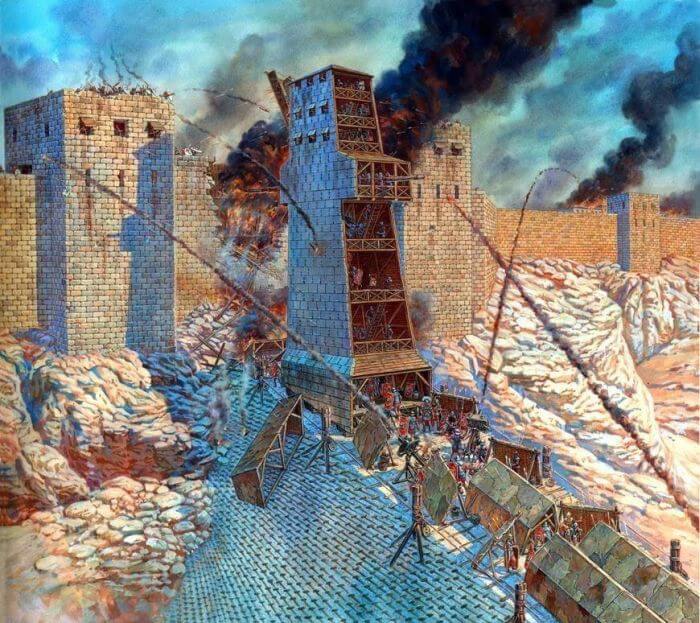
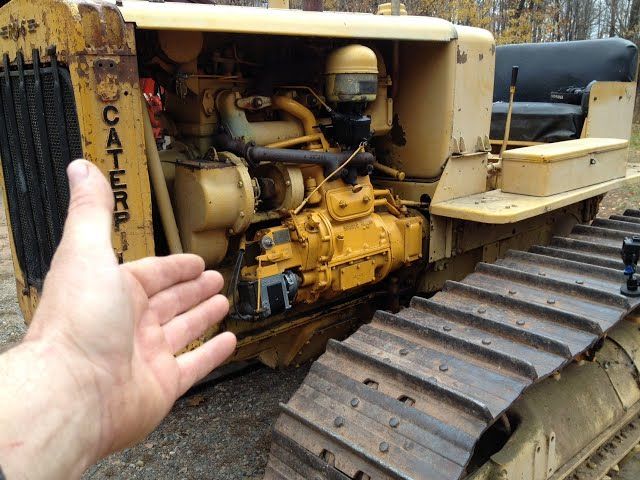




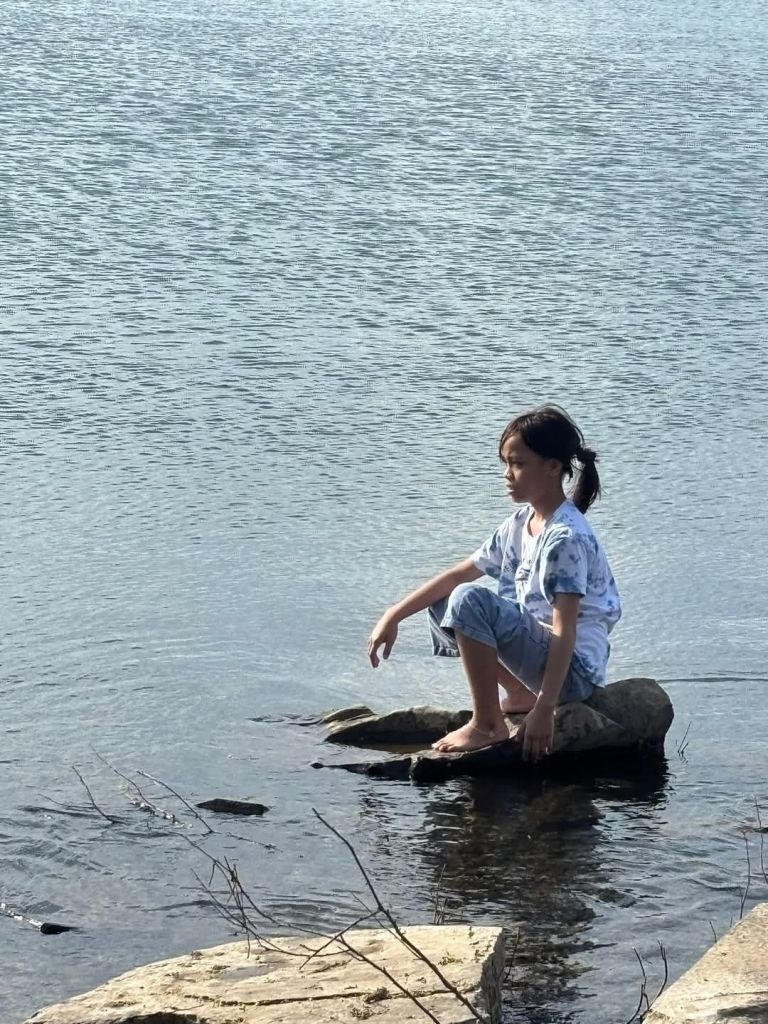


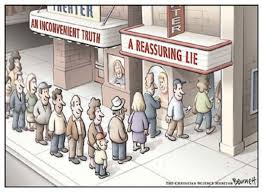
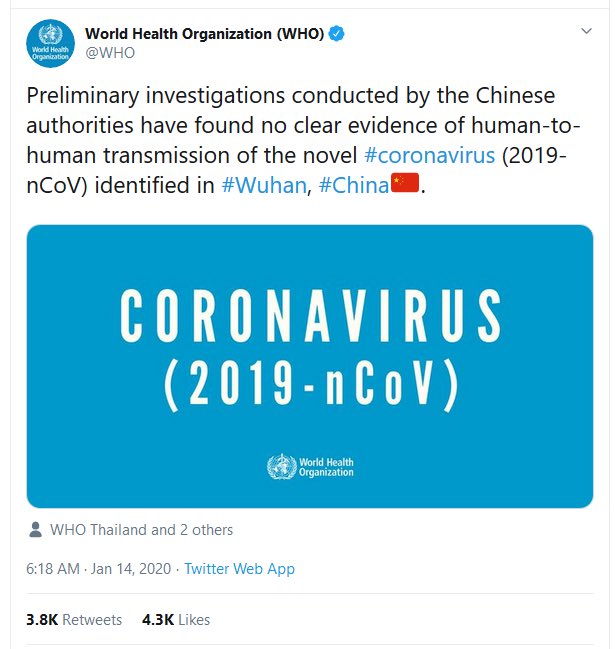


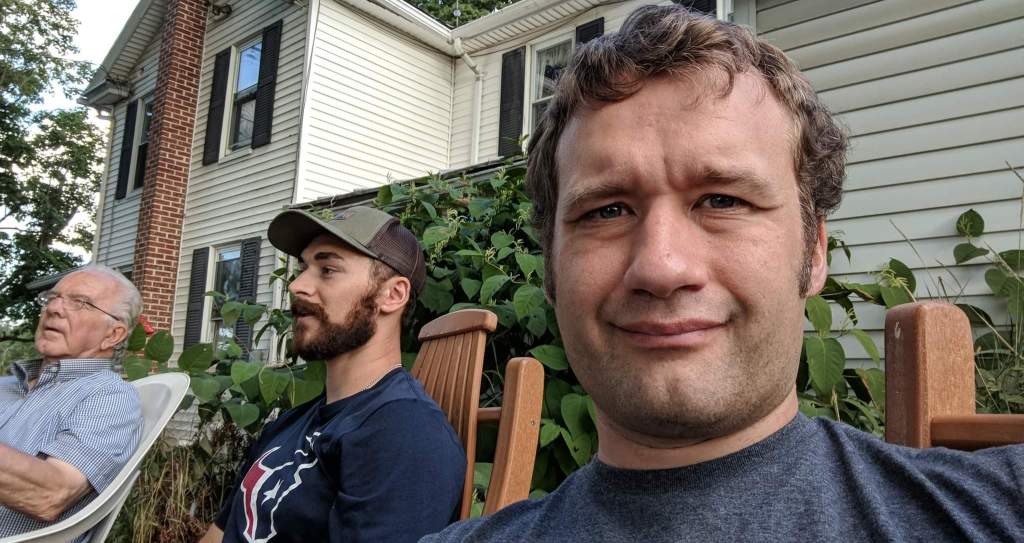


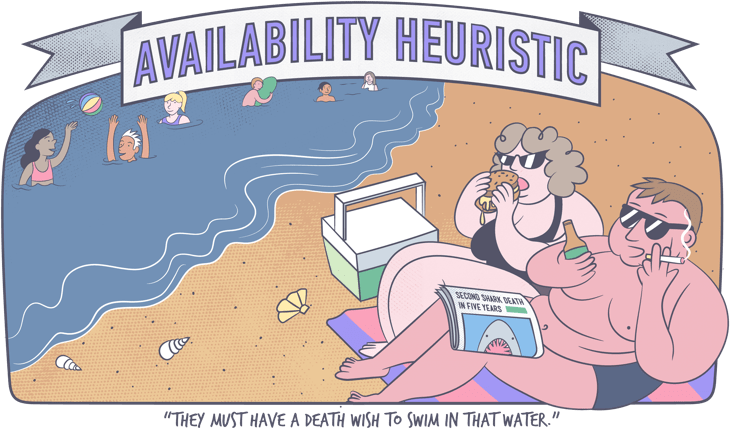




 Irregular Ideation