Second Marriage: A Second Look At Early Christian Writers…

Standard

Early Christians, like their modern-day counterparts, had a wide variety of opinions and not all of their opinions are trustworthy or canonical. Still, their writings are often taken as 100% reliable and played like a trump card in debates over the correct interpretation of Scripture.

That is the case with some of my conservative Protestant friends when it comes to the topic of remarriage after divorce. If shown where Jesus addresses divorce as causing sin and qualifies his statement adding “except for sexual immorality” (Matt 5:32, 19:9), they will deny the implications of this clear exception and deflect to non-canonical early church writings.

It seems a fairly reasonable approach to a controversy over meaning at first glance. Why would we not trust early church writings as reliable indicators of original intent? What reason would they have to distort the true meaning of what Jesus taught? Shouldn’t we assume that they would know better than us?

However, that is not reasonable to assume. In fact, this idea that the early church was completely pure or free of heresies and false teachings goes completely contrary to Scripture. Indeed there were many errant ideas that circulated then and some very deep disagreements over practice. So, in other words, we should be testing their words against Scripture and not using their words in aid of our own confirmation bias.

Or, at very least, if you are going to quote Tertullian in a debate you should probably know a little about him before you do and also consider what else he believed.

Consider this early church writer…

Athenagoras (circa A.D. 177)

A person should either remain as he was born, or be content with one marriage; for a second marriage is only a specious adultery. “For whosoever puts away his wife,” says He, “and marries another, commits adultery”; not permitting a man to send her away whose virginity he has brought to an end, nor to many again. For he who deprives himself of his first wife, even though she be dead, is a cloaked adulterer, resisting the hand of God, because in the beginning God made one man and one woman, and dissolving the strictest union of flesh with flesh, formed for the intercourse of the race.

Did you catch that?

He just declared *all* second marriages, even those after the death of a spouse, to be “only a specious adultery” and forbidden.

Compare what he says to Saint Paul in the Romans 7:2-3:

For example, by law a married woman is bound to her husband as long as he is alive, but if her husband dies, she is released from the law that binds her to him. So then, if she has sexual relations with another man while her husband is still alive, she is called an adulteress. But if her husband dies, she is released from that law and is not an adulteress if she marries another man.

Athenagoras has clearly gone off the rails. He is in direct contradiction to the canonical teachings of the apostle Paul. Why? Well, the reason for this is that he subscribed to the heretical “New Prophecy” called Montanism.

Montanism arose from the teachings of a man named Montanus, a new Christian convert from paganism, who claimed to have a special new revelation from the Holy Spirit. They taught that their own revelations superseded those of Jesus and the apostle Paul. They ordained women as bishops and basically rejected the authority of Scripture and the established church tradition as well.

And you know who else was under the influence of Montanism and also wrote against *all* second marriages?

Tertullian.

Tertullian, a favorite of sophistical fundamentalist efforts to justify their existing positions, taught that *all* second marriages were forbidden. And by all I mean even second marriages in cases where the first spouse had died and a teaching that is certainly in direct contradiction to Scripture. That contradiction (if one truly believes that Scripture has an authority that supersedes personal revelation and not the other way around) disqualifies Tertullian as an authoritative source.

It is strange, while most Mennonites (and other Protestant fundamentalists) might denounce a modern version of Montanus as a false teacher and regard his adherents as deceived, many do accept old heretical teachings (when these old heresies argue their own established positions) and ideas that are not supported in Scripture.

All second marriages were forbidden by those misled by Montanus. However, according to Scripture, and not my own opinion, marriage can be dissolved for three reasons: Adultery, abandonment, and death of a spouse. In all three cases, a person is no longer bound to the first marriage and therefore is free to marry again.

1) The death of a spouse…

A woman is bound to her husband as long as he lives. But if her husband dies, she is free to marry anyone she wishes, but he must belong to the Lord. (1 Corinthians 7:39 NIV)

There is no allowance for a Christian to divorce their faithful husband or wife. Marriage is supposed to be one man and one woman till death do they part. However, we live in a fallen world and that means sometimes a young married person might lose their husband or wife. For that reason, the apostle Paul provides a provision for widows and, presumably, widowers as well.

2) The abandonment of a spouse…

But if the unbeliever leaves, let it be so. The brother or the sister is not bound in such circumstances; God has called us to live in peace. (1 Corinthians 7:15 NIV)

A Christian is never allowed to divorce a faithful spouse. But, there are times when a couple is “unequally yoked” where one is a believer and the other is not. Paul tells those with a faithful and unbelieving spouse to remain faithful. However, he also provides a provision for brothers and sisters who have been abandoned by their unbelieving spouse. He says they are “not bound” to the marriage in that case.

3) The unrepentant adultery of a spouse…

I tell you that anyone who divorces his wife, except for sexual immorality, and marries another woman commits adultery. (Matthew 19:9 NIV)

Jesus, in response to the Pharisees who asked if it is lawful to divorce for “any and every” reason, first took the opportunity to restate the ideal for marriage as a lifetime commitment, then explains that Moses only allowed divorce because of the hardness of their hearts, and lays down the gauntlet: There is no divorce for any and every reason.

Jesus does, however, give one exception and that is in the case of sexual immorality (or porneia) when the marriage has been broken by unfaithfulness. He significantly narrows the scope for divorce and remarriage. I do not believe he is ruling out forgiveness of the errant spouse either. But marriage can be broken and it is broken by unfaithfulness to the marriage vows.

Isn’t it better to be stricter than Scripture?

The church of my youth allowed remarriage after a spouse had died, yet not when a marriage had ended by other the other means described in Scripture and has turned away those remarried who refused to separate from their second spouse. This kind of hard-line, no exceptions besides death, stance seemed normal to me. I had simply accepted what I had been told.

It would seem like a good thing to exceed a Scriptural requirement. Mennonites do this all the time, they forbidding alcohol, mandate clothing styles and often have a whole list of standards. There seems to be an idea that exceeding the requirements of Scripture makes us safer and there is definitely a case for erring on the side of avoiding things that are questionable.

But, that said, when our own personal conscience (standards in addition to Scripture) is used as a basis to exclude others, then we have become as Diotrephes, the arrogant church leader condemned in 3 John for his refusing welcome other believers, and we will be held to account. It is one thing to have high personal standards, it is quite another to make them a test of membership and reason to slam the door in the face of those trying to enter.

Do not be like those who use their own conscience to overrule the teachings of Jesus and the apostle Paul. Montanism was heretical, a false teaching, and their kind of sophistry remains a stumbling block.

Mennonite Ordinances and Anabaptist Disregard for Sacraments

Standard

A good friend of mine, a Mennonite, was quite upset with a particular social media provocateur (who self-identifies as marginally Mennonite) and his attack on Holy Communion—which he described as being “basically symbolic cannibalism” and “a man-made ritual” that “can be left on the shelf with no deleterious consequences.”

Then he goes on to say:

“I urge all liberal-minded Mennonites to just stop eating Jesus’s flesh and drinking his blood. It holds no salvific power. There’s nothing magical or mystical about it. Nor does it earn brownie points with God. Further, it’s a major turn-off to people outside the church bubble (for those who care about how the church is perceived by outsiders).”

Most Mennonites, even the mainstream ‘liberal’ types, would reject this as profane and ignorant babble. It is an attack on the very foundation of Christian practice and makes me question if this individual is truly concerned with winning people “outside the church bubble” or the future of the church. His religious ideology, having myself sampled some of his writing, seems to be: Nothing is sacred.

What is interesting about this individual is their claim to be an Anabaptist radical. This claim might rankle conservative Mennonites (especially those who see themselves as the true owners of Anabaptist identity) and yet these words spoken against sacraments are truly quite consistent with the words of a feisty Dutch Anabaptist widow (recorded in Martyr’s Mirror) in response to a question about Holy Unction. This is what she said: “Oil is good for salad, or to oil your shoes with.”

I guess nobody told her “Christ” means anointed one?

Whatever the case, most modern Mennonites do not take such a cavalier attitude towards the sacred and are a bit more Orthodox than their radical roots. In fact, Mennonites more formally reintroduced sacraments (albeit in different description) by their acceptance of the “seven ordinances” listed by Daniel Kauffman 125 years ago: Baptism with water, Communion, Footwashing, Prayer Head-Veiling for the Women, greeting with the Holy Kiss, anointing with Oil for the Recovering of the Sick and Marriage.

Kauffman’s ordinances represent a reversal of the Anabaptist woman’s hubris. He obviously saw the use of oil beyond the application to shoes and salads. But, through his use of different language and by his additions and subtractions (Women’s Head-Veils, Holy Kiss, Footwashing gave in place of Chrismation, Confession, Ordination) from the original listing of seven sacraments, he still maintained a deliberate distance from the established tradition of the Church.

What are sacraments?

Sacraments, simply put, are the “sacred mysteries” of the church. It is also important to note that Orthodox Christians, while they do recognize the seven sacraments listed by Roman Catholic, do not believe the sacraments are limited to just the seven listed and see everything the church does as a sacramental, according to to the OCA website: “All of life becomes a sacrament in Christ who fills life itself with the Spirit of God.”

“Whoever eats my flesh and drinks my blood remains in me, and I in them.” (John 6:56 NIV)

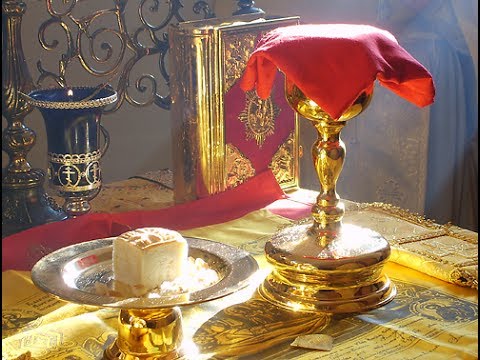
Of the sacraments, Communion (called the “Holy Eucharist” (the word ‘eucharist” means thanksgiving) is the “sacrament of sacraments” for Orthodox Christians and the center of Church life.

Holy Eucharist is simply taking Jesus at his word:

And [Jesus] took bread, gave thanks and broke it, and gave it to them, saying, “This is my body given for you; do this in remembrance of me.” In the same way, after the supper he took the cup, saying, “This cup is the new covenant in my blood, which is poured out for you. (Luke 22:19-20 NIV)

Jesus clearly calls the bread his body and describes the cup as being the “new covenant” in his blood.

It is interesting that many Protestant fundamentalists—who pride themselves in being Biblical literalists, and modern self-identifying Anabaptists—who insist that they take Jesus at his word more than others do, come to passages like that above, then suddenly start to hem-and-haw and try to explain around what is plainly said.

Perhaps their discomfort is the same as is described in the following account:

Jesus said to them, “Very truly I tell you, it is not Moses who has given you the bread from heaven, but it is my Father who gives you the true bread from heaven. For the bread of God is the bread that comes down from heaven and gives life to the world.”

“Sir,” they said, “always give us this bread.”

Then Jesus declared, “I am the bread of life. Whoever comes to me will never go hungry, and whoever believes in me will never be thirsty. But as I told you, you have seen me and still you do not believe. All those the Father gives me will come to me, and whoever comes to me I will never drive away. For I have come down from heaven not to do my will but to do the will of him who sent me. And this is the will of him who sent me, that I shall lose none of all those he has given me, but raise them up at the last day. For my Father’s will is that everyone who looks to the Son and believes in him shall have eternal life, and I will raise them up at the last day.”

At this the Jews there began to grumble about him because he said, “I am the bread that came down from heaven.” They said, “Is this not Jesus, the son of Joseph, whose father and mother we know? How can he now say, ‘I came down from heaven’?”

“Stop grumbling among yourselves,” Jesus answered. “No one can come to me unless the Father who sent me draws them, and I will raise them up at the last day. It is written in the Prophets: ‘They will all be taught by God.’ Everyone who has heard the Father and learned from him comes to me. No one has seen the Father except the one who is from God; only he has seen the Father. Very truly I tell you, the one who believes has eternal life. I am the bread of life. Your ancestors ate the manna in the wilderness, yet they died. But here is the bread that comes down from heaven, which anyone may eat and not die. I am the living bread that came down from heaven. Whoever eats this bread will live forever. This bread is my flesh, which I will give for the life of the world.

Then the Jews began to argue sharply among themselves, “How can this man give us his flesh to eat?”

Jesus said to them, “Very truly I tell you, unless you eat the flesh of the Son of Man and drink his blood, you have no life in you. Whoever eats my flesh and drinks my blood has eternal life, and I will raise them up at the last day. For my flesh is real food and my blood is real drink. Whoever eats my flesh and drinks my blood remains in me, and I in them. Just as the living Father sent me and I live because of the Father, so the one who feeds on me will live because of me. This is the bread that came down from heaven. Your ancestors ate manna and died, but whoever feeds on this bread will live forever.” He said this while teaching in the synagogue in Capernaum.

On hearing it, many of his disciples said, “This is a hard teaching. Who can accept it?”

Aware that his disciples were grumbling about this, Jesus said to them, “Does this offend you? Then what if you see the Son of Man ascend to where he was before! The Spirit gives life; the flesh counts for nothing. The words I have spoken to you—they are full of the Spirit and life. Yet there are some of you who do not believe.” For Jesus had known from the beginning which of them did not believe and who would betray him. He went on to say, “This is why I told you that no one can come to me unless the Father has enabled them.”

From this time many of his disciples turned back and no longer followed him. (John 6:32-66)

With this, Jesus went from being an interesting teacher to being some kind of mystical weirdo and possible lunatic. It is also little wonder that pagans brought accusations of child sacrifice and cannibalism against early Christians. (Sorry, Charlie, it takes no creativity whatsoever to agree with sacrilege that dates the 2nd century AD and it is not a big surprise if this “hard teaching” continues to turn people back from outside the Christian bubble.) Not everyone can believe this claim then nor do all believe now. But that is what Jesus said and is what the faithful have taught for two millennia. The bread and wine encapsulate the sacred mystery of human relationship with the life-giving Spirit and this practice of Holy Communion is a necessary part of the Church together being the incarnation of Christ.

Human knowledge and personal ideals cloud spiritual discernment.

The presumption of absolute knowledge, which is the cardinal sin of the rational spirit, is therefore prima facie equivalent to rejection of the hero—to rejection of Christ, of the Word of God, of the (divine) process that mediates between order and chaos. (“Maps of Meaning,” Jordan B. Peterson)

Unbelief takes many forms. Not everyone leaves the fold when faced with something that seems irrational to them. We know Judas remained on the margins despite his disillusionment with Jesus and his doubts eventually led to betrayal. We also know Peter’s faith seemed primarily a delusion about an earthly kingdom where he would be at the side of an important political leader and the unwillingness of Peter to accept the ultimate sacrifice (and of his personal ideals) led to denial and a sharp rebuke from Jesus:

From that time on Jesus began to explain to his disciples that he must go to Jerusalem and suffer many things at the hands of the elders, the chief priests and the teachers of the law, and that he must be killed and on the third day be raised to life. Peter took him aside and began to rebuke him. “Never, Lord!” he said. “This shall never happen to you!” Jesus turned and said to Peter, “Get behind me, Satan! You are a stumbling block to me; you do not have in mind the concerns of God, but merely human concerns. (Matthew 16:21‭-‬23 NIV)

The suffering and death of Jesus was something Peter couldn’t reconcile with his own ideals. It was a horrible ending to his hopes that would need to be fiercely resisted. Peter treats Jesus like I would a friend who is depressed and needed a pep-talk. Unwittingly he used the same reasoning that had tempted Jesus in the wilderness. Jesus faced a hard choice, he needed to be courageous, focused on his mission, and face death head-on—but Peter was encouraging him to take the easy way out in the same way Satan did earlier.

Peter was guided by his personal ideals and Judas by his human rationality—both men failed to understand the divine mystery unfolding before them—both presumed incorrectly and neglected possibilities that went outside of their own established knowledge.

The whole Gospel narrative is centered on Jesus dying on the cross and conquering death. From a rational standpoint, why couldn’t God just have forgiven our sins and granted us eternal life without sending an icon of himself in the person of Jesus? Surely God can identify with his creation without having to go through a physical manifestation for himself, right?

Was it symbolic?

Was it necessary for our salvation?

Perhaps both and more.

But, whatever the case, we don’t know why there needed to be an “image of God” (Colossians 1:15) or why our salvation is tied to Jesus having the experience of a very literal physical death. All we know is that this going through the motions was important to Jesus and therefore we should not be surprised when our faith requires our participation in rituals that we do not understand. We go through the motions of Baptism and Communion, not because of anything we can prove through human logic and reasoning, but simply because we believe in Jesus and accept a reality bigger than ourselves.

Saying something is *only* symbolic undermines the reason for doing it. One way to rationalize around sacraments is to divide the sacred from the symbol. That is to say, some attack the idea of sacraments by declaring the ritual part of them to be “only symbolic” and deny any actual value in the going through the motions. If that were true, then we should take the advice of provocateur and cease all activities that might make outsiders feel uncomfortable. I mean, if a practice is only symbolic and our ultimate goal is to win converts, why not?

Everything in our life can be deconstructed or explained away as meaningless. Why go to work when everything we accomplish will eventually vanish into dust? Why stay faithful to marriage knowing that sooner or later the end will come and the commitment is forgotten? All of the joy and purpose a person finds in life, depending on perspective, can be reduced to electrochemical activity in the brain and lacking in any true substance beyond that. Reason and logic are useful in debates, but they do not provide an antidote for feelings about the futility of the human experience nor answer the question of why to live.

To say a sacrament is only a symbol is like saying a baby is only a colony of cells or math is just numbers and nothing more. Our lack of understanding the significance of something doesn’t make it any less necessary, valuable or sacred—it only makes us ignorant and unwilling to transcend our own knowledge. From a rational perspective, does being dunked or drizzled in water do anything besides make someone different degrees of wet? Why bother to Baptize, take Communion or do anything if it is only symbolic? If salvation is not at stake and if there is no spiritual healing or real benefit, why even bother to go through the motions?

In Scripture, healing is often tied to physical objects and absurd actions. It is one of those curious patterns throughout the books of the Bible. People are saved from ailments and forgiven by God through various rituals. Like that time when the Israelites were complaining about basically everything, then started to get bitten by venomous snakes, and begged for help:

The Lord said to Moses, “Make a snake and put it up on a pole; anyone who is bitten can look at it and live.” So Moses made a bronze snake and put it up on a pole. Then when anyone was bitten by a snake and looked at the bronze snake, they lived. (Numbers 21:8‭-‬9 NIV)

There is also the story of Namaan, in 2 Kings 5:1-19, who had leprosy and to be healed he was told to do something that makes no sense:

Elisha sent a messenger to say to him, “Go, wash yourself seven times in the Jordan, and your flesh will be restored and you will be cleansed.” But Naaman went away angry and said, “I thought that he would surely come out to me and stand and call on the name of the Lord his God, wave his hand over the spot and cure me of my leprosy. Are not Abana and Pharpar, the rivers of Damascus, better than all the waters of Israel? Couldn’t I wash in them and be cleansed?” So he turned and went off in a rage. Naaman’s servants went to him and said, “My father, if the prophet had told you to do some great thing, would you not have done it? How much more, then, when he tells you, ‘Wash and be cleansed’!” So he went down and dipped himself in the Jordan seven times, as the man of God had told him, and his flesh was restored and became clean like that of a young boy. (2 Kings 5:10‭-‬14 NIV)

Both of those Old Testament cases required “skin in the game” and tied an individual’s healing or salvation to their performing a specific act. There is no rational explanation as to why someone would be healed of leprosy by dipping in a particular river nor why looking at a brass object would cure a person of anything and yet that is what we read.

So what about the New Testament?

This same pattern of healing through odd and seemingly unrelated acts continues. We read how Jesus mixed spit with dirt to heal someone’s blindness (John 9) and how a woman’s touching of his garment healed her:

Just then a woman who had been subject to bleeding for twelve years came up behind him and touched the edge of his cloak. She said to herself, “If I only touch his cloak, I will be healed.” Jesus turned and saw her. “Take heart, daughter,” he said, “your faith has healed you.” And the woman was healed at that moment. (Matthew 9:20‭-‬22 NIV)

Note: Jesus didn’t tell her she was silly for believing that touching his clothes would heal her or otherwise correct her action. No, she is commended for her faith and immediately healed. And, this pattern of healing through actions—through laying on of hands and involvement of objects—did not end with Jesus either. We read about it in the book of Acts as well:

God did extraordinary miracles through Paul, so that even handkerchiefs and aprons that had touched him were taken to the sick, and their illnesses were cured and the evil spirits left them. (Acts 19:11‭-‬12 NIV)

Perhaps we are more sophisticated than they were and thus can dispense with this kind of sacramentalism?

Truly, if there is no spiritual value to it, why should we even bother going through the motions of Baptism, Communion, etc?

We can try to turn church life into a totally rational experience and do away with all the mystical nonsense. We can re-label sacred mysteries—call them symbols, ordinances, ceremonies, signs or whatever. We can minimalize the sacraments and continue to water down their significance, condition ourselves in a way that will make the keeping of these practices optional, downplay partaking of the body and blood, do it only twice a year—eventually stop attending services altogether because it is irrational.

A church without sacraments is not a church.

The complaint of Protestants and Anabaptists was not completely invalid. Roman Catholicism had blurred the lines between sacrament and their own institutions and systems. Unfortunately, this led to an overreaction that did not always distinguish well between what was corrupted and the sacred mysteries themselves. The end result of this “reformation” has been disastrous disunity and disintegration of the church—which is not a sign of spiritual life.

One thing I’ve noticed as I’ve entered into Orthodoxy is the strong emphasis on church unity and incarnation. The emphasis is on the special spiritual connection between all Christians (past, present, and future) through partaking of the sacred mysteries together. It is, in fact, through sacraments that the church becomes necessary in the life of the individual. Baptism, Communion, Chrismation, Confession, Ordination, anointing with oil and Marriage are things we do together as a church and underscore the need for God, the things he has instituted and each other.

If the only point of sacraments were only to push against our own human rationality (which is often faulty and is always finite) and seek what is greater, then there is great value in them.

Sacraments bring us together, they give us a common identity and point us to truth beyond our own understanding. In the various examples of miraculous healing in Scripture there was often no logical connection between the action taken (or required) and the result. They didn’t know how it worked, they simply had faith, obeyed and were healed. Perhaps the only way to gain spiritual understanding is to let go, to stop depending on our own limited knowledge and start to depend on something that is greater?

Perhaps it is to counter the heresy of Gnosticism, both ancient and modern?

Whatever the case, to try to rationally explain a sacred mystery entirely misses the point. Furthermore, there is no need to separate or distinguish the healing God does in our lives from the sacraments themselves. We know that the thief on the cross was saved just for saying “remember me” and his faith in Jesus. But that doesn’t mean our own faith won’t require us to sell all we have like the rich young ruler or dip in a muddy river like Naaman. It doesn’t mean we can replace sacraments with our mere mental assent to a proposition and be healed or saved from our sins either.

The words of Jesus are useless to those who do not have faith and, likewise, sacraments are of no benefit to those who do not believe in them. The church should welcome all who wish to repent of their sins and participate in the sacred mysteries. But it does not seem at all reasonable or rational for the church to cater to those who do not hope to transcend themselves, their own experience and knowledge.

In the end, one can call sacraments by any other name and still have a church—but a church without sacraments is really only a social club and not a church.

Mennonite Values and Love That Transcends Difference

Standard

The other day it occurred to me that many of my most faithful Mennonite friends married across divisions of ethnicity and race.  In fact, three out of the three friends I was with yesterday are married to women who were born in foreign countries and later became US citizens.

Interracial marriage is not unusual in modern America anymore.  A full 17% of newlyweds in the United States married across racial or ethnic lines according to Pew Research Center.  This has been a steady trend for many decades and with this increase in interracial marriages the stigma has decreased—only a small percentage of Americans remain opposed to marriages across racial lines.

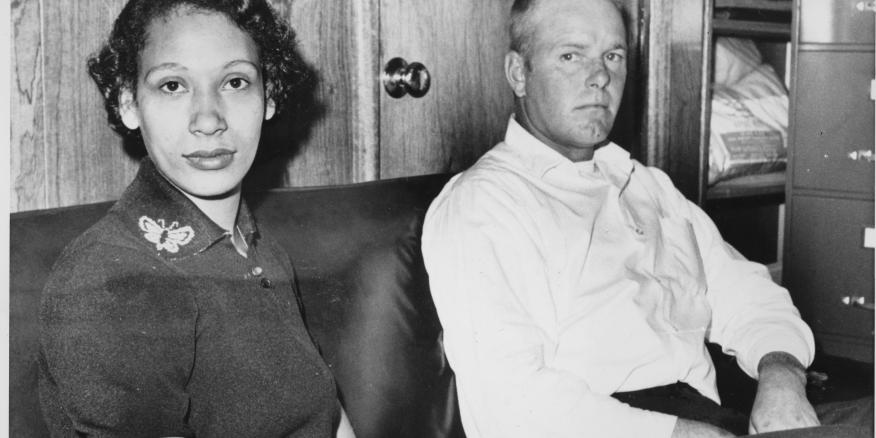
Mildred and Richard Loving who, in 1967, refused to be separated even when facing prison time.

Mennonites have tended to lag behind the general population in many regards and this is one of those areas.  It was only a few years ago that my Mennonite pastor (educated at Bob Jones University where interracial relationships were banned until the 1990’s) cautioned me against this kind of relationship citing cultural differences.  It is probably safe to assume that his views are not unusual in the conservative end of the Mennonite denomination.

Have Mennonites have began to catch up with the mainstream?

I know that interracial dating was unusual and even discouraged in the Mennonite church of my youth.  That is why my realization about so many of my friends being married interracially was astonishing to me.  I’m not sure if it is only a local anomaly or a general across-the-board trend.  However, I do know that there were very few others in the conservative Mennonite church when I was in a romantic relationship with a black woman just over a decade ago.

Some of it could be explained by inner-city outreach projects.  Typically Mennonites have been raised in rural parts of the country and sheltered from non-Mennonites.  My own experience was slightly different due to my public school education, which likely made me more open to relationships outside of my own ethnic group (my first real crush was not a Mennonite or white girl) and yet many of my religious peers caught up with a bit of exposure to the world outside their ethnic enclaves.  Followers of Jesus Mennonite Church (in Brooklyn, New York) accounts for many of the relationships across racial lines that I know about in the more traditional end of the denomination.

But, before anyone gets too excited, this does not mean attitudes have changed much with most conservative Mennonites.  I have heard many young men (who likely have not met too many girls besides their sisters or cousins) state that they would not be interested in dating a girl of a different race.  It is probably even less acceptable for a Mennonite female to marry outside her ethnic fold, and many of the couples in interracial relationships do not remain Mennonite.

Generally one cannot deviate too far from the Mennonite cultural norm and expect to be embraced.  It was hard enough for me, a Mennonite guy with some unorthodox views, to find a girl born in a Mennonite home that would give me the time of day.  I could not imagine being a convert from outside trying to get a date with someone of a popular family with an established Mennonite pedigree.

Mennonites barely have the faith to ask or date anyone—let alone someone who doesn’t meet a long list of qualifications, race and ethnicity likely included.

Why do some Mennonites marry across racial or ethnic lines?

One thing my friends have in common is that they married older.  I do not see them as purposefully trying to find girls from a different ethnic group or race either.  Most of them are down to earth and practical guys who found a girl who gave them a chance and connected with them.  It seems that girls from non-Mennonite background are more willing to be friends first, are less driven by impossible purity culture ideals, and much more appreciative of a guy who treats them with respect—even if he is not tall, smug or otherwise full of himself…

By all appearances, those Mennonites marrying across racial lines are not trying to make a political statement.  Ironically, the virtue-signaling types (the most outspoken cradle Mennonites about racial issues) seem to marry the whitest and then preach to everyone else about about being more accepting of immigrants, etc.  Those actually marrying across racial lines, on the other hand, are doing it for pragmatic reasons and real love for the person they married rather than to be superior to anyone else or prove anything about themselves.  And that’s not to say my friends will not defend their wives and children from racists—they might not be vocal or making a show of it, but are solid men and their loved ones not to be trifled with.

Those who married across racial lines seemed motivated truly by love.  They would have likely also married someone of their own ethnicity or race had the right circumstances come along.  But, that said, they are extraordinary, they married out of a love that could transcend superficial differences and therefore their relationships have a potential others do not.  They were willing to go outside of the conventional ideals of their parent’s generation, even of their religious peers, and may have even faced some extra resistance along the way.  That may be why they are some of the most loyal, caring and mature people that I know—they are simply willing to go in love where others have not.

My recommendation to those on the fence…

Those advising against interracial dating often don’t have a clue what they are talking about.  Yes, there are differences to overcome, but that is also true of any committed relationship and it certainly is not reason to quit before you started.  Go on some dates, find out if your personalities compliment or collide and then decide your next step—is that really too difficult or complicated?

It does not seem that my friends who married interracially regret their choice.  I do know there are a number of those who married ethnic Mennonites who have had second thoughts.  Indeed, sometimes those seemingly perfect candidates (according to Mennonite cultural ideals) are not what they appear to be at first glance and pleasing their near-impossible standards can be a real headache.  So, if it is a choice between being taken for granted by some entitled brat or more fully appreciated by someone who has seen real struggle in their lives, isn’t the right choice obvious enough?

Take my advice guys.  Stop pining for that girl that snubbed your first inquiry.  If she didn’t see your interest in her as reason enough to go on a date or two, then she isn’t worth any more of your time.  Quit being a pathetic lapdog.  That will only feed her sense that you have nothing to offer her (that she can’t already have) and further convince her that she is out of your league.  Be a man, go where you are needed in the world, be a real leader, move on.

For those girls who have never been asked, same deal.  Broaden your horizons, stop trying to please people who don’t lift a finger on your behalf, and you might soon find there are many faithful Christians who don’t have a familiar Mennonite surname.

Godly character, not skin color or religious pedigree, is what makes a marriage work.

The Last Mennonite Standing — Is a Population Collapse Inevitable?

Standard

A few months ago a Christian friend of mine shared a link to a news story and asked my opinion.

The story, “UK Mennonites end Sunday services after numbers dwindle,” did not seem to apply to my own conservative branch of the Mennonite denomination.

My initial thoughts were that this was one of those wacky liberal churches and therefore not relevant.

However, upon further reflection, I realized that my own brand of Mennonite is not impervious to cultural trends and, despite all the babies crying on Sunday mornings now, we could face a similar population collapse down the road.

Headlines about record-low fertility rates in the US or an unprecedented population collapse in another nation might seem irrelevant to our own situation.  But they can also give some indication of the patterns, telltale signs and changes in behavior that come before such events.

I’ve heard people say that we, as conservative Mennonites, are “50 years behind society” and there seems to be some truth to that.  I know with the advance of technology (like that which makes this blog possible) the pace of change is now quicker than most would have imagined a generation ago.

The conditions that allowed the Mennonite tradition to continue for hundreds of years are disappearing, and quickly.  It does not seem we are in an especially strong position to cope with the new social, economic and technological realities.

This generation could very well be the last.

Here are some factors that could determine where things go from here…

#1) We grow mostly because we have big families and convert our own children.  Like it or not, “Mennonite” is an ethnic group—complete with unique genetic disorders and a game based on our common surnames.  Yes, we do have some converts from the “community folks” and yet most of us came from Mennonite or other established Anabaptist stock.  If our birth rates were to continue to drop (as they have been amongst Mennonites in North America), then there will likely be some problems down the road.

#2) Marriage is being postponed and even avoided altogether, thereby decreasing birth rates.  Mennonites seem to be taking cues from society when it comes to committed relationship.  But, unlike society, we do not have children outside of marriage and therefore our postponing of marriages means older mothers and fewer children, and that is assuming they will marry eventually.  I just had a young woman (maybe mid-twenties) ask me to do a blog to advise her and her friends on how to tell pesky guys to get lost—not an unusual sentiment.  It seems women from conservative backgrounds are becoming less interested in marriage and motherhood, and that is a death knell to a church that can’t bring in more than an occasional convert from outside our own existing gene pool.

#3) The feeder system from Old Order groups and elsewhere could dry up.  It is not a big secret that Mennonites migrate from conservative to liberal.  My own church has lost many born into it and the casualties have always been offset with those gained from other groups more conservative than our own, or those escaping expensive land prices in overdeveloped Lancaster County.  But this means of growth via a continued supply from upstream (or downstream?) is not guaranteed.  It could change as economic pressures increasingly encroach on the Old Order lifestyle.  It is harder to support big families with higher land values, a tougher regulatory environment, rising healthcare costs, etc.  We can’t count on migrants for growth.

#4) Urbanization and loss of an agricultural lifestyle results in cultural change.  My grandparents moved up out of the Franconia Conference territory (near Philadelphia) in the 1960s to begin farming where the land was cheaper and roads less congested.  My grandparents have remained relatively unchanged in the way they dress since that time.  However, their friends “back home” have changed dramatically both in dress and perspective.  There are still a small number of “breakaway” conservatives in that region, but the main body of Mennonite churches there are extremely progressive and their trends could give us some indication of our own future.

#5) The decline of meaningful brotherhood and rise of alternatives reduces interest.  The Amish were right to identify transportation technology as a threat to community.  We might pride ourselves for having stronger communities than the church down the road (a disputable claim) and yet would we compare favorably to prior generations?  I know that even in my own three-decade life span there has been a dramatic change.  We seem less closely knit and more quick to leave for the church up the road rather than come together as one community of diverse members.  We do more world travel, have more activities for every specialized interest or age group, and are kept very busy.  However, we are also fragmented with less vertical integration, more homeschooled children, and less everyday connection—resulting in weaker communities.  Our communities could eventually disintegrate completely as they lose relevance.

#6) Lack of foresight and appropriate faithful preparation is endemic.  Part of the reason I’m writing this blog is because nobody else is talking about this.  We are chronically unprepared for change.  It seems many conservative Mennonites have their heads buried in the sand (or simply buried in day-to-day business and family affairs) and do not see trends coming down the pike.  There appears to be very little effort on the part of the ordained leadership to account for changes in culture (or technology) and even less effort to respond in a positive or productive manner.  Few advocate for a faithful and deliberate approach to problems.  We miss opportunities to increase our effectiveness because we do not utilize the greater means available to us.  We perish for lack of vision.

#7) In the void of thoughtful preparation, what results is only fearful reaction and hasty retreat.  Mennonites, like other Christian fundamentalist groups, began to withdraw from strategic high ground after being blindsided by the pushback against the state endorsement of religion in public schools and the rise of secularism.  Many decry, “They took prayer out of school!” but the sad reality is they did not remove prayer and a faithful witness from schools—we did!  We trembled like King Saul facing the Philistine giant and removed our children and influence.  We did not read 1 John 4:4, “greater is he that is in you, than he is in the world,” and believe.  It is little wonder why nobody believes us when we try to convince them of our great God.

#8) Our missions are often without purpose and out of touch.  I know a young woman (a very sweet person and sincere Mennonite) who told me, “hearts don’t change,” in response to a circumstance outside her experience.  I was astonished at the cognitive dissonance on display and it made me wonder why she was spending thousands of dollars to be at IGo Adventures and Spouse Seeking Institute in Thailand.  It reminds me of the time when we formed a committee at my church to discuss local missions where mailing out more tracts seemed to be the idea with most traction and nothing practical ever came of the committee.  Needless to say, I am not very optimistic about our abilities to do effective outreach.

Is a Mennonite population collapse in North America inevitable?

I don’t know.

I’m not expecting our complete extinction.

I’m pretty sure the Mennonite name will continue on in one form or another.

For instance, we do have a list of genetic disorders that will carry on our legacy.

But, as a religious culture and tradition?

I believe that depends.

It depends on how we approach the issues listed in #1-8 above.

Will we address problems head-on and work through them deliberately or be blindsided?

Will we adjust our thinking and adapt our methods as needed?

Or will we (like the dying Shaker movement) use hope as a strategy?

Nothing is written in stone yet.  But I do know that the conservative Mennonite culture is a frustrating place for innovative and forward-thinking people.  Old habits, functional fixedness, inability to think outside the box and a “don’t rock the boat” mentality all stand in the way of a faithful and vibrant future.

We need to ask and answer the hard questions rather than avoid them.  We should be taking note of trends, and be confronting them collectively as a group.

Notice a growing number of older singles?

Look into the Moravian option or at the very least reconsider the faithless courtship teachings that have created the current mess.  There is no reason why we should pretend there’s nothing that can be done.

Wonder why our missions are ineffective?

It could be that we are isolating our children rather than trusting God and teaching them to live in fear rather than faith.  They can’t empathize or understand anyone outside the Mennonite culture.

Where do we go from here?

It is up to you.  But, if you don’t want to be the last Mennonite standing, I suggest it is time to remove the stale items from the shelves and introduce some fresh ideas.

Change is inevitable.

Be proactive.

What Is Your Mennonite Marriageability Rating?

Link

Once upon a time I had a fairy-tale perspective of romance.  I believed in meeting the “right one” then “falling in love” and then living “happily ever after.” 

This is the Disney kind of love that keeps many young women bogged down in princess syndrome because they’re waiting for a knight in shining armor.  It is also why young men only pursue their ideals. 

It is totally faithless.

Instead of loving a person, we are caught up in our unspoken lists of attributes and unrealistic ideals.  Those who do find what they want will likely be disappointed once they marry and find out that not everything is as it appeared.

We might claim to love unconditionally and yet anyone claiming to be totally altruistic is a liar.  We love for what we get or what we hope to get and might as well be honest about it.  Much of what gets us hooked then hitched is superficial and our secret judgement probably should be openly examined.

I’ve decided to come up with a scorecard—both for fun and for introspection about the items listed.  How do you rate against ideals of the Mennonite culture?  Have you ever judged anyone based on any of the things mentioned below?

So, anyhow, without further ado, here’s a marriageability rating scorecard for conservative Mennonites.  

1) Appearance: Be cute or go home!

God may judge by the heart, but we tend to judge by appearance.  Many confuse outward beauty with virtue and stature with strength of character.  Being overweight, poorly dressed or unkempt will certainly count against you.  Sorry if you are not naturally stunning, but take solace in the fact that most of us aren’t and it hasn’t killed us yet.

  • +15 if you are a girl of average height and size to petite.
  • +15 if you are a guy over 5′-10″ tall and don’t look gawky.
  • +15 if you are a guy described as “handsome” by someone other than your mom or sisters.
  • +15 if you are physically fit or considered well-proportioned according to prevailing cultural standards.
  • +15 if you are a girl who gets more than 75 likes when you update your profile picture.
  • +5 if you are a guy with a pickup truck or Jeep.
  • -10 if you have been turned down or have never been asked for a date.

2) Ability: Wow!  Did you see that?

We might claim to value things like character and integrity over athleticism or charisma.  Unfortunately we don’t really have a way to quantify abstractions (like courage or perseverance against the odds) and yet do take notice of something we see clearly like a volleyball spike or a great singing voice.  There are no participation awards and moral victories in this category; it is win or lose, all of nothing, etc.

  • +15 if you have ever been picked to sing a solo.
  • +15 if you articulate well, make people laugh and people seek you out or gather around you.
  • +15 if you have ever played on a championship team and made a solid contribution.
  • +15 if you can play an instrument well enough to keep an audience.
  • +10 for going on a chorus tour more than once or being asked to sing at a wedding.
  • +5 if you are a notable artist, writer, etc.
  • +5 if you are a girl and bagged a buck. (-10 if you are a guy who has not)
  • +5 if you can sincerely parrot accepted Mennonite ideas.
  • -5 for actual intelligence.

3) Ancestory: Who are your parents again? 

One thing off the radar is the importance of pedigree.  Being from the right family can cover over a multitude of sins and being from the wrong family can mean nothing you do is ever going to be good enough.  There is a Mennonite pecking order, there are various tiers we can be classified in, and people rarely marry outside of their own family caste.

  • +20 if you are a pastor or missionary kid.
  • +15 if your dad is a successful businessman.
  • +15 if your mom was asked out by five or more guys before settling on your dad.
  • +10 if you have a common Mennonite surname.
  • +5 if you can play the Mennonite game.
  • -5 if your parents aren’t Mennonite.
  • -10 if you aren’t Mennonite.

4) Ambitions: God has led me to be important…

The Millennial generation is said to value traveling and experiences.  One of the privileges of American affluence is the lack of concern about things like shelter, clothing or food.  It took actual faith for those truly called to go out in the past.  However, today it only takes a fat wallet or an adventure seeking heart.  You can go for a few years and then come back to be knighted as a pastor or regarded as someone special.

  • +15 if you have the luxury of world travel without needing to truly count the cost.
  • +10 if your ambitions make you popular in the Mennonite religious culture.
  • +10 if you describe what you want to do as God’s leading.
  • +5 if your dad is a college graduate or taught a Bible school/seminar class.
  • +5 if you have over a half dozen siblings.
  • +5 if you or your dad is a pilot.

5) Activities: Doing the cool things that people notice.

I had thought it would be wrong to go to Bible school or a missionary trip in order to find a spouse and it would be taboo to admit that you did.  But the correlation is real.  Many conservative Mennonites *do* find their spouse this way and then use some kind of convoluted logic that assumes people who do these kinds of activities are more sincere because they do—never mind that the real reason many of them do these things is to be more marketable. 

  • +15 if you regularly play Rook and Settlers of Catan or think Spike Ball is awesome.
  • +10 if you have convinced yourself that short-term missionary trips and going to Bible school is a sign of spiritual depth.
  • +10 if you homeschooled and somehow avoided social awkwardness.
  • +5 if you think Christian schooling helped you be a better person.
  • +5 if your face was ever on a prayer card.
  • -5 for every break up.

6) Age: Over thirty?  Forgetaboutit…

It is no big secret that the American culture is youth obsessed.  Mennonites are no exception to this and are perhaps even more guilty of ageism than their secular counterparts.  There are many who might even be so bold (or arrogant) as to tell older singles that it might be God’s will that they remain single.  Nevermind the Bible would indicate age as an asset rather than a liability—that is one part of the book that is dismissed as irrelevant in our times.

  • +5 if you are between the age of 18-25
  • -10 if you are single by the age of thirty and not a sought-after person.
  • -1 for every additional year you are over thirty.

Can you outrank the writer?

Add up your totals and then comment your Mennonite marriageability rating if you dare. 

I come out around 20 points and expect to be easily surpassed by most of my conservative Mennonite peers. 

Of course this is not scientific or based in surveys, so don’t take it too seriously. 

However, I’m guessing that you will be more successful in getting hitched if you find a person at your eligibility rating level. 

Props to those of you who are able to overachieve.

Commitment Issues: Why Do We Baptize Younger, but Marry Older?

Standard

There was a Baptism service at my church this past weekend and not the usual indoctrinated from birth teenager either.  This was a married couple in their thirties come in from outside the Mennonite religious tradition.

We had Communion that night and the devotional was about how Jesus asked “take this cup from me” when considering the suffering he would soon endure.  The cup we drink at Communion is a voluntary commitment to “take up the cross” and suffer with Jesus.

Baptism is a serious commitment.  Jesus urged to “count the cost” before making a commitment to follow after him and his converts were adults.  This seems in stark contrast to the evangelical emotional appeals for a decision and child conversion of the current conservative Mennonite culture.

Mennonites, or rather our Anabaptist ancestors, suffered persecution because they (among other things) rejected infant Baptism in defiance of the established religious order of their day and tied the ritual back to profession of faith.  This is called “Believer’s Baptism” and a commitment made with keen awareness that it could come at a tremendous cost.

Baptism Age: Then Compared To Now…

We, as Mennonites, especially conservative Mennonites, take pride in our Anabaptist identity, we like to use it as something that makes us unique, special or separated and, put plainly, better than other Christian denominations.

But are we?

Are we much like early Anabaptists and Mennonites who came before us?

In my own church experience, as noted, the ‘conversion’ to Christianity often comes at a very young age and most are Baptized as teenagers.  This is probably a reflection of a departure from our Anabaptist roots and embrace of more recent Evangelical innovations.  We, unlike our predecessors, have pulpits to pound on, Sunday school hours aimed at children and Revival meetings with strong emotional appeals.

So, what about our Anabaptist heritage, how does *their* normal for conversion compare to our own?

When did *they* get Baptized?

According to a GAMEO article on age of Baptism this is the answer:

“The estimated average age of baptism for 10 representative Anabaptist men and women, 1525-1536, was 36.4, with none under the age of 20, two between the ages of 20 and 29, four between 30 and 39, and four between 40 and 49.”

Early Anabaptist converts were often adults who could likely more fully understand the commitment that they made and knew it could be a death sentence.  Mennonite converts today, by contrast, are often children, products of a careful indoctrination from a young age, taught to please parents and through ‘conversion’ gain access to the perks of cultural acceptance rather than lose it.

Which leaves a question of whether or not our child converts actually able to count the cost of being a disciple of Jesus or are they simply doing what is culturally expedient and trying to keep up with their religious peers?

Sure, we could say that our children (because of our great teaching and example) are more ready for a serious commitment than say, for example, a 16th century German peasant facing death, a safe assumption, right?

However, then we get to the topic of marriage commitment…

Marriage Age: Then Compared To Now…

As far as I can tell our Amish and Old Order cousins are doing just fine in regards to courtship and marriage—It seems to be business as usual for them.  However, in the conservative Mennonite subset I am a part of there also seems to have been a shift away from marriage commitment.

When compared to prior generations we are waiting longer and longer to tie the knot.  My great grandma, not uncommon in her day, married as a teenager, and my grandparents married just into their twenties like my parents did.  But in my own church today there’s nearly two pews of those twenty-five or older who never married and hardly even dated.

The subset of Mennonite I belong to came under the influence of fundamentalist voices, men like Bill Gothard (who remains single) and others, that taught a courtship model.  They have embraced an idea that basically turns a first date into an engagement.  Friendship, let alone development of a romance, has become nearly impossible and it is because there’s this fear instilled in both genders to prevent even healthy interaction.

These fundamentalist Mennonites have also come under the influence of worldly entertainment.  Despite our traditional dress and slightly more cloistered communities, we are exposed (through internet and other media) to secular millennial generation values.  Mennonite fundamentalists, like their worldly counterparts, are postponing a marriage commitment longer and more never do tie the knot.

Could it be possible that we value freedom from responsibility over commitment and our temporal pleasures (like freedom to travel or other self-satisfactory personal projects both religiously or otherwise justified) over the risk of a long-term relationship?

But, more importantly, what does this reluctance to show romantic love say about our faith?  Can we claim to be committed to God when we can’t even make a serious commitment to loving each other?

Why Do We Baptize Younger, but Marry Older?

I believe our practices betray our inconsistency of thought and departure from the identity we claim as our own.  It is cognitive dissonance, hypocrisy, etc.  We urge our children to commitment before they are able to count the cost as an adult, but then continue to mistrust that decision after they do so as if we do secretly know better. 

First we often urge them to wait to be Baptized.  We save that public confirmation for teenagers who went through a young believers class, which is nothing like the Baptism immediately upon profession of faith as was the case in the early church. 

But then, even after that, we continue to mistrust the commitment when it comes to courtship practice.  Mennonite suitors are not treated as an actual brother in Christ when it comes time to ask.  No, instead they are treated as if a hostile invader who must prove himself worthy by running a gauntlet and can be instantly disqualified if he dare be too honest about his own imperfection.

We might ridicule Catholics and Lutherans for doing the opposite of us (for Baptizing their infants and then confirming them as believers later on) but should probably be careful not to throw stones from our glass houses.  We should instead consider the beam in our own eye and ask why we are urging commitments that we don’t fully recognize or completely respect later on.

We tell tales of Constantine marching his troops through a river and calling them Baptized.  Yet could it be that we are really only manufacturing pre-programmed religious robots?  Sure, we produce children who recite back memory verses, spout out our dogmas on cue, and give all the right sounding answers with a smile on their face, but are as evil as the world at heart?

Adult Commitment Rather Than Premature Birth and Underdeveloped Faith

In Christian commitment (as in marriage) we should probably be encouraging our adults to commitment and telling our children to wait until ready.  If a person is too young to commit to marriage then they are also likely too young to comprehend the true cost of discipleship and make a commitment to God.

As one who was physically born early (my mother’s labor induced rather than natural) there is clear danger in going ahead of schedule like this.  I spent weeks in the hospital, in plastic box seperated from my mom because of a collapsed lung, and seemed to have developmental issues since as a result.

Likewise, encouraging premature spiritual birth could be to our detriment and leading our converts to struggles down the road.  Perhaps we have become like Abraham who tried to create a fulfilment of God’s plan through his own efforts?  Ultimately our children are not saved by our good parenting, frequent altar calls or courtship standards.

We need to return to a radical faith that emphasizes the cost of discipleship and encourages adult decision rather than urge premature commitments.  Perhaps the our young adults would be less fearful of lessor commitments and more ready to sacrifice all for love than cling forever to their childish fears?

Whatever the case, there is something very special about an adult Baptism and a decision made by one more fully aware of the cost of commitment.  May God bless Dan and Dina for their testimony of faith and their public commitment yesterday.

The Lost Witness of Christian Community and Finding it Again

Standard

There has been much focus on the family in the church.  Popular media commentators (like James Dobson, Michael Pearl, Bill Gothard and Doug Philips) encourage making a high priority of our own immediate families. 

Family is important.  But the “no greater joy” in 3 John 1:4 is not written about a man’s own family or his blood relatives.  Instead the letter is written about the church.  John is describing love for spiritual children and the family of God.  Do we find as much joy in the church family as we do in raising our own children?

Christian community has been watered down over the years.  Yes, we might have more ‘church’ activities than ever and yet, as far as real interdependence, we are lacking.  Those of you from good homes, who are happily married and in your prime, may not notice.  But there is great social need beyond your doorstep.

This blog will explore where we are, where we were and where we need to go from here; it will address the enemies and also the benefits of faith community.  One blog can’t even begin to do the topic justice, but hopefully it will spark thoughts and discussion.  My prayer is that those reading will take faithful steps to restore the Christian community where they are.

Where we are…

The loss of community in the world around us is profound and the results are tragic.  Isolated people are unhealthy people.  The family unit itself has been degraded.  Many children do not have opportunity of dinner time conversations together with their parents at home.  Child care is increasingly outsourced.  More people survive on food cooked by strangers than ever.  The elderly are interned for sake of convenience, out of sight and out of mind.  It is madness.

The church has not fared much better.  People in many churches have very little meaningful interaction with each other during the week.  After the church service is over most go their seperate ways and expect the needs to be taken care of by those appointed to do so.  There is very little difference between the mainstream church and the world in regards to community.  Sure, many churches bustle with activities, and there are many good people who are trying to make a difference, but there are many unmet social needs.

My conservative Mennonite culture has a more distinct history of community.  Other Anabaptist groups, our spiritual (and often biological) cousins, have a stronger community emphasis than our own.  Amish have taken dramatic steps and have rejected technology (starting with the automobile) in an effort to preserve the integrity of their communities.  The Hutterites have a long communal tradition.  But conservative Mennonites lack a clear structure and could lose this strength of community entirely.

I’ve seen changes in my own Mennonite community in my own lifetime that indicate the erosion of our community.  We are following after the mainstream and the world more than we often realize.  The Anabaptist prioritization of brotherhood has been replaced with a more individualistic mindset.  

We do not pursue the concept of Gelassenheit anymore.  Instead we turn to our own biological families for support and our fellowship is growing apart.

Where we were…

The early church example is very clear.  The family language used by early church leaders meant something.  When Paul spoke up for Onesimus (Philemon 1:8-25) he speaks with the urgency of a father speaking for his son.  It is not casual usage of words.  It is not us singing “I’m so glad to I’m a part of the family of God” on Sunday mornings and then doing next to nothing for each other during the week.  The chuch then was a true family in every sense of the word…

“All the believers were together and had everything in common. They sold property and possessions to give to anyone who had need. Every day they continued to meet together in the temple courts. They broke bread in their homes and ate together with glad and sincere hearts, praising God and enjoying the favor of all the people. And the Lord added to their number daily those who were being saved.”  (Acts 2:44-47)

And repeated again later in the book of Acts…

“All the believers were one in heart and mind. No one claimed that any of their possessions was their own, but they shared everything they had. With great power the apostles continued to testify to the resurrection of the Lord Jesus. And God’s grace was so powerfully at work in them all that there were no needy persons among them. For from time to time those who owned land or houses sold them, brought the money from the sales and put it at the apostles’ feet, and it was distributed to anyone who had need.” (Acts 4:32-35)

Their commitment to each other was clearly not a superficial commitment like our own too often seems to be.  What is described in the passages from Acts above is not coincidence.  No, what is described is what will happen when people commit fully to the teachings of Jesus and love as they ought to love.

Where we need to be…

What we need, first of all, is intention—we need to want to make the ideal of community a greater reality.  We must realize our own weakness alone, confess this to each other and then bear our burdens together… 

“Carry each other’s burdens, and in this way you will fulfill the law of Christ.” (Galatians 6:2)

It is not a meddlesome or controlling spirit, but rather a growing recognition of our own need for community and deepening commitment to the good of our Christian brothers and sisters.  This kind of love is the truest expression of obedience to the law of Christ.  

Jesus said the world would know we are his followers by our love for each other (John 13:34-35) and this is expressed in Koinonia (κοινωνία) or our common union as believers.  We are to be intimately involved in fellowship together, and in all things, or we are not fully living the example Jesus taught.  This must be made a reality today in our own time or we cannot claim to be fully living in faith. 

The church should be extending our family to those without.  Our elderly should never be left to a commercially operated nursing facility.  Young single mothers should be able to find a restful place amongst us.  We need to be less focused on our own individual family and more concerned with the family of God.

Enemies of community of faith…

There are many reasons why we do not follow the Acts church example today and it is mostly because we fear that the arrangement will not benefit us as an individual or our own family.  This is a short list of reasons why one may resist a greater expression of Christian community:

1) Individualism: There is no doubt that our American culture centers on ideas of independence and rugged individualism.  Unfortunately this has evolved into a rat race where everyone pursues a dream (unattainable for many) at the expense of real and fulfilling relationship.  We seek independence, and it is good when we are working to support ourselves, yet we have social needs that cannot be fulfilled in ourselves alone.

2) Prosperity: People can create an illusion of their lack of need for other people because they are wealthy.  Our wealth as Americans is used as defense of the status quo.  The argument goes that since everyone has food, shelter and clothing there is no need for a better application of what we read in the book of Acts.  Unfortunately government programs, while keeping people from physical death and complete destitution, do nothing for social or spiritual needs.  Even materially wealthy people can be very isolated and miserable.

3) Pride: Religious people can easily imagine they are better than other people including their own brothers and sisters in the church.  They do not want their children influenced by other children and adults, therefore they remove them, homeschool, etc.  It is the oldest sin in the book.  It was what seperated mankind from God and it is also an enemy of Christian community.  Pride is dangerous, it causes divisions in the church and decieves us into believing we are better off when we are in complete control.

4) Technology: The Amish were right.  The automobile dramatically changed and has aided in the decline of community.  Add to that the television and smartphones.  Children nowadays have more reason to stay inside and isolated.  Adults are not much better by choosing to live in some suburban home with a privacy fence.  We are increasingly buried in technology, addicted to the quick fix of social media and at the expense of true relationship.

5) Fear of commitment: It takes faith and commitment to seek after deeper relationship and many of us are simply avoiding it.  In the conservative Mennnonite church we are afraid to court and adopting the same reluctance towards marraige of the Millennial generation.  Commitment is scary.  The rewards of community (like marriage) are not immediate and the risks loom large.  Unfortunately we miss out on a blessing because of our fear.

The practical arguments in favor of community of faith…

First and formost, there is need.  Again, just because your own needs are met does not mean that there is no need.  The plight of our older singles and elderly people would be a little less severe if they were intergrated into a community rather than the afterthought that they often are.  The church shold be a place where everyone has an equal seat at the table. 

Unfortuantely many of us our too preoccupied with our own families to notice or care about those who are lacking.  That is not the spirit of Christ who told us to leave all (including family) to follow after him.  The irony is that those who actually have by some means found their security in themselves may actually have the most need.  Wealth, whether it be that of material or biological variety, has always hindered commitment to faith.  Our need to repent of our religious individualism and spiritual pride could be our greatest need of all.

Then there is the matter of efficient use of resources.  As most of us currently live there is this ridiculous redundancy.  We all need our own seperate lawn mower, garden tools, pickup truck and would be so much further ahead sharing.  That’s not to mention our reliance on commercial lenders rather than each other.  It is sad that we would rather our brothers pay interest to a bank and struggle to stay ahead than help them as we might our own son.  It is a wasteful use of resources that could otherwise be used to further the gospel of Jesus Christ.

One of the most spurious arguments against a more real expression of Christian community is the idea that it would come at the expense of evangelism.  The reasoning goes that existing groups that practice a community of goods concept have failed in one regard or another and often in sharing the Gospel.  This, of course, is the same argument used by those saying that we should drop other non-mainstream Biblical practices currently practiced by conservative Mennonites.  If we start abandoning practices that can somehow be associated with abuse or neglect we would probably need to join the faithless and stay home.

Community of faith is actually the most practical witness of the Gospel we have.  How better to meet the needs in the world around us than to offer them the clearest possible alternative?  There is no choice between missions outreach and Christian community because one can compliment the other.  In fact, one enhances the other and makes it much more effective.  Sure, maybe the commitment would require more of us.  However, there are many people with needs who would benefit greately from a church that truly acted as a family.  

Change comes upon us slowly…

The book of Acts describes a reality quite a bit different from our own today.  Then, unlike now, there was a willingness to give up financial independence and truly be a part in a community of faith.  This is something that must be restored for the church to function as it was supposed to fuction.

I believe that the contrast between then and now is something that must be part of our discussion.  Even in my own lifetime there seems to be a weakening of our commitment to each other.  There was a time it seemed we spent more time together visiting on a Sunday afternoon, when we worked closer together and had a more meaningful impact on each others life.

There needs to be radical steps taken in faith.  We need not recreate the past, but rather we do need to walk in obedience to the same Spirit that caused the early church to want to have a better communion (or common union) together.  We must ask what has changed between our priorities today and theirs then.

Many of us would scoff at the idea of a commune.  However, do we see the absurdity of our own time and way?  Do we see the cost of paying strangers to prepare our coffee in the morning or care for our elderly?  Do we see what the loss of community has done to our neighbors and nation?

There needs to be a vision for community of faith.  We need to take steps to get off the tragectory that the world is on and present something different and better.  My own conservative Mennonite church family can lead the way in this regard.  We have this better prioritization in our Anabaptist history and could use this as a basis for a fresh push in that direction.

We need to be intentional.  We need to challenge the thinking of the world that has crept into our lifestyle and has convinced us that we are better off in our own corners rather than in loving community together.  Jesus said “make disciples of all nations” (Matthew 28:29) not only our own biological progeny.  The church should be our family.  

So my encouragement is that we pursue the true ideal of church community with all sincerity.  We should tune out the radio and internet commentators and commit to love each other more.  I believe we will find God faithful when we do.  

Marriage as Martyrdom: The Truly Christian View of Love and Romance

Standard

Do you want to know a secret?

You are never ready for marriage nor are you ever worthy of anyone’s faithful abiding love—and nobody is.

We are all fatally flawed, even those of us who are more capable of hiding it beneath a facade, and eventually our own immanent human weakness will be made known.

Some, for fear of being exposed as the frauds, never open themselves up fully to the love of others. They prefer the safety of the illusion that they are able to create (in the solitary confines of their own minds) to the risk of honesty about their own hopelessness. This is a worldly approach to love, it is all about proven performance, all about carefully maintained outward appearances and it lacks true faith.

Others make themselves vulnerable. They confess their faults openly and let their flaws be known. They would rather deal with the pain of rejection than deal dishonesty with themselves or others. These people have hope of finding real love because they have humbled themselves, they have taken this risk to confessed their own sinful imperfection, and choose to live in faith of forgiveness rather than in fear.

Christian love transcends existing reality and, in true communion with God, seeks to find a more glorious future—it reaches out in faith rather than dwell alone in fear of our imperfection.

Jesus sacrificed all while we were still dead in our sins, Jesus healed even those who did not take time to thank him, and faithful followers must do the same. Christian love is a preemptive love, it is a truly selfless love only possible through means of God’s grace and a genuine spiritual transformation.

Christian love is always a gift given to those completely undeserving.

In contrast, the secular world has a version of love that is special favor distributed based on past performance. It is only given out in expectation of a return bigger than the investment made and abandoned quickly when the initial pleasurable feelings of an expected return fade. It it is a selfish false love despite the selfless romantic language it is often disguised in. It is a love of “what’s in it for me?” and is the only kind of love those without the Spirit of God can show.

The religious hypocrite may too use the language of faith and grace to describe their love. However, with a bit of testing of spirits, sometimes their lack of truth in love can be revealed and their acting the part (as hypocrites) will be known. This self-seeking love and self-serving spirit is found all over the church—even tacitly sanctioned in the romance and courtship arena. But in marriage the truth of our love is known.

Is our conservative Mennonite idea of romance purely Christian or somewhat worldly?

I must vote the latter.

As much as I hear talk about being the “right person” and emphasis on past and anticipated performance it is quite evident that we have an idea of love being something that is deserved. It is the very antithesis of the Gospel of Jesus Christ we profess. If love were indeed something earned then we would all be stuck in an impossible situation in relation to God and hopeless.

It is paradoxical, but many of the things the world uses as a basis to reject people and withhold love are the very things only love can cure. For example, many prefer to criminalize addiction and take putative measures against addicts. Unfortunately this approach is often extremely counterproductive, we drive those suffering further towards the margins of society, and a growing body of research shows that connection (a practical expression of love) is the solution.

We in the church, as religious people, do make an effort to reach out to those on the margins of society. I have great respect for those faithfully involved in prison ministry, who visit the elderly interned in nursing facilities or for those who conduct clubs for disadvantaged children. However, these are also things that can be done mostly out of obligation or religious duty, an attempt to earn the favor of God, and not out of genuine Christian love for others.

We can maintain a facade of Christian love in church and church activities. But there is a point when the truth of the kind of love we possess will be brought to light. And, while I’m not talking about only romantic love, our romantic and marital love is where this mask can no longer be maintained. Sure, we can fake self-sacrificial love around our religious peers when preening for their approval, but we will not give away our whole life for our lie and therefore must keep some places off limits.

It is ironic that many conservative Mennonites (the same who affirm a belief in a doctrine that would preclude them even defending loved ones) also preach an extremely self-serving me-first worldly idea of romance. I’ve had a father literally whip out a calculator while trying to explain why I was ineligible to court his daughter. It is appalling faithless hypocrisy and yet never really seriously questioned.

My way or the highway: If I can’t marry who I want to marry, why marry at all?

Marriage, as something self-interested, means we will only marry when the calculations favor our own interests. This, again, is a worldly idea of love and the antithesis of actual Christian love.

Unfortunately many in the church, going against their profession of faith, will only marry when they believe that it will produce a future advantage for them and choose based in things like family pedigree or past performance. They rely on their own understanding and not faith in God.

Such might have been the case when a young woman named Emily Cavanaugh turned down a suitor back in the spring of 1938. She rejected a young man’s love because he didn’t seem to be getting anywhere in life and she believed he would never amount to much. She wanted a leader in the church and, by her analysis, he lacked that potential.

That young man rejected by Emily later preached to millions. He even acted as a personal advisor in matters of faith to Presidents of the most powerful nation in the world. I had the honor of hearing him speak to the multitude at Flushing Meadows Corona Park in Queens. His name is familiar to many people today.

The man?

Evangelist Billy Graham…

One should note carefully that all of the significant men in Scripture were losers and outcasts by worldly standards. Noah was a drunk, Abraham was too old, Isaac had his head in the clouds, Jacob was a liar, Moses had murdered a man and couldn’t speak confidently and this pattern of God using the unlikely candidates continues into the New Testament. Matthew was a collaborator with an enemy occupation, Thomas had doubts about Jesus, Peter was a basically racist (with a bark much bigger than his bite) and a Paul was actually abusive against the faithful. They were misfits, but God saw what others did not.

Consider what God told Samuel when he was in search of a leader for his people:

“Do not consider his appearance or his height, for I have rejected him. The Lord does not look at the things people look at. People look at the outward appearance, but the Lord looks at the heart.” (1 Samuel 16:7)

The man who fit the requirements was King David. David, unlike Saul before him, was not a man of impressive stature and was a mere shepherd (a menial task) at the time Samuel found him. What David had was a strong faith that was not recognized by his peers and yet was already known to God. The courageous warrior and Biblical hero that we know today only emerged later in the story. One can imagine the faith that it took for Samuel to anoint this unknown commodity as the future leader of a nation.

I believe those who reject a suitor (or a marriage eligible woman) based in their own expectations and arbitrary standards may want to reconsider their own profession of faith in a man run out of his own home town as a false prophet. I would recommend some reflection on the words Jesus spoke to his Bible-believing (and deceived) detractors:

“Have you never read in the Scriptures: ‘The stone the builders rejected has become the cornerstone; the Lord has done this, and it is marvelous in our eyes’?” (Matthew 21:42)

Jesus was also turned down by his rightful bride because he was deemed unsuitable. That is a reality worth considering when it comes to how we pick and choose today. Perhaps our reasonable standards today are wrongheaded and unGodly? Perhaps we are no better than our unfaithful religious predecessors?

Do our American ideals for love and marriage fail in delivering orthodox Christian imagery?

Marriage, in western society at least, has somehow become a legal arrangement dependent on human vows and will. But this “till death do we part” contract view of matrimony is not necessarily the most faithful understanding in Christian tradition. In fact it is this view that makes the very definition of marriage dependent on human whims. Marriage has become about us rather than about God.

But, what if we were to put God at the center of the marriage union instead of human effort and need?

The Orthodox Christian marriage tradition (in contrast to our Western and somewhat Catholic originated ideas) puts much more emphasis on the eternal perspective and mystery of God. And, in fuller recognition that God is the one who creates the martial bond, they make no wedding vows. To them God makes a marriage commitment sacred, not human promises.

Most significantly, the Orthodox view puts stronger emphasis on the symbolic and positive spiritual value of Christian marriage. It does not treat marriage as if a mere compromise for human weakness. As an Orthodox friend of mine explains it:

“…marriage is the means blessed by God from the very beginning for a man and a woman to be yoked together in order that they might achieve union with God. In Orthodox Christian teaching, the original intention of God is reaffirmed by Jesus in his teachings and in his blessing of the Marriage Feast at Cana. Furthermore, the Orthodox put a great deal of emphasis upon the mystery of Christ and his Church—the Bridegroom imagery of Ephesians 5 and see marriage as one very important manifestation of God’s love for his children.”

(Fr. Anthony Roeber, priest of the Antiochian Orthodox Christian Archdiocese of North America and Professor of Early Modern History & Religious Studies, Penn State.)

Conservative Mennonites do like their symbolism. We have persistently held onto symbolic Christian practices (like veils, kisses of charity and foot washing) long after the mainstream church abandoned or neglected them. This cultural penchant for resisting change could give the impression of faithfulness. Unfortunately, our reality of heart can sometimes be vastly different from what we display outwardly.

Is our concept of marriage a reflection of a radical commitment to Christian self-sacrificial love? We might say that our romantic endeavors are God honoring and rooted in faith, but is this actually true? Or, beneath the veil of religious symbolism, is our romance spiritually vacant and about our own personal preferences?

Love as God loves and for God wants to do through us, not for what we want to choose for ourselves.

I believe emphasis on choice and knowing (on our own terms) often comes at the expense of faith. There is cognitive dissonance in the church when you compare our courtship ideals to what we expect in marriage. In courtship we forget about God’s perspective and adopt a worldly approach. Yet then we expect that self-centered attitude to disappear once some religious ritual is performed?

Marriage is not about our choosing what is best for ourselves. To be successful in marriage requires commitment to self-sacrificial love and giving up our own rights to another. I believe that our American/Western culture is hung up choice and independence, it is to our own spiritual detriment too, but there are few who address this weakness in our courtship ideal. We push human calculations, our own personal or political advantages, and not faith.

The worldly perspective of romantic love is self-centered and is only about a person getting what they want. But the true Christian ideal is martyrdom:

“Submit to one another out of reverence for Christ. Wives, submit yourselves to your own husbands as you do to the Lord. For the husband is the head of the wife as Christ is the head of the church, his body, of which he is the Savior. Now as the church submits to Christ, so also wives should submit to their husbands in everything. Husbands, love your wives, just as Christ loved the church and gave himself up for her to make her holy, cleansing her by the washing with water through the word, and to present her to himself as a radiant church, without stain or wrinkle or any other blemish, but holy and blameless. In this same way, husbands ought to love their wives as their own bodies. He who loves his wife loves himself. After all, no one ever hated their own body, but they feed and care for their body, just as Christ does the church—’For this reason a man will leave his father and mother and be united to his wife, and the two will become one flesh.’ This is a profound mystery—but I am talking about Christ and the church. However, each one of you also must love his wife as he loves himself, and the wife must respect her husband.” (Ephesians 5:21-33)

That, a text oft used at weddings, is a great guide to marital relationship. However, to remain consistent, isn’t this the same reality of love that should be guiding our lives and including the whole process leading to marriage from start to finish? Can we truly expect Christian love to be made manifest in marriage when we married for selfish gain or to advance our own personal agenda religious and otherwise?

A faithful follower of Jesus should marry because they wish to better serve God by their devoted self-sacrificial love to another. It should not be a market based decision, a weighing of available options and determination to select what will be most beneficial to ourselves. When marriage is about our own plans and ambitions it becomes as a business transaction between two people. Yes, we can dress it up in the language of love or romance and celebrate it together in religious formality, but we might as well call it what it is: legal prostitution.

There is sometimes a vast difference between what people say they believe and what they actually believe in practice. We can claim to be ready to sacrifice anything in service to God, but are we actually willing to sacrifice our right to marry or marry the person of our own choosing? Do we bring honor to God in our romance or are we as self-seeking and carnally minded as our secular neighbors?

It’s not what you can obtain through romantic pursuits, but about the glory God will obtain. Marriage, for a Christian, should be a great testimony of our faithfulness, a practical display of a transcending self-sacrificial and eternal commitment to love.

Our romance, according to the most ancient of Christian traditions, can be our greatest witness and testimony of faith put to practice. In truest form marriage is a dying to ourselves for love of another or, in other words, martyrdom.

The Blessings Of Not Being Married As Planned

Standard

This was not the blog I had planned.  I have two finished blogs and had told a friend I may flip a coin to choose between them.  However, I was thrown a major curve ball which has caused me to wish to delay release of those blogs to go with a third option: Write this blog and share it first.

Enjoy…

When life does not go according to plan and you end up single, like me.

My plan was to be married by twenty-one.  I’m the relationship kind of guy.  I wanted to share my life with someone special more than anything else, wanted children, and therefore had planned to be married as soon as possible.  However, my plans to marry that high school crush passed along with my twenties and, despite my heroic efforts, I remain single to this day.

Anyhow, I decided to write this blog so my single (and wanting) friends can have a reason to smile.  I’m single, it was not entirely my choice, it has been extremely painful at times, profound loneliness stinks, and yet God has been faithful.  There have been many moments of deep despair and hopelessness, but I am here to tell you that there’s reason to hope and be happy.

I’ve decided to write about the things I would have missed out on and what I would not be today had I married when I planned.  It is hard to imagine what I would be for certain today had I married young and we have no way to know that counterfactual reality of might have been, yet there are some things that I am fairly certain about.

Six things I would not be had I as a married planned:

I would not be a blogger.  You are reading this blog because I have time to write it as a single person.  Writing is something I do not completely enjoy, but it is something that seems to be a gift I have and I do it mostly as an act of faith.  This blog was started a couple years ago as a response to the questions in my mind about my purpose in life that came after a “no” from a girl who was the embodiment of a the Mennonite ideal for a wife.

I would not own an awesome car.  Earlier this year it was my privilege to buy something most married men can only dream about and that being a brand new Shelby GT350 Mustang.  Sure, we should not live our lives for such material things, but it was nice to see my hard work and diligent saving pay off in a tangible (very thrilling) way.  So, while I would trade this mechanical beast for a wife and family in a heart beat, I still enjoy the memories of many grins and the experience.

I would not know the pain of rejection.  Pain is bad, right?  Well, not entirely actually, pain is temporary and with pain comes empathy and the ability to appreciate pleasure all the more.  Sure, we avoid pain, we probably should avoid unnecessary pain, and yet pain helps me to identify with those who suffer.  More significantly, it has allowed me the privilege of a deeper appreciation and understanding of my Lord and Savior who suffered for our sins.

I would not have the unique perspective that I do.  My experience as a single person with unfulfilled desires and social needs often unmet gives me a special vision for the church.  I say unfulfilled needs thinking about Maslow’s hierarchy of needs and the idea that people need deeper connection to thrive.  I can recall the many times I felt spiritually deficient, isolate from human touch and longed for a church that was more than superficially concerned.  The fact is, we were made for meaningful human connection and without it we become unhealthy.

I would have missed out on many wonderful friendships.  As part of my dealing with my own disappointment I became more open to being the answer for the needs of other people.  Because of what I had gone through it was my desire to help others in similar circumstances.  I have stepped out in faith and as a result have been very blessed.  The friendships gained would likely be impossible had I been a married man.  Investments made in Christian love for other people always seem to pay back in surprising ways.

I would not have been asked on a date.  There is a first time for everything and I had a first over the weekend.  When I wrote my last blog it was not with a clear personal agenda or self-pity.  There are some unanswered questions right now that keep me from being ready to make a serious romantic commitment.  My blog was to create awareness of an issue that is not being adequately addressed in the conservative Mennonite church that I know.  One thing for certain, I had not planned on being asked out on a coffee date by a very intriguing young woman.

But I do like my unplanned blessings and especially when they come because of faithful actions.

I have much to be thankful for as one blessed more than he deserves.

My next blog will be on the topic of marriage as martyrdom.  But before that I wanted to encourage my single friends to see the bigger perspective.  Those who remain single (because they were rejected by the world’s standard and not for prideful selfish reasons) may obtain the bigger crown because they are most like our Lord and Savior. 

So, to my single friends, remain faithful.  God may have some unplanned surprises in your future of a very pleasant variety.  Trust God, the one who holds the future, and not your own human perspective or a worldly understanding.  Live in true faith today and may God soon grant you the desires of your heart.

Smile too, it’s attractive.

Disposable Men: Millennial Rejection of Marriage and Mennonite Bachelors

Standard

We live in an age that prefers convenience over conservation. We do not want long-term commitment to that plastic cup at the picnic over the weekend or anything else really. Even marriage has become disposable and cheap to match the current generation.

Marriage in the conservative Mennonite community is one of those things that has not undergone this silverware to plastic transformation. Divorce is not an option for those raised in this tradition. However—having been otherwise assimilated into the prevailing culture—many of us are choosing to divorce from a marriage commitment altogether and remain single.

In some cases there can be abstinence from marriage for religious and other good reasons. Paul wrote: “Because of the present crisis, I think that it is good for a man (unmarried) to remain as he is.” (1 Corinthians 7:26) That recommendation likely being for the “present crisis” of widespread persecution and the coming destruction of Jerusalem.

But, the awkward unholy alliance of Mennonite and millennial values is not a Christian ideal.

In this age I suspect the choice to remain single is often selfish and simply a reflection of millennial generation values having rubbed off on us. To many marriage seems inconvenient, it would impose on their freedom to travel the world and require maturation. We, like other millennials, postpone our adulthood and some would rather remain perpetually childish.

There is some difference between us as conservative Mennonites and the typical millennial. We, unlike them, are afraid to date and young women encouraged to turn down all suitors who do not fit their (or their mother’s) idealistic list of requirements. They are convinced (and perhaps because of a culture too focused on women being submissive) not to take a risk until they simply lose interest.

You’ll note that I’ve positioned women as the gatekeepers to courtship and marriage and that’s because they are. It is the one place in conservative Mennonite culture where they know their voice is heard. Can we really blame a young woman, especially one raised around a patriarchal dad or controlling brothers, for being reluctant to sign away her independence?

Unfortunately her reluctance is not equally matched by male counterparts. I know many exasperated unmarried guys who followed all the rules, who jumped through all the hoops, and have only known rejection. A good Mennonite guy will not even get a first date unless he is judged worthy by some incomprehensible measure.

Our not choosing commitment in the present will cost our faith and future potential.

I’m all for choice and choosing wisely. However, that is something altogether different from choosing not to choose altogether for fear of choosing incorrectly. There is an unbalance in favor of over-caution (or a commitment phobia) that could result in lasting consequences and serious disappointment if not addressed.

Marriage, a relationship where Christian commitment to self-sacrificial love is tested and exampled, should not be so easily discarded. Men, especially non-resistant men who can’t serve society as soldiers and police, have strong desire for something of tangible concrete value to protect. Women, by contrast, can have this need to nurture fulfilled in caretaking, a career in the medical profession or elsewhere, and even profit handsomely.

A single man is often ineligible for leadership positions in the church. Conservative Mennonite employers often offer less compensation men without families or overlook them entirely. And, in youth obsessed American culture, his disadvantage only grows and increase in age only increases the stigma. The married men brag from the pulpit how their lovely wife made them everything they are while the bachelor wonders why he is amongst those unworthy.

That’s not to say that there aren’t many unmarried and wanting women either. For as many young women who got asked two dozen times and said “no” every time, there’s also probably as many who never got asked once. It is because Mennonite guys won’t risk asking a girl who doesn’t fit their list of requirements for fear of rejection and getting a reputation for a girl they were unsure about to begin with.

Yet, in my estimation, it is unmarried men and the future of the church that are hurt most in the current paradigm. Our culture is still traditional enough that a single woman can expect to be under the care of her parents. She can enjoy a special flexibility whilst waiting for her white knight. Not true of her brothers, they can’t afford to go on adventures and yet risk being judged as unspiritual for preparing for the responsibility of marriage.

Unmarried conservative Mennonite men are the most disposable. We must be always available without complaint at a moments notice and be providers protection without compromise. It is pathetic, actually, what men give out for free. But to be more guarded, to carefully guard our hearts as something precious or preservable, and keep our strengths to ourselves is impermissible.

We must be like a paper plate, an adequate stand-in performer, something wanted around for temporary use, and okay to be tossed in the trash. And, yet, we must also live up to the traditional Mennonite male role and display the qualities of fine chinaware.

Respect your own value if you wish to be respected.

Here’s my recommendation for those single people who wish to be married and have been routinely rejected or overlooked: Stop grovelling in front of the unappreciative, open your eyes like Peter did envisioning the expansion of the church (Acts 10:9-16) and open the doors of your wedding feast to those who understand the value you intend to offer them.

Jesus spoke about not casting our pearls before swine (Matthew 7:6) and not persisting with those who do not value us: “If people do not welcome you, leave their town and shake the dust off your feet as a testimony against them.” (Luke 9:5) We might want to consider this advice when the value of our commitment is rejected in our own communities.

Loyalty can be a fault. There are unmarried men and women outside your own religious community who might better appreciate your Christian testimony. So don’t waste the remainder of your virile years wondering why the ‘right one’ won’t even have coffee with you. God isn’t a Mennonite and—as a faithful child of God—you aren’t garbage.