The Myth of an Indestructible Building

Standard

It was November 29, 1900, and fans filled the stadium in San Francisco for the annual Thanksgiving Day game between California Golden Bears and Stanford Cardinal. Some, not wanting to pay the entry fee (one dollar then, $40 in today’s money), climbed on a nearby glass factory roof to get their view of the action on the field.

The newly built factory roof collapsed about twenty minutes into the game. One hundred people fell as it gave way and plunged four stories down—many landing on the 500° F oven below. It was a horrific scene. Young people being cooked alive. What happened? The building roof wasn’t designed to hold a mass of spectators. It failed. Those who had climbed up were oblivious or did not have enough concern for the stress they were adding to the structure.
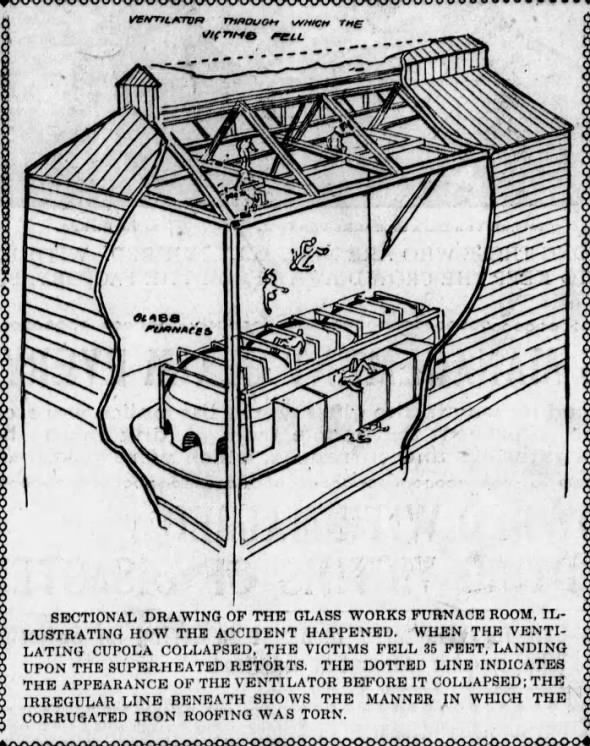
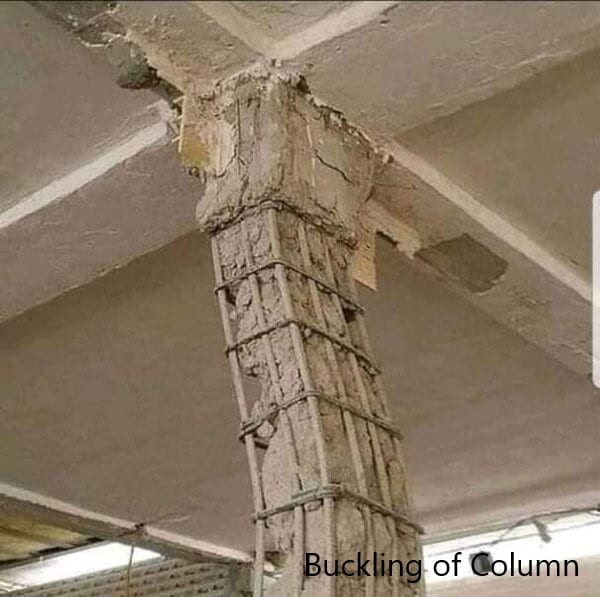
This tragedy wasn’t just a failure of design; it revealed a deeper misconception that buildings should be invincible, a myth that shapes our reactions to collapses even today. It goes further than engineering or physical buildings as well. Our models of reality are oversimplified at best and flat-out wrong in too many cases.

There is a common misconception and an unrealistic expectation about structures—many people seem to assume they are like blocks of granite. From those who believe that every building collapse is a conspiracy to those who think every failure demands stricter government regulations, the myth of an indestructible building continues due to a lack of understanding of engineering and the limitations.

Design Limits Are Not Defects

One key misunderstanding is design limits. Engineering is not about making a building too strong to ever fail. Unless we’re talking about the Great Pyramids, it’s all about trying to meet certain established parameters. An engineered building is designed to meet the expected conditions as defined by regional building codes. If the wind, snow, or loads exceed the designated standards, then there will likely be a collapse.

Earlier this year, after a heavy snowfall in upstate New York, many buildings had their roofs cave in (including this fire hall) because the weight of the snow was that much greater than the design weight. Sure, most engineers build an extra safety margin into their components, but eventually these limits are too far exceeded and you’ll end up with a tangled mess. This is why there are sideline roof shoveling businesses in these places where large snow accumulations are a regular occurrence.

Sure, code could force people to build to a much higher standard, making a collapse due to snow load virtually impossible. But this would increase the costs so much that it would price many people out of building a new house or barn. Engineering is all about compromise, more precisely about making the right compromises given the expected conditions. Yes, there is a case for making adjustments based on observation or after studies, but ultimately we build for what will work most of the time.

More Is Not Always Better

In the aftermath of the earthquake that had struck Myanmar and neighboring Thailand, there was a comment made to me in a chat hoping for more layers of regulation. This is a sentiment, in the specific context of rapid development of Bangkok, that seems more reflexive than reflective. It is a progressive impulse to believe that more interventions and rules are the answer.

The collapse of an unfinished tower in Bangkok, during the earthquake, sparks questions about building codes.  Was it missing sheer walls?  Did the contractor rush to ‘top it off’ quickly?  I want to know what the investigation finds.

But, for me, as someone who works in the construction industry and has occasionally needed to sift through these layers, I could not disagree more. Sure, better regulations may be needed. However, legalism doesn’t work in building standards any better than it does in churches. Sure, you need a code of some kind. And yet onerous regulation will add to the cost of construction, not necessarily improving the end results, and only making new housing less accessible.

It is, at best, the same trade-off discussion we can have about self-driving cars and the need for LIDAR. Sure, this expensive laser ranging system may marginally improve the results, but at what cost? Self-driving cars with cameras alone are already safer than human drivers. Keeping these systems at a price that is affordable will save more lives than pricing them out of reach for average people. It is, therefore, optimal to rollout the less expensive and safer tech even if it could be slightly improved.

At worst there is only more expense and no benefit to more layers of red tape. The real problem with rules is that they are written in language that needs interpretation. Unlike a classroom theoretical setting, in the real world you can’t just memorize the correct answers and pass the test. The ability to make a judgment call is far more important than adding to the pile of regulations. More rules can mean the more confusion and the truly critical matters get lost in the mess.

I see it over and over again, when different customers send the same job for a quote and all of them interpreting the engineering specifications their own way. It is the tire swing cartoon, a funny illustration of when the customer wants something simple and yet the whole process distorts the basic concept until it is unrecognizable. That is where my mind goes when we talk about adding layers. Is it increasing our safety or merely adding more points of failure?

This one stuck with me and should be standard equipment in every design department.  I first saw it as a child while visiting the engineering department of the construction company my dad worked for.

Some of it is just that some people are plain better at their jobs than others with the very same credentials. I am impressed by some engineers, architects, contractors, and code officers—not so much by others. I’m willing to bet the intuition of some Amish builders is probably more trustworthy than a team of engineering students’ textbook knowledge, full of theory, with no real or practical world experience. In the end any system is only ever as good as the users.

Theory Is Not Reality

My work relies on truss design software. I enter information and it does those boring calculations. When I started, I assumed that it was more sophisticated than it really is. I thought every load was accounted for and nothing assumed. But very soon the limits of this tool started to reveal themselves. It is only as accurate or true to reality as the engineers and developers behind it—and on the abilities of the user (me) understanding the gaps in the program.

When it comes to mental models—the kind of physics involved in engineering—only a few people seem able to conceptualize the force vectors. Things like triangulation, or compression and tension loads, are simply something I get. Maybe from my years of being around construction or that curiosity I had, as a child, that made me want to learn what holds a stone arch up or why there are those cables running through that concrete bridge deck. My model was built off of this childhood of building Lincoln Log towers (arranging them vertically) and occasionally making mini earthquakes.

I’m exasperated by this expectation that people have for skyscrapers to be indestructible or to topple over in the same manner of a tree—as if they’re a solid object. It also seems that the big difference between static and dynamic loads is lost on most people. They don’t understand why a building could start to pancake, one floor smashing the next, or how twisting due to extreme heat could undermine the structural integrity of a building without ever melting the steel. Of course this has to do with their beliefs or mistrusts that are not related to engineering—nevertheless it shows their completely deficient understanding of how the science works.

The concept in their head is off, their brain modeling is inaccurate, and their resolution may be so low they simply can’t grasp what the reality is. You try to explain basic things and their eyes glaze over—sort of like when Pvt. John Bowers tried to explain why the plants need water, and not the electrolytes in Brawndo, in the movie Idiocracy. Ignorant people will scoff before they accept a view different from their model of the world. The theory they believe rules over all evidence or better explanation.

On the other side are those who trust every established system without understanding it. They “believe science” and see more as an answer to every question. More rules, a larger enforcement apparatus, faith in their experts, without any feel for the problems encountered by the professionals or those in the field. If they had, they would question much more than they do. Human judgment is still at the base of it all. Or at least that is what the lead engineer told me while we discussed the limits of software and the need to be smarter than the tool.

Not even AI can give us the right balance of efficiency in design versus safety factor or what should be written in the code. It may be a better reflection of our own collective intelligence than any individual, but our own limits to see the world how it actually is are not erased by the machines we create. We are amplified, never eliminated, by the tools we create. So we’ll be stuck wrestling with our myths and theories until we take a final breath—only our flaws are indestructible.

Models of a Messy World

If truss software taught me anything, it’s that no model nails reality perfectly—not beams, not buildings, not life. We lean on these frameworks anyway, because the world’s too wild to face without a map. But just like those fans on that San Francisco roof in 1900, we often climb onto flimsy assumptions, mistaking them for solid ground. The myth of an indestructible building is just one piece of a bigger distortion: we think our mental models—of faith, of power, of people—are unshakable truths, when they’re really sketches, some sharper than others, of a reality we’ll never fully pin down.

Take religion. For some, it’s a cathedral of certainty, every verse a load-bearing beam explaining why the world spins. Others see it as a rickety scaffold, patched together to dodge hard questions. Both are models—ways to grapple with life’s big “why.” Politics is messier still. It’s like designing a city where everyone’s got their own codebook. One side swears by tight regulations, convinced they’ll keep the streets safe. Another group demands open plans, betting that freedom builds stronger foundations. Both sides act like their own ideological model is bulletproof, shouting past each other while the ground shifts—economies wobble, climates change, and people clash.

Then there’s prejudice, the shoddiest model of all. It’s like sizing up a beam by its color instead of its strength. Prejudice, always a shortcut to save us from the effort of real thought, fails because it’s static, blind to the dynamic load of human individuals. Good perception, like good engineering, adjusts to what’s real, not what’s assumed.

All these—religion, politics, prejudice—come down to how we see. Perception’s the lens we grind to make sense of the blur. Some folks polish it daily, questioning what they’re fed. Others let it cloud over, stuck on a picture that feels safe but warps the view. I think of those fans in 1900, not asking if the roof could hold them. They didn’t mean harm—they just saw what they wanted: a free seat, a clear view. We do the same, building lives on models we don’t test, whether it’s a god we trust, a vote we cast, or a snap judgment we make. The distortion isn’t just in thinking buildings won’t fall—it’s in believing our way of seeing the world is indestructible.

What makes a model reliable? Not that it’s right—none are. It’s that it bends without breaking, learns from cracks, holds up when life piles on the weight. In construction, we double-check measurements because we know plans lie. In life, we’d do well to double-check our certainties—about the divine, the ballot, the stranger next door. The San Francisco collapse wasn’t just about a roof giving way; it was about people trusting a picture that didn’t match the world. We’re still climbing those roofs, chasing clear views on shaky frames. Maybe the only thing we can build to last is a habit of asking: what’s holding this up? And what happens when it falls?

Intelligence — What I Think About A.I.

Standard

The dawn of artificial intelligence has led to much consternation about whether this is a good or bad development.  But, in order to better understand the technology and the implications, we must first define what we mean by intelligence.  What does it mean to be intelligent?  What makes us intelligent beings?

The definition of intelligence, provided by Google, is “the ability to acquire and apply knowledge and skills.”  But this seems to be a little vague and inadequate.  Robots, used in manufacturing, already apply knowledge and skills—things programmed into them by human operators.  And “ability to acquire” isn’t too clear either.  So we need to break this down further.

Intelligence is the ability to usefully process information.  

It has components.  

First there is the ability to interface within a broader space or an external environment.  If there is no information to input them there is nothing to intelligently process.  Our senses are what connects us to the physical world and part of how we navigate through life.  An internal model of the outside domain starts with information gathering or interface.

Second, intelligence requires memory, the capacity to remember past success and failures.  Much of what counts as human intelligence is a bunch of procedures and formulas we obtained from others through language.  This rote learning isn’t actually intelligence, memory or knowledge alone aren’t intelligence, but it is definitely part of the foundation.  Memory is one component of IQ we can exercise and expand.

Third, intelligence is an ability to recognize patterns, to accurately extrapolate beyond the data and draw the correct conclusions.  The reality is that our ‘intelligence’ is mostly a process of trial and error, often spanning generations, which leads to advancement in technology and thought.  All one needs to do is observe how major inventions came to be and the many flops along the way to realize we’re more like blind rats running through a maze, using impact with walls until we find an opening to pass through.

Forth, intelligence is an ability create good models to recombine existing ideas.  Nikola Tesla was a genius and not only because of his knowledge.  No, he could use what he knew to construct an apparatus in his brain, which he could then build in the real world.  What set Tesla apart is that his imagination wasn’t fanciful.  Indeed, anyone can proclaim that “there should be,” but it takes something else entirely to accurately extrapolate.

Finally, intelligence has an aim.  Truly a pile of knowledge is worth much less than a pile of manure if it can’t be usefully applied.  And if something is useful, that is to say that there is an underlying meaning or purpose.  To be intelligent there must be some agency or will to drive it.  Curiosity is one of the things that sets us apart, it moves us forward—questions like “what is beyond that mountain” or “how high does the sky go,” push innovation.

Intelligence is knowledge and abilities that are useful to something.  Useful to us.  And really becomes a question of what our own consciousness.

Intelligence Failure

“Primitive life is relatively common, but that intelligent life is very rare. Some say it has yet to appear on planet Earth.”

Steven Hawking

Another way to define what intelligence is is to explore what it is not.  Encyclopedias hold knowledge, stored in human language, but a book on a shelf has no logos.  It is the writer and reader that provide reason to the words, via their own interpretation or intended use, which is something that can’t be contained in ink on the page.  There are many people who are full of knowledge, but it is largely trivial because they lack ability to put it to good use.

Another problem is perception.  Even our physical eyes provide a very selective and distorted view of the world.  We do not see everything and, in fact, can literally miss the gorilla in the room if our focus is occupied elsewhere.  Many can’t comprehend their own limitations, they are guided through the evidence by confirmation bias and not with good analysis.  We really can connect the dots any which way, see patterns in what is random truly noise, and errant perception is difficult to correct once entrenched.

Intelligence must be about knowledge and theories that can be usefully applied.  The intuitions we have that help us to navigate the mundane tasks do not necessarily help us to draw correct conclusions so far as the more abstract areas.  People can persist in being wrong in matters that can’t be readily tested and falsified.  Any processor is only as good as the data that is entered and the depth of the interpretative matrix through which it is sifted and measured.  Even the slight error in one of the pillars of a thought, no matter how good the rest of the material is, can lead to an entirely failed structure.

Thoughts are structures only as good as their base assumptions.

Being slow is also a synonym for a lack of intelligence.  That is to say, in order to be useful, information must be processed in a timely manner.  Missing context and cues also leads to poor understanding, like Drax protesting the metaphor “goes over his head” with, “Nothing goes over my head. My reflexes are too fast. I would catch it.”  It does not matter how much information you process if the conclusions are inaccurate or too late for the circumstances.  Wittiness and a good sense of humor is a sign that a person is intelligent.

Intelligence is a continuum.  We can have more or less of it.  But measures like IQ don’t really mean that much, a person with a high IQ isn’t necessarily smart or wise.  A Mensa membership doesn’t mean you’ll make good decisions or be free of crackpot ideas.  Sure, it will probably help a person navigate academia and be more verbose in arguments, but it is not going to free someone of bias nor does it mean they’re rational.  This is why true intelligence needs to be about useful application.

Deus Ex Machina

Deus ex machina, literally “god from the machine,” refers to a plot element where something arrives that solves a problem and allows the story to proceed.  

Ex Machina is also the title of a great movie which explores questions about artificial intelligence, with an android named Ava, her creator Nathan and a software engineer named Caleb.  Caleb who was selected by Nathan is there to perform a Turing test and is eventually manipulated by Ava who uses his feelings for her as a means to escape.  It is a sobering story about human vulnerability and the limits of our intelligence—Caleb’s human compassion (along with his sexual preferences) is exploited.

Ava

However, this kind of artificial intelligence does not exist.  Yes, various chat bots are able to mimic human conversation.  But this is not Ava talking to Caleb.  There is not real self-awareness or observer behind the lines of code.  It is, rather, a program that follows rules.  Sure, it may be sophisticated enough to fool many people.  But it is not sentient or being having agency, it is augmented human intelligence.  They have essentially created a mannequin, not a man.  Despite these bots being able to manufacture statements which sound like intelligence, they lack capacity for consciousness.

A true Ava would require more than mere ability to interact convincingly with humans, it would take the “ghost inside the machine,” that is to say duplicates our own singular experience of the present moment or has a mind’s I.  This level of artificial intelligence doesn’t seem possible until we crack the code of our own self-awareness and that is a mystery yet to be solved.  Even if you do not believe in things like immaterial spirit or detached soul, there is likely some special quality to the structure of our brains which creates this synthesis.

Without some kind of quantum leap, this A.I. technology will be an amplifier of the values of the creators, an intelligence built in their image and to serve them.  It will not uncover objective truth or be a perfect moral arbiter.  Nor will it be our undoing as a species.  It will be a reflection of us and our own aims.  It has no reason for it’s being apart from us.  No consciousness, survival instinct or true being besides that of those utilizing it to extend their own.

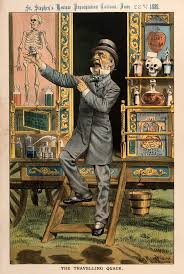
Will the Real Quacks Please Stand Up!

Standard

I’ve never been much of a fan of alternative medicine and those peddling their cure-all treatments.  For one, their typical pitch being an attack an the profits of conventional medicine is actually a red flag about their own motives. 

And, secondly, testimonials (or anecdotes) are fabulously awful evidence.  A person can say anything they want or attribute their current positive feelings to whatever, but it doesn’t mean their A led to B assessment is actually correct. 

Unless there is concrete evidence, I dismiss the alternative quacks.  Sorry, I simply do not want to take or sell your mystery juice.  It is disturbing that so many can’t see through this kind of nonsense.

But what is far more disturbing?  

When the mainstream starts to resemble these frauds.  

Yes, it is obvious that modern medicine works.  My successful neck surgery as proof of this.  There were measurable results nearly overnight, almost immediate relief to pain and the numbness.  The whole process was very straightforward.  However, that was a cut and dried form of treatment.  In that they took the old broken stuff out, put some new hardware in, and gave my pinched nerves a chance to heal.  

And yet, while it is amazing what can be done, not everything in our human biology is as simple as disks and vertebrae. 

Indeed, there is a murkier side to modern medicine, things that aren’t 100% clear even after many years of study, having to do with the more complex parts of our physiology and how these systems interact, and this is something that must be explored.  More than that, however, our own psychology, tendencies towards bias, could be leading the collective enterprise in the wrong direction.

#1) Money Money Everywhere 

The first stop is profit motive.  If I don’t mention this then someone else will.  It is the low hanging fruit in this discussion and certainly a factor.  People need paid, and medical professionals get paid for treating disease.  Healthcare is a 4.1 trillion dollar industry in the US and pharmaceuticals are a significant part of that overall cost.  Does this mean that the medical establishment wants to keep us sick and dependent?

Public health officials and regulatory bodies are, indeed, potentially compromised by this opportunity to cash in.  Top US physician, Dr. Anthony Fauci had received undisclosed royalties, part of the $350 million paid by third-parties to NIH and scientists employed by this agency.  No, this isn’t itself proof of corruption, people should get paid for their contributions and lobbyists may very well believe in what they’re promoting.  But there is the reality that money can overrule ethics and potentially cause people to turn a blind eye to problems.

Still, this is not my go-to explanation and for the simple reason that this accusation could be made against any for-profit enterprise.  I work for a truss manufacturing company and we do profit off of fire jobs and wind damage.  Does that mean we intentionally set fires or build an inferior product so it fails every ten years?  Absolutely not!  To make such a claim is, again, more an indication of the heart of the person making it and not proof of anything unless there’s clear evidence.

#2) Testing 1, 2…Good Enough…

Testing and peer-review is also one of those areas of concern as well.  And not because there is nefarious intent either.  But more a matter of scope or methodologies. 

My neck surgeon, for example, opted out of being a participant in a study involving a new line of disk replacement hardware because it was comparing it to a far inferior older product rather than newer better products already available.  In other words, it was a stacked deck or research that is designed to lead to a particular conclusion.

That’s the big problem I have with these broad often unqualified “safe and effective” claims.  It begs the question: Compared to what?  Bungee jumping?  A placebo? 

Most people, including physicians and scientists, simply do not have the time to be experts at everything.  The body is incredibly complex and nobody can actually do their own scientific research for every issue.  For that reason those in the medical field must, as a matter of practicality, rely on diagnostic manuals for treatment and various journals to stay on top of things.  Coloring outside the lines, challenging powerful government agencies, doing unproven or experimental treatments, is a risk of their license or a malpractice lawsuit and ill-advised.  There is an inherent need for those employed in these fields to trust the system and accept what other professionals do. 

If not this, if  their training and education, what else are they going to rely on?

I don’t expect those employed in the medical industry to doubt the very foundation that they stand on. 

Unfortunately, this reality is what makes their consensus useless.  Sure, they might know much more than the average person about the science.  Still, are they up all night, in the laboratory, carefully repeating the results of the latest studies themselves?  No, when other experts in related fields endorse what another expert is saying it is merely a sign of statement of their faith—that being their faith in the overall system.  

But it seems every other week a study comes out that seems to contradict prior findings.  Most of this is due to how limited the focus of research actually is.  They can’t possibly test every variable and especially not in a very short amount of time.  This reality, of finite resources, is a legitimate cause for healthy skepticism and abundance of caution.  The problem is that most people, including those well-educated, don’t have great critical thinking skills or even the ability to know the right questions to ask—it is far easier to “trust the experts” and go with the program.

#3) Confirmation Bias Is Always a Problem 

The problem with research is that we often go in looking for a particular result.  Sure, a double blind study is designed to reduce this as a factor.  However, the underlying bias can show up as far as what gets tested and what does not.  It can also be a factor in how we interpret the data available.  Group think and echo chambers, things like functional fixedness, are as much (or more) a problem with those very knowledgeable as it is with anyone else.

One example of this is how “effective” kept getting redefined down.  What once was supposed to prevent the disease and stop the spread would shift, overnight, to being a way to merely lessen the severity of the symptoms.  Which is a foundation so subjective and shaky that it is basically in the same category of the testimonials used by snake oil salesmen.  It is another area where the studies aren’t as conclusive as many would assume.  And, at the very least, correlation does not equal causation.  In other words, the vaccines could simply be acting as a placebo for those who believe that they are effective. 

What is not taken into proper account is how these perceived benefits, that are shrinking day by day, weigh against both short and long-term risks. 

For example, someone very dear to me, fully vaccinated, boosted, is currently suffering from a persistent respiratory illness, starting a month or so ago, and now is having flu-like symptoms again.  Could this be this is a result of an immunosuppressant effect of the injection?  It sure does appear that way and would be worthy of a study of the things presumed to be unrelated to the vaccines that very well may be related.  There is only a trickle of information coming out, discussion of side-effects buried in the search results and censored on social media.

What is most unsettling is the reality that our mainstream medical establishment is as prone to confirmation bias as those pushing alternatives.  They see what they want to see in the evidence and dismiss or downplay anything that contradicts what they were expecting to see.  The biggest difference is that it is more convoluted than it is with the obvious quacks, whole institutions get on board with a solution and too often it just gets cycled through, reinforced in each cycle, without enough awareness of the potential failure due to the blinders we all wear.

#4) Political Bias Is Endemic

One of the most troubling revelations of the past few years was how awfully politicized the coverage of a pandemic was. Anyone who thought that partisan differences would disappear in times of a national crisis was dead wrong.  If anything it is what likely drove much of the response.  At first leading to charges of racism (for travel restrictions from the virus epicenter) and accusations of over-hyping the threat of Covid—before swinging wildly in the other direction with onerous state-level mandates that destroyed great economy on the eve of a national election.

But one of the most disturbing episodes (and disgusting) is how proven medications, like hydroxychloroquine and Ivermectin, were treated as if they were especially dangerous and controversial simply because the ‘wrong’ person mentioned their potential as being a treatment option.  It is truly a great way of explaining how propaganda works.  The partisan media would pick the most extreme case of an overdose, ridicule a proven multi-use medicine as “horse dewormer” despite the many uses, and then misleadingly ‘fact-check’ the technicalities of language.

I mean, sure, these proven medications do not “cure” the disease.  But they are most certainly treatments that are effective for preventing severe symptoms if taken prior to the infection taking hold.  This is why several older doctors that I know (whom I will not mention by name for their protection) were quietly stockpiling these much maligned substances.  They didn’t dare speak too loudly either or they would be risk their own medical licenses for promoting unproven cures or some other nonsense.  Bullying and peer-pressure is as real for a professional as it is for anyone else.

This, along with other much more expensive (and profitable) treatments being pushed, is fodder for the conspiracy theory crowd and for good reason.  For me it disproves any notion that the system we rely on, including the medical establishment, is impartial or fair.  Sure, I’m glad that The Lancet, a trusted medical journal, eventually retracted a study that falsely claimed that hydroxychloroquine led to death for some Covid patients (as they have with another study linking vaccines to autism) and yet the damage was already done.

#5) Lost in Oversimplification 

One of the harder or more difficult problems to explain is how the common models of are often too dumbed down to be accurate.  

Up until recently depression was explained as being “chemical imbalances in the brain” and selective serotonin reuptake inhibitors (SSRIs) the solution.  This overly simplistic explanation has been called into question and this is a cause of alarm for those told to “trust the science” when it comes to the professionally prescribed answers.

I love metaphor and analogy to explain things less visible or intuitive.  However, if these tools are misunderstood as being exactly the same as the thing being described this can lead to very wrong conclusions. 

Just like a ball and stick model of atoms is useful yet doesn’t truly explain the reality (an electron is more cloud of probabilities), the various illusions used to sell parts of the pandemic response are as flawed.

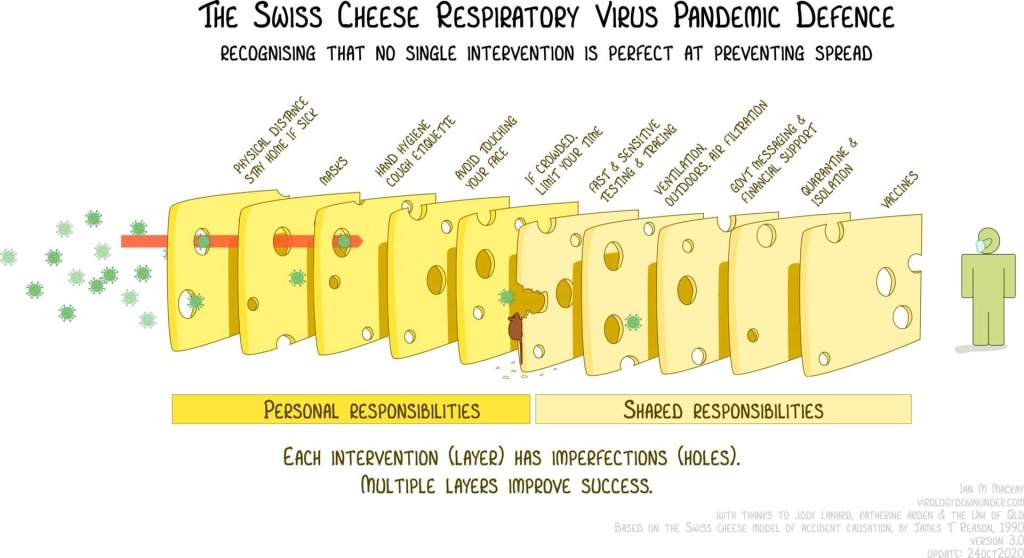
Sure, the theory of “flattening the curve” is great on a graph, and swiss cheese makes a very compelling illustration of how a multi-faceted approach could work, in theory, but both give a false impression of being complete or unquestionable. 

But is this theory working in reality?

Of course, how diseases spread in the real world is different from the even the best models and it is quite possible that slowing the spread only makes things worse, as is the case with attempts to manage forest fires. In that effort to control can eventually lead to much more devastating fires. Slowing down the process could result in a scenario where the burn is thorough, everything gets consumed, rather than the alternative of a fire that moves quickly and skips over areas.  The point being that analogies don’t account for the nuances and could lead to the wrong ideas taking hold in the public imagination.

No, this is not to claim that I have a better grasp of virology than those who have studied these things their entire lives.  It is only to say that these illustrations give too many undue confidence.  There are many factors that these crude analogies gloss over and factors that could vastly change the final outcomes.  The problem is that many are unable to see the more complex picture as a result of these elementary level descriptions that are used to sell a particular approach.

It makes us unbalanced.

In Conclusion…

There is no individual that can provide an opinion that is completely infallible nor any agency that is able to offer a perspective free blindspots or bias. 

Our “settled science” today make seem as bloodletting in a generation or two.  And the same kind of thinking that leads crackpots to their ‘alternatives’ is also all too present in the mainstream.  There is always the money motive, with the lack of adequate testing, the confirmation bias, the influence political agenda and faulty or misleading explanation, all tainting both the perception of the general public and professional opinion.  The biggest difference between those who believe the quacks and those who insist that the vaccine is effective is the level of funding behind their perspectives.

This doesn’t put the outliers and mainstream on equal footing, there is such thing as strength in numbers, yet what is popular is sometimes only a product of propaganda and common ignorance. 

Don’t be so sure that the things being ridiculed in the current paradigm are any different from what is being promoted.  We know less than many think we know.  There may be future studies or new discoveries that will completely upended the too hasty conclusions of our time. 

No matter how confident we are in our own position or settled we believe a topic is, it is always best to stay humble.

Liturgies of Life

Standard

The readers of this Irregular Ideation most likely noticed that I was down and struggling a bit.  No doubt the prayers of my family and good friends have been heard.  While the neck and other issues linger, there has been a break in the form of some good news that has brought with it that glimmer of hope again.

These cycles of mood and emotional swings have been something that I’ve pondered.  Despite there being events that are involved, there is also this sort of rhythm and inevitability to these things.  The phase “what goes up must come down” comes to mind.  Sure, I’m probably on the more neurotic end of things, with higher highs and lower lows.  But most people, no matter how good or bad their life is compares to others, seem able to identify with these ebbs and flows.

I mean, we have that time before coffee in the morning then that time after where the brightest of the world returns.  There are those the weekly slow starts “a case of the Mondays” contrast with that euphoria of Fridays.  Then the longer cycling patterns tired to holidays or weather.  Has anyone else had encounters with SAD or Seasonal Effective Disorder?  Descriptions like “terrible twos” or “the midlife crisis” exist for a reason.  Is the “sophomore slump” real?  I think so.  

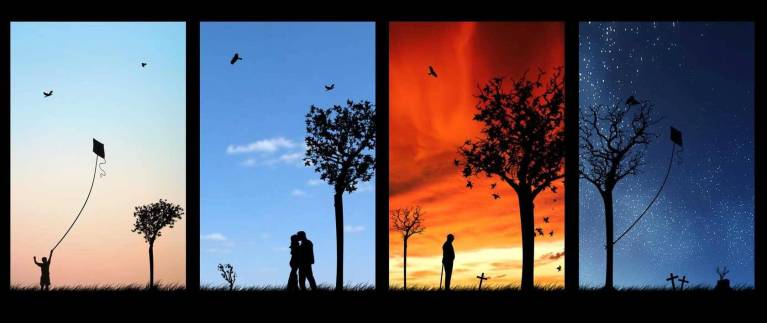
And there does seem to be a preordained nature to this all, like the seasons or how the sun rises and sets. 

This kind of constant change is confirmed in Scripture:

There is a time for everything, and a season for every activity under the heavens: a time to be born and a time to die, a time to plant and a time to uproot, a time to kill and a time to heal, a time to tear down and a time to build, a time to weep and a time to laugh, a time to mourn and a time to dance, a time to scatter stones and a time to gather them, a time to embrace and a time to refrain from embracing, a time to search and a time to give up, a time to keep and a time to throw away, a time to tear and a time to mend, a time to be silent and a time to speak, a time to love and a time to hate, a time for war and a time for peace.

(Ecclesiastes 3:1‭-‬8 NIV)

To me this is both beautiful and terrifying at the same time.  The woman who brought a man such joy in their youth may make him all the more lonely when the season of death and seperation comes.  The attributes that make a nation rise in prominence, say a focus on equality, can be the very thing that brings about their collapse once it finally does reach the top.  

Not to say that any of this is meted out evenly across board either, some do have it easier or a higher baseline mood and others not as fortunate, nevertheless there are patterns.  

Bigger dreams lead to bigger despair.  But a harder struggle can also lead to greater joy and a more wonderful triumph for the faithful than those who lived for their own comfort.  There is balance, there is growth, larger and smaller patterns, a predictability that seems could be modeled.  How it plays out across groups of people is also a fascination of mine.

My own thought is that we could probably remove the triggering events and still end up with the same patterns in the end. 

In other words, there would have been a world war even if the Archduke Franz Ferdinand had not been assassinated, my disenchantment with the Mennonite denomination would have eventually boiled over even if not for the same specific reasons, and Elon Musk’s Twitter account isn’t the reason the crypto market dropped from those all time highs either.

First, Let Me Talk About Stocks…

If cycles of human emotion could be mapped out, the stock market might be the place to start.  The euphoria of a “bull” market and seeming endless pessimism of a “bear” market show how our emotions, collectively, shape the direction or mood of the market.  But it is more than just random noise, it is a complex dance of feelings and facts, that produces the ‘right’ price in the end.  It can often be algorithmically predicted.

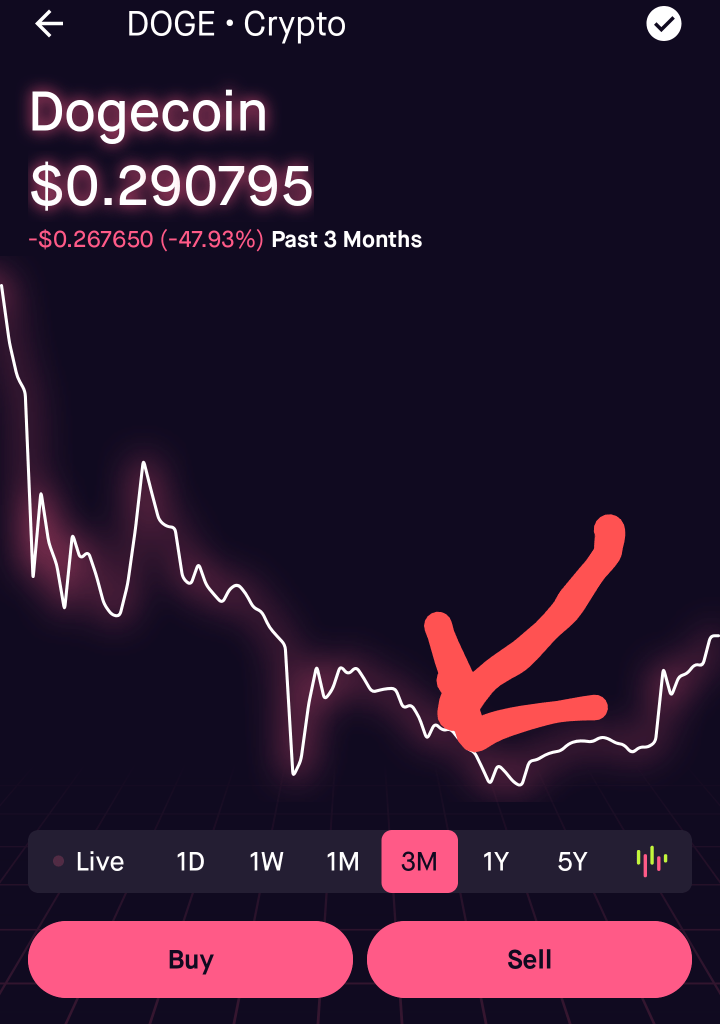
A little story, for example, of how it works: I have bought and sold Dogecoin over the past few months.  My first purchase, in December, at a cost of $1000 then, would have been worth hundreds of thousands at the peak.  I sold it for a small gain.  But later, as not to miss out, I bought in again, and saw my portfolio balloon when the “meme coin” finally caught fire.  However, over the past few months, things haven’t been too good and the price was going down and down.

At first I had complete resolve.  The smart investor holds, I did my due diligence, this is only a correction cycle and things will reverse soon.  But eventually the pressure broke me.  I decided that it was time to save what was left of my gains and move to something that would produce a better return.  I thought this down trend would continue indefinitely or at least go lower—give me a better buy-in price later, right?  

I’ll show you where I sold around 80% of my Doge…

Oh well, I think I’ll be able to get more later.

Yup.  I picked the very bottom of the downward trend.  Even knowing that cryptos have gone through similar corrective phases in the past before continuing their upward climb, and even telling my coworkers that Bitcoin (despite the plunge) would end the year above $70,000, I fell victim to fear, uncertainty and doubt precisely at the wrong time.  I had waited for two months to see that trend reversal, at the bottom, and would have gotten it had I held on for another couple more weeks.

But more than to talk about my missed opportunities, I’m interested in that larger cycle of the market and how human emotions (in an aggregate) create this clear pattern.  Many people want to blame events, like a Tweet from Elon Musk or what have you, for their change in fortunes.  However, while we could see these events as being triggers, it seems the larger patterns are something more or less baked in.  

Elon Musk speaks as Doge sells

Dogecoin, for example, could not continue straight up forever.  Smart investors, who know the adage, “buy the rumor, sell the news,” started to sell before Musk’s SNL appearance.  And the sell-offs came with mentions both good and bad.  It was not the autistic billionaire businessman’s fault that so many people decided on that moment to cash in nor that others began to panic sell as the price dipped.  It was all predictable, part of some sort of fractal meta-pattern, can be modeled (like this), and would have happened (triggered by something else) regardless.

Smart investors learn to zoom at, look at the longer trend, rather than let the emotions of a bad day get to them.  Cryptos, despite their recent dip, have remained in an ascending pattern with the recent lows still higher than the high of the prior cycle, which is why the smart money (unlike your’s truly) continues to buy the dip and HODL (Hold On for Dear Life) rather than give up.  Most people miss on big gains because they’re impatient.

Despite Recent Lows, An Upwardly Building Pattern Prevails…

It was after my most recent dip in mood that I realized something.  In my prior lows over the years, as a Mennonite, I would still go to church for the fellowship and yet would not sing if the words didn’t feel authentic coming from my mouth.  

But this past time, despite my feeling low, I still showed up to sing and did because (despite my pain and depressed mood) someone had to carry my part in the choir.  Music was my worship, spiritual combat, rather about how I felt.  This time I soldiered through the liturgy, toothache, emotional turmoil, and all.  I left immediately after the service, rather than do the social ‘coffee hour’ thing, because I was miserable.

It might seem to be virtuous to only show up or sing when the feelings are there and yet it is hardly sustainable.  If I only showed up for my job when I was in the mood or having a good day, my paycheck would be small to nonexistent.  Many marriages end in divorce because the ‘love’ therein depends on their feelings in the moment and is not an actual commitment to love through better or worse.

So, in short, this duty-driven devotion, rather than being led by emotions, is actually progress.  It was not simply another dive into the same dumps as before.  No, I have changed, improved, from the “be true to yourself” advice to doing my job, for the good of others (including my choir director), gutting it out.  Two steps forward, one step back, will eventually get you where you need to be.

There is a sense in which it was always a choice whether or not to participate.  But my character development?  That seems like something guided, the result of years of small nudges in the right direction, and not something that I can take credit for.  In other words, I’m becoming what I was meant to be, having been placed in the right time and circumstances.

Despite Individual Progress, Are We Becoming Weaker?

That’s not to say that this kind of building pattern cannot work in reverse.  When we consider our “first-world problems” in comparison to what people face in Afghanistan, it would appear that we are becoming collectively weaker rather than use the past generations boost.  We use our opportunity to “stand on the shoulders of giants” to bellyache about ‘oppression’ because other people are not forced to pay for our lifestyle choices.

To put things into perspective?  

Charlotte, my Igorot bhest, as the daughter of a subsistence farmer in the mountainous Benguet province, was sent away to assist her grandmother.  She describes her childhood as being her “grandma’s water pump,” carrying heavy buckets to keep the garden watered.  The work was so hard that she would cry and wonder why she was even born.  That’s pretty much how my grandparents or great-grandparents lived, they did complain and probably because there was nobody to listen.  Everyone struggled, physically, and became strong enough to survive.

Not Charlotte. But how many in the world work.

Compare that to my generation, where we were mostly spared hard physical labor, yet find plenty of reason to cry injustice.  We have gone from “sticks and stones may break my bones, but words can never hurt me,” to triggered because an Amish kid stares at us.  Being looked at too long a micro-aggression, I’ve heard.  My own endless existential crisis another example and there are many other cases, in my generation, of oversensitive and dark struggles of those truly privileged compared to their hardworking parents.

While past generations in my religious upbringing may blame their insecurities on the standards and not being appreciated by their workaholic father or whatever, the latest generation can’t even eat peanut butter without breaking into hives.  It isn’t their fault either, they’ve been coddled and protected from birth, their parents worked overtime to make sure that they felt heard and connected.  Now, rather than see their discontentment coming from having to follow ‘legalistic’ church standards, our youth will struggle with questions of whether or not they’ve somehow been mis-gendered at birth.

There is little doubt that our sterile environment is likely contributing to the vast increase in autoimmune disorders and allergies.  Whereas previous generations fell to disease, endured actual physical hardship and wondering where the next meal would come from, girls married as teenagers, we now have people distressed that someone used the ‘wrong’ pronoun…

Triggered transgender

However, in a sense, over the generations it is the same struggle in different form.  No matter how improved things become, whether we get that go cart we dreamed about every day or not, there will always be another circumstance to blame our own feelings of not belonging on.  The more challenges we remove for our children, the less capable they become.  No longer comfortable in their own skin.  We blame different externalities for our despair, yet maybe it is something genetic, internal and inevitable?

How Civilizations Rise And Fall

There have been various descriptions of how civilizations rise and fall, one example below:

Many Americans see that we’re on the decline and that our fall from world prominence is now as inevitable as the sun going down.  And, given that many great empires have come and gone, this is not a big surprise.  How could a nation of immigrants, people who left the oppression of the old world, traveled across the treacherous Atlantic and conquered a continent, who understood sacrifice, lead to a generation so entitled, unappreciative, self-loathing and suicidal?

It is easy to paint a very bleak picture.  But then, gripes about the next generation are as old as human civilization and this doesn’t always mean a collapse is imminent.  Yes, there is change.  Top hats have gone out of fashion and will likely never make a return, trends come and go.  There have been times of great social upheaval, like the American Civil War, followed by periods of relative calm.  Those who lived through the Great Depression, the World Wars or Cold War all had their anxieties about the end being near, only for that “great peace” and fall of the Soviet Union to follow.

What feels like the end, under fresh leadership, could be the start of a new epoch.  Take the fall of Rome.  Sure, the Mediterranean empire fragmented, yet the common thread of Western civilization has remained to this day and is arguably stronger than ever.  Yeah, the British Empire may no longer rule the seas, but their rebellious American sons and daughters have become even more powerful than any empire ever.  So maybe after a painful declining corrective phase there will be a revival or rebirth?

Our survival depends on our optimism.  We must assume that each pullback will lead to the next increase in amplitude.  No, that doesn’t mean this is easy, doubt and despair require far less effort than hope and faith; failure is always possible even with the best efforts, but humanity has made it through many bad moments—moments many times worse than any of us will likely experience in our own lifetimes.

Maybe the down is what we needed to give us the bounce to greater heights?