The Three Different Kinds Of Mechanics

Standard

We tend to lump things together that shouldn’t be. In other words, there is plenty of diversity within categories and this is something true of those whom we call mechanics. And the significant difference in mechanics is analogous to other professions, which is where this essay will end up.

The other week my old reliable Ford Focus began to act up. I had traveled, with my family, to a company picnic and everything was fine on the way out. However, on the trip home there was something that was not right. The power delivery was rough when trying to accelerate but smooth enough while cruising and immediately my mind went to the trick this 2.0 L had up its sleeve.

The ‘Duratec 20‘ has Mazda DNA. It uses direct injection and variable valve timing (or Ti-VCT) to make 160 hp while still delivering decent fuel mileage. With a 12.1:1 compression ratio, it has a decent torquey feel for a 4-banger, and—paired up with a five-speed—it is fast enough to be fun.

And to the point that a week prior to this, on the way to church, a late 90s Honda Civic with a loud pipe did the customary flyby, and we just so happened to line up at the next red light. So, as was necessary, to the slight embarrassment of my wife and great amusement of my son, I do the hard launch. It bogged a bit, despite my loading up a bit prior to releasing the clutch, so I dumped it down completely, the tires chirped, I hit second hard and I was grinning a couple of car lengths ahead before they knew what had happened. Not an actual race, but I’m pretty sure I had the edge even if they were ready for me.

The engine light would eventually come on in the next day or two. And, sure enough, checking the code at AutoZone, it came up as a camshaft sensor. That was something I could handle. I swapped in the new part. But it didn’t fix the problem. I noticed that the negative battery terminal had some corrosion and, with the help of a cousin, we cleaned that. Still, no dice. The issue persisted.

Shop #1: The Inspection Garage

With the help of a mechanic friend of mine, who sent me the applicable page of the diagnostics manual, I determined that the problem was now beyond my shadetree abilities. It was potentially a crank sensor fault (that for some reason shows up as being the cam sensor) or involved some sort of wiring issue. I took it to the garage, within walking distance, which had given me a better deal for vehicle inspection than the dealer could offer.

I left them with the page of the manual. I returned to a vehicle with a drained battery and still acting up despite their efforts. They had cleaned the throttle body, changed the air filter, and not overcharged me for that service. However, the problem was not fixed, and the explanation he gave—that the car (with over 230,000 miles) was old and probably down on compression—did not satisfy me.

I had assumed that they had run down the diagnostics checklist, as I had basically told them to do, and that weekend decided to take a look again with the aid of a mechanically inclined brother-in-law at our family summer get-together. My sister has a 2016 Focus, which had corrected the wiring harness issue, and immediately, while looking at her engine bay, I noticed how the Ford had moved these wires from where they were on my own 2014.

So I took another look at that, I lifted the harness on my car where it was against the engine and, sure enough, I could see the cover was worn through and a little copper was shining. Uh-oh. With a small piece of electrical tape and a spirited tested drive, the diagnosis was clear—that was the problem and I would need to take it to a shop that was capable of following my instructions.

Shop #2: The Technician

After pricing my options, I decided on a garage that had helped me with another mystery issue years ago with my Jaguar XJR. Jake, the owner, was an expert at diagnostics and, in a conversation with Jason who he trained as his replacement, it was clear that this guy knew his stuff. Now, granted, in this case, I had already provided the diagnosis. However, I could tell that he understood the systems of the vehicle far better than the guy at the inspection garage.

This is the kind of mechanic you need when the issue is more than an alternator or something obvious that only needs to be removed and replaced. Anyone can turn a wrench. Quite a few can go down the diagnostics checklist and eventually find the solution. But the actual technician type is a different breed, he is the guy who writes the manual and can even feel what is going on after a short test drive. These are the Ken Miles, can-improve-what-already-is kind, who in different circumstances may have become an engineer or even a doctor.

The technicians are professionals. They have a high IQ and a wealth of knowledge. And it is about much more than having the correct certifications or a toolbox full of Snap-On tools. Some simply do not have the aptitude even if they went through years of training and others do. The technician could be working in the back alley of Manila or at the dealership down the road. There are different levels even within this group, but what sets them apart is their intuitions and ability to model the complex systems of a vehicle in their heads. He’s as smart as your cardiologist.

Shop #3: The Scam Artist

Years ago my brother took his Ford Tempo in for a routine inspection. This was his first car and basic transportation for a teenager. And only cost a few thousand dollars, which was basically all he could afford at the time. The tire shop is in the middle of town and looks decently professional. I think of this incident each time I see their advertising two decades later.

The bill he got was more than the value of the car. Apparently, they decided that every suspension part was out of tolerance and maybe they were technically correct, who knows?

What I do know is that my dad took severe issue with this and helped my brother negotiate a slightly better price for the work. Still, they soaked him for a huge amount of money and have lost our business since then. They were at the level of the inspection shop, or your local Walmart Auto Care Center, as far as their abilities and yet telling us with absolute conviction that the car was not safe to drive without the laundry list of parts with labor they installed without so much as a phone call to my brother.

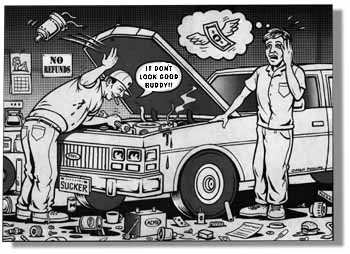
Dealerships can overcharge. But usually, they are more reputable and not just replacing parts because they have you over the barrel and have a bonus to make. These are the types who would convince your grandma she needs the blinker fluid filled and muffler bearings replaced. They aren’t technicians (they would too be ashamed of themselves if they were) and are basically just swindlers with a wretch to use as part of the scheme. Their diagnosis is always something expensive.
What Kind Of ‘Mechanic’ Is Your Doctor?

This understanding of different types of mechanics applies to all professions. Not every college graduate with the right credentials is equally qualified. Some engineers are really good at the classroom stuff, they know the code and can be completely anal about largely irrelevant or unimportant details. Others really get what makes structure work, it is intuitive to them, and what they build is likely safer than the variety that dots all of the I’s and crosses all the T’s according to the IBC 2021.

Doctors come in many varieties as well. There are those types who get into things like cosmetics or reconstructive surgeries, chasing after the big bucks, and then there are the others who want to run a clinic or set up a family practice to help as many people as possible. The country ‘doc’ driving the F-150 is a different breed than the one with a BMW or Porsche. One is practicing medicine, and the other has a profitable business that requires some medical skills. And, in both cases, competency is not strictly a matter of gathering the right diploma or getting through the board requirements.

My own hunch is that most doctors are more like the inspection shop mechanic. They’re not out to screw you over and they also do good work for the most part. However, they got where they did because they were at least of slightly average intelligence and good at navigating the system. This doesn’t mean that they are actually doing the real number crunching of the diagnostics themselves. No, it means that they can match a list of symptoms with what they can find in the Merck manual and write a (barely legible) prescription. This could mean that they miss things, over-prescribe, or basically share in the same failures as the entire medical establishment.

So, how reliable is the system?

Well, I’m not sure.

When I read things like, Why Most Published Research Findings Are False, and how the Lancet published (then later retracted) studies that cautioned against the use of Hydroxychloroquine or how Ivermectin was skewered as being “horse dewormer” despite being an effective anti-viral medication, it seems that politics may be dictating the science. And we all know that politics is heavily influenced by cold hard cash. So, let’s think, who benefits from keeping these kinds of cheap widely available therapeutics from the market? There was an industry that made $90 billion from the pandemic and also has connections to the corporate media apparatus. Who knows how far this big money penetrates government agencies and impacts regulations or policies.

But I do know this has been said…

“It is simply no longer possible to believe much of the clinical research that is published, or to rely on the judgment of trusted physicians or authoritative medical guidelines. I take no pleasure in this conclusion, which I reached slowly and reluctantly over my two decades as editor of The New England Journal of Medicine”

Marcia Angell, MD

And this…

“The case against science is straightforward: much of the scientific literature, perhaps half, may simply be untrue. Afflicted by studies with small sample sizes, tiny effects, invalid exploratory analyses, and flagrant conflicts of interest, together with an obsession for pursuing fashionable trends of dubious importance, science has taken a turn towards darkness”

Richard Horton, editor of The Lancet

I’m assuming these two would know a little about the current state of science and medicine.

So how does a doctor separate the wheat from the chaff?

It is not right that some see the failures of some as a reason to dismiss it all. Getting taken advantage of by one repair shop doesn’t make all mechanics crooks. Still, how does a patient know if their doctor is doing a high-level analysis of the evidence, is capable of critical thinking and going beyond the book, or if he’s just following the pack without doing any truly independent diagnostics? It really takes someone a bit removed from the profession, who doesn’t share their biases or bad remedies, to give the corrective treatment. Maybe a car mechanic turned doctor (the guy in the featured picture) would have some useful perspective on the topic?

Whatever the case, if we can’t trust everyone who is licensed by the state to inspect vehicles, we should be even more skeptical of those who want to put things into our bodies. They don’t even have to be bad or intend harm, it could simply be that they are asleep at the wheel, putting trust in institutions that have been compromised and corrupted. At the very least, the body is extremely complicated and even our most advanced methods are crude. We may not know that our modern versions of bloodletting are of negligible value or even harmful for another century or two. This is why we customers, the patients, should never be pressured one way or another even if the science is supposedly settled.

Yes, even those at the top of the profession today may be tomorrow’s quacks…
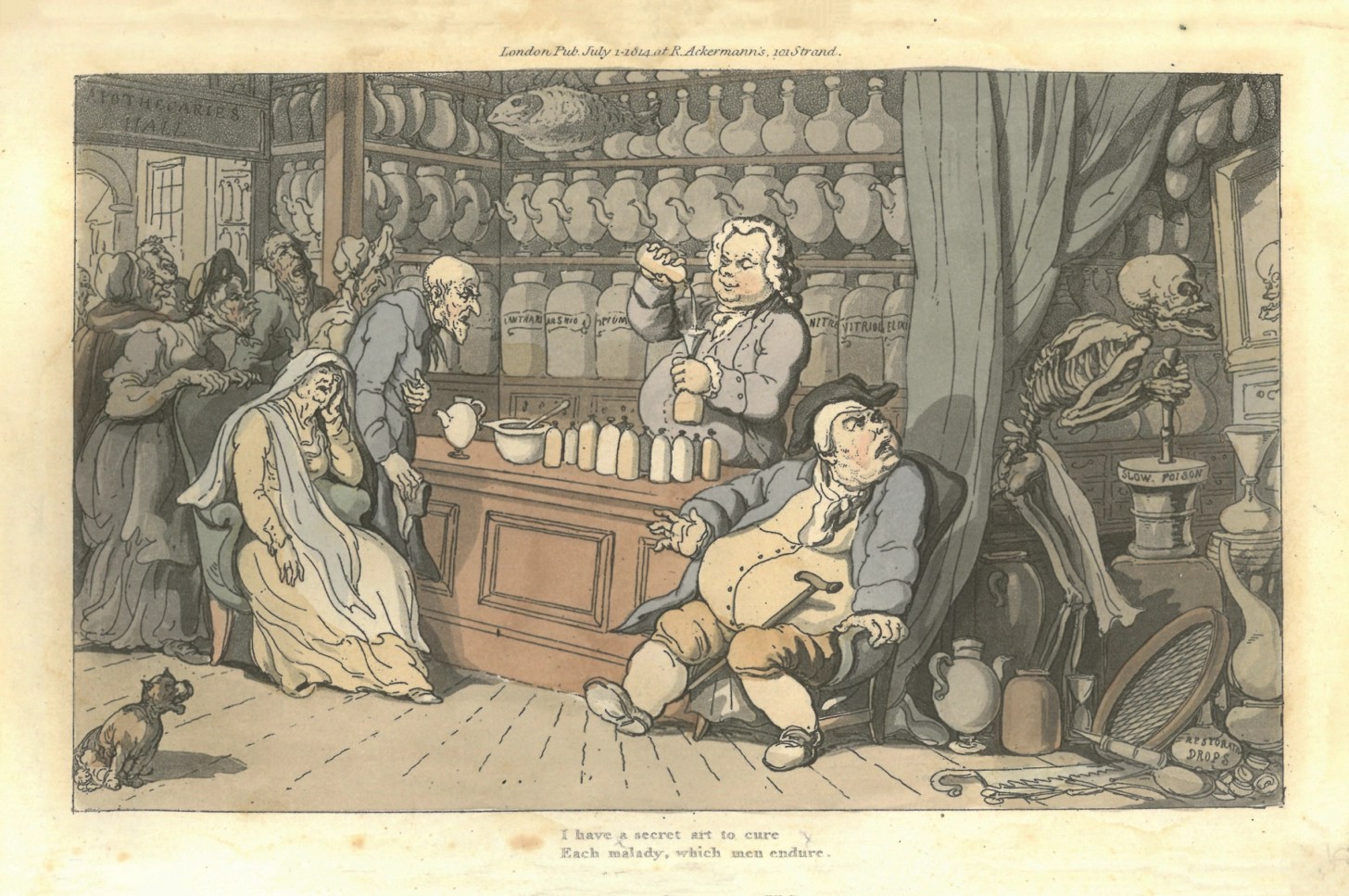
Note the “slow poison” written on the mixing device.

Politics of Pandemic–Breaking Down the Fauci Emails

Standard

Recently, through the Freedom of Information Act, by request of Washington Post and BuzzFeed News, a trove of Dr. Fauci’s emails have been released and the revelations therein causing a great uproar online.  On one side there’s the “I told you so” crowd doing their victory lap. While, on the other side, is the supposedly unbiased ‘fact-checkers’ and corporate media denial professionals trying to argue that there’s nothing to see here. 

So, is Dr. Fauci a national hero, a seasoned expert who helped the nation navigate a crisis, or should his head be on a pike?  

Let’s start with who Dr. Fauci is and why he is the focus of national attention…

Doctor in the Spotlight

Anthony S. Fauci, M.D., was born in Brooklyn, NY, on December 24, 1940, to parents who operated a pharmacy in the city, his grandparents were immigrants, he was raised Catholic and now considers himself to be a humanist.  He was a standout basketball player in the private Jesuit high school he attended, went to Holy Cross University for pre-med, and then attended Cornell University’s Medical School.  He married Christine Grady, in 1985, who is described as “an American nurse and bioethicist” in Wikipedia, and they have three daughters.

Dr. Fauci is the director of the National Institute of Allergy and Infectious Disease, a role he has served since 1984, through seven presidencies and, while a respected figure in his field of immunology, had not garnered much public attention prior to the emergence of Covid-19.

In early 2020 Fauci was selected to be part of the Trump administration’s White House Coronavirus Task Force (now serves as Biden’s chief medical advisor) and very quickly was singled out by the corporate media for his sometimes seemingly contrarian positions with the President.  If anything, his elevated role and becoming the face of the pandemic response has more to do with partisan politics of those desirous use him as a foil against President Trump than it does with anything else.  Even Fauci himself, in the emails, seemed confused about his new celebrity status. 

There were many stories lauding Fauci.  There is no indication that he wanted to become the public figure he has become.  He did not have the power to tell states what to do.  But now, because he was portrayed as this unquestionable expert, he has become symbolic of the shutdowns and mask mandates to many Americans.  Fame, even if unasked for, is a two-edged sword.  One can quickly transition from hero to heel once the spotlight begins to reveal their blemishes.  By putting Fauci front and center of the Covid response, the partisans have given us ample reason to scrutinize just who he is.

I personally, as someone with a sister who is a medical doctor and another who is a nurse, I am also not comfortable with many of those trashing Fauci’s reputation.  I’m equally opposed to demonizing him or trying him in the court of public opinion.  That said, as one who has some life experience, I also understand the value of second opinions when it comes to medical interventions.  Fauci’s opinion should have been considered one of many, as part of a task force, and should never have been positioned as a rival to the President.  That was dirty politics, completely a media creation, and likely hurt the pandemic response. 

The Politics of Pandemic 

Ideally, in times of national crisis, where many lives are at risk, partisan politics would’ve been put aside and the nation would rally behind the leaders elected no matter their party affiliation.  In that world, the President, informed by various economic and medical advisors, would make the executive decisions and government agencies would do their best to put these decisions to practice.  However, in the current polarized hyper-partisan environment, and with a Presidential election looming in 2020, the pandemic was treated by many as simply another divisive political tool.

No world leader’s response to Covid-19 was perfect.  For example, had European governments followed Trump’s lead and shut down travel from China early on in the pandemic we might have had more time to prepare.  It is easy to forget, but before social distancing and shutdowns became vogue, many social elites were minimizing the threat and calling Trump a racist for warning the world about the virus.  In Italy, for example, they were urging people to give hugs to Chinese people to prove their own virtue.  Our Speaker of the House, Nancy Pelosi, urged her constituents to visit the crowded streets of Chinatown in San Fransico.

Trump was criticized for urging calm and being a cheerleader once the danger of Covid was finally realized.  And, before that, was criticized for shutting down travel from China and accused of fear-mongering for speaking out.  He could not win. He was resisted at every turn while trying to take steps to prepare and then accused of literal murder for the deaths in this country as if the world was somehow doing better.  Few here would know that the US death rate is actually lower than that of Europe, per capita, but the stories here would focus on death totals to build the image of Trump’s failure.

Fauci, on the other hand, was not allowed to be criticized.  He was praised endlessly as a representative of science, as bold and unbiased, a source of all truth and wisdom.  His word was to be treated as irrefutable, god-like, his perspectives treated as the only one that mattered, and Trump asked over and over again, “will you follow Dr. Fauci’s recommendations?”  It was presented as this horrendous thing that Trump may not take this one man’s advice on how to respond, as if there weren’t teams of other advisors to be heard and other concerns to be considered.  

Every smart patient knows to get a second opinion on serious matters.  Even the best physicians, experts in their fields, can misdiagnose or prescribe the wrong treatment.  And this idea that “following the science” means worshipping or never questioning, men like Fauci is pure ignorance. It is dangerous ignorance.

But, as ignorant, is holding Fauci to an impossible standard because others put him on a pedestal.   

On one hand, I completely understand the resentment that some hold towards this man that has come to symbolize the economic destruction brought on by state governors following Federal guidelines.  However, much of what is being said now, in wake of the released emails, is as unfair as the coverage of the previous administration.  Those against mask mandates and economic shutdowns are doing the same thing to Fauci as the corporate media propagandists did to Trump.  His comments, like Trump’s comments, are being ripped out of context by many commentators, without explanation, and that’s a problem.

Yes, some of the emails show that Fauci withheld certain ideas about the origin of the virus and was initially dismissive of masking, yet nothing I’ve seen so far is smoking-gun evidence of his wrongdoing.   Of particular interest is his involvement in funding the Wuhan lab, during the Obama administration, and whether or not this may have been a conflict of interest.  And then there is the ethical issue issue with “gain of function” research that must be explored.  My goal is to give fair treatment to the man and offer my own perspective as far as the content of the emails.

To Mask or Not To Mask?

One of the most contentious issues of the pandemic was the mask mandates.  These state level policies, following the recommendations of the Federal government, were viewed either as life saving and scientifically proven or as terrible infringements on liberty and pretty much totally ineffective. 

My own leanings, as someone who purchased a box of N95 masks in January of 2020, is that masks offer a marginal protection, if the correct type and properly used, and yet the mandates were basically useless.  First cloth masks don’t offer the level of filtration that is necessary to trap the water droplets carrying the virus.  Second, some countries required both a face shield and mask because they determined that masks alone weren’t effective.

Dr. Fauci seems to have come out against mask mandates before coming out in favor:

The typical mask you buy in the drug store is not really effective in keeping out virus, which is small enough to pass through the material. It might, however, provide some slight benefit in keep[ing] out gross droplets if someone coughs or sneezes on you. I do not recommend that you wear a mask, particularly since you are going to a very low risk location.

And also saying this:

Masks are really for infected people to prevent them from spreading infection to people who are not infected rather than protecting uninfected people from acquiring infection…

Now, I believe he’s right in both cases.  Masks only offer minimal protection.  Covid spread through factories where everyone wore masks and states with mask mandates really didn’t fare better than those that did not.  I understand that urge people have to “do something” and there are several flawed studies that back up the idea that masking is beneficial.  However, I really do not see evidence that it makes a significant difference.  Real life doesn’t match up with laboratory conditions.  And thus that was likely behind Fauci’s pragmatic first take.

What is a bit unfair about the criticism about this apparent reversal in opinion on masks is that we all change our minds all the time.  Sometimes I may disagree with some of my colleagues on something, state my own perspective, and then later amend as new evidence comes in.  However, what is disturbing is where Dr Fauci explains this flipflop as being protection of mask supply for medical professionals.  In other words, he is basically admitting to having lied to the American people about the effectiveness of masks.  If that is the case then he should not be given a free pass.

The ‘Debunked’ Lab Leak Theory

One of those banned topics on social media was the theory that Covid-19 may have come from the lab in Wuhan, China.  It made sense, a deadly virus emerges at a market within walking distance of Wuhan Institute of Virology, why not put that laboratory on the list of suspects?  But for some reason discussion of this possibility was forbidden until very recently when it was revealed, through US intelligence, that researchers at this lab had become ill shortly before the virus turned the surrounding city into a warzone.

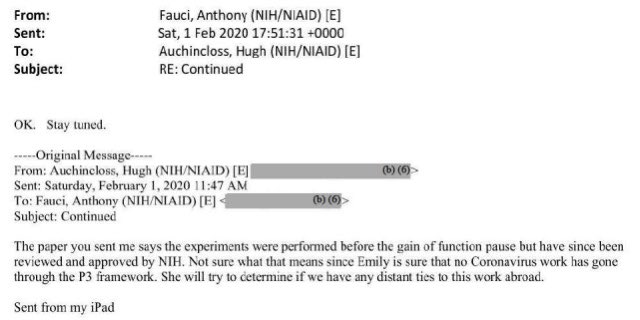
The Fauci emails also reveal that this possibility, even that Covid showed signs of being engineered for “gain of function” research, were discussed.  Now, frankly, this is just good forensic science.  It would be more shocking had this never been considered at all.  And the batting this idea around alone is not proof that this is what had actually happened. 

However, that so many literally conspired, with a foreign entity, to suppress this hypothesis (Big Tech censorship stifling the online conversation, corporate media fact-checkers claiming it had been debunked, etc) should be a cause for global outrage. 

Of course, the most laughable claim of media propagandists, at the time, was that it was racist to link the virus to the Chinese Communist Party.  Nevermind this was from the same people who had no problem with taking aim at wet markets and bat soup.  But somehow that criticism of Chinese eating habits wasn’t a problem while taking a closer look at a laboratory that was studying coronavirus and bats was inappropriate. 

Uh-huh.

Anyhow, given that Fauci had come out in full support of gain of function research and also been a force behind funding the Wuhan lab.  Could it be this history explains the private discussion, in emails, and simultaneous public denial? Possibly, yes.  It is very clear there’s a conflict of interest.  Of course there’s a reason for him to keep a lid on what could be proof of his culpability for millions of deaths worldwide. 

The result of Fauci’s silence, and corporate media stupidity and bias, is that something that should have been thoroughly explored months ago is only now being openly discussed.  This has given a totalitarian regime, known for deception, more than enough time to cover up the truth and their role.  Precious time has been wasted on what could be the biggest crime against humanity in the history of humankind.  We have experienced a death toll and economic damages greater than twenty nuclear bombs, countless innocent lives destroyed, and the likely culprit was protected by a web of denial, collusion between Big Tech, the corporate media and high ranking government officials—like Dr. Fauci.

If the January 6th fracas is worthy of consideration for a Congressional Commission, then we really should dig deeper and investigate the true cause of a global pandemic that killed millions.  No, there’s no smoking gun in the Fauci emails, or least none that I could see, and yet there is more than enough reason to suspect that one of our leading experts had tried to keep a lid on the Wuhan lab theory because of his own ties to the research.  And still our corporate media speaks glowingly of him, as if he could do no wrong, the fact-checkers scurrying to tell us there is no bombshell revelation in the emails.

Dr. Fauci: Authority or Arrogant?

One thing that the pandemic has revealed and the emails only further confirmed, is the complete arrogance of our institutions.  For whatever reason Fauci and others felt it was okay to mislead the American people, to tell the so-called “noble lie,” and then they wonder why trust is waning amongst the people they’ve deliberately deceived? Meanwhile, those who should be holding their feet to the fire, our ‘journalists’ (who now also see themselves worthy to pick winners for us rather than simply report), embarrass themselves with their fauning praise.

Is Fauci the sole source of all real science and truth?

No, absolutely not!

Is he a total fraud unworthy of his position?  

Well, that is something worthy of investigation and yet to be determined. Innocent until proven guilty is still the law of the land. And I do not believe in trials in the court of public opinion. Again, while there are questions of ethics and culpability to be answered, that our corporate media should be asking rather than singing his praises, nothing in the emails implicates him of a crime.

My own thought, knowing what is known, is that making Fauci the fall guy would be letting too many others off the hook.  Sure, he represents an accountability problem with the political establishment and elites who are protected by their own interests at the expense of the American people.  No, they don’t simply “follow the science” nor are they invulnerable to group think or free from all bias.  They’re human, like us, they make mistakes, they have political agendas and hidden motivations too.  It isn’t about secret conspiracies so much as it is a matter of human fallibility, in general, and arrogance.

Over the course of the past year Fauci’s name has become synonymous with authority and science. But much of that is smoke and mirrors. He is truly only one qualified voice of many and was only made the face of the pandemic as a way to undermine Trump. This is pretty much the only reason why he is loved by one side and loathed by the other. Politics. The politics of the pandemic cloud good judgment. And those caught in this political fray deserve better than to be torn up by the mob or raised up like saints.

Fauci, given the voting patterns of NYC and government lifers, is probably as Democrat as one could be. That could explain some of the looks of tension, and tedious corrections, when Trump used his layman’s terms during press conferences. But, unlike the media narrative that constantly pitted him against the President, the emails showed this conflict between the men was massively overblown.

In the end, Dr. Fauci has the swagger of a Brooklynite, cocky or confident depending on who you ask, and amazing stamina for a man his age. But he should have never been made a celebrity, never turned into this unquestioned authority on matters of science or used as a tool of partisan politics.

Fair enough?

Practical Solutions for Filipino Farmers and Market Fluctuations

Standard

Problem: Small scale Filipino farmers plant not knowing what the price will be by the time the crop is ready for harvest. When the price drops due to oversupply of vegetables the farmers barely make enough and sometimes even end up dumping their crops because the cost of transportation is greater than the value of the vegetables.

The problem is three-fold. First, it is the inability of farmers to see the whole picture of who is planting what crops, which results in overproduction and then drives market prices down. Second, it is a problem of markets being mostly local, with little to no access to other markets, this keeps prices lower. Third, there is not enough coordination between domestic farmers and government agencies that control the importation of agricultural goods.

Solution: The Department of Agriculture (Philippines) needs to study the market to find out what amount of vegetable production is needed. Once they establish a baseline, then they should come up with a voluntary program that will aid farmers in deciding what crops to plant today based on their projections of future demand.

The Department of Agriculture (Philippines) could issue a quota voucher to farmers, who had enrolled in the program, to plant crops based on the projections and granting them certain protections for if the market price does drop. In other words, if there is a market need for a particular amount of green beans then the agency could issue a proportional number of vouchers. This, assuming import controls, would stabilize the markets and prices. And, if the market price dropped anyways, abiding by the voucher system would entitle the farmer to some compensation.

Another way to get better prices for isolated farmers is to facilitate the connection to a broader market. Access to markets beyond the local region is one way to increase the value of crops produced and also to stabilize price fluctuations. Government contracted transportation and distribution could be a part of this or it could be entirely put out to bids with private contractors. The transportation costs to be offset by the better prices in the destination market, the farmer would get the voucher guarantee price and the rest would go to the transportation contractor.

This sort of analysis and organization could also be done independently of the government. But it would take a significant investment. The national government would be in a better position to facilitate this than a private entity of limited resources. That said, universities could help to develop the models of the agricultural markets necessary to determine how many vouchers should be issued for each kind of crop. It would need to be a collaborative effort. Maybe with the help of transportation cooperatives between these small-scale farmers?

And one key is to incorporate the local ‘grassroots’ input, as well, as a strictly top-down central planning agency would likely fail. Central planning generally doesn’t work and especially not when it removes the autonomy of individuals to act in their own self-interest or allow choice. Participantion would need to be voluntary and incentives market-based rather than artificial. Ideally it would be self-sustaining and entirely funded by the beneficiaries.

Finally, yes, protectionism may be bad in excess, as in North Korea. However, any country that wishes to maintain domestic industry and jobs must moderate foreign imports. Haitian farmers learned this lesson the hard way when cheap, subsidized, rice exports from the United States destroyed their already meager profits and forced more of them to compete for the limited opportunities for employment in the cities. So it is incumbent, on the government of the Philippines, to control agricultural imports for the benefit of domestic producers.

Anyhow, some ideas.

Amish Lies: I read it on the internet…, part 2

Standard

I was not planning to do a blog about immunization and autism.  However, an article posted by a social media friend, along with comments from US Senator Rand Paul made recently, prompted my response.  The article makes two claims about Amish, immunization and autism (presented in questions) in the title; and both claims turn out to be false. 

Claim: Amish Do Not Vaccinate

It seemed plausible at first brush, especially given that this small Christian sect mandates an austere lifestyle and rejects many modern conveniences, that they would also not vaccinate.  However, I have an advantage in that I know some Amish people.  But, more significantly, I have a sister (Dr. Olivia K. Wenger, MD) who led a study on Amish and their attitudes towards vaccinations. 

The research of Dr. Wenger and her colleagues, although addressing primarily the opinions of Amish parents about vaccinations and not vaccination rates, is sufficient to disprove the idea that Amish do not vaccinate.  This is some of what they found:

“Among 359 respondents, most (68%) stated that all of their children had received at least one vaccine, and 14% of those surveyed said their children had received no vaccines.”

Amish, in fact most who responded in the study cited above, do vaccinate.  So the idea that Amish do not vaccinate is a myth and lie.  That false claim alone is enough reason to dismiss any other claim found in the article, but in case you are unconvinced, I will address the other claim in the title as well.

Claim: Amish Do Not ‘Get’ Autism

The anti-vaccination article claims there are only three known cases of autism amongst Amish people.  Again, I could’ve accepted this as valid, but mostly because there’s a strong possibility of autism being undiagnosed in this community that is as insular and closed as the Amish community.

However, this too was easily refutable despite no studies directly addressing the topic.  I found research, by Dr. D. Holmes Morton, MD and others, that triples the number of cases of Amish children with autism symptoms:

“In March 2006, Drs. Kevin
Strauss, Holmes Morton and others documented 9 autistic Amish children, which could raise the autism rate of Lancaster Amish community Olmstead supposedly investigated to almost 1/5,000 all by themselves.”

So, both claims are untrue based in readily available evidence.  Unfortunately stories like this are posted as true over and over again by those who are anti-vaccination or sympathetic.  It is soaked up as proof of a link between autism and vaccines, yet it is demonstrably false information.

If your primary cause is truth, then carefully vet your sources!

As a believer in individual freedom, religious liberty and one who is respectful of conscience, I am doubly offended by articles like this.  Quite frankly I am embarrassed to see these types of spurious claims circulated by those associated with my political leanings and religious faith.

Yes, opposition to vaccinations crosses political and religious lines, but is often a topic of conversation amongst my Libertarian and Christian peers.  That some of them regularly repeat this sort of thing as legitimate or present it without question is a source of serious frustration for me.  It does a disservice to even good questions about vaccinations.

Nothing is gained by linking falsehoods to what is true.  If anything, people who are not ignorant of science will ‘throw the baby out with the bathwater’ and reject all that is associated with the falsehood.  In a world awash with information, why should they waste time on a source that lied to them once and/or doesn’t carefully vet their sources?

“Do not spread false reports.”  (Exodus 23:1a)

I realize not everyone is a scientific or critical thinker.  I myself struggle with the discipline required for serious research and that is part of the reason I would not make a career of it.  That said, we do need to take responsibility for the information we disseminate online and owe others our due diligence verifying claims with reliable sources before repeating it.

Sadly, anonymous articles with sensational headlines garner more attention than these unsung heroes who are actively creating solutions for sick Amish children.  There are sources far more reliable than an article that does not even include the name of the author.  Professionals like Dr. Morton and Dr. Wenger have dedicated their careers to studying Amish genetics and medical disorders. 

Footnote: I cite secondary sources for the research of Dr. Wenger and Dr Morton, but if you want to read the original studies, the links are below:

Underimmunization in Ohio’s Amish: Parental Fears Are a Greater Obstacle Than Access to Care

Recessive symptomatic focal epilepsy and mutant contactin-associated protein-like 2.