Oxygen Masks and Civilizational Math: Empathy’s Breaking Point

Standard

Anyone who has flown commercial knows the safety rundown before take-off.  You’re instructed on where to find lifejackets and how to put on the oxygen masks.  And one thing they emphasize is before taking care of anyone else, including children, they need to secure their own oxygen first.  This does not mean that a passenger shouldn’t care at all about anyone else.  What it means is that caring for ourselves first can make us more able to help others.

I came across a post of Facebook about the vandalism and terror campaign against Elon Musk’s Tesla brand.  In the comments I saw a left-wing activist justifying their violence by using a paraphrase of Musk, “empathy is a weakness.”  So I looked into the claim and found a quote of Musk during a Joe Rogan Experience podcast:

There’s a guy who posts on X who’s great, Gad Saad? … Yeah, he’s awesome, and he talks about, you know, basically suicidal empathy. Like, there’s so much empathy that you actually suicide yourself. So, we’ve got civilizational suicidal empathy going on. And it’s like, I believe in empathy, like, I think you should care about other people, but you need to have empathy for, for civilization as a whole, and not commit to a civilizational suicide. … The fundamental weakness of Western civilization is empathy, the empathy exploit. They’re exploiting a bug in Western civilization, which is the empathy response.

I’m not sure where “empathy is a weakness” can be found there.  What it seems Musk is saying is to keep everything in balance and not go to self-destructive extremes.  I would call it rational pragmatism rather than use a weird sounding “suicidal empathy” and yet it is a poignant point.  We can understand and share the feelings of others (empathy) while not destroying civilization in the process.  It is sort of how I always listen to my son, but don’t always give him stuff that he wants—because the soda and sweets could lead to tooth decay and diabetes.

This is the Gad Saad quote referenced by Musk in the interview:

Imagine an entire civilization that is taken over by an emotional parasite called suicidal empathy that trumps every other instinct that is within your adaptive repertoire. You are willing to sacrifice everything at the Altar of Suicidal Empathy. Nothing is more important than that.

What he’s taking on is the ideologies that demand we recognize, accept and finance every kind of bizarre behavior.  Money being sent for transgender operas when we have crumbling infrastructure, for example, this is what suicidal empathy looks like.  Or letting a confused men destroy women’s sports—there is an opportunity cost to these special accomodations and, with limited resources, it means many will suffer for the whims of a few demanding empathy in the form of their own exemptions and privileges.

My son may want me to taking him fishing every day.  To him I have limitless time and resources.  He says it would only take me a few minutes to drive him across town to his favorite spot.  But what he doesn’t really get is how doing this is difficult given I can’t just leave baby at home and it also cuts into my time to do the chores he neglects.  To him it seems simple and he reacts with disgust as if he is entitled to transportation and a life of leisure at the expense of everyone else in the house—yet the adults know better.

Performative Empathy vs. True Compassion

Nobody at DOGE is saying we should beat or bully transgender people or forbid people from donating to foreign causes.  What they have advocated is for efficient and effective use of public funds.  Yes, it could be called “tough love” and yet it is really essentially to the thriving—even surviving—of the country that we don’t bleed resources for minimal or no real return.  Government is not a charity, it relies on coercion to attain funds, for that reason it should only be used for things the majority of people support.

Those burning Tesla supercharger stations, smashing out dealership windows, or even attacking vehicles owned by individuals not named Elon may claim to represent the side of empathy, but their’s is only performative empathy and part of their partisan political agenda that is all about maintaining their own power and control over others.  Those same people forcing mandates, in the name of climate change, have now spun a 180 to creating unnecessary pollution.  They never cared about the planet—it is always about their belief they have the right to rule us.

That is what toxic empathy is about.  It is a manipulation game, a virtue signal, and like the jealous boyfriend’s love.  Sure, they say they love, and yet would murder before they would ever let their significant other go their own way or be apart from them.  This is, of course, symptomatic of leftism.  They want complete control over your life and yet call a billionaire greedy for being allowed to keep the wealth they’ve amassed.  And that’s the real culprit here: Envy.  It’s not that those on the left care so much about people, it is that they are looking for a moral justification for their rage against successful people.
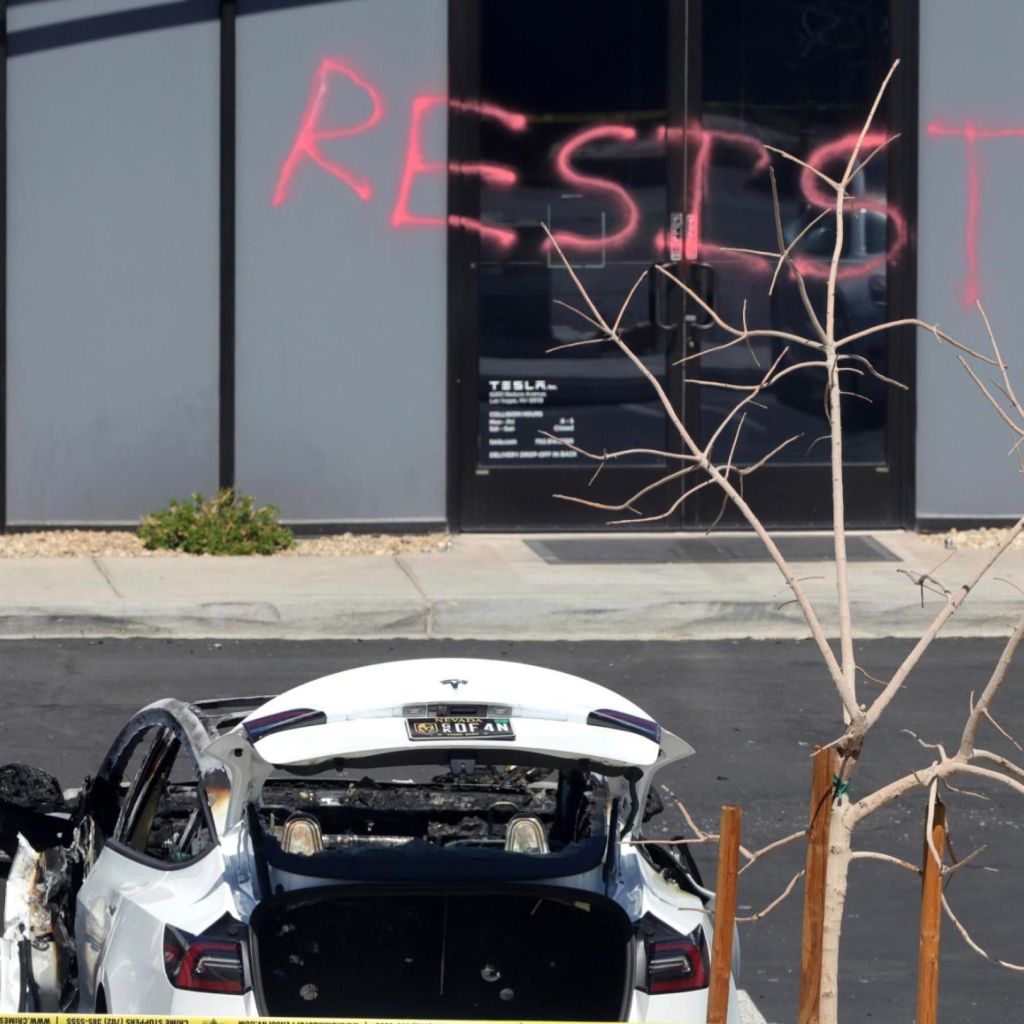
Leftist ’empathy’ strikes again.

Elon Musk is many things.  He’s extremely motivated.  A problem solver.  A billionaire.  A bit of an online troll.  A father of fourteen children.  Efficiency expert.  And also has Asberger’s syndrome.  It is that last item on the list that puts him at odds with normies who prefer lawyerspeak to bluntness.  Musk doesn’t coat anything in syrup, he analyzes, identifies the problem, and states it plainly rather than beat around the bush.  Contrast to the left, he puts logic and reasoning first—feelings second.

As an aside, CEOs and political leaders have a higher likelihood of being psychopaths.  It is what makes them good at their jobs.  You can’t make good decisions for a corporation or a country when you’re too zeroed in and obsessing over impacts to individuals.  That is going to lead to analysis paralysis and no necessary corrections being made.  Instead they think on the macro scale.  This is not to say they don’t care about the parts, but the good of the whole is what matters to them and they distribute concern according to the overall picture.  Sure it may seem cold and calculated—but serves the common good much better than empathy run amok.

As much as those on the left like to crow—as if their great empathy stretches across the globe—the reality is their typically very focused on their own feelings.

Their ’empathy’ is unsustainable.

Myopic.

Blind.

Christian compassion, in contrast, balances judgment and mercy. You do unto others as you want them to do to you, but also speak the truth in love—even when it gets you killed by an angry mob that doesn’t want to hear it. The tension or fusion of love and accountability keeps it grounded; it’s not a free-for-all where every whim gets a blank check. Unlike leftist empathy, which often bends toward appeasement or control, Christian compassion holds a line—help the widow and orphan, yes, but don’t burn down the house to warm them. It’s personal, not performative, and it doesn’t bankrupt the future for the sake of today’s applause.

Breathing Room for Civilization

In the end, the clash isn’t about empathy versus apathy—it’s about who gets to breathe first when the masks drop. Musk and Saad aren’t wrong to call out the self-inflicted wounds of suicidal empathy; they’re just pointing to the scoreboard: civilizations that forget their own oxygen don’t survive to help anyone. Leftist empathy, with its envy-fueled ‘virtue’ and reckless spending, dresses up as love but flirts with collapse—torching Teslas while preaching care, funding operas while bridges crumble. Christian compassion, for all its flaws, at least remembers the whole plane matters, not just the loudest sob story. We don’t need more performative tears or smashed windows—we need a hard reset on what keeps us aloft. Secure your mask, folks; the turbulence is just beginning.

What Is the True Cost of EV?

Standard

The battery electric vehicle (EV) versus the internal combustion engine (ICE) powered debate is one of the most irrational of our time. On both sides of the discussion, you have those frothing-at-the-mouth types who attack the moment you disagree. And this is exactly the response that I got after I had casually mentioned that ICE is 1/3 the cost under a click-bait post…

Model Y starts at $43,990 FYI.

One just called me ignorant, but others tried to make an argument, including this response:

I’m trying to figure out what car cost 1/3 of the price of a Tesla🤔🤔? The long range Model 3 (the one you want for a roadtrip) is $42,500 – $7500 tax credit is $35,000. This is not factoring in gas savings. Please tell me what new car is availability for under $12,000 (that’s the 1/3 cost of a Tesla you mentioned)?

Fair enough question.

Note, I never said new, but assuming that I did…

Believe it or not, and even in this inflationary age, there are still reliable sedans that come in under $20,000. Starting with a Mitsubishi Mirage G4 ($18,500), the Kia Rio ($17,875), and the Nissan Versa ($17,075), the lowest-priced option is half of even the subsidized price of the Tesla base model.

But you can’t exclude the subsidy from the cost of the EV, the government doesn’t have a magic wand to create value and we all end up paying for their expenditures in our taxes or by inflation due to money printing. And it only begins with that “tax credit” (so-called) given directly to privileged people who can afford a new luxury car.

What is the true cost of subsidies?

According to a study by the Texas Public Policy Foundation, the cost to us is nearly $50,000 for every EV produced:

Federal and state subsidies and regulatory credits for EVs totaled nearly $22 billion in 2021, or nearly $50,000 per EV, socializing the true cost of these vehicles to taxpayers, utility ratepayers, and owners of gasoline vehicles

Tens of billions of dollars have been spent trying to make EVs viable, and yet still the average cost of these vehicles is $65,000, compared to $48,000 for ICE. Why haven’t these subsidies leveled the playing field? It is simply the fact that batteries require tons of extra material and a much more complex process to produce.

So we can at least double that visible “tax credit” subsidy and already the true cost of an EV is close to three times a comparable ICE sedan.

We could stop there—the 1/3 number reached—but let’s continue…

What is the true cost of production?

The cost of a vehicle isn’t just the window sticker price or the money that it takes to manufacture. The bigger question—given the reason many say we should switch to EVs is about emissions—is what the increased environmental impact is of producing the batteries that go into these cars. Is this a trade-off we are willing to make?

Lithium batteries are costly, they require an enormous amount of water and also leave a toxic legacy that will grow exponentially as EV is adopted. Is it worth this cost to only marginally reduce carbon emissions?  That is to say, around 17-30% less emissions according to European Energy Agency? 

Sure, it could get better with a heavy investment in electrical generation and transmission—yet that is another huge cost financially and environmentally…

What is the cost of infrastructure demand?

This is where the conversation is the most interesting. We have the refining capacity and distribution network already built for ICE vehicles. Gasoline and diesel fuel have the advantage of being energy-dense and can be moved around using the existing highways. But what about EVs?

There is an illusion that comes with plugging something in. The load we put on the system is invisible. But there is no magic to it. Electricity is something that must be produced somewhere and then transmitted to the charging stations. If everyone adopted EV technology the grid would collapse.

We’re currently nowhere even near what it would take in capacity to convert everyone to EV. The easiest route to more electrical generation is to go anuclear. So how many new nuclear power plants would it take? Well, if we use miles driven and the number of cars on the road today, then we would need to build 250 additional nuclear power plants as big as the largest plant in the US, and the supporting infrastructure to keep up with this demand.

So are you willing to have a Palo Verde in your own backyard?

It cost 5.9 billion dollars to build one in 1988 (the equivalent of 13.9 billion in 2023) and we needed to start building 250 of them yesterday.  The solar and wind equivalent would be even more costly to build and maintain.

The costs would be astronomical and that’s just considering only passenger vehicles. Switching Class 8 trucks would take even more of these massive power plants and spending—the cost of switching would be insane.  Not to mention you would need more trucks to do the same work as you did with diesel.  And remember, every dime that we spend on this mass EV conversion could go to health care or education instead.

Can you now see how extremely costly EVs will become as they are adopted?

But it does not end there…

Why is the cost of wear items greater?

Batteries are heavy and weight is the enemy of “wear items” like brakes or tires—which is not to mention the additional damage to the highway infrastructure.

EV tires wear 20% faster than comparable ICE vehicles.  That is a cost out of your own pocket and also a concern for the environment. And do not forget, to be safe you’ll need those heavy-duty EV-specific tires. Sure, maybe this is not a very big problem for those who can already afford the premium cost of a new EV?  However, for that waitress struggling to make ends meet she will have to make the choice between safety and home utilities.

Next up is excess road wear.  Big trucks are obviously the leading cause of damage to roads. However, EV proliferation will start to cause problems for existing infrastructure:

A 6,000-pound vehicle causes more than five times as much road damage as a 4,000-pound sedan. A GMC Hummer EV, which weighs 9,063 pounds, will cause 116 times as much road damage as a Honda Civic, weighing 2,762 pounds.

The article cited above isn’t about EVs yet does apply given it is about the vehicle weight. Even the Model 3 is a whopping 3,862 to 4,054 lbs. Sure, one vehicle is not going to do a whole lot by itself, but the volume over time will significantly impact bridges and parking garages that were designed for lighter ICE vehicles. This EV vehicle weight bloat caused by batteries will require very costly upgrades to prevent catastrophic failures—like the Ann Street Building Collapse:

Speaking of disasters. With EV there is potential for a thermal runaway or reaction that can’t be stopped—like an ICE fire—by simply denying the source of oxygen. This hazard will result in more damage to road surfaces, more time spent in traffic jams after incidents, and additional toxic emissions. This is a cost to be seriously considered with all of the others.

Cost of time, capability, and resale value…

Many of the costs and drawbacks of EVs are hidden under a pile of subsidies or are moved upstream like the emissions—out of sight out of mind.

But what cannot be ignored is performance in terms of range. Time is by far our most valuable resource and nobody wants to spend hours in a place they don’t want to be because their vehicle battery is drained.

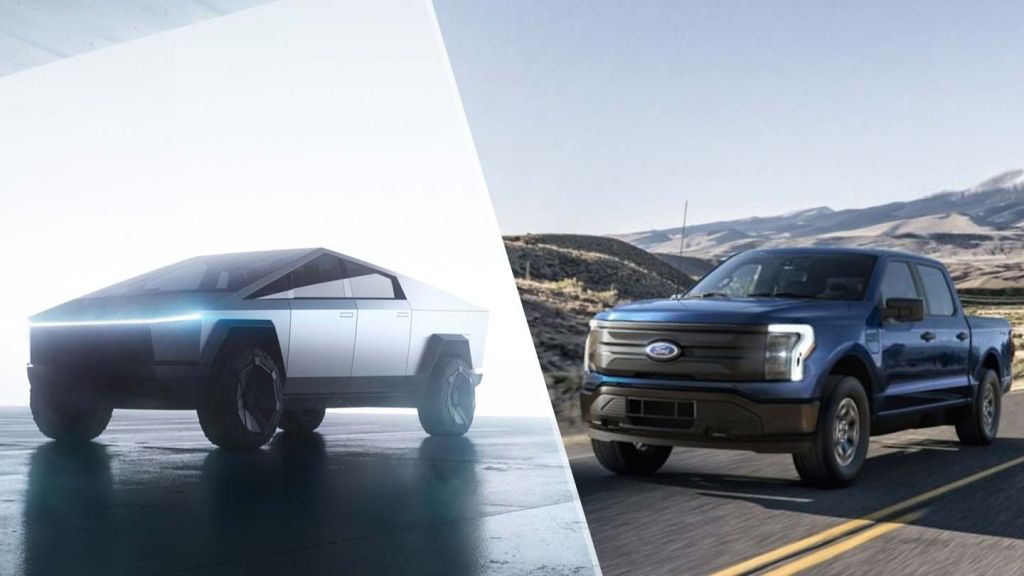
As far as capabilities, even EV trucks are useless for towing, both the Tesla Cybertruck and the Ford Lightning—both costing around $100,000 in the higher trim levels—aren’t so good at doing typical truck things. Sure, they produce a ton of low-end torque and are very fast. But the F-150 EV only went 90 miles pulling a camper and the Tesla only fared a little better.

7000lb luxury land yachts

And finally, we need to talk about plunging resale values. For a while EV was a novelty, the “way of the future” every suburban geek needed to virtue signal. But it appears that this is now starting to fade and reality is starting to take over again—46% of EV owners in the US plan to ditch EV to return back to ICE—and many will not recoup their cost because the floor is dropping out for used EVs:

A recent study from iSeeCars.com showed the average price of a 1- to 5-year-old used EV in the U.S. fell 31.8% over the past 12 months, equating to a value loss of $14,418. In comparison, the average price for a comparably aged internal combustion engine vehicle fell just 3.6%.

That’s bad news for the EV industry.  That is probably why Ford, after losing billions on their EV investments, has made plans to pivot back to hybrid.  Toyota, ever conservative, never made the mistake of getting sucked into the EV mania.  My wife’s C-Max (hybrid) has no range anxiety, saves fuel, and has a plug-in version that can go on battery for a length of a commute.  This is the right compromise.

ICE costs less to build, but the hybrid will likely emerge as the winner for being the best of both worlds. It has range like ICE, and torque like an EV, while also keeping its value and not requiring vast new expenditures to upgrade the electrical infrastructure. If costs are reflected in the market hybrid will come out victorious in the end.  Some can afford EVs today, but only because others are absorbing more than half of the real costs.

As a footnote, I’m not opposed to EVs nor do I think they are destined to go extinct. If resale values continue to drop I would even consider owning one. The whole point of this article is simply to give a bit of pushback against the Pollyannaish sentiments that would lead to an ill-advised mandate. There would be an enormous cost, and opportunity cost, that would come with this. Just the fact that EVs need massive subsidies to be sold should tell us enough. If it isn’t viable in the market it isn’t viable.

First They Came for the Conspiracy-Theorists…

Standard

The mass exodus off of Big Tech social media platforms has begun. Alternatives, like Parler, MeWe, and Gab, overnight, have gone from being the virtual Leper colonies of “wrong think” to viable communities for those fed up with the increasingly Orwellian mainline platforms.

After the 2016 election, and the influence of meme warfare and anti-establishment messaging on social media, the establishment (predictably) began to put pressure on for a clampdown. These self-appointed gatekeepers of information, the enraged Democrats and their corporate billionaire benefactors, were bitterly determined to have control of the narrative back in their own hands.

By hook or by crook, by any means necessary to get the job done, they would not allow a repeat of their crushing defeat in 2020, they would get Donald Trump out of the White House and be restored to the positions of power they believed were rightfully their own. Trump was a clown, they were smooth and sophisticated, how dare he takes away their glorious coronation—how dare he troll and mock them?

Democrat voter screams in rage after Trump victory in 2016.

Facebook and Twitter, encouraged by the corporate legacy media eager to eliminate competition, facing the demands of angry ‘progressive’ activists, slowly began to strangulate dissident perspectives on their platforms. It started with the extremists like Alex Jones, along with white supremacists and others on the fringes, then slowly worked in from there, throttling content, shadow banning, adding ‘fact-checks’ to posts, and completely removing viral videos that they deemed to be misinformation.

Learning From the History of Establishment Narratives

Three episodes from history, recently made into movies, involve those who questioned the established narrative, who endured terrible slander campaigns by the corporate media and government, and some were only vindicated years later.

Power is corrupting. Even good men, in bitter competition, can manipulate and mislead.

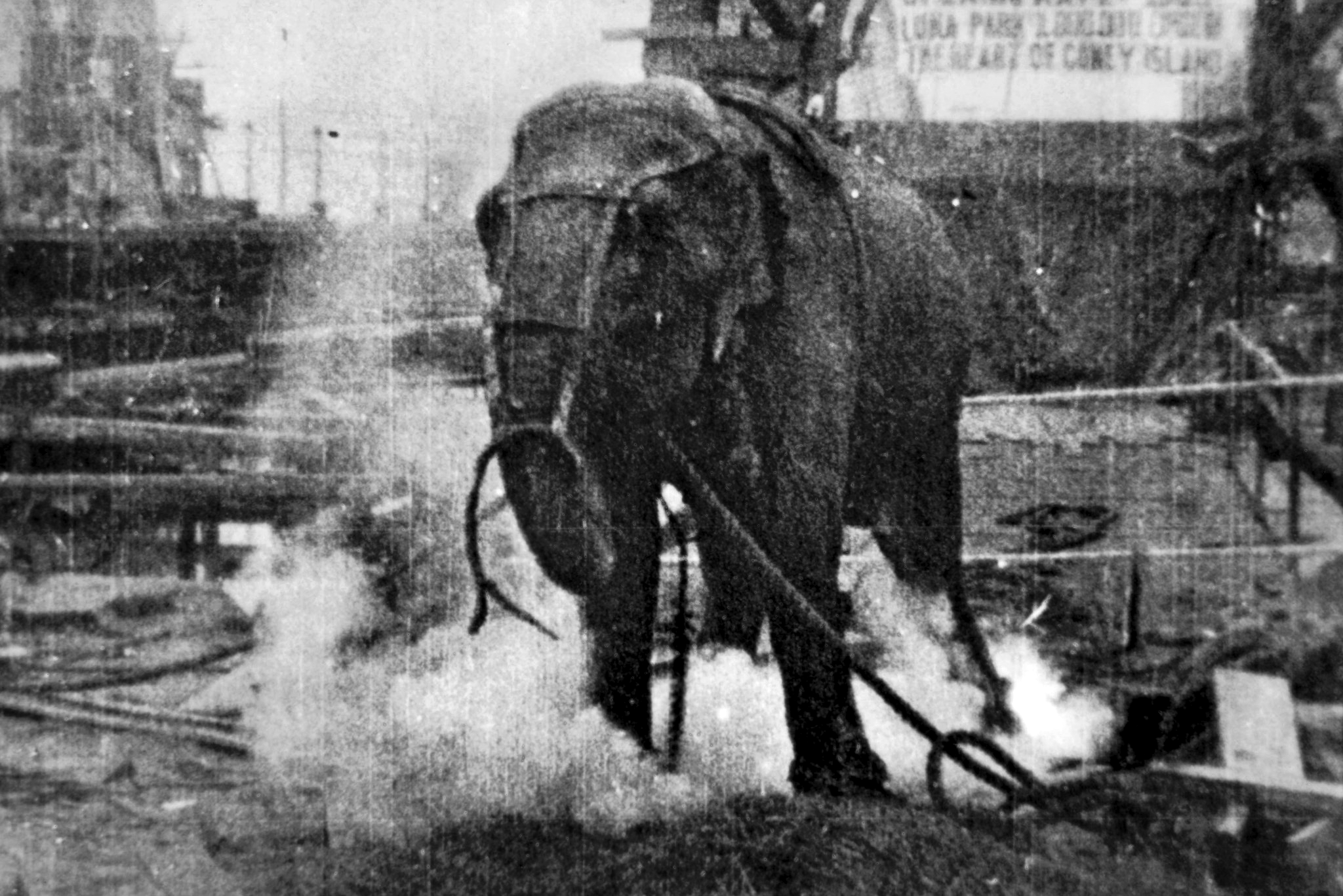
The first, “The Current War,” tells the story of Thomas Edison and his electrical competition against George Westinghouse, Nikola Tesla, and their alternating current. Edison, clearly for personal gain, tried to paint the alternative, as being extremely deadly and dangerous. He went as far as to do demonstrations, killing animals (including an unfortunate elephant), and even helped to invent the electric chair, to prove the superiority of his own direct current. He had the press in his back pocket then much like Big Tech has influence over the corporate media. They ran his stories critical of Westinghouse without truly understanding the topic material themselves.

Stalin was praised by our media while millions died. One man spoke out and paid the ultimate price.

The second movie, “Mr. Jones,” tells the story of a true journalist who uncovers the horrible truth, at great personal risk, about the millions starved to death in Ukraine due to Stalin’s economic policies. But rather than being embraced as a hero, his account is denied by a Pulitzer winning New York Times reporter and dismissed by the powers that be. Had he lived today, his stories would likely be ‘debunked’ by the fact-checkers, he would be ridiculed as a conspiracy theorist, accused of trying to create a false narrative, and canceled. Sadly, it took years before the truth of what was actually happening under Communist rule finally leaked out from around the self-appointed gatekeepers who were the true propagandists.

Do not trust the establishment. Always question the narrative.

The third story, “Richard Jewell,” shows how nasty investigators and sleazy journalists can be when they think they have you pegged. An innocent man nearly got railroaded into confessing to a terrorist bombing despite being one of the first responders. He was profiled and painted as the villain. If not for a helpful attorney friend, who brought him to his senses about what he was truly up against, he may have spent his life behind bars for a crime he did not commit. And the media establishment still does the same today, rushing to judgment based on political agenda or popular narrative, indifferent to the real damage they cause to individuals in their neglect of due diligence. The story of Jewell should be a wake-up call to those who trust the establishment narrative.

The allegations of Alt-tech being home to conspiracy theories and racism reminds me of Edison’s smear campaigns against Westinghouse and alternating current. Do you think Big Tech will not try to influence you against their competition? Of course, absolutely, they will!

Edison advised on how to use alternating current to kill a horse, this elephant “Topsy” and a death row inmate. All part of his campaign against rival Westinghouse.

The attempts to silence those who are questioning the election results remind me of the tremendous pressure put on Gareth Jones to deny what his own eyes had seen in Ukraine. Do you really think that the own current crop of corporate ‘journalists’ today and establishment politicians are incapable of being corrupted like those of the past who denied Stalin’s terrible abuses? No, are you kidding me? They certainly are not cut from better cloth today, the New York Times is the same leftist propaganda rag now as it was then, and we should always question the narrative!

The Time To Speak Out Is NOW!

As one who understands that censorship is sold as protection and is actually always about control, this was troubling and brought to mind the poignant words of Martin Niemöller, German Lutheran pastor:

First they came for the Communists, and I did not speak out—because I was not a Communist. Then they came for the trade unionists, and I did not speak out—Because I was not a trade unionist. Then they came for the Jews, and I did not speak out—Because I was not a Jew. Then they came for me—and there was no one left to speak for me.

Niemöller penned those words after the war to confess his regrets as one of those who did not speak out against the censorious Nazi regime. He, like many other Germans, had initially supported Adolf Hitler. Hitler had promised to unite and heal the country, under National Socialism, after years of turmoil.

The thing many do not understand today is that murderous tyrants do not advertise themselves as villains. Hitler was promising things like health care, economic security, and safety, what could possibly go wrong?

His harsh rhetoric against the privileged few would have sounded quite progressive.

Not the typical picture we see of Hitler today.

It wasn’t until after the war, until seeing people relocated or being sent to a concentration camp for standing up to the regime, that the full extent would be known. Niemöller ended up imprisoned at Sachsenhausen and Dachau, was nearly executed, which is why he wrote the poem that he did, as a warning to us. Unfortunately, many of us are still waiting for Nazis, who are targeting Socialists, trade unionists, and Jews, not realizing that the next Hitler won’t be pushing nationalism.

In our current context the poem could as easily be written:

First they came for the conspiracy theorists, but I did not speak out—because I was not a conspiracy theorist. Then they came for the far-right, but I did not speak out—because I was not far-right. Then they came for Evangelicals, but I did not speak out—because I was not Evangelical. Then they came for me—and there was no one left to speak for me.

The point being, the categories, and labels can be changed. The equivalent of Nazis today, the people smashing windows and cracking skulls in the name of social justice, call themselves anti-fascist. That’s how they fly under the radar, they claim that anyone who stands up to their violence is a Nazi and deserving of death. And, rather than stand up to the madness, many take these Marxist thugs at their word and our political establishment simply goes along with it. Why? Well, because they are afraid, ignorant, misguided, sympathetic, or complicit in the abuse.

Mostly peaceful protest.

Many well-intentioned liberal folks, for example, support BLM not realizing it is a political organization with an extremely narrow ideological perspective and far-left agenda. They’re duped. They think they are protesting against systemic oppression and racism, they join those who feel disenfranchised, and others who are genuinely compassionate people like them, never aware that they are being used by those who care less about black lives and are cynically encouraging racial grievance as a means to gain political power. By the time that good folks realize their mistake, there will be nobody left to speak for them.

Many others cower in silence because they are afraid of being called “racist” or a “Nazi” or “far-right” or “conspiracy theorists” for daring to challenge the establishment narrative. They think that if they say nothing that it will all go away. They, like Richard Jewell who believed the system would protect him from mistreatment, will be shocked when eventually end up being cast as the villain by the establishment-enabled mob. They do not understand that those ‘canceled’ before them were not always in the wrong and those who did the deed were not as righteous as they claim to be. Don’t wait until it is your turn to be smeared to speak up!

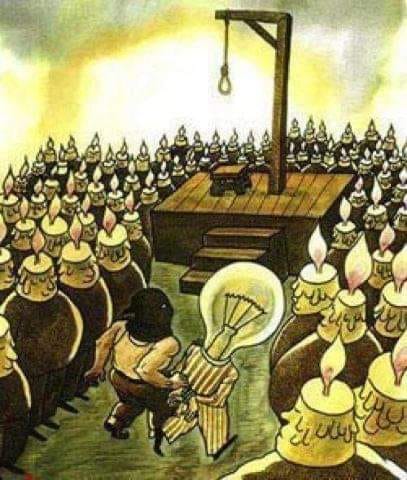
Those speaking the truth die first.

We must see past the propaganda, we must see past the labels slapped on those who dissent against the establishment narrative, we must speak for those who are silenced or we will suffer the same fate as them and there will be nobody left to speak for us. Things are not always as they seem. The next Hitler will not look or act like Hitler. No, it will be bright and colorful, come holding a sign “celebrate diversity” or chant slogans like “black lives matter” and things that most of us would agree with at face value. Evil is insidious, treacherous, it does not announce what it is, but you have been warned and it is now time for you to question the narrative and not be silenced.

Slander, Censorship, and the Current War

Oh, wow, you made it this far?

Let me continue…

It is maddening that so many seem incapable of seeing what is right before their eyes and should be obvious. There is an unbelievable double standard, based on race and social status, but not the double standard that is constantly obsessed upon by those at the top. There dangerous rhetoric, disinformation, and outright lies, but it will not get you de-platformed or banned.

And I’m not only talking about mobs, looting, arson, and murder being described as “mostly peaceful protests” nor teenage Kyle Rittenhouse being called a “mass shooter” for his defending himself from a potentially deadly assault by adult men, with felonies to their name, one being illegally armed, and then being portrayed as hapless victims. I’m not talking about Nicholas Sandmann who was the victim of a vicious smear campaign, targeted by our media and cultural elites, for a confrontation they totally misrepresented.

One of the scariest things I’ve ever heard from a Presidential candidate’s mouth was during the first debate when Antifa, a violent political hate-group, was described as being just “an idea,” refusing to denounce the billions in damages, countless assaults, and a growing number of murders. It is as chilling as saying racism and white supremacy are “just ideas,” that the lynch mob arose spontaneously rather than being an organized event, therefore it can’t be condemned. He didn’t excuse, he didn’t deflect, he simply acted as if the most violent far-leftist movement in this country didn’t exist and was allowed to move on without any further questioning about it.

Just an idea. Nothing to see here.

This kind of gaslighting is becoming increasingly common, coupled with censorship of all narratives that challenge the establishments narrative, fact-checking that is truly misinformation and more misleading than the content it claims to debunk, and removal of grassroots efforts.

My own exploration of social media alternatives began after observing a couple of pro-Trump “silent majority” groups rapidly grow in size, friendly people putting out a warm welcome to all and especially those who had voted for the Democrat last time now converted. These groups would reach the size of a few hundred thousand members and then suddenly go dark, removed. And then it got close to me. A friend, a stand-up guy, who moderated a pro-2nd Amendment group, without warning or explanation, was de-platformed from Facebook along with the other moderators. His own personal account deleted without cause.

And it wasn’t just him…

This was election interference. It has happened to other people, their accounts, and groups. Meanwhile, Antifa, BLM and other violent far-left groups are allowed to organize, with impunity, without fear, on these same platforms. The Russian collusion narrative, a political disinformation campaign has never got anyone flagged or banned. Nor was anyone ever punished with account removal for spreading falsehoods about an innocent high school only guilty of smiling nervously while a deranged man pounded a drum in his face. But to so much as suggest that there is fraud in this election and your protest group will be taken down and hashtags silenced.

Big Tech censorship is brazenly partisan, clearly suppression of dissent, and yet there are still those concerned about the alternatives being havens for conspiracy theorists and racists?

Balderdash!

The same kind of lies we hear now about Alt-tech were told by Edison and parroted by media a century ago. If you believe the ‘fact-checkers’ today about election fraud, you would’ve believed Stalin’s hirelings, establishment ‘journalists’ with Pulitzers, who were truly propagandists and covered up the atrocities of the Soviets in Ukraine. The real control freaks and fascists, those willing to do whatever it takes to hold on to their monopoly of power, will not hesitate to lie, sow seeds of chaos and promote confusion. We, like Niemöller, will not get a chance redo for our mistakes. Unlike him, we may not have anybody to fight off the tyrants and rescue us when they come.

Tesla’s Uphill Battle in the Trucking Industry…

Standard

There is no question that Elon Musk has changed the conversation as far as electric vehicles.  Musk, unlike his predecessors, focused on building an image of luxury and performance.

Electric powered vehicles, until the Tesla Model S arrived as an option, were boring, slow and impractical.  Now, while Musk’s cars still remain impractical for most people (both in terms of range and price) and while it remains to be seen whether or not his company could survive without corporate welfare, Tesla has at least undone some of the negative image of electric vehicles.

Tesla seems to be taking one more step in the direction of practicality with the introduction of commercial vehicle.  Semi, this latest opportunity for Musk to attract media attention, reminds me of something I would’ve drawn up in a middle school daydream: It has a sleek exterior, it is loaded up with LCD screens, it promises to perform at a level one would expect from a sports car, it is priced similar to other Class 8 trucks, and yet also makes me question if any experienced truck drivers were consulted in the design process…

Sure, middle school me would be salivating over this technological wonder.  However now, as one having had years of experience behind the wheel of a big rig, the center seating position, glare of screens, wheel fenders and charging times make it totally unappealing to me.

The ergonomic and design issues, obvious from a driver’s perspective, are covered in another former trucker’s article (click here if you want to know more about them) but there are more serious matters and practical concerns yet to be addressed.  Acceleration numbers and having the fastest truck on the road might increase coolness factor, but it might also leave all of your cargo on the road (or like the unmitigated disaster recalled unfondly from my days unloading trucks at the paint store) and distracts from questions of actual viability in the real world.

To many the promised 300-500 mile range and 30 minute recharging may seem wonderful. But, from a trucking industry standard, it is truly abysmal and completely impractical.  The range of an over-the-road diesel truck, with 250 gallons of fuel, is anywhere from 1000 to 2000 miles and it only takes fifteen minutes every other day to refill the tanks—multiple extra stops per day is intolerable given the current hours of service requirements.  

And, that’s assuming good conditions, what happens in cold weather when battery capacity is reduced by 40-50% like owners of other Telsa products have experienced?

It is no big secret that fossil fuels carry a greater amount of energy per pound than the alternatives currently available. This energy density is especially important in commercial trucking where every ounce of extra weight takes away from payload.  Batteries with the range Telsa has promised will certainly be very heavy and that will be a huge competive disadvantage.  It means you might need an additional Tesla truck to do what one diesel truck does—which wipes out any illusion of energy savings and cost effectiveness.

Then there is the question of longevity and servicing the truck.  It could very well be that the Tesla Semi will be completely reliable and go a million miles like a diesel truck.  But, even assuming that is the case, what sort of maintenance program and roadside assistance will they offer when things do inevitably go wrong?  Service infrastructure is a more significant in commercial trucking than it is in general.  Diesels are relatively easy to work on and the network is already established—those are questions that must be answered.

My own back-of-the-napkin analysis, based in what has already been said and can be reasonably assumed, is that this new Tesla offering will have the same liabilities of other battery electric vehicles except on a far larger scale.  The question of Tesla being the future of trucking (or is simply a niché vehicle for those who can afford the unavoidable range and weight disadvantages, as well as potential maintenance issues) is not answered.

Trucking companies, unlike wealthy luxury car buyers aided by government subsidies, need to be profitable and competive to survive.

What do my trucker friends think?