What Is the True Cost of EV?

Standard

The battery electric vehicle (EV) versus the internal combustion engine (ICE) powered debate is one of the most irrational of our time. On both sides of the discussion, you have those frothing-at-the-mouth types who attack the moment you disagree. And this is exactly the response that I got after I had casually mentioned that ICE is 1/3 the cost under a click-bait post…

Model Y starts at $43,990 FYI.

One just called me ignorant, but others tried to make an argument, including this response:

I’m trying to figure out what car cost 1/3 of the price of a Tesla🤔🤔? The long range Model 3 (the one you want for a roadtrip) is $42,500 – $7500 tax credit is $35,000. This is not factoring in gas savings. Please tell me what new car is availability for under $12,000 (that’s the 1/3 cost of a Tesla you mentioned)?

Fair enough question.

Note, I never said new, but assuming that I did…

Believe it or not, and even in this inflationary age, there are still reliable sedans that come in under $20,000. Starting with a Mitsubishi Mirage G4 ($18,500), the Kia Rio ($17,875), and the Nissan Versa ($17,075), the lowest-priced option is half of even the subsidized price of the Tesla base model.

But you can’t exclude the subsidy from the cost of the EV, the government doesn’t have a magic wand to create value and we all end up paying for their expenditures in our taxes or by inflation due to money printing. And it only begins with that “tax credit” (so-called) given directly to privileged people who can afford a new luxury car.

What is the true cost of subsidies?

According to a study by the Texas Public Policy Foundation, the cost to us is nearly $50,000 for every EV produced:

Federal and state subsidies and regulatory credits for EVs totaled nearly $22 billion in 2021, or nearly $50,000 per EV, socializing the true cost of these vehicles to taxpayers, utility ratepayers, and owners of gasoline vehicles

Tens of billions of dollars have been spent trying to make EVs viable, and yet still the average cost of these vehicles is $65,000, compared to $48,000 for ICE. Why haven’t these subsidies leveled the playing field? It is simply the fact that batteries require tons of extra material and a much more complex process to produce.

So we can at least double that visible “tax credit” subsidy and already the true cost of an EV is close to three times a comparable ICE sedan.

We could stop there—the 1/3 number reached—but let’s continue…

What is the true cost of production?

The cost of a vehicle isn’t just the window sticker price or the money that it takes to manufacture. The bigger question—given the reason many say we should switch to EVs is about emissions—is what the increased environmental impact is of producing the batteries that go into these cars. Is this a trade-off we are willing to make?

Lithium batteries are costly, they require an enormous amount of water and also leave a toxic legacy that will grow exponentially as EV is adopted. Is it worth this cost to only marginally reduce carbon emissions?  That is to say, around 17-30% less emissions according to European Energy Agency? 

Sure, it could get better with a heavy investment in electrical generation and transmission—yet that is another huge cost financially and environmentally…

What is the cost of infrastructure demand?

This is where the conversation is the most interesting. We have the refining capacity and distribution network already built for ICE vehicles. Gasoline and diesel fuel have the advantage of being energy-dense and can be moved around using the existing highways. But what about EVs?

There is an illusion that comes with plugging something in. The load we put on the system is invisible. But there is no magic to it. Electricity is something that must be produced somewhere and then transmitted to the charging stations. If everyone adopted EV technology the grid would collapse.

We’re currently nowhere even near what it would take in capacity to convert everyone to EV. The easiest route to more electrical generation is to go anuclear. So how many new nuclear power plants would it take? Well, if we use miles driven and the number of cars on the road today, then we would need to build 250 additional nuclear power plants as big as the largest plant in the US, and the supporting infrastructure to keep up with this demand.

So are you willing to have a Palo Verde in your own backyard?

It cost 5.9 billion dollars to build one in 1988 (the equivalent of 13.9 billion in 2023) and we needed to start building 250 of them yesterday.  The solar and wind equivalent would be even more costly to build and maintain.

The costs would be astronomical and that’s just considering only passenger vehicles. Switching Class 8 trucks would take even more of these massive power plants and spending—the cost of switching would be insane.  Not to mention you would need more trucks to do the same work as you did with diesel.  And remember, every dime that we spend on this mass EV conversion could go to health care or education instead.

Can you now see how extremely costly EVs will become as they are adopted?

But it does not end there…

Why is the cost of wear items greater?

Batteries are heavy and weight is the enemy of “wear items” like brakes or tires—which is not to mention the additional damage to the highway infrastructure.
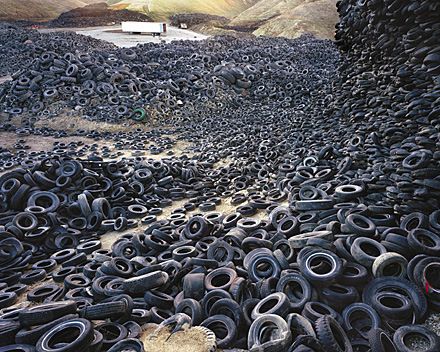
EV tires wear 20% faster than comparable ICE vehicles.  That is a cost out of your own pocket and also a concern for the environment. And do not forget, to be safe you’ll need those heavy-duty EV-specific tires. Sure, maybe this is not a very big problem for those who can already afford the premium cost of a new EV?  However, for that waitress struggling to make ends meet she will have to make the choice between safety and home utilities.

Next up is excess road wear.  Big trucks are obviously the leading cause of damage to roads. However, EV proliferation will start to cause problems for existing infrastructure:

A 6,000-pound vehicle causes more than five times as much road damage as a 4,000-pound sedan. A GMC Hummer EV, which weighs 9,063 pounds, will cause 116 times as much road damage as a Honda Civic, weighing 2,762 pounds.

The article cited above isn’t about EVs yet does apply given it is about the vehicle weight. Even the Model 3 is a whopping 3,862 to 4,054 lbs. Sure, one vehicle is not going to do a whole lot by itself, but the volume over time will significantly impact bridges and parking garages that were designed for lighter ICE vehicles. This EV vehicle weight bloat caused by batteries will require very costly upgrades to prevent catastrophic failures—like the Ann Street Building Collapse:


Speaking of disasters. With EV there is potential for a thermal runaway or reaction that can’t be stopped—like an ICE fire—by simply denying the source of oxygen. This hazard will result in more damage to road surfaces, more time spent in traffic jams after incidents, and additional toxic emissions. This is a cost to be seriously considered with all of the others.

Cost of time, capability, and resale value…

Many of the costs and drawbacks of EVs are hidden under a pile of subsidies or are moved upstream like the emissions—out of sight out of mind.

But what cannot be ignored is performance in terms of range. Time is by far our most valuable resource and nobody wants to spend hours in a place they don’t want to be because their vehicle battery is drained.

As far as capabilities, even EV trucks are useless for towing, both the Tesla Cybertruck and the Ford Lightning—both costing around $100,000 in the higher trim levels—aren’t so good at doing typical truck things. Sure, they produce a ton of low-end torque and are very fast. But the F-150 EV only went 90 miles pulling a camper and the Tesla only fared a little better.
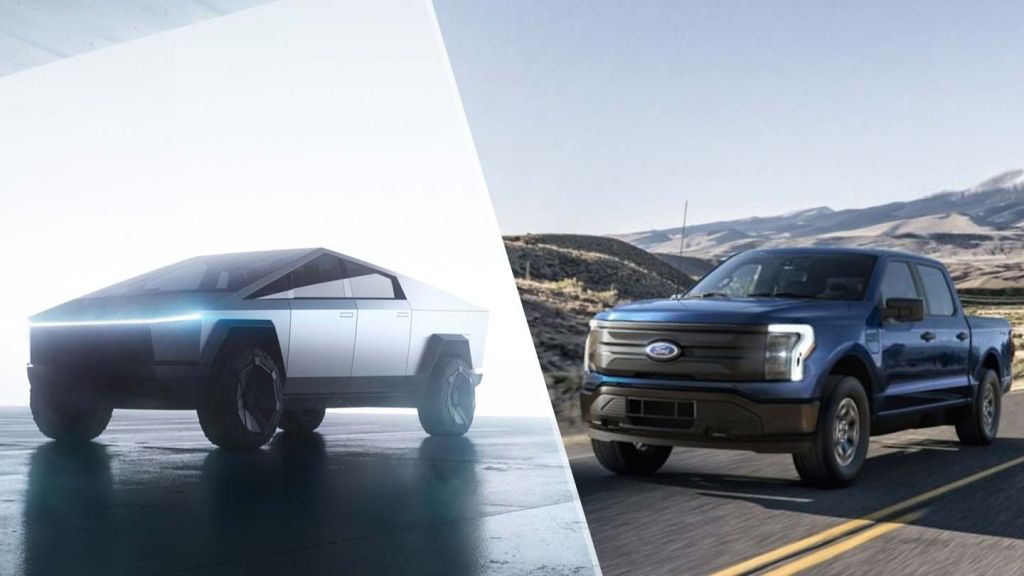
7000lb luxury land yachts

And finally, we need to talk about plunging resale values. For a while EV was a novelty, the “way of the future” every suburban geek needed to virtue signal. But it appears that this is now starting to fade and reality is starting to take over again—46% of EV owners in the US plan to ditch EV to return back to ICE—and many will not recoup their cost because the floor is dropping out for used EVs:

A recent study from iSeeCars.com showed the average price of a 1- to 5-year-old used EV in the U.S. fell 31.8% over the past 12 months, equating to a value loss of $14,418. In comparison, the average price for a comparably aged internal combustion engine vehicle fell just 3.6%.

That’s bad news for the EV industry.  That is probably why Ford, after losing billions on their EV investments, has made plans to pivot back to hybrid.  Toyota, ever conservative, never made the mistake of getting sucked into the EV mania.  My wife’s C-Max (hybrid) has no range anxiety, saves fuel, and has a plug-in version that can go on battery for a length of a commute.  This is the right compromise.

ICE costs less to build, but the hybrid will likely emerge as the winner for being the best of both worlds. It has range like ICE, and torque like an EV, while also keeping its value and not requiring vast new expenditures to upgrade the electrical infrastructure. If costs are reflected in the market hybrid will come out victorious in the end.  Some can afford EVs today, but only because others are absorbing more than half of the real costs.

As a footnote, I’m not opposed to EVs nor do I think they are destined to go extinct. If resale values continue to drop I would even consider owning one. The whole point of this article is simply to give a bit of pushback against the Pollyannaish sentiments that would lead to an ill-advised mandate. There would be an enormous cost, and opportunity cost, that would come with this. Just the fact that EVs need massive subsidies to be sold should tell us enough. If it isn’t viable in the market it isn’t viable.

Evolution: From Genesis To the Gospels

Standard

If you read the Gospel narratives and get to the end of these books, you come across some very interesting passages.  It is after the resurrection and right before Jesus ascends that we read this:

Again Jesus said, “Peace be with you! As the Father has sent me, I am sending you.” And with that he breathed on them and said, “Receive the Holy Spirit. If you forgive anyone’s sins, their sins are forgiven; if you do not forgive them, they are not forgiven.” 

(John 20:21-23 NIV)

And according to St. Luke:

Then he opened their minds so they could understand the Scriptures. 

(Luke 24:45 NIV)

What strikes me, in both passages, is how this final transformative step took place after a long-drawn-out process of teaching and showing by example.  Why go through this protracted effort if ultimately their minds needed to be opened by the Holy Spirit?

Furthermore, why even go through the centuries, from the time of Abraham on, leading these stubborn Israelite people, if the real plan is to send Jesus and rely on the power of the Holy Spirit?  If all of this eighth day of creation could have been accomplished with God merely saying the word, why not skip steps A to Z or cut to the chase?

In the Beginning…

There are many who believe that anything other than a ‘literal’ interpretation of the word days in the first chapters of Genesis takes away from God’s power.  In their mind it must be twenty-four-hour, the earth spinning a full rotation on its axis, days and nothing else.

Of course, knowing the little I do about language, and how words like “gay” can evolve from happy to men who prefer men, it makes very little sense to die on the hill of one particular translation from archaic language.  It does not seem necessary to turn this into an either/or and especially considering that none of us were there to witness the events described.  There is a sort of poetic metre to the opening chapter of Genesis, it could certainly suggest we could see this as a summary rather than something exhaustive.

All that the long way around to saying that this opening act of Scripture culminates at this moment:

Then the Lord God formed a man from the dust of the ground and breathed into his nostrils the breath of life, and the man became a living being. 

(Genesis 2:7 NIV)
Creation of Adam, mosaic, 12th century. Monreale, Cathedral

The interesting part is that this is the second account of the creation of man, whereas this is the first version of this significant event:

Then God said, “Let us make mankind in our image, in our likeness, so that they may rule over the fish in the sea and the birds in the sky, over the livestock and all the wild animals, and over all the creatures that move along the ground.” So God created mankind in his own image, in the image of God he created them; male and female he created them. 

(Genesis 1:26‭-‬27 NIV)

In the above account we have both male and female, or mankind, being created simultaneously on the “sixth day” and yet in the very next chapter we have Adam naming all of the animals, not finding a suitable match for himself amongst all of the creation, and this *before* Eve being formed.  At best that was one heck of a long day, at worse the first two chapters of the Bible directly contradict each other.

Of course, then we get into what a “day” really is without a sun, as celestial bodies weren’t created until the fourth day according to the Genesis account.  Time is not some immutable thing, it passes faster and slower depending on the reference frame, the Palmist tells us that a thousand years is as a day from God’s perspective.  So I’m not sure what is gained by insisting on the one interpretation that most conflicts with the scientific evidence.

A Biblical Preference for Process

It does not take a deep dive into theology to realize the importance of ritual.  Whether Namaan’s seven dips in the river Jordan before being healed, the march seven times around the walls of Jericho before they fell, or Jesus spitting in mud and rubbing it into a blind man’s eyes before the miraculous, there’s a distinct pattern of the creation doing and the God coming through to complete the work.

Maybe the repeating record of Scripture is trying to tell us something?

First, the elongated process does not eliminate or even diminish God.  Sure, many of us want immediate results, we want everything to materialize, fully formed, rather than have to wait days, weeks, or years.  And many do conclude after a prayer is not immediately answered or according to their own timeline, that this does rule out the possibility of God.  But the clear Biblical pattern is that everything is always in the fullness of time:

So also, when we were underage, we were in slavery under the elemental spiritual forces of the world. But when the set time had fully come, God sent his Son, born of a woman, born under the law, to redeem those under the law, that we might receive adoption to sonship.

(Galatians 4:3‭-‬5 NIV)

St. Paul likens the spiritual transformation, made possible through Christ, to the two sons of Abraham—one of them the result of rushing the process and the other of truly Divine origin.  The law is a foundation and yet not the fullness or complete fulfillment.  Even now, even for the believer, we know we are not a completed work until that day we hear “well done, good and faithful servant!”

Cutting to the chase, the “formed a man from the dust” of Genesis doesn’t tell us much about the process behind that formation.  But the “breathed into his nostrils the breath of life” of Genesis does parallel with “he breathed on them”  in the Gospel of John.  The disciples, like Adam, had some kind of form prior to this transformation and enhanced spiritual life.  The time they had spent with Jesus prior to their mind being opened was not purposeless.

God could have created without a process.  Still, the overwhelming pattern appears to be that God catalyzes things that are already underway or set in motion.  It would therefore not be all that surprising if forming out of dust alludes to an evolutionary process, which was finalized in Adam and this special spiritual life breathed into him.

What Makes Us More Than Animals?  

Truly, in terms of biology, we aren’t different from animals, we have instincts that drive us, and can lose our humanity too.  Indeed, we can be degraded to an animalistic existence through our actions and lose that element of being created in the image of God:

But these people blaspheme in matters they do not understand. They are like unreasoning animals, creatures of instinct, born only to be caught and destroyed, and like animals they too will perish. 

(2 Peter 2:12 NIV)

So the Bible tells us about evolution (and de-evolution) from the perishable fleshly form or physical body to those are quickened in spirit and being transformed:

So will it be with the resurrection of the dead. The body that is sown is perishable, it is raised imperishable; it is sown in dishonor, it is raised in glory; it is sown in weakness, it is raised in power; it is sown a natural body, it is raised a spiritual body. If there is a natural body, there is also a spiritual body. So it is written: “The first man Adam became a living being”; the last Adam, a life-giving spirit. The spiritual did not come first, but the natural, and after that the spiritual. The first man was of the dust of the earth; the second man is of heaven. As was the earthly man, so are those who are of the earth; and as is the heavenly man, so also are those who are of heaven. And just as we have borne the image of the earthly man, so shall we bear the image of the heavenly man. I declare to you, brothers and sisters, that flesh and blood cannot inherit the kingdom of God, nor does the perishable inherit the imperishable. 

(1 Corinthians 15:42‭-‬50 NIV)

It is this spiritual component—this ‘breath’ of God both in Genesis and the end of the Gospels—that sets us apart from the animal.  We’re essentially on the same journey as Pinocchio, who wanted to be a real boy, in this pursuit of the Divine transformation.  We have evolved, even if not in the Darwinian sense, from that first cell in our mother’s womb to the learning of our childhood, and this is a creative process guided by the Holy Spirit from start to finish.

Icon of Jesus pulling Adam and Eve out of the grave on the mystical eighth day of creation, which is to say His victory over death and the resurrection of the dead.

The Terrible Irony of a Person Who Hates People

Standard

One of my biggest pet peeves?

How so many people hate people.

They see encroachment on animal habitats, destruction of the environment, our nature, and imagine the world as being better without people.

Sure, I do understand the sentiment, I do not want to see something good be ruined. And I believe, for the good of humanity and all other living things, we should be caretakers of this amazing planet to the extent that we are able.

However, without us to observe, what would be left to make the judgment that the world is better or worse without us?

Without a Capable Observer—Does Anything Really Matter?

Like beauty is in the eye of the beholder, the existence of anything is a matter of there being a capable observer. Rocks or even simple organisms show no sign of being capable of appreciating their own existence—let alone beauty or the universe.

Our existence in time and space is something profoundly mysterious no matter what you believe about the origin of life—created in six days or over the span of 13.8 billion years—it is incredible.

But we are unique in this capacity to use words to describe our existence. We are, by all appearances, alone in this ability to contemplate our own existence or at least able to do it at a level unmatched by anything else known. Dolphins and elephants are, indeed, very intelligent yet, at very least, lack our vantage point as observers.

The Contradiction of a People Hating Person

Those who claim to prefer the creature over humanity are truly at odds with themselves. Not only are humans the pinnacle of the complexity of life on this planet, but we are also special for our ability to appreciate that we or anything else exists.

In other words, no beholder means no beauty, because beauty is not something out there or independent of an observer—beauty is rather a concept of mind that depends on the existence of the observer as much as the things being observed. What is out there only exists to the extent that something is able to assign value or appreciate that it does exist.

People who hate people underappreciate the wonderful mystery of their own consciousness and completely fail to comprehend that their observation is what gives all things value.

An amoeba may exist independently of us in some form, but it lacks the human mind to process things like future and understand the result of actions or consequence—which is the basis of the moral reasoning and the very thing that can cause some to view themselves (or just other people) with contempt.

Maybe it isn’t that people hate all people so much as they are narcissistic and simply hate every other person—with exception of themselves?

Narcissists Only Value Their Own Consciousness

It does seem that there are many people, who see themselves as being worthy of resources because they are (in their own minds) enlightened and special in comparison to others.

This aggrandized perception of self is possibly due to their own inability to imagine others being equally (or more) intelligent, as consciously aware or moral as they are, and otherwise equal. Their deficiency of imagination is only made worse by a culture that promotes a notion of self-worth that is independent of love for humanity in general.

Whatever the case, it leads to self-contradiction, it leads to a person who values themselves and their own moral judgment while not recognizing this capacity in others to do the same. It is basically a person who loves their own consciousness so much that they can no longer value perspectives that do not mirror their own and thus hate (rather than appreciate) anyone in competition with them for resources.

A people hating person sees other humans as being greedy and abusive, but fail to comprehend their own jealousy and control freakishness. They judge humanity as a whole without turning the criticism back on themselves or understanding that they themselves, with the mundane choices they make on a daily basis, are as responsible for the large scale problems as the collective whole.

A person who sees others as morally or otherwise inferior to themselves it is on a path to self-destruction. Pride coming before the fall is not karma—it is consequence. A person can become so blinded by their own arrogance and contempt for others that they are actually worse than those whom they condemn. They cannot learn or grow and are bound to hit a wall at some point when their own hatred makes their own life unbearable.

In some cases, when coupled with young male aggression, they become school shooters.

But in most cases, people who undervalue people simply live as one led by the nose by their own confirmation biases and emotions. They see themselves as having all the right answers, as always being the good or righteous person, and are really just egotistical and hypocrites. They may feel entitled because of their inflated self-worth—but are deceived. Like Cain who slew his brother Abel (as means to deal with his own cognitive dissonance as a result of his sacrifice being rejected), they are truly an enemy of themselves.

Why Care About What Will Eventually Burn Anyways?

Another deficiency of a person who hates other people is their inability to comprehend the reality of the universe as it is. Both an atheist astrophysicist and religious fundamentalist should be able to agree on this and that is that the universe as we know it will eventually end. Solar physics (evidenced in the stars) and Scripture point to fire as being the ultimate end of life on earth.

Even if some life were to somehow escape that consuming fire it too would cease as the cosmic clock spring of thermodynamics (behind all movement and life in the universe) became completely unwound. That, the “heat death of the universe” may be billions upon billions of years in the future, but it is as inevitable as the sun coming up in the morning and everything we know in this life will cease. There will be no stars flickering, no photosynthesis, no warmth or entropy—all will have expired.

But we do not even need to go that far out in time to understand the reality of life. Take a visit to the American Museum of Natural History in New York City sometime, consider for themselves all of those various forms of creature that went extinct and went extinct long before humans could have played a significant role in the environment. Nobody cries over Pakicetus nor laments the complexity of the ecosystem that it lived in, so why be upset about Pandas or Polar Bears following the same path?

Certainly, we should be concerned about the decline in the diversity of life, especially as rapid as it has been in recent centuries. That said, there have always been periods of expansion and contraction, usually related to cataclysmic events such as comet strikes or super volcanos, which will happen whether we campaign to “save the whales” or not. Which isn’t to say that we should care any less than we do, but we should probably care differently knowing that it is all temporal regardless.

Which leads into a question, if all this will end one way or another…

What Really Is Important?

Humans are magnificent creatures. We are the only creature capable of planetary destruction. But also creatures so extraordinarily capable of perceiving the future and contemplating things like value. It is our unique abilities that make our complex moral reasoning possible, where we can examine our own actions (collectively or individually) and pronounce judgment.

We are more responsible, but only because we are better at understanding the consequences of our actions and are able to adjust our behavior accordingly. We make priorities. We decide, in our own minds, what is good or bad, what is worthy of our love and what is deserving of our hate, whether flamingos matter more than fetuses.

We determine what is important.

So what is most important given that everything in this universe has a definite expiration date?

If there is anything timeless or beyond this universe, more important than life itself, what is it?

For me the answer is love.

If anything can escape our temporal existence it is love. Love transcends. Love allows us to show grace to the other creatures on this planet which are most like ourselves and that being all of those other fallible human beings. It is true, people are often unappreciative and wasteful. But hate for other people is really only self-loathing (removed a few steps) and to underestimate the value of our existence as the observers most capable of appreciating the beauty of this world.

It is important that we love other people. Sure, there billions of us and it is really hard to love those faceless masses sometimes. Still, other people have as much right to exist as anything else in the universe, we should appreciate them that they are conscious, like us, and love them as we want to be loved ourselves. Without love, nothing is really important and our existence, this tiny snapshot we get of the universe as humans, is meaningless.

The Confidence Conundrum

Standard

“Be confident!”  

Two words and some of the most unhelpful advice ever given.

Telling someone to be confident is like telling a depressed person to be happy or a short person to be tall.  A person who lacks in confidence does not know how to be confident or else they would already be confident.  Building confidence takes more effort than making a bold pronouncement upon someone.

People do not simply choose to be shy, unsure, uncertain, doubtful, confused, hesitant, timid, anxious or fearful.  No, those things are a product of life experiences and emotions that are all very real.  A confident person making a perfunctory statement does nothing to change the reality of a person who lacks confidence.

That said, confidence is desirable and something to be shared.  

Unfortunately, people who are confident often do not have reason to be introspective about it.  When you feel good about life there is not much need to know why or question it, there is only reason to be what you already are and enjoy the benefits.

Confidence is both a natural disposition and also something gained through positive experience.  Parents instill confidence in children through example or by helping them to overcome their fears and learn from failures rather than dwell in them.  Confident and successful parents seem to produce confident and successful children.

Confidence goes hand in hand with success, it frees a person to take the plunge rather than waste time in needless deliberation and makes them more attractive.  But, there is a sort of causality dilemma, in that confidence often leads to success while success builds confidence and without one the other becomes more difficult to maintain.

When confidence doesn’t produce success, it leads an intelligent person to doubt.  And with doubt comes less desire to risk effort and that results in even less opportunity for success, which often leads to even less success and even less confidence.  Pretty soon things can spiral downward into the pit of despair without a clear way out.

So, how do we help someone who lacks confidence gain it?

If you want a person to be confident then you must give them reason to be confident and good enough reason to overcome whatever reasons they have to lack confidence. To be helpful one must directly address root causes and not dismiss the realities that created the condition as silly or irrelevant.

What people need is T.IM.E.

Help must be practical.  Encouraging words don’t cut it.  Words, no matter how confident you are in saying them, are only words and do nothing to counteract the real life experience or emotional baggage of someone who has only known failure.  What is helpful, perhaps the only thing that does help in some cases, is meaningful long-term investment in the other person.

Loss of confidence happens over a lifetime, it comes as a result of traumatic experience or neglectful treatment, thus expecting a person to “snap out of it” because you say so is delusional at best and an excuse to be indifferent at worse.  There is more to be done than simple encouragement and that means an investment of time.

Here are three simple steps…

1) Take time to listen.  Confidence goes hand in hand with success, but success can lead to arrogance and unwillingness to hear first.  Many people want to “fix” another person without taking time to actually listen and assess the need.  This could mean many months or only a moment depending on the need.  It takes relating to the other person at their own level, earning their trust, without being in a rush or speaking in judgment of their situation.  Half the problem could be the lack of someone who will actually hear them out and care.  So listen empathically and try to identify with the other person emotionally.  Weep with them, laugh with them, eat with them and imagine with them.

2) IMagine a solution.  Without confidence, our ability to envision a better future dwindles and dies.  A successful person can easily take their ability to see a bright future for granted and yet a person who has continually failed does not share their rosy vision.  The first step towards any solution, therefore, is to think about it, to break the problem down into steps and help the other person mentally develop their path towards success.  After that comes execution of the plan.

3) Empower them.  This is where the rubber meets the road and is probably what is most lacking in our age of dog-eat-dog individualism.  Sure, there are many willing to spew their unhelpful advice and unasked-for judgments, but there are very few willing to partner in the success of another person and by this I mean make a substantive investment.  No, this does not mean a handout done in pity or religious obligation either, but an investment that physically and materially shows our confidence in the person who needs it.  Your willingness to partner together with them in a solution will, by itself, help build their confidence.

Anyhow, some final notes…

This is not a method or formula.  Each person and every situation is different.  Sometimes all that is needed is encouragement (more than saying “be confident”) which could mean something as little as a phone call.  While other times a lifelong commitment may be required.  It will likely require creativity, facilitating the right connections, and making recommendations.  

The goal is to get the person what they need to get on their feet and going in the right direction.  It also means getting out of the way and not being controlling or expecting anything in return besides enjoying their success with them.

Nobody is self-made.  If you are confident and successful, there are reasons why that go beyond your own abilities.  We did not pick our own home, communities, height, intelligence, personalities or luck.  We cannot take full credit for anything we have accomplished in our life.  This is reason to be humble and helpful.

If you are confident then share what you have been given with those who have little or less than you do.  Show your hope in their future with truth of action and not only your confidently spoken (but empty) words, be their heart…


“Threescore Years and Ten”

Standard

Last Saturday I stood reflecting in the autumn foliage at the place where my uncle Fred drew his last breath.

I looked at the nondescript patch of dirt where he had been found the day before. I looked up towards the forest canopy and felt the warmth of the sun on my face.  I breathed in the crisp fall air.  I pondered the beauty for a moment.

Like dried leaves blowing, my mind swirled with thoughts about what happened and what it meant—Fred was dead and with that a jarring reminder of the incessant march of time.  The season was changing whether I was ready for it or not.

The words of Psalm 90:10 were not forgotten:

“The days of our years are threescore years and ten; and if by reason of strength they be fourscore years, yet is their strength labour and sorrow; for it is soon cut off, and we fly away.”

I was not alone contemplating.  I was surrounded by a crowd that had gathered.  We were together in our somber reflection about the events a day before.  Fred was struck down in the very spot where we—his friends, family, wife, and children—stood.

I thought about my dad who I had accompanied on the journey back the trail through the woods.  His hair seemed grayer today than my memories of that wiry hammer swinging construction worker who was once as invincible to me as the mountain under our feet.

I thought about my aunt Rhoda who would grieve this long after most of us by necessity moved forward.  I thought of Fred’s children, his sons in particular, who now carried the legacy of their father and spiritual mentor.  I felt their tears.

We surveyed the scene together—connected by our faith and love for each other.  We remembered a man with an angular face, a rugged frame, and gentle spirit.  He was a man who loved his family, was loyal to his wife and enjoyed his work.

He died with his boots on as I would imagine would suit him—he was seventy years old.

Fred F. Stoltzfus

May 21, 1945 — Oct. 31, 2015.

What is God?

Standard

“The question is: is the way the universe began chosen by God for reasons we can’t understand, or was it determined by a law of science? I believe the second. If you like, you can call the laws of science ‘God’, but it wouldn’t be a personal God that you could meet, and ask questions.”  (Stephen Hawking)

Professor Hawking is one of the most intriguing men of our time.  He is known for his work in the field of physics and was popularized by a book, “A Brief History of Time,” that reached a broad audience.  He is undoubtedly a brilliant mathematician, he can reconstruct the universe in his mind using numbers and formulas, and has basically proved that the universe (including time) had a definite beginning.  But Hawking is agnostic, he sees a big impersonal ‘God’ when he looks into the expanse of space and is probably right about what he sees.

A Small View of God

Many people (religious fundamentalists and atheists especially) subscribe to a small view of God.  They confine God to simple ‘black and white’ human moral or logical thinking (theirs) and essentially demand a God on their level.  But if God is the creative force behind the entire universe, then God is bigger than the universe and also bigger than any of the concepts of morality or logic in the universe.  A big concept of God is a God that transcends universal moral categories and exists above or beyond all human reasoning.  A God bigger than scientific law or religion.

Finding God in Our Humility

Picture humanity as an infant, this earth as our playpen and the universe the house over our heads.  We can see the room, we can speculate about other rooms and theorize about some sort of reality beyond house.  We know house is predictable, the temperatures fall between certain parameters, schedules are somewhat consistent and yet we see through a foggy window that there could possibly be more than the house we are in.  God is like the parent who can come and go, lives beyond the playpen and our childish mind.

Finding God Beyond Our Own Dimensionality

image

But my concept and understanding of God goes beyond that have a celestial parent or personality.  I believe Biblical personification of God is simply an attempt to explain what is inexplicable.  Still, I do believe God can give himself personality to relate to us and is more than some vague life force or abstraction.  I believe God is a spirit or mind, but one that dwells beyond the rules of science that govern the dimensions of this universe.  In other words, God sees the Tesseract of our limited dimensionality and exists beyond all dimensionality.

Finding God Beyond Material Reality

I know this might not appeal to those with the materialism perspective who do not feel inclined to accept reality beyond their ability (or the ability of their scientific instruments, mathematics and logic) to see.  But science has many limits.  We cannot scientifically prove our own consciousness exists and still accept it as reality.  Not everything of our reality is provable by experiment or calculations, some things we must just know and accept as reality, the reality of our consciousness one of those things and the idea of greater consciousness another.

Finding God Beyond Cold Calculation

“Consideration of black holes suggests, not only that God does play dice, but that he sometimes confuses us by throwing them where they can’t be seen.”  (Stephen Hawking)

Professor Hawking and other theoretical physicists seek a ‘unified theory’ for their science, an explanation for the paradoxical discoveries that upset a simpler idea of the universe, but the day it is found (if these ‘dice’ were left within our reach) there will be more questions unanswerable by science.  Questions of why, of purpose and morality are probably beyond math.  Why we do not believe it is immoral for a cat to eat a mouse, both sentient beings, the cat remorseless, and yet to kill becomes an issue of morality for us.  Why care if the weak are exploited?

A Unified Theory of God

We are sentient, we are also moral creatures and our morality needs to enter the grand equation or we are left with little more than cold calculus that starts with star dust then ends with the heat death of the universe.  We know there is something more just as we know we consciously exist and therefore we need a bigger view of God than Hawking’s.  We need a God so big he can be personally involved or, in other words, a unified theory of an intimate and big God.  Consciousness, morality and science offer us a place to start a pursuit of God, but we need to pursue further…

The Personal and Intimate God

“Sir,” the woman said, “I can see that you are a prophet. Our ancestors worshiped on this mountain, but you Jews claim that the place where we must worship is in Jerusalem.”  “Woman,” Jesus replied, “believe me, a time is coming when you will worship the Father neither on this mountain nor in Jerusalem.  You Samaritans worship what you do not know; we worship what we do know, for salvation is from the Jews.  Yet a time is coming and has now come when the true worshipers will worship the Father in the Spirit and in truth, for they are the kind of worshipers the Father seeks.  God is spirit, and his worshipers must worship in the Spirit and in truth.”  The woman said, “I know that Messiah” (called Christ) “is coming. When he comes, he will explain everything to us.”  Then Jesus declared, “I, the one speaking to you—I am he.”  (John 4:19-26 NIV)

Looking Backwards and Beyond the Universe for God

Many search for God, but do they look in the right place to find God?  The religious are like this woman who met Jesus, they seek God in physical objects like places, rituals or books.  The scientific mind looks further out, they search the universe for answers down to the tiniest particles and up to the lights of the sky.  But both are looking outward to find God and truth.  Could it be our mind is the closest possible connection we could ever have to the realities beyond the material, mathematical and time universe?

Finding God in the Moral Mind

If the entire universe can be compressed to the size of a point as small as the period at the end of this sentence, then a God big enough to be simultaneously small is not such a big leap.  So perhaps Hawking, like that woman talking to Jesus, is looking in the wrong direction to find the person of God?