BAY-BEE, Identity Language and Oppression Narratives

Standard

The nurse pronounced baby as “BEE-bee” in our prenatal class and it got me thinking of how language develops.  Words will shift to reflect their usage.  The meaning eventually match with the reality when we attempt to disguise unpleasantness in flowery speech or try moral inversion.  Cultural values will shine through and snap understanding back where it was prior to the manipulation.

How did “bAy-bee” become “BEE-bee”?  

The latter evolution in pronunciation is cuter and therefore a better representation of the subject matter.  The word never will change the thing it describes.  Yes, words influence our perception, they also change to reflect a new understanding of the things that we are describing.  For example, the word “baby” only changed in pronunciation for me when considering the little human now within my wife’s belly.  It was no longer an abstraction or vague category, but a tiny vulnerable ball of loveable life.

When we experience something firsthand it is harder to deny what it is.  We can use the terms detached and technical to distance ourselves from the emotional content.  Say that a baby is just a clump of cells or some kind of parasite—up until the moment when we finally hold it in our hands.  To keep up the charade after this would be delusional or psychopathic.  It is not human to see an infant as anything other than precious.  The political lexicon becomes irrelevant.

A Tangled Ball Of Words 

Words trigger emotions.  I was thinking of this as a tear formed while the instructor in a prenatal class described the ideal of “skin to skin” and a soothing environment.  Some of this reaction may be feeling the weight of my wife’s pregnancy.  But it also has a lot to do with my own identity as the “premie” and “fighter” who struggled for life.  Discussion of baby care today compared to what it was for me.  The thing is, while my experience certainly impacted my development, I don’t have memories of the trauma.  It probably only looms large as a part of my personal identity because my mom told me what I went through and reinforced it.  The I gave further shape and form to it by attributing many of my struggles to the events of my birth—everything from my delayed growth to difficulties with focus in school.

However, it is impossible to know, outside of creating a genetic clone, if I would have been much better off with a normal birth or with more human touch rather than being in a plastic box with ‘stimulating’ music.  This had some impact, no doubt, and yet there is the bigger psychological complex I’ve built on top of this named thing.  Like an irritant in an oyster, it provided a nucleus to attach all of my insecurities to and blame for my failures and shortcomings.  With a normal birth would I have been more like my more accomplished siblings and less a mess?

However, it is very easy to reverse cause and effect to give ourselves an excuse for our being lazy and taking of exceptions.  We become the label that we apply to ourselves as much as it truly describes us.  We act the part.  Things of identity, like race, sexuality, religion, are as much a construct or fantasy as they are facts.  We live up to our name to an extent.  My mom would often tell me that my name meant “strong-willed” and it might be one of those self- fulfilling prophecies.  If we tilt confirmation bias in a direction it isn’t a big surprise if our character develops that direction.  It is like strapping a young tree to influence where it grows.

In a sense, nobody is truly “born this way,” it is a statement discredits conditioning and culture too much. But the environment itself doesn’t make us where we are as much as those descriptive words that reverberate in our heads.  A child that is called “stupid” by a parent or teacher may spend many years trying to sort through their doubts.  My dad letting me look over his blue prints and then giving some affirmation when spotted an error made by the engineers is likely what led to my being confident in my abilities and a career in design.  Our reality is influenced by use of language.

These are just personal observations, but it is also backed up by other sources that put it more succinctly:

Language is not just a medium of communication; it’s a lens through which we view the world and a mold that shapes our identity. From shaping cultural perceptions to influencing personal identities, language’s role is pivotal in constructing our social and personal realities.

Language as a Mirror and Molder of Reality and Identity

Language is more than a mere tool for communication.

It’s a portal through which we perceive and interpret the world.

Imagine how our understanding of colors evolves when we learn names for shades we previously couldn’t distinguish.

With each new word we acquire, a facet of reality emerges from obscurity, offering us a richer tapestry of experiences.

The Dynamic Relationship Between Language and Reality

 Neither of those sources are academic or truly authoritative, but do say what I’m saying in a different way and thus useful so far as my goal here which is to provoke thought.  New use of language reframes the world.  It can amplify our efforts and transform society as more people begin to see the world through the lens we provided.  Memes do this, as do pounding of propaganda headlines, it is why “fact-checkers” exist—all to reinforce a particular narrative.

With so much power in our words there is plenty of reason for cunning and conniving people to exercise this for their own selfish ends. 

They take advantage of insecurities and level accusations to shame or confuse the innocent. 

Wordsmiths, they could turn a baby into a villain and murderer into a saint—beware. 

His talk is smooth as butter, yet war is in his heart; his words are more soothing than oil, yet they are drawn swords. 

(Psalms 55:21 NIV)

There are some use the guise of compassion to gain control.  Their promises are about attaining power.  They seek only to bind us and yet many people are blinded to these motives because their identity has been hijacked by these nefarious actors.

Categories Are Social Constructs 

The structures and constructs of language are entirely fabricated.  There is no person who is “black” or “white” by birth, no, rather these are categories we create, clans that we join, and always artificial divisions.  We are often grouped by others using various label words and internalize the divisions as being inseparable from our own experience, in that we identify with other “rednecks” or “blue-collar” types as those ‘like us’ and yet also *become* like that.  Nothing requires a rural person to use country slang or go buy a massive diesel pick-up truck, some of the markers of this lifestyle (chewing tobacco or dress) can impact opportunities.  This is about politics, not genetics.  It is about the strength of an identity group that helps us gain power for ourselves.  Being a victim of an “ism” is a lever, a social tool or means to build a coalition against others.  

The individual without these groups, that is denied the right to put their fist in the air in solidarity with others ‘like them’ is weakest and most disadvantaged in this game.  That is the irony of the “systems of oppression” language.  Those who describe this kind of problem are actually creating it more than they are simply observing.  In the same way that observation in quantum mechanics is an influence of reality (collapses the wave function), the ‘study’ of human interaction is an interaction and is a product of our bias as much as it has basis in reality.  Those who are concerned with the existing ideas (of racism, sexism, or heterosexism) steal attention (and thus disenfranchise) victims of systemic heightism and those who lack privileges in ways not discussed, defined or even recognized.  The individual is the most vulnerable, a minority of one, and frequently abused by recognized groups.  Bullies travel in big groups—victims are often alone.

This line of questions quoted below is most likely well-intended, but is exploitative:

1) “Language both mirrors reality and helps to structure it” (2). Explain and give an example.

2)Racism, sexism, heterosexism, and class privilege are all interlocking systems of oppression that ensure advantages for some and diminish opportunities for others, with their own history and logic and self-perpetuating relations of domination and subordination (3). Explain what this means. Do you agree/disagree? Why?

3)What are the economic impacts of constructing race, class, and gender?

Sandwiched between the lines of this effort to build awareness (indoctrinate) are a pile of assumptions that, in the end, only serve to darken these artificial dividing lines. 

It is rewarmed class warfare rhetoric, Marxism, and is basically designed to feed envy or feelings of being an other and disenfranchised.  No, this is not to say that prejudice or abuse is entirely a social construct.  What it is to say, rather, is that their worldview, segregated by these simple binaries, is too compartmentalized and minimizing of other factors.

There isn’t one group of oppressor and one group of oppressed. 

There is no hierarchy of victimhood. 

Everything depends on the context or situation.  A Jewish student that is harassed on a college campus because of the IDF dropping bombs on Gaza is not privileged in this moment even if they are ‘white’ and rich.  Nor is it anti-Semitic to characterize the decades long campaign against the Palestinian people as an ethnic cleansing.  Labeling terms like “terrorist” or “occupier,” while useful to an extent, rarely explain accurately and are dehumanizing ends of conversation.

The whole point of claiming the existence of “interlocking systems of oppression” is to make anyone who dares to question their narrow perspective a part of a monolithic enemy rather than an individual with life experience to be respected.  It is truly the educated left’s own version of a conspiracy theory where anything they don’t like is part of some invisible system that can teased out of the statistical categories they created to emphasize identities based on color and physical features.  If some in one of these groups lag behind then some other group must be at fault.

Building humanity requires the de-emphasis of meaningless boundaries and formation of bonds based on behavior.  Skin color is not synonymous with culture or the choices one makes that shape their outcomes.  Yes, we must identify mistreatment of people on the basis of appearance, but this isn’t black and white, nor is it oppression to apply the same standard to all.  Indeed, some people are treated unfairly, but many end up being marginalized for antisocial behavior and yet claim to be victims of oppression when the chickens come home to roost.

Call A Turd a Baby…

Bringing this full circle, the word “baby” is cute (and the pronunciation of the word is becoming cuter) because babies are cute.  The language of description is merging more and more with the reality adorableness that we perceive in a human child by our instincts.  Using the word “baby” to describe an adult does not make them cute.  Albeit pet names, used to convey fondness, do imdue the quality a bit or at least will hijack some of the sentiment that associated with babies.  However, this is something that can only be stretched so far before the absurdity is too obvious.  

In this regard language that is used in an attempt to counter popular perspective, or overrule accurate description, will eventually take on the meaning that it was supposed to erase.   The language police can only temporarily remove a stigma (albeit never long enough to make the effort worthwhile) and it is because the unpleasant reality will always bubble to the surface again.  In fact, “special needs” today probably carries more negative baggage than the use of the words slow or retarded in the past.  

Likewise when a person is accepted at the university or get your job simply as a result of the particular identity group they belong to rather than only on the basis of equal qualifications this leads to an asterisk with the accomplishment—even when equally earned.  New terms like “diversity hire” will spontaneously and organically come into existence as a result of need to delineate between identity and merit based.  These, sadly, are far more damaging stereotypes applied to minorities who are outstanding by their own right.

Just as one cannot relabel a turd as a baby and expect people to cradle it once the truth is revealed, one can’t just apply credentials or distinguished titles to someone thinking this will change a lack of qualifications.  It will only degrade the meaning of words and in the long-term will do nothing to solve the socio-economic divide. 

Calling someone a fisherman and giving them a pile of fish is not the same thing as teaching them how to fish.  You can’t simply declare reality as the left believes they can.  Turds are only cute when the term is used ironically to describe something truly cute.

What Is True Distinction? (Matthew 23:5-12)

Standard

The world loves distinctive dress and titles.

If I wear an expensive suit and fancy tie to an event, that will probably result in my being treated differently than if I show up in street clothes.  Having “PhD” behind my name would earn me more respect in some circles.

The world judges by outward appearance.

People rank and categorize other people based on what clothing they wear and what positions they hold.  Wear the wrong dress to an occasion and expect to be shamed in the gossip columns.  The climb up the social ladder can be brutal.

The church, unfortunately, is not much different.  The expectations and dress standards might vary, but the harmful focus on distinction of title or outward appearance is the same.

What did Jesus say about obsession with dress and titles?

Jesus, continuing his rebuke of unhelpful religious elites, said…

Everything they do is done for people to see: They make their phylacteries wide and the tassels on their garments long; they love the place of honor at banquets and the most important seats in the synagogues; they love to be greeted with respect in the marketplaces and to be called “Rabbi” by others. ‘But you are not to be called “Rabbi,” for you have one Teacher, and you are all brothers.  And do not call anyone on earth “father,” for you have one Father, and he is in heaven.  Nor are you to be called instructors, for you have one Instructor, the Messiah.  The greatest among you will be your servant.  For those who exalt themselves will be humbled, and those who humble themselves will be exalted. (Matthew 23:5‭-‬12)

The religious elites were obsessed with what other people thought and how they appeared.

Jesus mentions the “phylacteries” and “tassels” they wore, meant as symbolic reminders of their devotion to God, became about drawing attention to themselves.  They pranced to the front benches, loved to be noticed when out in public, and sought titles to impress their religious peers.

Jesus was unimpressed.  It is apparent that their religious devotion was not about God’s glory and honor as they would claim, it was all to draw attention to themselves and prideful.  Jesus again alludes to the tables being turned and roles being reversed—a time when the first shall be last and last shall be first.

But how is this applicable today?

Nobody I know wears phylacteries or tassels.

However, I believe the warnings against obsession with appearance still apply as much to religious people today as it did then.  We have different versions of the same prideful behavior in our churches today.

Here’s what we are doing:

1) Seeking the important seats:  I sit anywhere in the church because it does not matter.  There is nothing wrong with sitting in the back benches in an age of microphones and amplifiers.  Socially awkward people do not enjoy parading up to the front of the church; they don’t want the attention.  And so what if the rebels sit in the back, at least they are at church, right?

Funny how some Mennonite leaders have apparently not gotten the memo about those who love the “place of honor” and “most important seats” in a religious setting.  From the way they commend people who sit in the front benches you might be led to think that Jesus said that makes a person special or better.

Yes, there is something to be said for accommodating visitors and mothers with young children.  There’s also something to be said for not creating a distraction by yukking it up with your buddies.  We should always be considerate of others.

That said, seating position is no indication of spiritual condition.

2) Loving important titles: There are some people who use the letter of what Jesus said as a means to bash Catholics for their use of “father” in reference to church leaders past and present.

Unfortunately they entirely miss the point being made and in their arrogance are potentially slandering those who appropriately use these terms.  The admonition against calling anyone “teacher” or “father” is not about the specific words used, but about how and why they are used.

How do I know this?

Well, the Apostle Paul refers to himself as “father” (1 Corinthians 4:15, Philippians 2:22) and I’m doubtful he did it in ignorance of or contradiction to what Jesus said.  I believe he used it as a description of his true fatherly love and affection for the children of the faith and not vainly as a means to secure unearned respect from others—which is what Jesus was speaking about.

Sadly, those who turn the words of Jesus into a legal code miss the spirit of what he is saying.  Sure, they might never use the words he mentioned to describe themselves, but they do use words like “reverend” or “evangelist” in the same way as a Pharisee.  With different words they embody the same self-seeking spirit of the religious elites condemned by Jesus.

And we do this too.  We may not seek fancy titles outright.  However, I was turned down by a young woman who wanted someone who used “missionary” or “pastor” to flaunt their ambitions and I was uncomfortable describing my calling in those terms.  Love of religious importance is not unusual amongst Mennonites even if not as openly stated.

There is nothing new under the sun when it comes to spiritual pitfalls.  As my sister would say: Same manure, different piles.  Except she doesn’t use the word “manure” when she says it…

3) Dressing distinctly: It blows my mind how far off the mark people can be when it comes to matters of dress.  There are some churches where people will frown on those who do not wear a suit and tie (while some conservative Mennonites will frown on those who do) and for some reason carrying a big leather-bound Bible is important too.

It makes me wonder what these proper religious people would do if a man like John the Baptist showed up in camel’s hair.  They might be suffering from the same ailment as Saul’s daughter; Michal, when she saw David dancing in a “linen ephod” and called him a “vulgar person” for it (2 Samuel 6:14-23).  Apparently God was not impressed with her judgment of propriety according to what I read.

That is not to say we should intentionally draw attention to ourselves and dress in a provocative or ostentatious manner.

Which leads to my next point…

Many conservative Mennonites look to distinctive dress as a means to be a witness.  They claim this is an act of “non-conformity” and taking a stand against “worldly” fad and fashion.  And I do appreciate the idea of not being jerked around by every whim and fancy of the mainstream culture.

Unfortunately, this non-conformity of outward appearance does not always reflect change at a heart level.  We might not look like our “worldly” neighbors in the way we dress and yet many of us are even more obsessed with fashion than they are.  The smallest differences (the number of pleats in a dress or the collar of a suit coat) can lead to venomous accusations and division.

Distinctive dress has become a stumbling block for conservative Mennonites.  We judge each other based on our differences, we shut people out for not meeting our own dress standards, and forget to love each other as Christ commanded.  We have taken Scripture that instructs Christians to be focused on inner change rather than outward adoring (1 Peter 3-4, 1 Timothy 2:9-10) and turned it into a fixation about outward appearance.

Perhaps we forget what Scripture tells us about pride and clothing?

Peter describes the true distinctiveness of being “clothed” with sincere faith:

All of you, clothe yourself with humility toward one another, because, “God opposes the proud but shows favor to the humble.” Humble yourself, therefore, under God’s mighty hand, that he may lift you up in due time. (1 Peter 5:5-6)

We are told to be distinctively dressed.  However, that distinction of dress means to “clothe yourself with humility” and to “clothe yourselves with the Lord Jesus Christ” (Galatians 3:27, Romans 13:14) rather than with our own religious works–that is a far deeper distinction than mere outward appearance.  Our distinctiveness should be less about what we wear on the outside and more about being a manifestation of this:

A new command I give you: Love one another.  As I have loved you, so you must love one another.  By this everyone will know that you are my disciples, if you love one another. (John 13:34,35)

Distinguished titles and distinctive outward appearance is vanity when it causes strife or leads to a pecking order.  We must embody the character of Christ by loving each other as he commanded.  It is not about looking different or having a fancy title, it is about being different in heart.

If a person professes faith in Jesus, then accept them as a brother or sister and don’t be a religiously pretentious snob.  Jesus, as far as I know, did not dress like a Mennonite, Amish man or Baptist.  I’m doubtful he was much concerned about solids or stripes and the size of floral prints.

What’s in a word?

Standard

Words are interesting things.  The word “gay” for example.  According to my grandpa it once just meant happy and excited.  In Webster’s 1828 edition dictionary it carries the same basic idea.  However, compare that definition to those found in modern dictionary and the change is significant.

Words change in meaning.  Words like “retarded” to describe a person have been replaced with terms like “special needs” by those trying to soften the label.  But as a result, now saying “he’s ‘special’…” takes a whole new meaning and doesn’t imply greater or better.  Changing the labeling word has not removed the stigma associated with mental handicap.

Are Black Men Thugs?

The word “thug” is another word that has seemed to have evolved in meaning.  It once meant “ruffian” or a murderous criminal and yet lately it is often used for a much more specific group of people.  Thug seems the new favorite word to describe a young black person involved in a violent confrontation and that has raised the hackles of numerous social commentators who say it is a racist code word.

Richard Sherman, the ever so outspoken Seattle Seahawks cornerback, put it plainly when he suggested that the word “thug” is the new N-word. 

I do not go as far as some do, I do not believe it is a word used exclusively for young black men, and I do not believe all who use it intend it with a racial connotation.  I am doubtful President Obama or Stephanie Rawlings-Blake, the mayor of Baltimore, meant their usage of “thug” as racist and believe we should give all people the same benefit of doubt regardless of skin color.

That said, that doesn’t mean those who are describing “thug” as a new racist code word are totally wrong either.  I myself began to suspect something amiss with the word before it became a topic of widespread outrage and media hand wringing.  It was because of overzealous spam posts of conservative (white) friends that I began to wonder about the usage.

Will the Real Thug Please Stand Up!

A story, “INSTANT JUSTICE: Black Thug Tries to Bully ‘Little’ White Teen…BAD IDEA,” links a video showing a white teen mercilessly beating a black teen.  I can hardly see the justice in it.  Furthermore, if “thug” is just a general term for a violent person, why is the more violent of the two in the video only a “white teen” and not also a thug?  Hitting a dazed opponent seems thuggish behavior to me.

Another story, “High School Thug Bullies Classmate for ‘Talking White’ — Doesn’t End Well for Him,” shows one black teen harassing another and things turn violent.  Again race is the topic.  Again the one delivering the beating is the “classmate” and not labeled as a “thug” like the other guy.  It is a bit murkier because both involved are black.  But nevertheless you have “thug” versus “white” in the title and a curiously sympathetic accompanying article.

A third video, “NY Thug Picks Fight With Wrong Trucker, Gets Beating Of A Lifetime,” also starts after the fight has already began (removing context) and again the word “thug” is only used to describe the black participant.  Again the suggestion seems to be that the beating was a justified response.

Why is a young man described as “black thug” or “thug” and not just as a bully, harasser, instigator, etc?

I can’t read the minds of those who posted the videos.  But the framing of these stories does cause me to wonder about the intent in sharing them.  It would be as strange as a title, “Offended Young People Provoked by Thug Police,” to a story about the Baltimore rioters pummeling officers with rocks.  There would seem to be an intent to bias the reader at very least.

The (Thuggish) Hypocrisy on Both Sides…

Not every use of “thug” carries an extra racial overtone.  I believe it would not be fair to characterize it as a racist term or all those who use it as racists.  It is unfair to assume every person who uses a certain word has loaded it up the same as you do.

The word “racist” itself can be used in a prejudicial and unjust way.  The usage of the term “racist” to describe an offending white person is probably as damaging to them as any other contemptuous and derisive term.  Words like “privilege” and “redneck” are also questionable.  They are words used to categorize people and often unfairly.  Sure, many people use those terms as descriptive or even as terms of endearment, but the same is also true of “thug” and the N-word. 

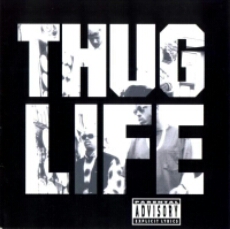
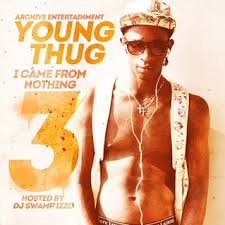
In fact, the popularity of the word “thug” used to describe young black urbanites could have come in part to use of the word as a self-description: 

image

image

image

Understandably is is different when a word is used as derogatory and not as a term of endearment.  But it should also not be a surprise when descriptions we use for ourselves are picked up in popular dialog and become a nucleus for stereotypes.

Making ‘Thug’ a Taboo Word Is NOT the Answer.

I am reminded of the wise words of W.E.B. DuBois in reply to Roland A. Barton in 1928 about the topic of names (please take the time to read the whole letter) and his solution:

“Your real work, my dear young man, does not lie with names. It is not a matter of changing them, losing them, or forgetting them. Names are nothing but little guideposts along the Way. The Way would be there and just as hard and just as long if there were no guideposts, but not quite as easily followed! Your real work as a Negro lies in two directions: First, to let the world know what there is fine and genuine about the Negro race. And secondly, to see that there is nothing about that race which is worth contempt; your contempt, my contempt; or the contempt of the wide, wide world.”

As an alternative to abolishing words (that will soon replaced by new words to fill the vacuum) and being offended at every turn: Be the solution.  The solution, of course, is to live outside of the labels used to box us in and beyond identities built around race.  The solution ultimately is for everyone to do unto others what they want others to do to them (Luke 6:31) and abandoning their right to retaliation.  Be what you want others to be.

Words come and go, so don’t let them define you!