Jesus Always Trumps Politics

Standard

I overestimated. 

I had assumed my own conservative friends would spot a charlatan and choose a candidate with their own supposed values. 

Trump’s rise came as a surprise to many on the left.  However, the bigger surprise was probably for conservatives who are principled, conscientious and consistently liberty-minded.

Trump is everything conservatives have complained about in liberals.  He’s divisive like Barack Obama, a serial womanizer like Bill Clinton, arrogant like Al Gore and a waffler like John Kerry.  Yet somehow it is all okay when Trump does it? 

Why? 

Well, I suppose it is because Trump is one of ‘us’ and is ‘our’ guy…? 

Which, in translation, is tribalism or identity politics and the same thing conservatives have claimed to loath in liberals.  This loathsome behavior has now become acceptable to some self-described conservatives because it suits their political agenda.

When you can’t beat them join them?

Conservatives, in fear of being marginalized and feeling unheard by the political establishment, have abandoned traditional conservativism en-masse to follow their own audacious Pied Piper who promises to give them a voice again.

Conservatives can no longer blame liberals for dividing the nation with a man as divisive as Trump as their choice for leader.  They can no longer point a finger at Hollywood for promoting evil when they themselves pick an obscene and angry man to represent them.

No matter what the outcome of the election (Trump, Clinton, or other) it is safe to say that irrationality has won, tribalism has won, and we all together will lose.  Something once anathema to American greatness has now come to define us both right and left.

Trump’s ascendency as a ‘conservative’ is a watershed moment.  Now no side can claim moral high ground.  Conservatives are now as guilty of rank partisanship and hypocrisy as their rivals.  They fall for fear-mongering propaganda as quickly as anyone else.

So where do we go from here?

First we must identify the problem in us, not them.  Jesus said that before we judge others we must judge ourselves, because how we judge others is how we will be judged (Matt. 7:1-5) and this is something that should sober up any honest person conservative or liberal.

Both sides identify the same problems. 

Both see the divisiveness, bullying and irrationality of the other side.

But, can we see it in ourselves?  Have we actually heeded the warning of Jesus, seen our own hypocrisy and repented?

Or do we hold onto our imagined right to a sanctimonious judgmental and entitled attitude?  Do we think it is okay for our side to be divisive because they are?  Is it fine to be a bully when it suits our own agenda?  Can we abandon a rationality of self-sacrificial love and somehow save ourselves?

#1) Simple labels lead to more division and greater irrationality.

Trump wins using what Scott Adams (who makes a case why the billionaire celebrity will win) has explained as the “linguistic kill shot” or taking an opponent’s most notable attribute and redefining it in a memorable and negative way. 

The presidential characteristics of diplomacy and reasonableness embodied by Jeb Bush were turned into “weak” and “low energy” by Trump.  Ben Carson’s political outsider status, unique life story and calm demeanor were turned into comparison to a child molester and a cause for mistrust.  Ted Cruz, a skilled debater and political strategist, he demolished by calling into question his credibility.

Of course, this is not anything new, political partisans and activists have long tried to define their opponents in a negative way.  The language in the abortion debate, for example: Those in favor self-identify as “pro-choice” while those against call themselves “pro-life” and both imply the other side as against life or choice.  It presents an intentional oversimplification of a complex topic.  It is often language representative of a false dichotomy and strawman argument.

This was also the most frustrating part of the healthcare debate early in President Obama’s first term.  You were either for a massive new government intrusion into the healthcare industry or you were pigeonholed as a cold hearted and angry racist. 

It was not conducive of a constructive dialogue.  It marked the end of any chance for bipartisan cooperation and in many ways forced otherwise reasonable people to choose a side.  Many conservatives have apparently decided to embrace the labels rather than rise above them. 

Perhaps it is because there is enough truth to the accusations against conservatives?  It does seem, in retrospect, that some of the opposition to Obama’s policies may have been partially rooted in bigotry and prejudice.  This could be in need of correction.

Political correctness came to be for a reason.  Unfortunately, the purveyors of political correctness have not overcome the same tendencies that they identify in others.  They, like those whom they deride as racists and sexists, have resorted to their own forms of the same ugliness.

Trump has mastered this art of oversimplification of opponents.  He uses language that creates a negative image and the more the identifier is resisted the more it is reinforced at a subconscious level. 

Trump relies on irrational human tendency to judge ‘outsiders’ collectively.  This leads to more mistrust, creates deeper division and leads to more tribalism.

#2) More tribalism (or identity politics) will never make America great.

Trump promises to make America great again.  But in reality he represents a more advanced stage of the cancer destroying our strength as a nation.  Namely the problem is tribalism (or identity politics) and this is not helped more angry partisan rhetoric.

Just the other day I was told (by a left-leaning friend) it was “politically toxic” to get lunch at Chick-fil-A.  And on the other side we have Joshua (coffee cup controversy) Feuerstein and a less than meek spirited woman marching through Target (submissive man and family in tow) demanding people leave or be in league with the devil.

Tribalism blinds us to the sins of those with whom we identify with and leads to a vengeful self-perpetuating tit for tat cycle.  Both sides have convinced themselves the other side is getting what they deserve when the government encroaches on their freedom.  It might be described as revenge for what their tribe did to ours, but it is really just hatred and hypocrisy.

Democrats described conservatives of being unpatriotic for opposition to tax hikes and other liberal policies.  Now Trump supporters have turned tables and claim you aren’t a patriot unless you support their vile mouthed candidate.  This is utter nonsense, nevertheless it is believed by many on both sides—it keeps us divided, easily manipulated, and weak.

“If a kingdom is divided against itself, that kingdom cannot stand.  If a house is divided against itself, that house cannot stand.” (Mark 3:24-25)

Abraham Lincoln paraphrased that bit of Scripture in his House Divided speech to point out the double-mindedness of those seeking to be on both sides of the slavery issue.  Lincoln lost that round, nevertheless his point was well made and our own prideful hypocrisy today (on both sides) must be addressed or we will fall.

The tendency to demonize or marginalize those who disagree is expression of identity politics.  Rather than respect each other we are driven to mistrust.  Rather than build a common unity around our shared values, we are encouraged to divide into competing tribes of race, gender or religious affiliation.  The result is a predictable never-ending conflict where nobody ever wins and everyone comes out as loser.

We cannot promote divisiveness, demagoguery and disunity then claim to love a nation that values freedom.  We cannot expect tolerance for ourselves or our tribe while demanding others share our opinions and being completely intolerant of those who do not.

#3) The answer to abuse and bullying is not more abuse and bullying.

Every abuser feels justified.  Men, child molesters or rapists, will often blame immodesty of women and the innocent for their own sinful lusts.  Likewise looters and rioters feel their own violent outbursts against are excused because of police brutality or other historic injustices.

People bully and abuse others because it works.  It may even get Trump elected according to some.  It is easier to manipulate others into compliance with fear of violence than it is to convince them with a rational argument.  The civil conversation is over when the mob arrives shouting demands with torch and pitchfork in hand.

Trump has encouraged mob spirit in his political rallies.  His supporters gleefully cheer on rough treatment that they feel is justified and it is dangerous. 

For years conservatives have put up with the disruptions and disrespect for those expressing their perspective, so perhaps some of us think this makes it right for us to act out?

It might be cathartic to see some elbows thrown on behalf of our own perspective.  However, repaying evil with evil is a path to greater evil.  It is a positive feedback loop that produces greater evil with each cycle.  It is a march towards civil war and a path to our mutually assured destruction.

We can’t overcome evil with evil.  We must overcome evil with good (Rom. 12:21) and forgive.  Real moral leadership leads by example rather than use of reciprocal violence and political force.

Jesus trumps partisan politics.

Politics is about power.  Political leaders often use fear to motivate and threat of violence to manipulate those who stand against them, they feed discontentment rather than promote peace, but this is not the way of Jesus.

I’ve heard some exclaim: “We’re electing a president not a pastor!”

This is double mindedness.  Those who believe a thuggish leader is necessary to control their neighbors should not be surprised when the same rationale is used by their adversaries to subjugate them.  It is not reconcilable with Christian love.

Jesus is the answer or our profession of faith is a lie.  Jesus is the right example of leadership, is the only appropriate basis for measurement, or he’s not our Lord and Savior. 

And, furthermore, if the standard for leadership established by His example can’t be reconciled with politics, then I recommend those who claim to be Christian choose their master and remove themselves from the process entirely or admit their unbelief in Jesus.

A President is indeed like a pastor (read more if interested) to a nation.  His morality and ethics will is the example for the nation (or so that was the claim of conservatives in response to Clinton’s infidelity) and cannot be ignored.  We cannot separate the character of a person from their politics nor can we seperate our own personal morality from those whom we choose to represent us.

Politics, or at very least the politics of division, violence and tribalism, is antithetical to sincere profession of faith in Jesus.  Politics that leads by force rather than example is a direct contradiction to what Jesus taught.

“Go and do likewise.” (Luke 10:25-37)

That quote is the final answer given by Jesus to a legal expert (perhaps the equivalent of a Constitutional conservative today) who asked what he must do to inherit eternal life.  Jesus first ask what the law says, the man responds with a summary of the law—love God and love your neighbor.

But the expert, evidently unsatisfied, wanting to be justified, pushes for further definition and asks Jesus: “And who is my neighbor?”

It is at this point that Jesus tells a story of the ‘good Samaritan’ who treated an enemy (his political and ethnic or social rival) with loving care and respect.  Jesus does not answer the question of who is our neighbor, instead he answers how to be a good neighbor.

That is the way of Jesus.  We are to love our enemies, to lead others by showing them by example how we wish for them to treat us and through this overcome evil with good.  This brings unity and love rather than more fear and divisions.

If there is no candidate attempting to lead with Christian love?  Stay home election day and pray.  When given a choice between two corrupt and unrepentant people?  Choose neither! 

We should choose to transcend the tribal political warfare.  We can love our neighbors as faith requires without casting a ballot. 

So, when in doubt, choose Jesus and love your neighbor.

What does Charleston say about us?

Standard

There are many who react to the church shooting at Charleston’s historic Emanuel A.M.R. Church by blaming availability of guns and decrying racism.

But one thing missing from the discussion, that is a victimhood mentality and the idea that all people of a particular race are guilty because of the acts of a few. 

When Dylann Storm Roof walked into the doors of that church he was armed with two ideas: 1) his tribe (white people, women, etc) were the victims, and 2) their tribe (black people) were collectively responsible for black rapists, perceived injustice, etc.

It was the ideas that this depraved young man harbored in his heart that were dangerous.  However, these ideas are not unique to him or just to unreasonable and angry white men.  These are ideas accepted accepted in mainstream thought that divides people into falsely dichotomous categories.

Who kills the innocent? We do!

Ideas that white is equal to privilege or black is equal to victimhood are equally dangerous.  When we feed the martyr complex and victimhood mentality we are giving license to those of an even more deranged mind to take it a step further. 

The problem with Roof and those like him (of all races, genders, etc) is not what they do—but that they feel justified to do it.  We can fret about availability of guns and a multitude of other factors, but until we address the heart issue we are only treating the symptoms.

We won’t stop a person bent on evil and destruction with more legislation.  If anything more law will only create the next inequity and give some other person reason to feel disenfranchised.  But what we do need is to unravel the false dichotomies and prejudice assumptions that fuel hatred.

Being on the ‘right’ side of history…

We are urged to be on the “right side of history” yet the problem is that everyone (including Roof) feels they are on the ‘right’ side and justified.  Jesus encountered this in the Pharisees who thought themselves better than other people and superior to their own ancestors:

“Woe to you, teachers of the law and Pharisees, you hypocrites!  You build tombs for the prophets and decorate the graves of the righteous.  And you say, ‘If we had lived in the days of our ancestors, we would not have taken part with them in shedding the blood of the prophets.’  So you testify against yourselves that you are the descendants of those who murdered the prophets.”  (Matthew 23:29-31)

There are many sanctimonious today who think they are superior to other people.  They may decry the injustices of the past, support punishment for those they hold responsible and blame, but they themselves often as guilty or more of similar abuse.

Is an anti-abortion activist who calls women entering a clinic names or murderers a provider any better than those they accuse? 

Is a person who labels others as “racist” or “homophobic” or “hateful” in response to a disagreement over opinion less abusive than a person who uses the n-word?

I say, no and no. 

The solution to hate is not to be hateful.  As Mahatma Gandhi wisely observed: “An eye for an an eye only leaves the whole world blind.”  What he observed is the same as when Jesus quipped that those who live by the sword will die by it (Matthew 26:52) or ‘what goes around comes around’ in essence.

We make a difference by being different…

Everyone has reason for their own abuses.  Many of the most abusive people in history believed they served a righteous cause.  Many people can identify the sins of other tribes or the prior generation, but few seem able to see their own abuses.  We prefer to keep the spotlight on those whom we perceive to be worse than us than we are interested in searching out the wickedness of our own hearts.

Ben Carson spoke well:

“You know, we have a war on women, race wars, income wars, age wars, religious wars. Anything you could imagine, we have a war on it… And we’re giving people a license to hate people who disagree with them.”

We need to stop arming ourselves with contempt and be committed to loving as we wish to be loved.  It is easy to love our own and hate others, but divine love seeks unity rather than encourage division.  It sacrifices self rather than perpetuate cycles of violence.  It brings grace to the fight even when vengeance feels justified.

Grace saves us…

It is the Spirit of love like that of Marcus Stanley, who was shot eight times but lived, and chose grace in response to hate:

“I don’t look at you with the eyes of hatred, or judge you by your appearance or race, but I look at you as a human being that made a horrible decision to take the lives of 9 living & breathing people. Children do not grow up with hatred in their hearts. In this world we are born color blind. Somewhere along the line, you were taught to hate people that are not like you, and that is truly tragic. You have accomplished nothing from this killing, but planting seeds of pain that will forever remain in the hearts of the families that lost their lives and countless hearts around our country.”

Let’s not fall victim to those who would divide us into categories, but instead seek the unity of all people only possible with a love that tears down walls, bridges divides and believes when others say it is impossible. 

May those seeds of Roof’s hate stay dead and the love of Jesus in Stanley’s gracious response grow in us.  The answer is not more or less guns nor petitions against flags and protest, it is less hate and more Jesus.

“Do not be overcome by evil, but overcome evil with good.”  (Romans 12:21)

Baltimore: Race, Rage, and Reality

Standard

As fires rage in Baltimore, my thoughts go to the many good people of all races harmed by those who excuse their own destructive and abusive behavior. Mob violence only adds to injustice.

A (Completely Open and Honest) Conversation About Race and Violence

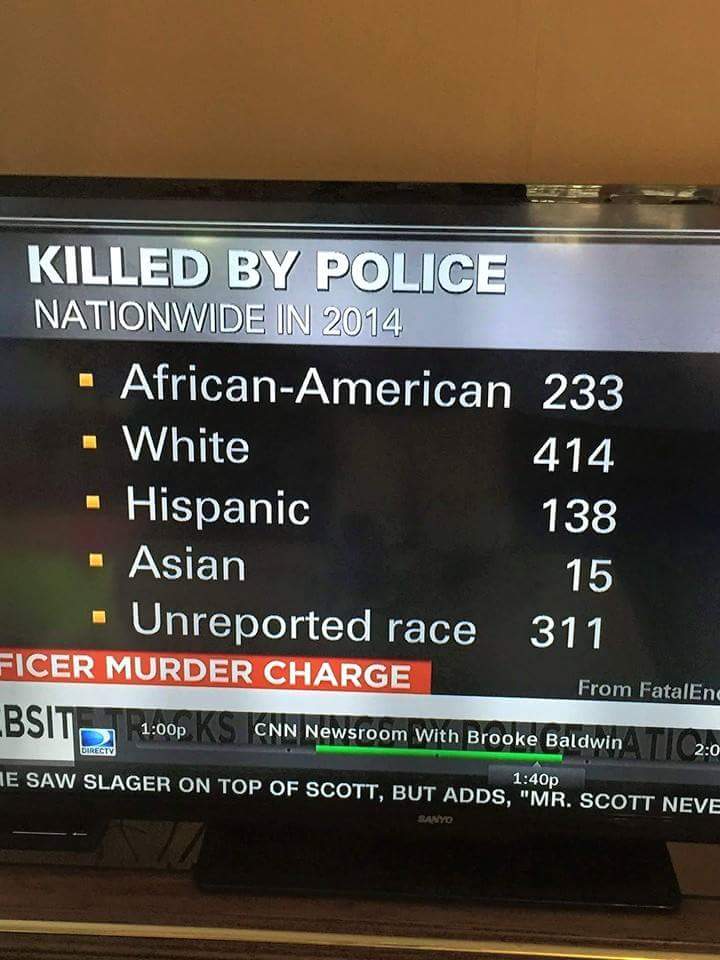
Many, including President Obama, have urged a conversation on race. I have avoided speaking in terms of black and white because I didn’t want to feed existing prejudices. Unfortunately, by my silence, I am also feeding into a dangerous ignorance about the root causes of violent behavior. There is a real elephant in the room when it comes to discussion of race and statistics, here’s a part of it:

image

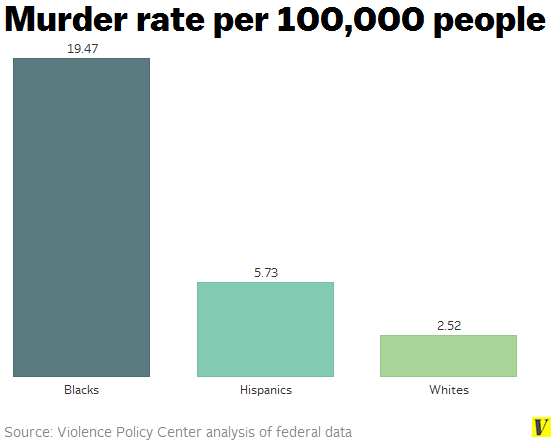
It seems to me there could be a connection between that and the disproportionate violence here:

image

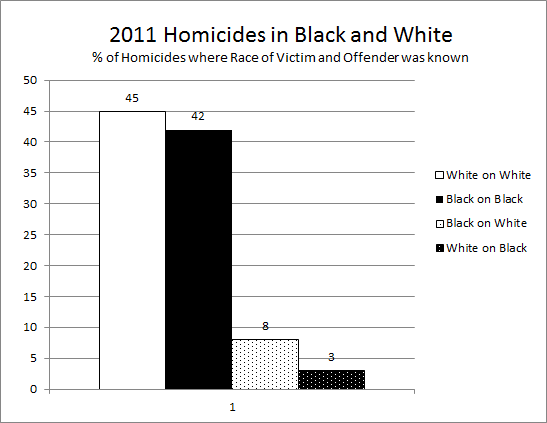
And this is how it breaks down as far as who is murdering who:

image

Media Fueled Ignorance and the Bigger Threat to Black Lives

A few weeks ago I read an article, “I Fear for Our Black Men,” and then began reading the comments in response. I was shocked. Instead of shared sympathy from other black women there was a lot of anger towards black men. From what I gather the complaint is that when a police officer harms a black man it is an outrage and a cause for civil unrest, but when a black man beats his wife or girlfriend nobody cares:

image

Why do we focus on stories about men being victims of police and yet ignore a far bigger problem of women and children victimized by men? Police brutality, while a matter of real concern, is a drop in the bucket of violence in general society and the black community. And the real disproportion is how much attention is focused on their failures rather than the bigger problems. It is straining on the gnat while swallowing the camel.

Which leads me to the topic of government and media complicity. Much is said about disproportionate arrest statistics or incarceration rates. But very little is mentioned about the disproportionately higher levels of violence I highlight above. Apparently we are supposed to obsess on the race only as an explanation and ignore all other factors—factors like resisting arrest, criminal records, dysfunctional homes, etc.

Why Not Build Identity Around Good Behavior Instead of Race?

I would rather talk about behaviors than race. I would rather good people of all races identify with other good people of all races. However, since shared race is how some people choose to build their identity, then I need to address the issue of racial tribalism directly: If you take the side of a person simply because they share your racial tribe identity, then you need to take complete ownership of the bad they do as well and you are a partner in it.

But I would rather we didn’t do that. I say we lose the tribalism motif. I say we stop focusing all of our attention on race and historical grievance. I say we start to address current behavior instead. That is fairer. It is fairer because the vast majority of people (all races) are not criminals. If we are not criminals we should not lump ourselves together with bad actors and defend them simply because we share their skin tone.

Disturbing the Status Quo: “And who is my neighbor?”

Standard

The one thing I did not cover in my recent post on the Good Samaritan story (and came up in a discussion with a friend afterwards) is that Jesus never did answer the question of who.  The man asked who his neighbor was, but Jesus answered the question of how to be a good neighbor and told him to “go and do likewise.”

Not my neighbor, not my problem…

I was reminded of that again when discussing my frustration with social media.  I’ve noticed how cute pictures and funny stories get dozens of likes or shares.   However, when I posted a link to a woman with a real need and asked people who couldn’t give to like or share it the response was astonishing.  It was zilch, nada, nothing…

image

I was lamenting that lack of response to another friend.  They defended it saying that people get many requests for help and that I could sympathize with.  But what was said next disturbed me coming from a person familiar with the story Jesus told about how to be a good neighbor.  They suggested the “Biblical method” is that this woman’s family or local church should provide.

“If you love those who love you, what reward will you get? Are not even the tax collectors doing that?  And if you greet only your own people, what are you doing more than others? Do not even pagans do that?  Be perfect, therefore, as your heavenly Father is perfect.”  (Matthew 5:46-48 NIV)

That doesn’t seem like the ethic Jesus was describing.  I don’t think the Samaritan cared much about jurisdiction or if it was his turn to give.  I believe he saw a need, saw a person who needed help and simply gave it.  That’s what it means to love your neighbor.  That’s the example Jesus told the legal expert to follow.

On the other hand, I assume those men who passed by the battered man along the road were in good standing in their own communities, provided for their own families and gave tithe.  But doesn’t everyone do that?  We take care of our own because it is natural to do so, it is reciprocal altruism and a way to ensure our own survive. 

Loving beyond the tribe of race, gender or denomination…

Yet Jesus was describing something far more radical.  Jesus went as far as to tell his followers to hate their own families (Luke 14:26) and give all they had to the needy.  This goes beyond the normal religious obligation of his day.  This goes beyond defending our own biological progeny.  It is a love bigger than nation, denomination and tribe.

Jesus preached (and those who continued to carry his message) against tribalism.  They forsook their own wealth and families to preach a revolutionary message about a kingdom made up of all tribes and nations.  They spoke of a kingdom where allegiances didn’t fall around race, gender or economic status.  A kingdom of good neighbors.

Disturbed by visions too superficial, self-interested and small…

“Disturb us, Lord, when
We are too pleased with ourselves,
When our dreams have come true
Because we dreamed too little,
When we arrived safely
Because we sailed too close to the shore.

Disturb us, Lord, when
with the abundance of things we possess
We have lost our thirst
For the waters of life;
Having fallen in love with life,
We have ceased to dream of eternity
And in our efforts to build a new earth,
We have allowed our vision
Of the new Heaven to dim.

Disturb us, Lord, to dare more boldly,
To venture on wilder seas
Where storms will show Your mastery;
Where losing sight of land,
We shall find the stars.

We ask you to push back
The horizons of our hopes;
And to push back the future
In strength, courage, hope, and love.”
(Francis Drake)

Anyhow, it does disturb me when social media prefers a political cause (showers attention both for and against a pizza shop owner caught in an artificial controversy) and then ignores a real need.  Our priorities are messed up when we are more concerned with scoring political points and fighting culture wars.

It disturbs me when millions will be poured into political campaigns rather than used to meet real needs. Frankly, if you conservatives don’t think we need socialized medicine or if you liberals truly have a heart of compassion, then prove it with more than talk.  Help somebody you can help rather than wait for others to take the lead for you.

It disturbs me when churches spend thousands on missions of questionable value to give young people an experience.  If you are truly zealous and motivated by love (not self-interested like a kid on spring break trip justified by a thin veneer of religion) then be a good neighbor.

It disturbs me when our love is superficial.  Our love is only superficial when we like cute pictures, comment on funny stories, advocate for political ideologies, seek donations so we can go on an adventure around the world and then aren’t disturbed by unfilled needs well within our reach.

As it stands, the account for this nurse and young mother with severe neck issues stands at $360 and only a fraction of the need.  Does that disturb you?

Well, predictably it has happened, two Brooklyn police officers are dead…

Standard

What happened today in Brooklyn, with two NYPD officers gunned down simply for their existing, is a predictable result. It is the very thing I was trying to prevent from happening by challenging simplistic and presumptive narratives.

In the wake of tragedies in Ferguson and later in Staten Island, events widely (and quite recklessly) framed in terms of race, I have tried to make the point (in multiple blog posts) that all forms of prejudice can have tragic consequences.  I wrote to urge people not to judge by mere appearances (blue, black or white) and to consider each individual case separately.

Unfortunately that effort to add perspective to a complex issue did not stop today’s events.  Calling for reason seems to make little progress against the reactionaries with rationales that eventually turn whole categories of people into privileged objects of contempt to be removed.

It seems everybody already knows that it is the other guy’s tribe that is at fault. They know that their own tribe always plays the part of the innocent victim and thus always has no responsibility for their own part.  It is this kind of mentality that justifies gunning down random people from the ‘other side’ in retaliation.  A continuing cycle of increasingly senseless violence is the predictable result.

This sadly could be easily solvable if we would change the vengeful tribe versus tribe thinking that presumes guilt, innocence or privilege on the basis of skin color and only remembers the sins of others:

“The victims of a conflict are assiduous historians and cultivators of memory. The perpetrators are pragmatists, firmly planted in the present. Ordinarily we tend to think of historical memory as a good thing, but when the events being remembered are lingering wounds that call for redress, it can be a call to violence.” (Steven Pinker, “Better Angels of Our Nature,” page 493)

Holding onto the past, making assumptions based in historical grievances, and treating individuals as a part of a group to be judged wholesale is the actual problem. 

Prejudice is the problem and we are all responsible in part.  Recognizing the folly of judging individuals based on the uniform they wear or the color of their skin, taking each case on the individual merits, that is a start to healing old divides.

But, who’s listening anymore, we all know everything we need to know about the ‘other’ side, right?

Will anyone see past their own prejudices and demands for blood from the ‘other’ side long enough to see a better way?

Jesus gave the better way…

“You have heard that it was said, ‘Love your neighbor and hate your enemy.’  But I tell you, love your enemies and pray for those who persecute you, that you may be children of your Father in heaven. He causes his sun to rise on the evil and the good, and sends rain on the righteous and the unrighteous.  If you love those who love you, what reward will you get? Are not even the tax collectors doing that?  And if you greet only your own people, what are you doing more than others? Do not even pagans do that?  Be perfect, therefore, as your heavenly Father is perfect.”  (Matthew 5:43-48)

Hopefully those employed by the NYPD officers are quicker at forgetting their own presumptions based in appearances. Hopefully they transcend the man who shot two of their colleagues in cold blood and who apparently could only see in terms of tribe and history.  There is hope when we stop seeing people in terms of color groups and see each as an individual worthy of being judged by their own behavior and not as categories based in appearance or profession.

We need to listen to Jesus and end the cycle of violence in our own response to events like this and others.  We need to be better at empathizing across tribal lines and less mindful of the perceived injustices against our own.  We need to become a people more concerned with higher ideals and less with our own superficial features.  Start now, start in yourself in your own heart first and the world can change.

Sir Charles is right…

Standard

What Charles Barkley says about tribal mentality (watch the video) is spot on.  We are all susceptible to in-group favoritism, which is to prefer those we most identify with over those who we do not, and, with that, we can lose our objectivity.  Sadly, when issues are framed as ‘us’ versus ‘them’ (rather than on the basis of a careful and impartial analysis of the facts) the only result can be more polarization and division.

It is not just a matter of dividing over racial identities either.  Identities can be built around many things.  We can prefer or judge more harshly based in gender, class, education, religion, nationality, political affiliation, brand, friendship, familiarity and basically anything that can be used to create categories of people.  We don’t always side with those who are most like us either.  Regardless, who a person identifies with or against is a reflection of their own priorities and these often seemingly unconscious preferences are worth our conscious examination.

When the allegations against Bill Cosby started to become a story I was originally skeptical of his accusers.  I cringed because I had thought of him as a sort of role model of fatherhood.  I imagined his status as a wealthy celebrity may make him vulnerable to those seeking to gain financial and a sort of odd offer that could suggest a money motive behind the charges made me wonder even more.  Still, why would I assume Cosby is innocent and assume over a dozen women are guilty of trying to extort him?  It could be that I’m a man like him who would fear the same happening to me.  It could also be that the accusers are anonymous people as far as I am concerned and Cosby a public figure I thought I knew.

In contrast, a few years ago when the charges against Jerry Sandusky were made, when he was accused similarly in what became a media frenzy, I assumed he was probably guilty and without much consideration of his possible innocence.  First off, he lacked cuteness factor and, as awful as it is, appearance is a factor in our judgment of guilt or innocence. In my mind Sandusky looked the stereotypical part and that prejudice despite my knowing appearance is not evidence of guilt.  Second, despite being a Penn State fan, Sandusky was not on the coaching staff for a decade and I did not recognize him.  Besides that, his TV interview was awkward and, while actual proof of nothing but his awkwardness, it gave me the heebie-jeebies.

Black men often suffer the same image problem that causes people to be suspicious rather than sympathetic.  It is unfair, but not an inexplicable prejudice and definitely not helped when the causes célèbres are young men who died in violent confrontation.  It is not helpful to the cause of overcoming racial prejudice that solidarity centers around skin color rather than unquestionable character.  It is not fair to the vast majority of black young men for them to be lumped together with every other black young man and especially not helpful they be categorized with those involved in tragic violent encounters.

The idea that every black male is equally likely to be killed is based in an erroneous assumption that race is the only important factor in predicting outcomes.  Statistics do not tell individual stories and many factors other than race influence risk.  Factors like single parent homes, participation in gangs, drug use and many others can add to risk.  Factors like education, positive attitude, good community and others can reduce risk.  So, rather than categorize by race only (as if that’s all that matters) and feed a tribal mentality that is already too prevalent, we should look beyond as well. We should encourage unity around the ideas that reduce risk for all young men regardless of their race.

“It is better to light a candle than curse the darkness.” (Eleanor Roosevelt)

A first step towards light and away from darkness is to reconsider our own tribal identity.  It may say nothing more when she does it than when I do, but I did find it interesting that Whoopi Goldberg is skeptical of the allegations against Cosby and yet did not rise to the defense of Sandusky who faced far fewer accusers.  To Goldberg’s credit, she did separate the acts of the retired coach from the Penn State community, which is more fair than demanding morally responsible and mass punishment for those who had no way of knowing.  But why do we not treat both accused men the same regardless of appearances?

But I do digress.  This is my advice for moving in the direction of light and unity beyond racial identity.  This, for those afraid of young black men, means to identify with the young black men who do not fit a violent stereotype and should not be defined by the negative statistics.  It means judging less in appearance, less collectively and more on individual merit.  For those who fear police, this means obeying the law even when in disagreement, treating officers with respect even when not understanding their requests of us and seeing them as unique people to be treated as individuals rather than as part of some monolithic thing to shower our contempt upon.

image

It is the image of Devonte Hart giving a hug to Sgt. Bret Barnum that show the real path out of darkness and to light.  Let’s follow their lead and be a new tribe bigger than skin color and prejudice.  Leave fear and mistrust behind even if it makes you more vulnerable.  Give people who look different from you the same benefit of doubt you give to those who look more like you.  Be willing to go the second mile for those who seem as a threat to you and live to be a light to the world.  The world needs more hugs, fewer demands and chockholds.  We need to love all people as we want to be loved.

“If you really keep the royal law found in Scripture, “Love your neighbor as yourself,” you are doing right. But if you show favoritism, you sin and are convicted by the law as lawbreakers.” (James 2:8-9)

Anyhow, this is probably as much as I want to say about racial tensions, I have probably said more than enough already and I pray my words are understood as intended.  May God bless his children of all colors, genders and social statuses with abundance of love for each other.  May we love each other as God loves us and be leaders in love rather than reactionaries in fear.  We need love and understanding beyond the tribal boundary and that which is only made possible through having the mind of God.