Is Traditional Masculinity Toxic?

Standard

I’ve been extremely critical of abusive men in my blogs, taking on things like blame-shifting, patriarchal and purity cultures. Men who use their natural strengths or positions of authority to take advantage of others are reprehensible and should be called out for their abuses of power.

That all said, I’ve shied-away from using the term “toxic masculinity” to describe male abuses and my reasons for hesitation were confirmed in the past few weeks when the American Psychological Association (APA) claimed that traditional masculinity is harmful and lumped it together with murder, bullying and other toxic behaviors.

This is not an overgeneralization. No, it seems to be a part of broader misandry campaign and, at very least, is a complete misdiagnosis of the problem. It would be like pulling out crime statistics for a particular racial demographic and applying them as criticism to all within that group. That, of course, is stereotyping and unfair to the many who do not fit the broad brush of statistics.

It is true that men, as a category of gender, do dominate statistics for violent crime. However, what is not true is that all men are equally guilty and should be judged on the basis of the bad examples. The vast majority of men have not murdered, raped or otherwise act violently and would never excuse such behavior. I say this as someone who has been around men his entire life: Most men that I know aim to be protectors, not predators.

The Protector and the Predator…

A few weeks ago, before the APA taking aim at traditional masculinity (and an ill-advised Gillette ad) became a topic of conversation, I had started to write a blog to describe two distinct but related categories of male behavior—the predator vs. the protector—and what makes the difference.

The first category (and the one rightfully called toxic) is that of the predatory male. The predatory man is only concerned about his own wants or needs and will use any power he is given to exploit others for his own gain. This includes men who use religion or other means to manipulate others for their own personal gain and especially those who are coercive in pursuit of sexual gratification.

For example, the boyfriend who pressures his girlfriend into sex. I can understand, with teenage hormones raging, that waiting for sex is not easy for a passionate man and know this from personal experience. But there is simply no excuse for the young man who believes his natural urges entitle him. The young man who makes his commitment to relationship contingent on her compliance with his premarital sexual desires (ie: “If you love me, then you will…”) is a predator.

By contrast, the second category, the protective male, consists of men who use their strengths and abilities to serve others. This is not a man without desires. A protective man is tempted to serve his own needs and wants like anyone else. However, a protector is one who chooses to resist any evil or exploitative impulses and follows an example of self-sacrificial love instead. The protective man is even willing to give his own life for the good of others.

Traditional Masculinity Is Not Toxic…

As long as there have been appetites and differentials in power there have been abuses. Much of human behavior has to do with instincts, it is why we breathe, why we seek food to eat and why we desire companionship. This isn’t something that needs to be trained, we observe similar behavior in animals, and is natural.

There is no concern for morality with animals and in the natural world. When a lion, acting on predatory instincts, stalks, pursues and takes down it’s prey, this is not a cause for consternation. We understand that this and “survival of the fittest” is part of life and even how biological life thrives. If predators were removed, as they have found out in Yellowstone Park after wolves were reintroduced, everything in an ecosystem is thrown out of balance and deteriorates.

A young buck does not need any training to be overcome by hormones, to pursue a doe, fight off the competition, and do his thing whether the female consents or not. His sexual aggression is just part of his natural composition, it is not a choice, he is as controlled by his biological impulses as much as the female is subdued by his physical strength and stamina. We cannot make a moral judgment of a creature incapable of moral reasoning or choice.

However, human society works differently and notions of morality are used to push back against some of our baser instincts. Part of this push back has come in the form of tradition. In fact, our traditional morality, that arose in conjunction with religion, formed to provide protection against predatory behaviors. It is Christian religious tradition that has promoted the idea that behavior is a choice and therefore men, unlike deer, should be held accountable for what they do.

Traditional masculinity is not responsible for the toxic behavior of men who choose to act on their most vile and violent imaginations. Quite the opposite. It was the traditional men in my life who taught me to respect boundaries, to save sex for a marital commitment and to offer my life as a sacrifice to the world. It is traditional masculinity that has stood as a protector against predatory animals and opposed to toxic (or what we would traditionally call immoral) behavior.

With Every Strength There Is Weakness…

I would be remiss to claim that everything the APA says about masculinity is baseless. Men so tend towards certain and some of those behaviors are definitely harmful. However, it is one thing to say that men should not bury their emotions nor ever excuse behavior that is harmful to other people or even themselves. It is quite another thing to declare: “…traditional masculinity—marked by stoicism, competitiveness, dominance and aggression—is, on the whole, harmful.”

First of all, there is the question of what traditional masculinity is and if it is truly defined by stoicism, competitiveness, dominance, and aggression—I would argue that it is not. Second, those characteristics also are part of a two-sided coin, one side positive and the other negative, where stoicism becomes loving restraint, competitiveness is a drive to provide, dominance is an urge to explore (pursue science, innovation, etc) and aggression is merely assertiveness.

Not just that, but those things listed are not all bad in and of themselves. In an age where we are constantly told to embrace diversity, tolerance, and inclusion, on what basis can we declare something to be “on the whole” harmful?

I mean, what is really wrong with some friendly competition, say a game of basketball or a Poker (Rook, if you’re Mennonite) tournament, where everyone gets the exercise or thrill of the experience—despite there being a winner and a loser?

It is a sad day when we can’t discern the difference between a harmless playful tussle between boys and harmful bullying behavior. It is an even sadder day when the negative expressions of masculinity are used as a basis to bash the very thing that channels natural male qualities in a socially beneficial and positive direction. It is traditional masculinity that has long urged young men to use their physical strength and competitive nature to make the world a better place for all people and we have succeeded.

The inability of the APA to see traditional masculinity in a more nuanced and balanced way will likely do more much more harm than any good it accomplishes. It is, in effect, an attempt to bully young men, through quasi-intellectual means, into compliance with their own prejudiced worldview and expectations. They fail to see the good in their focus on the bad and have done a disservice, and not only to traditionally masculine men but also to their own profession and all people.

Everyone Is Hurt When Good Men Are Destroyed…

My conservative Mennonite father, the embodiment of traditional masculinity, gave me an example of a man who didn’t use his emotions as an excuse to lash out. This ‘stoicism’ was for the benefit of not only my mother, myself and my siblings, it was also for the men who worked with him. There are many men today who do not exercise this kind of restraint, they become screaming tyrants when things do not go their way and have neglected the tradition of my father, his fathers and our Father:

My dear brothers and sisters, take note of this: Everyone should be quick to listen, slow to speak and slow to become angry, because human anger does not produce the righteousness that God desires. […] Those who consider themselves religious and yet do not keep a tight rein on their tongues deceive themselves, and their religion is worthless. Religion that God our Father accepts as pure and faultless is this: to look after orphans and widows in their distress and to keep oneself from being polluted by the world. (James 1:19‭-‬20‭, ‬26‭-‬27 NIV)

The tragedy of this new targeting of traditional masculinity is exactly the opposite of what is needed in the world. It is the lack of traditionally masculine role models that has led to more toxic behavior in young men. It is not a coincidence that mass shooters come from fatherless homes. Indeed, fatherlessness is a more reliable predictor of future poverty than race and is linked to many negative outcomes for both male and female children.

The real crisis in this country is not traditional masculinity, the real crisis is the lack of traditional masculine role models that often leads to harmful and self-destructive behavior. The real truth is that traditional values have been under assault for a long time now and we are reaping a crop of toxic behavior as a result. But those who are responsible for this destruction, rather than admit their mistake, have decided to double-down and continue to punish the wrong people.

Traditional masculinity is to serve as a protector and provider, the man who looks after the widows and orphans, as James implores. It is the man who reads and obeys the instruction of John the Baptist to soldiers, in Luke 3:14—and doesn’t use his physical strength to extort or do violence to others. He is a man who follows after Jesus who treated women (including his mother) with absolute respect and told men to serve others rather than exploit them:

Jesus called them together and said, “You know that the rulers of the Gentiles Lord it over them, and their high officials exercise authority over them. Not so with you. Instead, whoever wants to become great among you must be your servant, and whoever wants to be first must be your slave—just as the Son of Man did not come to be served, but to serve, and to give his life as a ransom for many.” (Matthew 20:25‭-‬28 NIV)

To conflate toxic behavior with traditional masculinity is not only frustrating to the men who are least deserving of rebuke—it is also convenient cover for abusers and those truly guilty of toxic behavior. Good men do not need to become the scapegoats for predators, but rather need to be appreciated and encouraged to continue to live a healthy and traditional masculine example.

Toxic Behavior Need Not Be Coupled With Masculinity…

I had never liked the term “toxic masculinity” and long suspected that those behind the wording (not the average users of the term) were targeting masculinity itself as much as anything else. But now the cat is out of the bag, the APA and others are lumping my father in with the wolf-whistlers, womanizer’s and Weinstein’s, and I’ve had enough.

My father is not perfect, but he’s not toxic for his traditional masculinity either…

My father spending some toxically masculine time with his grandchildren…

We can and should distinguish between traditional masculinity and toxic behavior. No, that does not mean we bury our heads in the sand and pretend all problems with men started with the social upheaval of the 1960s nor should we deny the reality that extreme expressions of what could be called traditional masculinity are bad. But the extremes of anything are often unhealthy and yet we are able to delineate one from the other.

Furthermore, women can be predatory and violent too. It is true that men are statistically more likely, as a general category, to be violent, but women also can be self-centered and abusive as well. Women, however, often prey on children or other women, usually in less visible or openly violent ways—like destroying reputations through gossip, cyber-bullying or other passive-aggressive means.

And, ironically enough, while reading the sanctimonious blather about toxic masculinity another article popped up on my news feed, “Video shows group of women allegedly trying to attack food court employees…

What?!?

Do we call that toxic feminity and blame traditional female expectations?

Sorry Gillette, APA and all others condemning what you do not truly know, but your campaign is picking the wrong target. Traditional masculinity, at least in a Christian cultural context, has Jesus Christ as the ultimate example and not Bruce Willis.

Traditional masculinity is not the problem, immoral behavior is the problem and women are not guiltless when it comes to sin. We all, male or female, need to repent of our selfish instincts and change our bad behavior to good.

So let’s target the bad behavior, not the gender!

On Cynicism, Courage and the Real War On Christmas

Standard

A week ago someone had called my grandpa and identified himself as being my younger brother. He needed to be bailed out after some kind of traffic law infraction. My grandpa, not one quick to give vast sums of money over a phone call, quizzed his ‘grandson’ and inquired as to why he did not ask his parents first. The spoof caller answered that he wasn’t getting with his parents, at which point it was obviously a scam and my grandpa hung up.

The other day my grandpa called to inform me that someone had just called claiming to be me, his eldest grandson. This time he hung up without hearing another word.

On the same day my grandpa told me about this I had a plea for help, on social media, from an orphanage in Pakistan. Their profile pictures featured a bunch of dear children and those images momentarily tugged at my heartstrings. However, there was no way to verify who they really were. So, I tried to kindly explain my brotherly assistance was required elsewhere. When continued to repeat the request for a Christmas donation, like a broken record, I blocked them. I’ll probably be slower to accept a similar friend request in the future to avoid the need to try to reason with someone only interested in my wallet.

The communication era has brought the world together in ways unimaginable a century or two ago. And, with that development, predatory hoards from around the world can now invade our personal space at any given moment. The marauders no longer need to travel in longboats over dangerous seas, they simply pick up the phone and pretend to be your grandchildren.

This is frustrating for me. There are so many legitimate needs, including that of my family in the Philippines, and these are the real victims of the scammers and schemers. Those who exploit our kindness and generosity do a great disservice to the people around the world who work hard, experience hardship, and could use a little help. It is easy to become callous and uncaring under the deluge of requests. But we must have the courage to care even when there’s a chance of being exploited.

What is the real war on Christmas?

Political activists are constantly claiming a war here or a war there. The left claims that not providing women with free stuff constitutes a “war on women” and the right, not to be left out of the grievance culture fun, whines about the words “Merry Christmas” not being on Starbucks cups—who can forget Joshua Feuerstein’s coffee cup fury and the backlash?

But the real war on Christmas has little if anything to do with corporate marketing and tit-for-tat politics.

Christmas is not about compelling others to use a particular greeting or ensuring that religious displays are allowed in public spaces.

Christmas is a celebration, for the Christian faithful, of the most incredible gift ever given, that being the incarnation of God’s logos in the person of Jesus Christ and the opportunity for our divine adoption. This miraculous birth, to a virgin mother, represents a new hope for humanity and a reason to change ourselves. The true Christmas spirit is our being filled with this same spirit of love and giving of life for the good of others that Jesus embodied.

Turning Christmas into the latest battleground of a broader culture war is to entirely miss the point. Giving Starbucks hell isn’t going to further the message of glad tidings and joy, that’s for certain, and is not likely to win any hearts or minds either. Pettiness is never going to convince a skeptic to consider the Gospel of Jesus Christ. It is a distraction at best.

The commercialization of the holiday also takes away from the true reason for the season. The birth of our Lord and Savior wasn’t really intended to inspire stampedes of shoppers hoping to wrestle a few dollars of savings from their neighbors. But Christmas has become a marketing boon for retailers and they (along with the rest of our culture) push people to spend money they don’t have for things they don’t need—things manufactured using underpaid foreign workers while the bulk of the profits enriching a few globalist elites. It is a scheme nearly as exploitative as the telephone scammers, but completely legal.

However, those two things (culture wars and commercialization) are mere symptoms of the bigger disease and the one thing that can undermine the Christmas spirit in us—the soul-eating disease called cynicism. If Christmas has a true enemy in this world it is cynicism. Cynicism is a cancerous attitude. It is natural (albeit unhealthy and inhumane) response to a world full of self-interested people and corrupt institutions. The cynical person is one who has seen behind the curtain, who may have been taken advantage of once or twice and is now too overtaken by their skepticism to truly love their neighbors.

It is often the disillusioned idealist who becomes a bitter, critical, and faithless or cynical. Cynicism is, in that sense, a product of those who exploit trust for financial gain, a result of fatigue of being hit from all angles, and a retreat to a position of disengagement. But it is not dispassionate, as it often claims to be with a shrug, nor is this retreat from personal involvement a moral high ground. No, in reality, cynicism is an excuse for being uncaring, cold-hearted and self-centered.

The clever trick of the cynic is to be uncharitable while presenting oneself as being someone concerned about morality or morally upright for being able to identify the evil intentions of others. But the reality is that cynic is a hypocrite merely using the abuses of others as a cover for their own true self-interested indifference. They might cite scams as a reason why not to care and yet will always have another excuse waiting in the wings if that one isn’t applicable. They are simply unwilling to give of themselves.

Truly the cynic is a coward. They are too cowardly to do good in the face of evil, to be vulnerable and take a chance of being exploited. They are also too cowardly, fearing the social cost of revealing the full truth of their real underlying lack of concern for others, to make a full commitment to the evil they truly envy and yet claim to despise. The irony of the cynic is that they are as selfish and as much a part of the problem as the people that they claim has caused their cynical condition.

Caring requires courage and courage requires commitment…

It takes courage to have life experience and not be cynical. I’ve held back on giving to many charitable causes because some of them did seem more like self-interested scams. There is definitely a case for good stewardship, we should be “wise as serpents” because there are “wolves” (Matthew 10:16) who would devour us and lay waste to our hard-earned savings. It does the world no good to empower criminals or encouraging laziness in those who could learn to help themselves.

However, the dividing line between a person desperately in need of love and one merely taking advantage of the generosity of others is razor-thin. In fact, in many cases, there are overlapping motives in those asking for help, some genuine and others corrupt, and knowing how to respond requires a great deal of wisdom and discernment.

For example, a single mother, raised by the system, may indeed be inclined to take advantage of the charity offered and especially the half-hearted kind that comes out of religious obligation rather than a full commitment to love. They might simply intend to get what they can get before moving on. In those cases, it is easy to dismiss such a person, to conclude that they are unwilling to make the changes necessary to be free of their current circumstance, wash our hands, and move on.

Unfortunately, while there is a time to let people learn from their mistakes, the salvation of those who are mired in generational poverty (or otherwise unable to help themselves) often requires an investment that is beyond reasonable. In other words, it takes an investment of faith rather than of mere religious obligation. It requires the courage and commitment to look beyond the risk of being exploited and to unconditionally love another person before they have proven themselves worthy of our help. Faith means being the hands and feet of Jesus.

Had God waited for us to be worthy of his love, he would not have sent his son, we would still be waiting for a Savior and be hopelessly lost in our sin forever. The true Christmas story is God showing us how to love by becoming personally involved and being completely willing to sacrifice himself as an example for us to follow:

Do nothing from selfishness or empty conceit, but with humility of mind regard one another as more important than yourselves; do not merely look out for your own personal interests, but also for the interests of others. Have this attitude in yourselves which was also in Christ Jesus, who, although He existed in the form of God, did not regard equality with God a thing to be grasped, but emptied Himself, taking the form of a bond-servant, and being made in the likeness of men. Being found in appearance as a man, He humbled Himself by becoming obedient to the point of death, even death on a cross. (Philippians 2:3-7)

Christianity and cynicism are completely at odds with one another. They might be similar in that both see the chance of being taken advantage of and exploited, but are completely different in how they respond to that chance. The cynical person lives based on fear and uses their knowledge of the risk as a reason to do nothing for those in need. The Christian, by contrast, makes a commitment to do good despite the strong possibility they will suffer great loss for their efforts.

A Christian must go to war with their cynicism, they must help that diseased man heaped at their doorstep, they must aid the broken traveler discarded along the path they trod and must make an unreasonable commitment to overcome evil with good. That is how soldiers win wars, they understand the risk and are still willing to sacrifice themselves for the cause. It takes courage to overcome our fears, to give ourselves as a sacrifice for the good of others, and live out the true meaning of Christmas.

Be courageous and don’t let the scammers and schemers turn your Christmas spirit into cynicism!

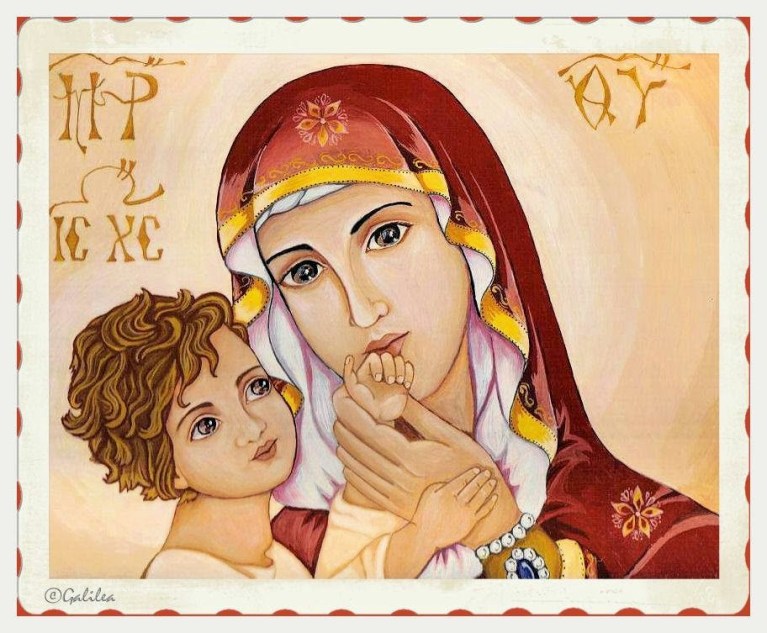
Mary and Restored Womanhood

Standard

A great sign appeared in heaven: a woman clothed with the sun, with the moon under her feet and a crown of twelve stars on her head. She was pregnant and cried out in pain as she was about to give birth. Its tail swept a third of the stars out of the sky and flung them to the earth. The dragon stood in front of the woman who was about to give birth, so that it might devour her child the moment he was born. She gave birth to a son, a male child, who “will rule all the nations with an iron scepter. (Revelation 12:1‭-‬2‭, ‬4‭-‬5a NIV)

Mary is described in splendid terms in the account above. She is wearing a crown with twelve stars symbolizing the tribes of Israel, clothed with divinity and standing above creation. As she gives birth the dragon stands ready to “devour her child the moment he was born,” an allusion to Herod who ordered male children to be killed after Jesus was born to prevent a potential challenge to his throne, yet she prevails. It takes a queen to give birth to a king and Mary is described in precisely those terms.

Growing up in a Protestant fundamentalist church the role of Mary was almost always dismissed or downplayed. While nobody in these churches would argue against the significance of Abraham, Elijah, King David, John the Baptist or the Apostle Paul, many do brush off the significance of Mary in the Biblical narrative and, despite claiming that Jesus is their king, would scoff at the idea that Mary should be regarded as Queen Mother. In this view, Mary is basically interchangeable with any other woman and nobody special or worthy of the veneration given to faithful men.

The disregard for the example of womanhood that Mary embodies is not without consequence. In fact, it is a disrespect that I would argue leads to male abuses, abuses that lead to female reactions and greater dysfunction. In other words, feminism is a response to traditional female roles being dismissed and downplayed in the same way that Mary’s role is disregarded. Many women feel that the only way they can be recognized is by thriving in what has historically been a male domain and it is no wonder that they do. Why pursue womanhood when only male roles are worth celebrating?

Mary, the answer to Eve…

One Biblical character Protestant fundamentalists have no problem talking about is Eve. They have no problem talking about how Eve was the one first deceived or quoting verses about male authority over women. I know many men who spend an awful lot of time discussing bad female characters, like Jezebel, or any woman who would dare challenge their authority, and continually attempting to blame women for their own failures.

For example, I recall a morbidly obese man who faulted his wife’s cooking for his condition and I know many more men who try to use female immodesty as a means to offload responsibility for their own lusts and abuses. And so it goes. These men are imposters rather than Christian leaders. They want to claim authority for themselves and yet, at every turn, blame women for their failures. They resemble Adam who blamed Eve more than Jesus who took up the cross despite being blameless.

To solve this age-old problem we should go back to the beginning and right after the fall of mankind:

I will put enmity between you and the woman, and between your offspring and hers; he will crush your head, and you will strike his heel. (Genesis 3:15 NIV)

This was what God told the serpent who deceived Eve. It is a prophecy about “the woman” and also specifically a woman. This woman would produce a child that would crush the head of this serpent and this is exactly what we read happened in the book of Revelation:

The great dragon was hurled down—that ancient serpent called the devil, or Satan, who leads the whole world astray. He was hurled to the earth, and his angels with him. (Revelation 12: 9 NIV)

The woman with “enmity” towards the serpent triumphed over the dragon through her offspring and that woman is the answer to those still deceived and stuck with Eve. The parallels between Eve and Mary, the antidote, are too great to ignore and were well-understood by the faithful in the early church:

As Eve was seduced by the word of an angel and so fled from God after disobeying his word, Mary in her turn was given the good news by the word of an angel, and bore God in obedience to his word. As Eve was seduced into disobedience to God, so Mary was persuaded into obedience to God; thus the Virgin Mary became the advocate of the virgin Eve. (St Irenaeus of Lyons, “Against Heresies” [A.D. 175-185])

This is the logical extension of what St Paul’s exposition in his letter to the Galatians about slavery under the law and freedom in the Spirit:

His son by the slave woman was born according to the flesh, but his son by the free woman was born as the result of a divine promise. (Galatians 4:23 NIV)

The comparison above is between Abraham’s two sons, one born by human effort to the slave woman and another by divine origin to his wife Sarah, but the greater context Paul speaks of is of our own divine sonship and salvation. The sons of Eve lives in bondage, they are subject to the law and perpetually trying to escape the condemnation of the law through their own efforts. But he writes of another son “born of a woman” who provides an opportunity for us to be an heir of God and a son of the free woman.

Jesus is understood to be the new Adam. Or the Adam who brought the “life-giving spirit” rather than death like his predecessor (1 Corinthians 5:45) and salvation from sin. And, his mother, in the same way, is understood to be the woman whose obedience overcame the curse of Eve’s disobedience and undoes the curse upon women. It is through the man Jesus, born of a woman, Mary, that we are saved. But it was not any woman, it was not a woman under the bondage of sin—it was a free woman.

“Behold your mother!”

There are those who use references to brothers and sisters of Jesus as proof that Mary, after giving birth to Jesus, conceived to Joseph and didn’t remain a virgin. This is another subtle way to belittle her and the significance of her role in the story of our salvation. It is also something routinely used by men to undermine the authority of the church. The perpetual virginity of Mary, for that reason, is important as a theological point and a misunderstanding of Scripture that is easily cleared up.

First of all, because it was not uncommon for older men to marry younger women in Biblical times, Ruth and Boaz for example, and it is widely accepted that there was an age differential between Mary and Joseph. It is quite possible, even probable, that Joseph was an older widower and had other children to another woman. So, in other words, the references to the “brothers” and “sisters” of Jesus could be step-brothers and step-sisters rather than other sons and daughters of Mary his mother.

Second, it is possible that we are misunderstanding the words used. Indeed, the same words translated as “brothers” and “sisters” could denote a close relative as Aramaic, the language being spoken, didn’t distinguish between brother or sister and a cousin. It seems similar to how Filipinos use the word “Tito” (literally uncle) and “Tita” (literally aunt) to also refer to a cousin or respected elder. So we may be dealing with a language translation issue.

Whatever the case, it is definitely not advisable to take our cues from those who were in doubt of Jesus, who identified him as “the carpenter’s son” and didn’t accept him as God’s son:

Isn’t this the carpenter’s son? Isn’t his mother’s name Mary, and aren’t his brothers James, Joseph, Simon and Judas? Aren’t all his sisters with us? Where then did this man get all these things?” And they took offense at him. (Matthew 13:55-57 NIV)

Note, the passage does not say that Mary is the mother of the other “brothers” and “sisters” mentioned.

If we should not be offended when Jesus claims to be God’s son rather than that of Joseph, then we should not be apt to resist the idea that his brothers and sisters could be from another woman and the real possibility Mary remained a virgin. This is the view of early church writers:

The Book [the Protoevangelium] of James [records] that the brethren of Jesus were sons of Joseph by a former wife, whom he married before Mary. Now those who say so wish to preserve the honor of Mary in virginity to the end, so that body of hers which was appointed to minister to the Word […] might not know intercourse with a man after the Holy Spirit came into her and the power from on high overshadowed her. And I think it in harmony with reason that Jesus was the firstfruit among men of the purity which consists in [perpetual] chastity, and Mary was among women. For it were not pious to ascribe to any other than to her the firstfruit of virginity. (Origen, “Commentary on Matthew 2:17” [A.D. 248]).

And the doubt of this answered emphatically by St Jerome:

[Helvidius] produces Tertullian as a witness [to his view] and quotes Victorinus, bishop of Petavium. Of Tertullian, I say no more than that he did not belong to the Church. But as regards Victorinus, I assert what has already been proven from the gospel—that he [Victorinus] spoke of the brethren of the Lord not as being sons of Mary but brethren in the sense I have explained, that is to say, brethren in point of kinship, not by nature. [By discussing such things we] are […] following the tiny streams of opinion. Might I not array against you the whole series of ancient writers? Ignatius, Polycarp, Irenaeus, Justin Martyr, and many other apostolic and eloquent men, who against [the heretics] Ebion, Theodotus of Byzantium, and Valentinus, held these same views and wrote volumes replete with wisdom. If you had ever read what they wrote, you would be a wiser man. (Jerome, Against Helvidius: The Perpetual Virginity of Mary 19 [A.D. 383]).

We believe that God was born of a virgin, because we read it. We do not believe that Mary was married after she brought forth her Son, because we do not read it. […] You [Helvidius] say that Mary did not remain a virgin. As for myself, I claim that Joseph himself was a virgin, through Mary, so that a virgin Son might be born of a virginal wedlock. (ibid., 21).

If that isn’t enough to clear up the issue, the emphasis that even Joseph became purified through Mary’s virginity (similar to what Paul says about believing spouse “sanctifying” their unbelieving partner and children in 1 Corinthians 7:14), then we should consider again what Jesus did on the cross:

Now there stood by the cross of Jesus His mother, and His mother’s sister, Mary the wife of Clopas, and Mary Magdalene. When Jesus therefore saw His mother, and the disciple whom He loved standing by, He said to His mother, “Woman, behold your son!” Then He said to the disciple, “Behold your mother!” And from that hour that disciple took her to his own home. (John 19:25-29 NIV)

Jesus, in agony on the cross, soon to say “it is finished” and give up his spirit, and his concern is who would care for his mother. Not only does this highlight how important Mary is to Jesus, but it would also be completely unnecessary for Jesus to assign someone to care for his mother if she had other sons and daughters. What we do know is that Jesus had to assign someone to care for his mother, to a disciple, and that would be odd if she actually had many children.

But there’s a twist…

Mary, in the same way, we have become sons of Abraham through faith (Galatians 3:29) and similar to how Jesus became a son of Joseph through adoption, has also become our mother. If we are coheirs of Christ, sharing in his divinity through our adoption, then we are, likewise, are sons and daughters of Mary his mother. So, rejoice, our inheritance through Eve (sin and death) has been overcome through the Blessed Virgin and by her Son!

“From now on all generations will call me blessed…”

And Mary said: “My soul glorifies the Lord and my spirit rejoices in God my Savior, for he has been mindful of the humble state of his servant. From now on all generations will call me blessed, for the Mighty One has done great things for me—holy is his name. His mercy extends to those who fear him, from generation to generation. He has performed mighty deeds with his arm; he has scattered those who are proud in their inmost thoughts. He has brought down rulers from their thrones but has lifted up the humble. He has filled the hungry with good things but has sent the rich away empty. He has helped his servant Israel, remembering to be merciful to Abraham and his descendants forever, just as he promised our ancestors.” (Luke 1:46-55 NIV)

It is sad that those words above do not carry much weight in some quarters who claim a ‘literal’ understanding of Scripture. I suppose they may think that Mary, a young woman, should not be taken seriously and her words are merely the product of unchecked female exuberance?

In that case, these doubters should look at a declaration made by Elizabeth, full of the Spirit, in the verses right before Mary’s exclamation:

When Elizabeth heard Mary’s greeting, the baby leaped in her womb, and Elizabeth was filled with the Holy Spirit. In a loud voice she exclaimed: “Blessed are you among women, and blessed is the child you will bear! But why am I so favored, that the mother of my Lord should come to me? (Luke 1:41-43 NIV)

If the witness of two women and the Spirit isn’t enough, what will be?

Mary is most certainly blessed among women. If we should believe anything else said in Luke, then we must accept this is the reality, that it is something spoken through Elizabeth by the Spirit, and should join the generations of the faithful who call Mary blessed.

Mary is the Ark of the New Covenant!

Mary is blessed because she, set apart by her parents, allowed herself to be a vessel. Mary is referred to as the “Ark of the New Covenant” and that is because of the direct parallels in Scripture made between her and the holiest of vessels in Israel…

Mary is overshadowed and filled:

The angel answered, “The Holy Spirit will come on you, and the power of the Most High will overshadow you. So the holy one to be born will be called b the Son of God. (Luke 1:35)

As the ark of the Lord (in the tabernacle) was overshadowed and filled:

Then the cloud covered the tent of meeting, and the glory of the Lord filled the tabernacle. Moses could not enter the tent of meeting because the cloud had settled on it, and the glory of the Lord filled the tabernacle. (Exodus 40:34,35 NIV)

***

David, a man after God’s own heart, revered the ark:

David was afraid of the Lord that day and said, “How can the ark of the Lord ever come to me? (2 Samuel 6:9)

Likewise, righteous Elizabeth says the same thing about Mary:

But why am I so favored, that the mother of my Lord should come to me? (Luke 1:43)

***

David, to the scorn of his wife, celebrated the ark of the Lord:

Wearing a linen ephod, David was dancing before the Lord with all his might, while he and all Israel were bringing up the ark of the Lord with shouts and the sound of trumpets. (2 Samuel 6:14,15)

Likewise, unborn John the Baptist, in defiance of those who do not honor the mother of our Lord, also leaped at the sound of Mary’s voice:

As soon as the sound of your greeting reached my ears, the baby in my womb leaped for joy. (Luke 1:44)

***

Finally, the ark of the Lord took a detour:

He was not willing to take the ark of the Lord to be with him in the City of David. Instead, he took it to the house of Obed-Edom the Gittite. The ark of the Lord remained in the house of Obed-Edom the Gittite for three months, and the Lord blessed him and his entire household. (2 Samuel 6:10,11 NIV)

And that parallels this:

At that time Mary got ready and hurried to a town in the hill country of Judea, […] Mary stayed with Elizabeth for about three months and then returned home. (Luke 1:39,56 NIV)

So, given these clear parallels, it is only right Mary is called the “Ark of the New Covenant” and Theotokis (“Bearer of God”) and to say otherwise is to be ignorant of Scripture.

And, yes, all those filled with the Spirit do, in a way, parallel Mary in this regard. Christians are told, by St Paul, that they are the “temple of the Holy Spirit” and to “glorify God in your body” by remaining free of sexual immorality (1 Corinthians 19:18-20) and this is following the example of Mary in being a vessel. However, Mary literally carried our Lord and Savior in her womb, we are told she is blessed among women and for that she is worthy of our honor and veneration—in the same way as the Ark of the Covenant.

Mary, like that Ark, is also set apart as holy and not to be touched.

“Do whatever he tells you.”

Mary was also an example of motherhood. She did not keep her son for herself by refusing to let him go or holding him back and enabled him to fulfill his purpose instead.

I’ve never thought much about this before listening to Dr. Jordan Peterson a few months ago and the contrast he makes between Mary and the devouring (or Oedipal) mother or mother who over-protects her child, attempts to keep them for herself and is a hindrance rather than a help to healthy development.

Peterson says Mary is the archetype of a good mother for offering her son to the service of God and as a sacrifice to the world. That is what good mothers do, rather than hoard (or, heaven forbid, destroy) the blessings of their womanhood, they give their children for sake of the world.

Anyhow, let’s take a look at the events leading up to the first miracle attributed to Jesus in Scripture:

On the third day a wedding took place at Cana in Galilee. Jesus’ mother was there, and Jesus and his disciples had also been invited to the wedding. When the wine was gone, Jesus’ mother said to him, “They have no more wine.” “Woman, why do you involve me?” Jesus replied. “My hour has not yet come.” His mother said to the servants, “Do whatever he tells you.” (John 2:1‭-‬5 NIV)

Some Protestant commentators take the inflection of the English translation (when Jesus says “woman, why do you involve me?” in response to Mary) as evidence that Jesus didn’t have any special regard for his mother. This is to suggest that Jesus would blatantly disregard the commandment to “honor your father and mother” (Exodus 20:1–21, Deuteronomy 5:1–23) and go against his own words rebuking those who defied God’s command (Matthew 15:3-9) and basically make him a hypocrite.

This word “woman,” according to what I’ve read, is more to the effect of “madam” than the English translation suggests and is also the same word used to denote a man’s wife elsewhere in Scripture. There is no reason to suspect that Jesus would be disrespectful of his mother and those who suggest that this is the case should probably consider the actions that accompanied his words.

We know what Jesus did immediately thereafter. He, like a good son, does and honors his mother by doing what she requests of him. Mary, for her part, does what a good mother does, she prompts her son to action and encourages others to give her son the respect he is due. We should not forget that Mary, in the same way as God the Father (yet as a human mother), also willingly gave her only son.

More on sons and their mothers…

Mary, mother of the King?

When Bathsheba went to King Solomon to speak to him for Adonijah, the king stood up to meet her, bowed down to her and sat down on his throne. He had a throne brought for the king’s mother, and she sat down at his right hand. “I have one small request to make of you,” she said. “Do not refuse me.” The king replied, “Make it, my mother; I will not refuse you.” (1 Kings 2:19‭-‬20 NIV)

It is interesting how good mothers intercede and especially on behalf of their sons. We see how Bathsheba (treated with reverence by Solomon) brought a petition to him and his response. There are also many stories of faithful mothers who prayed, with tears, every day for their wayward sons and I do believe that God hears their prayers. We also see this in the story of a mother who made a request to Jesus on behalf of her sons:

Then the mother of Zebedee’s sons came to Jesus with her sons and, kneeling down, asked a favor of him. “What is it you want?” he asked. She said, “Grant that one of these two sons of mine may sit at your right and the other at your left in your kingdom.” (Matthew 20:20‭-‬21 NIV)

This account is told differently in Mark 10, where the sons of Zebedee, James, and John, to the indignation of the other disciples, make this request themselves rather than through their mother. I’m not sure how to reconcile the two accounts, but I do see the role of mothers as significant. Let’s not forget that it was Bathsheba who prompted King David to name her son, Solomon, as his successor:

Then Nathan asked Bathsheba, Solomon’s mother, “Have you not heard that Adonijah, the son of Haggith, has become king, and our Lord David knows nothing about it? Now then, let me advise you how you can save your own life and the life of your son Solomon. Go in to King David and say to him, ‘My Lord the king, did you not swear to me your servant: “Surely Solomon your son shall be king after me, and he will sit on my throne”? Why then has Adonijah become king?’ (1 Kings 1:11‭-‬13 NIV)

Now, clearly the prophet Nathan could’ve gone directly to the king himself and made this request on behalf of Solomon. But it seems Nathan, as a man of God, knew a little about the persuasive power that a woman has over a man and therefore makes his request to Bathsheba instead. Good men, like good Kings who listen to their Queen Mother, listen to women, especially their wives and even more especially their own mothers.

Honor goes to the humble…

Going back to the question of who sits at the right and left hand of Jesus. We read the answer Jesus gave:

“You don’t know what you are asking,” Jesus said to them. “Can you drink the cup I am going to drink?” “We can,” they answered. Jesus said to them, “You will indeed drink from my cup, but to sit at my right or left is not for me to grant. These places belong to those for whom they have been prepared by my Father.” (Matthew 20:22‭-‬23 NIV)

Unlike worldly leaders who privilege themselves, in God’s kingdom “the last will be first, and the first will be last” (Matthew 20:16) or, in other words, those who have suffered most in this life will hold the highest places of honor in the kingdom.

My own thought is that there is one person who fits this description of suffering more than any other and that being the mother forced to watch her precious child, literally the perfect son, be falsely accused, brutally tortured, viciously ridiculed, and murdered in the most horrible method.

Can you imagine how Mary, a mother, would’ve felt as Jesus hung there dying?

I’ve heard that women, due to their giving birth, have a higher threshold for physical pain than men. Since pain is subjective, I’m not sure if that is true. But I do know, from personal experience, the sound of a mother’s wail upon the loss of her only and most beloved child. It was something that cut me to my soul.

It would be quite ironic, given that men argued for the honor to bestowed upon them, if the humble mother of our Lord and Savior was given that seat of honor beside her son. We can recall Peter boldly saying to Jesus, “Even if I have to die with you, I will never disown you,” (Mark 14:31) and how the other disciples quickly agreed. But this male bravado quickly faded away as Jesus was taken away to be killed. It was Mary, not Peter, who remained beside Jesus until the end.

Can you think of anyone more worthy of sitting at the right hand of Jesus than his mother?

Anyhow, regardless of where Mary sits in the minds of some, she is the Queen Mother and worthy of our honor or Jesus is not King. Because if we deny this we are basically joining those who used “king of the Jews” as a mocking description. But, if Jesus is Lord, and the lineage to David coming through his mother, then we ought to show due respect to the queenship of his mother. And, given that Jesus listens to his mother and since we already do ask others to pray for is all the time, it doesn’t like a bad thing to follow the lead of Nathan.

Mary, the prayerful mother

Had anyone a few years ago asked me about the importance of Mary I would’ve probably said she was a good woman and shrugged. I would not have understood why Orthodox Christians venerate her (with all the saints) and would say that all we need is Jesus.

However, I was ignorant. Of course, Jesus is the center of our faith, he is our Lord and Savior, we worship only the Father, Son, and Holy Spirit. But that doesn’t mean the other examples in Scripture (and in the history of the church) are worth nothing for us. No, their unique stories of faith are there for our benefit, to encourage us, and as examples that we can emulate.

Mary stands out as one of these faithful examples. Her contemplation, how she “treasured” things and “pondered them in her heart” (Luke 2:19,2:51), and her strength in remaining with her son, her willing response to the angel (“I am the Lord’s servant” Luke 1:38), the proper honor she is given by the faithful, provides a restored vision for womanhood.

Certainly, there are many good women. Many have even seen their children martyred for the sake of the Gospel. But Mary was the mother of our Lord and Savior, the vessel God chose for his son, and (like Eve) not just any woman. She should be honored, her true feminine strength should be praised, and it is through her womb that salvation came to the world.

Joachim and Anna and the Curse of Childlessness

Standard

For those raised in the conservative Mennonite culture big families are a given. There were nineteen children in my dad’s family (sixteen biological, three adopted) and, while that is the extreme, it would be very unusual for a married couple not to have any children. In a culture where blessing is practically synonymous with children, a childless home would likely produce some whispers and infertility a very unpleasant matter.

Children have traditionally been a retirement plan and marriage commitment the first step. A person without any offspring would likely have nobody to care for them in their old age. Even in a time when the state has taken over that role of social security there is still need of a new generation of children to keep that kind of system solvent. As many industrialized nations have below-replacement fertility rates, childlessness could soon be the crisis for us that it would have been in the ancient times when this was written:

Children are a heritage from the Lord, offspring a reward from him. Like arrows in the hands of a warrior are children born in one’s youth. Blessed is the man whose quiver is full of them. They will not be put to shame when they contend with their opponents in court. (Psalm 127:3‭-‬5 NIV)

Indeed, who will contend for the childless?

If you think that democratic institutions, in the hands of young people raised in a culture that values youth, will continue to provide for the elderly who have no familial connection to them then someday you’ll have a rude awakening. If anything the elderly are seen as a political obstacle in our modern times, a waste of limited resources when we have Google to provide our answers, and many of these youthful ignorant social engineers—rather than contend with a bunch of has-beens they don’t care to know—would delight in giving you a push to an early grave.

The Childless In Scripture

In ancient times, perhaps for the reason that there would be nobody to care for you in old age without children, there was a social stigma attached to being childless. In the case of Saul’s daughter Michal, who was critical of her husband David’s celebration antics, and her childlessness is expressed (2 Samuel 6:20-23) as if being a punishment. We are never told if that was simply a result of her relationship with her husband or not, but either way she did not produce an heir to David’s throne—which would be a serious setback to say the least.

There are patterns in Scripture and one of those patterns being that those most notably childless early on are often the most greatly blessed later. The most notable of those couples with a deferred blessing is Abraham and Sarah. They were elderly and had remained childless. We are told “she was not able to concieve” (Genesis 11:30) yet Abraham was promised to be “the father of my nations” (Genesis 17:4) and this seemed plain ridiculous given the advanced age of the couple. But, they were blessed by God, Sarah did bear Issac and was childless no more.

There is also the account of childless Hannah. In the first book of Samuel we read how she was treated especially well by her husband (who had two wives) because he loved her. And yet her rival would torment her over the fact that she could not bear children and this made her miserable to the point she couldn’t eat. Finally she cried out to God, weeping bitterly, she vowed:

Lord Almighty, if you will only look on your servant’s misery and remember me, and not forget your servant but give her a son, then I will give him to the Lord for all the days of his life, and no razor will ever be used on his head. (1 Samuel 1:11 NIV)

In other words, she promised her son would be a man dedicated to God.

The account goes on to say that Eli, the priest, who was watching her pray yet couldn’t hear her words, thought she was drunk and tells her to put away her wine. But she responds that this isn’t the case, that she is simply deeply in anguish, to which the priest tells her: “Go in peace, and may the God of Israel grant you what you have asked of him.” (1 Samuel 1:17 NIV) This answer seems to have consoled Hannah who we are told began to eat again and would later become pregnant, bear a son Samuel—a name which basically means “heard by God” and he would, as a result of her commitment, become a great prophet.

Finally, before we move on to Joachim and Anna, there is this assurance given to the childless who remain faithful:

And let no eunuch complain, “I am only a dry tree.” For this is what the Lord says: “To the eunuchs who keep my Sabbaths, who choose what pleases me and hold fast to my covenant—to them I will give within my temple and its walls a memorial and a name better than sons and daughters; I will give them an everlasting name that will endure forever. (Isaiah 56:3‭a-‬5 NIV)

There are many who would love to have children and cannot. This is one of those terrible ironies given the numbers of abortions and abused or neglected children in the world. We will never know, at least on this side of eternity, why some who long to be mothers and fathers are denied the blessing of children. However, we do see that those who suffer this despite their righteousness will be rewarded in the end and therefore should always put their hope in God who will make all things good for those who love and obey Him.

Who Are Joachim and Anna?

These two, mentioned at the conclusion of each liturgy, “the holy and righteous ancestors of God, Joachim and Anna,” despite being mostly forgotten in the religious tradition I was born into, have one of those great stories.

Joachim was from the tribe of Judah and a descendant of King David. His wife, Anna, was from the tribe of Levi, the same as the High Priest Aaron and the daughter of the priest Matthan. They had lived fifty years, as a married couple, and were unable to have children despite their devotion to God.

Joachim had faithfully, since his teenage years, given two-thirds of his income, one third to the poor and another third to the Temple, and were financially blessed for this. However, their childlessness finally became a cause of harassment. The High Priest, Issachar, confronted Joachim and told him, “You are not worthy to offer sacrifice with those childless hands.” And, with that pronouncement, he was pushed back by others, who had children.

Rejected and despairing in this disgrace, Joachim studied and found that, indeed, every righteous man in Israel had been blessed with children. He and his wife left with Jerusalem with profound sadness because of this. They began to pray for a miracle, like that which happened for Abraham and Sarah, him going into the mountains with his flocks and Anna returning home. Then the archangel Gabriel visited them both, promising them “a daughter most blessed, by whom all the nations of the earth will be blessed, and through whom will come the salvation of the world.” The picture is of them meeting again, at the city gates, upon hearing this.

Their daughter, Mary, the mother of Jesus our Lord, was specially dedicated to God and, like Hannah’s son Samuel, was brought up at the Temple at the age of three to be raised with other girls there. Their righteousness was finally rewarded having waited those many years. Their story is one that is a good reminder to those who have been faithful yet have not been blessed like others. They are the grandparents of our Lord and Savior.

Anyhow, by coincidence, the conception of Mary is celebrated today, December 9th, which is something I didn’t know when I began writing this blog.

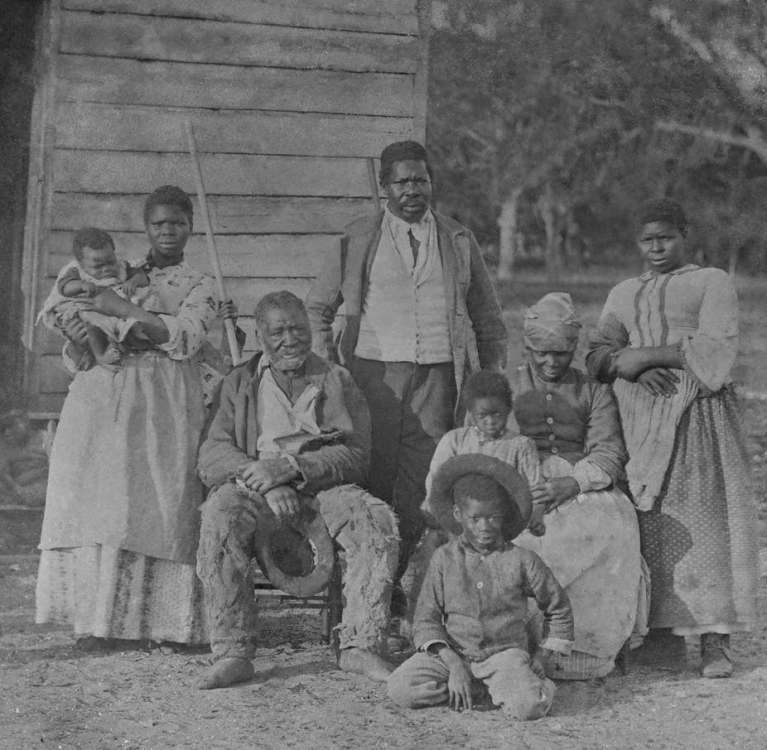
Finding the True Legacy of American Slavery

Standard

As a child, because of my father’s work in construction, my family would travel. My mother, someone as inquisitive and interested in learning as I am, would take us children to the various historic sites and museums near the areas we visited. A significant part of our time in the South was spent surveying Civil War battlefields, exploring plantation homes built in the Antebellum era, and pondering it all from the perspective of a proud Yankee.

At the time the devastation and destruction of the war were justified by the righteousness of the victors. Slavery was an affront to the notion that “all men are created equal” and thus this institution of human ownership remains an indelible stain on that founding ideal of this nation. This perspective made Abraham Lincoln a heroic figure, it made the Union soldiers honorable men, the North was morally superior to the South and that was that.

However, that was actually simplistic.

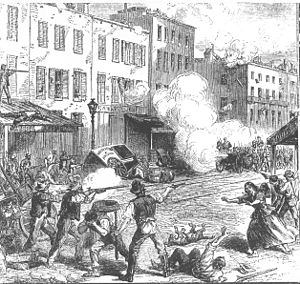
First, many of the casualties of war are innocent, the wrongs of our enemies not justify our own, and the reasons for a conflict are far more complex than the victor’s narrative, Second, slavery had been an institution since the beginning of human history and a subject of debate for the founders who ultimately decided that the constitutional federation of independent states against the British colonial power required some compromise. Third, the aggression of the North may have resulted in emancipation for slaves in the South, yet it did not improve the conditions of those treated like rented mules in Northern industries and mines nor did come without a cost. Furthermore, both sides in the Civil War relied on conscripts (poor men forced to risk life and limb to further the agenda of the powerful) and in the North disenfranchised whites (mostly Irish immigrants) rioted in New York City against the draft and taking their anger out on black city residents.

The human and economic costs of the Civil War were staggering. It is estimated that 620,000 men died in combat or from disease related to the horrid conditions and that’s not to mention the many more ‘casualties’ who returned physically or psychologically maimed. The direct impact was full 1.5 times the GDP of the time, for comparison, the 2017 GDP distributed per capita (19,485,400/325.7×1.5) is $89,739.33, and the indirect costs were far far greater. The total economic price tag of the conflict is conservatively estimated to be 10,360 million in 1860 dollars or an incomprehensible 315 billion dollars in today’s money and at a time when the US population (and GDP) was a fraction of today’s. Every man, woman, and child in the South lost the equivalent of $11,456 during the war and continued to lose long after the war due to the destruction—the vast majority of them never owned a slave.

Poor whites in America, especially in the South, had the double whammy (or maybe triple whammy?) of being forced to fight on behalf of the rich, of working for very little compensation themselves and then still being called privileged by their actually privileged counterparts. It wasn’t the moralizing Northern abolitionists who freed the slaves nor the Southern slave owners who felt the greatest pain of the brutal conflict. The people who paid the real price were the working class, they were the ones who lost the most in the war, a war over an institution no fault of their own, and are now held as responsible as the slave owners themselves. It is a path to resentment. People who feel powerless often take their feelings out on those with less power than they do. Sadly black Americans have historically been the recipients of this frustration while the true beneficiaries of their exploitation are never held accountable.

Slavery, at its peak, only accounted for a fraction of the nation’s GDP:

In the 1850s, the zenith of the cotton economy, it came to between 1 and 1.5 percent of the nation’s GDP, not a trivial sum. By this period, however, the United States was already the second-largest economy in the world and was investing every year between 13 and 15 percent of GDP in new capital. Even if the entire “slave surplus” were saved (which it wasn’t, because there were mansions to build and ball gowns to buy), it would have made a respectable contribution to growth, but it just wasn’t large enough to be the basis of an empire. (“Was America Built By Slaves?“)

As the quote above suggests, most of that gain likely went to the slave owners themselves, spent on their lavish lifestyles then, on those plantation mansions that still exist in the South, and was not invested back into the economy in general. A significant portion of that wealth evaporated as a result of the war and emancipation. The value of a slave went from being $12,500 to $205,000 (in 2016 dollars) to effectively zero. So, in other words, if the 1860 census were correct that there were 3,953,761 slaves and the average price was around $800 in their dollars (or around $140,000 in our own) then slave owners lost around 554 billion dollars. Slaves, on the other hand, gained something priceless, that being their own freedom, and yet the cost of slavery to black Americans is truly incalculable.

The Incalculable Cost of Slavery…

The cost of slavery to black Americans is incalculable and not in terms of economic impact. It is incalculable because of the lasting social consequences that can’t be assigned a number value. The suffering of black Americans did not end with the Civil War, they faced the lingering resentment of their white neighbors, all forms of discrimination, intimidation tactics and terrorism. Even with Constitutional amendments prohibiting slavery, recognizing their citizenship and granting voting rights, conditions did not improve dramatically for black Americans in the “Jim Crow” South. It took a further effort in the 1960s, the civil rights movement, to finally see some of these Constitutional rights fully realized and not before Dr. Martin Luther King Jr was murdered by an assassin’s bullet.

But, perhaps worse than the lynchings and segregation, one time events that can be adjudicated or something that can be addressed through legislation, is the immeasurable impact on the dignity of those who know that their ancestors were once treated as property and sub-human. I can’t really imagine how it would feel to have my own race being counted as 3/5ths of a person in my own country’s founding documents. There is no way to compensate for that psychologically and especially not when the widespread mistreatment was still in full force a mere generation ago. In such a context, it would be hard not to see any misfortune or measurable difference in outcome as somehow related to prior generations being robbed of their dignity and right to self-determination.

However, making matters astronomically worse is the fact that even many of those claiming to want to help often treat black people as their lessor and do more harm than good in their efforts to restore. A prime example of this is the so-called “War on Poverty” and how since then black marriage rates have plummeted and out-of-wedlock births skyrocketed. First, intact families are a greater predictor of future success than race. Second, making a person dependent on government handouts does nothing to restore their human dignity and, in fact, keeps them trapped. The welfare state has more or less enslaved the black community (and many others) to politicians who stoke fear of losing ‘benefits’ as a means to gain votes and maintain their own power.

Affirmative action programs do nothing to help confidence. No, if anything, they only further reinforce feelings of inferiority and, worse, feeds a notion that black accomplishments may deserve an asterisk. I can recall very well the conversation I had with a young man in the Midwest whom I confronted over his racism. He made no apologies, he embraced the description and then blamed his own lack of success in college on his not being given the same opportunities as minorities. Whether true in his case or not, it takes an extra dose of grace for a poor white person to not feel slighted and very easy to take out the frustration on the beneficiaries. I’ve had to fight this myself as someone who never finished college for mostly for financial reasons.

A few years ago I had hope, with the election of Barack Obama, that this would heal some of the wounds, bolster feelings of self-worth, and help us turn the page as a nation. Sadly, it has seemed to do the opposite. My opposition to increased government spending, as a lifelong conservative who doesn’t see more government control as the solution to every problem, was characterized in terms of race as was any opposition to his policies. Rather than be seized upon a moment of reconciliation, Obama’s race was used as political leverage, as a means to ostracized political opponents and advance a leftist policy agenda. The specter of racism is used to control, both to frighten some voters and also to smear others.

A decade ago I had believed that we were on our way to colorblind society, one like that Dr. King had envisioned where people would be judged by the content of their character rather than the color of their skin. Today I’m not even sure that is possible, the current political establishment benefits too much from identity politics and tribalism to allow that kind of society to form. It is hard not to feel cynical in a time when white vs black narratives dominate the headlines. And, while I believe this too shall pass, that the current racial tensions are an aftershock rather than a repeat of the past, there is also the reality that slavery is an unpayable debt.

The Unpayable Debt…

Some have suggested an idea of paying reparations to the descendants of slaves to right this historic wrong and would finally, once and for all, reconcile the injustice. There are those who have gone as far as to suggest a number, between $5.9 and 14 trillion dollars, as being suitable compensation or at least as a “meaningful” symbolic gesture and something that could improve race relations.

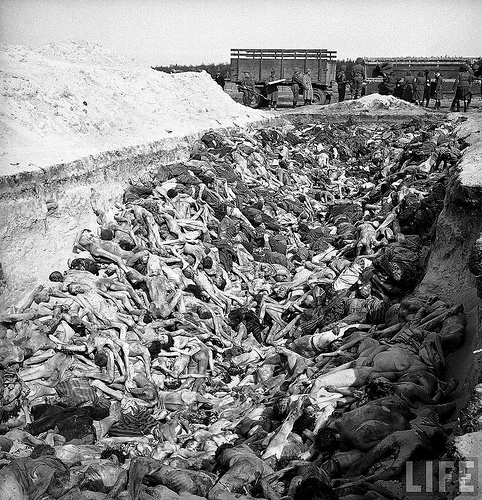
Those selling the idea of reparations say is that this is similar to payments made by Germany to those who suffered through the Holocaust at the hands of the Nazis.

However, those promoting the idea fail to mention the significant differences. The first difference being there are actual Holocaust survivors still alive today to receive the compensation for their loss, but there is not one former slave or slave owner still alive. A second big difference is that the abuses against the Jews in Germany were perpetrated directly by the government itself, whereas slavery was a private institution that existed long before the United States was a nation and was eventually ended by the government and at a very great cost. Hitler’s Germany didn’t stop themselves, the government stole directly from people and sent millions to slave labor camps or gas chambers to be killed—it was literal genocide.

But the bigger problem with reparations is who pays, who gets paid and how much?

It is not justice to make one generation pay for the sins of another. There are many in the United States who did not benefit from slave ownership. My own ancestors, for instance, did not own any slaves and the own possible way they might have benefitted is in slightly cheaper cotton. However, I didn’t receive any inheritance of money nor of cotton clothes from my grandparents. In other words, my savings is my own, from my own work, do I owe anyone (besides my cousin who just helped install flooring in my rental and the bank) nor do I feel any guilt for anything I’ve done. So why should the innocent be forced to pay any more than another person should be forced to work? Do two wrongs make a right? It would only be right to target those who actually did benefit directly from slavery and the complexities of that would be enormous. Would we go after the descendants of European and African slave traders as well?

And then there is the matter of determining who gets paid what. The reparations advocates come up with their dollar figure based on a calculation of hours worked, wages at the time, and interest that would be accrued. But that’s not how things really work. Again, the wages of my grandfathers and great-grandfathers were spent in their generation, dispersed into the economy, and there is nothing left for me. The reality is that the modern ancestors of slaves benefit from the economy in the same way that we all do, thus paying them with interest would not make any sense and especially when that money would be taken from their innocent fellow citizens. Then there’s the reality that not all American black people are ancestors of slaves, some of them are recent immigrants from Africa, some have mixed ancestry and others may actually be the ancestors of black slave owners. Yes, there were slave-owning black people in the American South—should their ancestors pay or be paid?

So, what do we do, start compensating based in DNA tests, as in, “You’re 1/5th black and thus entitled to X…”?

Do we prorate based on how much someone benefited from affirmative action?

Will multi-millionaires, those who obviously have done well, be paid?

Do we deduct welfare payments, etc?

Grading everyone based on their ancestors reinforces all the wrong ideas. It is measuring a person’s worth based on their ancestors rather than their own individual merits and exactly the thing we should be getting away from. Besides that, it is severely undervaluing the worth of a US citizenship, there are people fighting for the opportunity to be here, and our economy is much better here than it is in Africa. Yes, certainly a black person born into an urban environment may face unique difficulties. But then there are many immigrants who come here with nothing, who settle in the same neighborhoods and do advance. And where does it end, do we owe the followers of Joseph Smith for the systematic oppression of them and their religion? Do we owe the Republican party for the attacks against them by the KKK and lynchings of party members? It is just not a good direction to go, it is divisive, it will hurt the wrong people, and we are already deep in debt as a nation. Why should our grandchildren (black, white and other) pay interest to the Federal Reserve and other wealthy people for what is only a symbolic gesture and, if we are honest, won’t remove the stain of the past anyway?

The truth is that money won’t change anything as far as the past. Sure, I’m guessing many who would receive reparations like the idea, who wouldn’t take a windfall? But the reality is that all the compensation in the world cannot erase the legacy of slavery and all the wrong people would end up paying the price. A professional sports contract doesn’t make anyone forget injustice, many lottery winners often end up as poor as they were before, and money can’t be used to solve the problems created by money, to begin with. There are times when a financial settlement is the answer, when both parties directly involved (the aggrieved and the accused) are properly adjudicated. But billing the current generation for the sins of the past, especially without due process, is theft no better than slavery at worse and mere revenge at best.

The true legacy of slavery is that some are owed a debt that cannot be paid.

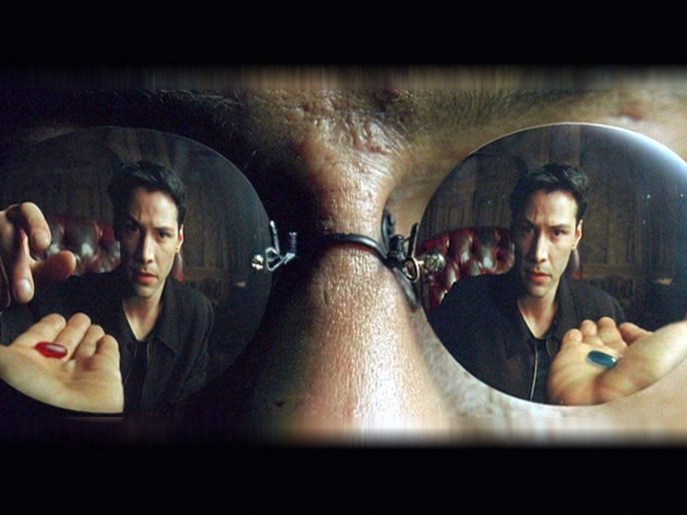
Wake Up, the Matrix isn’t Real!

A matrix, according to Merriam Webster, is “something within or from which something else originates, develops, or takes form.” And we do live in a matrix where our ideas about race, history, advantage and disadvantage matter more than the actual facts. In other words, the matrix is the way we individually or collectively interpret the facts and use them to form our ideas. Our thought matrix, our assumptions based on our own interpretation of facts, plays a significant role in our outcomes. Overcoming the mental processes that keep us bound is key to success in life.

The other week I was driving to a job site and notice some nice new houses with their well-manicured lawns, spiffy two-car garages, and paved drives. I was overcome momentarily with a tinge of envy, a little regret, and mostly befuddlement at how some people could afford such things. The question immediately came to mind, “What did I do wrong?” I thought of my life, my disadvantages, the opportunities missed, and all those things that held me back from reaching my full potential. However, before I went too far along in that thought process, another question countered the first, “What did I do right?” My mind went first to all the thing I did right, but then to all my advantages compared to most people in the world and the things I did not choose.

Did I do anything right, say compared to that Haitian man I saw in Port Au Prince hauling a car body on his back or a woman born in Afghanistan, Saudi Arabia, etc?

Our mental construct, our prejudices, and preconceived ideas, a product of our culture and choices, can make a real difference in our outcomes. Sure, positive thinking cannot change the circumstances of where we are born, a good attitude does not mean that there will be fewer obstacles to our success in life, yet why not make the best of the opportunity we are given and live in gratitude for what we do have rather than envy of others or frustration because of what we lack?

Part of the problem is that there is a system of control, it helps to create our expectations, it feeds our insecurities and can keep us bound. The real systemic oppression is the idea that politics (or more money in our hands and power over others) is the answer to our problems. Money can’t fix what it created, money itself binds us to the system and the things that money buys rarely deliver the happiness that we think they will. Again, look into lottery winners, many people end up as unhappy as they were before their winnings and some worse off. So why do we measure success in terms of things that will not and cannot make us happy?

What we really need to do is reorient ourselves. We must reject the unhelpful categories and classifications that keep us bound and change the way we think. Grievance culture, tribal score keeping and trying to rank people by their outward appearance is a backward-facing, small-minded and, frankly, racist orientation. There is no group guilt for slavery any more than there is for inner-city crime, we need to stop seeing people as white, black, orange or whatever, building our own identities around those superficial things, and aim for something greater—aim for the future that we want, yet hasn’t fully arrived, where all people are judged by the content of their character rather than the color of their skin.

It Is Time to Think and Act Differently…

If I had my own life to do over I may have dithered less (convinced that higher education was the key to success in life because of what my teachers told me) and started driving truck earlier. It was my own pride (and anxieties) that kept me from taking the better options available to me and I suspect there are many who, like me, prevent their own success because of their aim. And I’m not at all saying that we should sell ourselves short or settle for less than our abilities can afford us. However, many do set themselves up for failure because they keep waiting for the big break, the breakthrough when everything they dream of finally comes to them and refuse to take full advantage of the actual opportunities they have.

Another thing I would do differently is stop worrying that other people had it in for me and believing that I was helpless when the reality was that I was unwilling to make the right sacrifices. Part of my difficulty in life was due to my refusal to act differently or accept that my own behavior was part of the problem. Sure, there is something to be said for authenticity and being true to ourselves, but sometimes overcoming requires us to act differently and accept what is truly reality over our own individual construct. To find success in the religious context where I was born I would need to accept their rules and my fighting with that reality, my “kicking against the pricks” or resisting the flow rather than harnessing it, had some undesirable consequences.

Cutting to the chase, we have agency and we do not. There are well-worn paths to success with risks worth taking, call them cultural conventions, and then there are the low-probability high-risk paths that lead many to ruin. For example, finding a profession like teaching, law enforcement, construction or accounting (as opposed to seeking to be a career actor, model, musician or professional athlete) is more likely to produce desirable results for most people. Feeding our insecurities, dwelling on slights (real or perceived), demanding others conform to our wishes or that they respect us for who we are, expecting too much, is a path to long-term disappointment.

Overcoming the matrix means we need to stop seeing things in black and white terms. Sure, things like “black culture” or “white privilege” do exist in some form, at very least as a construct in our minds, but they really are only terms that obscure a far more complex picture and keep us trapped in the problem rather than working towards the solution. The reality is not as simple as the narratives pushed by academics and advocacy groups. There is no one group with all the advantages nor another with all the disadvantages. There is a reason why the suicide rates for middle-aged white people have skyrocketed while black rates have declined and are considerably lower—something (like connections and community) that might be missed in the commonly touted measures of success?

Recently I read the story of a naval aviator, an officer name Thomas J Hudner Jr, who was awarded a Medal of Honor for his actions in the Korean War. His act? He intentionally crash-landed his Corsair to protect and attempt to rescue a comrade, Ensign Jesse L. Brown, whose airplane had been hit by ground fire and was behind enemy lines. Brown, who happened to be the first black naval aviator, did not survive despite the efforts of Hudner, however, what does survive is an example of brotherly love that transcends artificial racial divides and presents a reality worth building upon. That is the legacy that, if built upon, will free us all from the sins of the past.

Loving dangerously, that is my idea of real success in life.

It is also neat, in these hyper-partisan times, to see George Bush Jr and Michelle Obama share some moments of common humanity together and continue this friendly exchange even at his father’s funeral. That is the symbolism that matters, that is the positive interaction we should aim for and the kind that can make a real difference in the world. If we love all people rather than prefer only those who look or act like us and orient ourselves to the hope of a better future rather than cling to our past and present suffering, we may well have a chance to build a better identity for ourselves as a nation. We may not be able to choose our inheritance, but we can work to create a better legacy for the next generation.

We, like Bush and Obama, have far too much in common to be at odds with each other.

Those who have faced hardship past or present should be heard and forgiven of their current insecurities. Those who have been indifferent to the suffering of others, out of ignorance or hardness of heart, should also be forgiven. And those two groups are all of us and have nothing to do with race. We are all victims, enslaved to a past that we didn’t create for ourselves, and all guilty of perpetuating the legacy to some degree. We can’t know what a person has been through by how they look on the outside and therefore we should love all people as we wish to be loved rather than by what we think they deserve. It is time to be courageously human, committed to true Christian love, rather than tribal, fearful and small.

Sex Obsession: Pornography and Purity Cultures

Standard

It might seem that pornography and purity cultures are polar opposites. One provides instant gratification for sexual appetites whereas the other promotes abstinence and encourages young people to ‘save’ themselves for marriage. However, while pornography does accomplish its short-term aims, purity cultures often fail at their intended goals.

Purity cultures, a product of Protestant fundamentalism, arose in reaction to the promiscuity of mainstream America in the 1960s and as an effort to protect the next generation. It is fueled by the regrets of some who, like Augustine, indulged in fornication themselves and is also promoted by others who were just plain fearful of outside influence. However, as with most fear-based reactions, purity culture has created as many problems as it has solved. The promise of the ‘right’ one being the reward to those who most carefully adhere to its teaching has often only led to long-term dissatisfaction.

This purity teaching, especially when introduced to the already reserved conservative Mennonite culture, has made the threshold for entering a dating relationship nearly impossible for some. It has led to paralysis for the most conscientious and added unnecessary difficulties for all but the boldest and superficially attractive. Worse, while this reactionary movement has not delivered as promised to those who most fearfully adhered to the expectations, it has done absolutely nothing to stop those said “boldest and superficially attractive” from gratifying themselves outside of a marital commitment. So the net gain is more guilt for those who already have too much guilt and increased the hardness of hearts for those who are already predisposed to do as they please.

Purity culture fails because it does not provide any real help or practical solutions to those who desire a healthy relationship and, sadly, is too often as (or more) carnally focused on carnal pleasures as the carnal-minded are themselves. Purity culture never transcends or brings us closer to holiness and, sadly, ends up often leads many young people right into pornography addiction and a self-defeating cycle of shame. Pornography use is as prevalent in these fundamentalist purity cultures (albeit almost never confessed openly for fear of the social stigma) as anywhere else.

This obsession with physical purity and on female virginity, in particular, paired with the dogmatic emphasis on female modesty, has had some terrible unintended consequences. Consequences which are all but ignored by fundamentalist leaders who think that their doubling down on preaching condemnation will someday change hearts.

Here are some observations about the similarities between pornography and purity cultures:

Two Sides of the Sex Obsession Coin

Sex, in the right context, is a wonderful thing and not something to ever be ashamed about. Unfortunately, sex is also something that can be twisted into a harmful obsession.

It is fairly obvious how pornography is degrading and a destructive habit. However, what is not so understood is how purity culture mirrors this obsession. The first notable similarity between pornography and purity cultures is that both represent an unhealthy fixation with sex and physical bodies. Both undermine us spiritually, objectify women and pervert our interactions:

  • Pornography and purity cultures both objectify women. The biggest irony of purity culture is that it is as obsessed with sex as the mainstream culture it decries as sinful. Yes, purity culture is in opposition to sexual promiscuity, but it is also as objectifying as pornography in that it places a woman’s value in her virginity and also spends an inordinate amount of time in discussion of the female physical form. I can still recall the men’s meetings about things like the so-called “peekaboo effect” pertaining to slit skirts (below the knees) and also hearing how some men claimed a woman’s exposed elbow somehow resembled a nipple and thus needed to be covered. To anyone outside of a purity culture, this sort of talk is perverted and ridiculous. It is little wonder why women in these cultures feel especially objectified and are often extremely distrusting or weirded out by men.
  • Pornography and purity culture pervert interactions between genders. This is the most insidious similarity between the two and the one that is most frustrating to me. There’s a picture of me on the beach, as a toddler, holding hands with a female cousin—our touch was friendly, completely non-sexual and entirely appropriate. But somehow, by the time I reached my teenage years, many young women were convinced that a mere conversation with a young man was a risk of defilement. This fear, sadly, is what became of the coffee date offer made in response to one of my blogs, the young woman who made the offer backtracked, and—while we did meet in the most awkward of settings—it was another bitter reminder of how perverted purity cultures have made male and female interactions. Rather than have a good time getting to know one another, as would be appropriate, we instead waded through topics of defilement and “guarding hearts” and her predetermined lack of interest in getting to know me. I don’t blame her for this nor the dozen other Mennonite girls before her who treated me more like a rabid dog than a Christian brother. It is what she was taught and it is also something she likely caught by seeing men constantly talk about her body as being this irresistible object. Unfortunately, nothing could be further from the truth. Yes, the female form is beautiful to me. But I’ve gone on many friendly dates with non-Mennonite women, even studied alone with them, and never once did we engage in sexual conversation or behavior. A good man sees a woman as more than an object, not all physical interaction is sexual, but both pornography and purity cultures pervert our interactions, make everything about sex and make it much more difficult for healthy relationships to develop between genders.
  • Pornography and purity cultures feed guilt without providing effective long-term solutions. Sin needs to be called out. That said, guilt-tripping a person stuck in a sex addiction is not going to stop them and, if anything, will simply keep them from speaking openly about their struggle with sin for fear of being stigmatized. Those mired in shame do not need more sermons, they need practical solutions. Feeding guilt may provide gratification for purity culture preachers, but does little more than the pornography itself to helping those who already feel shame yet are caught in a vicious cycle and defeated. Rather than obsess on sex and sin, we would be better to focus on holiness and fostering a church environment where those ensnared feel free to confess and find their salvation from the addiction.

We should—at very least—be promoting healthy relationships and providing opportunities for young people who desire relationship to interact without it being assumed to be a sexual encounter or regard every conversation between two unmarried people as a potential defilement. If we believe in a transformation of heart then we need to stop telling young women to fear their brothers in Christ, we need to humanize each other rather than treat ‘sisters’ like objects or treat ‘brothers’ as if they are animals. This means that purity culture leaders need to trust God to work in hearts, stop living in fear of losing control, and love as Christ loves them. If Jesus welcomed prostitutes, we should be fully ready to embrace and restore those who have ‘defiled’ themselves with pornography or other sexual immorality. The long-term solution is to stop promoting fearful reaction and sexual obsession and start with leaders willing to acknowledge this current quagmire and their repentance for creating it.

Both Produce Unrealistic Expectations

There is often a nasty surprise waiting for those who do manage to navigate the dysfunction of purity culture courtship expectations. The high ideal that kept them fearful of talking to the opposite gender for fear of defilement doesn’t guarantee that they will find satisfaction in marriage when they finally find someone superficially attractive enough to give a chance. No, if anything, this will likely lead to their discontentment when this magic person, who checked all the right boxes, turns out to be a sinner like the impure others they’ve rejected merrily along the way and isn’t what they thought he/she was when they married.

Purity culture, like pornography, creates this unrealistic expectation for male and female relationships. Yes, pornography is different than purity culture in that the expectations it creates are solely pertaining to the physical and yet both push for this perfect fantasy ideal. Whereas pornography often centers on perfect bodies having amazing sex, purity cultures paint the right guy as being this courageous knight in shining armor and a young woman as this pristine princess. However, in reality, a real-life relationship often falls well short of these expectations in even the best of circumstances, real people have “bad hair days” and make mistakes.

I’ve heard a purity culture pastor explain that he needs to portray is own marriage in glowing terms as an example for others. But that sort of whitewashing is in direct contradiction to what we see in Scripture where even the heroes of faith are portrayed in their flawed and very unflattering moments. King David, for example, was an adulterer who murdered the husband of the woman who he had sinned with. Elijah was working miracles before he fled like a complete coward when faced down by a female tyrant. Even Peter, the leader of the early church, denied Christ. All of these men would be unqualified by the standards of a purity culture fathers and daughters, yet they are the best examples of faith we have besides the literal son of God!

Pornography and purity cultures both imagine a world where real people do not live and true Christian love is not required. These unrealistic expectations will lead many to great disappointment when they finally get to marriage. It has led to many others giving up on marriage because they can’t get their wish list of expectations with options currently available. This goes completely contrary to a love that transcended our imperfections and died for our salvation while we were yet dead in our sin. No, not saying that we should marry someone unbelieving and unrepentant, certainly not, nor even someone unconcerned with things like hygiene, etc—but we should also show love to others as we want to be loved by God.

Both Have Diminishing Returns

Pornography, like any self-gratifying indulgence of the senses, often requires more and more novelty to have the same effect and can eventually even lead to erectile dysfunction. Likewise, fear-based purity culture preaching, rather than make us more vigilant, often deadens ears. Sure, it might get the heads nodding in agreement, it might even get the commitments to purity from the idealistic youth still trying to navigate their way through their own sexuality, and yet there is nothing in it that will lead to holiness. Just like consuming all the porn in the world won’t produce a meaningful relationship, you can’t actually “scare the hell out of people” and drive them into the kingdom of God through fear. No, salvation depends on a new birth, an encounter with God’s grace, and spiritual transformation.

Salvation isn’t pounded through skulls by screaming fits on Sunday mornings. Sure, we do see where Jesus used the threat of being thrown into a trash pit to try to knock some smug self-righteous religious folks off their high horse, but that certainly isn’t all he did nor is that what drew the crowds. We have no indication that Jesus was overly dramatic or ever raised his voice, in fact that would go against what was prophesied about him in the book of Isaiah: “Here is my servant, whom I uphold, my chosen one in whom I delight; I will put my Spirit on him, and he will bring justice to the nations. He will not shout or cry out, or raise his voice in the streets.” (verse 42:1,2) What Jesus did do was heal and work miracles, his words were full of truth and love, that is why the religious needed to put him to death—he had something they themselves could not match.

We can preach sexual purity and saving oneself for marriage until the cows come home and it will not save anyone. Even this effort does actually convince some to abstain from sex before marriage, sexual purity is a false hope for winning God’s favor and especially if it comes accompanied by pride. It is very likely that many of those who rejected Jesus never viewed pornography and lived completely righteous lives according to the law and yet lacked the one critical component necessary for salvation. The bigger issue with purity culture is that it keeps us fixated on physical or emotional purity and takes our focus off of what is actually consequential.

We aren’t saved by our ability to live out a high moral standard. No, as Hebrews 11:6 tells us, without faith it is impossible to please God. So, yes, sexual purity before marriage does potentially come with some temporal returns, but eventually, it will be worth nothing unless we repent of our pride and depend fully on Jesus in faith.

Both Render Us Impotent

The most striking similarity between pornography and purity cultures is how both effectively neuter us and keep us from healthy relationships. Prior to writing this blog, I came across a YouTube video, “Porn and You,” from a secular source, talking about the damage to men and culture as a result of porn. In the video he cites an article, “6 Ways to Develop Sexual Integrity,” (a terribly misleading title) that presents this degradation as positive:

“An interesting effect happens as people watch pornography. They become more egalitarian, and more supportive of women and men sharing roles and work, less accepting of gender-based discrimination. They also become more accepting of sexual diversity and less stigmatizing towards homosexuality. They become less religious, and may even experience more crises of faith. Enjoying porn leads to people changing their beliefs about sex and gender, and, in some cases, rejecting the dogmatically rigid sex/gender values they were taught in church.”

That could be fine for a ‘progressive’ social engineer who does not see declining birth-rates and hypofrontality as an issue. But, for the rest of us, that should be the writing on the wall. Pornography addiction is pushing us towards cultural dysfunctionality and a potential demographic disaster. There are many good reasons to stop consuming pornography now, to not wait another day, and that it renders us spiritually and sexually neutered is top of the list. A great video to watch on this topic, “The great porn experiment,” gets into some of the ill-effects and also the benefits for those who quit their pornography addictions. But quitting is enough (or even possible) without filling the void (the answer to addiction is not sobriety, but connection) and that is where the church should be stepping up to the plate.

Purity cultures, likewise, render both men and women impotent. Rather than encourage us to live in faith, to take necessary risks and seek meaningful connections, they keep us fear-bound, on the sidelines and paralyzed. Again, young Christian men are treated by young women and their fathers as threats to purity and not as true brothers. The discernment of a young man is routinely dismissed as irrelevant, he can’t even get a date until he meets a list of expectations that have nothing to do with his faith or good character, and that’s assuming he is not run out completely by jealous and competitive church leaders. Many women too are kept from fully expressing their maternal and nurturing abilities, perpetually saving these complementary strengths for the one who is deserving and never arrives.

In purity cultures, ironically, unmarried men are turned into servile drones, often failing in their frustration to the very things that this focus is supposed to guard against and basically groveling at the feet of women who see them as creepy or weak. An end result is a growing number of older unmarrieds, those with standards that can’t be pleased on one end and others defeated—might as well be eunuchs—on the other. It is not healthy, it is not a model of Christian relationship, and often goes hand and hand with pornography addiction rather than being the cure. Both pornography and purity cultures feed our fantasies in the short-term, but in the long-term, they can destroy our chances at the most meaningful relationship a man and woman can have together.

It Is Time To Get Over Sex Obsession!

“Finally, brothers and sisters, whatever is true, whatever is noble, whatever is right, whatever is pure, whatever is lovely, whatever is admirable—if anything is excellent or praiseworthy—think about such things.” (Philippians 4:8 NIV)

One tendency of fundamentalists, as reactionaries, is to fixate on the problem so much that their own thinking is perverted in the process. Everyone sincerely seeking after righteousness already should know, at a heart level, that taking advantage of other people for our own sexual pleasure is not Christ-like and sin. But the pushers of purity culture do not seem to trust the Spirit to convict their children and rely instead on isolation from outside influence and their heavy-handed regulations.

Purity cultures are motivated out of fear and a need to feel in control rather than faith. But, while they do force conformity of visible behavior (at least when others are watching) and keep many bound in their shame, they do not lead to a transformation of heart. Faith, not keeping the outside of the cup clean, is what pleases God. And faith will keep us focused on Christ, loving others as he loves, rather than obsessed with securing our own immediate gratification or turning to our own purity in the eyes of our religious peers for salvation.

Purity is not produced in a fearful reaction. It starts in a heart that seeks after goodness, walks in true faith, and is purified in fire. As Jesus said, defilement doesn’t come from the outside in, but from what is inside and comes out. In other words, we need to be pure in heart rather than filled with fear, obsessed with sin and frozen. The idea of guarding your heart, while it will keep us from sin, has nothing to do with avoiding friendly interactions that could lead to more down the road and everything to do with knowing the intentions which come from our heart:

“Above all else, guard your heart, for everything you do flows from it. Keep your mouth free of perversity; keep corrupt talk far from your lips. Let your eyes look straight ahead; fix your gaze directly before you. Give careful thought to the paths for your feet and be steadfast in all your ways. Do not turn to the right or the left; keep your foot from evil.” (Proverbs 4:23‭-‬27 NIV)

Where To Go From Here?

Standard

The past few years have been monumental for me. This blog has followed my own personal journey from the initial ideation about love, faith and spiritual life to some major transitions. I’ve changed careers, departed from the denomination that had been the identity I most cherished, and basically had my life turned upside down.

This blog had started as a result of a prayer, as an act of faith, and was to chronicle a fight to overcome the odds. I had realized my own limitations. I was single, in my mid-thirties, working a job that didn’t suit me very well, and worried about being the unfaithful servant who buried his talents. Unfortunately, for myself, I didn’t know a way out of the predicament.

But, instead of wallow in my self-pity, I decided to actually believe what Jesus said, “everything is possible for one who believes,” and with complete reckless abandon, prayed to God asking that the impossible be made possible for me.

I had committed to believing beyond human reason or my own rationality, to believe without adding the qualifications so often used by the religious to excuse their own lack of faith and as a means of preserve their self-serving status quo. My aim was to overcome whatever, the bad luck, personal failures or cultural prejudices, that kept me from living out the potential that seemed to be locked away somewhere and yet was still unrealized.

Of course a big part of that prayer, given the importance of marriage in a conservative Mennonite setting, was in hope of finally getting beyond the invisible barrier to my romantic success and finding the “right one” who could love me despite my imperfection.

My deepest fear had always been that love is little more than a post hoc explanation of something determined at a far baser level. In other words, that love was decided by attributes mostly biologically predetermined or based in performance. If a person lacking the right inborn characteristics is essentially unlovable, then the whole mythology we build around love as something pristine or pure is a delusion and love itself becomes a justification of our selfish or carnal ambitions.

I was determined to disprove that hypothesis. I intentionally sought out a girl theoretically “out of my league” for a variety of those lesser reasons. Before this, I had always picked pragmatically based in who I thought would say “yes” (although they often didn’t) and not with any real faith. This time I picked on what I believed God wanted me to be and because she seemed to be the one who could get me past those limitations. She wasn’t someone who seemed frozen in indecision, she shared my own cultural ideal and would compliment my strengths and weaknesses.

Alas, her sanity won out over my irrational faith-fueled hopes.

However, in telling my story of faith and struggle this blog gained popularity. Over the time my hopes ran into the brick wall of her reasons she couldn’t love me (very much like those I had feared) this blog rose to prominence in the Mennonite blogosphere. Suddenly, in my moment of deep despair and disappointment with my Mennonite ideal, I had an audience of thousands. In a matter of hours a sardonic post assigning points for marriageability, something I wrote one morning while stewing over the reality of the depressing situation I found myself in, was a viral sensation and had obviously resonated with a great swath of people.

After that, I wrote a string of posts about some of those issues I’ve had with the church I was born into and previously didn’t know how to express. It was during this time that a blog post about fundamental flaws in the current conservative Mennonite thinking was picked up by Mennonite World Review. It later made rounds in a conservative email group posted by none other than Peter Hoover who had, by writing Secret of the Strength, inspired my Anabaptist perspective many years before and put me at odds with the creeping influence of fundamentalism.

The great irony in it all was that I reached the pinnacle of my own influence in the Mennonite world *after* I had attended my last service.

Since then, in a greater irony, I’ve seen a romance blossom that would’ve been impossible had I remained Mennonite and evidence of that kind of love of the faithful variety that I did not find where I had most expected to find it. There is a real story of the impossible being made possible developing, not the story of love triumphing over the odds that I had thought I would tell and yet every bit as powerful. However, too much is in limbo right now regarding that circumstance to write about it.

Beyond that, there is also my being immersed into Orthodoxy and the difficulty of putting that experience into words. I mean I could argue for Orthodox Christian practices and perspectives, I have written a couple blogs trying to explain such things to my Mennonite audience, yet Orthodoxy is something better to be experienced. Like Jesus said “follow me,” they make an appeal that is not strictly emotional nor intellectual, but experiential. Faith is something that must be walked to be understood. The Orthodox don’t proselytize in a Protestant manner. No, instead, they invite others to “come and see” like Philip did in urging Nathanael to join him and rely on the mysterious work of God:

The next day Jesus decided to leave for Galilee. Finding Philip, he said to him, “Follow me.”

Philip, like Andrew and Peter, was from the town of Bethsaida. Philip found Nathanael and told him, “We have found the one Moses wrote about in the Law, and about whom the prophets also wrote—Jesus of Nazareth, the son of Joseph.”

“Nazareth! Can anything good come from there?” Nathanael asked.

“Come and see,” said Philip.

When Jesus saw Nathanael approaching, he said of him, “Here truly is an Israelite in whom there is no deceit.”

“How do you know me?” Nathanael asked.

Jesus answered, “I saw you while you were still under the fig tree before Philip called you.”

Then Nathanael declared, “Rabbi, you are the Son of God; you are the king of Israel.”

Jesus said, “You believe because I told you I saw you under the fig tree. You will see greater things than that.” He then added, “Very truly I tell you, you will see ‘heaven open, and the angels of God ascending and descending on’ the Son of Man.” (John 1:43-50)

Can anyone rival that with eloquent words or elaborate arguments?

I know I can’t rival that sort of mysterious work in my own words and worry that my words will actually take away from the beauty of the ancient faith. I mean, what could I possibly add to something so wonderful and profound with my clumsy and simplistic explanations?

So this all leaves me with a dilemma as a writer. Am I more than a one-trick pony? Even as I’ve progressed over the past few months, I feel my blogs have started to become a bit repetitive, as if I only really have one story to tell, and that has bothered me. My area of expertise, at this point, is how to fail miserably trying to find love in the Mennonite context. My painful past is something that I would rather transition away from, something to be discarded along with “former delusions” that I renounced at my Chrismation, to make way for a brighter future.

But the question remains, what will be written in the next chapter?

Where to go from here?

Confessions of the Prodigal’s Older Brother—the Rough Road To Be Free Of Resentment

Standard

I do not call for the judgment of anyone, but it seems only right that good behavior is rewarded. And yet it is often unruly people who get the loving attention when they do bad and then the accolades when they begin to do what the well-behaved have been doing quietly for years.

The conscientious person feels bound to their duty to righteousness. They are driven by loyalties to people, motivated by moral obligation and take responsibility for the welfare of others. It was not out of a desire to be recognized, it is a burden they’ve been carrying since birth, it is never a choice for them, but rather is something inescapable, a prison and hell.

I’ve been that tortured soul. I’ve always wanted to do everything right and for the right reasons. While definitely wanting to be my own person and entitled to my own thoughts, I had no desire to be a troublemaker or disruption. I tried to be cooperative and compliant, to make the lives of my teachers and authorities easier, because I knew the greater social good was dependent upon this and would not be served by my selfish outbursts.

I could never live this ideal out perfectly. I had a standard for myself, a part of the religious inheritance I received as a Mennonite, that was impossible to live out. My frustration with this reality of my own failure would sometimes come bubbling up. Something would set me off and, in the privacy of my parent’s home, I would rage against this awful predicament and the unfairness of it all.

The carefree (and careless) younger brother…

A week or two ago some resentment returned. This change in mood was likely triggered by two things (or rather two conversations) and one of them being an encounter with David Bercot on the topic of divorce and remarriage. The other thing? I had a run-in with my own Prodigal side.

We claim there are consequences for sin. This is how we convince ourselves that our righteous inclinations are correct and there is really no other way to justify depriving oneself of hedonistic pleasure. If it doesn’t matter what we do, no real score kept for right or wrong in the end, then we might as well just have some fun, right?

I’m friends with one of those “bad boys” who (despite his heart of gold) doesn’t care what other people think and has done things at his age that were unimaginable for me. He is a ladies’ man, he’s that guy the young women (yes, even the ‘good’ ones) feel comfortable playing around with, and is basically my antithesis.

I can’t help but love him. He was my true friend a few years ago, heard me spout venom at those who had hurt me with their self-righteous indifference, and never said a word of condemnation. That said, his recklessness and lack of my seriousness, while I was fighting for all I was worth to stay glued together after a devastating announcement, had also sparked my most violent and evil imaginations.

I can’t hold him accountable, though. I look at his freedom with a bit of envy in that at any moment he could decide to settle down, marry the perfect girl (drawn by his charm) and carry no stigma. Me, however, I was always outside looking in, I wasn’t allowed (by character or circumstance) to partake of that “wild” youth nor given the legitimacy that is his for the taking once he decides to settle down.

I’m not jealous of or bitter toward him. Why should I be? But what I do struggle with is anger towards the religious culture that made me, that fed me a steady stream of false promises and left me feeling completely betrayed in the end. Specifically, I’m still upset with the fathers who dismissed me with their cynical calculations and their daughters who continually rejected my sincerest efforts—while meanwhile crawling all over the reckless and indifferent guys.

It is bad enough to go unrecognized. But we seem to live in a world where no good deed goes unpunished, where caring (when others do not) is mischaracterized as creepiness and doing right for the right reasons is often stigmatized. It seems my obeying conscience doesn’t allow me the freedom of rebellion nor does it gain me the approval of those who told me that my conscientious is a good thing when I do what is right in spite of their opinions.

The daddy issues of the Prodigal’s older brother…

The problem with the older brother, in the parable Jesus told about the Prodigal son who returns home, was deeper than his resentment over the celebration for his wayward brother. His indignation was towards his father:

“The older brother became angry and refused to go in. So his father went out and pleaded with him. But he answered his father, ‘Look! All these years I’ve been slaving for you and never disobeyed your orders. Yet you never gave me even a young goat so I could celebrate with my friends. But when this son of yours who has squandered your property with prostitutes comes home, you kill the fattened calf for him!’ (Luke 15:28‭-‬30 NIV)

This anger is likely due to a misconception the older brother had about his father. He obeyed. However, he obeyed for fear of consequences rather than purely as a matter of conscience. His motivation, while in some respects a devotion to his father, was also a desperate effort to secure his place in the family and a mistrust of father’s love. He, like the servant who buried his talent for fear of punishment, couldn’t comprehend being loved for anything other than his performance and had lived in fear rather than faith.

Can you imagine having spent years trying to hold up your own end of the bargain, working hard to produce because that’s how your father’s love is earned, only to have the bubble burst?

In my own case, it was not entirely my own fault that I saw God, my heavenly Father, as this sort of vengeful tyrant. As one raised in a fundamentalist setting there is plenty of reason why I would assume that God’s love is based on my own performance rather than something freely shared to all who accept it and that’s because my earthly fathers often did keep me in limbo. Revivalistic preaching undermined any assurance of salvation, my life could never measure up to their purity standards, and their love for me was limited by what I was able to provide for them.

For years my hopes for love outpaced my resentments. I would tell myself that next time will be different, that my fears of always being on the margins of their paradise were unfounded, and eventually Christian love would triumph over my inadequacies. However that paradigm came crashing down in spectacular fashion when a young woman, someone to whom my hope against hopes (in respect for her professed devotion) were fully invested, said “I can’t love you like that,” which was to say that she really could not love me at all, and destroyed that last hope of a way to her or rather her father’s world.

Trying to please the lawyer’s God…

Over the past weeks, I’ve felt whipsawed. That is to say, I’ve felt pulled between two seemingly opposed views that together undermine my peace with God and the ability to live a victorious life. The first being how the Prodigal gets the embrace while I’ve often been ignored or, worse, had those whose love I had desired recoil as if I was some sort of monster. The second being the inescapable legalistic mindset that is at complete odds with true Christian love.

I have nothing against men like David Bercot personally. In fact, I see them as men very much like myself a few years ago, they diligently search Scripture trying to find their salvation, and yet they are far more capable than I’ll ever be. Their dedication and discipline would seem to be commendable and even something enviable. However, their standard is something I’ve found to be out of my own reach and their religious prescriptions often come at the expense of love.

Bercot, like so many others including myself, is law rather than love oriented. By this I mean we prioritize precise legal interpretation and application of law above the loving purpose behind it. In other words, we are like those religious experts Jesus encountered, who do things like tithe spices, are more concerned with the day someone is healed than the fact that they have been healed, remained as dogmatic even when entering the church and had to be put in their place:

It is for freedom that Christ has set us free. Stand firm, then, and do not let yourselves be burdened again by a yoke of slavery. Mark my words! I, Paul, tell you that if you let yourselves be circumcised, Christ will be of no value to you at all. Again I declare to every man who lets himself be circumcised that he is obligated to obey the whole law. You who are trying to be justified by the law have been alienated from Christ; you have fallen away from grace. For through the Spirit we eagerly await by faith the righteousness for which we hope. For in Christ Jesus neither circumcision nor uncircumcision has any value. The only thing that counts is faith expressing itself through love. You were running a good race. Who cut in on you to keep you from obeying the truth? That kind of persuasion does not come from the one who calls you. “A little yeast works through the whole batch of dough.” I am confident in the Lord that you will take no other view. The one who is throwing you into confusion, whoever that may be, will have to pay the penalty. Brothers and sisters, if I am still preaching circumcision, why am I still being persecuted? In that case the offense of the cross has been abolished. As for those agitators, I wish they would go the whole way and emasculate themselves! (Galatians 5:1‭-‬12 NIV)

Paul’s pun at the end does not take away from the serious warning in his words. Those trying to please God through their careful obedience to the law “have fallen away from grace” and are thus obligating themselves to an impossible standard. They will either end up deluded (like the Pharisee praying loudly about his own superiority to others) or desperately trying to cross all the T’s and dot all of the I’s and ending up in despair when his/her effort falls woefully short of God’s perfection.

Where I’ve found God’s love…

My goal is not to be the rebellious Prodigal son or the one whose careful dedication ended in bitter disappointment. Both of them have fallen short in love for their father or in understanding their father’s love for them and have suffered consequences as a result. The story isn’t intended so that we go out to sow our wild oats, enjoying the pleasures we are afforded us as a result of our inheritance, and then come back to our father’s house again. It isn’t just a warning against a superficial closeness either.

The true meaning of the story is for us to be more like our heavenly Father, who is perfect in mercy and loves even when His love is not reciprocated. Yes, there is a law, not the kind of law that pleases a sanctimonious religious lawyer, but a law summed up by Jesus:

“‘Love the Lord your God with all your heart and with all your soul and with all your mind.’ This is the first and greatest commandment. And the second is like it: ‘Love your neighbor as yourself.’ All the Law and the Prophets hang on these two commandments.” (Matthew 22:37‭-‬40 NIV)

When we love God we do not worry about being stigmatized like Jesus and his disciples were for breaking with the harsh and unloving application of the law. We stop trying to please those impossible to please, stop believing God is some tyrant finger over the “smite” key waiting for us to slip up, and start doing what is possible to do out of love for our neighbors. It is in remembering that Jesus came to save and not to condemn the world—that through his love even the vilest of sinners can find eternal life.

I still struggle with my hurts despite God’s grace towards me. I still find myself trying to please people who have made pretty much zero real investment in my well-being spiritual or otherwise—who absolutely refused to reciprocate my love for them. I could easily become unsettled again, reject the greater blessing I’ve received by pursuing the promises of those who attempt to live by a standard impossible to please.

But I choose to love those whom God has entrusted to me instead and even if it costs me what little remains of my Mennonite reputation. I would rather lose it all for sake of the kingdom than to return to the bondage of fundamentalist expectations. Jesus loved despite the disapproval of his religious peers and that’s the love that will overcome my feelings of resentment as one who followed the rules and got burnt. It is a rough road some days, but we are called to suffer rejection and carry our cross.

How Orthodox Christianity Triumphs Against the Odds

Standard

Christianity was systematically opposed and oppressed in the Soviet Union. The Russian Orthodox church, said to have been founded by the Apostle Andrew, was heavily persecuted under Marxist rule. Atheism was promoted in government schools, speaking against it outlawed, and it seemed that Orthodox Christianity did not stand a chance against this irreligious secular state.

During that dark period, thousands of church leaders were killed. Many more were imprisoned, tortured, sent to mental hospitals or the “gulags” to do forced labor. From 1917 to 1935, 130,000 Russian Orthodox priests were arrested and 95,000 of them were executed by firing squad. Later, from 1937 to 1938, in another anti-religious purge campaign, 168,000 Orthodox clergymen were arrested and, of them, 100,000 shot. Religion was ridiculed in the public sphere, believers were harassed and deprived of parental rights, church properties were seized by the state and buildings, including the beautiful Cathedral of Christ the Savior in Moscow, were destroyed:

Cathedral_of_Christ_the_Saviour_(destruction,_1931)

The Russian Orthodox church, that extended into the Americas (where they didn’t kill the Native populations like their Western counterparts) and had an estimated 54,000 parishes in Russia before WW1, was reduced to only 500 parishes in the 1940’s under the Communist dictatorship. The Bolshevik Revolution of 1917 left Russian Orthodox churches in Japan, United States, Manchuria, and elsewhere effectively orphaned and without support. Patriarch Tikhon, in 1920, issued a decree for these churches to operate independently until normalcy could be restored and, as a result, many of these churches (because of financial hardship and/or need of pastoral care and governance) were turned over to the Orthodox churches of their national homelands—which is why there is the current disorganized mix of Greek, Antiochian, ROCOR and OCA parishes in America.

However, Orthodoxy has since triumphed over Marxism in Russia. An average of three churches a day are being opened by the Orthodox faithful in Russia, there are currently 40,000 churches and, at the current pace, that number may double in the next decades. In addition, there are now 900 active monasteries (down from 1000 pre-revolution) and this is an expansion based on demand. This resilience against the odds, against the world’s only other superpower besides the United States, is a testament to the strength of Orthodox religious tradition. Orthodoxy in Russia could not be driven into extinction by one of the most powerful and brutal regimes in human history and is as strong today as ever.

The divided (and dying) church of America

America has traditionally divided up according to ethnicity or race. Churches (Protestant, Roman Catholic or otherwise) are not exceptional in this regard. Many churches, including Mennonites and Amish, came as a result of immigrants taking their religion with them rather than as a missionary endeavor. It is not a surprise that traditionally German churches, like the Lutherans, are mostly populated by white people nor is it unexpected that people go to churches that are reflective of their own cultures or where their own language is spoken. People tend to gravitate to other people who look like them.

But this “homogeneity principle” also extends beyond skin color as well. A church that is racially or ethnically diverse is probably homogeneous in other ways (things like level of education, political affiliations, etc) and thus not truly diverse. For example, American Mennonites, from the most progressive or liberal to the most ultra-conservative and traditional Old Order end of the denomination. are (with the exception of a few adoptions and inner-city outreaches) ethnically homogenous. But, as centuries of divisions have proven, that shared genetic ancestry and skin color certainly does not make us the same. And so it is with Protestantism in general. A multi-ethnic church probably has very little diversity in terms of educational level, ideological bent, or income and this is because we prefer to be with people who share something in common with us.

The end result is that everyone claims that they are loyal to Christ and his love. Yet, in reality, there are hidden loyalties that are actually taking precedence. We are divided by our loyalties to our race, our religious/cultural heritage, national/political identities, denominational affiliations, personal preferences, and feelings or any combination of the preceding items. In other words, our pet issues and petty differences are what truly matters to us despite what we profess. And this doesn’t get better for those who are non-denominational or believe they are independently guided by the Spirit and are truly only loyal to themselves. Saint Paul, the Apostle, said that the Spirit brings unity to the body (Ephesians 4:1-6) and spoke out against disunity brought about by their misplaced loyalties:

I appeal to you, brothers and sisters, a in the name of our Lord Jesus Christ, that all of you agree with one another in what you say and that there be no divisions among you, but that you be perfectly united in mind and thought. My brothers and sisters, some from Chloe’s household have informed me that there are quarrels among you. What I mean is this: One of you says, “I follow Paul”; another, “I follow Apollos”; another, “I follow Cephas”; still another, “I follow Christ.” Is Christ divided? Was Paul crucified for you? Were you baptized in the name of Paul? I thank God that I did not baptize any of you except Crispus and Gaius, so no one can say that you were baptized in my name. (1 Corinthians 1:10-15)

Note, Paul calls out even those who claim “I follow Christ” in his rebuke and that is not because Christ is not the head of the church either. No, it is because loyalty to Christ means loyalty to his church, to true believers past and present (and future) who together represent his body, and who we are to seek Communion with rather than chase after our own personal ideals. True Christianity is about forbearance, forgiveness, and humility, realizing our own fallibility and showing mercy to others as we have been shown mercy by God. It is little wonder that many are confused about Christianity in America and increasing numbers are checking-out of their denominational and ever-dividing churches. It is because many professing Christians say one thing and do another. They say they love as Christ loves, even call someone a “brother,” but are completely unwilling to sacrifice anything of true consequence to themselves in love for the body of Christ.

Is Orthodoxy any different from this?

Yes and no.

At the time I am writing this there is a break in Communion between the Moscow Patriarchate and Patriarchate of Constantinople over a Ukrainian schism. In 1992, following the breakup of the Soviet Union, some Ukrainian Orthodox wanted their independence from Moscow (understandably so given regional politics) and, unfortunately, went ahead without having appropriate permission. Making matters worse than they already were, Archbishop Bartholomew, the Ecumenical Patriarch of Constantinople, decided to recognize the schismatics and over the protests of Moscow. This, of course, is not acceptable, important church decisions have been always made by a council or through the correct channels, rather than independently, and this is reminiscent of the unilateral decision-making that divided the Roman Catholics from Orthodox in the Great Schism.

The explanation above probably comes off as Greek to those outside of Orthodoxy and took some time me to wrap my own head around. However, it is also a good way to illustrate a key difference between Orthodox, Protestant and Catholic perspectives of authority in the church. In Roman Catholicism, the Pope, as “Vicar of Christ” and supreme by his own decree, rules the roost. Protestants, by contrast, essentially believe that every man (and his Bible) is their own Pope and need not be accountable to anyone besides themselves. Orthodox Christians, on the other hand, do not see even their highest-ranked individual as being infallible or outside need to be accountable and rather (like the early church) build upon consensus and through councils—which means even Peter, the first amongst equals, can be set right as need be.

(On an aside, Anabaptists, in that they believed in individual submission to the group, were traditionally sort of a half-step between Orthodoxy and Protestantism in this regard. The difference being that Anabaptists are only accountable to the local church (and what they cherry-pick from Scripture or early church writings) rather than the universal church and an ordination faithfully passed down, generation to generation, from the time of the Apostles. This unique Anabaptist perspective, while still preserved by the Amish and other Old Order groups, has been largely supplanted by Biblical fundamentalism in “conservative” Mennonite churches and secular/progressive group-think in the “liberal” side—both sides with zero real accountability to the historic church including even their own Anabaptist forebears.)

The Ukrainian schism, while a black mark on the testimony of the those who caused it if left unresolved, is actually proof the triumph of Orthodoxy over the spirit of division or unity formed around the wrong loyalties. The consensus across the Patriarchates seeming to be that the Ecumenical Patriarch went outside the bounds by recognizing the Ukrainian schismatics. The unity of the church is not mere unity for the sake of unity, but a unity of Spirit that doesn’t neglect sound doctrine or the traditions (“whether by word of mouth or by letter,” 2 Thessalonians 2:15) passed down by the church. In other words, the established Orthodoxy has more authority than any one person or group within the church. Orthodoxy is something that transcends all individuals in the church and protects against both abusive patriarchs and also the divisions over personal opinions. The Spirit of truth, the foundation of Orthodox tradition, is what preserved correct doctrines against heresy and false teachers.

Orthodoxy is what delivered the Biblical canon. The same Biblical canon that many Protestant fundamentalists and other separatists idolize as an infallible object equal to God while simultaneously not recognizing the authority of the church that wrote, authenticated, and compiled it for them. It is strange that a council was only good for that one thing, creating a collection of books that can’t be changed, and not anything else before or after, isn’t it?

But, I do digress…

Yes, Orthodoxy is messy because, as with the church of Acts, there is still a difference of opinion, politics, legalism, favoritism, and imperfection. We can’t get away from conflict, not even in the church founded by Christ himself and that is disheartening to us idealistic types. But that was also the case from the earliest days of Christianity and that is why there was a need of the Jerusalem Council recorded in the book of Acts. The church had councils to establish who was right or wrong and how to correctly interpret Scripture.

Orthodoxy (that is to say “right opinion”) is something worthwhile and should be the goal of every Christian. It is that sincere desire to find and hold to what is true that is leading many from the ranks of the most divided and disillusioned branches of Christendom and to the “ancient faith” of the Orthodox Christians.

The triumph of Orthodoxy…

Like King Josiah hearing the Scripture read for the first time, many are discovering the elegant theology and awe-inspiring, aesthetic appeal, and ancient beauty of Orthodox worship. Divine liturgy carries depth, history and meaning unrivaled in an age of flashing lights, cheap gimmicks, and consumerism. This is why people from all denominational backgrounds are finding a home in Orthodoxy today. The majority of those in my parish is not “cradle Orthodox” in that they were born in the Orthodox church and this seems to be the trend. In fact, nearly half of the million Orthodox Christians in the United States are converts and I am just one of the many who did.

It is very exciting to see the interest of those who have read this blog and want to know more. Several are either now attending services, have visited or are planning to visit when they have a chance. There is one, in particular, a single lady born into a conservative Mennonite church, never baptized and made a member, who left the church disillusioned by the pettiness, abusive leadership and message of condemnation, describes the Antiochian parish she is currently attending as “St Philips is beauty for the mind and spirit. A haven, a calm, a refuge,” adding that it is the “truest example of Jesus words put into my own, ‘Come just as you are.'” I have also had the pleasure of conversing with several who are converts from Anabaptist background, including a man who is my cousin through marriage, and have had the same hard-to-put-into-words experience I have had.

To be clear, the Orthodox church, like other churches, did come over with ethnic communities from Greece, Russia, Syria, Africa, Egypt and other parts of the world. Many Orthodox churches in America did often start as a part of an ethnic community and a decade ago may have been compromised mostly of people from one ethnic background. However, as that immigrant population declines it is being replaced by those who come from all sorts of Christian backgrounds. In my own parish, there is everything from non-denominational to Baptist, Episcopalian, Methodist, and Roman Catholic. Many of these converts were, like me, at the end of their ropes with religion as it had been presented to them, some agnostics, who were drawn to Orthodoxy through various means and have been forever changed by the experience. The most recent converts at my parish: Two women, one of them a Mennonite pastor, who were Chrismated and welcomed home a few weeks ago.

There is a great documentary on religious “nones” called “Becoming Truly Human,” that describes the journey of various people who have left the version of Christianity they were raised in and have simply stopped attending any religious services. There is clearly a need for an answer, people long for a connection to the historic church, worship that transcends current fads and trends, something real and authentic, and Orthodox Christianity provides this. Orthodoxy, made “perfect through suffering” (Hebrews 2:10), has withstood the persecution of the past century like it did in the first century and is a bastion for the faithful. Orthodoxy, the church that Jesus promised the “gates of hell would not prevail against” (Matthew 16:18), has and will continue to triumph against the odds.

217361.p

I Prefer Representatives, Sound Doctrine and the Holy Spirit Over False Choices

Standard

I was speaking with a friend a week or two ago (a conservative Mennonite searching for his place in the church) and he shared this quote:

“Doctrine is dead as a doorknob without the presence of the Holy Spirit in an individual’s life.” (Paul Washer)

That quote drop of a Calvinist commentator was annoying to me. It was annoying because it was shared in the context of a conversation about Orthodox worship and prayers. The clear implication being that established doctrine is somehow in conflict with spiritual life.

So, without hesitation, I asked my friend: “How do you know Washer’s doctrines (like the one you just quoted) are inspired by the Holy Spirit?”

My question was based on my own experience as one who had put his full confidence in the Holy Spirit and has since learned (the hard way) the need to be grounded in sound doctrine as well. In fact, it was my desire to follow the Spirit without compromise which had led to my pursuit of the impossibility, which led to my eventual disillusionment with the Mennonite denomination, which led me to the ancient faith of Orthodoxy and new spiritual life.

So, getting back to Washer’s quote, he presents a false choice between doctrine and the Holy Spirit. He, like many Protestant commentators, seems to equate established religious dogma with spiritual deadness. His quote suggests that we devalue church traditions (those pertaining to worship and prayer in the case of my friend) based in an assumption that what is new or spontaneous is somehow more authentic and real than something that has been passed down through many generations.

But is that truly the case?

Do we ever need to choose between established doctrine and authentic faith?

From what I can tell, church doctrine and real spiritual life originate from the same source (that source being the Holy Spirit) and thus we should not ever have to choose between the two. The traditions passed down by the church (including the canon of Scripture) and the Holy Spirit are never at odds. To deny the importance of church doctrines and tradition is basically to speak against the authority of Scripture:

“For the time will come when people will not put up with sound doctrine. Instead, to suit their own desires, they will gather around them a great number of teachers to say what their itching ears want to hear. They will turn their ears away from the truth and turn aside to myths.” (2 Timothy 4:3‭-‬4 NIV)

Nowhere in Scripture do I see sound doctrine being presented in contrast with living according to the Holy Spirit. However, I do see James tells us “faith without works is dead” (James 2:14-26) and also know, according to the Gospel (Matthew 7:22-24), that there will be those who have professed faith in Jesus, even worked miracles in his name, whom he will tell to depart because he never knew them and therefore authenticity of faith is about more than making a claim.

Thus I do question the basis for this commentator’s opinion and the many others out there of those who speak with a similar confidence about spiritual matters. By what authority do they speak? How do we know that they, along with their devoted followings, are not deceived? I mean these ‘spiritual’ commentators are often at complete odds with one another. Don’t believe me? Do a Google search “Paul Washer false teacher” and you’ll find dozens of articles denouncing him and his teachings.

So who is right? Who is wrong? How do we know?

My contempt for commentators…

My reaction to the Washer quote isn’t something unusual for me. I have a near-universal contempt for commentators and especially those who can’t at least ground their statements directly to something found in Scripture. And perhaps that strong aversion is because I have enough strong opinions of my own, more than my fill, and therefore seek something a little more grounded than mere opinions?

Not to be misunderstood, that’s not to say that I find no value in reading commentators. I do believe we can gain many valuable insights from listening to various men and women sharing their personal perspectives on spiritual issues.

But, that said, not all commentators are equal and anyone can say anything and our feelings (one way or another) about what someone says doesn’t make it any more or less true. There are likely false teachings that would resonate with any one of us and we should guard against being closed off to truth based on our emotions. We should remember that all religious groups are able to justify their own understanding of spiritual matters, many of them live morally upright lives, and can be very convincing to those who don’t know any different.

And, to be clear, I’m not just talking about those commentators who say “the Holy Spirit tells me thus and such” without offering any corroborating evidence from church history or Scripture. Being a Bible scholar or well-educated and intelligent does not make a person less susceptible to confirmation bias. No, if anything, being well-studied and smart brings a danger of pride and pride can prevent us from seeing our own biases and the many things we have missed in our studies.

Proof-texting, when a person soundbites Biblical texts at the cost of context, is a real problem for any commentator. That is why we have a multitude of denominations all claiming their authority comes from Scripture and, yet, can’t agree on some very basic issues. It isn’t that one side is more ignorant of the book than another nor that one side is less sincere about their profession of faith than another either—the problem is a lack of accountability to anything more than what feels right to us.

My own commentary on spiritual life…

Going back to Washer’s quote, I believe we can all agree that there is no life in the church or elsewhere without the Holy Spirit.

As the Orthodox pray on a regular basis:

“O Heavenly King, the Comforter, the Spirit of Truth, Who art everywhere and fillest all things; Treasury of Blessings, and Giver of Life – come and abide in us, and cleanse us from every impurity, and save our souls, O Good One.”

We know, from the creation narrative, that “the Spirit of God was hovering over the waters” (Genesis 1:2) and is also the “breath of life” (Genesis 2:7) that entered Adam. Life, both physical and spiritual, comes from the Holy Spirit, and we see this pattern throughout Scripture and even at the end of the Gospel when Jesus empowered the disciples to continue his ministry of forgiveness:

And with that he breathed on them and said, “Receive the Holy Spirit. If you forgive anyone’s sins, their sins are forgiven; if you do not forgive them, they are not forgiven.” (John 20:22‭-‬23 NIV)

Note how that parallels with the Genesis account where God breathes life into Adam. Note also that this being “breathed on” comes after the resurrection, after Jesus spent years teaching these men, and is what enabled them to fully understand what he had taught:

Then he opened their minds so they could understand the Scriptures. He told them, “This is what is written: The Messiah will suffer and rise from the dead on the third day, and repentance for the forgiveness of sins will be preached in his name to all nations, beginning at Jerusalem. You are witnesses of these things. I am going to send you what my Father has promised; but stay in the city until you have been clothed with power from on high. (Luke 24:45‭-‬49 NIV)

The disciples being “clothed with power from on high” (a step that should happen before we go out on our own commission) is something that happened in the book of Acts, on the day of Pentecost, when they received an outpouring of the Spirit and many came to believe in Jerusalem.

Truth, according to Paul’s commentary, in 1 Corinthians 2:6-16, is something revealed by the Holy Spirit. That is something that mirrors what Jesus said in his promise of a “Comforter” that would “guide you (his disciples) into all the truth” (John 16:13), and there is no way around it. All the Bible study and religious knowledge in the world cannot breath spiritual life into anyone.

All that said, sound doctrine and spiritual life are never at odds with each other. That it took a special outpouring of the Spirit before the disciples could understand what Jesus taught doesn’t make his prior effort useless. His teachings, if anything, provided substance, like the dust God formed up into a man in Genesis, and his breath the catalyst.

Furthermore, those waiting on the right feelings, or teachings that resonate with them and their own prior experience, will likely be like the rich young ruler who left disappointed after asking what he must do to be saved. Faith demands we go outside of our own comfort zone, that we go beyond our own understanding, preferences or calculations, and begin to walk before we have our eyes opened. In fact, the Spirit is something promised only to those who those who love Jesus and keep his commandments:

“If you love me, keep my commands. And I will ask the Father, and he will give you another advocate to help you and be with you forever—the Spirit of truth. […] “Anyone who loves me will obey my teaching. My Father will love them, and we will come to them and make our home with them. (John 14:15‭-‬17a‭, ‬23 NIV)

So, what comes first, belief and obedience to Jesus or is it the revelation of truth via the Holy Spirit that enables us to understand what we read?

That is a paradox and something that has always made me uncomfortable. Jesus appears to make obedience a prerequisite to spiritual revelation, which ran counter to my own intuition, and why I had always stressed the second half of the teaching rather than the first part. How could I know what is sound doctrine (as in the correct understanding of what Jesus taught enabling my obedience) without the Holy Spirit coming first?

My understanding was clouded by an individualistic filter…

One would think that I, as one raised in a church with Anabaptist heritage, would understand that interpretation of Scripture and establishing doctrine is something we do together, empowered by the Holy Spirit, as a church.

But somewhere along the line (somewhere between urban myths being shared from the pulpit and men like Bill Gothard being given a platform), I had lost trust in the ‘ordained’ leadership and other members to discern truth. And, as a result, I began to look beyond my religious peers for answers. Eventually, after an epiphany about faith, I began to find answers in Biblical passages that had once confounded me and became more confident in my own individual discernment through the Spirit.

However, that paradigm of understanding was incomplete and all came crashing down when my own individual ability to discern spiritual truth came into serious question.

It is easy to claim the Holy Spirit is leading you while you remain safe within the boat of religion. But true faith requires going beyond our own established range of possibilities, to let go of our own human logic and reason, and step out of the boat. I did that. I stepped out. I took a few steps across the waves and then was promptly overwhelmed by doubts—doubts that were, in part, a product of running headlong into the plans, prejudices and cynical calculations of those in the church whom I had still counted on to mirror my faith.

I had questions that I could not answer nor could be answered in the Mennonite context. I had lost faith in my Mennonite identity and Anabaptist heritage to provide reliable guidance. I felt I had been fooled, once again, misled by the desire to find meaning in my struggles and a delusional faith that the impossible would be made possible. I had nothing, besides an obligation to continue to fight for the hopes of my bhest, and needed answers.

Fortunately, I ran into a man, a fatherly figure, who did have answers that I needed and set me right again.

Fr. Anthony, an Orthodox priest, arrived in my life as if by divine appointment. He had the right attitude, asked the right questions, never said a disrespectful word about my Mennonite identity (offering praise for our “peace witness” instead) and could speak with an authority that was missing where I was coming from. There was no pressure. However, he always seemed to show up at the right time and was always able to explain things in a way that made sense to me.

The timing was right for me in the same way it was for the man St. Philip encountered on the road:

The Spirit told Philip, “Go to that chariot and stay near it.” Then Philip ran up to the chariot and heard the man reading Isaiah the prophet. “Do you understand what you are reading?” Philip asked. “How can I,” he said, “unless someone explains it to me?” So he invited Philip to come up and sit with him. (Acts 8:29‭-‬31 NIV)

In an individualistic understanding, this man (the eunuch) should’ve had all he needed to find salvation—I mean, according to what many Biblical fundamentalist commentators put forward, Scripture is basically self-explanatory and all we need to do is believe what we read, right?

But clearly, that is not the case.

The Bible itself tells us that somethings in it are difficult to understand (2 Peter 3:16) and this eunuch, an important and likely very intelligent person, could not discern for himself what was written in Isaiah.

The Holy Spirit did provide him with an interpretation, yet that interpretation came through a man named Philip. Philip did not speak his own “private interpretation” (2 Peter 1:20) as a mere commentator offering an opinion. He was a representative. He was a man both directed by the Spirit and also commissioned by the church in the book of Acts:

In those days when the number of disciples was increasing, the Hellenistic Jews among them complained against the Hebraic Jews because their widows were being overlooked in the daily distribution of food. So the Twelve gathered all the disciples together and said, “It would not be right for us to neglect the ministry of the word of God in order to wait on tables. Brothers and sisters, choose seven men from among you who are known to be full of the Spirit and wisdom. We will turn this responsibility over to them and will give our attention to prayer and the ministry of the word.”

This proposal pleased the whole group. They chose Stephen, a man full of faith and of the Holy Spirit; also Philip, Procorus, Nicanor, Timon, Parmenas, and Nicolas from Antioch, a convert to Judaism. They presented these men to the apostles, who prayed and laid their hands on them. (Acts 6:1-6)

Philip was chosen and ordained to be a representative of the apostles, the apostles who themselves were representatives of Christ. His authority to interpret Scripture went beyond being merely a product of his own religious studies. He was not simply a religious commentator spouting his own opinions. No, rather, he was ordained as a representative, as one judged to be “full of the Spirit and wisdom” by the church, and therefore had an authority greater than a mere commentator with an opinion.

My individualistic filter was wrong, I could not understand everything on my own, we still need those representatives who are sent:

How, then, can they call on the one they have not believed in? And how can they believe in the one of whom they have not heard? And how can they hear without someone preaching to them? And how can anyone preach unless they are sent? As it is written: “How beautiful are the feet of those who bring good news!” (Romans 10:14-15 NIV)

Why I prefer representatives…

Anyone can offer commentary, we hear ‘expert’ commentators tell us their opinions of sports, politics and the economy all the time. Some people prefer Paul Krugman, others Rush Limbaugh, and typically we choose those who confirm our existing biases to those who would challenge them. That is also true of Biblical commentators as well. We like those men whom we choose based on our own feelings, on what resonates with us or provide our itching ears with what we wish to hear. Unfortunately, commentators are not accountable to anything besides their own understanding and too often play to the prejudices of their particular audience.

A representative, by contrast, does not speak on their own authority and is ultimately accountable to the authority that sent, commisioned or ordained them.

For example, in a Republic, like the United States, we elect Representatives to speak on our behalf and represent our interests. There are also representatives of a corporation authorized to act on behalf of the collective group and must also answer to the other representatives of the group.

Jesus, likewise, came as a representative of the Father who sent him, on several occasions he tells his audience that he speaks on behalf of the Father and not by his own authority:

Not until halfway through the festival did Jesus go up to the temple courts and begin to teach. The Jews there were amazed and asked, “How did this man get such learning without having been taught?”

Jesus answered, “My teaching is not my own. It comes from the one who sent me. Anyone who chooses to do the will of God will find out whether my teaching comes from God or whether I speak on my own. Whoever speaks on their own does so to gain personal glory, but he who seeks the glory of the one who sent him is a man of truth; there is nothing false about him. (John 7:14-18 NIV)

Jesus is imploring his audience to test his credentials. He is saying that those who choose to do the will of God, by following his teachings, will find out if his words are true or not. In other words, his teachings are a testable hypothesis, established directly on the authority of the Father, and not just his opinions that can’t be verified one way or another. Jesus is not a commentator speaking by his own authority, but a representative, commissioned by the Holy Spirit (confirmed with a voice from heaven and dove descending upon him at his baptism) and spoke with the authority of the Father rather than his own.

The difference between a commentator and a representative is accountable to an authority beyond their own. If a representative goes beyond their commissioning they can be voted out or brought before a council and condemned. A commentator, on the other hand, only needs to be accountable to their own understanding and the whims of their particular audience—their authority rests on their own credentials rather than on a true commissioning by an authority already established.

Doesn’t the Holy Spirit make us representatives as well?

My answer to this question, with my shift in paradigm, has changed.

The answer is both yes and no.

Yes, in that we do, as individuals, receive authority from the Holy Spirit.

But, no, as far that authority giving us license to be free from accountability and operate apart from what has been established by Christ and his church.

The Holy Spirit, the true spiritual guide sent by the Father rather than a counterfeit spirit, should lead us into unity together rather than to divisions. The early church was full of commentators, some who claimed to have the authority of the Spirit or Scripture on their side, but the book of Acts shows us that not all commentators were equal and some had to be rebuked:

Then some of the believers who belonged to the party of the Pharisees stood up and said, “The Gentiles must be circumcised and required to keep the law of Moses.” The apostles and elders met to consider this question. After much discussion, Peter got up and addressed them: “Brothers, you know that some time ago God made a choice among you that the Gentiles might hear from my lips the message of the gospel and believe. God, who knows the heart, showed that he accepted them by giving the Holy Spirit to them, just as he did to us.

[…]

They chose Judas (called Barsabbas) and Silas, men who were leaders among the believers. With them they sent the following letter: The apostles and elders, your brothers, To the Gentile believers in Antioch, Syria and Cilicia: Greetings. We have heard that some went out from us without our authorization and disturbed you, troubling your minds by what they said… (Acts 15:5‭-‬8,22‭-‬24 NIV)

Heretical teachings in the church have always been sorted out by council and consensus.

Even St. Peter and St. Paul were accountable to the body of believers represented in this coming together of apostles and elders.

It is by this process we were even provided with a canon of Scripture: Councils, representatives of the church, decided what books belong in the Bible and which ones (while possibly still useful) did not meet the criteria of Orthodox teachings. Not every book, not every person, is equally authorized to speak on behalf of Christ and his church. The Holy Spirit does work in the life of the individual, but the Holy Spirit also speaks through the church and especially through those sent, ordained or commissioned by Christ and is church:

But we ought always to thank God for you, brothers and sisters loved by the Lord, because God chose you as firstfruits to be saved through the sanctifying work of the Spirit and through belief in the truth. He called you to this through our gospel, that you might share in the glory of our Lord Jesus Christ. So then, brothers and sisters, stand firm and hold fast to the teachings we passed on to you, whether by word of mouth or by letter. (2 Thessalonians 2:13‭-‬15 NIV)

We are told the church, empowered by the Holy Spirit, is “the pillar and foundation of the truth” (1 Timothy 3:15) and that is to say that the church does have authority over the individual as a representative of Christ. We really do need that—we really do need to be accountable to something more than our own ideas and/or interpretations—and should seek to hold fast to the teachings that have been passed by “word of mouth or by letter” of those who, through Christ and his church, have more authority than their own personal opinion.

Good commentary must be rooted in sound doctrine…

Anyone can claim to have the Holy Spirit, but not all who do are true representatives of Christ or his church, and we must use discernment. There have many heresies throughout the ages of those who felt they individually could discern truth without being accountable to anything besides their own religious knowledge and feelings of spiritual superiority to others. We need to be on the guard against their false teachings and also against being deceived by ourselves.

We are all very fortunate, we do not need to choose between the Holy Spirit and sound doctrine. This is a case where we can both have our cake and eat it. The church has preserved the teachings of Jesus, in traditions both written and spoken, as the basis for sound doctrine and that “breath of life” comes in our Communion together. We are not called to be “Lone Rangers” finding our own way, serving our own preferences, etc. We are called to be a part of the body of the church, representatives of the church past, present and future, this church:

And I tell you that you are Peter, and on this rock I will build my church, and the gates of Hades will not overcome it. I will give you the keys of the kingdom of heaven; whatever you bind on earth will be bound in heaven, and whatever you loose on earth will be loosed in heaven.” (Matthew 16:18‭-‬19 NIV)