The Myth of an Indestructible Building

Standard

It was November 29, 1900, and fans filled the stadium in San Francisco for the annual Thanksgiving Day game between California Golden Bears and Stanford Cardinal. Some, not wanting to pay the entry fee (one dollar then, $40 in today’s money), climbed on a nearby glass factory roof to get their view of the action on the field.

The newly built factory roof collapsed about twenty minutes into the game. One hundred people fell as it gave way and plunged four stories down—many landing on the 500° F oven below. It was a horrific scene. Young people being cooked alive. What happened? The building roof wasn’t designed to hold a mass of spectators. It failed. Those who had climbed up were oblivious or did not have enough concern for the stress they were adding to the structure.
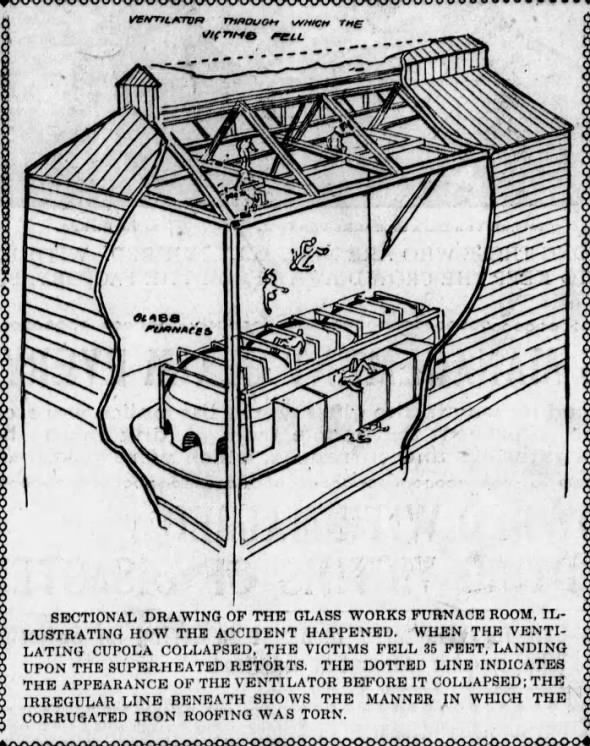
This tragedy wasn’t just a failure of design; it revealed a deeper misconception that buildings should be invincible, a myth that shapes our reactions to collapses even today. It goes further than engineering or physical buildings as well. Our models of reality are oversimplified at best and flat-out wrong in too many cases.

There is a common misconception and an unrealistic expectation about structures—many people seem to assume they are like blocks of granite. From those who believe that every building collapse is a conspiracy to those who think every failure demands stricter government regulations, the myth of an indestructible building continues due to a lack of understanding of engineering and the limitations.

Design Limits Are Not Defects

One key misunderstanding is design limits. Engineering is not about making a building too strong to ever fail. Unless we’re talking about the Great Pyramids, it’s all about trying to meet certain established parameters. An engineered building is designed to meet the expected conditions as defined by regional building codes. If the wind, snow, or loads exceed the designated standards, then there will likely be a collapse.

Earlier this year, after a heavy snowfall in upstate New York, many buildings had their roofs cave in (including this fire hall) because the weight of the snow was that much greater than the design weight. Sure, most engineers build an extra safety margin into their components, but eventually these limits are too far exceeded and you’ll end up with a tangled mess. This is why there are sideline roof shoveling businesses in these places where large snow accumulations are a regular occurrence.

Sure, code could force people to build to a much higher standard, making a collapse due to snow load virtually impossible. But this would increase the costs so much that it would price many people out of building a new house or barn. Engineering is all about compromise, more precisely about making the right compromises given the expected conditions. Yes, there is a case for making adjustments based on observation or after studies, but ultimately we build for what will work most of the time.

More Is Not Always Better

In the aftermath of the earthquake that had struck Myanmar and neighboring Thailand, there was a comment made to me in a chat hoping for more layers of regulation. This is a sentiment, in the specific context of rapid development of Bangkok, that seems more reflexive than reflective. It is a progressive impulse to believe that more interventions and rules are the answer.

The collapse of an unfinished tower in Bangkok, during the earthquake, sparks questions about building codes.  Was it missing sheer walls?  Did the contractor rush to ‘top it off’ quickly?  I want to know what the investigation finds.

But, for me, as someone who works in the construction industry and has occasionally needed to sift through these layers, I could not disagree more. Sure, better regulations may be needed. However, legalism doesn’t work in building standards any better than it does in churches. Sure, you need a code of some kind. And yet onerous regulation will add to the cost of construction, not necessarily improving the end results, and only making new housing less accessible.

It is, at best, the same trade-off discussion we can have about self-driving cars and the need for LIDAR. Sure, this expensive laser ranging system may marginally improve the results, but at what cost? Self-driving cars with cameras alone are already safer than human drivers. Keeping these systems at a price that is affordable will save more lives than pricing them out of reach for average people. It is, therefore, optimal to rollout the less expensive and safer tech even if it could be slightly improved.

At worst there is only more expense and no benefit to more layers of red tape. The real problem with rules is that they are written in language that needs interpretation. Unlike a classroom theoretical setting, in the real world you can’t just memorize the correct answers and pass the test. The ability to make a judgment call is far more important than adding to the pile of regulations. More rules can mean the more confusion and the truly critical matters get lost in the mess.

I see it over and over again, when different customers send the same job for a quote and all of them interpreting the engineering specifications their own way. It is the tire swing cartoon, a funny illustration of when the customer wants something simple and yet the whole process distorts the basic concept until it is unrecognizable. That is where my mind goes when we talk about adding layers. Is it increasing our safety or merely adding more points of failure?

This one stuck with me and should be standard equipment in every design department.  I first saw it as a child while visiting the engineering department of the construction company my dad worked for.

Some of it is just that some people are plain better at their jobs than others with the very same credentials. I am impressed by some engineers, architects, contractors, and code officers—not so much by others. I’m willing to bet the intuition of some Amish builders is probably more trustworthy than a team of engineering students’ textbook knowledge, full of theory, with no real or practical world experience. In the end any system is only ever as good as the users.

Theory Is Not Reality

My work relies on truss design software. I enter information and it does those boring calculations. When I started, I assumed that it was more sophisticated than it really is. I thought every load was accounted for and nothing assumed. But very soon the limits of this tool started to reveal themselves. It is only as accurate or true to reality as the engineers and developers behind it—and on the abilities of the user (me) understanding the gaps in the program.

When it comes to mental models—the kind of physics involved in engineering—only a few people seem able to conceptualize the force vectors. Things like triangulation, or compression and tension loads, are simply something I get. Maybe from my years of being around construction or that curiosity I had, as a child, that made me want to learn what holds a stone arch up or why there are those cables running through that concrete bridge deck. My model was built off of this childhood of building Lincoln Log towers (arranging them vertically) and occasionally making mini earthquakes.

I’m exasperated by this expectation that people have for skyscrapers to be indestructible or to topple over in the same manner of a tree—as if they’re a solid object. It also seems that the big difference between static and dynamic loads is lost on most people. They don’t understand why a building could start to pancake, one floor smashing the next, or how twisting due to extreme heat could undermine the structural integrity of a building without ever melting the steel. Of course this has to do with their beliefs or mistrusts that are not related to engineering—nevertheless it shows their completely deficient understanding of how the science works.

The concept in their head is off, their brain modeling is inaccurate, and their resolution may be so low they simply can’t grasp what the reality is. You try to explain basic things and their eyes glaze over—sort of like when Pvt. John Bowers tried to explain why the plants need water, and not the electrolytes in Brawndo, in the movie Idiocracy. Ignorant people will scoff before they accept a view different from their model of the world. The theory they believe rules over all evidence or better explanation.

On the other side are those who trust every established system without understanding it. They “believe science” and see more as an answer to every question. More rules, a larger enforcement apparatus, faith in their experts, without any feel for the problems encountered by the professionals or those in the field. If they had, they would question much more than they do. Human judgment is still at the base of it all. Or at least that is what the lead engineer told me while we discussed the limits of software and the need to be smarter than the tool.

Not even AI can give us the right balance of efficiency in design versus safety factor or what should be written in the code. It may be a better reflection of our own collective intelligence than any individual, but our own limits to see the world how it actually is are not erased by the machines we create. We are amplified, never eliminated, by the tools we create. So we’ll be stuck wrestling with our myths and theories until we take a final breath—only our flaws are indestructible.

Models of a Messy World

If truss software taught me anything, it’s that no model nails reality perfectly—not beams, not buildings, not life. We lean on these frameworks anyway, because the world’s too wild to face without a map. But just like those fans on that San Francisco roof in 1900, we often climb onto flimsy assumptions, mistaking them for solid ground. The myth of an indestructible building is just one piece of a bigger distortion: we think our mental models—of faith, of power, of people—are unshakable truths, when they’re really sketches, some sharper than others, of a reality we’ll never fully pin down.

Take religion. For some, it’s a cathedral of certainty, every verse a load-bearing beam explaining why the world spins. Others see it as a rickety scaffold, patched together to dodge hard questions. Both are models—ways to grapple with life’s big “why.” Politics is messier still. It’s like designing a city where everyone’s got their own codebook. One side swears by tight regulations, convinced they’ll keep the streets safe. Another group demands open plans, betting that freedom builds stronger foundations. Both sides act like their own ideological model is bulletproof, shouting past each other while the ground shifts—economies wobble, climates change, and people clash.

Then there’s prejudice, the shoddiest model of all. It’s like sizing up a beam by its color instead of its strength. Prejudice, always a shortcut to save us from the effort of real thought, fails because it’s static, blind to the dynamic load of human individuals. Good perception, like good engineering, adjusts to what’s real, not what’s assumed.

All these—religion, politics, prejudice—come down to how we see. Perception’s the lens we grind to make sense of the blur. Some folks polish it daily, questioning what they’re fed. Others let it cloud over, stuck on a picture that feels safe but warps the view. I think of those fans in 1900, not asking if the roof could hold them. They didn’t mean harm—they just saw what they wanted: a free seat, a clear view. We do the same, building lives on models we don’t test, whether it’s a god we trust, a vote we cast, or a snap judgment we make. The distortion isn’t just in thinking buildings won’t fall—it’s in believing our way of seeing the world is indestructible.

What makes a model reliable? Not that it’s right—none are. It’s that it bends without breaking, learns from cracks, holds up when life piles on the weight. In construction, we double-check measurements because we know plans lie. In life, we’d do well to double-check our certainties—about the divine, the ballot, the stranger next door. The San Francisco collapse wasn’t just about a roof giving way; it was about people trusting a picture that didn’t match the world. We’re still climbing those roofs, chasing clear views on shaky frames. Maybe the only thing we can build to last is a habit of asking: what’s holding this up? And what happens when it falls?

What Is the True Cost of EV?

Standard

The battery electric vehicle (EV) versus the internal combustion engine (ICE) powered debate is one of the most irrational of our time. On both sides of the discussion, you have those frothing-at-the-mouth types who attack the moment you disagree. And this is exactly the response that I got after I had casually mentioned that ICE is 1/3 the cost under a click-bait post…

Model Y starts at $43,990 FYI.

One just called me ignorant, but others tried to make an argument, including this response:

I’m trying to figure out what car cost 1/3 of the price of a Tesla🤔🤔? The long range Model 3 (the one you want for a roadtrip) is $42,500 – $7500 tax credit is $35,000. This is not factoring in gas savings. Please tell me what new car is availability for under $12,000 (that’s the 1/3 cost of a Tesla you mentioned)?

Fair enough question.

Note, I never said new, but assuming that I did…

Believe it or not, and even in this inflationary age, there are still reliable sedans that come in under $20,000. Starting with a Mitsubishi Mirage G4 ($18,500), the Kia Rio ($17,875), and the Nissan Versa ($17,075), the lowest-priced option is half of even the subsidized price of the Tesla base model.

But you can’t exclude the subsidy from the cost of the EV, the government doesn’t have a magic wand to create value and we all end up paying for their expenditures in our taxes or by inflation due to money printing. And it only begins with that “tax credit” (so-called) given directly to privileged people who can afford a new luxury car.

What is the true cost of subsidies?

According to a study by the Texas Public Policy Foundation, the cost to us is nearly $50,000 for every EV produced:

Federal and state subsidies and regulatory credits for EVs totaled nearly $22 billion in 2021, or nearly $50,000 per EV, socializing the true cost of these vehicles to taxpayers, utility ratepayers, and owners of gasoline vehicles

Tens of billions of dollars have been spent trying to make EVs viable, and yet still the average cost of these vehicles is $65,000, compared to $48,000 for ICE. Why haven’t these subsidies leveled the playing field? It is simply the fact that batteries require tons of extra material and a much more complex process to produce.

So we can at least double that visible “tax credit” subsidy and already the true cost of an EV is close to three times a comparable ICE sedan.

We could stop there—the 1/3 number reached—but let’s continue…

What is the true cost of production?

The cost of a vehicle isn’t just the window sticker price or the money that it takes to manufacture. The bigger question—given the reason many say we should switch to EVs is about emissions—is what the increased environmental impact is of producing the batteries that go into these cars. Is this a trade-off we are willing to make?

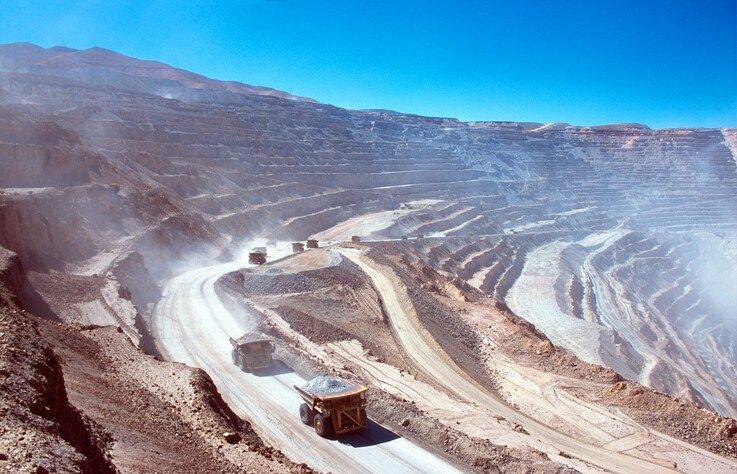
Lithium batteries are costly, they require an enormous amount of water and also leave a toxic legacy that will grow exponentially as EV is adopted. Is it worth this cost to only marginally reduce carbon emissions?  That is to say, around 17-30% less emissions according to European Energy Agency? 

Sure, it could get better with a heavy investment in electrical generation and transmission—yet that is another huge cost financially and environmentally…

What is the cost of infrastructure demand?

This is where the conversation is the most interesting. We have the refining capacity and distribution network already built for ICE vehicles. Gasoline and diesel fuel have the advantage of being energy-dense and can be moved around using the existing highways. But what about EVs?

There is an illusion that comes with plugging something in. The load we put on the system is invisible. But there is no magic to it. Electricity is something that must be produced somewhere and then transmitted to the charging stations. If everyone adopted EV technology the grid would collapse.

We’re currently nowhere even near what it would take in capacity to convert everyone to EV. The easiest route to more electrical generation is to go anuclear. So how many new nuclear power plants would it take? Well, if we use miles driven and the number of cars on the road today, then we would need to build 250 additional nuclear power plants as big as the largest plant in the US, and the supporting infrastructure to keep up with this demand.

So are you willing to have a Palo Verde in your own backyard?

It cost 5.9 billion dollars to build one in 1988 (the equivalent of 13.9 billion in 2023) and we needed to start building 250 of them yesterday.  The solar and wind equivalent would be even more costly to build and maintain.

The costs would be astronomical and that’s just considering only passenger vehicles. Switching Class 8 trucks would take even more of these massive power plants and spending—the cost of switching would be insane.  Not to mention you would need more trucks to do the same work as you did with diesel.  And remember, every dime that we spend on this mass EV conversion could go to health care or education instead.

Can you now see how extremely costly EVs will become as they are adopted?

But it does not end there…

Why is the cost of wear items greater?

Batteries are heavy and weight is the enemy of “wear items” like brakes or tires—which is not to mention the additional damage to the highway infrastructure.

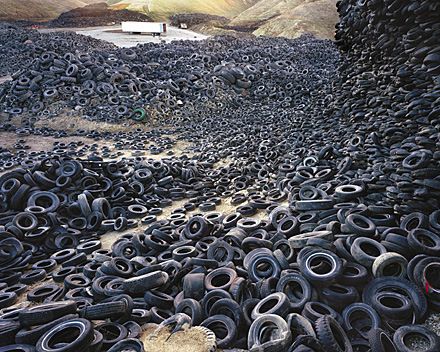
EV tires wear 20% faster than comparable ICE vehicles.  That is a cost out of your own pocket and also a concern for the environment. And do not forget, to be safe you’ll need those heavy-duty EV-specific tires. Sure, maybe this is not a very big problem for those who can already afford the premium cost of a new EV?  However, for that waitress struggling to make ends meet she will have to make the choice between safety and home utilities.

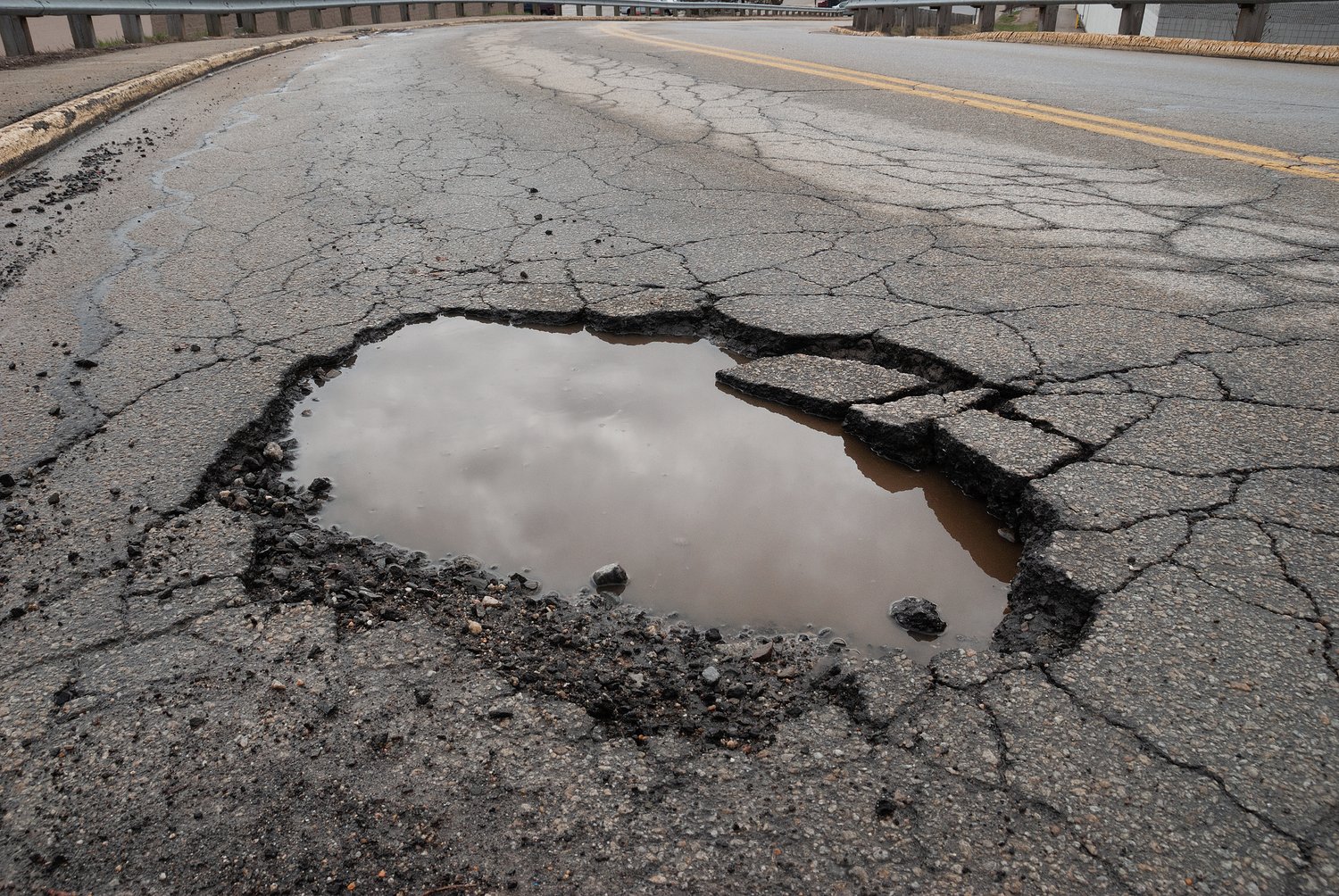
Next up is excess road wear.  Big trucks are obviously the leading cause of damage to roads. However, EV proliferation will start to cause problems for existing infrastructure:

A 6,000-pound vehicle causes more than five times as much road damage as a 4,000-pound sedan. A GMC Hummer EV, which weighs 9,063 pounds, will cause 116 times as much road damage as a Honda Civic, weighing 2,762 pounds.

The article cited above isn’t about EVs yet does apply given it is about the vehicle weight. Even the Model 3 is a whopping 3,862 to 4,054 lbs. Sure, one vehicle is not going to do a whole lot by itself, but the volume over time will significantly impact bridges and parking garages that were designed for lighter ICE vehicles. This EV vehicle weight bloat caused by batteries will require very costly upgrades to prevent catastrophic failures—like the Ann Street Building Collapse:

Speaking of disasters. With EV there is potential for a thermal runaway or reaction that can’t be stopped—like an ICE fire—by simply denying the source of oxygen. This hazard will result in more damage to road surfaces, more time spent in traffic jams after incidents, and additional toxic emissions. This is a cost to be seriously considered with all of the others.

Cost of time, capability, and resale value…

Many of the costs and drawbacks of EVs are hidden under a pile of subsidies or are moved upstream like the emissions—out of sight out of mind.

But what cannot be ignored is performance in terms of range. Time is by far our most valuable resource and nobody wants to spend hours in a place they don’t want to be because their vehicle battery is drained.

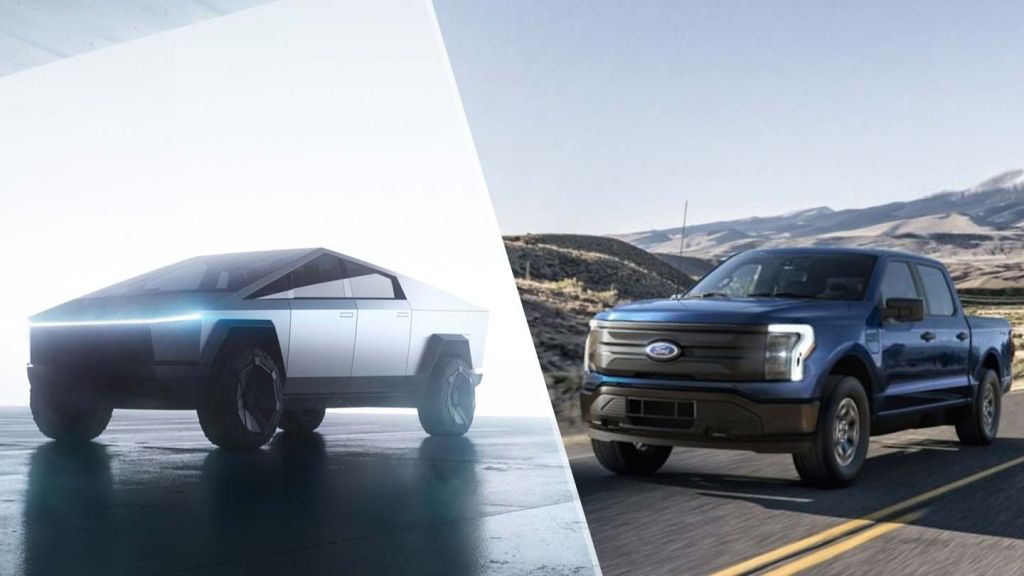
As far as capabilities, even EV trucks are useless for towing, both the Tesla Cybertruck and the Ford Lightning—both costing around $100,000 in the higher trim levels—aren’t so good at doing typical truck things. Sure, they produce a ton of low-end torque and are very fast. But the F-150 EV only went 90 miles pulling a camper and the Tesla only fared a little better.

7000lb luxury land yachts

And finally, we need to talk about plunging resale values. For a while EV was a novelty, the “way of the future” every suburban geek needed to virtue signal. But it appears that this is now starting to fade and reality is starting to take over again—46% of EV owners in the US plan to ditch EV to return back to ICE—and many will not recoup their cost because the floor is dropping out for used EVs:

A recent study from iSeeCars.com showed the average price of a 1- to 5-year-old used EV in the U.S. fell 31.8% over the past 12 months, equating to a value loss of $14,418. In comparison, the average price for a comparably aged internal combustion engine vehicle fell just 3.6%.

That’s bad news for the EV industry.  That is probably why Ford, after losing billions on their EV investments, has made plans to pivot back to hybrid.  Toyota, ever conservative, never made the mistake of getting sucked into the EV mania.  My wife’s C-Max (hybrid) has no range anxiety, saves fuel, and has a plug-in version that can go on battery for a length of a commute.  This is the right compromise.

ICE costs less to build, but the hybrid will likely emerge as the winner for being the best of both worlds. It has range like ICE, and torque like an EV, while also keeping its value and not requiring vast new expenditures to upgrade the electrical infrastructure. If costs are reflected in the market hybrid will come out victorious in the end.  Some can afford EVs today, but only because others are absorbing more than half of the real costs.

As a footnote, I’m not opposed to EVs nor do I think they are destined to go extinct. If resale values continue to drop I would even consider owning one. The whole point of this article is simply to give a bit of pushback against the Pollyannaish sentiments that would lead to an ill-advised mandate. There would be an enormous cost, and opportunity cost, that would come with this. Just the fact that EVs need massive subsidies to be sold should tell us enough. If it isn’t viable in the market it isn’t viable.

Reliable Sources

Standard

My initial reaction to the collapse of the Francis Scott Key Bridge was disbelief, I had just swiped open my phone, eyes adjusting after I rolled out of bed Tuesday morning, and saw the Daily Mail headline blazing on my Facebook news feed.  So immediately I Google “bridge collapse” and, sure enough, the highlighted results were full of similar headlines.  It must be true.

Since that moment there has been a flurry of speculation.  My first thought, of course, is was this deliberate?  Did the Russians do it?   But as I started to gather evidence, like the video showing the lights going out and puff of black smoke, mechanical failure was a plausible explanation.  That didn’t rule out some kind of sophisticated hacking attack, but then this isn’t a Tesla car or Hollywood fantasy where anything electronic can just be operated remotely through undisclosed magical means.

Theories are easy to create.  The hard part is to sift through the information pouring in and come up with something actually likely given probabilities and reliable sources.  A random guy online or old Larry at the parts counter isn’t trustworthy.  The corporate media is only slightly better, in that they at least get the general story right, yet are also politically motivated and basically parroting official sources or their ‘experts’ at a lower resolution.

What of these officials and experts?

I generally rate someone who has their own reputation on the line over someone who is spit balling and couldn’t change their own spark plugs.  Someone with credentials is a better choice for information given that they did put in the work to get their degree and prove their competence.  However, a PhD or government position doesn’t make a person honest or free of bias.  Those who get paid by the government are part of the political establishment and their partisan agenda should be assumed.

1) Professional Experience 

The sources that I trust are those who built a reputation outside of politics and within the industry—this is why I’ve subscribed to “What is Going on With Shipping?”  Later in the day of the collision and collapse of the bridge I found an established channel about maritime matters for explanation.  How do I know he’s credible?  His fluency is a start, he has the technical jargon and credibility with others who know shipping from first hand experience.  It is notable that nobody here is surprised that this incident could happen.  The details of his analysis give me confidence that the information is good.

Authority comes from having professional experience and a proven record.  When I picked my neck surgeon, for example, we had a conversation about his prior record and the procedure.  I sized him up.  He was articulate, empathetic, and had all the expected confidence of someone who could work a miracle of modern medicine.  He also was able to explain everything in terms that I could understand.  The trust I put in him paid off, my recovery was great and I’ve come back stronger than ever.  Licensing with charisma doesn’t mean someone is competent, but it definitely helps.

2) My Own Aptitude 

But my main tool for determining who to trust is based on my own aptitude.  I have a decent understanding of physics and spent my younger days curious about mechanical systems—and always needed to understand how they work.  I could turn a wrench.  I did my own diagnostics and repairs.  So when I do bring my car to the mechanic I’ve already done my homework. 

For example, when my car lost power right away I suspected the Ti-VCT system was to blame.  The engine then gave a code that supported this hypothesis and I took it to a local tire shop and inspection garage.  I told them exactly what to look for giving them a page of the diagnostics manual.  And yet, after having the car for a day or two (after changing the air filter and cleaning the MAF sensor) they concluded it could just be the car is old and losing compression.  Finally, after taking the time to look under the hood, I found the problem.  It was what I had been suspecting.  This time I took the vehicle to a real technician, a guy who with a reputation for good diagnosis, and he gave a beautiful technical explanation of what happens with a short in that system.  After an inexpensive repair I’ve had no issues since.

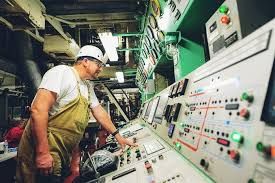
I’ve never worked in the engine room of a big cargo ship.  I know that they are huge and, despite involving the same principles, are on an entirely different scale.  For one, it takes a team to keep them running, this isn’t like your Toyota where you can simply turn the key, put it in drive and go.  No, they have a startup sequence and when I heard a play-by-play of the disaster unfolding, where the puff of black smoke was explained as being a fuel-air mixture imbalance when they were using a burst of compressed air to start the massive engine, I recalled hearing this being explained in a documentary and it all lined up with what I know about engines.  It is clear he was credible and therefore I felt the rest of his commentary had merit.  I’ll never trust the people who completely miss on the basics and then expect me to believe their conspiracy theories.

3) Most Plausible Explanation 

It could be the MV Dali crew were attacked by mind control aliens using the 5G cell phone network.  There’s no way to disprove this is not what happened.  However, it is not the most plausible explanation and certainly not the first stop (or last) of a reasonable analysis.  What is probable is the answer with the least amount of moving parts or crazy assumptions, which points currently in the direction that this was an accident waiting to happen or a matter of reasonable probabilities that needs no fanciful dreamt up explanation.

There are those times when fact is stranger than fiction.  But we should only go there if there is plain evidence of motives and the means.  Like when the Nord Stream pipeline exploded and prior to this the US President made a threat “We will bring an end to it.” It isn’t a big stretch to believe he had a hand in the sabotage.  The US Navy is one of the few in the world that have the capability of making this kind of attack, so that is a very plausible explanation.  It also wouldn’t just happen on its own or accidentally, so we do look for the potential connections.

Nothing is ever absolute.  We can’t know for certain.  But I’m going with the assessment of the professionals who don’t seem at all surprised that this could happen and can give an informative analysis.  I’ll weigh one of their opinions over ten thousand who claim that there’s something fishy or they feel it in their gut and who have never set foot in the bowels of a cargo ship.  The reliable sources are those with professional experience and are not tainted by ideologies or narratives that color their perspective of all events.

9/11 In Retrospect—Collapse of the New World Order

Standard

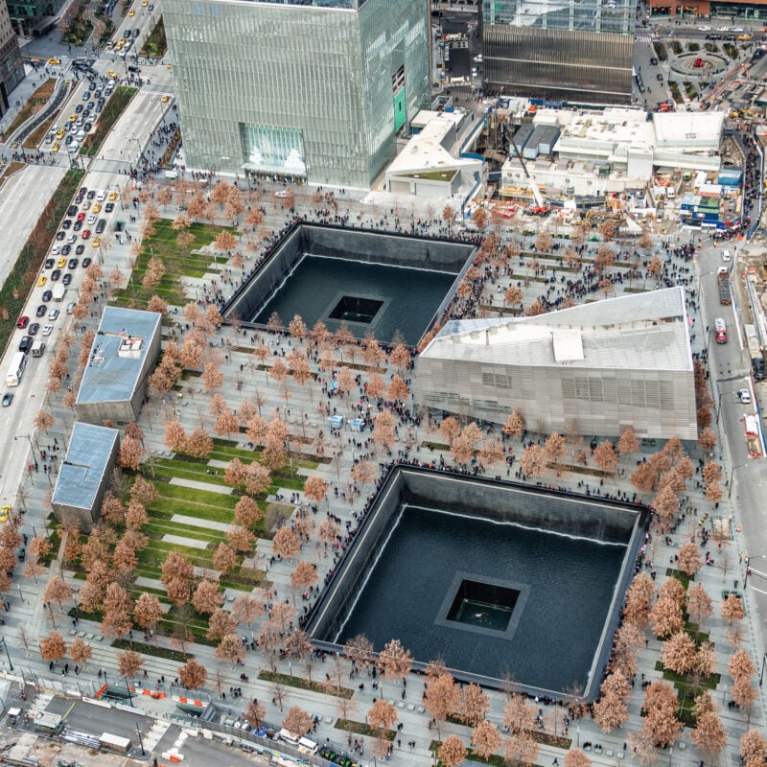
Visiting the site of the Twin Towers again has revealed how much my perspective of the has changed over the past few decades since the attacks.  The World Trade Centers, built in the 1970s, had once dominated the Financial District of Manhattan and represented both the pinnacle of engineering and the economic might of the American empire. 

Like the Pentagon struck the same day, they were symbols of American dominance.  Pillars of a system that, prior to that sunny September day, had seemed invulnerable.  The United States had won the Cold War, demonstrated unrivaled military might in the Gulf War (all but erasing the bitter aftertaste of Vietnam) and the 1990s felt almost as if it was the ‘end of history‘ with the final victory of liberal democracy over the world.

The NYC skyline is impressive even today, yet that September day the delusion of being untouchable had been wiped away and the trust of the system has continued to degrade as more are seeing the truth:  

1) Our government can’t keep us safe.  Many forget now that 9/11 was not the first attack on the World Center twins.  In 1993 a truck bomb had been detonated in the parking garage of the South Tower and could’ve taken down the towers had it been better placed.  But despite this, despite the billions we spent on intelligence agencies, the US had missed multiple opportunities to take down Osama Bin Laden.  All of our military strength was useless against a small group of dedicated men using box cutters and airliners.

2) They made us bleed.  While many around the world were horrified at the images, there were others who danced with glee as shock and awe covered Manhattan in dust.  It was a propaganda coup for those who opposed US hegemony as much as anything else, it proved that there could be repercussions for our policing and globalist policies.  Sure we would go on to kill Bin Laden.  But he more than accomplished his goal.  Not only did he bring down the towers, and strike the Pentagon, but he also goaded us into spending trillions on a fruitless war on terror.

But, beyond this, in the past twenty years, I have gone from being an apologist for the second invasion of Iraq to now being very deeply disillusioned.  And I’m not alone.  The world is no longer what it was in the 1990s where the US leads the way to a new age.  Rather many are starting to see through the shiny facade and realize that the system in its current form serves a few at the top.  But our banks, our government, and corporations routinely conspire to rob us.  There is no free market or true representatives of the people, it is a rigged game and the ‘house’ always wins.

Walking past Wall Street I remarked “This is the heart of the beast” and it is.  The money flowing through this place is the lifeblood of a nation, the very center of the current world order, and what enables the endless wars of our political regime.  The towers were not random targets.  Nor was the attack because they hate freedom and democracy, but rather it was a response to the imposition of US policies on their countries and the never-ending presence of our military in their own backyard to serve US economic interests that they resented. 

As wrong as it was to murder 2,977 people, this ‘collateral damage’ has long been a part of war, many Americans have no moral qualms about nuking the cities of Hiroshima or Nagasaki, and the US has killed hundreds of thousands of non-combatants.  So why is it such an outrage if others in the world employ a similar total war strategy against us?

If America once represented an ideal, that is fading due to relentless attacks by the left and the growing disillusionment of everyone else.  There has been a transition, over the last few decades in particular, from the time when athletes would wrap themselves in the flag to this time it has become controversial and even contemptible.  Even conservatives no longer trust national institutions and have embraced a myriad of conspiracy theories—including many about the 9/11 attacks.

Personally, I do not believe that the official narrative is entirely a lie.  I believe a group of men, funded by Al Qaeda, hijacked four fuel-laden airliners, two of them were flown into the towers, one struck the Pentagon and a fourth crashed into a field in Pennsylvania.  I do not see a need for a controlled demolition to explain why the buildings collapsed.  No this is not to say that our government didn’t know more prior, opportunistically exploit or even facilitate the attacks.  There’s simply a better explanation of everything that happened that day and since.

The fragility of our world order

As a young person everything that was had this feeling of permanence.  My parents and other adults were fixtures in my life.  It all felt robust and unchangeable.  But as time went on, grandparents passed away, trends came and went, seasons changed and I began to learn that nothing is forever.  Even concrete will degrade in strength and eventually, it will crumble away into dust.  Institutions are no different, they tend to have a lifecycle, at the very least require constant maintenance, and all these systems we rely upon to create order in our world are surprisingly fragile.

The New York City skyline has a robustness of appearance.  It is built off of the bedrock, the skyscrapers seemingly carved out of a single piece of polished granite.  This is by design.  The architects and engineers who built these monolithic-looking structures do want them to feel secure and safe.  And, for the most part, or under typical conditions, it is true—they are reliable.

However, they’re not indestructible.  

The Word Trade Centers, while massive and certainly marvels of engineering, under that shiny metal and glass veneer, were as flimsy as a stack of cards.  What made them great also created unique vulnerabilities.  Unlike the Empire State Building, a grid of I-beams and tapers in towards the top, the enormous twins had a center trunk section with long clear spanning trusses that were supported by the outer ‘skin’ of the buildings.  This had given them a large and unobstructed office space.  This was practical, but in retrospect became a fatal flaw in their design.

The WTC design was innovative, unusually lightweight construction with wide open floor spaces supported by trusses.

The impact of the airliners removed some of the structure.  No, this was not enough to cause a collapse, yet this was enough to add strain and reduce the load-carrying capacity of the buildings. The towers, despite getting hit by aircraft larger than the 124-ton Boeing 707, had exceeded expectations and absorbed the impact.  It was only after fires raged, out of control, that the heat had reduced the tensile strength of the steel enough that the floor trusses would deflect and could no longer hold the upper floors—at which point the top of the buildings began to fall into the lower—smashing one floor at a time until nothing but a cloud of dust and pile of rubble remained.

The popular meme “Jet fuel can’t melt steel” is clearly ignorant of the reality that you do not need to turn steel into liquid before it will fail.  An inferno of jet fuel mixed with office materials is more than enough to weaken a structure to the breaking point.  There is no need to explain this as controlled demolition or building 7, where there was damage to the structure, fires burning on ten floors, and the sprinkler systems disabled due to water main breaks.  

Still, many Americans have a huge problem accepting that these symbols of our strength could be taken down by a handful of zealots with box cutters.  It makes us feel insecure.  We want it to be more.  And thus it must be some kind of massive concerted effort, with an enormous cover-up, right?

This is, ultimately, a form of denial. 

Most Americans know that manufacturing jobs have been continually outsourced. But many do not fully comprehend the economic reasons why the US has gone from the nation that won WW2 with industrial power to the current situation nor how much they have benefitted. It is the status of the US Dollar as the world reserve currency and the Petrodollar arrangement that give US consumers the edge. Basically, in order to buy their oil from Saudi Arabia, other countries around the world needed to get their hands on our money and for this reason would sell us goods they produced at a bargain price.

The manufacturing backbone no longer exists.

The “new world order” George HW Bush hypothesized was never to be.  Bin Laden had answered and won on multiple fronts.  He caused us to question our own American identity, whether our leaders actually represent our good, and if their endless wars truly benefit us—which they don’t.  More importantly, he penetrated the illusion of permanence and strength that kept us blindly pulling the weight of empire for our masters.  Even 9/11 truthers, in their rejection of the official narrative, are part of this new anxiety undermining the tower of world dominance built in the post-WW2 era.

After two more wars where only the defense contractors and their political proxies came out as victors, after bailouts for the “too big too fail” and current institutional protection of the hedge fund billionaires against retail ‘Ape’ insurgents, more are waking up.  How the elites and political establishment gang up on populists, like Donald Trump or Bernie Sanders—brazenly rigging the DNC primary in 2015 and the Big Tech election interference this past cycle—has damaged faith in the democratic process.  And, lastly, having endured the Covid lockdowns, more question the notion of us being exceptionally free people.

Even if enough Americans remain under the spell and continue to support the collapsing regime, the rest of the world (at least beyond Western Europe and Australia) is not fooled by our propaganda.  After decades of BS and bullying, like those WMDs never found, many are rejecting the monopolar order and ready to work on plan B.  China, India, Middle-Eastern and African nations do not want to be perpetually subject to US economic threats and warfare.  And, after the Ukrainian sanctions, they’re taking steps to protect their own sovereignty against this imperial aggression.  BRICS is here and the supremacy of the Petrodollar, which is what has enabled the half-century US reign, is being challenged.

The pillars upon which the US economic might was built are now shaking and yet nobody seems to be focused on shoring up this foundation. The tower sways, but hubris blinds those who could prevent the collapse.

From confidence to doubt…

Bin Laden knew his 9/11 attacks would lead to massive overreach.  He understood that the arrogance of our leaders would lead to a flailing angry response.  No, the attacks were not enough to bring it all down but they did put the cracks in the base of this order and the future is no longer as certain as it was prior to that moment of horror and disbelief—when a bustling city and the most powerful country in the world was brought to a standstill. 

Those feelings of horror and helplessness and disbelief remain, like those abyss-like holes in the ground where the towers once stood.  We have all seen the writing on the wall.  The party may have continued, on the surface, but something has fundamentally changed underneath it all, the ground has shifted—as has our perception of our own untouchable position in the world.

History is not an end, the new world order is starting to look as frail as those geriatrics who rule us afraid to die and desperately cling to their power.   

The juggernaut of the US-led world order, which had briefly appeared to be an impenetrable fortress, is now unraveling and all it took is a little push.

What Wears Me Out

Standard

I’ve always been a sort of magical thinker, my hopes always far outpacing my realities, and to the point that sometimes when my dreams would finally come true the pleasure had already been exhausted.

I had so wanted a go cart growing up.  On the school bus ride home my mind would start to wander into the fantasy realm.  I would picture a shiny new go cart, like the ones in the catalog, waiting for me at the end of the driveway and would actually be disappointed when it did not end up being true when we would finally pull up to to my stop. 

That’s not to say that I didn’t love the old go cart that my dad would finally weld up, using a rusted frame as a starting point, and an old lawnmower engine.  Anything with four wheels, that ran on gasoline, that could be slid around corners, definitely scratched that itch.  Still, my vivid world of make-believe did not always end with any fulfillment.

In my adulthood this tendency to be way out ahead of myself did not get any better.  I’ve cried, on more than one occasion, thinking of my beautiful bride walking towards me up the aisle.  And not in sadness either, it was in bliss having momentarily put myself in that wonderful place.  Of course, given that I never even so much as went on one date with this young woman, I pretty much ruined that music.

The world between my ears can be a paradise.  A place where there’s such thing as innocent love and anything is actually possible.  I used this as an escape.  My school years spent doodling and hoping for some kind of rescue from the mundanity of the classroom.

These visions were often grandiose.  A child scaled B-17 would land in the school yard.  I would run out to meet my faithful crew as the teacher and 5th grade class would watch in disbelief, stunned, as we revved the engines and were on our way to the nation (later a planet with two suns) that I benevolently ruled along with my brother Kyle and cousin Mel.

Truly, I had always thought that Kyle and I would always be together, build a house with a chimney in the center, like the ruins that I saw on a Civil War battlefield.  I’m not sure why, but it didn’t seem possible then (despite our fights) that we ever be separated, let alone hours apart, and I really can’t claim to have gotten over that disappointment yet.  He moved on, it seems that I could not.

And I have lived a sort of Peter Pan existence.  Holding on, hoping that some day the love that had eluded me, child-like and innocent, would finally magically arrive to rescue me from my torment for having failed to achieve.  I long overstayed the youth group.  Until I had my happily ever after, what choice did I have?  Get old by myself and alone?

Unfortunately, hope is not a strategy and I lacked the necessary social tools to approach an attractive young woman—let alone convince her to date me.  

Years would go by, where I would convince myself, “this time will be different,” and end up leaving the church retreat no closer to my goals and disappointed.  These beautiful wonderful thought going in would slowly morph into a nightmarish reality as opportunity would pass me by and I would be left with only my profound loneliness again.

It was only in my mid thirties that this optimism would crack and the pattern of hope followed by disappointment would finally overwhelm me.  Brimming with outsized expectations, I would arrive at the weekend, and suddenly shut down.  The wheels came off, I would collapse into the nearest couch, curl up, unable to push myself to try again—eventually ending up a sobbing mess.

The pressure had become too much.  The difference between my hopes and reality too insurmountable. 

Sure, I could entertain my delusions, the right one was going to finally arrive, we would look at our feet, shy at first, we would talk, she would smile at my earnest thoughts, I would finally be at ease and soon enough we would be walking hand in hand out the back of a church.  But the chances of that were as good as Gatsby somehow being able to turn back the hands of time and Daisy would be his.

My collapse from exhaustion came at the tail end of decades of forced optimism and sweeping aside my rational fears.  I did not want a world where my being 5′-8″ tall and rather unathletic disqualified me.  Love, to me, especially pertaining to my female religious counterparts, was supposed to be something transcendent.  Unfortunately, what I got instead was a brick wall of rejection.

Life is especially cruel to those with a high ideal.  If I were less able to see the marvelous maybe I could have more easily moved on to more practical aims.  But I could never get my head out of the clouds nor was I willing to acknowledge the harsh truth about romance.  The young women were also chasing their version of perfection and that perfect man wasn’t me.

Somehow, despite a mind that could span universes, I ended up being thirty years old living in Milton and thus ineligible for that kind of love.  How does a dreamer, still holding to those childish notions of escape, ever recover from that terrible pronouncement?

They don’t. 

It wears me out thinking about it.  

It makes me think of another novel and protagonist, Ethan Frome, an injured ruin of a man.  His house reduced in size as he limped, painfully, through what remained of his life.  Not even granted the merciful end to his suffering of that suicide pack those many years before.  Perhaps my life would have been better had my secret world been a little more stark, desolate and devoid of life?

Babel and the Upper Limits of Human Reasoning

Standard

Being raised in a fundamentalist sect meant taking the Genesis accounts as being a historical narrative.  I had been taught, and had for many years accepted without question, the idea that the veracity of the Gospel message hinged on the most ‘literal’ interpretation of the first book of the Biblical canon.

This understanding of this book had worked fine to get me through my school years.  I gave my high school biology teacher, Mr. Toohey, an atheist who had once considered the priesthood, a headache debating the textbook claims about mutations, millions of years, and Macro Evolution.  At this age, I thought this style of apologetics, debating science using the words of Scripture, was a key to securing the faithful against doubts and winning unbelievers.

Unfortunately, while this understanding may serve well those who do not venture too far from the Young-Earth Creationism intellectual ghetto, against what amounts to strawman versions of secularist arguments, it doesn’t hold up as nicely against a serious challenge and has left many religiously indoctrinated high and dry in their years in a university-level science program.  There is a reason why many in my former religious tradition are terrified of higher education. 

Even seminary was a synonym for cemetery to one of my childhood Bible-thumping pastors.  It should make one wonder.  If the foundation of faith is so flimsy that it can’t be tested, that it can only be sustained by ignorance, then what’s the point?

Sadly, it was a false choice, this dichotomy between science and religion, education and faith.

Getting the Cart Ahead of the Horse

The Biblical fundamentalists got everything exactly backward.  The truth of Christ does not depend on proving the Scripture, word for word, is completely 100% historically accurate and scientifically verifiable.  It is nice when those things do align, sure.  And yet, no matter how many mundane parts of the Biblical narrative are established this way, the fantastic claims are never proven.

If a politician lists off ten facts and nine of them turn up true according to the fact-checkers, does that make the final most grandiose claim true?

No, no it does not.

One of the most persuasive tricks of liars is to hide their one falsehood amongst a long list of facts and true statements.  And likewise, someone could prove 99.9% of Biblical claims and still not have touched anything of the miracles.  The Bible is true because it says it is true might work for idiots and the indoctrinated, but it is always circular reasoning and there being a town of Bethlehem doesn’t mean Jesus walked on water nor establish His divinity and conquering of death.

No rational person believes that a prophet flew from Jerusalem to Mecca, on a half woman half horse with a tail of a peacock, because they read it in a book.  I’m certainly not going to wear magical underwear because some dude, a few hundred years ago, claims he received golden tablets from the angel Gabriel.  So why would any reasonable person expect someone to believe a book written thousands of years ago?  Sorry, Ken Ham, I don’t care how many replica Arks you build, you’re not winning skeptical minds or hearts with this effort.

Human efforts fail. 

When Sarai reasoned with Abram to produce an heir through her maidservant, how did that go for them?

We know it didn’t go too well and have the commentary of St. Paul:

Tell me, you who want to be under the law, are you not aware of what the law says? For it is written that Abraham had two sons, one by the slave woman and the other by the free woman. His son by the slave woman was born according to the flesh, but his son by the free woman was born as the result of a divine promise.  These things are being taken figuratively: The women represent two covenants. One covenant is from Mount Sinai and bears children who are to be slaves: This is Hagar. Now Hagar stands for Mount Sinai in Arabia and corresponds to the present city of Jerusalem, because she is in slavery with her children. But the Jerusalem that is above is free, and she is our mother. For it is written: “Be glad, barren woman, you who never bore a child; shout for joy and cry aloud, you who were never in labor; because more are the children of the desolate woman than of her who has a husband.”  Now you, brothers and sisters, like Isaac, are children of promise. At that time the son born according to the flesh persecuted the son born by the power of the Spirit. It is the same now. But what does Scripture say? “Get rid of the slave woman and her son, for the slave woman’s son will never share in the inheritance with the free woman’s son.”  Therefore, brothers and sisters, we are not children of the slave woman, but of the free woman.

(Galatians 4:21‭-‬31 NIV)

Here we see the contrast of human efforts “according to the flesh” and those of a spiritual and Divine origin.  St. Paul emphasizes the “son” which is “born by the power of the Spirit” as an alternative to the “son” human reasoning that produced conflict and heartache.

It is amazing how many times St. Paul, and Jesus before him, encountered those who believed Scripture word for word and rejected Jesus as Lord.  They, in many ways, had a stricter interpretation of the text than many of us do and did not face the strong headwind of modern science and philosophy either.  And yet, even meeting Jesus in the flesh, seeing him with their own eyes, taking Scripture as literally as anyone, they saw Jesus as the imposter and rejected Him.  So, how then can we be saved?

Fortunately, that question is answered many times over and over again, by St. Paul, and has next to nothing to do with the book of Genesis.  The truth of Scripture is established on Christ, and His church, which established the canon of Scripture and does those “greater things” that Jesus promised would come through the power of the Spirit.  Yes, we preach and teach, but only God can bring the increase.  So, the apologetics industry starts us out on the wrong foot and doesn’t produce true faith in Christ. 

Our salvation does not depend on our own understanding of a book.  St. Paul, in Romans 9:16, states clearly, that our sonship depends on God’s mercy, not human desire or effort.  Scripture is the cart, not the horse.  We accept that the Bible is true because we believe in Christ, and His Church, not because we can establish it through our human reasoning or effort.  Faith is a work of the Spirit, a gift from God, not a product of our knowledge or works.  Those trying to ‘prove’ the Bible are on a fool’s errand. trying to save themselves, slaves to human reasoning, lost and confused.

What Does That Have to Do with Babel?

Hopefully, the Noah rode on a T-Rex crowd is too triggered with that intro, because now we shift to something they may find more agreeable and that being the even greater monument to human reasoning and effort. 

But, first, the tower of Babel narrative:

Now the whole world had one language and a common speech.  As people moved eastward, they found a plain in Shinar and settled there.  They said to each other, “Come, let’s make bricks and bake them thoroughly.” They used brick instead of stone, and tar for mortar.  Then they said, “Come, let us build ourselves a city, with a tower that reaches to the heavens, so that we may make a name for ourselves; otherwise we will be scattered over the face of the whole earth.”  But the Lord came down to see the city and the tower the people were building. The Lord said, “If as one people speaking the same language they have begun to do this, then nothing they plan to do will be impossible for them. Come, let us go down and confuse their language so they will not understand each other.”  So the Lord scattered them from there over all the earth, and they stopped building the city. That is why it was called Babel—because there the Lord confused the language of the whole world. From there the Lord scattered them over the face of the whole earth.

(Genesis 11:1-9 NIV)

This story is likely the origin of the phrase, “men plan, God laughs.”  Actual historical event, ancient myth or both, does not matter, the tower of Babel narrative is so much more.  The account speaks to human limits and hubris, a true story told over and over again in history and a lesson repeated in different ways with each passing generation.  The moment humans forget their place, begin to rely on their own cleverness and start to see themselves equal to their own Creator, the clock to destruction begins to tick.

These people, in the Biblical account, had somehow overcome the odds, they evidently were a resource-rich civilization, more powerful than external threats, and ready to cement their name in history.  But just when heaven seemed within their grasp, the very thing that they had sought to avoid, being scattered, brought the entire endeavor grinding to a halt.  Now Babel, the name a play on words that meant “to confuse,” is a synonym for colossal human failure.  Sure, maybe it is an origin story for the diversity of language.  But, undeniably, it is also a cautionary tale.

Other accounts tell us that this confusion of languages, by God, was to save humanity from the total destruction of another flood.  In other words, it was an act of mercy to prevent an even greater calamity to end this project and scatter the people.  But, more than that, it is a lesson about not leaving God out of the equation.  What does that mean?  Well, that means that we can’t see everything and, without humility to reign in our ambitions, we are an existential threat to ourselves.  The proud fall because they cannot imagine the factors that they, in their overblown confidence, have missed.

Our Modern Towers of Human Arrogance

“I will destroy the wisdom of the wise; the intelligence of the intelligent I will frustrate.”

(Isaiah 29:14 NIV)

History is replete with examples of bold declarations followed by catastrophe.  Neville Chamberlain’s quip of having secured “peace in our time,” through a treaty with Adolf Hitler, comes to mind.  Hillary Clinton was, according to the experts, most definitely going to win over Donald Trump.

But now it is time to tie all these threads together.  The same thing that brought about the Protestant schism, also led to the Enlightenment, spread of Democracy, and, ultimately, the rejection of God. 

This “age of reason” got off to a relatively good start, scientific discovery, development of technology, and representive government has enabled us to be more free and prosperous that many prior generations.  However, as the tower of our knowledge and independent spirit rose, as we have made leaps in medicine, even landed a man on the moon, when American exceptionalism (the ultimate expression of Protestantism) finally conquered all, and our hegemony was nearly unchallenged, suddenly a day of reckoning seems to be upon us and this colossus, this oversized imagine of human endeavor, seems in danger of collapse.

A couple of decades ago it felt as if we were on the cusp of a new epoch.  Racism vanquished, our old enemies irrelevant, the world connected as never before, the internet ready to put all knowledge at our fingertips and the stars seemingly within our reach.  Secularism and science had triumphed over superstition and myth, we imagined no religion, nothing to kill or die for, as Coca-cola taught the world to sing.  Former seminaries, our universities, forgetting God, became temples of human reason.   “We didn’t need church or religion to be good people,” the atheists cried, while standing on the shoulders of theologians whom they dismissed, “in fact, we’ll go further without it!”

However, my own optimism has unravelled over the past decade or two. 

Star Trek and the Jetsons still remains, firmly, in the realm of science fiction.  The internet is a cesspool, filled with crackpot opinions, censored by billionaires bullies who pretend to be gatekeepers of truth while they spread misinformation, and nothing like a child of the 90s would’ve imagined.  As church attendance slips, depression and drug usage has steadily increased—along with suicides and mass shootings.

Our universities, rather than continue to value free thought and expression, now have strict speech codes and safe spaces.  The minds that once sought to improve the human experience, now only deconstruct tradition and erode the very ground that their institutional ivory towers were constructed upon, too drunk with nihilism to care.  Even Coke brand, that once celebrated human diversity, has joined the graceless cult of woke in attacking “whiteness” and civilization itself—as if they have forgotten what has made their own comfortable ‘privileged’ life possible. 

The government, “for the people,” that at least gestured towards the needs of the citizenry, now only serves global corporations, the powerful elites and special interests. The US flag, once a symbol of hope, the American ideal, and our unity as diverse people, something black athletes proudly wrapped themselves in less than a generation ago, has now been reimagined as a representation of oppression and hate. Our faith in our institutions is failing, the left decrying systemic racism, the right suspecting election fraud, nearly everyone feeling unheard.

We’re a civilization consuming itself and maybe it is because we’ve forgotten this:

You, my brothers and sisters, were called to be free. But do not use your freedom to indulge the flesh; rather, serve one another humbly in love. For the entire law is fulfilled in keeping this one command: “Love your neighbor as yourself.” If you bite and devour each other, watch out or you will be destroyed by each other.

(Galatians 5:13‭-‬15 NIV)

We don’t go to church anymore, a trend that started before the pandemic and has only been accelerated, and “love your neighbor” is now used as a guilt trip rather than a reason to change our own toxic attitudes or be involved on behalf of others. John Kennedy’s call to service, “And so, my fellow Americans: ask not what your country can do for you – ask what you can do for your country.” Those words, spoken today, would likely be derided as some kind of dangerous “ism” in today’s me-first, my tribe, my way or the highway, divisive identity driven, you’re literally a Nazi if you disagree, political environment.

Have we reached new heights only to implode?

What is really going on here?

Pride Cometh Before the Fall

Satan, we’re told, was the very best of the angels. His magnificent greatness eventually led him to believe that he was a rival to God. Jesus warned his disciples, having returned exuberant from working miracles, that he had seen Satan “fall like lightening from heaven” (Luke 10:18) and reminded them of their place before the Almighty.

Hubris is the downfall of many and the idea that we can find all of the answers for ourselves is that. With each success, with every innovation and breakthrough, there is a danger and risk of overconfidence.

In the past few centuries have seen our knowledge and abilities increase like no other time in recorded human history. The West threw off the authority of Rome, with the reasoning that every man was able to comprehend Scripture outside of the tradition of the church. Not long after, the authority of Scripture itself was called into question. Why do we need a book of myths written by those who lack our sophistication and understanding of the world? God was erased from our institutions, prayers only a ceremonial and many imagine themselves to be self-made or little gods. It is the height of ignorance:

You turn things upside down, as if the potter were thought to be like the clay!  Shall what is formed say to the one who formed it, “You did not make me”  Can the pot say to the potter, “You know nothing”?

(Isaiah 29:16 NIV)

But it isn’t only the cultural elites, the atheists, the politicians who only pay lip service or liberal theologians whittling away at morality until there’s nothing left. This spirit of self-reliance, and arrogance, permeates through the whole civilization. We are blinded by information, buried in jargon, tangled in complexity, yet think we’re englightened.

We should be pumping the brakes, as technology advances faster than our ability to comprehend the consequences, I see it even (or especially) in those emerging from sheltered religious cloisters. Sure, the are the reactionaries, afraid of all change or improvement, but then there are those who have a little education and embrace it all nof realizing the potential. Our brightest minds are working on things much more dangerous than nuclear weapons, creating biological agents, developing artificial intelligence, considering climate altering measures, all potentially having the possibility of irreversible side-effects, and truly playing with fire.

Elon Musk—not a Luddite

We believe we are in control but are most definitely not and, with our new power, are one or two mistakes from an unmitigated disaster.

Like the tower of Babel, which likely took years of planning and building layer upon layer, our modern civilization was built. Our confidence has grown and exponentially along with our accomplishments. We’re clever, we found cures for disease, invented means to travel to the ends of the earth and beyond. But the higher we ascend the easier it is to forget what we are and where we came from. We didn’t create ourselves nor do we know as much as we think we know and this should always keep us humble.

Thinking we are God or next thing to God will, inevitability, lead to chaos, confusion and ultimate collapse into disorder. The bigger our collective endeavor gets, the more we live on our own reasoning and strength rather than depend on faith, the less able we are to cooperate, we erode the very foundations of civilization and the destruction will be swift. God, in His mercy, will scatter us before we become too foolish, with our great knowledge, to be saved. Human reasoning is a dead end, we cannot transcend ourselves outside of God’s help. If we reject that help we will fall.

When exception rules…

Standard

image

My boss and I generally get along well.  He has his preferences, I have my own preferences and usually we are able to find an agreement.  But occasionally there are times of conflict as well.

Most of the conflicts are caused by abuse of exceptions.  Exceptions are those times when my usual ‘rules’ are stretched to allow something I otherwise do not tolerate.  Surprises, working weekends or working too late on a Friday are some of my understood (but unwritten) terms.

It is reasonable in the industry I am in that some flexibility is required.  Delays often arise that are no fault of my employer and are the surprises I must tolerate to be reasonable.  Then there are favors or the times I am flexible just because my boss is my friend and I want a good relationship.  I will sometimes break my rules voluntarily as a matter of good will.

However, there seems to be a limit to how many exceptions can be made before the exceptions begin to become the rule.  If I do too many favors soon they become expected entitlements rather than appreciated exceptions. 

When I feel the balance of our mutual self-interests has been violated too far I will respond with protests.  I suppose if my boss would not respond appropriately there would be further reaching consequences.

Broader Application and Implications

Individuals make arrangements between themselves my boss and I do.  Groups of people also make arrangements with their individual parts that allow exceptions to the general rules for representatives of the group or to benefit exceptions within the group.

For example, there is an expectation that if one wants to eat they should work, but we do make exceptions for children and the disabled.  But that list of beneficiaries can eventually grow to include irresponsible adults and those less truly disabled.  It can also morph from being a special exception into an entitlement that is eventually is unfair to those paying the cost and abuse.

If the group never considers the needs of exceptions that is also a failure and negligence.  It may not be at a noticeable cost to the group right away when the weak and minorities are unprotected or considered only an afterthought, but there is a cost even if it isn’t measured in financial losses.  Lack of compassion is a moral loss.

Keeping a Balance of All Factors

This complex mobile of competing interests must constantly be fine tuned to maintain an appropriate balance.  Part of balance is order of priority.  It is recommended in an airliner cabin depressurization emergency that adults put their own masks on first so they aren’t incapacitated and unable to help others. 

image

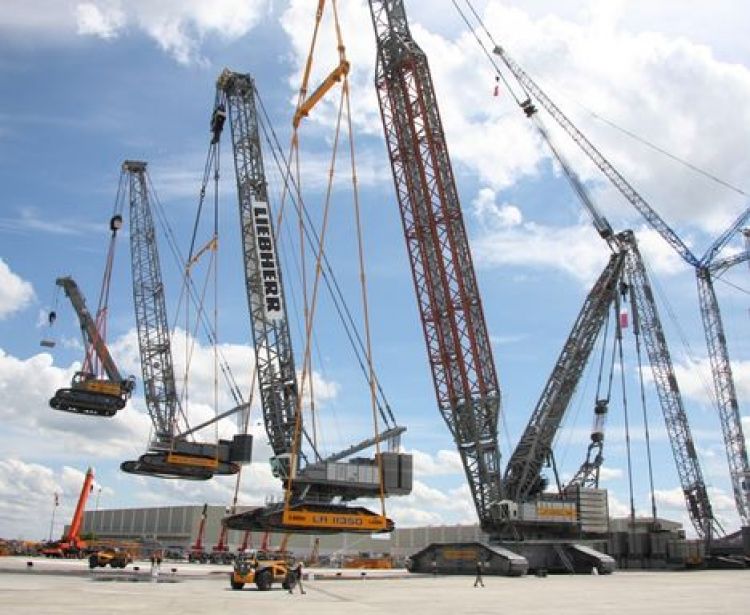
Rules must always define the exceptions in the same way the gravity that defines the order of a mobile must be respected or chaos will be the result.  The picture of the Liebherr crane mobile above (watch this video) is a prime example.  It is an exceptional display of engineering and some flexibility in weight bearing capacity, yet there are underlying rules that must be followed or the whole system will collapse.

The results of miscalculation, ignoring factors that influence stability and over stressing various structures (social, physical or otherwise) can result in catastrophic failures.  Failure like that of “Big Blue” which fell into a tangled heap on a gusty day:

image

Prevent disasters by finding a balance that puts rules and exceptions in proper order and plans for the winds of life.