Why Do Holocausts Happen? A Case Study in Gaza

Standard

Holocausts and genocides occur because atrocities are obscured by layers of justification, propaganda, and denial. Historically, these layers have enabled mass violence by fostering ignorance or apathy among populations. In Nazi Germany, the genocide of six million Jews was justified through antisemitic propaganda blaming Jews for economic woes and civil unrest, despite only a small fraction being involved in communist movements. Most Germans did not need to endorse the “Final Solution”; they only needed to remain ignorant or in denial, facilitated by censorship, secrecy, and moral rationalizations.

This pattern of denial and justification is evident in other genocides, such as the Communist purges in the Soviet Union, China, and Cambodia, where millions were killed to eliminate perceived threats to a utopian vision. The logic behind these atrocities often follows a “utopian cost-benefit analysis,” akin to the Trolley Problem in ethics: committing a painful or immoral act is justified if it promises immense societal benefits. For example, in Stalin’s purges, an estimated 680,000–1.2 million people were executed to “secure” the revolution, with the promise of a classless society outweighing individual lives. This reasoning holds that if a perfect society is achievable, no sacrifice is too great.

This same moral calculus can be applied to the ongoing conflict in Gaza, which constitutes a genocide. By examining the mechanisms of denial, propaganda, and prejudice, we can see how atrocities are enabled today, just as they were historically.

The Gaza Conflict as Genocide

The situation in Gaza meets the criteria for genocide under the UN Genocide Convention, which defines it as acts committed with intent to destroy, in whole or in part, a national, ethnic, racial, or religious group.

Since October 7, 2023, when Hamas attacked Israel, allegedly killing 1,200 people and taking 250 hostages, Israel’s military response has resulted in over 43,000 confirmed Palestinian deaths (as of June 2025, per Gaza Health Ministry estimates) and displaced 1.9 million people, or 90% of Gaza’s population, according to UN reports. The scale and nature of these actions—targeting civilian infrastructure, restricting aid, and statements of intent—suggest genocidal intent.

Israeli Prime Minister Benjamin Netanyahu’s 2023 reference to Palestinians as “Amalek”—a Biblical group the Israelites were commanded to exterminate—signals intent to dehumanize and destroy. This rhetoric has been followed by actions: the bombing of 70% of Gaza’s healthcare facilities (WHO data), the blockade of food and water leading to starvation (UNRWA reports of 1 in 5 Gazans facing acute hunger), and incidents like the February 2024 attack on a crowd seeking aid, killing 112 civilians (per Gaza authorities). These actions systematically target the conditions necessary for Palestinian survival, aligning with the Genocide Convention’s criteria.

Layers of Denial and Propaganda

Genocides thrive when atrocities are hidden or justified. In Gaza, denial is facilitated by restricting information. The unprecedented killing of 185 journalists since October 2023 (Committee to Protect Journalists data) limits independent reporting, while Israel’s control over access to Gaza restricts international observers.  The proposed U.S. TikTok ban, justified on national security grounds, may also suppress unfiltered footage from Gaza, as the platform has been a key source of firsthand accounts. For example, X posts from Gazan users often share videos of destruction, but these are dismissed as unverified or biased, while Israeli military statements are rarely scrutinized with the same skepticism.
Does Israel deserve destruction because they voted for a terror sponsor named Netanyahu?

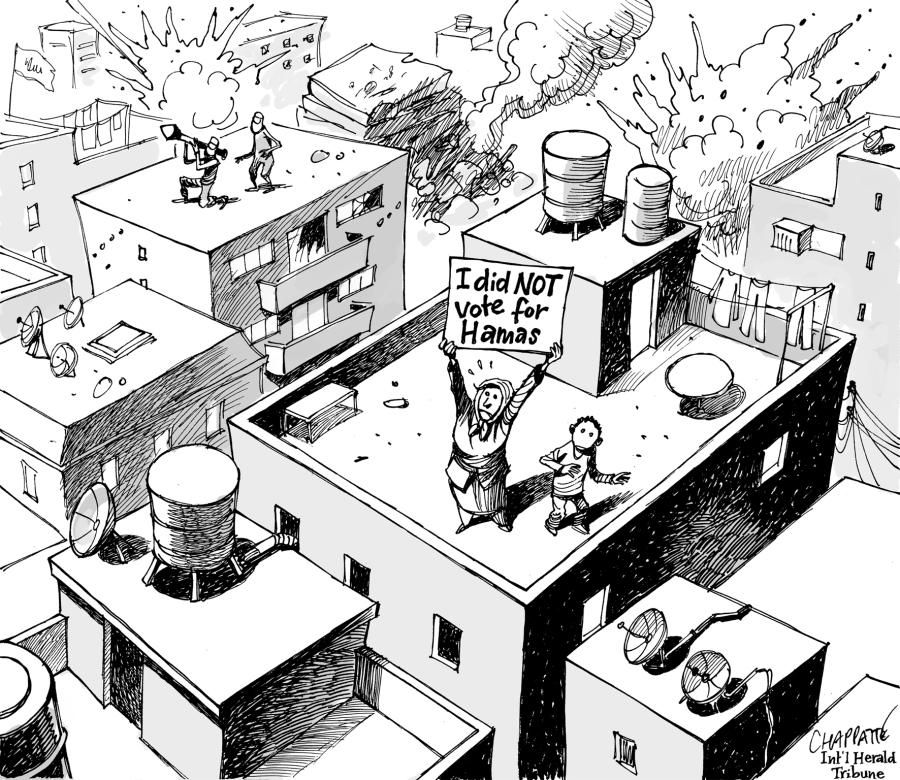
Propaganda further obscures the truth. The narrative that Gazans “deserve” their suffering because they elected Hamas in 2006 ignores key facts: only 8% of Gaza’s current population (given the median age of 18 and population growth) could have voted in that election, and no elections have occurred since. Collective punishment of civilians, including children who comprise 47% of Gaza’s population, is justified through this lens of collective guilt, a tactic reminiscent of historical genocides.

Prejudice and Moral Reasoning

Prejudice fuels apathy. In Western discourse, Islamophobia often leads to skepticism of Palestinian claims, even when supported by evidence from groups like Amnesty International or Human Rights Watch. For example, reports of torture in Israeli detention centers, corroborated by Palestinian Christians and secular activists, are dismissed, while IDF explanations face less scrutiny. This selective skepticism mirrors the antisemitic prejudice that enabled the Holocaust, where Jewish suffering was ignored or blamed on the victims.

The “utopian cost-benefit analysis” in Gaza is tied to ideological goals, such as fulfilling religious prophecies (e.g., Zionist visions of a Greater Israel) or ensuring Israeli security and long-term peace. These goals are presented as justifying extreme measures, much like the Nazi vision of a “pure” Germany or the Communist dream of a classless society. The logic posits that eliminating Hamas, even at the cost of civilian lives, will bring lasting peace. Yet, this ignores the disproportionate harm: 70% of Gaza’s casualties are women and children (UN data), undermining claims of precision targeting.

Addressing Counterarguments

Critics argue that Israel’s actions are defensive, targeting Hamas rather than Palestinians as a group. They point to Hamas’s use of civilian areas for military operations, which complicates urban warfare. However, the scale of destruction—leveling entire neighborhoods, as documented by satellite imagery—and the blockade’s impact on non-combatants (like the malnourished dying baby in the featured picture) suggest a broader intent. While Hamas’s actions are indefensible, they do not justify collective punishment, which violates international humanitarian law.

Others claim the genocide label is inappropriate because Palestinians are not being exterminated on the scale of the Holocaust. Yet, genocide does not require total destruction; the Rwandan genocide, for instance, killed 800,000 Tutsis in 100 days, and Gaza’s death toll, combined with deliberate starvation and displacement, fits the legal definition of targeting a group “in part.”

The Role of Silence

Silence enables genocide. In Nazi Germany, many who knew of the camps chose not to act, fearing repercussions or believing the propaganda. Today, those aware of Gaza’s suffering often choose apathy, swayed by prejudice or the promise of a greater good. This is not to equate all silence with complicity—some lack access to reliable information—but ignoring well-documented atrocities, such as those reported by the UN and NGOs, perpetuates harm.

Conclusion

Holocausts and genocides persist because societies allow them to, through denial, prejudice, and flawed moral reasoning. The situation in Gaza, with its systematic destruction and dehumanizing rhetoric, bears the hallmarks of genocide, enabled by global silence and selective outrage. To prevent history’s repetition, we must challenge propaganda, demand accountability, and reject the notion that any utopian goal justifies the sacrifice of innocent lives.  Speak out, seek the truth, and act—because silence in the face of atrocity is a choice with consequences.

The Art of Denial

Standard

Back in my school days, I got caught trying to make a weapon in shop class.  Being a boy, I was fascinated by those Nightsticks used by police and thought I could get away with this flagrant violation of rules.  But very early into this project the teacher, who had been around the block, confronted me and gave the cease and desist order.  However, rather than owning up to it, I went the route of plausible deniability and claimed that I was actually building a stool.

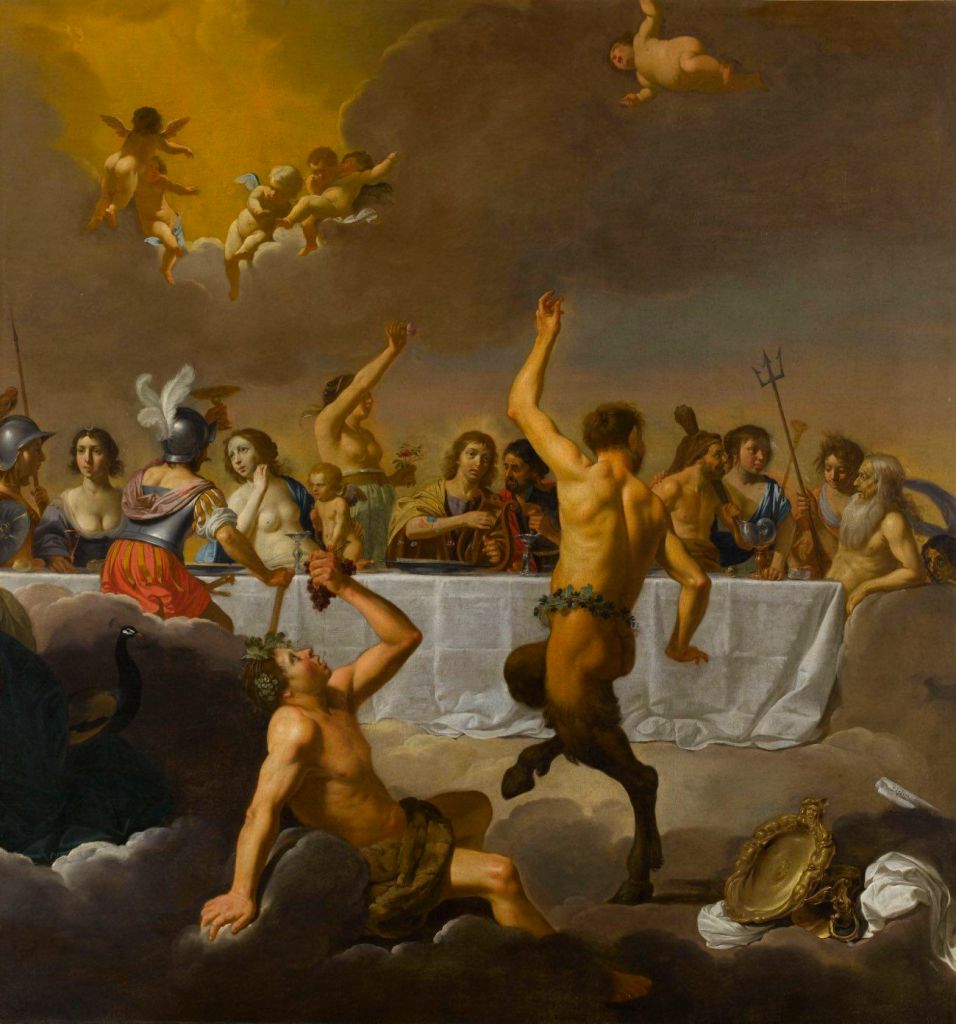
Likewise, some people when seeing many not happy with sacred Christian tradition being mocked tried to play off the display as a depiction of a Greek Bacchal Banquet. Whether you believe that explanation or not is up to you.  However, in either case, this was an obscene celebration of debauchery that had absolutely nothing to do with the Olympics.  And, no, that’s not coming from a prudish angle, rather Bacchus (not on Mt Olympus) was never a part of the Ancient Olympics.  So this clever response by apologists, like “Rev Cassie Rapko” (dutifully quoted in the Daily Mail), falls flat.

This new official explanation repeated over and over again in headlines, that “nothing to see here” denial of the Christian imagery in this depiction, also contradicts what these performers themselves had said before the damage control effort, as reported in their own words, “took inspiration from Leonardo da Vinci’s famous painting to create the setting.”  One of them even doubled down on the insult in a post that was later deleted after the narrative shifted.  The back peddling and gaslighting is incredible and it just goes to how unreliable our sources of information really have become.  This is an example of revisionist history in real-time:

But you’re crazy to think this has anything to do with Christianity!

The irony of the bizarre “It’s not the Last Supper, but The Feast of the Gods,” cover story is first that the explanation before the fury (above) is still online, and second that this painting by Dutch artist Jan van Bijlert was itself inspired by da Vinci’s The Last Supper:

And it is not so much about this one act as it is the meanspirited pattern of ridicule (and very deliberate misrepresentation) of Christianity by the left in part of a campaign of debasement and demoralization.  It is cultural vandalism, not art, and should be identified as such.  The left regularly betrays the love and tolerance it claims to stand for—only to greet with a Judas kiss acting as if they’ve done nothing wrong to deserve rebuke.  

“It’s just art!”

Try that excuse for spinning out on one of those rainbow flags painted on a roadway, see how it turns out.

Relax, don’t get so butthurt!  This is just art!

At the end of it all, the hypocrisy on the part of the fake tolerant “kindness is everything” left is expected. They are the civilizational equivalent of a plague of locusts, destroying all in their path and lacking any actual moral direction.  Sure, they’ll appropriate Christian morality, most especially when it is useful for bludgeoning others, but principles are for those trying to build.  The left lacks any creative power, which is why they parody and mock what is beautiful, what is meaningful, and truly life-giving in the world.  This isn’t even speaking from a Christian perspective, what truly awe-inspiring comes from these clowns other than their stupidity?

Until it comes to respecting your sacred traditions and symbols.

The need to recognize a bunch of talentless slobs, in the name of their false diversity, equity, and inclusion, only shows a lack of culture on the part of the French organizers.  This isn’t edgy or original, and it certainly isn’t going to help those who claim to be marginalized gain acceptance, it is simply sacrilege and a lame attempt to denigrate the faith of those who make up a 1/3 of the world population in an event that is supposed to welcome all people.  The only art on display was that of deception when they got called out.

Derision isn’t love. 

Ridicule isn’t tolerance. 

They lie to our faces and expect us to deny reality like they do, but you’re certainly not crazy for believing your own eyes.  I guess I should have told my shop teacher to squint harder and see the stool rather than the weapon.  But I was not that practiced in the art of deception.

Seeing Behind The Veil

Standard

In storytelling, there is a plot device called a MacGuffin.  This is an object, character, or event used to push the narrative forward and yet isn’t all that important in and of itself.  In other words, a thing that creates motivation and yet never even needs to be revealed to the audience.  We are supposed to believe this is something significant or valuable and that’s all we need to be told.

The contents of the briefcase are left a mystery despite being pivotal in motivating the characters.

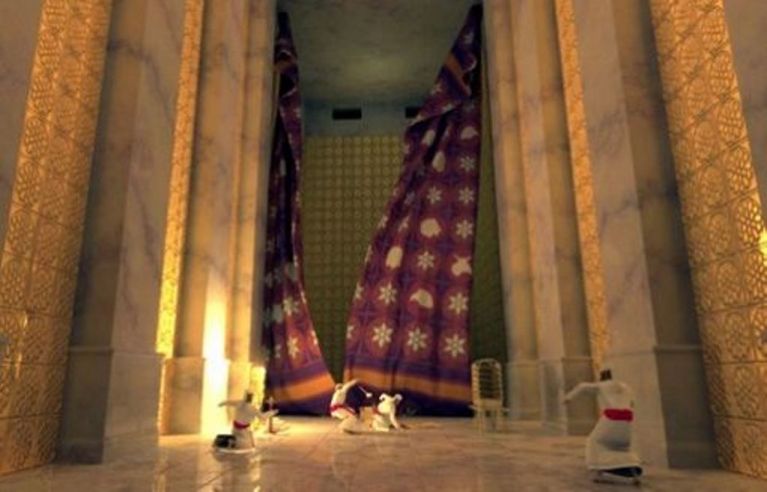
While reading through the Old Testament and pondering how temple worship worked, it is hard not to see the Ark of the Covenant as a sort of MacGuffin.  Sure, their God was not a thing.  And yet this sacred object, we’re told, contained something of God’s presence and would even strike dead those who innocently mishandled it.  Of course, most people may never have seen it, it was kept behind a veil in the temple where few had access, but all would be told of the sacredness.

“Then spake Solomon, The LORD said that he would dwell in the thick darkness. I have surely built thee an house to dwell in, a settled place for thee to abide in for ever.”

(1 Kings 8:12‭-‬13 KJV)

In fact, it was made sacred as much by this treatment as much as what actually dwelled within it.  The mythology surrounding it, as in the cultural or religious significance that was given to it, was extremely powerful.  Starting a special priestly class, Tabernacle and ritual practice, later the impressive structure of the Temple, there was a huge investment in this sacred object.  And yet, for all the attention it got, the Ark itself was usually kept hidden in darkness, guarded, within the Holy of Holies and behind a veil.

Holy Of Holies 

There are other things hidden behind a veil with significant motivational power.  One of them being the marriage MacGuffin.  For me this was a pursuit of something sacred, the church does consider the marriage bed to be sacred, and there is a whole mythology that is constructed around marriage.

This is what made it so jarring when, during my pursuit of the impossibly, a psychiatrist would classify it as “sexual attraction.”  They had just heard me describe a pure and faith-driven quest only to reframe it in such crass terms.  How dare they!  I was after love, not sex!  It really did offend me at the time.  With their clinical roughness, they had penetrated the veil of my marriage delusion.  It was an act of sacrilege.  

My childhood innocence is beyond recovery at this point.  For whatever reason, those of us born into a fundamentalist purity culture believe that we must be in denial of our own sexual urges that lead to marriage.  This is strange given how blunt St. Paul is on the topic, in 1 Corinthians 7:9, advising those who “burn with passion” to get married and basically get a room.  Why the veil of secrecy, these many euphemistic expressions to cover and mystify the bumping of uglies?

Speaking of erotic euphemism:

“Awake, O north wind; And come, thou south; Blow upon my garden, That the spices thereof may flow out. Let my beloved come into his garden, And eat his pleasant fruits.”

(Song of Solomon 4:16 KJV)

Why blush, be embarrassed or ashamed by this?

Could it be that without dressing this whole affair up with great ceremony, white bridal veils, teary-eyed parents, and such, we would have to face the reality of being creatures as hormone-driven as two ducks on a pond?  I mean, why aren’t we as honest as Solomon was in his poetry: “Roses are red, violets are blue, you have large breasts, that’s why I love you!”  Without white lies or half-truths, would our version of romance even survive?

So what is underneath the veil?

All of those things that I’ve discovered in the intervening years, that’s what…

To the extent I was in deep denial of my own sexuality, I was doubly in denial of the sexual nature of my female counterparts within the conservative Anabaptist culture.  The young lady who first propositioned, then made it all awkward and worried about somehow being ‘defiled’ if she got coffee with me has long since dropped the veil.  She has joined the others whom I had held in such high regard, revealed now as not being nearly as prudish or pure as I had once imagined.  That’s not a criticism or judgment either.  It is just the reality of the situation.

So, when the impossibly told me “I cannot not love that you the way that you wanted to be loved” what she was really saying the same thing as those Tinder girls with “must be 6′ or over to ride” in their profiles.  She wanted a guy who got her juices flowing, certainly someone a bit more rugged and traditionally masculine than me.  And, I mean, why not?  Why hide it?  Marriage is not only (or even primarily) about the high ideal that is advertised.  It is also about our scratching the itch.  Which is to say getting down and dirty with someone who meets the correct physical qualifications.

Also, perhaps it is that the fantasy is more satisfying than the act itself?  We read how Amnon, King David’s eldest son, had such an infatuation with his half-sister Tamar.  It tells us after having his way with her he despised her.  Or consider the disgust of Victorian-era art critic John Ruskin when, in marriage, he discovered that women aren’t like porcelain dolls.  You’ll have to forgive him, they put skirts over piano legs back then to keep the eyes of men safe from the unveiled feminine form.  Maybe there are some things that are better chased than caught?  If we find what we went looking for we might be shocked at what we found.

Sacred Fertility & Symbolism 

The final stop on this exploration of sacred and taboo has to do with something that I can’t unsee now that I’ve seen it.  I’m bound to lose half of my final two readers for going here. 

Nevertheless, I’m not here to please the pearl-clutching crowd. 

For me, this is not about toppling sacred cows or making people uncomfortable, it is about being honest enough to see reality for what it is and correcting our own perspectives of the cultural baggage we’ve inherited.

First, what drives much of the Old Testament Biblical narrative?  We know Abraham’s story, how he wanted an heir, and yet how Sarai, his wife, was unable to produce.  In this Genesis account we see various cases where wombs are opened or closed.  And the punishment of Michal, for rebuking her dancing husband, was that she had no child until the day of her death.  Being fruitful and multiplying was a high priority, as well as having sons to carry on the family line.

As an aside, we live in a very sterile world in comparison to our ancestors, we’ve become sheltered and sensitive to the point many do not eat meat or want their children exposed to death.  This wasn’t an option at the time when Scripture was written.  There is a kind of earthiness to their world and perspective, something more primal or real, a brutality of life difficult to stomach.  It is with this reality in mind, that we also have different sexual taboos and could be more prudish than they were about such things.

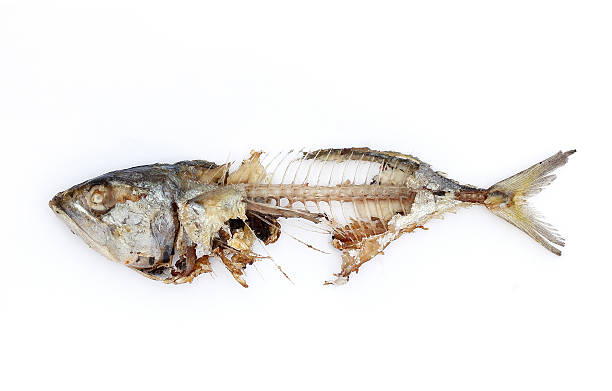
Second, I was sitting in church and taking a look at the colorful streams of light pouring through a stained glass image of Jesus pulling Adam and Eve from the grave.  My moment of appreciation for this beauty was interrupted by my noticing part of the symbolism.  Jesus is shown to be emerging from an oval shape, at the bottom of which are the covers of their opened tombs.  Requiring very little, if any, imagination, it bears striking resemblance to one Christian symbol even an iconoclastic Protestant would likely recognize, and that being a vertically arranged “Jesus fish” or Ichthys.

Light and life shining down…

However, concurrent to this, and a cause of some momentary shame, was the thought “That’s a vulva!”  I mean, how inappropriate to think that any part of the female anatomy, let alone those private nether regions, be put on prominent display or be associated with Christ!  

But is it really?

A mother, Mary, is necessary for the birth of Jesus.  Without her, and her womb that is miraculously made made more spacious than the heavens, there is no salvation for mankind.  It didn’t matter if God could have used any other way, all we know is that he used this young woman and all of the faithful since have followed the lead of Elizabeth, who full of the Holy Spirit loudly proclaimed:

“Blessed are you among women, and blessed is the child you will bear! But why am I so favored, that the mother of my Lord should come to me?”

(Luke 1:42‭-‬43 NIV)

As far as the symbolism, I would find that indeed my observation had basis in reality as the Ichthys is a version of Vesica Piscis (literally “fishes bladder” in Latin) or, in sacred geometry, the oval that two intersecting circles create an oval and said to be the place where spiritual and physical worlds interface. According to Syriac Press, in ancient Mesopotamia, it was used as a symbol of the combination of masculine and feminine energies that create a Divine Child.  Any pagan coincidence, like those with baptism, only serves to reinforce the power of the symbolism.

In a time when many settle for ‘fur babies’ over producing human offspring and the unique female contribution to the world is dismissed by feminists seeking male roles— when real women are mocked by men who pretend to menstruate—we need to start doubling down on our celebration of this reproductive role of women.  Phrases like “saved through childbearing” did not come into the Bible by accident.  The world was saved by the one who came out of Mary’s fertile womb and we ought not to downplay or be embarrassed by this.

Empty Vessel—Dying Corpse

Solomon’s Temple was destroyed in 586 BC, by the Babylonians, and the fate of the Ark within it is unknown.  This loss of sacred relics did not stop the Jewish faithful from rebuilding the temple, in 515 BC, but does make one wonder how much the contents mattered.  So long as the people were kept in awe that’s all that really seemed to be the point whether the edifice truly contained anything of real value or not.  With nothing behind the veil, the people still did the ritual and sacrifice. 

Why?

It seems sort of analogous to the US Dollar, a currency once backed by actual gold and now only by faith people continue to hold in the economic system it represents.  The harsh reality is that it has become merely a means to exploit. It is a way for a few elites to rob the value of the savings of other people by printing more money for themselves.  Those money changers Jesus chased out of the Temple were the amateurs. The real professionals never get caught.  The carefully maintained veil of secrecy around the Federal Reserve ensures that this particular scam continues for a long long time.

But, I digress.  

G. K. Chesterton once wrote, “a corpse crawling with worms has an increased vitality,” and that “a dead man may look like a sleeping man a moment after he is dead,” trying to describe the subtle yet significant difference between truly sacred tradition and a cheap gimmick version of this religion that was intended to replace it.  Perhaps this is what has me disillusioned?  With so many things, once the veil is lifted (which few ever dare to do) so much of the enticing mystery and popular mythology which propelled us forward falls apart.  And in this way some of the life I had felt early on feels more like decomposition.

Perhaps this is what is left when you’re the dog who has finally caught the car?  Nothing left to do but pee on the tire and continue on your way again.  The anticipation leading up to the day of revelation may be more exciting than the moment the veil is lifted and when all is seen.  Ruskin may have spent the rest of his life waxing eloquently about his female love interest.  Or maybe—just maybe—that MacGuffin which led us to the point we’re at today was merely a plot device to move the story forward and the only truly sacred part of the encounter is the fruit produced?

Sexual pleasure is fleeting.  We’re lured there by our imaginations, by our desire for what is beyond the veil of marriage, but it can all be a bit anti-climactic and even repulsive once you consider it after it is finally unwrapped from the flowery speech and those flawless air-brushed mental pictures.  But fatherhood, by contrast, seeing the great potential of my son, tending to his needs, pruning as needed, is something extremely fulfilling.  It is what has emerged from the womb that brings us renewed life and hope.  Pity the barren, the dying corpse who has lifted the veil and only saw the emptiness of their pursuits.

The Hypocrisy of the Nice Guy Angle

Standard

The traditional male is supposed to be a little aggressive. There is something women love about swagger, the confident risk taking persona, and maybe because these men get things done. The bigger bolder man is going to give them more of what they want. They are the star athlete, they can dance, and (by outward appearance at least) are greatly endowed with those attributes most pleasurable. It doesn’t matter if he is entitled, arrogant, emotionally distant or otherwise a complete douche, nor that he’ll be bald with a potbelly at fourth, in his youth he’s that picture of masculine strength that immature women crave.

Success is a positive feedback loop. Even the tall handsome dude is going to have some approach anxieties. However, that self-talk goes a bit easier for the guy who has had his arm squeezed by an ogling female admirer or has never been turned down for a date. Men are not the choosers. Women make themselves available to the desirable men, they smile and laugh for him, will literally crawl into their pick-up truck, all he needs to do is make the move and very soon this flirtation leads into intimacy and meant to be. It didn’t require any faith or great courage on his part. He barely had a speaking role. Like men confuse beauty for virtue, women love that strong silent type for the character they can project onto his frame.

Outside looking in? The Nice Guy. That guy never picked first for any physical contest. The one who is a little timid or shy, awkward or clumsy, the late bloomer, and generally stayed out of the spotlight. He might have been on the receiving end of bullying or, at the very least, was disgusted by the insensitivity and crude sexuality of his male peers. If he’s lucky, women like him because he’s sweet and sincere, respectful and never a threat. While she gets the benefit of his companionship, he is lives under the delusion that if the girl simply gets to know him then she’ll see his golden heart and move him out of the friendzone. It never happens. And, worse, he betrays platonic assurance that gave him access to her.

I ran into this fair description of the infamous ‘Nice Guy’ while looking into the 9 to 10 attractiveness scale:

Recently, women took to Reddit to tell their scariest stories about “Nice Guys” — what our own Miles Klee described as a dude “who claims he only wants to be a woman’s friend, then gets mad about being ‘friendzoned’ and cruelly judges her for dating anyone who isn’t him.” The Nice Guy believes he lives outside of sexism and toxic masculinity, yet his schtick still hinges on the idea that basic decency toward a woman entitles him to sexual access.

The ‘Nice Guy’ wants the same things that any other male wants. But, because he is not 5′-10″ (or over) nor charismatic enough to gain her love, he plays the only angle that he has and that is to be ‘better’ than those other superficial losers. Except the reality is that he’s no different in what he actually wants and that is a relationship that ends in more than polite chatter. The whole thing of dating and romance is crass (a desire for sex hidden under a layer of sophistication) yet, in the cases of attractive men, the base desire for sex is categorized as wanted attention. However, in the case of ‘Nice Guys’ this desire is only ever a betrayal of friendship.

It is one of those all around loathsome things. Not being one of those cool sexy men doesn’t mean that a man wants to remain a celibate. However, to the women who wanted him as their pet rather than a partner, his bitterness and jealousy only confirms his status as an inferior man. In her mind, he was simply to take his place as supporting cast, the enuch to her queenly court, and that’s his only value to her. He’s the sounding board for her complaints, not even really a human with natural hopes to her, and therefore when he imagines himself as more she is appalled. How dare he be a sexual creature like her and the men that she prefers? How dare he mislead and be like those guys who she would allow in her pants!

I mean, she’s right, had she had an inkling that he ever sexual desires she would never have given him the time of day. Women might be best known for their nurture, but they sure can turn the cold shoulder to a guy who doesn’t meet their qualifications. And, again, who can blame them? If the top tier of attractive women could never say “no” or deploy that RBF shield, they would never be able to escape all of the unwanted male attention.

And yet, I’m also sympathetic to those who play that ‘Nice Guy’ angle, in so much that it is not entirely a lie and that they do often hear all of the complaints from women. Why did she go right from that abusive jerk to the womanizer who obviously only sees her as a fresh piece of meat? Why wouldn’t she at least give him a try, acknowledge his passion as valid, and stop denying him what she so freely gives to these others? It is insanely frustrating, especially in this age of equal opportunity politics, as his choice in stature and personality is no different than skin color. In the end his indignation is the most dignifying thing he has left after the rest of the world, including the ‘compassionate’ kind, have left him in the dust and trampled under their own ambitions.

The real problem with the ‘Nice Guy’ is that underneath his self-righteous facade lives a hypocrite. He lives in denial of his own sexuality, as a means to attain access to female attention, and yet is still pursuing the beauty queens like the jocks. He may have no choice. His lack of confidence could be the result of many rejections or simply disposition. It is entirely unfair too that his better qualifies are overlooked as well. And yet the only answer ever is for him not to be like those who are superficial and find one of those many women (truly his own counterpart) who aren’t the 9.5 on the 1-10 attractiveness scale. Because his sanctimoniousness and toxic entitled attitude is certainly not going to secure love.

The harsh reality is that we all, whether we hide it in religious babble or sophisticated explanation, want the same things. There are traits universally attractive and some are born with more of them. It’s not fair. It is most definitely superficial. But we’re all guilty and would be better to take responsibility for our own part. My own beautiful sister remains single, often overlooked by those guys pursuing those perfect 10s (who often lack character despite their angelic appearance) and has as much right as any guy to be upset. So maybe the first step is a little honesty? Both men and women are absolutely superficial and willing to overlook many things if someone scratches that itch. Love may emerge, but nothing after puberty is absolutely pure.

Note, not at all saying that truly platonic friendships do not exist between men and women. Many of my best friends are women. But to be in denial of our base level sexual attraction is the beginning of spiral into insanity, it is self-deception, and will eventually come bleeding out. We need to be real. People don’t date or marry as some purely spiritual experience, so why would our friendships be any different? We spend time with those who we are attracted to and often it is more complicated than mere common interests. It is a matter of maturity to a) fully acknowledge our sexual attraction to another person and b) also be completely fine with the friendship.

Fear Is Contagious. Fear Is Deadlier Than Coronavirus.

Standard

Spanish flu of 1918 was unusual, amongst modern influenza outbreaks, because it killed young and otherwise healthy people.  One of the possible reasons for this is an immune reaction called “cytokine storm” in which overreaction of a bodily system leads to a cascade of other failures and eventually to death.  I’ll let my friends who are medical professionals correct me on the details, but that is the basic idea and sufficient explanation to set the stage for this blog post.

The Herd Reacts…

The psychology of human behavior, in particularly how it pertains to people in groups, is a fascinating study.  We are social creatures and because of this our own response to anything can be easily influenced by the reaction of group.  If one person or several, who are considered credible by the group, start to do something new, it won’t be very long before there are many others copying them.  That is how fads and fashions are born, that is why religious people conform, we want to share in the credibility of the credible by doing what they are doing.  We do this unconsciously, like the contagious yawn, and can help explain what happened last week.

All of the cancelations of the past few days may very well come down to the actions of one man.  Rudy Gobert, days before becoming the first NBA athlete to positive for the Covid-19 virus, decided it would be funny to deliberately touch all the mics and recording devices in a news conference.  This led to the NBA suspending their seasons and, like Mrs O’Leary’s cow kicking over the lantern starting the Great Chicago Fire in 1871, one man’s caviler attitude could very well have triggered the response of the NBA and the long list of other cancelations that soon followed.

It goes like this: The NBA canceled because 1) a few of their players tested positive, 2) they realized they were no longer in control of the situation, and 3) they could possibly be held liable if the death of someone’s grandpa could be traced back to one of their sporting events.  So, in the name of public safety and all things good and right, they decided to approach this unknown risk by abruptly ending their season.  This, in turn, very likely influenced other leagues to follow suit for fear of their own inaction, despite knowledge of risk, becoming a heyday for trial lawyers everywhere or simply a public relations disaster.

The more leagues and events that cancelled, the more others felt pressured to do the same.  Sure, this was something rationally justified, the idea of “flattening the curve” or slowing the spread of a disease by “social distancing” soon became common parlance, and yet the spread of this idea to start canceling events seems also to be very much like the simultaneous run on toilet paper.  Anxiety disorder is something I know a little about and, while I’ve never been tempted to hoard toilet paper, it certainly has gotten in the way of my better judgement. 

So is the reaction to Covid-19 wholly rational or was it post hoc rationalization and basically a collective panic attack?

Nothing To Fear But Fear Itself…

I have a friend who was an Air Force medic during the First Gulf War.  He told me an anecdote you’ll never hear reported in the news, a behavior that doesn’t make any rational sense and yet is something he encountered a few times in the lead up to combat in Iraq. 

Apparently some of the young soldiers were so keyed up and anxious that they couldn’t take the pressure of the wait anymore, they would find a place where they had a little privacy (the porta-potties as I recall) and take their own life using the firearm issued to them.

It makes absolutely no sense.  Why would someone, facing the danger of death, be so anxious that they would actually kill themselves?

In times of crisis people want to do something, anything, to lose that feeling of powerlessness.  That is probably the reason why many people have recently started to stock up on things that really would not help them.  That is why young soldiers, concerned about losing their life, took their own life rather than continue to wait in fear.  Fear often leads to an irrational response.  And our most educated and elite, given responsibility to make decisions, are not immune to this kind of irrational “do something” impulse either.  Our leaders are capable of panic as much as any of us.

It reminds me of the story of Easy Company, told in the series “Band of Brothers,” where the Company Commander, 1st Lieutenant Norman S. Dike Jr. (or “Foxhole Norman”), was portrayed as being frozen by combat and unable to make a decision.  He had obviously been talented enough to rise up through the ranks and become an officer, but apparently he lacked the calm and collectedness to be an effective leader outside of a controlled predictable environment.  He had to be replaced by a more common and practical man, with the right instincts to get the job done:

During the assault on Foy, Dike had ordered a platoon to go on a flanking mission around the rear of the town. During their charge, he ordered them to take cover. His subordinates informed him they were going to get killed because they were sitting ducks.  At the same time, Captain Richard Winters, former commander of Easy Company and the Battalion executive officer, tried radioing him to tell him the same thing. Having no idea how to control the situation, Dike froze. Carwood Lipton, at that time the company’s first sergeant, later put it: “He fell apart.” He was relieved during fighting at Foy by First Lieutenant Ronald Speirs under orders from Captain Winters, then moved on to become an aide to Maxwell Taylor, 101st Airborne Division.”

Military Wiki, Norman Dike

Could it be those whom have power in our institutions are men (and women) of similar caliber to Dike?  Smart, capable of working their way up through the established system, and yet lacking the courage necessary to lead society through uncharted waters?  Some of them freeze in fear, others overreact in their anxieties, while others (seeing the bigger picture) are more more able to make good decisions and navigate the stressful circumstances of the present moment.  Running the NBA or being at the top of a government agency does not mean that a person is qualified to manage a crisis and in some cases those in those positions are probably going to make matters worse rather than better.

Self-sabatoge, Fear-based Overreaction and Titanic Failures…

It is really hard to know, actually, in a politically polarized time, when many are willing to cut off their nose to spite their face, what is a real crisis and what is merely an opportunity to try to undermine a political opponent.  In fact, there are some in this country who seem quite willing to destroy the economy in a desperate bid to get their power back and a few who even seemed to cheer the plunge in the markets.  When some see personal benefit in feeding hysteria and panic, it is hard to know who too trust when clearly not everyone is on the same team anymore.  

But that said, I would tend to see the fear as being real and the reaction a sincere effort to prevent the worst case scenario from happening.  It was easy, as Covid-19, ravaged China, to deny the severity of the situation.  For one, the Chinese government is not the most trustworthy source of information (add to the that they had every reason to minimize the outbreak as not to scare away investment dollars) and, two, it is very easy to dimiss China as a them rather one of us.  The real wakeup call was Italy, a country clearly on par with our own in terms of medicine, and how quickly a few isolated cases suddenly exploded.  And, unlike China, where the government kept a tight lid on information, the truth was allowed to escape.

What has happened since I see as being similar to when a driver dozes off, wakes up while crossing the rumble strips, and reactively jerks the wheel.  Their immediate reaction may spare them a trip into the trees, but it could also be an over-reaction that takes them head-on into an incoming tractor trailer.  It could be too little too late.  There are those right now who call the idea of “flattening the curve” a “deadly delusion” an that only complete containment strategy will make a difference.  But then I begin to wonder has the opportunity to save those most vulnerable been missed a month or so ago when we failed to close our borders when it was clear that China was dealing with something unprecedented in our own times?

They say had the HMS Titanic ran straight into the iceberg, rather than barely grazed it, some would’ve died from the violent collision and yet the ship would likely haved stayed afloat.  It is also strong possibility that they could have avoided a collision with the iceberg altogether if they had only used the rudder rather than try to reverse the engines.  The Titanic, unlike many ships of the period, had two outer propellers run off piston engines and one in the center that was powered by a turbine.  The outer propellers could be reversed quickly, the inner could not, and the result of their attempt to reverse being turbulence over the rudder which made the magnificent ship unresponsive.

Sometimes I wonder if it is too late to spare the lives that will be lost if we slam headlong into Covid-19 and let be what will be.  Yes, people will die.  But people will die regardless and crippling the economy may only add to the death count.  Don’t get me wrong, I believe cancelling unnecessary activities and avoiding large group gatherings is a precaution worth taking, as is practicing good hygiene, washing hands, wearing masks and self-quarantine.  However, I would also argue that wrecking the economy will only make matters far worse and must also be avoided at all necessary costs.

In my own mind there is a vast space between paralyzing fear or irrational over-reaction and blinding arrogance.  We can and should be getting prepared, but with deliberate calm.  We are at war, the strength of our enemy is not fully known, we must not recklessly expose our vulnerable flanks, we dare never freeze in fear.  It would be wise to buy some time, to allow better countermeasures to be deployed and that does mean social distancing, less travel, more cleanliness, and really what should be common sense.

What Is Coming?

Despite our best effort, war is coming. We can expect that in the coming weeks that case numbers will jump dramatically and, not only that, but ICU beds will begin to fill at an alarming rate.  We could see abandoned shopping centers and malls converted into makeshift hospitals.  We will probably see some “wartime medicine” or triage, where those most likely to survive are given access to treatment over those who have only a slim chance are basically left to die, so snap out of your dismissive stupor and conspiratorial denial now or you will not be prepared for the battle of the coming days.  

That is the truth. 

We are emotional beings, not wholly rational. 

We make poor decisions, both collectively and individually, that can turn a dire circumstance into an absolute disaster.

If you are seeing this only in terms of politics, who gets blamed or who benefits, you are the problem more than the virus.  If you have filled your cart with toilet paper because suddenly you feel vulnerable and don’t know what to do, stop thinking only about yourself and stop feeding into the anxieties of others.  It is time to buckle down, put aside partisan differences, selfish ambitions, and act together as one nation again.

In the end, remember, like the case of many who caught Spanish flu and died because of their strong (yet unhelpful) response, overreaction can be more deadly than the actual threat.  We cannot bring the economy to a grinding halt out of fear, instead we must thread the needle with a prudent and properly measured reaction.  There is no point in stopping the virus by killing the patient.  We should pray that our leaders are given extraordinarily wisdom and calm for this unprecedented event.

God bless!

Assaults, Allegations and Justice For All

Standard

It was an open and shut case. A young woman reported that she had been drug into a stairwell at school and raped. The young man, seventeen, enters a guilty plea and is sentenced as an adult. He will serve five years behind bars, then five years of strict probation, and will need to register as a sex offender for the remainder of his life.

Justice served, right?

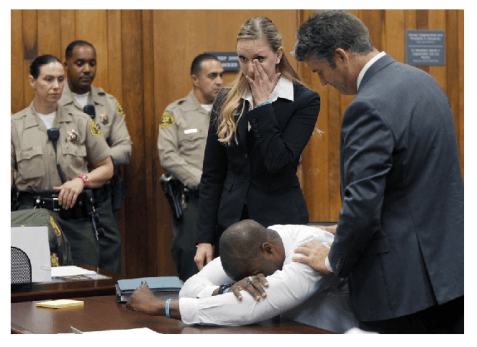
That’s the story of Brian Banks, a high school football star, accused of rape by his classmate, Wanetta Gibson, and threatened with forty years to life on the basis of her allegation. His legal counsel, despite Brian maintaining that he was innocent, feared a conviction and advised he go the route of a plea bargain—so that’s what the young man did.

He served his time. He had asked the California Innocence Project to take up his case, but they declined because there was a lack of evidence to prove his innocence. It seemed Brian would spend his entire life, denied opportunities, treated like a sexual predator, and unable to clear his name—all on the basis of her words. I mean who, besides his close friends and family, would believe him, that he had been falsely accused? Doesn’t every rapist claim to be innocent?

But then something extraordinary happened. His accuser, Wanetta, recanted her story (privately) and confessed that she had fabricated everything. Finally, Brian’s name was cleared. His accuser, who had won a 1.5 million dollar settlement against the school, was sued to recoup the money paided to her and has since failed to show for her court dates. Brian had a brief NFL career after this and is now an activist for those wrongly convinced.

The “only” who are falsely accused…

“The ruthless will vanish, the mockers will disappear, and all who have an eye for evil will be cut down— those who with a word make someone out to be guilty, who ensnare the defender in court and with false testimony deprive the innocent of justice.” (Isaiah 29:20‭-‬21 NIV)

There is an oft-repeated claim about the frequency of false accusations being “only” 2-10%. It is a number often used by those trying to downplay the possibility that a man is innocent.

But what is the basis for this number?

The number itself is an estimate. It is based on various studies, studies like one published in the Journal of Forensic Psychology from 2017, that compare numbers of claims deemed false or baseless after an investigation. They found that between the years 2006–2010, out of 87,000–90,000 accusations of rape a year, that around 4,400–5,100 of the reports were deemed false or baseless—that works out to roughly 5.55% of allegations being determined to be false.

However, what a study like that does not take into account is that some accusations of rape are entirely baseless despite an investigation that leads to a conviction. Brian’s case is a prime example, he was found guilty despite his innocence and only exonerated because the woman who accused him later recanted her tale. There could be many more men, convicted on the basis of a false accusation, who are never exonerated because their accuser never recants.

Brian’s story is extraordinary in that his accuser was caught in her lie. However, that’s not always the case. (Not to mention, he had already served five years.) There is really no way of knowing how many, convicted on the word of an accuser, may actually be innocent despite their entering a guilty plea and being convicted. So we really do not know how many accusations are false accusations based on convictions

But, more glaring than the possibility that the number of false accusations could be far higher, is the very reality that thousands of accusations per year are false.

That is, put another way, 4,400–5,100 lives (and potentially more) with their lives turned completely upside down by a false accusation. This could be your own father, brother, nephew or son. Thousands are accused, even imprisoned, and are actually completely innocent—that is an “only” that should slow us from rushing to judgment in the case of an allegation.

That said, not near all rapes and sexual assaults are reported.

“Speak up for those who cannot speak for themselves, for the rights of all who are destitute. Speak up and judge fairly; defend the rights of the poor and needy.” (Proverbs 31:8‭-‬9 NIV)

It is important, at this point, to note that there are many who are victims of crimes that were never reported. I personally know multiple cases of men and women who were sexually molested and/or raped and never reported the assault to authorities. They were abused by family members, grabbed in the groin by a coworker, raped by their boyfriend and there was no police report of the incidents. That too is a sad reality, a traumatic experience that many live with, that should not be ignored.

According to the Department of Justice, in a 2014 report, an estimated 34.8% incidents of sexual assaults are reported to authorities. That is to say that only 3 or 4 out of ten sexual assaults are ever properly investigated and adjudicated.

Now, that this is NOT to say that there is an equal number of rapists to those unreported incidents.

According to a report about repeat rape among “undetected” offenders, repeat rapists “average 5.8 rapes each” and thus the number of undetected rapists is only a fraction of the number of victims. In other words, only a small number of men account for the majority of the incidents and this is precisely why people should report criminal incidents—reporting in a timely manner will protect other people from repeat offenders.

It should come as no surprise, then, that someone who was raped would not report it at the time it happened. Likewise, it should not be a surprise that many rapists continue their life free of consequence for their actions. This is an unfortunate reality of the world we live in, it is the reason why we should always take allegations seriously even if they come out years and years after the assault is said to have happened. There are many unreported assaults, people come forward at different times for different reasons, and this is something to always be aware of in our analysis of reports.

We can (and should) take a clear stand against all forms of abuse.

There is a false choice out there. There are some who deny allegations on the basis of false reports. There are others who dismiss claims of innocence and downplay false allegations as insignificant on the basis of under-reporting statistics.

But we should not choose one or the other. It does the real victims of sexual assault no good to presume the guilt of a man simply on the basis of accusations. It also is wrong to side against an accuser because there are false accusations or they haven’t reported the event immediately after it happened.

We should never disregard an allegation off hand. We should never decide someone’s guilt or innocence by a mere claim or statistics. We can both take sexual abuse allegations seriously and also be reasonably skeptical of the accusations. When pressured to take the side of an accuser or the accused we should take neither side and take the side of justice instead. Every case is different. Every court is different. We must be wise.

Know your own bias and adjust your judgment accordingly!

Still, we all tend to see things from a biased perspective. In the case of Brian Banks, the prosecutor and other authorities believed he was guilty on the basis of the testimony of the young woman. These were well-educated people, people aware of bias, and yet they failed him. In many other cases, there is undo skepticism of those coming forward with allegations and denial of justice to victims of abuse. Both of these things must be guarded against. A person making an allegation should be heard and their story believed. An accused person should be presumed innocent until proven guilty and not be denied due process.

Ultimately, if an allegation falls within the statute of limitations, it is the responsibility of the police to investigate and the job of the courts to decide based on the evidence that they have. I prefer that we side with the evidence, that a charge must be proven beyond a reasonable doubt, and that defendants not be tried in the court of public opinion, perp-walked or treated as if guilty unless there is evidence that proves beyond a reasonable doubt:

“It is better that ten guilty persons escape than that one innocent suffer” (Sir William Blackstone)

Two wrongs never make a right. As much as we want justice for the victims of sexual abuse we should not neglect justice for those accused. It does the true victims no good to create another victim by locking up those falsely accused and truly innocent. We should not punish anyone for a crime that they did not commit and especially not as a result of our prejudice against their race, gender, religion or other a defining characteristic.

We need to be a voice for justice.

False accusations, from the Salem Witch Trials to Emmett Till and everything before or after, come because there is power in making them. An accusation can bring a confirmation hearing to a grinding halt, it can cause questions about a political rival’s character that didn’t exist before and mere words can destroy lives—therefore we must always stand for the rights of the accused.

That said, we must never deny the oppressed, we should have compassion for those abused and especially for abused who have remained silent for fear of not being believed or other reasons—therefore we must always be a voice for the abused.

May God give us wisdom!

Are You Better Than A Pharisee? (Matthew 23:29-32)

Standard

Denial is our first line of defense.  Even the guiltiest person will plea “not guilty” in an effort to avoid judgment.  And when we read Matthew 23, it is easy to assume that the stinging words of Jesus apply to them but not us.

Denial is a natural response and therefore it was no surprise if we read Jesus’s words to the Pharisees and fail to make a connection between “us” and “them.”  Most of us prefer to think of ourselves as the good guys, you know, the ones with better understanding and more complete knowledge.  How could we be as wrong as those whom Jesus condemned?

And when we do have to admit our failures we tend to deflect and downplay them: Sure, we are imperfect, we make mistakes; but who doesn’t, right?

I should know.  I was once an ardent apologist for everything Mennonite.  I believed that by God’s grace, I was born into the church denomination that best applied the teachings of Jesus—which is a sentiment not uncommon among my Anabaptist peers who have not been sexually abused, the witness of a vicious church split, or excommunicated.

Unfortunately, this assumption of our having a corner on the truth is a position built on confirmation bias and arrogance.  Every religious zealot believes that the ground they stand on is sacred simply because they are standing on it.  But, unless you believe that all paths lead to God, they can’t all be right.  Likewise, our own assumption that we are right, and our ability to defend it, doesn’t make us any better than them.

Those who do not learn from history are bound to repeat it.

The Pharisees and religious experts believed that they were on the right path; they proudly considered themselves to be God’s chosen people and resisted his message.  It would be easy to try to distance ourselves from them, to think of them as extraordinarily bad people and deny our commonality with them.

However, if we do that, if we are too proud to consider that we could be on the wrong side of history, then we have the same exact mentality of those condemned by Jesus:

Woe to you, teachers of the law and Pharisees, you hypocrites! You build tombs for the prophets and decorate the graves of the righteous. And you say, “If we had lived in the days of our ancestors, we would not have taken part with them in shedding the blood of the prophets.” So you testify against yourselves that you are the descendants of those who murdered the prophets. Go ahead, then, and complete what your ancestors started! (Matthew 23:29‭-‬32)

The teachers of the law and Pharisees, like us, identified with the good characters in history and distanced themselves from the bad.  They thought they were different from their ancestors who killed the prophets.  But Jesus turns their attempt to disassociate themselves around and uses it to create a link.  He taunts them, telling them to finish what their ancestors started.

The sad reality is that the proud religious fundamentalists of Jesus’s time did not see themselves as repeating history.  They imagined themselves to be the preservers of a pure religion passed down from the prophets before them and heroes of their own story.  To them, Jesus was a dangerous and false teacher, so they wanted him silenced and conspired to have him killed.

What was so wrong with the Pharisees?

“Pharisee” has become a pejorative word in our time, and yet in the time of Jesus it was a proud distinction.  They were the devoutly religious people; they held themselves to a high standard and kept the law better than their neighbors.

Jesus once told his audience:

For I tell you that unless your righteousness surpasses that of the Pharisees and the teachers of the law, you will certainly not enter the kingdom of heaven. (Matthew 5:20)

It might seem odd that Jesus uses the Pharisees as a benchmark and then lambastes them later as hypocritical.  Was Jesus inconsistent and changeable?  Moody or bipolar?  I doubt it.

Actually, I believe the Pharisees were the “good people” of their time and trying their best to live righteously.  And, as people respected by their religious peers, they were not accustomed to being called out and condemned.  But, despite their diligent efforts, they were missing something and it was because of that that Jesus poked and prodded them.

The problem with the Pharisees was not that they were extraordinarily bad people.  The problem was that their success in surpassing others had made them into entitled brats who thought themselves superior to others.  Sure, they were pristine on the outside, did the right things to be regarded well, even thanked God for all their advantages, but were they living in faith?

Or were they content to simply do better than others?

The servant who knows the master’s will and does not get ready or does not do what the master wants will be beaten with many blows.  But the one who does not know and does things deserving punishment will be beaten with few blows. From everyone who has been given much, much will be demanded; and from the one who has been entrusted with much, much more will be asked. (Luke 12:47‭-‬48)

A faithful person is not content to simply do better than others; they realize that their advantages are a gift from God and not deserved.  There is no room for arrogance when this is understood.  The Pharisees may have feigned reverence for God, but a genuinely humble person does not try to create distance between themselves and people of a social lower order.

The Pharisees rejected faith.  They were so outwardly successful that they were able to delude themselves into thinking that they could actually impress God and save themselves.  In their zealous pursuit of knowledge and religious fundamentalism they forgot one thing, and that was faith.

Are we better than the Pharisees?

Probably not.

The Pharisees knew their Scripture extremely well and lived the law more carefully than most of us could even imagine.

That said, good Mennonites have much in common with the religiously educated and traditionally-focused Pharisees.  They were middle-class businessmen—not as political and compromising as the Sadducees, nor violent agitators like the Zealots… and not too different from us.

The disciples Jesus called to follow him were a motley crew by comparison: a mix of poor fishermen, a tax collector, and other losers of their time.  They would probably not even be second-tier Mennonites and certainly not the ones we would select to be missionaries and future leaders.

However, unlike the rich young ruler, who kept the law perfectly and placed his security in his wealth, the disciples put everything down to follow Jesus.

Perhaps it is because they had less to lose?

Whatever the case, nobody is beyond hope and that is why I write.  Many Pharisees did eventually come to faith in Jesus and many Mennonites do too, despite our religious and cultural baggage.  As long as we have breath in our lungs, I believe we can be saved.

But a journey of faith must start with repentance, and I’m not talking about the ritual repentance that wins the approval of parents and religious peers, either.  We need the true repentance of those who know that outside of God’s grace, we are no better than a Pharisee.

When Words Fail and Love Prevails

Standard

I forget the exact circumstances.  I do, however, remember the feeling of humiliation and embarrassment. 

I had made a crossword puzzle for my 5th grade classmates.  I was moderately proud of my creation and, as copies were distributed to my peers, ready to savor the accomplishment.

But, I did not expect what came next…

 As the class began to solve the puzzle there started a bit of a ruckus.  There was laughter and an absurd allegation that I had misspelled one of my words.

Impossible! 

I thought as my face flushed. 

How could I have made a mistake so basic? 

They had to be wrong…

But, as I examined the evidence, my initial denial was soon replaced by dismay, and my heart sank weighted down by the reality: I had misspelled a word. The entire puzzle was irreconcilable for those who knew correct spelling and I was an imbecile.

It was something awful.  My lack of proper editing (still a weakness) had made me a laughingstock and I was absolutely devastated.  I wanted to crawl under a rock to get away from the cackling in the room.  But there was no escape and no recourse.

What I had hoped to be a moment of satisfaction was now a nightmarish reality of abject failure.  I couldn’t hold it in.  Emotions overcame me in the study hall period after and I began to cry.

Mr Berger, the shop teacher, was my comfort that day as I sobbed my pain and disappointment.  I’m not sure if he said much, but I know that I felt his empathy and understanding. 

My terrible mistake probably mattered very little to him.  The condemnation and ridicule faded in importance. His love remained.