Trump: Business, Not Bombs

Standard

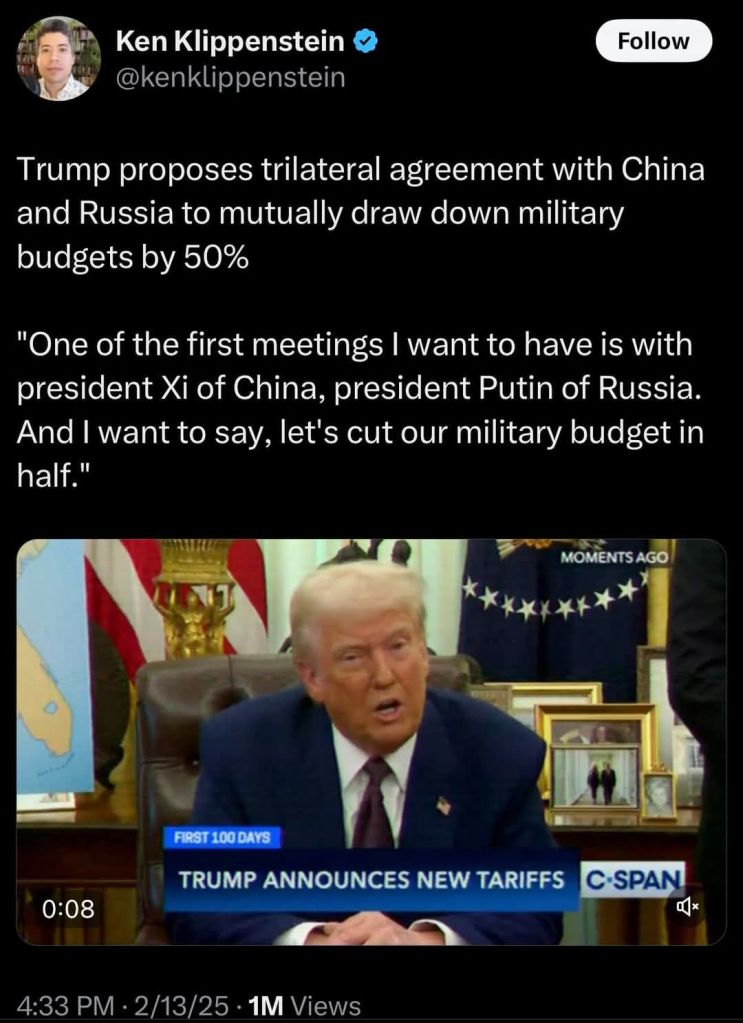
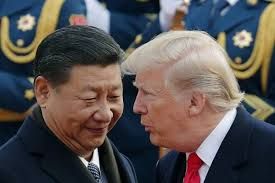
Trump has been full of surprises in the first few weeks of his delayed second term, but this latest proposal was the least expected and one even the professional fault-finders won’t be able to oppose.  He has just made a proposal that could change the world for a generation to come: A trilateral agreement between Russia, China and the US to reduce military spending by 50% and decrease our nuclear stockpiles.
But this isn’t out of character for Trump.  He got started then before he officially entered the office.  According to the Israelis, Trump, who told Netanyahu that the war must end, deserves full credit for the Gaza ceasefire deal.  And this is just a pattern.  Trump has no interest in wars.  He is about business, not bombs, and it goes all the way back to his youth when he, rather the be beholden to phony patriotism, stayed out of Vietnam.

Avoiding War By Any Means

Back in 2016, when Trump was running for President against Hillary Clinton, there was a hearsay report that the MAGA candidate had avoided military service in Vietnam by using a diagnosis of a foot injury.  There is yet to be documentation to prove this.  But it has led to some ridiculing him as “Captain Bone Spurs” and alleging his cowardice.  

To me, knowing what I do about Vietnam, I can’t see how avoiding that meat grinder is a reflection of poor character.  

No, the war was an absolutely horrendous waste of life and resources, a quagmire, in defense of a dying colonial order.  What the US government did to that country and it’s people is beyond the pale.  
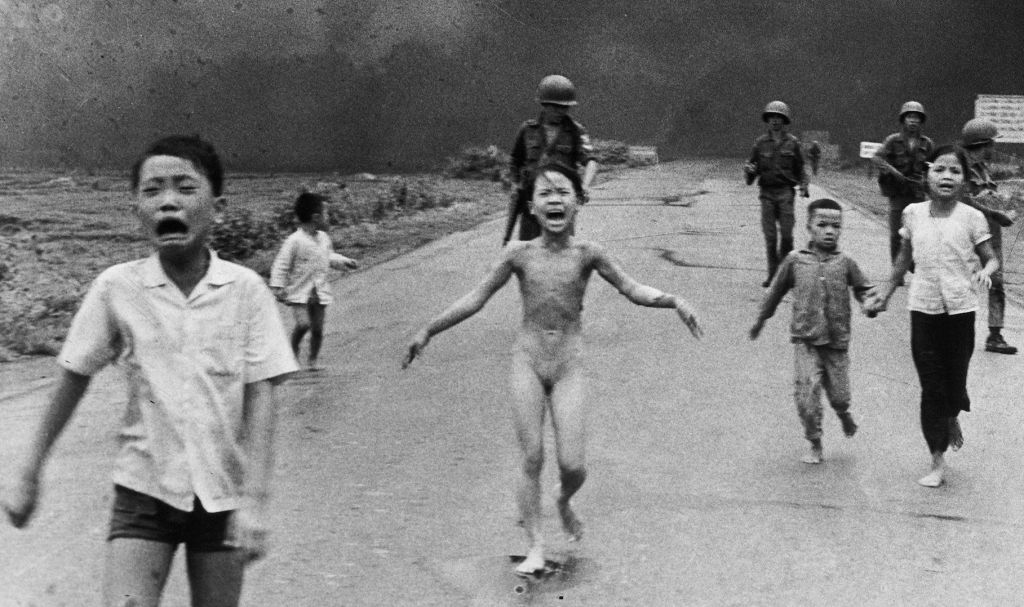
Over one million people died, bombed with napalm in their villages—scores of young American boys killed in the process—and nothing was gained besides an ecological disaster.  Our veterans were left scarred and many of them (like the father of a friend of mine) suffering from debilitating illness—which is likely due to the widespread use of chemical defoliant agents.  

It is easy to see the vanity now.  In the end Vietnam did become a Communist nation.  And yet this did not lead those dominoes falling across Southeast Asia, as ‘experts’ predicted (like they do now claiming Putin has ambition to take all of Europe) and we should be celebrating that anyone avoided this pointless conflict.

Trump may have avoided the Vietnam War for selfish reasons, nevertheless the moral reasoning was correct: Why kill thousands of Asians, at risk of your own life, when you can just do business instead and everyone wins?

Trump Angers Neo-cons

In his first term Trump did something even Obama didn’t do and despite being given a Nobel Peace Prize.  Both Obama and Trump would continue the war in Afghanistan, but it was Obama who bombed Libya in pursuit of “regime change” and turned that country into the hellhole it is today.  Trump, on the other hand, avoided war and even started negotiations for peace with a country we’ve been at odds with since 1953.

I recall being told by a die-hard Democrat friend that Trump, the terrible loose cannon and narcissist he was, would start WW3.  It is quite interesting, to see how that this dire prediction compares to actual reality where the last administration had pushed us to the brink of a nuclear Armageddon.  But in four years of Trump’s presidency, despite all the insane fear-mongering rhetoric from his opponents—nothing close to this happened.  

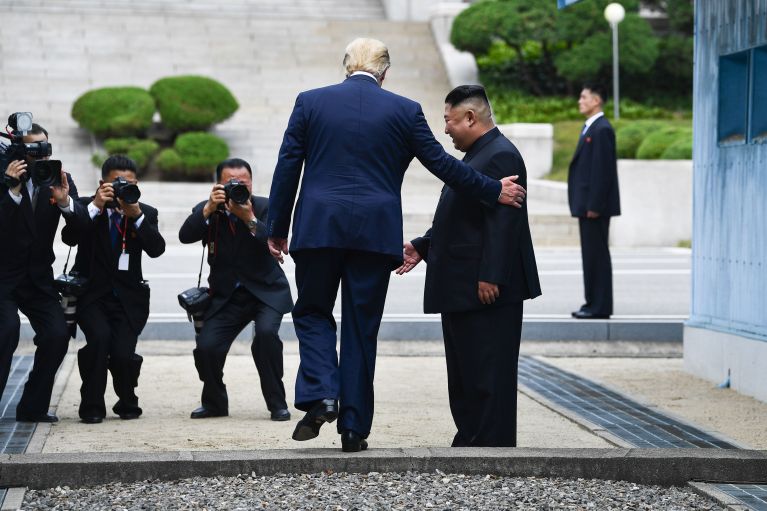
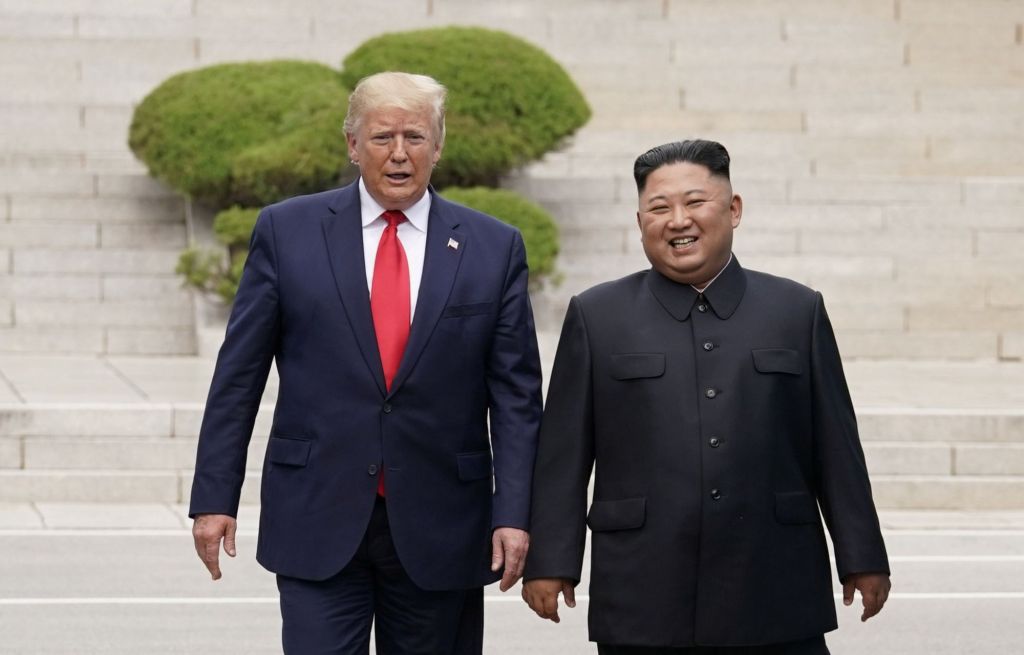
Instead, what happened under Trump, but not Biden, was a slight thaw of relationship with North Korea.  Yes, Trump engaged in a little rocket size comparison, but eventually would walk across the DMZ to shake hands and get some pictures with Kim Jong Un his counterpart.  That is unprecedented.  And is a legitimate reason to award a peace prize, but nobody recognized that moment and it has faded as Biden returned us to a status quo of use of threats and the proliferation of arms deals, rather than diplomacy, in an attempt to dictate terms.

No, Trump is not a peacenik or even a nice guy (depending on who you ask), but he did avoid a dangerous escalation with Iran over a down surveillance drone.  With neo-cons salivating and only ten minutes from strikes, Trump—learning that 150 Iranians may die—called it off.  This is likely why John Bolton turned on him.  The warmongers wanted a violent confrontation, dead bodies, whereas Trump valued human life.
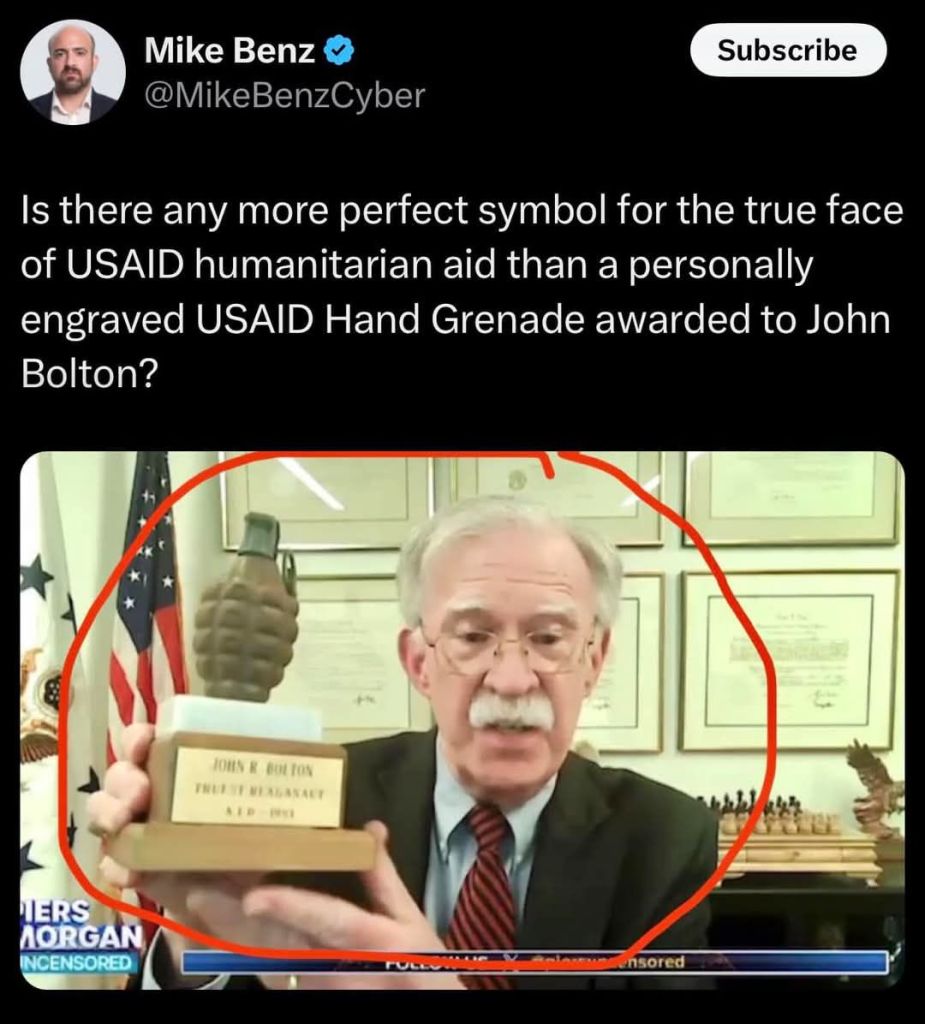
And maybe it was all just a cynical ploy and part of deal making strategy?

Nevertheless, those Iranian men got to go home to their families rather than die so a President could look like a tough guy.  And, when all lives matter peace is possible.  A President that is even doing a little bit of lip-service in concern for enemies will be even less likely to put US service members into harms way.  Yes, he would retaliate against Qassem Soleimani, the Iranian General who was responsible for the deaths of American people, which shows Trump prefers to hold decision-makers accountable rather than subordinates.

Business, Not Bombs

What makes Trump unique, as a President, is his willingness to entertain different ideas in the open.  Our tireless defenders of the status quo claim it is unpresidential, that he suggests alternatives, but this is how a true innovator works.  Why not float a thought or start a conversation?

A prime example is his proposal for Gaza.  I mean, certainly, the Palestinians have truly got the short end of the stick.  They, being Semitic people themselves, get labeled as being anti-Semites, for fighting for their own deeded land, by the most powerful lobby in the world.  Theirs is a legitimate grievance, if there is any, they were chased off of their land by a campaign of violence and terror—are now portrayed as the villains.

So when Trump proposed they walk away it seemed grotesque. Israel is the one country in the world that didn’t see their foreign aid disrupted by Trump’s America-first doctrine and clearly Netanyahu is in agreement with the plan or they would not be doing a joint press conference.  Palestinians had nobody to represent them in this.  How do you make a deal with only one party present?

However, upon some further thought, this could be the best deal Palestinian people can ever can expect to get.  What really is the alternative?
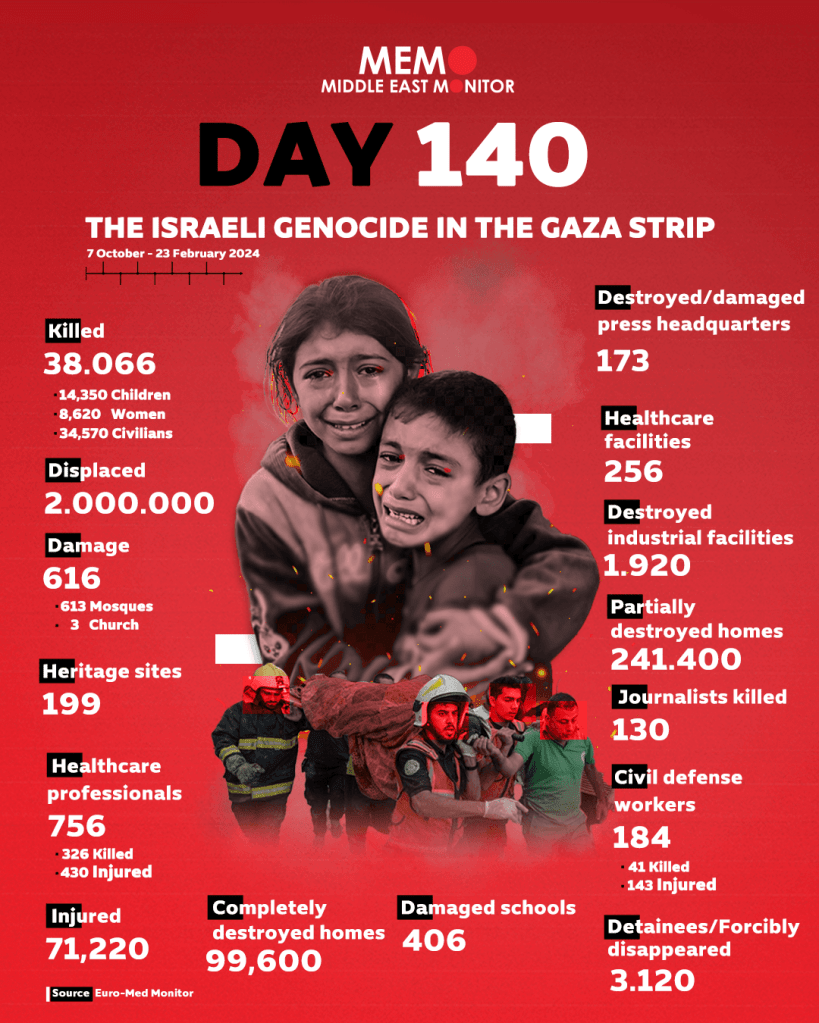
They are in a war they can’t win.  October 7th caught the IDF off guard and yet it was never a serious threat to the Isreali state nor a reason for the Israeli government to come to the negotiating table.  Hamas may have hoped for a hostage exchange in order to get their own captives back.  But hardliners, like Netanyahu, saw it as an opportunity and used it.  Sure, many in the world do protest indiscriminate bombing that kills far more non-combatants and children than it does members of Hamas, but holding a sign or occupying buildings won’t stop this ethnic cleansing campaign.  

Enter, “Riviera of the Middle East”

Trump reframed the conversation from one of fighting for soil, that has led to decades of suffering and death, to what is truly best for me and my children.  Sure, Hamas may disagree, but many Palestinians will likely take a buy-out deal.  Why stay in Gaza if you have a choice to relocate?  There is no new real estate, the Saudis have a lot of money to invest, so why not redevelop Gaza into a modern vibrant city, like Dubai?

The reality is Palestinians aren’t only being kept walled in by the Israelis.  They are truly caught between the two stubborn sides of a regional conflict, like Ukraine, and they (with their children) are paying the full price.  The nations of this region have not forget about colonialism and obviously consider a nation of expansion-minded European settlers to be a thorn in their side.  Add to this that the official policy of Israel is to destabilize their neighbors and you have a breeding ground of resentment.  Palestinians are their way to return the favor—used as a tool to provoke and prove the evil of the Jewish state.

So, for my liberal friends, is this land really so important that we should, for perpetuity, continue to sacrifice more children.  Or do we find a new and creative way to break the deadlock?  And, for my conservative friends, is it better that we send Israel bombs, at the expense of taxpayers, when we could help to broker some kind of buy-out instead?  It is time for a business deal, to give those in Gaza—who just want to live normal lives—a chance.  

So, Trump, I realize this is at your “ridiculous first offer” stage, but I’m listening.  

Tell me more.

The Status Quo Alternative 

The political establishment has only known old divisions and escalation.  It is one big area of bipartisan agreement.  Republicans and Democrats in Congress may disagree on details, but nearly all support an endless war with Russia and China, through proxies or even direct threats.  The goal is always to box their rivals in militarily or back then into a corner economically—as if this is the only way forward.  

Diplomacy took a back seat.  Instead of the slightest acknowledgement of Russian and Chinese security concerns, our government has made regime change the goal with even near-peers with a nuclear deterrence.  And it is this attitude that led to the bloody conflict in Ukraine that has cost countless lives and billions upon billions of US taxpayer money, all after the US had orchestrated a coup on Russia’s doorstep, leading to a civil war in that country and—after eight years of Kiev’s regime lobbing shells at civilians—a direct intervention by Russia.
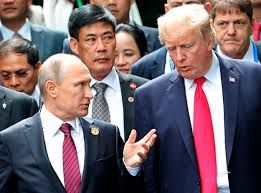
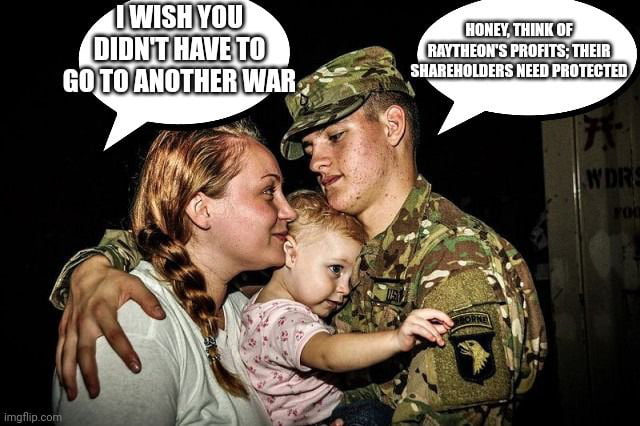
The problem is a combination of Cold War ideology and institutions.  Endless war is where the big money is.  Many, in the West, profit off conflict and chaos.  That and they are old.  They’ve become functionally fixed, see only one solution (to further humiliate or defeat those who stand in their way) and lack imagination or even the will to come up with win-win resolutions.

Truly, the only way to win any war is not to fight it.  Wars cost both sides.

Trump, for better or worse, is disruptive of the status quo.

As for his proposal, I would consider 50% to be the “ridiculous first offer” stage of negotiations and do not expect China or Russia will go along with it.  For them that would leave the US on top of the balance of power—given our tremendous head start in comparison—and this maintaining our advantage over them leaves their interests vulnerable.  They will probably come back with an alternative proposal and the horse-trading will begin.

Nevertheless, it sure beats a strategy of endless escalation—that eventually ends in a nuclear war or our bankruptcy.  Even a 10% reduction in defense spending would go a long way to slowing down inflation and give hardworking Americans more bang for their buck.  Our sons not dying in Europe or in the East China Sea the biggest benefit of avoiding confrontation.

Lead, Follow, or Get Out of the Way

Like him, love him, or loath him, Trump is the President of the United States and has resolve to make his second term historic in ways nobody imagined.

Even if we disagree on some policies or we have a different understanding of his drive for government efficiency, we should agree with this aim to convince the great powers to beat their swords into plowshares. 
There is just too much to lose (and also too much to gain) by this to not jump on this unique opportunity to challenge existing order and build a better one. 

Business (and buy-outs) rather than bombs—that’s the Trump way of doing geopolitics.

Even his idea of buying Greenland, as part of a containment strategy for Russia and China, is far better than the alternative we see playing out in the steppes of Ukraine.  There is no way to bomb and kill our way to world peace or at least not a kind of peace where humanity survives and thrives.  We need to find a different approach, we need to dissolve the Cold War organizations and agencies that encourage military solutions or regime change.  We need to double down on diplomacy and fair-trade agreements.

It is time to give peace a chance.  We need to be disruptive, to change the conversation, and work with those who are willing to work towards a better future together.  If Trump is a partner in this, then we should embrace this as his role and not hinder this with old partisan battle lines.  Maybe he’s not pure or perfect, but at least he’s oriented right as far as war and avoiding the costs.

The Russo-Ukraine War—A Timeline

Standard

As with most reporting of current events, the presentation of the ongoing conflict between Russia and Ukraine is distorted.  Both sides are engaged in their own propaganda.  It is said that truth is the first casualty of war and, in the case of this one, the falsehoods span many decades.  The first thing to do, to get beyond this, is explore the history leading to to the present…

862 —1242 

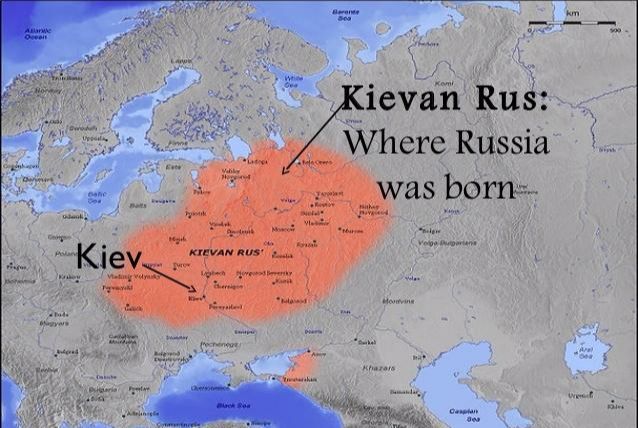
East Slavic tribes, in the area of modern-day Ukraine, Belarus, and Russia unite to become the Kievan Rus’ people.

980 — 1015

Vladimir the Great brought Christianity to the Kievan Rus’ people.  Often referred to, in the West, as the Eastern Orthodox, this tradition (practiced from Egypt all the way to Greece) broke from the Roman Catholics in 1054.

1237 — 1480

The Mongols invaded and, laying siege to Kiev in 1240, came out victorious.  This begins a period of Mongol rule.

1547 — 1721.

Mongol rule fades.  The Muscovy dynasty rises.  This Tsarist Russia, with periods of chaos and conflict, including what is referred to as a Time of Troubles from 1598 to 1613, ends with the rise of Peter the Great and brings us to the modern age.

1721 to 1917

The Russian Empire expanded from historical Kievan Rus’ territory and, stretching around 8,800,000 square miles, became the third largest empire in history behind the British and Mongol empires.

An empire spans West to East

March 22, 1917

Tsar Nicholas II and his family are murdered by Bolshevik revolutionaries.  Their dynastic rule over the people of Ukraine, Moscow, and the entire Russian Empire, which had been weakened by their involvement in WW1, was replaced by a Communist state.  The USSR (Union of Soviet Socialist Republics, aka the Soviet Union) was very antagonistic towards Christians.

Orthodox Cathedral demolished by Soviets

1922–1952

Joseph Stalin, an ethnic Georgian, becomes the General Secretary and begins his rule over the Soviet Union.  His reign is marked by the Great Purge, from 1936 to 1938, when from 700,000 to 1.2 million people are killed, the number including many Orthodox priests, and political dissidents are rounded to be sent to Gulags.

1929

The Organization of Ukrainian Nationalists (OUN) is formed in Vienna.  This group was known for the assassinations of Poles, Russians, and Jews.  It was later supported by the CIA as part of an effort to undermine the Soviet Union and led to a bloody insurrection.

1932-33

Of Stalin’s atrocities, the Ukrainian famine or Holodonor, when 3.9 million were starved to death, stands out.  This suffering is directly the result of a collectivist plot against successful private farmers.  This murderous Soviet campaign was covered up with the help of the New York Times and Walter Duranty, a Pulitzer Prize-winning journalist, who wrote glowing reports about Stalinism.

June 23, 1941

Stepan Bandera, the leader of the far-right Ukrainian nationalism, reaches out to Nazi invaders offering his support in exchange for an independent Ukrainian state.  Bandera is responsible for the brutal massacre of ethnic Poles, from 1943 to 1945, and is celebrated today as the father of Ukraine.  Ukrainian paratroopers (and nationalist priests) today chant “Our father is Bandera, Ukraine is our mother!”

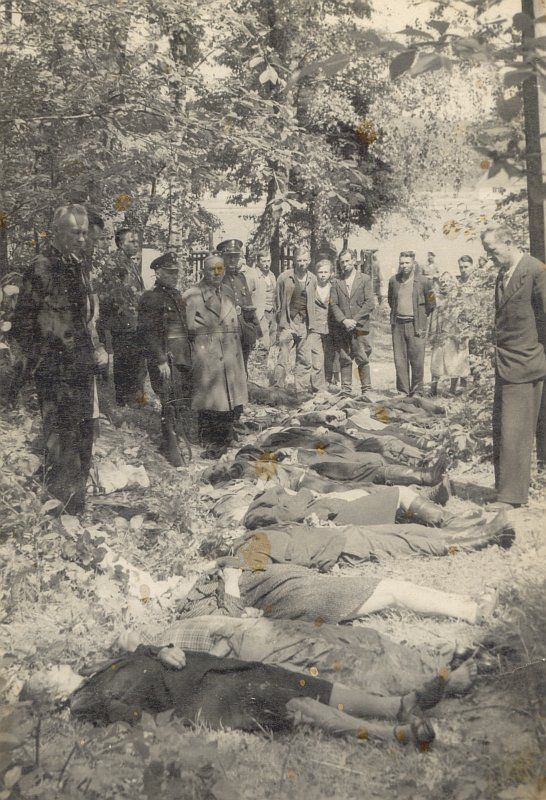
Poles murdered by Ukrainian nationalists

1941—1944

Vladimir Spiridonovich Putin and Maria Ivanovna Shelomova struggle to survive the brutal German siege of Leningrad (now the city of St Petersburg) and are nearly killed.  Vladimir, who lost a couple brothers in the battles, was wounded by a grenade in the fighting and crippled for life.  The pair met after the war, got married, and had a son named Vladimir Putin in 1952.

April 4, 1949

The North Atlantic Treaty Organization (or NATO) is formed in Washington DC as an alliance to oppose the Soviet Union.  The Warsaw Pact was created in May of 1955 as a response.

February 19, 1954

Crimea, which was part of Russia since being annexed from the Ottomans back in 1783, was gifted to Ukraine by the Soviets as a gesture of friendship.  This ethnically Tatar and Russian-speaking region is the site of a key warm-water Russian naval base.

Oct 16, 1962—Oct 29, 1962

The Soviet Union responded to the United States putting nuclear missiles in Italy and Turkey by sending their own missiles to Cuba.  The Kennedy administration, after the failed Bay of Pigs invasion, authorized a CIA campaign of terrorism and sabotage within Cuba, answered with a naval blockade.  The Cuban Missile Crisis ended when Moscow backed down after a secret deal where the offending US missiles were removed from Europe.

Nikita Khrushchev, Fidel Castro, and JFK

1979—1989

A pro-Soviet government took power in Kabul in 1978 and tried to counter Islamic traditionalism with steps towards modernization.  They invited Soviet military advisors and this led to troops being deployed to help the Afghans suppress the insurgency.  The CIA supplied the Afghan rebels and foreign fighters (including a Saudi named Osama Bin Laden) the Mujahideen, with weapons.  The Soviets withdrew after a humiliating costly affair.

December 26, 1991

The Soviet Union collapsed, the Warsaw Pact dissolved, and Soviet republics (including Ukraine) given their independence.  NATO begins an eastward expansion, absorbing former Soviet republics.  Russia falls into disarray as oligarchs partner with the West to exploit the vast resources of that country—Ukraine also becomes known for extreme corruption.

March 24, 1999—June 10, 1999

NATO intervened on behalf of Kosovo rebels, who had been resisting Serbian authorities, and then demanded that the country be partitioned along ethnic lines.

December 31, 1999

Vladimir Putin became the acting President of the Russian Federation when Boris Yeltsin unexpectedly resigned.  From 2000 to 2004, after winning a special election, he begins to reform the country and reign in the oligarchs forcing them to answer to his government to keep their power.  Putin opposes the expansion of NATO to his border, regarding it as a threat to Russian sovereignty, and makes this red line clear.

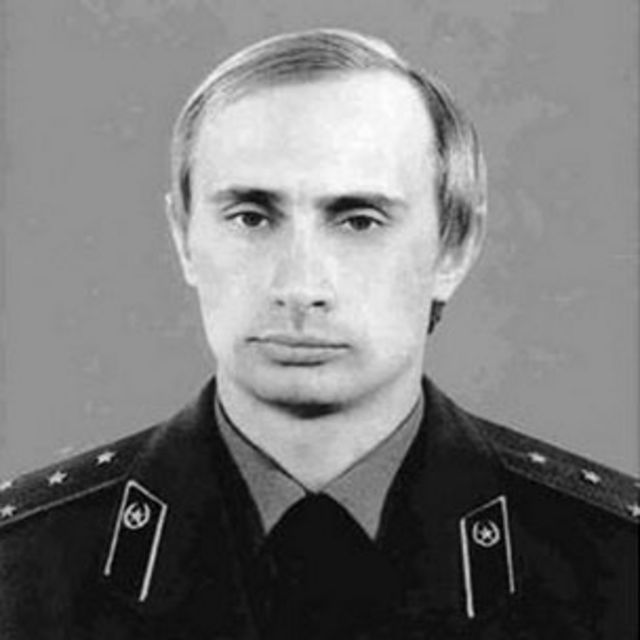
Vladimir Putin, a former KGB officer.

Nov 21, 2013—Feb 22, 2014

The democratically elected President of Ukraine, Viktor Yanukovych, decided to keep closer ties with Moscow over the European Union.  This leads to protests in Maidan Nezalezhnosti (Independence Square) in Kiev.  The protestors occupied the square, they had their own food production, medical, and broadcasting facilities, along with that, stages for speeches and performances, as well as their own security forces.  This boiled over when snipers, still unidentified, fired on the crowd.  Both police and protesters were killed in this attack.  Before this escalation high-ranking US officials, then Secretary of State Victoria Nuland and the Ambassador to Geoffrey Pyatt, picked the replacement of Yanukovych who was later overthrown in the Maidan coup.

May 12, 2014

Hunter Biden, son of the then US Vice-President, Joe Biden, is given a seat on the board of Burisma Holdings, as a “legal advisor” and is paid over a million for this service.  He gave Burisma executives access to his politically powerful father and later the elder Biden would brag, live on television, about a quid pro quo that got a Ukrainian prosecutor fired—who had been investigating Burisma corruption.

Like father, like son

Feb 20, 2014 – Mar 21, 2014

The Russians, believing their naval base in Crimea would be threatened by the new pro-West government, moved quickly to secure it from the Kievian nationalists.  They already had a significant military presence there, it is a Russian-speaking area, and the Crimean status referendum, held on March 16, 2014, had an 87% turnout and was 97% in favor of reunification with Russia.  

April 6, 2014–February 24, 2022

The Russian-speaking Donbas region also wanted more autonomy, they opposed Kiev’s efforts at “Ukrainianization,” which sought to erase their Russian heritage, and eventually declared their independence.  These breakaways were invaded by the Kievan regime, starting a war that killed over 14,000 and lasted nearly eight years before the current Russian intervention.

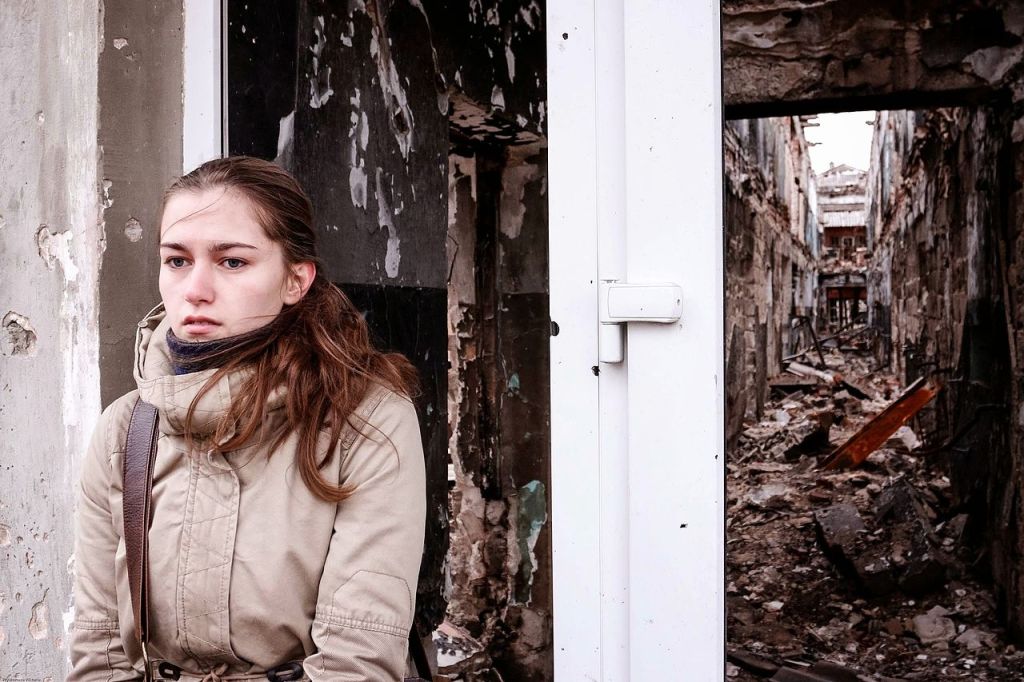
Donbass, when nobody outside Ukraine cared about the war.

May 2, 2014

Protests around the country became violent again when the right-wing nationalists, who favored the new post-coup government that had been installed in Kiev, forced opposition demonstrators into a building that was set ablaze.  This incident, the Odessa Massacre, burned alive 48 people, some of those who did manage to escape were beaten by the mob.  Like the shootings used to justify the Maiden insurrection, nobody was arrested or charged for this mass murder.

April 21, 2019

Volodymyr Zelenskyy, a comedian, groomed by an oligarch, wins the second round of voting in a landslide victory and becomes the President of Ukraine.  He promised to bring peace and end corruption.  There was not much success on either front.  Human rights abuses have only increased during his presidency and especially after the start of the Russo-Ukraine War.

Zelenskyy, the other Vlad.

February 24, 2022

After massing their troops on the Ukrainian border, Russia demands that the shelling of Donbas cease.  When the attacks continue, the “special military operation” begins, which is condemned in the West as an “unprovoked invasion,” and is now effectively a proxy war between NATO and Russia.  The bloodshed continues to the time of this writing.

Vladimir versus Volodymyr

While many commentators, on both sides, want to present this as a battle of good and evil, it is really a fight between spiritual (even actual) cousins.  Those who say that Russia is the aggressor neglect that the war began years ago with the Ukrainian nationalists and their campaign against separatists, that this came about as a result of a coup apparently orchestrated by or at least with the direct aid of the US State Department.  If Ukraine can be independent of Russia, or Kosovo from Serbia, why not Donbass?  And who says that the Soviets handing over Crimea, in the 1950s, is more valid than the referendum that brought it back?

The US “rules-based international order” only makes sense for those who share the bias of those spoon-fed by US media.  The legacy of CIA support for terrorism abroad and the violent overthrow of democratic leaders makes anything done by Russia seem like child’s play.  The US acts with impunity around the world—provoking sanctioning, and invading with destructive campaigns of “shock and awe” anyone who dares to oppose its imperial aims.  The US really had no business playing kingmaker in the backyard of Russia.  The US enforces the Monroe Doctrine in the Western Hemisphere, why would Russia (or China) be happy with our military expansion in their own areas of national interest?

Us-rules based order

Sure, Russia isn’t faultless, by any means, and Putin is no St. Vladimir either.  But, that said, neither is Zelenskyy or the Kievan (Kyivan) nationalist regime he represents. 

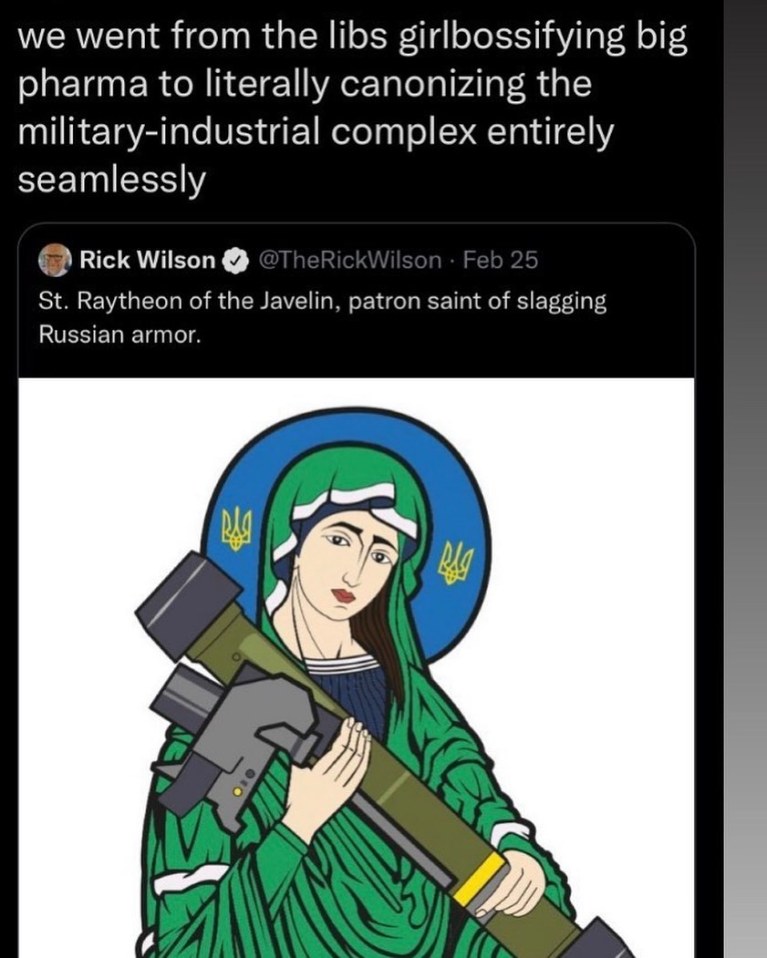
Truthfully, the most significant difference between the two sides of the war may actually be their Slavic language dialects.  Which is to say it isn’t much.  Both sides commit war crimes, both lie about the other side, and both also share the same religious and ethnic heritage.  They are natural allies, given their shared Kievan Rus’ history, which is probably why Western powers want to instigate and encourage the division.  It is a family feud, a fratricidal war, and benefits only the US military-industrial complex.

A False Jesus

Standard

I try not to get too political here.  However, it is sometimes unavoidable, like those times when a prominent politician misuses the words of Jesus to justify spending 40 billion dollars so Ukraine has enough bombs.  The verse used, Mathew 25:35, “when I was hungry you fed me,” out of the mouth of a multi-millionaire, comes off as slimy.  It very closely resembles how Judas used words about caring for the poor as part of his scheme to line his own pockets.  And, make no mistake about it, phony compassion is the favorite tool of the most shameless exploiters of our time.  They are wolves in sheep’s clothing and love power more than truth.

Words and Wars — Why Musk Terrifies the Establishment

Standard

Some of us are old enough to remember the playground taunt, “Sticks and stones may break my bones, but words can never hurt me.”  That denial of the power of words, of course, was merely to disempower a bully and quite a bit more effective than crying for mommy in most circumstances.

In this age of online censorship and newly invented categories of offense, it is difficult to even claim that words have absolutely no impact on us.  Being called a “racist” or “domestic terrorist” does matter, it can come with serious social consequences and be used as a pretext for punishment of political opponents.  No laughing matter.

We are governed by words.  If we see a red sign emblazoned with the letters S-T-O-P, we tend to comply (at least partially) without much thought.  And, whether you want to comply or not, because of written laws, you’ll end up giving the IRS a significant portion of your income.  Words can and do hurt your wallet, they limit opportunity and shape outcomes.

We are steered, employed by others to their own ends, by use of description, framing and narratives.  For example, whether a deadly conflict is described as being a “military intervention” (Yemen) or as an “invasion” and “aggression” (Ukraine) has little to do with substantive difference and everything to do with how propagandists wish us to perceive the event. 

Context provided, what is or is not reported, changes the moral equation.  

Those who control social media platforms understand the power of words.  They know that awareness is induced through language and that narrative matters.  This is why they have taken such interest in curtailing speech and the dissemination of information.  Even if corrupted by partisanship, many of them likely see this as their responsibility or a moral obligation.

Unfortunately, regardless of intent, these self-appointed gatekeepers failed.  The same people who routinely “fact-check” hyperbole and satire, even banned people for suspecting the lab origin of the pandemic, have yet to identify the Russian collision narrative as false.  The most egregious act was Twitter using bogus reasons to suspend the account of the New York Post for their sharing the Biden laptop bombshell on the eve of the 2020 Presidential vote. Talk about election interference!

Elon Musk’s announcement of his ownership of a significant stake in Twitter and then subsequent buyout of the far-left’s favorite social media has shook up the political establishment.  Elizabeth Warren, a powerful US Senator, who leveraged a fiction about her Native American heritage to attain her own privileged position, somehow worth $67 million herself, had this to say:

Strange how now she speaks up about potential “dangerous to democracy,” but not when Big Tech was using the pretense of their “community standards” to ban content creators, including a former President, for challenging their ideological agenda and narratives.  Sure, they always could conjure their excuses or hide behind “Twitter is a private business, if you don’t like it start your own internet,” disingenuously while suing individuals who defied their demands, but now the truth comes out, suddenly it is all about democracy:

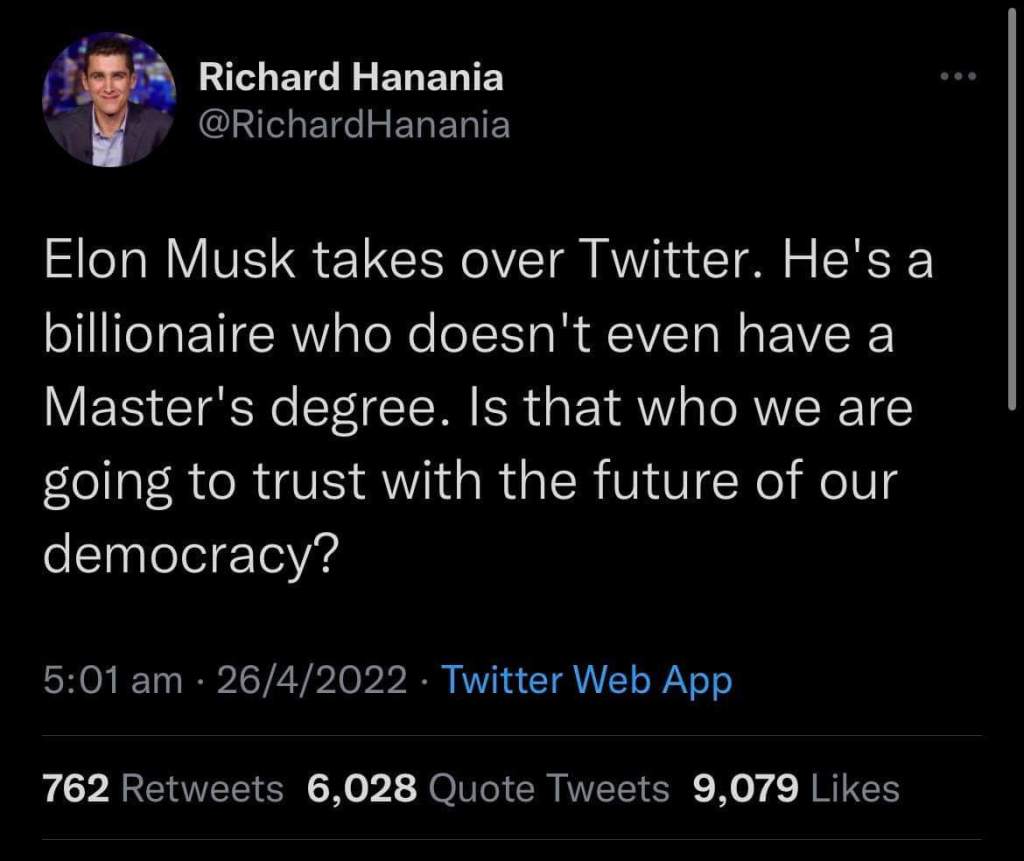
Credentialism much? I guess we should trust the privileged elites who trust the corporate system instead?

To those of us who have faced algorithmic demotion and punitive measures for our wrong-think, doing things like posting the actual flag of Ukraine’s Azov battalion or a quote of Hitler praising censorship intended as ironic, there is appreciation for Musk as a free speech advocate.  To those who use the word “democracy” as an excuse to trample rights, this represents an enormous threat to the ability to control narrative.

For those of us who have been paying close attention and involved, we know why Yahoo News, along with other far-leftist run online publishers, have shutdown their comment sections.  Sure, they may say this was to prevent misinformation, but the reality is that there would often be factual rebuttals or additional context that would undermine the narrative of the article.  It was always about control, not protection.

The war of words is as important as that which involves tanks, bombs and guns.  It was propaganda and censorship, as much as physical means, that enabled Nazis to put Jews in camps.  This is why Russo-phobia, the demonization and cancelation of a whole ethinic group, over things the the US-led imperial left, is so troubling.  President Obama was not accused of war crimes for a brutal AC-130 attack on an Afghan hospital, despite the dozens of verified casualties, why is that?

It is, of course, how the story is presented that makes all of the difference.  If a writer wants a leader to appear incompetent they might use the words like “bungled” as the description.  If they wish to spin it as positive they’ll say “setbacks” and dwell on framing the cause as righteous instead.  Those who want the public to support one side of the Ukrainian conflict will downplay or even completely ignore important context, like NATO expansion, the violent overthrow of Ukraine’s democratically elected government in 2014, and merciless shelling of the Donbass region.

And this is why Musk promising to restore freedom of speech on Twitter is such a big deal and especially to the current power brokers.  The military-industrial complex, which owns the corporate media and many of our politicians, stands to lose billions in revenue if they can’t convince the gullible masses that Vladimir Putin is literally Hitler for leading a US-style “regime change” effort in his own neighborhood.

I mean, how will US political families, like the quid pro quo Biden’s, continue to make their millions in kickbacks (Burisma/Hunter scandal) if Ukrainian’s energy is back under Russian control again?

This is why they’ll fight tooth and nail to keep the presentation of the story as one-sided as possible.  They do not want us to hear the facts that may cause questions.  They only want us to have their prepacked stawman “don’t say gay” version of their enemies, presented by the late-night funnyman for ridicule, rather than allow a truly informed debate. 

Unlike many, the ignorant who accept narratives at face value, the elites with government and corporate power understand that the world is run by ideas.  It is how wars are won.