Perspectives, Not Truth: Why Our Moral Codes Are Always Incomplete

Standard

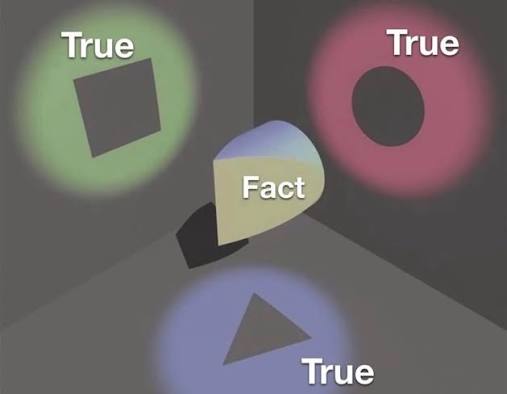
Everything we hear is an opinion, not a fact. Everything we see is a perspective, not the truth.

Marcus Aurelius

I will attempt to bring multiple threads together in this blog and the quote above is a good starting point. If there is objective reality it’s not going to be something possessed by one human. We do not know all circumstances nor can we vet and independently verify every fact we receive.  Or at least not without becoming totally hamstrung by the details. We put our trust in parties, traditions, systems, credentials and the logic which makes sense to us.

The deeper we dive into our physical reality the murkier it all gets. The world ‘above’ that we encounter feels concrete. But there is not a whole lot of substance to be found as we get beneath the surface. The rules that we discovered—of time and space—end up dissolving into a sea of probabilities and paradoxes at a quantum level that we don’t have an answer to. And this is the ‘concrete’ observable reality. We all see our own unique perspective, a slice, and build our model of the world from it.

But it is even murkier when we get to topics of social science. Morality and ethics, built often from what we believe is fact or truth, is more simply opinion and perspective than it can be hammered out in words everyone is able to agree on. Even for those who are of the same foundational religious assumptions—despite even having the same source texts—do not agree on matters of interpretation or application. So who is right? And who is wrong? How do we decide?

1) Patrick: We Don’t Need God To Be Moral

My cousin, Patrick, a taller, better looking and more educated version of myself, an independent thinker, and has departed from his missionary upbringing—gives this great little presentation: “Where Do You Get Your Morality?

His foundation for a moral value system is concepts of truth, freedom and love which he describes in the video. I find it to be compelling and compatible with my own basic views. Our cooperation is as natural as competition, it is what makes us human, and a conscience gives potential for better returns.

However, while I agree with his ideal, there is also reason why deception, tyranny and indifference are as common in the world—they are natural—and this is because it can give one person or tribe an advantage. Lies, scams, and political propaganda all exploit trust and can be a shortcut for gaining higher status or more access.

No, cheating doesn’t serve everyone. But the lion has no reason to regret taking down a slow gazelle. By removing the weak, sick, or injured, it inadvertently culls the less-fit genes from the herd, strengthening the prey population over time and even preventing overgrazing of the savannah. It’s just a raw service to ecosystem balance, much like a short seller who exposes those overvalued stocks, forcing the market corrections and greater efficiency—acts of pure self-interest yielding a broader good.


Herd cooperation or predator opportunism are different strategies, both 100% natural and amoral in their own context. I’m neither psychopath nor a cannibal, but I do suspect those who are those things would as readily rationalize their own drives and proclivities. Nature doesn’t come with a rulebook—only consequences.

I’m certainly not a fan of the “might makes right” way of thinking and that is because my morality and ethics originate from the perspective being disadvantaged. But I also understand why those who never struggled and who have the power to impose their own will without fear of facing any consequences often develop a different moral framework.

We need to be invested in the same moral and civilizational project. Or else logic, that works for only some who have the strength or propaganda tools, will rule by default. I don’t disagree with Patrick, but his core message caters to a high IQ and high empathy crowd—which does leave me wondering how we can bring everyone else on board?

2) Kirk: A Way To Focus Our Moral Efforts

Charlie Kirk wasn’t a significant figure to me before his death. It may be a generational thing or just a general lack of interest in the whole conservative influencer crowd. I feel dumber any time I listen to Steven Crowder and assumed Kirk was just another one of the partisan bomb throwers. But, from my exposure to his content since, I have gained some appreciation.
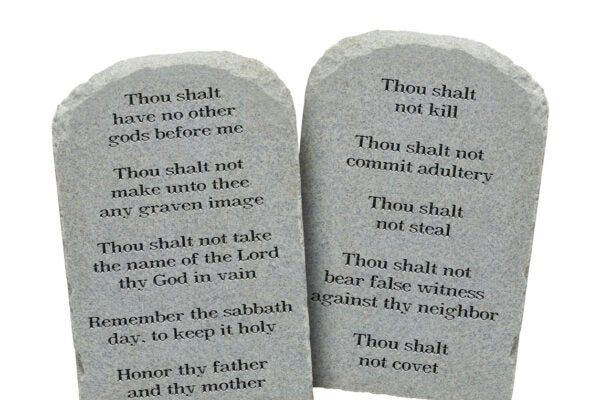

Arguing for the Ten Commandments has never been a priority for me. It’s a list with a context and not standalone. Nevertheless it is a starting point for a moral discussion and also one that it seems Charlie Kirk would go to frequently in his campus debates.  The two most difficult of these laws to explain to a religious skeptic are certainly the first two: “I am the Lord your God; Have no other gods before me and do not make idols.”

We generally agree on prohibition of murder and theft, or even adultery, but will disagree on one lawgiver and judge.

Why?

Well, it is simply because divine entity is abstract compared to things we have experienced—like the murder of a loved one or something being stolen from us. You just know this is wrong based on how it makes you feel. The belief in celestial being beyond human sight or comprehension just does not hit the same way as events we have observed. And it’s also the baggage the concept of a God carries in the current age. I mean, whose God?

It seems to be much easier just to agree the lowest common denominator: Don’t do bad things to other people.

But then we don’t. We justify killing others if it suits our political agenda, labeling people as bad for doing what we would do if facing a similar threat to our rights. If I’ve learned one thing it is that people always find creative ways to justify themselves while condemning the other side for even fighting back against an act of aggression.

Self-proclaimed good people do very bad things to good people. Like most people see themselves as above average drivers (not mathematically possible), we tend to distort things in favor of ourselves. Fundamental attribution error means we excuse our own compromises as a result of circumstances while we assume an immutable character flaw when others violate us. We might be half decent at applying morality to others—but exempt ourselves and our own.

So morality needs a focal point beyond us as individuals. There must be a universal or common good. Which might be the value of a theoretical ‘other’ who observes from a detached and perfectly unprejudiced point, the ideal judge. Not as a placeholder, but as the ultimate aim of humanity. One God. One truth. One justice. This as the answer to double standards, selective outrage and partisan bias. If we’re all seeking the same thing there is greater potential of harmony and social cohesion where all benefit.

At very least it would be good to promote an idea of an ultimate consequence giver that can’t be bought or bribed.

3) The Good, the Bad and the Aim for What Is Practically Impossible

The devil is always in the details. And the whole point of government is to mediate in this regard. Unfortunately, government, like all institutions, is merely a tool and tools are only as good as the hands that are making a use of them. A hammer is usually used to build things, but can also be used to bash in a skull. Likewise, we can come up with that moral system and yet even the best formed legal code or enforcement mechanism can be twisted—definitions beaten into what the current ruling regime needs.

The United States of America started with a declaration including the words “all men are created equal” and a Constitution with that starts: “We the people…” This is reflection of the Christian rejection of favoritism and St. Paul telling the faithful “there is no Jew or Greek” or erasing the supremacy claims of some. An elite declaring themselves to be exempted or specially chosen by God is not compatible with this vision. We never ask a chicken for consent what we take the eggs. We do not extend rights to those who we consider to be inferior to us or less than human. Human rights hinge on respect for the other that transcends politics.

That’s where the labels come in. If we call someone a Nazi, illegal, MAGAt, leftist or a Goyim we are saying that they are less than human and don’t deserve rights. This is the tribal and identity politics baseline. Those in the out-group are excluded for decency, their deaths celebrated as justice (even if there’s no due process) and we’ll excuse or privilege our own. All sides of the partisan divide do this—we create a reason to deny rights to others often using things like truth, freedom and love (Patrick’s foundation) as our justification: “Those terrorists hate our freedom and democracy, we must fight for those we love and our truth!”

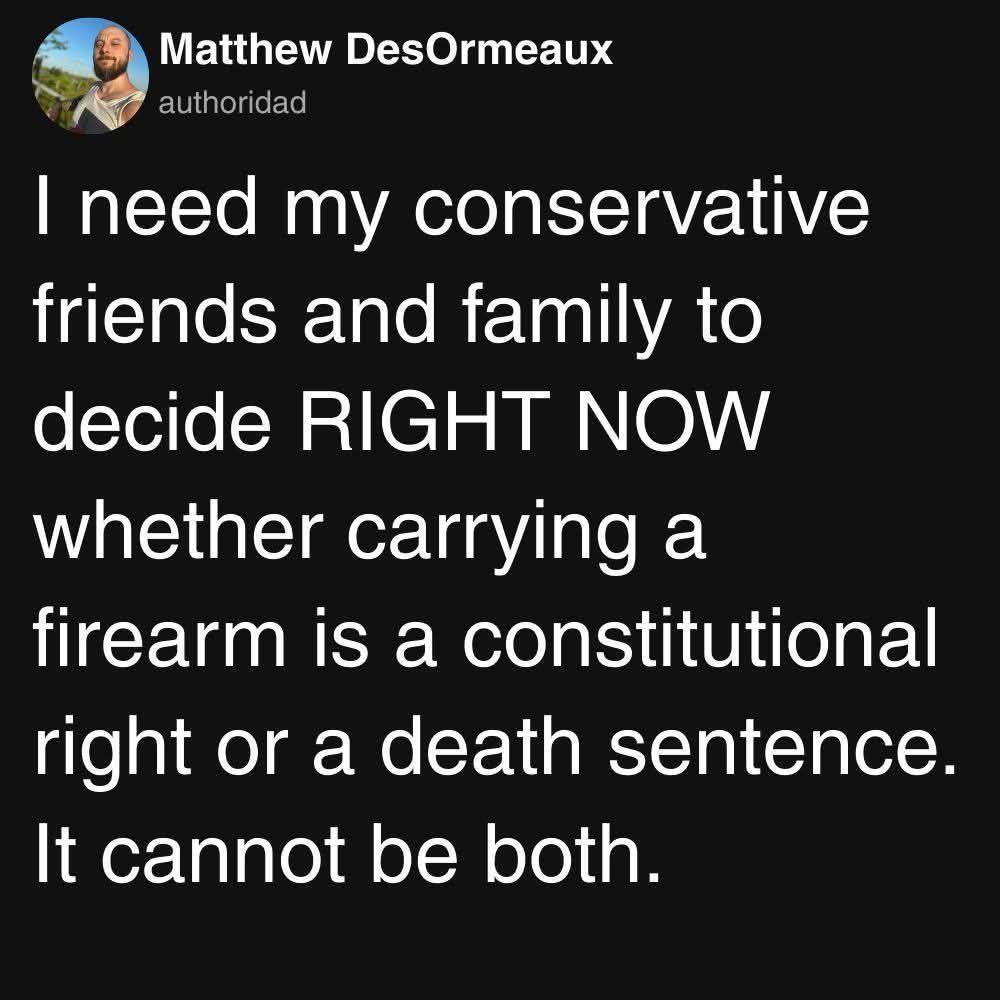
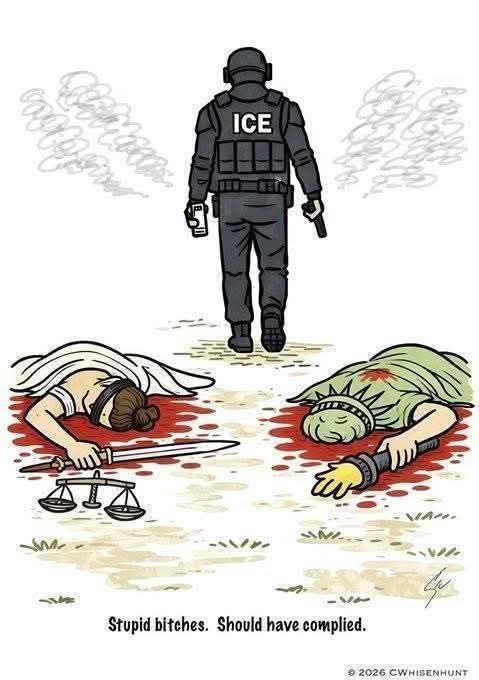
Bringing this to a practical level: Looking at Minneapolis, the ICE and anti-ICE activities, we have competing moral narratives and a different vision for application of American values. On one side of the debate you have those who say that “one is one too many” if an illegal immigrant kills a US citizen—then suddenly do not care when Federal agents shoot a fellow American. The defiant “don’t tread on me” opposition to mandates and masks during Covid somehow shifting to “comply or die!” On the other side you have those outraged about Kyle Rittenhouse and who have been traditionally opposed to the 2nd Amendment defending Alex Pretti while the Trump administration condemns a man for carrying a permitted firearm.
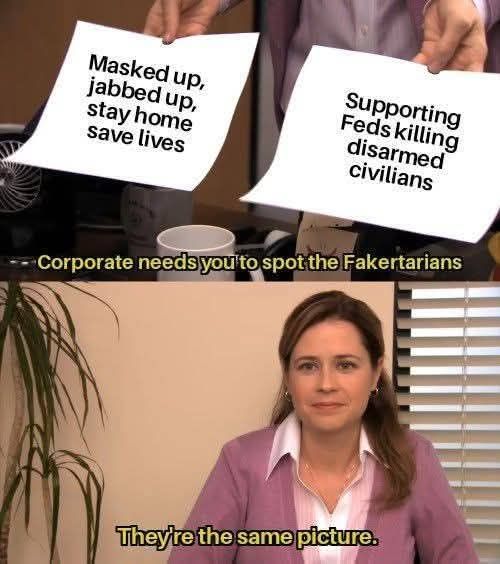

Judgment is for the other, it seems, rights for those who look like us or agree. It’s this inconsistent eye, the call for understanding of our own and grace for ourselves with the harsh penalties applied to those within the forever shifting lines of our out-group, that shows how our political perspectives cloud our moral judgment. The ‘sin’ is not the act itself, but whether or not the violation suits our broader agenda. This is why ‘Christian’ fundamentalists, who will preach the love of Jesus on Sunday, can be totally indifferent to the suffering of children with darker skin tones—their God is about national schemes not a universal good or a commonly applied moral standard.

The aim needs to be justice that is blind to who and only considers what was done. If pedophilia is excused for powerful people who run our government and economy, then it should be for those at the bottom as well. If the misdemeanor of crossing an invisible line is bad, a justification for suspension of due process for all Americans, then why is it okay to violate the sovereignty of Venezuela or Iran over claims of human rights abuse?

The US fought a war of independence, took the country for the British and yet has been acting as a dictator, installing kings, when it suits our neo-colonial elites.

That’s immoral.

We’re all immoral.

The moral code of Patrick, Charlie or myself is incomplete—because every moral code is incomplete when filtered through human eyes. We start from our different premises: Patrick’s secular triad of truth, freedom, and love; Kirk’s religious appeal to the Ten Commandments and a divine lawgiver as the only reliable check on self-deception; my own reluctant recognition that empathy and cooperation are real, yet fragile, against the raw arithmetic of power and advantage. Yet all of our approaches circle the same problem: without some external, impartial standard that transcends our biases, tribes, and self-justifications, our morality devolves into competing opinions dressed as facts—exactly as Aurelius observed.

We cannot fully escape the murk. Objective reality, if it exists, slips through our fingers like quantum probabilities—and moral truth fractures along lines of culture, experience, and interest. Even when we agree on broad principles (don’t murder, don’t steal), the application often splinters: whose life counts as being worthy of protection? Whose borders, laws, or children deserve a defense? And whose “justice” is merely revenge in better lighting?The temptation is cynicism—just declare all values relative, retreat to my own personal pragmatism, and then let might (or votes, or algorithms) sort the rest. But that is a path leads to the very outcomes we decry—dehumanization, selective outrage, and the erosion of the entire civilizational project that allows agnostic high-empathy and high-IQ arguments like Patrick’s to even exist. Yes, nature may be amoral, but us humans build societies by pretending otherwise, by our aiming higher than baser ‘animal’ instincts—reaching for God.

So perhaps the most honest conclusion is not to claim possession of the full truth, but to commit to pursuing it together—knowing we’ll never quite arrive. We definitely need focal points that force some accountability beyond ourselves: whether that’s a concept of one ultimate observer who sees without favoritism, or by a shared commitment to universal human dignity rooted in principle beyond biology or tribe, or simply just the hard-won habit of applying the same rules to our side as to the other. Blind justice isn’t natural or self-evident—it’s cultivated. Morality is an aim which requires vigilance against our own double standards, humility before the limits of our perspective, and courage to defend principles we claim even when they inconvenience us.

In the end, we don’t need perfect agreement on the source of morality to agree that inconsistency in application is poisonous.  What goes around will certainly come around and if we live by the sword we’ll die by it.  If we can at least hold each other (and ourselves) to a standard higher than “what works for my group right now,” preserve the space for mutually beneficial cooperation over cruel predation—a shared conscience over mere convenience. Anything less, and the gazelle never outruns the lion for long—and neither does the society which forgets why it tried.
Will the Real Quacks Please Stand Up!

Standard

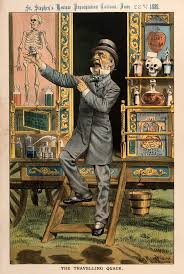
I’ve never been much of a fan of alternative medicine and those peddling their cure-all treatments.  For one, their typical pitch being an attack an the profits of conventional medicine is actually a red flag about their own motives. 

And, secondly, testimonials (or anecdotes) are fabulously awful evidence.  A person can say anything they want or attribute their current positive feelings to whatever, but it doesn’t mean their A led to B assessment is actually correct. 

Unless there is concrete evidence, I dismiss the alternative quacks.  Sorry, I simply do not want to take or sell your mystery juice.  It is disturbing that so many can’t see through this kind of nonsense.

But what is far more disturbing?  

When the mainstream starts to resemble these frauds.  

Yes, it is obvious that modern medicine works.  My successful neck surgery as proof of this.  There were measurable results nearly overnight, almost immediate relief to pain and the numbness.  The whole process was very straightforward.  However, that was a cut and dried form of treatment.  In that they took the old broken stuff out, put some new hardware in, and gave my pinched nerves a chance to heal.  

And yet, while it is amazing what can be done, not everything in our human biology is as simple as disks and vertebrae. 

Indeed, there is a murkier side to modern medicine, things that aren’t 100% clear even after many years of study, having to do with the more complex parts of our physiology and how these systems interact, and this is something that must be explored.  More than that, however, our own psychology, tendencies towards bias, could be leading the collective enterprise in the wrong direction.

#1) Money Money Everywhere 

The first stop is profit motive.  If I don’t mention this then someone else will.  It is the low hanging fruit in this discussion and certainly a factor.  People need paid, and medical professionals get paid for treating disease.  Healthcare is a 4.1 trillion dollar industry in the US and pharmaceuticals are a significant part of that overall cost.  Does this mean that the medical establishment wants to keep us sick and dependent?

Public health officials and regulatory bodies are, indeed, potentially compromised by this opportunity to cash in.  Top US physician, Dr. Anthony Fauci had received undisclosed royalties, part of the $350 million paid by third-parties to NIH and scientists employed by this agency.  No, this isn’t itself proof of corruption, people should get paid for their contributions and lobbyists may very well believe in what they’re promoting.  But there is the reality that money can overrule ethics and potentially cause people to turn a blind eye to problems.

Still, this is not my go-to explanation and for the simple reason that this accusation could be made against any for-profit enterprise.  I work for a truss manufacturing company and we do profit off of fire jobs and wind damage.  Does that mean we intentionally set fires or build an inferior product so it fails every ten years?  Absolutely not!  To make such a claim is, again, more an indication of the heart of the person making it and not proof of anything unless there’s clear evidence.

#2) Testing 1, 2…Good Enough…

Testing and peer-review is also one of those areas of concern as well.  And not because there is nefarious intent either.  But more a matter of scope or methodologies. 

My neck surgeon, for example, opted out of being a participant in a study involving a new line of disk replacement hardware because it was comparing it to a far inferior older product rather than newer better products already available.  In other words, it was a stacked deck or research that is designed to lead to a particular conclusion.

That’s the big problem I have with these broad often unqualified “safe and effective” claims.  It begs the question: Compared to what?  Bungee jumping?  A placebo? 

Most people, including physicians and scientists, simply do not have the time to be experts at everything.  The body is incredibly complex and nobody can actually do their own scientific research for every issue.  For that reason those in the medical field must, as a matter of practicality, rely on diagnostic manuals for treatment and various journals to stay on top of things.  Coloring outside the lines, challenging powerful government agencies, doing unproven or experimental treatments, is a risk of their license or a malpractice lawsuit and ill-advised.  There is an inherent need for those employed in these fields to trust the system and accept what other professionals do. 

If not this, if  their training and education, what else are they going to rely on?

I don’t expect those employed in the medical industry to doubt the very foundation that they stand on. 

Unfortunately, this reality is what makes their consensus useless.  Sure, they might know much more than the average person about the science.  Still, are they up all night, in the laboratory, carefully repeating the results of the latest studies themselves?  No, when other experts in related fields endorse what another expert is saying it is merely a sign of statement of their faith—that being their faith in the overall system.  

But it seems every other week a study comes out that seems to contradict prior findings.  Most of this is due to how limited the focus of research actually is.  They can’t possibly test every variable and especially not in a very short amount of time.  This reality, of finite resources, is a legitimate cause for healthy skepticism and abundance of caution.  The problem is that most people, including those well-educated, don’t have great critical thinking skills or even the ability to know the right questions to ask—it is far easier to “trust the experts” and go with the program.

#3) Confirmation Bias Is Always a Problem 

The problem with research is that we often go in looking for a particular result.  Sure, a double blind study is designed to reduce this as a factor.  However, the underlying bias can show up as far as what gets tested and what does not.  It can also be a factor in how we interpret the data available.  Group think and echo chambers, things like functional fixedness, are as much (or more) a problem with those very knowledgeable as it is with anyone else.

One example of this is how “effective” kept getting redefined down.  What once was supposed to prevent the disease and stop the spread would shift, overnight, to being a way to merely lessen the severity of the symptoms.  Which is a foundation so subjective and shaky that it is basically in the same category of the testimonials used by snake oil salesmen.  It is another area where the studies aren’t as conclusive as many would assume.  And, at the very least, correlation does not equal causation.  In other words, the vaccines could simply be acting as a placebo for those who believe that they are effective. 

What is not taken into proper account is how these perceived benefits, that are shrinking day by day, weigh against both short and long-term risks. 

For example, someone very dear to me, fully vaccinated, boosted, is currently suffering from a persistent respiratory illness, starting a month or so ago, and now is having flu-like symptoms again.  Could this be this is a result of an immunosuppressant effect of the injection?  It sure does appear that way and would be worthy of a study of the things presumed to be unrelated to the vaccines that very well may be related.  There is only a trickle of information coming out, discussion of side-effects buried in the search results and censored on social media.

What is most unsettling is the reality that our mainstream medical establishment is as prone to confirmation bias as those pushing alternatives.  They see what they want to see in the evidence and dismiss or downplay anything that contradicts what they were expecting to see.  The biggest difference is that it is more convoluted than it is with the obvious quacks, whole institutions get on board with a solution and too often it just gets cycled through, reinforced in each cycle, without enough awareness of the potential failure due to the blinders we all wear.

#4) Political Bias Is Endemic

One of the most troubling revelations of the past few years was how awfully politicized the coverage of a pandemic was. Anyone who thought that partisan differences would disappear in times of a national crisis was dead wrong.  If anything it is what likely drove much of the response.  At first leading to charges of racism (for travel restrictions from the virus epicenter) and accusations of over-hyping the threat of Covid—before swinging wildly in the other direction with onerous state-level mandates that destroyed great economy on the eve of a national election.

But one of the most disturbing episodes (and disgusting) is how proven medications, like hydroxychloroquine and Ivermectin, were treated as if they were especially dangerous and controversial simply because the ‘wrong’ person mentioned their potential as being a treatment option.  It is truly a great way of explaining how propaganda works.  The partisan media would pick the most extreme case of an overdose, ridicule a proven multi-use medicine as “horse dewormer” despite the many uses, and then misleadingly ‘fact-check’ the technicalities of language.

I mean, sure, these proven medications do not “cure” the disease.  But they are most certainly treatments that are effective for preventing severe symptoms if taken prior to the infection taking hold.  This is why several older doctors that I know (whom I will not mention by name for their protection) were quietly stockpiling these much maligned substances.  They didn’t dare speak too loudly either or they would be risk their own medical licenses for promoting unproven cures or some other nonsense.  Bullying and peer-pressure is as real for a professional as it is for anyone else.

This, along with other much more expensive (and profitable) treatments being pushed, is fodder for the conspiracy theory crowd and for good reason.  For me it disproves any notion that the system we rely on, including the medical establishment, is impartial or fair.  Sure, I’m glad that The Lancet, a trusted medical journal, eventually retracted a study that falsely claimed that hydroxychloroquine led to death for some Covid patients (as they have with another study linking vaccines to autism) and yet the damage was already done.

#5) Lost in Oversimplification 

One of the harder or more difficult problems to explain is how the common models of are often too dumbed down to be accurate.  

Up until recently depression was explained as being “chemical imbalances in the brain” and selective serotonin reuptake inhibitors (SSRIs) the solution.  This overly simplistic explanation has been called into question and this is a cause of alarm for those told to “trust the science” when it comes to the professionally prescribed answers.

I love metaphor and analogy to explain things less visible or intuitive.  However, if these tools are misunderstood as being exactly the same as the thing being described this can lead to very wrong conclusions. 

Just like a ball and stick model of atoms is useful yet doesn’t truly explain the reality (an electron is more cloud of probabilities), the various illusions used to sell parts of the pandemic response are as flawed.

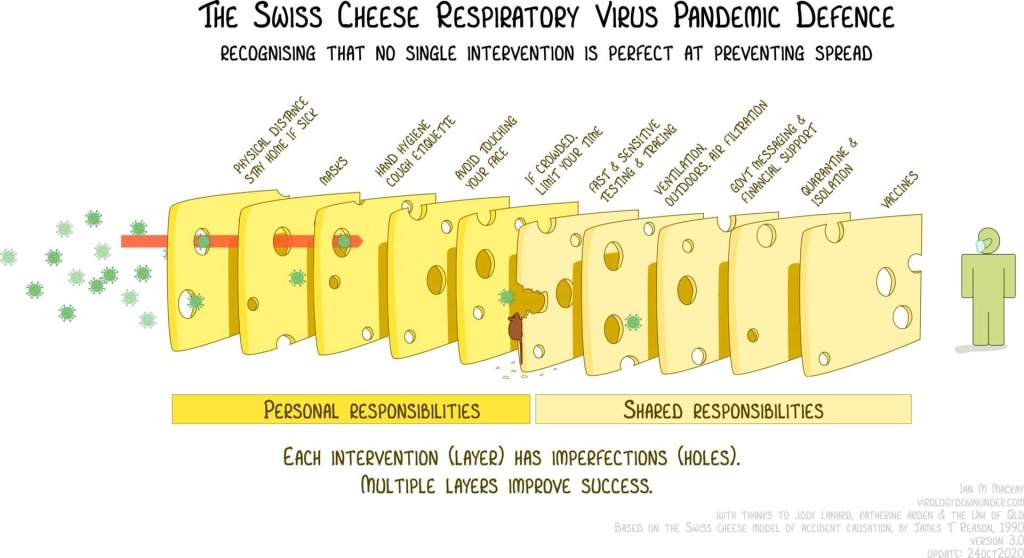
Sure, the theory of “flattening the curve” is great on a graph, and swiss cheese makes a very compelling illustration of how a multi-faceted approach could work, in theory, but both give a false impression of being complete or unquestionable. 

But is this theory working in reality?

Of course, how diseases spread in the real world is different from the even the best models and it is quite possible that slowing the spread only makes things worse, as is the case with attempts to manage forest fires. In that effort to control can eventually lead to much more devastating fires. Slowing down the process could result in a scenario where the burn is thorough, everything gets consumed, rather than the alternative of a fire that moves quickly and skips over areas.  The point being that analogies don’t account for the nuances and could lead to the wrong ideas taking hold in the public imagination.

No, this is not to claim that I have a better grasp of virology than those who have studied these things their entire lives.  It is only to say that these illustrations give too many undue confidence.  There are many factors that these crude analogies gloss over and factors that could vastly change the final outcomes.  The problem is that many are unable to see the more complex picture as a result of these elementary level descriptions that are used to sell a particular approach.

It makes us unbalanced.

In Conclusion…

There is no individual that can provide an opinion that is completely infallible nor any agency that is able to offer a perspective free blindspots or bias. 

Our “settled science” today make seem as bloodletting in a generation or two.  And the same kind of thinking that leads crackpots to their ‘alternatives’ is also all too present in the mainstream.  There is always the money motive, with the lack of adequate testing, the confirmation bias, the influence political agenda and faulty or misleading explanation, all tainting both the perception of the general public and professional opinion.  The biggest difference between those who believe the quacks and those who insist that the vaccine is effective is the level of funding behind their perspectives.

This doesn’t put the outliers and mainstream on equal footing, there is such thing as strength in numbers, yet what is popular is sometimes only a product of propaganda and common ignorance. 

Don’t be so sure that the things being ridiculed in the current paradigm are any different from what is being promoted.  We know less than many think we know.  There may be future studies or new discoveries that will completely upended the too hasty conclusions of our time. 

No matter how confident we are in our own position or settled we believe a topic is, it is always best to stay humble.

Second Marriage: A Second Look At Early Christian Writers…

Standard

Early Christians, like their modern-day counterparts, had a wide variety of opinions and not all of their opinions are trustworthy or canonical. Still, their writings are often taken as 100% reliable and played like a trump card in debates over the correct interpretation of Scripture.

That is the case with some of my conservative Protestant friends when it comes to the topic of remarriage after divorce. If shown where Jesus addresses divorce as causing sin and qualifies his statement adding “except for sexual immorality” (Matt 5:32, 19:9), they will deny the implications of this clear exception and deflect to non-canonical early church writings.

It seems a fairly reasonable approach to a controversy over meaning at first glance. Why would we not trust early church writings as reliable indicators of original intent? What reason would they have to distort the true meaning of what Jesus taught? Shouldn’t we assume that they would know better than us?

However, that is not reasonable to assume. In fact, this idea that the early church was completely pure or free of heresies and false teachings goes completely contrary to Scripture. Indeed there were many errant ideas that circulated then and some very deep disagreements over practice. So, in other words, we should be testing their words against Scripture and not using their words in aid of our own confirmation bias.

Or, at very least, if you are going to quote Tertullian in a debate you should probably know a little about him before you do and also consider what else he believed.

Consider this early church writer…

Athenagoras (circa A.D. 177)

A person should either remain as he was born, or be content with one marriage; for a second marriage is only a specious adultery. “For whosoever puts away his wife,” says He, “and marries another, commits adultery”; not permitting a man to send her away whose virginity he has brought to an end, nor to many again. For he who deprives himself of his first wife, even though she be dead, is a cloaked adulterer, resisting the hand of God, because in the beginning God made one man and one woman, and dissolving the strictest union of flesh with flesh, formed for the intercourse of the race.

Did you catch that?

He just declared *all* second marriages, even those after the death of a spouse, to be “only a specious adultery” and forbidden.

Compare what he says to Saint Paul in the Romans 7:2-3:

For example, by law a married woman is bound to her husband as long as he is alive, but if her husband dies, she is released from the law that binds her to him. So then, if she has sexual relations with another man while her husband is still alive, she is called an adulteress. But if her husband dies, she is released from that law and is not an adulteress if she marries another man.

Athenagoras has clearly gone off the rails. He is in direct contradiction to the canonical teachings of the apostle Paul. Why? Well, the reason for this is that he subscribed to the heretical “New Prophecy” called Montanism.

Montanism arose from the teachings of a man named Montanus, a new Christian convert from paganism, who claimed to have a special new revelation from the Holy Spirit. They taught that their own revelations superseded those of Jesus and the apostle Paul. They ordained women as bishops and basically rejected the authority of Scripture and the established church tradition as well.

And you know who else was under the influence of Montanism and also wrote against *all* second marriages?

Tertullian.

Tertullian, a favorite of sophistical fundamentalist efforts to justify their existing positions, taught that *all* second marriages were forbidden. And by all I mean even second marriages in cases where the first spouse had died and a teaching that is certainly in direct contradiction to Scripture. That contradiction (if one truly believes that Scripture has an authority that supersedes personal revelation and not the other way around) disqualifies Tertullian as an authoritative source.

It is strange, while most Mennonites (and other Protestant fundamentalists) might denounce a modern version of Montanus as a false teacher and regard his adherents as deceived, many do accept old heretical teachings (when these old heresies argue their own established positions) and ideas that are not supported in Scripture.

All second marriages were forbidden by those misled by Montanus. However, according to Scripture, and not my own opinion, marriage can be dissolved for three reasons: Adultery, abandonment, and death of a spouse. In all three cases, a person is no longer bound to the first marriage and therefore is free to marry again.

1) The death of a spouse…

A woman is bound to her husband as long as he lives. But if her husband dies, she is free to marry anyone she wishes, but he must belong to the Lord. (1 Corinthians 7:39 NIV)

There is no allowance for a Christian to divorce their faithful husband or wife. Marriage is supposed to be one man and one woman till death do they part. However, we live in a fallen world and that means sometimes a young married person might lose their husband or wife. For that reason, the apostle Paul provides a provision for widows and, presumably, widowers as well.

2) The abandonment of a spouse…

But if the unbeliever leaves, let it be so. The brother or the sister is not bound in such circumstances; God has called us to live in peace. (1 Corinthians 7:15 NIV)

A Christian is never allowed to divorce a faithful spouse. But, there are times when a couple is “unequally yoked” where one is a believer and the other is not. Paul tells those with a faithful and unbelieving spouse to remain faithful. However, he also provides a provision for brothers and sisters who have been abandoned by their unbelieving spouse. He says they are “not bound” to the marriage in that case.

3) The unrepentant adultery of a spouse…

I tell you that anyone who divorces his wife, except for sexual immorality, and marries another woman commits adultery. (Matthew 19:9 NIV)

Jesus, in response to the Pharisees who asked if it is lawful to divorce for “any and every” reason, first took the opportunity to restate the ideal for marriage as a lifetime commitment, then explains that Moses only allowed divorce because of the hardness of their hearts, and lays down the gauntlet: There is no divorce for any and every reason.

Jesus does, however, give one exception and that is in the case of sexual immorality (or porneia) when the marriage has been broken by unfaithfulness. He significantly narrows the scope for divorce and remarriage. I do not believe he is ruling out forgiveness of the errant spouse either. But marriage can be broken and it is broken by unfaithfulness to the marriage vows.

Isn’t it better to be stricter than Scripture?

The church of my youth allowed remarriage after a spouse had died, yet not when a marriage had ended by other the other means described in Scripture and has turned away those remarried who refused to separate from their second spouse. This kind of hard-line, no exceptions besides death, stance seemed normal to me. I had simply accepted what I had been told.

It would seem like a good thing to exceed a Scriptural requirement. Mennonites do this all the time, they forbidding alcohol, mandate clothing styles and often have a whole list of standards. There seems to be an idea that exceeding the requirements of Scripture makes us safer and there is definitely a case for erring on the side of avoiding things that are questionable.

But, that said, when our own personal conscience (standards in addition to Scripture) is used as a basis to exclude others, then we have become as Diotrephes, the arrogant church leader condemned in 3 John for his refusing welcome other believers, and we will be held to account. It is one thing to have high personal standards, it is quite another to make them a test of membership and reason to slam the door in the face of those trying to enter.

Do not be like those who use their own conscience to overrule the teachings of Jesus and the apostle Paul. Montanism was heretical, a false teaching, and their kind of sophistry remains a stumbling block.

Missionaries From Hell? (Matthew 23:13-15)

Standard

Jesus may have said his yoke is easy, but it is not easy for someone born and raised outside the conservative Mennonite culture to become Mennonite—especially not a woman.

Mennonites are not the only ones that demand conformity to a list of cultural expectations. Fundamentalist sects all have their fundamentals, their own special set of rules, cultural expectations, or doctrinal essentials that they use as tests for membership.

For example, a very sincere and sweet Christian friend of mine was asked about her view of “Once Saved, Always Saved” theology. Her questioner, someone who believes in eternal security, did not like her answer and now counts her as lost. To them salvation depends on our ability to parrot a theological position, a work of the mind, and no nuances are allowed.

And these false dichotomies, based on personal opinion, exist at all levels. If your hermeneutic allows for some flexibility interpreting the creation narrative of Genesis, then Ken Ham (including his partner in self-promoting pseudo-scientific dogmatism, Bill Nye) will insist that you should be an agnostic.

Nothing is further from the truth.

Jesus rebukes religious gatekeepers and damned missionaries.

The text…

Woe to you, teachers of the law and Pharisees, you hypocrites! You shut the door of the kingdom of heaven in people’s faces. You yourselves do not enter, nor will you let those enter who are trying to. Woe to you, teachers of the law and Pharisees, you hypocrites! You travel over land and sea to win a single convert, and when you have succeeded, you make them twice as much a child of hell as you are. (Matthew 23:13‭,‬15)

Jesus confronts the religious elites, who had positioned themselves as the final arbiter of truth, and he rudely knocks them off their pedestal. He confronts them for shutting people out who might otherwise enter and says they make those few they do convert “twice the child of hell” as that they are. That is a shocking reproach for those who are diligently religious.

Missionary service is typically unquestioned and perhaps that is because many of us feel guilt for not doing enough ourselves? But missionaries get no free pass from Jesus; on the contrary, he rebukes them even more severely and describes them as being counterproductive. I hope, after considering that, it goes without saying that missionary service can be a false indication of sincere faith and love for God.

There are many reasons why a person might want to be a missionary other than pure love for God and other people. Traveling, in our day and age, is fun and many enjoy the adventure. There are also the duty-bound “do-gooder” religious types, motivated more by fear than love. But there is an even more insidious reason why a person may choose to be a missionary service, and that is the power over others it offers:

1) Power of peer respect: There is no question that being a missionary is considered honorable amongst religious people. It draws positive attention. Those who have served in a visible way are often given special praise and in my church it is almost a prerequisite to being ordained. It can become a basis for ranking members of the church into higher and lower tiers. When used that way, it goes directly against the admonition of Jesus to be a brotherhood of equals earlier in his sermon.

2) Power of material resources: I know missionaries who go out like Jesus sent his disciples (Mark 6:7-13) in the power of the Spirit and with little more the shirts on their backs. Unfortunately, we do not embody that kind of faith anymore. Our missionaries rely on the power of their own calculations and often with enough resources to live comfortably beyond the reach of the people they are trying to evangelize. This can create a situation where people serve the missionaries’ whims for no reason other than attaining access to their resources. Being treated as royalty can also be gratifying to those who hold this power.

3) Power to be a religious gatekeeper: Everyone, including the religious elites condemned by Jesus, believes they are right, and that sanctimonious feeling can be the basis to becoming an evangelist. Recently a friend shared the testimony of Megan Phelps-Roper who was raised in Westboro Baptist Church and joined in their protests as a child. It was through conversation with the “other side” that she realized her spirit was wrong and repented.

Unfortunately, there are many who never do get knocked off their pedestal, never do humble themselves in the light of God’s grace, and do damage to the cause of Christ. They position themselves as the final arbiters of truth, as gatekeepers to the kingdom with the licence to shut people out, and the words of Jesus apply to them just as much as they did to the religious elites in the original audience.

Knowledge can become a barrier to truth when it leads to dead religion rather than following in faith.

We shut people off from the truth when we center our faith on our own religious “knowledge” rather than on the grace of our Lord Jesus Christ. These “all or nothing,” black-and-white propositions are a distraction from the substance of Christian faith. Obsession on theological minutia causes confusion rather than bringing clarity, and our additional requirements take away from the simple truth of the Gospel message:

If you declare with your mouth, “Jesus is Lord,” and believe in your heart that God raised him from the dead, you will be saved. For it is with your heart that you believe and are justified, and it is with your mouth that you profess your faith and are saved. As Scripture says, “Anyone who believes in him will never be put to shame.” For there is no difference between Jew and Gentile—the same Lord is Lord of all and richly blesses all who call on him, for, “Everyone who calls on the name of the Lord will be saved.” (Romans 10:9‭-‬13)

We should remember what Jesus said to his disciples when they took issue with someone speaking in the power of Jesus name outside their exclusive club:

“Master,” said John, “we saw someone driving out demons in your name and we tried to stop him, because he is not one of us.” “Do not stop him,” Jesus said, “for whoever is not against you is for you.” (Luke 9:49‭-‬50)

It should be noted that in the verse just prior to this, the disciples were having an argument over who amongst them would be greatest. Jesus answers them by bringing a child beside him and declaring that whoever would be most welcoming to that child in his name would be greatest. I’m guessing that child wasn’t 100% theologically correct.

We should serve others in truth of self-sacrificial love and in humility rather than in superiority of knowledge.

There are many who go out in the strength of their own knowledge. They never do comprehend the significance of God’s grace, and are blind though they think they see:

We know that “We all possess knowledge.” But knowledge puffs up while love builds up. Those who think they know something do not yet know as they ought to know. But whoever loves God is known by God. (1 Corinthians 8:1b‭-‬3)

Some say it is the thought that counts.

It is also said that the road to hell is paved with good intentions.

But before we say or think too much, we should take heed of what Jesus said and consider it a warning against an idea that our salvation comes from our religious diligence or right ideas. Instead we must be an example of the grace shown to us while we were yet dead in our sins.

We need to hold the door open for those wishing to enter and lower the threshold, rather than trip them up with our own pet doctrines.

We are not called to be gatekeeper; instead, we are called to serve in love and humility.

Let’s let God be the final arbiter of truth.