Your Own Personal Jesus

Standard

The title of this blog is a repeated line from a popular song, “Personal Jesus,” covered by Johnny Cash.  According to the writer, this song is “about being a Jesus for someone else” and more specifically the mentoring role Elvis Presley had played in the life of his wife Priscilla.  The power of these words is how they change meaning depending on the artist who sings them.  When it was covered by Marilyn Manson they came off as being mocking and derisive.

My own thoughts, hearing the song, always brings me to the popular Evangelical phrase “accept Jesus as your personal Lord and Savior” and the theological implications.  Unintentionally, it is a commentary on how the Christian religion has been reinvented in this consumerist and individualistic age.  It is all about you.  Jesus is now personal, like a boyfriend, and pretty much whatever you want him to be.  There is no obligation to others, no real need for self-sacrificial love, or becoming part of the body of believers, only to hold a kind of positive sentiment in your heart.

And this is what I encountered in the church of my youth.  Except for those few symbolic expressions of community and caring, carry-overs from those radical Anabaptist roots, it was pretty much everyone for themselves—which is how most of us preferred it to be.  I mean, sure, we would tell the other guy we would be praying for him after ritual foot washing, some would still call you brother as if simply saying it made it true, but that was generally the extent of it.  We all had our own families if there was ever a real need, the church projects were generally for the elderly and those few favorites.

Saved Together 

Orthodoxy has a more robust view of Holy Communion and could, in theory, answer the overly independent view of salvation.  At the very least, with our partaking of the body and blood together central to worship, this puts to rest this idea that the internet preacher is enough.  Life in Christ is about His body and His physical presence, not only something we hold in our minds as true.  It is not only our knowledge of Christ and mental assent but is also about making His example the basis of our actions—being an incarnation.

Faith is not about what we claim to believe, it is about how we act:

Carry each other’s burdens, and in this way you will fulfill the law of Christ. […] Do not be deceived: God cannot be mocked. A man reaps what he sows. Whoever sows to please their flesh, from the flesh will reap destruction; whoever sows to please the Spirit, from the Spirit will reap eternal life. Let us not become weary in doing good, for at the proper time we will reap a harvest if we do not give up. Therefore, as we have opportunity, let us do good to all people, especially to those who belong to the family of believers.

(Galatians 6:2‭, ‬7‭-‬10 NIV)

Carrying of burdens is about more than mere “thoughts and prayers” or those mostly empty expressions.  No, it is all about providing real relief to others, being that ‘neighbor’ like the good Samaritan or the true advocate like St. Paul was for Onesimus.  It is not enough to only say “Go in peace; keep warm and well fed,” without ever helping others with their actual needs as we read in James 2:16.  It is our job to be our brother’s keeper, that is to look after their needs like we would our own or that of a family member.  This is what a community of faith is supposed to be about and also key to our salvation.

“If anyone falls, he falls alone. But nobody is saved alone.”

—Alexei Khomiakov

For some, their salvation comes from the hand we offer.  For others, their salvation comes from offering that hand.  The early church had this saying, “unus Christianus, nullus Christianus.”  That is to say that one Christian is no Christian.  This is what it means to follow Christ, this is what being in Communion is really about.  Sure the ritual and religious practice matters.  But the true substance in the blood and the flesh we are to consume is in how we become the hands and feet of Jesus.  To do otherwise, to only partake without acting in genuine love is to drink unworthily and bring damnation upon ourselves:

In the first place, I hear that when you come together as a church, there are divisions among you, and to some extent I believe it. No doubt there have to be differences among you to show which of you have God’s approval. So then, when you come together, it is not the Lord’s Supper you eat, for when you are eating, some of you go ahead with your own private suppers. As a result, one person remains hungry and another gets drunk. […] So then, whoever eats the bread or drinks the cup of the Lord in an unworthy manner will be guilty of sinning against the body and blood of the Lord.

(1 Corinthians 11:18‭-‬21‭, ‬27 NIV)

Stay In Your Lane

Sadly, within Orthodoxy, for some, it is about lighting a candle, making a sign of the cross, paying their membership dues (tithes), and regular church attendance.  In other words, all about going through the motions.  They don’t want to be bothered by real relationships or overcoming differences—let alone be concerned with the salvation of their fellow parishioners.  

Sheesh, let the priest do his job!  Mind your own business!  Don’t you have enough sins of your own to attend to?  

I’ve even heard clergy give advice like “stay in your lane” as if there’s no difference between confrontation of lingering issues and petty fault-finding…

I’ll back up a second and agree fully that we should be “work[ing] out [our] salvation with fear and trembling” (Phil 2:13), which does imply some introspection and that we start first with the beam in our own eye.  But, that said, even this admonition is addressed to “my dear friends” or the church body and not as a personal note.  So even this could be used to further the view of salvation that is about collective effort and not some sort of personal experience we have while sitting in the pew deliberately not noticing elephants in the room as our penance.

There are some who do not seem to realize that their mother’s scold, “If you don’t have anything nice to say don’t say anything at all,” isn’t written in Scripture, but this is:

“‘Do not do anything that endangers your neighbor’s life. I am the Lord.“ ‘Do not hate a fellow Israelite in your heart. Rebuke your neighbor frankly so you will not share in their guilt. “ ‘Do not seek revenge or bear a grudge against anyone among your people, but love your neighbor as yourself. I am the Lord.

(Leviticus 19:16b‭-‬18 NIV)

Speaking the truth is not always pleasant to the ears of those hearing it and yet it is part of what love does.  It is not that we should never confront, rather it is the SPIRIT of how we approach these sins or shortcomings of others.  So, sure, staying in our lane is good, but that doesn’t mean we should never alert someone driving with their headlights off at night since we have also done the same in the past.  It may feel like ‘keeping the peace’ to sweep everything under the rug or let the ‘problem’ go away by ignoring it—but it’s also an unloving attitude.

“Church is not a social club…”

I’ve now encountered it in two very different religious traditions.  When that cry is made for real brotherhood, deeper connections or genuine relationships are met with the strong suggestion that you’re not spiritual enough and a reminder that church is for worshipping God and superficial interactions.  If you expect a little more then you’re turning it into a social club.  This is an inversion.  It is a psychological projection and a garbage excuse.  It’s telling a person seeking medical care that hospitals are about the awe of the building and reverence for the institution, that they should go to the dance club if they so desperately want to be touched by someone.  

These phony physicians only add insult to injury, they are exactly the type of religious authorities that Jesus rebuked: 

“The teachers of the law and the Pharisees sit in Moses’ seat. So you must be careful to do everything they tell you. But do not do what they do, for they do not practice what they preach. They tie up heavy, cumbersome loads and put them on other people’s shoulders, but they themselves are not willing to lift a finger to move them. 

(Matthew 23:2‭-‬4 NIV)

For them, it is all about the right image, the dress standards, and keeping their perfect attendance record.  Basically, they check all of the right boxes.  Performative religion.  And who knows?  Maybe their Bible study and prayers, ten hours a day, really does it for them?  Who am I to say that their mission to Uganda was entirely a self-indulgent display of privilege and a waste of resources?  But I’ll also say that those who travel the world while doing the bare minimum for those whom God put right at their own doorstep are condemned as hypocrites by Jesus.

The church is established by the same God who told us that it is not good for man to be alone.  Good for you if you need nobody in your life.  Jesus is your homeboy?  But most of us need those meaningful and sometimes messy interactions with other humans.  That is what family is.  That’s what hospitals are built to facilitate.  And that is what a church is literally supposed to be.  If you don’t need a doctor maybe you are the doctor and your salvation requires you to show up to attend to those sick and suffering?  Why call would we call each other brothers and sisters in Christ if this weren’t the case?  If the church isn’t at all about social interactions—why do we waste the gas?

Those who say that church isn’t a social club are right.  It is also not an art museum where pretentious people go to engage politely and then share a light snack.  It should be much more than that.  It should be a refuge we can flee, the juniper tree where God sends angels to comfort and attend to the physical needs of Elijah, a garden of Gethsemane where the disciples are not sleeping in hours of need, it should be intimate and practical, a hospital or home.  A place to be ministered to and minister to each other.  It’s both where we share our moments of happiness and also mourn with those who mourn.

Church is a family or it is just fake.  

Post Script: Those who personalize Jesus tend to depersonalize their religion. Protestant or Orthodox, it doesn’t matter, they want to claim their great devotion with their embrace of abstraction and their own prescribed practices, but seem to forget that pure religion is about the human touch (James 1:27) and what they do materially for others is how to show their love for Jesus. Our salvation does not come apart from the body of Christ. Communion isn’t only what we partake of on a Sunday morning, it is what we participate in as far as loving others and, in particular, the community of believers. You cannot stay in your lane, avoiding people in a pretense of righteousness, and also love God.


The Privilege Paradox—What Jesus Taught About Fairness

Standard

Remember that viral video, from a few years ago, that has a bunch of young people lined up in a field?  

As the music plays, we hear an announcer tell participants this is a race for a $100 bill and  then proceeds to list off statements that will allow some to advance.  If both parents married, if they had a father figure, if they had access to private education, if they never had their cell phone shut off or had to help their parents with bills, and the list goes on.

For those of us who have studied socioeconomic issues, and have long pointed to things like fatherless homes as being predictive of outcomes, this is no surprise.  In fact, fatherless homes have a stronger correlation with negative outcomes than race.  Many mass shooters come from broken homes.  We should be talking about such things.

However it seems many of my former religious peers, raised in conservative Mennonite cloisters, prior to watching this video, had been completely unaware of this ‘privilege’ of family structure.  Suddenly their ignorance had been revealed.  But, some, rather than simply ponder and reflect, used this new knowledge to bludgeon others and suggest that anything less than feeling deep shame equal to their own is somehow sinful.

One problem with being raised in a religious culture where indoctrination and conformity is preferred to open discussion is that many coming from this background are nearly incapable of critical thought.  A media presentation like this dazzles them and there’s no reason they can imagine to question the conclusions.  They see what they’re supposed to see, what was carefully edited and prepared for them to see, and what the lecturer tells them to believe.

The video, unfortunately, frames things in terms of race.  The one announcing even explicitly saying “if this was a fair race…some of these black dudes would smoke all of you.”

It’s ironic that this man plays on racial stereotype, the perceived athletic advantage that some have, while simultaneously making the case that privilege is about getting the money at the end of a race.  He undermines his own thesis.  If some young people, as a result of their athleticism, can get into a prestigious university, how is that not also privilege?  

More importantly, where does that leave those of us who neither had the athletic prowess nor the academic chops nor wealthy parents to provide for our education?

My father was absent, out on the road weeks at a time, I went to public school because my parents couldn’t afford the Mennonite school tuition, I never had a cell phone growing up and also eventually had to pay rent to my parents for the privilege of living under their roof, is that unfair?

Who is to say that a person raised in single parent home is truly at a disadvantage to someone with a learning disability?  

And is it actually true that those with non-athletic scholarships didn’t earn any of that reward through their own hard work?

A big problem with the presentation is how it frames privilege in a very narrow and misleading way.  The list of factors is extremely selective.  He never mentioned the many other disadvantages (or advantages) that can shape outcomes, things like physical stature or gender, affirmative action and health.  There is also no attempt to explain why these factors should be weighted as they are.  Ask different questions and the completion of the results may completely change.

Breaking Down Privilege 

The problem with the privilege narrative is not that it highlights the advantages that some have over others.  We all know that an athletic tall guy is more likely to dunk a basketball, and have a girlfriend, than the 5′-5″ tall perpetually last-picked dude.  All of the things listed in the video may very well have an impact on outcomes and yet there are so many other things people overcome that never got mentioned.

The message is right, in that we should be aware of the disadvantages others face, but does a disservice in framing privilege almost entirely in terms of race.  And, with that, feeds insecurities, builds upon division, encourages animosity or guilt—all without providing any actual solutions.

To get to solutions we need to break down the framing:

1) Not About Race

The irony of the “white privilege” claim is that, when we get to specifics, the advantages some have are often not actually about race.  

Fatherless homes, for example, have nothing to do with race and everything to do with the choices of a prior generation.  My dad took responsibility, he provided for his children, my mom remained loyal to him despite his shortcomings, and us children benefited.  

Do you know who else had that privilege?

The daughters of Michelle and Barack Obama.  

Not only that, Sasha and Malia, had access to private school, prestigious universities, and other opportunities that a working-class child (such as myself) could only ever dream about.  Sure, they may have similar skin color to Trayvon Martin, but that’s where the similarities end and to say otherwise is to be absurd.  The average blue collar white person has more in common with racial minorities than anyone in the ruling class.

My school friend, Adam Bartlett, the one who eventually killed himself and another man, was a victim of sexual abuse as a child.  Not only that, but he wasn’t all that athletic, wasn’t a great student, had nothing given to him by his parents, yet we’re supposed to believe that he had this thing called “white privilege” and was actually better off than the daughters of the President?

This idea that privilege is about color, that fatherless homes and poverty is a matter of race, is the very definition of prejudice.  It is a message bad for the racial minorities whom it both disempowers and discourages.  It is also wrong, an injustice, to the many people deemed privileged who face the exact same challenges and never get as much sympathy or help.

The truth is that statistics never tell us about individuals.  There are many born into poverty and poor conditions who do overcome their circumstances.  It has as much to do with attitude, the things we believe and are told to believe about ourselves, as anything else.  The very things that can be a disadvantage in one case can be motivation in the next.

2) Let’s Address Culture, Not Color!

If we’re truly interested in changing results then we need to talk about the elephant in the room.  Why do some children grow up in single parent homes, in poverty, while others do not?  More importantly, what can we do to prevent this from repeating?

Woke nationalism, a far-left Marxist political movement adjacent to this sort of privilege propaganda, would have people believe that more money (in form of reparations or government programs) is the solution to disparities in outcomes.  Rather than address the root cause of disparities, they blame-shift and promote acceptance of toxic behavior.  

Black Lives Matter, for example, doesn’t support the reestablishment of traditional families.  And, worse, many promoters of the “white privilege” narrative would have us believe that things like work ethic are somehow related to skin color.  They are explicitly encouraging the very things that the video would have us believe hold people back from success.

Just today, while writing this, a BLM leader in London, was shot in the head.  Her story not all that uncommon in the inner-city, where gang warfare and honor culture, a criminal underground, leads to many violent ends.  

Are we truly supposed to believe this is black culture?  

Should I celebrate that the majority of shootings in my little corner of the world are perpetrated by a rather small minority?

My answer is a hard N-O to both questions.

No, we should not accept fatherless homes as normal nor be an apologist for the honor culture that so often leads to violent outcomes.

No, skin color does not, should not, should NEVER determine our behavior.

Many things that are being framed in terms of race are actually cultural and a direct result of choices.  A man, no matter his color, does not need to murder his ex-wife because she is with another man, or shoot someone over a borrowed hat, there’s no excuse.  My little town does not need drive-by shootings, we don’t need more bodies dumped in remote locations.  And, yes, we need to ask why the ‘disrespect’ of a mask requirement was a considered a reason to murder a security guard, why a successful NFL athlete took a former friend to an industrial lot to execute him for talking to the wrong people.

It is culture, not color, that is shaping outcomes.  And to conflate color with culture is the very epitome of racial prejudice.  Seriously, saying that black people must act differently, must be more expressive, must prefer particular kinds of music, must talk a certain way, is the same kind of ridiculous thinking behind minstrel shows.  We should be beyond this, we should be judging by content of character rather than color of skin, stop promoting foolishness!

3) Life Is Not Competition

The most egregious presumption in the video is that life is a competition and ending up with more money is the goal.  Talk about spiritual rot posing as enlightenment!

Sure, your bank account may be somewhat a product of the home, community and culture that you were raised in.  Hunter Biden certainly has an advantage over me in terms of earning potential given his father’s high political profile.  And, trust me, it has very little to do with anything he’s done.  For sure, if he were the average Joe, if the 1994 Crime Bill applied to him, he might be in jail for a long list of crimes.  But that ‘privilege’ doesn’t mean he’s a success compared to me, does it?

Some extremely wealthy and visibly successful people are extremely unhappy with their lives.  No amount of access to private education, cell phones, health care, or whatever, is going to solve a feeling of inferiority or self-loathing.  And, if anything, more wealth in the hands of a disgruntled person will only enable them to do more evil.  I mean, was Hitler, a struggling artist and disenfranchised military veteran, improved by the power eventually given to him?

No, not at all.

This idea, in the video, that life is a competition, that more material wealth equates to success, is completely wrong and deserving of the severest rebuke.  What is truly shameful is that those religious folks sharing this message never once stopped to consider the metrics of success presented.  So much for the first being last and last being first, as Jesus taught, apparently to them life is all about the accumulation of stuff and political power.  

Sad.

Maybe if we would, instead of pitying and patronizing people, start preaching the truth, start telling dead beat parents, or anyone making excuses for themselves, to repent—then we would see positive change? 

But that would require us to see others as being our equals, capable of choosing good behavior.  It would require being unpopular and to stand at odds with the virtue signaling of the social elites.  Those who are honest about matters of culture, who confront woke nationalism and racist lies, they are the only people systemically oppressed.

Jesus Defies Privilege Narrative

No, matters of bad character and toxic culture are not fixed by more money, consider this parable:

“Again, it will be like a man going on a journey, who called his servants and entrusted his wealth to them. To one he gave five bags of gold, to another two bags, and to another one bag, each according to his ability. Then he went on his journey. The man who had received five bags of gold went at once and put his money to work and gained five bags more. So also, the one with two bags of gold gained two more. But the man who had received one bag went off, dug a hole in the ground and hid his master’s money. “After a long time the master of those servants returned and settled accounts with them. The man who had received five bags of gold brought the other five. ‘Master,’ he said, ‘you entrusted me with five bags of gold. See, I have gained five more.’ “His master replied, ‘Well done, good and faithful servant! You have been faithful with a few things; I will put you in charge of many things. Come and share your master’s happiness!’ “The man with two bags of gold also came. ‘Master,’ he said, ‘you entrusted me with two bags of gold; see, I have gained two more.’ “His master replied, ‘Well done, good and faithful servant! You have been faithful with a few things; I will put you in charge of many things. Come and share your master’s happiness!’ “Then the man who had received one bag of gold came. ‘Master,’ he said, ‘I knew that you are a hard man, harvesting where you have not sown and gathering where you have not scattered seed. So I was afraid and went out and hid your gold in the ground. See, here is what belongs to you.’ “His master replied, ‘You wicked, lazy servant! So you knew that I harvest where I have not sown and gather where I have not scattered seed? Well then, you should have put my money on deposit with the bankers, so that when I returned I would have received it back with interest. “ ‘So take the bag of gold from him and give it to the one who has ten bags. For whoever has will be given more, and they will have an abundance. Whoever does not have, even what they have will be taken from them. And throw that worthless servant outside, into the darkness, where there will be weeping and gnashing of teeth.’ 

(Matthew 25:14‭-‬30 NIV)

Of the parables that Jesus told, this one has to be one of the most harsh and counterintuitive.  I mean, who can blame this servant, given so little, for burying his talent?  

Was it fair that, before the investment phase even began, the “wicked” and “lazy” servant was already at a severe disadvantage?

While this parable affirms the idea that what we’re born with has little to do with what we’ve done.  However, it departs radically from the central notion of the video that success at the end of life is “nothing to do with what you’ve done.” 

This flies completely in the face of the social justice gospel and, frankly, everything that comes naturally to me.  As one who always felt like the servant given little and thus was fearful of God, this parable confounded me.  Didn’t the initial disadvantage, the unequal distribution of wealth, shape the outcome?

Are we now going to say that Jesus lacked understanding, compassion or sensitivity?

Should we cancel Jesus?

We could replace the wealth or talents of the parable with “privilege points” and not change the message.  Jesus who said, “to those much is given much will be required,” also said those who are given less by God should be appreciative and invest well rather than make excuses.  

In other words, if you have no father, you can wallow in the disadvantage or choose to invest in the next generation so they do not suffer as you did.  If you were excluded, as I was, on the basis of lacking stature and athletic abilities or other things not within your control, you can harbor the grievance, let it take over your life, or you can use it as motivation to do unto others what wasn’t done for you.

The reality is that Jesus was being far more compassionate in addressing the spiritual matter at the heart of many negative outcomes and ignoring questions of fairness.  Furthermore, life is not a competition for material gain, it is not about the rank we attain in society either, and to frame it in such a way only shows a complete lack of discernment.  The privilege narrative is not only racist to the core, it is also at odds with the Gospel of Jesus Christ.

Instead of chastising innocent people for their alleged color privilege, trying to burden them down with guilt.  Instead of telling some people that they lack the ability to be successful simply on the basis of their outward appearance or place they were born, which is a total lie.  We should love our neighbors, rebuke this notion that life is a competition for money, and call all to repentance.

On Topic of Dogs and Dismemberments

Standard

“The Lord disciplines the one he loves, and he chastens everyone he accepts as his son.” (Hebrews 12:6 NIV)

The other day someone commented, in response to a blog, that it was a “vicious attack” and then thumped me with a Scripture reference that I promptly forgot to read. But they couldn’t have read much more than that particular proof-text because, otherwise, they would be doing less Bible-thumping about my lack of their religious refinement and their protest sounded remarkably similar to those offended who stopped Jesus to ask him if he realized that his words were insulting to them.

My words were not slanderous nor untrue and not written to be meanspirited either. In fact, I never even mentioned a name, because my point was not about the person, it was about the behavior and errant ideas behind the behavior. Sure, it was a rebuke to those who engage in this sort of thing, but certainly not as severe as the preaching of Jesus and definitely not as scathing as what St. Paul had to say to these sorts of religious bluebloods who were trying to influence others to live by their standards:

It is for freedom that Christ has set us free. Stand firm, then, and do not let yourselves be burdened again by a yoke of slavery. Mark my words! I, Paul, tell you that if you let yourselves be circumcised, Christ will be of no value to you at all. Again I declare to every man who lets himself be circumcised that he is obligated to obey the whole law. You who are trying to be justified by the law have been alienated from Christ; you have fallen away from grace. For through the Spirit we eagerly await by faith the righteousness for which we hope. For in Christ Jesus neither circumcision nor uncircumcision has any value. The only thing that counts is faith expressing itself through love. You were running a good race. Who cut in on you to keep you from obeying the truth? That kind of persuasion does not come from the one who calls you. “A little yeast works through the whole batch of dough.” I am confident in the Lord that you will take no other view. The one who is throwing you into confusion, whoever that may be, will have to pay the penalty. Brothers and sisters, if I am still preaching circumcision, why am I still being persecuted? In that case the offense of the cross has been abolished. As for those agitators, I wish they would go the whole way and emasculate themselves!

(Galatians 5:1-12 NIV)

Paul was taking direct aim at the Judaizers (equivalent to the “good Mennonite” or others who hold their mastery of a particular tradition as a point of pride) for burdening others down with their rules and employed a very crude double entendre to make his point. I mean, circumcision is literally to “nip the tip” of the male genitalia, as part of the Jewish tradition, and Paul is telling them he wishes that these men would cut off the whole cucumber to prove how superior they are. Of course, he’s also saying he wishes they would leave the church, compares them to a contaminant, and is definitely not mincing his words to be polite.

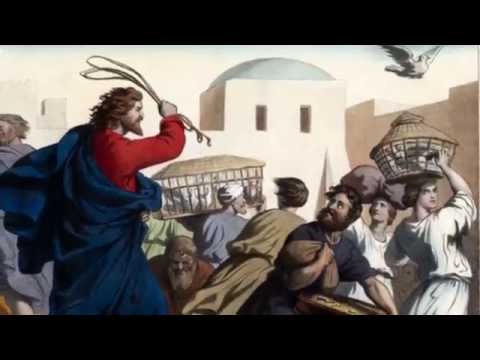
Jesus would not have tickled the prissy ears of the pretentious. He was provocative. He would likely be called a racist today for using “dog” in reference to a Canaanite woman. St. Paul too, he would surely have made the religious prudes blush then and would have enraged our social police. Both men threw their rhetorical bombs at those who felt too secure in their self-righteous positions and they made no apologies for it. The truth is sometimes harsh. Waking people from the stupor of their pride can take some colorful persuasion. Yes, absolutely, we must keep our own pride in check, but passive and mealy-mouthed men are not living the example of Jesus.

In the end, the opinions of some clucking hen, taking offense on behalf of a man quite confident in himself already, means nothing to me. As the old saying goes, “Throw a rock into a pack of dogs, and the one that yips is the one that you hit.” Feel free to shatter my “glass house” of hypocrisy if you see where I do not live up to my profession. It is better that I am insulted today than be forever damned. Niceness is not a synonym for love and Jesus was not some “you do you” hippy either. And this insulted woman would know that if she would read (or was able to comprehend) the Bible. Jesus didn’t come so that we can be feckless and ineffectual, he came to upset the status quo and the religious elites were his favorite targets.

It is better that I rhetorically cut false teachings to pieces now, while those holding them can still be saved, than allow anyone to go unwarned to final their final judgment and be cut to pieces, thrown in a fire, and destroyed. The yelps of those insulted and offended are proof that the message is true enough to not be laughed off as a joke. Those using the Gospel of Jesus to sell their political-ideological Social Justice wares, trying to enslave others to their repackaged Marxist philosophy, will find no quarter here. I will whip them, and whip them good, with the truth of God’s word.

Jesus Longs for His People (Matthew 23:37-39)

Standard

Jesus was not harsh out of hatred.

Behind his sharp rebuke in Matthew 23 was a deep love and longing for his people to hear his message, repent of their foolish pride, and live in faith.
The love of Jesus is evident in how he brings the sermon to a conclusion:

Jerusalem, Jerusalem, you who kill the prophets and stone those sent to you, how often I have longed to gather your children together, as a hen gathers her chicks under her wings, and you were not willing.  Look, your house is left to you desolate.  For I tell you, you will not see me again until you say, “Blessed is he who comes in the name of the Lord.” (Matthew 23:37‭-‬39)

Jesus uses the imagery of a hen to describe his own feelings toward those who rejected him.  It is significant that Jesus describes himself with feminine attributes—it is significant in that it shows a divine nature that transcends gender and also in the contrast it provides.  

Jesus finished a harsh message about coming destruction by describing his desire to nurture rather than judge.  His words express profound sadness and deep disappointment before ending with a promise: “For I tell you, you will not see me again until…”

Until what?

Before answering that, there are a couple​other points that can be extracted from the example of Jesus:

1) Criticism is more loving than indifference…

We live in a time when legitimate criticism is characterized as persecution or hateful.  Be too blunt or honest and pretty soon you’ll have the niceness police on your case.  Criticism feels unpleasant.  However, rebuke can be extremely beneficial to a person who is truly humble and open to correction.

The importance of receiving rebuke is mentioned in Proverbs:

My son, do not despise the Lord ’s discipline, and do not resent his rebuke, because the Lord disciplines those he loves, as a father the son he delights in. (Proverbs 3:11‭-‬12)

And expounded upon by the Apostle Paul:

Endure hardship as discipline; God is treating you as his children. For what children are not disciplined by their father? If you are not disciplined—and everyone undergoes discipline—then you are not legitimate, not true sons and daughters at all. Moreover, we have all had human fathers who disciplined us and we respected them for it. How much more should we submit to the Father of spirits and live! (Hebrews 12:7‭-‬9)

Paul says that if we are not disciplined by God then we are illegitimate and not true children of God.  Rebuke, according to Proverbs, shows love.  

Good parents discipline their children because they love and want the best for them.  They realize that uncorrected attitudes and behaviors will cause more future pain for their children than a rebuke.  Discipline, therefore, is a preventative medicine against a deeper more permanent harm.

It is easy to be nice to someone in order to avoid trouble.  In confrontation there is risk.  Many prophets lost their lives for speaking truth to power.  At very least criticism can come at the cost of loss of popularity and friendship.  As a result, people play nice for their own sake, to keep people off their case, and not out of love.

I personally do not waste my time trying to correct a person I do not love.  Why would I?

A good rebuke is not a hit-and-run attack.  No, rather it is part of a true concern for the well-being of another and a part of a longer term investment to help another person reach their better potential.  Sometimes, when an audience is especially stubborn and unreceptive, there is a need to ratchet up the rhetoric until there is a change.

2) The future is being created by us…

Many religious people are fatalistic.  Yes, they might claim to believe in “free will” or choice, but then revert to an “it is what it is” fatalism and using God’s sovereignty as an excuse.  

In Jesus we should be free—free to overcome our human limitations and able to create a better reality.  That’s what it means to created in the image of the Creator.  That’s what it means to partake of the divine nature.  And, therefore, with faith, there is agency and choice.

Those whom Jesus addressed also had a choice, and that choice is recorded in the last words of the Old Testament:

See, I will send the prophet Elijah to you before that great and dreadful day of the Lord comes. He will turn the hearts of the parents to their children, and the hearts of the children to their parents; or else I will come and strike the land with total destruction. (Malachi 4:5‭-‬6)

The “or else” in the passage above indicates two options.  Either their hearts will be turned or there will be total destruction.  History was dependent on their choice and the future depends on our choice—repent or die.

We know that many did not heed the warning and that Jerusalem was destroyed.  Many of those in the audience may have ended up in Gehenna (the literal “hell” Jesus spoke about) because they refused to hear and repent.  Many of us will follow them to our own destruction unless we choose the abundant life.

In the end, fatalism is simply another form of faithlessness.  Often when we say, “It is what it is,” the truth is that we are simply unwilling to put in the effort or step out in faith.  Life is what we make it.  The future we get is always a choice and we should choose Jesus.

3) When will we see Jesus again?

I don’t know.

That is your choice.

I believe Jesus will return in those who choose to turn, who acknowledge him as Lord, receive his Spirit and follow him. 

 Jesus gave this promise:

Whoever has my commands and keeps them is the one who loves me. The one who loves me will be loved by my Father, and I too will love them and show myself to them. (John 14:21)

Jesus longs to reveal himself to us today.

(Artwork: Stanley Spencer)