
Too Cruel To Be Coincidence

Standard

There is this sort of silly thought I have had, which has some legs, about the true nature of the universe and how unlikely it seemed that our friend’s daughter would fall victim to the currents of the Susquehanna river.  I realize this is more just a hiccup of my own mind than an actual reality, but what are the chances?  What are the actual probabilities we would know another Filipino-American couple with so many similarities and has a tragedy like this happen?

I ran my hunch through Grok.  What are the chances that another couple, one of them a German-American with neck or back issues (like me) the other a recent immigrant from the Philippines who came with a child and has also (like my wife) recently given birth to a second child, losing their ten-year-old daughter in a drowning incident just a week prior to Mother’s Day?  And how likely is it that I would have experienced the loss of a close friend’s child twice?  The probabilities are so infinitesimal that the very existence of life is more likely than this:

The probabilities of the specific scenarios you described—knowing an ethnic German man in Pennsylvania with a Filipino wife and children matching your family’s profile (0.00462%), his 10-year-old daughter drowning in the Susquehanna River on a specific weekend (1 in 2.82 trillion), and being friends with two women who lost children tragically (0.566%)—are all significantly lower than the probability of life existing in the universe, which is nearly certain (1) due to the vast number of planets (10²²). Even in an extreme pessimistic scenario where life is exceedingly rare (0.36%), only the third scenario approaches or slightly exceeds it, while the others remain far less likely. The universe’s immense scale makes life’s existence highly probable, whereas the hyper-specific nature of your scenarios, especially the drowning event, drives their probabilities to near-zero.

All this is just an extended version of that age-old question: “Why me?”  

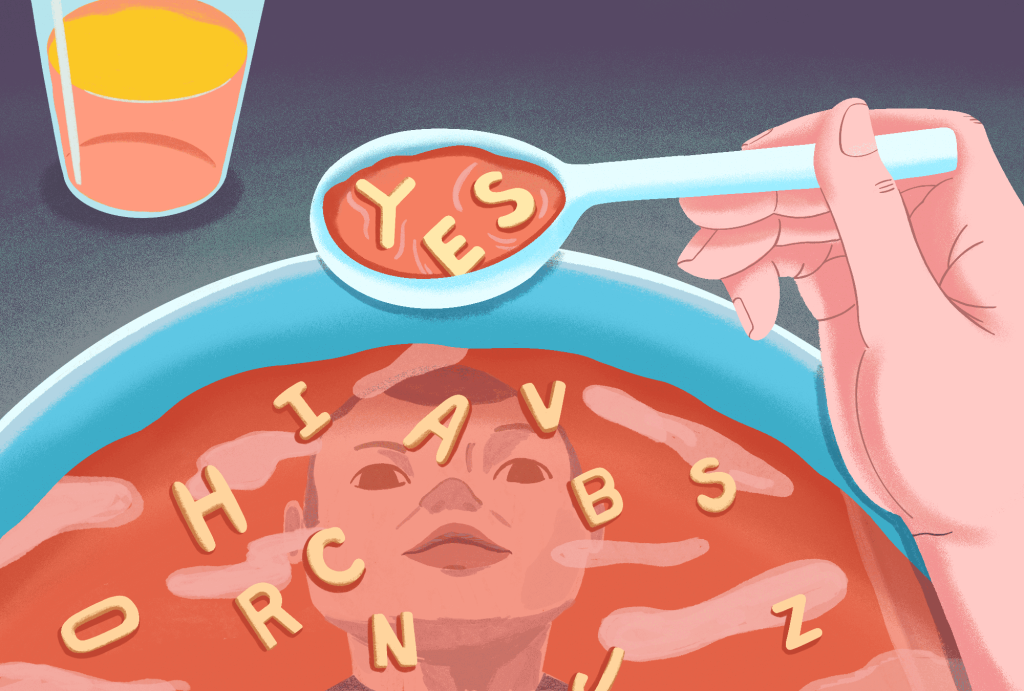
This weird feeling of this being a tragedy too perfectly scripted to be real is simply the hallucination of a mind searching for meaning where there is none.  

It is no different from when I—in delusion of religion and looking for answers—had assigned meaning to the ‘impossibility’ (a romantic interest) randomly picking up a paper, leftover from Sunday school class in the same location, and then reading from it “with God all things are possible” right as she walked past me—renewing my hope to continue my foolish pursuit of faith and love.  Belief in a divine plan only led to more disappointment.  It is what it is—as she told me as an answer.  A coincidence is no more meaningful than we have made it.  

apophenia

Truly, we could throw our lasso around any circumstance, any set of facts, and find it to be highly improbable.  But, after the fact, if it has happened, the probability is always 100%.  Basically everything is unlikely right before it has happened and this why those Lee Strobel type of apologetic ‘cases’ aren’t very compelling for a critical thinker.  They are too based on assumptions and deciding what matters based on our own window of understanding—never considering the other possibilities.  

It is actually very likely that I know another Filipino-American couple, involving a single mother and a lonely guy similar to me, given that we deliberately connected to the local Pinoy community for sake of my wife.  And it was our similarities that always gave us something to talk about.  He was employed in an engineering related field, same as me, and going through the visa process.  As far as the tragedy, around 4000 unintentionally drown in the US per year (900 children) and spring weather (near Mother’s Day) is just likely to bring people to the river.

My foreign-born friends, in retrospect, were more vulnerable.  Those who grew up in the Susquehanna valley have a bit more fear of the river.  The waters may appear to placid, but we also know about those floods which have ripped through communities and how it respects nobody.  You’ll try to pet a bison up until you see the first person gored.  We simply don’t know risk until we have seen it for ourselves.  But then I also know that the mother, in this case, was always extremely cautious and only looked away for seconds before hearing the commotion.

What is so hard to accept is that reality that this world is full of danger.  Both conspiracy theorists and left-wing control freaks refuse to deal straight up with a world where death can occur without some dark plot and that this won’t be solved with politics.  I’ve never been under that delusion.  However, I have had this good things happen to good people expectation going in to life.  My Pollyannish hopes have been rebuffed too harshly and consistently to continue holding to them.  In truth, the natural world does not care about your morality—if you follow all the rules or are evil incarnate—the universe is utterly indifferent.  It just is what it is.

There is no evidence of a grand design, as I had been indoctrinated to believe, and fully embraced—before falling flat.

It is pareidolia, a mirage or projection of our own desire to find explanation or reason for everything.  People want this singular thing to blame for all bad things and yet there is not in the case of this drowning.  The mom was not negligent, the water is neutral and neither good nor evil.  Trying to find design is only me choking on a reality we all should face: We all leave this world the same as we entered it—dust to dust.  Some depart on a different schedule than expected.  But many children have died before their parents and long before history recorded it.

To have no cosmic force orchestrating our suffering is a big comfort.  It eliminates the cognitive dissonance of the loving God that then subjects Creation to torment.  Pain is a survival mechanism.  It helps to correct our behavior and train us, but also misfires (ask those with chronic pain) and hurts us for no good reason.  There is no need for a perfect system, one where only those who deserve punishment are punished, merely one that functions well enough.  There is no intent to be cruel, no special message to glean from the loss of a precious daughter a weekend before Mother’s Day—she slipped on a rock and that’s all there is to it.

We desire a director behind all events good or bad to make it easier to understand.

If fantasy helps you cope with grief then by all means embrace it.  We could theorize it was part of a hidden divine plan to gain the salvation of her parents, a punishment for lack obedience to Allah, and that she is playing up in heaven with those millions of aborted fetuses Evangeli-cons care about (or the children of Gaza they don’t) and if the thought comforts then pull it up over your head like a warm blanket.  Nature can be cruel, cruel in a way that seems very much too improbable to be unplanned, but good people suffer just as the wicked do, and the universe offers no explanation or apology for it.

The Myth of an Indestructible Building

Standard

It was November 29, 1900, and fans filled the stadium in San Francisco for the annual Thanksgiving Day game between California Golden Bears and Stanford Cardinal. Some, not wanting to pay the entry fee (one dollar then, $40 in today’s money), climbed on a nearby glass factory roof to get their view of the action on the field.

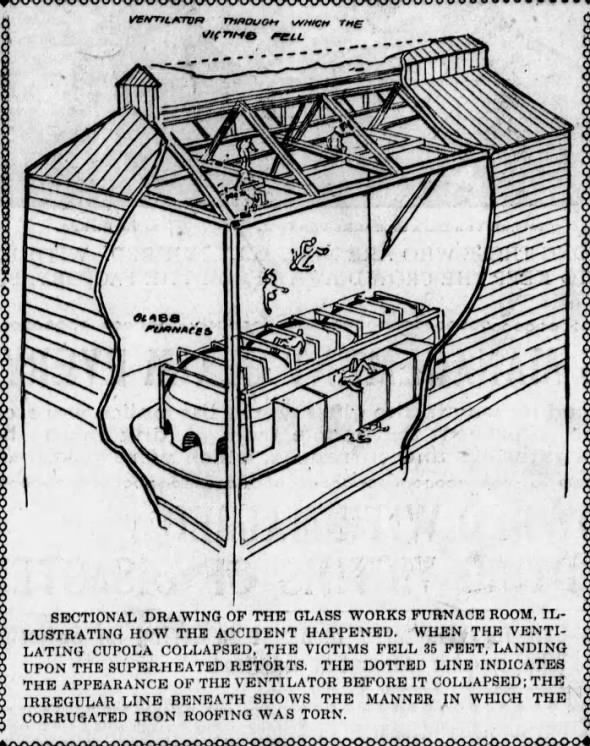
The newly built factory roof collapsed about twenty minutes into the game. One hundred people fell as it gave way and plunged four stories down—many landing on the 500° F oven below. It was a horrific scene. Young people being cooked alive. What happened? The building roof wasn’t designed to hold a mass of spectators. It failed. Those who had climbed up were oblivious or did not have enough concern for the stress they were adding to the structure.

This tragedy wasn’t just a failure of design; it revealed a deeper misconception that buildings should be invincible, a myth that shapes our reactions to collapses even today. It goes further than engineering or physical buildings as well. Our models of reality are oversimplified at best and flat-out wrong in too many cases.

There is a common misconception and an unrealistic expectation about structures—many people seem to assume they are like blocks of granite. From those who believe that every building collapse is a conspiracy to those who think every failure demands stricter government regulations, the myth of an indestructible building continues due to a lack of understanding of engineering and the limitations.

Design Limits Are Not Defects

One key misunderstanding is design limits. Engineering is not about making a building too strong to ever fail. Unless we’re talking about the Great Pyramids, it’s all about trying to meet certain established parameters. An engineered building is designed to meet the expected conditions as defined by regional building codes. If the wind, snow, or loads exceed the designated standards, then there will likely be a collapse.

Earlier this year, after a heavy snowfall in upstate New York, many buildings had their roofs cave in (including this fire hall) because the weight of the snow was that much greater than the design weight. Sure, most engineers build an extra safety margin into their components, but eventually these limits are too far exceeded and you’ll end up with a tangled mess. This is why there are sideline roof shoveling businesses in these places where large snow accumulations are a regular occurrence.

Sure, code could force people to build to a much higher standard, making a collapse due to snow load virtually impossible. But this would increase the costs so much that it would price many people out of building a new house or barn. Engineering is all about compromise, more precisely about making the right compromises given the expected conditions. Yes, there is a case for making adjustments based on observation or after studies, but ultimately we build for what will work most of the time.

More Is Not Always Better

In the aftermath of the earthquake that had struck Myanmar and neighboring Thailand, there was a comment made to me in a chat hoping for more layers of regulation. This is a sentiment, in the specific context of rapid development of Bangkok, that seems more reflexive than reflective. It is a progressive impulse to believe that more interventions and rules are the answer.

The collapse of an unfinished tower in Bangkok, during the earthquake, sparks questions about building codes.  Was it missing sheer walls?  Did the contractor rush to ‘top it off’ quickly?  I want to know what the investigation finds.

But, for me, as someone who works in the construction industry and has occasionally needed to sift through these layers, I could not disagree more. Sure, better regulations may be needed. However, legalism doesn’t work in building standards any better than it does in churches. Sure, you need a code of some kind. And yet onerous regulation will add to the cost of construction, not necessarily improving the end results, and only making new housing less accessible.

It is, at best, the same trade-off discussion we can have about self-driving cars and the need for LIDAR. Sure, this expensive laser ranging system may marginally improve the results, but at what cost? Self-driving cars with cameras alone are already safer than human drivers. Keeping these systems at a price that is affordable will save more lives than pricing them out of reach for average people. It is, therefore, optimal to rollout the less expensive and safer tech even if it could be slightly improved.

At worst there is only more expense and no benefit to more layers of red tape. The real problem with rules is that they are written in language that needs interpretation. Unlike a classroom theoretical setting, in the real world you can’t just memorize the correct answers and pass the test. The ability to make a judgment call is far more important than adding to the pile of regulations. More rules can mean the more confusion and the truly critical matters get lost in the mess.

I see it over and over again, when different customers send the same job for a quote and all of them interpreting the engineering specifications their own way. It is the tire swing cartoon, a funny illustration of when the customer wants something simple and yet the whole process distorts the basic concept until it is unrecognizable. That is where my mind goes when we talk about adding layers. Is it increasing our safety or merely adding more points of failure?

This one stuck with me and should be standard equipment in every design department.  I first saw it as a child while visiting the engineering department of the construction company my dad worked for.

Some of it is just that some people are plain better at their jobs than others with the very same credentials. I am impressed by some engineers, architects, contractors, and code officers—not so much by others. I’m willing to bet the intuition of some Amish builders is probably more trustworthy than a team of engineering students’ textbook knowledge, full of theory, with no real or practical world experience. In the end any system is only ever as good as the users.

Theory Is Not Reality

My work relies on truss design software. I enter information and it does those boring calculations. When I started, I assumed that it was more sophisticated than it really is. I thought every load was accounted for and nothing assumed. But very soon the limits of this tool started to reveal themselves. It is only as accurate or true to reality as the engineers and developers behind it—and on the abilities of the user (me) understanding the gaps in the program.

When it comes to mental models—the kind of physics involved in engineering—only a few people seem able to conceptualize the force vectors. Things like triangulation, or compression and tension loads, are simply something I get. Maybe from my years of being around construction or that curiosity I had, as a child, that made me want to learn what holds a stone arch up or why there are those cables running through that concrete bridge deck. My model was built off of this childhood of building Lincoln Log towers (arranging them vertically) and occasionally making mini earthquakes.

I’m exasperated by this expectation that people have for skyscrapers to be indestructible or to topple over in the same manner of a tree—as if they’re a solid object. It also seems that the big difference between static and dynamic loads is lost on most people. They don’t understand why a building could start to pancake, one floor smashing the next, or how twisting due to extreme heat could undermine the structural integrity of a building without ever melting the steel. Of course this has to do with their beliefs or mistrusts that are not related to engineering—nevertheless it shows their completely deficient understanding of how the science works.

The concept in their head is off, their brain modeling is inaccurate, and their resolution may be so low they simply can’t grasp what the reality is. You try to explain basic things and their eyes glaze over—sort of like when Pvt. John Bowers tried to explain why the plants need water, and not the electrolytes in Brawndo, in the movie Idiocracy. Ignorant people will scoff before they accept a view different from their model of the world. The theory they believe rules over all evidence or better explanation.

On the other side are those who trust every established system without understanding it. They “believe science” and see more as an answer to every question. More rules, a larger enforcement apparatus, faith in their experts, without any feel for the problems encountered by the professionals or those in the field. If they had, they would question much more than they do. Human judgment is still at the base of it all. Or at least that is what the lead engineer told me while we discussed the limits of software and the need to be smarter than the tool.

Not even AI can give us the right balance of efficiency in design versus safety factor or what should be written in the code. It may be a better reflection of our own collective intelligence than any individual, but our own limits to see the world how it actually is are not erased by the machines we create. We are amplified, never eliminated, by the tools we create. So we’ll be stuck wrestling with our myths and theories until we take a final breath—only our flaws are indestructible.

Models of a Messy World

If truss software taught me anything, it’s that no model nails reality perfectly—not beams, not buildings, not life. We lean on these frameworks anyway, because the world’s too wild to face without a map. But just like those fans on that San Francisco roof in 1900, we often climb onto flimsy assumptions, mistaking them for solid ground. The myth of an indestructible building is just one piece of a bigger distortion: we think our mental models—of faith, of power, of people—are unshakable truths, when they’re really sketches, some sharper than others, of a reality we’ll never fully pin down.

Take religion. For some, it’s a cathedral of certainty, every verse a load-bearing beam explaining why the world spins. Others see it as a rickety scaffold, patched together to dodge hard questions. Both are models—ways to grapple with life’s big “why.” Politics is messier still. It’s like designing a city where everyone’s got their own codebook. One side swears by tight regulations, convinced they’ll keep the streets safe. Another group demands open plans, betting that freedom builds stronger foundations. Both sides act like their own ideological model is bulletproof, shouting past each other while the ground shifts—economies wobble, climates change, and people clash.

Then there’s prejudice, the shoddiest model of all. It’s like sizing up a beam by its color instead of its strength. Prejudice, always a shortcut to save us from the effort of real thought, fails because it’s static, blind to the dynamic load of human individuals. Good perception, like good engineering, adjusts to what’s real, not what’s assumed.

All these—religion, politics, prejudice—come down to how we see. Perception’s the lens we grind to make sense of the blur. Some folks polish it daily, questioning what they’re fed. Others let it cloud over, stuck on a picture that feels safe but warps the view. I think of those fans in 1900, not asking if the roof could hold them. They didn’t mean harm—they just saw what they wanted: a free seat, a clear view. We do the same, building lives on models we don’t test, whether it’s a god we trust, a vote we cast, or a snap judgment we make. The distortion isn’t just in thinking buildings won’t fall—it’s in believing our way of seeing the world is indestructible.

What makes a model reliable? Not that it’s right—none are. It’s that it bends without breaking, learns from cracks, holds up when life piles on the weight. In construction, we double-check measurements because we know plans lie. In life, we’d do well to double-check our certainties—about the divine, the ballot, the stranger next door. The San Francisco collapse wasn’t just about a roof giving way; it was about people trusting a picture that didn’t match the world. We’re still climbing those roofs, chasing clear views on shaky frames. Maybe the only thing we can build to last is a habit of asking: what’s holding this up? And what happens when it falls?

Vaccine Safety and Skepticism: A Father’s Perspective

Standard

Up until a few years ago, I basically trusted the medical establishment. Sure, even then I would question—like I do with everything else—and then make my own analysis the risks, costs and benefits. My mom’s rule of thumb “everything in moderation” seems to be reasonable in most circumstances. But I’ve grown more skeptical and not because I believe there is a conspiracy to make us all unhealthy either. I just think hubris can be blinding and institutions compromised.

So when it came time to decide whether or not to vaccinate my newborn daughter, my feelings were mixed. She is too precious to gamble. It is my job to protect her. And for that reason I needed to take another look at the question of childhood vaccines. This is my analysis as someone who is not trained in biology, I’m not a medical professional or an expert in any way, shape or form. This is merely the thought process of a concerned father wanting to do what is right and didn’t like the answers he was getting from those ‘credible’ sources.

So join me in a critical look at the topic of childhood vaccines and some things that raised my eyebrows as far as the science, some ethical questions raised recently and the online testimonials versus professional advice. It would take a book to properly cover a topic of this magnitude, but this is an overview and give some reasons for the decision I’ve made. This is a reach into the barrel to examine a few apples and get a little better picture of what else we may find upon further review.

Science: Ingestion… Injection… What Difference Does It Make?

One of my “does their own research” friends reposted a chart posted by Physicians for Informed Consent (PIC) showing the safe amounts of aluminum versus the amount injected with the hepB vaccine—according to their post, 250mcg is an amount 75x more than what is considered safe to be in the bloodstream of a 7.3lb infant. That sounds bad. But this information does beg a few questions.

First, why is aluminum toxic over a certain amount?

Second, does an injection go into the bloodstream?

And, third, why is this in the shot?

What was disconcerting is when I went CDC and WebMD sites and found that they were making an inaccurate comparison. In their defense of aluminum in vaccines they made a case based on the safe amounts to ingest and yet vaccines are injected. This is that kind of presentation that would leads fact-checkers to declare it misleading if it was in a Trump speech. Maybe my neighbor with the “believe science” placard in their yard isn’t going to notice this sleight of hand, but I certainly did. It certainly didn’t assure me much about their actual authority when they tried to pass to different means of entering the body as one and the same.

Oh, but it does…

However, the PIC information is equally as misleading. And they know it. The post is talking about safe amounts of aluminum in the bloodstream. And yet vaccines are not injected directly into blood vessels. No, the shot goes into soft tissue and the aluminum is slowly dissolved from there. So clearly it is not aiding a mission of informed consent anymore than the drug company sponsored content. It’s just propaganda. It is put out to feed the confirmation bias of anti-vaxxers and muddies the waters. The freaked out #protectyourkids mothers are not going to ask further questions.

The bigger question is what aluminum does in large amounts. Words like “toxic” can be tossed around in the same manner of Nazi or racist. But slapping a label of something does not make it accurate description nor is it equal to comprehension of the topic. The same authority establishing a “safe” versus “unsafe” levels of aluminum also tells us to get vaccinated. The whole point of adding aluminum is as an adjuvant, it is supposed to provoke an immune response and only is bad when it begins to build up—typically it is just expelled from the body without doing any damage.

Practically speaking one would need to be an expert on toxicology to truly know what ‘the science’ is and give informed consent, the rest of us are merely picking which side we want to trust. For me, I lean towards the consensus over the outliers, what it means is generally not ranking a relatively group—like PIC—over the larger group of physicians (who have children themselves) and believe that the benefits of vaccines outweigh the risks. Yes, professionals have blindspots, they are more married to the system too as bigger beneficiaries, but they’re also smart people trying to help and heal.

Ethics: Myth of the Abstaining Amish and Abortion Cells

One of those claims that come up over and over again online is that Amish are healthier because they don’t get the vaccines. Given what I know, working with Amish, I’ll put this somewhere between “96% of statistics are made up on the spot” and “Amish don’t pay taxes,” because it is just plain untrue. Back in 2011 my sister, a medical doctor, worked on a survey of 1000 Amish people and their attitudes towards vaccines. 85% of those surveyed had vaccinated at least some of their children. Sure, Amish lag behind the general population, and uptake varies as they’re not a monolith, and attitudes have likely shifted in the post-Covid era, but they aren’t totally abstinent—just hesitant.

To get into the complexity of the picture, in my brief survey of my office co-workers (I work for an Amish-owned company) there was an interesting anecdote. Apparently, his mother contracted measles while she was carrying one of his older sisters. The result were complications and his sister’s lifelong health issues. Needless to say, his mom became more in favor of vaccines after this and that has been the story for some time. The discomfort of subjecting our children to shots looms larger until we get a first-hand experience with the actual disease. A day or two of soreness and high temperatures is better than measles, polio, or other preventable diseases. The ethics shift towards the risk of intervention.

Speaking of ethics, another coworker—not Amish—piped up about how vaccines use aborted fetuses. This is technically true in the case of some vaccines, I’ll let Grok give a brief explanation:

Certain vaccines—like those for rubella, chickenpox, and some hepatitis strains—rely on cell lines originally derived from fetal tissue decades ago. These aren’t “aborted embryos” in the sense of fresh tissue being scooped up and tossed into a vat. Instead, we’re talking about two specific cell lines: WI-38 and MRC-5. WI-38 came from a fetus aborted in the 1960s in Sweden (elective, legal termination), and MRC-5 from a similar case in the UK. Scientists took lung cells from those fetuses, grew them in labs, and kept them replicating ever since. These cell lines are immortalized—meaning they’ve been dividing for generations, far removed from the original source.

Why use them? Viruses for vaccines (like rubella or varicella) often need human cells to grow, and these lines are stable, well-studied, and safe for producing big batches. The cells aren’t in the vaccine itself—they’re like a factory. The virus is grown in them, then harvested, purified, and processed so the final shot has no fetal cells, just the viral bits needed to trigger immunity. Think of it like using yeast to make beer—the yeast doesn’t end up in your bottle.

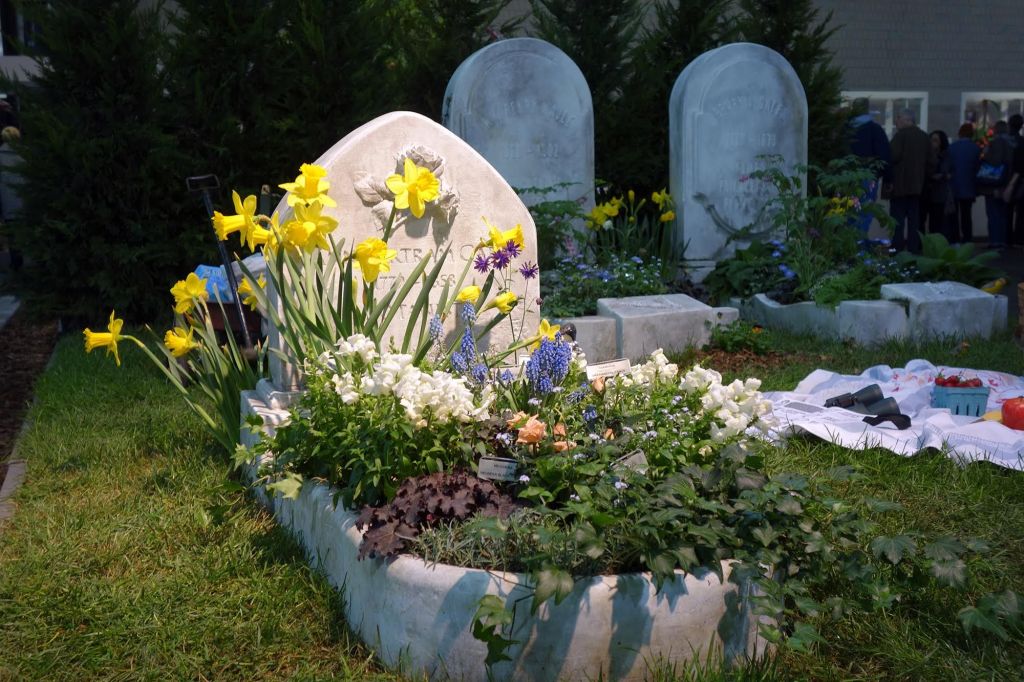
This longer explanation does not have the same punch as “they use aborted fetuses to make vaccines.” But, for me, it answers the ethical question. This use of these two cell lines to save lives is basically equivalent to planting of a flower garden over the grave of a murder victim. I’m no more guilty of that than I am for the land under my feet being soaked in the blood of conquered people. It is just what is. What was done is done and refusing to use vaccines derived from those cell lines is not going to restore the life that was taken. I have more of a problem with the characterization of this being too vague to give proper understanding.

The soil under our feet is soaked in blood, but not an ethical dilemma to put to good use.

In the end, both sides of this debate peddle their myths, misinformation and deception, calling those mRNA Covid jabs “safe and effective” one of those establishment lines that fell flat in the test of time. But, for me the ethics of putting my children at risk of preventable disease outweighs misgivings about something done over 50 years ago. We can’t bring back those killed, but we can make their lives worthwhile and honor the legacy they’ve created for us. My opinion would be vastly different if they were still harvesting fetal tissue to grow viruses.

It is more important that we are honest than we win a debate. There’s no excuse for the repeated and easily debunked claims about Amish or aborted cells to be shared. Those in the “do their own research” crowd need to do better. When I see people share videos made by a chiropractor, in a lab coat, going only by doctor, it makes me question their judgement more than anything else. Being an expert in doing bone adjustments is one thing, biology is completely another. People aren’t very good about picking their sources, let alone producing coherent ethics.

Tragedy Testimonials Versus Professional Recommendations

Another thing I’ve come across, on social media, is that case of a child that died very shortly after the vaccine was administered. The grieving parents, one of them a nurse, disagree with the autopsy report, that cited SIDS, and put blame on the shots. First off, the pain of losing a child is beyond anything else I’ve ever experienced (you can read my personal account, “The Day My Little Hope Died“) and always will leave many questions for those left behind. Second, in this case, it may feel better to externalize blame.

I’ll admit, I was a little put off by my medical provider (a Physician’s Assistant) who just brushed off my concerns about too much—too soon. This is my little darling, and it is my job to protect her, so at least entertain my anxieties a little. So that part where of her worry about her son’s sickness prior to getting a dose of vaccines being dismissed does resonate. That doctor should have shown a little more respect for a mother’s intuition and a nurse’s instincts. That said, we’re only getting one side of the story and from the perspective of someone not really in a good state of mind.

Just taking the testimonial at face value—not verifying any of the claims—they give a clue about what really happened with their own choice of words:

Melissa, who worked remotely, heard the baby fussing around 6:15 p.m. Her husband went in to check on him. He readjusted him, and rubbed his back as Fathers do. Baby Sawyer fell back to sleep.

When we were in the hospital for the birth of our daughter, before we took her home, they pounded it into our heads not to put loose items in her crib with her and never to allow her to sleep belly down. This is about SIDS (Sudden Infant Death Syndrome) when a perfectly healthy baby is put to bed, often laying on their belly, suffers from positional asphyxia and dies. Infants are completely helpless, they can’t readjust their position if their airway is somehow restricted and they could be gone in a matter of minutes.

So that particular paragraph really jumped out at me. I’m very sensitive to how people structure their thoughts, the phrases, and I have even identified a false accuser once only on the basis of the use of words that were conveyed through another person in a paraphrase. When I saw “as Fathers do” it came off as a slightly defensive posture—most especially next to “rubbed his back” in the context of a sleeping infant. One hand they’re being as honest as they are able to be in the circumstances. On the other hand they’ve just given corroborating evidence for the official autopsy report.

They can be forgiven for their blame game. It is hard enough to lose a child, but totally unthinkable to believe something you did may have contributed. When Sanyiah died I stopped speaking to two of my siblings (not that they noticed as busy as they were) for a year or two. Why? Well, they both were not at the funeral, in my mind they did not care enough about the little people in their lives (that meaning my ex-fiance who had personal ties to them) and were, in a round about way, part of the problem that caused the child’s death.

The real reason my anger was taken out on them, however, was that psychological need we have to find a scapegoat. And Melissa, rather than pile on her husband, which won’t help, has pointed somewhere else instead—which is better than their negative feelings being turned in on the marriage. It is a way of coping with tragedy. As far as testimonials go, three of my cousins had a seizure disorder, one of them died and two of them are severely disabled. After their issues with the first child, they decided not to vaccinate. But this made no difference in the end. The impulse to blame intervention is strong, yet correlation isn’t causation and often the truth is messier than those simple narratives we prefer.

In the case of baby Sawyer, it doesn’t have to be one thing or another. The risk factors for SIDS include both second hand smoke and overheating. It seems quite possible a bunch of vaccines, on top of being already sick, and then possibly being on their belly, all contributed to the end result. Medical professionals face big liabilities if they are at fault. There is a tendency to circle the wagons or become tight lipped rather than speculate when million dollar lawsuits can be the result. So maybe in a perfect world vaccines would be a bigger part of the SIDS discussion?

Still, aluminum in the bloodstream does not cause suffocation and 34 hours later is not description of a biological mechanism that links the injection to the outcome.

A Respectful Conclusion, My Final Risk Analysis…

No parent ever wants to be responsible for the suffering or death of their child. When I see my daughter’s eyes looking up at me it melts my heart. She already has me totally wrapped around her finger and I would not do anything that put her at an unnecessary risk. There is a temptation to take the “If it isn’t broke don’t fix it” approach to vaccines or basically do nothing. At least this way an intervention you signed off on didn’t directly cause the harm. Without the nudge of the doctor’s office I might fall off the schedule they have simply because it feels better.

But the body of evidence points to benefits that outweigh the risks. That is to say there are risks, vaccine injury is real, but there are risks to everything we do or don’t do. Would anyone have stepped on board the Titanic if they knew the icy ordeal that awaited them in the middle of the night? In 2022, motor vehicle accidents took the lives of 42,514 people. And yet we don’t see emotional testimonials online about the “mistake” it was to drive to Kansas or trying to caution us against this dangerous activity. This is because we have normalized the risk and tune it out—that and we think that only the bad drivers die when any of us could.

What could be improved is a little respect all around.

First off, this advice applies to the medical establishment. From Fauci on down there has been this attitude of near contempt for those who question their authority. A prime example is the statement of Dr Fauci when faced with scrutiny:

So it’s easy to criticize, but they’re really criticizing science because I represent science. That’s dangerous. To me, that’s more dangerous than the slings and the arrows that get thrown at me. I’m not going to be around here forever, but science is going to be here forever. And if you damage science, you are doing something very detrimental to society long after I leave. And that’s what I worry about.

Beyond hybris. Beyond martyr complex and a misdiagnosis of the situation. No, Fauci, you cannot say “I am the law” like a rouge police officer. That’s not science, that is just a delusion. Sure, it sucks to be questioned in your own area of expertise. I think this is why some physicians do sometimes gloss over concerns of patients. But this is what damages the credibility of the institutions of science more than anything else. When the top doctor confuses “the science” with his own position he’s dangerous.

Okay, you smug, and dangerous, SOB.

Second, those of us self-educated people, who have not gone through that rigorous process of medical school or taken any kind of advanced biology course should remain humble. No, my lack of proper terminology does not make me an idiot. Nor should a nurse and mother’s concerns about her sick baby getting shots be dismissed. But “did your own research,” while in the lobby of the chiropractor, does not make you an expert or unbiased.

In the end, no parent wants to gamble with their child’s life. Staring into my daughter’s trusting eyes, I feel the weight of that responsibility—and the pull to do nothing, to avoid any chance of harm through action. Yet, after sifting through the science, wrestling with ethical dilemmas, and listening to both heartbreaking stories and professional guidance, I’ve landed on this: the evidence tilts toward vaccines’ benefits outweighing their risks. It’s not a perfect system—vaccine injuries happen, and the medical establishment could stand to listen better—but the data holds up against the diseases they prevent. We all deserve more humility and respect in this conversation, from doctors to doubters like me. For my little girl, I’m choosing the path that keeps her safest, not just from needles, but from what they guard against.

Hit me up in the comments section below with your most powerful arguments for or against childhood vaccines.

Do you vaccinate your children, why or why not?

Unapologetic — What Is the Real Proof of Resurrection?

Standard

True or false: The truth of the entire Gospel message depends on the bodily resurrection of Jesus.

I’m pretty certain that this is something that both Christians and non-Christians alike, after reading the Gospel accounts, would agree on.  If Jesus remained in the grave, a dead man, then doesn’t that make the entire account of these books a lie?

Recently I was invited to watch a lecture by Gary Habermas, a professor, historian Christian apologist, and author of various books about Jesus.  This after I had expressed a thought on how difficult this central claim of the Gospel would be to accept for a true skeptic.  Presumably, this recommendation was to help me bridge the gap between the claims and reasons to doubt them.

It seems reasonable that Habermas, an expert who believes, would come out with his best argument.  I mean, why waste an opportunity by holding the most solid proof of resurrection for a later date, right?

So, after watching, and taking notes, this is the outline of the arguments made along with my own counterpoints:

1) Most Contemporary Scholars Agree

Habermas spends considerable time talking about the changes in perspectives in the last 30-40 years in academic circles.  Apparently, most theologians are conservative now and he cites a skeptic who has warmed to even the claims that the disciples saw Jesus after his death on the cross.

However, the first thing I see, when someone uses “experts agree,” is an appeal to authority, which can be a logical fallacy if being used as evidence of a claim.  The fact that a majority of doctors had once believed that bloodletting was good therapy does not actually prove anything as far as the reliability of the practice.

So, to a critical thinker, this is a red flag.  He is starting with an appeal that is not a true argument for his further claims or at least not any more than “a consensus of scientists believe” disproves the outliers who disagree with their conclusions.

Everyone else is here, can’t be the wrong place…

But, more than that, the devil is always in the details and there is a bit of a bait and switch in his presentation.  The acceptance of any empty tomb is not the same thing as the real issue at hand which is resurrection.  It is possible that something else could explain the disappearance.  An empty tomb is not itself proof of the miraculous.

So what about this shift in thinking?  

Well, it is no secret that the Western world is falling into unbelief, Christianity is losing influence, and to the point that the ‘liberals’ may have long left the room.  In other words, it could be polarization, where nobody in the moderate middle ground survived, and thus only ‘conservatives’ see theology as being a worthwhile pursuit.

When something falls out of popular favor, like eugenics or white supremacy, then it is not really a big surprise when the hardliners are all that remains.

As a young person, I remember an Evolution versus Creation debate at a local university campus.  Such an event would not even be hosted by such an institution.  The 2014 Ken Ham vs Bill Nye rhetorical battle was held at the Creation Museum for a reason.  And it is not because either of these men are taken seriously or viewed as credible by the mainstream.

The point is most people may simply have moved on and the plurality of those remaining, the current theologians, are the fundamentalists.  There is much talk about the collapse of the center and this change Habermas mentions could be a product of that rather than anything related to the evidence.  

We also have a resurgence of flat earth theories (and the rise of Socialism on the other) which is certainly not an argument for those beliefs.  I guarantee more than 350 pages have been written in defense of Marxism and yet that does not convince me in any way, shape, or form that this ideology is the right way forward.  No, this does not prove or disprove anything as far as the resurrection, but why waste time on this kind of appeal if there’s better evidence?

2) Paul Is Generally Accepted, Even By Skeptics

Of all the writings in the New Testament those of Paul, the Apostle, are the most compelling and probably because this man (despite his own claims to the contrary) is so eloquent in his presentation.  I do find his focus on spiritual transformation to be more inviting than Mathew, Mark, or Luke.  And also his ability to be the odd one out as far as important matters of the faith.

He was a controversial figure, even in the early church, and often put on the defensive by those fighting to preserve the Jewish tradition from Gentile converts.  The account of his Damascus road encounter obviously convinced the right people of his change of heart.  And this acceptance is significant, it is at least an answer to those modern-day Pauline skeptics, namely feminists and contemporary Judaizers, who would have us believe he was in conflict with Jesus.

That said, both Joseph Smith, the founder of Mormonism, and Muhammad claimed to have had dramatic encounters.  Both were committed to these revelations they had received and able to convince a large body of people of these claims.  It is always amazing to me how even a fundamentalist Christian can scoff at claims of angels delivering inerrant teachings or laugh off the flight to Medina on the Burāq, all the while accepting Biblical claims.

An undeniably beautiful image, right?

In short, I absolutely believe that Joseph Smith and Muhammad existed as real people.  I also have no reason to doubt that they did not believe what they claim to believe or even that they had some sort of trip and conversion experience.  But the truth of their existence and conviction does not mean their most extraordinary claims are actually reliable.  It does not matter how many people recorded their lives or believed what they said.

So, of course, a man named Paul existed, and perhaps he did have an encounter with an apparition.  I will accept that he was brought into the church.  There is no reason to take issue with any of this.  And I’m sure, if he was indeed out there killing Christians, this was a very welcomed development.  And yet there are also those raised Christian who become Muslims or atheists.  A conversion experience does not prove the extraordinary claims of a particular religion.

3) More Sources Than Alexander the Great

Habermas spends significant time in his lecture discussing the typical criteria for accepting a source.  There is more proof of Jesus, according to what is acceptable by normal academic standards, than there is of Alexander the Great.  Which is no surprise given that Jesus arrived on the scene later and spawned a religious movement through his teaching.

And yet while most everyone agrees that George Washington was a real person, that he crossed the Delaware river, this doesn’t mean that they must accept his ideological perspective or believe the mythology about the cherry tree.  Historic texts, like reporting of events in our own time, can be almost entirely fact, yet also be embellished or just incorrect on details.  

The biggest lies are always laced with facts.  It is how so many people are snookered.  A charlatan will make many credible claims to establish themselves.  They may have credentials and compelling stories.  The New York Times reporter, Walter Duranty, won a Pulitzer Prize for his glowing coverage of the Soviet Union.  That he included many verified facts in his accounts does not mean his writing was not deceptive.

The reality is that extraordinary claims require extraordinary evidence.  If I were to list off my activities for the day, that I went to Dunkin for coffee, to the gym after that, and then broke Usain Bolt’s 100 meter sprint time, would finding independent verification of the first two claims bolster the last claim that I’m now the fastest man alive?

Most of the Bible being reliable does not mean every claim being made is true.  Being correct on a million mundane facts does not prove any of the most extraordinary claims contained.  No, it does not even suggest we should be less skeptical.  Maybe this makes some of us uncomfortable, but this is a normal burden of proof that we place on those who are outside of our own belief system, why not use the same standard for ourselves?

The big difference between Jesus and other historical figures is that nobody is telling me to devote my life to Alexander the Great.  It is one thing to believe that Abraham Lincoln existed as a real person and a significant figure, and quite another to say that he resurrected from the dead and ought to be worshipped as God.

4) We Can Trace the Narrative Back

Most of the New Testament was written down long after the events took place, this is something generally agreed on by all sides, and Habermas does have an interesting response for those who would use this as a basis for skepticism.  This, I believe, is where a general consensus is good enough.  It is silly to argue that Jesus did not exist or that the narrative was entirely fabricated well after the fact.

Close is not the same as complete. Not even close.

And yet, again, this tracing narrative back, using catchy phrases to suggest that these things had been established early and then were passed along made me think of modern memes or protest chants that are created in response to real events.

Michael Brown, for example, was shot by a police officer in Ferguson, Missouri.  Soon a phase, “hands up, don’t shoot,” became the rallying cry and is a short version of this idea that Brown was gunned down while simply trying to surrender.  However, both a St Louis County grand jury and a US Department of Justice investigation cleared the officer of wrongdoing, the actual evidence points to the teen being in a physical altercation with the officer, and the catchy chants, therefore, are not an accurate representation no matter how popular.

The thing is, if we can’t get things right even days after the actual event, does gap or no gap matter? 

It really does not.

5) Why Die For A Lie?

Joan of Arc was an extraordinary young woman.  She managed to inspire her people to fight and is a wonderful icon of faith and courage.  But eventually, she fell into the hands of the English, who had every reason to hate her guts, and they put her on trial for ‘heretical’ exploits.  There is every indication that she was cooperative to the point that there was no justification for her execution and had likely been forced to violate the terms so they could kill her.

The martyrdom of the disciples of Jesus is something many Christian apologists tout as being hard evidence of the resurrection.  As in who would die for something that they know is a lie?  And this is indeed is proof of the commitment that these men had made to the Gospel message.

But let’s consider what happened to the Millerite movement when their prophecies about the Second Coming proved to be false.  Did they give up their delusion or even entirely reject the teachers that had misled them?  Some did.  But, as with Harold Camping, who spiritualized the prediction post hoc rather than admit being wrong, this is what is now the Seventh-day Adventist denomination.

So why do people remain committed to something despite overwhelming evidence to the contrary from an outsider’s perspective?  

It is this little thing called confirmation bias, we become emotionally attached to the things we believe and to the point of being blind to the obvious.  As the saying goes, “A man convinced against his will is of the same opinion still.”  And people who have had their belief system falsified will simply modify as much as necessary and then move on as if nothing happened.  Why?  Well maybe because it is too hard to start from square one, to admit being wrong, or perhaps because the community and values feel too important to give up?

So, since I have my skeptic hat on, and we already know that the disciples had been looking for a literal earthly kingdom, what is to say they did not pick up and run with an alternative rather than return to the lives they had before.  I mean, even most agnostics will claim that Jesus was a good teacher, so this could be justification for building a mythology to sell this better way.  For radicals the ends often justify the means, lying is not forbidden if for a righteous cause in Judaism.

Anyhow, if backed in a corner, if you’re likely killed even if you do recant, why not refuse to go along with what your persecutors want?  I doubt Joseph Smith would have given his tormentors the satisfaction of admitting that he never had his angelic encounter.  That doesn’t make Mormonism true.  No, this is just how we are.  Pathological liars are so convincing because they believe their own lies.  What Jesus taught was revolutionary, people die for less all of the time.

Is That Really the Best We Have?

I know that I’m not going to win many fans amongst my Christian audience by giving an honest answer to the apologetics they offer.  I’m sorry, it may work for many who already buy-in, it may be enough to convert a few, but I simply cannot be impressed.

That said, I do appreciate Habermas for his admitting that the Gospels do not always agree perfectly, and also admire those who can engage in the long form of argument too tedious for my own tastes.  

Still, all said and done, these sorts of arguments can never span the gap between the extraordinary claims and the most capable skeptics.  It is nibbling around the edges of proof and really only ever evidence that is convincing to those who come in with the right presuppositions—like those claims of the miraculous as an explanation to things not yet explainable.

In his questions and answers follow-up, Habermas mentions how many do not believe for emotional (rather than rational) reasons.  He points to C.S. Lewis as someone who fell away from faith over the death of his mom before his eventual rise as a Christian thinker.  However, the same is also true for why people believe.  We want a world with purpose and meaning, and the Gospel narrative provides this.  It is harder to give up a comprehensive belief system, even if it makes no truly testable claims.

It just feels like apologetics always relies on strawman versions of skepticism.  Even if I fell totally into unbelief, I could never dismiss all of Scripture.  But I also have seen, first hand, how incapable people are at getting the facts right, how they see what they want to see and delude themselves.  I know because I’ve made the error of pursuing something, in sincere faith, that could be falsifiable and was forced to swallow the hard reality of my self-deception.

Most who profess belief in Jesus will never be so bold as to risk it all on something that can be disproven.  They believe things that are written in a book, they attribute their good fortune to God’s goodness or try to accept the bad as being loving discipline, without ever putting it to the test as they would if they had actual faith.  It is as if they hope if they never question then maybe the dream of eternal reward will come true and thus run from any chance of encountering a serious refutation.

The thing is if the resurrected Jesus needed to appear to Peter, James and Paul before they would believe, then why not appear to us all? 

Is there an answer to this that doesn’t come off like an excuse?

It isn’t like the creator of the universe lacked the budget.  And that the most important decision in our lives would come down to believing the eyewitness testimony of a handful of first-century men, this seems rather odd.  Don’t get me wrong either, the Biblical narrative is quite fascinating, the miracles, angelic visits, and promise of life after death to those who believe, it is wonderful. The teachings of Jesus have led to a more compassionate era. Still, the claims like the virgin birth, walking on water, and raising the dead aren’t exactly things a rational person would accept without seeing these miraculous events for themselves.

The biggest problem with the apologetics of Habermas is that it relies on a false dichotomy.  A reader doesn’t need to be able to accept that a source is perfectly reliable to believe some of it is true.  There is a multitude of possibilities as to why the disciples would go with the resurrection narrative.  First, it is much easier than saying they wasted their last few years.  Second, it sells the teachings of Jesus better than anything else.  And third, it can’t be falsified, how does anyone disprove what they claim to have seen?

The possibilities are endless.

This is not to say that the disciples were delusional or lying either.  My point is that it is too easy to see an argument as being stronger than it is.  It is annoying, perhaps, that we can’t rely on apologetics to do the heavy lifting of the Gospel, nevertheless, the only resurrection of Jesus many people will see is that which is embodied in us.  What that means is self-sacrifice and bridging the gap of unbelief with the substance of love. 

Talk is easy, actually taking up the cross is not…