Rudolf Diesel: Thoughts about Idealism, Despair, Progress, Politics and Hope

Standard

Diesel powers the world economy.  I never considered the extent to which that is true until watching a documentary (click here to view it) about this type of internal combustion engine.  It is named after the inventor, a French-German mechanical engineer, Rudolf Diesel, and is the reason why global trade is possible to the extent it is.
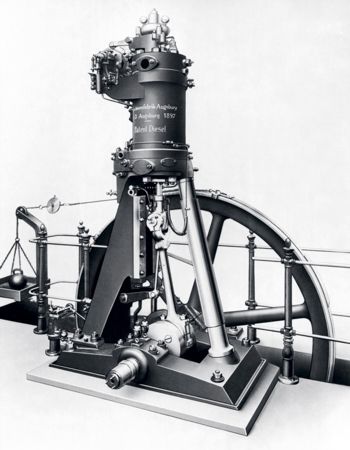
Early Diesel design, circa 1897

In considering the story of Diesel, his brilliant invention and the results, I could not help but see the pattern all too common with innovators.  Diesel’s life turned tragic, he was found floating in the North Sea, dead of an apparent suicide, and likely a result of his despair over the unintended consequences of his own design.

According to biographical accounts, Diesel was a utopian idealist who had hopes that his invention would be a catalyst for social change, free the common man and break corporate monopolies.  Unfortunately, while a revolution for transportation, Diesel power did not achieve the lofty social vision. 

Worse, the Diesel engine found use as a part in an efficient killing machine, the German U-boat, and this no doubt grieved the pacifist inventor.

Here are some observations…

#1) What is intended for good can often be used for evil.

Diesel had never intended his invention be used as a means of terrorizing North Atlantic shipping lanes.  And, likewise, many scientists and inventors had regrets related to their greatest contribution to the world.
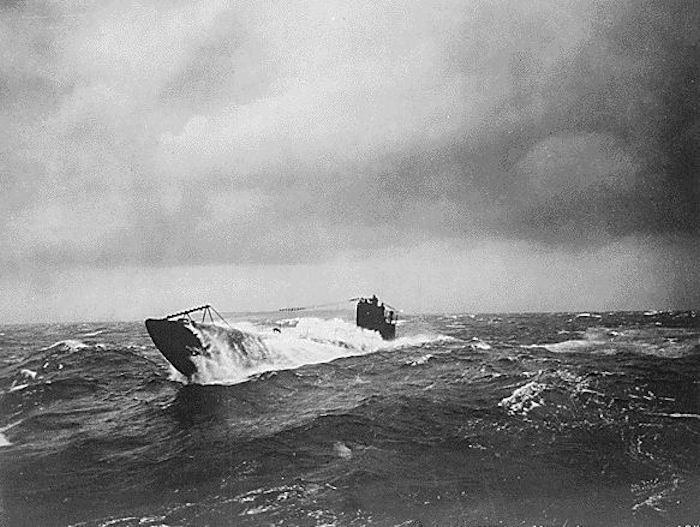
German U-boat, the original stealth weapon 

There are lists from K-cups to A-bombs online and many others.  For example, Henry Ford seemed to dislike the vast social changes and consumerist mindset made possible by his manufacturing revolution that helped automobiles become a fixture of American life.  Even this media, the internet, once thought to be the beginnings of an information age, has become a cesspool of pornography and ill-founded claims.

I worry about this as a blogger.  Once my thoughts are out there they cannot be contained again.  Will someone pick up my words and run with them in a direction I never intended?  It is a potential outcome that could scare a sensitive soul into silence and is at least a reason for me to be prayerful in what I post here.

I believe there are many people who do not thoroughly think through the potential unintended consequences of the ideas they promote.  There are many government programs and social movements intended for good that might actually be creating more problems than the one that they were intended to solve.

Which takes me to a second point…

#2) Yesterday’s revolution is today’s loathed source of inequality and evil.

It is ironic that the invention that did actually outcompete coal for market supremacy is now enemy #1 for many.  The internal combustion engine won in the marketplace because it was by far the cheapest most efficient means to power transportation and still remains. 

Given there are no steam powered cars, tractors, trains and ships anymore, it is clear that internal combustion is the best bang for the buck and remains to be rivaled.  Diesel powered locomotives and ocean going container ships are extremely powerful while being very economical.    

109,000-horsepower Wärtsilä-Sulzer RTA96-C

Diesel power still outperforms hybrid technology—A loaded Diesel powered class 8 truck is more efficient pound for pound than a Prius.

Think about it: It takes one gallon of fuel to move an 80,000lb truck five to seven miles.  A 2016 Prius, by comparison, carries a weight of around 4000lbs can go anywhere from 50 to 58 miles on a gallon of fuel.  It may seem the Toyota is greener until you consider that it is moving twenty times less weight.  Twenty Prius cars combined together, after dividing their individual consumption by twenty, would consume 2.5 to 2.9 gallons of fuel.  Now, obviously, combining Diesel and hybrid technology on the scale of class 8 truck would undoubtedly yield even greater results if fuel economy were the only concern, but the point remains that Diesel power is extremely efficient and effective—and only more so the larger the application.

So what’s the problem?

Well, the current popular perception is that the petroleum industry “big oil” is the enemy and conspires to hold back technology that would dramatically increase efficiency.  Worse than that, we are told that petroleum power is a source of global climate change and a threat to the global ecology.  Poor Diesel would be driven even further into despair if half this is true.  We fight over oil.

 #3) Progressive aims of our time are at odds with each other or self-contradictory.

Globalism, higher standard of living for more people and environmentalist ‘green’ movements are at odds with each other.  Pushing one direction will almost invariably come at the cost of the others. 

Progressive politicians may tout an idea of a ‘green economy’ as a jobs creator, but the reality has been that wind and solar energy can only remain competitive through heavy use of government subsidies.  Beyond that, even with the help, domestic ‘green’ manufacturing is unsustainable against foreign competition.  At best we will merely replace jobs lost by the heavy regulations placed on fossil fuels and raise costs of living across the board.

Furthermore, it was the progressive policies of the past century that have created the current conditions.  Government policies like the Rural Electrification Act, the Interstate highway system and trade agreements have actually moved us away from a more sustainable less polluting lifestyle.  Our cheap and easy movement from place to place has harmed community and local markets.

Rural Electrification Act propaganda poster.

It is hard to know how the current landscape would look had the progressives of yesterday had not literally paved the way for suburban sprawl, the trucking industry (that currently employs me) and driven us to embrace a coal powered grid.  But I do suspect more of our food would be locally grown, more of our products locally produced and solar energy far more the norm in places utilities would be to costly to maintain unless mandated by law.

In final analysis things might not be as dismal as they seem.

It is easy to focus on the negative without considering the good.  The means of today are likely as unsustainable as the means of yesterday and therefore the progress of the past century might not be the end of us after all.  The only consistent reality in the past two centuries has been that markets constantly change.

Canal boats an all the infrastructure to support them were soon replaced by steam power and railroads.  In Pennsylvania the lumber industry rose in prominence before a rapid decline after the states wooded mountains were reduced to stubble.  The coal industry once put food on the table for boat loads of immigrants before cheap efficient oil and a multitude other factors conspired against it.
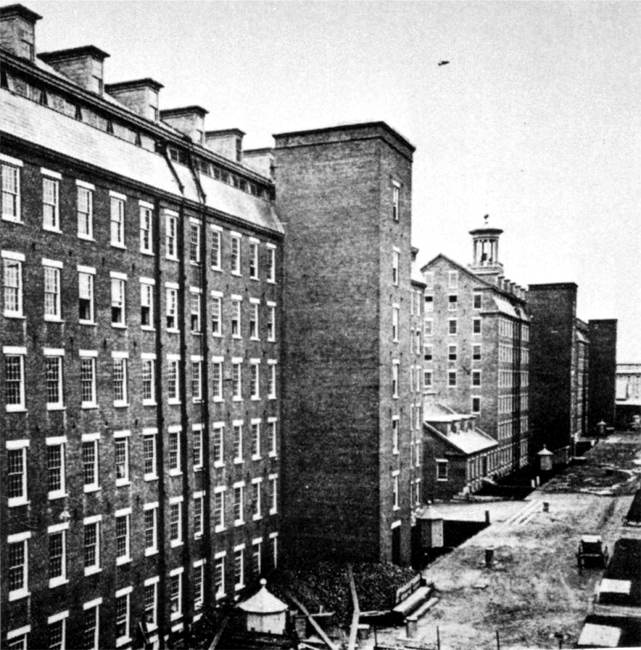
Bay State Mills, Lawrence, built 1845.

Manufacturing, from the once mighty water powered textile mills of the New England states to the formerly unstoppable domestic steel industry, has also migrated following cheaper labor and energy.  Each time promoting deep consternation and fear.  But so far the Luddites have yet to have the last laugh and a new balance is eventually found that usually benefits everyone.

Certainly the overconfidence and optimism about today’s new solution may become the big disappointment of tomorrow.  Yet, do we really wish to go back to a time when a transatlantic voyage was only something a religious zealot or crazy Viking explorer would do?  Would we really rather spend most of our time scrounging for just enough to eat as to avoid the possibility of mechanized warfare?

Nobody knows for certain why Diesel died... 

However, what is certain is that his invention changed the world and provided a means for interstate commerce and global trade that never existed before.  The pacifying effect of global trade, economic benefits of an expanded market place and inexpensive power are largely unappreciated.  But we probably do have Diesel to thank for helping create the long peace and prosperity of our time.

Maersk, Triple-E design, Diesel powered, container ship

In an age of information overload, where we know about beheadings in the Middle East before the people the next town over would have heard a century ago, it is difficult for our finite minds to contextualize and easy to become overwhelmed.  This, with an accompanying loss of faith, could be why middle-aged American white males are committing suicide (supposedly the most privileged in the world) and at an alarmingly increasing rate. 

Diesel’s pessimism about the future in retrospect seems to have been premature and his nightmarish perception of reality overstated.  In like manner many of our modern fears and despair inducing thoughts about the future could be negativity bias and nothing more.  Every generation seems to believe that the world is falling apart and still here we are.

Whatever the case, ignore the fear-mongering propaganda of the punditry and politicians.  Embrace temperance, a spiritual quality developed through faith, over mindless reaction and fearful impulse.  Trust God to secure the future, we can only live one day at a time and never ever lose hope!  If you are depressed about events in the world today, I invite you to see the higher perspective:

“Therefore we do not lose heart. Though outwardly we are wasting away, yet inwardly we are being renewed day by day. For our light and momentary troubles are achieving for us an eternal glory that far outweighs them all. So we fix our eyes not on what is seen, but on what is unseen, since what is seen is temporary, but what is unseen is eternal.” (2 Corinthians 4:16-18)

Perhaps the greater of two evils will be elected come November and drive the nation to complete ruin.  

Who knows besides God?

We may all die tomorrow, we will all die eventually, our work blown away in the wind of time and forgotten.  Everything comes to pass, nothing will remain as we know it today, but there is hope beyond all hope found in an eternal perspective.  So look up, because the sun is still shining and the future remains bright!

Do you see the light and feel the warmth of hope eternal?

If not, my prayer is for the blind to see…

The Lost Witness of Christian Community and Finding it Again

Standard

There has been much focus on the family in the church.  Popular media commentators (like James Dobson, Michael Pearl, Bill Gothard and Doug Philips) encourage making a high priority of our own immediate families. 

Family is important.  But the “no greater joy” in 3 John 1:4 is not written about a man’s own family or his blood relatives.  Instead the letter is written about the church.  John is describing love for spiritual children and the family of God.  Do we find as much joy in the church family as we do in raising our own children?

Christian community has been watered down over the years.  Yes, we might have more ‘church’ activities than ever and yet, as far as real interdependence, we are lacking.  Those of you from good homes, who are happily married and in your prime, may not notice.  But there is great social need beyond your doorstep.

This blog will explore where we are, where we were and where we need to go from here; it will address the enemies and also the benefits of faith community.  One blog can’t even begin to do the topic justice, but hopefully it will spark thoughts and discussion.  My prayer is that those reading will take faithful steps to restore the Christian community where they are.

Where we are…

The loss of community in the world around us is profound and the results are tragic.  Isolated people are unhealthy people.  The family unit itself has been degraded.  Many children do not have opportunity of dinner time conversations together with their parents at home.  Child care is increasingly outsourced.  More people survive on food cooked by strangers than ever.  The elderly are interned for sake of convenience, out of sight and out of mind.  It is madness.

The church has not fared much better.  People in many churches have very little meaningful interaction with each other during the week.  After the church service is over most go their seperate ways and expect the needs to be taken care of by those appointed to do so.  There is very little difference between the mainstream church and the world in regards to community.  Sure, many churches bustle with activities, and there are many good people who are trying to make a difference, but there are many unmet social needs.

My conservative Mennonite culture has a more distinct history of community.  Other Anabaptist groups, our spiritual (and often biological) cousins, have a stronger community emphasis than our own.  Amish have taken dramatic steps and have rejected technology (starting with the automobile) in an effort to preserve the integrity of their communities.  The Hutterites have a long communal tradition.  But conservative Mennonites lack a clear structure and could lose this strength of community entirely.

I’ve seen changes in my own Mennonite community in my own lifetime that indicate the erosion of our community.  We are following after the mainstream and the world more than we often realize.  The Anabaptist prioritization of brotherhood has been replaced with a more individualistic mindset.  

We do not pursue the concept of Gelassenheit anymore.  Instead we turn to our own biological families for support and our fellowship is growing apart.

Where we were…

The early church example is very clear.  The family language used by early church leaders meant something.  When Paul spoke up for Onesimus (Philemon 1:8-25) he speaks with the urgency of a father speaking for his son.  It is not casual usage of words.  It is not us singing “I’m so glad to I’m a part of the family of God” on Sunday mornings and then doing next to nothing for each other during the week.  The chuch then was a true family in every sense of the word…

“All the believers were together and had everything in common. They sold property and possessions to give to anyone who had need. Every day they continued to meet together in the temple courts. They broke bread in their homes and ate together with glad and sincere hearts, praising God and enjoying the favor of all the people. And the Lord added to their number daily those who were being saved.”  (Acts 2:44-47)

And repeated again later in the book of Acts…

“All the believers were one in heart and mind. No one claimed that any of their possessions was their own, but they shared everything they had. With great power the apostles continued to testify to the resurrection of the Lord Jesus. And God’s grace was so powerfully at work in them all that there were no needy persons among them. For from time to time those who owned land or houses sold them, brought the money from the sales and put it at the apostles’ feet, and it was distributed to anyone who had need.” (Acts 4:32-35)

Their commitment to each other was clearly not a superficial commitment like our own too often seems to be.  What is described in the passages from Acts above is not coincidence.  No, what is described is what will happen when people commit fully to the teachings of Jesus and love as they ought to love.

Where we need to be…

What we need, first of all, is intention—we need to want to make the ideal of community a greater reality.  We must realize our own weakness alone, confess this to each other and then bear our burdens together… 

“Carry each other’s burdens, and in this way you will fulfill the law of Christ.” (Galatians 6:2)

It is not a meddlesome or controlling spirit, but rather a growing recognition of our own need for community and deepening commitment to the good of our Christian brothers and sisters.  This kind of love is the truest expression of obedience to the law of Christ.  

Jesus said the world would know we are his followers by our love for each other (John 13:34-35) and this is expressed in Koinonia (κοινωνία) or our common union as believers.  We are to be intimately involved in fellowship together, and in all things, or we are not fully living the example Jesus taught.  This must be made a reality today in our own time or we cannot claim to be fully living in faith. 

The church should be extending our family to those without.  Our elderly should never be left to a commercially operated nursing facility.  Young single mothers should be able to find a restful place amongst us.  We need to be less focused on our own individual family and more concerned with the family of God.

Enemies of community of faith…

There are many reasons why we do not follow the Acts church example today and it is mostly because we fear that the arrangement will not benefit us as an individual or our own family.  This is a short list of reasons why one may resist a greater expression of Christian community:

1) Individualism: There is no doubt that our American culture centers on ideas of independence and rugged individualism.  Unfortunately this has evolved into a rat race where everyone pursues a dream (unattainable for many) at the expense of real and fulfilling relationship.  We seek independence, and it is good when we are working to support ourselves, yet we have social needs that cannot be fulfilled in ourselves alone.

2) Prosperity: People can create an illusion of their lack of need for other people because they are wealthy.  Our wealth as Americans is used as defense of the status quo.  The argument goes that since everyone has food, shelter and clothing there is no need for a better application of what we read in the book of Acts.  Unfortunately government programs, while keeping people from physical death and complete destitution, do nothing for social or spiritual needs.  Even materially wealthy people can be very isolated and miserable.

3) Pride: Religious people can easily imagine they are better than other people including their own brothers and sisters in the church.  They do not want their children influenced by other children and adults, therefore they remove them, homeschool, etc.  It is the oldest sin in the book.  It was what seperated mankind from God and it is also an enemy of Christian community.  Pride is dangerous, it causes divisions in the church and decieves us into believing we are better off when we are in complete control.

4) Technology: The Amish were right.  The automobile dramatically changed and has aided in the decline of community.  Add to that the television and smartphones.  Children nowadays have more reason to stay inside and isolated.  Adults are not much better by choosing to live in some suburban home with a privacy fence.  We are increasingly buried in technology, addicted to the quick fix of social media and at the expense of true relationship.

5) Fear of commitment: It takes faith and commitment to seek after deeper relationship and many of us are simply avoiding it.  In the conservative Mennnonite church we are afraid to court and adopting the same reluctance towards marraige of the Millennial generation.  Commitment is scary.  The rewards of community (like marriage) are not immediate and the risks loom large.  Unfortunately we miss out on a blessing because of our fear.

The practical arguments in favor of community of faith…

First and formost, there is need.  Again, just because your own needs are met does not mean that there is no need.  The plight of our older singles and elderly people would be a little less severe if they were intergrated into a community rather than the afterthought that they often are.  The church shold be a place where everyone has an equal seat at the table. 

Unfortuantely many of us our too preoccupied with our own families to notice or care about those who are lacking.  That is not the spirit of Christ who told us to leave all (including family) to follow after him.  The irony is that those who actually have by some means found their security in themselves may actually have the most need.  Wealth, whether it be that of material or biological variety, has always hindered commitment to faith.  Our need to repent of our religious individualism and spiritual pride could be our greatest need of all.

Then there is the matter of efficient use of resources.  As most of us currently live there is this ridiculous redundancy.  We all need our own seperate lawn mower, garden tools, pickup truck and would be so much further ahead sharing.  That’s not to mention our reliance on commercial lenders rather than each other.  It is sad that we would rather our brothers pay interest to a bank and struggle to stay ahead than help them as we might our own son.  It is a wasteful use of resources that could otherwise be used to further the gospel of Jesus Christ.

One of the most spurious arguments against a more real expression of Christian community is the idea that it would come at the expense of evangelism.  The reasoning goes that existing groups that practice a community of goods concept have failed in one regard or another and often in sharing the Gospel.  This, of course, is the same argument used by those saying that we should drop other non-mainstream Biblical practices currently practiced by conservative Mennonites.  If we start abandoning practices that can somehow be associated with abuse or neglect we would probably need to join the faithless and stay home.

Community of faith is actually the most practical witness of the Gospel we have.  How better to meet the needs in the world around us than to offer them the clearest possible alternative?  There is no choice between missions outreach and Christian community because one can compliment the other.  In fact, one enhances the other and makes it much more effective.  Sure, maybe the commitment would require more of us.  However, there are many people with needs who would benefit greately from a church that truly acted as a family.  

Change comes upon us slowly…

The book of Acts describes a reality quite a bit different from our own today.  Then, unlike now, there was a willingness to give up financial independence and truly be a part in a community of faith.  This is something that must be restored for the church to function as it was supposed to fuction.

I believe that the contrast between then and now is something that must be part of our discussion.  Even in my own lifetime there seems to be a weakening of our commitment to each other.  There was a time it seemed we spent more time together visiting on a Sunday afternoon, when we worked closer together and had a more meaningful impact on each others life.

There needs to be radical steps taken in faith.  We need not recreate the past, but rather we do need to walk in obedience to the same Spirit that caused the early church to want to have a better communion (or common union) together.  We must ask what has changed between our priorities today and theirs then.

Many of us would scoff at the idea of a commune.  However, do we see the absurdity of our own time and way?  Do we see the cost of paying strangers to prepare our coffee in the morning or care for our elderly?  Do we see what the loss of community has done to our neighbors and nation?

There needs to be a vision for community of faith.  We need to take steps to get off the tragectory that the world is on and present something different and better.  My own conservative Mennonite church family can lead the way in this regard.  We have this better prioritization in our Anabaptist history and could use this as a basis for a fresh push in that direction.

We need to be intentional.  We need to challenge the thinking of the world that has crept into our lifestyle and has convinced us that we are better off in our own corners rather than in loving community together.  Jesus said “make disciples of all nations” (Matthew 28:29) not only our own biological progeny.  The church should be our family.  

So my encouragement is that we pursue the true ideal of church community with all sincerity.  We should tune out the radio and internet commentators and commit to love each other more.  I believe we will find God faithful when we do.  

Will the Luddites have the last laugh?

Standard

Technological advancement has always come at the expense of jobs.  

Today one farmer (with machinery and modern practices) is able to do the work that would have taken a hundred people to do a century ago. 

Did this mean ninety-nine people are now out of work?

No.

For every person who lost a job in farming there was opportunity gained to do something else.  Because of technology one farmer can feed 155 people and these 155 are now free to produce other things.

The progress of the past century would never have been possible without the layers upon layers of technological innovations that cost jobs and created opportunities for people to employ themselves elsewhere.

At each step of the way there were Luddites (those who resist labor saving technologies and innovation that might cost them their current job) and thankfully they could not hold back the march of progress or we might all still be subsidence farmers barely able to feed ourselves.

Those who lost employment due to technological advancement found other profitable work.  Not only did we gain the added production of the machines that replaced human labor, we also gained through freeing people (who once did the work the machines took) to do other profitable things.  

The result has been exponential economic growth and an era of prosperity unprecedented in recorded human history.  Automation may temporarily cost jobs, but the long-term result is greater productivity and with that greater wealth overall.  We have tremendous opportunity over our ancestors because of technological advancements.

Despite this, like the meme above, modern Luddites still resist technology trying to protect jobs.  They do not understand how jobs lost to machines leads to new opportunities and greater productivity that benefits them.  

They would rather do like New Jersey did to protect jobs by making self-serving gas stations illegal.  It is quite literally a counterproductive economic policy because it keeps people tied down to jobs that can easily eliminated without much loss.

Innovations like vending machines, ATM’s and Redbox dispensers have added convenience.  No longer do we need to bank during banking hours or wait until Blockbuster opens to rent and return a movie.  

Sure, in each case there was a potential job opportunity lost, but with each lost opportunity is an opportunity gained to do something else and a chance to add more value to the economy than would otherwise be possible.

The result is quite obviously good in overall terms…

This is not to say there hasn’t been pain for some along the way.  Technological advancements (like globalization and trade) benefits the whole economy, but it also can cause suffering for those who are unemployable because they are unable to adapt and take advantage of the created opportunity.

Not every factory worker who had their job replaced with a machine (or outsourced) is intelligent or skilled enough to take advantage of the opportunity to do something else.  Sure, they do benefit from the lower prices, but also might not earn the wages they once did and can come out on the losing end. 

However, most people, and certainly the economy as a whole, benefit from the greater production, the lower cost for goods and the opportunities created.  Few would actually wish to return to a time before the Industrial Revolution and our age of technological advancement.

For every job eliminated there has always been new opportunities created for more skilled labor and professional work.  That is how things have gone until this point and one might assume this is how it would continue ad infinitum.

But do all good things come to an end?

Up until now machines have been useful for eliminating back breaking and repetitive physical tasks.  As a result more people have been freed to do mental or creative work rather than manual labor.

Technology has now advanced to where we might soon reach a tipping point where all human work can be replaced.

According to the analysis of some (please watch this: Humans Need Not Apply) we are nearing a point when even the most skilled professionals and best of creative minds will be outclassed by technology…

What then?

What happens when there is zero opportunity to do something that can’t be done cheaper, more efficiently and better in every way by machines?

What happens when all human labor is worth next to nothing and only capital like land, mineral resources or machines have value?

Our future seems a paradoxical combination of utopia and hell…

On one hand, in this future we will have the capability to produce more than ever with great ease, innovation and efficiency will reach levels humanly unachievable.  This will mean more wealth than ever before and theoretically we could all eventually go on a permanent vacation.

On the other hand, most people (unless they already own land and machines with productive value) will have little to offer in economic terms and no way to advance.  The price of goods would drop, but wages would drop faster and followed to conclusion we would all be unemployed, unemployable and most of us would have nothing at all.

But it would likely never get to that point.  The real tipping point would be when a critical mass of people become unemployed, know they are unable to compete with those (who by good fortune or superior intelligence) who already are established. 

There would be a revolt against the establishment.  Capital of production (machines and land) would almost need to become the property of all people.  Goods and services created would need to be distributed evenly amongst the people.

At this point, once the revolution is over, assuming the machines don’t rise up against us, all we would have left to do is contemplate our existence in a world where all other work is done.  We would spend our time exploring, being entertained by our machines, building relationships and reproducing—there would nothing else left for us to do.

That will not happen overnight.  But, with self-driving vehicles right around the corner, my current occupation (transportation) will be the first in line to go the way of the horse.  So, at very least, I need to think of what my next move will be…

Your thoughts?