I’ve heard stories of Mennonite old timers who would walk into a dealership, ask them to give their best price and then refuse to engage in any haggling beyond that. To them this concrete style of communication is commanded by Jesus and something I can respect. Their word was their bond. They did not play all the games. Business that is honest and done with a handshake.
What a pleasant and simple world it would be if everyone operated this way. No need for lawyers to read the fine print if everyone were an honest broker like this. But we do not live in that world. And there are those who love to exploit the trust of those born into Anabaptist religious cloisters. Every few years there’s another fraudster who sweeps through Amish and Mennonite country, selling the next big ‘investment’ and wiping out the hard earned savings of the unsuspecting—which is not to even mention those small scale “natural healing” swindles or grift seminars.
This is why healthy skepticism is necessary and discernment of character is a skill that must be learned. Born into one of these communities, I’m still far too trusting—most especially if someone starts to speak my language. “Oh, he stands up for the working class! They’re the defenders of freedom and democracy!” We fall for those who exploit us, who manufacture consent by various means, who claim to be like us and yet lack our Christian conscience. We are most susceptible to those who mimic our values as part of their deception.
Being a good or moral person can lead to being extra vulnerable. Some just lack the imagination for evil, which is wonderful innocence, but this is not optimal. Wisdom requires that we are able to read through a sales pitch and understand how propaganda works. A skilled liar plays on what you want to hear, they exploit the prejudices and preconceived ideas of any audience. We need to be a step ahead of their schemes—which requires a little pattern recognition or small consideration of what may be hidden behind their words.
Letting Your Yea Be Yes, Nay Be Nay
Growing up, going to a public school, there was always that “I swear on my grandma’s grave” kid. Cued by your incredulous face, he would attempt to fortify his most questionable claims with this invocation of something else trustworthy. And the whole reason for this is that their own word wasn’t good enough. And this swearing act itself would arouse my suspicions. If I can’t trust you in a small inconsequential claim—how could I ever trust your oath?
Obviously this was theatrics in Secondary school, but a manner of speech that Jesus targeted for rebuke:
Again, you have heard that it was said to the people long ago, ‘Do not break your oath, but fulfill to the Lord the vows you have made.’ But I tell you, do not swear an oath at all: either by heaven, for it is God’s throne; or by the earth, for it is his footstool; or by Jerusalem, for it is the city of the Great King. And do not swear by your head, for you cannot make even one hair white or black. All you need to say is simply ‘Yes’ or ‘No’; anything beyond this comes from the evil one.
(Matthew 5:33-37 NIV)
This is repeated in James 5:12 a bit more succinctly:
Above all, my brothers and sisters, do not swear—not by heaven or by earth or by anything else. All you need to say is a simple “Yes” or “No.” Otherwise you will be condemned.
Credibility is something built over time and lost in an instant. Swearing an oath won’t fix a loss of trust. But it does basically admit that your own word is not sufficient and this suggests a deeper problem. An oath is useful in a courtroom, where it is used as a dividing line between speech that is free and misleading words you can be prosecuted for—yet what Jesus says is part of a broader push in the direction of plain and honest speech. As St Paul instructs:
Therefore each of you must put off falsehood and speak truthfully to your neighbor, for we are all members of one body.
(Ephesians 4:25 NIV)
Practice truthfulness.
Humanity is one team, one body, so deception is a sin against all members.
The Bible is also full of examples of the opposite of this:
Those who flatter their neighbors are spreading nets for their feet.
(Proverbs 29:5 NIV)
Everyone lies to their neighbor; they flatter with their lips but harbor deception in their hearts. May the Lord silence all flattering lips and every boastful tongue.
(Psalm 12:2-3 NIV)
Not a word from their mouth can be trusted; their heart is filled with malice. Their throat is an open grave; with their tongues they tell lies [or flatter].
(Psalm 5:9 NIV)
My companion attacks his friends; he violates his covenant. His talk is smooth as butter, yet war is in his heart; his words are more soothing than oil, yet they are drawn swords.
(Psalms 55:20-21 NIV)
In all of these cases you have those who appear to be our friends and use flowery and agreeable speech to ensnare. We naturally suspect those who aren’t like us, who say the stuff we don’t like, but we trust those who speak our native tongue and seem to share our cultural values. That’s our blind side and vulnerability. A guy shows up in a nice suit, well-groomed, and we’ll just take him as credible. We’re susceptible to those who dress up their deception in the familiar—or who feed our prejudices.
Those Who Dress To Deceive
The Bible mentions flattery, a Trojan horse and the way some use to lower our guard, but the Gospel warns about this:
Watch out for false prophets. They come to you in sheep’s clothing, but inwardly they are ferocious wolves.
(Matthew 7:15 NIV)
Looks can be deceiving.
For there are many rebellious people, full of meaningless talk and deception, especially those of the circumcision group. They must be silenced, because they are disrupting whole households by teaching things they ought not to teach—and that for the sake of dishonest gain. One of Crete’s own prophets has said it: “Cretans are always liars, evil brutes, lazy gluttons.” This saying is true. Therefore rebuke them sharply, so that they will be sound in the faith and will pay no attention to Jewish myths or to the merely human commands of those who reject the truth. To the pure, all things are pure, but to those who are corrupted and do not believe, nothing is pure. In fact, both their minds and consciences are corrupted. They claim to know God, but by their actions they deny him. They are detestable, disobedient and unfit for doing anything good.
(Titus 1:10-16 NIV)
If it were easy to cut through the crap then there would be very little chance of anyone ever being deceived. But the worst enemies of Christ weren’t those who had openly hunted and tried to kill his followers. You knew to avoid them. It’s those who entered the church to subvert and undermine.
St Paul calls out those of the “circumcised group” and who have actions that deny the relationship they claim to have with God. Today we deal with something insidious, now embedded into several generations through propaganda and established prejudice. We can’t see it because it hides within us, carries a familiar last name or claims to have devotion to the same values.
Many now believe it is okay to kill babies for an ethno-state. They go to church on Sunday never realizing that they have departed from Christ:
Not everyone who says to me, ‘Lord, Lord,’ will enter the kingdom of heaven, but only the one who does the will of my Father who is in heaven. Many will say to me on that day, ‘Lord, Lord, did we not prophesy in your name and in your name drive out demons and in your name perform many miracles?’ Then I will tell them plainly, ‘I never knew you. Away from me, you evildoers!’
(Matthew 7:21-23 NIV)
Those who have yoked together with those who Jesus said are “of their father the devil” (John 8:44) are as doomed to hell as an unbeliever. The Covenant with Abraham was tied to sharing his faith and righteousness. Likewise, you are not of Christ unless you obey his will no matter how “born again” you feel or how flowery you pray in front of the crowd. Enabling evil is just evil. Jesus called out the fakes who hid behind their mask of devotion and his earliest followers did the same. Stephen “cut them to the heart” challenging the Jewish leaders with a flurry of accusations—they killed him for telling the truth:
You have taken up the tabernacle of Molek and the star of your god Rephan, the idols you made to worship. Therefore I will send you into exile’ beyond Babylon. (Acts 7:43 NIV)
Harmless as Doves, Yet…
The simple and honest are especially vulnerable to the cunning and crafty. And it’s not always a matter of intelligence. It is about trust. It is about being a part of the same civilizational project.
Some places you can leave front doors unlocked and not worry about being robbed. Everyone is bought into the same moral code or same social contract, and thus respects the property and the rights of others who are partners in the overall work. And the doors of our civilization are wide open—not turning people away is a wonderful Christian value and good.
However, this value also means many let their guard down around imposters who pretend to be like us and yet work to subvert, supplant, enslave or destroy what we’ve built. They are a “snake in the grass” slithering, waiting for the moment of weakness to strike. They’re the wolves who will accuse the sheepdog of being a bigger threat to the sheep while they plot to devour the flock.
Yes, an impulse towards being charitable is great, but also we need to be wary of those who do not share the same civilizational bond or social contract—this is what Jesus said:
I am sending you out like sheep among wolves. Therefore be as shrewd as snakes and as innocent as doves.
(Matthew 10:16 NIV)
There was this horrible story about a young man opening the door to two men who were dressed like UPS delivery drivers and ended up paying with his life. The fake employees pushed into the residence, with two others who had hidden around the corner, and they murdered the young man and two women in the home—all of this happening in front of two children under the age of five.
We trust based on appearance. If the men in the story above had been dressed like a couple hoodlums nobody would open that door. There’s little chance of a very foreign looking religion or culture slipping into our communities unnoticed. But when we see something familiar or someone speaking in a way to convince us they’re on our side we do not take precautions. We let them in without considering that they could have values completely different despite their surface level disguise.
Whether the Trojan horse gift or that bright beautiful serpent in the garden—it is the job of the discerning person to sound the alarm and protect their own community or home from evil schemes. You need to be able to think like the schemers do to anticipate the deception. The first thing the wolves do is attack and try to silence the voices of those who identify them as being a threat. They will always come after the watch dog first before devouring the sheep.
Fool Me Once Shame On You
Zionism had slipped into my former Mennonite church through Evangelicalism. The church was founded near the same time a state called Israel was founded with a brutal and cruel expulsion of indigenous people. But we celebrated plucky little Israel, as if they came about by a miracle rather than being a result of a campaign of terrorism or military means. For whatever reason Palestinians didn’t matter, as just another group of backwards Arabs, and I’m guessing this is *still* the majority opinion as far as fundamentalist part of the sect I was born in. It’s just part of a disconnect between the love they profess on Sunday and the politics they accept the rest of the week.
Even if the state of Israel is a part of God’s plan does not mean we should be the cheerleaders for genocide or the justifiers of abuse of others. The “I didn’t vote for Trump to be a pastor” crowd seems to be too happy with the totally merciless treatment of the native population—including their innocent children. Apparently God’s chosen are just to be exempted from Christian ethics and can just kill as they please.
It defies every message on grace and mercy ever shared from a church pulpits. We let a wolf into the church and it has devoured our humanity in the name of a worldly kingdom.
Unfortunately Zionist ideology, their sensational end times fantasy, has caused many to abandon the cause of Christ. The old serpent has slipped through the church doors decades ago and is now preaching from many pulpits. He infiltrates the ranks, pretends to share our values as he subtly undermines them, and soon what is up is down is up—with the ‘faithful’ defending a Sodomizing pedo protecting baby killing cult of elites and calling good old fashioned conservative American values.
Hasbura will tell you Goliath was a victim and David a villain.
The worst part is when even to question the official narrative, put out by those who lied wmv will lie again, is twisted into being an ‘evil’ worse than any other. They don’t seem to get that good institutions can be hijacked or that Jesus most certainly did insult those who held positions of authority and he did it by calling them out to their faces. This idea that we must shrink away from challenging the mask of righteousness worn to fool the masses is just flat out wrong. We must call out what the New Testament writers call the synagogue of Satan:
I know about the slander of those who say they are Jews and are not, but are a synagogue of Satan.
(Revelation 2:9 NIV)
In the end, we either are what we say we are or we’re not. That’s what yay be yay is truly about. James warns against being double-minded, about showing favoritism, and the New Testament is full of statements which emphasize no difference between Jew and Gentile in Christ. Israel isn’t a blessing nor is it protected by the hand of God. No, they are simply willing to do the treacherous and nasty things that are completely antithetical to the teachings of Jesus Christ. We need to be wiser understanding that some will lie to gain our money or support.
Suddenly the surprise attack has become cool again. When Hamas launched their incursion, on October 7th of 2023, to take hostages to exchange for Palestinians who were taken by Israel, this was portrayed as proof of their derangement. This was used as an excuse for a brutal air campaign that has turned Gaza into rubble. To this today dozens are being slaughtered, while the rest of the population of over a million souls is subjected to a starvation death. But we’re told even the babies burned head to toe are acceptable collateral damage—Israel has a right to defend itself, right?
The sucker punching lion, Israel, decided to end Trump’s nuclear talks early with what is called a preemptive strike. Netanyahu has been warning, for decades now, that Iran is just two years from a nuclear bomb. Much to his dismay, however, the US population—having been fooled once by his talk of Iraq being an imminent threat—is war weary and was not ready to make a move. So like old Thanos finally saying, “Fine, I’ll do it myself,” and executing his plan to destroy half of the life in the universe, Netanyahu gambled and surprise attacked, Pearl Harbor style, while peace attacks were ongoing and Iran was making major concessions.
Much like the Six-day War, when Israel went on an offensive before a war even started, it is the modus operandi of the IDF to hit first, to simply declare neighboring people to be an imminent threat and then attack. There is no other country in the world permitted to do this. Only Israel can and then, when they draw reprisals, portray themselves as being a victim. This notion that Iran should just surrender it’s sovereignty to Netanyahu or the US is incomprehensibly absurd. I hope this is just part of the “big ask” strategy of Trump before a deal, but all bets are off at this point where this goes.
However, Iran is not an open air prison with only small arms and home-made rockets—if the IDF hoped to send them into complete disarray with this blitzkrieg, then they failed miserably. Yes, Iran is back on its heels, yet even while being struck while having guard lowered by treachery, effectively blinded by a vicious rabbit punch, they will managed to land an effective counterpunch. The bully, accustomed to ‘winning’ against opponents that were virtually fish in a barrel, made a huge miscalculation. Israel can bleed, with parts of Tel Aviv looking like they belong in Gaza, and it ends the illusion of invincibility that has cowed other nations in the region into compliance.
Half of the power Israel has in the Middle-East and the US in the world is a notion of legitimacy, that they can’t be beat, and this is now compromised. How did Israel know where to find the leading nuclear scientists of Iran? Well, the Iranians, had been fully cooperating with the IAEA and thus by this had given the location of these men. It is treachery that won’t soon be forgotten. The US and Israel are losing their credibility on multiple fronts. Decades of reputation are being erased with each broken promise and every thunderous hypersonic impact. Even if Iran is hit with a nuke or the US hangs on to global control for another decade, there is writing of our end on the wall.
Writing on the Wall
Unlike past elective wars where Russia and China remained on the sidelines, both of these countries are signalling that they will not put up with it. In recent days two Chinese surveillance ships have arrived in the region, massive cargo planes also landing in Tehran, and Putin (while chiding the leadership in Iran) for not taking his offer of a more advanced air defense, won’t hesitate to get some payback against the imperial West. It only gets worse if the US, were to employ some tactical nukes in trying to destroy bunkers. It would only open that Pandora’s box in Ukraine. The best option would be stepping back from the brink to save face and move on. Unfortunately this better end is unlikely to happen.
Netanyahu has been arrogant and he is now overextended, Trump betrayed negotiations entered in good faith and he will never be a trusted deal maker anymore. The fallout from Israel’s audacious preemptive strike on Iran, much like the Hamas attack on October 7, 2023, has reshaped the geopolitical landscape in ways that may prove irreversible. Netanyahu’s gamble, driven by a decades-long obsession with Iran’s nuclear program, has not only failed to deliver the decisive blow he envisioned but has also exposed the fragility of Israel’s perceived invincibility. The counterpunch from Iran, though delivered under duress, has left Tel Aviv scarred and the myth of an untouchable Israel in tatters. This was no mere military miscalculation—it was a strategic blunder that has eroded the legitimacy Israel and its ally, the United States, have long relied upon.
The treachery of exploiting Iran’s cooperation with the IAEA to target its nuclear scientists has shattered trust in international negotiations. Iran, far from the disarmed prisoner Gaza has become, proved resilient, landing blows that revealed Israel’s vulnerability. This betrayal, coupled with the U.S.’s complicity in undermining Trump’s own peace talks, has tarnished America’s reputation as a global mediator. Trump’s “big ask” strategy, if that was the intent, has backfired spectacularly, leaving him sidelined as a dealmaker and the U.S. further isolated on the world stage.
“This is the inscription that was written: mene, mene, tekel, parsin “Here is what these words mean: Mene : God has numbered the days of your reign and brought it to an end. Tekel : You have been weighed on the scales and found wanting. Peres : Your kingdom is divided and given to the Medes and Persians.”
(Daniel 5:25-28 NIV)
The broader consequences are dire. Israel’s modus operandi—preemptive strikes justified by vague claims of imminent threats—has long been tolerated by the West, but the world is growing weary of this exceptionalism. The rubble of Gaza, the starvation of its people, and now the reckless escalation with Iran have stripped away the moral veneer Israel once claimed. Each hypersonic missile and broken promise chips away at the credibility of both Israel and the U.S., hastening the decline of their influence. Even if tactical victories are won, the writing is on the wall: arrogance and betrayal have set the stage for a new era where their dominance is no longer assured. The question now is not whether this decline can be stopped, but how swiftly it will unfold and what new powers will rise in its wake.
Last time around, I dismantled the myth of indestructible buildings—people dream of granite fortresses, their mental models blind to necessary trade-offs—meanwhile ballooning the cost of new construction and keeping more people are stuck in older less safe buildings. That same flawed thinking now fuels a frenzy over air disasters and my wife’s legitimate grumble over dental bills and paperwork that could choke a horse. Whether it’s planes plummeting or crowns now costing thousands, folks cling to busted models—piles of regulations, their wild conspiracies, or broken systems—that splinter when reality bites. In my truss design world, I double-check software because it’s half-baked; we should also scrutinize the narratives and red tape the same way, and not add more wreckage.
Air Disasters and the Partisan Haze
The wacky left, not to be outdone by the kook conspiracy right, keeps blaming air disasters on deregulation. Start with January 29, 2025: a Bombardier CRJ700, American Airlines Flight 5342, slammed into an Army Black Hawk over D.C.’s Potomac River, claiming 67 lives. Then a Canadian Dash 8 skidded off a snowy Quebec runway—no deaths, but headlines aplenty.
Now the April 10, 2025, Bell 206L-4 chopper crash in New York’s Hudson River, six gone, including Siemens exec Agustín Escobar and his family. X posts scream Trump’s crew gutted FAA rules. Never let truth get in the way of a partisan narrative, right? But the facts don’t bend. D.C. hit nine days into his second term—too soon for policy shifts to ripple. The Hudson chopper passed a March 1, 2025 inspection, clean as a new nail. NTSB points to D.C.’s air traffic staffing woes, Canada’s pilot error, New York’s likely mechanical failure—not slashed budgets.
Stats cut the haze. FAA data shows U.S. aviation incidents down since 2020, though Potomac’s toll spiked fatalities. Crashes in media hubs like D.C. or NYC feel like a deluge, but it’s perception, not reality. I’ve seen this hysteria before—folks panicked over food processing fires, but as someone who supplies building components we see many ‘fire jobs’ and not a surge. Fires due to hot bearings, bad wiring, heaters or dust are quite common and to be expected. The funny thing none of these food processing fire alarmists reported on the new feed mill near me—non-confirming news doesn’t go viral.
Then the tinfoil-hat crowd spins BlackRock plots because Escobar was aboard. What are the chances a Siemens exec’s on a chopper? Pretty high, honestly—they’re the ones dropping $500 a seat, not me touring the harbor for free, with my family, on the Staten Island Ferry. BlackRock’s got stakes everywhere; a link’s no bombshell. As far as the in-flight breakup of the Bell helicopter, my pilot brother snorted, “Never buy an air frame that does 30+ takeoffs and landings per day.” That is to say there’s a difference between a vehicle with highway miles and the one used as a weekend racer. Seized gearbox or stress fractures, not sabotage. The SEAL pilot’s fuel call was logistics, not a scream. Yet they weave a blockbuster rather than look at a shop log.
This echoes the indestructible building myth—deregulation won’t make planes drop tomorrow, nor do cabals rig bolts. More FAA rules don’t sharpen mechanics’ wrenches, just like overbuilt trusses don’t scoff at storms. That ELD mandate for trucks? It jacked costs, no safer roads. D.C.’s staffing gaps brewed for years; New York’s airspace is a madhouse, and always has been. Good design—trusses or aviation—leans on more clarity: sharpen skills, focused goals, while also acknowledging the risk baked in. Pilots should scan skies, not bury their heads in binders. But folks expect oceans to swallow us if one desk job’s cut, their models deaf to reality’s groan. Failures aren’t a secret plot nor will more rules prevent them all.
Healthcare’s Paperwork Quagmire
That same broken model—thinking more rules fix it all—bleeds us dry in healthcare, where compliance piles up and costs push higher. My Filipino wife got sticker shock: Over $2,000 for a crown! What??? Her gut said yank the tooth, but the doc—and me—aren’t keen on losing one of those original equipment food grinders. Before we hit the chair, she was annoyed by those butt-covering forms—shields for liabilities (“We asked about novacaine allergies!”) and traps to hunt you down if you don’t pay their yacht lease.
Earlier this year, my son’s middle school emailed another form, they’re playing dental cop to prove his exam. We lucked out—they took our word his Philippines checkup happened, sparing me need to send their paperwork to Baguio for my in-laws to wrangle. There, we’d stroll into a clinic, no appointment, $20 for a cleaning or filling. Ain’t swanky, but it’s sterile, does the job, and fits a $8/day wage world. Here, insurance bloats costs like student loans—dentists hike prices ‘cause the check’s guaranteed. The poor folks get Medicaid, rich get their implants—me: never had dental insurance in my life, other than my couple year subscription to a scam “discount” that did squat unless I was already shelling out.
Since the Affordable Care Act (ACA) was turned into law, healthcare costs per capita soared from $10,620 in 2010 to $14,570 in 2023—37.2% up, inflation-adjusted, per CMS. Life expectancy sagged, 78.7 to 77.5 years, says CDC, while costs kept climbing. Rather than keep your own doctor was the promise, choice is diminished. Big players like UnitedHealthcare—had controlled 15% market share, Statista—grew hungrier and doubled it. Locally, Evangelical Community Hospital is now under WellSpan, and Geisinger sold to Kaiser Permanente, a $95 billion beast, both 2023 deals. Less choice, more denials, like truss software spitting out only one overpriced and deficient design.
It is easy to forget the undemocratic way the ACA was formed. It was rushed to get around the results of a special election that would cost Democrats their filibuster-proof Senate. The Democrat Congress rammed through a trainwreck bill to circumvent their loss of Ted Kennedy’s seat. The last thing we needed, in healthcare, was another layer of management. Upset Americans—54% of the country wanting repeal—rose up in the mid-terms in opposition to this government takeover of their healthcare choice.
Unfortunately the oligarchy won and we were stuck with a deeply flawed bill, sold with lies, passed in the dark of night, that nobody wanted—results in more mergers while costs continue to explode.
Obama, getting creative to deal with the botched rollout of HealthCare.gov, created what was called United States Digital Service to fix the issues. This basically gave the Executive Branch a backdoor access to the newly minted government agency that was convenient for the Democrats at the time it was formed. And this, ironically, is now what gives DOGE the authority to do what they have been doing over the past few months. Whether you see DOGE as a phoenix rising from the ashes or a monster coming from the abyss—you have Obama to thank for it.
It’s like engineers, for compliance, ditching practical talks for nonsense specs that lead to an incoherent mess of conflicting interpretation—it produces more hassle for everyone downstream, not a sturdier roof or better structure. This compliance Kabuki—fancy waiting rooms, school nurse cops—doesn’t make better teeth or safer streets, it just bloats our bills and increases our taxes for nothing in return. Philippines clinics run lean on cash, keep it real. Here, we’re buried under a pile of paper.
Good design—trusses, planes, healthcare—cuts the fat, bets on need of good judgment over more forms. Models that preach more rules will save us or seeing secret plots are as off as thinking properly engineered roofs can never cave. The FAA didn’t fix Boeing’s focus on DEI over properly installed bolts in doors and the ACA only added to the cost of healthcare. We must quit chasing fixes that will only add more dead weight to an already strained structure—and ask: what’s propping this whole mess up? And why’s it heavy enough to crush a man’s soul?
A Different Blueprint: Stripping Away the Myths
Things on the periphery are tough to flesh out, like trying to find out what is happening beyond the event horizon of a black hole. We all live in this big bubble—a commonly shared safe space—where folks will bicker over set topics, blind to how both sides are tangled in a bigger myth. The structures we take for granted, holding us up, are just assumptions we gotta question. These bad models—rules to save planes, forms to fix teeth—are flawed assumptions like thinking buildings never fall. If we want to see reality clear, we’ve got to strip away these biases, prejudices, blind spots, layer by layer. That’s my design philosophy: ask silly questions, and then take ‘em seriously. I mean, why don’t banks handle healthcare instead of employers? Why can’t we get checkups at the local bar? No rule says payers have to be governments or bosses.
Most folks can’t see past their battle lines, let alone a third path. But if we look beyond the forms we know, we might find a better way. It’s about exploring our foundations—digging into the functional fixedness of old ideologies, dusty processes, and our creaky systems. In truss work, I don’t simply trust software math ‘til I test it; in life, and I don’t buy models ‘til I poke ‘em. We can do better by imagining something different—say, healthcare that’s cash-simple, like Baguio, or an aviation culture that trusts pilots over paper. Models preaching conspiracy plots or encouraging more red tape are as wrong as thinking roofs don’t cave.
In Japan, the electronic toll system on the Tomei Expressway and other routes crashed for 38 hours across Tokyo and six prefectures. The toll gates froze, smart interchanges shut, congestion piled up. And the operator, Central Nippon Expressway Company, had no fix in sight, so they threw open the gates, let drivers pass free, and simply asked them to pay later online. Most places, you’d expect folks to floor it and forget it. But over 24,000 drivers—some say 28,000—went online and paid up, no cops, no fines. An honor system.
The test of civilization?
That’s not just a country; that’s a different approach to problem solving. They didn’t lean on a coercion model—chasing violators or piling on rules. The culture is what made the difference. They could trust people to square up and people did. It’s a glimpse of what happens when you question our own status quo. Why are our systems so heavy, so distrustful, in the first place? Why does a Christian nation need government to solve all problems yet Japan does not? This may be a difference between our individualistic frontier mindset and their group harmony formed of rice cultivation. But it’s also the communal approach of Amish as well.
Mutual aid in Amish country is organic, not institutionalized, they don’t need bulky and wasteful organizations. They have built an identity together (like the Japanese have) and thus they voluntarily go along with the program. This may sound stifling, but is it really? Americans pay a boatload of taxes so that their bought off national leadership can bomb Gaza’s hospitals. Did we ever vote for that? No. The general public is just as indoctrinated and controlled by ideologies as a strict religious sect. The big difference is that Amish get their barn back days after a fire whereas the rest of us will spend the year sifting through insurance paperwork.
A sustainable future requires effective and efficient resource allocation that does not rely on costly bureaucracy or enforcement agencies. Governance is best internalized—something we do voluntarily as part of our collective identity or being part of a larger group. This will require discarding models and myths that aren’t beneficial. This idea that the world’s problems are either solved by some undefined ideal regulatory regime or are all caused by it’s evil twin of a secret world spanning scheme is simply fantasy that prevents reasonable discussions and pushes away from solutions that will better harness our human potential.
Cooperation doesn’t need to be top down or cumbersome and artificial. No, love for our own and self-sacrifice love is as coded into human DNA as conflict. And we should be taking a closer look at Japanese and Amish blueprint. Honor, a common code of ethics, shared cultural values, an internalized joint identity and being respectful to others can’t outsourced. Diversity is only strength when it harmonizes and follows the same tune. It is a combination of building a familial trust, deeper human relationships, and a societal mission that is worthy of fuller investment—not more programs, systems and rules.
Up until a few years ago, I basically trusted the medical establishment. Sure, even then I would question—like I do with everything else—and then make my own analysis the risks, costs and benefits. My mom’s rule of thumb “everything in moderation” seems to be reasonable in most circumstances. But I’ve grown more skeptical and not because I believe there is a conspiracy to make us all unhealthy either. I just think hubris can be blinding and institutions compromised.
So when it came time to decide whether or not to vaccinate my newborn daughter, my feelings were mixed. She is too precious to gamble. It is my job to protect her. And for that reason I needed to take another look at the question of childhood vaccines. This is my analysis as someone who is not trained in biology, I’m not a medical professional or an expert in any way, shape or form. This is merely the thought process of a concerned father wanting to do what is right and didn’t like the answers he was getting from those ‘credible’ sources.
So join me in a critical look at the topic of childhood vaccines and some things that raised my eyebrows as far as the science, some ethical questions raised recently and the online testimonials versus professional advice. It would take a book to properly cover a topic of this magnitude, but this is an overview and give some reasons for the decision I’ve made. This is a reach into the barrel to examine a few apples and get a little better picture of what else we may find upon further review.
Science: Ingestion… Injection… What Difference Does It Make?
One of my “does their own research” friends reposted a chart posted by Physicians for Informed Consent (PIC) showing the safe amounts of aluminum versus the amount injected with the hepB vaccine—according to their post, 250mcg is an amount 75x more than what is considered safe to be in the bloodstream of a 7.3lb infant. That sounds bad. But this information does beg a few questions.
First, why is aluminum toxic over a certain amount?
Second, does an injection go into the bloodstream?
And, third, why is this in the shot?
What was disconcerting is when I went CDC and WebMD sites and found that they were making an inaccurate comparison. In their defense of aluminum in vaccines they made a case based on the safe amounts to ingest and yet vaccines are injected. This is that kind of presentation that would leads fact-checkers to declare it misleading if it was in a Trump speech. Maybe my neighbor with the “believe science” placard in their yard isn’t going to notice this sleight of hand, but I certainly did. It certainly didn’t assure me much about their actual authority when they tried to pass to different means of entering the body as one and the same.
Oh, but it does…
However, the PIC information is equally as misleading. And they know it. The post is talking about safe amounts of aluminum in the bloodstream. And yet vaccines are not injected directly into blood vessels. No, the shot goes into soft tissue and the aluminum is slowly dissolved from there. So clearly it is not aiding a mission of informed consent anymore than the drug company sponsored content. It’s just propaganda. It is put out to feed the confirmation bias of anti-vaxxers and muddies the waters. The freaked out #protectyourkids mothers are not going to ask further questions.
The bigger question is what aluminum does in large amounts. Words like “toxic” can be tossed around in the same manner of Nazi or racist. But slapping a label of something does not make it accurate description nor is it equal to comprehension of the topic. The same authority establishing a “safe” versus “unsafe” levels of aluminum also tells us to get vaccinated. The whole point of adding aluminum is as an adjuvant, it is supposed to provoke an immune response and only is bad when it begins to build up—typically it is just expelled from the body without doing any damage.
Practically speaking one would need to be an expert on toxicology to truly know what ‘the science’ is and give informed consent, the rest of us are merely picking which side we want to trust. For me, I lean towards the consensus over the outliers, what it means is generally not ranking a relatively group—like PIC—over the larger group of physicians (who have children themselves) and believe that the benefits of vaccines outweigh the risks. Yes, professionals have blindspots, they are more married to the system too as bigger beneficiaries, but they’re also smart people trying to help and heal.
Ethics: Myth of the Abstaining Amish and Abortion Cells
One of those claims that come up over and over again online is that Amish are healthier because they don’t get the vaccines. Given what I know, working with Amish, I’ll put this somewhere between “96% of statistics are made up on the spot” and “Amish don’t pay taxes,” because it is just plain untrue. Back in 2011 my sister, a medical doctor, worked on a survey of 1000 Amish people and their attitudes towards vaccines. 85% of those surveyed had vaccinated at least some of their children. Sure, Amish lag behind the general population, and uptake varies as they’re not a monolith, and attitudes have likely shifted in the post-Covid era, but they aren’t totally abstinent—just hesitant.
To get into the complexity of the picture, in my brief survey of my office co-workers (I work for an Amish-owned company) there was an interesting anecdote. Apparently, his mother contracted measles while she was carrying one of his older sisters. The result were complications and his sister’s lifelong health issues. Needless to say, his mom became more in favor of vaccines after this and that has been the story for some time. The discomfort of subjecting our children to shots looms larger until we get a first-hand experience with the actual disease. A day or two of soreness and high temperatures is better than measles, polio, or other preventable diseases. The ethics shift towards the risk of intervention.
Speaking of ethics, another coworker—not Amish—piped up about how vaccines use aborted fetuses. This is technically true in the case of some vaccines, I’ll let Grok give a brief explanation:
Certain vaccines—like those for rubella, chickenpox, and some hepatitis strains—rely on cell lines originally derived from fetal tissue decades ago. These aren’t “aborted embryos” in the sense of fresh tissue being scooped up and tossed into a vat. Instead, we’re talking about two specific cell lines: WI-38 and MRC-5. WI-38 came from a fetus aborted in the 1960s in Sweden (elective, legal termination), and MRC-5 from a similar case in the UK. Scientists took lung cells from those fetuses, grew them in labs, and kept them replicating ever since. These cell lines are immortalized—meaning they’ve been dividing for generations, far removed from the original source.
Why use them? Viruses for vaccines (like rubella or varicella) often need human cells to grow, and these lines are stable, well-studied, and safe for producing big batches. The cells aren’t in the vaccine itself—they’re like a factory. The virus is grown in them, then harvested, purified, and processed so the final shot has no fetal cells, just the viral bits needed to trigger immunity. Think of it like using yeast to make beer—the yeast doesn’t end up in your bottle.
This longer explanation does not have the same punch as “they use aborted fetuses to make vaccines.” But, for me, it answers the ethical question. This use of these two cell lines to save lives is basically equivalent to planting of a flower garden over the grave of a murder victim. I’m no more guilty of that than I am for the land under my feet being soaked in the blood of conquered people. It is just what is. What was done is done and refusing to use vaccines derived from those cell lines is not going to restore the life that was taken. I have more of a problem with the characterization of this being too vague to give proper understanding.
The soil under our feet is soaked in blood, but not an ethical dilemma to put to good use.
In the end, both sides of this debate peddle their myths, misinformation and deception, calling those mRNA Covid jabs “safe and effective” one of those establishment lines that fell flat in the test of time. But, for me the ethics of putting my children at risk of preventable disease outweighs misgivings about something done over 50 years ago. We can’t bring back those killed, but we can make their lives worthwhile and honor the legacy they’ve created for us. My opinion would be vastly different if they were still harvesting fetal tissue to grow viruses.
It is more important that we are honest than we win a debate. There’s no excuse for the repeated and easily debunked claims about Amish or aborted cells to be shared. Those in the “do their own research” crowd need to do better. When I see people share videos made by a chiropractor, in a lab coat, going only by doctor, it makes me question their judgement more than anything else. Being an expert in doing bone adjustments is one thing, biology is completely another. People aren’t very good about picking their sources, let alone producing coherent ethics.
Tragedy Testimonials Versus Professional Recommendations
Another thing I’ve come across, on social media, is that case of a child that died very shortly after the vaccine was administered. The grieving parents, one of them a nurse, disagree with the autopsy report, that cited SIDS, and put blame on the shots. First off, the pain of losing a child is beyond anything else I’ve ever experienced (you can read my personal account, “The Day My Little Hope Died“) and always will leave many questions for those left behind. Second, in this case, it may feel better to externalize blame.
I’ll admit, I was a little put off by my medical provider (a Physician’s Assistant) who just brushed off my concerns about too much—too soon. This is my little darling, and it is my job to protect her, so at least entertain my anxieties a little. So that part where of her worry about her son’s sickness prior to getting a dose of vaccines being dismissed does resonate. That doctor should have shown a little more respect for a mother’s intuition and a nurse’s instincts. That said, we’re only getting one side of the story and from the perspective of someone not really in a good state of mind.
Just taking the testimonial at face value—not verifying any of the claims—they give a clue about what really happened with their own choice of words:
Melissa, who worked remotely, heard the baby fussing around 6:15 p.m. Her husband went in to check on him. He readjusted him, and rubbed his back as Fathers do. Baby Sawyer fell back to sleep.
When we were in the hospital for the birth of our daughter, before we took her home, they pounded it into our heads not to put loose items in her crib with her and never to allow her to sleep belly down. This is about SIDS (Sudden Infant Death Syndrome) when a perfectly healthy baby is put to bed, often laying on their belly, suffers from positional asphyxia and dies. Infants are completely helpless, they can’t readjust their position if their airway is somehow restricted and they could be gone in a matter of minutes.
So that particular paragraph really jumped out at me. I’m very sensitive to how people structure their thoughts, the phrases, and I have even identified a false accuser once only on the basis of the use of words that were conveyed through another person in a paraphrase. When I saw “as Fathers do” it came off as a slightly defensive posture—most especially next to “rubbed his back” in the context of a sleeping infant. One hand they’re being as honest as they are able to be in the circumstances. On the other hand they’ve just given corroborating evidence for the official autopsy report.
They can be forgiven for their blame game. It is hard enough to lose a child, but totally unthinkable to believe something you did may have contributed. When Sanyiah died I stopped speaking to two of my siblings (not that they noticed as busy as they were) for a year or two. Why? Well, they both were not at the funeral, in my mind they did not care enough about the little people in their lives (that meaning my ex-fiance who had personal ties to them) and were, in a round about way, part of the problem that caused the child’s death.
The real reason my anger was taken out on them, however, was that psychological need we have to find a scapegoat. And Melissa, rather than pile on her husband, which won’t help, has pointed somewhere else instead—which is better than their negative feelings being turned in on the marriage. It is a way of coping with tragedy. As far as testimonials go, three of my cousins had a seizure disorder, one of them died and two of them are severely disabled. After their issues with the first child, they decided not to vaccinate. But this made no difference in the end. The impulse to blame intervention is strong, yet correlation isn’t causation and often the truth is messier than those simple narratives we prefer.
In the case of baby Sawyer, it doesn’t have to be one thing or another. The risk factors for SIDS include both second hand smoke and overheating. It seems quite possible a bunch of vaccines, on top of being already sick, and then possibly being on their belly, all contributed to the end result. Medical professionals face big liabilities if they are at fault. There is a tendency to circle the wagons or become tight lipped rather than speculate when million dollar lawsuits can be the result. So maybe in a perfect world vaccines would be a bigger part of the SIDS discussion?
Still, aluminum in the bloodstream does not cause suffocation and 34 hours later is not description of a biological mechanism that links the injection to the outcome.
A Respectful Conclusion, My Final Risk Analysis…
No parent ever wants to be responsible for the suffering or death of their child. When I see my daughter’s eyes looking up at me it melts my heart. She already has me totally wrapped around her finger and I would not do anything that put her at an unnecessary risk. There is a temptation to take the “If it isn’t broke don’t fix it” approach to vaccines or basically do nothing. At least this way an intervention you signed off on didn’t directly cause the harm. Without the nudge of the doctor’s office I might fall off the schedule they have simply because it feels better.
But the body of evidence points to benefits that outweigh the risks. That is to say there are risks, vaccine injury is real, but there are risks to everything we do or don’t do. Would anyone have stepped on board the Titanic if they knew the icy ordeal that awaited them in the middle of the night? In 2022, motor vehicle accidents took the lives of 42,514 people. And yet we don’t see emotional testimonials online about the “mistake” it was to drive to Kansas or trying to caution us against this dangerous activity. This is because we have normalized the risk and tune it out—that and we think that only the bad drivers die when any of us could.
What could be improved is a little respect all around.
First off, this advice applies to the medical establishment. From Fauci on down there has been this attitude of near contempt for those who question their authority. A prime example is the statement of Dr Fauci when faced with scrutiny:
So it’s easy to criticize, but they’re really criticizing science because I represent science. That’s dangerous. To me, that’s more dangerous than the slings and the arrows that get thrown at me. I’m not going to be around here forever, but science is going to be here forever. And if you damage science, you are doing something very detrimental to society long after I leave. And that’s what I worry about.
Beyond hybris. Beyond martyr complex and a misdiagnosis of the situation. No, Fauci, you cannot say “I am the law” like a rouge police officer. That’s not science, that is just a delusion. Sure, it sucks to be questioned in your own area of expertise. I think this is why some physicians do sometimes gloss over concerns of patients. But this is what damages the credibility of the institutions of science more than anything else. When the top doctor confuses “the science” with his own position he’s dangerous.
Okay, you smug, and dangerous, SOB.
Second, those of us self-educated people, who have not gone through that rigorous process of medical school or taken any kind of advanced biology course should remain humble. No, my lack of proper terminology does not make me an idiot. Nor should a nurse and mother’s concerns about her sick baby getting shots be dismissed. But “did your own research,” while in the lobby of the chiropractor, does not make you an expert or unbiased.
In the end, no parent wants to gamble with their child’s life. Staring into my daughter’s trusting eyes, I feel the weight of that responsibility—and the pull to do nothing, to avoid any chance of harm through action. Yet, after sifting through the science, wrestling with ethical dilemmas, and listening to both heartbreaking stories and professional guidance, I’ve landed on this: the evidence tilts toward vaccines’ benefits outweighing their risks. It’s not a perfect system—vaccine injuries happen, and the medical establishment could stand to listen better—but the data holds up against the diseases they prevent. We all deserve more humility and respect in this conversation, from doctors to doubters like me. For my little girl, I’m choosing the path that keeps her safest, not just from needles, but from what they guard against.
Hit me up in the comments section below with your most powerful arguments for or against childhood vaccines.
A decade ago, in “The People Want a King, Part I,” I wrestled with the ancient cry of Israel—“Give us a king!”—from 1 Samuel 8, seeing in it a mirror to our own craving for centralized power. I cast Trump, then a looming figure on the horizon, as a Saul-like pretender—brash, self-absorbed, a king unfit for the throne. The heart of man, I argued, is frail and fearful, ever eager to trade liberty for the illusion of security. Now, ten years on, we revisit that cry, turning the lens inward and upward: what happens when the king we demand becomes a god we worship? And what might it mean to cast down that idol and govern ourselves under a higher law—one that admits no rival?
Let us begin with a heresy: government is not sacred. It is not a divine institution bestowed from on high, nor are its stewards a priestly caste anointed with heavenly oil. Scripture offers no such mandate. The state is a human construct—a tool, a mechanism, a servant of necessity. It is not the ekklesia, the called-out assembly of God’s people, nor the Kingdom of Heaven breaking through the veil. It is, at its core, a business: a transactional entity exchanging services for tribute. When it ceases to serve—when it grows fat and lazy, a Blockbuster Video in a Netflix world—it deserves no reverence, only replacement. To treat it otherwise is to fashion a golden calf from the scraps of bureaucracy.
Yet the cry persists: “The nation is too complex for such simplicity!” I encountered this objection recently, a rebuttal to my call for radical restructuring. The argument, draped in the garb of sophistication, insists that governance transcends mere commerce—that its intricacies demand a permanence beyond critique. This is a shade thrown at those, like the DOGE reformers, who dare to wield the axe of efficiency against the overgrowth of empire. It is a plea for the status quo, cloaked as concern for “public trust.” But trust in whom? The regime that has ruled longer than memory, entwined with corporate titans and special interests, bleeding the commons dry? The trust was shattered long before any billionaire CEO took the helm; it crumbled under tax rates that plunder and wars that pulverize the defiant.
Here lies the theological crux: complexity is not a virtue—it is a veil. In 1 Samuel 8, Samuel warned Israel that their king would take and take—sons, daughters, fields, flocks—until they were slaves in all but name. The modern state has fulfilled this prophecy with chilling fidelity, its mission creep a slow idolatry. What begins as a servant becomes a lord; what promises order delivers oppression. The labyrinthine bills, the thousand-page tomes of legislation—these are not signs of wisdom but of deceit, a Sanhedrin of scribes hiding corruption behind the law’s letter. To call this sacred is to confuse the Temple with the moneychangers’ tables.
Government as business is no mere metaphor—it is a functional truth. It trades protection and infrastructure for our coin and consent, a covenant not unlike the marketplace. Yet unlike the agora, where competition hones the blade of excellence, the state resists renewal. Private enterprise, for all its flaws, bends to the will of the consumer: Sears falls, Amazon rises. Governance, enthroned as monopoly, calcifies. Its priests—elected or appointed—crown themselves with divine right, decrying reform as sacrilege, a “threat to democracy.” But democracy is not their god; power is. And power, unchecked, builds altars to itself.
This is the sin of the political establishment: they have conflated the nation with their institution, the people with their rule. The nation is not the state, nor the state the nation—just as Israel was not its kings, nor its kings Israel. Government should reflect the imago Dei in its people, a stewardship of justice and flourishing. Instead, it mirrors Baal, demanding sacrifice from the many for the feast of the few. How is this sustained? Through a catechism of control—children reciting pledges, citizens taught to venerate the machine as eternal. To question it is to court excommunication.
Yet Scripture beckons us elsewhere. The restoration of governance requires a return to first principles: simplicity as clarity, transparency as righteousness, accessibility as the leveling of pride. The state’s convolution is no accident—it is a shroud for sin, a “you wouldn’t understand” that echoes the serpent’s whisper. To dismantle it is not anarchy but exorcism, a stripping back to the studs to expose what festers. The old guard, like Saul clinging to his throne, shriek at the loss of their sacred monopoly. But their divinity is a lie, and their temple must fall.
The Stagnation of the External, the Promise of the Internal
Consider the contrast: a business that squanders its capital dies; a government that squanders ours endures. This is the curse of external governance—its inertia defies the natural law of adaptation. Were it subject to the crucible of choice, only the fittest form would stand. Instead, it grows sclerotic, a Leviathan too holy to slay. And the people, seduced by its permanence, make it their idol. They crave a king to think for them, a mediator to absolve their agency. Politicians—prostitutes of the soul—oblige, peddling promises they half-believe, deluded into messiahs of their own making. Zelensky’s advisors call him mad with grandeur; Washington’s geriatrics are no different, mistaking their tenure for providence.
This is not governance but bondage, a learned helplessness masquerading as piety. The privately employed know their limits—life persists beyond their shift. But the state’s acolytes preach indispensability, as if only they can wield the scepter. Contrast this with self-governance: a people ruled not by fleshly lords but by principle, by the law written on their hearts. Jeremiah 31:33 whispers of such a day; Hebrews 8 seals it in Christ’s blood. At the civic level, this need not mean chaos but discernment—shuffling roles, pruning branches, trusting that micromanagement by fools yields only thorns.
Why, then, the sanctity of the status quo? It is the coward’s theology: easier to bow to mystery than to wrestle truth. As Israel preferred a king to the uncertainty of judges, so we prefer bureaucracy to responsibility. Samuel’s warning rings anew: the king takes, and we cry too late. External governance is not our salvation—it is our stagnation, a false god promising safety while forging fetters.
The Myth and Monuments of the Federal Cult
To cement this idolatry, the Federal government has woven a mythology and erected monuments rivaling the temples of old. Consider the Capitol, that domed sanctum of marble and myth, its steps ascending like an altar to a civic deity. The Lincoln Memorial, a brooding Parthenon, gazes over a reflecting pool as if to baptize the nation in its own reverence. These are not mere buildings—they are shrines, designed to awe, to whisper: “This is eternal, this is beyond you.” Like the ziggurats of Babylon or the temples of Rome, they fuse power with divinity, demanding obeisance from the pilgrim and the peasant alike. The Founding Fathers, recast as demigods, stare down from friezes and statues, their words carved into stone as if they were Moses descending Sinai. Big Brother is not God—yet here he looms, a surveillance state cloaked as savior, its all-seeing eye promising protection while its fist tightens the leash.
This cultic architecture is no accident—it sells the lie that the state is sacrosanct, its form immutable. The pledge of allegiance, recited by schoolchildren, is a liturgy; the flag, a totem; the Constitution, a holy writ too sacred to amend save by the high priests of amendment. Yet this is a sleight of hand. The Constitution, for all its brilliance, is a human document, not a divine oracle—its framers knew it, urging vigilance against its abuse. The Federal cult inverts this, turning a tool into a god, a means into an end. As the temples of Baal housed idols to blind the masses, so these monuments obscure the state’s frailty, its susceptibility to rot.
Enter January 6th, 2021—a day branded as a desecration, a violation of the “sacred ground” of democracy. The narrative drips with priestly indignation: rioters stormed the Capitol, profaned its halls, threatened the holy order. Politicians clutched their vestments, decrying the “insurrection” as an assault on the nation’s soul. But let us parse this claim with a smirk—how many have died at the hands of this government, overseas and at home, in the name of “protecting democracy”? Millions, if you tally the wars and drones, yet the single death of that day gets the sackcloth and ashes. If the Capitol is sacred, what makes it so? Not its service to the people—its corridors have long echoed with the clink of corporate coin and the murmur of self-interest. Not its fidelity to justice—its laws have sanctioned plunder at home and terror abroad, not least against Argentina, whose people still bear the scars of U.S.-backed meddling and economic strangulation. The sanctity, then, is a projection, a mythos guarding the idol. January 6th was chaos, yes—ugly, reckless, and lawless—but to call it a sacrilege assumes the temple was holy to begin with. It wasn’t. It was a house of power, not of God.
The true violation predates that day: the slow consecration of a bureaucracy into a deity, the elevation of marble over morality. Ancient temples hid their emptiness behind splendor; the Federal cult does the same, crying “blasphemy” when the curtain is pulled. January 6th didn’t defile a sacred space—it exposed a hollow one, a monument to a king the people demanded but never needed. And here’s where Argentina’s President Javier Milei enters, grinning like a Cheshire cat as he handed Elon Musk a chainsaw in 2025, etched with “Viva la libertad, carajo” (“Long live liberty, damn it”). Milei, who’s taken his own chainsaw to Argentina’s bloated state, wasn’t just gifting Musk a tool for bureaucracy—he was practically dancing with glee to see Musk turn it on the U.S. regime that’s bullied his nation for decades, from IMF debt traps to covert coups. It’s less a symbol of shared efficiency and more a middle finger to the empire, wrapped in a libertarian bow.
Trump’s Mandate and the Singular King
So where does Donald Trump fit in this unholy pantheon? In Part I, I cast him as a flawed Saul—brash, impulsive, a king more enamored with his own mirror than his people’s good. I stand corrected, or at least refined. Trump is no savior, nor should he be—Christians have but one King, enthroned above all earthly powers (Colossians 1:16-17). Yet he wields a mandate, both legal and theological, to tear down these idols, and therein lies his purpose—not as messiah, but as iconoclast.
Legally, Trump’s authority stems from the Constitution itself—a document that vests executive power in a president elected by the people (Article II, Section 1). His 2024 victory, a roar against the entrenched cult, grants him the democratic right to wield that power against inefficiency and corruption. The Federal government, swollen beyond its constitutional bounds, has no divine charter to resist pruning. The framers envisioned a lean state, not a Leviathan; Trump’s DOGE-inspired axe—however blunt—aligns with that original intent. He can shutter departments, slash budgets, and fire the high priests of waste, all within the law’s letter. The shrieks of “threat to democracy” from the old guard are the death rattles of a dethroned idol, not a defense of principle.
Theologically, his warrant runs deeper. Scripture abhors idolatry—Exodus 20:4-5 commands no graven images, no bowing to crafted gods. The Federal cult, with its temples and myths, is precisely that: a false deity usurping allegiance owed to Christ alone. When Jesus declared, “Render to Caesar what is Caesar’s, and to God what is God’s” (Matthew 22:21), He drew a line—Caesar gets coins, not worship. Trump, for all his bombast, serves as a wrecking ball to this blasphemy. He need not be pious to smash Baal’s altars; Gideon was a coward before he toppled the poles (Judges 6:27). If Trump’s tenure exposes the state’s hollow sanctimony—January 6th as symptom, not sin—then he fulfills a divine irony: a flawed vessel breaking a greater folly.
Yet here’s the correction to my 2015 take: Trump is not the point. I overstated his flaws as disqualifying, missing the forest for the trees. He’s no king to crown—Christians must reject all earthly thrones save one. “My kingdom is not of this world,” Christ said (John 18:36), and Paul echoed, “Our citizenship is in heaven” (Philippians 3:20). Trump’s role is transient—permitted, not ordained—to dismantle a false god, not to replace it. The Christian’s allegiance lies with the King of Kings, whose rule brooks no rival, be it Trump, Biden, or the marble gods of DC. Self-governance, then, is not just civic—it’s spiritual, a refusal to outsource our souls to any throne but His.
The Eschatological Hope
The people want a king, but the King we need refuses a throne of stone. To cling to the state as sacred is to repeat Israel’s folly, to trade the Spirit’s freedom for Saul’s spear. Self-governance is not utopia—it is obedience to a higher call, a shedding of idols for the stewardship God demands. Complexity is a liar’s refuge; trust is a martyr of our making. Let Trump tear down the temples—legally, he can; theologically, he should—but let us not crown him in their place. Overturn the tables, tear the veil, and build anew—not a kingdom of men, but a commonwealth of the free, under no crown but His.
Conflict is everywhere, anywhere there are two are more gathered there is potential for conflict. We currently watch the lingering hostilities between the West and Russia unfold into open war in Ukraine, between people of a common Kyivan Rus’ religious and cultural heritage. The reasons are complex (watch this video for a deeper dive) and beyond the scope here.
Nevertheless, the same things that cause wars between nations also lead to schism and splits in the church, and despite the exhortation of St. Paul to make every effort to maintain unity:
Be completely humble and gentle; be patient, bearing with one another in love. Make every effort to keep the unity of the Spirit through the bond of peace. There is one body and one Spirit, just as you were called to one hope when you were called; one Lord, one faith, one baptism; one God and Father of all, who is over all and through all and in all.
(Ephesians 4:2-4 NIV)
If we would ask most who profess Christ, they would probably agree that the Church should be united, there should not be rifts or denominations, yet that’s probably where the agreement would end. The body of believers has split hundreds of different ways, over matters of theology, history, structure, worship style, politics, or personalities.
But, before we get to the broader conflicts and division within Christianity, I’ll confess that I’m currently in my own conflict. This is why I am both the right and the wrong person to write about this topic. I am the wrong person because the impasse has not been resolved yet despite a small gesture on the part of the other person. My anger has exasperated the issue. And yet I’m also still wanting to find peace with this other person and honest resolution.
Conflict is Nothing New or Unexpected
If an enemy were insulting me, I could endure it; if a foe were rising against me, I could hide. But it is you, a man like myself, my companion, my close friend, with whom I once enjoyed sweet fellowship at the house of God, as we walked about among the worshipers.
(Psalms 55:12-14 NIV)
I believe we can all identify with the text above. We expect an enemy to do us harm and will find ways to maintain distance. However, when someone that we trust acts in a deliberately hurtful way, exploiting our vulnerabilities, the betrayal of a friend is the worst kind of pain. It is hard to come back to the table when someone professing Christ, who worshipped with us, seemingly close in spirit, totally destroys our trust.
That said, restoration of what is broken is part and parcel of Christianity. Indeed, we’re told that if we can’t forgive a person who owes us, then we will not be forgiven by God. (Matthew 6:4,5) This is something that Jesus expounded on in the parable of the unforgiving servant, a man who begs for mercy for a vast sum of money he owed, is forgiven, and then turns around to demand from a fellow servant.
And yet, no teaching of Jesus should be taken out of context either. Jesus was not, I repeat, was not telling us to sweep sin under a rug or not hold people accountable for their abuses. This certainly was not unilateral and unconditional forgiveness without repentance:
“If your brother or sister sins, go and point out their fault, just between the two of you. If they listen to you, you have won them over. But if they will not listen, take one or two others along, so that ‘every matter may be established by the testimony of two or three witnesses.’ If they still refuse to listen, tell it to the church; and if they refuse to listen even to the church, treat them as you would a pagan or a tax collector. (Matthew 18:15-17 NIV)
So many conflicts within the Church could be solved if we would go directly to the other person who had caused our offense. This process above is prescriptive and may keep a mere misunderstanding from blowing up into something that leads to separation or divides a congregation. First, before consulting anyone else, we should try to settle the issue amongst ourselves. Then, if that doesn’t work, it is time to seek the counsel of others and confront together. And, if that fails, if they refuse collective council, we should part ways.
It is similar to this explicit command from St. Paul:
I wrote to you in my letter not to associate with sexually immoral people—not at all meaning the people of this world who are immoral, or the greedy and swindlers, or idolaters. In that case you would have to leave this world. But now I am writing to you that you must not associate with anyone who claims to be a brother or sister but is sexually immoral or greedy, an idolater or slanderer, a drunkard or swindler. Do not even eat with such people. What business is it of mine to judge those outside the church? Are you not to judge those inside? God will judge those outside. “Expel the wicked person from among you.”
(1 Corinthians 5:9-13 NIV)
Forgiveness is not the same thing as tolerance for unrepentant sin. The church cannot be a hospital if we let the infection of sin to spread, like a superbug, untreated and ignored. The antiseptic is to confront the issue, to give opportunity for confession and repentance to begin the healing process. But, if the limb refuses treatment, then (as an absolute last resort) it must be amputated to save the body, as St. Paul had asked rhetorically in the lead up to the verses above: “Don’t you know that a little yeast leavens the whole batch of dough?”
In cases of actual unrepentant sin, conflict is entirely appropriate. The church cannot be allowed to become an incubator for sin. The toxicity can quickly spread and destroy the fellowship and health of a congregation. It takes proactive pastoral involvement, like that of St. Paul, to keep things from spiraling out of control. Yes, we should pray about all things. Sure, we should not judge without mercy and willingness to forgive the repentant. Still, we must confront sin, endure the discomfort of effective conflict resolution, and not simply resign to fate.
Not All Separation is Sin
Too many seem to skip over the book of Acts and miss the opportunity to see how Christianity played out in the early church:
Some time later Paul said to Barnabas, “Let us go back and visit the believers in all the towns where we preached the word of the Lord and see how they are doing.” Barnabas wanted to take John, also called Mark, with them, but Paul did not think it wise to take him, because he had deserted them in Pamphylia and had not continued with them in the work. They had such a sharp disagreement that they parted company. Barnabas took Mark and sailed for Cyprus, but Paul chose Silas and left, commended by the believers to the grace of the Lord.
(Acts 15:36-40 NIV)
This seemed like an amicable separation between Paul and Barnabas. Nevertheless, it was an unresolved conflict and they parted ways over it. There is no indication that either of the men was harboring an unforgiving spirit or in the wrong for this and, in the end, it probably helped the Gospel to reach more people than if they had stuck together. That is why with my own current conflict I may simply move on rather than make an effort to settle things. It is sometimes not worth the energy to continue with someone that does not see things the way we do.
Going separate ways, rather than trying to push through a conflict, may serve a greater purpose. At the very least, as with Abraham and Lot who parted ways over the turf wars between their respective herdsmen, we’ll gain a little peace. The key is that we don’t harbor ill-will or bring any hostilities with us Note that Paul and Barnabas did not go out and start competing church groups. They stayed within the same body of faith, carried on the same tradition, and simply moved in a different direction.
Is Ecumenicalism the Answer?
A church unified in teaching and mission should be the desire of all Christians. Some achieve this by declaring themselves the remnant and carrying on the great tradition of Diotrephes who turned away even the Apostles:
I wrote to the church, but Diotrephes, who loves to be first, will not welcome us. So when I come, I will call attention to what he is doing, spreading malicious nonsense about us. Not satisfied with that, he even refuses to welcome other believers. He also stops those who want to do so and puts them out of the church.
(3 John 1:9-10 NIV)
Declaring yourself to be the true church and everyone else imposters is certainly convenient and yet not really employing be completely humble. I mean, sure, when I was Mennonite I wanted a church unity built around the doctrines that I was taught. It is easy to assume that the ground that we stand on is sacred simply because we’re standing on it. However, that is not an attitude or spirit that will ever overcome our existing conflicts.
Many are tempted to see ecumenicalism as the better alternative. Let’s all just give up on the particulars, find our common ground in Jesus, sing kumbaya while holding hands together, and move on, right?
But this is a race to the lowest common denominator, we would need to throw out almost everything to reach some kind of consensus. We would end up with a vague picture of the real Jesus and only end up creating one more faction. That’s the grand irony of universalist, non-denominational or ecumenical efforts, they never do actually solve the divisions and only end up creating another group of those willing to compromise for sake of creating a kind of unity that doesn’t really amount to much.
Pope Francis greets Ecumenical Patriarch Bartholomew of Constantinople outside the Basilica of St. Nicholas in Bari, Italy, July 7. The pope met leaders of Christian churches in the Middle East for an ecumenical day of prayer for peace in the region. (CNS photo/Vatican Media) See POPE-ECUMENICAL-ENCOUNTER-BARI July 9, 2018.
Eccumenticalism tends to be a denial of the reasons why the conflicts exist. It glosses over serious differences in theology and practice. It appeals to a “can’t we all just get along” sentiment, it is modeled off of the democratic process that many in our time embrace rather than the Gospel, and is not the way of the early church.
How Did the Early Church Settle Disputes?
The early church was not conflict-free. And had a fair amount of heretical teachings and false prophets that needed to be addressed. But one of the big disputes was between the Judiazers, those of Jewish background who wished to impose Jewish law on all new converts, and those who did not see this as necessary:
Certain people came down from Judea to Antioch and were teaching the believers: “Unless you are circumcised, according to the custom taught by Moses, you cannot be saved.” This brought Paul and Barnabas into sharp dispute and debate with them. So Paul and Barnabas were appointed, along with some other believers, to go up to Jerusalem to see the apostles and elders about this question. The church sent them on their way, and as they traveled through Phoenicia and Samaria, they told how the Gentiles had been converted. This news made all the believers very glad. When they came to Jerusalem, they were welcomed by the church and the apostles and elders, to whom they reported everything God had done through them. Then some of the believers who belonged to the party of the Pharisees stood up and said, “The Gentiles must be circumcised and required to keep the law of Moses.” The apostles and elders met to consider this question. After much discussion, Peter got up and addressed them: “Brothers, you know that some time ago God made a choice among you that the Gentiles might hear from my lips the message of the gospel and believe. God, who knows the heart, showed that he accepted them by giving the Holy Spirit to them, just as he did to us. He did not discriminate between us and them, for he purified their hearts by faith. Now then, why do you try to test God by putting on the necks of Gentiles a yoke that neither we nor our ancestors have been able to bear? No! We believe it is through the grace of our Lord Jesus that we are saved, just as they are.” The whole assembly became silent as they listened to Barnabas and Paul telling about the signs and wonders God had done among the Gentiles through them. When they finished, James spoke up. “Brothers,” he said, “listen to me. Simon has described to us how God first intervened to choose a people for his name from the Gentiles. The words of the prophets are in agreement with this, as it is written: “ ‘After this I will return and rebuild David’s fallen tent. Its ruins I will rebuild, and I will restore it, that the rest of mankind may seek the Lord, even all the Gentiles who bear my name, says the Lord, who does these things’— things known from long ago. “It is my judgment, therefore, that we should not make it difficult for the Gentiles who are turning to God.
(Acts 15:1-19 NIV)
This conflict was not solved by democracy or popular vote. No, it was decided by a council of elders and Apostles, who then told the rest of the Church what the right approach would be. It also went against a strict interpretation and application of Scripture. It was both hierarchical and required submission. We might not like that this dispute was decided from the top down. We can question the authority of this council or those that followed after, nevertheless, this was how conflicts over theology and practice were settled.
The Embrace of the Apostles Peter and Paul, Cretan school, Angelos Akotantos, 1st half 15th century
This is the strength of Orthodoxy; Orthodoxy centers on the Orthodoxy rather than hierarchy and that does mean the tradition of the Apostles, passed on “by word of mouth or by letter,” (2 Thess. 2:15) a canon of teachings (including Scripture) that have been established as authentic through councils of the Church, and has been held fast by the faithful throughout the centuries.
So Orthodoxy is the Answer to Conflict?
Many Orthodox Christians will tout their unbroken lineage all that way back to the Apostles. Our way of worship goes back over a millennium, the liturgy of St. John Chrysostom celebrated from the 5th Century on and is unrivaled in terms of the beauty of the content and structure. We are the ancient Church tradition and, indeed, Holy Communion is a mystical experience when in the presence of all those through the centuries who have participated. Such unity!
We’ll talk about the Great Schism and do some of that necessary handwringing about the literally thousands of divisions within Protestantism. I mean, judge for yourself, is there any civilization more divided against itself than the West? Even Roman Catholicism, with its progressive Pope and sex abuse scandals, is quite at odds with itself despite having a defined hierarchical structure.
Had I entered Orthodoxy with blind idealism, expecting the perfect church, I would probably have left even before getting started. The Orthodox may have the richest of Christian traditions, it is certainly a treasure trove for those who appreciate history and want to participate in a Christianity recognizable to those in the early Church. There is also a defined hierarchy to settle disputes. I mean, what could possibly go wrong? And yet the same conflicts of personalities and politics happen here as much as anywhere else.
Pretty much simultaneous to my entering the fold, the Ukrainian Schism took place. The gist of the dispute was that the Archbishop of Constantinople and Ecumenical Patriarch Bartholomew decided unilaterally to grant autocephaly (or independence) to the Ukrainian church. The problem was that this overstepped canonical law and violated the jurisdiction of the Moscow Patriarchate. For sake of context, Bartholomew is pretty much the patriarch of a city that no longer exists, is supported by American churches, and is acting outside of his authority in a way reminiscent of the very Papal abuse that led to the Great Schism between East and West in 1054.
And then there were those families that left my own parish, led by a homeschooling mom from a Protestant background, who made some vicious (and completely unfounded, I was on the council and reviewed the books) accusations against the new priest. This woman, one of those pious and outwardly perfect types, the kind that can fool all of the frivolous old ladies, sends up all of the red flags of a classic manipulator. Things didn’t go her way and, therefore, that was proof of abuse and fraud. I tried to be her friend. I don’t completely connect with our new priest myself, and yet she’s way out of line.
Of course, I come from a Mennonite background, where no dispute is too petty to divide over. We would part ways over hairstyles.
The most disappointing fissure, however, other than my own personal conflict with someone that I thought was a real friend, is that between Abbott Tryphon and Ancient Faith Ministries. Tryphon, a convert to Orthodoxy, is a great writer and a favorite of my parish priest. I follow him on social media. He had a falling out with Ancient Faith over his more overtly political content. Of course, the accusations fly between sides, some say that one side has been compromised, has connections to this industry, or that, while the other would say it was over someone getting too entangled in worldly politics.
In other words, both sides are making essentially the same claim about the other and it probably does stem from both sides holding slightly different partisan perspectives. I can understand the perspectives that both sides have. I do not see worldly politics as being a good mix with the Gospel of Jesus Christ and yet I also see that a prophetic voice must speak to the issues relevant to the time. Still, Tryphon, though very eloquent, seems the more butt-hurt of the two parties and even alienated some of his own audience with his lashing out.
I would actually side against Tryphon, based on his visible conduct, if it weren’t for one thing and that thing being that I’m just like him when hurt. He’s a passionate man, someone who speaks with conviction, a bit black and white, and completely like me.
Division Makes Us All Weak
There is no religious system or culture that can prevent conflicts. We can go through all of the correct motions, speak all of the right words, have a perfect understanding of Christianity at a theoretical level, and yet totally fail to resolve conflicts.
Returning to the passage from Ephesians, from the start of the blog, the “make every effort to keep the unity of the Spirit through the bond of peace” is preceded by “Be completely humble and gentle; be patient, bearing with one another in love.” That’s the hard part. When hurt or offended we don’t want to wait, we want to speak out rashly and let them feel a little of our own anguish.
And yet St Paul does not tell us to bury our grievances in the name of keeping unity and peace either:
Then we will no longer be infants, tossed back and forth by the waves, and blown here and there by every wind of teaching and by the cunning and craftiness of people in their deceitful scheming. Instead, speaking the truth in love, we will grow to become in every respect the mature body of him who is the head, that is, Christ. From him the whole body, joined and held together by every supporting ligament, grows and builds itself up in love, as each part does its work.
(Ephesians 4-14-16 NIV)
We should not lose our sensitivity:
So I tell you this, and insist on it in the Lord, that you must no longer live as the Gentiles do, in the futility of their thinking. They are darkened in their understanding and separated from the life of God because of the ignorance that is in them due to the hardening of their hearts. Having lost all sensitivity, they have given themselves over to sensuality so as to indulge in every kind of impurity, and they are full of greed. That, however, is not the way of life you learned when you heard about Christ and were taught in him in accordance with the truth that is in Jesus. You were taught, with regard to your former way of life, to put off your old self, which is being corrupted by its deceitful desires; to be made new in the attitude of your minds; and to put on the new self, created to be like God in true righteousness and holiness. Therefore each of you must put off falsehood and speak truthfully to your neighbor, for we are all members of one body.
(Ephesians 4:17-25 NIV)
Instead, we need to find a way to navigate through conflicts, to speak truthfully and reject falsehood, while still being completely gentle, humble, and patient at the same time. It is both prayerful and proactive. The potential growth of the church is stunted both by those aggressively confrontational and overly passive in their approach. Again, what good is a hospital that only ever talks about infection without ever treating it? Likewise, who would go to a hospital where they a browbeaten and belittled constantly?
Having the right spirit is the start to resolving (or even completely avoiding) conflicts. There is a need for open and direct communication. We should also not let things stretch out too long, where we let things stew, as Ephesians 4:26-27 says: “In your anger do not sin”: Do not let the sun go down while you are still angry, and do not give the devil a foothold.” The more that I think about something the more upset I can become. I tend to soften up very quickly when face-to-face with someone, it is harder to hold on to the grievance.
Oh No, Here We Go Again!
When I entered Orthodoxy, trying to put the deep disappointments behind me, and already having the romance question answered by Charlotte, I was determined to remain friendly, and yet aloof and impersonal enough not to get hurt. The people were nice at the small parish, a good mix of ages, coffee hour conversations could go deep and I very quickly warmed up to most of the regular attenders.
In the intervening years, there has been some change and conflict. The long-serving Fr. Dan, who helped to build the parish, retired (his last service my Chrismation) and the search was on for a new rector. Unfortunately, not everyone was happy with the choice and almost immediately set to undermine the new priest. I tried to steer clear of those politics, choosing to remain faithful to the parish community despite my own personality conflicts with the burly bearded Harley riding Baptist convert. He’s a gruff man with a golden heart.
It was in the midst of the pandemic, after that initial quarantine phase in the spring of 2020, that a new person started to attend. She looked like someone who could be cradle Orthodox, with dark curly hair, and her veil with a long dress reminded me of the traditional Mennonite style that I loved. So I pretty much had to introduce myself and make them feel welcomed. I can’t really remember how that went, she was reserved and a little standoffish, and yet Orthodoxy provided a bond that allowed us to develop what seemed to be an authentic brotherly and sisterly relationship.
We spent a fair amount of time talking about our long-distance love interests, we became a sort of two-person support group for those waiting on their significant other to arrive, comforting and encouraging each other, and I found the greatest joy when her tall handsome man arrived one evening for vespers. I was so excited, in fact, that I offered to play the part of the photographer to make sure that this moment was captured.
I didn’t realize then that this would be the high point of the relationship. Uriah’s death meant I needed some space to process and mourn. I pulled back. And pulled back even more after a sarcastic remark was directed at me. It wasn’t meanspirited or meant to hurt, but I simply didn’t have the emotional armor for it and decided to let her be with her new nihilistic Ortho-bro Millennial buddies. A church isn’t supposed to be a social club or clique of cool kids snickering at everyone else, I could find more neutral company until I got my feet under me again, and that’s what I did.
It was mutual avoidance at this point. I wanted space, she never really loved me anyway (later revealing that our friendship was fake when I did try to reconcile) and this was fine.
However, eventually, this arrangement started to wear thin for me. It seemed dishonest or out of sorts with the loving claims we made with our mouths during worship together. It was too reminiscent of those cold shoulders Mennonite girls give when they want the pudgy less than hygienic misfit to get the hint and not Christian. So I did what I thought I do well, wrote an email, shelved that one, and wrote another less emotionally charged version that I sent.
Unfortunately, the signals that I got back were not conciliatory and some of the comments seemed to be very intentionally aimed at my known vulnerabilities, I was falsely accused of being romantically interested (100% not the case) and pretty much had everything thrown back in my face. It was at this point some of my past started to bubble back up, seeing her would trigger severe discomfort and a flight reflex. She did gesture to try to make it right and try I have not seen much evidence of a change of heart either.
Rather than reconcile with me directly and be honest, she seems determined to maintain the distance by getting intermediaries involved. And my initial anxiety attacks have morphed into intense feelings of anger from what feels like a betrayal and lies. I don’t trust her anymore and I don’t trust anyone to mediate. I can’t see platitudes or empty motions as being a way forward and would rather stick to the avoidance strategy. So the one triumph for true brotherhood in Christ ends in a messy quagmire.
It’s Not You, It’s Me
“We have met the enemy and he is us.”
The truth is that my interpersonal conflict, like all in the Church, is a problem with me as much (or more) than it is them. I have trust issues and an impossible ideal, the initial estrangement was my fault, she has her own baggage to deal with and is now moving to protect herself from me. In her mind, and in the mind of her allies, I am the unstable and manipulative party in this conflict. She is, no doubt, being encouraged to write me off and move on. I’ve given her reason (like telling her “stay away from me”) to never talk to me again.
So, what is my reason for spilling my guts in a blog once again?
Maybe so that someone reading can offer a solution or that those who are prayer warriors can help by begging God to remove those blinders from our eyes and free us from the bindings of fear. I had initially loved this person because they appeared to be sincere and that (during a sermon about martyrs and contemplating my own weakness of faith) I decided it would be worth dying beside her rather than leaving her to face death alone. It is tragic that we should end up dying now in opposition to each other due to our past. Please pray for me, a sinner, that I can learn humility and live a life of repentance.
This brings me to the final point and another reason why I’m sharing this openly: We cannot solve those broader schisms and divisions within the Church if we can’t even love those who are right in front of us enough to lower our defensive posture or give a second chance to those undeserving. Healing, within the body of Christ, can only be accomplished by working locally to resolve our own conflicts with humility, gentleness, and patience. We cannot conquer the world for the Kingdom when we’re at war with ourselves.
Furthermore, it takes being at peace with who we are as individuals, petty, unworthy, afraid and broken, to solve our own inner conflicts, before we’re going to do much good in our communities. My own insecurities, no doubt, are what cloud my judgment and lead to the wrong kind of response. The Gordian knot that I project onto this situation is less an external reality and more a reflection of my internal state. I am frustrated with my lack of progress. I did find great comfort in this friend who is complex and conflicted like me.
Now my true character has been revealed. I’m not this wonderful even-keeled guy. My emotions do get the best of me. I’m not at peace with myself all of the time and sometimes do look outward for a resolution to this inner battle. Unfortunately, looking to others for security and stability, will leave us further hurt. They have their baggage too, they respond wrong, misunderstand, misrepresent, manipulate, lie and will otherwise disappoint. That’s why spiritual healing has to start with me—with getting my own conflicted heart right.
It is astonishing, really, but motherhood isn’t actually a one-way relationship. It is symbiotic. The child provides their own blood for the benefit of their mothers. And once the child is born there’s the release of a hormone (Oxytocin) which leads to that special bonding and attachment that mothers have with their children.
Blood relatives can be our closest friends. We share some of the same genetic material and often intimate experiences as well. My siblings and cousins understand my humor, we think alike in many regards, and sometimes I wonder if I have any true friends that aren’t family. I certainly do not trust anyone, besides Charlotte, the same as I do my own relatives.
Don’t get me wrong either. I know many good people, some who might literally give me the shirt off of their back, and yet I’ve had so many friends like that who have faded out of my life.
The Quote…
The fraternity of Christ, is closer than the fraternity of blood.
St. Ambrose of Milan
Is a statement actual truth or wishful thinking?
This is what the body of Christ is supposed to be. A brotherhood, a group of people who carry burdens and cry together, who cheer each other on and encourage, who have real intimacy rather the superficial, make small talk, kind of relationship. The kind of familial investment that goes to bat for others in the Church, as St. Paul did speaking on behalf of Onesimus:
Therefore, although in Christ I could be bold and order you to do what you ought to do, yet I prefer to appeal to you on the basis of love. It is as none other than Paul—an old man and now also a prisoner of Christ Jesus— that I appeal to you for my son Onesimus, who became my son while I was in chains.
(Philemon 1:8-10 NIV)
When I read that quote of St Ambrose, a couple of days ago, it provoked me to reach out to someone that I love in that way and still did after a sort of falling out. It remains to be seen if that effort, to be a brother, will bear fruit or only widen the divide. But one thing is for certain, no matter how this goes, and that is that relationships that are “closer than blood” have not been my own experience yet.
Sure, the good church people will use weighty words like “brother” and “sister” to describe their relationships, but is it truly reality or is it a faux closeness like those social media scammers trying to exploit religious strangers for personal gain?
Maybe, in this time of social fragmentation and community disintegration, where many children are raised without both of their biological parents, we have lost some of the meaning of these words?
Community, for example, should mean living in close proximity and sharing in common. People used to work and worship with the people who lived in close proximity to them. Now I barely know my next-door neighbors and then drive thirty minutes to ‘fellowship’ for a couple of hours. And then there’s those who watch a sermon at home and make-believe that’s being part of the church. I mean, might as well take it all the way and spend the afternoon gardening, right?
Is It All Fake?
One of my memories, in the church I grew up in, was pastor Sam slapping down a transparency onto the overhead projector, and starting with his wonderful baritone, “You may notice we say brother and sister ’round here…” He was certainly sincere. A fatherly leader in a denomination that neglects such things. Once he caught a hint that I was a fan of high school football he would always ask me about the game. I have fond memories of the times spent in the Corderman’s living room even after leaving my Mennonite roots.
And yet not all there got the memo. We were more glorified acquaintances. Sure, we would smile, shake hands, and make small talk together. There was also that cultural and ethnic component that did give a kind of closeness. There were also those last vestiges of the Anabaptist barn-raising spirit. However, like those veils on the female heads or the foot-washing rituals, it all seemed to be mostly symbolic. A father might set his own son up in business, but no man in the church would ever think of doing the same for a non-family member in the congregation. It was superficial closeness.
Amish community spirit…
I’ve heard it explained before that religious groups hijack the language of family to create a false sense of closeness. At first, I had bristled at this suggestion. It felt like they were trying to discredit this special spiritual bond that people of like faith share. However, if we were close as family, let alone closer than blood, would we even need to use this familiar language? Wouldn’t it just be self-evident, like when Charlotte told me she would rather die with me than go on living without?
It is in that weird territory of language, like when some feel compelled to pray in old English as if this somehow reverences their prayers or those hypocrites that Jesus condemned for their love of important titles. One starts to be able to see through the pretense. There’s a vast difference between the man who treats you as a brother, offers protection, like big Tony Fisher did for me in school, and the people who use the right terms as a way to acquire resources or maintain status.
But, for me, those intuitions only came after being played a fool many times.
And perhaps I learned that lesson a little too well?
It’s Not You, It’s Me
I have trust issues.
And I’m not completely sure why.
It could have something to do with my premature birth and spending my first weeks in a plastic box rather than bonding with my mom. It could simply be a natural disposition. But I do know that I was the one child in my family who had separation anxiety and would go into panic mode if my mom would leave me for a moment to take out the trash. I was clingy and fearful.
Still, I was an extremely trusting person at one time, and long before I knew names like Jerry Sandusky or Jeriah Mast, when I lived in this sort of “Leave It To Beaver” world where people were true as their smiles and everything worked out in the end.
And that’s how childhood should be. Children may pretend, but they don’t put on masks in the same way as an adult and tend to be open about their intentions and accepting of even strangers. It is often easier to talk to eighteen-year-old girls than it is to have a conversation with those that are in their mid-twenties and that’s likely because the latter group understands that male attention usually means romantic interest. We become cagey as we become older, it is a way to protect ourselves from those who might do us harm or simply defile with their hopes of more than we’re willing to offer them.
For me, everything went downhill after puberty and with that gradual (often excruciatingly painful) loss of innocence. One of my earliest memories is walking hand in hand with my cousin when we were five years old. I don’t even talk to her anymore. She’s married to a privileged wackadoodle and didn’t appreciate my opinions of where his far-left politics will lead. Even if that weren’t the case, we probably wouldn’t be holding hands anymore even if we were on better terms. I mean, I would, because I still have fond memories, and yet I’m weird.
Anyhow, my own fear of rejection, a product of my purest hopes being smashed over and over again, has metastasized into disillusionment. I have a hard time trusting. I start to pull away when I sense the slightest bit of phoniness in another person. Call it despair, call it depression, I prefer to think of it as preserving what little sanity I have left, but I don’t want to have fake friendships anymore. I’m tired. Exhausted by it all, truthfully, and simply want to withdraw to the safety of not caring or concerning myself with those who are only going through the motions.
My expectations are impossible. But, then again, they should be. We are told, in Scripture, that with faith all things are possible. And, therefore, if someone declares otherwise, says that they can’t love or live as a Christian ought to live, it is because they lack faith.
Either that or it is all made up.
The thing that has most fed my own fear and doubt, is how people in the church don’t really act any different from people outside of it. In other words, if we don’t act like family then are we even Christians?
My Orthodox parish has a good number of converts and some older singles like me. There is a sort of closeness that came initially, as we traded stories about our experience, and it was very exciting for someone who had looked for depth elsewhere and had come out disappointed. However, there is this class, a sort of misfit club, of converts that is very similar to the Protestant fundamentalists of my past. They are really caught up in getting the Orthodox rituals right and somewhat neglecting as far as the meat of faith which is this self-sacrificial familial love.
My moon shot…
The thing is, I came into this damaged. I had shot for the moon, in faith, and somehow ended up in Williamsport, at Holy Cross, wondering what happened. My expectations were low and it wasn’t about the “smells and bells” to me. There was a combination of things that brought me, excellent theology, Fr. Anthony’s fatherly care, and a connection to the ancient Church. Since I knew no one local who was Orthodox, I went in simply seeking a place to worship and not expecting much. But I did meet many good people there, some who did embrace me as family, I’ll never forget that old woman (I can’t even recall who it was) who warmly told me “welcome home” after my Chrismation.
As with everything in faith, familial love is a work in progress and there are bound to be many failures along the way. At best, we’re a dysfunctional family, like many American families, caught up in our own lives, acting like Protestants when things don’t go our way, and not as truly full of love and grace as we are for our own blood. My want of perfection, and pursuit of the impossibility, must first and foremost mean that I love those who are difficult to love, love who let me down and abandon me, and let God judge those who do not meet my own expectations.
Therefore, as God’s chosen people, holy and dearly loved, clothe yourselves with compassion, kindness, humility, gentleness and patience. Bear with each other and forgive one another if any of you has a grievance against someone. Forgive as the Lord forgave you. And over all these virtues put on love, which binds them all together in perfect unity.
Colossians 3:12-14 NIV
What Is Love, Friendship, Humanity?
Still, the thought that plagues me most and probably always will is this question of if real love even exists at all. I’m not talking about those passing feelings of fondness we have for another person, but that spiritual bond and willingness to sacrifice ourselves for the good of others. As I’ve posited before, there is a selfish component to love. Not only those who say they “love” someone and then kill them in a jealous rage either. But it seems that it is impossible to love without getting something in return.
It is always nice when a server pays attention to me. I would certainly like to believe that they like me. And I’m guessing a few would actually enjoy spending time with me outside of work too. I’m a polite and considerate guy, I also tend to lay a heavier tip when there’s some conversation that comes along with the meal. I do, indeed, go out because staying home would be lonely and alone since it is simply too hard to coordinate plans with friends or I don’t know whom to ask. So I’ll pay for that time with another human. But it can also be unfulfilling. The relationship could have an element of truth and yet really it is centered on the economic transaction or they would be inviting me to hang out when they’re not on the clock.
There is a scene, in Blade Runner 2049, a science fiction thriller about what it means to be human, that illustrates the point. The story follows, K, a “replicant” (or bioengineered ‘human’), and his relationship with his girlfriend named Joi. Except she is not flesh and blood, not even human, but artificial intelligence, software on a computer, with a holographic projection. Still, despite this, the relationship is real. And, when the device containing her (their memories together that made the interaction meaningful) is crushed, he mourns. As the audience, you feel some pain. Yet, later, an interactive sign, with her likeness, uses the same pet name, and it is obvious that the original Joi was programmed to “fall in love” with anyone who wanted companionship.
What is real? What is artificial?
The part that gets to me is how hormones and the positive feedback loop of emotions is, practically speaking, the same as programming. So how are the emotional responses we receive from others any more authentic than that of Joi?
What about our own friendships?
Why do we favor some people over others?
Do we love people or do we merely enjoy what benefits we get from them and that’s why we show such strong preference. Sure, there are some who are kinder and more willing to give attention to the unattractive or social outcasts. However, as far as real commitment, ongoing investment, we generally spare that for those most likely to produce a return. In other words, we love those who do what we want them to do, have something we want in terms of their physical form, intellect, or other abilities, or simply feel drawn to as a result of our coding and subconscious desires.
And then we expect people to stay at the level of friendship assigned to them. One sure way to make things awkward is to make an expression of love that is more intimate or deep than the level the other person wants. Asking a girl on a date is a good way to get put on her blocked list, to get an industrial strength cold shoulder, and even if she was seeming to enjoy the relationship up until then. Why? Well, maybe the ‘friendship’ was a social obligation more than anything authentic? You just know, when push comes to shove, most on your social media friends list aren’t going to be there for you, or at least not like blood relatives.
The Impossible Love
Still, I’m not comfortable with this mechanistic, bound by programming and mere product of circumstances, perspective. If love is not a choice, if we can only love those who are attractive, have resources we want, or are this sort of enjoyable reflection of ourselves, then we would not have agency or the ability to follow the commands to love God and our neighbors. Can we really do that? Do people ever go beyond and actually transcend themselves by loving those whom they would not naturally love?
I’m not sure, when I look at the Christian experiment, that I see much evidence of these relationships that are closer than blood. I mean, maybe, if we were willing to “fake it until we make it” then we would be able to overcome. Isn’t that what faith is really about, doing things that are uncomfortable, going against our own natural condition, or an exercise? I’m pretty sure my grandparents didn’t always feel like loving each other and yet going through the motions of a relationship, in those tough times, is how their love became such pure gold. Sixty years of marriage is impossible for many today because they’ve decided to be ruled by what is comfortable at the moment.
So when church people say they can’t love, and I’m talking about any kind of love, what they’re actually saying is that they don’t believe. It is agnosticism, denial of the humanity of another, and have refused to see the command of Christ as being actually true. When we decide we can’t love as we ought to love or pretend that we are loving while we truly are not, we are essentially making Scripture into a lie. At that point we are nothing but animals following after our programmed instincts and selfish desires. Do you truly love the body of Christ as much as you do your own blood?
I’ll have to concede, I was wrong about face masks. Early in the pandemic, in January of 2020 while the corporate media ‘experts’ were saying that we should be more concerned about the seasonal flu. I was worried about this mystery virus in Wuhan and decided to get a box of N95 masks in case my fears were confirmed. I was ridiculed, at the time, for my warnings and telling people to be prepared.
Months later, as the “no human-to-human transmission” claim of WHO became too obviously false to ignore and the glib urgings of politicians for their constituents to visit China were replaced with terror, that confirmed my warnings. But now, with mask mandates and recommendations rolling out, many friends began to resist the idea. They weren’t going to wear a “face diaper” and ridiculed the idea that a bit of cloth would be effective against a virus.
Of course, they were a little right, cloth masks aren’t at all effective against stopping the spread of the virus and now the corporate media is finally conceding this. But still, based on laboratory experiments and filtration level, I believed my N95 masks were effective. However, laboratory conditions are not the real world and, eventually, even that became a question mark for me. Many countries also require facemasks with the masks because the masks are not adequate.
A few weeks ago, I may have overstated, I said that masks were completely ineffective at stopping the spread. Technically correct since the virus spread as much (or even more) in states with strict requirements and yet I’ve also ran into some convincing data that suggests the good masks, the N95’s with a decent seal, may make an 10% difference overall. So on this basis I’ll admit there could be marginal benefit.
The Wishy-washy Way To Truth
Many people, once they’ve made up their minds, never reconsider their stance. If they believe masks are stupid then they will use every excuse in the book not to wear one. I’ve heard them all. The fear about being dehumanized. That breathing carbon dioxide is dangerous. But then they’ll contradict by calling people who disagree “sheeple” and claiming that something that can stop carbon dioxide from leaving can’t stop a virus from entering, hmm?
This is called confirmation bias. People are emotionally invested in their ideas. It is not easy to admit being wrong after making strong statements one way or another. So, rather than be on an unbending quest for the truth, most people (including your’s truly) will seek out the information that ‘confirms’ an established position and ignore what does not. It takes much more effort to take an honest (and critical) look at the evidence and go wherever it leads. Few actually do.
Confirmation (or my side) bias is powerful because it is hidden under layers of fact and explanation that sounds rational. The position being guarded seems completely reasonable to the holder of the opinion, in their eyes they own the moral high ground, and those who disagree are simply ignorant, selfish or otherwise deficiencient. It is often this moral stake in the ground that makes it so hard to back off from an established opinion, we would rather continue in the righteous delusion than deal with the possibility the other side was right.
As the saying goes, “a man convinced against his will is of the same opinion still.” Even a mountain of evidence cannot uproot an established position. It is the same as a fortification on a hill that can hold off waves of an assault with few defenders. That hill being our ego, the banner flying our identity, and we cling to this ground because to lose it would cause us to question ourselves, ask the hard questions of if we are truly virtuous and good, if we are actually intelligent or fooled by our own desire to be right?
It is far easier to remain in the comfort of our own righteous delusion than to consider that the very foundation of our citadel of reason could be sand. We fear changing our perspective will mean we’re wishy-washy or, worse, might require us to examine the underpinnings of other long held beliefs and leave us with no bedrock to build on. Most of all, we fear the ridicule and abuse of our ideological enemies, we can’t let them win!
Powerful Propaganda to Innoculate the Masses
The point of propaganda is to build confirmation bias. The propagandist tries to encourage an emotional bond to an idea, often through appeals to popular prejudice, and yet not overtly or in a way that the targets know they’re being used. Almost every war is fought for the financial benefit of a few and yet sold as some righteous common cause.
For example, both sides of the American Civil War felt they were fighting for civil rights. Both sides used labor that was either property outright or treated like a rented mule. The Northern elites, for all their moralizing abolitionist hubris, depended on an industrial machine that exploited poor European immigrants, taking them right off the boat to send into dark mines, dangerous factory conditions or conscript them into the meat grinder of Lincoln’s war. The South, obviously, was fighting for the privilege of the slaveholding elites and yet convinced they were depending themselves from Northern tyranny and aggression.
Propaganda is about framing an issue in terms favorable to a particular side without ever appearing to be biased to the target audience. It is subversive by design, aims to overwhelm the true complexity of debatable mathers with simple sloganeering, refrains meant to be picked up by the midwits in media and then spread by the unsuspecting masses. The point is to convince the enforcers of the order, the common folk, that they are doing God’s work, being patriots, on the side of irrefutable science or what have you, when in reality they’re serving some undisclosed agenda.
Hitler did not rise to power by being the caricature of evil that we see him as on the other side of the conflict. No, rather, he had convinced enough of the German people that he was on the side of progress, that he would remove the causes of disease and suffering, then build their country back better than ever. The Nazis dressed up in a magnificent authoritarian style, it might look bad in retrospect, knowing where it was leading, yet was hope for a nation emerging from years of crisis.
The Safe and Effective Deception
As part of the propaganda campaign, to convince people to inject the controversial new vaccines, news articles repeated the “safe and effective” mantra over and over again. Both of those words are, of course, subjective. However, they are assuring and have a sort of sophisticated ring. Surely this sort of confident declaration is the result of rigorous science and more or less an unquestionable truth, right?
Those in support of vaccine mandates completely ignore the known risks, Big Tech monopolies literally removing groups of people who had encountered adverse effects, and seem to have no awareness of the great potential of unknown risks that come with any new technology hastily introduced. I mean, somehow the 737 Max got through the approval process, was essentially declared safe and effective, despite a serious defect. So, in short, we can’t possibly know that there are no long-term health consequences of these experimental vaccines and are only now starting to study that potential.
But the thing most egregious propaganda is not the downplaying and dismissal of the documented deaths or reasonable concerns of those who have studied history enough to know how quickly narratives change. They are simultaneously attacking treatment options, like Ivermectin, that are truly effective, cheap and present less of a risk than Tylenol. It is actually this that makes me distrust them as far as the vaccines. Why are they so adamantly against things that are actually safer than the vaccines and with a proven record?
Even as the new vaccines have proven to be ineffective as far as stopping the spread and preventing infection, despite the natural immunity of those who had the disease being up to thirteen times stronger than the vaccines, the current propaganda narrative continues that it is the unvaccinated are the real cause of the suffering. Nevermind that Pfizer, Moderna and Johnson & Johnson all have financial ties to big media and make a windfall off of this new product.
Supposedly they’re completely trustworthy this time around?
Anyhow, each day I hear stories, that man a friend knew who faithfully wore a mask, had two shots, and then died after becoming sick from the Covid virus. We have the trickle of stories about vaccine related health complications, contaminated injections resulting in deaths and recalls of millions of doses, warnings from the very inventors of the mRNA technology, and yet told that we’re a conspiracy theorist to question. Those blinded by confirmation bias will never see.
I was speaking with a friend a week or two ago (a conservative Mennonite searching for his place in the church) and he shared this quote:
“Doctrine is dead as a doorknob without the presence of the Holy Spirit in an individual’s life.” (Paul Washer)
That quote drop of a Calvinist commentator was annoying to me. It was annoying because it was shared in the context of a conversation about Orthodox worship and prayers. The clear implication being that established doctrine is somehow in conflict with spiritual life.
So, without hesitation, I asked my friend: “How do you know Washer’s doctrines (like the one you just quoted) are inspired by the Holy Spirit?”
My question was based on my own experience as one who had put his full confidence in the Holy Spirit and has since learned (the hard way) the need to be grounded in sound doctrine as well. In fact, it was my desire to follow the Spirit without compromise which had led to my pursuit of the impossibility, which led to my eventual disillusionment with the Mennonite denomination, which led me to the ancient faith of Orthodoxy and new spiritual life.
So, getting back to Washer’s quote, he presents a false choice between doctrine and the Holy Spirit. He, like many Protestant commentators, seems to equate established religious dogma with spiritual deadness. His quote suggests that we devalue church traditions (those pertaining to worship and prayer in the case of my friend) based in an assumption that what is new or spontaneous is somehow more authentic and real than something that has been passed down through many generations.
But is that truly the case?
Do we ever need to choose between established doctrine and authentic faith?
From what I can tell, church doctrine and real spiritual life originate from the same source (that source being the Holy Spirit) and thus we should not ever have to choose between the two. The traditions passed down by the church (including the canon of Scripture) and the Holy Spirit are never at odds. To deny the importance of church doctrines and tradition is basically to speak against the authority of Scripture:
“For the time will come when people will not put up with sound doctrine. Instead, to suit their own desires, they will gather around them a great number of teachers to say what their itching ears want to hear. They will turn their ears away from the truth and turn aside to myths.” (2 Timothy 4:3-4 NIV)
Nowhere in Scripture do I see sound doctrine being presented in contrast with living according to the Holy Spirit. However, I do see James tells us “faith without works is dead” (James 2:14-26) and also know, according to the Gospel (Matthew 7:22-24), that there will be those who have professed faith in Jesus, even worked miracles in his name, whom he will tell to depart because he never knew them and therefore authenticity of faith is about more than making a claim.
Thus I do question the basis for this commentator’s opinion and the many others out there of those who speak with a similar confidence about spiritual matters. By what authority do they speak? How do we know that they, along with their devoted followings, are not deceived? I mean these ‘spiritual’ commentators are often at complete odds with one another. Don’t believe me? Do a Google search “Paul Washer false teacher” and you’ll find dozens of articles denouncing him and his teachings.
So who is right? Who is wrong? How do we know?
My contempt for commentators…
My reaction to the Washer quote isn’t something unusual for me. I have a near-universal contempt for commentators and especially those who can’t at least ground their statements directly to something found in Scripture. And perhaps that strong aversion is because I have enough strong opinions of my own, more than my fill, and therefore seek something a little more grounded than mere opinions?
Not to be misunderstood, that’s not to say that I find no value in reading commentators. I do believe we can gain many valuable insights from listening to various men and women sharing their personal perspectives on spiritual issues.
But, that said, not all commentators are equal and anyone can say anything and our feelings (one way or another) about what someone says doesn’t make it any more or less true. There are likely false teachings that would resonate with any one of us and we should guard against being closed off to truth based on our emotions. We should remember that all religious groups are able to justify their own understanding of spiritual matters, many of them live morally upright lives, and can be very convincing to those who don’t know any different.
And, to be clear, I’m not just talking about those commentators who say “the Holy Spirit tells me thus and such” without offering any corroborating evidence from church history or Scripture. Being a Bible scholar or well-educated and intelligent does not make a person less susceptible to confirmation bias. No, if anything, being well-studied and smart brings a danger of pride and pride can prevent us from seeing our own biases and the many things we have missed in our studies.
Proof-texting, when a person soundbites Biblical texts at the cost of context, is a real problem for any commentator. That is why we have a multitude of denominations all claiming their authority comes from Scripture and, yet, can’t agree on some very basic issues. It isn’t that one side is more ignorant of the book than another nor that one side is less sincere about their profession of faith than another either—the problem is a lack of accountability to anything more than what feels right to us.
My own commentary on spiritual life…
Going back to Washer’s quote, I believe we can all agree that there is no life in the church or elsewhere without the Holy Spirit.
As the Orthodox pray on a regular basis:
“O Heavenly King, the Comforter, the Spirit of Truth, Who art everywhere and fillest all things; Treasury of Blessings, and Giver of Life – come and abide in us, and cleanse us from every impurity, and save our souls, O Good One.”
We know, from the creation narrative, that “the Spirit of God was hovering over the waters” (Genesis 1:2) and is also the “breath of life” (Genesis 2:7) that entered Adam. Life, both physical and spiritual, comes from the Holy Spirit, and we see this pattern throughout Scripture and even at the end of the Gospel when Jesus empowered the disciples to continue his ministry of forgiveness:
And with that he breathed on them and said, “Receive the Holy Spirit. If you forgive anyone’s sins, their sins are forgiven; if you do not forgive them, they are not forgiven.” (John 20:22-23 NIV)
Note how that parallels with the Genesis account where God breathes life into Adam. Note also that this being “breathed on” comes after the resurrection, after Jesus spent years teaching these men, and is what enabled them to fully understand what he had taught:
Then he opened their minds so they could understand the Scriptures. He told them, “This is what is written: The Messiah will suffer and rise from the dead on the third day, and repentance for the forgiveness of sins will be preached in his name to all nations, beginning at Jerusalem. You are witnesses of these things. I am going to send you what my Father has promised; but stay in the city until you have been clothed with power from on high.” (Luke 24:45-49 NIV)
The disciples being “clothed with power from on high” (a step that should happen before we go out on our own commission) is something that happened in the book of Acts, on the day of Pentecost, when they received an outpouring of the Spirit and many came to believe in Jerusalem.
Truth, according to Paul’s commentary, in 1 Corinthians 2:6-16, is something revealed by the Holy Spirit. That is something that mirrors what Jesus said in his promise of a “Comforter” that would “guide you (his disciples) into all the truth” (John 16:13), and there is no way around it. All the Bible study and religious knowledge in the world cannot breath spiritual life into anyone.
All that said, sound doctrine and spiritual life are never at odds with each other. That it took a special outpouring of the Spirit before the disciples could understand what Jesus taught doesn’t make his prior effort useless. His teachings, if anything, provided substance, like the dust God formed up into a man in Genesis, and his breath the catalyst.
Furthermore, those waiting on the right feelings, or teachings that resonate with them and their own prior experience, will likely be like the rich young ruler who left disappointed after asking what he must do to be saved. Faith demands we go outside of our own comfort zone, that we go beyond our own understanding, preferences or calculations, and begin to walk before we have our eyes opened. In fact, the Spirit is something promised only to those who those who love Jesus and keep his commandments:
“If you love me, keep my commands. And I will ask the Father, and he will give you another advocate to help you and be with you forever—the Spirit of truth. […] “Anyone who loves me will obey my teaching. My Father will love them, and we will come to them and make our home with them. (John 14:15-17a, 23 NIV)
So, what comes first, belief and obedience to Jesus or is it the revelation of truth via the Holy Spirit that enables us to understand what we read?
That is a paradox and something that has always made me uncomfortable. Jesus appears to make obedience a prerequisite to spiritual revelation, which ran counter to my own intuition, and why I had always stressed the second half of the teaching rather than the first part. How could I know what is sound doctrine (as in the correct understanding of what Jesus taught enabling my obedience) without the Holy Spirit coming first?
My understanding was clouded by an individualistic filter…
One would think that I, as one raised in a church with Anabaptist heritage, would understand that interpretation of Scripture and establishing doctrine is something we do together, empowered by the Holy Spirit, as a church.
But somewhere along the line (somewhere between urban myths being shared from the pulpit and men like Bill Gothard being given a platform), I had lost trust in the ‘ordained’ leadership and other members to discern truth. And, as a result, I began to look beyond my religious peers for answers. Eventually, after an epiphany about faith, I began to find answers in Biblical passages that had once confounded me and became more confident in my own individual discernment through the Spirit.
However, that paradigm of understanding was incomplete and all came crashing down when my own individual ability to discern spiritual truth came into serious question.
It is easy to claim the Holy Spirit is leading you while you remain safe within the boat of religion. But true faith requires going beyond our own established range of possibilities, to let go of our own human logic and reason, and step out of the boat. I did that. I stepped out. I took a few steps across the waves and then was promptly overwhelmed by doubts—doubts that were, in part, a product of running headlong into the plans, prejudices and cynical calculations of those in the church whom I had still counted on to mirror my faith.
I had questions that I could not answer nor could be answered in the Mennonite context. I had lost faith in my Mennonite identity and Anabaptist heritage to provide reliable guidance. I felt I had been fooled, once again, misled by the desire to find meaning in my struggles and a delusional faith that the impossible would be made possible. I had nothing, besides an obligation to continue to fight for the hopes of my bhest, and needed answers.
Fortunately, I ran into a man, a fatherly figure, who did have answers that I needed and set me right again.
Fr. Anthony, an Orthodox priest, arrived in my life as if by divine appointment. He had the right attitude, asked the right questions, never said a disrespectful word about my Mennonite identity (offering praise for our “peace witness” instead) and could speak with an authority that was missing where I was coming from. There was no pressure. However, he always seemed to show up at the right time and was always able to explain things in a way that made sense to me.
The timing was right for me in the same way it was for the man St. Philip encountered on the road:
The Spirit told Philip, “Go to that chariot and stay near it.” Then Philip ran up to the chariot and heard the man reading Isaiah the prophet. “Do you understand what you are reading?” Philip asked. “How can I,” he said, “unless someone explains it to me?” So he invited Philip to come up and sit with him. (Acts 8:29-31 NIV)
In an individualistic understanding, this man (the eunuch) should’ve had all he needed to find salvation—I mean, according to what many Biblical fundamentalist commentators put forward, Scripture is basically self-explanatory and all we need to do is believe what we read, right?
But clearly, that is not the case.
The Bible itself tells us that somethings in it are difficult to understand (2 Peter 3:16) and this eunuch, an important and likely very intelligent person, could not discern for himself what was written in Isaiah.
The Holy Spirit did provide him with an interpretation, yet that interpretation came through a man named Philip. Philip did not speak his own “private interpretation” (2 Peter 1:20) as a mere commentator offering an opinion. He was a representative. He was a man both directed by the Spirit and also commissioned by the church in the book of Acts:
In those days when the number of disciples was increasing, the Hellenistic Jews among them complained against the Hebraic Jews because their widows were being overlooked in the daily distribution of food. So the Twelve gathered all the disciples together and said, “It would not be right for us to neglect the ministry of the word of God in order to wait on tables. Brothers and sisters, choose seven men from among you who are known to be full of the Spirit and wisdom. We will turn this responsibility over to them and will give our attention to prayer and the ministry of the word.”
This proposal pleased the whole group. They chose Stephen, a man full of faith and of the Holy Spirit; also Philip, Procorus, Nicanor, Timon, Parmenas, and Nicolas from Antioch, a convert to Judaism. They presented these men to the apostles, who prayed and laid their hands on them. (Acts 6:1-6)
Philip was chosen and ordained to be a representative of the apostles, the apostles who themselves were representatives of Christ. His authority to interpret Scripture went beyond being merely a product of his own religious studies. He was not simply a religious commentator spouting his own opinions. No, rather, he was ordained as a representative, as one judged to be “full of the Spirit and wisdom” by the church, and therefore had an authority greater than a mere commentator with an opinion.
My individualistic filter was wrong, I could not understand everything on my own, we still need those representatives who are sent:
How, then, can they call on the one they have not believed in? And how can they believe in the one of whom they have not heard? And how can they hear without someone preaching to them? And how can anyone preach unless they are sent? As it is written: “How beautiful are the feet of those who bring good news!” (Romans 10:14-15 NIV)
Why I prefer representatives…
Anyone can offer commentary, we hear ‘expert’ commentators tell us their opinions of sports, politics and the economy all the time. Some people prefer Paul Krugman, others Rush Limbaugh, and typically we choose those who confirm our existing biases to those who would challenge them. That is also true of Biblical commentators as well. We like those men whom we choose based on our own feelings, on what resonates with us or provide our itching ears with what we wish to hear. Unfortunately, commentators are not accountable to anything besides their own understanding and too often play to the prejudices of their particular audience.
A representative, by contrast, does not speak on their own authority and is ultimately accountable to the authority that sent, commisioned or ordained them.
For example, in a Republic, like the United States, we elect Representatives to speak on our behalf and represent our interests. There are also representatives of a corporation authorized to act on behalf of the collective group and must also answer to the other representatives of the group.
Jesus, likewise, came as a representative of the Father who sent him, on several occasions he tells his audience that he speaks on behalf of the Father and not by his own authority:
Not until halfway through the festival did Jesus go up to the temple courts and begin to teach. The Jews there were amazed and asked, “How did this man get such learning without having been taught?”
Jesus answered, “My teaching is not my own. It comes from the one who sent me. Anyone who chooses to do the will of God will find out whether my teaching comes from God or whether I speak on my own. Whoever speaks on their own does so to gain personal glory, but he who seeks the glory of the one who sent him is a man of truth; there is nothing false about him. (John 7:14-18 NIV)
Jesus is imploring his audience to test his credentials. He is saying that those who choose to do the will of God, by following his teachings, will find out if his words are true or not. In other words, his teachings are a testable hypothesis, established directly on the authority of the Father, and not just his opinions that can’t be verified one way or another. Jesus is not a commentator speaking by his own authority, but a representative, commissioned by the Holy Spirit (confirmed with a voice from heaven and dove descending upon him at his baptism) and spoke with the authority of the Father rather than his own.
The difference between a commentator and a representative is accountable to an authority beyond their own. If a representative goes beyond their commissioning they can be voted out or brought before a council and condemned. A commentator, on the other hand, only needs to be accountable to their own understanding and the whims of their particular audience—their authority rests on their own credentials rather than on a true commissioning by an authority already established.
Doesn’t the Holy Spirit make us representatives as well?
My answer to this question, with my shift in paradigm, has changed.
The answer is both yes and no.
Yes, in that we do, as individuals, receive authority from the Holy Spirit.
But, no, as far that authority giving us license to be free from accountability and operate apart from what has been established by Christ and his church.
The Holy Spirit, the true spiritual guide sent by the Father rather than a counterfeit spirit, should lead us into unity together rather than to divisions. The early church was full of commentators, some who claimed to have the authority of the Spirit or Scripture on their side, but the book of Acts shows us that not all commentators were equal and some had to be rebuked:
Then some of the believers who belonged to the party of the Pharisees stood up and said, “The Gentiles must be circumcised and required to keep the law of Moses.” The apostles and elders met to consider this question. After much discussion, Peter got up and addressed them: “Brothers, you know that some time ago God made a choice among you that the Gentiles might hear from my lips the message of the gospel and believe. God, who knows the heart, showed that he accepted them by giving the Holy Spirit to them, just as he did to us.
[…]
They chose Judas (called Barsabbas) and Silas, men who were leaders among the believers. With them they sent the following letter: The apostles and elders, your brothers, To the Gentile believers in Antioch, Syria and Cilicia: Greetings. We have heard that some went out from us without our authorization and disturbed you, troubling your minds by what they said… (Acts 15:5-8,22-24 NIV)
Heretical teachings in the church have always been sorted out by council and consensus.
Even St. Peter and St. Paul were accountable to the body of believers represented in this coming together of apostles and elders.
It is by this process we were even provided with a canon of Scripture: Councils, representatives of the church, decided what books belong in the Bible and which ones (while possibly still useful) did not meet the criteria of Orthodox teachings. Not every book, not every person, is equally authorized to speak on behalf of Christ and his church. The Holy Spirit does work in the life of the individual, but the Holy Spirit also speaks through the church and especially through those sent, ordained or commissioned by Christ and is church:
But we ought always to thank God for you, brothers and sisters loved by the Lord, because God chose you as firstfruits to be saved through the sanctifying work of the Spirit and through belief in the truth. He called you to this through our gospel, that you might share in the glory of our Lord Jesus Christ. So then, brothers and sisters, stand firm and hold fast to the teachings we passed on to you, whether by word of mouth or by letter. (2 Thessalonians 2:13-15 NIV)
We are told the church, empowered by the Holy Spirit, is “the pillar and foundation of the truth” (1 Timothy 3:15) and that is to say that the church does have authority over the individual as a representative of Christ. We really do need that—we really do need to be accountable to something more than our own ideas and/or interpretations—and should seek to hold fast to the teachings that have been passed by “word of mouth or by letter” of those who, through Christ and his church, have more authority than their own personal opinion.
Good commentary must be rooted in sound doctrine…
Anyone can claim to have the Holy Spirit, but not all who do are true representatives of Christ or his church, and we must use discernment. There have many heresies throughout the ages of those who felt they individually could discern truth without being accountable to anything besides their own religious knowledge and feelings of spiritual superiority to others. We need to be on the guard against their false teachings and also against being deceived by ourselves.
We are all very fortunate, we do not need to choose between the Holy Spirit and sound doctrine. This is a case where we can both have our cake and eat it. The church has preserved the teachings of Jesus, in traditions both written and spoken, as the basis for sound doctrine and that “breath of life” comes in our Communion together. We are not called to be “Lone Rangers” finding our own way, serving our own preferences, etc. We are called to be a part of the body of the church, representatives of the church past, present and future, this church:
And I tell you that you are Peter, and on this rock I will build my church, and the gates of Hades will not overcome it. I will give you the keys of the kingdom of heaven; whatever you bind on earth will be bound in heaven, and whatever you loose on earth will be loosed in heaven.” (Matthew 16:18-19 NIV)
When I first heard the news about the Wild Boars, a youth soccer team, having gone missing in Thailand, I assumed these twelve boys along with their young coach were hopelessly lost in the flooded cave system and probably already dead or likely would be before anyone reached them. It had been over a week since they had disappeared and there seemed to be little hope of finding them alive.
For that reason, I was very happy to read the news of their being discovered by two British divers who were aiding the rescue efforts. Somehow, despite their ordeal of having to flee deeper into the cave to avoid the rising flood waters and having been trapped in the pitch blackness without food or light for over a week, these players and their coach were still alive. And what a great relief it must’ve been for them to see a person from the outside emerge from those murky waters that had entombed them.
However, that moment of joy was soon replaced by a new fear when considering the perilous journey they now had to face in order to make their escape. The divers who found them were some of the best in the world and many of these boys didn’t even know how to swim—let alone swim in conditions that experts described as extremely dangerous and conditions that tragically did cost one of their rescuers his life.
The question became one of could these boys be saved without a miracle?
This World Is A Dark Cave
We, unlike those boys who had been outside the cave, have never been beyond this world. While we can imagine that there could be something beyond, we are truly bound by what we can touch, taste, see or perceive in our minds. For many reality only extends as far as they are able to fathom. And yet science has discovered spectrums of light beyond our vision and philosophy has long challenged us to go beyond even ourselves, our rational minds, in our thinking.
Greek philosopher Plato imagined a scenario, the Allegory of the Cave, in which we were all born bound in a cave where most are chained where they can only see a shadow of greater reality projected onto the wall in front of them and some of these life-long prisoners are eventually freed. Those freed, we discover, have great difficulty explaining this greater perspective to those still bound. This scenario is pretty much describing our own perception of reality in a nutshell.
Some desire to look beyond the shadows and find a measure of freedom. However, there are many others who are content to live with the shadows and in denial. They are bound by religion, ensnared by the entertainment industry, distracted the pursuit of wealth, blinded by the daily grind or unable to see for any number of reasons and never realize that they are in a cave and chained to a wall and only seeing shadows of something greater.
There are also those who have realized they are trapped in a cave and yet also see the waters, have probed the escape routes from this reality and have understood the true impossibility of their predicament. They have lost hope. They are depressed and living in despair because they know that they are trapped and there’s nothing they can do about it.
Jesus Emerged From the Murky Waters
Those Thai boys and their coach had to know that they were doomed without divine intervention or outside help. During the rainy season (that started early and caught them by surprise) lasts into October and they only had supplies for an afternoon. The coach seems to have did his best to look after the boys, withholding rations from himself to give them a better chance of survival, and yet what he could provide was never going to save them from death in the darkness.
Even a strong swimmer had no chance to escape the under water labyrinth that separated them from the outside world. To find another path or dig their way out was impossible given their lack of necessary tools and provisions. Their resources (besides the water they could lick off the walls) were already exhausted. Even their oxygen supply was starting to dwindle and would disappear long before the flood waters would recede. They only had their prayers and hope for a rescue mission to hold back despair—without a savior were doomed.
That is essentially the story for all of humanity and the background for the Gospel of Jesus Christ. We are born, our forefathers having wandered deep into a cave of sin and our escape from this blocked by the waters of death. This whole world, the entire universe, in fact, is bound by physics to eventually run out of energy and our descendants, no matter how technologically advanced, will not escape that. This is a reality that can cause an intelligent forward-thinking person to wonder what is the point of living if death is all the future holds.
Drawing by Manatsawin Mungsungnoen
If one can imagine how welcomed a sight those British cave divers were for the boys and coach trapped in complete darkness and facing imminent death, then they can also imagine the feeling of elation that the disciples of Jesus felt having seen him after his emergence from the murky waters of death—His resurrected body, their resurrected hopes, and proof positive of his claim that there is eternal life for those who follow after Him.
We Must Take the Plunge of Faith
The happiness about those lost being found was soon replaced with a big question about how to get them from the cave to freedom. How could this half starved group of youngsters and their coach (who was even worse for the wear after selflessly giving his rations to the boys) get out of their subterranean prison?
Many options were discussed and ruled out one by one. There simply was not enough time for other solutions when oxygen levels began to drop, with the fullness of the monsoon season about to begin, and the consensus became clear: They would need to dive out like their saviors or die in the cave. This was something that had been impossible for them before, it was something extremely dangerous even for a veteran cave diver, and would be absolutely terrifying for someone claustrophobic. None of them were swimmers, let alone in any physical condition to match the world class athletes who found them, and I’m sure their fears could keep them paralyzed.
Where does one find the faith to do the impossible?
That was my question a few years ago.
You jump in, that’s how…
We Cannot Save Ourselves
The truth is, while we must take the plunge under the murky waters and swim for all we are worth, the journey out of the cave is not one we are able to do on our own strength. Like the rescue in Thailand took the coordinated effort of many men and women, we cannot possibly complete our journey to freedom without a community or the help of others. Rather we need to partake of the provisions left for us by those who have followed after Christ. We need to firmly grasp the guiding rope of the written and spoken tradition that the Church (2 Thessalonians 2:15) has left for us. And must also submit to those ordained to lead us to safety and who are responsible for leading us to salvation:
Have confidence in your leaders and submit to their authority, because they keep watch over you as those who must give an account. Do this so that their work will be a joy, not a burden, for that would be of no benefit to you. (Hebrews 13:17 NIV)
We live in an age where purported authorities are questioned, and rightly, for their abuses. There are many self-proclaimed (and self-promoting) religious experts who claim to have spiritual knowledge and have yet to truly take the plunge of faith themselves. These false teachers. They are ordained only by themselves, by their own arrogance, and are whom Jesus describes as being blind guides. You can know them by their fruits:
“Watch out for false prophets. They come to you in sheep’s clothing, but inwardly they are ferocious wolves. By their fruit you will recognize them. Do people pick grapes from thornbushes, or figs from thistles? Likewise, every good tree bears good fruit, but a bad tree bears bad fruit. A good tree cannot bear bad fruit, and a bad tree cannot bear good fruit. Every tree that does not bear good fruit is cut down and thrown into the fire. Thus, by their fruit you will recognize them. (Matthew 7:15-20 NIV)
Be sure that those who lead you have a true connection to the world beyond. Do they shine a light that pushes back against the darkness? Do they bring you nourishment and spiritual air? For those trapped in the cave in Thailand, it is clear who came from the outside and why they are there. The rescuers come with provisions, they administered first aid to those in need and built the trust of the boys to follow their lead and instructions.
These teachers, without a doubt, played a critical role in the salvation of those trapped in the cave and we too need those who have experience beyond our own to provide calm and guide us through the fog, currents, and confusion of life.
We Must Die to Save Others
As I entered the church building on Sunday the final act of the rescue mission started. The Gospel text was, interestingly enough, about some friends of a paralytic and their faith that carried him to Jesus:
Jesus stepped into a boat, crossed over and came to his own town. Some men brought to him a paralyzed man, lying on a mat. When Jesus saw their faith, he said to the man, “Take heart, son; your sins are forgiven.” (Matthew 9:1-2 NIV)
The account goes on with Jesus first addressing the naysayers and critics for their evil thoughts before going on to fully heal this man. But this detail about Jesus seeing the faith of these men is something I had missed before. It was their carrying him, like the divers leading the boys out of the hopeless depths, that led to this man being forgiven and freed from his paralysis. It is our job to carry each other back to Christ and that is the purpose of a Christian community and the Church. It is our faith that leads to the healing of others.
Like these men carrying their friend or the “buddy system” of experienced divers leading the young boys through the darkness to the light, we too must serve a role in the salvation of others. The Christian mission is to participate in the salvation of others in much the same way as those, who came from around the world and volunteered to risk their own lives—not for financial gain, not for their own biological children and not compelled by force. They simply saw a need, a desperate need, and became the solution.
Sgt Major Saman Kunan
Many have sacrificed time and volunteered their talents to aid in the search and rescue effort in Thailand. But one man, Sgt Major Saman Kunan, a retired Thai Navy diver, gave his own life so those boys could be saved. This hero, after delivering oxygen canisters needed for the daring escape, ran out of oxygen himself and perished.
And that is the responsibility of all Christians. We are to find lost sheep, feed them, heal their wounds, lead them out of harm’s way, and even give our lives for them. We are to be Christ in every sense of the word and that means dying to ourselves and saving the lost from their dark cave.
We need to be faithful to those who are lost without a hope.



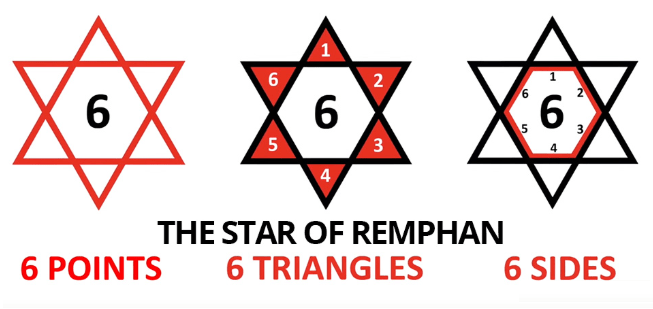

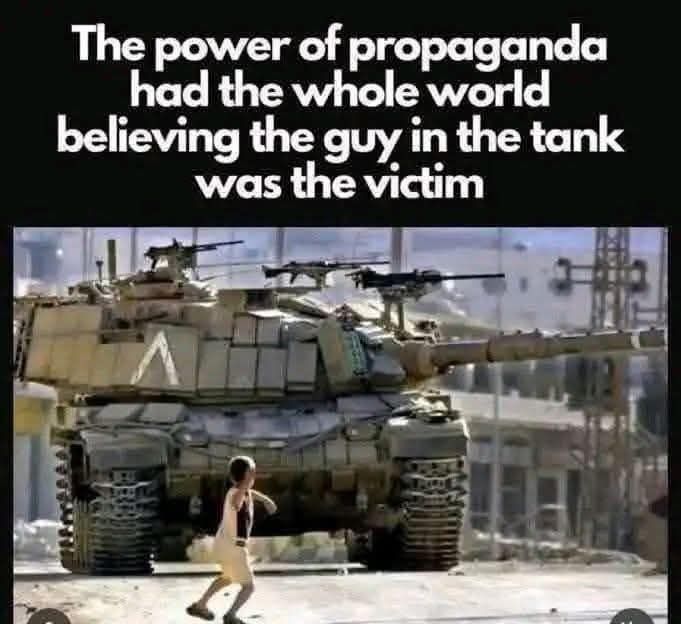
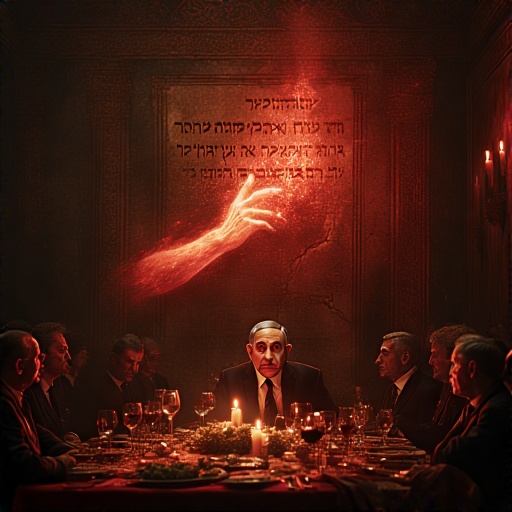



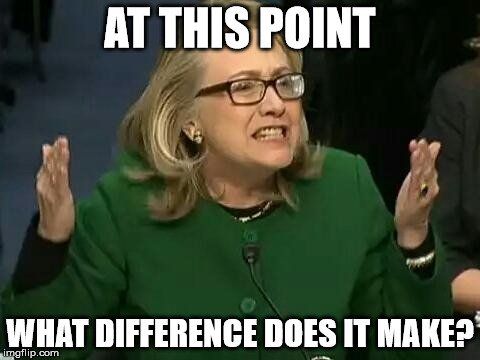


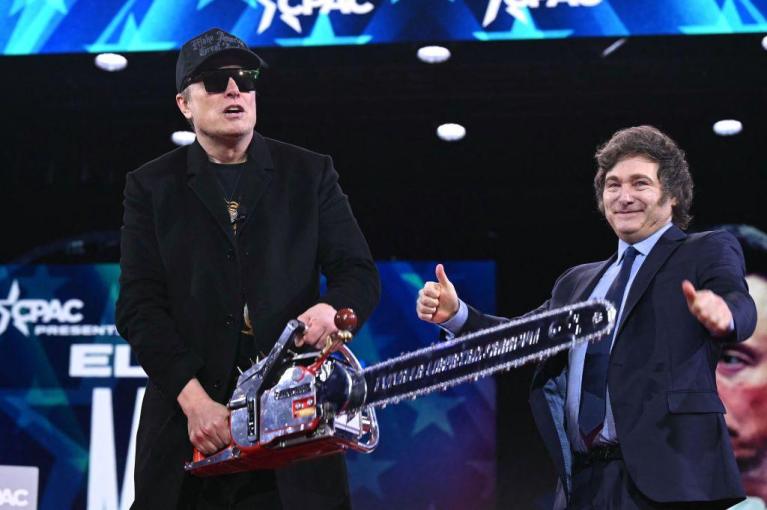









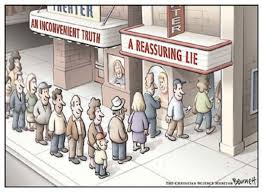
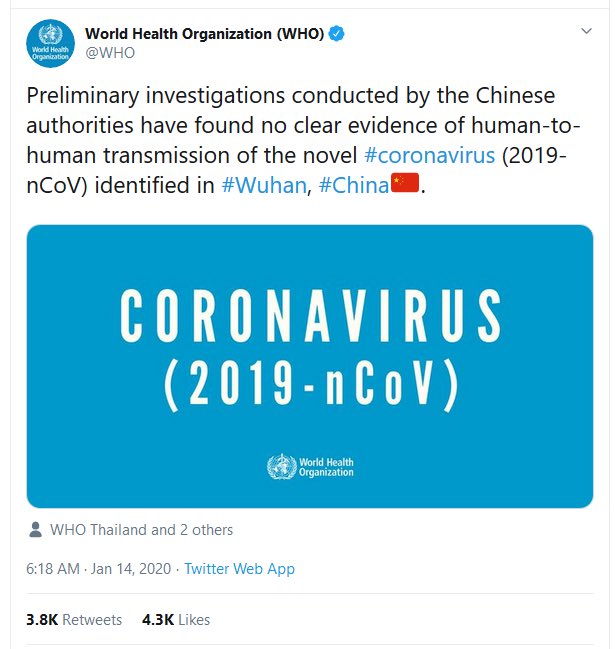


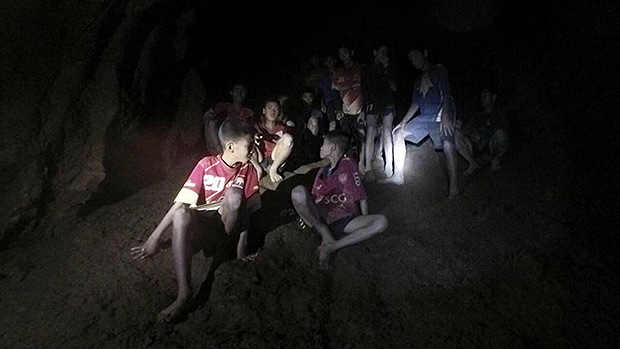


 Irregular Ideation