Stay In Your Lane

Standard

Maybe you saw the latest “Florida man” story?

Recently a Florida driver, speeding down the highway, shot through his own windshield at another vehicle and, evidently, felt so righteous about this that he actually posted the video.

His own explanation:

“I’m not a fan of guns; I’m a fan of not getting shot. I know this video doesn’t capture my smartest moments but I hope any idiot criminal with a gun watching thinks twice before loading, brandishing and aiming their firearm at someone over a traffic infraction.”

I really can’t tell you what is going on in a mind like that. Sharp as a tack, right?

But, what I can tell you is that shooting through your own windshield, while traveling nearly triple digits, does make merely brandishing and aiming a firearm at another motorist seem like responsible adult behavior by comparison.

Why he thought that this other man’s infractions justified his own, more egregiously offensive and dangerous behavior, is beyond me.

And yet this kind of attitude, that of people being blind to their own faults while completely aware and judgmental of when others fail, is not usual. In fact, I would venture to say that most people (yes, including you my dear audience and also yours truly) do this all of the time.

“We judge ourselves by our intentions and others by their actions”

Stephen R. Covey

Recently someone very close to me, who runs a retail store, had a bigger competitor start to stock her most popular item. Not only that but, to add insult to injury, this other shop owner had the gall to price the product lower. Clearly, they were aiming to steal sales and this was very upsetting.

I mean, where is the honor?

And I was definitely sympathetic. In fact, so sympathetic that an awful thought crossed my mind. We could eliminate the competition through some means which I will not mention. I mean, it was not that I would seriously do such a thing. But the startling part is how quickly my mind goes to those dark places and can justify the horrendous retaliation.

Anyhow, when I verbalized this thought, half expecting her to be absolutely appalled, she confessed to having been contemplating the same exact thing!

That we were both drawing from an event that had traumatized us both as a solution to something as mundane as another store deciding to sell a hot seller and be competitive really gave me something to ponder. The only difference between me and a murderer is that I do not act on the impulse when it comes.

It is strange, indeed, that when someone does harm someone that I love, my own outrage is always justified in my own mind. However, when I contemplate doing something many times worse in response, somehow the pain inflicted on the offending party is not outrageous and completely justified?

It is prideful. It is sinful. But people can always come up with reasons why their own actions are appropriate, we are very skilled at justifying our own transgressions.

“We don’t see things as they are, we see them as we are”

Anaïs Nin

It is easy to blame circumstances when we do something wrong. I mean, we were having a bad day, we were dealing with all of these external factors, how can we be blamed? However, when another person does something similar to us we will see it in terms of being a character flaw and, basically, something irredeemable.

For example, that guy who just cut you off in traffic, he’s an “idiot” who should “learn how to drive!” But when we do it is “oopsie” and “that doesn’t reflect me most of the time.”

Likewise, in the case of the bigger competitor stocking an item that sold well in our own store. To them, they need to keep the lights on and selling popular products at a lower price is just good business. Everyone does this, right?

But from the other side, looking in, it can seem greedy, cut-throat, disrespectful, unethical, and wrong. These are obviously unprincipled people, the worst kind, and should be ashamed. We can very soon have a caricature of them in our minds. Make them into ugly villains, out to ruin the little guy and keep everything for themselves. Nasty people with a total disregard for anyone else.

This the tendency to attribute differently to other people than we would for ourselves is referred to as fundamental attribution error. In that the other side is always awful, we catalog and recall everything they’ve done wrong as proof of some sort of genetic flaw. But then we quickly forget those out-of-character moments we’ve had and are even shocked when others do not forgive us for our own faults.

In short, when offended we attribute it to character flaw, something irredeemable. But, by contrast, when we hurt others it was a simple mistake or because circumstances demanded that we do what we did. We should actually reverse that, question our motives while assuming the best of the offending person’s intentions.

All Are Now Victims of the Protestantized World

Cities burn, people deliberately killed by other people, billions of dollars in damages already done, and we are led to believe that this is all because a man died while in police custody in Minnesota. This is called social justice.

Ironically, the same people who decry racial profiling against people who are somehow like them do not hesitate to group others, they freely use terms like “white privilege” and with this grouping deny the individuality of those whom they deem to be different from them. They are perpetually the victim you are always the oppressor. Therefore they are exempt from the rules and you deserve to be punished.

It is “mostly peaceful” when they (the far-left) protest, according to the reporters and despite fires burning in the background. It is okay for the protestants and their sympathizers to deny responsibility for the carnage. But, if one of those on the “other side” so much as defends themselves for this aggression, they are instantly labeled as a “white supremacist” or “terrorist” and should be shown no mercy whatsoever. Furthermore, the actions of one is declared to reflect everyone remotely associated with those who question the social justice assault.

Of course, for those of us watching the violent display and denials, this is appalling, hypocritical and wrong. It is dangerous when some are allowed to label all who oppose them in dehumanizing ways and aren’t denounced. It is completely scary when a person is described as a “domestic terrorist” for defending himself from being assaulted by a group of rioting men who coincidentally (or not) all had been previously convicted of violent felonies.

How can some be so detached from reality that everyone they oppose and assault are somehow “literal Nazis” deserving of death?

It all stems from the Marxist oppressor versus oppressed or victim narrative. The self-designated victim is always justified in their prejudice, hatred and violence. In fact, charging them with a crime for criminal behavior is going to be counted as persecution in their own warped minds. They can’t be faulted for what ‘oppressive’ circumstances have done to them. They are never at fault. But stand up to their bullying and it going to be treated as hate and thrown up as proof of their victim narrative.

But it goes beyond the current far-left. The rights or demands for dignity of those protesting are actually appropriated Christian cultural values. Like Judas throwing the words of Jesus, “sell all and give to the poor,” in his face as he wrongfully rebuked a woman’s display of worship, those crying “social justice” are also presenting a twisted Gospel founded on their particular grievance rather than God’s grace.

They, like the Protestant reformers before them, are right that the system is broken. Unfortunately, rather than turn to grace, and loving their enemies as Jesus loved His, they turn to law and harsh judgment of those, especially those in authority, who do not meet their own personal standards. Unfortunately, the church and society created by those tearing down ‘the system’ is no better than the one it replaces and is often many times worse.

“The boss isn’t always right, but he’s always the boss”

Rudolf Abel

There is this great movie about a captured Soviet spy, “Bridge of Spies,” that focuses on his relationship with the lawyer who represents him. This unassuming man, with an eternal calm, Rudolf Abel, is an interesting contrast to his anxious American attorney, James Donovan. Abel finds himself in a predicament, stuck between two superpowers, one that could execute him as a spy and the other likely to torture and kill him as a potential turncoat if returned to them. Yet, although in this impossible circumstance, the elderly Russian agent remains sober and seemingly unfazed. He speaks few words, but when he does they are profound and memorable, as in the following dialogue.

Rudolf Abel: “How did we do?”

James Donovan: “In there? Uh, not too good. Apparently, you’re not an American citizen.”

Rudolf Abel: “That’s true.”

James Donovan: “And according to your boss, you’re not a Soviet citizen either.”


Rudolf Abel: “Well, the boss isn’t always right but he’s always the boss.”

James Donovan: “Do you never worry?”

Rudolf Abel: “Would it help?”

Abel was calm because he knew his place. Unlike those of us who constantly fret and fuss about things really not in our control, he stayed composed, collected and focused on what was relevant in that moment for a man in his position. It would not help him to worry about things he had no power to change nor was there reason for him to place his own personal perspective above that of his boss. He was submitted to his authority, not in ignorance or indifference, but because he knew his place and thus stayed in his lane.

“Have confidence in your leaders and submit to their authority…”

Saint Paul

One of those things degraded or completely discarded, as a part of Protestantism, is the concept and of ordained authority and the respect thereof as is commanded in Scripture.

Today nearly everyone, in the West, regards themselves to be their own Pope, to be individually able to discern truth for themselves by study of Scripture and disregard the requirements therein that they deem are no longer suitable.

Martin Luther may have reconsidered had he known his “reformation” would lead. Sure, the Christian tradition had been corrupted by Rome. In fact, abuse of Papal power is what had led to the Great Schism between the Orthodox ‘East’ and Roman ‘West’ in 1054. However, the baby is being thrown out with the bathwater. Protest has displaced submission at all levels. Insubordination is encouraged.

There are many today who have this erroneous totally unChristian idea that a leader needs to be absolutely correct and perfect before they can be obedient. It is an idea, born of Democratic ideals, that the hierarchy must be completely dissolved or, at the very least, must be subservient to them.

And, while there is an element of truth, that a Christian leader should be a servant and the first among equals rather than an authoritarian jerk, this does not give us a right to play boss over the boss.

Only submitting leaders who deserve it means it is impossible to submit to anyone. And if someone only ever submits to those whom they fully agree with then they are not submitting to anything other than themselves and have denied the one who urged obedience to even the hypocritical Jewish religious authorities:

Then Jesus said to the crowds and to his disciples: “The teachers of the law and the Pharisees sit in Moses’ seat. So you must be careful to do everything they tell you. But do not do what they do, for they do not practice what they preach.”

(Matthew 23:1-3 NIV)

This submission to even corrupt authority is a theme of Scripture. David, even as the chosen successor to king Saul, refused to go against God’s ordained and was submissive even at great risk to his own life.
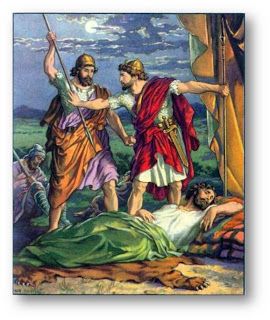
David spares King Saul

Jesus too was submissive and did not resist the authorities who he knew would lead him to his death. And the Apostles urged, without qualifications, that church submit to the ordained leaders:

Have confidence in your leaders and submit to their authority, because they keep watch over you as those who must give an account. Do this so that their work will be a joy, not a burden, for that would be of no benefit to you. Pray for us. We are sure that we have a clear conscience and desire to live honorably in every way.

Hebrews 13:17-18 NIV

Desire to, not always do?

Please note, this is not an apologetic for abuse of authority and it does not mean always maintaining our silence when offended either.

But it does mean that when we so speak we do it appropriately, with purity, and without malice:

Do not rebuke an older man harshly, but exhort him as if he were your father. Treat younger men as brothers, older women as mothers, and younger women as sisters, with absolute purity.

(1 Timothy 5:1-2 NIV)

We should address sin:

“If your brother or sister sins, go and point out their fault, just between the two of you. If they listen to you, you have won them over. But if they will not listen, take one or two others along, so that ‘every matter may be established by the testimony of two or three witnesses.’ If they still refuse to listen, tell it to the church; and if they refuse to listen even to the church, treat them as you would a pagan or a tax collector.”

(Matthew 18:15-17 NIV)

There is absolutely no excuse for gossip and slander, smear campaigns and character assassinations, disrespect and disregard. Our being offended does not give us a justification for our own sins. The passages above don’t say that if things don’t go your own way bash the leadership, then you pick up your marbles and go home. There certain is no permission to become separatists and follow in the footsteps of Diotrephes who rejected the church of the Apostles. It is implied (and explicit in Scripture elsewhere) that we stay in our lane, we submit to the correct process and those who are ordained to lead that process.

Unfortunately, the church, like the Protestant world, is infected with this attitude of my way or the highway, that if I don’t like how things are run then I’ll burn it all down and recreate society in my own image. It is absolutely arrogant. If your righteous indignation leads you to reject ordained authority, then I question that you are as righteous as you think that you and urge repentance.

“No Justice, No Peace!”

My Protestant friends are still stuck on this notion of a perfect and pure church. They, like me, wanted leaders to ease their own burden of faith and, basically, a magic unicorn that would always only give them feelings of sunshine and rainbows. Good or bad, right or wrong, is always on their own terms and nobody dare tell them anything otherwise. In spirit they are truly no different from the Marxist protestors. They are perpetually the victims and justified to do as they please while those who offended them are monsters. These people should stop being lukewarm, go whole hog Protestant and become full-fledged social justice warriors. At least our leftist friends are honest about their destructive ends.

I became Orthodox because I could no longer trust my own judgement and was finally ready to submit to an authority greater than my own. No, I was not naïve nor indifferent to the existing problems and troubling events in the history of the church. But I had been humbled and realized that someone with all of my faults, who desperately needs the mercy of God, was in no position to judge the entire church. I was led to the church by a spiritual father that I could trust and respect. I’ve also quickly learned that the Orthodox ordained also are like those of the Mennonite denominational tradition: Fallible men, who unworthily put on the vestments, and are as much in need of my mercy as my respect.

Here’s a good point in this essay to make a confession. I have not lied. I have not revealed the names of those who offended me. And yet I did create a caricature of them in this blog that was not fair to them. They hurt me, but they were making a reasonable effort, as much as they were capable of doing and, in many ways, were my better.

In retrospect, while my unapologetic (and inappropriate for the context) pursuit of faith was finally rewarded and right, my own attitude towards those who had hurt me was judgmental and wrong. I was like Saul of Tarsus, a bull in the China shop, leaving a wake of destruction while in pursuit of completeness and desperately in need of God to point my efforts in the right direction. So, lest anyone feel judged by me now, I’ve been there done that, raged against the injustice, rebuked the faithless of others while having not much to give, and have now, finally, found my peace.

When I stopped demanding that God came to me on my own terms, when broken to the point where I could leave all of my prideful identities behind, that is when the fullness of faith was revealed to me. God had answered my prayer, He had made the impossible possible, but not on my own terms and not without having suffered such a humiliating defeat which was so utterly complete that there would be no recovering my old ways.

“No Jesus, No Peace”

The Protestant says, “no justice, no peace.” They, like me prior to my departure from them to Orthodoxy, will hold others hostage and harass endlessly until they get what they want. They attain, not through love, but by their bloody insurrections and overpowering the established order by brute force of the mob. Given the choice of Jesus Christ and Jesus Barabbas, they will choose the murderer. (Watch this if you do not understand Barabbas vs Jesus) They want salvation without sacrifice, the kingdom without Christ, and are often orders of magnitude worse than the ‘oppressors’ whom they attempt to throw off. They are school shooters, the control freaks, people blind to their own faults and willing to kill you for yours. They will never know peace unless they repent.

What the protesters get wrong is they put justice, on their own terms, ahead of Jesus. They, like Judas, are truly self-serving under a righteous façade and after a worldly kingdom where they have the political power. The the truth is not “not justice, no peace,” but rather this: “No Jesus in our hearts, no peace inside.”

Those who externalize blame for their own sin, demonize those who go against them and their own ideas, and reject all authority besides their own are lost. They first reject the authority of the church and those ordained by the church, then they begin to shed tradition, eventually even the tradition of Scripture cannot escape their reformation and is discarded. This paring down continues until, ultimately, they become miserable narcissists who reject God and would kill Jesus if they had to chance.

The death spiral can take a few generations. But it often starts when something doesn’t go someone’s way and they allow the seeds of discontentment to grow in them. I’ve known more than a few young men who completely lost faith and left Christianity behind because of the rejection of a romantic interest. That could easily have been me had it not been for God’s grace.

It is so incredibly sad, those who are in the church, claim that they could endure persecution for Christ, and yet divide over petty issues, imperfections and insults. They only love when things go their way and never actually submit to anything besides their own agenda. Worse, rather than even depart in peace, they encourage the church to turn on itself and seek to destroy the peace of others with their accusations. Sadly, even after the destruction is over, after they burned everything to the ground, they will still be as miserable as they were before. The word Jesus may come from their lips, but they rejected His way in their hearts and never really knew Him.

“Know Jesus, know Peace”

Progress towards Christ starts when we stop externalizing blame and repent. Peace comes when we stop indulging our flesh and start walking in the Spirit. St Paul, who certainly wasn’t afraid to be confrontational and probably had his enemies in the early church, in his letter to the Galatians, spells out the difference between a person living by flesh in contrast to those walking in the Spirit. He creates a clear delineation between those who “serve one another humbly in love” and those who “bite and devour one another” and warns of the destruction to come to those who do not change:

The acts of the flesh are obvious: sexual immorality, impurity and debauchery; idolatry and witchcraft; hatred, discord, jealousy, fits of rage, selfish ambition, dissensions, factions and envy; drunkenness, orgies, and the like. I warn you, as I did before, that those who live like this will not inherit the kingdom of God. But the fruit of the Spirit is love, joy, peace, forbearance, kindness, goodness, faithfulness, gentleness and self-control. Against such things there is no law.

(Galatians 5:19-23 NIV)

St Paul is talking to the church, this means that these things of the flesh that are listed were very likely present in the church then, now and are in need of rebuke. We all sin and fall short of the glory of God. However, if we continue to “live like this” we will eventually forfeit our salvation. The fruit of the Spirit, which come through repentance and faith, should keep us from cataloging lists of offenses, it should lead us to forgive others of their trespasses against us and to show mercy as we have been shown mercy by God. The contrast really could not be any more clear: Peace or discord, forbearance or factions, self-control or orgies of envy, rage and hatred. Kingdom of God or eventual condemnation and separation from God.

Sure, some of us, those of us who are well-taught religious folks, we can put a smile on our face and go through the right motions. As is often repeated by Orthodox Christian: “His talk is smooth as butter, yet war is in his heart; his words are more soothing than oil, yet they are drawn swords.” (Psalm 55:21 NIV) It is easy, for those of us raised in a church, to mask our selfish motives and sinful attitudes in the right language. Judas, like many of us, had kept his discontentment under a self-righteous veil before eventually being open in his betray of Jesus. He sold Jesus out because he was looking for worldly things and became disillusioned.

But, knowing Jesus means giving up our own rights, denying our own flesh, and following after Him in self-sacrificial love. It means forgiving others before they even acknowledge their own sins. There are no exceptions.

The Gospel text today:

“But to you who are listening I say: Love your enemies, do good to those who hate you, bless those who curse you, pray for those who mistreat you. If someone slaps you on one cheek, turn to them the other also. If someone takes your coat, do not withhold your shirt from them. Give to everyone who asks you, and if anyone takes what belongs to you, do not demand it back. Do to others as you would have them do to you. “If you love those who love you, what credit is that to you? Even sinners love those who love them. And if you do good to those who are good to you, what credit is that to you? Even sinners do that. And if you lend to those from whom you expect repayment, what credit is that to you? Even sinners lend to sinners, expecting to be repaid in full. But love your enemies, do good to them, and lend to them without expecting to get anything back. Then your reward will be great, and you will be children of the Most High, because he is kind to the ungrateful and wicked. Be merciful, just as your Father is merciful.

(Luke 6:27-36 NIV)

That is the path to peace.

We can know Jesus by living in obedience to Jesus and, through that, giving room for the Spirit of God to live in our own heart.

The alternative, of waiting until everyone is worthy before we can love or submit, is what leads to chaos and confusion. It is what leads to violent confrontations on Florida highways, murderous thoughts against those who offended us, a destructive spirit of “burn it down” (unless I get my way) and divides the church rather than build it up. We need to stop the poison of accusations leaving our lips and start to give the medicine of healing instead or we will write ourselves right out of the kingdom.

“Be merciful, just as your Father is merciful.”

That is not optional for a Christian.

Judge not lest ye be judged.

Stay in your lane.

A Trip Down Memory Lane

Standard

I suppose it is a bit impolite, especially in the age of the telephone, to drop in unannounced?

Oh well, I had already made my way down the long drive flanked by soybeans, to the old farmhouse behind the barn, entered through the little gate of the white picket fence, and was currently deciding what to do after ringing the doorbell twice with no response.

Earlier, this bright sunny September day, on my way from Sunday liturgy to coffee hour, I had received a text message from Lilian, my younger sister, inviting me to a fellowship meal at my old church. She told me about a special service to honor two elderly couples, both ordained leaders from my youth, and this presented a bit of a dilemma—do I go or not?

Since becoming an Orthodox Christian I had made as clean a break as I could from my conservative Mennonite past. In fact, the last regular service I’ve attended was several years ago. The circumstances of my leaving were not the most pleasant and I’ve avoided returning for various reasons. But, in this case, my loyalties overruled my trepidation, I had been invited and wanted to show my appreciation.

However, by the time I had arrived only one of the two couples remained. Pastor Sam and his wife Donna had already left for home.

I had missed the opportunity to wish them well.

Or, perhaps not?

My mother suggested what I was already thinking: I could go visit them at their home a few miles away from the church, take a couple of minutes to chat, express my gratitude and then be on my way again. So, after making my rounds, greeting the other couple, I headed down the road.

Anyhow, I’m at the door of the house, waiting, nobody answered the doorbell. So, while being bold, I decided to continue on with boldness. The door was unlocked (not unusual for rural Pennsylvania), I poked my head into the entry, cautiously ventured down the hall, “hello?”

They must’ve heard the doorbell. I was just inside the door when Donna came out from the back of the house and greeted me with a warm smile.

She told me she would get Sam and left me in the living room. I looked around. I debated where to sit. The old wingback chairs or antique couch? The furniture and decor remained largely unchanged from my last visit a few years ago, by appearances, which is comforting for someone like me who is oftentimes overwhelmed by the pace of change.

But one thing was different, that being the whirring sound of a compressor, which was plugged in near the door of the room, with an oxygen tank on top and various air tubes radiating out from the device.

Sam’s health, according to my mother, had declined precipitously since our last interaction.

He has had an ongoing heart issue and, more recently, Chronic Obstructive Pulmonary Disease (COPD), a lung ailment that does not come with a good prognosis. I had last seen him a few months earlier in his barbershop of sixty years, “Masters Style Shop,” (where his son and a grandson worked beside him for many years) and didn’t know what to expect.

He was out of breath and labored to talk.

But, despite his difficulties, his good humor and the mischievous smile remained.

I had to think of those times, decades before, where he would turn on the overhead projector, slap down the transparency with lyrics, and confidently, in his distinctive baritone voice, lead the congregation in a familiar song, “I’m so glad to be part of the family of God!” It was a sad day when he had retired. The character of the church, those founding couples, was fading into my childhood.

Sam had a way of speaking, a charisma, that captivated me and reminded me of the late Billy Graham.

Sam had always taken a special interest in everyone, including me. We would always talk about the high school football score in the fall. He knew that I had played, we would chat a little, and something of his demeanor always left me feeling cared about.

He had been born in the very room that we were sitting in. The farm had been in the family that long. Sam, and his wife Donna, are fixtures in the community, the kind of people who can be relied upon. They were Lutheran before finding a place in the Mennonite church, people of devout and sincere faith. Sam also served in the military as a young man.

The short visit Sunday turned into a couple of hours, their home a very hospitable place and there was little doubt that this may be my last chance to spend time with this venerable man. I would have probably stayed later, but could no longer keep Charlotte waiting and knew that it would be selfish to stay much longer. So, after introducing Charlotte (on the other side of the world) through video call, we said our goodbyes.

Wilbur S. “Reds” Corderman, 81, born April 3, 1939, passed into eternity on Monday, September 14, 2020.

Of Violent Mobs and Prophets

Standard

A smug and sanctimonious religious person, shockingly from Anabaptist background, tried to hijack a point about loving individuals (rather than groups) by using an example of Old Testament judgment. They literally took the other side in a post explaining the kind of dangerous tribal thinking that led to the Holocaust. This individual really ought to be ashamed and repent of this perverse use of Scripture.

Before I go too far, it is very clear, to anyone who has read a history book or the Bible, that tribe in tribe violence and genocide were the norm. In Europe, North America and around the world, all lands have been conquered from the prior inhabitants by the current occupiers. The rivers, lakes and oceans would likely be filled with blood of our ancestors and those whom were violently removed from the gene pool by our collective ancestors.

That is the natural state of things. In an age prior to society life was, as Thomas Hobbes put it, “nasty, brutish, and short.” Hobbes, for his part, credited the formation of strong central governments for the transformation. An observation that made sense in 1651, before the use of modern governments to commit horrendous acts of genocide, I suppose?

Nevertheless, there has been been a shift of thinking from a time when it was okay to completely destroy an enemies tribe and the present. Many today, at least prior to Marxist indoctrination and regression of the past decades, would find it morally abhorrent to use one crime by one individual as an excuse to raze an entire village, steal the possessions of every inhabitant, kill all of the men and take the women captive, as was the case over and over again in the Old Testament of Scripture.

Something took us from the brutality of the Old Testament, where it was okay to judge an entire tribe based on the transgressions of a few or even one, to the idea, that underpins Bill of Rights, that all individuals should be granted rights. What took us from the time when only members of our own genetic or religious tribe have rights to the present? What led to the abolishment of slavery, something that had been practiced on all Continents, by people of all skin color designations against all other people at some point in history, before becoming unacceptable?

The answer, of course, is the one man, of the Jewish people, who started his ministry like this:

He went to Nazareth, where he had been brought up, and on the Sabbath day he went into the synagogue, as was his custom. He stood up to read, and the scroll of the prophet Isaiah was handed to him. Unrolling it, he found the place where it is written: “The Spirit of the Lord is on me, because he has anointed me to proclaim good news to the poor. He has sent me to proclaim freedom for the prisoners and recovery of sight for the blind, to set the oppressed free, to proclaim the year of the Lord’s favor.” Then he rolled up the scroll, gave it back to the attendant and sat down. The eyes of everyone in the synagogue were fastened on him. He began by saying to them, “Today this scripture is fulfilled in your hearing.”

(Luke 4:16‭-‬21 NIV)

Jesus began with a declaration of the fulfillment of the Old Testament, after reading a prophecy about the blind being given sight, the oppressed being given their freedom, the poor having some good news and stunned his religious audience. Of course his message had a strong appeal to the Jewish people, who were looking for a tribal Messiah who would set them free from Roman rule. It is no surprise that in these discontented time such a man would quickly find a cult following and become a threat to the established religious order.

But Jesus continued to defy the expectations of his religious tribally-minded followers. He subverted their expectations by expressing admiration for the faith of a Roman soldier, an occupier, by going to the home of a Jewish tax collector (and collaborator) and by using the despised Samaritan people, the “deplorables” of the smug and sanctimonious religious people in his audience, as his examples of virtue. Not only did extend the boundaries of “love your neighbor” to those outside of the tribe, he also did it using it a person from a group that they despised.

The idea of a “good Samaritan” or a Roman with faith greater than all of Israel, common parlance today to many of us, would be repugnant to them. How dare he! How dare Jesus compare them, the self-proclaimed elites of their own ethnic tribe, to these unwoke heathens? How dare he criticize their measures of righteousness, their loud public proclaims of socially acceptable displays of sacrifice, defy their rules of ritual cleansing and then call them hypocrites! It is no wonder these hateful bigots tried to cancel Jesus.

Jesus, by praising the equivalent of a police officer and a “flyover country” Trump supporter who rendered aid to a traveler, defied both their tribal identity focus and oppression narrative. They were the good guys with the right to rule. And at first they concluded that Jesus was confused, they asked his disciples why he ate with the bad people, the privileged tax collectors and alt-right trolls. He couldn’t be all that wise if he didn’t know what side of the social justice fence to be on, could he? Of course Jesus had never turned anyone away, but some excessively proud hypocritical people did reject him and his teachings.

The role of underdog and social elite has flipped at many points in history. First the Christan Jews were persecuted by the anti-Christian Jews, then the Romans destroyed the Jewish center of culture, and took up persecution of the Jesus cult spreading in their own ranks, before converting to Christianity themselves. We can mention the Islamic conquest of the Holy Land and Europe before being pushed back by the Crusades. Constantinople was a bulwark of Christianity before becoming overrun by the Turks, who never were held accountable for their Armenian genocide and that eventually the inspiration for an underdog artist and war veteran seeking a “final solution” named Adolf Hilter.

The one constant during two millennia of turmoil, of nations rising and falling, of a brief period of European domination of the world (after shedding their own tribalism) leading to the present time, is that Christianity has always been force for outreach across tribal lines. Yes, some did wrap themselves up in the name of Christ without actually applying his teachings. Progress does seem to always be a matter of two steps forward and one step back. And yet this idea of tribes coexisting, the imperfect tolerance of those who look, worship or act differently from us, is the rare historical exception.

Tribe against tribe violence was and is the norm. God even directly ordered the destruction of rival clans according to the Biblical narrative. But those looking to see Ninivah destroyed, like Jonah angry and disappointed on the hill, should stop seeing themselves as God and repent. Jesus did not come to condemn the world, but that the world through him might be saved. So those hoping for the world to burn, especially the system that has benefitted them more than most, should be warned. Jesus didn’t come so that tribal grievances could be redressed violence against a rival tribe. He came to free us all from this cycle of sin and death.

Those promoting or justifying intertribal conflict and contempt are antithetical to Christ. While Jesus sought to erase these artificial boundaries, to free us from our mental prisons of prejudice and give us sight that sees beyond race and socal status, these impostors are like Judas. They envy rather than love their neighbors and would leave a man bloodied on the side of the road if he wore the wrong skin color or may even beat him themselves. They may couch their in the words of Christ, as compassion or concern for the poor, but their real aim is social status and political power.

Those who seek to divide the church (and countries) into competing identity groups, privileged and oppressed, have betrayed the cause of Christ and seek to bring people back into captivity rather than free them. They are spiritually blind despite declaring themselves to be ‘woke’ and have nearly the entire backing of the corporate and institutional system behind them despite flaunting a victim status. They are like the Pharisees, perpetually offended, and seek to destroy anyone who would expose them for the truly toxic people that they are.

Sure, Jesus did divide, but not along lines of ethnicity, gender or social status. He subverted, not by targeting the brutal Roman rule (or laws) nor by “down with the hierarchy chants” against Jewish religious leaders. No, instead he urged compliance, he told his followers to “turn the other cheek” when insulted and to go the “extra mile” when compelled by the occupying Romans to carry their gear. Even when delivering a withering criticism of the religious authorities, he acknowledged they “sat in Moses seat” and taught that the position itself should be respected even if the occupants were unworthy and corrupt.

Those comparing an unruly mob to an Old Testament prophet (even one as contemptuous as Jonah) and suggesting the current destruction is somehow God’s judgment have no theological or moral leg to stand on. The teachings of Jesus do not give anyone licence to judge nations, that is the work of God and the saints someday, not ours. Jesus, however, did stand up to the social elites then and they hated him. They whipped a mob into a frenzy with their false accusations, an ineffectual leader bowed to the demands of the mob and that’s why Jesus was crucified.

There Can Be No Understanding in the Absence of Faith

Standard

Recently a business page erupted over an earlier post that had offended some. The post, a rather mild meme suggesting that we not judge anyone on the basis of outward appearance, was removed and the owner immediately apologized. They claimed that they had not intended to post the meme, that they did not agree with the content, and this explanation was plausible given that the account doesn’t usually post anything besides menu items.

And yet this did not please the mob. These hate-filled individuals continued to assail the business even in response to the post expressing solidarity with their particular cause. There was blood in the water, the sharks circled with merciless indifference to the pleas and the appeasement strategy clearly was not going to ward off the continuing attacks. They were going to be branded as a horrible and insensitive person no matter what they said. No explanation good enough. Nothing they did prior mattered and there was no way to atone. Last I saw they were open talking about closing up shop as the verbal onslaught carried into a second day after another vain attempt to explain.

The perpetually offended can only ever see through the lens of their victimization and can’t ever be pleased. The mistake many people make, like this hapless small business owner, is that they assume they are dealing with someone like them, someone who can be reasoned with, who wants stability and peace. But I knew a few of the characters in this mob. These weren’t all good people trying to make the world a better place. No, not at all. Some, despite growing up in the same community as me and given every opportunity for success, had made a career out of conniving and seem to thrive on creating chaos for good people. They force others to tiptoe around them while themselves being totally uncaring about the suffering they cause others.

Of course, if you call these clingers to grievance out on their hypocrisy they will suddenly find religion and retreat to “only God can judge me!”

Grievance, in the case of this type of person, is a manipulation tool. It is exploitive of a cultural propensity towards compassion. Those who ply the grievance trade are not interested in solidarity or equal treatment, they are miserable people who want supremacy over others and thrive on creating conflict for their own gain. The only way to win is not to play their game.

The Victim Gambit

Years ago I had been invited to join an online discussion forum. I signed up with a sort of naive optimism, thinking it would be a place for intelligent conversation about things pertaining to theology and my religious sect. But my delusion did not last for long. The site was a lightning rod for the damaged and disgruntled, many of them ex-Mennonites or sexual abuse victims, some of them back for their revenge and others to commiserate.

Of course, I had a great amount of compassion for those who had bad experiences. There was no excuse for what they had gone through and I would gladly stand with them against the abuse they had experienced. However, their experience did not reflect my own nor the values I had been taught and I refused to be the whipping boy for things that had nothing to do with me. I’ll take the weight of the world upon my shoulders sometimes, but I’m not one to allow myself to be bullied.

It was in this encounter with grievance personified that I learned an important lesson. You cannot negotiate with those clinging to and defined by their grievance. Even goodwill gestures will eventually be reinterpreted in ways that a normal and healthy mind could hardly even imagine.

Case and point?

There was a woman on the site, maybe ten years my senior, with a slow burning hatred towards men. She had been sexually assaulted years ago and was completely devastated by the experience. But despite this pity me presentation, they struck most people as being a somewhat reasonable voice and who, along with me, had been given moderator powers. Of course it was important to me to have a positive working experience with them for this and other reasons. I did some outreach and very soon learned of her unfortunate experience many years ago and deduced that it still played an outsized role in defining her worldview.

One Sunday afternoon this chronically depressed individual was expressing their misery and woe, again, and I decided I would do something to try to cheer them up. I drove a little over an hour to where they were to chat face to face and had some vague hope that this would help our communication online as well where my voice or intent was frequently misunderstood by them. The afternoon didn’t go badly, as I recall, and she invited me to McDonald’s nearby for a snack. I had thought about paying, but was slow to the draw as I considered how that would be interpreted and decided we should both pay for our own so this would not be misconstrued.

This kind gesture would come back to haunt me. A few years later I did begin to date and things online began to deteriorate. My moderator counterpart had started to act like a jealous lover and I was too dense, at the time, to figure it out. It all culminated with a bizarre accusation from my girlfriend’s mother (also in a very abusive relationship) using the unique semantics of my moderator counterpart. I knew the source and confronted the source. But I was met with denials, they straight up lied to me about their attempt to sabotage my relationship and claimed to not know what I was talking about. However, eventually, keeping up the pressure, they did confess to the nasty gossip they spread and that could have been the end of it.

Unfortunately, that I had caught them did not improve our relationship. If anything, it made them more determined to undermine me. They had the ear of the site founder (someone who was not frequently on the forum and missed much of the ebbs and flows of things) and, over a moderation technicality, playing the victim, petitioned to have me removed. He obliged the request and I was livid. Had I kept my wits and been a bit more coniving or even just explained my side in more measured tones, I would likely have done better. Still, she had far more practice at her gambit and had been behind the scenes undermining me as well.

Now I had a grievance too. I had always taken the role of feeding controversy to help keep up traffic to the forum. It was all harmless fun for the most part, bantering back and forth. But this time I was not in a playing mood, this person had attempted (and failed) to destroy my new relationship, now they retaliated against me for exposing them (in private) by “having my head” as a moderator and so I took it up with the newly minted replacements. It was in this discussion where an accusation came out, from her, that left me completely aghast.

Yup. That’s me!

She accused me, on the basis of my goodwill visit to her years ago, of being a “cheap date” because, out of an abundance of caution and as not to mislead about my intentions, I did not pay for her Big Mac!!!

What?!?

The insane part is that none of these new moderators called her out for this insanity and it would not have gone over well if I too directly explained why she had absolutely no appeal to me. The designated victim always gets special protection. I suppose it would be cruel to say that this bitter, self-pity consumed and misandristic woman was one of the least attractive people I’ve ever met and had absolutely zero chance of a romantic relationship with me? However, with my help, she was able to successfully poison my relationships there and had me flailing without recourse. Little did I know that even a sincere act of kindness could be weaponized against me.

Good Faith Vs Everlasting Grievance

Good faith refers to the foundational assumptions one must make about their counterpart in a negotiation. All relationships are, to a certain extent, a negotiation and we must trust the intentions of the other person or a productive relationship is impossible. If a person always interprets everything you say or do in the most negative light possible there is no way to effectively communicate. If you express sincere intentions or do something friendly, a poisoned person will see this as an attempt to manipulate and essentially bribe them.

Most go along with the victim gambit out of misguided compassion or for fear that they may become the next target of hate if they were to speak honestly against the ‘victims’ own abuses. Many believe that if they continue to give in to demands, if they keep giving special deference to those possessed by their grievance, that over time this special niceness will somehow heal this wounded individual. But the reality is that those looking the other way and excusing the abuses of the abused are not helpful. No, in fact, they are enablers of abuse, they are allowing others to be harmed.

A grievance should always be heard. We should always be willing to address the conditions that lead to abuse and give those harmed by abuse a chance to express themselves. However, there are some with a grievance who are sincerely looking for answers and others who are merely using their bad experience as political leverage and a means to gain power over others. This latter group is faithless and cannot be satisfied.

Score keeping kills relationship

Those in the grievance industry may claim to be interested in conversation, but are truly out for blood and the conversation is only a means to gain entry, a foot in the door tactic or Trojan horse. Whether they are trying to sell you a bill of goods or lay waste to your city, there is no good faith in their effort. When you refuse to give in to every demand, if you stand up to their abuses, the faithless aggrieved person will lash out in anger, they will make nasty and absurd personal accusations, then blame you for their hatred. You are not dealing with the person, you are dealing with their demon that will never be satiated and must be exorcized.

When even good faith efforts to bridge a gap in understanding, when the perpetually offended person refuses to see that the problem (which was set in motion by something external) is actually originating with them and how they subjectivity process, they cannot be helped before they are able to acknowledge this and there is no option left besides distance. Those who continue to dwell in their grievance, even after being heard over and over again, should be ignored.

What Would Jesus Do?

Let’s talk about Jesus. But not the milquetoast happy hippie Jesus that many superimpose over him. Let’s talk about the real Jesus who made no apologies, who spoke critically about those who harbored resentment in their hearts and are consumed by blinding hate. There is a time to test the spirits and put some distance between ourselves and those who who absolutely refuse to hear truth:

If anyone will not welcome you or listen to your words, leave that home or town and shake the dust off your feet.

Matthew 10:14 NIV

This idea that love means infinite niceness and refusal to walk away from anyone is wrong. It is because so many coddled those with a grievance, allow them to continue in their self-deception, that these people learn to use pity and guilt as a means to get what they want. As long as there is incentive to use their grievance in this way they will never reach the end of themselves and get the help they truly need.

Again, not everyone is worth our time trying to understand:

Do not give dogs what is sacred; do not throw your pearls to pigs. If you do, they may trample them under their feet, and turn and tear you to pieces.

Matthew 7:6 NIV

Incidentally, that is preceded by this:

Do not judge, or you too will be judged. For in the same way you judge others, you will be judged, and with the measure you use, it will be measured to you. “Why do you look at the speck of sawdust in your brother’s eye and pay no attention to the plank in your own eye? How can you say to your brother, ‘Let me take the speck out of your eye,’ when all the time there is a plank in your own eye? You hypocrite, first take the plank out of your own eye, and then you will see clearly to remove the speck from your brother’s eye.

Matthew 7:1‭-‬5 NIV

Those who are blinded by grievance are always righteous in their own mind. They are so focused on the sins against them (real or otherwise) that they cannot see that they are the same or worse than those whom they accuse. As justified, without introspection, they are free to heap condemnation on others. They, more often than not, project their own cancerous attitudes onto the imperfect actions of others and can twist even the best-intended goodwill gesture into a terrible transgression. If you open the door for them they will see it as a form of abuse.

It takes wisdom to discern between the person lashing out who can be helped with just a bit of love and those who will only use your concern for their well-being as a means to try to enslave you to their putrid grievance demon. Those who mercilessly assail a small business owner for an errant social media post even after the owner apologized and completely disavowed the message, are beyond what normal compassion can help. Don’t allow them to win, do not play their game, their aim is only to destroy you and are only using your mercy as a means to draw you in close enough to plunge their crooked grievance knife.

Walk away!

Leaving those absent of faith, especially those who claim to be Christian yet are unrepentant about their toxic and hateful attitudes, is sometimes the most loving thing we can do. It can be the only way that finally do reflect on their own true spiritual darkness and reach for the light and love of salvation. Or, at the very least, the distance we keep between us and them prevents us from being poisoned by them. Love never means enabling sin.

Good faith begins with living out, “forgive us our trespasses, as we forgive those who trespass against us,” and all people acknowledging their culpability in the mess as a starting point. Those clinging to an oppression narrative, enveloped in grievance culture, cannot truthfully pray that prayer and should not be considered part of the community of faith until they do. Good faith means understanding “all have sinned and fallen short of the glory of God,” and forgiving our enemies.

Conflict Builds Character: A Family Conversation About Race

Standard

My own family situation was unique. As many good Mennonites do, my aunts and uncles, like my grandmother, adopted and there was no child left behind. Of course what this meant is there was some additional shades of color at family reunions and it had always seemed like this wonderful idyllic thing. And it certainly did help in the regard that it gave some children the privilege of a stable home and also likely helped us other cousins to humanize those of different color from our own.

But with this also came a negative side. Believe it or not, good little Mennonite children can also be vicious racists, being of a different skin color did indeed make that a focal point of conflict and I wonder how many seeds were planted then that fed insecurities that we all deal with and yet would be felt especially acutely by those adopted? My own feelings of not belonging did not have that one focal point, that specific thing that could be identified as a source, and yet I was still the “black sheep” regardless.

Still, I had the opportunity to talk to another self-identified “black sheep” of his family, my cousin Isaac, who like me, had a foot in two different cultures. He would spend most of the year with his white family in rural Pennsylvania, his parents my first cousins, and would also spend time with his black family in the inner-city of Philadelphia during the summer. Of course this gives him a very unique perspective on racial issues and definitely a voice worth listening to. So, when we started to argue about recent events, both of us talking past each other, he called and this is the result.

My Voice Doesn’t Matter

Taking a step back, Isaac and I are a different generation. I’ve been struggling, over the past few years, with feelings of betrayal for having embraced the ideal of racial equality and all that nonsense (which isn’t actually nonsense) about judging each other by the content of character rather than the color of their skin. Racism always seemed silly to me. What did it really matter what skin a person wore so long as they treated me decently, right? And that’s just how I would assume that most rational and sane people think. Unfortunately things are more complicated than that and that is what is creating conflict across this great nation.

My grievance started years ago, with something that I witnessed over and over again and maybe is best captured in a story from my school years when a mother, black, got on to the bus and screamed in the face of our bus driver, calling him “racist” and “redneck,” nasty things. Why? Well, he had had the audacity to apply the same standard, established for the safety of her children as much as all of us, but apparently the only thing she could see was that this white man (now beet red) was somehow mistreating her perfect darling angels for trying to impose a little order. The rest of us sat in stunned silence, the poor farmer working for a pittance was not a sophisticated man nor equipped for this kind of conflict nor were the rest of us.

That was one of many similar incidents where us polite people had to simply keep our mouths shut as some other folks got a free pass for their misbehavior. Polite culture means we avoided causing a scene, that we look the other way when the impolite people fight and basically do whatever it takes to avoid conflict. Conflict over the slightest perceived insult was the realm of bullies and other insecure people. We did not wish to be browbeat and berated ourselves. Our own grievances with this mistreatment would be mocked and belittled anyways, so we kept our heads low and did whatever it took to accommodate those less polite.

A few years, during the Obama presidency, many took issue with the massive expansion of government called by the misnomer Affordable Care Act. Of course, as a consistent fiscal conservative and one keenly aware of the costs, along with unintended consequences, of expanded government power, I was opposed. Many Americans did peacefully protest and yet, almost immediately, they were branded as racist by the media. I was appalled. But at least a black friend, a progressive, with a good education, would treat my own concerns as valid, right? It ended up being one of the most disappointing conversation of my life. A man, who already intimidated me for his advantages, dismissed my points with personal insults.

It was in that conversation and several others, after Obama’s call for dialogue about race, that I found out my own voice and experience didn’t matter in this ‘conversation’ about race. If I did not accept everything on their terms then I wasn’t understanding or lacked in empathy, which is absurd and definitely not terms that I would ever agree with in any other discussion. Nevertheless, it was what was, my skin color automatically disqualified my opinion, my attempts at consistently applied principles didn’t apply to their grievance, and I’ve always left feeling unheard. That’s the experience for many who don’t go 100% along with the protest narrative. Our voice didn’t matter.

A Time When Silence Is No Longer An Option

Over the past few years I’ve become a professional (yet hopefully harmless) agitator. After years of being a polite person or at least trying, wanting to go along with the Mennonite program, and finally it had just become too much. I had been told I was respected, affirmed in many ways, followed the rules, mostly, or to the best of my abilities and felt the other side of this social contract wasn’t holding up their own end of the commitment. My grievance had become too much to bear any longer and thus began my blogging here. It eventually boiled over and led me to leave my Mennonite tribal identity behind or at least to the extent that is possible.

But this emancipation was not complete. There was one topic, given past experience and potential loss of friends, that I avoided as much as possible. The politics of race, meaning the discussion of things related to measuring out justice and governance, is a third rail for those who wish to think outside of the established and acceptable narrative. As oppressed as some claim to be, the oppressed sure do dominate conversation, they have governors breaking their own shutdown orders to march, celebrities speaking out in solidarity and big corporations affirming their message without any word about the accompanying violence. If only I could be so oppressed.

It was with cities burning, small owners being beaten for defending their livelihoods, with my polite friends seeing “animals” and a growing number people dying in the violence, that I decided to take off my own filter and say enough is enough!

Everyone up to President Trump himself had acknowledged the injustice of George Floyd’s death. We had an opportunity for solidarity against police brutality, the officer was charged, and yet, after what seemed like a full validation of the concern, the protests only picked up steam. I might be a polite person, who avoids conflict when possible, but I don’t want to be beaten to death on account of my skin color more than anyone else and certainly was not going to wait untill the violence had reach my own doorstep to speak out. No, nobody asked me to mediate or broker a conversation. I knew that those on the ‘other side’ would likely tune me out, maybe even unfriend or unfollow me, and started my own form of protest.

The racially divisive narrative was a lie. Police brutality is a problem. The death of George Floyd is, by all appearances, an injustice. I have no problem with those who, on their own time and dime, without violating the rights of others, wish to protest. I know well the reality of racism, both historically and in the current year. And yet to frame everything of what happened in Minnesota in terms of race simply ignores reality and this sort of assumption about what happened will lead to anything but justice. If we were allowed to have an intelligent discussion on matters of race, if I had a partner in that discussion willing to see another perspective, I could explain.

The Call

Anyhow, it was in the midst of speaking out that someone with connection to me since childhood decided to speak back. That being my cousin Isaac. And it went predictably, online, as one would expect, I was “missing the point” and this first round came to a stalemate, with us moral posturing and might have ended there had Isaac not reached out with a phone call. It didn’t feel, at the end of an hour or so, that we agreed on too much. We had our times of animation, talking over each other, and emotion. But the reality is that we accomplished far more in our willingness to engage and so I did want to summarize a little of what I saw as significant, what I heard, where we agreed and where as diverged.

1) Not About George Floyd

The one thing that Issac and I seemed to agree on is that that this was not about only the death of George Floyd. In his view, this is about racial unjustice and draws upon his own experience of finding out what it means to be black as a teenager. He spoke of the fear that black (presumably men in particular) have in their encounters with police, the profiling he suspects when entering into white communities and some of the racist language he has encountered.

The circumstances surrounding Floyd’s death, that being his violent criminal record, his being on drugs and passing forged currency were inconsequential in his opinion. And I agree that this doesn’t make any difference as far as the guilt or innocent of Derek Chauven and the other officers. But where I diverge from Isaac is where he claims this death makes him equally vulnerable, as a black man, whereas I believe that criminal behavior and repeat negative encounters with law enforcement are going to dramatically increase the chances of dying at the hands of police.

So we agreed that it is not about George Floyd. But I see the only reason that we are talking about this case, as a nation, is because of Floyd is black and not because of the injustice.

2) Black Lives Is Not About Black Lives, But All Lives?

Isaac took issue with me saying that this was all about black tribal identity and racial solidarity, but was actually about police brutality and justice for all people. But, while saying this, he also defended the “Black Lives Matter” description and claimed it was a movement to respect all lives.

However, if this were truly the case, I postulated, why do we only have protests, riots and looting when it is a black man involved?

Why didn’t millions of Black Lives Matter protestors take to the streets and demand instantaneous prosecution of the black officer, Mohamed Noor, who shot and killed Justine Damond, an unarmed 40-year-old white woman in July of 2017?

Why did I never hear about the final desperate calls of a young man named Tony Timpa? “You’re gonna kill me!” “You’re gonna kill me!” “You’re gonna kill me!”

Timpa cried out thirty times, as officers pinned his shoulders, knees and neck down, and joked over his body as he slipped away in 2017? Why no outrage over the officers only being charged with misdemeanors and then having those charges dropped?

Could it be because Timpa was white?

And, finally, why did it not matter when Daniel Shaver, a 26 year old man on a business trip, in 2016, was shot five times, while crawling in compliance with police demands and having committed no crime?

His killer was acquitted, even briefly reinstated as a police officer just so he could receive a pension and nothing burned. Nobody said much of anything.

Why?

I know what my own answers to that series of questions is. My answer is that these deaths did not fit a racially divisive narrative. If this were truly about making all lives matter and police brutality, then these three cases would be an excellent opportunity to bring many people into the fold. No, that doesn’t mean that Isaac is insincere, not at all, but I do think the “Black Lives Matter” moniker is alienating and, frankly, insulting to those of us who have spent our lives treating everyone of all colors and creeds as if their lives mattered.

So, my point is if this truly is about police reforms, not racial tribalism or divisive political posturing, why not find descriptive language that matches that intention? Why not “All Male Lives Matter,” since most who are killed by police happen to be men, mostly white men, not women? Or maybe “Police Brutality Must Stop,” a title that would describe the actual mission if it is about change and reform of police violence? The point is that words also matter and I would much sooner jump on board a movement that didn’t falsely present the issue.

Isaac would likely disagree with everything I just said, that’s his right.

3) Isaac Wants Change, I Do Too

The real crux of the matter comes down to a difference of perspective. Isaac (who has friends who are in law enforcement) sees a “broken criminal justice system” and wants a change. I agree that there needs to be improvement, but also that there’s an elephant in the room not often talked about and that being that we aren’t actually being honest in our discussion about race or getting to those things that lead to more violent encounters with police. And that’s not blame-shifting, we can both hold police officers accountable and also get to some of those root issues shaping black outcomes as well, but there first needs to be some acknowledgement of that difference.

As things currently stand, polite people are forbidden to talk about things like black on black crime, we are not supposed to notice when public officials, journalists and activists downplay the ongoing murder and mayhem in the name of justice. We are not supposed to believe our own eyes when we see people, many of them black, with armfuls of stolen merchandise. Sure this may be a small minority, but let’s not pretend that this is only a few “white supremacist” infiltrators. It is time to stop this racism of lower expectations and have zero tolerance for using one injustice to excuse another. Again, that would restore some credibility and help accomplish the stated goals of the protests.

And we need to talk about this double standard. The polite people are fed up with being treated like second-class citizens and silenced based on their skin color. They are tired of being villainized or ridiculed for their peaceful protests of other forms of government oppression, equated to terrorists, when actual terrorism is being ignored and criminals lionized. We need to talk about this because even polite people won’t respect those who do respect them. If the goal is to eventually achieve equality (which is my own hope) then the pandering and patronizing must end. To achieve the change we need to be the change and to be the change we need to treat others as we wish to be treated.

Ironically, I believe some of the reason why many white people tune out is because they don’t feel heard themselves. Many, like me, feel unappreciated in a system that expects them to be polite people and then celebrates when their minority counterparts act out. It’s almost as if the minstrel shows have etched in this expectation that the black folk are supposed to sing, dance and keep us entertained, riot occasionally, that black people are unable to control themselves or their emotions and thus can be exempted if they are more aggressive, etc. But this is utter nonsense, there are many sober and serious black people, many emotional and expressive white people.

I do agree with Isaac, we should not hold police to a different standard than anyone else, they must be held accountable for their actions like anybody else, and I support the push for reforms. Where we seem to diverge the most is our perception of what’s important to consider. He would prefer a more narrow focus, on the problem of police brutality, where I am more interested in doing more to address the cultural issues that lead to negative outcomes and would improve the image of black men in particular.

4) I Want Appreciation, And As An Individual

It is not fair that Isaac, as intelligent and well-rounded as an individual that he is, gets lumped in with the crimes of any other black man or is even the defined in any way by his skin color. Likewise, I don’t want to be judged or held personally accountable for sins I’ve never committed as some are trying to do. It is absolutely absurd to me that some white people are out literally kissing the boots of black men. Please stop this insanity! Let’s just all learn to appreciate each others as equally individuals, okay? Fight prejudice in all forms.

I would also rather we start from a position of appreciation for the criminal justice system that we do have. It is far from perfect and yet I know first hand what happens where it doesn’t exist. The killers of uncle Roland, in the Philippines, despite many leads, have not been brought to justice and that’s simply because there’s not the law enforcement resources to bring to bear. It is extremely easy to criticize any system and yet we should also study what is working and why as well. The key to fixing or improving any system is having an intimate knowledge of how it works or why it was designed in a particular way.

I think that’s where Isaac and I differ the most, and also why we must talk, he wants change while I’m geared for caution and constraint. He protests for justice, now, immediately and on his own terms, while I ruminate about foundational principles and think about past incidents of mob rule. Neither of us are right or wrong in our approach. I understand his orientation towards action. He probably gets more done while I brood and ponder philosophies. We make perfect sparing partners. He knows enough about me to keep me honest and I know enough about him to do the same.

I appreciate that Isaac, while passionate, did not attempt to pigeonhole and treated me with respect, like an equal. As Scripture says, “iron sharpens iron” and I felt quite evenly matched. It was definitely a conflict, yet I never felt threatened, as I have in other similar attempts at honest dialogue and efforts to bring the racial divide. We ended up expressing our love for each other, something that I don’t think we’ve even done before given there is a whole multitude of cousins on my dad’s side, and the whole experience was cathartic for someone like me who cares deeply and often feels helpless to change anything given the complexity of everything.

It also inspired me to write this and help get our combined perspectives (albeit obviously biased towards my own perspective) out there for your consideration. But the more important take away is that we not ignore uncomfortable topics, that we not shout each other down rather than hear, that we engage in there types of true conversations, with two sides given, and find our common ground. I feel strongly that God brought Isaac and I together for a reason and the reason is to be that bridge between people. But Isaac deserves most of the credit, he didn’t fire shots and run, he was willing to engage in a meaningful dialogue.

Blinding Obsession — The Rise of the Covid Karen

Standard

I’ll admit, it went through me when I heard that my brother had the clear symptoms of a Covid-19 infection. Sure, it was far enough along that the deadliness of the disease wasn’t so statistically foreboding anymore. But emotionally there was a certain significance that was given to this and a bit of dread as well. What if this loss of taste developed into serious respiratory issues? My brother or one of his family members, who had been at home with him during the shutdown, could die.

My brother is fine. He was never formally diagnosed with the virus, they would not test him given that his symptoms were not life-threatening or severe and he could ride it out at home. The probabilities were always in his favor as a relatively young person in good health. However, my own anxieties, despite my own understanding that the risk of him dying was not that much greater than it ever was for him or other members of my family, were something of interest to the more rational half of my consciousness. Why would I worry at all when the threat really wasn’t that great?

It is one of those quirks of human psychology, I suppose, that we can go from not knowing a person at all to being totally obsessed, wondering how we ever live our life without, “text me when you are home safe,” with them. Likewise, when something ‘novel’ comes into our lives, be it a new video game or an unknown virus, we can’t get our mind off of it. We are fascinated with this unknown commodity, whether we want to protect it (as in a new love interest) or protect ourselves from it, our thoughts will go there over and over again. It can be consuming, it can be blinding as well.

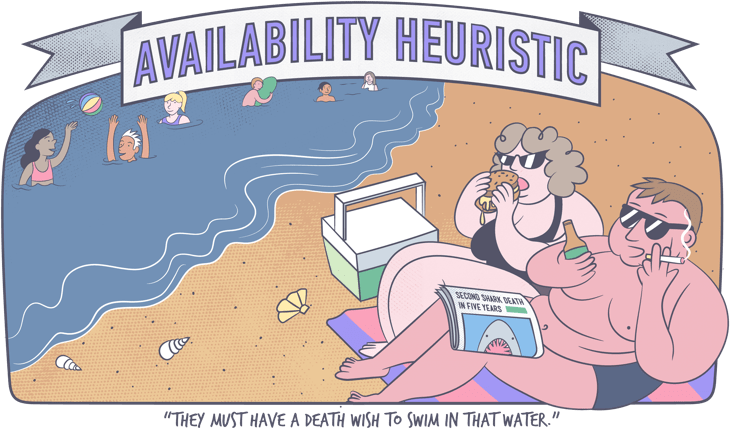
Fear of Covid-19 has much to do with availability heuristic or the tendency people have to judge the likelihood of an event based on how readily they can recall said event. This is what makes anecdotes so powerful. Some stories of young, otherwise healthy, people getting a disease and dying will feature far more prominently in our minds than the dozens lost in car accidents. I have a good friend who had a friend my age die and knows of another. The media has fed into this bias by highlighting the suffering of some. It feels likely enough and yet here’s the reality of the situation:

“To put things in perspective, the virus is now known to have an infection fatality rate for most people under 65 that is no more dangerous than driving 13 to 101 miles per day. Even by conservative estimates, the odds of COVID-19 death are roughly in line with existing baseline odds of dying in any given year.”

How Fear, Groupthink Drove Unnecessary Global Lockdowns

That is not to minimalize the threat. I know a couple of cases of people who have become seriously ill due to Covid-19 and, yes, many people have died who would’ve otherwise lived. The virus can be quite contagious in certain conditions, it can send a relatively young person to the hospital, I believe that many more will fall ill and some of them will die.

But, the thing is, our outsized focus on this virus is to minimize the many other risks equal or greater in consequence brought on by our response. It is deeply troubling to me that so many people seem so completely unable to comprehend the strong possibility that, with our saving people from the specter of Covid-19 and obsession on one risk out of many, we are ultimately killing more people by suicides, drug overdoses, neglected cancer screenings (along with other medical procedures being postponed) and starvation.

Why is it selfish for a young economically vulnerable person to work, to put food on their tables, and not selfish for you to order them home in a vain attempt to save grandma?

Furthermore, going back to my momentary fear of losing my brother, there was always a far greater risk to my brother’s life from him driving to come visit than from the infection. Why don’t I call him every fifteen minutes to make sure he’s wearing his seat belt? If physical safety was the only concern, then what would posses me to encourage him to take up flying years ago or to join him in the cockpit years later? It makes no logical sense for me to have a terrible fear of a virus that kills a small percentage of the infected while accepting or even encouraging more dangerous activities.

Rise of the Covid Crazed Karens

Many imagine a zombie apocalypse: The living dead, creatures of human flesh and yet no longer human anymore. Well, we are living in such times. The zombies are here and they are here to rob you of life with their devouring fears. And, unlike the fantasy horror movies, these are zombies that you aren’t allowed to shoot. But beware, if you decide not to comply with their screeching demands and choose to live as a free person, they may make real on their threat to shoot you.

Think I’m exaggerating?

Think again.

Dr. Jennifer Rager-Kay, a gun control activist and school board member, not too far down the road from me. Decided that it was completely okay and rational to threaten to kill people for refusing to wear masks around her or her family. Dr Rager-Kay (aka “Karen”) was in such a lathered up panic about a virus that has a very low probability of death that she was actually willing to murder. Makes one think of the expression, “Physician, heal thyself.” This woman is obviously smart enough to make it through medical school, but seems woefully lacking in rationality and ability to keep things in perspective.

Now, in defense of Karens everywhere, most are content to only steal away your life by imposing their “new normal” and won’t actually shoot you.

However, they all have a sort of nurture gone bad, the assessment of their own importance that is shared by hall monitors everywhere. Possessed by their lack of contol or relative insignificance an a complex and unpredictable world, they wield their petty authority over their neighbors given to them by state snitch lines, wag their sanctimonious fingers at anyone who doesn’t meet their own standard, and are completely willing to imprison you for your own good. They stopped thinking months ago when their minds were reprogrammed, infected by fearful anecdotes, their cognitive function addled by scary projections, never considering new evidence, and they are now mindless zombies stuck on repeat, “Covid bad, must stop Covid!”

Of course, Covid Crazed Karens are not only women nor only the meddlesome troublemakers of memes, there are many man and people in positions of real political power who are willing to kill you for your own good and seem even to have some sort of sadistic satisfaction watching people squirm under their smoothering care. If only you would start thinking their way, sacrifice your all for their misguided public safety crusade, then everything would be just fine. You see, they think like a psychopath, that your suffering is only a result of your defiance against their wise council, that it would not be tyranny if you would simply submit to their lawless edicts.

You must be broken, like Winston in Orwell’s 1984, who after torture finally becomes a zombie to the cult of the totalitarian state:

“Years it had taken him to learn what kind of smile was hidden beneath the dark moustache. O cruel, needless misunderstanding! O stubborn, self-willed exile from the loving breast! Two gin-scented tears trickled down the sides of his nose. But it was all right, everything was all right, the struggle was finished. He had won the victory over himself. He loved Big Brother.”

George Orwell, 1984

We may not have Big Brother. But we do have Karen watching and her fear-driven lust for control over you won’t be satiated once Covid-19 has passed. No, you are already being conditioned, you will accept her “new normal” or you will die. And, if you don’t die from the virus be sure she will punish you severely for her being wrong. A Karen is never wrong, being wrong does not compute with her one track mind, and she will kill you, if need be, to prove the point. The zombie apocalypse is upon us and these privileged elites are out for the blood of you ignorant and unwashed common folk.

But Covid Karen is not the only threat, Denial Deranged Darnell, well he’ll tell you masks don’t work because he once had a fart that stained his underwear and, with pride, he will tell you how he survived his entire life never once wearing a seat belt, that he actually drives better drunk, and you can’t tell him ’nuffin! Watch out for him as well, he may not have the power of government on his side, but he has already killed a security guard in Detroit and wounded a Waffle House cook in Aurora, Colorado, for the “disrespect” of mask policies. He thinks carrying a firearm to a protest makes him tough. No wonder so many Karens think the masses need to be controlled!

The Dangerous Lie of Shut Down or Die

Standard

False dichotomies pop up everywhere in the political discourse. You are either pro-life or you are a raging homicidal baby-killing feminist monster and, alternatively, you are either pro-choice or you are “at war with women” and would turn the world into “The Handmaid’s Tale” if ever given the chance. Of course, both sides of that dichotomy are grossly misrepresenting those on the other side. Some of the most vocal proponents of pro-life that I know are of the female gender, would rather not have their lives ruled by men or be treated like baby-making slaves. Likewise, many on the pro-choice side are intelligent and compassionate people who follow a different dogma as far as what does or does not constitute a separate human life.

Where you stand on the recent Covid-19 forced closures probably has much more to do with your politics than it does with your personal level of scientific sophistication. Sure, there are many, blinded by their own confirmation bias, who see everything they believe as being scientifically based and rational, but that is to be in denial of the role that their own emotions play in their judgment. The decision to shut down the economy due to the virus had has much to do with fear as fact. How do I know? Well, there weren’t a whole lot of reliable facts to go on when the decisions were being made. We had models, yes, but models are only as reliable as the data entered and the accuracy of the assumptions that they contain. Their predictions are not facts. What likely had a big influence is the scary stories coming from Italy and the lack of good information from China.

The Changing Understanding of Covid-19

I had been in favor of the shutdowns, initially, to give time to make a more accurate assessment of the actual threat and also to give time for our medical professionals to gear up amidst global shortages of personal protective equipment. Sure, many Americans are of the pigheaded mentality that they will drive eighty miles per hour into a blinding fog bank and then have massive pileups as a testament to their inability to slow down for anything. But it is only prudent to enter into a potentially deadly new situation, with many unknowns, with an abundance of caution. The arrival of Covid-19 onto the world scene was such a circumstance. The idea of social distancing to “flatten the curve” made sense at the time.

However, as a couple of weeks morphed into a month or more and the language of state politicians mysteriously shifted from slowing the spread (as we were told was the reason for the shutdowns) to trying to stop it entirely, while at the same time the there was growing evidence that the virus was not as deadly as first thought, was likely here earlier than had been previously known and may have actually reached the peak (unflattened before the shutdown measures had been implemented) in some places, I kept waiting for decision-makers to shift their policies according to the actual evidence. But they did not. Frozen by fear or too stubborn to revisit their previous decisions (or maybe even wanting to punish those opposed to their lockdowns and show who is boss, who knows?) there was no change. They were determined to plow ahead with their prior decision based on bad data, economic consequences be damned, so wear your masks, go to Walmart like good little citizens and shut up.

We all have an idealogical team we are pulling for, whether we realize it or not, and it can cloud our perspective of an issue. Sure, you might believe that your ignorance of virology is “common sense” (which, unfortunately, is probably common and yet good sense is not always common) and refuse to take reasonable precautions. Or you might think your own opinion (and that of the experts whom you agree with) is some kind of “scientific consensus” and an irrefutable fact. But the reality is that you might just be too arrogant (in your little knowledge or, rather, knowing just enough to be dangerous) to understand that there could be perspectives greater than your own. The frustrating part for me was always being caught between the false choices put out by those on either side of the political debate. Those calling the virus a hoax, dismissing the effectiveness of masks, and being generally ignorant only armed those pushing for control with a false moral imperative to double-down on their shutdown or die mantra.

Covid-19, while certainly deadly for many and even if those terrifying early estimates of a 2-4% death rate had held true, is nowhere near the Spanish flu. The real number, given growing evidence gathered by antibodies testing and from various ships where everyone was tested, shows a true death rate closer to 0.5% which isn’t too different from the seasonal flu over the course of an average year. Yes, it did certainly stretch our medical resources thin, and likely would’ve with or without the shutdowns, yet there is little evidence to show that our economic self-sabotage actually saved lives. No, if anything, we may have simply destroyed opportunity for those most vulnerable here and around the world for no real gain. It is quite possible, even probable, that more will die as a result of the forced shutdowns than were saved. In the end, the decision to shut down the economy was never a question of shut down or die. For many, it may very well be shut down and die.

False dichotomies are dangerous. They are lies. This polarization of our many choices can come with tragic results.

Economic Shutdowns Also Kill People

In my many discussions about Covid-19 I’ve run into many reoccurring and economically illiterate sentiments, like this one: “I’m sorry but I can’t believe I’m reading this. No compassion for human life and suffering?” That in response to a well-written article weighing the benefits against the costs of the economic shutdown. Apparently, in this person’s emotion soaked and one-dimensional brain, the only way you can show compassion for human life and suffering is to keep people caged in their homes and unable to feed themselves?

As a starting point, there was never a scenario where there could be zero deaths from Covid-19. That ship had sailed long ago, in China, when the authorities there continued to let people from the epicenter travel around the world (although not domestically) and sailed when many Western leaders were more concerned with things like “xenophobia” than the virus. Maybe had Europe joined the Trump administration in banning travel from the source of the outbreak there may have been a chance of containing it. But it was already too late by the time concern about the virus and death tolls had finally exceeded worries about political correctness and virtue signaling about race. Places like New York City and Los Angeles were going to see tens of thousands dead regardless of what was done at that juncture.

When the shutdowns began, in earnest, the virus was already deeply entrenched. The first verified case in France, for example, has been recently discovered to have been back in December already and much earlier than initially thought. It had likely spreading while some politicians here were still encouraging people to crowd the streets of Chinatown and was definitely being passed around while Italian leaders were telling people to hug Chinese people (from Wuhan, no less) in a misguided effort to prove they weren’t racist. The die had been cast and we were in for a wild ride.

But what we did have a choice over is how we responded to the threat. Certainly, the virus had not reached us all, and we could not know (without significant testing) if the peak of infections was a couple of weeks out or still months ahead. If the virus had reached relatively few of us and the death rates were already skyrocketing then the most desperate measures were completely justified even if it cost some lives. On the other hand, if the virus had already been in circulation for months and the hospitals weren’t already jampacked, there was very little to be gained and plenty to be lost from sweeping anti-economic measures. Those with strong social networks and a fat wallet, like the Hollywood celebrities urging us plebes to stay at home while they sip martinis in their hot tub, might not get it, but there are serious consequences to economic shutdowns even if you do not personally experience them.

For those who still think that there’s no harm done by shutting down (simply because they are amongst the privileged less affected and able to put food on their own tables), keep reading.

This idea that the economy is about Wall Street and stock portfolios is complete and utter nonsense. The concern many have about the shutdown has nothing to do with the fiction you hold of Scrooge McDuck swimming in his vault full of gold coins and perpetually worried about losing his wealth. Not at all. First, no billionaire (other than the Hollywood fantasy villain version) actually has moldy money, billionaires are billionaires because they make good investments and their investments are often in life-sustaining industries, like healthcare. Second, most of the economy is Y-O-U. The economy is, simply put, our transactions together, the labor we use to produce things of value to trade with others for our wants and basic necessities.

That out of the way…

Domestic Abuse, Drug Overdoses, and Suicide Rates

Shutdowns have consequences and the consequences are often much more devastating for those most vulnerable. I think often of my waitress and waiter friends, people in the restaurant industry, who have suddenly without warning had their entire income stream dry up by the executive fiat of someone who gets their paycheck via the state treasury or through an accumulation of assets. Sure, Trump and Congress have taken action to offset some of these losses by direct payments, unemployment compensation has been extended to many who might not otherwise qualify and yet that will do nothing for those permanently unemployed.

For many in the world, in the same way that Covid-19 is deadly to those with comorbidities, an economic shutdown is (or will be) that proverbial straw that broke the camel’s back. Sure, you can say that the guy devastated by the bills piling up and his bank account drying up, his business being shuttered, should see the bigger perspective. But that is no different from saying that we should not care about Covid-19 deaths because those most impacted were dying anyway and that their comorbidities actually killed them. The fact that not everyone is as financially healthy as you are or as emotionally able to weather the storm caused by the shutdown doesn’t undo the damage done to those who are more vulnerable.

The socio-economic cost of the shutdowns should be factored into the decision as much as the potential gain. Sure, there is a possibility (although it is not proven) that the shutdowns may spare a few that would otherwise have perished from the virus and accompanying complications. But there is definitely an uptick in things such as domestic violence and child abuse that comes with forcing weak and emotionally vulnerable people to stay confined together, away from their sources of stress relief and friends, for months. Believe it or not, not everyone shares your advantages in mental health, not everyone can keep doing their work via Zoom, we aren’t equal in this together as some will proclaim, some are isolated alone, and with only their suicidal ideations to keep them company for the duration.

And, for those of you looking down your noses in condemnation of the shutdown protestors at state capitals, thinking that your own rationality and compassion is what is guiding you, think again. True compassion would have some sympathy for those who are suffering from the economic consequences of the hasty and arbitrarily enforced shutdowns. Unlike you, they might not be able to afford to shelter in place for months at a time. The truth might be that you, in your fearful overreaction to Covid-19, simply do not care enough about their livelihoods being ripped out from under them and are too ignorant of the economic consequences, the increase in domestic abuse, drug overdoses, and suicides that accompany economically dire circumstances.

It is certainly no more dangerous to do a couple of laps around a state capital, than it is to go to Home Depot, Walmart, or the grocery store. I suspect the real issue some have has to do with political affiliations. It is a moral superiority contest between them and those who decided that the risk of government overreach and economic ruin is greater than the virus. Some would rather live in denial of the serious economic consequences they’ve imposed on others, ignore the evidence of the suffering caused by their selfish demands for safety at all costs (to their neighbors), and maintain their dangerous tunnel vision?

Of course, who knows, in the current political climate, maybe some would rather the protestors killed themselves than peacefully vent their pent up frustrations?

But this is far bigger than domestic politics…

Economic Downturns, Food Shortages, and Starvation

The most troubling and continuing consequences of the imposed shutdowns is the impact it is having on the agricultural industry and food supply chain. It was very early on when the stories started to cross my newsfeed about small farmers, in the Philippines, being forced to dump their produce. If one understood the labor that it took (most Americans can’t even imagine), that these farmers would give up their meager profits, it is hard to understand. But that is what happens when the market is closed down, there is no refrigerated warehouse to store their vegetables until things reopen again. And, sure, some of it is distributed to their neighbors, and yet the real demand comes from the cities. So the cities are cut off from their suppliers and the poor farmers from their buyers and only source of income.

Vegetables dumped in Benguet

I’ve realized recently that many people can’t understand logistics even at the most basic level and see the actions of agricultural producers here as being greedy or suspicious. When I mentioned how producers were culling herds due to processing plants being closed over Covid-19 concerns and the possibility of people starving, I had a guy respond with the following, “If we don’t want people to starve let’s start by distributing this food that is being wantonly destroyed by the factory farms.” His ‘solution’ may seem reasonable at first glance. I mean, why not? But then you have to considfer that these big producers would not just throw away their profits. They aren’t that stupid. And if they can’t process this protein then you can be 100% sure that government or anyone else is going to replace their production capacity. They are the specialists.

Sure, like in rural parts of the Philippines, the neighbors to these massive barns will get all the pork or poultry they will ever need. However, that’s nibbling around the edges of the problem. The real reason we have these “factory farms” is not to supply Union County and the surrounding communities. No, not at all! The real market for this meat is the big cities. So, while it is great that some rural neighbors get to fill their freezers at a below-market price, that is going to do very little for the needs of those downstream and cut off from their food source. A couple of “community gardens” in Brooklyn can’t offset the literal tons of beef, pork, and vegetables that are imported into that city every day. Don’t get me wrong, I love a ‘feel good’ story as much as the next guy, but this isn’t an issue that will be solved by a couple of generous farmers.

The abrupt shutdowns and closures are causing incredible bottlenecks that cannot be easily resolved overnight. Closing down schools and restaurants, for example, meant that all of the food in that pipeline, packaged for that kind of usage, was now jammed up. There are some grocery stores now selling meats that were originally intended for restaurants. But the retooling cannot happen like the flip of a switch. That is why some dairy processors, what specialized in supplying schools, had to dump their milk at the same time grocery shelves had run dry of the staple. That is why potatoes are piled up to rot in Idaho. When networks within the supply chain break down, when the market is majorly disrupted without warning, there are shortages in some places and over-supplies in other places.

Those big animal operations need to keep moving things along, the whole process can’t be held up for long before there are major problems, finished pigs need to be moved along or there is no room for the feeder pigs to go. Sure, they can change the feed to try to keep the finished pigs at a particular weight for a period of time. But eventually, something as to give. That is why there are piles of dead pigs a hundred feet long, going to waste, and soon enough the shelves will run empty as well. It will seem strange. Many won’t understand how it is possible, but it is happening and it is happening like a slow-motion train wreck.

That all said, I’m not afraid for myself or most Americans. We might miss out on a steak or pork chop. We will likely pay a little more for our food in the coming months. However, my real concern is for those in the many places around the world where people work hand to mouth. The rickshaw driver in Mumbai can’t afford to pay more for his family’s food and especially not after being locked in his own house for months. The person in a Manila slum, already living on “pagpag” (a Taglog term meaning “garbage chicken” or literally food pulled from the trash) will not do well when others are fighting over the disappearing scraps as food becomes scarce. Many in the world live on a very small ration, meat is a luxury to them, and now have been deprived of their income in a desperate fight against a virus that may not even be stopped by their sacrifice.

Making the Right Trade-offs…

There is no question about the seriousness of Covid-19. I have a close friend in NYC who lost two friends. They were both my age and died in their own homes. It is not a virus that should be laughed off or treated as no big deal. Tens of thousands have died and tens of thousands more will likely die and in a relatively short period of time. Sure, many of these people may have had comorbidities and yet they would very likely have been with us for many more years had they not had their encounter with this deadly virus.

It is possible that some could be saved from Covid-19 through the shutdowns. There is no solid evidence that this is the case. Nevertheless it is possible. That said, it is also possible that our efforts only prolonged or even worsen the pandemic by preventing “herd immunity” from ever happening, which means we could suffer more deaths from Covid-19 and also the experience the hardships of the economic shutdown.

Whatever the case, the “shut down or die” mythology needs to be confronted. Those looking for a perfect solution here are living in fantasy land. The hope that a vaccine will be developed quickly and then become widely available is (sorry, anti-vaxxer conspiracy theorists) basically a Hollywood fiction. We still don’t have a vaccine for SARS or MERS and may never have a vaccine for Covid-19. So, this idea that we can just hunker down and wait this out is not realistic. Sure, I would be glad to be proven wrong, it is possible, but there are also huge trade-offs to our waiting that need to be discussed.

Speaking of trade-offs: According to ASIRT, 1.35 million people die in car accidents every year (over 38,000 in the US) and an additional 20-50 million are injured (4.4 million US), some with permanent disabilities as a result. This, unlike Covid-19, is a ‘pandemic’ that disproportionally impacts the young and with no pre-existing health conditions. We could, quite easily, in the name of safety, ban all automobiles and save far more lives in a couple of years than the shutdowns ever would. Of course, we would never do that, we have valued the freedom of movement and economic advantages over the risk of serious injury or death. I suppose people feel more in control behind the wheel, but if we were really in control of the outcome of our trip then nobody would leave home knowing that they would get into a fatal car crash, would they?

Based on what we now know about the virus and death rates we should not have shut down the to the extent that we did. We may have saved a little on the front end, compared to Sweden who remained open, and yet will very likely end up in the same place as far as Covid-19 and far worse off in terms of the economic consequences. My fear is that many more will perish as a result of the shutdowns than from the virus. Millions of the world’s young and most vulnerable are suffering right now, as I write this, and could die of starvation. A good analysis must weigh all factors. We cannot be zoned in so much on one problem and only one solution that we cannot see any others. The virus from China is bad, but the panicky response of governments around the world may have made it many times worse.

Depressed, But Not Desperate…

Standard

It is supposed to be the most exciting time on the Christian calendar, the time when Jesus rose from the dead, and here I am. Meh. The shut down, tolerable at first, is starting to weigh down on me and I just feel a bit down.

I mean, not that anyone should worry about me, I’m fine and have a good support network. And yet the excitement of something unprecedented has worn down. My routines of work, the gym, eating out, and going to church, have all been disrupted and I barely need to leave my bedroom.

And then there’s the stupid politics, on both sides, TDS on one side and conspiracy theorists on the other, and I’m even starting to doubt my own perspective. I felt I had covered all angles. But, then, I’m no different from anyone else, I’m working with my own set of biases and blind spots like anyone else in the discussion.

So here I am, walking alone, down a windy rural Pennsylvania road, everything turning green despite the cool air, a couple cars on the road, and did I mention that I’m alone?

Today is the day that I typically (yes, even now) spend at my parents house, with my sister, and enjoy a Sunday dinner. But they decided to go to a State Park for the day and I stayed home because that’s what Charlotte wants. Well, I’m not home, actually, I’m at my parents house, for the change of scenery, the bench press, and the sandwich and pie my mom left in the fridge to show her love.

Charlotte, for her part, is doing okay in the Philippines, despite the lock down in her country (far stricter than our own) and has even found a way to get to her new job. She was tired of being cooped up in her little apartment, with Y-dran and her sister, and refuses to accept that I’m fully capable and willing to backstop her until this is over. That said, I’m completely proud of her and her determination to support herself and her son. I think I found someone even stronger willed than I am!

The bleh and blues come somewhat due to the lack of progress in bringing my little family together. With government offices shut down there, in the Philippines, the indefinite time frame of the whole process of her coming her has been stretched even longer. And, given my luck romantically, my doubts about the happily ever after loom always and even larger now. Could this pandemic be part of that invisible barrier, that impossible to overcome obstacle? For now, and as long as I am able, I will cling to my hopes.

What else can I do?

Last, and probably least, the one thing that could have brought me a little smile only left me a few hundred dollars in the hole and that’s only the first week. For the first time in my life, I decided to put some money in the stock market. There’s practically no interest earned by savings, I wanted to help along my goal of financing a kitchen remodel, what could possibly go wrong, right? Since then I’ve run into nothing but negativity, that the market may drop by another 50% and that’s just typical for me: Too little, too late. Too much, too soon.

But then again, I’ve made it this far down the road and at least I’m not going through this one alone. In a few more weeks things will begin to be a bit more normal again. My plans to visit Charlotte in December will hopefully work out and I’ll even be able to stay longer now that it is a proven fact that working remotely is possible. It does make me sad that everything seems to take so long, that those whom I love are stuck on the opposite of the world from me, but them being here with me some day soon will make it all worth the wait!

Even the economy, bad as it seems now, will eventually come back. Most of us will not die from this virus (or the misguided policies to keep us safe from it) and the world will likely come out better on the other side. There is no need to panic, no reason for despair, this too shall pass and everyone will soon find something else to complain, theorize and argue about. The world is not ending, or at least not that I know, and the sun is still shining…

No, Your Faith Will Not Spare You…But God Is Still Good!

Standard

There are many things largely forgotten in history, one of them a horrendous tragedy that took place on June 15th, 1904, near “Hell’s Gates” on the East River, which would forever change one ethnic community in New York City, and that being the General Slocum ferry disaster.

What had started as an annual church excursion of German-Americans, mostly women and children, from their community in the city’s East Village to Long Island, ended with terror and over 1000 deaths. The poorly maintained boat caught fire, while underway, fire fighting equipment failed and the wooden craft quickly became an inferno.

Helpless mothers, unable to swim themselves, especially not in the heavy clothing of the time, put life preservers on their children only to see them sink like rocks into the river as the cork in the flotation devices had degraded. The Captain, likely trying to avoid causing a more devastating fire on shore, decided to head for some islands, into the wind, which only made the wooden ferry into a blow torch before it fell apart.

The result of this hell on earth was the eventual dissolution of the German-American community in New York City and one can only imagine the personal torment this left for the survivors and the fathers and husbands left behind.

My worst nightmare is not being able to help those whom I love. I had, in casual conversation with a psychiatrist, been told that I showed symptoms of PTSD after the unexpected death of Saniyah and judging from my current awful feelings and tears right now, from writing this, I would guess that they were right in their analysis.

If only seeing someone I loved deeply wail the loss of their daughter could rip the fabric of my being to such an extent, I can’t even begin to imagine what seeing them roasted alive would do. Lord have mercy!

My Covid-19 Mini-Crisis

Being raised in an American culture that too often confuses health and prosperity with God’s favor, the idea that someone that I love could be felled by a virus seems obscene. But, faith, right? Shouldn’t faith prevent my family members and loved ones from dying prematurely from a virus?

But it seems that the truly Orthodox have no such delusion. True, Fr. Seraphim expressed his belief that one cannot become sick through their participation in the body of Christ. However, even still, that does not preclude the possibility of our becoming sick during the fellowship and interactions afterward, does it?

It was in the contemplation of father’s words that I ran across the story of early Christians who, unlike their pagan neighbors who fled, deliberately went into harm’s way to attend to their plague suffering neighbors. They attended to the sick, taking the illness upon themselves in many cases and succumbing in as much agony as anyone else.

How could this be?

Did their faith mean anything at all?

My own thoughts continued an ongoing internal discussion about the evidence (or lack thereof) for a God that actually cares. In my American-tinted perspective, they should have been protected from disease to prove God’s sovereignty over all of creation and show the truth of their Christian testimony, that’s only logical, right?

I can’t claim to understand. All I know is that many of them died, yet the stories of their extraordinary faith spread throughout the Roman world and you can still read of their testimony even in Foreign Policy articles published in our time. They died and yet they also demonstrated an example of love that has lived on to this very day and have defied my own logic in that.

We have but one life to live, all people die eventually, yet it is said that all people have two deaths: The first death being their physical death, when their body is put into the grave. Then a second ‘death’ at some point in the future when their name is said for the last time. And, I would argue that, in that light, those who, in faith, sacrificed their lives for their neighbor’s sake have actually outlived those who fled in fear.

It turns out that the Christ of Christianity only ever promised a life of suffering for others to those who would follow him. The ‘faith’ of those seeking health and wealth is shallow and will fall apart in times of crisis. But true faith lives for the good of others, despite uncertainty and fear, the proof is not in their own health so much as their faithful and lasting impact on the world.

No, your faith will not spare you, but if you live in love you will find God waiting on the other side of your suffering.

Crisis averted.

How I Have Seen God At Work

This may be a strange way to make an announcement of sorts, but I’ve never professed to be anything other than strange. I mean, I’ve tried to act normal, yet it never seems to work out for me. And so I guess I work with what I’m given, right?

Anyhow, I mentioned a bhest in past blogs, including my last blog, and haven’t really explained what bhest really means.

Right now, on the opposite side of the world from where I am currently writing, lives a beautiful flower, her name is Charlotte. I found her in a moment of great faith, when my life remained consumed in my Mennonite identity and struggle with the father of a young woman, and had agreed to participate in her life as only an encouragement. She had moved to Taiwan, from her mountain home in the Philippines, as a means to support her son and secure an annulment from the father of her son.

Given her marital situation (along with my Mennonite and purity culture priorities) and my continued faithful pursuit of the impossibility, I told her that our relationship would have to remain platonic (which is something she allowed without any protest) and offered to be her encouragement. My commitment was to show her that someone still cared about her life, despite her being separated from family and not having anyone else to turn to at the time. At the time I was also on the road, away from home, so I understood the loneliness that comes with separation from family and friends.

There was a bit of a pattern that developed. I would be her faithful wake up call, to wish her a wonderful day, but later (with the stress of a high-pressure work environment and conflicts with coworkers) she would come back online with the crying puppy emoticon, which was my signal to get to work, and I would make it my mission to cheer her up again. Soon, by whatever miracle, I would have her laughing and smiling again.

At some point, pretty early on, she asked me if it was okay if she would call me “Bhest” and (after a momentary hesitation to consider the potential damage of letting her use a term of endearment in our context) I decided to give her permission. It is a term that I had no idea what it meant really then and still am not entirely sure. But, eventually, it felt dumb to let her be alone in using that term, there was no term and thus she too became my Bhest.

Bhest, according to Charlotte, meant this: “the very best best person, who is my friend, who is always beside me, to pray for me, advise me, cheer me up and who really shows care for me.”

Bhest, best explained, is a word mystical in meaning, has become a sort of joint identity and not something my words can easily explain. But I do know that it stands for a commitment to care. And, when my own road reached an end in the Mennonite church, like hitting a brick wall, it was the hand of my bhest reaching through, telling me in a moment of suicidal darkness, “if you go, take me with you,” and demonstrated a level of commitment to me even greater than my mother. It was then that I decided to stay to serve this lost sheep that I had found and if only for her good.

Charlotte’s happiness, I decided, was worth my suffering through another day of this life. The seed of faith that I gave to her months before, in my pure concern for her, grew into a limb that I could hold onto until my own feet again. She was the one who told me to “be strong for her” and gave me the courage to walk through the doors of Holy Cross, in Williamsport, on the road to my Orthodox conversion. And it was Charlotte who finally gave me that reason to no longer be “thirty years old living in Milton” (as the faithless alternative explained) and compelled me, months later, to board a Boeing 747 headed for the other side of the world.

Bringing This to the Present

There is so much I could say about Charlotte and her son. So many moments, from profound moments of sadness together (after the murder of her uncle Roland) to those of our greatest joy and many others somewhere in between. Her family has embraced me, reposed uncle Roland especially, welcomed me with open arms, and made me feel right at home twelve timezones from my current residence. I honestly felt like I had experienced a taste of heaven in Baguio City and in our various excursions.

Now that country, like my own, is experiencing the same Covid-19 lockdown (albeit stricter than my own) and our hopes for the future are overshadowed with even greater uncertainty than before. But at least Charlotte is stranded, for once, with her son Ydran, whom she loves deeply despite being separated from him for years. He’s a real handful, a biter when I met him (who learned quickly that, unlike his grandma and aunts, I bite back), and has since matured to a bright (while still completely energetic) eight-year-old. His wide smile always welcomed me and I’ve missed him since our first meeting.

More recently, due to his history of illness, and a recent bout with pneumonia (he’s still coughing), along with the spread of Covid-19 worldwide, along with my own struggles due to some history of my own mentioned earlier, it has been exceedingly difficult for me to rest easy and trust God in this moment of chaos.

In one of my silly, more romantic moments, after Charlotte watched one of my favorite movie classics, “The Last of the Mohicans,” I recited to her the words of Hawkeye, “You be strong, you survive! You stay alive, no matter what occurs, I will find you! No matter how long it takes, no matter how far, I will find you!” Which was a promise said with a little smile and laughter, nevertheless pretty accurately represents the commitment that I’ve made to her. I’ve nearly had to make real on that once when she called me after almost being abducted by two men, while in Taiwan, and our current situation has left me wondering what extreme measures might be necessary to bring her here to my side, with her son, our son, Ydran?

As of today, upon the request of Ydran (a shortened version of his full name, pronounced Eee-drun) himself, that I will begin to call Ydran my son. I had worried a few months ago whether or not a young Igorot boy, with his own biological father, would ever accept this goofy overwrought religious refugee American. But we hardly even speak the same language yet (although he was actually using sign language today and will likely learn English far quicker than I learn Tagalog and his tribal tongue) and yet he has asked me if I could be his father. *gulp* I really didn’t know how to express all my excitement, he had completely preempted all of my preparations for the future where I would need to explain this, where I would have to walk gingerly to avoid undermining the man that is his biological father, and now I do not have to worry about that.

Prayer answered.

And, speaking of prayer, unprompted, Ydran, after all that, requested that I lead the prayers before he went to bed. So, being as Orthodox Christian as I know to be, I gathered myself and my phone, we went to the prayer corner of my house and led in the Lord’s prayer before praying for our future together, that it may come quickly and that he can remain healthy until then.

Dreams and Prayers

I have big dreams of what to do as a father with his son. But I also have a fear that hangs over me. My own life has been full of hopes ripped away from me right at the time when I thought things were in the clear. Now, before I can have my happy and simple life, with a little broken and repaired family, there is this monster called Covid-19 lurking in the darkness. I have full awareness of the terrible tragedies that have cut down the faithful and heathen alike, sometimes on a bright sunny day, like that day those German-Americans boarded General Slocum before their final hellish terror.

However, come hell or high water, I am determined, as determined as I am to pursue impossibility in faith, to not live my life in fear. I believe that God exists and that God is good because I have not alternative. I believe in God because without God there is no good. Logic and reason cannot explain away the feelings I have for my precious Bhest and her livewire son. Even if we are cruelly kept apart for many more years, due to legal nonsense or plague, I know we will be together again and someday soon.

May God have mercy on us!

Only will tell if my dreams for this life will ever come true. It is easier for me to predict a global pandemic than to know if my next few days, weeks, or years on this planet will be happy or harrowing. Maybe my battered faith will finally meet its match, in something awful yet to come, and my hopes finally drown in a sea of despair. Nevertheless, as long as I’m alive, let my hymn be this: “Let Thy mercy, O Lord, be upon us, as we have set our hope in Thee.” And, in the perilous days ahead, may I cling all the more to the words of St Paul:

“Who shall separate us from the love of Christ? Shall trouble or hardship or persecution or famine or nakedness or danger or sword? As it is written: “For your sake we face death all day long; we are considered as sheep to be slaughtered.” No, in all these things we are more than conquerors through him who loved us. For I am convinced that neither death nor life, neither angels nor demons, neither the present nor the future, nor any powers, neither height nor depth, nor anything else in all creation, will be able to separate us from the love of God that is in Christ Jesus our Lord.” (Romans 8:35‭-‬39 NIV)

P.s., Y-dran, like his father, is also a fan of Dunkin donuts, which they do have in the Philippines, so the apple really doesn’t fall far from the tree!

My New Normal, For Now…

Standard

It is official.

I cooked my first meal using a gas oven.

Well, that’s if you don’t count those canned soups that I heated.

Anyhow, it was in the midst of my dinner preparation that I discovered that I had accidentally purchased “angel hair” rather than my normal “thin spaghetti” noodles, which there was also a box of the latter as well and, besides that, another box of regular spaghetti.

So, apparently, in my panic buying “just buying a few things” (to use the words of a classmate I bumped into stayed a safe six foot away from at the grocery store) I had grabbed a couple of different spaghetti noodle varieties from my usual. So this apocalypse I will have to deal with the mix up and be more careful in my panic buying routine restocking for next apocalypse.

But, as a general rule, I’ve been pretty lucky throughout this Covid-19 event. First, I’m not dead yet. Second, I had purchased a pack of eighteen “mega rolls” of toilet paper before the hoarders emptied the shelves. I also got a haircut while it was still safe and legal. Add to that, my having a D-Link router installed weeks prior made the shift to working at home rather than forty-minutes drive away a smoother transition.

Truly, the timing of everything has been fortuitous, so far, and I hope that streak continues.

Things had been overwhelming at work.

Now, with an extra hour of sleep at night and some flexibility to meet obligations during the day (by making up for the time lost in the evening) I feel more productive and relaxed.

Sure, I do miss my three big screens at work. But nothing beats rolling out of bed and getting right to work. And I’m not really sure how I would’ve gotten through all of the necessary steps to get a renter into my old house had I needed to run back and forth from the office right now, it would be next to impossible and, considering my current workload, completely stressful at very least.

Oh, and did I mention that my new renters (recently unemployed) are awesome???

Yeah, they spent last week raising the value of my property and are anxious to do more. They do great work, he can do the laundry list of small items the home inspector found, and I’ll consider keeping them employed to help me get some projects in my new house wrapped up. I mean, it just so happens that they’re currently unemployed.

I honestly don’t know how I would’ve gotten everything done there without them and hope they are as happy with the arrangement as I am. It will be interesting to see how long we are off work, I’ve already told them there would be flexibility as far as move-in dates, given the current unforeseen circumstances. yet (given Congress finally did get their act together) they are set to receive a check for the US Treasury soon and their state compensation, so we should be good to go.

My anxiety-prone nature also gives me an advantage in times of crisis when the confident people are feeling lost. I mean, it is a sort of “welcome to my world” type of scenario for me. When your whole life is basically a crisis there’s no big adjustment needed for the end of the world, it’s just another day and you know you’ll figure out a way through or die.

And, so long as I don’t get a bad strain of Covid with my Dunkin coffee, I’m not dead yet!

Anyhow, it was nice to at least get a practice run working remotely, I think I might take my work on the road this winter, at least if we get that far, and make my second trip to the Phillippines to visit my bhest again…

What is a bhest, you might ask?

That is a topic for another blog…