Martha, Take a Deep Breath…

Standard

And just like that, everything stopped.  A little over a month ago I had started to follow a story developing in Wuhan, China.  A virus, a novel virus, had somehow driven the industrial heart of China to a standstill.  It is astonishing how something not even considered to be a living organism (since it doesn’t reproduce without our help) can defeat the best measures that us ‘intelligent’ creatures could throw at it.  

We are fortunate, at this time at least, that the Covid-19 isn’t as deadly as some viruses.  Unfortunately, it is very contagious, it is serious enough that it could easily overwhelm our medical infrastructure and, if there were no effort made to slow or contain the virus, it is very likely that Covid-19 would kill far more than the seasonal flu.  As a precaution against a worse case scenario many governments around the world have ordered a suspension of unnecessary commerce and non-essential events as a means to blunt the spread.  

For me personally this comes at a time when I was close to being overwhelmed by my workload and falling further and further behind.  I had worried (and perhaps not nearly enough) about how I would meet deadlines, particularly as far as my income taxes, and stay ahead of the growing stack of truss layouts.  The economy had, in three years, gone from pedestrian growth to bullet train speed.  I dreamed about not having to drive my long commute, freeing time to finish dozens of waiting projects or basically gaining a little time somewhere in my busy schedule to finally breathe again and relax a bit.

Church, entering the Lenten season, did not seem to offer much relief for this breakneck pace.  No, if anything the additional services were only adding to my already impossible list of obligations and stress.  Looking back over the past months and years, at my growing list of responsibilites, my life was on a trajectory that could not be sustained.  I needed a break.  I needed a push back against all those who depended on me and would pressure me to perform at a higher and higher level.  

Lent was supposed to be about the withdrawal of Jesus into the wilderness for forty days, how had it become yet another thing to cram into an already overcrowded schedule?

Going Nowhere Fast…

That seems to be the world we live in.  

Busy, busy busy and many don’t even know why anymore.  

I’m amazed by how traffic flies on the interstate.  I tend to set my cruise at or right above the speed limit and get passed like I’m grandma out on a Sunday drive.  It makes no sense.  Of course, then, I’m really no better in that it is next to impossible for me to focus on one thing even while hurdling through the early morning darkness or traveling back in the full grid of pushy tailgating morons.  Would it really hurt them that much to slow down?  

Perhaps (while ironically using the device to write this) it would be good for me to put the phone down for a moment?

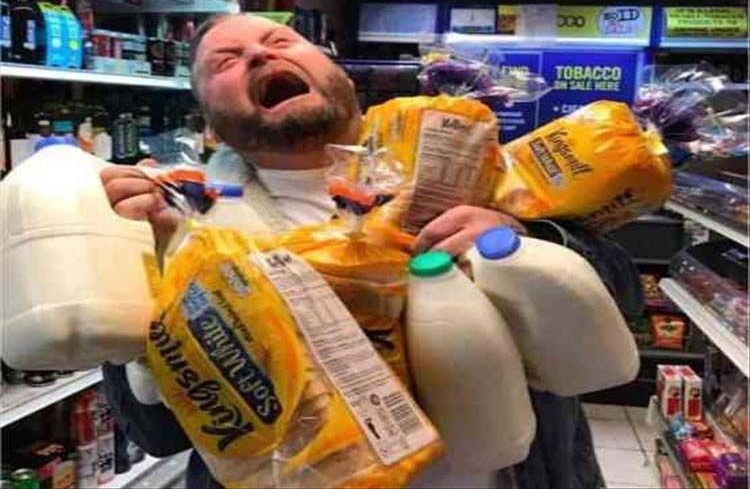
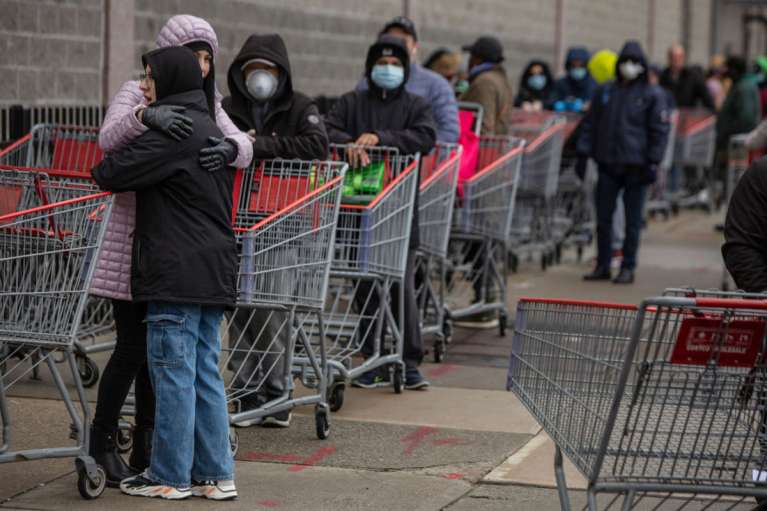
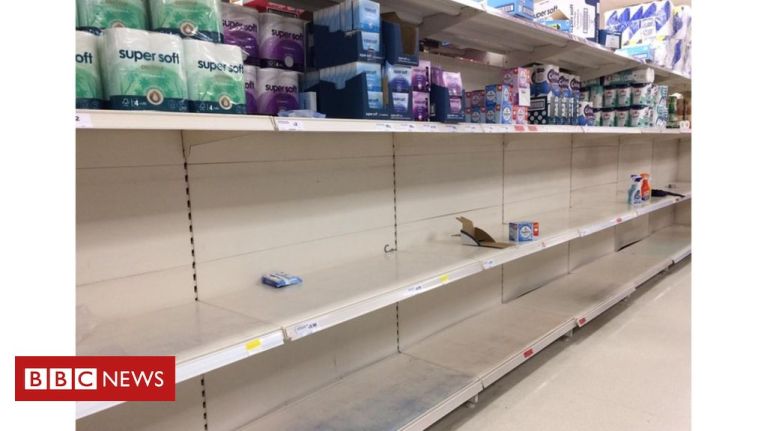
The same people snicking about toilet paper hoarders, a week earlier, have about lost their minds when the governments of various states started to tell them to close shop for a bit and stay home.

Those infected with the restless American spirit pile up wealth for themselves, more than anyone else in the world, and yet the thought of taking a few weeks off for sake of their vulnerable neighbors will induce a panic.  “How will we eat?”  Cries out the guy, with three properties, to the guy who recently bought a brand new truck when the old one was just fine.  We, unlike many others in the world, could afford a week off to reflect on ourselves and our cultural priorities.

We could be the busiest, furthest traveling, civilization in all of human history, but we aren’t the first people scurrying about our various responsibilites and fretting about the lack of help.  A few weeks ago, while contemplating the fevered pace of modern life and the justifications given for it, I had to think of the example of a stressed out woman who lived two millennia ago and finally expressed her exasperation about the lack of help to Jesus:

As Jesus and his disciples were on their way, he came to a village where a woman named Martha opened her home to him. She had a sister called Mary, who sat at the Lord’s feet listening to what he said. But Martha was distracted by all the preparations that had to be made. She came to him and asked, “Lord, don’t you care that my sister has left me to do the work by myself? Tell her to help me!”  “Martha, Martha,” the Lord answered, “you are worried and upset about many things, but few things are needed—or indeed only one.  Mary has chosen what is better, and it will not be taken away from her.”

(Luke 10:38-42 NIV)

Mary and Martha

There are many anxiety-ridden people in our society today and that fact has become all the more clear in the past few weeks.  There are many who, like Martha, are working at their full capability, struggling to keep up with their seemingly ever-increasing workload and begging for help.  From those panic buying to those complaining about their favorite events being cancelled, both are missing the perspective of Mary, who sat listening, and really do need to take a deep breath and maybe just appreciate that they are still breathing rather than be so worried about things that will pass away soon enough anyways.


Be Still and Know…


Everyone, from government leaders to those who think that they know better than government leaders, wants to be in control.  And that is what drives the frantic pace of our lives.  We think, “if I just could have that one more property” or “after this year I’ll kick back and relax,” yet when we get there there is always that one more thing that needs to be done before we can feel secure.  There are many who pursue this sort of material completeness until the day that they die.  Some do better than others at accumulating their pile of stuff, some are like this foolish rich man Jesus describes:

Then he said to them, “Watch out! Be on your guard against all kinds of greed; life does not consist in an abundance of possessions.”  And he told them this parable: “The ground of a certain rich man yielded an abundant harvest.  He thought to himself, ‘What shall I do? I have no place to store my crops.’ “Then he said, ‘This is what I’ll do. I will tear down my barns and build bigger ones, and there I will store my surplus grain.  And I’ll say to myself, “You have plenty of grain laid up for many years. Take life easy; eat, drink and be merry.” ’ “But God said to him, ‘You fool! This very night your life will be demanded from you. Then who will get what you have prepared for yourself?’ “This is how it will be with whoever stores up things for themselves but is not rich toward God.”

(Luke 12:15‭-‬21 NIV)

Listen up, folks!  This shutdown may be the last wake up call you get from God.  Instead of complaining about your schedule being upset and all the things that you want to do, including church services, maybe it is time to be like Mary and do some serious contemplation instead? 

When Jesus told the crowds, “take no thought for tomorrow,” he was likely talking to an audience with many who lived hand to mouth (like many still do in the world) and had every reason to worry about where the next meal was coming from.  While we fret and fuss about the inconvenience, fight over toilet paper, some will literally be going hungry while trying to wait this virus out.

This Lenten shut down can be a very good thing to sort out what is truly life sustaining from the truly frivolous.  My design work has aided in the construction of many barns over the past few years and there had been a great deal of optimism before everything came crashing down a little over a week ago.  Suddenly, much like that ambitious fool whose life was required of him the very night he felt satisfied, we too have been forced to take inventory over our lives and it would be a good opportunity to reorder our priorities.  When is the last time you’ve thanked God for the chance to work and have food on the table?  Have you noticed the sun still shining as the stock values plunge?

We may have BMWs to show our prestige and iPhones (emphasis on the ‘i’) to keep our schedules straight, but we aren’t the first self-important generation that needed brought to it’s knees and reminded that it was not sovereign over anything, that their power over the earth was only an illusion.  It is the wise person who lives in awe of the mystery of everything that the foolish take for granted.  It is the very thing that the Psalmist tells us to be still and know:

God is our refuge and strength, an ever-present help in trouble.  Therefore we will not fear, though the earth give way and the mountains fall into the heart of the sea,  though its waters roar and foam and the mountains quake with their surging.  There is a river whose streams make glad the city of God, the holy place where the Most High dwells.  God is within her, she will not fall; God will help her at break of day.  Nations are in uproar, kingdoms fall; he lifts his voice, the earth melts.  The Lord Almighty is with us; the God of Jacob is our fortress.  Come and see what the Lord has done, the desolations he has brought on the earth.  He makes wars cease to the ends of the earth. He breaks the bow and shatters the spear; he burns the shields with fire.  He says, “Be still, and know that I am God; I will be exalted among the nations, I will be exalted in the earth.”  The Lord Almighty is with us; the God of Jacob is our fortress.

(Psalms 46:1‭-‬11 NIV)

Time to Reset and Refocus…

We are not in control.  And, “except you become as little children,” (Matt. 18:3) everything you accomplish in this life will eventually be wiped away and forgotten.  All of those barns my long hours and overtime have made possible will eventually, maybe in less than a century, be reduced to rubble, rot away or be burned.  Nothing we have built with our hands, no great intellectual endeavor, should take our eyes off of the true sustainer of life.  That sustainer being that which has set this universe in motion and holds it together while we frail critters delude ourselves, imagining our own invulnerability, and will some day need to face the reality of our own situation.

I was writing this blog (afterall, you, my audience, are too important to wait) as my dad toiled with the landscaping outside.  There had been many times where I had intended to buckle down and help for a little, despite questioning if all the work was ever worth it, but got swept away in my own projects before actually lending a hand.  Today, with no gym ritual or other routine to keep, I decided it was time to haul a couple wheelbarrow loads of mulch before finishing this blog and borrowing my dad’s truck to haul a few loads out of my old house in preparation for the new tenants.  

I do not believe Covid-19 will be the end of us.  But let it be the end of this paradigm we are in.  Let it be a time to slow down, to respect our fellow man and to, most importantly, be in awe of God.  It is truly, in these reminders of our own mortality, that God’s mercy is made manifest.  We can be the hands that help, the ears that listens, and the voice of calm in troubled times.  We live surrounded by chaos on all sides, it is terrifying if you stare into that abyss of uncertainty of the days and months ahead, but those who have faith in God never have a reason to fear and will always bring hope as long as they have breath.

So, take a deep breath, Martha, get your soul right and even Covid-19 cannot snuff out the light that you’ll bring into the world.  For a Christian there is beauty even in death.  Live in love, not fear, my friends, because in love there is a breath of life that cannot be extinguished.  Stop ‘adulting’ for a little, stop being like Martha, and learn to be a bit more like Mary.  Use this Lenten season to be still, to sit at the feet of Jesus, and set your eyes on what is greater than our daily grind.  All of the activity here will eventually come to an end, what have you done of eternal value lately?
Fear Is Contagious. Fear Is Deadlier Than Coronavirus.

Standard

Spanish flu of 1918 was unusual, amongst modern influenza outbreaks, because it killed young and otherwise healthy people.  One of the possible reasons for this is an immune reaction called “cytokine storm” in which overreaction of a bodily system leads to a cascade of other failures and eventually to death.  I’ll let my friends who are medical professionals correct me on the details, but that is the basic idea and sufficient explanation to set the stage for this blog post.

The Herd Reacts…

The psychology of human behavior, in particularly how it pertains to people in groups, is a fascinating study.  We are social creatures and because of this our own response to anything can be easily influenced by the reaction of group.  If one person or several, who are considered credible by the group, start to do something new, it won’t be very long before there are many others copying them.  That is how fads and fashions are born, that is why religious people conform, we want to share in the credibility of the credible by doing what they are doing.  We do this unconsciously, like the contagious yawn, and can help explain what happened last week.

All of the cancelations of the past few days may very well come down to the actions of one man.  Rudy Gobert, days before becoming the first NBA athlete to positive for the Covid-19 virus, decided it would be funny to deliberately touch all the mics and recording devices in a news conference.  This led to the NBA suspending their seasons and, like Mrs O’Leary’s cow kicking over the lantern starting the Great Chicago Fire in 1871, one man’s caviler attitude could very well have triggered the response of the NBA and the long list of other cancelations that soon followed.

It goes like this: The NBA canceled because 1) a few of their players tested positive, 2) they realized they were no longer in control of the situation, and 3) they could possibly be held liable if the death of someone’s grandpa could be traced back to one of their sporting events.  So, in the name of public safety and all things good and right, they decided to approach this unknown risk by abruptly ending their season.  This, in turn, very likely influenced other leagues to follow suit for fear of their own inaction, despite knowledge of risk, becoming a heyday for trial lawyers everywhere or simply a public relations disaster.

The more leagues and events that cancelled, the more others felt pressured to do the same.  Sure, this was something rationally justified, the idea of “flattening the curve” or slowing the spread of a disease by “social distancing” soon became common parlance, and yet the spread of this idea to start canceling events seems also to be very much like the simultaneous run on toilet paper.  Anxiety disorder is something I know a little about and, while I’ve never been tempted to hoard toilet paper, it certainly has gotten in the way of my better judgement. 

So is the reaction to Covid-19 wholly rational or was it post hoc rationalization and basically a collective panic attack?

Nothing To Fear But Fear Itself…

I have a friend who was an Air Force medic during the First Gulf War.  He told me an anecdote you’ll never hear reported in the news, a behavior that doesn’t make any rational sense and yet is something he encountered a few times in the lead up to combat in Iraq. 

Apparently some of the young soldiers were so keyed up and anxious that they couldn’t take the pressure of the wait anymore, they would find a place where they had a little privacy (the porta-potties as I recall) and take their own life using the firearm issued to them.

It makes absolutely no sense.  Why would someone, facing the danger of death, be so anxious that they would actually kill themselves?

In times of crisis people want to do something, anything, to lose that feeling of powerlessness.  That is probably the reason why many people have recently started to stock up on things that really would not help them.  That is why young soldiers, concerned about losing their life, took their own life rather than continue to wait in fear.  Fear often leads to an irrational response.  And our most educated and elite, given responsibility to make decisions, are not immune to this kind of irrational “do something” impulse either.  Our leaders are capable of panic as much as any of us.

It reminds me of the story of Easy Company, told in the series “Band of Brothers,” where the Company Commander, 1st Lieutenant Norman S. Dike Jr. (or “Foxhole Norman”), was portrayed as being frozen by combat and unable to make a decision.  He had obviously been talented enough to rise up through the ranks and become an officer, but apparently he lacked the calm and collectedness to be an effective leader outside of a controlled predictable environment.  He had to be replaced by a more common and practical man, with the right instincts to get the job done:

During the assault on Foy, Dike had ordered a platoon to go on a flanking mission around the rear of the town. During their charge, he ordered them to take cover. His subordinates informed him they were going to get killed because they were sitting ducks.  At the same time, Captain Richard Winters, former commander of Easy Company and the Battalion executive officer, tried radioing him to tell him the same thing. Having no idea how to control the situation, Dike froze. Carwood Lipton, at that time the company’s first sergeant, later put it: “He fell apart.” He was relieved during fighting at Foy by First Lieutenant Ronald Speirs under orders from Captain Winters, then moved on to become an aide to Maxwell Taylor, 101st Airborne Division.”

Military Wiki, Norman Dike

Could it be those whom have power in our institutions are men (and women) of similar caliber to Dike?  Smart, capable of working their way up through the established system, and yet lacking the courage necessary to lead society through uncharted waters?  Some of them freeze in fear, others overreact in their anxieties, while others (seeing the bigger picture) are more more able to make good decisions and navigate the stressful circumstances of the present moment.  Running the NBA or being at the top of a government agency does not mean that a person is qualified to manage a crisis and in some cases those in those positions are probably going to make matters worse rather than better.

Self-sabatoge, Fear-based Overreaction and Titanic Failures…

It is really hard to know, actually, in a politically polarized time, when many are willing to cut off their nose to spite their face, what is a real crisis and what is merely an opportunity to try to undermine a political opponent.  In fact, there are some in this country who seem quite willing to destroy the economy in a desperate bid to get their power back and a few who even seemed to cheer the plunge in the markets.  When some see personal benefit in feeding hysteria and panic, it is hard to know who too trust when clearly not everyone is on the same team anymore.  

But that said, I would tend to see the fear as being real and the reaction a sincere effort to prevent the worst case scenario from happening.  It was easy, as Covid-19, ravaged China, to deny the severity of the situation.  For one, the Chinese government is not the most trustworthy source of information (add to the that they had every reason to minimize the outbreak as not to scare away investment dollars) and, two, it is very easy to dimiss China as a them rather one of us.  The real wakeup call was Italy, a country clearly on par with our own in terms of medicine, and how quickly a few isolated cases suddenly exploded.  And, unlike China, where the government kept a tight lid on information, the truth was allowed to escape.

What has happened since I see as being similar to when a driver dozes off, wakes up while crossing the rumble strips, and reactively jerks the wheel.  Their immediate reaction may spare them a trip into the trees, but it could also be an over-reaction that takes them head-on into an incoming tractor trailer.  It could be too little too late.  There are those right now who call the idea of “flattening the curve” a “deadly delusion” an that only complete containment strategy will make a difference.  But then I begin to wonder has the opportunity to save those most vulnerable been missed a month or so ago when we failed to close our borders when it was clear that China was dealing with something unprecedented in our own times?

They say had the HMS Titanic ran straight into the iceberg, rather than barely grazed it, some would’ve died from the violent collision and yet the ship would likely haved stayed afloat.  It is also strong possibility that they could have avoided a collision with the iceberg altogether if they had only used the rudder rather than try to reverse the engines.  The Titanic, unlike many ships of the period, had two outer propellers run off piston engines and one in the center that was powered by a turbine.  The outer propellers could be reversed quickly, the inner could not, and the result of their attempt to reverse being turbulence over the rudder which made the magnificent ship unresponsive.

Sometimes I wonder if it is too late to spare the lives that will be lost if we slam headlong into Covid-19 and let be what will be.  Yes, people will die.  But people will die regardless and crippling the economy may only add to the death count.  Don’t get me wrong, I believe cancelling unnecessary activities and avoiding large group gatherings is a precaution worth taking, as is practicing good hygiene, washing hands, wearing masks and self-quarantine.  However, I would also argue that wrecking the economy will only make matters far worse and must also be avoided at all necessary costs.

In my own mind there is a vast space between paralyzing fear or irrational over-reaction and blinding arrogance.  We can and should be getting prepared, but with deliberate calm.  We are at war, the strength of our enemy is not fully known, we must not recklessly expose our vulnerable flanks, we dare never freeze in fear.  It would be wise to buy some time, to allow better countermeasures to be deployed and that does mean social distancing, less travel, more cleanliness, and really what should be common sense.

What Is Coming?

Despite our best effort, war is coming. We can expect that in the coming weeks that case numbers will jump dramatically and, not only that, but ICU beds will begin to fill at an alarming rate.  We could see abandoned shopping centers and malls converted into makeshift hospitals.  We will probably see some “wartime medicine” or triage, where those most likely to survive are given access to treatment over those who have only a slim chance are basically left to die, so snap out of your dismissive stupor and conspiratorial denial now or you will not be prepared for the battle of the coming days.  

That is the truth. 

We are emotional beings, not wholly rational. 

We make poor decisions, both collectively and individually, that can turn a dire circumstance into an absolute disaster.

If you are seeing this only in terms of politics, who gets blamed or who benefits, you are the problem more than the virus.  If you have filled your cart with toilet paper because suddenly you feel vulnerable and don’t know what to do, stop thinking only about yourself and stop feeding into the anxieties of others.  It is time to buckle down, put aside partisan differences, selfish ambitions, and act together as one nation again.

In the end, remember, like the case of many who caught Spanish flu and died because of their strong (yet unhelpful) response, overreaction can be more deadly than the actual threat.  We cannot bring the economy to a grinding halt out of fear, instead we must thread the needle with a prudent and properly measured reaction.  There is no point in stopping the virus by killing the patient.  We should pray that our leaders are given extraordinarily wisdom and calm for this unprecedented event.

God bless!

My Final Position On Covid-19

Standard

I’ve never been one to get caught up in the latest hysteria.  I tend to be a skeptic of everyone from fundamentalist doomsayers to their secular climate catastrophe counterparts. 

There are many things are not worth getting worked up about, things that I can’t really change myself or prevent, and it takes discernment to know what we should or should not be concerned about. 
The media tends to turn everything into a crisis.  Sensational headlines invite clicks and clicks produce ad revenue.  So, yes, minor problems or statistically unlikely scenarios do too often get blown out of proportion.  Politicians, for their part, love to capitalize on anxieties and fears of the public as a means to gain power for themselves. 

These false prophets of the corporate media and political establishment do a terrible disservice to the public, they are like the boy who cried wolf and eventually paid the price for his deception.

The cynical exploitation of the public by those who should be making them aware and leading out against real threats eventually leads to distrust of authority and an apathetic response.  Many take to heart the adage, “Fool me once, shame on you; fool me twice, shame on me,” and use it as a reason to reject all warnings from all established sources or at least those that do not comport with their own political alignment.  Unfortunately, an overreaction against all authority can also leave the ‘sheep’ vulnerable when the real ‘wolf’ finally does arrive.

My own concern over Covid-19 did not originate with the recent media hype over the story and the foolish efforts to politicize it against the current administration.  My concern began weeks ago and originated from my own personal analysis of the characteristics of this particular virus and the extreme Chinese response in trying to contain it.  Those who continue to trivialize the threat do not understand it, they are only reacting like those townsfolk fooled one too many times, and need to take a step back, take off their jaded lenses for a moment and reexamine the evidence.

No, Covid-19 is not the same as SAR’s, Swine Flu…

There are many silly memes out there about all the public scares that we have survived.  And all that is true.  But, while it is important to see the current claims of the media in the context of their previous record, it is also important to remember that even a broken clock is right twice a day and therefore must be able to discern for ourselves.

When I first became aware of the new (or novel) “Coronavirus” outbreak in Wuhan back in January there were several things that initially jumped out to me then and continue to stand out.  Covid-19, as it has more recently been designated, is not nearly as deadly as Ebola or some other flu viruses, nevertheless the Chinese effort to contain it has been extreme.

Chinese authorities have taken unprecedented steps to try to stop the spread, going as far as to quarantine huge industrial centers of millions of people and building massive new hospitals.  Why?  Well, probably because they have a reason to be concerned.  A country does not deliberately cripple their own economy to the extent that the Chinese have done without there being a good reason to do so. 

One reason to be concerned is that the Chinese, not wanting to scare away foreign investment, also have plenty of reason to try to conceal or downplay the reality on the ground.  That is why they made efforts to silence those who brought broader attention to the situation by sharing what they saw on social media.  They accused an optometrist, Li Wenliang (who himself would later would become infected and die while in treatment) of “spreading rumors” for telling the truth, so can we trust that they are telling us the full extent of what is happening now?

Li Wenliang

What we do already know is that Covid-19 is not as deadly as Ebola and other viruses.  But, according to current estimates, it still kills an alarming number of those who become infected:

“On Tuesday, WHO said the global death rate for the novel coronavirus based on the latest figures is 3.4% — higher than earlier figures of about 2%. The World Health Organization’s director-general, Tedros Adhanom Ghebreyesus, said that the new coronavirus “is a unique virus with unique characteristics.””

However, it is not the death rate or that Covid-19 is extremely deadly that caught my attention. 

No, it was how transmissible and impossible to contain that it has proven to be.  In many cases, the most deadly viruses are less dangerous, on a world scale, because they kill their host quickly enough that it cannot spread far or they are not easily transmitted.  Covid-19, by contrast, does spread through the air, it has a long incubation period that makes it hard to detect those infected, it does kill a significant number of those infected, and has successfully spread around the globe in a matter of weeks.

But doesn’t the flu kill X amount of people per year?

One of the dumbest reoccurring comments I’ve encountered is of those who point to the higher death count of the flu as a reason not to be concerned about Covid-19.  Many have reasoned that since the flu has killed more people than Covid-19 this past year that therefore the flu is a bigger threat.  Of course, those making this claim have obviously not paid attention in probability and statistics or simply fail to grasp the difference between those killed previously and future death rates.

Sure the flu has absolutely killed more last year before Covid-19 arrived on the scene, but it only kills a fraction of a percent and nowhere near even the low estimates for Covid-19.  In other words, if Covid-19 were to continue to break containment, as it has consistently, and spreads around the world, it will likely kill millions of people worldwide.  In fact, if you multiply the current estimate of death rate out to the US population, that’s well over 11 million Americans, and that’s assuming everyone else who becomes seriously ill, needs to be intubated and weeks of ICU treatment or would probably die, is getting good medical care.

Responding to the news that a grizzly bear has escaped containment by pointing out that a mountain lion also killed last year only shows how little a person understands the situation.  Sure, the grizzly isn’t going to kill everyone in the neighborhood, but it is certainly a bigger threat than the mountain lion, it actually compounds the danger, it only adds another deadly creature when one was bad enough and certainly isn’t going to improve the experience for those living in the neighborhood of where it now roams free.  

Grizzly vs Cougar

At very best Covid-19 being on the loose only adds to the misery of flu season and, at worse, well…

Do I think it is the end of the world?

My cousin Mel suggested that there are two ditches that people fall into, those who see it as “the normal flu here, move along,” and the “Run!!!!!” 

I’m not sure what camp he would place me in, but I believe that there is definitely a middle ground between those two extremes.  My own position is that Covid-19 does present a unique threat to the ‘normal’ flu, in that it is a novel virus and currently killing by at least a whole order of magnitude greater or more.  But, at the same time, I’m not in that window of those most vulnerable and most people will survive. 

So, no, it is not the end of the world.  Humanity has come through many similar events, many plagues far worse than a virus that potentially kills 3.4% of the current population, and here we are.  Covid-19 won’t kill us all.  As of March 6th, at the time I am writing, the virus has already killed 14 here (in America) and 3,300 worldwide.  Not much when you consider how many die in automobile accidents, etc.

Do I think it is a big joke?

No, absolutely not!

If Covid-19 continues to get past all containment lines, as it has, and spread into the general population the death rates could be much higher as our medical infrastructure would reach capacity, as supply chains break down (watch this video) due to the extreme worldwide demand coupled with decreased production, and more people, afraid of the infection, began to stay home rather than go to work and risk their health.  

In an era of just in time deliveries and global supply chains, we are actually more vulnerable than ever if the proverbial excrement were to hit the proverbial fan and would very soon learn how very dependant we are on those who produce, transport and distribute our goods.  Even those in rural areas cannot escape the potential fallout if there was a breakdown of the systems that we take for granted as potentially millions would flee urban areas in search of basic necessities or simply to get away from the chaos.

Even if the social order didn’t collapse and death rates remained at current levels, are you really going to say that burying three out every hundred people you know is not a big deal?  That could include your grandparents, your parents, possibly close friends, and coworkers.  It could also mean that you spend weeks in the ICU, as medical bills pile up, gasping for breath and wishing to die, thinking you might and possibly even being right.  I would not do anything where there is a three percent chance of death for myself or a friend, would you?

Should you panic?

I’m reminded of the refrain of a movie “Bridge of Spies” where Tom Hanks plays a lawyer defending a captured KGB spy and asks his client, who is likely facing death at the hands of the Russians if he’s turned over or the Americans if he is not, “aren’t you worried?”  To which the old spy answers, with a deadpan expression, “would it help?

Bridge of Spies

Panic would do absolutely nothing to help a person trying to survive a deadly viral outbreak and is something that must be avoided.  It is why you see the true experts (not the talking heads on the media) taking a measured approach and treating Covid-19 as if it is not a big deal.  Ultimately, what will be will be and tanking the economy ahead of time, with dire predictions, would only make matters worse.

If the worse case scenario were to play out fear would likely be as big a threat as the disease itself and that is why I say…

Prepare Now!

The best way to prevent future panic is preparedness.  No, I’m not talking about taking things to an extreme, you probably won’t need that hazmat suit and I’m doubtful converting your life-savings to gold is a good idea.  But having a few weeks of food stocks (canned goods, dried beans and rice) along with purified water, iodized salt, ethyl alcohol, and other disinfectants, some N95 masks, all things that could be good to have around anyways, could be enough to ride out the worst case scenario.  

Remember the parable about the wise and foolish virgins (Matthew 25:1-13) where some came prepared with extra oil, thus were ready for the bridegroom, while the others had run out and desperate?  That story has some general application and can be applied to our attitudes pertaining to Covid-19.  It is better to have some foresight, to be aware of the various scenarios that could play out, and plan accordingly, rather than wait until the last minute when it is already too late.  There is still time (at least as I write this) to be reasonably prepared and that is my suggestion.

Failure to anticipate and plan accordingly can be fatal…

As 339 students boarded the MV Sewol, a Korean ferry, for a school outing, I’m doubtful any of them could’ve imagined the nightmare that would soon play out.  I’m still haunted by the videos made as they chattered nervously while the stricken ship began to list.  They had been told, by those in authority on the vessel, to stay put in their cabins—and that is exactly what they did up until those final moments of terror as the ship capsized.  Had they been proactive, had they disobeyed and went on the deck rather than allow themselves to be trapped, they would have easily avoided a terrible fate.

MV Sewol

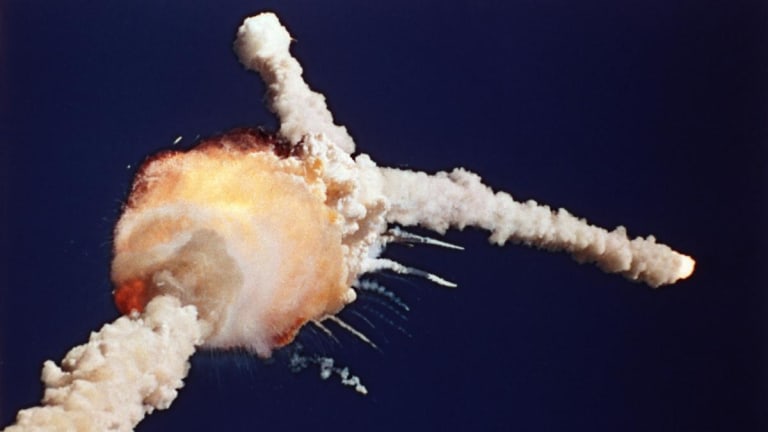
People would do many things differently had the chance. The ill-fated OV-099 Challenger would never have left the launch pad had warnings about potential O-ring failure not been ignored.  Likewise, had those trying to tell the Titanic about icebergs been heard rather than told “shut up” by the overworked radio operator, or had the lookouts decided to break the lock for the binoculars rather than squint into the darkness without them, countless lives would have been saved and the Titanic not become a symbol of excessive human pride.

OV-099 Challenger

We are able to make predictions based in available evidence.  But many are distracted (or just plain oblivious) and otherwise unable to sift through the information to find the signs of danger and make the correct call.  I would venture a guess that those thousands who have contracted Covid-19 had no idea, when the first symptoms started to show, that they would have their lives upended.  Those who died probably thought this was just another flu, like the many they had experienced before, and their lack of awareness would not save them.  

And yet we can’t prepare for everything...

We can’t know the future. An asteroid could collided with our planet tomorrow, end life as we know it, and there is very little we could do now to be ready for that.  

But, that said, there are many things we are able to anticipate and should.  If you are not concerned about pandemic, I suggest you do some reading about the Spanish flu or Black Death and consider that we would not necessarily be any better off the day that the ‘perfect storm’ flu finally does arrive. Vaccines cannot be developed overnight (sorry, antivax conspiracy theorists) and a third of world population (including you) could be gone before an effective solution was found.

That is reality.  There are many who had their lives planned out, they had hopes and dreams, before meeting their unexpected demise.

Death is coming, are you ready?

Sounds dark and yet it is true.  If it isn’t Covid-19 it will be something else and it is good to live with a little awareness of our true vulnerability and eventual end.  We might make better use of our time if we were a bit more mindful of death.  

Fools laugh when they should be sober and consider their time is short.  There are many things that are easily take for granted could be wiped away in an instant.  Those of us born at the top can have a tendency towards arrogance.  But neither God nor the universe care about your feelings of self-importance and one only needs to consider how many powerful civilizations have collapsed as fast as they rose in prominence.  Oftentimes the “writing on the wall” was there and had they not been too drunk with their own hubris they may have changed course.

I’ve needed to deal with my own regrets for having not taken an illness seriously enough.  It simply did not occur to me that an eighteen month old child could die from what had seemed to be mundane and easily treated medical issues.  Had I known what would happen to her I would have moved heaven and Earth to be sure that she received top notch treatment.  I’ve dealt with years of post-traumatic stress symptoms as a result of my own failures then.  And even today it is a reminder to be vigilant and to do today what is too easily put off until tomorrow.  Being ready for death means living a worthwhile existence in the present moment.

So what is my final position of Covid-19?

In the end, I’m not losing any sleep over Covid-19, it is still something on the horizon and what would it help to get all worked up about it?  

At the same time, I do believe it is a serious threat and am glad for the resources being directed to combat and contain the virus.  We should be taking precautions for the good of ourselves and our communities.  A little more conscientiousness in our society could do a whole lot of good.  Consider the example of the Japanese who, because of measures taken to stop the spread of Covid-19, had a far less severe flu season this year.  Think about it.  If we were to practice a little better hygiene and show a little more respect to the reality of our environment we could, at very least, avoid suffering through a few days of sickness.

I really do not know for sure what will happen in the coming weeks, months and years.  The disruptions caused by Covid-19, already being experienced, will probably be short-term.  We might even forget about the whole story by April.  Soon enough, by the diligent efforts of some, a vaccine will be developed and those skeptical of the attention being brought to this virus can convince themselves this success is proof they were right not to be concerned.  But it is very likely that millions around the world will not see next Christmas. 

If you are a man over fifty it very well could be you.

Are you ready?

Why the Princess Had to Kiss a Frog

Standard

Those who had early success in the romantic realm can be excused for thinking of it as some sort of magic. For them the “right one” comes along, his awkward introduction goes well enough, then very soon they are entering that world of “meant to be” and marriage.

That was the world of my own teenage fantasies and remained a hope resilient enough to carry me through a decade of disappointment. Reality would slap me in the face over and over again. But, after some moments of despair, I would always refuse to believe the evidence and go with my heart instead: Eventually that mythical creature would come along, the one who loved me for my heart rather than my status or stature, and finally prove my hopes.

Hope, even hope at the level of magical thinking, serves an important role in our survival. Too much concern about the chances and a man might never get out of bed (or leave the cave) and confront the challenges ahead of him. Life requires faith and courage or the ability to overcome fears (based in our previous experience and/or a reasonable assessment of outcomes) and plunge blindly forward into the unknown. It was a bit of foolish hope that enabled our ancestors to continue the species.

Hope Is Not a Strategy

Unfortunately, hope is not a strategy and a positive attitude, while often attractive, is not a guarantee of success. For every miraculous rescue, there have been countless others who likely clung to their hopes until the last hour. Like those students on the ill-fated MV Sewol, desperately clawing for a chance to save themselves to the point of broken fingers as the ferry boat capsized, many have fought hard to survive against the odds and died cold and alone. The lucky ones didn’t spend their last moments in sheer terror and desperation.

Fortune may favor the bold, but if you are a man, in America, standing 5′-2″ tall, and you want to experience happily ever after, then you better be rich or dripping with charisma. Because, whether we like to admit it or not, women (like men) are selective and statistics tend to favor a particular height range in men. First of all, women state their preference for taller men outright and, second, the numbers seem to bear this reality out—taller men have a distinct advantage. Again, this doesn’t mean that men on the average or shorter range have no chance, but it may mean that they will be less sought-after and thus, to be successful, they need to be less selective.

In the religious context that formed my expectations, the above reality was something that I could accept for “the world” and yet wanted to deny as it applied to the women whom I consider to be virtuous. I mean, I’m not extremely short or anything, I’m also in decent physical condition, but I’m definitely not above average in any regard and certainly did not draw as much interest from women as some of my friends who only needed to show up to make the list of the swooned after. It could be a bit nauseating, at times, when women would use me as their means of intelligence gathering about a “hot” friend, but at least I could be a good wingman for my friends, right?

Still, despite my knowledge of how things really worked and a growing number of failures, I remained a hopeless romantic. In fact, as a final act, before everything went totally sideways, rather than retreat or settle (a strategy that had never worked for me anyway) I decided to double down in faith and act in a way that I knew was irrational. For the first time in my life, I would ignore the odds, hope against hope, and find victory over my old nemesis of agnosticism that had always nipped at my heels. This young woman, the impossibility, became symbolic of my struggle to preserve my Mennonite identity and cling to the child-like innocence that had begun to fade over the years.

A Bitter Pill of Truth

What I found, in the end, is that Mennonite girls are really not that different from their secular counterparts. Sure, they wear a different costume, they also have some unique culturally-specific expectations, but being “thirty years old living in Milton” was still something unforgivable to a young woman full of her own ambition. And the more damning truth came in retrospect and in my further consideration of how a medical professional characterized this quixotic pursuit as mere sexual attraction. I had bristled at this. How dare this doctor say such a thing? But I was, like so many others, a victim of my own delusion.

The paradigm of my Mennonite identity came crashing down, despite my best efforts to preserve it, the night that I realized that she was dating and would marry taller more prototypical Mennonite guy over this hopeful fool. The gig was up. And, to pour salt on my wounds, this generically luckier fool, had the audacity to take to social media and crow about his success as a sign of God’s special favor—where did that leave me as the one who had put forward a truly faithful effort and failed? Of course, I didn’t lash out directly against his childish exuberance, I mean had I been successful you may have never heard the end of it. That is some of the reason why I started this blog, to chronicle my irrational belief that the impossible could be made possible and as a means to prove wrong some cynical faithless naysayers.

The hard truth, the wall that I hit, was that my faith could not overcome my lack of tangibles (at least tangibles that mattered) even amongst those seemingly most sincere. On top of that, despite my initial thoughts of this girl having a sort of strange or alien appearance, the reality is that she was a hot commodity amongst many guys. In other words, the very idea that my admiration of her was something special or spiritual fell flat against the clear contrary evidence. I had fought against my cognitive dissonance, refusing to accept things were not as I had imagined they should be, not as I was told they would be, and no amount of faith would change what was true about my culture.

The Rejection of Average

Anyhow, my sentiments aside, the trends that I encountered in selectiveness reflect a growing inequity in the dating economy of our time. This selectiveness is found in the data of various dating sites and as it turns out, is a phenomenon especially true of women. That according to studies cited in an article, “Attraction Inequality and the Dating Economy,” bearing this reality out. The summary is that around 80% of women consider about 80% of men to be of below average attractiveness and thus are competing for the top 20% of men.

It doesn’t take a degree in probability and statistics to see the problem. As a result of a variety of factors (our affluence, ability to travel, exposure to marketing and media, etc) our expectations have gone through the stratosphere. A young woman believes she can afford to wait and is thus willing to turn down a dozen potential suitors who she deems to be too average for her tastes. I mean, why settle for the frog, doesn’t every princess deserve her prince?

Sadly, for women of high expectations, this increased selectiveness does not correspond with increased numbers of above-average men. What it does mean is that fewer men, born with the right physical features and charm, have more women at their disposal. It also means that there are many other men of average stature or appearance who get very little attention. And, whereas marriage used to take some off the market (at least on paper) that is no longer the case. So, as it goes now, many women are eagerly awaiting the opportunity with those few of exceptionally attractive men who do not need to take them seriously and, meanwhile, are ignoring those whom they have a real chance with.

Mennonites Raise the Threshold

In the conservative Mennonite world where I came from the expectations are even more stringent. Not only do we have the influence of Hollywood, but we also have an increased starting commitment that comes with the purity culture teachings that crept in with the embrace of Protestant fundamentalism. In other words, not only are Mennonite young women as superficially selective as their secular counterparts, but they are also afraid to so much as having coffee with an average guy lest they are somehow defiled by this frog—accidentally marry him or something?

But the big difference is that, in the conservative Mennonite world, the guys are also as selective as the girls. Basically the threshold of commitment has been raised so high that a guy wouldn’t dare risk his reputation by dating that average girl. No, he’s going to go for that cherub-faced icon of Mennonite beauty and that’s because he already knows that the average girl will likely reject him as well. So, unlike the secular situation, where the problem is that 80% of the women are only attracted to 20% of the guys, with conservative Mennonites it is also 80% of the guys who are after 20% of the girls.

In such circumstances it is amazing anyone gets married at all. Of course, it helps that conservative Mennonites often marry younger when they are still too dumb to have established their impossible standards. It also helps now that there are more opportunities for Mennonite young people to humanize their other gender counterparts through fun group activities, like global missions or Bible schools. Nevertheless, there are many of average attractiveness who are left behind in the current Mennonite paradigm and I was one of them—there simply was not a path for me to romantic success within that context.

Willingness To Kiss Frogs

Fairytales are not only fun stories, but many of them are also full of meaning waiting to be unpacked and applied like a Biblical parable. And such is the case with the fairytale about the princess who kisses a frog and ends up with a prince. Sure, that never happens literally in real life, but it does illustrate the utility of taking a chance on an unproven commodity and the potential for a change of perspective. That awkward guy in the youth group or in the gym might not seem like much of a catch from a comfortable distance, I mean he can’t even protect himself from tripping over his own feet let alone be that dragon-slaying hero of female fantasies, right?

But sometimes those average guys have something beneath the surface that those other catered to “top 20%” guys don’t have and that is a thing called character. I mean, it isn’t easy being last picked in gym class. A clumsy guy is indeed very aware of his shortcomings and especially while he’s tripping over his words, despite a large vocabulary, to talk to the slightly above average girl (in his eyes) who treats him with that carefully hidden distain. If he just had a chance, if he would just be allowed to show a little of his heart, then maybe he would start to look more and more like a handsome prince rather than an ugly frog?

And not at all saying that we should not take the opportunity to better ourselves. There are plenty of guys and girls who refuse to make any effort to change themselves or adjust their approach to reality and end up repeating the same failure over and over again. They are a lost cause.

But there are many more, like me, who do shine when given a chance. There is a beautiful woman (not Mennonite) who allowed this frog an opportunity to speak into her life. She learned about some of my better qualities. However, more than that, her mere presence in my life created a new kind of strength in me. She gives me something to protect, she gives me a specific purpose and a reason to develop my abilities. I love her because she calls me her “average bhest” and uses that as a reason to embrace rather than disqualify me. It is because she knows that I am dedicated to her, that I am not like the guy who took from her yet never provided the security she needed for herself and her son.

The metaphor of a princess kissing a frog comes from the reality that women need to be selective and the other reality that most men need some catalyst to reach their full potential. The tragic part is that when impossible expectations are allowed to creep in the result is impotent men and dissatisfied women. Even those who are successful in getting married, who do not shed their romantic perfectionism, could very well end up with a relationship on the rocks. We need to renew a practical love, the ability to love people who are just average, like we are, or we will end up missing out on the opportunity for romances that go deeper.

It is time to show some faith where it actually matters. Most men aren’t six feet tall with the face of a Hollywood lead man. Most women don’t look like Ariana Grande or whomever else the entertainment industry puts on their billboards. Most women, whether they know it or not, are more frog than princess. Most men, even the decent ones, are not as worthy as they think themselves to be. Most of us are average. It is time to stop being so full of ourselves and start kissing some frogs. Or we could just keep hoping for that magical prince (or princesses) to show up and love us for no reason other than that we exist. Your choice.


My Tumultuous Transitional Decade

Standard

It is hard to believe that another decade has already come and gone. This past decade has been one of many transitions for me, from the launch of this blog in 2014 to a big change in career a few years later and, on top of all that, a departure from the only religious identity I had ever known for another.

It was a decade marked by an extreme of faith, the high-water mark of my spiritual life, leading to the most profound of disappointments and suicidal despair, all followed by a rise again from the ashes. If there is such a thing as living a second life, a life after death, then I am living proof of that concept despite the scars.

Delusion, Disappointment and Divine Humor

This blog was started, mid-decade, to be a record of my journey and also a story of the triumph of faith within a Mennonite context. However, things did not go as anticipated, my enthusiasm was not shared by those who had the power to make a difference, and my misplaced faith ended up being fully exposed by the end of it all. That was the lowest of lows for me.

However, even in my lowest moments, in the midst of that, there was a moment of levity where my sharing my disgruntlement with the impossible Mennonite marriageability expectations went viral. That remains my most viewed and shared Irregular Ideation blog to date (and recently vastly eclipsed by a blog on another blog I curate) and my proof that God does indeed have a sense of humor.

Somehow, surprisingly, my influence within the Mennonite denomination would peak with my candid expressions of frustration with the religious culture that came with my departure. A couple of my serious blogs, decrying fundamentalist influence and another discussing the role of ritual and tradition, even found their way into Mennonite World Review and an Old Order email group.

It would be hard to give that up. And I knew the newfound popularity of my blog would likely suffer once I formally announced my departure from Anabaptism—which does seem to be the case as traffic has diminished since then—but that is also the kind of sacrifice that a Christian commitment requires:

“If anyone comes to me and does not hate father and mother, wife and children, brothers and sisters—yes, even their own life—such a person cannot be my disciple.” (Luke 14:26‭ NIV)

For the first time in my life, I had left the comfort of the Anabaptist fishbowl for something bigger. Who knows what that will bring?

Dramatic Changes and Delicious Ironies

The move to Orthodoxy has been part of a huge paradigm shift and was pretty much the only option that I had left. It was a refuge to preserve the little faith that survived the collision with a terrible reality of my misplaced hopes. I certainly didn’t go to replace what had been devastated in me. And there are all of the problems found in every group of Christians from those recorded in the book of Acts onward—all of the silly squabbles and turf wars included.

Nevertheless, the beauty of Orthodox worship, the focus on Scripture and glorifying God in our song (rather than human emotion, etc) along with a simple (and timeless) Gospel message, helped me to move forward. Orthodox worship centers on our Communion together with God and (unlike the traditions I was most familiar with as a Protestant) they do not attempt to explain the explainable. At some point, we need to let go of our own understanding and embrace the mysteries beyond our comprehension.

Moving on from religion to real estate and other miscellaneous items, I started the decade paying down my debt for my first home and driving cars that probably belonged in a scrapyard. But then, in 2014, spurred by my other and disappointments, I bought my first new car, paid cash for a handsome black Ford Focus—my best purchase to date. In fact, I was so pleased with that purchase that I sold my prized (but high mileage) Jaguar XJR and bought a brand new Shelby GT-350 two years later when they first came out—an extravagant purchase which also led to some very meaningful friendships.

Anyhow, having reached the pinnacle of automotive excellence (at least for a working man’s salary) it was time to rest comfortably, save my money and relax a bit. Or, rather, that had been the plan…

But somehow (possibly working in an office with a bunch of restless Amish investors rubbing off on me?) I ended up buying a second property with the thought (at the time of purchase) that I would move in to and sell my old place in Milton. But suddenly that plan didn’t make sense anymore, why not rent the new house and build some equity instead? Needless to say, my ideas for a comfortable existence went out the window and, only two years later, now I’m working on house number three. Not exactly a business empire, yet more than calculated risk than I’ve ever taken on before.

In the time since my blinding hopes ran into a young Mennonite woman’s all-consuming ambitions, my feet have landed in three different countries (read more here and here) and all on the opposite side of the world. As it turns out, despite my self-doubts, all that I really needed was a good enough reason to go. I had started the decade thinking that I was incapable of finding my own direction in life, that I needed to hitch myself to someone else’s ambitions to get anywhere, and yet here I am moving on. Yes, very soon, echoing the central complaint of the young woman who rejected my offer of the impossible love, I will no longer be thirty years old living in Milton.

Where False Devotion Fails, True Love Prevails

I was wrong to hope to find the kind of love that is only possible with faith within the Mennonite context.*

That said, I was right about one thing: It is only that kind of love could ever motivate me to do anything worthwhile with my life.

Truly I did nothing, over the past few years, on the strength of my own effort. No, I’ve needed physical therapists, family, spiritual fathers, sisters, and brothers. Not to mention those friends on the road who made my loneliness bearable, also those who know my name at the various establishments that I frequent, my generous current employer and the many others who have positively impacted my life over the past decade. To all those people I owe a debt of gratitude.

However, there is one who has been there for me unlike any other, the one who didn’t lose hope in me despite my delusions and attachments to Mennonite dogma; the one who told to be strong for her, to get out of bed and go to church again. Everything I’ve done over the past few years would not have been possible apart from the investment of faith that she has made in me. She, as a person who has experienced her own personal misfortune, showed more love for me than those who claim to travel the world as a display of their Christian love.

In this coming decade, I plan to spend far less time trying to please the falsely pious and proud, who can’t be pleased and are obsessed with their own image, and more time with the downtrodden and truly humble.

That is the vision behind FACT, an organization of one, so far, that has already given me some hope that my seemingly divergent strengths and interests can finally be combined into something useful and good. I hope the vision of FACT will soon grow into concrete steps towards truly meaningful actions and compassionate solutions for OFWs and their families. But that, of course, will take more than my own personal efforts and I hope there will be others willing to put aside their doubts and help those who are already doing all they can do to better themselves.

*Mennonites, like people of all established religious traditions, are really good at carrying out their own particular programs and denominational prescriptions. Similar to their Anabaptist cousins more known for their barn-raisings, Mennonites love to help in disaster relief projects. They will also dutifully staff and fund their own private schools (or homeschool if they are more trendy) and now even travel the world as missionaries. All good things, I suppose. But all those things do not require any real faith on the part of Mennonite individuals, they are a cultural inheritance, a good way to find a romantic partner, an acceptable path to rise through the ranks, and are not truly sacrificial acts of faith or love.

Entering Into A Strange New World

In the past decade, my plans got turned upside down. I gave up on old dreams and, from the wreckage of my hopes, found some new vision. Had anyone said, ten years ago, that I would have three properties, traveled to the opposite side of the world, and converted to Orthodoxy, I would have probably laughed at them. But here I am, having started a journey to the impossibility and ended up here, perplexed.

We started the decade with a president who would seem more comfortable in a lecture hall and ended it with a persona built for professional wrestling, reality television, and trolling on Twitter. Yet, contrary to popular opinion or at least in contrast to the fears of half the population, the earth has not fallen from orbit nor has the moon disappeared from the night sky, life has gone on. Albeit, my assumptions, the idea that our political decisions are rationally based, had to change overnight. Scott Adams has persuaded me.

My identity, my religious and political paradigm, has changed very significantly in the past decade. I’ve witnessed the passing of my last remaining grandmother in 2017, one of my dad’s brothers also died in a logging accident mid-decade and then, uncle Roland, a man who had helped to facilitate my stay in the Philippines, was murdered.

Over the same time, I’ve been processing the battle with cancer of a younger cousin and good friend, who just finished college and plans to marry soon, who already sacrificed a leg (in the past year) and now has new growths in his lungs.

So the fight will continue for him as it does for all of us.

One day at a time.

None of us knows what trials we will face in the next decade and yet need to continue to live in faith. I hope to be done with my inventory taking, soon break free of the transitional time I am presently still in, and finally have some of those long-awaited triumphs that have eluded me in certain areas of my life. But, at the end of it all, I can’t really tell you what this next decade will hold, whether Trump will win in 2020 or if there will even be a year 2030.

There is no point in getting stressed out about what we can’t know. Our life is a vapor, it appears for a little and then it is gone. So make the best of the time you have and don’t worry about tomorrow!

Filipino Christians Forced To Convert, Raped.

Standard

In an article, “Filipino Diaspora: Modern-day Missionaries of the World,” the plight of Overseas Filipino Workers (OFWs) is put in a positive light as a way that the Gospel is being spread throughout the word:

Mary Jane Soriano, a 25-year college-graduate Filipino domestic worker, has been working in Hong Kong for some years. During her stay there, she always made a point to attend the Sunday Mass in a local church, even if her employer and his family belonged to another religion. Besides Mary’s humility, simplicity, hard work, honesty and other human qualities that inevitably impressed her employer is her indomitable Catholic faith the way she practiced—simple ways to keep her life and faith going and always trusting in God and pray daily, and be good and do good to others.

Indeed, God moves in mysterious ways, Christianity swept through the Roman empire as “a religion of woman and slaves” (probably because it gave hope to these disenfranchised people) and in that way this diaspora of Filipinos is bringing Christianity to the world. The message of Jesus, and the cross, is that we will suffer for the sake of his kingdom—but that, in the end, the sacrifice we make is going to be rewarded:

“So the last shall be first, the first last.” (Matthew 20:16 KJV)

I have deep respect for those who aren’t missionaries as an extension of their privilege, living in behind compound walls, and entirely supported by the generosity of others. OFWs may indeed be the greatest missionaries of our time.

However, there is also a flipside, according to AsiaNews.it, in an article from 2010:

“In my tens in Saudi Arabia, I have witnessed several Catholic or Christian Filipino migrants accept Islam under duress,” said Joselyn Cabrera, a Filipino Catholic nurse working at Riyadh hospital. Because of high unemployment levels in the Philippines, more than ten million Filipinos have left to seek jobs abroad. Every day, about 3,000 leave the country. Recently, a majority has gone to Arab countries—some 600,000 in all, 200,000 in Saudi Arabia alone.

And continues:

The most recent case involves a woman who was raped at work. Because of the incident, Saudi authorities accused her of unlawful extramarital sex and on 11 September jailed her in the capital.

That doesn’t sound much like missionary service. It sounds like the vulnerable being exploited, forced to convert under duress, and is unacceptable.

Yes, the New Testament is full of stories of Christians ensuring terrible persecution for their faith. Yes, by their example of suffering example Christianity did spread to the world. But, no, that reality does not mean there is not a terrible cost nor does it absolve us of our own responsibility to intervene.

Suffer With Those Who Suffer

We should never allow our brothers and sisters to continue to endure hardships due to our own negligence or lack of compassion. No, as Christians, we are called to be their advocate, to care for them as we would for a member of our own families, and act on their behalf of them—like St Paul did in pleading for Onesimus:

Therefore, although in Christ I could be bold and order you to do what you ought to do, yet I prefer to appeal to you on the basis of love. It is as none other than Paul—an old man and now also a prisoner of Christ Jesus— that I appeal to you for my son Onesimus, who became my son while I was in chains. (Philemon 1:8‭-‬10 NIV)

St Paul, in taking action on behalf of this runaway slave, was practicing what he preached:

If one part suffers, every part suffers with it; if one part is honored, every part rejoices with it. (1 Corinthians 12:26 NIV)

This is what it means to be Christian:

Love must be sincere. Hate what is evil; cling to what is good. Be devoted to one another in love. Honor one another above yourselves. Never be lacking in zeal, but keep your spiritual fervor, serving the Lord. Be joyful in hope, patient in affliction, faithful in prayer. Share with the Lord’s people who are in need. Practice hospitality. Bless those who persecute you; bless and do not curse. Rejoice with those who rejoice; mourn with those who mourn. Live in harmony with one another. Do not be proud, but be willing to associate with people of low position. (Romans 12:9‭-‬16 NIV)

Incidentally, the description “low position” in the passage above means those who do menial tasks. That is to say the domestic worker, the migrant laborer, and all those toiling away in the factories, that make our electronic gadgets, for wages a fraction of our own. We should love them, suffer with them, and share out of our own abundance as need be. Those of us living in peace and prosperity have an obligation to help those who are currently endure terrible circumstances and especially those of the household of faith.

To be a part of the body of Christ means not being too busy with our own lives to care. It means being willing to intervene in love on behalf of OFWs around the world, to carry their cross and be an example of Christ.

Carrying the Cross of the Overseas Worker

We live in a culture that has been Christianized to the point that even secular artists now encourage Christian values. We now act as if compassion for those who are not part of our own biological families, national identity or ethnic tribe and race is something normal. That we should care about these others rather than use them as had been common prior to Christ. Take the lyrics of Pink Floyd’s, “On the Turning Away,” for example:

On the turning away
From the pale and downtrodden
And the words they say
Which we won’t understand
“Don’t accept that what’s happening
Is just a case of others’ suffering
Or you’ll find that you’re joining in
The turning away”

A Christian should never turn away from those in desperate need. We should feel the loneliness of an OFW, as those who are far from home and are separated from their families (including their own young children) for years at a time, and share their sadness. We should think about their fears, mourn the trauma of those who have been sexually assaulted and are being held captive, as slaves, by their abusive employers. We should pray, encourage and absolutely—by all means available to us—work to deliver them from their captivity and bring them home to the families they love.

Sure, it may be the job of the OFW to be a witness to the world of Christ’s love. But it is also our responsibility as fellow Christians, their brothers and sisters in Christ, to be a witness of the Gospel to them by helping to carrying their cross. If Christ himself, according to Scripture, needed help to carry his cross—then how much more does an OFW need our intervention for them? It is for this very purpose that Jesus told the disciples he would go, so that we (who are part of his body and filled with the Holy Spirit) will do greater things in his name.

But What Can We Do?

Many do have compassion. However, the problem is, how do we effectively do anything to change the circumstances for millions of people on the opposite side of the world? Even if we spent every nickel and dime we earned trying to support them and their families it would only help a fraction of those who are in need and it would do absolutely nothing to solve the actual underlying causes of this grim reality for countless Filipino people.

There is not much we as individuals can do as individuals. However there is much we can do in our working together towards a particular end. It is my hope that in my bringing awareness to this issue that others will partner with me, willing to contribute in their own small part, and together we can bring an end to the abuse.

That is why I’ve started the Filipino American Coalition of Trade (FACT) to give opportunity to those who want to make a difference for those who bear the cross as the truest missionaries of our time.

Like and follow FACT both on Facebook and also at the new blog site.

Pray for those who will spend this Christmas as slaves, sojourners in foreign lands, and victims of circumstances beyond their own control. Pray for the well-being of the OFW and their families, pray for their freedom from the economic conditions that keep them bound and separated from their loved ones, and may God be glorified in us all.

Sowing Ideas, Sticking Up For the Underdog and Getting Started

Standard

Have you ever wondered how organizations like the Red Cross or Salvation Army got their start?

You can watch this video about the Red Cross for details. But the short version of almost every organization is that it always starts with an idea and an individual willingness to take initiative. A person sees a need to be filled, takes action, tells others and the effort continues to build momentum towards a solution.

Or at least that’s how it is supposed to work.

It doesn’t always work out. Sometimes an idea fails because it was poorly conceived. Other times the person with the idea lacks the motivation to see it through and loses interest themselves. Still, on some occasions, there may be times when the person with the right idea arrives at the wrong time, fails to make the necessary connections, and the thing fizzles on the launch pad as unrealized potential.

Soil and Seeds of Faith

In the context of ideas, the parable of the sower Jesus told comes to mind:

“A farmer went out to sow his seed. As he was scattering the seed, some fell along the path, and the birds came and ate it up. Some fell on rocky places, where it did not have much soil. It sprang up quickly, because the soil was shallow. But when the sun came up, the plants were scorched, and they withered because they had no root. Other seed fell among thorns, which grew up and choked the plants. Still other seed fell on good soil, where it produced a crop—a hundred, sixty or thirty times what was sown. Whoever has ears, let them hear.” (Matthew 13:3‭-‬9 NIV)

The interpretation of the parable is provided later on in the same context. Jesus is referring to his own message, that of the kingdom of heaven, and how the growth potential of this seed depends on the receptivity of soil. Bad ideas oftentimes spread like weeds while the good news is trampled underfoot by the disinterested masses. But we sow should sow good seeds, all the same, knowing that some will find the right soil.

And so it goes with any inspirational idea, even the best ideas die where there is no faith. Many ideas fail when they are faced with a challenge and the commitment is shallow. Other ideas are drowned out in the marketplace of ideas—their appeal is drowned out by the better positioned and yet inferior aims.

You get the picture.

We are both soil and sower. We can allow ideas, good or bad, to take root in our hearts, and from those ideas spring actions. Sometimes it is a seed someone else plants, sometimes we are the distributor of the seeds, but the mystery is in what causes the seed to grow. St Paul speaks of this in trying to explain who should get credit for the spread of the Gospel saying “I planted the seed, Apollos watered it, but God has been making it grow.” (1 Corinthians 3 NIV) And that is the mystery that is perplexing to me.

Sticking Up For the Underdog

I had always been a bit undersized for my age. Not sure if it was a result of my premature birth or if I was out-competed at the dinner table, but on my first license (at 16 years old) I was just 5′-3″ tall and weigh only 112lb (50.8kg) as a senior in high school.

But I never lacked for grit and determination. My name, at least according to the placard that had been placed under my baby picture, means “strong-willed” and I’ve always done my best to prove myself worthy of the description. Mom called me her fighter for my surviving a traumatic start to life and that resolve, for better or worse, is a defining part of my identity and perspective of the world.

That’s why I’ve always been on the side of the underdog.

I’ve always been interested in the person who has more to overcome than others, the one who works harder than the rest and still does not necessarily come out on top in the end. It is easy to recognize and celebrate the winners. But if the effort could be measured, then the underdog is the one who has put forward the most effort and has shed the most blood, sweat, and tears. In any context or conflict, I’m always cheering for the one in the game who has to overcome the most disadvantages.

Underdog

I suppose that is why I had a deep respect for a particular classmate, a Filipino-American who stood about 5′-5″ tall and yet was the starting point guard on the high school basketball team who would put up 20 points some games. He had incredible ball-handling skills and could score in the paint, in traffic, against the trees like our own version of Allen Iverson. For someone who always thought of his own stature as standing in the way of athletic success, this was inspirational.

And maybe that is the reason why the Philippines has intrigued me?

Finding the Right Cause

I’ve always been cause-oriented or at least as far as causes pertaining to people that I care about. I have plenty of passion. But passion alone is not enough, passion needs direction and too often—given my chronic difficulty with focus—I’ve struggled to know what direction.

Some of my pursuit of the impossibility was in search of finding that thing that I lacked as far as a specific mission.

I did not find that direction where I had hoped to find it. However, in the aftermath of that severe disappointment, something did rise from the ashes and provided a path where none had existed before. With the stability brought about by a committed relationship, it gave me a reason to travel to the far reaches of the world and with that came some thought about the potential. I had first traveled to the Philippines and then a year later had an opportunity to spend time in Taiwan.

It was in that travel experience that I became well-acquainted with the hardships faced by overseas Filipino workers (OFW), began contemplating the economic reasons for this unfortunate circumstance and the potential solutions. Many seek work abroad because they have no other good options available and despite the stories of exploitation and abuse. Many become victims themselves after having borrowed money to travel to their new employer only to find things are not as promised.

I actually wrote out the strategic vision for an organization months ago. But I got caught up in the details of how to do it the right way (was thinking of getting a special website made) and it ended up on the back burner where it stayed. It was a story about an OFW “domestic worker” who had jumped out of a window and broke both of her legs to escape her captivity that finally drove me to take action. At that point, the particulars didn’t matter so much, the idea needed to be put out there, it was the right cause and something worth my fighting for.

Screenshot_6-2

My hope is that the idea sown will find good soil to grow in, that others will join me in this righteous cause and that eventually, we can help to bring OFWs home. My hope is that someday those in the Philippines will not have to decide between gainful employment and their families. I especially want to make it so that fewer young women put themselves in situations where they are easily exploited. If the effort only helps one or two that is a success as far as I am concerned, but there is great potential.

So, all that said, you are invited to join me at the newly launched Filipino American Coalition of Trade blog site or the accompanying Facebook page.

Tesla’s Cybertruck Is Already A Huge Success, Here’s Why…

Standard

Did you hear the news?

Tesla is making a pickup truck!

Of course, I doubt anyone who pays a slight bit of attention on social media missed the debut of Cybertruck. I mean, who could miss such a disaster of epic proportions, right?

At first glance, Elon Musk blew it. The truck looks absolutely hideous to your typical truck buyer, like something off a Blade Runner movie set, a future that never will be and never meant to ever reflect what consumers actually want in a vehicle.

But the reality is that Tesla just scored a huge marketing win. Those of you who hate the design, you are not in the actual target audience. A traditional truck buyer isn’t really interested in anything Tesla is offering and taking sledgehammers to windows won’t change that. However, if you have joined those talking about this awful truck then you are doing exactly what Musk’s rollout was intended to do and that is you are providing free-advertising for Tesla.

You might say, “But, wait a minute, everyone is ridiculing this design, laughing about the broken glass, how is that a good thing?”

It doesn’t make sense that what appears to be a failure is anything but a failure, right?

However, there is one thing I’ve discovered in the past few years and that is that almost all publicity is good publicity for those who know how to leverage it. From Miley Cyrus selling albums by twerking awkwardly like an ex-Mennonite ‘woke’ feminist-wannabe still angry at her parents—to Trump winning the White House by offending “libtards” (a term I’m borrowing from a smart liberal friend) with his strategically insensitive Tweets—bad press can most certainly be turned into bankable success.

Sure, you might never, in a million years, buy a Cybertruck. But, who cares? I can about guarantee some version of this truck will be hitting the road in the next few years and now everyone that could possibly want one knows about it.

Musk gets it.

Musk, love him or hate him, understands that people aren’t only buying transportation.

No, ever since Chevy coupes could be bought in more than one color (and much to the chargin’ of Henry Ford and his venerable Model T that was available in any color you want—so long as that color is black), consumers are buying an image as much as anything else. Image trumps practicality at every turn in this age of consumerism.

Musk, for his part, is in the business of creating image and, on this front, has delivered before…

Tesla Successfully Changed What it Means To Be Green

When electric vehicles were first introduced by established carmakers (or rather reintroduced after a century-long hiatus) they were always sold as being ‘green’ and a compromise. The EV1, for example, that billion dollar General Motors boondoggle, while winning a cult of leftist conspiracy theorists, failed to inspire the car buying masses.

And, sure, you can find enough virtue-signaling professor types or too practical appliance-car buyers to purchase a Toyota Prius. But, for the simple reason that it is boring as Al Gore’s personality, you’ll never convince the general public that this should be their next vehicle . Nobody wants to settle, every big-ticket item we buy is an extension of us, shows our personality, and an electric Toyota has all the excitement of a tweed sweater.

Musk changed the game. He changed the focus from economy and compromise (for sake of some hypothetical greater good abstraction) to real luxury and serious power. There was really nothing that new or innovative about his designs. In a sense, all Telsa cars (at least up until the Cybertruck) had styling cues that belonged next to a 1990s Ford Taurus or Chevy Caprice of the bubble car era. But the marketing strategy worked.

Telsa made electric cars something relevant and cool.

To the target demographic Model S and subsequent offerings have looked sleek and sophisticated. They also offer real-world performance, exclusivity, and appearances of eco-friendliness on top of that. They pretty much bested the existing offerings of BMW, Lexus, Audi and Mercedes Benz in every metric that mattered to that demographic.

So what happened???

How did we go from that to Cybertruck?!?

But, first…

Why Does Anyone Buy a Pick-up Truck?

Truck buyers might claim to be practical. And that may be the case if you have an old Ford Ranger in your driveway, farm or hang drywall for a living. But most people do not need a pick-up truck any more than I need a Shelby GT-350.

With a pick-up truck you are buying an image.

Sure, pick-up trucks are often sold for their utility, for their ability to tow a trailer full of excavating equipment up a rocky cliff, and some do get used for this purpose, but let’s be real: The reality is that many of these two-ton behemoths (if not most) are used primarily as grocery getters, are not very practical for that task and that’s the point.

Come on, do you really think that guy (waking you up at an ungodly hour) put those obnoxious straight pipes on his Dodge Ram to uncork a little more power?

Is that six-foot lift kit on a late-model Duramax really about ground clearance and rock-climbing ability?

Don’t kid yourself, the jacked-up smoke-spewing monstrosity is all about trying to get you to notice and that goon behind the wheel will enjoy your disgust as much as your approval.

What we purchase is never only about the real-world utility of the thing. It is also to make a statement of some kind and trucks to make a statement. Owning a truck is often about getting noticed, it is a status symbol, it is a projection of strength, security and good ol’ American independence.

It is about possessing capabilities (real or imagined) that others do not have with their wimpy cars. And that’s generally why people prefer trucks over the alternatives.

Tesla’s Cybertruck Is Already A Huge Success

Believe it or not, Musk’s marketing plan was executed perfectly broken glass and all.

How do I know this to be the case?

Well, everyone is talking about it, even people who aren’t normally truck buyers or very interested in automotive news period are talking about Tesla’s hideous new Cybertruck creation, laughing about the busted window, making videos about the tug-of-war, etc.

Meanwhile, amid this free publicity is a subliminal message: If you want to be truly different, if you want to really stick it to the status quo, then buying the most loathed vehicle on the planet will give you that notoriety and the attention you want.

Call the Cybertruck ugly, but since when is a pick-up truck supposed to be pretty, dainty and delicate?

Laugh about a broken window, but since when have you seen someone dare to throw a steel ball at their shiny new F-150 or Silverado?

Say that the tug-of-war test is meaningless (and it is as far as something of practical value) and yet who hasn’t seen the videos online of similar contests between trucks?

Musk understands the average truck buyer better than they understand themselves. He also already knows that he’s not going to attract the traditional truck buyer.

Bubba ain’t giving up his “square body” Chevy even if you gave him ten Teslas and Billy Bob will be tweaking his “first-gen” Cummins until the thing dissolves entirely into a heap of rust and accumulated soot.

Likewise, pappy will continue to buy his overpriced four-wheel drive luxury barge, from a traditional brand, because new cars aren’t ‘safe’ like his 1960’s Oldsmobile.

The traditional truck buyer is not the target audience of Telsa’s campaign.

No, Tesla has, in effect, created the parody of a pick-up truck, the one that takes the increasingly squared shoulder look of pick-up trucks and goes straight-up box on wheels.

Cybertruck is extreme, it defies convention, which has been what the “big three” (if you can still call them that) have been doing for years. I mean, have you seen the new Silverados? The things are extremely exaggerated compared to the designs they replaced, almost cartoonish, and that has been the design direction for all full-size trucks, bigger, more aggressive, etc.

In reality, the Cybertruck is brilliant because it is the only way you can go to be more rugged, more independent and different.

It is a design that says, “I don’t care about you being offended.”

The only thing different is that the target demographic is not some redneck “rolling coal” in Arkansas who doesn’t want an electric truck, period, and never will.

Rather Musk’s target is someone like Arnold Swartzeneggar in Hollywood who in times past would’ve bought a Hummer to make a display of his unbridled masculinity, is desperate to be unique and yet now, to win female attention in his social strata, has to also signal his eco-consciousness.

There will be many out there who will emulate the boldness of their celebrity idols. Many who would enjoy irritating everyone else on the road with their annoying tastes and will especially enjoy the ire of the traditional truck buyers.

A successful product doesn’t need to be liked by everyone. In fact, when it comes to vehicles, it is better to have a specific group in mind and not to worry about what those outside that particular target group think.

Bad publicity isn’t bad if it gets your message to those who would potentially buy your product. The negative buzz can turn into a positive.

But will it work?

The Problem with Shock and Awe

Trump might win by a wider margin in 2020.

Tesla may have as much success with the Cybertruck as they have with their other vehicles.

However, people are fickle and the fresh direction that worked before might become old news and the next Edsel on the second go around.

Tesla (unlike Trump) also has some serious competition. Not only is Ford translating their proven F-150 platform into electric, but there is also the up and coming Rivian R1T that looks a little more thought out and has some traditional cues despite being differentiated.

It could be that most of Tesla’s target demographic consumers would settle for something a bit less radical and a bit more refined in appearance. The Cybertruck may simply be too silly to be taken seriously in the very competitive truck market—it may need to be tweaked towards a more traditional design.

There is a point when being controversial ceases to be appealing to anyone, goes full-on Aztec, and alienates everyone. (It didn’t work for Trump’s opponents who tried to adopt his brash style either, it completely backfired, it made them look even more lacking in authenticity than they did before.) And time will tell if Musk’s successful marketing of Cybertruck will turn into an actual sales success. But he did get our attention, that’s for sure, and that is half the game!

Musk, like Trump, has mobilized his haters and used them as a hugely successful marketing campaign.

Loose Ends, Long Waits, and Second Acts

Standard

The only thing I hate more than loose ends is multiple loose ends. Loose ends represent instability and uncertainty, they are the fringes of the chaos and confusion that perpetually threaten to overwhelm the necessary stability and order of our lives.

There are several big projects in my life right now, well under way, some years in the making, and all of them various stages of incomplete. My ability to handle pressure has always been a big question mark and the past few months have tested the strength of my resolve.

I’ve sometimes felt as if I’m a person at the edge of functional, who kept things together mentally or otherwise by careful management of his resources and emotions. But in the past few years I’ve determined to sail beyond my safe waters, beyond the established boundaries of my known limits and at the risk of failure.

Am I built for this?

My new career is the first part of this stress test. I definitely have the basic aptitude for truss design and have become reasonably proficient at using the engineering software. However, with my proficiency, and changes in the truss market towards residential, the expectations are high and the workload has ballooned.

More recently it has become a make or break it moment as the construction season wraps up and a new prospective customer has piled on, who refuses to give the information that I request and seems to have very little respect for my time. He wants a “conference call” after every small revision and email, every conversation with him is circular and I’ve reached peak frustration in dealing with him.

However his project does promise to be one of those signature projects, if it ever gets underway, and the truth is that I really want him to be pleased with the work we do. It’s just that right now it is impossible to know if he’s just going to be an endless hassle, who tries to micromanage every part of the process or if he’ll become more cooperative and less doting as things progress. I’m not holding my breath.

There are days where I could be tempted to turn back, return to the proverbial Egypt of truck driving, and not need to deal with the pressure of always having to get things perfect. In trucking, a few spilled beans is just a few spilled beans. But, in this job, if I enter my numbers wrong here I could have the truss equivalent of “Galloping Girtie,” a very costly disaster and would need to bear the shame of my failure.

Of course, then again, an accident, for a commercial driver, can be a felony offense and especially if they can prove that you were distracted at the time. So maybe I’ll stick to the possibility of big financial losses for my company and potential of losing my job over sharing a cell with Bubba because the dispatcher needed answers and a silly “four wheeler” decided to use the same exact moment to check my reaction time?

I’ll stick with tapping the keyboard where there is less chance of me dying trapped in the burning wreck of a big rig, where I can be home at night despite a long commute, and my coworkers are Amish and awesome people. My hope is that eventually that will grow to the point where they can justify a second designer, so I can breathe a little and at least have the possibility of a day off or even working from home. It is a work in progress.

When will it be finished?

In the midst of everything else, I am (with the help of a more construction qualified friend) preparing a place. For many years I’ve lived comfortably in a small house, my bachelor pad, but for various reasons have decided that it is the right time to make a move.

First, the opportunity presented itself in the form of a “for sale by owner” sign along the path of my Saturday Dunkin coffee and donut routine. It was an upgrade from my current residence in terms of square footage and yard space. But it was also in severe need of a remodel, with cracked plaster, evidence of past leaks showing on the ceiling tiles, and other blemishes.

So, with the bank on board and price being right, after consulting some contractors, I went forward with the purchase.

Obviously, being that this is not only my own money involved and every month I wait to move in is a loss of a rent check plus the cost of utilities, there is a strong desire on my part to get the job done. That said, it will also be my own personal residence, the future “bhest nest” for my loved ones, there is also an equal desire to get it right the first time and thus speed was not the only concern.

As such projects go, we are behind schedule and threatening to go over-budget. But, at the same time, I have confidence we are doing it right and not cutting corners. For example, the old “knob and tube” wiring could have simply been covered up, spared us that extra week or so of work and the added cost, yet this is the place where I plan to sleep, keep my accumulation of things, etc.

I’ve also decided that working with a contractor is preparation for a having a wife. They don’t spend money like I do. They seem to see my wallet as being a spigot from a bottomless well, spending a thousand here and two thousand there is no big deal, whereas I’m keenly aware of every dollar spent and who will be slaving away to accommodate their excess. I’ve never told them no and they still call me tight—perhaps a warning against hiring (or marrying) friends?

Oh well, I’ve been every bit annoying as the customers I would complain about, I’ve made frequent visits, had things reworked midcourse to suit my preferences, and fussed about the lack of progress. I’m sure we’ll both be relieved once the travails of a major remodeling project are behind us, at very least the pressure will be off of me once I’m moved in and temporarily not hemorrhaging cash like a politician trying to buy votes. Ultimately, the best kind of project is a finished project!

Building towards that simple and happy life…

The bhest is yet to come. Everything up to this point I do and will be made worth it all when the big moment finally arrives. At this point I’m just getting all the pieces into position for something far greater on the horizon.

It has been a sort of an intermission period, with one act over with the next act yet to begin, and he waiting for the curtain to open has been my grueling, seemingly impossible, task as of late. There is much anticipation of things to come, but also as much anxiety about how things could go wrong (as so many did in act one) and I’m simply ready to get started with this next significant and very long awaited stage of life.

I had once wondered how Jacob could have labored so many years for the woman he loved. But now that I’ve surpassed his fourteen years, I’m not so much impressed, that’s puppy love. Besides that, he had a companion for half that time and also knew what was waiting for him at the end. I never had a Laban in my life. I’ve never had a father who let me prove myself or work for the love of his daughter nor any reason for hope other than my own stubborn refusal to quit.

In fact, I longed for something definite, some kind of clear path towards the Promised Land, and always ended up staring into an uncertain future. It is easy to fight dragons when you know that the princess is waiting for you in the castle. But it takes real courage and character to continue to fight despite the fears that a more profound loneliness and more terrible depression could be the only reward waiting at the end of your struggles.

Just an undefined waiting time is bad enough. It is the thing I hated the most about driving truck. I would much rather be told a specific time, even if it is a long period of time, than a “we’ll tell you when we’re ready” or some other non-committal response. I mean, how do you plan for an indeterminate period of time? Do I crawl back into the sleeper only to be woke from my sleep five minutes later? Not knowing confined me, it limited what I could do, and did not allow me to prepare.

It remains to be seen how the lingering conflicts of act one will be resolved. Questions still remain that I hope can soon be put to rest. But right now I must focus on tying up the loose ends, working through the stress of the interim, being patient and trusting that the right answers will come in due course.

Will the impossible be made possible?

Stay tuned!

Going Through the Motions

Standard

The phrase “going through the motions” usually implies a half-hearted or insincere effort.

It is most often used for circumstances when we want people to be engaged and enthusiastic, but instead we see vacant expressions, a sea of zombies. And, like an old high school football coach screaming in the locker room at his sleepwalking athletes, we plea to the listless bodies: “Let’s show some life out there!”

There also seems to be an expectation, at least in the contemporary Western church, that a worship service should be a sort pep rally event, where anything short of people jumping over pews and shouting “hallelujah” is a disappointment.

Many, in defense of their preference for a lively experience, cite David’s dance (2 Samuel 6:14-15) as a proof-text and prescription. They treat this fist-pumping, near-naked and completely undignified affair as a sort of standard. However, this perspective neglects something very important and that something being context of this over-the-top expression.

That context?

Literally a once in a lifetime event.

The most sacred object of Jewish worship, the “ark of the Lord,” the physical manifestation of God in their midst, was being returned to Jerusalem. Recall the ark had been lost for a generation, captured by the Philistines (1 Samuel 4:11) and, though back in Israel, had never returned to Jerusalem. Of course this was a joyous occasion, a reason for great exuberance, the glory of God was being restored!

Revive Us…Again?

Those raised in a revivalistic setting often seek after an emotional experience. Unfortunately this is often the spiritual equivalent empty calories, something that feels good but lacks real substance of change, a momentary high often followed by a corresponding crash—a crash of equal (or greater) proportion to the energy boost that leaves many feeling more defeated in the end.

I made the mistake, in one of the most vulerable times of my life, of attending an Evangelical “tent meeting” outside of a nearby town. By chance, coincidence or divine appointment, the ‘impossibility’ (that person who became the physical representation of my inability to find a place in the Mennonite culture and not someone I had wanted to see in that particular place) had decided to attend. Not only that, but the ushers of this event, obviously not knowing of my personal struggle, seated her right in front of me.

Her presence there, combined with a sermon about faith and Peter’s walking on water before slipping under the waves of doubt, was the perfect storm for upheal. The manipulative tactics worked. My body began to shake and, after a few choruses of those familiar “altar call” hymns, I got to my feet and walked to the front of the congregation. Soon I would be wisked away by an earnest young gentleman, who offered to listen, prayed with me, and even checked in a couple times in the weeks after.

But the revival effect was very short lived. A day or two later, after that fleeting moment of assurance, I plunged back into my living hell. That exhausting emotional rollercoaster, the fleeting hopes of resolution followed by soul-crushing deep despair and longing for death, day in and day out, did not end. What happened that night was nothing but a false hope, it left me only more confused, more disappointed and desperate.

What finally did work to bring back some stability of mood was an Adderall prescription. That drug, an amphetamine, is prescribed for attention-deficit disorder and yet did wonders for my anxieties as well and was wonderful while it lasted. The morning after starting this, I woke up with music in my ears and the thought, “wow, this must be what it feels like to be Betty Miller!” It felt like a miracle. My mind stopped spinning in circles. I had confidence because I didn’t think, I simply engaged.

Ultimately, even after going off the drug for various reasons (including my inability to sleep) the effect of that experience was long-term. It is actually what gave me the reprieve needed to launch this blog, Irregular Ideation, and showed me some of the potential that I always knew I had and somehow could never realize. The revival meeting, on the other hand, was simply another episode that convinced me that the religious system I was a part of lacked a critical component and was only useful in that it led me to look elsewhere for answers.

The Cure For Chaos…

There is a big push in our time for spontaneity and casualness. Those trying to bring emotional energy back into worship attempt to accomplish that end by changing up the program. The assumption being that this change of window dressing (or rearranging of the deck chairs) is the key to spiritual renewal and confuse the commotion of the change with something of real spiritual value.

Unfortunately, the ‘pump’ is nearly always followed by the dump. More and more young people are losing interest in the shallow, ever-changing, consumer Christianity of their parents. For some this chaotic environment, supposed to keep them interested, provides them with no escape, no means to be in awe of God, and only feeds their confusion. Not everyone can jump and shout on cue—especially not when there are better adrenaline rushes to be had elsewhere.

What if I were to tell you that worship is about orienting ourselves towards heaven, not our personal preferences?

What if I were to tell you that church is a sanctuary, not a stadium?

It was only after attending a liturgical service that I realized the things missing from the form of worship that was familiar to me. Shockingly, it is in going through the motions, by worshipping in the manner similar to heavenly worship, that I’ve been most profoundly moved. Ironically, despite the order, despite the mundane moments of going through the same old routine, there is also a peace that comes by participating in worship passed down from ancient times.

But, more than that, it is trotting this well-worn path that the practice leads something wonderful beyond words. A cousin of mine, Michael Logen, a professional musician and song-writer out of Nashville, once told me that the key to good art is consistency of practice. In other words, instead of only writing when feeling inspired, he encouraged me to set aside time to write every day and it was in this “going through the motions” that our moments of inspiration could be most fully realized.

“I fear not the man who has practiced 10,000 kicks once, but I fear the man who had practiced one kick 10,000 times.” (Bruce Lee)

In this age of instant gratification and ‘worship’ that amounts to emotional pornography, many run from one ‘spiritual’ experience to the next, and miss out totally on the real need of their heart. Tragically, in their constant running from one temporary fix to the next, they miss out on the opportunity to practice a worship that is not centered on them, their whims, and eventually no amount of gimmick will fill that void. No, repeating the same routine, in worship and prayer, will not transform a heart. That said, neither will constantly changing things up.

Sure, there is a time for the emotional display and recklessness of king David. However, there’s probably a good reason why worship at the temple in Jerusalem was orderly and patterned. Like an athlete who goes through the motions, repeating the same routines of exercise and practice to be ready for game time, we too benefit from a worship that doesn’t conform to our own expectations—rather preparers us for a life that requires less spontaneity and more stamina.

Sometimes just showing up, regardless of how we feel, is enough.