Made In Taiwan

Standard

I started writing this blog while going through security at Taiwan’s Taoyuan International Airport and feeling sad because of what I left behind for a return to the old routine. But I’m also grateful, once again, for the opportunity to travel to the other side of the world to meet someone and make a few friends along the way.

And, speaking of new friends, when I had arrived a couple weeks earlier, the Taiwanese taxi driver—commonly referred to as “my friend” by the Filipinos working there for his habitual use of those words when answering the phone—was there (with my hosts) to fetch me at the airport. And, indeed, he was extremely friendly and only a few years younger than me. He could also carry a conversation in English.

We were both into cars.

We agreed, passing a Tesla, that the electric vehicle was too expensive and impractical.

Taiwan has a wide variety of vehicles. I saw everything from scooters, big rigs and strange small trucks to Audi’s, Beemers, and Bentley’s. Of course, I also saw Ford Focusses, like my own sitting at JFK Discount Parking, and a few other models also found in the United States. Sedans are much more common, pick-up trucks (besides the occasional Ranger) are almost non-existent, and did I say that scooters are everywhere once you get off the highways?

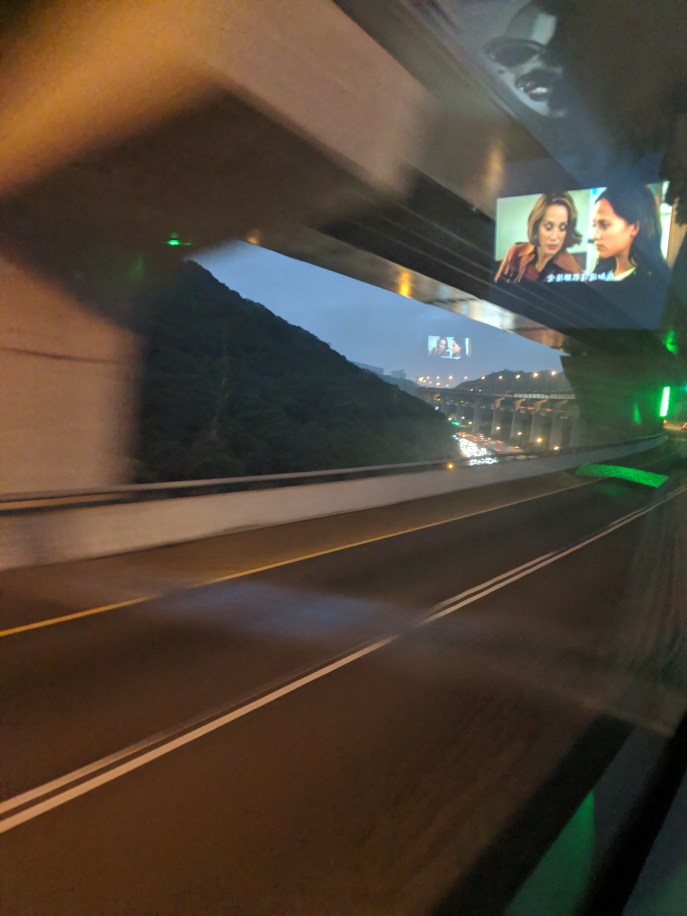
I used all forms of public transportation while there, taking a city bus or employing “my friend” to drive us in and out of Hsinchu City to the malls and restaurants there. We also rode the train to Houli Flower Farm, in Taichung, to take in the flower exhibit and horse ranch there. We took the express train, by accident, on our way to the zoo to Taipei. We thought we could use our “Yoyo” card (or at least that’s how “悠遊卡” sounds when you use the card) and stand on the express, but the conductor politely informed us we needed tickets and found us some seats. However, the more economical and efficient option was to take the direct line bus and we did on our later visit to Taipei.

My time in Taiwan revolved around the life of the Filipino workers there. I stayed in an apartment near the dormitories where they live. The Filipinos are drawn, away from their families and friends back home, by the better pay of electronics factories in Taiwan. It is not easy for them, but oftentimes their families rely on the extra income they earn and thus they make the sacrifice. With these Pinoy expatriates, I dined on the local Filipino and Taiwanese fare, explored the aforementioned touristy sites, and visited a small Filipino church (of a Protestant variety) in Hsinchu—enjoying a Sunday afternoon with “Pastora” after the service.

The food in Taiwan was delicious. One of my favorite dinnertime destinations being the “Shabu-shabu” restaurants—each place at the table had a burner, you would go, salad bar style, to select from an array of meat, seafood and vegetable options, then cook everything together in the boiling pot full of water.

Some pictures…

Oh, and in case you were wondering, McDonald’s still tastes like McDonald’s on the other side of the world. We had some while at the zoo.

Anyhow, here are some pictures of me horsing around at the flower farm…

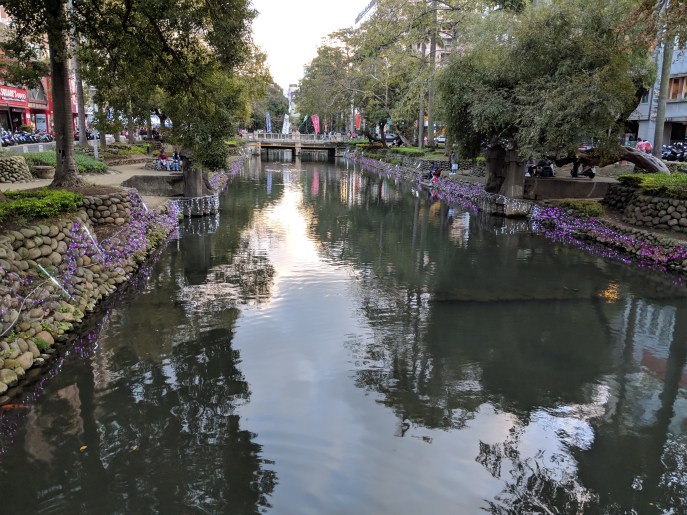
Taking in the sights around Hsinchu City…

A Buddhist temple…

The smaller of two malls in Hsinchu City…

On top of world in the amazing Taipei 101…

National Chiang Kai-shek Memorial Hall

Some random observations: A long dress don’t make a woman religious in Taiwan. The country, especially the region where I was, is bristling with industry and the multi-floor factories, scattered amongst the small farm plots, were no doubt churning out many goods destined for the United States. The cities have gardens in backyards rather than graffiti on the walls and crime is relatively low.

My only regret from the trip is the short layover in South Korea and not being able to visit some friends living there, otherwise it was an awesome trip and I look forward to next time!

Finding the True Legacy of American Slavery

Standard

As a child, because of my father’s work in construction, my family would travel. My mother, someone as inquisitive and interested in learning as I am, would take us children to the various historic sites and museums near the areas we visited. A significant part of our time in the South was spent surveying Civil War battlefields, exploring plantation homes built in the Antebellum era, and pondering it all from the perspective of a proud Yankee.

At the time the devastation and destruction of the war were justified by the righteousness of the victors. Slavery was an affront to the notion that “all men are created equal” and thus this institution of human ownership remains an indelible stain on that founding ideal of this nation. This perspective made Abraham Lincoln a heroic figure, it made the Union soldiers honorable men, the North was morally superior to the South and that was that.

However, that was actually simplistic.

First, many of the casualties of war are innocent, the wrongs of our enemies not justify our own, and the reasons for a conflict are far more complex than the victor’s narrative, Second, slavery had been an institution since the beginning of human history and a subject of debate for the founders who ultimately decided that the constitutional federation of independent states against the British colonial power required some compromise. Third, the aggression of the North may have resulted in emancipation for slaves in the South, yet it did not improve the conditions of those treated like rented mules in Northern industries and mines nor did come without a cost. Furthermore, both sides in the Civil War relied on conscripts (poor men forced to risk life and limb to further the agenda of the powerful) and in the North disenfranchised whites (mostly Irish immigrants) rioted in New York City against the draft and taking their anger out on black city residents.

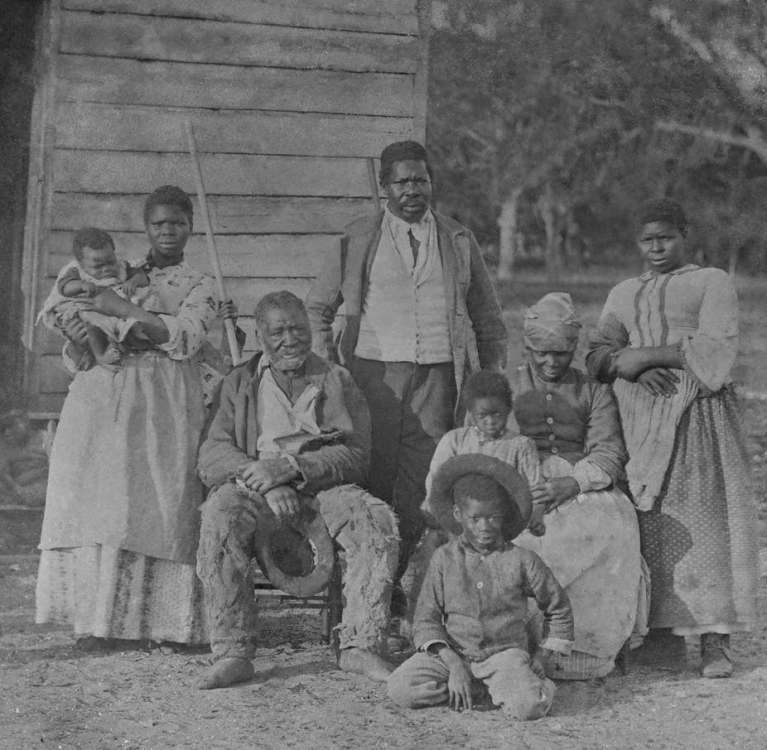
The human and economic costs of the Civil War were staggering. It is estimated that 620,000 men died in combat or from disease related to the horrid conditions and that’s not to mention the many more ‘casualties’ who returned physically or psychologically maimed. The direct impact was full 1.5 times the GDP of the time, for comparison, the 2017 GDP distributed per capita (19,485,400/325.7×1.5) is $89,739.33, and the indirect costs were far far greater. The total economic price tag of the conflict is conservatively estimated to be 10,360 million in 1860 dollars or an incomprehensible 315 billion dollars in today’s money and at a time when the US population (and GDP) was a fraction of today’s. Every man, woman, and child in the South lost the equivalent of $11,456 during the war and continued to lose long after the war due to the destruction—the vast majority of them never owned a slave.

Poor whites in America, especially in the South, had the double whammy (or maybe triple whammy?) of being forced to fight on behalf of the rich, of working for very little compensation themselves and then still being called privileged by their actually privileged counterparts. It wasn’t the moralizing Northern abolitionists who freed the slaves nor the Southern slave owners who felt the greatest pain of the brutal conflict. The people who paid the real price were the working class, they were the ones who lost the most in the war, a war over an institution no fault of their own, and are now held as responsible as the slave owners themselves. It is a path to resentment. People who feel powerless often take their feelings out on those with less power than they do. Sadly black Americans have historically been the recipients of this frustration while the true beneficiaries of their exploitation are never held accountable.

Slavery, at its peak, only accounted for a fraction of the nation’s GDP:

In the 1850s, the zenith of the cotton economy, it came to between 1 and 1.5 percent of the nation’s GDP, not a trivial sum. By this period, however, the United States was already the second-largest economy in the world and was investing every year between 13 and 15 percent of GDP in new capital. Even if the entire “slave surplus” were saved (which it wasn’t, because there were mansions to build and ball gowns to buy), it would have made a respectable contribution to growth, but it just wasn’t large enough to be the basis of an empire. (“Was America Built By Slaves?“)

As the quote above suggests, most of that gain likely went to the slave owners themselves, spent on their lavish lifestyles then, on those plantation mansions that still exist in the South, and was not invested back into the economy in general. A significant portion of that wealth evaporated as a result of the war and emancipation. The value of a slave went from being $12,500 to $205,000 (in 2016 dollars) to effectively zero. So, in other words, if the 1860 census were correct that there were 3,953,761 slaves and the average price was around $800 in their dollars (or around $140,000 in our own) then slave owners lost around 554 billion dollars. Slaves, on the other hand, gained something priceless, that being their own freedom, and yet the cost of slavery to black Americans is truly incalculable.

The Incalculable Cost of Slavery…

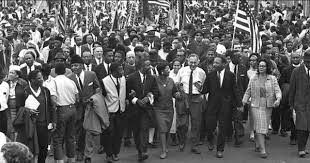
The cost of slavery to black Americans is incalculable and not in terms of economic impact. It is incalculable because of the lasting social consequences that can’t be assigned a number value. The suffering of black Americans did not end with the Civil War, they faced the lingering resentment of their white neighbors, all forms of discrimination, intimidation tactics and terrorism. Even with Constitutional amendments prohibiting slavery, recognizing their citizenship and granting voting rights, conditions did not improve dramatically for black Americans in the “Jim Crow” South. It took a further effort in the 1960s, the civil rights movement, to finally see some of these Constitutional rights fully realized and not before Dr. Martin Luther King Jr was murdered by an assassin’s bullet.

But, perhaps worse than the lynchings and segregation, one time events that can be adjudicated or something that can be addressed through legislation, is the immeasurable impact on the dignity of those who know that their ancestors were once treated as property and sub-human. I can’t really imagine how it would feel to have my own race being counted as 3/5ths of a person in my own country’s founding documents. There is no way to compensate for that psychologically and especially not when the widespread mistreatment was still in full force a mere generation ago. In such a context, it would be hard not to see any misfortune or measurable difference in outcome as somehow related to prior generations being robbed of their dignity and right to self-determination.

However, making matters astronomically worse is the fact that even many of those claiming to want to help often treat black people as their lessor and do more harm than good in their efforts to restore. A prime example of this is the so-called “War on Poverty” and how since then black marriage rates have plummeted and out-of-wedlock births skyrocketed. First, intact families are a greater predictor of future success than race. Second, making a person dependent on government handouts does nothing to restore their human dignity and, in fact, keeps them trapped. The welfare state has more or less enslaved the black community (and many others) to politicians who stoke fear of losing ‘benefits’ as a means to gain votes and maintain their own power.

Affirmative action programs do nothing to help confidence. No, if anything, they only further reinforce feelings of inferiority and, worse, feeds a notion that black accomplishments may deserve an asterisk. I can recall very well the conversation I had with a young man in the Midwest whom I confronted over his racism. He made no apologies, he embraced the description and then blamed his own lack of success in college on his not being given the same opportunities as minorities. Whether true in his case or not, it takes an extra dose of grace for a poor white person to not feel slighted and very easy to take out the frustration on the beneficiaries. I’ve had to fight this myself as someone who never finished college for mostly for financial reasons.

A few years ago I had hope, with the election of Barack Obama, that this would heal some of the wounds, bolster feelings of self-worth, and help us turn the page as a nation. Sadly, it has seemed to do the opposite. My opposition to increased government spending, as a lifelong conservative who doesn’t see more government control as the solution to every problem, was characterized in terms of race as was any opposition to his policies. Rather than be seized upon a moment of reconciliation, Obama’s race was used as political leverage, as a means to ostracized political opponents and advance a leftist policy agenda. The specter of racism is used to control, both to frighten some voters and also to smear others.

A decade ago I had believed that we were on our way to colorblind society, one like that Dr. King had envisioned where people would be judged by the content of their character rather than the color of their skin. Today I’m not even sure that is possible, the current political establishment benefits too much from identity politics and tribalism to allow that kind of society to form. It is hard not to feel cynical in a time when white vs black narratives dominate the headlines. And, while I believe this too shall pass, that the current racial tensions are an aftershock rather than a repeat of the past, there is also the reality that slavery is an unpayable debt.

The Unpayable Debt…

Some have suggested an idea of paying reparations to the descendants of slaves to right this historic wrong and would finally, once and for all, reconcile the injustice. There are those who have gone as far as to suggest a number, between $5.9 and 14 trillion dollars, as being suitable compensation or at least as a “meaningful” symbolic gesture and something that could improve race relations.

Those selling the idea of reparations say is that this is similar to payments made by Germany to those who suffered through the Holocaust at the hands of the Nazis.

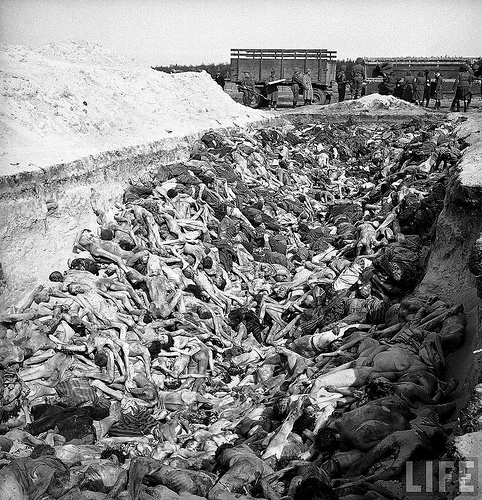
However, those promoting the idea fail to mention the significant differences. The first difference being there are actual Holocaust survivors still alive today to receive the compensation for their loss, but there is not one former slave or slave owner still alive. A second big difference is that the abuses against the Jews in Germany were perpetrated directly by the government itself, whereas slavery was a private institution that existed long before the United States was a nation and was eventually ended by the government and at a very great cost. Hitler’s Germany didn’t stop themselves, the government stole directly from people and sent millions to slave labor camps or gas chambers to be killed—it was literal genocide.

But the bigger problem with reparations is who pays, who gets paid and how much?

It is not justice to make one generation pay for the sins of another. There are many in the United States who did not benefit from slave ownership. My own ancestors, for instance, did not own any slaves and the own possible way they might have benefitted is in slightly cheaper cotton. However, I didn’t receive any inheritance of money nor of cotton clothes from my grandparents. In other words, my savings is my own, from my own work, do I owe anyone (besides my cousin who just helped install flooring in my rental and the bank) nor do I feel any guilt for anything I’ve done. So why should the innocent be forced to pay any more than another person should be forced to work? Do two wrongs make a right? It would only be right to target those who actually did benefit directly from slavery and the complexities of that would be enormous. Would we go after the descendants of European and African slave traders as well?

And then there is the matter of determining who gets paid what. The reparations advocates come up with their dollar figure based on a calculation of hours worked, wages at the time, and interest that would be accrued. But that’s not how things really work. Again, the wages of my grandfathers and great-grandfathers were spent in their generation, dispersed into the economy, and there is nothing left for me. The reality is that the modern ancestors of slaves benefit from the economy in the same way that we all do, thus paying them with interest would not make any sense and especially when that money would be taken from their innocent fellow citizens. Then there’s the reality that not all American black people are ancestors of slaves, some of them are recent immigrants from Africa, some have mixed ancestry and others may actually be the ancestors of black slave owners. Yes, there were slave-owning black people in the American South—should their ancestors pay or be paid?

So, what do we do, start compensating based in DNA tests, as in, “You’re 1/5th black and thus entitled to X…”?

Do we prorate based on how much someone benefited from affirmative action?

Will multi-millionaires, those who obviously have done well, be paid?

Do we deduct welfare payments, etc?

Grading everyone based on their ancestors reinforces all the wrong ideas. It is measuring a person’s worth based on their ancestors rather than their own individual merits and exactly the thing we should be getting away from. Besides that, it is severely undervaluing the worth of a US citizenship, there are people fighting for the opportunity to be here, and our economy is much better here than it is in Africa. Yes, certainly a black person born into an urban environment may face unique difficulties. But then there are many immigrants who come here with nothing, who settle in the same neighborhoods and do advance. And where does it end, do we owe the followers of Joseph Smith for the systematic oppression of them and their religion? Do we owe the Republican party for the attacks against them by the KKK and lynchings of party members? It is just not a good direction to go, it is divisive, it will hurt the wrong people, and we are already deep in debt as a nation. Why should our grandchildren (black, white and other) pay interest to the Federal Reserve and other wealthy people for what is only a symbolic gesture and, if we are honest, won’t remove the stain of the past anyway?

The truth is that money won’t change anything as far as the past. Sure, I’m guessing many who would receive reparations like the idea, who wouldn’t take a windfall? But the reality is that all the compensation in the world cannot erase the legacy of slavery and all the wrong people would end up paying the price. A professional sports contract doesn’t make anyone forget injustice, many lottery winners often end up as poor as they were before, and money can’t be used to solve the problems created by money, to begin with. There are times when a financial settlement is the answer, when both parties directly involved (the aggrieved and the accused) are properly adjudicated. But billing the current generation for the sins of the past, especially without due process, is theft no better than slavery at worse and mere revenge at best.

The true legacy of slavery is that some are owed a debt that cannot be paid.

Wake Up, the Matrix isn’t Real!

A matrix, according to Merriam Webster, is “something within or from which something else originates, develops, or takes form.” And we do live in a matrix where our ideas about race, history, advantage and disadvantage matter more than the actual facts. In other words, the matrix is the way we individually or collectively interpret the facts and use them to form our ideas. Our thought matrix, our assumptions based on our own interpretation of facts, plays a significant role in our outcomes. Overcoming the mental processes that keep us bound is key to success in life.

The other week I was driving to a job site and notice some nice new houses with their well-manicured lawns, spiffy two-car garages, and paved drives. I was overcome momentarily with a tinge of envy, a little regret, and mostly befuddlement at how some people could afford such things. The question immediately came to mind, “What did I do wrong?” I thought of my life, my disadvantages, the opportunities missed, and all those things that held me back from reaching my full potential. However, before I went too far along in that thought process, another question countered the first, “What did I do right?” My mind went first to all the thing I did right, but then to all my advantages compared to most people in the world and the things I did not choose.

Did I do anything right, say compared to that Haitian man I saw in Port Au Prince hauling a car body on his back or a woman born in Afghanistan, Saudi Arabia, etc?

Our mental construct, our prejudices, and preconceived ideas, a product of our culture and choices, can make a real difference in our outcomes. Sure, positive thinking cannot change the circumstances of where we are born, a good attitude does not mean that there will be fewer obstacles to our success in life, yet why not make the best of the opportunity we are given and live in gratitude for what we do have rather than envy of others or frustration because of what we lack?

Part of the problem is that there is a system of control, it helps to create our expectations, it feeds our insecurities and can keep us bound. The real systemic oppression is the idea that politics (or more money in our hands and power over others) is the answer to our problems. Money can’t fix what it created, money itself binds us to the system and the things that money buys rarely deliver the happiness that we think they will. Again, look into lottery winners, many people end up as unhappy as they were before their winnings and some worse off. So why do we measure success in terms of things that will not and cannot make us happy?

What we really need to do is reorient ourselves. We must reject the unhelpful categories and classifications that keep us bound and change the way we think. Grievance culture, tribal score keeping and trying to rank people by their outward appearance is a backward-facing, small-minded and, frankly, racist orientation. There is no group guilt for slavery any more than there is for inner-city crime, we need to stop seeing people as white, black, orange or whatever, building our own identities around those superficial things, and aim for something greater—aim for the future that we want, yet hasn’t fully arrived, where all people are judged by the content of their character rather than the color of their skin.

It Is Time to Think and Act Differently…

If I had my own life to do over I may have dithered less (convinced that higher education was the key to success in life because of what my teachers told me) and started driving truck earlier. It was my own pride (and anxieties) that kept me from taking the better options available to me and I suspect there are many who, like me, prevent their own success because of their aim. And I’m not at all saying that we should sell ourselves short or settle for less than our abilities can afford us. However, many do set themselves up for failure because they keep waiting for the big break, the breakthrough when everything they dream of finally comes to them and refuse to take full advantage of the actual opportunities they have.

Another thing I would do differently is stop worrying that other people had it in for me and believing that I was helpless when the reality was that I was unwilling to make the right sacrifices. Part of my difficulty in life was due to my refusal to act differently or accept that my own behavior was part of the problem. Sure, there is something to be said for authenticity and being true to ourselves, but sometimes overcoming requires us to act differently and accept what is truly reality over our own individual construct. To find success in the religious context where I was born I would need to accept their rules and my fighting with that reality, my “kicking against the pricks” or resisting the flow rather than harnessing it, had some undesirable consequences.

Cutting to the chase, we have agency and we do not. There are well-worn paths to success with risks worth taking, call them cultural conventions, and then there are the low-probability high-risk paths that lead many to ruin. For example, finding a profession like teaching, law enforcement, construction or accounting (as opposed to seeking to be a career actor, model, musician or professional athlete) is more likely to produce desirable results for most people. Feeding our insecurities, dwelling on slights (real or perceived), demanding others conform to our wishes or that they respect us for who we are, expecting too much, is a path to long-term disappointment.

Overcoming the matrix means we need to stop seeing things in black and white terms. Sure, things like “black culture” or “white privilege” do exist in some form, at very least as a construct in our minds, but they really are only terms that obscure a far more complex picture and keep us trapped in the problem rather than working towards the solution. The reality is not as simple as the narratives pushed by academics and advocacy groups. There is no one group with all the advantages nor another with all the disadvantages. There is a reason why the suicide rates for middle-aged white people have skyrocketed while black rates have declined and are considerably lower—something (like connections and community) that might be missed in the commonly touted measures of success?

Recently I read the story of a naval aviator, an officer name Thomas J Hudner Jr, who was awarded a Medal of Honor for his actions in the Korean War. His act? He intentionally crash-landed his Corsair to protect and attempt to rescue a comrade, Ensign Jesse L. Brown, whose airplane had been hit by ground fire and was behind enemy lines. Brown, who happened to be the first black naval aviator, did not survive despite the efforts of Hudner, however, what does survive is an example of brotherly love that transcends artificial racial divides and presents a reality worth building upon. That is the legacy that, if built upon, will free us all from the sins of the past.

Loving dangerously, that is my idea of real success in life.

It is also neat, in these hyper-partisan times, to see George Bush Jr and Michelle Obama share some moments of common humanity together and continue this friendly exchange even at his father’s funeral. That is the symbolism that matters, that is the positive interaction we should aim for and the kind that can make a real difference in the world. If we love all people rather than prefer only those who look or act like us and orient ourselves to the hope of a better future rather than cling to our past and present suffering, we may well have a chance to build a better identity for ourselves as a nation. We may not be able to choose our inheritance, but we can work to create a better legacy for the next generation.

We, like Bush and Obama, have far too much in common to be at odds with each other.

Those who have faced hardship past or present should be heard and forgiven of their current insecurities. Those who have been indifferent to the suffering of others, out of ignorance or hardness of heart, should also be forgiven. And those two groups are all of us and have nothing to do with race. We are all victims, enslaved to a past that we didn’t create for ourselves, and all guilty of perpetuating the legacy to some degree. We can’t know what a person has been through by how they look on the outside and therefore we should love all people as we wish to be loved rather than by what we think they deserve. It is time to be courageously human, committed to true Christian love, rather than tribal, fearful and small.

Purity Culture Is Always Bad

Standard

Two people responded to my last blog. One said that I had not said enough about the exploitative nature of the porn industry and the abuses common in purity cultures. Another claimed that I had overstated and generalized about purity cultures and tried to point out the good.

First, there is not enough that can be said about the ugliness of pornography and how it is harmful on both ends. My previous blog had primarily focused on the consumer end because it was about how pornography and purity cultures hurt those under their influence. However, many blogs could be written about how pornography is produced and we should not forget those many who are used (or abused) in this industry—they also need to experience the pure love of Jesus.

Second, the other person responding to my prior blog seems to have assumed that my comments, specific to purity culture, applied to my Christian experience in general. That is incorrect. I have actually had great experiences with those who were able to transcend the cancerous influence of purity culture. I have met many who are more committed to Christian love (and faith) than they are to maintaining an appearance of purity (for sake of religious peers) that comes at the expense of those aforementioned things.

What purity culture is is a misuse of a set of teachings in the same way that pornography represents a misuse of sex. It sees a corrupted version of purity as an end to itself rather than a part of something more comprehensive and complete. It leads to the same kind of dissatisfaction as pornography and that is because it has, in a similar fashion, taken a good thing in the right context and twisted it into something that it was not intended to be. Purity culture, under the pleasant facade, is always about fear, control and shifting blame rather than true Christian love.

Purity culture is, by definition, a misapplication or overemphasis on some teachings at the expense of others. In other words, purity culture is a perversion and, like pornography, not enough can be said in condemnation of this wrongful and abusive use of Biblical teachings. There is a vast difference between purity culture appearances and actual righteousness. There is nothing good about purity cultures, the bad cannot be overstated and that is a generalization we should make.

Jesus Rebuked Purity Culture

The difference between being pure in heart (as is taught in Scripture) and purity culture is as different as Jesus was from his self-righteous critics:

On a Sabbath, Jesus was teaching in one of the synagogues, and a woman was there who had been crippled by a spirit for eighteen years. She was bent over and could not straighten up at all. When Jesus saw her, he called her forward and said to her, “Woman, you are set free from your infirmity.” Then he put his hands on her, and immediately she straightened up and praised God. Indignant because Jesus had healed on the Sabbath, the synagogue leader said to the people, “There are six days for work. So come and be healed on those days, not on the Sabbath.” The Lord answered him, “You hypocrites! Doesn’t each of you on the Sabbath untie your ox or donkey from the stall and lead it out to give it water? Then should not this woman, a daughter of Abraham, whom Satan has kept bound for eighteen long years, be set free on the Sabbath day from what bound her?” When he said this, all his opponents were humiliated, but the people were delighted with all the wonderful things he was doing. (Luke 13:10‭-‬17 NIV)

Had you run into this “synagogue leader” he would have appeared to be a very pious man. He was likely there every time the synagogue doors were open, probably spent hours of time devoted to reading Scripture and may have even tithed everything even down to his spices. But under this man’s righteous outward display was a corrupt and unloving heart that placed strict adherence to Sabbath laws above the actual reason for the laws.

Jesus, who had a pattern of healing on the Sabbath as if intentionally trying to antagonize these religious elites and expose their hard hearts, rebukes this leader’s misplaced priorities. Because, while this religious leader was technically correct that this woman could’ve been healed any other day of the week, his thinking was not centered correctly, he should have been rejoicing that this woman was healed and not obsessing on when or how it happened.

A “tell” refers to those unconscious actions that betray a person in a card game. A person can bluff or deceive others with a display of confidence and yet there are often small signs that give them away to an astute observer. Purity culture also has tells. One of the biggest tells of purity cultures is it does like this religious leader Jesus rebukes and puts emphasis on the letter of law or appearances over what is healing and helpful to other people.

Here are some other tells of purity culture…

Purity Cultures Blameshift

Purity cultures always release men from being completely responsible for their own sin. Instead, they use male failure as an excuse to manipulate and control others.

For example, in a purity culture, when a man was caught by his wife viewing pornography, and the matter went before church leaders, he was treated as the victim and his wife (along with every other woman) was made responsible. In this case, they urged his wife to dress plainer and they encouraged her to become pregnant, I kid you not, meanwhile this man goes around condemning those who do not ‘dress right’ or otherwise live to a standard that would keep him from sin.

Women are often blamed for male lusts in purity cultures and this goes completely contrary to anything Jesus taught on the subject. Hyperbole or not, we are told by Jesus to pluck our own eye out if it causes us to sin. But never are we told that it is a woman’s responsibility to keep a man’s thoughts pure. Men who shift blame for their own sinful thoughts and actions have no business calling themselves Christian leaders. A real Christian leader takes full responsibility for their own sin, falls on their knees and repents.

But in purity cultures, a man is more concerned with maintaining an image. And, for that reason, he cannot repent or take complete responsibility for fear of being exposed and losing social status. So, rather than admit it was his own weakness that led to failure, he must find some reason outside of himself for the failure.

In other words, a purity culture response is like that of King Saul who pointed a finger at the people when he willfully disobeyed God and not like King David who took full responsibility for his own sin when confronted. Had David been like Saul, and not “a man after [God’s] own heart,” he would have likely blamed Bathsheba rather than actually repent and made a royal decree banning roof bathing in the kingdom of Israel.

Purity Culture Is About Outward Appearances

True purity comes from the inside out and never the other way around. Purity cultures, on the other hand, are centered on maintaining an outward appearance of purity and never leads to an inner change. The Pharisees are a pristine example of purity culture and how those in one respond when corrected:

When Jesus had finished speaking, a Pharisee invited him to eat with him; so he went in and reclined at the table. But the Pharisee was surprised when he noticed that Jesus did not first wash before the meal. Then the Lord said to him, “Now then, you Pharisees clean the outside of the cup and dish, but inside you are full of greed and wickedness. You foolish people! Did not the one who made the outside make the inside also? But now as for what is inside you—be generous to the poor, and everything will be clean for you. “Woe to you Pharisees, because you give God a tenth of your mint, rue and all other kinds of garden herbs, but you neglect justice and the love of God. You should have practiced the latter without leaving the former undone. “Woe to you Pharisees, because you love the most important seats in the synagogues and respectful greetings in the marketplaces. “Woe to you, because you are like unmarked graves, which people walk over without knowing it.” One of the experts in the law answered him, “Teacher, when you say these things, you insult us also.” (Luke 11:37‭-‬45 NIV)

Catch that?

These guys were so oblivious to their own spiritual deadness that they couldn’t even believe that Jesus was talking about them. But Jesus didn’t slow down when one of the experts said he had insulted them, he stepped on the gas and continued on with his critique. In the verses that follow those above, Jesus decries the burdens these religious elites heap on others (without lifting a finger to help them carry) and compares them to those who killed the prophets. We are told that after this they peppered him with questions and tried, desperately, to catch him saying something wrong.

What should have happened is that they should’ve recognized themselves in his words, then made no more excuses for themselves and repented. Unfortunately, pride is the most difficult sin to confess for a person who is concerned with maintaining appearances, because admitting pride is admitting that their righteousness facade is just that, a show, and means lowering themselves to the level of the more visible sinners—whom the self-righteous hypocrites think that they compare favorably to.

Purity Culture Is Itself Impure

The dirty little secret of purity culture is that it, like the pornography and sexual immorality it decries, is not what it appears to be. Yes, they, like the Apostle Paul before his conversion, may be able to follow the letter of the law and even win the praise of their religious peers. They may present themselves as completely humble and meek if that is the religious cultural expectation. However, beneath this well-manicured appearance of holiness, they are totally faithless and spiritually dead.

Purity culture depends on human effort, conformity of visible behavior, and never a true transformation of heart. It is a culture concerned with outward appearance or physical cleanliness, like the Pharisees with their ritual washing, that neglects what is actually important and totally misses the point. Many in purity cultures have bamboozled themselves with their own act, they become defensive when confronted and refuse to humble themselves when exposed as fakers.

The outward appearance of a purity culture and true holiness is so similar and that is why it is so difficult to address. Those in a purity culture, in most cases, think of themselves as the good people, and while blaming everything but themselves for their own failures, are actually making a sincere effort. But true holiness does not start with human effort, it starts with recognizing that our own effort is nothing compared to the Holiness God and is depending fully on Him.

Humble yourselves, therefore, under God’s mighty hand, that he may lift you up in due time. (1 Peter 5:6 NIV)

Where To Go From Here?

Standard

The past few years have been monumental for me. This blog has followed my own personal journey from the initial ideation about love, faith and spiritual life to some major transitions. I’ve changed careers, departed from the denomination that had been the identity I most cherished, and basically had my life turned upside down.

This blog had started as a result of a prayer, as an act of faith, and was to chronicle a fight to overcome the odds. I had realized my own limitations. I was single, in my mid-thirties, working a job that didn’t suit me very well, and worried about being the unfaithful servant who buried his talents. Unfortunately, for myself, I didn’t know a way out of the predicament.

But, instead of wallow in my self-pity, I decided to actually believe what Jesus said, “everything is possible for one who believes,” and with complete reckless abandon, prayed to God asking that the impossible be made possible for me.

I had committed to believing beyond human reason or my own rationality, to believe without adding the qualifications so often used by the religious to excuse their own lack of faith and as a means of preserve their self-serving status quo. My aim was to overcome whatever, the bad luck, personal failures or cultural prejudices, that kept me from living out the potential that seemed to be locked away somewhere and yet was still unrealized.

Of course a big part of that prayer, given the importance of marriage in a conservative Mennonite setting, was in hope of finally getting beyond the invisible barrier to my romantic success and finding the “right one” who could love me despite my imperfection.

My deepest fear had always been that love is little more than a post hoc explanation of something determined at a far baser level. In other words, that love was decided by attributes mostly biologically predetermined or based in performance. If a person lacking the right inborn characteristics is essentially unlovable, then the whole mythology we build around love as something pristine or pure is a delusion and love itself becomes a justification of our selfish or carnal ambitions.

I was determined to disprove that hypothesis. I intentionally sought out a girl theoretically “out of my league” for a variety of those lesser reasons. Before this, I had always picked pragmatically based in who I thought would say “yes” (although they often didn’t) and not with any real faith. This time I picked on what I believed God wanted me to be and because she seemed to be the one who could get me past those limitations. She wasn’t someone who seemed frozen in indecision, she shared my own cultural ideal and would compliment my strengths and weaknesses.

Alas, her sanity won out over my irrational faith-fueled hopes.

However, in telling my story of faith and struggle this blog gained popularity. Over the time my hopes ran into the brick wall of her reasons she couldn’t love me (very much like those I had feared) this blog rose to prominence in the Mennonite blogosphere. Suddenly, in my moment of deep despair and disappointment with my Mennonite ideal, I had an audience of thousands. In a matter of hours a sardonic post assigning points for marriageability, something I wrote one morning while stewing over the reality of the depressing situation I found myself in, was a viral sensation and had obviously resonated with a great swath of people.

After that, I wrote a string of posts about some of those issues I’ve had with the church I was born into and previously didn’t know how to express. It was during this time that a blog post about fundamental flaws in the current conservative Mennonite thinking was picked up by Mennonite World Review. It later made rounds in a conservative email group posted by none other than Peter Hoover who had, by writing Secret of the Strength, inspired my Anabaptist perspective many years before and put me at odds with the creeping influence of fundamentalism.

The great irony in it all was that I reached the pinnacle of my own influence in the Mennonite world *after* I had attended my last service.

Since then, in a greater irony, I’ve seen a romance blossom that would’ve been impossible had I remained Mennonite and evidence of that kind of love of the faithful variety that I did not find where I had most expected to find it. There is a real story of the impossible being made possible developing, not the story of love triumphing over the odds that I had thought I would tell and yet every bit as powerful. However, too much is in limbo right now regarding that circumstance to write about it.

Beyond that, there is also my being immersed into Orthodoxy and the difficulty of putting that experience into words. I mean I could argue for Orthodox Christian practices and perspectives, I have written a couple blogs trying to explain such things to my Mennonite audience, yet Orthodoxy is something better to be experienced. Like Jesus said “follow me,” they make an appeal that is not strictly emotional nor intellectual, but experiential. Faith is something that must be walked to be understood. The Orthodox don’t proselytize in a Protestant manner. No, instead, they invite others to “come and see” like Philip did in urging Nathanael to join him and rely on the mysterious work of God:

The next day Jesus decided to leave for Galilee. Finding Philip, he said to him, “Follow me.”

Philip, like Andrew and Peter, was from the town of Bethsaida. Philip found Nathanael and told him, “We have found the one Moses wrote about in the Law, and about whom the prophets also wrote—Jesus of Nazareth, the son of Joseph.”

“Nazareth! Can anything good come from there?” Nathanael asked.

“Come and see,” said Philip.

When Jesus saw Nathanael approaching, he said of him, “Here truly is an Israelite in whom there is no deceit.”

“How do you know me?” Nathanael asked.

Jesus answered, “I saw you while you were still under the fig tree before Philip called you.”

Then Nathanael declared, “Rabbi, you are the Son of God; you are the king of Israel.”

Jesus said, “You believe because I told you I saw you under the fig tree. You will see greater things than that.” He then added, “Very truly I tell you, you will see ‘heaven open, and the angels of God ascending and descending on’ the Son of Man.” (John 1:43-50)

Can anyone rival that with eloquent words or elaborate arguments?

I know I can’t rival that sort of mysterious work in my own words and worry that my words will actually take away from the beauty of the ancient faith. I mean, what could I possibly add to something so wonderful and profound with my clumsy and simplistic explanations?

So this all leaves me with a dilemma as a writer. Am I more than a one-trick pony? Even as I’ve progressed over the past few months, I feel my blogs have started to become a bit repetitive, as if I only really have one story to tell, and that has bothered me. My area of expertise, at this point, is how to fail miserably trying to find love in the Mennonite context. My painful past is something that I would rather transition away from, something to be discarded along with “former delusions” that I renounced at my Chrismation, to make way for a brighter future.

But the question remains, what will be written in the next chapter?

Where to go from here?

I Prefer Representatives, Sound Doctrine and the Holy Spirit Over False Choices

Standard

I was speaking with a friend a week or two ago (a conservative Mennonite searching for his place in the church) and he shared this quote:

“Doctrine is dead as a doorknob without the presence of the Holy Spirit in an individual’s life.” (Paul Washer)

That quote drop of a Calvinist commentator was annoying to me. It was annoying because it was shared in the context of a conversation about Orthodox worship and prayers. The clear implication being that established doctrine is somehow in conflict with spiritual life.

So, without hesitation, I asked my friend: “How do you know Washer’s doctrines (like the one you just quoted) are inspired by the Holy Spirit?”

My question was based on my own experience as one who had put his full confidence in the Holy Spirit and has since learned (the hard way) the need to be grounded in sound doctrine as well. In fact, it was my desire to follow the Spirit without compromise which had led to my pursuit of the impossibility, which led to my eventual disillusionment with the Mennonite denomination, which led me to the ancient faith of Orthodoxy and new spiritual life.

So, getting back to Washer’s quote, he presents a false choice between doctrine and the Holy Spirit. He, like many Protestant commentators, seems to equate established religious dogma with spiritual deadness. His quote suggests that we devalue church traditions (those pertaining to worship and prayer in the case of my friend) based in an assumption that what is new or spontaneous is somehow more authentic and real than something that has been passed down through many generations.

But is that truly the case?

Do we ever need to choose between established doctrine and authentic faith?

From what I can tell, church doctrine and real spiritual life originate from the same source (that source being the Holy Spirit) and thus we should not ever have to choose between the two. The traditions passed down by the church (including the canon of Scripture) and the Holy Spirit are never at odds. To deny the importance of church doctrines and tradition is basically to speak against the authority of Scripture:

“For the time will come when people will not put up with sound doctrine. Instead, to suit their own desires, they will gather around them a great number of teachers to say what their itching ears want to hear. They will turn their ears away from the truth and turn aside to myths.” (2 Timothy 4:3‭-‬4 NIV)

Nowhere in Scripture do I see sound doctrine being presented in contrast with living according to the Holy Spirit. However, I do see James tells us “faith without works is dead” (James 2:14-26) and also know, according to the Gospel (Matthew 7:22-24), that there will be those who have professed faith in Jesus, even worked miracles in his name, whom he will tell to depart because he never knew them and therefore authenticity of faith is about more than making a claim.

Thus I do question the basis for this commentator’s opinion and the many others out there of those who speak with a similar confidence about spiritual matters. By what authority do they speak? How do we know that they, along with their devoted followings, are not deceived? I mean these ‘spiritual’ commentators are often at complete odds with one another. Don’t believe me? Do a Google search “Paul Washer false teacher” and you’ll find dozens of articles denouncing him and his teachings.

So who is right? Who is wrong? How do we know?

My contempt for commentators…

My reaction to the Washer quote isn’t something unusual for me. I have a near-universal contempt for commentators and especially those who can’t at least ground their statements directly to something found in Scripture. And perhaps that strong aversion is because I have enough strong opinions of my own, more than my fill, and therefore seek something a little more grounded than mere opinions?

Not to be misunderstood, that’s not to say that I find no value in reading commentators. I do believe we can gain many valuable insights from listening to various men and women sharing their personal perspectives on spiritual issues.

But, that said, not all commentators are equal and anyone can say anything and our feelings (one way or another) about what someone says doesn’t make it any more or less true. There are likely false teachings that would resonate with any one of us and we should guard against being closed off to truth based on our emotions. We should remember that all religious groups are able to justify their own understanding of spiritual matters, many of them live morally upright lives, and can be very convincing to those who don’t know any different.

And, to be clear, I’m not just talking about those commentators who say “the Holy Spirit tells me thus and such” without offering any corroborating evidence from church history or Scripture. Being a Bible scholar or well-educated and intelligent does not make a person less susceptible to confirmation bias. No, if anything, being well-studied and smart brings a danger of pride and pride can prevent us from seeing our own biases and the many things we have missed in our studies.

Proof-texting, when a person soundbites Biblical texts at the cost of context, is a real problem for any commentator. That is why we have a multitude of denominations all claiming their authority comes from Scripture and, yet, can’t agree on some very basic issues. It isn’t that one side is more ignorant of the book than another nor that one side is less sincere about their profession of faith than another either—the problem is a lack of accountability to anything more than what feels right to us.

My own commentary on spiritual life…

Going back to Washer’s quote, I believe we can all agree that there is no life in the church or elsewhere without the Holy Spirit.

As the Orthodox pray on a regular basis:

“O Heavenly King, the Comforter, the Spirit of Truth, Who art everywhere and fillest all things; Treasury of Blessings, and Giver of Life – come and abide in us, and cleanse us from every impurity, and save our souls, O Good One.”

We know, from the creation narrative, that “the Spirit of God was hovering over the waters” (Genesis 1:2) and is also the “breath of life” (Genesis 2:7) that entered Adam. Life, both physical and spiritual, comes from the Holy Spirit, and we see this pattern throughout Scripture and even at the end of the Gospel when Jesus empowered the disciples to continue his ministry of forgiveness:

And with that he breathed on them and said, “Receive the Holy Spirit. If you forgive anyone’s sins, their sins are forgiven; if you do not forgive them, they are not forgiven.” (John 20:22‭-‬23 NIV)

Note how that parallels with the Genesis account where God breathes life into Adam. Note also that this being “breathed on” comes after the resurrection, after Jesus spent years teaching these men, and is what enabled them to fully understand what he had taught:

Then he opened their minds so they could understand the Scriptures. He told them, “This is what is written: The Messiah will suffer and rise from the dead on the third day, and repentance for the forgiveness of sins will be preached in his name to all nations, beginning at Jerusalem. You are witnesses of these things. I am going to send you what my Father has promised; but stay in the city until you have been clothed with power from on high. (Luke 24:45‭-‬49 NIV)

The disciples being “clothed with power from on high” (a step that should happen before we go out on our own commission) is something that happened in the book of Acts, on the day of Pentecost, when they received an outpouring of the Spirit and many came to believe in Jerusalem.

Truth, according to Paul’s commentary, in 1 Corinthians 2:6-16, is something revealed by the Holy Spirit. That is something that mirrors what Jesus said in his promise of a “Comforter” that would “guide you (his disciples) into all the truth” (John 16:13), and there is no way around it. All the Bible study and religious knowledge in the world cannot breath spiritual life into anyone.

All that said, sound doctrine and spiritual life are never at odds with each other. That it took a special outpouring of the Spirit before the disciples could understand what Jesus taught doesn’t make his prior effort useless. His teachings, if anything, provided substance, like the dust God formed up into a man in Genesis, and his breath the catalyst.

Furthermore, those waiting on the right feelings, or teachings that resonate with them and their own prior experience, will likely be like the rich young ruler who left disappointed after asking what he must do to be saved. Faith demands we go outside of our own comfort zone, that we go beyond our own understanding, preferences or calculations, and begin to walk before we have our eyes opened. In fact, the Spirit is something promised only to those who those who love Jesus and keep his commandments:

“If you love me, keep my commands. And I will ask the Father, and he will give you another advocate to help you and be with you forever—the Spirit of truth. […] “Anyone who loves me will obey my teaching. My Father will love them, and we will come to them and make our home with them. (John 14:15‭-‬17a‭, ‬23 NIV)

So, what comes first, belief and obedience to Jesus or is it the revelation of truth via the Holy Spirit that enables us to understand what we read?

That is a paradox and something that has always made me uncomfortable. Jesus appears to make obedience a prerequisite to spiritual revelation, which ran counter to my own intuition, and why I had always stressed the second half of the teaching rather than the first part. How could I know what is sound doctrine (as in the correct understanding of what Jesus taught enabling my obedience) without the Holy Spirit coming first?

My understanding was clouded by an individualistic filter…

One would think that I, as one raised in a church with Anabaptist heritage, would understand that interpretation of Scripture and establishing doctrine is something we do together, empowered by the Holy Spirit, as a church.

But somewhere along the line (somewhere between urban myths being shared from the pulpit and men like Bill Gothard being given a platform), I had lost trust in the ‘ordained’ leadership and other members to discern truth. And, as a result, I began to look beyond my religious peers for answers. Eventually, after an epiphany about faith, I began to find answers in Biblical passages that had once confounded me and became more confident in my own individual discernment through the Spirit.

However, that paradigm of understanding was incomplete and all came crashing down when my own individual ability to discern spiritual truth came into serious question.

It is easy to claim the Holy Spirit is leading you while you remain safe within the boat of religion. But true faith requires going beyond our own established range of possibilities, to let go of our own human logic and reason, and step out of the boat. I did that. I stepped out. I took a few steps across the waves and then was promptly overwhelmed by doubts—doubts that were, in part, a product of running headlong into the plans, prejudices and cynical calculations of those in the church whom I had still counted on to mirror my faith.

I had questions that I could not answer nor could be answered in the Mennonite context. I had lost faith in my Mennonite identity and Anabaptist heritage to provide reliable guidance. I felt I had been fooled, once again, misled by the desire to find meaning in my struggles and a delusional faith that the impossible would be made possible. I had nothing, besides an obligation to continue to fight for the hopes of my bhest, and needed answers.

Fortunately, I ran into a man, a fatherly figure, who did have answers that I needed and set me right again.

Fr. Anthony, an Orthodox priest, arrived in my life as if by divine appointment. He had the right attitude, asked the right questions, never said a disrespectful word about my Mennonite identity (offering praise for our “peace witness” instead) and could speak with an authority that was missing where I was coming from. There was no pressure. However, he always seemed to show up at the right time and was always able to explain things in a way that made sense to me.

The timing was right for me in the same way it was for the man St. Philip encountered on the road:

The Spirit told Philip, “Go to that chariot and stay near it.” Then Philip ran up to the chariot and heard the man reading Isaiah the prophet. “Do you understand what you are reading?” Philip asked. “How can I,” he said, “unless someone explains it to me?” So he invited Philip to come up and sit with him. (Acts 8:29‭-‬31 NIV)

In an individualistic understanding, this man (the eunuch) should’ve had all he needed to find salvation—I mean, according to what many Biblical fundamentalist commentators put forward, Scripture is basically self-explanatory and all we need to do is believe what we read, right?

But clearly, that is not the case.

The Bible itself tells us that somethings in it are difficult to understand (2 Peter 3:16) and this eunuch, an important and likely very intelligent person, could not discern for himself what was written in Isaiah.

The Holy Spirit did provide him with an interpretation, yet that interpretation came through a man named Philip. Philip did not speak his own “private interpretation” (2 Peter 1:20) as a mere commentator offering an opinion. He was a representative. He was a man both directed by the Spirit and also commissioned by the church in the book of Acts:

In those days when the number of disciples was increasing, the Hellenistic Jews among them complained against the Hebraic Jews because their widows were being overlooked in the daily distribution of food. So the Twelve gathered all the disciples together and said, “It would not be right for us to neglect the ministry of the word of God in order to wait on tables. Brothers and sisters, choose seven men from among you who are known to be full of the Spirit and wisdom. We will turn this responsibility over to them and will give our attention to prayer and the ministry of the word.”

This proposal pleased the whole group. They chose Stephen, a man full of faith and of the Holy Spirit; also Philip, Procorus, Nicanor, Timon, Parmenas, and Nicolas from Antioch, a convert to Judaism. They presented these men to the apostles, who prayed and laid their hands on them. (Acts 6:1-6)

Philip was chosen and ordained to be a representative of the apostles, the apostles who themselves were representatives of Christ. His authority to interpret Scripture went beyond being merely a product of his own religious studies. He was not simply a religious commentator spouting his own opinions. No, rather, he was ordained as a representative, as one judged to be “full of the Spirit and wisdom” by the church, and therefore had an authority greater than a mere commentator with an opinion.

My individualistic filter was wrong, I could not understand everything on my own, we still need those representatives who are sent:

How, then, can they call on the one they have not believed in? And how can they believe in the one of whom they have not heard? And how can they hear without someone preaching to them? And how can anyone preach unless they are sent? As it is written: “How beautiful are the feet of those who bring good news!” (Romans 10:14-15 NIV)

Why I prefer representatives…

Anyone can offer commentary, we hear ‘expert’ commentators tell us their opinions of sports, politics and the economy all the time. Some people prefer Paul Krugman, others Rush Limbaugh, and typically we choose those who confirm our existing biases to those who would challenge them. That is also true of Biblical commentators as well. We like those men whom we choose based on our own feelings, on what resonates with us or provide our itching ears with what we wish to hear. Unfortunately, commentators are not accountable to anything besides their own understanding and too often play to the prejudices of their particular audience.

A representative, by contrast, does not speak on their own authority and is ultimately accountable to the authority that sent, commisioned or ordained them.

For example, in a Republic, like the United States, we elect Representatives to speak on our behalf and represent our interests. There are also representatives of a corporation authorized to act on behalf of the collective group and must also answer to the other representatives of the group.

Jesus, likewise, came as a representative of the Father who sent him, on several occasions he tells his audience that he speaks on behalf of the Father and not by his own authority:

Not until halfway through the festival did Jesus go up to the temple courts and begin to teach. The Jews there were amazed and asked, “How did this man get such learning without having been taught?”

Jesus answered, “My teaching is not my own. It comes from the one who sent me. Anyone who chooses to do the will of God will find out whether my teaching comes from God or whether I speak on my own. Whoever speaks on their own does so to gain personal glory, but he who seeks the glory of the one who sent him is a man of truth; there is nothing false about him. (John 7:14-18 NIV)

Jesus is imploring his audience to test his credentials. He is saying that those who choose to do the will of God, by following his teachings, will find out if his words are true or not. In other words, his teachings are a testable hypothesis, established directly on the authority of the Father, and not just his opinions that can’t be verified one way or another. Jesus is not a commentator speaking by his own authority, but a representative, commissioned by the Holy Spirit (confirmed with a voice from heaven and dove descending upon him at his baptism) and spoke with the authority of the Father rather than his own.

The difference between a commentator and a representative is accountable to an authority beyond their own. If a representative goes beyond their commissioning they can be voted out or brought before a council and condemned. A commentator, on the other hand, only needs to be accountable to their own understanding and the whims of their particular audience—their authority rests on their own credentials rather than on a true commissioning by an authority already established.

Doesn’t the Holy Spirit make us representatives as well?

My answer to this question, with my shift in paradigm, has changed.

The answer is both yes and no.

Yes, in that we do, as individuals, receive authority from the Holy Spirit.

But, no, as far that authority giving us license to be free from accountability and operate apart from what has been established by Christ and his church.

The Holy Spirit, the true spiritual guide sent by the Father rather than a counterfeit spirit, should lead us into unity together rather than to divisions. The early church was full of commentators, some who claimed to have the authority of the Spirit or Scripture on their side, but the book of Acts shows us that not all commentators were equal and some had to be rebuked:

Then some of the believers who belonged to the party of the Pharisees stood up and said, “The Gentiles must be circumcised and required to keep the law of Moses.” The apostles and elders met to consider this question. After much discussion, Peter got up and addressed them: “Brothers, you know that some time ago God made a choice among you that the Gentiles might hear from my lips the message of the gospel and believe. God, who knows the heart, showed that he accepted them by giving the Holy Spirit to them, just as he did to us.

[…]

They chose Judas (called Barsabbas) and Silas, men who were leaders among the believers. With them they sent the following letter: The apostles and elders, your brothers, To the Gentile believers in Antioch, Syria and Cilicia: Greetings. We have heard that some went out from us without our authorization and disturbed you, troubling your minds by what they said… (Acts 15:5‭-‬8,22‭-‬24 NIV)

Heretical teachings in the church have always been sorted out by council and consensus.

Even St. Peter and St. Paul were accountable to the body of believers represented in this coming together of apostles and elders.

It is by this process we were even provided with a canon of Scripture: Councils, representatives of the church, decided what books belong in the Bible and which ones (while possibly still useful) did not meet the criteria of Orthodox teachings. Not every book, not every person, is equally authorized to speak on behalf of Christ and his church. The Holy Spirit does work in the life of the individual, but the Holy Spirit also speaks through the church and especially through those sent, ordained or commissioned by Christ and is church:

But we ought always to thank God for you, brothers and sisters loved by the Lord, because God chose you as firstfruits to be saved through the sanctifying work of the Spirit and through belief in the truth. He called you to this through our gospel, that you might share in the glory of our Lord Jesus Christ. So then, brothers and sisters, stand firm and hold fast to the teachings we passed on to you, whether by word of mouth or by letter. (2 Thessalonians 2:13‭-‬15 NIV)

We are told the church, empowered by the Holy Spirit, is “the pillar and foundation of the truth” (1 Timothy 3:15) and that is to say that the church does have authority over the individual as a representative of Christ. We really do need that—we really do need to be accountable to something more than our own ideas and/or interpretations—and should seek to hold fast to the teachings that have been passed by “word of mouth or by letter” of those who, through Christ and his church, have more authority than their own personal opinion.

Good commentary must be rooted in sound doctrine…

Anyone can claim to have the Holy Spirit, but not all who do are true representatives of Christ or his church, and we must use discernment. There have many heresies throughout the ages of those who felt they individually could discern truth without being accountable to anything besides their own religious knowledge and feelings of spiritual superiority to others. We need to be on the guard against their false teachings and also against being deceived by ourselves.

We are all very fortunate, we do not need to choose between the Holy Spirit and sound doctrine. This is a case where we can both have our cake and eat it. The church has preserved the teachings of Jesus, in traditions both written and spoken, as the basis for sound doctrine and that “breath of life” comes in our Communion together. We are not called to be “Lone Rangers” finding our own way, serving our own preferences, etc. We are called to be a part of the body of the church, representatives of the church past, present and future, this church:

And I tell you that you are Peter, and on this rock I will build my church, and the gates of Hades will not overcome it. I will give you the keys of the kingdom of heaven; whatever you bind on earth will be bound in heaven, and whatever you loose on earth will be loosed in heaven.” (Matthew 16:18‭-‬19 NIV)

Want To Help People In Typhoon Ravaged Philippines?

Standard

Last December (and into January) I had the privilege of traveling to the Philippines.  I traveled to the northern mountainous region of Luzon and met some wonderful people there.  Most of my time was spent in a beautiful place called Baguio, a city around the same elevation as Denver, and the adjacent city of La Trinidad.

This past week these cities, and surrounding area, have been hit by a devastating typhoon and there are many needs.  The area is prone to mudslides given the steep terrain and also flooding in the valleys.  Many have lost everything they have worked so hard for, they have no insurance, no FEMA, and can use all the help they can get.  This is why I’m doing my small part by setting up a site where those who feel led can donate: *click here*

Any funds raised will be distributed through trusted Christian connections (not Mennonite or Orthodox) and go 100% (besides what GoFundMe takes) to those in need in that region.  I know even small amounts can go a long way.  If you can’t give, please at least share this and give others the opportunity to bless Baguio, La Trinidad, and the surrounding areas in Benguet Province.

Thank you!

Godly Men Should Honor (Not Patronize) Women

Standard

I woke up out of the ether with an utterly abandoned feeling and asked the nurse right away if it was a boy or girl. She told me it was a girl, and so I turned my head and wept. ‘All right,’ I’m glad it’s a girl. And I hope she’ll be a fool–that’s the best thing a girl can be in this world, a beautiful little fool.’

That quote of Daisy, from The Great Gatsby, about the birth of her daughter, sardonically expresses her resignation to the male-dominated society of her time. She is saying that it is better for a girl to be a fool—because for a girl to be anything other than that would be to live a frustrated and repressed life, like her own life.

It shows that Daisy, though always acting flighty and fake, a rich ‘privileged’ woman in the roaring 20’s, has far more depth to her character and real intelligence than she is allowed to openly display.

One might assume that someone in her position, all of her material needs met and sheltered from any responsibility, would be content. I mean, the wealth of her husband, the brutal Tom Buchanan, walled her off from the toils and freed her from work or consequences.

But, beneath the veneer of playfulness, she seems miserable. She was powerless beyond what her husband provided for her and merely acting out the role carved out for her by society, the part of a fool, rather than truly free.

There is only the slightest difference between walls intended to protect and walls that imprison, the smallest gap between guarding someone’s child-like faith and enabling their childish behavior, and a person can claim to be protecting others yet really only be protecting their position. There are many people, men in particular, who like to keep others around them weak so they can feel strong or needed.

A fundamental misunderstanding of the weaker vessel…

The idea that women can’t be expected to handle certain circumstances or rise to the same level of behavior as a man is not something new to me. I know in fundamentalist circles many men regard women to be wholly inferior to them (besides in child-bearing) and thus a comment to that effect was not completely unexpected. However, it was still a bit jarring, in the context it was given, to hear a woman being excused for her unsociable behavior because she, as the “weaker vessel” and thus somehow incapable of doing any better.

I had to wonder what women (conservative Mennonite women in particular) would think of that comment.

Is that what they really want?

Do they truly want to always be regarded as helpless, the perpetual damsel in distress, rather than be treated as an equal and emotionally/intellectually capable?

I have a feeling that is not the kind of male protection that most women want.

But then, I could be wrong, my lack of success in the realm of conservative Mennonite courtship could indicate that my treatment of women as an intellectual equal was a grave error. Perhaps this is why I’ve been described as “intimidating” by a couple intelligent Mennonite women? Could it be that women really do feel better being coddled and patronized?

I will say that many women, especially attractive women, expect to be catered to and this is because men (including yours truly) are generally nicer to them for a variety of reasons—some of those reasons less noble than those more often expressed.

Anyhow, these hidden wants, openly expressed opinions and general tendencies aside, the real question is whether or not this is what the “weaker vessel” of Scripture truly means. Yes, obviously, women are, on average, weaker than men in terms of some measures of physical strength. But does this make women more feeble and less capable in all regards? Are women generally inferior to men?

Here’s the text:

Likewise, ye husbands, dwell with them according to knowledge, giving honour unto the wife, as unto the weaker vessel, and as being heirs together of the grace of life; that your prayers be not hindered. (1 Peter 3:7 KJV)

I used the King James version because other translations replace “vessel” (σκεῦος) with “partner” or “sex” and potentially muddy the waters as far as this question more than they make things clearer. Again, I’m not an expert on the Greek language, but judging by how this word is translated elsewhere (John 19:29, Romans 9:21, Acts 9:15,10:11, etc), the word “vessel” seems to be a more literal, direct and appropriate translation.

That word “vessel” is an important qualifier to the word “weaker” (ἀσθενής) that precedes it. It is used in reference to objects or physical things and, in context of 1 Peter 3:7, would be reasonably understood to be a reference to a woman’s physical body rather than her person in general.

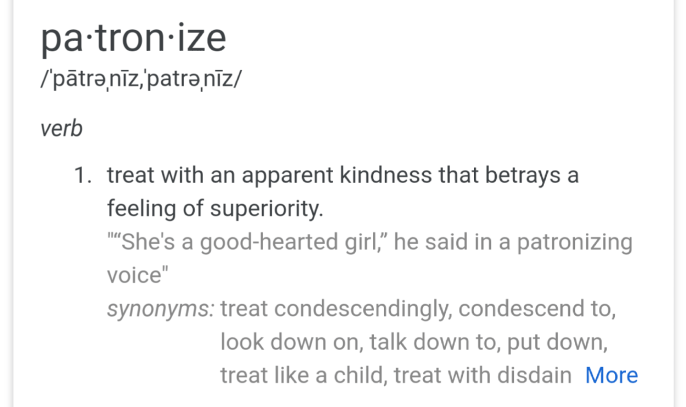
But more important is the rest of what is said. First, this passage is specifically about the relationship between husbands and wives. Second, the answer to a woman being the “weaker vessel” is for husbands to give “honour” (τιμή) to her, which means to value her, as one “being heirs together” with him, and it never suggests treating her like an inferior. If anything, this is an instruction not to use a woman’s lack of physical strength as means to diminish her other abilities or as a reason to otherwise patronize to her.

Yes, certainly we should protect what is valuable and Paul warns (similar to Malachi 2:13-15) about a man’s prayers being hindered if he mistreats his wife. However, that’s not the same thing as saying that we should be an enabler of weakness or should create unhealthy dependencies in our marriages. It is certainly not an excuse to allow a woman to act in an unChrist-like, inappropriate or otherwise unsisterly manner in the church.

The sexism of lower expectations is not honoring or Scriptural…

For the same reason we tell a bully “pick on someone your own size” we also say “don’t hit a woman” and should always take a clear stand against those who would exploit weaker people. Scripture always sides with the protection of the poor and against the oppression of the weak.

However, protection is not the same thing as pandering and nor does having Christian compassion mean we should coddle. No, a man should use his strength to encourage, empower and strengthen the weak. His role should be to give a space for his family to flourish. I believe that is the goal of our protection. Men protect the weak, in essence, by lending them our physical strength against external threats and that allows their abilities to shine rather than be crushed.

It is well-established that countries that protect the property and freedoms of their citizens prosper economically compared to those that exploit and/or do not. This is because people who know their work will likely be stolen have no reason to innovate or be ambitious. Likewise, a man who is a controlling tyrant, who sees his wife or children as wholly inferior, even if he does prevent their being exploited by others, will stifle and destroy the abilities of those entrusted to him.

Sure, maybe some women do employ their weakness as a means to get what they want in a relationship. I also know a couple cases of wives who can’t make their own decisions and depend on their husbands for everything besides picking the color of the drapes. But that level of dependency is not a good thing nor is it something we find in Scripture as an example of exemplary womanhood either:

A good wife who can find? She is far more precious than jewels. The heart of her husband trusts in her, and he will have no lack of gain. She does him good, and not harm, all the days of her life. She seeks wool and flax, and works with willing hands. She is like the ships of the merchant, she brings her food from afar. She rises while it is yet night and provides food for her household and tasks for her maidens. She considers a field and buys it; with the fruit of her hands she plants a vineyard. She girds her loins with strength and makes her arms strong. She perceives that her merchandise is profitable. Her lamp does not go out at night. She puts her hands to the distaff, and her hands hold the spindle. She opens her hand to the poor, and reaches out her hands to the needy. She is not afraid of snow for her household, for all her household are clothed in scarlet. She makes herself coverings; her clothing is fine linen and purple. Her husband is known in the gates, when he sits among the elders of the land. She makes linen garments and sells them; she delivers girdles to the merchant. Strength and dignity are her clothing, and she laughs at the time to come. She opens her mouth with wisdom, and the teaching of kindness is on her tongue. She looks well to the ways of her household, and does not eat the bread of idleness. Her children rise up and call her blessed; her husband also, and he praises her: “Many women have done excellently, but you surpass them all.” Charm is deceitful, and beauty is vain, but a woman who fears the Lord is to be praised. Give her of the fruit of her hands, and let her works praise her in the gates. (Proverbs 31:10‭-‬31 RSV)

That is not a limp-wristed wimp of a woman who follows two paces behind her man to keep in her place. No, that is a human dynamo, a force to be reckoned with and not that extremely anxious woman waiting for her husband’s input before doing anything on her own. No, the ideal woman, according to Proverbs, is the one who “makes her arms strong” and engages in commerce, a manager of a wide variety of affairs, and a wise teacher to boot.

Paul didn’t write so that men would lower their expectations for women. No, Paul has many expectations for women. Including in the verse prior (1 Peter 3:6) where he tells women not to be fearful. Telling a woman not to be fearful (φοβούμεναι) is the same as telling her to be emotionally strong and mentally capable.

It is not honoring of women to treat them as generally inferior or incapable.

How should men honor women?

Strengthen the weak hands, and make firm the feeble knees. Say to those who are of a fearful heart, “Be strong, fear not!” (Isaiah 35:3‭-‬5a RSV)

Honoring means to protect and protect means to strengthen.

A wise man knows that he might not always be able to provide for his wife and children. For that reason, he will protect them by making them strong and not only shelter them with his own strength.

Yes, there is a kind of man who likes to keep others around him permanently disabled so that he can feel strong and useful. There are also women who enjoy being fearful and hanging on the arms of any man who will give them attention. But there is nothing in Scripture that suggests we should encourage this kind of codependent behavior and plenty that indicates we should strengthen and bring out the best in each other.

Men and women may serve different roles in the church and home. After all, people are different, regardless of gender, with different strengths and weaknesses. However, acknowledging that the reality of our differences in strength and honoring the “weaker vessel” does not mean treating anyone as our intellectual, emotional, or spiritual lesser. What Paul is really teaching, in a fuller context of Scripture, is that we not use our own physical strength as a means to diminish the abilities of our wife and rather we should honor her as someone capable.

In the end, nothing good comes from pandering to the women. Instead, we should respect them as capable, despite their lack of physical strength, and should encourage them (as Paul does) to be free rather than fearful. Fundamentalist purity cultures do the opposite, they seek to subjugate the weak and twist Scriptures (sometimes ever so slightly) to justify their dishonoring treatment of women. It is very subtle in some cases, it can be as small as lowering expectations based on gender alone, yet it is pervasive and perverse.

Maybe these men need a reminder? The word “helpmeet” used in Genesis 2:19-20 denotes a “suitable helper” and uses the same Hebrew words used to describe God’s help in battle. It does not imply subordination. It implies capability and strength. So, if we do not honor God through our doubt, then we do we honor women by lowering our expectations for women. Instead, we use our own unique strengths to encourage and strengthen each other.

A woman can be so much more than “a beautiful little fool” and we should not deprive them of the opportunity to rise up to the challenge of meeting the standards of competency that we would expect from a man—so do not dishonor her with sexism of low expectations.

A Beautiful Vision of God’s Spirit Pouring Down On His Church

Standard

One of my favorite features of Orthodox architecture is that Jesus is always above all.

And by this I mean, literally, there is an image of Jesus painted on the ceiling, looking down from the highest point, and this is a constant reminder during worship of what it means to cast our eyes up towards heaven:

This past Sunday I had a beautiful vision while Fr Seraphim blessed the bread and wine. I saw this flow, like a vapor or a cloudburst, coming down through Jesus, pouring down on us and then fanning out in all directions into the world. It was a glimpse of what Holy Communion really is, it is God bringing life into those who are gathered so they can go out bring hope and healing to the world.

Microburst in Pittsburgh

During the liturgy (which literally means “the work of the people“) we bring our petitions to God. Our prayers, which are represented by incense, rise towards God’s heavenly throne. It is a picture of worship found throughout Scripture. It is found in the description of worship throughout the Old Testament and also in Malachi, at the end of that volume of books, in this a promise:

“Oh, that one of you would shut the temple doors, so that you would not light useless fires on my altar! I am not pleased with you,” says the Lord Almighty, “and I will accept no offering from your hands. My name will be great among the nations, from where the sun rises to where it sets. In every place incense and pure offerings will be brought to me, because my name will be great among the nations,” says the Lord Almighty. (Malachi 1:10‭-‬11 NIV)

Of course, we know that Jesus brought a permanent end to temple worship in Jerusalem. The old temple was destroyed in 70 AD, as Jesus had prophesied would happen in the generation to which he spoke (Luke 21:5-32), and now the promise of Malachi is fulfilled in the church which has been founded by Christ. We have become the new temple, the Spirit of God dwells in us, and worship in every place. It is the church that offers incense and pure offerings and makes God’s name great among the nations.

It is a picture of heaven found in the last book of the New Testament:

Another angel, who had a golden censer, came and stood at the altar. He was given much incense to offer, with the prayers of all God’s people, on the golden altar in front of the throne. The smoke of the incense, together with the prayers of God’s people, went up before God from the angel’s hand. (Revelation 8:3‭-‬4 NIV)

Our prayers go up, with a sweet savor of incense, for the country we live in, for the city we are in and every city and land, for favorable weather, an abundance of fruit and peaceful times, for those traveling by land, sea, and air (also through space), for deliverance from affliction, wrath, danger and necessity, and asking “Lord have mercy” after each petition led by the priest. These prayers go up, culminating with the Holy Oblation, the blessing of the Precious Gifts, and we sing:

Holy, holy, holy, Lord of Sabaoth; heaven and earth are full of your glory. Hosanna in the highest. Blessed is he who comes in the name of the Lord. Hosanna in the highest.

Those words a combination of the hymn of the Seraphim (Isaiah 6:3, Revelation 4:8) and the words of the crowd called out when Jesus made his triumphant entry to Jerusalem. It is in anticipation of what is to come. Our prayers go up and God pours out his mercies through the body and blood of Jesus, through the life of Spirit as it was foretold in the book of Joel:

And afterward, I will pour out my Spirit on all people. Your sons and daughters will prophesy, your old men will dream dreams, your young men will see visions. (Joel 2:28 NIV)

Peter quotes this on the day of Pentecost, in Acts 2, to explain the miraculous things happening then and that continues in us today as well. It is through Communion, our partaking of the body of Christ together, that we can be filled with the Spirit and flow out into the world. The life of the church comes through our Communion with each other and with God. This is the picture of what happens next:

A fountain will flow out of the Lord’s house and will water the valley of acacias. (Joel 3:18b NIV)

From what I’ve read, the “valley of acacias” was a dry and barren place.

Looks like it too:

That is the world, people are thirsty for spiritual life and to be watered by the fountain of truth. It is in our Communing with God (and being anointed with oil) that we have a cup that runs over (Psalm 23) that brings life and healing to those whom we touch. We, as those in Communion with Christ and his Church, are the Lord’s house, we are “God’s temple” (1 Cor. 3:16) and our “body is the temple of God” (1 Cor. 6:19) and, therefore, we are the fountain of life in the world.

From Hero To Heel To Healed—Fragments From An Estranged Relationship

Standard

It has been well over a year now since I’ve left the conservative Mennonite culture. I wrote about my grievances in the time leading up to and after my departure. My life has gone in a direction that I never expected. I did my best to bury the hurts, forgive at some level, and move on.

However, it seems recently some of those hurts have come bubbling back up through the rubble of hopes that were hastily bulldozed over them and have become a risk to the flower beds that I’ve planted to keep that part of my life contained in the past. There is a lingering question of how to forgive those who never admit (or even realize) that they had any responsibility to me whatsoever and have likely moved on without a second thought about their own decisions.

Before my Chrismation, I did reach out to the Mennonite leader, the father of the impossibility, and offered my forgiveness and confessed some faults. It was at least a token of forgiveness that was necessary for me to transition. But forgiveness is not as easy as saying the words and, as an Orthodox friend recently told me, it is a process. Sometimes it is a process that takes years of letting go of the lingering hurts. We are not robots, the emotional wounds we have as the result of the abandonment or abuses of others are real, and broken relationships that continue to be broken make healing more difficult. Show me a person who can forgive in a moment and I’ll show you someone who has never lost anything of real value to them.

Anyhow, because it has become impossible for me to write about anything else, it is time to clear these things out of my mind and give room for other things. There is something about sharing thoughts here, to know that my suffering was not in vain and can possibly be of some benefit to those who have experienced similar things, that seems to help the healing process. Yes, we will always bear the scars, we cannot erase the past through forgiveness, and no amount of sharing about something will undo what was done. But hopefully, in sharing some of these stories, this will help remove some of that shame and feelings of the experience being a total waste.

“God, give me an opportunity to be a hero…”

Someday, after my final repose, inscribed on my gravestone there should be the words: “He prayed strange prayers and received answers that were even stranger.”

This is a story of one of those answered prayers.

It was so terribly frustrating for me to be a Mennonite man, now somehow into his thirties not knowing how he got there and unmarried—despite a strong desire for a wife and children.

It was not the stigma of singleness (in a religious culture that prefers the married) that bothered me. No, it was more the lack of opportunity to be the “knight in shining armor” and valued by a woman. I longed to be the protector and provider. And, since I was confident that a God-fearing woman who saw my heart would give me a chance to further prove my courage, character, and conviction to her, I prayed: “God give me the opportunity to be a hero…”

It was shortly after praying that prayer that there was this “progressive supper” activity for the youth. We were to be divided up into small groups of four or five and then sent on our way to various homes to eat the different courses of a meal. That evening the ‘impossibility’ (the young woman that most embodied my own Mennonite ideals) was there along with her sister. So, wanting a chance to prove myself and to be paired with her, I prayed: “Please, God, you know my heart, let me be in the right place at the right time.”

Well, this is where things got a bit weird. The youth leader assigned the impossibility along with her sister to a group that did not include me. I accepted this fate and thanked God anyway. But that’s when the leader, for reasons that were never explained, stopped, said “no” and then proceeded to reassign the sisters—putting them together with me and two other youth. My resigned thanks became a “Hallelujah!” (still silent) as I began to imagine the pleasant conversations we would have that evening. I also began telling myself to remain calm, to just be myself, and enjoy the time together with them without having any expectations beyond that.

“Everyone remain calm!”

Foreshadowing is only supposed to happen in movies. However, en route to our first stop the sister of the impossibility informed us that she was sensitive to having sweets on an empty stomach. Well, guess what? Lo and behold, by some terrible coincidence, it was dessert first. At our first stop of the evening, we had a rich and sugary treat, that soon followed by another drive to our next stop and the next part of our meal…or at least that was the plan.

Well, the sister of the sensitive stomach was right, the combination of dessert with some slightly aggressive driving on bumpy back roads (it wasn’t me driving) proved too much for her to endure. She gave only a whisper of a warning before the entire contents of her stomach were unceremoniously and forcefully expelled. There was vomit everywhere in the back of the truck when we finally got stopped. It was distributed across the back seat and covered her clothing too. It was definitely not a pleasant sight to take in and especially not for those who had been planning to eat.

My first words, as the human contents of burst out the doors of the truck, were an attempt to maintain some order and (to the later amusement of some of the passengers) I exclaimed: “Everyone, remain calm!” We now had a crisis on our hands and the two other passengers—now fighting with their own sensitivity issues—were ill-equipped to manage this sort of event. So it was up to me to formulate a plan that would both maintain some dignity for this young woman and also spare the others as much as possible.

I decided, after contemplating our various options, that we would all drive together to the next stop (a few miles further down the road) and then go our separate ways from there.

So, we collected ourselves, got back in the truck, and finally to a place where we could do some cleaning up. The other two, dry-heaving themselves, split as soon as we arrived. The two sisters were busy with the mess. I figured would appreciate their privacy in this.  So I offered to run the necessary supplies they would need from the house and let them to themselves. Glad to be of assistance, I made a couple trips with towels, buckets of water, and whatever else they requested.

“You would make a great husband…”

In all this, I had to reconsider my own prayers. Perhaps I should have been more careful about what I prayed? Maybe it was a little selfish of me to pray that I could be the hero? It really was not my intention to have someone else suffer so I could be heroic to them. (So, sister of the impossibility, if you ever read this blog, I’m sorry if my answer to prayer came about as a result of something bad happening to you—that certainly was not the plan.)

Then again, how was it my fault?

My mind did its usual overanalysis as I scurried between the house and the disaster area trying to be helpful.

My contemplation was interrupted, on one of my trips with supplies, when the impossibility turned to me and words come from her mouth that I never expected to hear directly from her mouth. With sincerity in her voice, she says: “You will make a great husband for someone someday.”

Oh my!

This compliment nearly caused me to run around the house screaming praises to God. However, I didn’t think that would be the right response, so I opted instead to remain calm, smile, and say a humble “thank you” rather than run around dancing with all my might like King David seeing the return of the Ark of the Covenant.

I also noted very carefully exactly what she had said. She had said “husband for someone” and probably included that “someone” as to create some distance and keep the compliment from being a brazen indication of her own personal interest in me. And, yet, while it meant nothing besides what she said, I could not help but see this endorsement of my “great” potential as being only a good thing as far as my further hopes regarding her. I rejoiced for having been given the rare opportunity to demonstrate an ability to serve and to be recognized as being husband material by my secret crush.

“It is an impossibility…”

They had always presented themselves as if they were a Thomas Kincaid painting and something out of reach for me. But, boosted by a spiritual growth spurt, I began to think that my own ideal was in alignment with the one they represented and that gave me the confidence to dream. Still, there were some big obstacles to overcome, most of them related to my age and their status as top-tier conservative Mennonites. I had been in the lower caste my entire life. Could a man change his stars?

For the first time in my life, taking the advice of an eccentric friend, I decided to write a father. As advised, I wrote merely to tell him of my admiration for his family and his daughter in particular. Of course, being the nice guy that he is, he wrote back and thanked me. But then he implied that his daughter was somehow out of my league. It sparked some indignation and in my response I made it clear and said, in paraphrase: “Not that she shouldn’t be interested in me.” I mean, what had I done so horribly wrong that I wasn’t in the same class as him or his family?

I never asked for permission to ask her. However, he did grant me permission in a subsequent email. But then he added, in yet another message, that “it was an impossibility” that I would date his daughter. That’s a pretty hard hit for a guy to take. However, in a few days, I was reminded of how my latest journey of faith had begun and that it started with believing what Jesus said about all things being possible with faith. How could he, a mere man, make this bold declaration that went directly in opposition to what we could know from Scripture? I decided to believe what God said over his word.

It was from this point on that his daughter became the “impossibility” and, after praying that the impossible be made possible, I was bound by faith to follow through. At this point, those who would try to discourage the pursuit only further fueled the fire. I was not chasing after something rational or that I understood. Faith had to be going beyond what was possible for me or what’s the point? If everything can be explained by science or reason, why not apply Occam’s razor and dispose of any additional spiritual explanation of life?

No, faith required the pursuit of the impossible. My very salvation depended on the impossible being possible—that being a flawed and frail human, like me, made righteous before a perfect God. If I couldn’t be loved by the daughter of a good Mennonite man, how could I ever stand a chance before God? If faith couldn’t overcome all of our differences, which weren’t actually that big when it came down to it, then how could faith overcome sin and death? I had no choice but to believe. To not believe was spiritual death.

So I prayed, with as much faith as I could ever have, “God, I would crawl through a wilderness of broken glass to be made right, make the impossible possible,” and committed wholly to doing my part in faith. On that same day an hour or so later, I tore my ACL. It was some of the most excruciating physical pain I’ve ever experienced and yet nothing near the emotional agony that I would experience. I’ve been changed over the past few years, changed in ways that cannot be undone, and changed in ways that I could not have expected. I did my part for God even if others didn’t do their part for me.

“Father, if you are willing, take this cup away from me.”

I had read the story of Billy Graham and heard some other notable Christian leaders who had their hearts broken by young women who couldn’t see the potential in them. I also considered how Jesus died betrayed, stripped naked, and in a completely undignified manner, after praying, even pleading “until his sweat was like drops of blood falling to the ground” (Luke 22:39-44), that God takes the “cup” of suffering from him. I prayed and cried at night begging God: “Please God, please, I’m not strong enough, I can’t be like Jesus, I’m too weak!”

Night after night, I tossed and turned with anxiety and fear. What if my faith proves to be in vain? What if the impossible is truly impossible and my dreams of overcoming my own shortcomings to find the abundant life a lie? Perhaps my whole enterprise of faith was nothing more than an evolutionary coping mechanism to keep me going on despite the obvious? How will I live when my final hopes to have a place amongst my own Mennonite people proves, once again, to be a delusion? I desperately implored God to spare me the pain of another rejection and write for me a story of triumph against the odds instead. I promised I would tell the amazing story to the world when it was all over and use it to strengthen the faith of those who are in the Mennonite church.

I wanted to be a hero in the way of David. The man is known for his bravery in combat against the giant and loved by his people. His heroism was something that women literally sang and danced in the streets to celebrate. He was courageous and charismatic in a way that even made a king jealous and yet was righteous in God’s eyes. David only ever suffered as a result of his own sin, but was still regarded as a man after God’s own heart (1 Sam 13:14) and outlived those who opposed him. That is the hero story that we love and not that story of fading into irrelevance, as someone who didn’t have quite what it took and, while always chasing a mirage in hopes of finally seeing their destiny emerge, would never amount to anything in the end

I believe that Jesus, as a human being like us, would have rather had David’s life than face rejection, betrayal, and abandonment of even his most faithful followers. He prayed alone in Gethsemane, even his closest companions could not comprehend the burden on his heart and be there for him in his hour of need. The heroism of Jesus was the kind that should be terrifying to anyone. He was the rightful king of his people, killed in the most gruesome, torturous, and mocking way possible. Those who should’ve recognized him only saw him as a threat to their religious culture and many treat him with contempt to this very day. How awful it would be to be on that cross in agony both physical and emotional, enough to make a righteous man cry out: “My God, my God, why have you forsaken me?”

I felt so weak. It is one thing to die and be recognized as a hero—It is quite another to be rejected and alone. At least Jesus had someone to mourn him as he hung on the cross and understood that his pain would result in a victory over death, but what would I have?

How would I endure to the end if my rationality would win the day and my fears of my irredeemable inadequacy realized?

A sunny day before the storm…

A few weeks prior I had taken advantage of a unique opportunity to talk to the impossibility where there would be nobody watching us. As one who fought a long battle with social anxieties, I needed to remove anything that would make things potentially more awkward, I found out (from her) that she would be cleaning the church that afternoon and decided this would likely be the best chance I would have. Still, when I finally pulled up to the carport I was already shaking like a leaf and praying that it would all go well. I peered through the door hoping that I would not startle her. I saw her in the sanctuary sweeping, she turned, I waved, her face lit up with a smile and she came to the door.

After that sunny afternoon, I had to work hard to quell the idea that her father was wrong and remind myself that there would likely be some adversity yet to come. Things went so much better than I had anticipated. I mean she had a big smile on her face, she stepped closer rather than away when I expressed my hopes that we could get to know each other better and even gave me her phone number when I asked. For a couple hours, I was on cloud nine and eagerly imagining all those things that I would tell her in that first conversation. She had told me that she was quite busy and then assured me that we would talk on an upcoming mission trip. In the next couple of weeks, I was excited while simultaneously still worried and trying to reign in my anticipation of the things to come.

The trip was an absolute disaster for me. She totally ignored me on the entire bus trip out and then carefully avoided me when we finally arrived. I was already exhausted by day two or three, I could not wait any longer, and decided to break the silence and asked if we would talk as she had promised. She assured me that we could. We arranged to leave dinner a bit early that night and talk things over. So we set off on a stroll that evening where she confidently expressed her plans for life (in contrast to what she had assumed my dreams were) and where I sputtered desperately trying to gain some traction in the conversation and could find none. It was surreal, to say the least, I was at once enraptured by having her full attention and then also extremely unsettled by my inability to articulate anything in my heart.

Her words would echo in my ears for the weeks that followed. They were an inescapable reality and the very thing that I had worked so hard to overcome. She wiped away any sense of accomplishment I had with eight words:

“You are thirty years old, living in Milton.”

Those words, meant as a gentle explanation, confirmed my worst fears. I was stuck in an impossible situation. Her ambitions mirrored my own, but I had long lacked many of the abilities she seemed to possess in spades, and that’s what had attracted me to her in the first place. I had pictured us as a composite—two different types of material bonded together (in faith) and stronger together. But she saw things differently, she saw me as someone content to be mediocre in Milton, a liability as far as her own grand plans, and I lacked any words to answer her misconceptions about me.

She certainly didn’t mean her words to be hurtful and I didn’t take them as offensive. She had simply assumed that this simple life in a small town, without adventure, was what I had intended. What she didn’t know is how much her own ideals were my own nor how I had struggled to overcome feelings of failure despite having my own house, a decent job, etc. Her words hit like a ton of bricks because they were true and reflected an inescapable reality of my life. I never lacked for a heart. But, despite my strong desire to be on the field of play contributing in a meaningful way, I was always seemed stuck watching from the sidelines—lacking the natural size, coordination, or talent to be successful.

I had made my leap in faith, I reached out for the impossibility, for the Mennonite ideal that had eluded me in so many ways over the years, and there was nobody reaching back. I fought a new war with doubt. Maybe I was doomed to fail no matter what I did? Perhaps my higher ideals were only ever a delusion and even the best Mennonite girls were as carnal as anyone, preferring athletic and arrogant men? Could it be my prayers for the impossible to be made possible, a hope against hope, was nothing but a mind trick I played on myself to hold off the obvious?

We had to draw our conversation to a close. She was being eaten alive by mosquitos and it would’ve been unmerciful to extend our time together by a minute longer. So, having lost the debate before it even started, not knowing how to end this walk together, I offered to pray with her and she agreed. I prayed. It was my last hope in an increasingly hopeless situation. And then something happened that made things go from bad to worse. A group of guys came around the corner (probably looking for her as clueless teenage guys do) and now my secret of a year or more was out. I didn’t want to face them and their judgments. I had wanted something extraordinary and the same old answer I always got.

Everyone knew now and those hopes of a final victory over the odds faded into the night sky along with my intelligible thoughts. Overhead the lightning flashed, there were things going on under the surface, but for the moment my mind was eerily silent as I wandered off into the wilderness.

“Once I swore that I would die for you…”

It almost seems a miracle that I was found so quickly of all the many places that I could’ve been. Two men, both whom have earned my respect over the years as true friends, drove out from the reservation, headed right in the direction that I had ended up going, and found me curled up on a bench. It had been my intention to spend the night there. I had no other plans.

When they arrived and hoisted me into the truck. The calm broke. Both the surface calm that covered the broiling of my subconscious mind and also of the skies overhead. At nearly the same time that they got me into the truck, the rains started pouring down and so did my tears. All of those hopes over the years that ended in dismal failure came flooding back. Instead of being as strong in faith as I should’ve been, I panicked. I wanted to die, I wanted to be left alone to wither and die in the wilderness.

I stare into this mirror
So tired of this life
If only you would speak to me
Or cared if I’m alive
Once I swore I would die for you
But I never meant like this
I never meant like this
No I never meant like this

It had been rough for me over the past few years, the solitary life of a truck driver was not a good fit for my temperament, but I had overcome my depression related to the death of Saniyah, and had finally turned a corner spiritually that enabled me to dream big again. That all came crashing down again. Fear had won the day, I was stuck in a nightmare and there was no escape—I had done everything I could do to believe and failed miserably again.

Worse, this time, unlike other times, I had left myself no safety net, no plan ‘B’ or escape hatch. I lept and grasped nothing but empty space.

It is one thing to die and be recognized as a hero. It is entirely another thing to have made a complete fool of yourself, to have finally put all your faith in a God of the impossible, and to end up with nothing besides a deepening shame. Mentally I folded under the pressure, which only made me blame myself all the more, and I panicked.

She did what was predictable. The impossibility, the one who was able to clean up her sister’s vomit and run fearlessly to the edge of a cliff, now recoiled at my sight. She drew back in fear and who could blame her? I both pitied her and desperately wanted to explain everything that had led me to asking her and a chance for redemption. I wrote a long letter, fourteen pages long, and spent months writing and refining it, but I never sent it because she would probably never read or understand it if she did.

“With God all things are possible.”

The road out of despair was paved with Adderall and writing my thoughts here and elsewhere. After weeks of seesawing, one day suicidal and the next determined to live in faith, I decided it was time to address one of those things that had always seemed to get in the way of my success, and that being my difficulties focusing. A friend of mine, studying neuroscience, said that I was definitely suffering from attention-deficit disorder and highly recommended a particular amphetamine.

So, out of options, I gave it a try and it was absolutely amazing. Not only could I focus, but the entire world seemed more brightly colored and sharp. My social anxieties vanished, I could carry a conversation with people I had avoided before, I was more driven in general, and even wrote a book about faith while on the prescription. It was a miracle to me. The day after starting the drug I woke up early on a Sunday morning and thought to myself, “Wow, this is what it must feel like to be Betty Miller!”

I was feeling so good, after weeks of turmoil, that suddenly I wondered why I would even care about the impossibly? I mean, life was great without her…And then I turned to see it staring me in the face, something I hadn’t noticed before on the calendar, the words: “With faith all things are possible.” It sobered me. I was reminded again of the commitment of faith I had made to God in prayer and rebuked myself for being so easily manipulated by my feelings. I had to follow through or I was unfaithful.

Alas, it seems all good things come to an end, at least as far as those artificial means go, and the side effects of my stimulant (that somehow doubled as a mood stabilizer) began to outweigh the benefits. I had difficulty sleeping and began to have this weird fixation with numbers that was suggestive of an induced schizophrenia. So I quit. However, while my positivity did drop off, mostly back to my old baseline, the drug acted like a kickstart to get me going again and, for the most part, the new equilibrium remained.

It was in the time after, months after the whole ordeal of the trip and aftermath, that I was finally able to have a short (but normal) conversation with the impossibility. It was great because it was progress in a relationship that had become estranged. But it also left me feeling down because she would be soon leaving for a long time and might very well spend enough time with some other guy to get over that initial threshold. Love, despite my own difficulties finding it, is not that complicated—we don’t fall in love with strangers or those whom we hold at arm’s length.

I was melancholy that evening, brooding over the possibility that the very brief conversation we had in the kitchen might be our last when she (the impossibility) passes by holding a paper. For reasons I’ll never comprehend, one of the other young people in the room, right at the moment she is near me, asks what is on the paper. Without a pause the answer came, she spoke the theme of my pursuit of the impossibility, “With God all things are possible.”

“If you go, take me with you…”

Time had passed. I was back driving truck again and would soon be starting a new job that would get me off the road. She had returned from her world travels and again I was contemplating my best approach.

My feelings were now mixed. There was someone else who had come into my life in the interim, it was someone who had become very precious to me, and it was almost unbearable to think about walking away from her. She was a little lost sheep when I had found her, someone even more alone in the world than a lonely truck driver, and it seemed wrong that I would abandon her—even for a life with my Mennonite ideal.

There seemed to be no good answer to the dilemma. Yes, I had carefully explained my own situation to this precious person, my bhest, that it was impossible for me to marry her and the impossibility one of those reasons. But it still seemed extremely cruel that I would be there for her every day for a year, pull her out of the pit of despair, and then leave her to fend for herself again. I mean, how unfair would that be? I cared too much about her to let that happen yet couldn’t imagine any woman (Mennonite or otherwise) allowing me to maintain that kind of relationship.

There was never a need for me to cross that bridge.

It was the Facebook status update that I had dreaded for so long. There she was, the impossibility, with that prototypical Mennonite guy and the kind I couldn’t compete with—athletic, adventurous, and having the right religious pedigree. They had met on the missionary/Bible school/Mennonite matchmaking circuit. And, since dating is now equivalent to engaged in this culture, I knew the pursuit of impossibly within the Mennonite world was over.

I tried hard to hold off the downward plunge.

The tears would fall once again.

My faith, as a Mennonite, really did die that night, along with my will to live, and there’s only one reason that I’m still here today. That reason being that my bhest never let go. I asked her if she would be okay if I went away, obviously implying my self-inflicted death, and bhest had the only answer that ended my ideation. She said, “If you go, take me with you.” And I decided right then and there that I would continue on if only for her good. It was one thing to kill my own hopes, but I couldn’t kill that little hope that I saw grow in my bhest and it was that seed of faith that I left in her that had now become my own salvation.

My last Sunday as a Mennonite…

I had long become disillusioned with my religious upbringing over the unquestioning devotion to a fundamentalist theological perspective adopted only a century ago and yet continued to hold on to an Anabaptist reformer’s hope. The father of the impossibly was one of those that I had counted on to see this shift and help restore some of that unwavering commitment to Christ and the Holy Spirit. But it was now clear that his calculator weighed more heavily in his decisions than a faith that allowed for the mysterious.

My experience over the past couple of years was that straw that broke the camel’s back. It was supposed to be the triumph of faith in a Mennonite context and ended up only revealed a deeper carnality in even the best of my religious peers that was only different from the world in how it was dressed. It was too much for me to take. I couldn’t continue with them anymore. However, I decided to be strong, to go one more Sunday and leave with whatever dignity I had left.

So I went that one last time, I sat in the back and the only place where I knew I could best avoid the discomfort of holding back my emotions while trying to small talk. And I did manage to keep my composure for the length of the service and also for the gap period afterward. The impossibility may or may not have been there amongst the crowd, but it no longer mattered. The building was now cleared out beside my mom (who was the librarian) and John, a truly humble man, a good listener, and the most recently ordained.

My mom, knowing how difficult it had been for me over the past couple of years, told me how proud she was of me, and, in the nearly empty church, I fell apart. I sobbed. I had tried. I had invested all my hopes within the Mennonite denomination and fought long and hard for a place there. That was over now, it had become unbearable to remain anymore. The impossibility had been that last-ditch effort to restore something that had been lost over the years.

She confessed that she could not love me the way that I wanted to be loved. It had now become impossible for me to live as they wanted me to live, as a beggar in a land of plenty, as one whittling away his hopes in a religious culture that offered mostly platitudes and hardly any real-world solutions. It was time to give them what they wanted and be on my way to something else. I’ve had nobody question that decision or ask me to remain with them—which confirmed all my reasons for the divorce.

May I have my closure now?

I’m in a better place than I was while still trying to make things work in a place where I didn’t belong anymore and time will heal. That said, that doesn’t mean that I don’t struggle with the things that transpired over the years. I’m not sure what forgiveness looks like in a case like this? Do I owe anything more than letting them live their lives in peace? Have I said enough now?

Still, healing is difficult and forgiveness is a process that is especially hard when those who hurt you make no acknowledgment of any failure on their part. It is not easy walking away from the identity that was everything to you. I’ve struggled a little lately with some leftover emotions, a wish for some kind of closure with the impossibility and want of a way to finally bury it all forever.

The good news is that there’s finally someone who sees me as their hero and someone that they can love like that. In fact, I’m preparing for another trip to the other side of the world to be with my precious bhest once again. While I was praying for the impossible to be made possible my bhest prayed that her bhest would not be taken from her. Her prayers were answered. And perhaps my impossible has been made possible in a way that I could never have expected?

To be continued…