When the Truth Threatens Our Way of Life

Standard

Recently I was asked what books were formative for me. Two books immediately came to mind. The first being F. Scott Fitzgerald’s classic, “The Great Gatsby,” a tragic tale of a man who got ever so close to his dreams that had haunted me since high school as it seemed to be a repeat story in my own life. The second book, written by Peter Hoover and far less known outside of a particular religious circle, compared modern-day Mennonites to their Anabaptist forebearers.

Hoover’s book, “The Secret of the Strength,” drew an interesting parallel between the disruptive and defiant (and, dare I say, irrational?) early Anabaptists and the Old Testament character of Samson. This exploration of the secret of their strength lay dormant in me for years, but eventually helped define my longing for more than the conservative Mennonite status quo (including the doubled down version of the same old Mennonite priorities rebranded as “Anabaptist” by some) and this put me on a collision course with the religious culture that had been my identity since birth.

Anyhow, my own religious radicalization aside, I’m fascinated by patterns and especially when it comes to Biblical types. These patterns and types can be easily missed by the casual reader and yet are unmistakable once discovered. And, if we look closely enough, we may even see ourselves and our own patterns in these various characters. As you read, consider your own life, what defines your experience? Are you defining the future with your faith that goes beyond the status quo or are you simply defending a way of life?

Two Men Who Threatened the Status Quo

One thing interesting about Samson is how his story so similar to that of Jesus. These two men, as different as they appear at first blush, have many intriguing parallels. Their births were announced by angels, they were sanctified in the womb, they were deliverers of Israel (old and new, respectively) and free their people of oppression, and the list goes on (click here if you want to learn more), but there is one parallel in particular that I would like to explore and that is how their religious peers responded to their exploits.

First up is the account of Samson and those who decided to confront this Hebrew Hercules:

Then three thousand men from Judah went down to the cave in the rock of Etam and said to Samson, “Don’t you realize that the Philistines are rulers over us? What have you done to us?” He answered, “I merely did to them what they did to me.” They said to him, “We’ve come to tie you up and hand you over to the Philistines.” (Judges 15:11-17a NIV)

Here we have Samson running roughshod over the Philistines. And yet, these three thousand men of Judah, rather than join him in overthrowing their oppressors, decided to capture Samson and turn him over to their enemies. By their faithless reasoning, Samson was a greater threat for “rocking the boat” than the occupiers who had corrupted them with ungodly fear and turned them into cowards.

This reasoning in regards to Samson closely mirrors the discussion about Jesus, in the Gospel of John, and the threat he represented to the established order:

Then the chief priests and the Pharisees called a meeting of the Sanhedrin. “What are we accomplishing?” they asked. “Here is this man performing many signs. If we let him go on like this, everyone will believe in him, and then the Romans will come and take away both our temple and our nation.” Then one of them, named Caiaphas, who was high priest that year, spoke up, “You know nothing at all! You do not realize that it is better for you that one man die for the people than that the whole nation perish.” (John 11:47-50 NIV)

The discussion above takes place directly after Jesus raised Lazarus from the dead. Can you imagine that? A man is literally bringing people back to life, they claim to believe in a God that defeated powerful Egypt, and yet their concern is with what the Romans may think?

The men who turned Samson over to Philistines and the leaders who conspired against Jesus were both guilty of moral cowardice. In both cases, the concern was about the fallout. They feared what others may think, anxiously fretting over the potential for negative repercussions, and that fear led to a moral compromise. The three thousand who went to capture Samson were willing to side with the enemy for sake of political expediency. Likewise, the religious leaders who would eventually have Jesus put to death were more willing to sacrifice a little truth for an imagined greater good.

Samson and Jesus both presented a dangerous threat to the status quo. These moral cowards, more imprisoned by their own inner fear than they were by external oppressors, reasoned that it was better to hand over the heroes of faith, the very men who offered both them and their people a path to salvation, rather than to risk losing their own lives or privileged positions.

We like to think about them as the bad guys. But be honest, what of your cherished positions or most treasured things would you willingly sacrifice without carefully considering the consequences? Would you truly put your own Issac on the altar, the one thing that you value most in the world, and trust God or would you cling to your own reasoning and come up with an excuse for moral compromise?

Good Stewardship or Love of Money and Moral Cowardice?

The failure of Christian Aid Ministries (CAM) to act appropriately in response to sexual abuse caused me to think anew about my own experience.

This organization is basically the flagship of the conservative Anabaptist missionary effort. It is one institution that represents all stripe of conservative Anabaptist more than any other—with their shared German work ethic and careful management of resources.

From early reports, the primary concern seemed about “good stewardship” as it pertained to finances. Faith that does the right thing no matter the cost, apparently, in these initial discussions, taking a back seat to the advice of a lawyer and protecting their image and material assets.

This sort of damage control approach is not unusual in worldly institutions. However, it feels completely out of place for an organization that is supposed to represent a religious tradition of those who would rather face torturous death than to compromise ever so slightly in their commitment.

Indeed, it was Jesus who said, “What good will it be for someone to gain the whole world, yet forfeit their soul?” (Matthew 16:26a) Does an approach focused on avoid liability, punctuated by fear of consequences, the response one would expect of a political campaign, really represent Jesus Christ?

Whatever happened to “let your communication be, Yea, yea; Nay, nay: for whatsoever is more than these cometh of evil” (Matt. 5:37 KJV) and simply telling the truth regardless of cost?

One defining characteristic of CAM’s response is that it is reasonable and not unlike that organization’s general approach to missions. Unlike the disciples, whom Jesus sent out with nothing besides the shirts on their backs and the Spirit of God, they go in on the power of their own resources. It is a reflection of modern-day Anabaptist culture. They are reasonable and rational, not at all radical. Sure, some of their youth might be risk-taking and adventurous, but as a reflection of modern thrill-seeking culture. However, when it comes to really taking a step out in faith, doing what is right even if it means giving up everything, most retreat back to their comfortable religious lifestyles and token sacrifices.

It is really no surprise, then, that there is a tendency towards moral cowardice and “circle the wagons” when a leader needs to step up and take personal responsibility for the mess. I mean, these are men with families, the reputation of something they’ve built over many years to protect, they have something to lose and it is perfectly reasonable that they may hesitate to be open in a way that could expose them legally. Don’t most of us act the same when it comes right down to it? Is there anyone in our time who would actually volunteer to be hung up by their thumbs. It is really easy to advocate doing the right thing when it comes at no personal cost.

So there is definitely some sympathy to be had for those three thousand men from Judah who decided to hand over Samson. It is also reasonable that the religious leaders would choose to sacrifice one man to spare their nation from potential Roman destruction. Samson and Jesus were a threat to the established order in the same way as those who bring hidden sins into the open in our own time. There are many today who would rather “kill the messenger” and bury the prophets so they can continue on as they always have and remain in denial of their own hypocrisy and faithlessness.

Finding Faith Where It Is Least Expected

My blogging over the past couple of years (although less so recently) has focused on the failure of the religious culture I was born into. But that had not been my intention for the start. My writing in this blog had started in anticipation, as a means to share how faith had triumphed within the conservative Mennonite culture.

However, that is not what happened.

What happened is that my friends, my family, and those whom I had admired most, decided to side with what was most rational and sane over my delusional hopes. My hope against hope could not overcome their cold calculation and cynicism. How could it be that people who claimed to take the Bible literally and that Jesus walked on water suddenly turn to statistics and rational arguments as an answer to my pursuit of impossibility and faith? Do they really believe that “all things are possible” as it says in the verses they recite?

They travel around the world, earnestly trying to convert others to their Mennonite understanding, and then revert to “it is what it is” fatalism and insist that hearts can’t change when something comes up that threatened their own status quo. It was this double-mindedness that tortured me for those few years—the impossibility herself recited, “with God all things are possible,” (the theme of my faithful pursuit of a beautiful vision that nobody else could see) while she walked past my discouraged husk one evening and, when I was about to give up, it actually gave me the reason to keep on in my quixotic pursuit of true expectations-defying faith in the Mennonite context.

In the end, I was betrayed, like Samson and Jesus, by those whom I most dearly loved. Also, like those two men, my own bride will come from outside of my birth religious culture. Samson, by divine plan, married a Philistine. Jesus married his bride, the Gentile church… because there was more faith found among them than where it would have been reasonably expected. Like Jesus finding no greater faith in Israel than that of a Roman Centurion, I had to go outside my denominational understanding to find a Christian tradition not mired in modern rationalism and fear of change. Mennonite love could not span prejudice and preference.

The Christian tradition I now am a part of, while not free of the problems of other churches, has provided a fresh (albeit ancient) perspective of faith and, despite the defamatory caricatures I’ve heard in warnings against them by ever defensive Biblical fundamentalist Protestants, have as much vibrancy to their worship and signs of true spiritual life as I’ve found anywhere else. In fact, if it wasn’t for one of them my faith would have foundered—crushed forever against that unforgiving brick wall of Mennonite cultural expectations.

Those Who Try To Keep Their Life…

Speak the truth and you will be maligned. Be truly radical and you will be resisted by all, treated as a threat by those who should be strong allies, betrayed by those whom you trusted as dear friends, and abandoned by the crowds seeking their own ease in your hour of most desperate need.

The same patterns and types exist today as they did in Biblical times, (albeit in a different form) and we need to choose to live in faith and for truth rather by our own understanding and in our own strength. We must stand strong even when those supposed to be our leaders shrink back in fear and urge reasonable compromise.

So, anyhow, whatever did become of Samson?

Samson, after getting an agreement from the fear-fueled Judeans that they wouldn’t kill him themselves, allowed them to restrain him to be brought to the Philistines:

So they bound him with two new ropes and led him up from the rock. As he approached Lehi, the Philistines came toward him shouting. The Spirit of the Lord came powerfully upon him. The ropes on his arms became like charred flax, and the bindings dropped from his hands. Finding a fresh jawbone of a donkey, he grabbed it and struck down a thousand men. (Judges 15:13b‭-‬15 NIV)

Samson, even in being handed over to the enemy by his supposed allies, saw an opportunity and seized upon it. He snatches victory from the jaws of defeat, literally, using a jawbone, and (filled with the Spirit) singlehandedly dispatches one thousand Philistines. Those men from Judah had to feel a bit silly after that, they had clearly picked the wrong side, the moral cowards that they were, and missed the opportunity to share in the victory with courageous Samson.

Likewise, had those who condemned Jesus to death been a bit more courageous, as a group, they might have saved their cherished temple and their beloved identity as a nation. Instead, through their faithless choice, they actually brought the “or else” of Malachi 4:6 upon themselves. The destruction of Jerusalem came as a direct result of the religious leaders picking their course of action based on fear of Rome rather than faith in God. However, the effort of these morally corrupt leaders to save their way of life by killing Jesus clearly did not pan out.

Faithless leaders end up destroying the way of life they so desperately try to preserve through their own diligent efforts. Religious cowards miss the chance for real and lasting success. As Jesus said, “Whoever tries to keep their life will lose it, and whoever loses their life will preserve it.” (Luke 17:33 NIV) That’s a paradox of faith and pattern of Scripture, those who courageously face down giants end up winning despite the odds against them and those whose cowardice leads to moral compromise end up losing everything in the end.

Jesus, like Samson, turned what appeared to be terrible defeat into a stunning victory and made fools of these religious experts who condemned him for going against their customs. Those who rejected Jesus, despite their rational calculations and reasonable compromises, lost everything they were fighting for and missed out on something much better than the lifestyle they clung to so bitterly in their faithless ignorance. They thought they were wise and were really only fools blinded by their own prejudices and preferences.

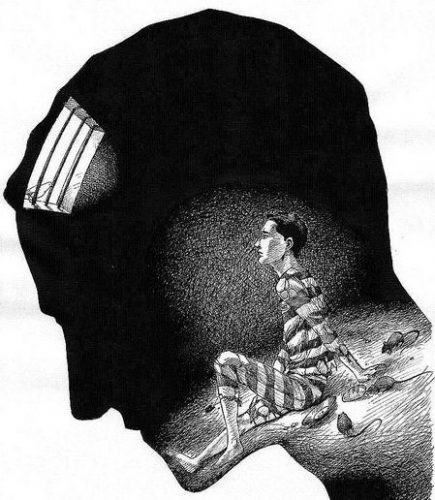
The good news is that it is never too late to repent, step out from underneath the false security of cultural conditioning and live in the light of the true substance of faith. Change is inevitable and death too. So, live recklessly, selfless, in love for those who need it most, as one with nothing to lose and everything to gain, because that is what praying “on earth as it is in heaven” is all about! Faith means leaving behind the prison of our fears and breaking the bonds of love-limiting expectations.

The A B C’s of Financial Success

Standard

Recently, while applying for a loan, I received a compliment for my great credit score. It felt good, it was a reward for years of financial discipline, and will afford me some opportunities that would not be available otherwise.

However, I’m aware that many others struggle in this regard and, worse, when good advice is shared many would rather shoot the messenger (and score cheap political points) than promote what would actually help many people if applied.

So, at risk of my neck, I’ve decided to give some free advice.

Attitude Adjustment: Take Responsibility for Your Financial Future

One of the biggest mistakes I made early on in life was to waste time hoping for some big break, I would look at those who had more than me with envy and then blow paychecks on useless things.

Had I been more able to reign in my attitude then I may be more like a millionaire friend I have. Instead of complaining about his lot in life, he saved everything he could, bought a double and started earning rental income, as a teenager.

There is no easy road to success, but if you start taking responsibility for your own financial future today your life will become easier tomorrow and it all starts with attitude. If you have a poor attitude you will justify bad financial choices and sabotage the only real chance of success you have.

Future success almost always requires sacrifice in the present. It could mean getting your CDL or going to college and working two jobs. It may mean saying “no” to your friends when they ask you to go to Europe with them. One must temper their current hedonistic impulses and shift the balance towards the future.

Better Balance: Save Every Penny That You Can Today and Invest in Your Future

Saving is a necessary discipline for financial success. If you work for minimum wage at McDonald’s and insist on having the latest iPhone then you will likely remain very poor until you start making wiser investments. Those who spend everything they earn on things not absolutely necessary to survive are sacrificing their future success for trinkets.

To gain wealth one must invest in things that will bring a return. That Grande Salted Caramel Mocha might make you feel good for a couple moments and seem completely worth the money spent—until you consider the opportunity cost.

Over the long-term, a daily $4.00 coffee habit can become very expensive. In ten years that is $14,560 spent on a path to early onset diabetes. Had you taken that same money and invested it, at a 10% rate of return, you would have around $25,000 in cash and a down payment for a modest home and all because you quit Starbucks—can you imagine what would be possible if you quit steak dinners, beer, lottery tickets, and movies?

Of course, there is always a case to be made for enjoying the present moment, but one can often accomplish that end at a far lower cost and may even learn to enjoy saving in the same way someone can eventually take pleasure in going to the gym. At very least, moving the balance even a little in the direction of saving and investing is far better than the pain of dependency and debt.

Credit Control: Never EVER Buy Anything An Credit That Depreciates in Value

Having a balance carry over on a credit card is a terrible financial sin. If you can’t afford to pay the full balance of your Visa at the end of each month, then cut it up and use your debit card or plain old cash instead. It is completely insane how so many Americans sell themselves so willingly into debt slavery for things they really don’t need.

This is the one thing that I did well (for the most part with a few exceptions) and is probably why my credit score is as good as it is. I was always absolutely terrified of debt and for good reason. I may have blown too much money on frivolous things like performance car parts, but at least I’m not still paying interest on it today, own far more than I owe and am well above the median net worth for people my age despite my salary being average.

The only time a person should ever consider taking on debt is for something necessary that will appreciate in value. For example, real estate is something that stands a chance of gaining value over time. And, even then, one should take on debt with the upmost caution and realizing that their current circumstances could change. Any investment always comes with risk and that risk must always be fully accounted for before signing the loan contract.

But, at very very least, never ever borrow money for something like clothing, furniture or even a car, at least not money you cannot pay back in a month or two because that momentary happiness of something new will soon become a massive ball and chain of financial obligation. There is so much more pleasure in paying cash for something you’ve wanted than there is in paying a monthly bill for something you did not need and is now worth next to nothing for resale value.

Do Not Be Discouraged!

Finally, setbacks and struggle are part of the road to success, expect it!

For a young person, without a silver spoon in their mouth, the climb up the learning curve is often very steep. This is why there are so many who, comparing themselves to people years older, give up, cry “it’s not fair!” and become pawns to political opportunists who exploit poverty for votes.

But, take it from me, someone who did not win the lottery of life, who couldn’t afford college, had a few setbacks and still made it.

No, I’m not wealthy, at least not by American standards, but I am very comfortable.

I own a small house, a rental, two late model cars (both paid off) and no problem eating out on a regular basis. I have made slow and steady progress over the years, and will likely work until I am unable to get out of bed anymore, nonetheless, it is progress and puts me far ahead of those less disciplined.

My only real regret, financially speaking, is that I did not put these A, B, C’s to more use at an earlier age—because I might very well be a multi-millionaire today had I done so!

Awaiting Resurrection…

Standard

Nobody enjoys waiting and especially not for an indefinite period of time. This is why “progress bars” were invented to give hope to the user of electronic devices, through visual means, that their patiently waiting for the completion of a download, file transfer or update will eventually be rewarded and they can be on their way again.

There is nothing worse than waiting with no indication when or if the wait will end. Even a false assurance of an end (many progress bars do not speak the truth and are there simply to keep us from giving up) is better than waiting for an indefinite period of time.

As a truck driver, there was nothing worse than the undefined waiting period. I hated when someone would give me an ambiguous answer rather than a defined period. I would rather hear something concrete, even if it meant hours of waiting, than “soon” or “we’ll let you know” because those are words without commitment, that both keep you tied down and discontented.

Knowing when a wait will end or, at very least, that there is something at the end of a long wait, goes a long way towards making the wait more bearable. It can help one be prepared for that moment when the end of the wait arrives. At very least one can know how long they must distract themselves, if it is worth sleeping or when to set the alarm.

Currently, I’m stuck, once again, in one of those indefinite waiting periods and wondering if this one is indeed different from the others or just another delusion that will end in pain. So far I have busied myself in making necessary preparations, stubbornly holding back any doubts, but it is impossible to know if there’s any progress towards an end or if this too will end in catastrophe.

The next couple of years promise to be the launch of a new phase of my life and a close to a chapter that ended in devastation. In a very literal sense, something died in me a few years ago, having my sincerest faith so casually cast aside by those whom I had trusted my life with is a mortal wound, made it impossible to know my up from down, and I’m still awaiting resurrection.

Hope or heartbreak, only time will tell where this all ends…

Easter, Endgame and Resurrections

Standard

Spoiler alert.

The fight is hard, there are great sacrifices that need to be made, but in the end the good guys win and the armies of chaos and confusion are defeated.

Or at least that is how one would expect of a superhero movie that packs movie theaters around the world, right?

Some, from my religious roots, would decry the fact that “Avengers: Endgame,” the wrap-up to a 21 movie saga where an unlikely group of misfits take on villains of increased size and power, is better attended than their Easter services.

I mean how can it be a good thing that so many seek to be entertained by watching such nonsense?

However, in my own perspective, it doesn’t seem like such a bad thing that story of triumph through self-sacrificial love still dominates the box office. In fact, if imitation is the highest form of flattery then this creation of Stan Lee’s imagination is possibly the ultimate expression of Christian worship.

God, who lives outside of time itself, taking on the form of a man to save the world from death and destruction, sacrificing his all for sake of his friends only to triumph in a way unimaginable, is basically the end game of the Gospel.

As someone who enjoys “cinema magic” I’ve had to reflect many times, and often with tears, as I related to the struggles of the characters on the screen. Sure, the stories may be fictional, yet there is truth that transcends our reality captured in these fantastic accounts and that is exactly what draws the crowd now as it did when Jesus worked his miracles.

I am Tony Stark insomuch as I’ve needed to adapt to survive and overcome even myself, my pride, to protect those who I love.

I am Steve Rogers insomuch that I’ve often felt like a throwback to a more innocent time and, like him, I belong in a world that has passed me by while frozen in ice.

I am Bruce Banner insomuch as I’m the nice guy, who doesn’t always know how to express himself, but when pushed far can go full on Hulk mode and leave a path of destruction.

I am Thor insomuch that I’ve been handed great responsibility, given a divine inheritance that I feel unworthy to wield (despite many assurances) and have failed those whom I love.

I am Natasha Romanoff insomuch as my loneliness, being a tragic character, haunted by my past and my crushed romantic hopes in particular.

I am Clint Barton insomuch as I’m just a man wanting to live a happy simple life, yet always faced with complexities, sucked into a fight bigger than my abilities, etc.

As I enter this endgame of my life, I’m in a fight to save my future from my past. I carry a weight of painful baggage, the resurrection of my hopes still incomplete, and some days I feel stretched well past my abilities to continue on. There are times I wish I could go back in time and fix the terrible things that have taken so much out of me. However, there are those whom I love too much now to abandon in an effort to retrieve that which was lost.

It is only fitting that the Endgame movie come out so close to Easter and you’ll need to watch it if you want to understand why that is. The story is compelling because it is a story very much like that of the one who overcame death through death and has given humanity a path to salvation. As I look forward to being a husband and father, a true friend to those in need of love, it is the heroic example of Jesus that will guide me.

Why Did Judas Betray Jesus?

Standard

Judas is the most tragic characters of the Gospel account. Here was a man who was in the inner circle of those who had (at least outwardly) forsaken all and followed after Jesus. He was as close to Jesus as one could physically be, no doubt had done everything required of him, how did this man go from a chosen disciple to betrayer? And, more importantly, how do we avoid this same terrible end ourselves?

The Gospel accounts do not leave us without a clue as far as the motives of Judas:

Then Mary took about a pint of pure nard, an expensive perfume; she poured it on Jesus’ feet and wiped his feet with her hair. And the house was filled with the fragrance of the perfume. But one of his disciples, Judas Iscariot, who was later to betray him, objected, “Why wasn’t this perfume sold and the money given to the poor? It was worth a year’s wages.” He did not say this because he cared about the poor but because he was a thief; as keeper of the money bag, he used to help himself to what was put into it. (John 12:3‭-‬6 NIV)

Judas, in his sanctimonious rebuke of this woman’s extravagant display of worship, appears to be speaking up for the poor. But John slams Judas, saying he didn’t actually care about the poor, that he was really just a thief and stealing from the common purse.

We also know that Judas would soon betray Jesus for some silver coins.

Most thieves have justified themselves in some way and I’m doubtful that Judas saw his own motives in the same unflattering terms used by John and the other disciples. Judas probably had good intentions, at least some of the time, and probably saw himself as justified in what he did.

Moreover, Judas likely did not see himself as a villain at all. In fact, he was that devastated, upon realizing that his betrayal would lead to the death of Jesus, that he took his own life. There would be no reason for his suicide if his plan was to see Jesus killed. Nobody kills themselves because things went as they wanted them to go.

Why did Judas follow Jesus as long as he did?

There is plenty of reason to believe that Judas was like any of the other disciples and initially captivated by Jesus. However, he, like the other disciples, was likely looking for a political leader who would end Roman oppression and bring about an era of social justice or make Isreal great again. That is, after all, how the Jewish Messiah was described in Scripture:

A shoot will come up from the stump of Jesse; from his roots a Branch will bear fruit. The Spirit of the Lord will rest on him—the Spirit of wisdom and of understanding, the Spirit of counsel and of might, the Spirit of the knowledge and fear of the Lord—and he will delight in the fear of the Lord . He will not judge by what he sees with his eyes, or decide by what he hears with his ears; but with righteousness he will judge the needy, with justice he will give decisions for the poor of the earth. He will strike the earth with the rod of his mouth; with the breath of his lips he will slay the wicked. Righteousness will be his belt and faithfulness the sash around his waist. (Isaiah 11:1‭-‬5 NIV)

It is also, very literally, what Jesus told them:

Truly I tell you, at the renewal of all things, when the Son of Man sits on his glorious throne, you who have followed me will also sit on twelve thrones, judging the twelve tribes of Israel. (Matthew 19:28 NIV)

The disciples followed after Jesus expecting to be rulers with him in kingdom soon to be established, where they would be able to bring an end to injustice and right all the wrongs in the world. They were Biblical literalists, that is what Jesus told them, and therefore that is what they anticipated would be the ultimate reward for their devotion.

These guys were not Sunday school teachers, they weren’t there to play church either, rather they were a bunch of sword-carrying radicals who followed Jesus thinking they would see the overthrow of Rome. They, like revolutionaries today, were motivated by political power and utopian idealism, that’s why they were so willing to give everything up to follow Jesus.

Judas was no different from the other disciples in this regard.

Why did Judas sell Jesus out at the end?

It is really easy to get behind a message of peace and justice—especially when you are promised a position of power.

Up until a certain point what Jesus said sounded like populist rhetoric. He spoke to the common people against the ruling elites. News of his miracles spread and got people excited. He gave the downtrodden hope that justice would reign. It is little wonder that the crowds of disenfranchised Jewish nationalists began to swell.

It is all fun when it is about affordable healthcare, free bread, and fish. People always like a vague message of hope and change. Promise them that their nation will be made great again and they’ll flock to you. Even today there are many willing to sacrifice their time and effort for political campaigns making similar promises. People will line up for a handout.

However, when Jesus began to talk strange, telling them to drink his blood and eat his flesh, we are told, “from this time many of his disciples turned back and no longer followed him.” (John 6:66 NIV) And, I mean, who can blame them? Jesus, when they started to get weirded out, only doubled down on this claim. It does not surprise that many began to express their doubts nor that this is when we start to hear more about a coming betrayal.

Judas, whether motivated by impatience or disillusionment with a leader going off the rails, seems to have sought to force the hand of Jesus. It could be he was also a bit upset having been shut down by Jesus for a point that seems very reasonable on the surface. Why, after everything Jesus had said, would they not sell the expensive perfume?

Of course, we also know that his motives were not as pure as his sanctimonious words would suggest. If Judas were honest, he was following Jesus primarily for the benefits he anticipated and just wanted more money in the bag he carried. It is, therefore, a tragically ironic twist that he received payment for his betrayal, despite not asking for it, and suddenly lost appetite for it at the end.

Why do people betray Jesus today?

Many who go to church and claim to love Jesus are truly his betrayers. They, like Judas, talk the talk, they may share their consternation for the state of the world, give up material possessions, and seem very spiritual and sincere. But beneath this righteous facade is a rotten core. Sure, they might say that they love Jesus, they may have even deceived themselves about their own corrupted motives, yet their real motivation is social standing, monetary gain, political power.

How do you know if you or someone else is a Judas?

Here are some of the tells…

#1) A Judas spreads gossip and backstabs…

A few years ago, when I most desperately need allies, I got wind of a rumor being spread about me. A young man, who would always be nice to my face, claimed to have overheard me saying something absolutely ridiculous. His claim was utter unadulterated nonsense and had the potential to be very damaging to my reputation.

Fortunately, not everyone took his word for it. A true friend asked me “did you say…” and gave me an opportunity to respond. I confronted this ‘brother’ (always so sweet to my face) for his backstabbing and got a quick apology as I recall. However, they did not seem too remorseful. In fact, while saying sorry to me, they went off on the person who came to me with the slander—which led to a second, slightly more animated, confrontation.

Gossip spreads like wildfire in many churches, it is easy to share salacious tidbits about other people, that may or may not be true, and sometimes a thrill that comes with it. Those who ply this trade often use the guise of friendship to obtain information and then piously disseminate their tales as prayer requests or concern. However, like Judas, the reality is that they are backstabbers and truly motivated by hidden jealousy or desire for social gain at the expense of others.

Gossip is a betrayal of Jesus. It is a kiss of Judas. It is a sin listed with murder and hate for God.

#2) A Judas engages in shady business…

Jesus told his followers to “let your yes be yes” (Matt. 5:37) and to “give back to Ceaser what is Ceaser’s” (Matt. 22:21), but that does not stop many professing Christians from telling lies or trying to game the system in their favor. In fact, I’ve been severely disappointed in a few business transactions, with people trained to know better, where the other side reneged on their word.

In the worse cases, I’ve elected to take the approach of Psalms 26:4: “I do not sit with the deceitful, nor do I associate with hypocrites.”

Everyone works for a profit and there is absolutely nothing wrong with trying to get the most bang for your buck either. However, there comes a point where being shrewd in business crosses over into screwing other people over and goes from saving money to being a sin. Sadly, many faithful church attendees do not only flirt with this line, but they are so fully engaged in their lust for monetary gain that their word means nothing—they actually prefer making money over their commitment to Christian love.

This is a betrayal that takes many different forms, from the televangelist trying to exploit the vulnerable to the person who is miserly in regards to compensating employees, conveniently forgets a verbal agreement when another offer comes in, and otherwise can’t be trusted unless the terms are put in writing. And then there is the tax fraud, those who feel they have a special right to avoid payment and engage in questionable accounting practices to save a few dollars. Sure, a person should not pay more than they owe and yet it is very sad many have given Christians a bad reputation.

A handshake should not be necessary for a Christian to keep their word, let alone a legal contract, and stinginess in business is not a virtue. Jesus told us to give freely, to give the shirt off our back along with our coat if asked, and it certainly is not easy to truly live this out. However, if you can’t be a man of your word on Monday, then you are wasting your time going to church on Sunday morning. If making money is your primary objective during the week and justifies doing almost anything to win, then you have betrayed Jesus—you cannot serve two masters.

#3) A Judas believes that the ends justify the means…

One of the most egregious errors of the disciples, including Judas, was to assume that Jesus came to establish a worldly kingdom where they would rule with him. Their confusion about this left the disciples feeling devastated as Jesus hung on the cross. It could be the very thing that led Judas to betray Jesus as well.

Judas could’ve been attracted to Jesus because of his greed. He saw an opportunity to fleece the crowds (and his fellow disciples) and eventually decided to cash in. However, that seems more of a bond villain explanation and would leave most of us off the hook. More likely is that Judas was motivated (at least in part) by a political ideal, became a bit disgruntled with what he saw as slow progress, and intended to force the hand of Jesus.

Many today are like Judas. They see the objective as being a worldly utopian ideal. They attempt to use the teachings of Jesus as some sort of political roadmap. They seek to use the government to enforce Christian morality and subjugate their neighbors. To them, Jesus preached “social justice” or some other political machination and believe that any means of accomplishing their ends is acceptable. They weaponize Bible verses to gain an edge on political opponents, they constantly confuse the duties of church and state and their unloving attitudes turn many off to the Gospel of Jesus Christ.

But Jesus did not come to advance an ideological agenda nor to establish a new political order. His message was one of personal repentance and led by showing an example of self-sacrifice. He said, “my kingdom is not of this world” (John 18:36 NIV) and did not resist the unjust leaders even knowing it would cost him his life. He did not demand that his rights be respected nor did he ever urge his followers to become political activists.

Furthermore, Jesus, in his answering the indignation of Judas pertaining to the woman’s extravagant display, by saying, “The poor you will always have with you, but you will not always have me” (Matt 26:11) is making a statement about his purpose. He did not come to right every wrong nor to overthrow those who oppressed his people through force, but rather he came to show God’s love and bring salvation from sin to the world.

Jesus may have used physical means, like miraculous healings, and had real compassion for all human needs, but his goal was always to prove who be was and promote spiritual ends. This is where many fail to comprehend. Some cynically use the teachings of Jesus cynically to advance their political agenda, whereas others very sincerely attempt to use politics to try to advance a Christian agenda, but both are examples of an “ends justify the means” logic and completely anti-Christian.

Christian ends are never severed through means of violence. Political ideologies—all justifications for use of government coercion—may pose as love, moral virtue, and application of Christian teachings, they are often packaged insidiously and hard to detect. However, like Judas on his high horse about the woman’s worship, it is only ever counterfeit—Christians moral ends never ever justify immoral means.

It makes little difference whether someone uses Jesus to advance political ends or uses political means to try and obtain Christian ends—both are a betrayal.

A something other kingdom…

In the end, what Judas and the other disciples lacked was comprehension and faith. Whether Peter swinging a sword at those arresting Jesus before fleeing and denying him, to Thomas doubting even after hearing the good news of the resurrection, the disciples grossly underestimated who Jesus was and sold themselves very short in the process.

Many who profess Christ today are no different than the disciples. They are motivated by things that really do not matter and may, in fact, put eternity in peril in the same way that Esau sold his birthright for a pot of stew. Lifelong church members, baptized at birth or a young age, will be held to a higher level of accountability than their unbelieving neighbors, and could end up crying “Lord, Lord” and told to depart at the final judgement. We need to decide now if sharing juicy bit of slander or a few dollars saved by means of dishonesty is worth our soul.

There are many more fearful, who have this idea that the trials we face today are unprecedented, who disobey Jesus because they do not see him as powerful enough to save them—like he did those Hebrew boys who faced down death when the fires of Babylonian tyranny burned hot. To them, to those always peddling doom amd fretting about the collapse of Western Civilization, maybe consider this story out of war-torn Syria: “Christianity grows in Syrian town once besieged by Islamic State.

Does it matter if the world as we know it burns and Christ triumphs?

Even in betrayal Jesus brought glory to God in a way nobody expected—he defeated death by death, the grave could not hold him, and he rose again on the third day as he had promised to those who could not comprehend. It is because of that I will to forgive those who have betrayed my trust. Yes, they should be called out. Yes, they should repent and confess their sins as well. But the resurrection changes everything, those who truly believe are able to forgive all offenses—because to do otherwise is to be a betrayer of Christ.

Struggle, Meaning of Life and Suicide

Standard

In the early hours of a Sunday morning, I was lying in bed, engaged in a conversation with an old classmate, now living in New Zealand, about the drug overdose death of someone familiar to both of us and what it says about the times we live in.

The dialogue itself, scattered about my morning routine, was an example of the unique pressure of modern life. Our discourse continued, in fragmented text message form, one of us going to bed soon and the other starting their day, past my short nap, beyond my morning shower, on the way to church and ended only as I entered the sanctuary for worship.

My “smartphone” allowed me a level of connection to someone on the opposite side of the world that was impossible a generation ago. And I am glad to be able to maintain this relationship despite the distance and for the electronic tool in my hand that allowed me to do this once unimaginable feat with ease. But this device also deprived me of some extra sleep, it often interrupts my most private moments, distracts me while driving, and does not allow me to be singularly focused. It comes along to work, to the gym, while I’m out dining, and visiting friends, and is almost impossible to control.

My grandpa had morning chores—mundane physical tasks like feeding animals, milking a few cows or shoveling manure. And grandma too—she would, in the wee hours of the day, go about making breakfast for her working man and the family clan. But they likely did not (at least not frequently) get a surprise visit from a former debate partner (geared up for a discussion of weighty matters) while they were in bed and still seeing double.

So, what did we discuss?

The rate of drug overdoses and number of suicides have risen dramatically over the past few decades and for poor middle-aged white men in particular. Several of my former classmates have now become part of this statistical category and, sadly, their stories are being repeated over and over again across the United States and especially in rural areas. The suicide rate for African American men has actually decreased over the same time period, which has led to some speculation as to why this is the case.

My left-leaning friend speculated this is a product of eroding “white male privilege” and yet all the cases that I am familiar with involved men who were, since childhood, as disenfranchised as anyone by the current system. There was never an erosion for them because they never had this imagined privileged status, they grew up in predominately white communities, from working-class homes, they didn’t go to college, they couldn’t seem to get out of their rut of low-paying jobs, relationship drama or financial woes, struggled against addiction and depression.

No, while true that white men are not a protected class and some do endure a significant amount of bullying and are just expected to take it, I do not see this as the real issue. Men in prior generations went into mines, labored hard under the sun, endured the terror of war, worked long-shifts on the assembly line and all without the help of a psychiatrist to tell them how to feel. They were just supposed to suck it up and keep going, against the odds, for the good of their communities and families—which is exactly what they did.

What has changed?

A more likely explanation for the increase in suicide and drug abuse is a combination of factors rather than one—the evaporation of economic opportunity and dissolution of the family unit and communities, along with the hectic pace of modern life, playing primary roles in the epidemic. A couple of decades ago decent paying manufacturing jobs were plentiful, the community was strong (usually with a local church as the nucleus) and the world’s problems were not constantly being shoved in our faces in a 24-7 on cable news, social media, etc. There have been big changes in rural America and some are impacted more than others.

The media deluge…

In the 1990s Ted Turner’s CNN was a novelty, the breathless reporting of alleged atrocities used to sell the American public on the Persian Gulf War, and only a foreshadowing of the media deluge to come. Two decades later there is almost no escape, there is no time anymore to process the information assaulting us from all angles, and the coverage is by and large negative.

Then there is the explosion of social media. It is a world where we primarily see the highlights of the lives of our friends and skews towards a positive presentation—because nobody wants to be that person.

This alone doesn’t drive anyone into depression and despair. But it certainly can help to feed feelings of isolation, it can never replace in-the-flesh social interaction, and could leave a person feeling overwhelmed. I mean, how can we not be influenced by this endless stream of information? It is a far cry from the time of our grandparents when yesterday’s news arrived in print form and the only scandal that really mattered was that juicy bit of gossip overheard on the party line.

Could it be that we aren’t built to take in the world all at once?

Could it be that we are reaching our capacity to handle and that the most vulnerable are first to fall down under this load?

We should consider the increase in suicides and drug overdoses as the “canary in a coal mine” and an indication of something very wrong in the air of our current culture. Where some have been overcome by the noxious fumes there are probably many more who are gasping for breath or in the beginning stages of hypoxia and need to be guided back to fresh air or they will soon also perish. An overdose of bad news and fear-mongering propaganda won’t take a strong person down, but it might be enough to push the vulnerable over the edge.

Working more for less…

Twenty years ago, in the towns around where I grew up in (prior to the NAFTA disaster) the wheels of industry were still turning and a blue-collar worker could easily make $20/hour or more working a factory shift. Yes, the cracks of outsourcing where beginning to show before this, the domestic steel and auto industry collapsed against cheap foreign imports before then, but it was mostly big urban areas like Detroit and Baltimore that felt the pain. We still proudly produced furniture, paper, bread, cable assemblies, and various other products before these businesses were shuttered.

However, since then we have felt the full brunt of trade policies that primarily have benefitted globalist elites. Since the 1990s, dozens of factory doors have closed in my own immediate area and nothing came to replace them. Well, nothing besides more low paying retail jobs—shopping centers springing up in the same lots, literally, where many men and women once made a wage where they had a chance of economic advancement. The idea that everyone could simply get some additional education and become a computer programmer or a professional with a bachelor’s degree has become the out-of-touch “let them eat cake” statement of the modern era.

Wages have stagnated in a time when costs in housing, healthcare, education, and housing have skyrocketed. The cost of college, for example, has gone up at eight times the pace of wages, in 2016, home prices increased at twice the rate of inflation, and we now spend thirty times what we did for healthcare a few decades ago. And again, this is a change the predominantly white working-class men who, unlike many others in the economy, have no control of their wages and, in addition, are often in direct competition with illegal immigrants for the same jobs. There is no professional licensing to protect the jobs of the yard guy or the drywaller—thus they are forced to work more for less.

Only the wealthy elites and beneficiaries of the welfare system have come out on top. For those taught that their value is in their ability to provide for their own, who are unable to compete in the academic or intellectual realm, prospects can indeed be very bleak and especially when coupled with other factors like failed relationships, lack of community and loss of purpose. It is no surprise that in this environment more are turning to the various means of escape available to them—with suicide being the ultimate expression of their deep despair.

Life without purpose…

The one place where rates of suicide are higher is amongst those who are part of the Native American population. This, coupled with substance abuse, has been a tragic outgrowth of the reservation system for many years and underscores the problem of a purposeless existence. There is not much to do on a reservation. The land is rural and very sparsely populated, the opportunities for gainful employment are extremely limited, basic needs are often subsidized by the government, many succumb to feelings of boredom and/or isolation and decide to end what seems (from their perspective) to be a purposeless life.

I believe the circumstances leading to higher suicides on reservations are very similar to that of many non-Natives living in rural areas. We all have an idea of what we are supposed to be, we have religious and cultural expectations to live up to, but not all are able to overcome the obstacles between themselves and these higher aspirations. Perhaps they were born into a dysfunctional home, sexually abused, are less naturally gifted than their peers, born in a time of declining wages and are unable to compete in the market or attain their life goals? Failure early on can lead a person into self-defeating cycles, especially when there is nobody intervening to help overcome them, and the result is depression, substance abuse, etc.

Men, at least in rural America, are expected to be the “breadwinner” for their families. Those who do not provide are disparaged as “deadbeat dads,” he cannot simply abort his bad decisions, and will be on the hook financially long after his fifteen minutes of fun is up. It is a matter of Christian conscience, the Bible says that a man who does not provide for his own “is worse than an infidel” (1 Tim. 5:8 KJV), and is a standard that is embedded in our laws. And, truth be told, most men don’t need to be told that their children are their own responsibly either. So, naturally, it is no small thing for men conditioned this way to underperform or fail at their duties.

Men unable to provide adequately (according to cultural norms) for themselves or their families will struggle to find great purpose anywhere else. And while there is the “welfare queen” pejorative to describe a woman who fraudulently games the system, women were traditionally dependent on men to provide financially and there is not nearly the same stigma for a woman who is unable provided financially for her own needs. Things may have changed elsewhere, but in rural America, a man who doesn’t pay child support, even for children he is rarely (if ever) allowed to see is considered to be worthless and a bum.

Relationships are less stable than they were when marital commitment meant something and yet, in a time of wage stagnation, men are still expected to carry the financial burden. The purpose religion once brought men (beyond their work and family) has been under withering assault for many years now, but the yoke of moral responsibility has not faded away and leaves many to struggle in the wilderness alone. So it comes as no surprise when men, surrounded by dysfunction, deprived of their purpose and absent of any real help, could see death by their own hands as something honorable.

From an article about veterans returning to ‘normal’ civilian life:

Now one was looking for work in Wisconsin, one had killed himself, and several had returned to Afghanistan to get back into the fight. Most of them wanted to be back there, in their own ways. Like so many vets, they missed the camaraderie. And as with so many vets, their lives at home were defined less by togetherness than by isolation, which took on many forms. Dodd was in Kansas City making aerospace bolts and smoking weed on his breaks to stave off the stress of “dumb-ass civilian questions.” Simpson was working the phones at a call center for the Department of Veterans Affairs, talking to vets who wanted counseling or benefits or sometimes nothing at all, other than to talk with another combat veteran.

Men would rather be in a literal war than alone and stuck in a purposeless life.

Lack of community…

The collapse of community is one thing my left-leaning friend did seem to strongly agree on as a possible explanation for the epidemic of drug use and despair. His definition of community tended towards civic engagement and mine went in the direction of religious involvement, but we both agreed that this is something essential. And that community, real life “in the flesh” community, has been on a precipitous decline and especially in rural America.

This is the trend even in the conservative Mennonite culture I was born into and spent many years of my life. Guilt-driven church attendance may be holding steady, there is certainly more involvement there than in some other segments of society, but there has definitely been a big change in my lifetime. Sunday evening visits became far less frequent, more parents choose to homeschool their children rather than risk other schooling options and the church community has more or less devolved into a conglomeration of cliques. Of the dozens who called me “brother” over the years, as part of religious ritual, only a couple (primarily one family) have checked in to see how I’ve been doing.

A community is one of those underrated privileges. It is a place where you are missed when you’re gone, where a person can live with far less material wealth and still be happy having their place in the social fabric. Even a slightly dysfunctional community offers protections, a social support network, for those that are a part of it and the individual members are all stronger as a result. Communities take many different forms and can center around many different things. It can be as simple as a group of friends who care about each other and do things together. It can be a military unit that is compelled to do drills together, who eat, sleep and live as a group, and where comradery is encouraged.

In rural America, in the past, the church was often a center of a community, a place where people got together for worship, to make perogies together and share each others’ burdens. Church attendance has been in steady decline, “nones” now constitute the largest religious group affiliation, and with this, there has been a parallel decline in mental health.

And organized religion isn’t the only dwindling expression of rural community, volunteer fire departments are having difficulty filling their ranks—people are too busy with their other obligations and do not have the time.

People also have fewer close friends than they once did according to a recent study, in the time between 1985 and 2004 Americans have gone from an average of three close friends to only two, and this implies a shrinking support network.

The increase in social isolation cannot be good for those already vulnerable.

A profile of a vulnerable person…

When I saw a friend request from “Adam Bartlett” it was a name that I recognized immediately and accepted without hesitation.

Adam was a grade below mine in school. He was one of those anonymous in a crowd people, average height, not particularly athletic or anything, friendly enough, and not too different from me other than my being Mennonite. We both went out for football the same year, he quit the team early (which, in my teenage mind, made me think of him as a quitter) and that is pretty much all I knew about him—there was a gap of twenty years before I heard from him again.

It was not too long after connecting on Facebook that I received a message from Adam. We chatted briefly about a mutual acquaintance, my being off work because of an ACL tear, a shared interest in firearms, how he wanted to reconnect with “old friends” because he had few friends anymore, I offered the next weekend might be a possibility and left it at that—we never did get together the next weekend despite my offer and his interest.

However, a month after that he messaged me about his financial woes. He was upside down in his car payments and was hoping that I could help him out with that. I felt bad about his situation. But, I was not in a position to purchase the vehicle and was not very interested even if I did have the extra cash. It was in the course of that discussion where we ventured a little into his relationship problems, he told me his wife stopped paying bills without telling him and things would soon go from bad to worse.

In our next exchange, he asked me for a place to sleep. His wife had moved back with her parents and he told me he was not welcome to stay there. Of course, being that we had just got reconnected, and also considering that I was on the road all week in the truck, I was leery of having him live in my house alone. Still, he definitely needed help. I decided, rather than have him move in, to pay his security deposit and the first month of rent instead.

He accepted this solution. We met a few days later in the Big Lots parking lot where I handed him a check for his rent.

Then, on the spur of the moment, I asked if we could pray together, he said we could. So I put my hand on his shoulder, prayed that he could get his life turned around and hoped my small contribution would make a difference.

Later on, in many different private conversations online, he complained about the hypocrisy of Christians (including his significant other) and would ask me many questions. Why couldn’t these different denominations agree on anything in the Bible? Which denomination was right? How could his wife be so dogmatic about things like Creationism and then cheat on him over and over again?

Adam had basically given up on religion.

He was rightly skeptical too.

However, it seemed that the prayer had helped. He never did use the check that I gave him, he eventually would start to attend church services again, his social media posts seemed more positive, and last I had known he was back with his wife and daughters.

There were still problems at work and at home. Our last conversation, that he initiated, was on the topic of his drinking habits. He told me that alcohol made him honest, even more spiritual, but was frustrated because his wife disapproved. Perhaps I could have called him out a bit more or been a little more forceful with my opinion, because he definitely sounded like an alcoholic excusing his bad habit—but I figured I would not win an argument and, rather than say too much, simply encouraged him to honor his wife.

A year so after our alcohol discussion, I asked, “How have things been going for you?”

He never did answer.

Adam had confided many things and, both for the sake of those struggling and for those who wish to do something to help, I’ve decided to share his story more openly than I would otherwise. His dysfunctional home life was only made worse by the fact that he had been exploited, as a child, by a sexual predator (a college professor) who was only very recently prosecuted for his serial abuses and given a light prison sentence. He had no real friends in the world, he seemed to try to bury his pain using substance, and this coping strategy, evidently, failed him in the end.

In August, less than a year ago, Adam gunned down a man who had emerged from the apartment where his wife had moved and then, using the same handgun, took his own life.

Sailing Against Unfavorable (or non-existent) Winds

Standard

On March 30th, 2015, I published a blog, “Sailing Beyond Safe Waters,” to express my determination to go beyond the safe harbor religious tradition and cultural obligation to truly live in faith.

That was when my blog was only viewed by my family and close friends. In the time since my audience grew exponentially and my life took some completely unexpected turns. Perhaps needless to say, I did leave that safe harbor (where some continue their cross harbor pleasure cruises make believing that they’ve entered the ocean of faith) and have charted territories completely new to me.

In the past couple years I’ve experienced the high seas of fear and doubt. There have been those moments of terror and panic too, when the winds howled, threatening to overwhelm the very timbers of my being, and the waves of a hopeless reality crashed hard. But I continued on, determined to break through, clinging to hope, and facing down the impossible.

Then there was that night when the main mast of my determination snapped, my ship of faith had been capsized by a rouge wave, and all seemed lost. The the debris of my dreams lay scattered across a swath of water a mile long and wide. It was the very thing those harbor pilots (who fancy themselves as seafarers for having seen the mouth of the harbor once or twice) had warned me against when had set out. If they cared, their faithless answers were vindicated with my failure.

However, my distress calls did not go unanswered. I was not alone on this ocean and there were those, who had also left their own safe harbors by necessity or choice, as determined to not let my journey end. It was their help that some of the more important items strewn about (things like meaning and purpose) were recovered from the wreakage.

Those on the ocean either know their need of others or they perish in the first big storm that they encounter. It is only in trials and tribulations that you know who your true friends are in a world of imposters. I’ve learned, by sailing beyond safe waters, that it is only the opinions of those who are there for in times of crisis that truly matter.

Finding the wind for your sails…

The time since then has been one of trying to rebuild identity around something more stayed and keeping doing those things that I’ve done right. I’ve been able to do some personal inventory and think of those things that really matter most to me.

My life, all things considered, hasn’t been bad. I have rental property, a great job, freedom to travel, ideas for the future and a precious bhest. That said, despite being enthralled by the beauty of Orthodoxy, it has been difficult to recover that basic faith—the faith that took me out of the safe harbor into the expanse of the deep—and I’m not sure if it is something that can be recovered.

I’ve been towed along by the obligations of life and a commitment to love with the impossible love in particular. I’ve taken the freedom of not having to try to navigate the waters of romance (having basically settled that question) to take on some other challenges. I’ve found that it is much easier for me to take risks now, leading to some small investments and exploring some others.

Still, the bigger pieces of my new life (post-storm) have yet to fall into place. The sails are unfurled on this vessel of faith, a vessel now shared with someone else, but we wait in the doldrums of the present, scrubbing the decks repeatedly (or, rather, doing the dishes and chores for a household of one) while hoping for that favorable wind that will carry us from this purgatory, of a life neither completely here nor fully there, and finally carry us to the paradise over the horizon.

It is important to be ready for when the wind returns, to have the capacity to take full advantage of that moment. The hard part is having the right mentality about the present reality to get to that moment and be ready to be underway—sailing again.

On Cynicism, Courage and the Real War On Christmas

Standard

A week ago someone had called my grandpa and identified himself as being my younger brother. He needed to be bailed out after some kind of traffic law infraction. My grandpa, not one quick to give vast sums of money over a phone call, quizzed his ‘grandson’ and inquired as to why he did not ask his parents first. The spoof caller answered that he wasn’t getting with his parents, at which point it was obviously a scam and my grandpa hung up.

The other day my grandpa called to inform me that someone had just called claiming to be me, his eldest grandson. This time he hung up without hearing another word.

On the same day my grandpa told me about this I had a plea for help, on social media, from an orphanage in Pakistan. Their profile pictures featured a bunch of dear children and those images momentarily tugged at my heartstrings. However, there was no way to verify who they really were. So, I tried to kindly explain my brotherly assistance was required elsewhere. When continued to repeat the request for a Christmas donation, like a broken record, I blocked them. I’ll probably be slower to accept a similar friend request in the future to avoid the need to try to reason with someone only interested in my wallet.

The communication era has brought the world together in ways unimaginable a century or two ago. And, with that development, predatory hoards from around the world can now invade our personal space at any given moment. The marauders no longer need to travel in longboats over dangerous seas, they simply pick up the phone and pretend to be your grandchildren.

This is frustrating for me. There are so many legitimate needs, including that of my family in the Philippines, and these are the real victims of the scammers and schemers. Those who exploit our kindness and generosity do a great disservice to the people around the world who work hard, experience hardship, and could use a little help. It is easy to become callous and uncaring under the deluge of requests. But we must have the courage to care even when there’s a chance of being exploited.

What is the real war on Christmas?

Political activists are constantly claiming a war here or a war there. The left claims that not providing women with free stuff constitutes a “war on women” and the right, not to be left out of the grievance culture fun, whines about the words “Merry Christmas” not being on Starbucks cups—who can forget Joshua Feuerstein’s coffee cup fury and the backlash?

But the real war on Christmas has little if anything to do with corporate marketing and tit-for-tat politics.

Christmas is not about compelling others to use a particular greeting or ensuring that religious displays are allowed in public spaces.

Christmas is a celebration, for the Christian faithful, of the most incredible gift ever given, that being the incarnation of God’s logos in the person of Jesus Christ and the opportunity for our divine adoption. This miraculous birth, to a virgin mother, represents a new hope for humanity and a reason to change ourselves. The true Christmas spirit is our being filled with this same spirit of love and giving of life for the good of others that Jesus embodied.

Turning Christmas into the latest battleground of a broader culture war is to entirely miss the point. Giving Starbucks hell isn’t going to further the message of glad tidings and joy, that’s for certain, and is not likely to win any hearts or minds either. Pettiness is never going to convince a skeptic to consider the Gospel of Jesus Christ. It is a distraction at best.

The commercialization of the holiday also takes away from the true reason for the season. The birth of our Lord and Savior wasn’t really intended to inspire stampedes of shoppers hoping to wrestle a few dollars of savings from their neighbors. But Christmas has become a marketing boon for retailers and they (along with the rest of our culture) push people to spend money they don’t have for things they don’t need—things manufactured using underpaid foreign workers while the bulk of the profits enriching a few globalist elites. It is a scheme nearly as exploitative as the telephone scammers, but completely legal.

However, those two things (culture wars and commercialization) are mere symptoms of the bigger disease and the one thing that can undermine the Christmas spirit in us—the soul-eating disease called cynicism. If Christmas has a true enemy in this world it is cynicism. Cynicism is a cancerous attitude. It is natural (albeit unhealthy and inhumane) response to a world full of self-interested people and corrupt institutions. The cynical person is one who has seen behind the curtain, who may have been taken advantage of once or twice and is now too overtaken by their skepticism to truly love their neighbors.

It is often the disillusioned idealist who becomes a bitter, critical, and faithless or cynical. Cynicism is, in that sense, a product of those who exploit trust for financial gain, a result of fatigue of being hit from all angles, and a retreat to a position of disengagement. But it is not dispassionate, as it often claims to be with a shrug, nor is this retreat from personal involvement a moral high ground. No, in reality, cynicism is an excuse for being uncaring, cold-hearted and self-centered.

The clever trick of the cynic is to be uncharitable while presenting oneself as being someone concerned about morality or morally upright for being able to identify the evil intentions of others. But the reality is that cynic is a hypocrite merely using the abuses of others as a cover for their own true self-interested indifference. They might cite scams as a reason why not to care and yet will always have another excuse waiting in the wings if that one isn’t applicable. They are simply unwilling to give of themselves.

Truly the cynic is a coward. They are too cowardly to do good in the face of evil, to be vulnerable and take a chance of being exploited. They are also too cowardly, fearing the social cost of revealing the full truth of their real underlying lack of concern for others, to make a full commitment to the evil they truly envy and yet claim to despise. The irony of the cynic is that they are as selfish and as much a part of the problem as the people that they claim has caused their cynical condition.

Caring requires courage and courage requires commitment…

It takes courage to have life experience and not be cynical. I’ve held back on giving to many charitable causes because some of them did seem more like self-interested scams. There is definitely a case for good stewardship, we should be “wise as serpents” because there are “wolves” (Matthew 10:16) who would devour us and lay waste to our hard-earned savings. It does the world no good to empower criminals or encouraging laziness in those who could learn to help themselves.

However, the dividing line between a person desperately in need of love and one merely taking advantage of the generosity of others is razor-thin. In fact, in many cases, there are overlapping motives in those asking for help, some genuine and others corrupt, and knowing how to respond requires a great deal of wisdom and discernment.

For example, a single mother, raised by the system, may indeed be inclined to take advantage of the charity offered and especially the half-hearted kind that comes out of religious obligation rather than a full commitment to love. They might simply intend to get what they can get before moving on. In those cases, it is easy to dismiss such a person, to conclude that they are unwilling to make the changes necessary to be free of their current circumstance, wash our hands, and move on.

Unfortunately, while there is a time to let people learn from their mistakes, the salvation of those who are mired in generational poverty (or otherwise unable to help themselves) often requires an investment that is beyond reasonable. In other words, it takes an investment of faith rather than of mere religious obligation. It requires the courage and commitment to look beyond the risk of being exploited and to unconditionally love another person before they have proven themselves worthy of our help. Faith means being the hands and feet of Jesus.

Had God waited for us to be worthy of his love, he would not have sent his son, we would still be waiting for a Savior and be hopelessly lost in our sin forever. The true Christmas story is God showing us how to love by becoming personally involved and being completely willing to sacrifice himself as an example for us to follow:

Do nothing from selfishness or empty conceit, but with humility of mind regard one another as more important than yourselves; do not merely look out for your own personal interests, but also for the interests of others. Have this attitude in yourselves which was also in Christ Jesus, who, although He existed in the form of God, did not regard equality with God a thing to be grasped, but emptied Himself, taking the form of a bond-servant, and being made in the likeness of men. Being found in appearance as a man, He humbled Himself by becoming obedient to the point of death, even death on a cross. (Philippians 2:3-7)

Christianity and cynicism are completely at odds with one another. They might be similar in that both see the chance of being taken advantage of and exploited, but are completely different in how they respond to that chance. The cynical person lives based on fear and uses their knowledge of the risk as a reason to do nothing for those in need. The Christian, by contrast, makes a commitment to do good despite the strong possibility they will suffer great loss for their efforts.

A Christian must go to war with their cynicism, they must help that diseased man heaped at their doorstep, they must aid the broken traveler discarded along the path they trod and must make an unreasonable commitment to overcome evil with good. That is how soldiers win wars, they understand the risk and are still willing to sacrifice themselves for the cause. It takes courage to overcome our fears, to give ourselves as a sacrifice for the good of others, and live out the true meaning of Christmas.

Be courageous and don’t let the scammers and schemers turn your Christmas spirit into cynicism!

Mary and Restored Womanhood

Standard

A great sign appeared in heaven: a woman clothed with the sun, with the moon under her feet and a crown of twelve stars on her head. She was pregnant and cried out in pain as she was about to give birth. Its tail swept a third of the stars out of the sky and flung them to the earth. The dragon stood in front of the woman who was about to give birth, so that it might devour her child the moment he was born. She gave birth to a son, a male child, who “will rule all the nations with an iron scepter. (Revelation 12:1‭-‬2‭, ‬4‭-‬5a NIV)

Mary is described in splendid terms in the account above. She is wearing a crown with twelve stars symbolizing the tribes of Israel, clothed with divinity and standing above creation. As she gives birth the dragon stands ready to “devour her child the moment he was born,” an allusion to Herod who ordered male children to be killed after Jesus was born to prevent a potential challenge to his throne, yet she prevails. It takes a queen to give birth to a king and Mary is described in precisely those terms.

Growing up in a Protestant fundamentalist church the role of Mary was almost always dismissed or downplayed. While nobody in these churches would argue against the significance of Abraham, Elijah, King David, John the Baptist or the Apostle Paul, many do brush off the significance of Mary in the Biblical narrative and, despite claiming that Jesus is their king, would scoff at the idea that Mary should be regarded as Queen Mother. In this view, Mary is basically interchangeable with any other woman and nobody special or worthy of the veneration given to faithful men.

The disregard for the example of womanhood that Mary embodies is not without consequence. In fact, it is a disrespect that I would argue leads to male abuses, abuses that lead to female reactions and greater dysfunction. In other words, feminism is a response to traditional female roles being dismissed and downplayed in the same way that Mary’s role is disregarded. Many women feel that the only way they can be recognized is by thriving in what has historically been a male domain and it is no wonder that they do. Why pursue womanhood when only male roles are worth celebrating?

Mary, the answer to Eve…

One Biblical character Protestant fundamentalists have no problem talking about is Eve. They have no problem talking about how Eve was the one first deceived or quoting verses about male authority over women. I know many men who spend an awful lot of time discussing bad female characters, like Jezebel, or any woman who would dare challenge their authority, and continually attempting to blame women for their own failures.

For example, I recall a morbidly obese man who faulted his wife’s cooking for his condition and I know many more men who try to use female immodesty as a means to offload responsibility for their own lusts and abuses. And so it goes. These men are imposters rather than Christian leaders. They want to claim authority for themselves and yet, at every turn, blame women for their failures. They resemble Adam who blamed Eve more than Jesus who took up the cross despite being blameless.

To solve this age-old problem we should go back to the beginning and right after the fall of mankind:

I will put enmity between you and the woman, and between your offspring and hers; he will crush your head, and you will strike his heel. (Genesis 3:15 NIV)

This was what God told the serpent who deceived Eve. It is a prophecy about “the woman” and also specifically a woman. This woman would produce a child that would crush the head of this serpent and this is exactly what we read happened in the book of Revelation:

The great dragon was hurled down—that ancient serpent called the devil, or Satan, who leads the whole world astray. He was hurled to the earth, and his angels with him. (Revelation 12: 9 NIV)

The woman with “enmity” towards the serpent triumphed over the dragon through her offspring and that woman is the answer to those still deceived and stuck with Eve. The parallels between Eve and Mary, the antidote, are too great to ignore and were well-understood by the faithful in the early church:

As Eve was seduced by the word of an angel and so fled from God after disobeying his word, Mary in her turn was given the good news by the word of an angel, and bore God in obedience to his word. As Eve was seduced into disobedience to God, so Mary was persuaded into obedience to God; thus the Virgin Mary became the advocate of the virgin Eve. (St Irenaeus of Lyons, “Against Heresies” [A.D. 175-185])

This is the logical extension of what St Paul’s exposition in his letter to the Galatians about slavery under the law and freedom in the Spirit:

His son by the slave woman was born according to the flesh, but his son by the free woman was born as the result of a divine promise. (Galatians 4:23 NIV)

The comparison above is between Abraham’s two sons, one born by human effort to the slave woman and another by divine origin to his wife Sarah, but the greater context Paul speaks of is of our own divine sonship and salvation. The sons of Eve lives in bondage, they are subject to the law and perpetually trying to escape the condemnation of the law through their own efforts. But he writes of another son “born of a woman” who provides an opportunity for us to be an heir of God and a son of the free woman.

Jesus is understood to be the new Adam. Or the Adam who brought the “life-giving spirit” rather than death like his predecessor (1 Corinthians 5:45) and salvation from sin. And, his mother, in the same way, is understood to be the woman whose obedience overcame the curse of Eve’s disobedience and undoes the curse upon women. It is through the man Jesus, born of a woman, Mary, that we are saved. But it was not any woman, it was not a woman under the bondage of sin—it was a free woman.

“Behold your mother!”

There are those who use references to brothers and sisters of Jesus as proof that Mary, after giving birth to Jesus, conceived to Joseph and didn’t remain a virgin. This is another subtle way to belittle her and the significance of her role in the story of our salvation. It is also something routinely used by men to undermine the authority of the church. The perpetual virginity of Mary, for that reason, is important as a theological point and a misunderstanding of Scripture that is easily cleared up.

First of all, because it was not uncommon for older men to marry younger women in Biblical times, Ruth and Boaz for example, and it is widely accepted that there was an age differential between Mary and Joseph. It is quite possible, even probable, that Joseph was an older widower and had other children to another woman. So, in other words, the references to the “brothers” and “sisters” of Jesus could be step-brothers and step-sisters rather than other sons and daughters of Mary his mother.

Second, it is possible that we are misunderstanding the words used. Indeed, the same words translated as “brothers” and “sisters” could denote a close relative as Aramaic, the language being spoken, didn’t distinguish between brother or sister and a cousin. It seems similar to how Filipinos use the word “Tito” (literally uncle) and “Tita” (literally aunt) to also refer to a cousin or respected elder. So we may be dealing with a language translation issue.

Whatever the case, it is definitely not advisable to take our cues from those who were in doubt of Jesus, who identified him as “the carpenter’s son” and didn’t accept him as God’s son:

Isn’t this the carpenter’s son? Isn’t his mother’s name Mary, and aren’t his brothers James, Joseph, Simon and Judas? Aren’t all his sisters with us? Where then did this man get all these things?” And they took offense at him. (Matthew 13:55-57 NIV)

Note, the passage does not say that Mary is the mother of the other “brothers” and “sisters” mentioned.

If we should not be offended when Jesus claims to be God’s son rather than that of Joseph, then we should not be apt to resist the idea that his brothers and sisters could be from another woman and the real possibility Mary remained a virgin. This is the view of early church writers:

The Book [the Protoevangelium] of James [records] that the brethren of Jesus were sons of Joseph by a former wife, whom he married before Mary. Now those who say so wish to preserve the honor of Mary in virginity to the end, so that body of hers which was appointed to minister to the Word […] might not know intercourse with a man after the Holy Spirit came into her and the power from on high overshadowed her. And I think it in harmony with reason that Jesus was the firstfruit among men of the purity which consists in [perpetual] chastity, and Mary was among women. For it were not pious to ascribe to any other than to her the firstfruit of virginity. (Origen, “Commentary on Matthew 2:17” [A.D. 248]).

And the doubt of this answered emphatically by St Jerome:

[Helvidius] produces Tertullian as a witness [to his view] and quotes Victorinus, bishop of Petavium. Of Tertullian, I say no more than that he did not belong to the Church. But as regards Victorinus, I assert what has already been proven from the gospel—that he [Victorinus] spoke of the brethren of the Lord not as being sons of Mary but brethren in the sense I have explained, that is to say, brethren in point of kinship, not by nature. [By discussing such things we] are […] following the tiny streams of opinion. Might I not array against you the whole series of ancient writers? Ignatius, Polycarp, Irenaeus, Justin Martyr, and many other apostolic and eloquent men, who against [the heretics] Ebion, Theodotus of Byzantium, and Valentinus, held these same views and wrote volumes replete with wisdom. If you had ever read what they wrote, you would be a wiser man. (Jerome, Against Helvidius: The Perpetual Virginity of Mary 19 [A.D. 383]).

We believe that God was born of a virgin, because we read it. We do not believe that Mary was married after she brought forth her Son, because we do not read it. […] You [Helvidius] say that Mary did not remain a virgin. As for myself, I claim that Joseph himself was a virgin, through Mary, so that a virgin Son might be born of a virginal wedlock. (ibid., 21).

If that isn’t enough to clear up the issue, the emphasis that even Joseph became purified through Mary’s virginity (similar to what Paul says about believing spouse “sanctifying” their unbelieving partner and children in 1 Corinthians 7:14), then we should consider again what Jesus did on the cross:

Now there stood by the cross of Jesus His mother, and His mother’s sister, Mary the wife of Clopas, and Mary Magdalene. When Jesus therefore saw His mother, and the disciple whom He loved standing by, He said to His mother, “Woman, behold your son!” Then He said to the disciple, “Behold your mother!” And from that hour that disciple took her to his own home. (John 19:25-29 NIV)

Jesus, in agony on the cross, soon to say “it is finished” and give up his spirit, and his concern is who would care for his mother. Not only does this highlight how important Mary is to Jesus, but it would also be completely unnecessary for Jesus to assign someone to care for his mother if she had other sons and daughters. What we do know is that Jesus had to assign someone to care for his mother, to a disciple, and that would be odd if she actually had many children.

But there’s a twist…

Mary, in the same way, we have become sons of Abraham through faith (Galatians 3:29) and similar to how Jesus became a son of Joseph through adoption, has also become our mother. If we are coheirs of Christ, sharing in his divinity through our adoption, then we are, likewise, are sons and daughters of Mary his mother. So, rejoice, our inheritance through Eve (sin and death) has been overcome through the Blessed Virgin and by her Son!

“From now on all generations will call me blessed…”

And Mary said: “My soul glorifies the Lord and my spirit rejoices in God my Savior, for he has been mindful of the humble state of his servant. From now on all generations will call me blessed, for the Mighty One has done great things for me—holy is his name. His mercy extends to those who fear him, from generation to generation. He has performed mighty deeds with his arm; he has scattered those who are proud in their inmost thoughts. He has brought down rulers from their thrones but has lifted up the humble. He has filled the hungry with good things but has sent the rich away empty. He has helped his servant Israel, remembering to be merciful to Abraham and his descendants forever, just as he promised our ancestors.” (Luke 1:46-55 NIV)

It is sad that those words above do not carry much weight in some quarters who claim a ‘literal’ understanding of Scripture. I suppose they may think that Mary, a young woman, should not be taken seriously and her words are merely the product of unchecked female exuberance?

In that case, these doubters should look at a declaration made by Elizabeth, full of the Spirit, in the verses right before Mary’s exclamation:

When Elizabeth heard Mary’s greeting, the baby leaped in her womb, and Elizabeth was filled with the Holy Spirit. In a loud voice she exclaimed: “Blessed are you among women, and blessed is the child you will bear! But why am I so favored, that the mother of my Lord should come to me? (Luke 1:41-43 NIV)

If the witness of two women and the Spirit isn’t enough, what will be?

Mary is most certainly blessed among women. If we should believe anything else said in Luke, then we must accept this is the reality, that it is something spoken through Elizabeth by the Spirit, and should join the generations of the faithful who call Mary blessed.

Mary is the Ark of the New Covenant!

Mary is blessed because she, set apart by her parents, allowed herself to be a vessel. Mary is referred to as the “Ark of the New Covenant” and that is because of the direct parallels in Scripture made between her and the holiest of vessels in Israel…

Mary is overshadowed and filled:

The angel answered, “The Holy Spirit will come on you, and the power of the Most High will overshadow you. So the holy one to be born will be called b the Son of God. (Luke 1:35)

As the ark of the Lord (in the tabernacle) was overshadowed and filled:

Then the cloud covered the tent of meeting, and the glory of the Lord filled the tabernacle. Moses could not enter the tent of meeting because the cloud had settled on it, and the glory of the Lord filled the tabernacle. (Exodus 40:34,35 NIV)

***

David, a man after God’s own heart, revered the ark:

David was afraid of the Lord that day and said, “How can the ark of the Lord ever come to me? (2 Samuel 6:9)

Likewise, righteous Elizabeth says the same thing about Mary:

But why am I so favored, that the mother of my Lord should come to me? (Luke 1:43)

***

David, to the scorn of his wife, celebrated the ark of the Lord:

Wearing a linen ephod, David was dancing before the Lord with all his might, while he and all Israel were bringing up the ark of the Lord with shouts and the sound of trumpets. (2 Samuel 6:14,15)

Likewise, unborn John the Baptist, in defiance of those who do not honor the mother of our Lord, also leaped at the sound of Mary’s voice:

As soon as the sound of your greeting reached my ears, the baby in my womb leaped for joy. (Luke 1:44)

***

Finally, the ark of the Lord took a detour:

He was not willing to take the ark of the Lord to be with him in the City of David. Instead, he took it to the house of Obed-Edom the Gittite. The ark of the Lord remained in the house of Obed-Edom the Gittite for three months, and the Lord blessed him and his entire household. (2 Samuel 6:10,11 NIV)

And that parallels this:

At that time Mary got ready and hurried to a town in the hill country of Judea, […] Mary stayed with Elizabeth for about three months and then returned home. (Luke 1:39,56 NIV)

So, given these clear parallels, it is only right Mary is called the “Ark of the New Covenant” and Theotokis (“Bearer of God”) and to say otherwise is to be ignorant of Scripture.

And, yes, all those filled with the Spirit do, in a way, parallel Mary in this regard. Christians are told, by St Paul, that they are the “temple of the Holy Spirit” and to “glorify God in your body” by remaining free of sexual immorality (1 Corinthians 19:18-20) and this is following the example of Mary in being a vessel. However, Mary literally carried our Lord and Savior in her womb, we are told she is blessed among women and for that she is worthy of our honor and veneration—in the same way as the Ark of the Covenant.

Mary, like that Ark, is also set apart as holy and not to be touched.

“Do whatever he tells you.”

Mary was also an example of motherhood. She did not keep her son for herself by refusing to let him go or holding him back and enabled him to fulfill his purpose instead.

I’ve never thought much about this before listening to Dr. Jordan Peterson a few months ago and the contrast he makes between Mary and the devouring (or Oedipal) mother or mother who over-protects her child, attempts to keep them for herself and is a hindrance rather than a help to healthy development.

Peterson says Mary is the archetype of a good mother for offering her son to the service of God and as a sacrifice to the world. That is what good mothers do, rather than hoard (or, heaven forbid, destroy) the blessings of their womanhood, they give their children for sake of the world.

Anyhow, let’s take a look at the events leading up to the first miracle attributed to Jesus in Scripture:

On the third day a wedding took place at Cana in Galilee. Jesus’ mother was there, and Jesus and his disciples had also been invited to the wedding. When the wine was gone, Jesus’ mother said to him, “They have no more wine.” “Woman, why do you involve me?” Jesus replied. “My hour has not yet come.” His mother said to the servants, “Do whatever he tells you.” (John 2:1‭-‬5 NIV)

Some Protestant commentators take the inflection of the English translation (when Jesus says “woman, why do you involve me?” in response to Mary) as evidence that Jesus didn’t have any special regard for his mother. This is to suggest that Jesus would blatantly disregard the commandment to “honor your father and mother” (Exodus 20:1–21, Deuteronomy 5:1–23) and go against his own words rebuking those who defied God’s command (Matthew 15:3-9) and basically make him a hypocrite.

This word “woman,” according to what I’ve read, is more to the effect of “madam” than the English translation suggests and is also the same word used to denote a man’s wife elsewhere in Scripture. There is no reason to suspect that Jesus would be disrespectful of his mother and those who suggest that this is the case should probably consider the actions that accompanied his words.

We know what Jesus did immediately thereafter. He, like a good son, does and honors his mother by doing what she requests of him. Mary, for her part, does what a good mother does, she prompts her son to action and encourages others to give her son the respect he is due. We should not forget that Mary, in the same way as God the Father (yet as a human mother), also willingly gave her only son.

More on sons and their mothers…

Mary, mother of the King?

When Bathsheba went to King Solomon to speak to him for Adonijah, the king stood up to meet her, bowed down to her and sat down on his throne. He had a throne brought for the king’s mother, and she sat down at his right hand. “I have one small request to make of you,” she said. “Do not refuse me.” The king replied, “Make it, my mother; I will not refuse you.” (1 Kings 2:19‭-‬20 NIV)

It is interesting how good mothers intercede and especially on behalf of their sons. We see how Bathsheba (treated with reverence by Solomon) brought a petition to him and his response. There are also many stories of faithful mothers who prayed, with tears, every day for their wayward sons and I do believe that God hears their prayers. We also see this in the story of a mother who made a request to Jesus on behalf of her sons:

Then the mother of Zebedee’s sons came to Jesus with her sons and, kneeling down, asked a favor of him. “What is it you want?” he asked. She said, “Grant that one of these two sons of mine may sit at your right and the other at your left in your kingdom.” (Matthew 20:20‭-‬21 NIV)

This account is told differently in Mark 10, where the sons of Zebedee, James, and John, to the indignation of the other disciples, make this request themselves rather than through their mother. I’m not sure how to reconcile the two accounts, but I do see the role of mothers as significant. Let’s not forget that it was Bathsheba who prompted King David to name her son, Solomon, as his successor:

Then Nathan asked Bathsheba, Solomon’s mother, “Have you not heard that Adonijah, the son of Haggith, has become king, and our Lord David knows nothing about it? Now then, let me advise you how you can save your own life and the life of your son Solomon. Go in to King David and say to him, ‘My Lord the king, did you not swear to me your servant: “Surely Solomon your son shall be king after me, and he will sit on my throne”? Why then has Adonijah become king?’ (1 Kings 1:11‭-‬13 NIV)

Now, clearly the prophet Nathan could’ve gone directly to the king himself and made this request on behalf of Solomon. But it seems Nathan, as a man of God, knew a little about the persuasive power that a woman has over a man and therefore makes his request to Bathsheba instead. Good men, like good Kings who listen to their Queen Mother, listen to women, especially their wives and even more especially their own mothers.

Honor goes to the humble…

Going back to the question of who sits at the right and left hand of Jesus. We read the answer Jesus gave:

“You don’t know what you are asking,” Jesus said to them. “Can you drink the cup I am going to drink?” “We can,” they answered. Jesus said to them, “You will indeed drink from my cup, but to sit at my right or left is not for me to grant. These places belong to those for whom they have been prepared by my Father.” (Matthew 20:22‭-‬23 NIV)

Unlike worldly leaders who privilege themselves, in God’s kingdom “the last will be first, and the first will be last” (Matthew 20:16) or, in other words, those who have suffered most in this life will hold the highest places of honor in the kingdom.

My own thought is that there is one person who fits this description of suffering more than any other and that being the mother forced to watch her precious child, literally the perfect son, be falsely accused, brutally tortured, viciously ridiculed, and murdered in the most horrible method.

Can you imagine how Mary, a mother, would’ve felt as Jesus hung there dying?

I’ve heard that women, due to their giving birth, have a higher threshold for physical pain than men. Since pain is subjective, I’m not sure if that is true. But I do know, from personal experience, the sound of a mother’s wail upon the loss of her only and most beloved child. It was something that cut me to my soul.

It would be quite ironic, given that men argued for the honor to bestowed upon them, if the humble mother of our Lord and Savior was given that seat of honor beside her son. We can recall Peter boldly saying to Jesus, “Even if I have to die with you, I will never disown you,” (Mark 14:31) and how the other disciples quickly agreed. But this male bravado quickly faded away as Jesus was taken away to be killed. It was Mary, not Peter, who remained beside Jesus until the end.

Can you think of anyone more worthy of sitting at the right hand of Jesus than his mother?

Anyhow, regardless of where Mary sits in the minds of some, she is the Queen Mother and worthy of our honor or Jesus is not King. Because if we deny this we are basically joining those who used “king of the Jews” as a mocking description. But, if Jesus is Lord, and the lineage to David coming through his mother, then we ought to show due respect to the queenship of his mother. And, given that Jesus listens to his mother and since we already do ask others to pray for is all the time, it doesn’t like a bad thing to follow the lead of Nathan.

Mary, the prayerful mother

Had anyone a few years ago asked me about the importance of Mary I would’ve probably said she was a good woman and shrugged. I would not have understood why Orthodox Christians venerate her (with all the saints) and would say that all we need is Jesus.

However, I was ignorant. Of course, Jesus is the center of our faith, he is our Lord and Savior, we worship only the Father, Son, and Holy Spirit. But that doesn’t mean the other examples in Scripture (and in the history of the church) are worth nothing for us. No, their unique stories of faith are there for our benefit, to encourage us, and as examples that we can emulate.

Mary stands out as one of these faithful examples. Her contemplation, how she “treasured” things and “pondered them in her heart” (Luke 2:19,2:51), and her strength in remaining with her son, her willing response to the angel (“I am the Lord’s servant” Luke 1:38), the proper honor she is given by the faithful, provides a restored vision for womanhood.

Certainly, there are many good women. Many have even seen their children martyred for the sake of the Gospel. But Mary was the mother of our Lord and Savior, the vessel God chose for his son, and (like Eve) not just any woman. She should be honored, her true feminine strength should be praised, and it is through her womb that salvation came to the world.

Joachim and Anna and the Curse of Childlessness

Standard

For those raised in the conservative Mennonite culture big families are a given. There were nineteen children in my dad’s family (sixteen biological, three adopted) and, while that is the extreme, it would be very unusual for a married couple not to have any children. In a culture where blessing is practically synonymous with children, a childless home would likely produce some whispers and infertility a very unpleasant matter.

Children have traditionally been a retirement plan and marriage commitment the first step. A person without any offspring would likely have nobody to care for them in their old age. Even in a time when the state has taken over that role of social security there is still need of a new generation of children to keep that kind of system solvent. As many industrialized nations have below-replacement fertility rates, childlessness could soon be the crisis for us that it would have been in the ancient times when this was written:

Children are a heritage from the Lord, offspring a reward from him. Like arrows in the hands of a warrior are children born in one’s youth. Blessed is the man whose quiver is full of them. They will not be put to shame when they contend with their opponents in court. (Psalm 127:3‭-‬5 NIV)

Indeed, who will contend for the childless?

If you think that democratic institutions, in the hands of young people raised in a culture that values youth, will continue to provide for the elderly who have no familial connection to them then someday you’ll have a rude awakening. If anything the elderly are seen as a political obstacle in our modern times, a waste of limited resources when we have Google to provide our answers, and many of these youthful ignorant social engineers—rather than contend with a bunch of has-beens they don’t care to know—would delight in giving you a push to an early grave.

The Childless In Scripture

In ancient times, perhaps for the reason that there would be nobody to care for you in old age without children, there was a social stigma attached to being childless. In the case of Saul’s daughter Michal, who was critical of her husband David’s celebration antics, and her childlessness is expressed (2 Samuel 6:20-23) as if being a punishment. We are never told if that was simply a result of her relationship with her husband or not, but either way she did not produce an heir to David’s throne—which would be a serious setback to say the least.

There are patterns in Scripture and one of those patterns being that those most notably childless early on are often the most greatly blessed later. The most notable of those couples with a deferred blessing is Abraham and Sarah. They were elderly and had remained childless. We are told “she was not able to concieve” (Genesis 11:30) yet Abraham was promised to be “the father of my nations” (Genesis 17:4) and this seemed plain ridiculous given the advanced age of the couple. But, they were blessed by God, Sarah did bear Issac and was childless no more.

There is also the account of childless Hannah. In the first book of Samuel we read how she was treated especially well by her husband (who had two wives) because he loved her. And yet her rival would torment her over the fact that she could not bear children and this made her miserable to the point she couldn’t eat. Finally she cried out to God, weeping bitterly, she vowed:

Lord Almighty, if you will only look on your servant’s misery and remember me, and not forget your servant but give her a son, then I will give him to the Lord for all the days of his life, and no razor will ever be used on his head. (1 Samuel 1:11 NIV)

In other words, she promised her son would be a man dedicated to God.

The account goes on to say that Eli, the priest, who was watching her pray yet couldn’t hear her words, thought she was drunk and tells her to put away her wine. But she responds that this isn’t the case, that she is simply deeply in anguish, to which the priest tells her: “Go in peace, and may the God of Israel grant you what you have asked of him.” (1 Samuel 1:17 NIV) This answer seems to have consoled Hannah who we are told began to eat again and would later become pregnant, bear a son Samuel—a name which basically means “heard by God” and he would, as a result of her commitment, become a great prophet.

Finally, before we move on to Joachim and Anna, there is this assurance given to the childless who remain faithful:

And let no eunuch complain, “I am only a dry tree.” For this is what the Lord says: “To the eunuchs who keep my Sabbaths, who choose what pleases me and hold fast to my covenant—to them I will give within my temple and its walls a memorial and a name better than sons and daughters; I will give them an everlasting name that will endure forever. (Isaiah 56:3‭a-‬5 NIV)

There are many who would love to have children and cannot. This is one of those terrible ironies given the numbers of abortions and abused or neglected children in the world. We will never know, at least on this side of eternity, why some who long to be mothers and fathers are denied the blessing of children. However, we do see that those who suffer this despite their righteousness will be rewarded in the end and therefore should always put their hope in God who will make all things good for those who love and obey Him.

Who Are Joachim and Anna?

These two, mentioned at the conclusion of each liturgy, “the holy and righteous ancestors of God, Joachim and Anna,” despite being mostly forgotten in the religious tradition I was born into, have one of those great stories.

Joachim was from the tribe of Judah and a descendant of King David. His wife, Anna, was from the tribe of Levi, the same as the High Priest Aaron and the daughter of the priest Matthan. They had lived fifty years, as a married couple, and were unable to have children despite their devotion to God.

Joachim had faithfully, since his teenage years, given two-thirds of his income, one third to the poor and another third to the Temple, and were financially blessed for this. However, their childlessness finally became a cause of harassment. The High Priest, Issachar, confronted Joachim and told him, “You are not worthy to offer sacrifice with those childless hands.” And, with that pronouncement, he was pushed back by others, who had children.

Rejected and despairing in this disgrace, Joachim studied and found that, indeed, every righteous man in Israel had been blessed with children. He and his wife left with Jerusalem with profound sadness because of this. They began to pray for a miracle, like that which happened for Abraham and Sarah, him going into the mountains with his flocks and Anna returning home. Then the archangel Gabriel visited them both, promising them “a daughter most blessed, by whom all the nations of the earth will be blessed, and through whom will come the salvation of the world.” The picture is of them meeting again, at the city gates, upon hearing this.

Their daughter, Mary, the mother of Jesus our Lord, was specially dedicated to God and, like Hannah’s son Samuel, was brought up at the Temple at the age of three to be raised with other girls there. Their righteousness was finally rewarded having waited those many years. Their story is one that is a good reminder to those who have been faithful yet have not been blessed like others. They are the grandparents of our Lord and Savior.

Anyhow, by coincidence, the conception of Mary is celebrated today, December 9th, which is something I didn’t know when I began writing this blog.