The Pendulum Swings: Charlie Kirk and the Turning Point of a Nation

Standard

Watching my son’s football game, it felt as if there was an inflection point. The game got off to a rocky start—their offense stumbled on the first drive, the defense gave up a score, and that was the story of the first half. But in the second half, the game’s momentum changed—the defense sparked a three-and-out, their offense finally got on the board, and it was a whole new game. Even luck tilted in their favor, unlike the first half.

So what happened?

How does a team that gave up eight points rally to score fourteen in a comeback?

An inflection point is a change where it feels as if a giant pendulum has swung, reached a peak in one direction, and shifted to a new or opposite course. The momentum shift may become clear only afterward, but often it’s something detectable in the air—an event or palpable shift in attitude that changes the entire complexion. In the game, it could’ve been a small adjustment by the coaches or simply an opportunity to reflect on mistakes and correct them. It could be that the ball broke in the right direction, a matter of probabilities, with the change mostly an illusion. But football is an emotional sport, and even dumb luck can inspire better play from everyone.

We also witnessed a similar shift during the presidential election. Biden was apparently leading in the polls (if such things are to be believed), and then Butler happened. The event came after the disastrous first presidential debate, where Biden clearly was not as advertised, yet it was the image of defiance—“fight, fight, fight”—that sealed the deal. Elon Musk saw this as reason to put his full weight behind Trump, and with a few McDonald’s drive-through moments and photo ops with garbage trucks, the greatest upset win since 2016 was complete.

Love him or loath him, Butler should have been a warning shot for the left—trying to kill your political opposition only makes them stronger and Trump won with a younger browner vote.

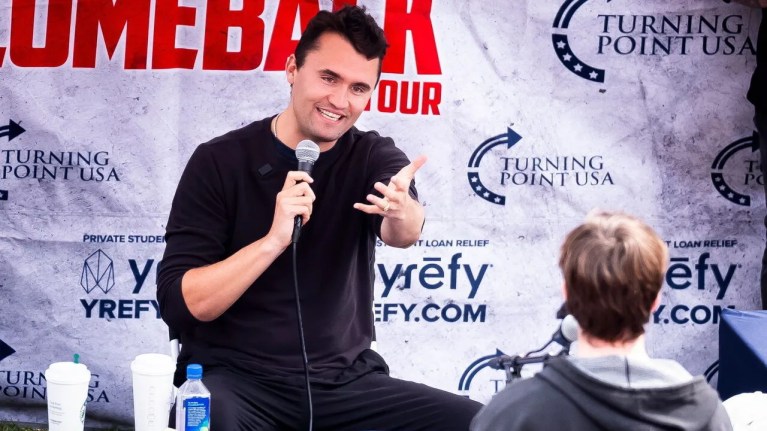
The paragraphs above were written before the murder of Charlie Kirk. Over the past few days, he went from the “prove me wrong” guy debating college kids to the center of a national debate. Since his death, there has been a groundswell of support. As those on the left reveal themselves through celebrations of his death and mockery, Kirk’s Turning Point organization has been flooded with 54,000 requests for new chapters at high schools and colleges. His death is a catalyst, much like the two assassination attempts against Trump, and a potential inflection point in the national conversation.

Before the U.S. Civil War officially began, there was an early attempt to free the slaves. John Brown, an evangelical Christian, believed he was on a mission from God to end slavery in the U.S. and led an insurrection that ended with a raid on a federal armory at Harpers Ferry in October 1859. Even before this, the issue of legal slavery had resulted in violent confrontations. In 1837, the abolitionist Elijah Parish Lovejoy was shot while facing down a mob of pro-slavery vandals who were attempting to destroy his printing press. This event sent shockwaves through the U.S. and galvanized John Brown to publicly declare:

“Here, before God, in the presence of these witnesses, from this time, I consecrate my life to the destruction of slavery.”
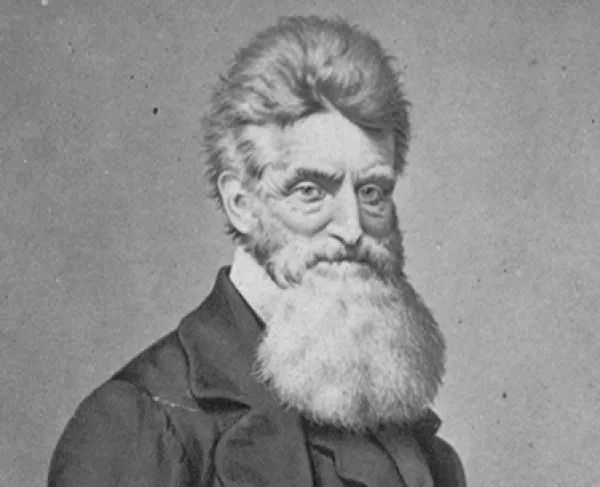
John Brown fired the opening shots of civil war, his fierce opposition to slavery inspired by the murder of abolitionist Elijah Parish Lovejoy.

As a writer, I do not create the sentiment of my audience. I merely put into words what other people are thinking or help them organize their thoughts. In other words, if it resonates, it is only because I’ve stated something they’ve already noticed. It also emboldens—when people realize they are not alone in what they see—which is how regimes fall. When people know that others share their understanding and are given a means to articulate it, all it takes is a little push to turn popular sentiment into decisive action.

Synchronicity is one way to describe this. I have often observed many of my friends—likely tuned into similar sources and sharing the same basic assumptions—simultaneously reach an identical conclusion in response to events.

The assassination of Kirk is a moment that galvanizes. It has starkly illustrated how far apart the two partisan sides have become. Some celebrate the murder, spewing vile hatred for a man who was truly a moderate with views similar to those of many Americans. Others are rightly appalled, realizing there is no reasoning or unity with those who believe disagreement deserves a death sentence—that Kirk deserved the bullet.

In a civil society, matters can be debated. If a person says things we don’t like, we still honor their human rights and show respect despite disagreement. But to those on the far left, a statement of fact or an opinion they hate is declared “hate speech,” and saying it out loud constitutes a crime of “spreading hate” that deserves death. This is not an embellishment—a direct quote: “Let this be a lesson to all those conservative freaks, all those weirdos… you’re next in line.” This is a threat we must take seriously when the other side laughs and mocks Kirk’s death—they are not like us.

This is an inflection point, one of those culminating moments where conservatives are independently reaching the same conclusion, and a movement can become galvanized. It will arm Trump to crack down on Antifa and the left-wing in ways he could not have before, with the critical mass of public support he needs.

Freedom of speech doesn’t mean people must associate with you.  I’ve never seen the ‘right’ react with such energy before.

In reality, Charlie Kirk wasn’t an extremist leading anything; he represented the quiet majority who are still able to appreciate the difference between men and women and who want laws applied equally for the protection of all Americans—not favoritism or special preferences for some based on identity or political ideology. They are Charlie. He did not radicalize anyone. All he did was try to explain his perspective and articulate what many believe. But he will now be a rallying cry—like the death of Lovejoy that led to John Brown’s vow—that point in a conflict where the tolerance has been exhausted and it is necessary for the sane to make a stand.

Even for me, as someone who attempts to stake out a position independent of both popular sides, I must go with the side least likely to kill me as a default. There’s nothing I share in common with those who are gleeful and cracking jokes about a man deliberately killed in front of his fans, wife, and young daughters. Cheering for domestic terrorism cannot be tolerated. The backlash against those who couldn’t show civility even after a man’s murder will be a turning point, like the momentum shift in a football game—the people are done playing nice with these monsters.
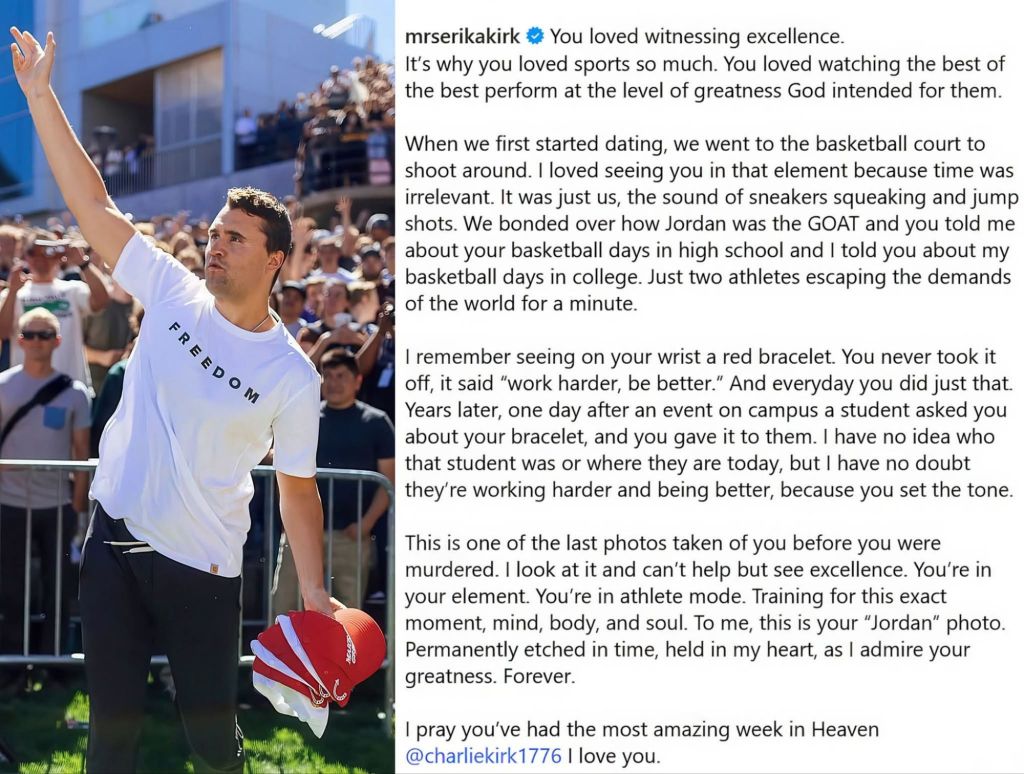
RIP Charlie Kirk

Fitzwater

Standard

Someone with the name “Fitzwater” came across my social media feed the other day and made me think of someone I had met years ago. She was a waitress at a local Thai restaurant. I’m not sure of the exact circumstances, but we ended up going on friendly date together. We talked about her autistic son. She was a single mom. And how she struggled to make ends meet. Life eventually took us different directions, she fell off my radar as her presence on social media ended, and I had forgotten about the “Nikki” in my phone contacts.

That is up until Friday, when I decided to do a deeper look into her whereabouts. Since we lacked any common friends (other than Adam Bartlett who is deceased) and maybe that is why I never got the news. My hope was that she was married, got her feet back under her, and wondered about that kid she loved so much that she borrowed money to give him an exceptional Christmas. It was a total shock to come across an obituary for Nicole E. Welton. I opened the link and the picture was the Nikki I had known. She was dead for over five years now—only 32 at the time of her passing.

Was it a drug overdose?

She never told me she was a user. She did tell me I was “too good” for her and was so thin that I had to wonder.

So I continued my search, and pondered a bit about what had come of her son after she passed?

I found the answer:

PA – Nicole Welton, 32, & Son, 11 – Double-Death Investigations – Lancaster Cnty

Oh no!

And a few clicks later I would find the tragic truth. This kind and wonderful human being died in a murder-suicide. She shot her own son before turning the gun on herself in the motel room two hours south. Her son was her faithful companion, she told me, “My son is with me. So I never feel alone”  That is where her heart always was—which made wince when I saw this in the article:

Diamantoni said he was not releasing the boy’s name. He said the boy was living with his father not his mother.

She lost custody?

What a terrible thing for a single mother, in her thirties, to lose a child she brought into the world even if it was for good reason. It does not justify what she did. And yet she was in despair and her 11-year-old boy was probably the only reason she had holding her back from suicide.  In that she couldn’t leave him behind as the only soul that she felt loved her anymore. Selfish? Perhaps. But maybe a distorted effort to ‘protect’ him, an autistic (ADHD according to an article I’ve read since) child, from having to deal with her choice to end it all. I’ll never know, I just feel she was never going to leave him behind. 

This was confirmed, later, when I read how her son’s dad was seeking to expand his custody and there was a court date the same day…

I had to go read through our conversations and several things jumped out. First, what she told me about her nasty C-section scar and how unattractive it made her. Although I never saw for myself, she was a beautiful and attractive person—both physically and otherwise. This struggle with body image came up several times. Second, I had more or less friend zoned her from the beginning, wuth my impossibility obsession then being a topic in the thread. I never led her on—but I never gave her a chance either.

It’s just so jarring considering how my life has gone since then. I’ve finally emerged from the wilderness. My wife, my 13-year-old son, the baby daughter that brightens my world, all that has happened since that brief moment of connection with Nikki. It makes me wish I could have done more to change the trajectory she was on, although I don’t know what I could have done for her. With her dies someone who said I was an angel and the single platonic moment we had shared. This the second suicide of a relatively young person that I had invested time in trying to help—and could easily have been me had my Bhest not intervened.

Two lives cut tragically short. How else can the tribute to them read? A young boy, born the way he was, the apple of his mother’s eye, and then killed by the one who bought him into the world. His mom, never quite able to get around that corner, dreaming of the fairytale and stuck in the bog of single parenthood—burdened by her lack of self-confidence.

Why someone who was always so kind and considerate to me was not more generous to herself?

My mind simply can’t compute such things.

One thing, before I finish, is the other victim in all of this and that is the father of the boy who was left reeling. She never told me she was married. All I had ever known was her maiden name. And I don’t know what led to their separation. What I do understand now is that relationships are hard work and that we’ll never find the ‘perfect’ one. There are many miserable marriages and I don’t think people should stay in an abusive situation. But being alone to face the world isn’t ideal either. I wish Nikki, Dante, and the grieving dad I’ve never met could have had their own happily ever after together.

Too Cruel To Be Coincidence

Standard

There is this sort of silly thought I have had, which has some legs, about the true nature of the universe and how unlikely it seemed that our friend’s daughter would fall victim to the currents of the Susquehanna river.  I realize this is more just a hiccup of my own mind than an actual reality, but what are the chances?  What are the actual probabilities we would know another Filipino-American couple with so many similarities and has a tragedy like this happen?

I ran my hunch through Grok.  What are the chances that another couple, one of them a German-American with neck or back issues (like me) the other a recent immigrant from the Philippines who came with a child and has also (like my wife) recently given birth to a second child, losing their ten-year-old daughter in a drowning incident just a week prior to Mother’s Day?  And how likely is it that I would have experienced the loss of a close friend’s child twice?  The probabilities are so infinitesimal that the very existence of life is more likely than this:

The probabilities of the specific scenarios you described—knowing an ethnic German man in Pennsylvania with a Filipino wife and children matching your family’s profile (0.00462%), his 10-year-old daughter drowning in the Susquehanna River on a specific weekend (1 in 2.82 trillion), and being friends with two women who lost children tragically (0.566%)—are all significantly lower than the probability of life existing in the universe, which is nearly certain (1) due to the vast number of planets (10²²). Even in an extreme pessimistic scenario where life is exceedingly rare (0.36%), only the third scenario approaches or slightly exceeds it, while the others remain far less likely. The universe’s immense scale makes life’s existence highly probable, whereas the hyper-specific nature of your scenarios, especially the drowning event, drives their probabilities to near-zero.

All this is just an extended version of that age-old question: “Why me?”  

This weird feeling of this being a tragedy too perfectly scripted to be real is simply the hallucination of a mind searching for meaning where there is none.  

It is no different from when I—in delusion of religion and looking for answers—had assigned meaning to the ‘impossibility’ (a romantic interest) randomly picking up a paper, leftover from Sunday school class in the same location, and then reading from it “with God all things are possible” right as she walked past me—renewing my hope to continue my foolish pursuit of faith and love.  Belief in a divine plan only led to more disappointment.  It is what it is—as she told me as an answer.  A coincidence is no more meaningful than we have made it.  

apophenia

Truly, we could throw our lasso around any circumstance, any set of facts, and find it to be highly improbable.  But, after the fact, if it has happened, the probability is always 100%.  Basically everything is unlikely right before it has happened and this why those Lee Strobel type of apologetic ‘cases’ aren’t very compelling for a critical thinker.  They are too based on assumptions and deciding what matters based on our own window of understanding—never considering the other possibilities.  

It is actually very likely that I know another Filipino-American couple, involving a single mother and a lonely guy similar to me, given that we deliberately connected to the local Pinoy community for sake of my wife.  And it was our similarities that always gave us something to talk about.  He was employed in an engineering related field, same as me, and going through the visa process.  As far as the tragedy, around 4000 unintentionally drown in the US per year (900 children) and spring weather (near Mother’s Day) is just likely to bring people to the river.

My foreign-born friends, in retrospect, were more vulnerable.  Those who grew up in the Susquehanna valley have a bit more fear of the river.  The waters may appear to placid, but we also know about those floods which have ripped through communities and how it respects nobody.  You’ll try to pet a bison up until you see the first person gored.  We simply don’t know risk until we have seen it for ourselves.  But then I also know that the mother, in this case, was always extremely cautious and only looked away for seconds before hearing the commotion.

What is so hard to accept is that reality that this world is full of danger.  Both conspiracy theorists and left-wing control freaks refuse to deal straight up with a world where death can occur without some dark plot and that this won’t be solved with politics.  I’ve never been under that delusion.  However, I have had this good things happen to good people expectation going in to life.  My Pollyannish hopes have been rebuffed too harshly and consistently to continue holding to them.  In truth, the natural world does not care about your morality—if you follow all the rules or are evil incarnate—the universe is utterly indifferent.  It just is what it is.

There is no evidence of a grand design, as I had been indoctrinated to believe, and fully embraced—before falling flat.

It is pareidolia, a mirage or projection of our own desire to find explanation or reason for everything.  People want this singular thing to blame for all bad things and yet there is not in the case of this drowning.  The mom was not negligent, the water is neutral and neither good nor evil.  Trying to find design is only me choking on a reality we all should face: We all leave this world the same as we entered it—dust to dust.  Some depart on a different schedule than expected.  But many children have died before their parents and long before history recorded it.

To have no cosmic force orchestrating our suffering is a big comfort.  It eliminates the cognitive dissonance of the loving God that then subjects Creation to torment.  Pain is a survival mechanism.  It helps to correct our behavior and train us, but also misfires (ask those with chronic pain) and hurts us for no good reason.  There is no need for a perfect system, one where only those who deserve punishment are punished, merely one that functions well enough.  There is no intent to be cruel, no special message to glean from the loss of a precious daughter a weekend before Mother’s Day—she slipped on a rock and that’s all there is to it.

We desire a director behind all events good or bad to make it easier to understand.

If fantasy helps you cope with grief then by all means embrace it.  We could theorize it was part of a hidden divine plan to gain the salvation of her parents, a punishment for lack obedience to Allah, and that she is playing up in heaven with those millions of aborted fetuses Evangeli-cons care about (or the children of Gaza they don’t) and if the thought comforts then pull it up over your head like a warm blanket.  Nature can be cruel, cruel in a way that seems very much too improbable to be unplanned, but good people suffer just as the wicked do, and the universe offers no explanation or apology for it.

I Feel Bad For The Shooter On The Roof

Standard

It was inevitable.

Trump, who packs rallies despite somehow losing the last election, took the stage again in Butler, Pennsylvania.

Nearby another man crawls on a roof top, a rifle in his hands, takes aim and he pulls the trigger.  He missed his mark, but continues to fire, one bullet fired striking a person in the crowd, killing them instantly, another hit the former President who drops.

Thomas Matthew Crook was only 20-years-old.  His entire life he has been propagandized by a partisan media blinded by rage.  After the dismal debate performance of Joe Biden, a heroic old man fighting till his last breath for the good of the country he loved, great fear gripped this young man.  The evil Drumfler would ascend to power again!

And this time, as the headlines screamed in warning and even Biden himself claimed in the debate, Trump would be out for revenge—which would lead to a literal bloodbath.

Worse yet, the justice system that a month back would never make an error in regards to charges against Trump, suddenly gave way to a Supreme Court that wants Trump to be a dictator!  This gullible young mind absorbed the hysteria.

Voting would not be enough!

No, Crook wasn’t going to leave the future of the nation in the hands of fate.  Women depended on him.  Black people too.  Gays and lesbians as well.  The time for talk was over, Trump and his MAGAt minions needed to be stopped and he was prepared to lay down his life for the good of his country to put an end to this threat.  If the courts could not stop Trump, if Biden couldn’t, then the only option left was a rifle.

If only someone could have talked some sense into him.  If only he had gone outside the ‘mainstream’ corporate news bubble or considered other possibilities.  

Had he done this he would’ve have learned Trump is liberal, a New York businessman with an immigrant mother and married to a foreign born wife, who (despite gesturing to Evangelicals) has the morals of Bill Clinton and is therefore not remotely interested in implementing the Heritage Foundation’s “Project 25” conservative fever dream.

Trump is actually a disappointment to the right-wing, he banned bump stops and has a centrist platform when you stop taking the Democrat claims as fact or the full truth.  It isn’t like he’s going to bring back slavery or force women to be barefoot and pregnant in the kitchen.  He’s a fiscal conservative who supports bringing manufacturing jobs back and likes trolling on social media.  That’s it.  He’s not a fascist.  He won’t ban abortion (which he says should be up to states) nor is he any more evil than those who falsely accuse him for their own gain.

Crook came within millimeters of his target, which is quite impressive for 150 meters, but will be remembered as a brainwashed fool who mistook rhetoric for reality. 

He may have actually secured a second term for Trump when most people take a step back and realize that the extremists might be on the side of the leftist media—that initially had responded to the assassination attempt by playing it off as popping noises and Trump falling down. 

Reprehensible misreporting!

It is time to start seeing through this nonsense.

If Trump were literally Hitler, the President Biden would not have come out against the shooter.  No, he would’ve lamented the bad aim and reiterated the bullseye statement he made just days ago.  Instead he is now pulling ads and admitting that the show has gone too far after his opponent was nearly killed.  Ironically, for a brief moment, Biden has looked very presidential.

Too bad Crook didn’t realize that he was a pawn in a manipulation game before he executed on the plan.

Responsible people failed him.

He died for nothing. 

Watching Gran Torino With My Asian Son

Standard

After reading a review of Gran Torino, a Clint Eastwood movie from 2008, that dismissed it as shallow in its exploration of racism, I’ve decided to explore some of the depth of the movie that was missed.  It was a great story about finding common ground, that takes a bit of twist at the end from the typical Clint Eastwood film.  My family (mixed race and culture) could appreciate the themes more than the average viewer—yet is a beautiful redemption story that all people can enjoy as well.

“Get off my lawn!'”

The story is about an angry old man who is not dealing well with change.  Walter ‘Walt’ Kowalski, a Polish-American retired auto worker, Korean War veteran, and recent widower—his beloved wife passing right before the start of the narrative.

In the opening frame, he fits a stereotype of an elderly homeowner defending their patch of turf from an encroaching world.  It seems every small town has one.  That guy who trims his front lawn with scissors and does not deal well with the trespasses of the younger generation, the snarling “get off my lawn” line from the movie became an instant meme.  

Why?  

It is just too familiar. 

The expression captures the essence of a fading dream.  The American middle class values property ownership.  A lawn, once a complete luxury and exclusively for wealthy estates, had become the mark of post-WW2 affluence.  Walt was the beneficiary of this period of economic growth.  He had lived a quintessential suburban life.  

But now it had become a nightmare.  It is not the same neighborhood anymore. The once tidy little homes, owned by people like him, had fallen into disrepair as a new group of immigrants took over.  The woman who he built a home with was gone.  His sons bought foreign brand vehicles and betrayed the legacy their father had built working at Ford.  The world Walt had known was falling apart and he was bitter.

That patch of land, other than the ghosts of his past, was all Walt really had left.  To set foot on it was to violate his sacred space.  It was a shrine.  And his 1972 Gran Torino in the garage likely represented the pinnacle of his productive career.  Since the Korean War ended in 1953, this would put this car purchase around two decades into civilian life with a young family and point when the future looked bright.  So he was clinging to what was left of his identity and willing to defend it with deadly force.

Demons of the Past

Early on we see Walt, the tough guy, who is playing a part.  His racist language is a part of the facade—a barrier he puts up—because the alternative is to be vulnerable—or a victim.  He is still haunted by his war experience, in the beginning using it as a threat, saying he could kill without remorse:

“Yeah? I blow a hole in your face and then I go in the house… and I sleep like a baby. You can count on that. We used to stack fucks like you five feet high in Korea… use ya for sandbags.”

However, later, when it comes to stopping the neighbor boy from taking revenge, we see the reality under the surface:

You wanna know what it’s like to kill a man? Well, it’s goddamn awful, that’s what it is. The only thing worse is getting a medal… for killing some poor kid that wanted to just give up, that’s all. Yeah, some scared little gook just like you. I shot him in the face with that rifle you were holding in there a while ago. Not a day goes by that I don’t think about it, and you don’t want that on your soul.

Just like today, where Russians are called “Orcs” and portrayed as subhuman by propagandists, racial and ethnic slurs were used against various Asian enemies of US policy in the region.  But for Walt, he knew better, he knew that it was not a demon at the receiving end of his rifle.  He had murdered a human child and he felt immense regret.  Note how he says “poor kid” rather than all of the racist terms he used freely throughout his conversations.  It is almost as if, up to this point, he had to reinforce the dehumanizing descriptions to keep ahead of his shame. The truth is Walt didn’t sleep like a baby. No, he was running his sins his entire life and exhausted.

Walt’s racism was part of his pretty much equal-opportunity disdain for other people, including the young parish priest, and his own family.  He was a broken and hurting man, who had driven away his children and was hiding his own terminal illness.  What he needed was some compassion, a safe place where he could finally let his guard down, and it was the persistent effort of a young Hmong neighbor that finally broke through his wall of insults.

Finding Common Ground

The review, that sparked my response, tried to overlay a “white savior” trope on the story and completely missed that it was Walt who was being saved!

*spoiler alert*

Yes, ultimately, Walt sacrificed himself for the sake of the Asian family next door.  But this only after Sue, played by an actual Hmong actress (some critics panned the amateurism, others praised), went above and beyond to disrupt his dismal world.  

She was his savior.

It was by her effort that he would face the demons of his past and could be at peace with his Creator.  It was a redemption story, a story of an old man who had lost his wife, lost his children, lost his religion and even lost his neighborhood, but finds life again by learning to love his enemies.

I can feel this character.  My own life didn’t go as planned.  I had to leave the religious culture where my hopes had been built.  I had a beautiful Asian woman who was patient with me while I was still lost in delusion and did not give up when times were difficult.  Now we have a blended-culture home.  Yes, my Filipino wife and son are different from me in many regards.  However, after seven years of knowing each other and now over a year of being married, our love has only continued to grow.  Some of my happiest moments were with her family in the Philippines and recently while visiting her relatives in Canada.

I am Walt.

My ‘Sue’ did save me.

The real story of Gran Torino is an old man who finds more common ground with those he had thought were strange than he does with his own children.  Once Walt had got past the superficial differences he realized he had more connection to these Hmong people than many who looked like him.  Unlike the war, he was now defending real people and not political ideologies.  He was fighting for the local community, against those within who are destroying it, and not gunning down random boys thrown into a conflict not truly their own.  The storyline is a comparison between perspectives and shows us what really matters in the end.

It is about relationships, not race.

It is about building bridges.

The ongoing dialogue between Walt and his priest demonstrates this.  The priest, who is of European descent based on appearance, is at first scoffed at by the grizzled military veteran for his youthfulness.  The baby-faced “Padre” is bluntly rejected by him: 

I think you’re an overeducated 27-year-old virgin who likes to hold the hands of superstitious old ladies and promise them everlasting life.

But, despite this insult, Father Janovich will not go away.  And eventually, with his persistence, he does earn the respect of Walt.  The bond, built over a few beers, culminates with Confession and Walt is finally able to have the guilt that had plagued him since Korea absolved.  Now he is free and at peace, ready for a last act that goes contrary to expectations and confirms the redemptive arc.  

It was faith that saved Walt, both that of the young woman who withheld judgment and didn’t allow his wall of nastiness to stop her and finally of the persistent outreach of the Church.  And it is only because of this concerted effort that we get to see the protagonist do what is right. By the end of the film, Walt has overcome those demons driving his anti-social behavior and also has gained a son worthy of his prized Gran Torino.

Now To Review the Reviewer…

Why did the critic miss the obvious?

The reviewer who inspired me to write my own was projecting their own worldview onto the script. Eastwood is a rare conservative Hollywood producer.  In fact, so conservative he spoke at a Republican National Convention and gave a mock interview with an empty chair, used to represent Obama, and he calls Biden “a grin with a body behind it.”  Perhaps it is this that the review is responding to?  But I think it goes a bit deeper than that.

The Marxist left sees the world as being a zero-sum game, or that for some people to gain others must lose, and thus everything is a competition for power.  But, not only this, but everything is divided up into strictly bounded categories based on their skin color, financial status, or sexual classification.  If someone cooperates across these lines then they are an “Uncle Tom” or traitor.  So the themes of Gran Torino just do not compute.  Asians are collaborators. Walt is an irredeemable privileged white man, he needs to be canceled—not humanized.

So, since we can’t have everyone come out as a winner, the only thing the woke reviewer has left is to hallucinate something color-coded and negative.  Thus they see a movie that tells us to reach across lines of age, culture, and race as just another “white savior” trope.  It is bizarre, such a narrow and distorted perspective, to entirely miss everything and then to insert what is not actually there.  Yes, Walt saves, but in the context of others saving him, and that’s not even the point.  The point of is that color (or age) doesn’t matter, finding our common ground and community does.

Gran Torino isn’t a perfect movie.  It may go a bit overboard with ethnic slurs at times.  But, then again, the comedic relief of the barber and Walt exchanging these insults as terms of endearment is also great commentary.  Why do we let words be “violence” when the same utterances can be laughed at in another context? It is because these words have the power we give them.  What this is suggesting is that we can go further when we reframe the conversation. 

The left wants to believe that our behavior is determined by what others have done to us—Eastwood says we can be free to live above their rules.

Politics may be all about power, in-group and out-group, but love overcomes all. 

God, Suffering and Salvation

Standard

I have complete sympathy for atheists and agnostics.  I’ve wrestled with questions my entire life and whether or not there is a God is always one of them.  But the one thing that I can’t understand is being angry about human suffering, from a rational basis, if God does not exist.  If there is no ultimate good, no greater purpose or meaning to life, on what basis do we make a moral judgment about suffering?

Okay, let’s back up a second.  I’m here at my local establishment drinking another Long Island, one of many since the death of Uriah, and it hasn’t given me an answer as to why he would die of cancer at twenty-four.  The medical diagnosis is simple enough.  He had cancer.  The aggressive kind.  It started with the lump on his ankle during boot camp.  I still have the picture on my phone taken out of morbid curiosity and never dreaming it was a death sentence.

Uriah and I, despite our difference in age, got along in a way that only cousins do.  He was like me.  We didn’t simply accept those easy cliché answers.  He was someone who was both determined and also full of doubts.  He was also the six-foot tall and better version of everything I ever was.  The best part was that I could claim some of his success for myself given that I had encouraged him to continue his college education, telling him that it was better to keep going than to live a life of regrets.

Watching Uriah sacrifice a leg only to have the cancer be found in his lungs a year later. It was a gut punch.  I think I stopped praying, at some point, because I just knew what the prognosis was.  

The hardest part, however, is that Uriah was not the first of his family that I had to carry out of the church on a cold winter day.  His parents had already lost one of their children to a seizure disorder.  His two other siblings are severely disabled and will need constant care.  Judy, his mom, is an incredible woman and has extraordinary faith.  Ed too has great strength of character.  And neither of them wastes any time feeling sorry for themselves despite losing the one healthy child they had to this terrible disease.

Where was God?

When my little Saniyah died, unexpectedly, it was a really big struggle for me.  It took me years to get my feet back under me again, spiritually and emotionally speaking, and I had both doubted my own faith along with the existence of a loving God.  The death of Uriah, along with my disappointments with those whom I put my trust in, and my long wait for Charlotte, have really tested me the past few years.  But, I have those who need me to be strong this time around and, for this reason, have had to push back against falling into despair again.

Nevertheless, I totally get why someone who has encountered suffering in a personal way is angry and denies the existence of God on this basis.  I mean why would this kind of pain and loss be allowed if there is an all-powerful good in the universe, right?  Why would God not intervene and stop this all rather than let us go through such terrible experiences?  It doesn’t make much sense, does it, that we should be left so lonely and struggling if God is good.

However, if we eliminate totally God from the equation, then we dismiss religious morality and must acknowledge that there is nothing written in the fabric of the universe that says our existence entitles us to good feelings.  I mean, as far as evolution goes, pain is more or less a survival tool, a feedback system to tell us what to avoid.  Feeling sad about the death of a friend or family member is, by this logic, a malfunction. 

In this harsh environment, where everything is out to kill us, why would we ever expect anything more than suffering?

The moral reasoning that makes this bad, if you are truly an atheist, is nothing other than a construct.  In terms of pure biology, it is good that fire hurts or we might burn our arms off.  That is pain for a very practical and utilitarian purpose.  Undeniably good if there is such a thing.  But what reasonable good is there in mourning those already dead?  No point in crying over spilled milk, right?  A totally rational being would simply move on to the next social resource and not be so attached or sentimental.

Being upset over suffering and death, if there is no God, is irrational.  And, if there is a God, like that of Christianity, then suffering and death are exactly what we’re promised in this life.  Sheesh.  Did you read the story of Jesus and how he was betrayed, beaten, and then unjustly killed in the most brutal fashion all as part of a redemptive plan?  If you actually believe in eternity then why be angry about a few years living out this rich narrative we call life? 

At the very least, how can we judge anything, especially a fictional character, on the basis of a moral standard that doesn’t exist? 

If there is no God, then there is no basis for morality either.  That too, including the idea that suffering is bad or pleasure is good, is entirely a construct.  Pain is good in some circumstances, it protects us from injury and causes us to change behavior in ways that are beneficial.  In other words, without the discomfort of hunger or thirst, we would not correctly prioritize our life.  Pleasure can be bad when it makes us eat too many donuts and become diabetic.  So how does one truly know that their own interpretation of these signals is the correct one?

From what I’ve observed in myself and in others, unbelief stems from disappointment when things do not go as expected.  It is about who is in control.  We can cling, in our own arrogance, to this notion that the universe should bend to our will.  Or realize that our own perceptions, based on senses which are not very reliable and a brain prone to making mistakes in judgment, are not infallible or ever actual truth.

The thing is we only ever know if suffering is good or bad if it is properly contextualized if we understand the end.  For example, feeling the burn of exercise is good pain because it is what accompanies muscle development and so we embrace this.  So what is the real context of our life?  To what end, or for what reason, did we become conscious?  What is behind this ‘accident’ if it is one? 

How do we contextualize our existence enough to judge what is good or bad?

If there is such a thing as an eternal reward, that would change the calculus, right?  It would mean that all pain can be gain, and all suffering can draw us closer as much as it drives us away because defining the moral character of any experience depends on the end.  I am willing to subject myself to many hardships if the reward is big enough.  No, this doesn’t take away the question of why we must go through here to get there.  But seeing past our immediate feelings is pretty much the only way to make progress.

Angry is a feeling, not a guide for life…

I was at this time living, like so many Atheists or Antitheists, in a whirl of contradictions. I maintained that God did not exist. I was also very angry with God for not existing. I was equally angry with Him for creating a world.

C.S. Lewis

People don’t walk away from Christianity for rational or scientific reasons.  Sure, they may guard their emotion-based unbelief behind a wall of post hoc justification.  But the reality is that they’re upset about something.  They had expectations and are now disappointed and acting as wounded people do.  It’s just strange that anyone at all Biblically literate would suddenly lose faith over our suffering when that’s literally the only we’re promised in this life.

What really doesn’t make any sense is why anyone would rather suffer with no hope at all of eternity.  If God is dead, then nihilism is the logical next stop and that life has no real meaning or purpose.  But the suffering does not go away simply because we’re angry at the giver of life.  No, it will only intensify and become a spiral of despair.  Our salvation is in our understanding that, smart as we may think we are, we’re truly quite ignorant and even our most ‘concrete’ reality is not real:

The first gulp from the glass of natural sciences will turn you into an atheist, but at the bottom of the glass God is waiting for you. 

Werner Heisenberg

For those who don’t know who that is, Mr. Heisenberg was awarded the Nobel Prize in Physics, in 1932, for the creation of quantum mechanics.  Materialism, despite the zombie corpse of this thing staggering on, died with the discovery of things in defiance of this entirely too simplistic conception.  Sure, this kind of physics is well-beyond most, but it does support a notion of reality that requires a Universal Perceiver (as described in this article) and we could call that God.

So, if you’re actually serious about science, then the hard science of physics is the place to start and, with its mathematical origin and proofs, is much less likely to be clouded by emotion one way or another.  We can’t run from God.  But we may need to leave behind the baggage of our own misconceptions and learn the value of true repentance.  Maybe Uriah died, and went to his reward, so some of us would have our flawed thinking broken and seek our salvation in Him?

Maybe some of us are just too stubborn, or too needing of control being in our own hands, to admit we can’t save ourselves?

I’ll tell you this.  The universe, without God, is an infinitely dark and lonely place.  It is that starring abyss of which Friedrich Nietzsche warned, the existential horror H.P. Lovecraft describes.  Highly intelligent men, both of them, and understood the implications that come with true unbelief in God.  You will not escape your suffering simply by denying that the Divine all-powerful good exists.  No, rather you will just remain in that hell of your own creation.

Postscript: Questions Remain

I still grieve Uriah, as I do Saniyah, uncle Roland, and others that seem to have been taken before their time. I’ve long struggled against sources of trauma much more basic, the lack of unconditional love in the church that could make up for my shortcomings, and much of that is unresolved. At the time of my writing, the impossibility is something yet to be fulfilled. I do not have answers for any of this nor do I expect to. I’m not the arrogant kid who argued with his high school biology teacher, not a Bible-thumping fundamentalist at all, and yet must believe.

The Man I Never Met — Remembering Wayne_in_Maine

Standard

There are some characters you meet online and never forget.

Such was the case with Wayne_in_Maine, who could come off as a sort of cranky or cantankerous old man and yet seemed (even then) to have a golden heart under the bluster. There is a way or an intuition I have, that can cut through the harshness on the surface. I can just know when someone is full of themselves and cruel despite their nice-sounding words or truly compassionate despite their surface-level unpleasantness.

Wayne was the latter kind.

The first thing notable about Wayne was that he was intelligent, he had been a nuclear engineer, could articulate his arguments well, and clearly was not going to be backed into a corner. The second thing was that he had a very unique journey and a different perspective from the other ethnic cultural inhabitants of the MennoDiscuss forum. He had gone from a hippy leftist to a conservative-minded neo-Anabaptist and could speak with authority on matters of science unlike the religiously indoctrinated parroting their fundamentalist teachers.

Initially, I saw him as a sort of threat to my worldview, another person compromised by secular influence trying to get Mennonites to shift to his views, and yet later his perspective would actually strengthen my faith when it faltered against the scientific evidence clearly pointing to the appearance of age in the universe.

Because of Wayne, I learned that young-Earth Creationism (or YEC) is not necessary to have a sincere and grounded faith in Jesus Christ.

In fact, it might actually be a liability and cause many to fall into a serious crisis of faith when they go to university, study biology or almost any science and find out the case for YEC is not as clear as it was presented. That Wayne, a rational mind and well-educated, could both reconcile modern scientific theory and his faith was more useful to me (a critical thinker) than some Hammy tourist attraction put there to feed the confirmation bias of fundamentalist midwits. I came around to his position and haven’t looked back.

I have long respected Wayne despite our sometimes clashing and my occasionally coming away feeling unappreciated by him.

He was a man a conviction. He gave up lucrative career paths, actually tried communal living, literally sold all from what I recall, and had come much further in developing his own perspective than most do.

However, despite my respect, Wayne’s version of Christianity didn’t appeal to me. He had, inadvertently, pushed a friend of mine away from Anabaptism with one of his responses. I still believe his take on the rich young ruler account misses the mark, where he read the response of Jesus as a sort of legalistic prescription rather the same as we understand Luke 14:26 where Jesus says if someone “does not hate father and mother, wife and children, brothers and sisters—yes, even their own life—such a person cannot be my disciple.”

I know, for a fact, that he did not take that literally. He came across, from my limited ability to see, as a very loving father and committed husband. I can’t imagine him hating his family to prove his commitment to Christ. Nevertheless, he was adamant about being completely Anabaptist in his perspective about wealth or warfare, an inconsistency of thought that bothers me about him and others of that fold. It did annoy me too when he characterized the Orthodox tradition as “smells and bells” as if worship was supposed to be something other than a beautiful or full sensory experience.

The Cancer and Change

After I heard about Wayne’s cancer diagnosis, none of our previous sparrings mattered much to me. Wayne, despite our differences, was a true friend and someone that mattered to me. It was especially important to me, given my mourning of Uriah, to talk to someone coming to terms with their poor prognosis and yet not giving up hope.

When I reached out on Facebook Messenger, mentioning Uriah and my desire to meet with him, he replied quickly and with more warmth than I had expected. There was no standoffishness, as had kind of been a feature of his personality, he reciprocated the desire to meet and we talked about various matters of faith.

I took a look at some of the MennoNet discussions he was involved in and got a laugh together about the various bad arguments being used. That’s one thing about him, his humor was dry and always fun, or at least fun when you were on the same side.

It was a sort of therapy, talking to this different side of the pragmatic engineer. Truly, it was special, the man that I saw emerge in this final trial was different. My own thought was that this was the Wayne that was always there under the snide comment and cynicism. Men can put up their walls, to not appear vulnerable, and that was no longer there. We were just two old keyboard warriors with nothing left to prove to the other.

And that’s not to take away from anything he said as far as the grace he was given to endure to the end. It was definitely something spiritual. His testimony of faith was clear. As a friend described him, in this transformed version, “It was like he became a totally different person. Happy, cheerful, optimistic.” He would not be defeated in death and I wanted to hear more about how a rational man, such as himself, given my own struggles, could continue in hope of the eternal.

I had to think of this Scriptural passage:

Praise be to the God and Father of our Lord Jesus Christ! In his great mercy he has given us new birth into a living hope through the resurrection of Jesus Christ from the dead, and into an inheritance that can never perish, spoil or fade. This inheritance is kept in heaven for you, who through faith are shielded by God’s power until the coming of the salvation that is ready to be revealed in the last time. In all this you greatly rejoice, though now for a little while you may have had to suffer grief in all kinds of trials. These have come so that the proven genuineness of your faith—of greater worth than gold, which perishes even though refined by fire—may result in praise, glory and honor when Jesus Christ is revealed. Though you have not seen him, you love him; and even though you do not see him now, you believe in him and are filled with an inexpressible and glorious joy, for you are receiving the end result of your faith, the salvation of your souls.

(1 Peter 1:3-9)

More important than all of his intellectual endeavors and Christian apologetics, theory or theology, is Wayne’s undying faith through trial is of the greatest comfort to those still in the fight. I never did get to have that face-to-face meeting that we had committed to upon his planned move to Pennsylvania to be closer to his daughter and grandchild. We had planned to meet in order to give us both something to look forward to when he did.

Now that meeting will have to change locations. Wayne took his final breaths yesterday evening, on August 12th, a couple of days after his 65 birthday. By God’s grace, in triumph, we’ll see each other on that other side.

I’m sad that Wayne remains a man that I’ve never met, in the flesh, despite our interactions over the years. However, in his terminal illness, there was also a man that I never met, that softer side, and feel blessed have finally met this man. I loved him and believe that he loved me too. I’ll remember our last interactions for much more fondly than our first. It was beautiful to see his golden heart revealed.

Let the Seed Fall!

Standard

Some might wonder why I have such a visceral reaction to wokeism.  I have written a few no holds barred blogs trying to warn people of what this is and where it invariably leads.  But each time I write it feels as if my concern is not well-explained.  I mean, I know some probably read and ask, “why is Joel attacking these well-intentioned people?”

However, I’m having a moment of clarity and therefore will try to expound on why it is absolutely necessary to shock people out of their stupor.  The reality is that wokeism (or grievance culture) and religious purity culture are two branches off of the same tree.  Both patriarchal conservative men and those angry pink-haired feminists are trying to create a world without suffering.  Both, tragically, create more problems than they solve.

First, what is purity culture?  

As I experienced it, in the conservative Mennonite context, it was a branch of Biblical fundamentalism (Protestantism) that had been grafted in to the Anabaptist tree.  It was a legalistic perspective.  The pure life was to avoid vice (no drinking, dancing, going to movies, etc) and remain completely a virgin until marriage.  It is not that the aim is entirely bad, but there was also a lack of grace accompanying this perspective.

In other words, there was no room for failure.  It a hellscape of unchecked perfectionist tendencies.  People who should be diagnosed as having obsessive compulsive disorder (OCD), along with other mental illness, viewed as being virtuous.  And the rest of us struggling to meet an unreasonable standard without the actual spiritual help we needed.  

For example, girls who thought they were ‘defiled’ for simply talking to a guy that they didn’t intend to marry.  And heaven forbid you did date and break-up.  Then you were damaged goods.  Cursed to walk the earth, like Cain, a stigma tattooed to your chest, a scarlet letter.  

To those steeped in this religious purity culture it was about saving the next generation.  It was a reaction to a world of promiscuity and failed commitments have produced far-reaching consequences.  And yet, while it does work for some, those who check all the right boxes, it permanently marginalize others and gives them no real road to redemption.  Divorced and remarried?  Tough luck, you’ll need to break up that successful loving family to become a Mennonite.

That’s the purity culture I know all too well and, for reasons I’ll get to later, have fully rejected as being unChrist-like and spiritually void.

Wokeism, despite the vast difference in appearance to what I’ve described above, is another subset of purity culture.  It is a reaction to the ‘privilege’ of those who better represent the cultural ideal.  It is another form of utopian idealism.  

Whereas the latter religious variety of purity culture believes that if their children only kiss one person, never experience the pain or disappointment of a break-up, then heaven will come to earth—the ‘woke, by contrast, believe that if everyone was forced to tolerate their ugliness and embrace their toxic grievance; if they could live free of further offense, then they would be fulfilled.  

Both forms of purity culture are offshoots of Western values.  They both see suffering as a flaw in the system and try to eradicate it through their own means.  And they do have their valid points.  No, the girl, the victim of sexual abuse, who (because of her loss of self-worth) goes from one guy to the next, should not be called a slut.  But, that said, nor should her unhealthy coping behavior be normalized.  Instead, we should stop seeing people as damaged goods because they failed to reach some sort of phony cultural ideal.

The truth is, the woke, as much as they attack whiteness.  Or the feminist who acts aggressively and looks to a career as being freedom.  The patriarchal father, as much as he claims to be protecting.  Are all the thing that they despise most.  Religious purity culture, sadly, is hypersexual in focus and produces conflicted men like Bill Gothard, Doug Philips and Josh Duggar.  Feminism amounts to a form of female self-loathing that unwittingly idealizes the male role.  And so-called social justice is simply a means to manipulate and enslave another group of people.

All of them assume that if a person could simply avoid pain and bad experience they would find their completeness.  All seek a kind of perfection outside of Christ and very quickly, despite their wonderful intentions, turn into a dystopian hell.  

What is wrong is this idea that pain us is less for our good than pleasure.  The religious, ignoring the lesson of Job, neglecting what Jesus said about the tower tower of Siloam or the man blind from birth, see suffering as a sign of God’s displeasure and a punishment.  Likewise, the woke want to be embraced without repentance, if they would simply be called clean then they could finally escape their terrible anguish, right?

The truth is, bad experience is part of life and as beneficial as the good.  Growing up in a single parent home can be an excuse or a motivation to do better.

This is what makes the story of Jesus so compelling.  Unlike us, he was completely innocent, his intentions were pure and should have been loved by all.  But, instead of embrace him, his own people saw him as a threat, he would undermine their system and perspective, show them for what they were, thus had to be eliminated.  That he was executed with criminals would seem like a humiliating defeat.  He suffered and died for what?

The tree of life.

However, it was in this suffering that salvation came.  Sure, the burden of the cross comes with anguish.  We would rather seek pleasure and avoid pain.  However, in Jesus, the cross is transformed from being a brutal instrument of death into a well of eternal life.  How?  It is in the same way that a seed falls to the ground, is buried and leads to new life.  

Why would we cling to the seed or refuse to let it be buried and prevent the tree?

The overprotectiveness of religious purity culture, the refusal to acknowledge our brokenness and need of transformation of wokeism, both try to find salvation by human means.  One seeks to impress God, like the rich young ruler or proud Pharisee, whereas the other (like Cain) demands that God accept their unworthy sacrifice and then murders their righteous brothers.  Both need Jesus.

The wonderful cross

In conclusion. We’re all damaged goods and can be made more beautiful than ever through repentance. Jesus can make our pain as much a joy as our pleasure.

Broken Records: The Choice To Be Healed

Standard

Adam is a friend of mine.  We have gone out to eat on multiple occasions since being introduced.  He’s a bit eccentric, he carries a notebook everywhere, has humor that doesn’t quite hit the mark, spiritual rather than religious, dresses a little like an old-school hippie and is sort of alt-right conspiracy-minded. 

Adam is also depressed and a broken record.  Time and time again he goes back to his relationship with his father and wants some sort of validation that he never does receive.  His father, his opposite politically, left when he was a child, seems to have some mental issues of his own and can be very degrading when things don’t go his way.  It is quite evident that the sins of the father have visited upon the son.

I have urged Adam to move on, told him that his biological father will never give him what he so desperately wants, and have suggested that he do as I have done when let down.  Namely, I have told him to come to Holy Cross.  The Orthodox have fatherly figures who represent the Heavenly Father for the fatherless. 

Unfortunately, Adam, despite his desperation, is stuck on doing things his own way.  From the first time we met until now there is a wall of resistance that goes up against Christian religion and even what seems like an inability to understand simple explanations.  For example, I used the illustration of Naaman having to dip in the river Jordan to be healed, thought I had explained well, and got nothing but a blank look of his being genuinely perplexed.

There’s truly not much hope for Adam until he is able to let go of his disappointments and hope of some sort of resolution on his own terms.  And, quite frankly, even if his dad would miraculously transform into the father he envisions as ideal, that would not fix what broken in Adam.  He will try drugs, he asks for my “fellowship” with him, but absolutely refuses to dip in those healing waters of the Church.

It’s sad because his repeatedly going back to this makes me feel as if I’m wasting time on a lost cause.  I mean, it’s hard not to do that inner “here we go again” eye roll when there seems to be no progress.  And it does certainly work on my patience too.  But there’s one big reason why I do not write him off entirely.  What is that reason?  Well, maybe because I’m not all that different from him.
 
My Own Skipping Record

In the days of vinyl records there was nothing more annoying than the skip.  It was what happened when the record had been mishandled and the surface grooves scratched.  The needle would travel down the groove, reach the scratched area, and jump back into the prior groove.  The result is that the music abruptly stops and makes an unpleasant transition over and over again.

Being stuck in a rut is not fun.  Ending up in the same place no matter how hard you try will exhaust the strongest person.  Worse, when others try to help pull a mired soul out, and the stuck person goes sideways rather than forward, many will leave concluding that they do not want to be helped.  And sometimes that is indeed the case.  Some do enjoy the pity party attention and are simply a drain of resources that could be used for those who truly want out.

Those who have read my blogs over the past few years have probably started (long ago) to wonder if any progress has been truly made.  And, believe me, some days I do wonder myself as I give a slightly different angle on the same themes over and over again.  I mean, you get it.  I had some really big expectations and ended up really disappointed at the end.  So move on already, right?

And the truth is, I have in many regards.  I’m not the same person as I was a year ago.  I have gained confidence, continue to attend to my responsibilities, and the feelings of loss grow less intense with each repeat cycle.  That said, the recent setbacks, the physical pain, along with the unresolved situation with Charlotte, can very quickly lead to that spiral back into those past hurts.  There was no real resolution or closure there, to survive I simply pivoted to new hopes.   

Completing the transition, out of the wilderness of broken glass to my new promised land, means seeing a fulfilment of the impossibly.  That means Charlotte being here.  Until that moment when we meet in the airport terminal, her safely on US soil, there will be that cloud of uncertainty hanging over me.  It does cause me to skip at times, to go back to those feelings of helplessness and worries that my hopes are still entirely delusion.

I choose to believe. But not because it is easy to believe.

As the man with the sick son who came to Jesus, “I believe; help my unbelief!”

Do You Want To Be Healed?

A year or two ago, this was the text for the Homily one Sunday morning:

One who was there had been an invalid for thirty-eight years. When Jesus saw him lying there and learned that he had been in this condition for a long time, he asked him, “Do you want to get well?” “Sir,” the invalid replied, “I have no one to help me into the pool when the water is stirred. While I am trying to get in, someone else goes down ahead of me.” Then Jesus said to him, “Get up! Pick up your mat and walk.”

(John 5:5‭-‬8 NIV)

It really struck me, more than ever before while hearing this passage, that Jesus asks the man if he wants to be healed.  Imagine that, a man, waiting for nearly forty years, nobody helping this unfortunate man into this healing pool.  He, like Adam, like myself before the pursuit of the impossibly, had been waiting on rescue by the means that he could understand.  His days must’ve passed an increasing nightmare of his own paralysis and being surrounded by other hurting people more concerned with their own needs.

Jesus asks, almost as if knowing the man’s will to be healed is permission.  And the incredible part?  After hearing the man’s complaint about no help, simply commands him “get up” and the man does.  His faith set him free.

That in contrast with this:

Jesus left there and went to his hometown, accompanied by his disciples. When the Sabbath came, he began to teach in the synagogue, and many who heard him were amazed. “Where did this man get these things?” they asked. “What’s this wisdom that has been given him? What are these remarkable miracles he is performing? Isn’t this the carpenter? Isn’t this Mary’s son and the brother of James, Joseph, Judas and Simon? Aren’t his sisters here with us?” And they took offense at him. Jesus said to them, “A prophet is not without honor except in his own town, among his relatives and in his own home.” He could not do any miracles there, except lay his hands on a few sick people and heal them.

(Mark 6:1‭-‬5 NIV)

The disbelief of those who knew Jesus as merely a man, the carpenters son, limited what he was able to do.  Spiritual healing is, and has always been, a matter of our own choice.  So many of us insist on doing things our own way, we refuse to dip in our muddy Jordan rivers because of pride, we wait on rescue believing that our salvation comes from other people, yet all we need is to look up in faith and then healing is possible.

No, this does not mean we will be spared physical ailment or live forever in our current form.  Even Lazarus, raised from the dead, passed from this life.  But we can be made spiritually whole.  That is why I keep writing, maybe I sound like a broken record, maybe this is too much for many people who stopped reading this blog long ago, still I write so that my most faithful friends may someday also share in my joy having known of my sorrows.

What Wears Me Out

Standard

I’ve always been a sort of magical thinker, my hopes always far outpacing my realities, and to the point that sometimes when my dreams would finally come true the pleasure had already been exhausted.

I had so wanted a go cart growing up.  On the school bus ride home my mind would start to wander into the fantasy realm.  I would picture a shiny new go cart, like the ones in the catalog, waiting for me at the end of the driveway and would actually be disappointed when it did not end up being true when we would finally pull up to to my stop. 

That’s not to say that I didn’t love the old go cart that my dad would finally weld up, using a rusted frame as a starting point, and an old lawnmower engine.  Anything with four wheels, that ran on gasoline, that could be slid around corners, definitely scratched that itch.  Still, my vivid world of make-believe did not always end with any fulfillment.

In my adulthood this tendency to be way out ahead of myself did not get any better.  I’ve cried, on more than one occasion, thinking of my beautiful bride walking towards me up the aisle.  And not in sadness either, it was in bliss having momentarily put myself in that wonderful place.  Of course, given that I never even so much as went on one date with this young woman, I pretty much ruined that music.

The world between my ears can be a paradise.  A place where there’s such thing as innocent love and anything is actually possible.  I used this as an escape.  My school years spent doodling and hoping for some kind of rescue from the mundanity of the classroom.

These visions were often grandiose.  A child scaled B-17 would land in the school yard.  I would run out to meet my faithful crew as the teacher and 5th grade class would watch in disbelief, stunned, as we revved the engines and were on our way to the nation (later a planet with two suns) that I benevolently ruled along with my brother Kyle and cousin Mel.

Truly, I had always thought that Kyle and I would always be together, build a house with a chimney in the center, like the ruins that I saw on a Civil War battlefield.  I’m not sure why, but it didn’t seem possible then (despite our fights) that we ever be separated, let alone hours apart, and I really can’t claim to have gotten over that disappointment yet.  He moved on, it seems that I could not.

And I have lived a sort of Peter Pan existence.  Holding on, hoping that some day the love that had eluded me, child-like and innocent, would finally magically arrive to rescue me from my torment for having failed to achieve.  I long overstayed the youth group.  Until I had my happily ever after, what choice did I have?  Get old by myself and alone?

Unfortunately, hope is not a strategy and I lacked the necessary social tools to approach an attractive young woman—let alone convince her to date me.  

Years would go by, where I would convince myself, “this time will be different,” and end up leaving the church retreat no closer to my goals and disappointed.  These beautiful wonderful thought going in would slowly morph into a nightmarish reality as opportunity would pass me by and I would be left with only my profound loneliness again.

It was only in my mid thirties that this optimism would crack and the pattern of hope followed by disappointment would finally overwhelm me.  Brimming with outsized expectations, I would arrive at the weekend, and suddenly shut down.  The wheels came off, I would collapse into the nearest couch, curl up, unable to push myself to try again—eventually ending up a sobbing mess.

The pressure had become too much.  The difference between my hopes and reality too insurmountable. 

Sure, I could entertain my delusions, the right one was going to finally arrive, we would look at our feet, shy at first, we would talk, she would smile at my earnest thoughts, I would finally be at ease and soon enough we would be walking hand in hand out the back of a church.  But the chances of that were as good as Gatsby somehow being able to turn back the hands of time and Daisy would be his.

My collapse from exhaustion came at the tail end of decades of forced optimism and sweeping aside my rational fears.  I did not want a world where my being 5′-8″ tall and rather unathletic disqualified me.  Love, to me, especially pertaining to my female religious counterparts, was supposed to be something transcendent.  Unfortunately, what I got instead was a brick wall of rejection.

Life is especially cruel to those with a high ideal.  If I were less able to see the marvelous maybe I could have more easily moved on to more practical aims.  But I could never get my head out of the clouds nor was I willing to acknowledge the harsh truth about romance.  The young women were also chasing their version of perfection and that perfect man wasn’t me.

Somehow, despite a mind that could span universes, I ended up being thirty years old living in Milton and thus ineligible for that kind of love.  How does a dreamer, still holding to those childish notions of escape, ever recover from that terrible pronouncement?

They don’t. 

It wears me out thinking about it.  

It makes me think of another novel and protagonist, Ethan Frome, an injured ruin of a man.  His house reduced in size as he limped, painfully, through what remained of his life.  Not even granted the merciful end to his suffering of that suicide pack those many years before.  Perhaps my life would have been better had my secret world been a little more stark, desolate and devoid of life?