The Two Types of Truth-tellers

Standard

There is a story about two con artists who convince a vain emperor that they’ve made a garment for him so fine that it is only visible to the smartest and most competent people. The emperor, more concerned with what other people think that what is own eyes tell him, plays along with the tricksters as not to appear unfit and stupid.

The emperor pretends to put on the imaginary new clothes. His ministers, also fearful of appearing unfit for their positions, ignore the emperor’s true nakedness, go along with the charade and allow him to parade through town in his make-believe garment. The townsfolk, while uncomfortable, do not dare offend the emperor and keep up the pretense.

The collective self-delusion comes crashing down when a young child, lacking social awareness, blurts out the truth: “But he hasn’t got anything on!” His father first tries to hush him, but the word is whispered through the crowd and, eventually, the townsfolk erupt into laughter. The emperor suspects they are right and yet he with his ministers continues on the ridiculous procession.

This ironic story about willful blindness to reality is an accurate description of how social pressure works. It is extremely relevant in our age of political correctness. Today, like in that fictional account, scientific evidence is ignored in favor of popular narratives and many smart people lack the courage to face down the social elites.

But there are truth-tellers…

1) Those too socially unaware to know the ‘correct’ answers. These are people, who like the child who blurts out the truth, are those of lower social status and a little stupid. They are unable to rationalize their way around the obvious reality like smart people do, they do not know (or care about) the socially “right” answer and simply blurt out the truth. They are easily ridiculed, they are often unsophisticated in their use of language and uncouth, they might not be morally upstanding individuals or always truth-tellers, but they are often brutally honest in ways that the polite people are not because they lack a filter their thoughts. They, in their lowly position, do not care about what the elites think of them and might even be empowered by offending their superiors.

2) Those unwilling to ignore the consequences of living a lie. These are the rarest of people. They are socially aware, they are able to see through the propaganda and brave enough to speak out against the popular narrative. They are able to see beyond what the socially smart people do, they are too principled to play along with the delusion and yet also understanding of the consequences of speaking an unpopular truth. Still, because it is dangerous to have social leadership that is divorced from the truth, conscience compels them to speak out. So they do, albeit carefully and using their intelligence, by telling stories about naked emperors in the hopes that others will read then awake to the lies that have ensnared them.

What part do you play in the story?

Most people, at least those intelligent, like to think that they are the ones who see reality as it is and are above delusion. Unfortunately, that is the first lie that blinds a person to the truth. Even the brightest minds are not entirely rational. We all suffer from a problem called “confirmation bias” where we select or ignore evidence-based in our established beliefs.

Many people eventually lose their sight because of fear, social pressure or indoctrination. They see themselves as smart and savvy for their ability to give the socially correct answers, but they are really only parrots of popular opinion and puppets to the status quo.

There are many taboo topics in the public discourse. There are many whom we are supposed to shield from certain truths lest they become outraged when their nakedness is exposed. They may call you “hateful” or many other nasty names if you dare to challenge their protected status. They attempt to use social pressure rather than logic and reason to defeat counterarguments.

The emperor’s new clothes story is only inaccurate in that it doesn’t depict what often happens to truth-tellers when they humiliate the emperor. In reality, speaking unpopular truth often leads to social alienation and sometimes to persecution. Speak out against patriarchal abuses in a fundamentalist church, for example, and you might be unfairly labeled a “Jezebel” or feminist agitator.

There are many social domains—religious, denominational, secular or otherwise. Our keen awareness in one domain doesn’t make us immune from being deceived and deluded in other domains. Our only defense is humility and understanding the limits of our own ability to see beyond ourselves. We must first realize that we are ourselves not above being fooled individually or as part of the collective group.

The first step to being a real truth-teller is to be humble and see your own moral blindness. Once you understand the limits of your own vision you will be able to help others overcome their blindness. And, at very least, don’t walk around naked because you are too vain to admit that a ‘truth’ you were convinced of is a lie.  Being a truth-teller means first being brutally honest about your own vulnerability.

Collectivism, Individualism, and the Alternative…

Standard

There was nothing more irritating to the middle-school version of me than collective punishment of a class.  It was totally unfair, from the perspective of a well-behaved individual, for the teacher to punish the entire class because of the few who misbehaved and seemed a gross injustice.

However, from a teacher’s perspective, punishing classes as a collective whole was 1) easier than finding the individual culprits and 2) might convince students to police themselves.  And, while it is debatable whether or not this technique accomplishes the desired ends, it is something used in military training and for the purpose of teaching that the collective unit will rise and fall together in a combat situation.

We thrive in groups.  There is a reason why you buy your car from a manufacturer rather than build it yourself and that reason is they can do it more efficiently than you can.  It is something called “comparative advantage” (which basically means that some people are better at doing some tasks than we are) and is one of the reasons why trade is almost always mutually beneficial.  For the most ideal result (for both individuals and the collective) it is usually better that we specialize and cooperate.

In real-life we do depend on each other for survival.   Yes, you might be strong, independent, well-disciplined and as prepared as one can be for a crisis.  However, if your neighbors are not, when a crisis does arise it will likely be you against the group and you will probably lose that fight no matter how prepared you are.  And, at very least, even if you were to somehow escape, you would not thrive as an individual like you do in a developed economy where there is cooperation and trade.

So, whether we like it or not, regardless if it is just or not to introduce artificial group responsibility for the actions of others, even if there was no moral obligation to be our brother’s keeper, there is group accountability that arises naturally because of our interdependence and also an economic argument to make for some collective effort (or collectivism) and denial of the individual.  In other words, we are individually better when we take some concern for other individuals who make up our own collective group.

Where Collectivism Goes Wrong…

In the first part of my life most of my effort has been to fight back against collectivism.  In life, as in the classroom, I was usually well-behaved, worked hard, lived within my means, always paid my own bills on time, and expected others to do the same.  It has always seemed terribly unfair that others would expect me to pick up the tab for their irresponsible lifestyle.

What is worse is that many collectivists are not content to subsidize those who they deem to be deserving of help out of their own pockets and instead support the use of use of government to enforce their ideals—taxes are used for income redistribution and affirmative action laws created in an effort to promote equality of outcomes.  To me that is trying to solve one injustice by means of another injustice.  There is no virtue in forcing other people to give to others against their will.

Furthermore, at some point, forcing a responsible person to subsidize another person’s lifestyle is to punish their behavior and promote irresponsible behavior.  The problem with artificial collective responsibility is that it can remove the incentive for the individual to be responsible for themselves and leads to a downward spiral.

For example, poverty has not been eliminated since the “war on poverty” began in 1964.  In fact, the percentage of single parent homes—one of the significant predictors of poverty—has increased dramatically over the same period.  It is often very difficult, for those already in the welfare system, to escape their dependence when the benefits of not working are almost equal to the income they could earn otherwise.

And then there is this awful thing called “identity politics” where people are put into competitive groups according to their race, gender or economic status and then pitted against each other.  Basically the idea is to promote conflict (rather than cooperation) between various identity groups.  People, according to this kind of thinking, should be judged as a part of their collective groups rather than as individuals and unique.

What identity politics amounts to, in practical terms, is that there are those who are collectively punished for the sins of their collective identity (past or present) and then those who, as a collective group, are deemed to be victims and therefore entitled to a protected status.  Identity politics is to blame for terms like “white privilege” and also for the resurgence of white nationalism.  It should be no surprise to anyone that those who are collectively punished will, in turn, circle the wagons and start to collectively protect their own identity group.

Teachers who punish the whole class for the actions of a few individuals assume that the group will push back against those who misbehave.  Unfortunately, it could also promote the opposite and cause the well-behaved students to give up and even join in the misbehavior because they will be punished regardless.  Likewise, when labels like “racist” or “sexist” are applied to an entire identity group they often become counterproductive.  People who are categorizing and castigated as a group regardless of their individual role might as well misbehave a little.

Collectivism ultimately fails when it is disrespectful of individual rights and disregarding of differences between individuals.  The potential for abuse is severe when it is the collective group versus some individuals or even when collective groups fights against other groups.  It is what leads to pogroms and purges.  Collectivism is extremely dangerous ideology when it becomes an excuse to privilege some ethnic, national, racial, religious, social or political groups at the expense of others.

Where Individualism Goes Wrong…

Individualism, to many people, seems like the perfect alternative to collectivism.  It is part of the ideological DNA of the United States of America.  Truly one of the things that made America great was the special consideration for the individual and their “inalienable” rights.

These rights, purportedly “endowed by our creator” according the nation’s founding documents, have been enshrined into law and a government system designed as a bulwark against abuse of individuals.  Progress, at least in American terms, has been a matter of extending the umbrella of these individual rights to those previously disenfranchised and considered less than equal because of their gender, racial or ethnic group.  While we can never agree on the particulars, the general idea that “all men are created equal” and have rights to “Life, Liberty and the pursuit of Happiness” is something most do agree on.

Respect for individual rights has made this nation great because it freed individuals to do what they wanted to do.  Yes, the nation was imperfect in it’s founding and remains imperfect.  However, the American ideal seems to be right in many regards, it is something that likely contributed to the current prosperity this nation and is something that has likely helped to shape a better world.  It is hard to imagine the world being better under the totalitarianism represented by men like Stalin, Hitler and other dictators claiming to represent a collective good.

Unfortunately, respect for the individual turns into a bad thing when it becomes individualism.  It is true that many are able to provide food, clothing and shelter for themselves as an individual.  However, nobody can provide for their own social needs and many in the world today are socially starved.  The problem is particularly acute in the developed world where people are materially prosperous and can live under a delusion of their independence.  But the truth is that it is not healthy for most people to be free from meaningful human connections or to have no purpose bigger than themselves.

The deficiencies of individualistic American culture have became clearer to me after I left home.  Being single, out on the road, a completely free individual, often made me feel profoundly lonely and unfulfilled.  I felt imprisoned in my own mind.  My siblings had their own lives, my friends all seemed to marry then disappear, the local church was unable/unwilling to pick up the slack, and depression set in.   No man is an island—positive social interactions and having a place to belong is what keeps us sane.

My recent trip to the Philippines punctuated this point.  The people there generally have less material wealth than their American counterparts.  As a result people depend on each other—family members expected to provide for each other, children help their parents, and is more or less an organic form of collectivism.  I felt happier there, as one participating in family activities, than I did with all the possessions and properties I’ve aquired over the past few decades.

As if to provide contrast, on my way way back from the Philippines I was put up in a Marriott (when my flight to JFK was diverted to Atlanta because of weather) and was basically alone despite being one of the hundred passengers and crew in the motel.  My accommodations were luxurious, my stomach full of quality grub courtesy of Korean Air food vouchers, my unlimited data plan connected me back to social media and all the entertainment in the world, and still it felt like a time devoid of purpose.

People do not need to be a part of an identity group.  However, we do seem to find our own identity in our interactions with other people and within a group.  Solitude, while therapeutic and a chance for reflection as a choice, is a punishment when imposed upon us by circumstances beyond our control.  Individualism, at an extreme, results in solipsism and anti-social behavior—it is easy to imagine that the world is against you when too disconnected from other people.

Where Community Gets it Right…

“Community is a sign that love is possible in a materialistic world where people so often either ignore or fight each other. It is a sign that we don’t need a lot of money to be happy–in fact, the opposite.” (Jean Vanier)

Community can mean many things.  However, the word itself is a fusion of “common” with “unity” and most often describes a group individuals with a shared identity or interest.  In this context community is a collection of individuals who love and take an active role in each other’s lives.

I believe community is something that transcends the ideological extremes (and false dichotomy) of individualism and collectivism.  It is not a balance or tension between individual rights and the collective needs of a group.  It is rather a fusion of individual and collective concerns that is not a product of coercion or imposed as a legal obligation.  It is a place where differences become a strength rather than a point of contention and were grievances are addressed without becoming the group’s central theme.

A healthy community is focused on the highest common denominator of the group rather than on the lowest.  In other words, the goals of the individuals in the group are bigger than what is merely good for them or those who are most like them.  Those who make up the group are not forced to give up their personal autonomy to tyrannical collective process either.  Instead they are free to voluntarily use their individual strengths to the betterment of the group, willing to work towards the goal they share in common with the group, and without their personal needs being neglected.

Community is a Christian ideal.  It is centered on sharing an identity with Jesus and is following after his example.  It means being willing to suffer temporary personal loss for the external good of others.  It means loving social outcasts, reaching out to those marginalized in society and being a helping hand to those in need.  It means having an identity (both individually and collectively) greater than race, gender, economic status, nation, or religious affiliation.  It means a community formed by all those (past, present and future) united in a mystical common-union:

“Here there is no Gentile or Jew, circumcised or uncircumcised, barbarian, Scythian, slave or free, but Christ is all, and is in all.  Therefore, as God’s chosen people, holy and dearly loved, clothe yourselves with compassion, kindness, humility, gentleness and patience. Bear with each other and forgive one another if any of you has a grievance against someone. Forgive as the Lord forgave you. And over all these virtues put on love, which binds them all together in perfect unity. “ (Colossians 3:11‭-‬14 NIV)

Community is where individuals take responsibility for the collective group and the collective group takes responsibility for the individual.  Not because they have to, not because they fear punishment, but because they want to, they have an identity bigger than themselves and love each other as Jesus first loved them.

Cultural Problems: How the Real Slim Shady Became President

Standard

I would be tempted to quote entertainment mogul Shawn Carter (aka Jay Z) who once told the world about his ninety-nine problems, but he uses a word that degrades women and it shouldn’t be repeated here.

Carter’s “99 problems” came to my mind, I admit because I’ve been a consumer of his products and also that of his cohorts.  Music and movies, from many producers, have been a part of my life and undoubtedly had an influence too.  I can still remember listening to Eminem (Marshall Matthers III) rap about using drugs, abusing homosexuals, killing his wife, etc.

It might seem strange that a straight-edge Mennonite kid from rural Pennsylvania would find anything in common with violent and hate-filled lyrics.  I could lie and pretend it was all for sake of amusement and didn’t reflect anything of my own character.  But, truth be told, even knowing nothing of a rough life in the ghetto, and having no animosity towards police or Sir Elton John, the words resonated with my own deep feelings of anger and frustration at the time.

Eminem actually offered some good insight into his lyrics.  He was right when he concluded a musical social commentary with the following words: “I guess there’s a Slim Shady in all of us…”  That is probably what made his music so popular.  People could identify with him.  He gave a voice to millions, especially underprivileged young men who were tired of being told how to think and worrying about the correct political language to use and just wanted to let loose.

The Two-way Street Between Artist and Audience

Hollywood producers and musical executives often hide behind this idea that their art merely reflects what is real.  That is their way of washing their hands of responsibility and it seems reasonable enough considering what I’ve just confessed about my own inner struggles.  However, that is only half true, the whole truth is that their creative expression also shapes our world or we would not call it creative—what resonates or reflects can also help to shape and influence.

The entertainment industry is well-aware of their social influence.  True, we reject their most heavy-handed efforts.  I could care less about what Matt Damon thinks about gun violence, Brokeback Mountain didn’t tempt me in the least, and, sorry Dr. Dre, I still have no hate for police.  I take full responsibility for my own less than wholesome thoughts and wrong attitudes.  Nevertheless, I use the word “problems” and somehow Jay-Z comes to my mind.

Movies, music and other media are intended to influence and most definitely do have influence.  Sure, watching The Matrix didn’t cause anyone to go on a murderous rampage, but is it only coincidence that a mere month after this film was released two boys wearing long dark trench coats killed 13 of their classmates in Columbine High School?  Could it be they were partially inspired by a scene where two characters wearing long dark trench coats enter a building lobby and gun down everyone?

Again, individuals should be held accountable for their own actions.  But the same also goes for those who create content and play a significant role in defining popular culture.  Quentin Tarantino’s blood lusts might be portraying Nazis, Antebellum Southerners, or any of the others we have decided it is okay to completely dehumanize, but he can’t decide how others will apply the moral framework he presents and should probably think a bit more about unintended consequences of his violent ideations.

Writers, musicians, actors, artists, directors, executives, commentators, professional athletes, television hosts, and others employed in the entertainment industry are out to recreate this country in their own image.  And, many of them, in their race to profit off of the lowest common denominator, have shown themselves lacking in good moral judgment and need to take more credit for the results of their work.  Many have made their billions by promoting moral turpitude, have created an audience to consume their filth, and yet then are outraged that a vulgar man is elected President?

The entertainment media was all beside themselves recently with excitement when Eminem went off on an explicit rant parroting common accusations against Trump.  In breathless headlines he become a heroic figure, a part of their resistance, and suddenly relevant again.  I guess it doesn’t matter that he helped to condition a whole generation to think it is funny to degrade women and minorities?  He made dirty locker room talk seem tame by comparison.

Hollywood Hypocrisy Has Been Exposed

“There is nothing concealed that will not be disclosed, or hidden that will not be made known. What you have said in the dark will be heard in the daylight, and what you have whispered in the ear in the inner rooms will be proclaimed from the roofs.” (Luke 12:2‭-‬3 NIV)

Those within the media echo chamber might not see the hypocrisy yet many Americans do and are tired of sanctimonious multi-millionaire celebrity elites telling them what to think, how to vote, or who should lead them.  The rebellion is on, the plebs have started to tune out your lectures years ago when the double standard became too big to ignore, and it is time for some serious introspection.

When Larry Flynt, a purveyor of sleaze, gets on his high horse, and again offers millions to find dirt on the Donald, does he ever consider repenting of his own immorality first?

Then we have Harvey Weinstein, a prominent figure in Hollywood, a wealthy Hillary Clinton supporter, and known sexual predator.  I say known because his behavior was apparently common knowledge amongst media elites and ignored.  For whatever reason, perhaps because of shared political ideology or cash payoffs and career opportunity or fear of their own sins coming to light, for years and years nobody spoke out publically against him:

“Weinstein’s behavior was reportedly an open secret in the circles in which he ran, which includes entertainment and politics. So much so, in fact, that shows like NBC’s “30 Rock” openly referenced his predatory habits. Twice. The comedian Seth McFarlane also referred to Weinstein’s abusive nature during the 2012 Oscar nominees announcements. Despite all of this, Clinton maintains she knew nothing about the producer’s appetites.”

I guess what we deem to be “deplorable” depends on who does the crime.  If Joe Paterno and everyone at Penn State should be held responsible for Jerry Sandusky’s abuse of young boys, does that mean everyone in Hollywood and the media (who buried Weinstein’s transgressions) be held to the same standard?  Is it time to investigate the Clinton campaign to find out what they knew and when?

Those questions will be answered in time.  I personally do not know the circumstances or various actors involved well enough to render any judgment.  But there are many who should probably think carefully about what they say in condemnation of others.

Weinstein, perhaps in a bid to deflect attention from his own sins (or in a failed effort to garner the support of other progressive elites) said he would target his anger at the NRA.  The absurdity of this, a man in an industry that hides behind the first amendment (apparently only angry for getting caught) targeting an organization that defends the second amendment…

Maybe it is because men of his ilk have been using that script for years?

They objectify women, they glorify violence, they stir up racial animosity and then pick a scapegoat to act outraged about.  Instead of admitting their own role in the problem they would rather blame an organization that existed long before the upward trend in mass shootings of the past few decades.  They want to blame guns—nevermind the inconvenient truth that actual machine guns were completely legal until 1986 and long before this precipitous increase in violence.  It is time they stop deflecting and blame shifting and take ownership of their part of the problem.

Trump Is the Symptom, Not the Disease

Sorry, Hollywood hypocrites, many of those who consumed your entertainment (and found their own inner Slim Shady) also voted for the candidate who spurned cultural conventions in his rise the top and waved his middle finger in the air like he just didn’t care. In other words, he is just a slightly different version of you.

Trump is merely the first politician to take full advantage of the shift in American values.  He did not create the culture, he didn’t even create the character he is playing—we can thank Mike Judge, the movie Idiocracy and President Comacho for the inspiration.  So, if you really want to defeat Trump, start by addressing those privileged elites who lowered our cultural standards, encouraged the abandonment of traditional values, and created an audience primed for a vulgarian to lead them.

It is time we stop privileging a few with ready-made excuses.  It is time to stop lambasting only those who help our political ends and ignoring the problems of our own side.  We all share some of the blame for the society we together have created, we all need to take a long hard look at where we are headed and how our own actions contribute to the problem.

There Were No Heroes In Charlottesville—Only Two Resurrected Monsters

Standard

There is no denying that Hitler and Stalin are alive today… they are waiting for us to forget, because this is what makes possible the resurrection of these two monsters. (Simon Weisenthal)

It is interesting that Weisenthal, a Jewish Holocaust survivor, mentions two men in this quote.  One of them the man responsible for his own internment and the other a man who helped to liberate him.  Seems odd, right?

The Soviet Union, led by Joseph Stalin, played a decisive role in the defeat of Adolf Hitler and Nazi Germany.  And yet, despite that fact, Weisenthal creates an equivalency between the two men in his quote.  How is this possible?  How can the man who played a pivotal role in defeating fascism also be regarded as a monster?

Simply put: Hitler’s evil is remembered, but the great evil represented by Stalin has been largely forgotten.

There are constant reminders about Nazi crimes against humanity in movie portrayals and museums.  Marxists, however, have escaped the same accountability for their atrocities—their mass murders remain mostly concealed behind the steel curtain, and modern adherents are good at hiding themselves in the latest social cause.

Some things to remember…

1) An Enemy of Your Enemy Is Not Your Friend

Fascists and their racist contemporaries are easy to hate.  It is not popular to be a white supremacist in modern America.  Democrats have cut their ties with the Ku Klux Klan years ago, Republicans remain the party of Lincoln, and it is safe to say that most people in this country (conservative or liberal) strongly oppose Nazism.

I am, like most people in America today, opposed to racism and fascism in all their forms and therefore am opposed to rallying around those ideas.  And, while I support the right to free association and public protest, it is completely incomprehensible to me why anyone would want to unite under a banner of racial prejudice and hate.

That said, my opposition to the KKK and neo-Nazis does not equate to support for Antifa or other leftist groups that deface property and engage in violent protest as a means to advance their own hateful ideological agendas.  The events in Charlottesville, while defined by a young white supremacist plowing into a crowd, was a clash of two historical monsters and we need not pick one over the other.

Unfortunately, many people have an overly simplistic view of current events and history.  In their initial emotionally reactive (and virtue signaling) response they are willing to condemn Nazis—the cliché Hollywood villains—but not the violence of groups that hold to an ideological perspective equally divisive and dangerous.  It is probably because most people do not know what Antifa is.

Many seem to assume that since Antifa is fighting white supremacists that they are good.  Yet that fails to comprehend the reality that these left-wing extremists are a different side of the same coin.  They do not just fight against actual fascists, but elsewhere they have been initiating violence and, underneath their cowardly masks, are simply the latest iteration of Marxist thugs.

Marxism has been rebranded in many different ways—it is sold as “social justice” and “sticking up for the underdog” and anti-fascism.  Yet, despite the new sheep’s wool, it remains the same old wolf that gave a man like Stalin power to kill with impunity.  No matter where Marxism has been tried the end result is always the same—the murder of millions and the totalitarian rule of a few elites.

Yes, it is true many millions died as a result of fascism.  However, it is also true that many more millions died because of Marxist ideologies.  In fact, according to Reason.com, Marxism is the leading ideological cause of death in the past century:

The 94 million that perished in China, the Soviet Union, North Korea, Afghanistan, and Eastern Europe easily (and tragically) trump the 28 million that died under fascist regimes during the same period.

During the century measured, more people died as a result of communism than from homicide (58 million) and genocide (30 million) put together. The combined death tolls of WWI (37 million) and WWII (66 million) exceed communism’s total by only 9 million.

Perhaps we do not oppose Marxism as strongly because those who died were foreigners?

Perhaps it is because their stories were interned and buried with them…

Whatever the case, it seems we have forgotten that those who use “fascism” as an excuse to do violence will, given power, apply the term to anyone who disagrees with them and kill them too.  Stalin may have helped defeat the Nazis, but he was not a good man himself nor are the modern promoters of Marxist ideologies who justify their own violence as anti-fascism.

Don’t be fooled by the different packaging…

2) The Next Hitler Won’t Be Another Hitler

That is the great irony here.  The next Hitler probably won’t wear a Swastika, “Seig Heil” or goose step, he will likely not be a white nationalist or foment hate against Jews.  The next Hitler could very well be a globalist, a smooth talker, pushing “tolerance” in the daylight and then letting others do violence against his/her political opponents in the dark of night.

Nazis and the KKK are less dangerous because they announce their extremism and are widely opposed.  Many Americans don’t even think they should be allowed to march and thousands show up to denounce, belittle and taunt them when they do.  But, truth be told, there is little a chance a relatively few angry white guys fighting for lost causes will gain much traction.  We already know who they are and have rejected them.

What we should be wary of is the backlash.  It is the overreaction that justifies our own evil that we should guard against.  Overreaction to one evil oftentimes leads to another and greater, more insidious, evil.  What the history books seem to have forgotten is that Nazi Germany did not arise from nowhere.  It is, in part, a consequence of onerous and unfair war reparations that led to economic collapse and desperation.

More significantly, before Hilter’s rise to power, Marxist agitators tried (and failed) to overthrow the German government in 1918-19.  It is actually that event which helped to fuel the rise of the National Socialist German Worker’s (or Nazi) Party and later gave their charismatic leader an excuse to round up those whom he deemed to be a security threat and eliminate them.

What’s more troublesome to me (than the violent extremists themselves) is political opportunists who take advantage of tragic circumstances and use the raw emotion of the moment to advance an authoritarian agenda and curtail freedoms. We need voices of calm and reason, those who do not excuse violence against anyone (including violence against their own ideological enemies) or we risk going the way of Nazi Germany ourselves.

I can still recall how my guarded optimism about President Obama ended abruptly when he refused to correct those who used the epithet “racist” to silence those who opposed his policy agenda.  He decided to look the other way rather than be the leader of all Americans and speak up for those misrepresented.  It encouraged polarization, it ended the reasonable conversation and is probably how we ended up with Trump several years later.

Antifa isn’t only attacking people we would regard to be fascists either.  A week later, in Boston, they were attacking police officers protecting free speech—that a day after six officers were shot and a young woman killed seemingly at random.  Those who don’t see the problem with a bunch of anonymous hoodlums running around playing judge, retaliating against anyone they construe to be fascist, are at best naive and enablers at worse.  We need to stand opposed to the Marxist extreme as much as we oppose fascism or we are inviting an escalation.

Violence leads to violent backlash.  Not addressing the violence of Marxist agitators—especially glorifying their violence and treating them as heroes—could have terrible unintended consequences.  It could lead to something worse than the evil we see.  Lest we forget, both Nazis and Klansmen were also once enabled by a sympathetic public that saw their cause as righteous and justified.

Let’s see, hooded vigilantes, breaking windows, dehumanizing and terrorizing anyone who opposed them, sanctioned by the Democrats, approved by Christians—where have we seen this before… 

Nah, nevermind, what could possibly go wrong?

3) Hate Is Not Overcome By More Hate

We should oppose racism, condemn all racial supremacy movements and warn against all ideological extremism.  But what we should never do is use the hatred of other people as an excuse for our own.  The answer to hate is not to hate the hateful.  We can and should oppose bigotry—and also oppose violence against those labeled (correctly or incorrectly) as bigots.

Hate is not solved through shouting slogans or protest. What happened in Charlottesville has accomplished nothing besides the death of one woman and will only serve to further divide our nation if we let it.

Racial purity or ideological purity movements, especially those who pursue the elimination of competing perspectives through brute force rather than logic or reason, should be rejected rather than joined or justified.  It is hypocritical to denounce the hatred and violence of Nazis and then totally ignore that of Marxists.  Instead, we should choose “other” which means to reject the ideologies and loving those on both sides.

There is a Yiddish proverb, “If someone throws stones at you, throw bread back,” which basically means to overcome evil with good, and that applies as much today as it ever did.

The problem is our assumptions about those who throw stones.  When we assume they are irredeemable we can easily justify our own evil in response and throw stones back.  But, when we see our adversaries as human, as a person influenced by circumstances, worthy of a little love and respect, then there is the chance of redemption.

That is not to say we should stand idly by or oppose the punishment of evildoers—police are responsible to reign in the violence and we should not stand in the way.  However, that does mean our part is to do good:

Bless those who persecute you; bless and do not curse. Rejoice with those who rejoice; mourn with those who mourn. Live in harmony with one another. Do not be proud, but be willing to associate with people of low position. Do not be conceited.  Do not repay anyone evil for evil. Be careful to do what is right in the eyes of everyone. If it is possible, as far as it depends on you, live at peace with everyone. Do not take revenge, my dear friends, but leave room for God’s wrath, for it is written: “It is mine to avenge; I will repay,” says the Lord. On the contrary: “If your enemy is hungry, feed him; if he is thirsty, give him something to drink. In doing this, you will heap burning coals on his head.”  Do not be overcome by evil, but overcome evil with good. (Romans 12:14‭-‬21)

If you think a racist white nationalist is beyond hope, then think again.  There are several accounts of courageous men, like Daryl Davis, taking the gracious approach against their enemies (as described in the passage from Romans above) and convincing them to repent of their hate.  At very least, even if the effort fails, we have not been overcome by evil.  Hate never wins when we refuse to hate those who hate us.

Don’t choose one evil over the other.  When asked to pick a side, don’t choose “the lesser of two evils” (as those who are sympathetic to one side or the other will urge you to do) and instead reject both extremes—choose “none of the above” and choose love for all people.

Marxism was and remains an evil alternative to fascism.  When two ideological monsters resurrect themselves in modern form we do not need to pick one or the other.  When far-right clashes with the far left we should always choose against both extremes.  We should fight against extremist ideologies, not people. We should resist with love rather than try to fight hate with hate.

Ignore the many different justifications from the partisans.  Hate and violence, all hate and violence, springs from the same evil well.

Fundamentally Flawed: How Mennonites Failed To Be Faithful

Standard

I grew up believing my Mennonite religious tradition originated as a part of the Anabaptist movement.  I would’ve been incredulous had someone told me then that our theological underpinnings and practice actually originated from a completely different source and a much later time.

It has taken me decades to come to the full realization that conservative Mennonites (and especially those in the Charity movement) are not truly Anabaptist anymore.  We have, as a result of years of absorbing teachings from other sources, morphed into something quite different from our fore-bearers.

The evolution has been slow and over many generations.  However, these small changes, added together, have become something profound and with very deep implications.  We might self-describe as Mennonite or Anabaptist, but are, in reality, something else entirely and have a mindset completely different from our ancestors.

If you want to see the contrast, compare us (conservative Mennonites) to our Old Order cousins and then consider how differently we approach things.  We might share the same genetic origins (and surnames) yet do not have much in common as far as our theological ideas and practices.

So, who is real and who is the impostor?

Consider that everything from Sunday school to revival meetings, four-part singing to our eschatological perspective, and Zionism, is not originally Mennonite or Anabaptist.  They were things added (and often with great controversy) within the past century and some only the last few decades.

The reality is that our relatives from a generation or two ago swallowed fundamentalist theological innovations hook, line, and sinker.  They did so without realizing the divergent path this represented.  It might have begun with a subtle change of focus, a slight ideological shift, but the difference in final outcomes is huge.

We have gone from from a question of “is it Christ-like” to one of “is it biblical” and many of us don’t even know why that’s a problem.

Our ancestors might have been radical followers of Jesus.  Yet, most of us, despite our additional Mennonite packaging and a little Anabaptist flair (added back in to make us feel special about ourselves) are simply plain old biblical fundamentalists.

What Is Biblical Fundamentalism?

It is a new idea.  It is a conservative Protestant reaction to modernism.  It is a hermeneutical system that re-imagines “word of God” to be a book rather than something far more dynamic and alive.  It turns belief in Jesus into a process of finding a code of ethics in Scripture and creating doctrine—but misses the essence of what it means to truly follow him.

Biblical fundamentalism is an extension of a Protestant idea.  In fundamentalism the religious experience is centered on Scripture-alone (sola Scriptura) and neglects a large swath of Christian tradition.  It is a heresy only possible since the invention of the printing press.

Before Johannes Gutenberg’s invention, in 1440, and widespread literacy, it would have been a hard sell to convince people that God’s word (or logos) came to the masses primarily in book form.

Fundamentalists have literally deified a book, they made it an object of worship, and yet have irrationally thrown aside the institution of the church that delivered it to them.  They have essentially made Holy Scripture an coequal part of the Trinity, synonymous with Jesus Christ, usually at the expense of the Holy Spirit and almost always at the expense of church unity.  If we look at the long-term results, the fruit of the Protestant reformation has undeniably been the fracturing of the church into smaller and smaller bits.

The Scripture-alone view has led to many bizarre interpretations of the text and a hyper-individualism that makes our unbelieving neighbors seem forbearing and cooperative by comparison.  It has led to a religion characterized by legalism and dogmatism.  Making the Bible into an infallible object has led to weird fixations on particular translations (like KJV-onlyism) that make no sense considering that the original text wasn’t written in old English.

In many cases biblical fundamentalists are simply conservatives stubbornly reading their own preconceived ideas back into the text (or proof-texting) rather than taking an honest and open Berean approach.  Fundamentalism started out of fear and as a defensive posture against higher criticism and modernism.  It is limited because it is based on assumptions that are wrongly taken as infallible truths.

It is a religious perspective that never leads to unity or true brotherhood because it is based on personal interpretation rather than a collective and historical understanding through the body of believers.  In Protestantism everyone has become their own pope and their own individual understanding of the Bible their only god.

When Did Biblical Fundamentalism Enter the Mennonite Tradition?

Anabaptism quickly lost its way after a good start.  It soon devolved from radical faith, that challenged everything, into a religious tradition that couldn’t be questioned.  But despite that, it maintained a distinct community ethic and (after reigning in violent factions) developed a strong peace witness.  Ideas like non-conformity and non-resistance were passed down as a teleological “who we are” rather than a theological argument.

However, that “who we are” was too often missing the spiritual component that inspired it.  As a result, many Mennonites over the past few centuries started to look for energy from outside of the Anabaptist tradition.

Protestant movements that led to biblical fundamentalism have long had an appeal to conservative-minded Mennonites.  Pietism, revivalism and biblical fundamentalism have all breathed life into what had become dead orthodoxy.  But these movements did not share the same theological underpinnings of original Anabaptism.  And, instead of help, they have further eroded the Mennonite community, as many splits since then bear witness.

Biblical fundamentalism took root in the Mennonite culture when the longtime standard of the Schleitheim confession (established in 1527) was supplemented in 1921.  The adoption of “Christian Fundamentals” represented a dramatic change of thinking from anything truly Anabaptist.  It mirrored the polemic (or apologetic) style of the Protestant theologians and borrowed language from their work “The Fundamentals” which is the basis of ‘Christian’ fundamentalism.  The shift in priorities is clear, we went from a more practical lived-out ideal to an argumentative obsession with our “doctrines” and a new fixation on a particular brand of biblical literalism.

Our more scholarly and fighting approach has backfired.  The Mennonite church has split multiple times along “conservative” and “liberal” lines since then, both sides using their own interpretation of the Bible as their basis and coming out at different conclusions.  Our going from a perspective that prioritized loving submission to each other to one that elevates an individual’s own (personal, dogmatic and inerrant) interpretation of Scripture has not worked well for us.  It continues to bear the same fruit of division in our denomination as it did in Protestantism in general.

Sadly, we have increasingly farmed out the discipleship duties of the church brotherhood to “Bible institutes” and foolishly turned to fundamentalist icons like Bill Gothard, Michael Pearl or Ken Ham for our understanding of Scripture.  And worse, while a liberal arts education is viewed as a potential pitfall, biblical fundamentalist schools like Bob Jones (where racial segregation was enforced until the 1990’s) and Liberty University (whose founder gave his full-throated endorsement to a divisive and immoral political candidate) are not seen as dangerous.

Why?

Because we have become something different from what we claim to be.

Fundamentalist indoctrination has now become woven into the fabric of our Mennonite experience and is indistinguishable from our authentic Anabaptist heritage to most born into our denomination.  We teach our children lyrics like: “The B-I-B-L-E, now that’s the book for me, I stand alone, on the word of God, the B-I-B-L-E!” or “I love the Bible, I love the Bible, I love the Bible, it is the word of God.”  Which is cringe-worthy when you consider those songs are fundamentalist propaganda, with little basis in Scripture, that are priming a child’s confirmation bias for life.

In their embrace of fundamentalism, conservative Mennonites have lost the fight for the soul of Anabaptist tradition.

Many have confused the fundamentalism of the past century with a “third way” Anabaptist heritage and are fooled into thinking they are winning the war when they are actually fighting for the other side.  In reality, while we think we are still Anabaptists, we have actually been invaded and conquered by our former persecutors.

How Was Authentic Anabaptism Different?

True Anabaptism, while having very high regard for the Holy Scripture, understood the importance of community of faith and attempted an orthodoxy around simple obedience to the instructions of Jesus.  It was Christocentric rather than bibliocentric, meaning that the words of Scripture were to be illuminated through the life of Christ and via the Spirit.  The focus, as a result, was less on theological navel-gazing and more on living true evangelical faith.  Or, in other words, they made practical real world application of Christian love.

Gelassenheit, or the idea of self-surrender and resignation to God’s will, meant submission to the body of believers.  Early Anabaptists understood the importance of community of faith and the part that community (and discipleship) played in salvation of the individual.  They taught that faith produces a practical change in lifestyle.

Fundamentalism, by contrast, puts emphasis on personal experience, stresses the importance of dutiful Bible reading, takes a cerebral (modernist) approach to understanding Biblical text and often gets mired in the theoretical.

Authentic Anabaptism was more teleological than it was deontological in that it was more about just “being” something rather than it was about creating theology or a system of rules.

While fundamentalism reduces Jesus to the level of Moses (makes him into just another man trying to establish a code of ethics and doctrinal framework as a means to salvation) the Anabaptist perspective took emphasis away from the individual, it put an individual in a community of faith (representative of God’s kingdom) and made love in the brotherhood something practical rather than theoretical.  It was less “the Bible says so” (supported by a position paper) and more “this is what we are” using spiritual fruit as evidence.

Our Old Order brethren still carry on the vestiges of an Anabaptist perspective with their focus on maintaining a community of faith.  That, at very least, provides them with some stability and a little protection from being blown hither and thither by the winds of doctrine.  I can see this in my Amish coworkers who exhibit a genuine and simple faith as if it is breathing for them.  Sure, they might not loudly proclaim themselves “born again” or be able to give a detailed explanation of every practice, but they do have a unity of spirit that we as modern “conservative” Mennonites have lost.

Modern Mennonites, like other fundamentalists, are taught to depend on themselves and take an extremely individualistic approach to matters of faith.  We do not see ourselves as our brothers’ keepers (other than to argue with them in men’s Sunday school class) and are quick to split over what we see as “more biblical” based on our own personal interpretation.  We have lost the concept of the body of Christ (and our being the incarnation together) that once made us unique.

Why Has Anabaptism Failed?

Anabaptism started on the right track, but subsequent generations have abandoned what was a teleological (and Spirit-led) faith for something manufactured, deontological and fundamentalist.  Sure, we have more theological knowledge than ever, but we lack spiritual wisdom to contextualize, comprehend or properly apply what we know.

It is bizzare that we cling to fundamentalist innovations of the past century as if all truth depended on it (things like revival meetings, Sunday school, modern eschatological interpretations and Creationism) yet neglect the richer traditions of the church.

Even our Amish brethren celebrate important days on the Christian calendar (Pentecost and Ascension Day) that are forgotten by most of us.  Anabaptism has failed, in part, because it separated itself from the greater cloud of witnesses and universal church that together represent the body of Christ.

We failed also because we, like many religious fundamentalists today, study the Bible thinking a book alone can lead us and this, unfortunately, is a complete rejection of the means that Jesus said would be provided for those who believe.

Jesus promised that we would have the Holy Spirit to “teach us all things” and stressed living in simple obedience through those means—with loving submission to each other as something central.  That is something quite different from a mental assent to a bunch of religious doctrines or dogmas.

We fail because we face backward towards our ancestors as if they hold the answers for today and forget that those before us looked forward full of the Spirit.  They did not dwell in the past.  Instead, they were dependent on each other and had Christ as their head.  We should not be trying to recreate their movement or looking for fundamentals.  We should instead be in full and sincere pursuit of faith as they were.

What To Do?

I believe we would do well to be humble about our heritage, consider the fallibility of our own inherited base assumptions, and reach for an understanding broader, deeper and richer than our own.  Yes, being a Mennonite is as good a place to start as any other, but it cannot be where we remain or it leads to spiritual stagnation.

Faith fossilized into mere Biblical fundamentals is no better than the dead orthodoxy and the faithless modernism it was supposed to protect against.  Faith is something that is supposed to be lived out while moving boldly in a direction and is not something reducible to a set of theological propositions and ‘Biblical’ doctrines.

“They sow the wind and reap the whirlwind.” (Hosea 8:7)

Standard

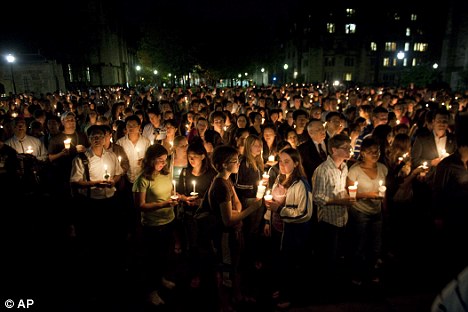
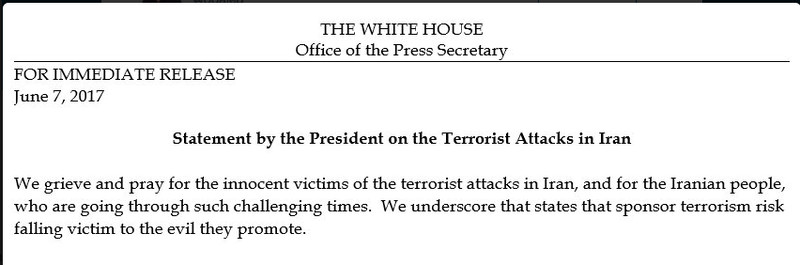
When Iran, a nation where people held candlelight vigils in the wake of the 9/11 attacks, were themselves the target of a terrorist attack last week many Americans (including the Trump admin) added insult to injury and called it karma.

Apparently, these Americans, reveling in a terrorist attack, are unable to differentiate between Saudi Arabian hijackers (Sunni Arabs) and Iranian civilians (Persian Shites) mercilessly gunned down in Tehran. I guess to them terrorism is only bad when American and European people are the targets?

What’s worse is the missed opportunity to defeat a common enemy (ISIS) and also to bridge a divide between two nations that should have never happened in the first place. This is probably because we have selective memory and remember the Iran hostage crisis of 1979 (when 52 American diplomats were taken hostage) yet not the decades of meddling by our government that led up to it.

Americans forget that we drew first blood in the conflict with Iran when our government (via the CIA) participated in the overthrow of the democratically elected Prime Minister of Iran in 1953. It was called “Operation Ajax,” it was intended to serve British oil interests and ended with our installing brutal monarchial rule under Mohammed Reza who was called the Shah (or king) of Iran.

With all the outrage over alleged Russian interference in our election and our own history of revolution against kings, it should be easy to understand what came next: The Iranians took their country back, the Shah escaped to the United States to avoid accountability, our government refused to send him back to stand trial in Iran, and in response, they took some of our diplomats hostage.

The great irony here is that the only Americans harmed were the eight US servicemen killed and four wounded in a helicopter crash during a bungled military operation to rescue the hostages. That’s not to mention the one Iranian civilian, who was guilty only of being in the wrong place at the wrong time and was killed by an Army Ranger’s shoulder-fired rocket.

Yet, despite our own casualties being self-inflicted, since then the U.S. government has made it their policy to do harm to the Iranian people. For example, there is a reason why some in our government knew Saddam Hussain had chemical weapons: we enabled him to use them against the Iranians.

The Iran-Iraq war started in the 1980s when Iraq invaded Iran, was a bloody conflict that cost more than a million lives. In response to the carnage Henry Kissinger, a former U.S. Secretary of State, smirked, “it is a pity they both can’t lose.”

It is little wonder that the Iranian leaders would seek a nuclear deterrence given our past (and present) aggression. From their perspective, it is simply a matter of survival given that U.S. leaders regularly threaten. For example, long-term Senator John McCain thought singing “bomb-bomb, bomb-bomb Iran” was funny and praised the leader of a Marxist terrorist organization that has murdered thousands of Iranians.

McCain actually met with the leadership of Mujahedin-e Khalq (MEK) to express his hopes that they would someday rule in Iran. The thought of this is horrifying to a secular Iranian friend of mine. My friend, while not a fan of the current Iranian government, says that she (and most other Iranians) do not want the MEK in power and are shocked that a prominent U.S. politician would openly support terrorism.

How quickly the American public forgets that our government (including McCain) also gave support (direct or indirect) to Osama Bin Laden when he was fighting a holy war against the Soviet Union. Of course, they do remember the blowback when the terrorist we helped to create turned his attention on us as a result of our meddling in his own part of the world.

Talk about karma.

And, no surprise, U.S. interventions (supported by then-Secretary of State, Hillary “we came, we saw, he died” Clinton, and none other than John McCain) have also resulted in the formation of ISIS. It is obvious that our leadership never learns from the blowback and the American public—putting it too lightly—is woefully ignorant of the misdeeds supposedly done on their behalf around the world.

Any slight hope that the Trump administration would take a more sensible approach has pretty much disappeared when they responded to the terrorist attacks with political opportunism rather than solidarity against ISIS (who claimed responsibility for the attacks in the Iranian capital Tehran) and, in the process, we are driving further away many Iranians who once looked upon America as great despite our numerous violations of their sovereignty.

We put a travel ban on Iran who has never once attacked the American homeland and has only fought in defense against the attacks of the U.S. and our regional allies. But then no travel ban is applied to Saudi Arabia or any of the other countries where the 9/11 hijackers came from. It is absurd that we are still signing weapons deals with a nation that doesn’t allow women to drive, uses beheadings as punishment, funds the spread of Wahabbism worldwide, and backs ISIS, while opposing a nation merely fighting to keep us out.

Given our inability to admit hypocrisy or even to recognize our own mistakes, it is likely only a matter of time before the next group of U.S. supported “dissidents” and “freedom fighters” accomplish their objectives and then turn their bloodthirsty eyes on us, like Bin Laden did, and make their mission putting a permanent end to our hegemonic ambitions.

Those who do not learn from history are bound to repeat it. We are still sowing the wind, covertly killing anyone (including the murder of civilian scientists) who stands in the way of our global dominance, supporting terrorism against those who do not want to be our puppets and will likely reap yet another whirlwind as a result.

Conscience or Compromise?  The Courage of Desmond Doss…

Standard

There is a movie out about an unlikely war hero.  The man, Desmond Doss, was a Christian conscientious objector (or a conscientious cooperator according to his own description) who joined the army to save lives rather than take them.

Doss refused to pick up a rifle in training and for disobedience to orders to do so he was court-martialed.  But he stood his ground, he was allowed to go into combat without a weapon, and went unarmed as a medic.  His courageous effort to save lives earned him presidential honor.

Doss, unlike many in the church today, was unwilling to compromise for sake of convenience.  Many have compromised valuing their own temporal comfort over full obedience to the one who has control over eternity.  Many have compromised, voting for ‘the lessor of two evils’ and political expedience rather than take a courageous stand against the evil of both sides.

#1) The Apostate Church Does Not Overcome Evil With Good.

Jesus said…

“You have heard that it was said, ‘Eye for eye, and tooth for tooth.’  But I tell you, do not resist an evil person.  If anyone slaps you on the right cheek, turn to them the other cheek also.   And if anyone wants to sue you and take your shirt, hand over your coat as well.  If anyone forces you to go one mile, go with them two miles. Give to the one who asks you, and do not turn away from the one who wants to borrow from you.  You have heard that it was said, ‘Love your neighbor and hate your enemy.’  But I tell you, love your enemies and pray for those who persecute you, that you may be children of your Father in heaven.  He causes his sun to rise on the evil and the good, and sends rain on the righteous and the unrighteous.  If you love those who love you, what reward will you get?  Are not even the tax collectors doing that?  And if you greet only your own people, what are you doing more than others?  Do not even pagans do that?  Be perfect, therefore, as your heavenly Father is perfect.” (Matthew 5:38-48)

It is amazing to me that many claim to love Jesus and yet find all kinds of ways to make the plain teachings above not apply to their own situation.  They misuse other parts of Scripture to water down the words of Jesus and faithless hypothetical “what if” reasoning to justify around what is clearly stated.  I guess for them Biblical literalism only applies when it has no real practical value or real life consequences—like the creation narrative in the book of Genesis?

But, when Paul echoes Jesus and says we should “overcome evil with good” (Romans 12:21) I am doubtful that he is saying that we should do the same things evil people are doing while slapping a religious justification on it.  He’s actually telling us to be radically different, that we should care for our enemies as we would our own, and trust God will do justice.

Those in the apostate church do not trust God and therefore take matters into their own hands that are not assigned to them.  This is the beginning of their road to compromise, it is negotiating a deal with Devil to secure a temporal gain and exactly the temptation Jesus resisted when offered worldly power.

#2) The Apostate Church Is Focused On Judgement of Others Rather Than Self-examination.

Jesus said…

Do not judge, and you will not be judged. Do not condemn, and you will not be condemned. Forgive, and you will be forgiven. Give, and it will be given to you. A good measure, pressed down, shaken together and running over, will be poured into your lap. For with the measure you use, it will be measured to you. Can the blind lead the blind? Will they not both fall into a pit? The student is not above the teacher, but everyone who is fully trained will be like their teacher. Why do you look at the speck of sawdust in your brotherʼs eye and pay no attention to the plank in your own eye? How can you say to your brother, ‘Brother, let me take the speck out of your eye,’ when you yourself fail to see the plank in your own eye? You hypocrite, first take the plank out of your eye, and then you will see clearly to remove the speck from your brotherʼs eye.” (Luke 6:37-42)

If we ever could fully comprehend God’s perfection (and our own unworthiness by comparison) we would likely never judge anyone again.  Instead we would spend our days prostrate in prayer and thanking God for the amazing grace that saved a wretch like us.  Unfortunately we do not understand God’s grace and therefore struggle with smugness, sanctimony and self-righteous feelings.

We also tend to judge ourselves differently than we do others.  There is a tendency to justify our own behavior based in circumstances while treating the sins of others as a character flaw and an inexcusable choice for evil.  This tendency is called fundamental attribution error and the very opposite of what Jesus taught us to do.

We should never excuse our own compromise and then simultaneously pray “Father forgive them for they know not what they do” as Jesus did.  It is our job to show grace and in our doing so we are living in obedience to God who will show us grace.  Those in the apostate church do opposite of this and are harsh to outsiders while forgiving their own or themselves. 

#3) The Apostate Church Demonizes Opposition Rather Than Love As Christ Loved.

The apostate church has compromised and have broke spiritually blind despite their arrogance.  They therefore cannot love as Jesus did and do not understand this:

“Put on the full armor of God, so that you can take your stand against the devilʼs schemes. For our struggle is not against flesh and blood, but against the rulers, against the authorities, against the powers of this dark world and against the spiritual forces of evil in the heavenly realms.” (Ephesians 6:11-12)

A Christian should not be involved in the politics of those who demonize their opposition.  Some of the claims from this past election remind me the blood libel used to slander the Jews and create an irrational hatred of that whole people group.  When we turn other people into demons we justify our own unthinkable acts and often become as terrible as those we demonize.

Our flight is in a spiritual realm “not against flesh and blood” but the apostate church spiritualizes their own worldly perspective and demonizes those whom they are commanded to love.  Furthermore, our judgement again should be turned inward and towards our own, as Paul explains:

“I wrote to you in my letter not to associate with sexually immoral people—not at all meaning the people of this world who are immoral, or the greedy and swindlers, or idolaters. In that case you would have to leave this world. But now I am writing to you that you must not associate with anyone who claims to be a brother or sister but is sexually immoral or greedy, an idolater or slanderer, a drunkard or swindler. Do not even eat with such people.  What business is it of mine to judge those outside the church? Are you not to judge those inside? God will judge those outside. ‘Expel the wicked person from among you.'” (1 Corinthians 5:9-13)

Even in churches where political involvement is discouraged Paul’s words (above) are ignored and the judgement focused on those outside.  But we are told it is not our job to judge those outside our group—those outside are for God to judge.  Instead we are not to be associated with those who claim to be Christian yet live unrepentant in their immorality.

This in–group favoritism is common in the world, it is expressed in various forms of tribalism where people only see the faults of those outside their tribe, it is also a common feature of the apostate church, but it is the antithesis of what Jesus taught.  We must not associate ourselves with those who claim to be Christian and yet live in unrepentant sin.

#4) The Apostate Church Is Focused On the Worldly Kingdom.

Jesus said…

“My kingdom is not of this world. If it were, my servants would fight to prevent my arrest by the Jewish leaders. But now my kingdom is from another place.” (John 18:36)

The idea that a person must vote as a Christian duty is absurd.  Certainly there is a case for using the means we have influence the world in a positive direction and voting could be a means for doing that.  However, there is also a case for abstaining from politics and following after the example of Jesus who refused worldly power offered to him by Satan:

“The devil led him up to a high place and showed him in an instant all the kingdoms of the world. And he said to him, ‘I will give you all their authority and splendor; it has been given to me, and I can give it to anyone I want to. If you worship me, it will all be yours.'” (Luke 4:5-7)

Many seem to be willing to make a deal with the devil for much less than what was promised to Jesus.  Offer them a few Supreme Court Justices with assurances of their religious freedom and they’ll turn out in droves.  Never mind whether or not the one promising the world to us will deliver on their end of the bargain.

Have we forgotten that true men of faith would rather be in prison or a martyr than make the smallest comprise for worldly gain?

How has the church become so blinded by worldly political ambition?

It is disturbing to me is how some who profess Christ are actually shamelessly celebrating the election of a vulgar and unrepentant man as if it is a spiritual triumph.  It makes a mockery of our faith when we compromise out of fear, it is a spiritual poverty and should be repented rather than celebrated.  

Our lack of trust in God will make us losers even when we think we have won.  The ends do not justify the means.  We need less cowardly people who compromise for sake of temporal worldly gain—and more who make a courageous stand like Desmond Doss.

Should Christians Flee Jerusalem?

Standard

In 1630 John Winthrop, an English Puritan leader, wrote a thesis titled A Model of Christian Charity that described a spiritual vision for the new settlement in America.  He explains an ideal love that if practiced would make them “a city upon a hill” and seen by all people. 

But, Winthrop warns that with this great potential there will be great consequences if and when this ideal is abandoned.  In his words: 


“We shall open the mouths of enemies to speak evil of the ways of God, and all professors for God’s sake. We shall shame the faces of many of God’s worthy servants, and cause their prayers to be turned into curses upon us till we be consumed out of the good land whither we are going.”


America has formed into a great nation, an exceptional nation in many respects, and has become the place seen by the world.  Two Presidents (John Kennedy and Ronald Reagan) made reference to the “city upon a hill” imagery and at a time which was arguably the peak of our influence. 

I firmly believe that our lingering greatness is a reflection of the moral character of those who came before us.  However, our end will be as dramatic as our rise when we neglect love for our fellow man that Winthrop envisioned and is the true evidence of faith in God.

There was another city on a hill (seven hills actually) and that being the historical city of Jerusalem described in the Bible.  Jerusalem was a place of great importance to the Jewish religion and the location of their temple to God.  It was an impressive awe inspiring place by ancient standards and also the place where Jesus went with his disciples and made a startling prophecy about the unimaginable destruction that would soon come to that city.

Six days that marked the beginning of the end.

It was the Passover, a significant event on the Jewish religious calender, and what would turn out to be a most pivotal week for Christianity.  Jesus, after having raised Lazarus from the dead, departs from Bethany and continues with his disciples to Jerusalem despite the obvious risk to his life. 

The Scripture describes Jesus coming down from the Mount of Olives towards the great Holy City:

“As he approached Jerusalem and saw the city, he wept over it and said, ‘If you, even you, had only known on this day what would bring you peace—but now it is hidden from your eyes.  The days will come upon you when your enemies will build an embankment against you and encircle you and hem you in on every side.  They will dash you to the ground, you and the children within your walls. They will not leave one stone on another, because you did not recognize the time of Godʼs coming to you.'” (Luke 19:41-44)

This moment of emotion and prophecy marks the beginning of a tumultuous week.  Jesus was greeted as a king and yet simultaneously weeps over Jerusalem.  The week continues with him dramatically cleansing the temple of commerce.  He spends an intimate last meal with his disciples after which he is betrayed by one of them.  He is put on trial, crucified under a mocking “king of the Jews” sign.  But not before making several claims about a destruction coming and an end that was very near at hand.

In a sermon (Seven Woes of Matthew 23) Jesus severely rebuked his religious critics for their hypocrisy.  He told them that they are no better than their ancestors who murdered prophets.  Jesus warns once again of a judgment that would befall their generation, and laments:

“Jerusalem, Jerusalem, you who kill the prophets and stone those sent to you, how often I have longed to gather your children together, as a hen gathers her chicks under her wings, and you were not willing.  Look, your house is left to you desolate.  For I tell you, you will not see me again until you say, ‘Blessed is he who comes in the name of the Lord.'” (Matthew 23:37-39)

Jesus laments their unwillingness to trust him.  But also uses “desolate” (erémos) to describe their “house” (oikos) which is a strange way to describe a thriving city and is a foreshadowing statement.  He ends the sermon by saying only those who acknowledge him will see him again.

Following that, in the next chapter, we read this account:

“Jesus left the temple and was walking away when his disciples came up to him to call his attention to its buildings. ‘Do you see all these things?’ he asked. ‘Truly I tell you, not one stone here will be left on another; every one will be thrown down.'” (Matthew 24:1-2)

Wow!  Talk about shocking!

Can you imagine?

It would be like being with a group of friends taking in the sights in Manhattan and talking about the beauty of the architecture, but then in response the tour leader tells you that in forty years it would all be rubble. 

It was the temple (according to Luke 21:5) that had the disciples most captivated and Jesus tells them it will soon be destroyed.  Naturally, as we continue to read, this awful prediction provoked more questions from those who heard about when and how:

“As Jesus was sitting on the Mount of Olives, the disciples came to him privately. ‘Tell us,’ they said, ‘when will this happen, and what will be the sign of your coming and of the end of the age?’ 

Jesus answered: ‘Watch out that no one deceives you. […] Truly I tell you, this generation will certainly not pass away until all these things have happened.  Heaven and earth will pass away, but my words will never pass away.'” (Matthew 24:3-5)

Two observations: 1) These words are all spoken entirely in the context of the temple and the Jerusalem that the disciples saw with their own eyes.  2) This is the second time Jesus promises that “this generation” (to the audience with him then) would see these things happen.

So what did happen?

The end of Jerusalem and temple worship came to pass in AD 70.

It is amazing to me that this event, an astonishing fulfillment of prophecy, is not front and center for more Christians.  The destruction of the temple and sacrificial system it represented was so complete that it has lasted until this day.

Furthermore, this total destruction happened (as predicted) in the very generation that first heard the words of Jesus about the end of the age.  It is a well-documented historical event that would seem to completely fulfill the words of Jesus and yet it is hardly acknowledged.

So why is this such a secret?

Well, maybe because it throws a monkey wrench into the eschatology of many modern Bible readers who have been indoctrinated to believe Jesus is speaking of events in our own future?

Who knows?

But we do know that the historical evidence is clear.  The city of Jerusalem was destroyed, the temple of stone at the center of Jewish religion reduced to rubble, and with that came an ending of an age.  Some skeptics may dispute the details, yet one only need to go to the modern city built on the ruins of historical Jerusalem and see for themselves that the temple is gone.

The end of the former age is the beginning of something new and better.

The end of earthly Jerusalem had begun the week Jesus was crucified.  The destruction of the old way came as the beginning of a new and better way.  It is as Jesus promised:

“‘Sir,’ the woman said, ‘I can see that you are a prophet. Our ancestors worshiped on this mountain, but you Jews claim that the place where we must worship is in Jerusalem.’

‘Woman,’ Jesus replied, ‘believe me, a time is coming when you will worship the Father neither on this mountain nor in Jerusalem.  You Samaritans worship what you do not know; we worship what we do know, for salvation is from the Jews.  Yet a time is coming and has now come when the true worshipers will worship the Father in the Spirit and in truth, for they are the kind of worshipers the Father seeks.  God is spirit, and his worshipers must worship in the Spirit and in truth.'” (John 4:19-24)

There is a city spoke of by Jesus in the Sermon on the Mount.  It is a metaphor used to describe a greater reality “You are the light of the world. A city that is set on a hill cannot be hidden.” (Matthew 5:14)  It is also the likely origination of Puritan John Winthrop’s “a city upon a hill” phrase.  

We also know, in the writing of Paul, that he says the church is collectively and together is the temple of God:

“Don’t you know that you yourselves are God’s temple and that God’s Spirit dwells in your midst? If anyone destroys God’s temple, God will destroy that person; for God’s temple is sacred, and you together are that temple.” (1 Corinthians 3:16-17)

It is a funny thing how so many who claim to be Biblical literalists read that and still await a third temple built of stone.  Paul says that his audience, believers, are the temple and God dwells in them.  Believers, according to Scripture, are literally the temple of God and yet some wait for the constitution a third temple?

Perhaps those still waiting for a third temple have also missed out on the promised second coming of Jesus as well? 

Read this assurance that Jesus left for his disciples:

“‘Very truly I tell you, whoever believes in me will do the works I have been doing, and they will do even greater things than these, because I am going to the Father.  And I will do whatever you ask in my name, so that the Father may be glorified in the Son.  You may ask me for anything in my name, and I will do it.  If you love me, keep my commands.  And I will ask the Father, and he will give you another advocate to help you and be with you forever—the Spirit of truth.  The world cannot accept him, because it neither sees him nor knows him. But you know him, for he lives with you and will be in you.  I will not leave you as orphans; I will come to you.  Before long, the world will not see me anymore, but you will see me. Because I live, you also will live.  On that day you will realize that I am in my Father, and you are in me, and I am in you.  Whoever has my commands and keeps them is the one who loves me. The one who loves me will be loved by my Father, and I too will love them and show myself to them.’    

Then Judas (not Judas Iscariot) said, ‘But, Lord, why do you intend to show yourself to us and not to the world?’  

Jesus replied, ‘Anyone who loves me will obey my teaching. My Father will love them, and we will come to them and make our home with them…'” (John 14:12-23)

So there we have a new city, a better temple and a greater coming of Jesus—each of these iterations being far better than the ones replaced.  If we believe we will be the fulfillment of Scripture in the same way as Jesus and do even greater things as he promised we would.  We will not be looking forward to a new version of the old way and instead be bringing the better kingdom into our reality.

Why then do some amongst us still wait for another physical fulfilment rather than live in the fullness of the kingdom promise today?

Perhaps it is because they, like those who rejected Jesus in his first coming, do not have the truth in them and need to repent?

So, anyhow, cutting to the chase, why is the fall of Jerusalem relevant to us today?

The point of this blog post is not history or eschatology, those can be topics for another day, but it is to discuss the choice we have to learn from history or repeat it again.  We can look at the future as something set in place and beyond our own influence or we can consider that Jerusalem had a choice and that is contained in the last words of the Old Testament:

“See, I will send the prophet Elijah to you before that great and dreadful day of the Lord comes. He will turn the hearts of the parents to their children, and the hearts of the children to their parents; or else I will come and strike the land with total destruction.” (Malachi 4:5-6)

Do you see the option A and the option B?

John the Baptist, while not literally Elijah, came in the Spirit of Elijah, preaching “repent, for the kingdom of heaven has come near” (Matthew 3:2) and yet was rejected by those who expected a literal return.  Because of their refusal to repent they choose the “or else” of option B  and we too face that choice: Will we repent and bring the Lord’s prayer “thy kingdom come” to life or will we continue waiting for fulfilment on our own terms and be destroyed?

The American church today is not much different from Jerusalem.  We face an uncertain future, we have been divided into competing political factions, there are angry zealots ready to run amok railing against foreigners, oppressors, etc.  We too have become woefully arrogant and blinded by our ambitions.  It is very much the same climate Jesus lived in two millennia ago.  It is the attitudes that Winthrop warned against nearly four hundred years ago:


“But if our hearts shall turn away, so that we will not obey, but shall be seduced, and worship other Gods, our pleasure and profits, and serve them; it is propounded unto us this day, we shall surely perish out of the good land whither we pass over this vast sea to possess it.”


We are at a crossroads as a people today.

The next forty years will probably hold dramatic changes.  How we respond to opportunities today could very well define the future of our nation.  America will need to choose repentance or it will continue to slide further away from greatness and towards destruction. 

Our end as “a city upon a hill” may not be as spectacular as the fall of Jerusalem, we might simply fade from prominence like other great nations before us, but be ready.    

Be ready for the fall.

Rudolf Diesel: Thoughts about Idealism, Despair, Progress, Politics and Hope

Standard

Diesel powers the world economy.  I never considered the extent to which that is true until watching a documentary (click here to view it) about this type of internal combustion engine.  It is named after the inventor, a French-German mechanical engineer, Rudolf Diesel, and is the reason why global trade is possible to the extent it is.

Early Diesel design, circa 1897

In considering the story of Diesel, his brilliant invention and the results, I could not help but see the pattern all too common with innovators.  Diesel’s life turned tragic, he was found floating in the North Sea, dead of an apparent suicide, and likely a result of his despair over the unintended consequences of his own design.

According to biographical accounts, Diesel was a utopian idealist who had hopes that his invention would be a catalyst for social change, free the common man and break corporate monopolies.  Unfortunately, while a revolution for transportation, Diesel power did not achieve the lofty social vision. 

Worse, the Diesel engine found use as a part in an efficient killing machine, the German U-boat, and this no doubt grieved the pacifist inventor.

Here are some observations…

#1) What is intended for good can often be used for evil.

Diesel had never intended his invention be used as a means of terrorizing North Atlantic shipping lanes.  And, likewise, many scientists and inventors had regrets related to their greatest contribution to the world.

German U-boat, the original stealth weapon 

There are lists from K-cups to A-bombs online and many others.  For example, Henry Ford seemed to dislike the vast social changes and consumerist mindset made possible by his manufacturing revolution that helped automobiles become a fixture of American life.  Even this media, the internet, once thought to be the beginnings of an information age, has become a cesspool of pornography and ill-founded claims.

I worry about this as a blogger.  Once my thoughts are out there they cannot be contained again.  Will someone pick up my words and run with them in a direction I never intended?  It is a potential outcome that could scare a sensitive soul into silence and is at least a reason for me to be prayerful in what I post here.

I believe there are many people who do not thoroughly think through the potential unintended consequences of the ideas they promote.  There are many government programs and social movements intended for good that might actually be creating more problems than the one that they were intended to solve.

Which takes me to a second point…

#2) Yesterday’s revolution is today’s loathed source of inequality and evil.

It is ironic that the invention that did actually outcompete coal for market supremacy is now enemy #1 for many.  The internal combustion engine won in the marketplace because it was by far the cheapest most efficient means to power transportation and still remains. 

Given there are no steam powered cars, tractors, trains and ships anymore, it is clear that internal combustion is the best bang for the buck and remains to be rivaled.  Diesel powered locomotives and ocean going container ships are extremely powerful while being very economical.    

109,000-horsepower Wärtsilä-Sulzer RTA96-C

Diesel power still outperforms hybrid technology—A loaded Diesel powered class 8 truck is more efficient pound for pound than a Prius.

Think about it: It takes one gallon of fuel to move an 80,000lb truck five to seven miles.  A 2016 Prius, by comparison, carries a weight of around 4000lbs can go anywhere from 50 to 58 miles on a gallon of fuel.  It may seem the Toyota is greener until you consider that it is moving twenty times less weight.  Twenty Prius cars combined together, after dividing their individual consumption by twenty, would consume 2.5 to 2.9 gallons of fuel.  Now, obviously, combining Diesel and hybrid technology on the scale of class 8 truck would undoubtedly yield even greater results if fuel economy were the only concern, but the point remains that Diesel power is extremely efficient and effective—and only more so the larger the application.

So what’s the problem?

Well, the current popular perception is that the petroleum industry “big oil” is the enemy and conspires to hold back technology that would dramatically increase efficiency.  Worse than that, we are told that petroleum power is a source of global climate change and a threat to the global ecology.  Poor Diesel would be driven even further into despair if half this is true.  We fight over oil.

 #3) Progressive aims of our time are at odds with each other or self-contradictory.

Globalism, higher standard of living for more people and environmentalist ‘green’ movements are at odds with each other.  Pushing one direction will almost invariably come at the cost of the others. 

Progressive politicians may tout an idea of a ‘green economy’ as a jobs creator, but the reality has been that wind and solar energy can only remain competitive through heavy use of government subsidies.  Beyond that, even with the help, domestic ‘green’ manufacturing is unsustainable against foreign competition.  At best we will merely replace jobs lost by the heavy regulations placed on fossil fuels and raise costs of living across the board.

Furthermore, it was the progressive policies of the past century that have created the current conditions.  Government policies like the Rural Electrification Act, the Interstate highway system and trade agreements have actually moved us away from a more sustainable less polluting lifestyle.  Our cheap and easy movement from place to place has harmed community and local markets.

Rural Electrification Act propaganda poster.

It is hard to know how the current landscape would look had the progressives of yesterday had not literally paved the way for suburban sprawl, the trucking industry (that currently employs me) and driven us to embrace a coal powered grid.  But I do suspect more of our food would be locally grown, more of our products locally produced and solar energy far more the norm in places utilities would be to costly to maintain unless mandated by law.

In final analysis things might not be as dismal as they seem.

It is easy to focus on the negative without considering the good.  The means of today are likely as unsustainable as the means of yesterday and therefore the progress of the past century might not be the end of us after all.  The only consistent reality in the past two centuries has been that markets constantly change.

Canal boats an all the infrastructure to support them were soon replaced by steam power and railroads.  In Pennsylvania the lumber industry rose in prominence before a rapid decline after the states wooded mountains were reduced to stubble.  The coal industry once put food on the table for boat loads of immigrants before cheap efficient oil and a multitude other factors conspired against it.

Bay State Mills, Lawrence, built 1845.

Manufacturing, from the once mighty water powered textile mills of the New England states to the formerly unstoppable domestic steel industry, has also migrated following cheaper labor and energy.  Each time promoting deep consternation and fear.  But so far the Luddites have yet to have the last laugh and a new balance is eventually found that usually benefits everyone.

Certainly the overconfidence and optimism about today’s new solution may become the big disappointment of tomorrow.  Yet, do we really wish to go back to a time when a transatlantic voyage was only something a religious zealot or crazy Viking explorer would do?  Would we really rather spend most of our time scrounging for just enough to eat as to avoid the possibility of mechanized warfare?

Nobody knows for certain why Diesel died... 

However, what is certain is that his invention changed the world and provided a means for interstate commerce and global trade that never existed before.  The pacifying effect of global trade, economic benefits of an expanded market place and inexpensive power are largely unappreciated.  But we probably do have Diesel to thank for helping create the long peace and prosperity of our time.

Maersk, Triple-E design, Diesel powered, container ship

In an age of information overload, where we know about beheadings in the Middle East before the people the next town over would have heard a century ago, it is difficult for our finite minds to contextualize and easy to become overwhelmed.  This, with an accompanying loss of faith, could be why middle-aged American white males are committing suicide (supposedly the most privileged in the world) and at an alarmingly increasing rate. 

Diesel’s pessimism about the future in retrospect seems to have been premature and his nightmarish perception of reality overstated.  In like manner many of our modern fears and despair inducing thoughts about the future could be negativity bias and nothing more.  Every generation seems to believe that the world is falling apart and still here we are.

Whatever the case, ignore the fear-mongering propaganda of the punditry and politicians.  Embrace temperance, a spiritual quality developed through faith, over mindless reaction and fearful impulse.  Trust God to secure the future, we can only live one day at a time and never ever lose hope!  If you are depressed about events in the world today, I invite you to see the higher perspective:

“Therefore we do not lose heart. Though outwardly we are wasting away, yet inwardly we are being renewed day by day. For our light and momentary troubles are achieving for us an eternal glory that far outweighs them all. So we fix our eyes not on what is seen, but on what is unseen, since what is seen is temporary, but what is unseen is eternal.” (2 Corinthians 4:16-18)

Perhaps the greater of two evils will be elected come November and drive the nation to complete ruin.  

Who knows besides God?

We may all die tomorrow, we will all die eventually, our work blown away in the wind of time and forgotten.  Everything comes to pass, nothing will remain as we know it today, but there is hope beyond all hope found in an eternal perspective.  So look up, because the sun is still shining and the future remains bright!

Do you see the light and feel the warmth of hope eternal?

If not, my prayer is for the blind to see…