Trump: The Man and the Myth

Standard

A fellow Christian (and conservative) friend asked me to list the problems I had with Donald Trump as a Republican candidate. The hard part is knowing where to start.

Trump claims to be conservative. He is definitely saying things that resonate with those who are concerned about jobs, border security and immigration. But, I believe proven character and integrity is far more important than what a person claims about themselves.

Trump supporters are convinced he is genuine simply because he says things they want to hear. Yet seem to forget that the art of demagoguery is to say what plays well with a particular crowd. Trump is shrewd enough to make a sale, but is he honest?

Myth #1—Trump ‘says it how it is’ and is honest.

Trump’s claim to fame is not personal integrity or conservatism. He is known for salesmanship and a bestselling book, “The Art of a Deal,” where he talks about creating a big impression. In other words, try to create an appearance of success and dazzle.

image

Trump parroting popular prejudice doesn’t make a him honest anymore than me moonwalking makes me Michael Jackson. There’s a strong possibility he may just be saying what some want to hear in order to make the sale. Those saying that Trump ‘says it how it is’ might want to consider who they are dealing with.

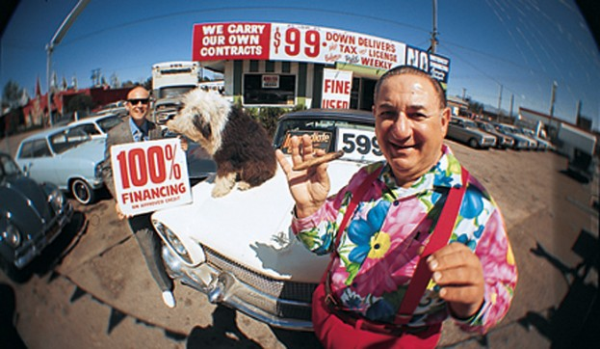
Trump, like the used car salesman who sold you that clunker, is trying to make a deal with you.

image

Sure, he might not be saying what ‘they’ want to hear, just as a used car salesman might also act like he’s at odds with the management because the deal he is making with you is going to cost ‘them’ too much. But that doesn’t mean you take the salesman at their word on it!

From a Christian perspective, there is even more need to be discerning and skeptical of claims that sound good to us:

“For the time will come when people will not put up with sound doctrine. Instead, to suit their own desires, they will gather around them a great number of teachers to say what their itching ears want to hear. They will turn their ears away from the truth and turn aside to myths.” (2 Timothy 4:3-5)

Trump has claimed a mythological net worth of near nine billion dollars, but Trump’s actual net worth is half of what he claims according to Forbes. So is Trump clueless about his own business holdings? Or does he know that the attention span of the average person is short and that he can dazzle people with a huge number that they’ll never check?

Even Trump’s business prowess seems as grossly exaggerated. Yes, he’s extremely wealthy, but he also had a huge head start and his daddy’s fortune to build from. It is said that the first million is the hardest and there’s some truth to that. You are far ahead when you can reinvest rather than spend your income on necessities. Trump had that advantage.

The real way to measure Trump is to put his accomplishments in perspective of his own peers:

image

Reality check: Trump’s success really is not as impressive when put in proper context. Trump is trying to make a sale, he is out to make a big impression with his target audience and willing to deceive.

Myth #2—Trump is rich and therefore he cannot be bought.

John D. Rockefeller, the world’s wealthiest man, was once asked: “How much money is enough money?”. His reply: “Just a little bit more.”

Rockefeller’s answer should be the end of this myth that the rich man cannot be bought or bribed. G.K. Chesterton took it a step further and said:

“You will hear everlastingly that the rich man cannot be bribed. The fact is, of course, that the rich man is bribed; he has been bribed already. That is why he is a rich man.”

I could understand how a secular person could be fooled into believing that wealth is a virtue. But a Christian has absolutely no excuse, Jesus makes mention of the “deceitfulness of riches” (Mark 4:19) and may well have been paraphrasing the book of Habakkuk:

“Wealth is deceitful. Greedy people are proud and restless—like death itself they are never satisfied.”

Could it be that Trump is rich because he has already been bought?

The wealth of a man does not prove anything positive about his character or integrity. There are good wealthy people, but there are also many wealthy people who would steal from their own grandmother and wouldn’t think twice about scamming you.

Is every wealthy person a crook? No, certainly not! I disagree with those who automatically equate wealth and greed. However, in many cases great wealth can be a sign of moral bankruptcy.

One of Trump’s holdings could say a bit about his philosophy in business and in life. That is that he’s in the Casino business. Sure, this is a perfectly legal enterprise, gambling is an activity many people enjoy, but it is also a game stacked against the participant, the house always wins, and the people who can least afford it are often the losers.

Reality check: Trump’s wealth may be legally acquired, but that doesn’t mean it was acquired through morally upright and non-exploitative means.

Myth #3—Trump is a political outsider and not an ‘establishment’ candidate.

During the debate Trump was asked:

“You’ve also supported a host of other liberal policies, you’ve also donated to several Democratic candidates, Hillary Clinton included, Nancy Pelosi. You explained away those donations saying you did that to get business related favors. And you said recently, quote, “when you give, they do whatever the hell you want them to do.”

Trump answered:

“You better believe it… I will tell you that our system is broken. I gave to many people. Before this, before two months ago, I was a businessman. I give to everybody. When they call, I give. And you know what? When I need something from them, two years later, three years later, I call them. They are there for me. And that’s a broken system.”

Now some may say such a brazen admission is a ‘breath of fresh air’ and refreshing honesty. I suppose a serial killer bragging about how he outwitted investigators could also be considered the same. But I’m not sure a shameless corruption is an improvement over the run of the mill variety.

If Trump were a poor person gaming the welfare system to his own advantage and bragging about it, would we applaud his shameless corruption or condemn it?

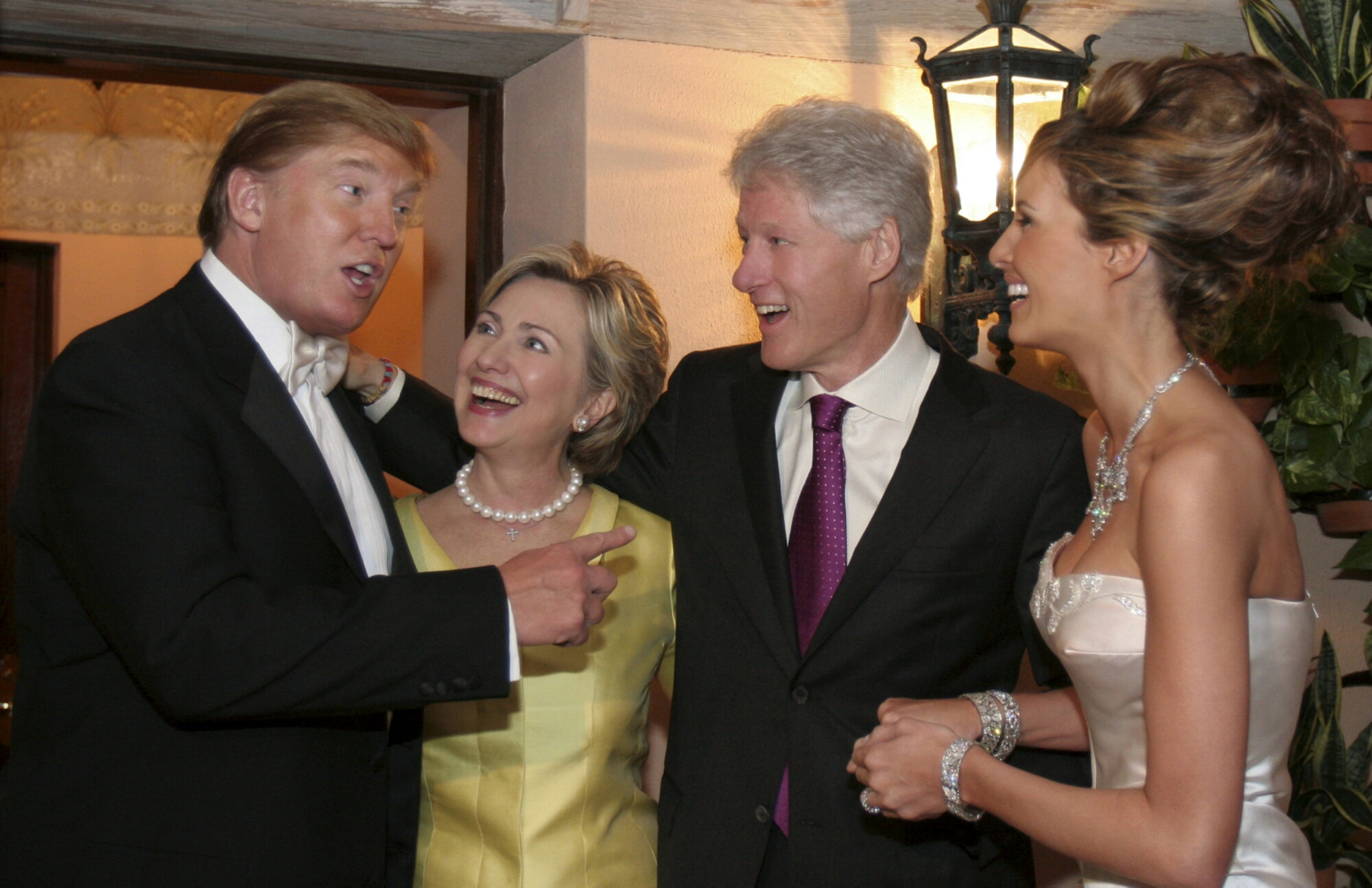
If Trump were a politician, would an ‘everyone else is doing it’ rationale and a witty response about the Clinton’s attending his wedding absolve him of guilt for being complicit in corruption?

Then there’s the matter of Trump’s attempts to use eminent domain for personal gain. As a National Review editorial puts it:

“Donald Trump’s covetous nature is not in dispute, but what many may forget is that he’s no great respecter of the admonition not to steal, either: The man has a track record of using the government as a hired thug to take other people’s property.”

Trump tried to use government power to force a widow from her property and was struck down in court. That is the modern day equivalent of king Ahab seizing Naboth’s vineyard (1 Kings 21) and is the kind of crony capitalism that is the problem.

There are two sides of the political establishment. One side is the politicians and the other side is men like Trump who work tirelessly to corrupt politicians. Men with money, like Trump, who exploit the system for personal gain, are just as much the problem as crooked politicians who take their money.

image

Trump is as much a part of the political establishment as a Bush or a Clinton. He is not an ‘outsider’ by any stretch of the imagination. So, it is time to see past the sales pitch, do not be dazzled by a man who has never proven himself loyal to anything besides his own self-interest.

Reality check: Trump shows no sign of having embraced Christian ethics. Trump’s confessions of his own corruption come without any sign of remorse and repentance.

Myth #4—Trump will govern differently than he does business.

If we have not learned by now maybe we will never learn. But every manipulator on the planet claims that they will change if only you give them what they want.

Trump shows no sign of remorse or repentance for exploiting the system for personal gain, yet we are supposed to believe he would never abuse government power for personal gain if he secures the White House?

If you believe that, I have a bridge I am selling…

Love: Feeling or Choice?

Standard

This blog is about ideas and the idea that ideas matter.  I believe the ideas people have can dramatically influence the direction of their lives.  Our choices, based in our ideas, could actually help shape reality in a ways not previously understood.

The view that seems popular today makes people simply products of the universe.  We emphasize the role of genetics and the influence of environmental factors in shaping what a person is, which is an idea that is certainly not without merit.  We bear a close resemblance to our parents for a reason and had no choice in determining that.  There’s also a good explanation of why I am writing this in English rather than Chinese. 

Obviously we have a given nature and are influenced by the nurture we received, which could lead to a ‘it is what it is’ fatalistic view that we have no choice or free will and ability to determine the future.  But could there be more than that?  Is it possible that the universe is only an influence and not a dictator of our consciousness?  Could it be that our own consciousness acts as a co-creator of the future universe?

Advances in physics have opened a whole new realm of possibilities.  The wave-particle duality of quantum mechanics is a paradox that suggests there is a bigger picture of the universe and one that could put our own consciousness in a far more important role than previously understood.  If our observation actually shapes reality at a quantum level (collapsing the wave function) then the future may not actually be determined outside of our own mind and will as is a common assumption.

If the future is not a destiny and is in fact something we co-create, then that could change many things including our ideas on love, which leads to the question…

Is love an existent feeling or a willful choice?

Both religious and secular people have seemed to have embraced a fatalistic view of love.  We could be scientific and point to natural explanations like pheromones, cultural expectations, chance opportunity, etc.  It is basically to conclude that love is something pressed out of a myriad of factors that all combine at the right time—which is a view that makes love seem sort of like sausage.  The religious, on the other hand, may turn to a meant-to-be (or God-did-it) rational to explain love and downplay choice.

Our culture, religious or otherwise, tends to emphasize the feelings of attraction above all else.  Love is something we are told we should ‘fall’ into and that there is a ‘right’ person out there for everyone. The idea is that attraction produces a feeling that produces a choice that produces commitment and ends with happily ever after. 

Unfortunately, I believe this is a view of love that has produced a great deal of disappointment and disillusionment in our day. It doesn’t work for many people. For some the problem is that they never find someone who produces that feeling of attraction enough to make them commit and they remain single or go from one relationship to the next in search of it.  The problem for others is that they marry based in superficial feelings, eventually those feelings fade away and they want out of the commitment. 

In both cases (above) the idea of love centers around feelings of attraction and presents love as a product of circumstances outside of our own control.

But what if there is an alternative view? What if we flip the order of things and put commitment first? Or, rather than love being a fate produced by an initial attraction that eventually ends in commitment and happily ever after, could love be a commitment to love that lead to a continual choice that produces a deepening relationship that produces a feeling of love and marital bliss? 

It is my view that love is less of an ‘it is what it is’ fate and more an ‘it is what we make it’ choice.  I believe the idea of love as a choice would produce healthier more sustainable relationships than the current popular view.  We believe we would see a reversal in trends towards non-commitment if we stopped waiting for the ‘right’ feeling to come and started to be more actively loving to others even when the feelings do not exist.

What is the (proper) Christian view of love?

In the American church there is a heavy emphasis on experience and emotion in worship.  We want music, we want excitement and entertainment, because the more feeling we have in the moment the more we love God, right? 

Wrong.

Christian faith is not supposed to be primarily about feelings or ‘spiritual’ experience.  Christian faith should be about obedience to the Spirit of love and that is the true evidence of faith according to Jesus:

“A new command I give you: Love one another.  As I have loved you, so you must love one another.  By this everyone will know that you are my disciples, if you love one another.”  (John 13:34-35)

Many Christians have confused positive emotions for spiritual depth.  A person who proclaims the loudest how great God is and puts on the biggest public display of praise is not necessarily the one who loves God the most.  The Gospel presents a different view of love that doesn’t resonate as well with our feelings based culture.  Jesus says, “if you love me, keep my commandments,” (John 14:15) and equates love with obedience.  

To obey Jesus means to love others as we wish to be loved (Luke 6:31) and to love perfectly like God does:

“You have heard that it was said, ‘Love your neighbor and hate your enemy.’  But I tell you, love your enemies and pray for those who persecute you, that you may be children of your Father in heaven.  He causes his sun to rise on the evil and the good, and sends rain on the righteous and the unrighteous.  If you love those who love you, what reward will you get?  Are not even the tax collectors doing that?  And if you greet only your own people, what are you doing more than others?  Do not even pagans do that?  Be perfect, therefore, as your heavenly Father is perfect.”  (Matthew 5:43-48)

If Christian love were a feeling and emotion how would it be possible to love our enemies?  Enemies are, by common definition, the people we do not love because they have in some way offended us or they are out to destroy us.  But, perfect love is not a feeling.  Perfect love is a choice to obey and love in action even when the feelings aren’t there.  Perfect love is a choice rather than a feeling, perfect love is the kind that sacrifices our own selfish ambitions for the good of others, and without that kind of love we are not actually true disciples of Jesus:

“Dear friends, let us love one another, for love comes from God. Everyone who loves has been born of God and knows God.  Whoever does not love does not know God, because God is love.  This is how God showed his love among us: He sent his one and only Son into the world that we might live through him.  This is love: not that we loved God, but that he loved us and sent his Son as an atoning sacrifice for our sins.  Dear friends, since God so loved us, we also ought to love one another.  No one has ever seen God; but if we love one another, God lives in us and his love is made complete in us. 

This is how we know that we live in him and he in us: He has given us of his Spirit.  And we have seen and testify that the Father has sent his Son to be the Savior of the world.  If anyone acknowledges that Jesus is the Son of God, God lives in them and they in God.  And so we know and rely on the love God has for us.  God is love. Whoever lives in love lives in God, and God in them.  This is how love is made complete among us so that we will have confidence on the day of judgment: In this world we are like Jesus.  There is no fear in love. But perfect love drives out fear, because fear has to do with punishment. The one who fears is not made perfect in love.

We love because he first loved us.  Whoever claims to love God yet hates a brother or sister is a liar. For whoever does not love their brother and sister, whom they have seen, cannot love God, whom they have not seen.  And he has given us this command: Anyone who loves God must also love their brother and sister.”  (1 John 4:7-21)

Christian love is preemptive.  Christian love follows the example of Jesus who loved us BEFORE we loved him.  True love is not based in initial attraction nor does it wait in fear of not being reciprocated.  True love steps out in faith.  Perfect love is not a pursuit of an immediate feeling or instant gratification. 

Love is a choice to invest in the good of another person even when we do not feel like they are worth our investment.  Love means a choice to obey and the choice to obey is a choice to follow the example of Jesus.

So, if love is a choice, then feelings do not matter?

No, not exactly.  I do believe feelings do matter.  But, a love based primarily in initial superficial attraction is a shallow love and deep love is only possible with deep (and self-sacrificial) commitment.  Deeper love is a continual choice to love more than a fleeting feeling of love.  For that reason we should be emphasizing the choice to love over the feeling of love and not the other way around.

This is not to say that those who started with a feeling of superficial attraction never develop depth of relationship—some do and some do not.  But I will say that love that is a choice and a commitment in faith is starting at a deeper level.  The better love is not a feeling.  The better love is a choice to put aside fear (or hate) and invest in the betterment of another person.  It is a love that is based in faith rather than feeling.

If love is a matter of will rather than a determined or predestined fate, then when a person says that they cannot love a person what they are really saying is that they unwilling to love that person.  The feelings can never develop in a person who is not willing to step out in faith.  Therefore, if you want to find love, be willing to bring love into the world and give it away in faith.

Love first.  Plant seeds of love in the world.  Do not wait on feelings to arrive before investing in the good of others.  Do not expect the Spirit of God to come to you (or the world) unless you live in obedience to the command to follow Jesus and love self-sacrificially by his example.  Love before you expect love to arrive.  Yes, this is absolutely a paradox, a causality dilemma, but that is the nature of our reality in a quantum universe.

Do not be resigned to an idea that we are haplessly tossed about without a will of our own.  Instead, consider the last lines of Invictus, “I am the master of my fate: I am the captain of my soul.”  Choose to love supernaturally.  Be a co-creator of a higher and deeper love rather than a mere consumer of the feelings produced by base human nature.

Vaccination and Causes of Nepal Earthquake

Standard

There was an earthquake in Nepal several weeks ago.

Most would probably agree that earthquakes are caused by sudden movements in the earth’s crust and are satisfied with a scientific explanation.

However, some are not satisfied with that and turn to more creative interpretations of the ground shaking phenomenon.

One man, an Iranian cleric, claimed earthquake is linked to promiscuous women and gave Islam as the solution.  Another woman, a Hindu, offered this explanation: “Rahul Gandhi eats beef and goes to the holy shrine without purifying himself, the earthquake was bound to happen.”  And, finally, a US pastor, wrote linking topic of pagan shrines and the earthquake.

So, three different people representing three different religions and three different reasons why the earthquake happened.  However, all three have in common a similar logic.  They share an idea that one thing was happening (promiscuity or meat eating or paganism) and therefore the next thing (an earthquake) thing happened.  It is the logic of correlation implying causation.

Those who study logic recognize the potential logical fallacy.  The correlation does not imply causation in this case nor does it in others like it.  It is completely possible that the earthquake would have happened regardless of what people did or did not do.

And, until a person can provide good research that links one to the other, it is not reasonable to conclude a link exists between earthquakes and immorality.

Blaming Vaccines For Childhood Developmental Problems

Vaccines have become fodder for the same type of thinking that blames immorality for a geological phenomenon.  If a child is vaccinated and later a disability or medical condition arises some parents will attribute it to the vaccines.

Parents trust their own perception.  From what they can recall the problems did not begin until after the vaccination and therefore must be somehow linked to the vaccine.  In their search for a link, many will take anecdotes as evidence and proof of a link.  Unfortunately, even a hundred anecdotes showing one thing happened after another is proof of nothing besides sequence of events and not even suggestive of a causal link.

It would be no different from me telling a story of how a friend changed the oil in his car and two weeks later the engine blew up.  Sure, there could be a link between an oil change and problems that develop later in a few cases.  For example, if the mechanic left the oil plug loose, the plug fell out, the oil drained and, without lubrication, the bearings seized.

However, that doesn’t mean a recent oil change caused the headlights to burn out in your own car.  Even if a dozen other people had mechanical breakdowns happen within weeks of an oil change there’s still no proof of a link.  And the same is true of vaccines and disabilities or medical conditions that develop later on.  The link we make between two events is not proof that one caused the other.

Yes, there is possibility vaccines have side-effects, many solutions do have unintended consequences, but that doesn’t justify the assumption that anything that happens after a vaccination is caused by the vaccination.  A link needs to be established that explains step by step how one leads to the other or it is nothing but speculation.

A Desperate Search for Explanation Leads Misattributed Blame

It is understandable that a parent would blame something like vaccines for anything bad that happens afterward.  The idea of sticking a child with a needle seems unpleasant and unnatural to begin with.  Add to that the general mistrust of educated people and profitable endeavors in some circles.  But, be that as it is, sometimes seemingly healthy children hide problems that would develop later on whether they vaccinate or not.

I know a family who had a child that appeared healthy and later died after a series of seizures.  Since the problems started some time after being vaccinated they decided not to vaccinate their future children.  Their unvaccinated second child was completely healthy.  If I stopped there that could be mistaken as evidence.  But, sadly, it wasn’t that simple, their next two unvaccinated children developed similar problems to the first vaccinated child.

Most of us probably understand the absurdity of trying to pin the blame for an earthquake on eating meat or un-Islamic behavior or pagan shrines.  But many do make the mistake of confusing correlation with causation in other areas.  We need to be aware of our own vulnerability to this type of thinking and be on the lookout for the fallacy: Correlation does not imply causation.

As enticing as an explanation is, bad logic does not trump good science, and we need to know the difference or we will be blown about by the winds of our feelings and intuitions.

Baltimore: Race, Rage, and Reality

Standard

As fires rage in Baltimore, my thoughts go to the many good people of all races harmed by those who excuse their own destructive and abusive behavior. Mob violence only adds to injustice.

A (Completely Open and Honest) Conversation About Race and Violence

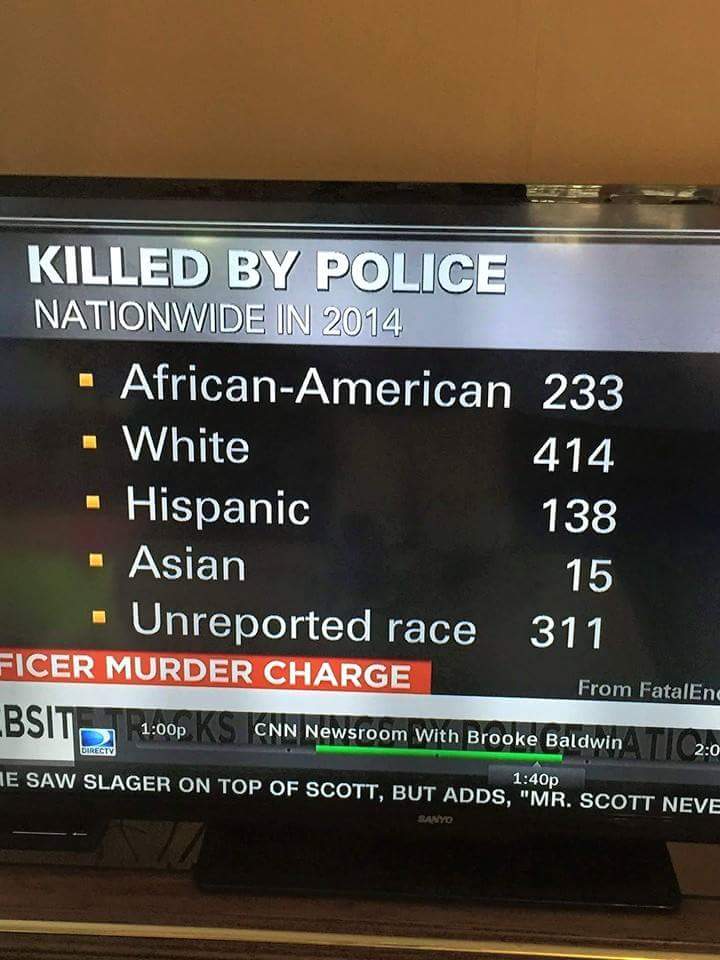
Many, including President Obama, have urged a conversation on race. I have avoided speaking in terms of black and white because I didn’t want to feed existing prejudices. Unfortunately, by my silence, I am also feeding into a dangerous ignorance about the root causes of violent behavior. There is a real elephant in the room when it comes to discussion of race and statistics, here’s a part of it:

image

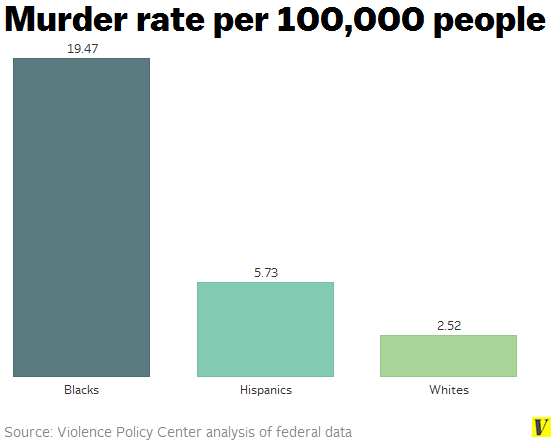
It seems to me there could be a connection between that and the disproportionate violence here:

image

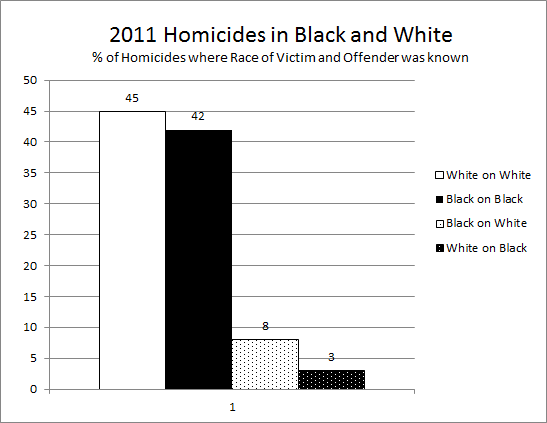
And this is how it breaks down as far as who is murdering who:

image

Media Fueled Ignorance and the Bigger Threat to Black Lives

A few weeks ago I read an article, “I Fear for Our Black Men,” and then began reading the comments in response. I was shocked. Instead of shared sympathy from other black women there was a lot of anger towards black men. From what I gather the complaint is that when a police officer harms a black man it is an outrage and a cause for civil unrest, but when a black man beats his wife or girlfriend nobody cares:

image

Why do we focus on stories about men being victims of police and yet ignore a far bigger problem of women and children victimized by men? Police brutality, while a matter of real concern, is a drop in the bucket of violence in general society and the black community. And the real disproportion is how much attention is focused on their failures rather than the bigger problems. It is straining on the gnat while swallowing the camel.

Which leads me to the topic of government and media complicity. Much is said about disproportionate arrest statistics or incarceration rates. But very little is mentioned about the disproportionately higher levels of violence I highlight above. Apparently we are supposed to obsess on the race only as an explanation and ignore all other factors—factors like resisting arrest, criminal records, dysfunctional homes, etc.

Why Not Build Identity Around Good Behavior Instead of Race?

I would rather talk about behaviors than race. I would rather good people of all races identify with other good people of all races. However, since shared race is how some people choose to build their identity, then I need to address the issue of racial tribalism directly: If you take the side of a person simply because they share your racial tribe identity, then you need to take complete ownership of the bad they do as well and you are a partner in it.

But I would rather we didn’t do that. I say we lose the tribalism motif. I say we stop focusing all of our attention on race and historical grievance. I say we start to address current behavior instead. That is fairer. It is fairer because the vast majority of people (all races) are not criminals. If we are not criminals we should not lump ourselves together with bad actors and defend them simply because we share their skin tone.

What’s in a name?

Standard

Words, the glorified sounds we use to describe our thoughts, are always a matter of interpretation.  For the most part we are able to communicate our ideas accurately enough to have meaningful conversation.  However, language also changes over time, definitions evolve and words find new uses from their original uses.  Language is seldom (if ever) as simple as black and white.

Things get especially complex when we take ideas written in one language and try to translate them into another language.  It is exponentially more difficult when the original language is now archaic and the exact inflection or intentions of the words lost to time.  Certainly there are clues, languages follow patterns or hints from context and translators follow these leads like detectives.  But there’s always that left which remains open to interpretation.

Is it a description or is it a name?

Biblical descriptions of “God” present a challenge.  Here’s the attempts of various translators to take writing in an ancient Hebrew book and convert it to English that illustrate the point:

“And the angel of the Lord said unto him, Why askest thou thus after my name, seeing it is secret?”  (Judges 13:18 KJV)

“He replied, “Why do you ask my name? It is beyond understanding.  (Judges 13:18 NIV)

“Why do you ask my name?” the angel of the lord replied. “It is too wonderful for you to understand.  (Judges 13:18 NLT)

“And the angel of the Lord said to him, “Why do you ask my name, seeing it is wonderful?”  (Judges 13:18 ESV)

“The angel of God said, “What’s this? You ask for my name? You wouldn’t understand—it’s sheer wonder.  (Judges 13:18 MSG)

So, according to the King James translation, we either have an angel named “secret” or an ‘angel’ with a name that is beyond our words.  I would go with the latter judging by the context as I see it.

Taken together different translations give us wonderful, too wonderful to understand, beyond understanding, secret and means “incomprehensible” according to Strong’s concordance.  I do get the impression the meaning is truly incomprehensible, truly something beyond words or human naming and mysterious.

Can God be properly named?

The three letters ‘G’ and ‘o’ and ‘d’ have come to represent the supreme being and divine entity of the Christian Bible.  It is a noun, used like a proper name and a word loaded down with preconceived ideas.  One of those ideas is that something that is the secret mysterious beyond comprehension power behind the entire universe is something that can actually be named.  It is certainly useful to have a placeholder name or common description, but any word used is an infinite understatement.

This is why God was not named openly.  Naming potentially lowers this dimensionally unlimited and timeless being that can be understood with our finite minds.  But it is not blasphemy that concerns me.  What bothers me is that words evolve, words can begin to carry new meaning or different assumptions and be misconstrued.  It seems better that we leave God something beyond comprehension than to ignorantly ‘box in’ the infinite.  At very least we would be wise to see a God beyond our own understanding of a three letter word.

God is not a noun, not a verb or a man…

“God is not human, that he should lie, not a human being, that he should change his mind. Does he speak and then not act? Does he promise and not fulfill?”  (Numbers 23:19 NIV)

That “not human” in verse above is rendered “not a man” in another common translation and ome have taken issue with the New International Version for the departure from gender specific descriptions of God.  But that’s straining on gnats (Matt. 23:24) and making God the equivalent of a homo sapien male is giving men infinitely too much credit and God way too little. 

No, not that I’m saying the Spirit (or Word) of God could not fill the form of a man like a hand in a glove or an avatar becomes a representation of a human being on an internet forum.  But making God just a man is also a vast understatement.  Humanity may bear the “image of God” (Gen. 1:27) and yet we aren’t the beginning and the end, omniscient, sovereign or infinite.

God of the paradox...

Western thinking likes binaries.  The logic of this is true thus that can’t be true is natural for us.  A person can either be alive or dead from our perspective and never both.  Yet, as science takes us to the furthermost ends of the universe, to realms of the almost incomprehensibly large to the infinitesimally small, our normal scientific assumptions break down.

The most brilliant scientific minds of our time have established with convincing theory that both logic and reason taper into oblivion at the bookends of time and space.  On one end a brilliant flash of light, energy and expansion from a source beyond human comprehension.  On the other end black holes both infinitely massive and infinitely small.  At either end there is what appears to be irrationality of something from nothing returning to nothingness.

Matter itself is a mysterious and seemingly impossible duality when brought into focus.  Not only is there is less and less as we zoom in to the level of quantum mechanics, but what is left that remains is a seemingly impossible duality where clearly distinct categories of particle and wave merge into a seemingly irrational both.  It is a paradoxical dualism that demands we look beyond normal scientific assumptions.

There is something incomprehensible.  There is something beyond my understanding and beyond the collective understanding of humanity.  We try to name, explain, categorize the universe.  We attempt to peer around the corner of space-time with theories, mathematics, scientific instruments, reason and logic.  But in the end we live in the mystery of our own existence and we also can live beyond it.

God who is both/and…

Both skeptics of religion and the religious are guilty of creating a God in their own image.  If you’re concept of God is an equivalent to a ‘flying spaghetti monster‘ then you have a small god perspective.  If your idea of God is limited to descriptions and language found in the Bible then you too have a small God perspective.  God is more than the information used to attempt to define God.  God cannot be reduced to mere attributes or human moral constructs.

God is incomprehensible.  Yet, God’s work is also personal, knowable and…

“Though he was God, he did not think of equality with God as something to cling to. Instead, he gave up his divine privileges; he took the humble position of a slave and was born as a human being. When he appeared in human form, he humbled himself in obedience to God and died a criminal’s death on a cross.  Therefore, God elevated him to the place of highest honor and gave him the name above all other names…”  (Philippians 2:6-9 NLT)

…a sheer wonder of a paradox beyond mere human words.

The Customer Is (not) Always Right

Standard

Colorado courts are inconsistent.  Either it is discrimination for a baker to refuse to provide a product that goes against their own moral conscience or it is not.  The courts have ruled two different ways and this seems to reflect the mixed logic (aka hypocrisy) of the general public.

Last year Masterpiece Cakeshop was effectively sued out of the cake making business for refusing to make a cake that was morally offensive to them.  But last week the courts ruled in favor of a bakery that refused a religious customer who wished for a cake to celebrate his own views that offended them.  In both cases an intolerant customer and an intolerant business person clash over services, but only one was ruled as discrimination.

The Right To Moral Conscience

It should not become a lawsuit if a Red Sox fan refuses to bake a “I love Yankees” cake. It not discrimination against a person to refuse to make anything but pro-Boston cakes.

It is not discrimination against a person to refuse to endorse a personally offending message.  A gay placard maker should have every right to turn away Westboro Baptist if they ask for a “God loves Aaron McKinney and Russell Henderson” sign.  An atheist book printer should not be legally pressured into printing Bibles or other Christian literature either.

The idea that a business must provide any service that a customer demands is absurd.  It would be plain ignorant for me to go into a Jewish or Muslim restaurant and tell them they must serve me pork.  It would be even more ridiculous if I were to take them to court accusing them of discrimination against me.  But that is essentially what is happening in these various cases.

True Love and Tolerance is Respectful

Tolerance needs to be a two-way street. If we do not wish to be forced to do things against our own moral conscience, then we should be tolerant of those who refuse to go against their own moral conscience and not force them.

Another blogger, a religious business owner who abstains from drinking alcohol, shared a story about how they dealt with a brewer that wanted their services.  The conflict between desired services and moral conscience was solved amicably without legal fees and any unnecessary drama.  That is the model of tolerance more people should copy.

I believe everyone has a right to their own views (offensive, unpopular or otherwise) and should have freedom to share them.  That, however, does not mean anyone has the right to force another person to violate their own moral conscience.  Love and tolerance means respecting those who disagree with us enough to not force them against their will.

“Do to others as you would have them do to you. If you love those who love you, what credit is that to you? Even sinners love those who love them. And if you do good to those who are good to you, what credit is that to you? Even sinners do that.” (Luke 6:31-33 NIV)

Those are some words that apply equally to all people. If you are against intolerance don’t be intolerant. If you love greater then love enough to not offend those who offend you. Love by the example you want others to follow and not by force of law.

When exception rules…

Standard

image

My boss and I generally get along well.  He has his preferences, I have my own preferences and usually we are able to find an agreement.  But occasionally there are times of conflict as well.

Most of the conflicts are caused by abuse of exceptions.  Exceptions are those times when my usual ‘rules’ are stretched to allow something I otherwise do not tolerate.  Surprises, working weekends or working too late on a Friday are some of my understood (but unwritten) terms.

It is reasonable in the industry I am in that some flexibility is required.  Delays often arise that are no fault of my employer and are the surprises I must tolerate to be reasonable.  Then there are favors or the times I am flexible just because my boss is my friend and I want a good relationship.  I will sometimes break my rules voluntarily as a matter of good will.

However, there seems to be a limit to how many exceptions can be made before the exceptions begin to become the rule.  If I do too many favors soon they become expected entitlements rather than appreciated exceptions. 

When I feel the balance of our mutual self-interests has been violated too far I will respond with protests.  I suppose if my boss would not respond appropriately there would be further reaching consequences.

Broader Application and Implications

Individuals make arrangements between themselves my boss and I do.  Groups of people also make arrangements with their individual parts that allow exceptions to the general rules for representatives of the group or to benefit exceptions within the group.

For example, there is an expectation that if one wants to eat they should work, but we do make exceptions for children and the disabled.  But that list of beneficiaries can eventually grow to include irresponsible adults and those less truly disabled.  It can also morph from being a special exception into an entitlement that is eventually is unfair to those paying the cost and abuse.

If the group never considers the needs of exceptions that is also a failure and negligence.  It may not be at a noticeable cost to the group right away when the weak and minorities are unprotected or considered only an afterthought, but there is a cost even if it isn’t measured in financial losses.  Lack of compassion is a moral loss.

Keeping a Balance of All Factors

This complex mobile of competing interests must constantly be fine tuned to maintain an appropriate balance.  Part of balance is order of priority.  It is recommended in an airliner cabin depressurization emergency that adults put their own masks on first so they aren’t incapacitated and unable to help others. 

image

Rules must always define the exceptions in the same way the gravity that defines the order of a mobile must be respected or chaos will be the result.  The picture of the Liebherr crane mobile above (watch this video) is a prime example.  It is an exceptional display of engineering and some flexibility in weight bearing capacity, yet there are underlying rules that must be followed or the whole system will collapse.

The results of miscalculation, ignoring factors that influence stability and over stressing various structures (social, physical or otherwise) can result in catastrophic failures.  Failure like that of “Big Blue” which fell into a tangled heap on a gusty day:

image

Prevent disasters by finding a balance that puts rules and exceptions in proper order and plans for the winds of life.

L-O-V-E

Standard

Love.  It is a four letter word.  It is something often talked about, a thing sought after by most people, but seemingly rarely understood. 

I am speak specifically about the love that is the bond between two people.  It is something elusive, difficult to define and mysterious in some ways, but a very real part of our human existence.

I’m sure there are as many perspectives on love as there are people.  However, I can think of three main categories that describe tendencies or common landing spots for many people when it comes to the topic of love.

A Cynical (Scientific) View of Love

This is the idea that reduces love to a function of biology.  It is hard to deny sexual attraction as a factor in who people select and who they reject as potential partners.  Base desires (like those described crassly in this article) could seem to explain love away as little more than two people acting in their own mutual self-interest or selfishness.

This is jaded view.  It is backed by scientific evidence.  Statistics do show that factors like height, economic status and appearance do play a significant role.  It would be easy to conclude that who we love is a mere product of pheromones, playing ‘the game’ right and nothing more than that.  It is not an idea without merit.

A ‘Romantic’ (Emotional) View of Love

This is the love of middle school girls (pardon the stereotype) and those starry-eyed idealists who never mature.  This is the territory of the “meant to be” people who confuse their current feelings with “happily ever after” fantasies.  I say fantasies, because I’ve seen these types of relationships based on initial attraction and tingly feelings fail miserably.

Certainly some of these relationships do survive and grow.  But I put the word romantic in apostrophes because this is a very shallow and childish view of love.  It is also a view of love that leads to disappointment both for the prince(sse)s who discover Mr(s) Perfect isn’t actually and also for those who never do find ‘the one’ and miss opportunities right under their nose.

A ‘Christian’ (Transcending) View of Love

Love is a choice.  This goes against conventional and popular ideas of love that put emphasis on the feelings, predestined and chemical side of things.  It is an idea that we can rise above animal instincts, that there is an aspect of our reality not determined by fate and that love can be something more.

I use apostrophes around Christian because the behavior many who profess faith is better described by the views of love I listed prior.  Christian love is supposed to follow the example of Jesus Christ and self-sacrifice.  Sure, some may hide their self-seeking under a layer of righteous sounding excuses and rationales, but underneath the religious veneer there is nothing that separates them from their secular counterparts.

Higher Love Requires Sacrifice

The appropriate Christian view of love centers on commitment over immediate feelings and base sexual urges.  It is not something defined by fleeting teenage hormones or unrealistic Disneyland expectations, but something that develops and slowly grows stronger over time.  It is a mature kind of love that looks beyond outward appearance and sees a heart.

“Love is patient, love is kind. It does not envy, it does not boast, it is not proud. It does not dishonor others, it is not self-seeking, it is not easily angered, it keeps no record of wrongs. Love does not delight in evil but rejoices with the truth. It always protects, always trusts, always hopes, always perseveres.”  (1 Corinthians 13:4-7 NIV)

The views of love that focus on youthful passions is not the kind of love I seek.  I do not want love that is actually lustful desire nor that based on some fairytale perfectionistic delusion.  Instead, the love I see as worth study and emulation is that of an old couple. 

I think of my grandparents who have seen each other through the best and worse of life.  They have a love built on time, experience and wisdom.  They have remained faithful to each other despite their quirks, mistakes and shortcomings.

I sometimes wonder if this kind of love is even possible in this impractical and superficial age.  Still I do hold out hope.

God bless!

Amish Lies: I read it on the internet…, part 2

Standard

I was not planning to do a blog about immunization and autism.  However, an article posted by a social media friend, along with comments from US Senator Rand Paul made recently, prompted my response.  The article makes two claims about Amish, immunization and autism (presented in questions) in the title; and both claims turn out to be false. 

Claim: Amish Do Not Vaccinate

It seemed plausible at first brush, especially given that this small Christian sect mandates an austere lifestyle and rejects many modern conveniences, that they would also not vaccinate.  However, I have an advantage in that I know some Amish people.  But, more significantly, I have a sister (Dr. Olivia K. Wenger, MD) who led a study on Amish and their attitudes towards vaccinations. 

The research of Dr. Wenger and her colleagues, although addressing primarily the opinions of Amish parents about vaccinations and not vaccination rates, is sufficient to disprove the idea that Amish do not vaccinate.  This is some of what they found:

“Among 359 respondents, most (68%) stated that all of their children had received at least one vaccine, and 14% of those surveyed said their children had received no vaccines.”

Amish, in fact most who responded in the study cited above, do vaccinate.  So the idea that Amish do not vaccinate is a myth and lie.  That false claim alone is enough reason to dismiss any other claim found in the article, but in case you are unconvinced, I will address the other claim in the title as well.

Claim: Amish Do Not ‘Get’ Autism

The anti-vaccination article claims there are only three known cases of autism amongst Amish people.  Again, I could’ve accepted this as valid, but mostly because there’s a strong possibility of autism being undiagnosed in this community that is as insular and closed as the Amish community.

However, this too was easily refutable despite no studies directly addressing the topic.  I found research, by Dr. D. Holmes Morton, MD and others, that triples the number of cases of Amish children with autism symptoms:

“In March 2006, Drs. Kevin
Strauss, Holmes Morton and others documented 9 autistic Amish children, which could raise the autism rate of Lancaster Amish community Olmstead supposedly investigated to almost 1/5,000 all by themselves.”

So, both claims are untrue based in readily available evidence.  Unfortunately stories like this are posted as true over and over again by those who are anti-vaccination or sympathetic.  It is soaked up as proof of a link between autism and vaccines, yet it is demonstrably false information.

If your primary cause is truth, then carefully vet your sources!

As a believer in individual freedom, religious liberty and one who is respectful of conscience, I am doubly offended by articles like this.  Quite frankly I am embarrassed to see these types of spurious claims circulated by those associated with my political leanings and religious faith.

Yes, opposition to vaccinations crosses political and religious lines, but is often a topic of conversation amongst my Libertarian and Christian peers.  That some of them regularly repeat this sort of thing as legitimate or present it without question is a source of serious frustration for me.  It does a disservice to even good questions about vaccinations.

Nothing is gained by linking falsehoods to what is true.  If anything, people who are not ignorant of science will ‘throw the baby out with the bathwater’ and reject all that is associated with the falsehood.  In a world awash with information, why should they waste time on a source that lied to them once and/or doesn’t carefully vet their sources?

“Do not spread false reports.”  (Exodus 23:1a)

I realize not everyone is a scientific or critical thinker.  I myself struggle with the discipline required for serious research and that is part of the reason I would not make a career of it.  That said, we do need to take responsibility for the information we disseminate online and owe others our due diligence verifying claims with reliable sources before repeating it.

Sadly, anonymous articles with sensational headlines garner more attention than these unsung heroes who are actively creating solutions for sick Amish children.  There are sources far more reliable than an article that does not even include the name of the author.  Professionals like Dr. Morton and Dr. Wenger have dedicated their careers to studying Amish genetics and medical disorders. 

Footnote: I cite secondary sources for the research of Dr. Wenger and Dr Morton, but if you want to read the original studies, the links are below:

Underimmunization in Ohio’s Amish: Parental Fears Are a Greater Obstacle Than Access to Care

Recessive symptomatic focal epilepsy and mutant contactin-associated protein-like 2.

What is God?

Standard

“The question is: is the way the universe began chosen by God for reasons we can’t understand, or was it determined by a law of science? I believe the second. If you like, you can call the laws of science ‘God’, but it wouldn’t be a personal God that you could meet, and ask questions.”  (Stephen Hawking)

Professor Hawking is one of the most intriguing men of our time.  He is known for his work in the field of physics and was popularized by a book, “A Brief History of Time,” that reached a broad audience.  He is undoubtedly a brilliant mathematician, he can reconstruct the universe in his mind using numbers and formulas, and has basically proved that the universe (including time) had a definite beginning.  But Hawking is agnostic, he sees a big impersonal ‘God’ when he looks into the expanse of space and is probably right about what he sees.

A Small View of God

Many people (religious fundamentalists and atheists especially) subscribe to a small view of God.  They confine God to simple ‘black and white’ human moral or logical thinking (theirs) and essentially demand a God on their level.  But if God is the creative force behind the entire universe, then God is bigger than the universe and also bigger than any of the concepts of morality or logic in the universe.  A big concept of God is a God that transcends universal moral categories and exists above or beyond all human reasoning.  A God bigger than scientific law or religion.

Finding God in Our Humility

Picture humanity as an infant, this earth as our playpen and the universe the house over our heads.  We can see the room, we can speculate about other rooms and theorize about some sort of reality beyond house.  We know house is predictable, the temperatures fall between certain parameters, schedules are somewhat consistent and yet we see through a foggy window that there could possibly be more than the house we are in.  God is like the parent who can come and go, lives beyond the playpen and our childish mind.

Finding God Beyond Our Own Dimensionality

image

But my concept and understanding of God goes beyond that have a celestial parent or personality.  I believe Biblical personification of God is simply an attempt to explain what is inexplicable.  Still, I do believe God can give himself personality to relate to us and is more than some vague life force or abstraction.  I believe God is a spirit or mind, but one that dwells beyond the rules of science that govern the dimensions of this universe.  In other words, God sees the Tesseract of our limited dimensionality and exists beyond all dimensionality.

Finding God Beyond Material Reality

I know this might not appeal to those with the materialism perspective who do not feel inclined to accept reality beyond their ability (or the ability of their scientific instruments, mathematics and logic) to see.  But science has many limits.  We cannot scientifically prove our own consciousness exists and still accept it as reality.  Not everything of our reality is provable by experiment or calculations, some things we must just know and accept as reality, the reality of our consciousness one of those things and the idea of greater consciousness another.

Finding God Beyond Cold Calculation

“Consideration of black holes suggests, not only that God does play dice, but that he sometimes confuses us by throwing them where they can’t be seen.”  (Stephen Hawking)

Professor Hawking and other theoretical physicists seek a ‘unified theory’ for their science, an explanation for the paradoxical discoveries that upset a simpler idea of the universe, but the day it is found (if these ‘dice’ were left within our reach) there will be more questions unanswerable by science.  Questions of why, of purpose and morality are probably beyond math.  Why we do not believe it is immoral for a cat to eat a mouse, both sentient beings, the cat remorseless, and yet to kill becomes an issue of morality for us.  Why care if the weak are exploited?

A Unified Theory of God

We are sentient, we are also moral creatures and our morality needs to enter the grand equation or we are left with little more than cold calculus that starts with star dust then ends with the heat death of the universe.  We know there is something more just as we know we consciously exist and therefore we need a bigger view of God than Hawking’s.  We need a God so big he can be personally involved or, in other words, a unified theory of an intimate and big God.  Consciousness, morality and science offer us a place to start a pursuit of God, but we need to pursue further…

The Personal and Intimate God

“Sir,” the woman said, “I can see that you are a prophet. Our ancestors worshiped on this mountain, but you Jews claim that the place where we must worship is in Jerusalem.”  “Woman,” Jesus replied, “believe me, a time is coming when you will worship the Father neither on this mountain nor in Jerusalem.  You Samaritans worship what you do not know; we worship what we do know, for salvation is from the Jews.  Yet a time is coming and has now come when the true worshipers will worship the Father in the Spirit and in truth, for they are the kind of worshipers the Father seeks.  God is spirit, and his worshipers must worship in the Spirit and in truth.”  The woman said, “I know that Messiah” (called Christ) “is coming. When he comes, he will explain everything to us.”  Then Jesus declared, “I, the one speaking to you—I am he.”  (John 4:19-26 NIV)

Looking Backwards and Beyond the Universe for God

Many search for God, but do they look in the right place to find God?  The religious are like this woman who met Jesus, they seek God in physical objects like places, rituals or books.  The scientific mind looks further out, they search the universe for answers down to the tiniest particles and up to the lights of the sky.  But both are looking outward to find God and truth.  Could it be our mind is the closest possible connection we could ever have to the realities beyond the material, mathematical and time universe?

Finding God in the Moral Mind

If the entire universe can be compressed to the size of a point as small as the period at the end of this sentence, then a God big enough to be simultaneously small is not such a big leap.  So perhaps Hawking, like that woman talking to Jesus, is looking in the wrong direction to find the person of God?