Why the Princess Had to Kiss a Frog

Standard

Those who had early success in the romantic realm can be excused for thinking of it as some sort of magic. For them the “right one” comes along, his awkward introduction goes well enough, then very soon they are entering that world of “meant to be” and marriage.

That was the world of my own teenage fantasies and remained a hope resilient enough to carry me through a decade of disappointment. Reality would slap me in the face over and over again. But, after some moments of despair, I would always refuse to believe the evidence and go with my heart instead: Eventually that mythical creature would come along, the one who loved me for my heart rather than my status or stature, and finally prove my hopes.

Hope, even hope at the level of magical thinking, serves an important role in our survival. Too much concern about the chances and a man might never get out of bed (or leave the cave) and confront the challenges ahead of him. Life requires faith and courage or the ability to overcome fears (based in our previous experience and/or a reasonable assessment of outcomes) and plunge blindly forward into the unknown. It was a bit of foolish hope that enabled our ancestors to continue the species.

Hope Is Not a Strategy

Unfortunately, hope is not a strategy and a positive attitude, while often attractive, is not a guarantee of success. For every miraculous rescue, there have been countless others who likely clung to their hopes until the last hour. Like those students on the ill-fated MV Sewol, desperately clawing for a chance to save themselves to the point of broken fingers as the ferry boat capsized, many have fought hard to survive against the odds and died cold and alone. The lucky ones didn’t spend their last moments in sheer terror and desperation.

Fortune may favor the bold, but if you are a man, in America, standing 5′-2″ tall, and you want to experience happily ever after, then you better be rich or dripping with charisma. Because, whether we like to admit it or not, women (like men) are selective and statistics tend to favor a particular height range in men. First of all, women state their preference for taller men outright and, second, the numbers seem to bear this reality out—taller men have a distinct advantage. Again, this doesn’t mean that men on the average or shorter range have no chance, but it may mean that they will be less sought-after and thus, to be successful, they need to be less selective.

In the religious context that formed my expectations, the above reality was something that I could accept for “the world” and yet wanted to deny as it applied to the women whom I consider to be virtuous. I mean, I’m not extremely short or anything, I’m also in decent physical condition, but I’m definitely not above average in any regard and certainly did not draw as much interest from women as some of my friends who only needed to show up to make the list of the swooned after. It could be a bit nauseating, at times, when women would use me as their means of intelligence gathering about a “hot” friend, but at least I could be a good wingman for my friends, right?

Still, despite my knowledge of how things really worked and a growing number of failures, I remained a hopeless romantic. In fact, as a final act, before everything went totally sideways, rather than retreat or settle (a strategy that had never worked for me anyway) I decided to double down in faith and act in a way that I knew was irrational. For the first time in my life, I would ignore the odds, hope against hope, and find victory over my old nemesis of agnosticism that had always nipped at my heels. This young woman, the impossibility, became symbolic of my struggle to preserve my Mennonite identity and cling to the child-like innocence that had begun to fade over the years.

A Bitter Pill of Truth

What I found, in the end, is that Mennonite girls are really not that different from their secular counterparts. Sure, they wear a different costume, they also have some unique culturally-specific expectations, but being “thirty years old living in Milton” was still something unforgivable to a young woman full of her own ambition. And the more damning truth came in retrospect and in my further consideration of how a medical professional characterized this quixotic pursuit as mere sexual attraction. I had bristled at this. How dare this doctor say such a thing? But I was, like so many others, a victim of my own delusion.

The paradigm of my Mennonite identity came crashing down, despite my best efforts to preserve it, the night that I realized that she was dating and would marry taller more prototypical Mennonite guy over this hopeful fool. The gig was up. And, to pour salt on my wounds, this generically luckier fool, had the audacity to take to social media and crow about his success as a sign of God’s special favor—where did that leave me as the one who had put forward a truly faithful effort and failed? Of course, I didn’t lash out directly against his childish exuberance, I mean had I been successful you may have never heard the end of it. That is some of the reason why I started this blog, to chronicle my irrational belief that the impossible could be made possible and as a means to prove wrong some cynical faithless naysayers.

The hard truth, the wall that I hit, was that my faith could not overcome my lack of tangibles (at least tangibles that mattered) even amongst those seemingly most sincere. On top of that, despite my initial thoughts of this girl having a sort of strange or alien appearance, the reality is that she was a hot commodity amongst many guys. In other words, the very idea that my admiration of her was something special or spiritual fell flat against the clear contrary evidence. I had fought against my cognitive dissonance, refusing to accept things were not as I had imagined they should be, not as I was told they would be, and no amount of faith would change what was true about my culture.

The Rejection of Average

Anyhow, my sentiments aside, the trends that I encountered in selectiveness reflect a growing inequity in the dating economy of our time. This selectiveness is found in the data of various dating sites and as it turns out, is a phenomenon especially true of women. That according to studies cited in an article, “Attraction Inequality and the Dating Economy,” bearing this reality out. The summary is that around 80% of women consider about 80% of men to be of below average attractiveness and thus are competing for the top 20% of men.

It doesn’t take a degree in probability and statistics to see the problem. As a result of a variety of factors (our affluence, ability to travel, exposure to marketing and media, etc) our expectations have gone through the stratosphere. A young woman believes she can afford to wait and is thus willing to turn down a dozen potential suitors who she deems to be too average for her tastes. I mean, why settle for the frog, doesn’t every princess deserve her prince?

Sadly, for women of high expectations, this increased selectiveness does not correspond with increased numbers of above-average men. What it does mean is that fewer men, born with the right physical features and charm, have more women at their disposal. It also means that there are many other men of average stature or appearance who get very little attention. And, whereas marriage used to take some off the market (at least on paper) that is no longer the case. So, as it goes now, many women are eagerly awaiting the opportunity with those few of exceptionally attractive men who do not need to take them seriously and, meanwhile, are ignoring those whom they have a real chance with.

Mennonites Raise the Threshold

In the conservative Mennonite world where I came from the expectations are even more stringent. Not only do we have the influence of Hollywood, but we also have an increased starting commitment that comes with the purity culture teachings that crept in with the embrace of Protestant fundamentalism. In other words, not only are Mennonite young women as superficially selective as their secular counterparts, but they are also afraid to so much as having coffee with an average guy lest they are somehow defiled by this frog—accidentally marry him or something?

But the big difference is that, in the conservative Mennonite world, the guys are also as selective as the girls. Basically the threshold of commitment has been raised so high that a guy wouldn’t dare risk his reputation by dating that average girl. No, he’s going to go for that cherub-faced icon of Mennonite beauty and that’s because he already knows that the average girl will likely reject him as well. So, unlike the secular situation, where the problem is that 80% of the women are only attracted to 20% of the guys, with conservative Mennonites it is also 80% of the guys who are after 20% of the girls.

In such circumstances it is amazing anyone gets married at all. Of course, it helps that conservative Mennonites often marry younger when they are still too dumb to have established their impossible standards. It also helps now that there are more opportunities for Mennonite young people to humanize their other gender counterparts through fun group activities, like global missions or Bible schools. Nevertheless, there are many of average attractiveness who are left behind in the current Mennonite paradigm and I was one of them—there simply was not a path for me to romantic success within that context.

Willingness To Kiss Frogs

Fairytales are not only fun stories, but many of them are also full of meaning waiting to be unpacked and applied like a Biblical parable. And such is the case with the fairytale about the princess who kisses a frog and ends up with a prince. Sure, that never happens literally in real life, but it does illustrate the utility of taking a chance on an unproven commodity and the potential for a change of perspective. That awkward guy in the youth group or in the gym might not seem like much of a catch from a comfortable distance, I mean he can’t even protect himself from tripping over his own feet let alone be that dragon-slaying hero of female fantasies, right?

But sometimes those average guys have something beneath the surface that those other catered to “top 20%” guys don’t have and that is a thing called character. I mean, it isn’t easy being last picked in gym class. A clumsy guy is indeed very aware of his shortcomings and especially while he’s tripping over his words, despite a large vocabulary, to talk to the slightly above average girl (in his eyes) who treats him with that carefully hidden distain. If he just had a chance, if he would just be allowed to show a little of his heart, then maybe he would start to look more and more like a handsome prince rather than an ugly frog?

And not at all saying that we should not take the opportunity to better ourselves. There are plenty of guys and girls who refuse to make any effort to change themselves or adjust their approach to reality and end up repeating the same failure over and over again. They are a lost cause.

But there are many more, like me, who do shine when given a chance. There is a beautiful woman (not Mennonite) who allowed this frog an opportunity to speak into her life. She learned about some of my better qualities. However, more than that, her mere presence in my life created a new kind of strength in me. She gives me something to protect, she gives me a specific purpose and a reason to develop my abilities. I love her because she calls me her “average bhest” and uses that as a reason to embrace rather than disqualify me. It is because she knows that I am dedicated to her, that I am not like the guy who took from her yet never provided the security she needed for herself and her son.

The metaphor of a princess kissing a frog comes from the reality that women need to be selective and the other reality that most men need some catalyst to reach their full potential. The tragic part is that when impossible expectations are allowed to creep in the result is impotent men and dissatisfied women. Even those who are successful in getting married, who do not shed their romantic perfectionism, could very well end up with a relationship on the rocks. We need to renew a practical love, the ability to love people who are just average, like we are, or we will end up missing out on the opportunity for romances that go deeper.

It is time to show some faith where it actually matters. Most men aren’t six feet tall with the face of a Hollywood lead man. Most women don’t look like Ariana Grande or whomever else the entertainment industry puts on their billboards. Most women, whether they know it or not, are more frog than princess. Most men, even the decent ones, are not as worthy as they think themselves to be. Most of us are average. It is time to stop being so full of ourselves and start kissing some frogs. Or we could just keep hoping for that magical prince (or princesses) to show up and love us for no reason other than that we exist. Your choice.


Struggle, Meaning of Life and Suicide

Standard

In the early hours of a Sunday morning, I was lying in bed, engaged in a conversation with an old classmate, now living in New Zealand, about the drug overdose death of someone familiar to both of us and what it says about the times we live in.

The dialogue itself, scattered about my morning routine, was an example of the unique pressure of modern life. Our discourse continued, in fragmented text message form, one of us going to bed soon and the other starting their day, past my short nap, beyond my morning shower, on the way to church and ended only as I entered the sanctuary for worship.

My “smartphone” allowed me a level of connection to someone on the opposite side of the world that was impossible a generation ago. And I am glad to be able to maintain this relationship despite the distance and for the electronic tool in my hand that allowed me to do this once unimaginable feat with ease. But this device also deprived me of some extra sleep, it often interrupts my most private moments, distracts me while driving, and does not allow me to be singularly focused. It comes along to work, to the gym, while I’m out dining, and visiting friends, and is almost impossible to control.

My grandpa had morning chores—mundane physical tasks like feeding animals, milking a few cows or shoveling manure. And grandma too—she would, in the wee hours of the day, go about making breakfast for her working man and the family clan. But they likely did not (at least not frequently) get a surprise visit from a former debate partner (geared up for a discussion of weighty matters) while they were in bed and still seeing double.

So, what did we discuss?

The rate of drug overdoses and number of suicides have risen dramatically over the past few decades and for poor middle-aged white men in particular. Several of my former classmates have now become part of this statistical category and, sadly, their stories are being repeated over and over again across the United States and especially in rural areas. The suicide rate for African American men has actually decreased over the same time period, which has led to some speculation as to why this is the case.

My left-leaning friend speculated this is a product of eroding “white male privilege” and yet all the cases that I am familiar with involved men who were, since childhood, as disenfranchised as anyone by the current system. There was never an erosion for them because they never had this imagined privileged status, they grew up in predominately white communities, from working-class homes, they didn’t go to college, they couldn’t seem to get out of their rut of low-paying jobs, relationship drama or financial woes, struggled against addiction and depression.

No, while true that white men are not a protected class and some do endure a significant amount of bullying and are just expected to take it, I do not see this as the real issue. Men in prior generations went into mines, labored hard under the sun, endured the terror of war, worked long-shifts on the assembly line and all without the help of a psychiatrist to tell them how to feel. They were just supposed to suck it up and keep going, against the odds, for the good of their communities and families—which is exactly what they did.

What has changed?

A more likely explanation for the increase in suicide and drug abuse is a combination of factors rather than one—the evaporation of economic opportunity and dissolution of the family unit and communities, along with the hectic pace of modern life, playing primary roles in the epidemic. A couple of decades ago decent paying manufacturing jobs were plentiful, the community was strong (usually with a local church as the nucleus) and the world’s problems were not constantly being shoved in our faces in a 24-7 on cable news, social media, etc. There have been big changes in rural America and some are impacted more than others.

The media deluge…

In the 1990s Ted Turner’s CNN was a novelty, the breathless reporting of alleged atrocities used to sell the American public on the Persian Gulf War, and only a foreshadowing of the media deluge to come. Two decades later there is almost no escape, there is no time anymore to process the information assaulting us from all angles, and the coverage is by and large negative.

Then there is the explosion of social media. It is a world where we primarily see the highlights of the lives of our friends and skews towards a positive presentation—because nobody wants to be that person.

This alone doesn’t drive anyone into depression and despair. But it certainly can help to feed feelings of isolation, it can never replace in-the-flesh social interaction, and could leave a person feeling overwhelmed. I mean, how can we not be influenced by this endless stream of information? It is a far cry from the time of our grandparents when yesterday’s news arrived in print form and the only scandal that really mattered was that juicy bit of gossip overheard on the party line.

Could it be that we aren’t built to take in the world all at once?

Could it be that we are reaching our capacity to handle and that the most vulnerable are first to fall down under this load?

We should consider the increase in suicides and drug overdoses as the “canary in a coal mine” and an indication of something very wrong in the air of our current culture. Where some have been overcome by the noxious fumes there are probably many more who are gasping for breath or in the beginning stages of hypoxia and need to be guided back to fresh air or they will soon also perish. An overdose of bad news and fear-mongering propaganda won’t take a strong person down, but it might be enough to push the vulnerable over the edge.

Working more for less…

Twenty years ago, in the towns around where I grew up in (prior to the NAFTA disaster) the wheels of industry were still turning and a blue-collar worker could easily make $20/hour or more working a factory shift. Yes, the cracks of outsourcing where beginning to show before this, the domestic steel and auto industry collapsed against cheap foreign imports before then, but it was mostly big urban areas like Detroit and Baltimore that felt the pain. We still proudly produced furniture, paper, bread, cable assemblies, and various other products before these businesses were shuttered.

However, since then we have felt the full brunt of trade policies that primarily have benefitted globalist elites. Since the 1990s, dozens of factory doors have closed in my own immediate area and nothing came to replace them. Well, nothing besides more low paying retail jobs—shopping centers springing up in the same lots, literally, where many men and women once made a wage where they had a chance of economic advancement. The idea that everyone could simply get some additional education and become a computer programmer or a professional with a bachelor’s degree has become the out-of-touch “let them eat cake” statement of the modern era.

Wages have stagnated in a time when costs in housing, healthcare, education, and housing have skyrocketed. The cost of college, for example, has gone up at eight times the pace of wages, in 2016, home prices increased at twice the rate of inflation, and we now spend thirty times what we did for healthcare a few decades ago. And again, this is a change the predominantly white working-class men who, unlike many others in the economy, have no control of their wages and, in addition, are often in direct competition with illegal immigrants for the same jobs. There is no professional licensing to protect the jobs of the yard guy or the drywaller—thus they are forced to work more for less.

Only the wealthy elites and beneficiaries of the welfare system have come out on top. For those taught that their value is in their ability to provide for their own, who are unable to compete in the academic or intellectual realm, prospects can indeed be very bleak and especially when coupled with other factors like failed relationships, lack of community and loss of purpose. It is no surprise that in this environment more are turning to the various means of escape available to them—with suicide being the ultimate expression of their deep despair.

Life without purpose…

The one place where rates of suicide are higher is amongst those who are part of the Native American population. This, coupled with substance abuse, has been a tragic outgrowth of the reservation system for many years and underscores the problem of a purposeless existence. There is not much to do on a reservation. The land is rural and very sparsely populated, the opportunities for gainful employment are extremely limited, basic needs are often subsidized by the government, many succumb to feelings of boredom and/or isolation and decide to end what seems (from their perspective) to be a purposeless life.

I believe the circumstances leading to higher suicides on reservations are very similar to that of many non-Natives living in rural areas. We all have an idea of what we are supposed to be, we have religious and cultural expectations to live up to, but not all are able to overcome the obstacles between themselves and these higher aspirations. Perhaps they were born into a dysfunctional home, sexually abused, are less naturally gifted than their peers, born in a time of declining wages and are unable to compete in the market or attain their life goals? Failure early on can lead a person into self-defeating cycles, especially when there is nobody intervening to help overcome them, and the result is depression, substance abuse, etc.

Men, at least in rural America, are expected to be the “breadwinner” for their families. Those who do not provide are disparaged as “deadbeat dads,” he cannot simply abort his bad decisions, and will be on the hook financially long after his fifteen minutes of fun is up. It is a matter of Christian conscience, the Bible says that a man who does not provide for his own “is worse than an infidel” (1 Tim. 5:8 KJV), and is a standard that is embedded in our laws. And, truth be told, most men don’t need to be told that their children are their own responsibly either. So, naturally, it is no small thing for men conditioned this way to underperform or fail at their duties.

Men unable to provide adequately (according to cultural norms) for themselves or their families will struggle to find great purpose anywhere else. And while there is the “welfare queen” pejorative to describe a woman who fraudulently games the system, women were traditionally dependent on men to provide financially and there is not nearly the same stigma for a woman who is unable provided financially for her own needs. Things may have changed elsewhere, but in rural America, a man who doesn’t pay child support, even for children he is rarely (if ever) allowed to see is considered to be worthless and a bum.

Relationships are less stable than they were when marital commitment meant something and yet, in a time of wage stagnation, men are still expected to carry the financial burden. The purpose religion once brought men (beyond their work and family) has been under withering assault for many years now, but the yoke of moral responsibility has not faded away and leaves many to struggle in the wilderness alone. So it comes as no surprise when men, surrounded by dysfunction, deprived of their purpose and absent of any real help, could see death by their own hands as something honorable.

From an article about veterans returning to ‘normal’ civilian life:

Now one was looking for work in Wisconsin, one had killed himself, and several had returned to Afghanistan to get back into the fight. Most of them wanted to be back there, in their own ways. Like so many vets, they missed the camaraderie. And as with so many vets, their lives at home were defined less by togetherness than by isolation, which took on many forms. Dodd was in Kansas City making aerospace bolts and smoking weed on his breaks to stave off the stress of “dumb-ass civilian questions.” Simpson was working the phones at a call center for the Department of Veterans Affairs, talking to vets who wanted counseling or benefits or sometimes nothing at all, other than to talk with another combat veteran.

Men would rather be in a literal war than alone and stuck in a purposeless life.

Lack of community…

The collapse of community is one thing my left-leaning friend did seem to strongly agree on as a possible explanation for the epidemic of drug use and despair. His definition of community tended towards civic engagement and mine went in the direction of religious involvement, but we both agreed that this is something essential. And that community, real life “in the flesh” community, has been on a precipitous decline and especially in rural America.

This is the trend even in the conservative Mennonite culture I was born into and spent many years of my life. Guilt-driven church attendance may be holding steady, there is certainly more involvement there than in some other segments of society, but there has definitely been a big change in my lifetime. Sunday evening visits became far less frequent, more parents choose to homeschool their children rather than risk other schooling options and the church community has more or less devolved into a conglomeration of cliques. Of the dozens who called me “brother” over the years, as part of religious ritual, only a couple (primarily one family) have checked in to see how I’ve been doing.

A community is one of those underrated privileges. It is a place where you are missed when you’re gone, where a person can live with far less material wealth and still be happy having their place in the social fabric. Even a slightly dysfunctional community offers protections, a social support network, for those that are a part of it and the individual members are all stronger as a result. Communities take many different forms and can center around many different things. It can be as simple as a group of friends who care about each other and do things together. It can be a military unit that is compelled to do drills together, who eat, sleep and live as a group, and where comradery is encouraged.

In rural America, in the past, the church was often a center of a community, a place where people got together for worship, to make perogies together and share each others’ burdens. Church attendance has been in steady decline, “nones” now constitute the largest religious group affiliation, and with this, there has been a parallel decline in mental health.

And organized religion isn’t the only dwindling expression of rural community, volunteer fire departments are having difficulty filling their ranks—people are too busy with their other obligations and do not have the time.

People also have fewer close friends than they once did according to a recent study, in the time between 1985 and 2004 Americans have gone from an average of three close friends to only two, and this implies a shrinking support network.

The increase in social isolation cannot be good for those already vulnerable.

A profile of a vulnerable person…

When I saw a friend request from “Adam Bartlett” it was a name that I recognized immediately and accepted without hesitation.

Adam was a grade below mine in school. He was one of those anonymous in a crowd people, average height, not particularly athletic or anything, friendly enough, and not too different from me other than my being Mennonite. We both went out for football the same year, he quit the team early (which, in my teenage mind, made me think of him as a quitter) and that is pretty much all I knew about him—there was a gap of twenty years before I heard from him again.

It was not too long after connecting on Facebook that I received a message from Adam. We chatted briefly about a mutual acquaintance, my being off work because of an ACL tear, a shared interest in firearms, how he wanted to reconnect with “old friends” because he had few friends anymore, I offered the next weekend might be a possibility and left it at that—we never did get together the next weekend despite my offer and his interest.

However, a month after that he messaged me about his financial woes. He was upside down in his car payments and was hoping that I could help him out with that. I felt bad about his situation. But, I was not in a position to purchase the vehicle and was not very interested even if I did have the extra cash. It was in the course of that discussion where we ventured a little into his relationship problems, he told me his wife stopped paying bills without telling him and things would soon go from bad to worse.

In our next exchange, he asked me for a place to sleep. His wife had moved back with her parents and he told me he was not welcome to stay there. Of course, being that we had just got reconnected, and also considering that I was on the road all week in the truck, I was leery of having him live in my house alone. Still, he definitely needed help. I decided, rather than have him move in, to pay his security deposit and the first month of rent instead.

He accepted this solution. We met a few days later in the Big Lots parking lot where I handed him a check for his rent.

Then, on the spur of the moment, I asked if we could pray together, he said we could. So I put my hand on his shoulder, prayed that he could get his life turned around and hoped my small contribution would make a difference.

Later on, in many different private conversations online, he complained about the hypocrisy of Christians (including his significant other) and would ask me many questions. Why couldn’t these different denominations agree on anything in the Bible? Which denomination was right? How could his wife be so dogmatic about things like Creationism and then cheat on him over and over again?

Adam had basically given up on religion.

He was rightly skeptical too.

However, it seemed that the prayer had helped. He never did use the check that I gave him, he eventually would start to attend church services again, his social media posts seemed more positive, and last I had known he was back with his wife and daughters.

There were still problems at work and at home. Our last conversation, that he initiated, was on the topic of his drinking habits. He told me that alcohol made him honest, even more spiritual, but was frustrated because his wife disapproved. Perhaps I could have called him out a bit more or been a little more forceful with my opinion, because he definitely sounded like an alcoholic excusing his bad habit—but I figured I would not win an argument and, rather than say too much, simply encouraged him to honor his wife.

A year so after our alcohol discussion, I asked, “How have things been going for you?”

He never did answer.

Adam had confided many things and, both for the sake of those struggling and for those who wish to do something to help, I’ve decided to share his story more openly than I would otherwise. His dysfunctional home life was only made worse by the fact that he had been exploited, as a child, by a sexual predator (a college professor) who was only very recently prosecuted for his serial abuses and given a light prison sentence. He had no real friends in the world, he seemed to try to bury his pain using substance, and this coping strategy, evidently, failed him in the end.

In August, less than a year ago, Adam gunned down a man who had emerged from the apartment where his wife had moved and then, using the same handgun, took his own life.

Redemption In An Age Of Unjust Outrage—Should People Be Given Second Chances?

Standard

President Trump’s State of the Union address was very well received and perhaps some of the reason for that being his call for redemption. Two of the special guests had been incarcerated during the Clinton administration (when things like “mandatory minimums” and “three strikes,” often disproportionately impacting minorities, became Federal law) and have been recently given their freedom.

The first mentioned was Alice Johnson who had been convicted in 1996 for her involvement in a cocaine trafficking organization (apparently not the CIA), sentenced to life in prison, and having their sentence commuted by the Trump administration:

Inspired by stories like Alice’s, my Administration worked closely with members of both parties to sign the First Step Act into law. This legislation reformed sentencing laws that have wrongly and disproportionately harmed the African-American community. The First Step Act gives non-violent offenders the chance to re-enter society as productive, law-abiding citizens. Now, States across the country are following our lead. America is a Nation that believes in redemption.

The second guest mentioned, in relation to this redemption theme, was a man named Matthew Charles. Charles, with a face that beamed with gratitude, had been sentenced to 35 years in 1996 for selling crack cocaine in 1996 and became the first prisoner released under the “First Step Act” signed into law recently by Trump.

Like the President or not, this kind of criminal justice reform—after decades of excessive punishments—is something worthy of our praise. It is a first step back towards what once made America great and that being the opportunity to move on from our past failures, both individual or collective, and pursue a better tomorrow together.

Grievance Culture Never Forgives

Unfortunately, while legislative reforms are important, the President can’t undo a cultural progression away from Christian ideas of redemption and towards that of eternal grievance. Those sentenced by an outrage mob in the “court of public opinion” cannot face their accusers, they are denied any form of due process and are rarely, if ever, pardoned.

Media fueled public shaming campaigns, often at the behest of social justice warriors or their sympathizers, have destroyed careers mid-flight over a bad joke on Twitter—who can forget Justine Sacco’s sardonic quip about Africa, AIDS and race? One moment she was an anonymous leftist speaking cryptically about her white privilege to a small circle of friends and the next she is an international pariah for an allegedly racist remark.

Then there is Austen Heinz, the socially awkward genetic researcher and entrepreneur, who was driven to suicide by a bullying campaign led by Huffington Post, Daily Mail, BuzzFeed and other clickbait media sources.

His crime? He mentioned, off-the-cuff, some potential to change feminine scents, which was characterized as being “misogynistic” and “sexist” in one sensational story after another. Who knows what amazing breakthroughs someone as brilliant as Heinz could’ve produced in his lifetime had it not been cut tragically short by those who profit by pushing identity politics and division?

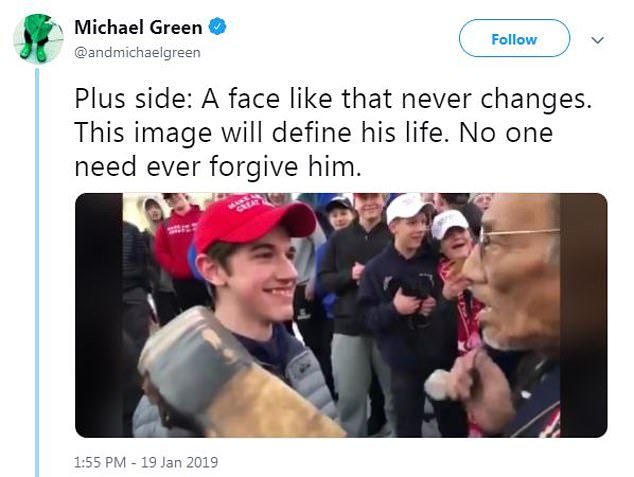
That’s not to say that there is no pushback against this sort of abuse. The wrongly accused boys from Covington Catholic High School are being represented in defamation lawsuits after suffering harassment and threats as a result of a media campaign, involving celebrities and other public figures, to shame them. One of the vicious commentators, Kathy Griffen, who called for their identities to be revealed and falsely accused them of using Nazis signs.

To Forgive Or Not To Forgive?

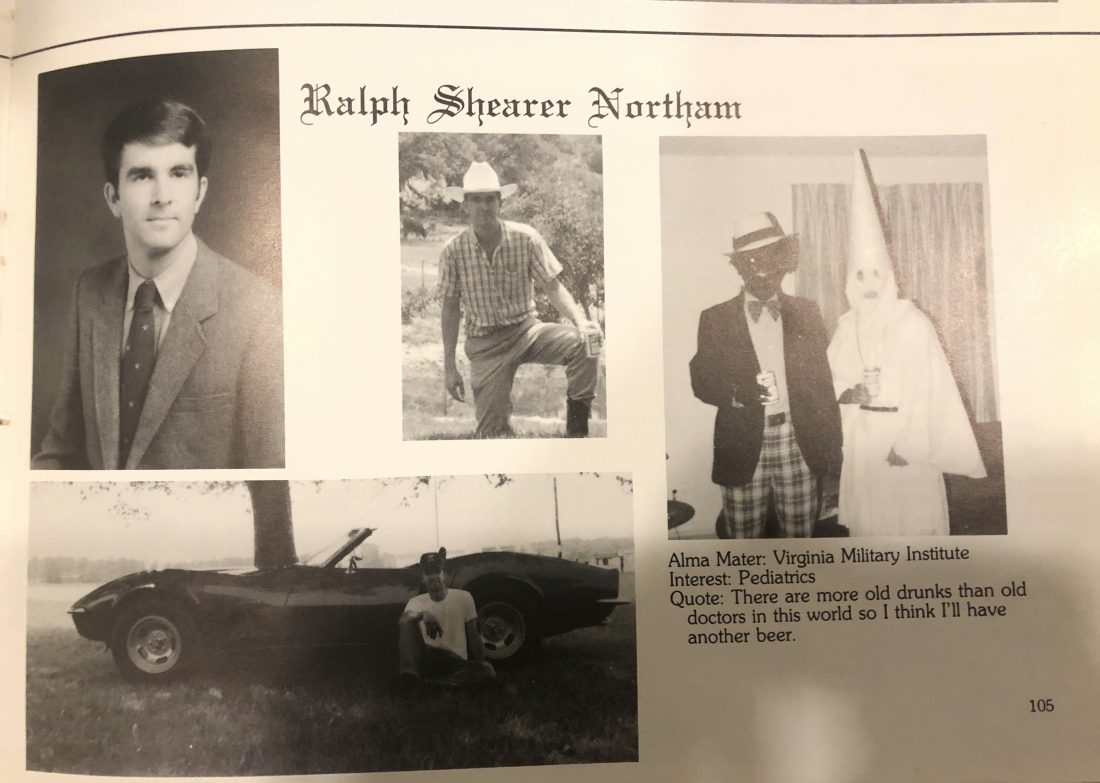
Of course who can forget the Brett Kavanaugh hearings or ignore the current uproar in Virginia over a photo in Democrat Governor Ralph Northam’s medical school yearbook showing a man in blackface with a Klansman?

And that’s not to mention the two sexual assault allegations that surfaced since then against Virginia’s Lt Governor, Justin Fairfax, and a Duke basketball player. Reportedly Fairfax used his knowledge of a young woman’s prior rape allegation being quashed by university officials as a means to victimize her again since he believed she would be unlikely to report as a result of her prior experience.

In all of these cases the evidence and allegations are different. They all should be addressed on their individual merits and in the correct venues. But all are also in the realm of politics and from many years ago, which really does significantly complicate matters. Who or what many believe seems to become more of a matter of whose ideological team you are on or the potential political fallout more than the actual veracity of the claims being made.

Political campaigns have long relied on digging up comments, years old, served up out of context, is simply how the game has been played. That said, that doesn’t take away from the seriousness of the more serious allegations, it is one thing to accuse someone of being a racist, sexist, or liar (largely subjective judgements) and quite another to be accuse them of rape. The latter accusation is either objective reality or it is not, potentially criminal behavior, and definitely reflective of a serious character flaw if true.

Still, with the lessor offenses or with unsubstantiated allegations, at what point do we forgive “human frailty” (as the Wall Street Journal puts it), remember that “all have sinned and fallen short of the glory of God” (Romans 2:10), “judge not lest ye be judged” (Matthew 7:2), and move on? Should we ever treat human failure (real or alleged) like a permanent stain, a reason to always be suspicious of a person, or an irredeemable blemish? I would say no, based on the references provided above, but then…

Maybe Forgiveness Is Only For Some…?

One of the problems with how forgiveness is often used is that is used as a license for our friends and political/religious/tribal peers while simultaneously denying the same privilege to others. This is why a perceived smirk can become a national outrage while actual violence in malls is dismissed as “teenage boredom” and largely ignored.

I’ve long been against collective punishment for individual sins. I’m part of that generation who had Martin Luther King’s “content of character” rather than “color of skin” speech drilled into them and have always made a sincere effort to put that axiom urging judgment based on individual merit to practice. But I’ve found that this steadfast conclusion makes me a relic in the time of intersectionality, group shaming, unforgivable guilt for some and permanent victim status for others.

Perhaps this current generation is a correction to the overly optimistic outlook of my own?

Stereotypes are not entirely baseless, statistics do bear out differences in attitudes, behavior, and outcomes of groups, which could be proof of systemic oppression or simply our own cultural and biological inheritance. There is a reason why many professional athletes are typically of one demographic and chess players are of another, it has to do with discrimination and yet is discrimination based on ability despite coinciding with differences in race or gender. So it is conceivable, as well, that some groups are more likely to become school shooters and for others to me more generally violent as well.

There is a time for generalization…

For there are many rebellious people, full of meaningless talk and deception, especially those of the circumcision group. They must be silenced, because they are disrupting whole households by teaching things they ought not to teach—and that for the sake of dishonest gain. One of Crete’s own prophets has said it: “Cretans are always liars, evil brutes, lazy gluttons.” This saying is true. Therefore rebuke them sharply, so that they will be sound in the faith and will pay no attention to Jewish myths or to the merely human commands of those who reject the truth. (Titus 1:10‭-‬14 NIV)

There may indeed be tendencies of groups that should be called out. That said, I doubt very much that St Paul, in the passage above, is making a case for unforgivingness or collective punishment. No, I’m quite certain that he, as one who once persecuted and killed Christians before his dramatic conversion, understood very much the need for redemption or he himself would forever be condemned. Had he been held to the same standard of today he would likely be completely disqualified from leadership and certainly never embraced as a brother by those whom he harmed.

Forgiveness Is For Those Who Repent.

One of those other problematic teachings that I’ve frequently encountered (particularly in my Mennonite religious culture) is this idea that forgiveness should be bestowed upon all people regardless of what they do or how often. This is based in a misapplication of Christian examples in a way that too often provides shelter for repeat sexual abusers and others who have learned how to game the system.

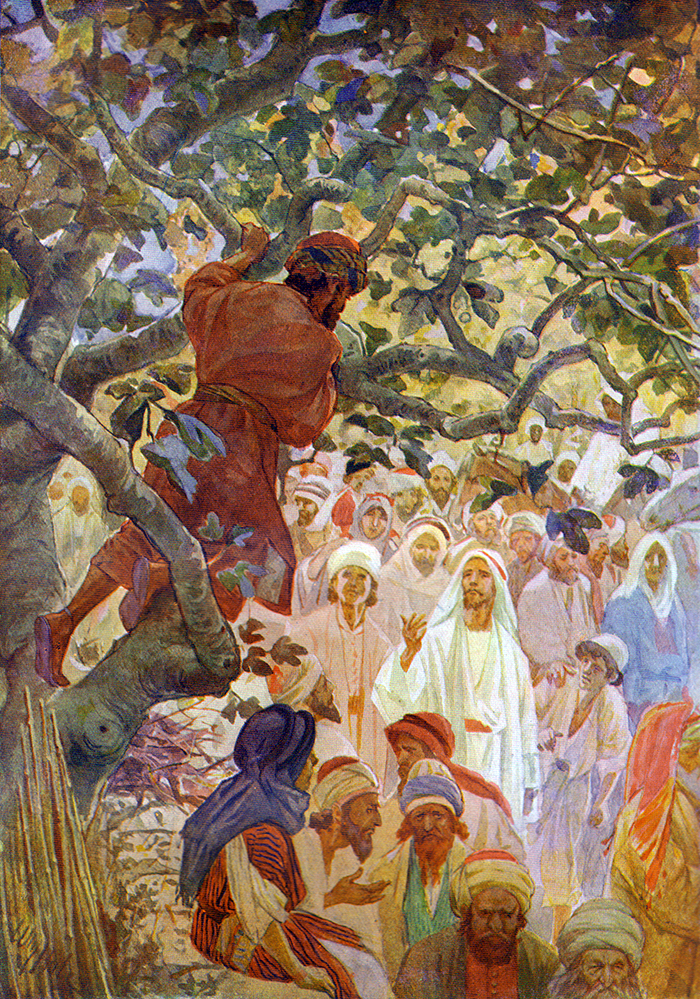
This idea that forgiveness removes any sort of accountability for sin is dead wrong. Sure, Zaccheaus needed to be forgiven for his taking advantage of people as a tax collector, but he also needed to repent of his sin and repentance required taking responsibility (financial or otherwise) for the wrong he had done.

In other words, had Zaccheaus been a child-molester simply admitting the sin or even an “I’m so sorry” speech is not enough, he would need to also face the civil penalties for his actions and also the social consequences as well.

The plea of Jesus on the cross, “Father forgive them for they know not what they do,” was not permission for those in the crowd chanting “crucify him” to go on murdering innocent people or an escape from need for repentance. Those in that outraged mob who called for his death would eventually need to repent and face the consequences of their sins like everyone else.

Forgiveness does not absolve a person from need to repent. Yes, there are times when we need to forgive those who have offended us without them repenting, we should always give a second chance (even 70 x 7 chances) to those who do truly repent (ie: have confessed and also paid the penalties for their sin), but this idea that forgiveness means complete freedom from consequences or removes the need to repent fully is not at all Christian—repentance is a requirement.

So, yes, we must forgive as we want to be forgiven and we should also not hold a grudge against those who have wronged us, but there is no indication that those who do not repent will be forgiven by God and we owe it to them to tell them the truth. Furthermore, according to 1 Corinthians 5:1-12, we should not even associate with a person who calls themselves a Christian and continues to live in unrepentant sin.

So, returning to the question initially asked…

Should People Be Given Second Chances?

The answer is both yes and no.

Forgiveness is something conditional. Jesus called for repentance, saying “go and sin no more” to a woman whom he forgave, and using a parable of a man forgiven a great debt who did not forgive to illustrate the point that forgiveness can be revoked for the unrepentant.

Second chances are for those who acknowledge their error (and repent) or can’t be found guilty of wrongdoing after the matter has been addressed in the appropriate manner.

There should also be allowance for growth—people do mature and change. There should also be some tolerance given to all people, because nobody is perfect, we all have our flaws, and would probably look pretty bad if our lives were put under the microscope of the outrage mobs. However, this tolerance and allowance should not only be for those who are on our team.

For example, we cannot say that blackface is the unpardonable sin of racism in one case and then play it off as a “coming of age ritual” (it certainly wasn’t for me) because our own guy got caught. We can’t treat a boy’s expression as a “facecrime” (thank you, George Orwell) worthy of national contempt while totally ignoring the grown men yelling homophobic and bigoted things (or worse, describe their hateful and intentionally provocative slurs as “preaching about the Bible and oppression” (*ahem* CNN) while simultaneously heaping condemnation on a boy for wearing a MAGA hat and an awkward smile.

That said, I would expect more from a fellow Christian, raised in a good home and under good instruction, than I would from some random dude on the street. Jesus did say that more will be expected from those who are given more (Luke 12:48) and that may mean we hold some to a higher standard. And yet we should also be aware that our own judgment is clouded by prejudice, that we don’t see everything a person is going through or the disadvantages they’ve faced in their lives, and therefore should err on the side of forbearance in all cases.

So there is no simple answers.

I do believe that our culture, due to social media, click-bait stories and a progressive decline in moral values, has veered dangerously away from forgiveness and redemption. We should definitely think twice before joining an outrage mob, we also need to do whatever it takes to keep partisan politics and tribal identities from perverting our judgment, and we should always give as many second chances to others as we would want for ourselves.

No matter your politics, you very well could be the next less-than-perfect person turned into an unforgivable villain by the mob, so keep that in mind next time you see a sensational headline, read a poorly concieved Tweet or watch a video clip without context.

Is Traditional Masculinity Toxic?

Standard

I’ve been extremely critical of abusive men in my blogs, taking on things like blame-shifting, patriarchal and purity cultures. Men who use their natural strengths or positions of authority to take advantage of others are reprehensible and should be called out for their abuses of power.

That all said, I’ve shied-away from using the term “toxic masculinity” to describe male abuses and my reasons for hesitation were confirmed in the past few weeks when the American Psychological Association (APA) claimed that traditional masculinity is harmful and lumped it together with murder, bullying and other toxic behaviors.

This is not an overgeneralization. No, it seems to be a part of broader misandry campaign and, at very least, is a complete misdiagnosis of the problem. It would be like pulling out crime statistics for a particular racial demographic and applying them as criticism to all within that group. That, of course, is stereotyping and unfair to the many who do not fit the broad brush of statistics.

It is true that men, as a category of gender, do dominate statistics for violent crime. However, what is not true is that all men are equally guilty and should be judged on the basis of the bad examples. The vast majority of men have not murdered, raped or otherwise act violently and would never excuse such behavior. I say this as someone who has been around men his entire life: Most men that I know aim to be protectors, not predators.

The Protector and the Predator…

A few weeks ago, before the APA taking aim at traditional masculinity (and an ill-advised Gillette ad) became a topic of conversation, I had started to write a blog to describe two distinct but related categories of male behavior—the predator vs. the protector—and what makes the difference.

The first category (and the one rightfully called toxic) is that of the predatory male. The predatory man is only concerned about his own wants or needs and will use any power he is given to exploit others for his own gain. This includes men who use religion or other means to manipulate others for their own personal gain and especially those who are coercive in pursuit of sexual gratification.

For example, the boyfriend who pressures his girlfriend into sex. I can understand, with teenage hormones raging, that waiting for sex is not easy for a passionate man and know this from personal experience. But there is simply no excuse for the young man who believes his natural urges entitle him. The young man who makes his commitment to relationship contingent on her compliance with his premarital sexual desires (ie: “If you love me, then you will…”) is a predator.

By contrast, the second category, the protective male, consists of men who use their strengths and abilities to serve others. This is not a man without desires. A protective man is tempted to serve his own needs and wants like anyone else. However, a protector is one who chooses to resist any evil or exploitative impulses and follows an example of self-sacrificial love instead. The protective man is even willing to give his own life for the good of others.

Traditional Masculinity Is Not Toxic…

As long as there have been appetites and differentials in power there have been abuses. Much of human behavior has to do with instincts, it is why we breathe, why we seek food to eat and why we desire companionship. This isn’t something that needs to be trained, we observe similar behavior in animals, and is natural.

There is no concern for morality with animals and in the natural world. When a lion, acting on predatory instincts, stalks, pursues and takes down it’s prey, this is not a cause for consternation. We understand that this and “survival of the fittest” is part of life and even how biological life thrives. If predators were removed, as they have found out in Yellowstone Park after wolves were reintroduced, everything in an ecosystem is thrown out of balance and deteriorates.

A young buck does not need any training to be overcome by hormones, to pursue a doe, fight off the competition, and do his thing whether the female consents or not. His sexual aggression is just part of his natural composition, it is not a choice, he is as controlled by his biological impulses as much as the female is subdued by his physical strength and stamina. We cannot make a moral judgment of a creature incapable of moral reasoning or choice.

However, human society works differently and notions of morality are used to push back against some of our baser instincts. Part of this push back has come in the form of tradition. In fact, our traditional morality, that arose in conjunction with religion, formed to provide protection against predatory behaviors. It is Christian religious tradition that has promoted the idea that behavior is a choice and therefore men, unlike deer, should be held accountable for what they do.

Traditional masculinity is not responsible for the toxic behavior of men who choose to act on their most vile and violent imaginations. Quite the opposite. It was the traditional men in my life who taught me to respect boundaries, to save sex for a marital commitment and to offer my life as a sacrifice to the world. It is traditional masculinity that has stood as a protector against predatory animals and opposed to toxic (or what we would traditionally call immoral) behavior.

With Every Strength There Is Weakness…

I would be remiss to claim that everything the APA says about masculinity is baseless. Men so tend towards certain and some of those behaviors are definitely harmful. However, it is one thing to say that men should not bury their emotions nor ever excuse behavior that is harmful to other people or even themselves. It is quite another thing to declare: “…traditional masculinity—marked by stoicism, competitiveness, dominance and aggression—is, on the whole, harmful.”

First of all, there is the question of what traditional masculinity is and if it is truly defined by stoicism, competitiveness, dominance, and aggression—I would argue that it is not. Second, those characteristics also are part of a two-sided coin, one side positive and the other negative, where stoicism becomes loving restraint, competitiveness is a drive to provide, dominance is an urge to explore (pursue science, innovation, etc) and aggression is merely assertiveness.

Not just that, but those things listed are not all bad in and of themselves. In an age where we are constantly told to embrace diversity, tolerance, and inclusion, on what basis can we declare something to be “on the whole” harmful?

I mean, what is really wrong with some friendly competition, say a game of basketball or a Poker (Rook, if you’re Mennonite) tournament, where everyone gets the exercise or thrill of the experience—despite there being a winner and a loser?

It is a sad day when we can’t discern the difference between a harmless playful tussle between boys and harmful bullying behavior. It is an even sadder day when the negative expressions of masculinity are used as a basis to bash the very thing that channels natural male qualities in a socially beneficial and positive direction. It is traditional masculinity that has long urged young men to use their physical strength and competitive nature to make the world a better place for all people and we have succeeded.

The inability of the APA to see traditional masculinity in a more nuanced and balanced way will likely do more much more harm than any good it accomplishes. It is, in effect, an attempt to bully young men, through quasi-intellectual means, into compliance with their own prejudiced worldview and expectations. They fail to see the good in their focus on the bad and have done a disservice, and not only to traditionally masculine men but also to their own profession and all people.

Everyone Is Hurt When Good Men Are Destroyed…

My conservative Mennonite father, the embodiment of traditional masculinity, gave me an example of a man who didn’t use his emotions as an excuse to lash out. This ‘stoicism’ was for the benefit of not only my mother, myself and my siblings, it was also for the men who worked with him. There are many men today who do not exercise this kind of restraint, they become screaming tyrants when things do not go their way and have neglected the tradition of my father, his fathers and our Father:

My dear brothers and sisters, take note of this: Everyone should be quick to listen, slow to speak and slow to become angry, because human anger does not produce the righteousness that God desires. […] Those who consider themselves religious and yet do not keep a tight rein on their tongues deceive themselves, and their religion is worthless. Religion that God our Father accepts as pure and faultless is this: to look after orphans and widows in their distress and to keep oneself from being polluted by the world. (James 1:19‭-‬20‭, ‬26‭-‬27 NIV)

The tragedy of this new targeting of traditional masculinity is exactly the opposite of what is needed in the world. It is the lack of traditionally masculine role models that has led to more toxic behavior in young men. It is not a coincidence that mass shooters come from fatherless homes. Indeed, fatherlessness is a more reliable predictor of future poverty than race and is linked to many negative outcomes for both male and female children.

The real crisis in this country is not traditional masculinity, the real crisis is the lack of traditional masculine role models that often leads to harmful and self-destructive behavior. The real truth is that traditional values have been under assault for a long time now and we are reaping a crop of toxic behavior as a result. But those who are responsible for this destruction, rather than admit their mistake, have decided to double-down and continue to punish the wrong people.

Traditional masculinity is to serve as a protector and provider, the man who looks after the widows and orphans, as James implores. It is the man who reads and obeys the instruction of John the Baptist to soldiers, in Luke 3:14—and doesn’t use his physical strength to extort or do violence to others. He is a man who follows after Jesus who treated women (including his mother) with absolute respect and told men to serve others rather than exploit them:

Jesus called them together and said, “You know that the rulers of the Gentiles Lord it over them, and their high officials exercise authority over them. Not so with you. Instead, whoever wants to become great among you must be your servant, and whoever wants to be first must be your slave—just as the Son of Man did not come to be served, but to serve, and to give his life as a ransom for many.” (Matthew 20:25‭-‬28 NIV)

To conflate toxic behavior with traditional masculinity is not only frustrating to the men who are least deserving of rebuke—it is also convenient cover for abusers and those truly guilty of toxic behavior. Good men do not need to become the scapegoats for predators, but rather need to be appreciated and encouraged to continue to live a healthy and traditional masculine example.

Toxic Behavior Need Not Be Coupled With Masculinity…

I had never liked the term “toxic masculinity” and long suspected that those behind the wording (not the average users of the term) were targeting masculinity itself as much as anything else. But now the cat is out of the bag, the APA and others are lumping my father in with the wolf-whistlers, womanizer’s and Weinstein’s, and I’ve had enough.

My father is not perfect, but he’s not toxic for his traditional masculinity either…

My father spending some toxically masculine time with his grandchildren…

We can and should distinguish between traditional masculinity and toxic behavior. No, that does not mean we bury our heads in the sand and pretend all problems with men started with the social upheaval of the 1960s nor should we deny the reality that extreme expressions of what could be called traditional masculinity are bad. But the extremes of anything are often unhealthy and yet we are able to delineate one from the other.

Furthermore, women can be predatory and violent too. It is true that men are statistically more likely, as a general category, to be violent, but women also can be self-centered and abusive as well. Women, however, often prey on children or other women, usually in less visible or openly violent ways—like destroying reputations through gossip, cyber-bullying or other passive-aggressive means.

And, ironically enough, while reading the sanctimonious blather about toxic masculinity another article popped up on my news feed, “Video shows group of women allegedly trying to attack food court employees…

What?!?

Do we call that toxic feminity and blame traditional female expectations?

Sorry Gillette, APA and all others condemning what you do not truly know, but your campaign is picking the wrong target. Traditional masculinity, at least in a Christian cultural context, has Jesus Christ as the ultimate example and not Bruce Willis.

Traditional masculinity is not the problem, immoral behavior is the problem and women are not guiltless when it comes to sin. We all, male or female, need to repent of our selfish instincts and change our bad behavior to good.

So let’s target the bad behavior, not the gender!

The Last Mennonite Standing — Is a Population Collapse Inevitable?

Standard

A few months ago a Christian friend of mine shared a link to a news story and asked my opinion.

The story, “UK Mennonites end Sunday services after numbers dwindle,” did not seem to apply to my own conservative branch of the Mennonite denomination.

My initial thoughts were that this was one of those wacky liberal churches and therefore not relevant.

However, upon further reflection, I realized that my own brand of Mennonite is not impervious to cultural trends and, despite all the babies crying on Sunday mornings now, we could face a similar population collapse down the road.

Headlines about record-low fertility rates in the US or an unprecedented population collapse in another nation might seem irrelevant to our own situation.  But they can also give some indication of the patterns, telltale signs and changes in behavior that come before such events.

I’ve heard people say that we, as conservative Mennonites, are “50 years behind society” and there seems to be some truth to that.  I know with the advance of technology (like that which makes this blog possible) the pace of change is now quicker than most would have imagined a generation ago.

The conditions that allowed the Mennonite tradition to continue for hundreds of years are disappearing, and quickly.  It does not seem we are in an especially strong position to cope with the new social, economic and technological realities.

This generation could very well be the last.

Here are some factors that could determine where things go from here…

#1) We grow mostly because we have big families and convert our own children.  Like it or not, “Mennonite” is an ethnic group—complete with unique genetic disorders and a game based on our common surnames.  Yes, we do have some converts from the “community folks” and yet most of us came from Mennonite or other established Anabaptist stock.  If our birth rates were to continue to drop (as they have been amongst Mennonites in North America), then there will likely be some problems down the road.

#2) Marriage is being postponed and even avoided altogether, thereby decreasing birth rates.  Mennonites seem to be taking cues from society when it comes to committed relationship.  But, unlike society, we do not have children outside of marriage and therefore our postponing of marriages means older mothers and fewer children, and that is assuming they will marry eventually.  I just had a young woman (maybe mid-twenties) ask me to do a blog to advise her and her friends on how to tell pesky guys to get lost—not an unusual sentiment.  It seems women from conservative backgrounds are becoming less interested in marriage and motherhood, and that is a death knell to a church that can’t bring in more than an occasional convert from outside our own existing gene pool.

#3) The feeder system from Old Order groups and elsewhere could dry up.  It is not a big secret that Mennonites migrate from conservative to liberal.  My own church has lost many born into it and the casualties have always been offset with those gained from other groups more conservative than our own, or those escaping expensive land prices in overdeveloped Lancaster County.  But this means of growth via a continued supply from upstream (or downstream?) is not guaranteed.  It could change as economic pressures increasingly encroach on the Old Order lifestyle.  It is harder to support big families with higher land values, a tougher regulatory environment, rising healthcare costs, etc.  We can’t count on migrants for growth.

#4) Urbanization and loss of an agricultural lifestyle results in cultural change.  My grandparents moved up out of the Franconia Conference territory (near Philadelphia) in the 1960s to begin farming where the land was cheaper and roads less congested.  My grandparents have remained relatively unchanged in the way they dress since that time.  However, their friends “back home” have changed dramatically both in dress and perspective.  There are still a small number of “breakaway” conservatives in that region, but the main body of Mennonite churches there are extremely progressive and their trends could give us some indication of our own future.

#5) The decline of meaningful brotherhood and rise of alternatives reduces interest.  The Amish were right to identify transportation technology as a threat to community.  We might pride ourselves for having stronger communities than the church down the road (a disputable claim) and yet would we compare favorably to prior generations?  I know that even in my own three-decade life span there has been a dramatic change.  We seem less closely knit and more quick to leave for the church up the road rather than come together as one community of diverse members.  We do more world travel, have more activities for every specialized interest or age group, and are kept very busy.  However, we are also fragmented with less vertical integration, more homeschooled children, and less everyday connection—resulting in weaker communities.  Our communities could eventually disintegrate completely as they lose relevance.

#6) Lack of foresight and appropriate faithful preparation is endemic.  Part of the reason I’m writing this blog is because nobody else is talking about this.  We are chronically unprepared for change.  It seems many conservative Mennonites have their heads buried in the sand (or simply buried in day-to-day business and family affairs) and do not see trends coming down the pike.  There appears to be very little effort on the part of the ordained leadership to account for changes in culture (or technology) and even less effort to respond in a positive or productive manner.  Few advocate for a faithful and deliberate approach to problems.  We miss opportunities to increase our effectiveness because we do not utilize the greater means available to us.  We perish for lack of vision.

#7) In the void of thoughtful preparation, what results is only fearful reaction and hasty retreat.  Mennonites, like other Christian fundamentalist groups, began to withdraw from strategic high ground after being blindsided by the pushback against the state endorsement of religion in public schools and the rise of secularism.  Many decry, “They took prayer out of school!” but the sad reality is they did not remove prayer and a faithful witness from schools—we did!  We trembled like King Saul facing the Philistine giant and removed our children and influence.  We did not read 1 John 4:4, “greater is he that is in you, than he is in the world,” and believe.  It is little wonder why nobody believes us when we try to convince them of our great God.

#8) Our missions are often without purpose and out of touch.  I know a young woman (a very sweet person and sincere Mennonite) who told me, “hearts don’t change,” in response to a circumstance outside her experience.  I was astonished at the cognitive dissonance on display and it made me wonder why she was spending thousands of dollars to be at IGo Adventures and Spouse Seeking Institute in Thailand.  It reminds me of the time when we formed a committee at my church to discuss local missions where mailing out more tracts seemed to be the idea with most traction and nothing practical ever came of the committee.  Needless to say, I am not very optimistic about our abilities to do effective outreach.

Is a Mennonite population collapse in North America inevitable?

I don’t know.

I’m not expecting our complete extinction.

I’m pretty sure the Mennonite name will continue on in one form or another.

For instance, we do have a list of genetic disorders that will carry on our legacy.

But, as a religious culture and tradition?

I believe that depends.

It depends on how we approach the issues listed in #1-8 above.

Will we address problems head-on and work through them deliberately or be blindsided?

Will we adjust our thinking and adapt our methods as needed?

Or will we (like the dying Shaker movement) use hope as a strategy?

Nothing is written in stone yet.  But I do know that the conservative Mennonite culture is a frustrating place for innovative and forward-thinking people.  Old habits, functional fixedness, inability to think outside the box and a “don’t rock the boat” mentality all stand in the way of a faithful and vibrant future.

We need to ask and answer the hard questions rather than avoid them.  We should be taking note of trends, and be confronting them collectively as a group.

Notice a growing number of older singles?

Look into the Moravian option or at the very least reconsider the faithless courtship teachings that have created the current mess.  There is no reason why we should pretend there’s nothing that can be done.

Wonder why our missions are ineffective?

It could be that we are isolating our children rather than trusting God and teaching them to live in fear rather than faith.  They can’t empathize or understand anyone outside the Mennonite culture.

Where do we go from here?

It is up to you.  But, if you don’t want to be the last Mennonite standing, I suggest it is time to remove the stale items from the shelves and introduce some fresh ideas.

Change is inevitable.

Be proactive.

Baltimore: Race, Rage, and Reality

Standard

As fires rage in Baltimore, my thoughts go to the many good people of all races harmed by those who excuse their own destructive and abusive behavior. Mob violence only adds to injustice.

A (Completely Open and Honest) Conversation About Race and Violence

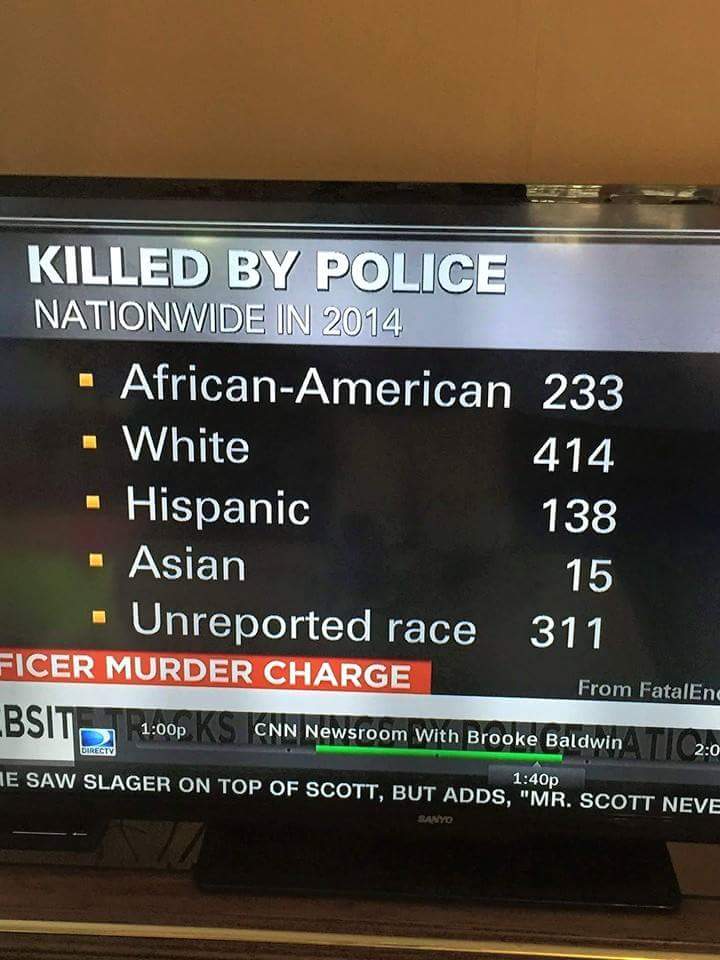
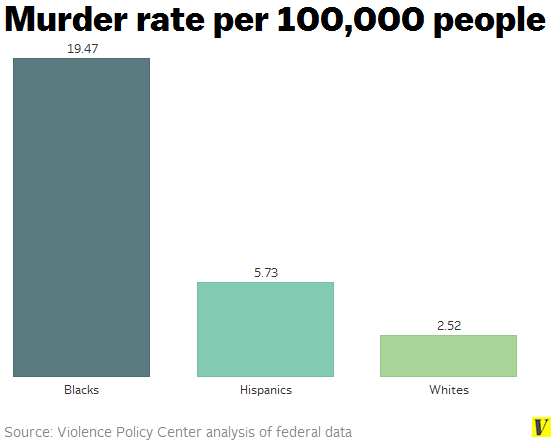
Many, including President Obama, have urged a conversation on race. I have avoided speaking in terms of black and white because I didn’t want to feed existing prejudices. Unfortunately, by my silence, I am also feeding into a dangerous ignorance about the root causes of violent behavior. There is a real elephant in the room when it comes to discussion of race and statistics, here’s a part of it:

image

It seems to me there could be a connection between that and the disproportionate violence here:

image

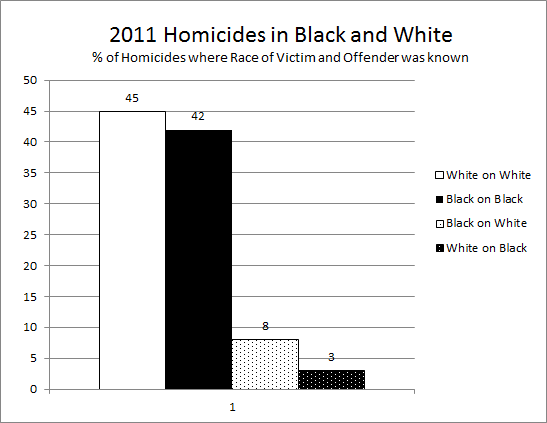
And this is how it breaks down as far as who is murdering who:

image

Media Fueled Ignorance and the Bigger Threat to Black Lives

A few weeks ago I read an article, “I Fear for Our Black Men,” and then began reading the comments in response. I was shocked. Instead of shared sympathy from other black women there was a lot of anger towards black men. From what I gather the complaint is that when a police officer harms a black man it is an outrage and a cause for civil unrest, but when a black man beats his wife or girlfriend nobody cares:

image

Why do we focus on stories about men being victims of police and yet ignore a far bigger problem of women and children victimized by men? Police brutality, while a matter of real concern, is a drop in the bucket of violence in general society and the black community. And the real disproportion is how much attention is focused on their failures rather than the bigger problems. It is straining on the gnat while swallowing the camel.

Which leads me to the topic of government and media complicity. Much is said about disproportionate arrest statistics or incarceration rates. But very little is mentioned about the disproportionately higher levels of violence I highlight above. Apparently we are supposed to obsess on the race only as an explanation and ignore all other factors—factors like resisting arrest, criminal records, dysfunctional homes, etc.

Why Not Build Identity Around Good Behavior Instead of Race?

I would rather talk about behaviors than race. I would rather good people of all races identify with other good people of all races. However, since shared race is how some people choose to build their identity, then I need to address the issue of racial tribalism directly: If you take the side of a person simply because they share your racial tribe identity, then you need to take complete ownership of the bad they do as well and you are a partner in it.

But I would rather we didn’t do that. I say we lose the tribalism motif. I say we stop focusing all of our attention on race and historical grievance. I say we start to address current behavior instead. That is fairer. It is fairer because the vast majority of people (all races) are not criminals. If we are not criminals we should not lump ourselves together with bad actors and defend them simply because we share their skin tone.

L-O-V-E

Standard

Love.  It is a four letter word.  It is something often talked about, a thing sought after by most people, but seemingly rarely understood. 

I am speak specifically about the love that is the bond between two people.  It is something elusive, difficult to define and mysterious in some ways, but a very real part of our human existence.

I’m sure there are as many perspectives on love as there are people.  However, I can think of three main categories that describe tendencies or common landing spots for many people when it comes to the topic of love.

A Cynical (Scientific) View of Love

This is the idea that reduces love to a function of biology.  It is hard to deny sexual attraction as a factor in who people select and who they reject as potential partners.  Base desires (like those described crassly in this article) could seem to explain love away as little more than two people acting in their own mutual self-interest or selfishness.

This is jaded view.  It is backed by scientific evidence.  Statistics do show that factors like height, economic status and appearance do play a significant role.  It would be easy to conclude that who we love is a mere product of pheromones, playing ‘the game’ right and nothing more than that.  It is not an idea without merit.

A ‘Romantic’ (Emotional) View of Love

This is the love of middle school girls (pardon the stereotype) and those starry-eyed idealists who never mature.  This is the territory of the “meant to be” people who confuse their current feelings with “happily ever after” fantasies.  I say fantasies, because I’ve seen these types of relationships based on initial attraction and tingly feelings fail miserably.

Certainly some of these relationships do survive and grow.  But I put the word romantic in apostrophes because this is a very shallow and childish view of love.  It is also a view of love that leads to disappointment both for the prince(sse)s who discover Mr(s) Perfect isn’t actually and also for those who never do find ‘the one’ and miss opportunities right under their nose.

A ‘Christian’ (Transcending) View of Love

Love is a choice.  This goes against conventional and popular ideas of love that put emphasis on the feelings, predestined and chemical side of things.  It is an idea that we can rise above animal instincts, that there is an aspect of our reality not determined by fate and that love can be something more.

I use apostrophes around Christian because the behavior many who profess faith is better described by the views of love I listed prior.  Christian love is supposed to follow the example of Jesus Christ and self-sacrifice.  Sure, some may hide their self-seeking under a layer of righteous sounding excuses and rationales, but underneath the religious veneer there is nothing that separates them from their secular counterparts.

Higher Love Requires Sacrifice

The appropriate Christian view of love centers on commitment over immediate feelings and base sexual urges.  It is not something defined by fleeting teenage hormones or unrealistic Disneyland expectations, but something that develops and slowly grows stronger over time.  It is a mature kind of love that looks beyond outward appearance and sees a heart.

“Love is patient, love is kind. It does not envy, it does not boast, it is not proud. It does not dishonor others, it is not self-seeking, it is not easily angered, it keeps no record of wrongs. Love does not delight in evil but rejoices with the truth. It always protects, always trusts, always hopes, always perseveres.”  (1 Corinthians 13:4-7 NIV)

The views of love that focus on youthful passions is not the kind of love I seek.  I do not want love that is actually lustful desire nor that based on some fairytale perfectionistic delusion.  Instead, the love I see as worth study and emulation is that of an old couple. 

I think of my grandparents who have seen each other through the best and worse of life.  They have a love built on time, experience and wisdom.  They have remained faithful to each other despite their quirks, mistakes and shortcomings.

I sometimes wonder if this kind of love is even possible in this impractical and superficial age.  Still I do hold out hope.

God bless!

Amish Lies: I read it on the internet…, part 2

Standard

I was not planning to do a blog about immunization and autism.  However, an article posted by a social media friend, along with comments from US Senator Rand Paul made recently, prompted my response.  The article makes two claims about Amish, immunization and autism (presented in questions) in the title; and both claims turn out to be false. 

Claim: Amish Do Not Vaccinate

It seemed plausible at first brush, especially given that this small Christian sect mandates an austere lifestyle and rejects many modern conveniences, that they would also not vaccinate.  However, I have an advantage in that I know some Amish people.  But, more significantly, I have a sister (Dr. Olivia K. Wenger, MD) who led a study on Amish and their attitudes towards vaccinations. 

The research of Dr. Wenger and her colleagues, although addressing primarily the opinions of Amish parents about vaccinations and not vaccination rates, is sufficient to disprove the idea that Amish do not vaccinate.  This is some of what they found:

“Among 359 respondents, most (68%) stated that all of their children had received at least one vaccine, and 14% of those surveyed said their children had received no vaccines.”

Amish, in fact most who responded in the study cited above, do vaccinate.  So the idea that Amish do not vaccinate is a myth and lie.  That false claim alone is enough reason to dismiss any other claim found in the article, but in case you are unconvinced, I will address the other claim in the title as well.

Claim: Amish Do Not ‘Get’ Autism

The anti-vaccination article claims there are only three known cases of autism amongst Amish people.  Again, I could’ve accepted this as valid, but mostly because there’s a strong possibility of autism being undiagnosed in this community that is as insular and closed as the Amish community.

However, this too was easily refutable despite no studies directly addressing the topic.  I found research, by Dr. D. Holmes Morton, MD and others, that triples the number of cases of Amish children with autism symptoms:

“In March 2006, Drs. Kevin
Strauss, Holmes Morton and others documented 9 autistic Amish children, which could raise the autism rate of Lancaster Amish community Olmstead supposedly investigated to almost 1/5,000 all by themselves.”

So, both claims are untrue based in readily available evidence.  Unfortunately stories like this are posted as true over and over again by those who are anti-vaccination or sympathetic.  It is soaked up as proof of a link between autism and vaccines, yet it is demonstrably false information.

If your primary cause is truth, then carefully vet your sources!

As a believer in individual freedom, religious liberty and one who is respectful of conscience, I am doubly offended by articles like this.  Quite frankly I am embarrassed to see these types of spurious claims circulated by those associated with my political leanings and religious faith.

Yes, opposition to vaccinations crosses political and religious lines, but is often a topic of conversation amongst my Libertarian and Christian peers.  That some of them regularly repeat this sort of thing as legitimate or present it without question is a source of serious frustration for me.  It does a disservice to even good questions about vaccinations.

Nothing is gained by linking falsehoods to what is true.  If anything, people who are not ignorant of science will ‘throw the baby out with the bathwater’ and reject all that is associated with the falsehood.  In a world awash with information, why should they waste time on a source that lied to them once and/or doesn’t carefully vet their sources?

“Do not spread false reports.”  (Exodus 23:1a)

I realize not everyone is a scientific or critical thinker.  I myself struggle with the discipline required for serious research and that is part of the reason I would not make a career of it.  That said, we do need to take responsibility for the information we disseminate online and owe others our due diligence verifying claims with reliable sources before repeating it.

Sadly, anonymous articles with sensational headlines garner more attention than these unsung heroes who are actively creating solutions for sick Amish children.  There are sources far more reliable than an article that does not even include the name of the author.  Professionals like Dr. Morton and Dr. Wenger have dedicated their careers to studying Amish genetics and medical disorders. 

Footnote: I cite secondary sources for the research of Dr. Wenger and Dr Morton, but if you want to read the original studies, the links are below:

Underimmunization in Ohio’s Amish: Parental Fears Are a Greater Obstacle Than Access to Care

Recessive symptomatic focal epilepsy and mutant contactin-associated protein-like 2.

The Dilemma of a Colorful Thinker

Standard

I write this post with trepidation. I have been accused before of being too open with my thoughts by some. But I have been told by others that I am very guarded about my personal life and have been urged to express more of that. The truth is that my sharing is often intentionally not vulnerable. Talk may be cheap, but sharing my innermost feelings always comes with an emotional price tag and the risk feels too great. I can discuss abstract ideas for hours without wearying, but when I lay my deeper feelings out it leaves me exhausted, often also feeling degraded and disappointed.

I believe all people desire affirmation or acceptance. We also want to maintain our own separate identity, to be different from others and still be accepted. I had that conflict growing up as a religious minority. I wanted to be identified with my unique heritage. However, I also wanted to be treated as a unique individual and resisted being cornered with the many stereotypes of classmates. Questions, frequently asked without ill-intent, would often be framed as statements categorizing me, “you are X therefore you do Y and Z…”

Uniquely Mennonite; also a Unique Mennonite

I was born into a Mennonite home. Mennonites are a small Christian sect, a product of the Anabaptist movement that swept through Europe in the 1500’s and are known today for their traditional way of life and non-violent stance. Mennonite is both a religious denomination in that ‘members’ conform to certain established standards and, because historically many members come from within existing Mennonite families, it can also classify as a distinct ethnic group.

Most Mennonite children attend private schools and some, more frequently over the past couple decades, are home schooled. However, my parents chose differently, my siblings and I all attended the local public school. It was a consequential decision and a source of some inner turmoil for me as well. I am a proud alumnus of Lewisburg Area High School, yet there was a time where I begged my mom to home school me and throughout my schooling I always identified more strongly with my Mennonite sub-culture.

At school I conscientiously did not join my classmates in various activities. I would stand respectfully and silent during the reciting of the pledge of allegiance. As a devout Christian, I believed my allegiance was owed to something greater than country and I felt I could not pledge to anything besides God. I was separated in other ways as well. I did not grow up with a television at home, so I was out of the loop as far as popular culture and could not identify with much of the chatter about this or that celebrity. I didn’t wear shorts in the summer. I was odd.

But, in church, I did not always identify well with my Mennonite peers either, they had their own school experience and cliques. Prayers by church leaders would give specific mention of the students and staff of the Maranatha Christian School, but would leave out those few of us who attended elsewhere and I noticed it. The neglect of mention was completely unintentional, but it did contribute to a feeling of not mattering, that feeling was a source of insecurity then and lingers in my mind today. I never felt I fit into my school or church culture.

I savored my independent mindedness. I could feel privileged over both my public school and Mennonite peers at times. I had a spot amongst the misfits in both categories too. But, my finding a place among the misfits was to still feel excluded from the mainstream of both settings and was to be a double misfit. It was exclusivity with some exclusion or at least I felt excluded. I had one foot in with mainstream American thinking, with another in a culture that celebrates a persecuted past, and with that a mixed identity all my own.

My Place Amongst the Persecuted

Mennonites have a long memory. We are dutifully reminded of acts of gruesome torture committed against our people from hundreds of years ago. There’s a book, Martyr’s Mirror, nearly as sacred as the Bible in many Mennonite (and Amish) homes, which is basically a chronicle of the violence done to Christian believers. The book includes haunting etchings of the terrifying ends of some who would not recant their faith under trial and these stories help shape Mennonite identity as a persecuted minority.

image

Torture of Geleijn Cornelus, Breda, 1572

Mennonites have a mistrust of mainstream society. Part of it is in a product of a religious emphasis to intentionally maintain a ‘non-conformed’ outward appearance and lifestyle. But the other big part is a real fear that persecution is just around the corner and that we could all soon suffer the same fate as our spiritual/ethnic fathers. Mennonites (and Amish) have been so insular and so separated from mainstream society that they actually have their own unique genetic disorders. Many still maintain their own German dialect, commonly referred to as “Pennsylvania Dutch” or “PA Dutch” for short, and church outsiders are referred to as “English” by Amish people.

The irony of it all is that Mennonites are more frequently adored than they are despised. Our biggest critics tend to be those who are disgruntled ex-members or those who had a bad experience in one church and judge all Mennonites based in it. We are treated both with respect and also patronizingly at times. My sister, a medical doctor, was once asked by a non-Mennonite if she would be interested in cleaning houses or babysitting, which could be taken as an insult to a person who was qualified for much more. Many have assumed my ignorance as well and apparently because of my rural and religious upbringing.

People do judge by outward appearances. People do make prejudiced assumptions based on ethnic heritage or religious connection and I have experienced this first hand. I believe that is likely why I have instinctively classified myself with the victims of prejudice rather than with the perpetrators. My unique upbringing may have been the reason why I was fascinated with history of racism in America. I read books; some of them required reading, but many others by curiosity and choice. The titles escape me, but I remember experiencing the civil rights era from the perspective of a woman in the NAACP, then living life as a young woman in Japanese internment camps and later spending time with a fictional lawyer named Atticus Finch.

My Struggle to Find Acceptance

I also have another identity and that one created in my slow development that earned me nicknames which included “micro” in them. I was short and small for my age. I was a late-bloomer beyond even my then diminutive size. I was older in my class, a polite and respectful student, I would often find more in common with adult teachers than my age-group peers, I had keen interest in history, was knowledgeable, but was also very innocent. I had little more than platonic interest in girls until my late school years and had mostly kept a safe distance from them. I did not seem to draw a whole lot of female attention either. I was an introvert in a crowd and shy around women.

With my struggle with stature, with a lack of strong social skills, athletic abilities, or other especially developed talents (besides being a non-stop daydreamer with some artistic gifts) and having not received an abundance of popular attention, I developed a bit of an inferiority complex. It only intensified as I became interested in dating and noticed many girls were more interested in a muscular, square shouldered or smooth talking male figures and I realized that just wasn’t me. I was this sensitive bundle of analytical thoughts without an adequate ability to express them. It was also furthered by the fact that I felt I was a misfit. I was way too religious for the more secular public school girls, but I was way too nuanced and philosophical for the cut-and-dried products of my own conservative religious culture.

For whatever reason, fate or fortune, I struck out with the first Mennonite girl I asked and that experience was where my confidence really began to wane. I had a an acute awareness of nuance differences of how people treat each other and knew too well how girls treated the ‘cool’ guys compared to those less popular. I was not disliked or mistreated. But I was also not that quintessential Mennonite guy either. It seemed the average Mennonite girl wanted this simple, macho, disinterested, reserved fellow and I did not fit that conventional mold. I was complicated; I alternately talked too much while not saying enough of the ‘right’ things, was fully Mennonite in some ways and not enough in others. I also lucked out with a church full of first cousins.

I was a deep-thinker, a conscientious person, fiercely loyal, told multiple times (by marriageable women) that I would make a wonderful husband, earnestly faithful, protective and gentle. I wanted to be the hero of the woman I admired, unfortunately I always seemed to play the cards of the villain or that’s how it felt my sincere efforts were received. It is against my nature (or maybe my Mennonite training) to harbor ill-will towards anyone. But feelings of rejection (both real and perceived) are as a poison to the soul. I have had my flashes of misogyny or jealousy, with those feelings immediately followed by longer moments of self-loathing and contempt for everything I was or was not. I was a victim of bad-timing, I was disadvantaged by my genetics, I was unfairly categorized and felt it all to be an injustice.

image

Drowning of Mattheus Mair, Wier, 1592

It may be irony, but it was black women who later affirmed my strengths and restored some of my confidence lost along the way. Like in the books I read, where I could identify with the female minority lead character, I felt minority women could somehow understand me and with them is where I felt most accepted. I was treated like I mattered. It did not hurt that some were educated beyond my Mennonite peers and could appreciate discussions of philosophy, psychology, sociology, identity and race.  Not wanting to produce a stereotype about Mennonites, but I would probably be more popular with my ethnic kinfolk if I would shoot more deer, get a big diesel truck, be an outstanding volleyball player and learn to love card games.

The Schizophrenic Demands of Insecure People

We live in a culture that both tells us to “be you” and yet also encourages conformity of thought or action and shames divergent thinking. We live in a society that preaches against stereotypes, that celebrates individuality and yet continually it categorizes people by race, religion or gender. I am simultaneously castigated as the perpetrator of racism and sexism, as a white male, but then instructed not to build identity around race or to make any judgments about sexuality. It is a feeling of being whipsawed, assailed for doing something that I have not done by those who are doing exactly what they say I shouldn’t do and that I didn’t do.

That is the dilemma of a colorful thinker: Do I go with those who say I should be identified with the perpetrators of historical violence? Or should I go with my instincts, my experience as a minority, and make my identity with the victims?

For me the choice is clear: I am neither victim nor villain. I have felt a victim of circumstance in the past. I have been treated unfairly, excluded unjustly, felt like a perpetual underdog. I have been condescended to and even discriminated against based in my race or religion. I have withstood bullies who picked on me because of my differences (my genetics did not lend to physical intimidation) and I have endured educated elitists who hurled insults, alleged my ignorance for challenging their perspectives and then would burned their straw-man effigies of me with an unwarranted glee. But I refuse to make my identity center on my claim to victimhood.

image

Burning of Anneken Hendriks, Amsterdam, 1571

I will not be like the bitter white co-worker who blamed his lack of success in college on not having the special privilege of affirmative action and would spout one racist opinion after another. I rebuked him without hesitation. I share no identity with his racism and hatred. I will likewise not patronize, show favoritism or cater to others simply on the basis of skin color and historical injustices. We all have challenges to overcome in life and it is easy to assume that our own are bigger or more real than someone else’s. I am not going to coddle and perpetuate the insecurities of any person, white, black or otherwise. I do not believe we help people overcome by treating people as helpless and hapless victims.

In discussions over race, with constructions like ‘white privilege’ and such, I have more frequently been lumped in with the perpetrators of racism rather than treated as a unique individual. It is frustrating, because Mennonites were some of the first to protest slavery and that is the identity that is more real to me than my skin color. Amish and Mennonites were even singled out in America for their ethnicity and conscience, some locked in prison during the First World War because they refused to fight. I feel, at times, that I have more in common with a persecuted minority than with anyone else. Yet, because I am a white male, some assume I could not possibly understand them and seemingly dismiss my perceptive without ever hearing it.

image

Burning of David and Levina, Ghent, 1554

I may not understand exactly what it feels like to be black in America. But I do know how it feels to be treated as inferior and less of a man on the basis of superficial things. I know too well what it is like to be categorized and stereotyped. I understand the conflict of one who loves their own heritage, has a defensive urge against those who attack their ethnic community and yet is still aware of the problems of their own people. I have a love-hate relationship with my own Mennonite religious/ethic heritage. I was taught to be afraid, not just of the police, but of mainstream society in general and some of my religious peers think they are persecuted because of perceived slights.

I have felt insulted and belittled at times. The slights were real and sometimes intentional too, but not always. I have found my reactions are a product of personal insecurities and sometimes little more than that. People all have their sources of insecurity. Conservatives fear a tyrannical government will soon take away their rights, thus fearfully stockpile guns and ammunition. Liberals think that the economic system is stacked against them and want government to impose on their neighbors allegedly as an act of justice. We can build identities around these insecurities. We may find people who share our fears and can look for evidence to ‘prove’ our own disadvantaged status or victim role. Unfortunately, while we do this, while we are demanding respect of our own person or people like us, we are also often leaving a wake of destruction behind us.

Insecure people produce more problems for themselves and others. We all know them, that super-sensitive person who is so insecure that they see an insult in even the most innocent requests or gestures. Take, for instance, a guy who told a story (apparently thinking his audience would be sympathetic) of a time he was driving down the road and a woman driving in the opposite direction scratched her nose as they passed. He knew an insult when he saw one. So he spun his vehicle around, aggressively pursued the offending party and gave a lecture on her disrespectful behavior. Of course, who knows why she touched her nose at that moment. Much more disturbing is a man who assumes an insult or injustice at every turn—and does not see his own offending belligerence.

Seeing Beyond Divisions of Black and White

I am a person with multiple identities and with none in particular. I am not alone either, I believe many Americans have many different identities and do not fit neatly into statistical categories. That said, Americans do also have bigger common identities of race or gender and these identities can sometimes be used to divide us. Our differences can be a cause for celebration, but they are also the basis of falsely dichotomous ‘us’ versus ‘them’ narratives and are used feed existing insecurities. But, treating every person like a unique person to be individually loved as a unique person, rather than in category of victim or villains, would solve a multitude of problems.

Pigeonholing, finger-pointing, scapegoating or shaming those who have offended me probably will not solve my own insecurities and I’m doubtful this type of action would ever create desirable results those whom I deem as guilty. Demonization usually only creates another class of victim. When we treat people like problems rather than people, when we throw them into categories of perpetrator on the basis of their appearance or history, then we have become contributors to the disease of prejudice rather than healers and helpers. If we want more heroic people in the world, then we must treat more people like heroes and as we wish to be treated. If we want dignity and respect for ourselves, then we need to stay committed to treating others with dignity and respect.

Healing of existing wounds will not come from two sides beating each other with superior arguments or competitive claims to offense. Tensions certainly will not be solved by making any person feel inferior or labeled as a villain. The urge to point out statistics about black men in response to those who cite statistics about police will not bring us closer to peace. The truth is if there is to be healing it will come from us learning to identify with all men, and not with only those who look like us or share our own opinions.

We need to recognize even our own intuitions, even those that are informed with history or statistical evidence, might be skewed, prejudicial and wrong. What we perceive to be true is not always whole or complete truth. We need to be more introspective, practice more constructive self-criticism, and address our own faults squarely. The assumptions we make about ourselves and about other people can hurt our chances for success. Yes, I could build a pretty solid rationalization to defend my own insecurities, but it would get me nowhere towards overcoming the obstacles to my success and, if reinforced long enough, could become a reason to not try at all.

Creating Shared Identities

It is impossible to say categorically that every white man has it better or every black woman has it worse and it is foolishness to assume it. A single black mother probably has more in common with a single white mother than she does with a black woman who is happily married. Then again, a black woman, who endures assumptions about her appearance, might actually be able to identify with a young Mennonite woman who dresses differently because of her own religious/ethnic heritage.

image

Dirk Willems rescuing his pursuer, Asperen, 1569

We need to endeavor to create shared identities bigger than race or gender or religion or even economic status and rid ourselves of crippling victim identities entirely. There are more of us misfits than there are those of us defined by statistics or stereotypes. We all have unique advantages or disadvantages and also our own special challenges to face. So, rather than dwell on ourselves only, or focus solely our own specific problems, we could realize struggle in various forms is common to all people and part of our shared humanity. I have my own struggles, you have your struggles and in sharing our burdens together we become brothers and sisters in the same fight rather than rivals or enemies.

I am not saying we should lose our unique identity either. What I am saying is that categories of white and black, privileged or persecuted, hero and villain are too small. We are colored, but not in black and white or shades of gray, we are truly many shades of many colors and uniquely our own person. We have many shared identities that could bridge our gaps and create common understanding, but to find them we need not to be bound to our past or prejudices.

My advice: Build an identity with those who overcome with love and despite the odds against them. Tune out those who only feed insecurity and fear.

(Click here for more Martyr’s Mirror images)

Height Privilege is Overrated

Standard

There’s no denying the advantages of being tall. 

Tall people are able to reach higher to get something off the top shelf and can see over a crowd.  It is a competitive advantage in many sports where factors like wing span or vertical leap can potentially earn millions and worldwide popularity.

It is a distinct social advantage to be tall.  Height seems to increase a candidates chances for winning elections, statistics show that taller men fare better in wage earning and in attracting female attention.  It is historical too, tall men seem to have been admired since at least the time of king Saul:

“Kish had a son named Saul, as handsome a young man as could be found anywhere in Israel, and he was a head taller than anyone else.” (1 Samuel 9:2)

Height is a factor in how people judge qualifications and character.  Short men who gain power are besmirched with the ‘Napoleon complex’ label to describe them.  I can’t imagine a tall man being called a weasel or rodent.  Furthermore, why is person lacking character called a “low life” or an insult to “belittle” a person?

This is obviously systemic discrimination and an insidious prejudice that seeps into the very way we construct language, right?

According to a Slate article, “Short Changed,” the proof is in the numbers:

“Economists have known for a long time that it pays to be tall. Multiple studies have found that an extra inch of height can be worth an extra $1,000 a year or so in wages, after controlling for education and experience. If you’re 6 feet tall, you probably earn about $6,000 more than the equally qualified 5-foot-6-inch shrimp down the hall.”

Armed with this knowledge, one could peg many things lacking in their life to their not being tall, they could claim their leadership skills have been overlooked because they were shorter than another candidate or claim their ambitions would be cast in a more favorable light if they had been accompanied by a 6′-2″ commanding presence.  A single guy of shorter stature could accuse women of being superficial and small-minded for rejecting him and could possibly be right.

But this also gives a lame excuse for lack of effort and honesty…

Maybe a guy is short and a jerk?

Or he’s not actually qualified despite his oversized ego?

Statistics tell us a story and they probably do indication some slight injustice towards short men.  But some damage could be self-inflicted as well.  When a person assumes they are handicapped or victims of discrimination they can react in a way that damages their own reputation and the conditions they create for themselves cause their own disadvantage.  If taller men have a psychological edge, then shorter men may be more prone to inferiority complex and a lack of confidence that becomes a self-fulfilling prophecy.

Life isn’t fair and there is no simple solutions to correcting these types of subtle injustices.  Measures taken to fix privileges of height based in overall statistics would likely create only another level of injustice if other disadvantages were not also considered.  How can we decide the benefits of beauty so that ugly people are properly compensated or determine what was a product of simple lack of trying?  Should we punish those naturally confident to make life fairer for those of timid disposition?  It is impossible to right every wrong.  It is hard to find who owes who when all things are taken into account.

image

Nick Vujicic and Kanae Miyahara

My advise is to use disadvantages (real or perceived) as motivation rather than as an excuse to fail.  Nick Vujicic, pictured above with his wife, was not only born short, but he also has no legs and arms, but that didn’t doom him to a life of despair. 

Some of us have likely been discriminated against more than others on the basis of our height, age, gender, weight, ethnicity, race or beauty, but it should never be our excuse to hide behind.  We all have unique challenges, but these challenges we face can prove our strength of character and overcoming these giants will be to our credit.

It is interesting that the man who was picked to lead after king Saul (who had turned out to be an irresponsible and jealous man) was not picked for his unusual height or beauty:

“But the Lord said to Samuel, “Do not consider his appearance or his height, for I have rejected him. The Lord does not look at the things people look at. People look at the outward appearance, but the Lord looks at the heart.”  (1 Samuel 16:7)

David, the king who followed Saul’s reign, despite flaws, had courage and made no excuses.  David’s claim to fame was slaying the giant Goliath who had taunted Saul and his army to a contest that nobody including the tall king was willing to take on.  What David lacked compared to Saul in stature or notable appearance he made up for with faith and a good heart.

Short or tall it is better to be a David (or married to one) than a Saul.  Heart trumps height even if nobody but God notices.  So make no excuses and take on the challenges before you without fear or doubt.