
The Cost of Treachery: Israel’s Surprise Attacks and the Erosion of Global Credibility

Standard

Suddenly the surprise attack has become cool again. When Hamas launched their incursion, on October 7th of 2023, to take hostages to exchange for Palestinians who were taken by Israel, this was portrayed as proof of their derangement. This was used as an excuse for a brutal air campaign that has turned Gaza into rubble. To this today dozens are being slaughtered, while the rest of the population of over a million souls is subjected to a starvation death. But we’re told even the babies burned head to toe are acceptable collateral damage—Israel has a right to defend itself, right?

The sucker punching lion, Israel, decided to end Trump’s nuclear talks early with what is called a preemptive strike. Netanyahu has been warning, for decades now, that Iran is just two years from a nuclear bomb. Much to his dismay, however, the US population—having been fooled once by his talk of Iraq being an imminent threat—is war weary and was not ready to make a move. So like old Thanos finally saying, “Fine, I’ll do it myself,” and executing his plan to destroy half of the life in the universe, Netanyahu gambled and surprise attacked, Pearl Harbor style, while peace attacks were ongoing and Iran was making major concessions.

Much like the Six-day War, when Israel went on an offensive before a war even started, it is the modus operandi of the IDF to hit first, to simply declare neighboring people to be an imminent threat and then attack. There is no other country in the world permitted to do this. Only Israel can and then, when they draw reprisals, portray themselves as being a victim. This notion that Iran should just surrender it’s sovereignty to Netanyahu or the US is incomprehensibly absurd. I hope this is just part of the “big ask” strategy of Trump before a deal, but all bets are off at this point where this goes.

However, Iran is not an open air prison with only small arms and home-made rockets—if the IDF hoped to send them into complete disarray with this blitzkrieg, then they failed miserably. Yes, Iran is back on its heels, yet even while being struck while having guard lowered by treachery, effectively blinded by a vicious rabbit punch, they will managed to land an effective counterpunch. The bully, accustomed to ‘winning’ against opponents that were virtually fish in a barrel, made a huge miscalculation. Israel can bleed, with parts of Tel Aviv looking like they belong in Gaza, and it ends the illusion of invincibility that has cowed other nations in the region into compliance.

Half of the power Israel has in the Middle-East and the US in the world is a notion of legitimacy, that they can’t be beat, and this is now compromised. How did Israel know where to find the leading nuclear scientists of Iran? Well, the Iranians, had been fully cooperating with the IAEA and thus by this had given the location of these men. It is treachery that won’t soon be forgotten. The US and Israel are losing their credibility on multiple fronts. Decades of reputation are being erased with each broken promise and every thunderous hypersonic impact. Even if Iran is hit with a nuke or the US hangs on to global control for another decade, there is writing of our end on the wall.

Writing on the Wall 

Unlike past elective wars where Russia and China remained on the sidelines, both of these countries are signalling that they will not put up with it.  In recent days two Chinese surveillance ships have arrived in the region, massive cargo planes also landing in Tehran, and Putin (while chiding the leadership in Iran) for not taking his offer of a more advanced air defense, won’t hesitate to get some payback against the imperial West.  It only gets worse if the US, were to employ some tactical nukes in trying to destroy bunkers.  It would only open that Pandora’s box in Ukraine.  The best option would be stepping back from the brink to save face and move on.  Unfortunately this better end is unlikely to happen.

Netanyahu has been arrogant and he is now overextended, Trump betrayed negotiations entered in good faith and he will never be a trusted deal maker anymore. The fallout from Israel’s audacious preemptive strike on Iran, much like the Hamas attack on October 7, 2023, has reshaped the geopolitical landscape in ways that may prove irreversible. Netanyahu’s gamble, driven by a decades-long obsession with Iran’s nuclear program, has not only failed to deliver the decisive blow he envisioned but has also exposed the fragility of Israel’s perceived invincibility. The counterpunch from Iran, though delivered under duress, has left Tel Aviv scarred and the myth of an untouchable Israel in tatters. This was no mere military miscalculation—it was a strategic blunder that has eroded the legitimacy Israel and its ally, the United States, have long relied upon.

The treachery of exploiting Iran’s cooperation with the IAEA to target its nuclear scientists has shattered trust in international negotiations. Iran, far from the disarmed prisoner Gaza has become, proved resilient, landing blows that revealed Israel’s vulnerability. This betrayal, coupled with the U.S.’s complicity in undermining Trump’s own peace talks, has tarnished America’s reputation as a global mediator. Trump’s “big ask” strategy, if that was the intent, has backfired spectacularly, leaving him sidelined as a dealmaker and the U.S. further isolated on the world stage.

“This is the inscription that was written: mene, mene, tekel, parsin “Here is what these words mean: Mene : God has numbered the days of your reign and brought it to an end.  Tekel : You have been weighed on the scales and found wanting. Peres : Your kingdom is divided and given to the Medes and Persians.”

(Daniel 5:25-28 NIV)

The broader consequences are dire. Israel’s modus operandi—preemptive strikes justified by vague claims of imminent threats—has long been tolerated by the West, but the world is growing weary of this exceptionalism. The rubble of Gaza, the starvation of its people, and now the reckless escalation with Iran have stripped away the moral veneer Israel once claimed. Each hypersonic missile and broken promise chips away at the credibility of both Israel and the U.S., hastening the decline of their influence. Even if tactical victories are won, the writing is on the wall: arrogance and betrayal have set the stage for a new era where their dominance is no longer assured. The question now is not whether this decline can be stopped, but how swiftly it will unfold and what new powers will rise in its wake.

Saved In Childbearing

Standard

My own views have migrated from spiritual imagination to sustainable compared to the unsustainable.  Civilization was built by the participation of many who assumed roles that fit their qualifications and now is on the brink of collapse as we deny nature.  We’re on a path that is unsustainable because we deny nature.

What is nature?

Nature is that, as we mature beyond the age of childhood, inborn sexual desires lead us to seek a partner.  And, when successful, “A man leaves his father and mother and is united to his wife, and they become one flesh.” (Gen 2:24 NIV) The purpose of this joining of man and woman? A multiplication from two to three, four, five, or more.  That is to say that in marriage we’re fruitful.

The point of this blog is not to be preachy or tell anyone what to do, rather it is to outline a problem and share a few Bible references for fun.  Scripture is part of the tradition and foundation of our civilization and could help us to diagnose where things are possibly going wrong as we stumble.  All across the developed world population collapse looms and it will be a disaster for little old you.

This is a topic even more important if you’re irreligious, think this is all there is, and aren’t aiming for “treasures in heaven,” because it could impact your retirement plans.  This is purely a numbers game how it plays out, if there aren’t enough people to make stuff or provide services, there is nothing for you to buy—your current lifestyle might be the high point of your life.

But even if you are ‘heavenly-minded’ there is still plenty of reason to reconsider some of the attitudes that I’ve witnessed within conservative groups.  Truly, fundamentalists need to fix their courtship gambit more than anyone else.  There are plenty of women in those circles who are ‘married to Jesus’ and are really only married to themselves, their idealistic visions—and in total denial of the real cause of their lack of success.

I call out women, in particular, because they are the true gatekeepers of romance.  If you are a half-ambitious guy you just know this, I’ve been turned down so many times that I have lost count.  There were some, basically average, girls who would sooner get cancer and die than go on a first date with me or a man who did not fit a long list of superficial or social status requirements.

Yeah, it worked out for some of them, but a great many wasted their fertile years trying for unattainable perfection.

What does the Bible say?

This know also, that in the last days perilous times shall come. For men shall be lovers of their own selves, covetous, boasters, proud, blasphemers, disobedient to parents, unthankful, unholy, without natural affection, trucebreakers, false accusers, incontinent, fierce, despisers of those that are good, traitors, heady, highminded, lovers of pleasures more than lovers of God; having a form of godliness, but denying the power thereof: from such turn away. For of this sort are they which creep into houses, and lead captive silly women laden with sins, led away with divers lusts, ever learning, and never able to come to the knowledge of the truth. (2 Timothy 3:1-7 KJV)

I don’t think this is the end of all, but it might be the end of us.  Typically verses like those above get applied to those who are outside the group.  It is “the world” that is full of narcissistic self-seeking types.  And indeed the secular-minded have led the way as far as being unbound to any natural responsibility.  But the church is often guilty of the same things albeit covertly and wearing a righteous disguise—in the manner of the Pharisees:

And he continued, “You have a fine way of setting aside the commands of God in order to observe your own traditions!  For Moses said, ‘Honor your father and mother,’ and, ‘Anyone who curses their father or mother is to be put to death.’  But you say that if anyone declares that what might have been used to help their father or mother is Corban (that is, devoted to God)—then you no longer let them do anything for their father or mother. Thus you nullify the word of God by your tradition that you have handed down. And you do many things like that.” (Mark 7:9-13 NIV)

What Jesus is addressing is how the most pious of his day would use sanctimonious claims to override practical commands.  In the example he gives they were claiming to be saving their resources to give to God and thus not able to take care of their parents. It was an excuse.  They used the missional as a cover for their big neglects closer to home and, likewise, many today say that they are fully dedicated to God’s kingdom by doing fun projects in Uganda—but are they loving their brothers and sisters in Christ?

I suppose we could blame St Paul for being seemingly all over the map on marriage and if we should pursue it.  Then again, maybe the point of 1 Corinthians 7 where he makes singleness a higher calling is simply for the sake of encouraging those who did not find that special person and basically reminding them they have greater freedom to do God’s work while not married.  But it is abundantly clear that church growth comes through the production of children.  And women, those most likely to be led astray, play the most vital role in this: 

I do not permit a woman to teach or to assume authority over a man; she must be quiet. For Adam was formed first, then Eve. And Adam was not the one deceived; it was the woman who was deceived and became a sinner. But women will be saved through childbearing—if they continue in faith, love and holiness with propriety. (1 Timothy 2:12-15 NIV)

Again, I don’t expect anyone to believe this, this could simply be the misogynistic blathering of an entitled Jewish guy who found Jesus as a means to advance his social agenda.  But, if you’re a Christian, then what exactly does “Women will be saved through childbearing” mean so far as the church today?

First, this is an allusion to Mary and her role in the salvation of the world.  According to the Gospel, God chose to come into the world through the natural means of pregnancy and birth.  Second, it tells us something about the vital role of women in the church and matches or supersedes any speaking role.  This absurdity that shaping the world comes only through opening our mouths is why many women sacrifice their potential as the literal creators of the future.

Motherhood Is Most Important 

Feminism measures value in only the most masculine terms.  It tells us that the natural and traditional role of women is worthless and that women need to compete with men for money and political power.  But the core of this ideology is an attack on motherhood and doing that one thing no man could ever do—only a woman can give birth.

But the degrading of motherhood is not only a matter of women being told that they need to be toxically independent of men economically, but also in turning children into a burden, a parasite and something to be exterminated before they have a chance to say, “Momma.”  Birth control and abortion send a message that the next generation is not important, that it is a liability rather than an asset, and there is nothing further from the truth.

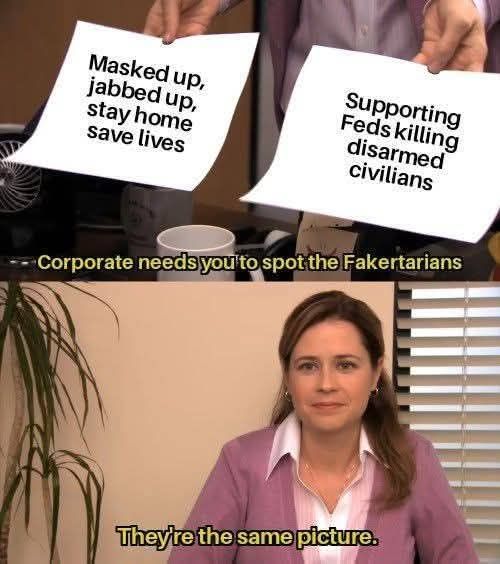
During COVID the same people who told us to mask up or we’re killing Grandma or had made shrines to George Floyd continued to lead the assault on the youngest and most vulnerable population.  It makes no sense, old people will die no matter what we do to protect them.  Black women terminate their pregnancies five times the rate that other women do, but the topic of the day is black lives matter and protecting others through our own self-sacrifice?

The reality is that the war on motherhood is sacrificing our own future.  We really should be thinking of our Grandma and what the world will be like if we don’t follow in her footsteps by raising the next generation.  The reality is that Social Security is a Ponzi scheme and can only be sustained through population growth.  Even if it were paid for, money has no value unless there is someone to offer their labor in exchange for it.  That savings of dollars is useless without any qualified people to fill positions.

Our narcissism will catch up to us one way or another.  The short-sighted pursuit of a career will have consequences.  Taking the pleasures while denying the responsibilities that nature has intended will inevitably lead to a snapback.  We can artificially cheat the system for only so long before nature starts to push back to eliminate a threat.  History is littered with those who thought themselves to be gods only to be humbled.

The Sustainable Church

Evangelicalism, in particular the focus on conversionism, the Bible out of context of the religious tradition that formed it, and a focus on activism, has eroded communities and put the primary conduit of the Gospel (children of Christians) in second place to information distribution efforts.  The true Church is about Communion, about bringing a little of the heavenly kingdom to Earth, it is about households being saved.  And that is where a woman’s role of bringing new life into the world—which is what sustains any ‘spiritual’ movement.

We need less talk.  Rather than push more speaking roles or more of those glamorous foreign adventures, as if this wasn’t only what St. Paul and a handful of others did in the early Church, there should be a move to what has been most effective for centuries and truly where grows a community of the faith.  We need to give the men who wish to be married and provide for their wives and families the opportunity to be fathers.  We do it by normalizing the natural good again.

There is an overabundance of glory-seeking men and women, desperate for higher social rank and more attention.  They love to have their name on a prayer card while living on the dime of others.  They’re too busy with information warfare to realize that the most powerful witness of Christ is love closer to home.  It was the ‘important’ people who Jesus had condemned for ignoring the bloodied man left for dead along their path or stepping over Lazarus as they went about their business—they thought themselves righteous and were on the road to hell.

There are many reasons why the Christian West is dying and declining birthrates are the biggest contributing factor.  This is partly due to the emphasis on missionary work rather than the ministry of motherhood.  We would save more people—save even our own future—if we shifted back to fruitfulness and being multiplied.  If you have a worldview to spread you don’t do it with tracts shoved in faces.  No, you do it by doing it or good old-fashioned procreation.  So get married young, have many babies, and you’ll be blessed in your old age.

The role of mothers is as important as any man in the church and most will find out too late why that is.  Don’t be one of those who has only regret to accompany them in their twilight years.  You’ll need to decide if holding out for Mr Right is truly worth postponing your greatest calling.  Many men, currently banished to singleness, would make good husbands and fathers if given a chance.

Cautionary Tales About Pigeons, Sparrows and Ideological Extremes

Standard

For those who still remember Paul Harvey and miss his “and now you know the rest of the story” delivery style, Lance Geiger will scratch the itch. His episodes, on “The History Guy” YouTube channel, have been my entertainment in the morning before work and enjoy the storytelling adventure before his “forgotten history that deserves to be remembered” wrap-up at the end.

His show is not political. But two of the episodes sparked my thinking about the danger of ideological extremes and the need for checks and balances. One story an example of the central planning gone seriously awry, the other about the unfortunate consequences of technological development combined with market forces, and both stories involve the extinction or near extinction of a species of birds.

Socialized Sparrows and Starvation

The first video, “When China went to war with sparrows” is about the “Four Pests Campaign” that was part of the “Great Leap Forward” from 1958 to 1962. The idea was to eliminate certain types of critters as a way to increase hygiene and reduce disease. The targets, mosquitoes, rodents, flies, and sparrows, were picked by the Socialist regime of Mao Zedong. Claiming that “birds are the public animals of capitalism,” armed with a population bound to statist fervor, they dramatically reduced the numbers of sparrows.

The end result of this sparrow control campaign was an ecological disaster. As it turns out, holding to Marxist ideals does not make a person an expert on economic development or biological science, and this deliberate elimination of sparrows came with some very serious consequences. This misguided policy is believed to be a leading cause of the Great Chinese Famine, a catastrophe that cost between 15 to 45 million human deaths and was abandoned when Chinese authorities, on the advice of an actual ornithologist, finally realized their terrible mistake.

Che Guevara T-shirt wearing, professional far-leftist ‘rabble-rousers’ may celebrate “people power” when it aligns with their personal prejudices. They often sit smugly and sanctimonious, on their intellectual ivory towers, confusing their book acquired knowledge and ideological indoctrination for wisdom. But given real power these people are dangerous. Mao Zedong, the well-educated son of a wealthy farmer, was not an idiot or especially ignorant. But the masses he controlled (with his anti-Capitalist rhetoric) amplified his mistakes, caused great suffering and claimed many innocent lives.

Sparrows, as it turns out, help to control locust populations. These bugs, now unrestrained by the sparrows, quickly proliferated and went on a crop-destroying rampage. This, along with the reckless use of pesticides and poisons by the Chinese government, was all well-intentioned. Likewise, there are many Socialist policies, championed in the past century in this country, that have failed us as miserably and yet continue to be touted as solutions. Unlike Mao, however, our crop of ‘progressives’ more often doubles down on their mistake, hiding behind their ever more convoluted logic, rather than ever reconsider.

Capitalized Pigeons and Profitable Purges

The second video, “How the extinction of a species affected whiskey production,” deals with the plight of the passenger pigeon. This North American species was once so numerous that the flocks would blot out the sun was hunted to extinction, the last of the birds dying September 1, 1915.

Native Americans had hunted passenger pigeons as they were plentiful and a good source of protein. But, because of the limits of their technology and smaller population size, never put a dent in the numbers of pigeons. But this would all change with the newly arrived settlers from Europe. Trains, telegraphs, and gunpowder enabled more people to join the hunt at pigeon nesting grounds. One well-aimed blast from a two barrelled shotgun could kill as many as 61 birds and tens of thousands were slaughtered with great ease.

The real compounding factor was not the hunters, not the tools that they used, but was rather the money and markets that gave them motivation. Unlike in times past where it only made sense to hunt for only enough to sustain your own family or village, the railroads made it possible to ship vast quantities of the fowl meat to city markets back East. The apparent plentifulness of the birds masked the severe drop in their numbers and the cheap source of protein (or profit) they provided ensured the hunts would continue.

That is not to say that nobody was aware of the decline of the species. There were indeed attempts to reign in the slaughter in the mid-1800s. But these conservationist efforts never gained enough traction to make a difference, the legislation introduced too little too late, and extinction followed.

It would be easy to say this plunder of natural resources was a product of greed. But, insomuch as greed is a selfish excess, that is not an accurate diagnosis of the problem. If it were greedy or selfish for one to merely act in their own self-interest then we would all be equally guilty for breathing. The real problem is that no individual accounted for more than their own harvest. There was not nearly enough consideration for the big picture and market forces took care of the rest.

In a Capitalistic system, productive behavior rewarded. That reward is distributed to those who have the ability and motivation to work. But, without anything to hold this motivation in check, a mass of humanity can quickly become like a swarm of locust devouring everything in its path. The beauty of the Capitalistic system is that it allows people to do more to advance their own self-interests and that is also the downfall of Capitalism as well.

What Is the Moral to the Story?

“Are not two sparrows sold for a penny? Yet not one of them will fall to the ground outside your Father’s care.” (Matthew 10:29 NIV)

Perhaps if God cares about the sparrows we should as well?

In the two stories economic systems that could not be more different and produced nearly the same results. Both cases demonstrate the power of a mass of people and remind me of the demotivational poster in my bedroom (gifted from my awesome little sister) featuring a circle of skydivers and the text: “Idiocy: Never underestimate the power of stupid people in large groups.”

The poster, a satirical take on motivational posters, is meant as tongue in cheek humor and not to be taken too serious.

Nevertheless, as there is truth to every joke, the useful message is that it is prudent to stand apart from the crowd, to resist conformity and ask questions. Had enough people questioned the party propaganda or the collective actions of their profit-seeking neighbors the death of millions of Chinese and the extinction of passenger pigeons could have been avoided.

These accounts of pigeons and sparrows are also cautionary tales about two opposite ideological extremes. In Socialism the stupid decisions of a small group of people can be vastly magnified by the subjugated masses. In Capitalism the masses, motivated by profit and market forces, can become a source of terrible devastation. The central planning of collectivists and the lack thereof in individualistic and free-market systems both come with their own unique manifestations of the same risk.

It is worthwhile to note that the unchecked power of the central state, in the path century, is responsible for more deaths (due to wars, genocides, famines, etc) than any one person or group of people motivated by profit. Government policies, often favoring big corporations or particular individuals, at very least contribute as much to the problem as individual desire to profit and are, in fact, responsible for some of the worst man-made ecological disasters in modern times.

However, the properly restrained state can provide a good counterbalance to market forces, to keep the masses from acting like a runaway train unaware of the destruction at the end of the tracks and offers some necessary protection for endangered species. It is for our own long-term good that there are limits to our freedoms.

In the end, I’m not for unrestrained Capitalism anymore than I am for unrestrained government power. As much as possible I prefer to let people make their own choices and therefore, for that reason, shade towards free markets—which, when not interfered with by governments through subsidies or social programs, are the most democratic institution known to men. It is better to allow mistakes to be corrected at a lower level through bankruptcy and individual loss. That said, the extinction of the passenger pigeon speaks to the need for a collective consciousness to hold back our self-interested impulses.

Much destruction can be caused by taking a good thing too far or not keeping it properly restrained by other equally valid principles and concerns. Do not repeat the mistakes of these competing ideological extremes and their equal potential for economically or ecologically disastrous results. Remember the sparrows. Remember the pigeons.

Finding the True Legacy of American Slavery

Standard

As a child, because of my father’s work in construction, my family would travel. My mother, someone as inquisitive and interested in learning as I am, would take us children to the various historic sites and museums near the areas we visited. A significant part of our time in the South was spent surveying Civil War battlefields, exploring plantation homes built in the Antebellum era, and pondering it all from the perspective of a proud Yankee.

At the time the devastation and destruction of the war were justified by the righteousness of the victors. Slavery was an affront to the notion that “all men are created equal” and thus this institution of human ownership remains an indelible stain on that founding ideal of this nation. This perspective made Abraham Lincoln a heroic figure, it made the Union soldiers honorable men, the North was morally superior to the South and that was that.

However, that was actually simplistic.

First, many of the casualties of war are innocent, the wrongs of our enemies not justify our own, and the reasons for a conflict are far more complex than the victor’s narrative, Second, slavery had been an institution since the beginning of human history and a subject of debate for the founders who ultimately decided that the constitutional federation of independent states against the British colonial power required some compromise. Third, the aggression of the North may have resulted in emancipation for slaves in the South, yet it did not improve the conditions of those treated like rented mules in Northern industries and mines nor did come without a cost. Furthermore, both sides in the Civil War relied on conscripts (poor men forced to risk life and limb to further the agenda of the powerful) and in the North disenfranchised whites (mostly Irish immigrants) rioted in New York City against the draft and taking their anger out on black city residents.

The human and economic costs of the Civil War were staggering. It is estimated that 620,000 men died in combat or from disease related to the horrid conditions and that’s not to mention the many more ‘casualties’ who returned physically or psychologically maimed. The direct impact was full 1.5 times the GDP of the time, for comparison, the 2017 GDP distributed per capita (19,485,400/325.7×1.5) is $89,739.33, and the indirect costs were far far greater. The total economic price tag of the conflict is conservatively estimated to be 10,360 million in 1860 dollars or an incomprehensible 315 billion dollars in today’s money and at a time when the US population (and GDP) was a fraction of today’s. Every man, woman, and child in the South lost the equivalent of $11,456 during the war and continued to lose long after the war due to the destruction—the vast majority of them never owned a slave.

Poor whites in America, especially in the South, had the double whammy (or maybe triple whammy?) of being forced to fight on behalf of the rich, of working for very little compensation themselves and then still being called privileged by their actually privileged counterparts. It wasn’t the moralizing Northern abolitionists who freed the slaves nor the Southern slave owners who felt the greatest pain of the brutal conflict. The people who paid the real price were the working class, they were the ones who lost the most in the war, a war over an institution no fault of their own, and are now held as responsible as the slave owners themselves. It is a path to resentment. People who feel powerless often take their feelings out on those with less power than they do. Sadly black Americans have historically been the recipients of this frustration while the true beneficiaries of their exploitation are never held accountable.

Slavery, at its peak, only accounted for a fraction of the nation’s GDP:

In the 1850s, the zenith of the cotton economy, it came to between 1 and 1.5 percent of the nation’s GDP, not a trivial sum. By this period, however, the United States was already the second-largest economy in the world and was investing every year between 13 and 15 percent of GDP in new capital. Even if the entire “slave surplus” were saved (which it wasn’t, because there were mansions to build and ball gowns to buy), it would have made a respectable contribution to growth, but it just wasn’t large enough to be the basis of an empire. (“Was America Built By Slaves?“)

As the quote above suggests, most of that gain likely went to the slave owners themselves, spent on their lavish lifestyles then, on those plantation mansions that still exist in the South, and was not invested back into the economy in general. A significant portion of that wealth evaporated as a result of the war and emancipation. The value of a slave went from being $12,500 to $205,000 (in 2016 dollars) to effectively zero. So, in other words, if the 1860 census were correct that there were 3,953,761 slaves and the average price was around $800 in their dollars (or around $140,000 in our own) then slave owners lost around 554 billion dollars. Slaves, on the other hand, gained something priceless, that being their own freedom, and yet the cost of slavery to black Americans is truly incalculable.

The Incalculable Cost of Slavery…

The cost of slavery to black Americans is incalculable and not in terms of economic impact. It is incalculable because of the lasting social consequences that can’t be assigned a number value. The suffering of black Americans did not end with the Civil War, they faced the lingering resentment of their white neighbors, all forms of discrimination, intimidation tactics and terrorism. Even with Constitutional amendments prohibiting slavery, recognizing their citizenship and granting voting rights, conditions did not improve dramatically for black Americans in the “Jim Crow” South. It took a further effort in the 1960s, the civil rights movement, to finally see some of these Constitutional rights fully realized and not before Dr. Martin Luther King Jr was murdered by an assassin’s bullet.

But, perhaps worse than the lynchings and segregation, one time events that can be adjudicated or something that can be addressed through legislation, is the immeasurable impact on the dignity of those who know that their ancestors were once treated as property and sub-human. I can’t really imagine how it would feel to have my own race being counted as 3/5ths of a person in my own country’s founding documents. There is no way to compensate for that psychologically and especially not when the widespread mistreatment was still in full force a mere generation ago. In such a context, it would be hard not to see any misfortune or measurable difference in outcome as somehow related to prior generations being robbed of their dignity and right to self-determination.

However, making matters astronomically worse is the fact that even many of those claiming to want to help often treat black people as their lessor and do more harm than good in their efforts to restore. A prime example of this is the so-called “War on Poverty” and how since then black marriage rates have plummeted and out-of-wedlock births skyrocketed. First, intact families are a greater predictor of future success than race. Second, making a person dependent on government handouts does nothing to restore their human dignity and, in fact, keeps them trapped. The welfare state has more or less enslaved the black community (and many others) to politicians who stoke fear of losing ‘benefits’ as a means to gain votes and maintain their own power.

Affirmative action programs do nothing to help confidence. No, if anything, they only further reinforce feelings of inferiority and, worse, feeds a notion that black accomplishments may deserve an asterisk. I can recall very well the conversation I had with a young man in the Midwest whom I confronted over his racism. He made no apologies, he embraced the description and then blamed his own lack of success in college on his not being given the same opportunities as minorities. Whether true in his case or not, it takes an extra dose of grace for a poor white person to not feel slighted and very easy to take out the frustration on the beneficiaries. I’ve had to fight this myself as someone who never finished college for mostly for financial reasons.

A few years ago I had hope, with the election of Barack Obama, that this would heal some of the wounds, bolster feelings of self-worth, and help us turn the page as a nation. Sadly, it has seemed to do the opposite. My opposition to increased government spending, as a lifelong conservative who doesn’t see more government control as the solution to every problem, was characterized in terms of race as was any opposition to his policies. Rather than be seized upon a moment of reconciliation, Obama’s race was used as political leverage, as a means to ostracized political opponents and advance a leftist policy agenda. The specter of racism is used to control, both to frighten some voters and also to smear others.

A decade ago I had believed that we were on our way to colorblind society, one like that Dr. King had envisioned where people would be judged by the content of their character rather than the color of their skin. Today I’m not even sure that is possible, the current political establishment benefits too much from identity politics and tribalism to allow that kind of society to form. It is hard not to feel cynical in a time when white vs black narratives dominate the headlines. And, while I believe this too shall pass, that the current racial tensions are an aftershock rather than a repeat of the past, there is also the reality that slavery is an unpayable debt.

The Unpayable Debt…

Some have suggested an idea of paying reparations to the descendants of slaves to right this historic wrong and would finally, once and for all, reconcile the injustice. There are those who have gone as far as to suggest a number, between $5.9 and 14 trillion dollars, as being suitable compensation or at least as a “meaningful” symbolic gesture and something that could improve race relations.

Those selling the idea of reparations say is that this is similar to payments made by Germany to those who suffered through the Holocaust at the hands of the Nazis.

However, those promoting the idea fail to mention the significant differences. The first difference being there are actual Holocaust survivors still alive today to receive the compensation for their loss, but there is not one former slave or slave owner still alive. A second big difference is that the abuses against the Jews in Germany were perpetrated directly by the government itself, whereas slavery was a private institution that existed long before the United States was a nation and was eventually ended by the government and at a very great cost. Hitler’s Germany didn’t stop themselves, the government stole directly from people and sent millions to slave labor camps or gas chambers to be killed—it was literal genocide.

But the bigger problem with reparations is who pays, who gets paid and how much?

It is not justice to make one generation pay for the sins of another. There are many in the United States who did not benefit from slave ownership. My own ancestors, for instance, did not own any slaves and the own possible way they might have benefitted is in slightly cheaper cotton. However, I didn’t receive any inheritance of money nor of cotton clothes from my grandparents. In other words, my savings is my own, from my own work, do I owe anyone (besides my cousin who just helped install flooring in my rental and the bank) nor do I feel any guilt for anything I’ve done. So why should the innocent be forced to pay any more than another person should be forced to work? Do two wrongs make a right? It would only be right to target those who actually did benefit directly from slavery and the complexities of that would be enormous. Would we go after the descendants of European and African slave traders as well?

And then there is the matter of determining who gets paid what. The reparations advocates come up with their dollar figure based on a calculation of hours worked, wages at the time, and interest that would be accrued. But that’s not how things really work. Again, the wages of my grandfathers and great-grandfathers were spent in their generation, dispersed into the economy, and there is nothing left for me. The reality is that the modern ancestors of slaves benefit from the economy in the same way that we all do, thus paying them with interest would not make any sense and especially when that money would be taken from their innocent fellow citizens. Then there’s the reality that not all American black people are ancestors of slaves, some of them are recent immigrants from Africa, some have mixed ancestry and others may actually be the ancestors of black slave owners. Yes, there were slave-owning black people in the American South—should their ancestors pay or be paid?

So, what do we do, start compensating based in DNA tests, as in, “You’re 1/5th black and thus entitled to X…”?

Do we prorate based on how much someone benefited from affirmative action?

Will multi-millionaires, those who obviously have done well, be paid?

Do we deduct welfare payments, etc?

Grading everyone based on their ancestors reinforces all the wrong ideas. It is measuring a person’s worth based on their ancestors rather than their own individual merits and exactly the thing we should be getting away from. Besides that, it is severely undervaluing the worth of a US citizenship, there are people fighting for the opportunity to be here, and our economy is much better here than it is in Africa. Yes, certainly a black person born into an urban environment may face unique difficulties. But then there are many immigrants who come here with nothing, who settle in the same neighborhoods and do advance. And where does it end, do we owe the followers of Joseph Smith for the systematic oppression of them and their religion? Do we owe the Republican party for the attacks against them by the KKK and lynchings of party members? It is just not a good direction to go, it is divisive, it will hurt the wrong people, and we are already deep in debt as a nation. Why should our grandchildren (black, white and other) pay interest to the Federal Reserve and other wealthy people for what is only a symbolic gesture and, if we are honest, won’t remove the stain of the past anyway?

The truth is that money won’t change anything as far as the past. Sure, I’m guessing many who would receive reparations like the idea, who wouldn’t take a windfall? But the reality is that all the compensation in the world cannot erase the legacy of slavery and all the wrong people would end up paying the price. A professional sports contract doesn’t make anyone forget injustice, many lottery winners often end up as poor as they were before, and money can’t be used to solve the problems created by money, to begin with. There are times when a financial settlement is the answer, when both parties directly involved (the aggrieved and the accused) are properly adjudicated. But billing the current generation for the sins of the past, especially without due process, is theft no better than slavery at worse and mere revenge at best.

The true legacy of slavery is that some are owed a debt that cannot be paid.

Wake Up, the Matrix isn’t Real!

A matrix, according to Merriam Webster, is “something within or from which something else originates, develops, or takes form.” And we do live in a matrix where our ideas about race, history, advantage and disadvantage matter more than the actual facts. In other words, the matrix is the way we individually or collectively interpret the facts and use them to form our ideas. Our thought matrix, our assumptions based on our own interpretation of facts, plays a significant role in our outcomes. Overcoming the mental processes that keep us bound is key to success in life.

The other week I was driving to a job site and notice some nice new houses with their well-manicured lawns, spiffy two-car garages, and paved drives. I was overcome momentarily with a tinge of envy, a little regret, and mostly befuddlement at how some people could afford such things. The question immediately came to mind, “What did I do wrong?” I thought of my life, my disadvantages, the opportunities missed, and all those things that held me back from reaching my full potential. However, before I went too far along in that thought process, another question countered the first, “What did I do right?” My mind went first to all the thing I did right, but then to all my advantages compared to most people in the world and the things I did not choose.

Did I do anything right, say compared to that Haitian man I saw in Port Au Prince hauling a car body on his back or a woman born in Afghanistan, Saudi Arabia, etc?

Our mental construct, our prejudices, and preconceived ideas, a product of our culture and choices, can make a real difference in our outcomes. Sure, positive thinking cannot change the circumstances of where we are born, a good attitude does not mean that there will be fewer obstacles to our success in life, yet why not make the best of the opportunity we are given and live in gratitude for what we do have rather than envy of others or frustration because of what we lack?

Part of the problem is that there is a system of control, it helps to create our expectations, it feeds our insecurities and can keep us bound. The real systemic oppression is the idea that politics (or more money in our hands and power over others) is the answer to our problems. Money can’t fix what it created, money itself binds us to the system and the things that money buys rarely deliver the happiness that we think they will. Again, look into lottery winners, many people end up as unhappy as they were before their winnings and some worse off. So why do we measure success in terms of things that will not and cannot make us happy?

What we really need to do is reorient ourselves. We must reject the unhelpful categories and classifications that keep us bound and change the way we think. Grievance culture, tribal score keeping and trying to rank people by their outward appearance is a backward-facing, small-minded and, frankly, racist orientation. There is no group guilt for slavery any more than there is for inner-city crime, we need to stop seeing people as white, black, orange or whatever, building our own identities around those superficial things, and aim for something greater—aim for the future that we want, yet hasn’t fully arrived, where all people are judged by the content of their character rather than the color of their skin.

It Is Time to Think and Act Differently…

If I had my own life to do over I may have dithered less (convinced that higher education was the key to success in life because of what my teachers told me) and started driving truck earlier. It was my own pride (and anxieties) that kept me from taking the better options available to me and I suspect there are many who, like me, prevent their own success because of their aim. And I’m not at all saying that we should sell ourselves short or settle for less than our abilities can afford us. However, many do set themselves up for failure because they keep waiting for the big break, the breakthrough when everything they dream of finally comes to them and refuse to take full advantage of the actual opportunities they have.

Another thing I would do differently is stop worrying that other people had it in for me and believing that I was helpless when the reality was that I was unwilling to make the right sacrifices. Part of my difficulty in life was due to my refusal to act differently or accept that my own behavior was part of the problem. Sure, there is something to be said for authenticity and being true to ourselves, but sometimes overcoming requires us to act differently and accept what is truly reality over our own individual construct. To find success in the religious context where I was born I would need to accept their rules and my fighting with that reality, my “kicking against the pricks” or resisting the flow rather than harnessing it, had some undesirable consequences.

Cutting to the chase, we have agency and we do not. There are well-worn paths to success with risks worth taking, call them cultural conventions, and then there are the low-probability high-risk paths that lead many to ruin. For example, finding a profession like teaching, law enforcement, construction or accounting (as opposed to seeking to be a career actor, model, musician or professional athlete) is more likely to produce desirable results for most people. Feeding our insecurities, dwelling on slights (real or perceived), demanding others conform to our wishes or that they respect us for who we are, expecting too much, is a path to long-term disappointment.

Overcoming the matrix means we need to stop seeing things in black and white terms. Sure, things like “black culture” or “white privilege” do exist in some form, at very least as a construct in our minds, but they really are only terms that obscure a far more complex picture and keep us trapped in the problem rather than working towards the solution. The reality is not as simple as the narratives pushed by academics and advocacy groups. There is no one group with all the advantages nor another with all the disadvantages. There is a reason why the suicide rates for middle-aged white people have skyrocketed while black rates have declined and are considerably lower—something (like connections and community) that might be missed in the commonly touted measures of success?

Recently I read the story of a naval aviator, an officer name Thomas J Hudner Jr, who was awarded a Medal of Honor for his actions in the Korean War. His act? He intentionally crash-landed his Corsair to protect and attempt to rescue a comrade, Ensign Jesse L. Brown, whose airplane had been hit by ground fire and was behind enemy lines. Brown, who happened to be the first black naval aviator, did not survive despite the efforts of Hudner, however, what does survive is an example of brotherly love that transcends artificial racial divides and presents a reality worth building upon. That is the legacy that, if built upon, will free us all from the sins of the past.

Loving dangerously, that is my idea of real success in life.

It is also neat, in these hyper-partisan times, to see George Bush Jr and Michelle Obama share some moments of common humanity together and continue this friendly exchange even at his father’s funeral. That is the symbolism that matters, that is the positive interaction we should aim for and the kind that can make a real difference in the world. If we love all people rather than prefer only those who look or act like us and orient ourselves to the hope of a better future rather than cling to our past and present suffering, we may well have a chance to build a better identity for ourselves as a nation. We may not be able to choose our inheritance, but we can work to create a better legacy for the next generation.

We, like Bush and Obama, have far too much in common to be at odds with each other.

Those who have faced hardship past or present should be heard and forgiven of their current insecurities. Those who have been indifferent to the suffering of others, out of ignorance or hardness of heart, should also be forgiven. And those two groups are all of us and have nothing to do with race. We are all victims, enslaved to a past that we didn’t create for ourselves, and all guilty of perpetuating the legacy to some degree. We can’t know what a person has been through by how they look on the outside and therefore we should love all people as we wish to be loved rather than by what we think they deserve. It is time to be courageously human, committed to true Christian love, rather than tribal, fearful and small.

Courting Disaster: Why Mennonites Are Afraid To Date

Standard

Secular society, in many quarters, has moved in a direction of sexual promiscuity and too often young women bear the brunt of the consequences.  Single mothers are much more likely to live in poverty regardless of race.  Children without two-parent homes often suffer from neglect that leads to behavioral problems and this creates a problem for society.  Men too, for their own part, have to deal with the unwieldy burden of child support and it is far-far from ideal.

However, on the other side, in the opposite ditch, is the religious ‘purity culture‘ dominated by patriarchal men (or controlling parents) and fear-based reasoning.  As secular culture has abandoned traditional mores there have been those on the other end who are adding precaution and increasing the burden of requirements.  Young people, young women in particular, are manipulated by those in positions of authority over them and driven to unreasonable expectations.  The result is a growing rank of unmarried singles and deep disappointment.

Clearly, there is a balance between both cultural extremes.  Unfortunately, the consequences of the overbearing purity culture are often not as obvious as a crying baby and an exhausted single mother.  The pain of the girl never being asked on a date or the suffering of the young man being rejected time and time again is very real. Yet, complaining about the current state of affairs could be perceived as weakness and drawing attention adds an additional penalty of shame—failure is often carefully concealed out of embarrassment.

Too Guarded, Too Superficial…

The logic of ‘guarding heart’ is great when applied to an already established dating relationship and holding back on sexual intimacy until the commitment of marriage.  But when it is a reason not to even attempt a first date it is no longer helpful.  It is a Hollywood myth that relationships should be built off of some kind of magical initial feeling. That is a shallow ‘eros’ love at best. Feelings can come and go.

Love, real love, cannot develop without a relationship.  Love is a product of commitment to love. Commitment to love requires a relationship and starting a new relationship requires a seed of faith.  Faith is a commitment to act in love even before the feelings exist. Faith provides a better foundation for a successful long-term relationship to develop than the shallow feelings-based alternative.

The purity culture, as I have experienced it, is motivated primarily by fear rather than faith.  Young people are encouraged to be absolutely sure before even a first date. Communication between genders (outside of dating) is discouraged as potentially harmful. And the result is an impossible quagmire for many. Only the most superficially attractive or socially adept have a chance.  Be a shy guy or a too-average girl and you don’t have a snowman’s chance in the Florida heat.

I know young women who say (evidently with complete sincerity) that they will only date a guy they are sure they would marry and seemingly turn down every guy who doesn’t ride in on a white horse  It is an absolutely absurd expectation and yet not uncommon in the religious culture of my birth.  Many never take a half step of faith to ask for or accept a date.  Many who do start dating feel pressured into marriage because they have this false idea that turns a dating relationship into an engagement.

Of course, the insanity is promoted by cherry-picked success story anecdotes (sanitized of impurities to make them more compelling) and thus the fairytale myths perpetuated to a new generation.  Ignored is the wreckage, the many many stories of those who did everything right according to the purity culture, and now lay bloodied in the ditch as the successful cross to avoid contact.  I believe if both sides were told there would be an impetus to encourage a more balanced faithful approach to courtship.

Finding Our Balance Between Extremes

The religious of today have seemed to have picked the worse parts of the two systems.  They copy secular society and the idea that feelings of immediate or superficial attraction are a basis for relationships.  But then they take on the most onerous requirements, practically betrothal, before even being willing to talk with a young woman and take seriously a suitor.  It is not a faith-based system.

We do not find the purity culture standard in the Bible.  In Scripture, we don’t see the promotion of the silly notion of secular ‘love at first sight’ or the preeminence of feelings of initial superficial attraction as a basis for relationship.  We don’t see a ‘one size fits all’ template.  We do not see ‘perfection’ either. Instead, there is diversity of experience in the examples, and faith (not fear) as the driving force.

Fear has caused the religious to overreact and only faith can correct the course.  We in the community of faith need to stop comparing ourselves to our to secular neighbors and deal squarely with the shortcomings of our own side.  If we want leaders we must quit treating young men in the church (in good standing) as not worth a first date and basically untrustworthy.

No harm comes from a date.  In fact, my grandparents dated many different people and have been married faithfully for nearly sixty years.  Had my grandma governed herself by the current paradigm there may have never been the opportunity for her relationship with Grandpa to even get started—I would not even exist today.

We need to recognize that our current standard is often based in fear and overreaction rather than faith.  We do not need to fall in the same ditch as secular society to be as off-base and faithless.  Love can triumph if we commit to loving faithfulness in relationships rather than live in fear of failure.