I decided to take on one of the lies being spread on social media today and found myself bumping up against the Facebook censorship regime once again. And what they allow or disallow is purely about the partisan narrative they’re pushing. Leftists can post memes all day long showing Elon Musk with his hand raised, claiming that he is a Nazi, but you can’t even post a plain old picture of Democrats with their hands in an apparent salute without that “misleading” blackout being slapped on it.
InDePeNdEnT fAcT-cHeCkInG
This is the kind of protection those left of center can expect. They’re never held to the same standard as those on the right. If you are conservative any soundbite can ripped out of context and disseminated without a fact-check. Republicans are guilty until they prove themselves innocent. By contrast, the corporate media mouthpieces do not confront the left for their hypocrisy and require Democrats to denounce the left-wing violence. And Billionaire’s like Mark Zuckerberg play interference for them by not even letting us make a comparison to show how ridiculous their claims are.
This is what I posted on Facebook with the image above:
What happens when you put a conservative guy with Asberger’s syndrome in front of an audience of leftists?
Bullying.
The left is about conformity.
You march to the beat of their drum or they will ostracize and belittle. Name-calling is a leftist invention. They love their categories, white and black, haves versus have nots, and it is always about pigeonholing people into tribal groups and robbing all people of their own unique identities.
But turning Musk’s awkward movements, as a guy clearly on the Autism spectrum, into a Nazi salute—even the ADL said that’s taking it too far. Unfortunately this misinterpreting of his hand motion has become that moral justification the far-left wanted to unleash a terror campaign of vandalism and violence—a Krystalnacht redux.
Why did Nazis hate the Jews? Well, there was the same envy of wealth and influence then that the left is now directed at public figures like Musk. To the left a billionaire’s money should belong to them, the ‘fasces’ or their elite managerial class, whereas an American vision is that people should keep their lawfully acquired gains.
Patriotic Americans believe in free markets and rule of law. In stark contrast, the Antifa left (deceptively named) believe in central control (in their hands) and rule by mob if anyone dares to resist their ‘progressive’ regime. They are everything un-American bundled into one ugly package, unforgiving, anti-freedom, big government, collectivist (you do what ‘we’ demand or else) and do not believe in civil rights—starting with that of respecting property and persons.
As I travel in Asia there are Swastikas all the place. If we judged their usage by our own narrow interpretation and understanding we would issue travel warnings to Jews. But it is not the symbols or gestures that matter—it is the attitudes and actions behind them. Musk wants taxpayers to keep more of the money they’ve earned. While the left, along with their Democrat enablers, want to scare you away from choosing the best EV brand there is because they’re control freaks.
The left totally lacks empathy. Sure, they claim it, like they claim everything else on the planet they didn’t earn with their own work. It’s all about them, their Narcissistic small-minded worldview, that is why they can only ever project, accuse, self-deceive and destroy the success of others. They’re an organism that thanklessly destroys their host and condones hate, theft, arson, and murder of anyone who does not lockstep with their cult agenda.
Musk’s “my heart goes out to you” gesture…
The problem isn’t only that the left has a clear double standard, it is that they think they’re the worthy judge when they’re clearly as biased as they come. A little humility would go a long way for this lot. At the very least they could let us be free from their grip to spend our own money and live our own lives—but then that would be too democratic for their tastes.
Remember, as a child, those day-dreams of a life unrestricted by parental control, where it would be video games all night, ice cream, pizza, and soda all day? What is amazing is upon reaching adulthood the thought of this lifestyle is disgusting. First off, it would be horribly unhealthy—in the sense that those who indulge bulge. Second, a party every day is totally unsustainable, someone has to do the work to keep the lights on and put food on the table.
Many people become more conservative as they mature and start to realize the value of the limitations they once spurned. Yes, an adult will modify what was taught to them by their parents and community. And some grew up in social environments where there was not much worthy to be preserved. But to totally throw away everything inherited from prior generations is a terrible mistake. Only an ideological extremist believes stripping it all bare is necessary and good. It is wiser to build on what works.
That is not to say that the tradition passed down can’t become stifling and overbearing or limiting our potential either. There must be a bit of flexibility, some Oikonomia, or means to adapt the rules as the need arises. However, the opposite ditch, of discarding everything and starting from scratch very quickly becomes chaotic, everyone does what is right in their own eyes, and it soon requires authoritarian measures to enforce the vision. This is the thing Nietzsche warned about—our morality is not self-evident and we should think long and hard about those monsters that we will release with our neglect.
This wasn’t a sacrilege, it was a lament of what happens when you yank the foundational rug out from under a moral system.
Cultural revolution, while always promising to upend systems of oppression and usher in a new utopian age, ends up being worse than what it is replaced. Yes, “All animals are equal” may be the founding cry, but is very soon after modified by opportunists who sadly are now unrestrained by those institutions despised and yet there for a reason. The only good thing is that this out-of-balance off-kilter, ‘we know better than all who came before’ attitude, tends to implode on itself if given time. The Soviet Union only lasted as long as it did because of Christian ethics within the population.
Two Visions For Our Future
Recently, with the decline of Joe Biden and a failed assassination attempt against his rival, the Democrats decided it was time to make a change up top. It is her time now—that is to say Vice President Kamala Harris—and there is plenty that could be said about her career thus far, but there is one peculiar repeat statement she has made that really deserves our attention:
“What can be, unburdened by what has been.”
This strange little mantra has been widely panned by the right. This is more Kamala word salad, they chortle, and yet—while she does sometimes explain things like a school teacher talking to a kindergartener—it is not gibberish. This is something Harris has apparently put some thought into and is something with a meaning that we should try to unpack.
What does it really mean to be unburdened by what has been?
I’m not going to sinisterize.
Most on the left I know have a glowing hope for the future and could never imagine that their philosophy could lead to Gulags. I do not believe Harris intends it this way, but it does hint heavily of Marxist thought where we are to be liberated or emancipated from all that came before. On the surface, this is an inviting thought. Imagine a world with no abuse, no poor, everyone has their needs provided and has complete freedom. This would be wonderful—and this is what every cookie-cutter college leftist has in mind as the end product of their efforts.
So how does the unburdening begin? Well, it already has. If you have been paying a bit of attention, everything normal is now being called fascist. Believe that women exist as a category and isn’t something a man can ‘transition’ to? Fascist! Maybe you like the nuclear family and see it as a praiseworthy social convention? Fascist! How about a border where there is reasonable control over who is allowed in and who is kept out? That makes you literally Hitler! And Harris has embraced this side of the debate, she announced her pronouns and the nature of her politics.
None of this is to say that Harris is a terrible person. I simply don’t want a leader unbound to existing ethics or any standard of decency, or who can write off Constitutional law as being a “what has been” product of wealthy white men with some of them slave owners and thus should be discarded. Sure, it may be a document with flaws, and could possibly use more amendments too, but it is better than nothing and represents the will of the people who signed onto this national project to this very day—white, black, Native, or immigrant alike.
What was established is for our benefit. It is no more a burden than a wool coat in the blistering cold. To think that we know more than every other generation that came before us, that science and technology have made us into gods, is delusional.
Furthermore, the left’s unboundness means they do not care about precedents (except as a tool to restrict their rule-obeying opponents and the ends justify the means. And they mean well. They plan to fight injustice. But this script has played out many times before and is the very thing that tradition is a bulwark against. At the very least those who believe what “has been” has value will hesitate and consider before they destroy the foundations of civilization.
Make America Great Again
Donald Trump rolled out his red hats and MAGA slogan in his 2016 campaign. The message was simple, a repeat of Ronald Reagan’s “Let’s make America great again” encouraging answer to the total economic disaster of the Carter years. As he said, in the 1980 Republican convention:
For those without job opportunities, we’ll stimulate new opportunities, particularly in the inner cities where they live. For those who’ve abandoned hope, we’ll restore hope and we’ll welcome them into a great national crusade to make America great again.
Trump knows a good brand and borrowed it from the best Republican leader since a guy named Abraham Lincoln. The progressives lost their minds. They dug up the one time it was used by the KKK. And couldn’t decide to condemn with “America was never great” or be offended because “America is already great and how dare Trump suggest anything otherwise!” If you were playing a game of “wrong answers only” this harsh criticism of MAGA as white supremacy would make a bit of sense.
MAGA is not hateful.
When the left says, “Do you know who else said make America great again?” and then goes on to associate this benign statement with all manner of evil, they’re poisoning the well. There is zero reason to interpret this slogan as Trump’s desire to bring back Jim Crow or the racial policies that were once championed by Democrats. But this does whip the left into a frenzy and it keeps them from deviating and making an independent decision whom to vote for based on the actual positions of candidates.
What does Trump mean by “make America great again”?
Trump is a businessman, his interests are mostly economic, rebuilding our industrial base, bringing back gainful employment for blue-collar workers lower taxes, and less red tape standing in the way of entrepreneurial spirit. My wife, who opened a store in her home country, complains that the US is not a free country and is appalled by the many layers of taxes and requirements. This is what dooms many to working for “the man” or corporations that can afford compliance costs while drowning their competitors with cheap imported foreign goods.
The legalism of US law would make a Pharisee uncomfortable.
Jobs can stop leaving our country, and start pouring in. Failing schools can become flourishing schools. Crumbling roads and bridges can become gleaming new infrastructure. Inner cities can experience a flood of new jobs and investment. And rising crime can give way to safe and prosperous communities.
Had Trump’s first term not been sabotaged by COVID and blue state shutdowns, there is no doubt this would have been fulfilled. In fact, by the third year of his presidency the minority unemployment rate reached record lows. Even NPR, while downplaying it, could not deny these numbers Trump touted were real. Biden’s only success comes from not rolling back those tariffs the fear-mongering media had so roundly criticized. It is strange how the success and failure of policies is determined only by who is employing them, isn’t it?
No, Trump’s not woke. He believes in hiring based on qualifications. He doesn’t want to continue world policing and the massive expansion of government programs. This is why he is the enemy of those who derive all of their power from the administrative state and sap our resources. He is keenly aware that a free flow of cheap labor, while it helps elites who want nannies and landscaping at a discount, pulls down wages for those who do not come from wealth. Even a Senator named Barack Obama understood this:
If this huge influx of mostly low-skill workers provides some benefits to the economy as a whole—especially by keeping our workforce young, in contrast to an increasingly geriatric Europe and Japan—it also threatens to depress further the wages of blue-collar Americans and put strains on an already overburdened safety net.
Make America Great Again is not about a swerve in the direction of Nazism or some new form of ethno-nationalism. It is about restoring the economic conditions that had allowed our grandparents to buy their home and a car on a single income. Back in 2015, Bernie Sanders had blamed open borders on a right-wing conspiracy, that will make everyone poorer, but now the left is saying that normal border security is racist. What changed? Why are these Democrat policies, like the immigrant cages during the Obama administration, demonized under Trump?
Compassion means disincentivizing illegal crossings where human trafficking is a concern requiring sorting facilities.
It is really disorienting for those who soak propaganda like a sponge. They never see that Democrats did this full 180 on multiple issues where they had been right. Trump is right about the border. It should be the top priority. Just the Fentanyl overdoses alone are a reason. I’ve lost a former high school classmate and football teammate this way— 83,000 Americans died in 2022 alone—and it had ironically played as much role in the death of George Floyd as a knee on his shoulder. Why do we even talk about that dozen killed in a school shooting or Ukraine in light of this?
Reform, Not Revolution
Progressives tear at the fabric of civilization without understanding the consequences of their actions. They believe that the erasure of history, destruction of monuments, or the degrading of religion (see Paris Olympics) is a path to a better future. But this amounts to cultural vandalism and is ignorance of the positive contribution of these religiously created values we’ve internalized. There is truly nothing that is written on the substrate of the universe that says slavery is wrong or that genocide is evil—the stopping point to “unburdened by what has been” is a return to animalistic impulse.
By design, not accident.
The frontal lobe of the brain is developed by the myths and moralities that progressives do everything in their power to destroy with ridicule and sacrilege. And it will inevitably go much further than anticipated. We rarely have enough appreciation for what we have been given. Everything is taken for granted until it is gone. And when there is a vacuum that is left to fill, and the ‘demons’ waiting in the wings will come rushing in:
When an impure spirit comes out of a person, it goes through arid places seeking rest and does not find it. Then it says, ‘I will return to the house I left.’ When it arrives, it finds the house unoccupied, swept clean and put in order. Then it goes and takes with it seven other spirits more wicked than itself, and they go in and live there. And the final condition of that person is worse than the first. That is how it will be with this wicked generation. (Matthew 12:43-45 NIV)
Christianity led to equal rights in the West, the abolition movement, is a product of St Paul advocating for Onesimus or telling the Galatian church, “There is neither Jew nor Greek, there is neither slave nor free, there is neither male nor female; for you are all one in Christ Jesus.” The left assumes the values it has are universal. They see only the faults without giving credit.
“You will not surely die!”
The progressive left, by contrast, denies all limits and conventions. Their “can be” may seem good at first glance. But is opening Pandora’s box, it is releasing what previous generations have built social structures to contain and could end up being more like a trip on Event Horizon. America has been good and bad, had moments of greatness and failure. We should tune the ideal it was founded on, not tear it down to start all over again. There is much to conserve in “what is” with an eye to improvement. Veer not too far to the right or left.
At least with Trump, morally corrupt as he may be, he comprehends that our inheritance is not a burden. For him, there is something that can be recovered “again” from the past generations even if those lessons were not perfectly applied to him. He’s a grandpa, he has seen trends come and go, old enough not to care about what is currently popular. Trump may have some narcissistic traits, at least that is the character he plays on television to the roar of the WWE crowd—but he isn’t trying to be God.
After reading a review of Gran Torino, a Clint Eastwood movie from 2008, that dismissed it as shallow in its exploration of racism, I’ve decided to explore some of the depth of the movie that was missed. It was a great story about finding common ground, that takes a bit of twist at the end from the typical Clint Eastwood film. My family (mixed race and culture) could appreciate the themes more than the average viewer—yet is a beautiful redemption story that all people can enjoy as well.
“Get off my lawn!'”
The story is about an angry old man who is not dealing well with change. Walter ‘Walt’ Kowalski, a Polish-American retired auto worker, Korean War veteran, and recent widower—his beloved wife passing right before the start of the narrative.
In the opening frame, he fits a stereotype of an elderly homeowner defending their patch of turf from an encroaching world. It seems every small town has one. That guy who trims his front lawn with scissors and does not deal well with the trespasses of the younger generation, the snarling “get off my lawn” line from the movie became an instant meme.
Why?
It is just too familiar.
The expression captures the essence of a fading dream. The American middle class values property ownership. A lawn, once a complete luxury and exclusively for wealthy estates, had become the mark of post-WW2 affluence. Walt was the beneficiary of this period of economic growth. He had lived a quintessential suburban life.
But now it had become a nightmare. It is not the same neighborhood anymore. The once tidy little homes, owned by people like him, had fallen into disrepair as a new group of immigrants took over. The woman who he built a home with was gone. His sons bought foreign brand vehicles and betrayed the legacy their father had built working at Ford. The world Walt had known was falling apart and he was bitter.
That patch of land, other than the ghosts of his past, was all Walt really had left. To set foot on it was to violate his sacred space. It was a shrine. And his 1972 Gran Torino in the garage likely represented the pinnacle of his productive career. Since the Korean War ended in 1953, this would put this car purchase around two decades into civilian life with a young family and point when the future looked bright. So he was clinging to what was left of his identity and willing to defend it with deadly force.
Demons of the Past
Early on we see Walt, the tough guy, who is playing a part. His racist language is a part of the facade—a barrier he puts up—because the alternative is to be vulnerable—or a victim. He is still haunted by his war experience, in the beginning using it as a threat, saying he could kill without remorse:
“Yeah? I blow a hole in your face and then I go in the house… and I sleep like a baby. You can count on that. We used to stack fucks like you five feet high in Korea… use ya for sandbags.”
However, later, when it comes to stopping the neighbor boy from taking revenge, we see the reality under the surface:
“You wanna know what it’s like to kill a man? Well, it’s goddamn awful, that’s what it is. The only thing worse is getting a medal… for killing some poor kid that wanted to just give up, that’s all. Yeah, some scared little gook just like you. I shot him in the face with that rifle you were holding in there a while ago. Not a day goes by that I don’t think about it, and you don’t want that on your soul.“
Just like today, where Russians are called “Orcs” and portrayed as subhuman by propagandists, racial and ethnic slurs were used against various Asian enemies of US policy in the region. But for Walt, he knew better, he knew that it was not a demon at the receiving end of his rifle. He had murdered a human child and he felt immense regret. Note how he says “poor kid” rather than all of the racist terms he used freely throughout his conversations. It is almost as if, up to this point, he had to reinforce the dehumanizing descriptions to keep ahead of his shame. The truth is Walt didn’t sleep like a baby. No, he was running his sins his entire life and exhausted.
War propaganda then and now. Enemies are always portrayed as evil and subhuman.
Walt’s racism was part of his pretty much equal-opportunity disdain for other people, including the young parish priest, and his own family. He was a broken and hurting man, who had driven away his children and was hiding his own terminal illness. What he needed was some compassion, a safe place where he could finally let his guard down, and it was the persistent effort of a young Hmong neighbor that finally broke through his wall of insults.
Finding Common Ground
The review, that sparked my response, tried to overlay a “white savior” trope on the story and completely missed that it was Walt who was being saved!
*spoiler alert*
Yes, ultimately, Walt sacrificed himself for the sake of the Asian family next door. But this only after Sue, played by an actual Hmong actress (some critics panned the amateurism, others praised), went above and beyond to disrupt his dismal world.
She was his savior.
It was by her effort that he would face the demons of his past and could be at peace with his Creator. It was a redemption story, a story of an old man who had lost his wife, lost his children, lost his religion and even lost his neighborhood, but finds life again by learning to love his enemies.
I can feel this character. My own life didn’t go as planned. I had to leave the religious culture where my hopes had been built. I had a beautiful Asian woman who was patient with me while I was still lost in delusion and did not give up when times were difficult. Now we have a blended-culture home. Yes, my Filipino wife and son are different from me in many regards. However, after seven years of knowing each other and now over a year of being married, our love has only continued to grow. Some of my happiest moments were with her family in the Philippines and recently while visiting her relatives in Canada.
I am Walt.
My ‘Sue’ did save me.
The real story of Gran Torino is an old man who finds more common ground with those he had thought were strange than he does with his own children. Once Walt had got past the superficial differences he realized he had more connection to these Hmong people than many who looked like him. Unlike the war, he was now defending real people and not political ideologies. He was fighting for the local community, against those within who are destroying it, and not gunning down random boys thrown into a conflict not truly their own. The storyline is a comparison between perspectives and shows us what really matters in the end.
It is about relationships, not race.
It is about building bridges.
The ongoing dialogue between Walt and his priest demonstrates this. The priest, who is of European descent based on appearance, is at first scoffed at by the grizzled military veteran for his youthfulness. The baby-faced “Padre” is bluntly rejected by him:
“I think you’re an overeducated 27-year-old virgin who likes to hold the hands of superstitious old ladies and promise them everlasting life.“
But, despite this insult, Father Janovich will not go away. And eventually, with his persistence, he does earn the respect of Walt. The bond, built over a few beers, culminates with Confession and Walt is finally able to have the guilt that had plagued him since Korea absolved. Now he is free and at peace, ready for a last act that goes contrary to expectations and confirms the redemptive arc.
It was faith that saved Walt, both that of the young woman who withheld judgment and didn’t allow his wall of nastiness to stop her and finally of the persistent outreach of the Church. And it is only because of this concerted effort that we get to see the protagonist do what is right. By the end of the film, Walt has overcome those demons driving his anti-social behavior and also has gained a son worthy of his prized Gran Torino.
Now To Review the Reviewer…
Why did the critic miss the obvious?
The reviewer who inspired me to write my own was projecting their own worldview onto the script. Eastwood is a rare conservative Hollywood producer. In fact, so conservative he spoke at a Republican National Convention and gave a mock interview with an empty chair, used to represent Obama, and he calls Biden “a grin with a body behind it.” Perhaps it is this that the review is responding to? But I think it goes a bit deeper than that.
The Marxist left sees the world as being a zero-sum game, or that for some people to gain others must lose, and thus everything is a competition for power. But, not only this, but everything is divided up into strictly bounded categories based on their skin color, financial status, or sexual classification. If someone cooperates across these lines then they are an “Uncle Tom” or traitor. So the themes of Gran Torino just do not compute. Asians are collaborators. Walt is an irredeemable privileged white man, he needs to be canceled—not humanized.
So, since we can’t have everyone come out as a winner, the only thing the woke reviewer has left is to hallucinate something color-coded and negative. Thus they see a movie that tells us to reach across lines of age, culture, and race as just another “white savior” trope. It is bizarre, such a narrow and distorted perspective, to entirely miss everything and then to insert what is not actually there. Yes, Walt saves, but in the context of others saving him, and that’s not even the point. The point of is that color (or age) doesn’t matter, finding our common ground and community does.
Gran Torino isn’t a perfect movie. It may go a bit overboard with ethnic slurs at times. But, then again, the comedic relief of the barber and Walt exchanging these insults as terms of endearment is also great commentary. Why do we let words be “violence” when the same utterances can be laughed at in another context? It is because these words have the power we give them. What this is suggesting is that we can go further when we reframe the conversation.
The left wants to believe that our behavior is determined by what others have done to us—Eastwood says we can be free to live above their rules.
Politics may be all about power, in-group and out-group, but love overcomes all.
We all know a story about a little girl going to her grandma’s house and is confronted by a talking wolf who convinces her to go astray. But this written account is predated by tales with similar characters, and yet not exactly the same. In the end, no matter the version, we read it as being a fairytale and understand that it should not be taken as being a historically accurate record of an event. Why? Well, animals don’t talk and we were told it is an old fable.
I had to think of this while seeing so many fundamentalist friends share a false claim that Travis Kelce threatened to quit the Kansas City Chiefs if they did not cut the currently embattled franchise kicker. This part of the hysteria (both in response and in reaction to the response) over the conservative kicker’s commencement address that promotes traditional Catholicism. Normally it would be customary for these Protestant friends to bash those who believe in Jesus in the same manner as Harrison Butker. But, in politics, I guess the enemy of my enemy is my friend—suddenly those who give special honor to Mary are now acceptable?
The problem with this Kelce claim is that it is as fictional as Little Red Riding Hood and being spread as fact. I mean, I would think that credibility is important to Evangelicals, being that their mission in life is to convince others a man literally walked on water and then rose from the dead because they read about it in a book. But nope, they share the most urban legends of any demographic on my friends list. For those who say that they know the Truth, personally, this should be a huge embarrassment—except it never is.
Those who have no ability to detect fakes or frauds, who spread blatant lies, really aren’t in a place to preach their values.
As much as I support Butker’s freedom of speech and think the cancel culture outrage over his comments is ridiculous, I really do not find a home amongst those who accept any claim that confirms their ‘Biblical’ views on social media. All it takes is a satire site say that there has been evidence of the Red Sea crossing has been found or that a solar eclipse is passing over seven towns in the US named Nineveh and they will spread these blatant falsehoods to the ends of the Earth because they can’t be bothered to verify the claim before posting it.
If the religious adherents truly occupied the high ground of truth why would they dare to risk their credibility?
Whether it is fake news or just exaggerated tales, that believers are gullible or in people in denial in the manner of a sports fan who can only see what promotes their team as good, the cost is credibility. A consensus of idiots is meaningless. I have no reason to think that prior generations were any better at sorting out the facts from the fictional BS. It is just disheartening, for someone who had hope of a marked difference between the faithful and the frauds.
The truth is that Travis Kelce (and his brother Jason) have come out in support of Butker. So maybe it is time for some professing ‘Christians’ caught spreading this malicious gossip to do what their religion requires, humble themselves, and repent?
Wolves will likely talk before these reactionaries reconsider anything…
Have I mentioned that I’m tired of religious people and the prescriptions they give?
The real Jesus was defiant. He upended the systems and standards of his time. He was intentionally offensive to the self-righteous religious elites and then completely gentle with those who were broken. There was no one-size-fits-all, no attempt to simplify the process. Salvation is a walk of faith, not our ability to keep a set of fixed rules or pray a certain way, it is about our heart.
No, I’m not saying this as favoring the more libertine amongst us. Being “free in Christ” is not a license to do whatever we want. It is not about being ‘spiritual’ rather the religious either. Rather it as about love:
It is for freedom that Christ has set us free. Stand firm, then, and do not let yourselves be burdened again by a yoke of slavery. […] You, my brothers and sisters, were called to be free. But do not use your freedom to indulge the flesh; rather, serve one another humbly in love.”
(Galatians 5:1, 13 NIV)
A great deal of my social media connections are unregenerate social conservatives. They love those fading structures that once kept people bound to their moral standards and yet lack any comprehension of grace or their own need of it. They may see themselves as being righteous, for their exceptional ability to keep up certain cultural conventions, but they are very much like those rebuked and condemned by Jesus.
But still the alternative is not to go in the complete opposite direction. It is not better to have no structure, to completely defy all cultural convention or use Christian freedom as an excuse to do whatever we please. No, rather it is to serve and save others:
Though I am free and belong to no one, I have made myself a slave to everyone, to win as many as possible. To the Jews I became like a Jew, to win the Jews. To those under the law I became like one under the law (though I myself am not under the law), so as to win those under the law. To those not having the law I became like one not having the law (though I am not free from God’s law but am under Christ’s law), so as to win those not having the law. To the weak I became weak, to win the weak. I have become all things to all people so that by all possible means I might save some. I do all this for the sake of the gospel, that I may share in its blessings.
(1 Corinthians 9:19-23 NIV)
Which is to reiterate the example of Christ:
…whoever wants to become great among you must be your servant, and whoever wants to be first must be slave of all. For even the Son of Man did not come to be served, but to serve, and to give his life as a ransom for many.”
(Mark 10:43-45 NIV)
Our love for God is always, always, a matter of how we treat each other. If we can’t love the people we see, specifically our brothers and sisters in Christ, then our claim to love God is a lie. (1 John 4:20) Therefore, to be free in Christ, is not to shirk responsibility to each other. It is not worshipful, at least not of God, to go to church (or not go) for own sake:
“Therefore, if you are offering your gift at the altar and there remember that your brother or sister has something against you, leave your gift there in front of the altar. First go and be reconciled to them; then come and offer your gift.
(Matthew 5:23-24 NIV)
This is putting reconciliation with each other, true reconciliation. before or ahead of the ritual worship that religious people do. No, it is not negotiable. This is the command of Jesus. And yet it is so often reversed. It is acceptable to act or go through the motions of righteousness, but not to ask for the same authenticity that put Jesus at odds with the religious authorities.
Had Jesus just followed the rules and did what was expected he would never have been a threat to anyone. The reality is that he saw through the empty gestures. He was not impressed with those pious people who had their performative religion. His call was for genuine love, to be merciful as our Father is merciful:
On hearing this, Jesus said, “It is not the healthy who need a doctor, but the sick. But go and learn what this means: ‘I desire mercy, not sacrifice.’ For I have not come to call the righteous, but sinners.”
(Matthew 9:12-13 NIV)
That’s our true worship, to truly forgive and love those undeserving and broken.
Early Christians had a saying “unus Christianus, nullus Christianus,” which is to say that one Christian is no Christian. This is to say that our Communion together, in Christ, needs to go beyond merely sharing the same physical space for a few hours or it is fake. True Christianity can’t be reduced to mere individualistic pursuit of the Divine. It is not an “only God can judge me” freedom from duty to others.
I could quote two dozen other texts and it would not matter. So many are caught up in their own corrupted ‘traditions’ that they’ll always miss the forest for the trees. But I’m not interested in dime-store Christianity, the kind that only loves in prescribed ways. I want the real deal, the kind that frees and truly forgives. I want what is alive, what has the true Spirit of truth and love in it, not the lifeless self-serving counterfeit form.
It’s not that the wonderful symbolism and designated acts of ‘Christian’ service are unimportant or useless either. But it’s just that none of it really matters if it is not a part of something genuine. As Jesus said, in Matthew 23:15, a person can “travel over land and sea to win a single convert” and only be successful in making their new convert “twice as much a child of hell” as themselves. In that case it would be better to do nothing at all.
Even the mystical “cup of salvation” can be our damnation if we drink unworthily (1 Corinthians 11:29) or in disregard and without care for His body. The body of Christ meaning, at times, our fellow members of the Church or the people we encounter who are in need of love:
For I was hungry and you gave me something to eat, I was thirsty and you gave me something to drink, I was a stranger and you invited me in, I needed clothes and you clothed me, I was sick and you looked after me, I was in prison and you came to visit me.
‘Tis the season for conservative Mennonites to preen on social media about their apolitical “kingdom Christian” stance. These Biblical fundamentalists, with an Anabaptisty twist, talk about worldly politics more than many in the voting public do and never miss an opportunity to distinguish themselves with their rude apologetics.
Any more I try to ignore this noxious grandstanding display of religious elitism. But then I saw a video post, with a title proclaiming a change of mind about voting and featuring someone that I’ve run into, on various occasions, in my travels and as part of an online Mennonite discussion forum. I’m quite familiar with his long-held positions and this claim of transformation astonished me.
Perhaps he had voted in a mock election in grade school or something?
Anyhow, starting in general…
The Utterly Non-Revolutionary Act of Not Voting
Mennonites, like other Anabaptists, have built entire religious doctrines around cherry-picked Biblical phrases. The words “be not conformed to this world,” lifted from Romans 12:2, is used to justify everything from not driving motorized vehicles and dressing like it is still the 1800s to condemning military service and not voting in elections. That is standard fare for all traditional or Old Order Anabaptists.
But Fundamentalized Mennonites, unlike their Amish and Old Order Mennonite cousins, feel this unquenchable need to broadcast and announce all that they do. Ignoring the not letting the right hand know what the left hand is doing advice that Jesus gave while he slammed hypocrites. Mennonite fundamentalists, taking their cues from Protestant fundamentalists, are all about political influence and religious apologetics.
An example?
The disdainful retort of a Mennonite gentleman to those who dared to talk about voting in his presence, “I vote on my knees!” This sanctimonious announcement, alluding to prayer rather than direct involvement in the political process, was met appropriately with a humorous remark to the effect that crawling to the ballot box was an odd way to vote. But it does also describe the strange dichotomy, or rather the inconsistent application, of non-conformity rules.
A man actually voting on his knees
The grand irony is that this kind of political non-participation does not make someone unique from ‘the world’ as religious separatists claim.
Well, voting or not voting is a habit, they do not believe that their vote matters, or simply do not care about the outcome one way or another. So this idea that not participating in elections is some sort of notable stand or great sacrifice is pure delusion. Not voting is literally as much like ‘the world’ as you can get. It is not revolutionary. It is a nihilistic cultural default, a bit Gnostic, and requires doing nothing. However, unlike most non-voters who have no need to explain their apathy for the democratic process, conservative Mennonite fundamentalists have a great need to spiritualize and broadcast their decisions.
Sure, unlike other fundamentalists, who do vote and promote political involvement, the conservative Mennonite variety proudly distinguishes themselves in other ways. But they still go to universities like Bob Jones or Liberty University, fundamentalist bastions, and pick up the Evangelical attitude to apply to their Anabaptist doctrinal defaults. So, rather than simply live out their faith, like their forbearers, they must be “in your face” about their views, constantly propagandizing and promoting their supposedly ‘Anabaptist’ or purportedly ‘kingdom’ perspectives, and otherwise making sure that you notice them. If it seems self-aggrandizing and obnoxious, then it most certainly is. Worse, they are completely arbitrary and inconsistent in how they apply these supposed “Biblical principles” that justify positions they’ve inherited, never seriously reconsidered, and want to ram down your throat.
How do I know?
I was one of them. I would argue my Mennonite fundamentalism confidently with my teachers in high school. In college, I wrote a position paper to explain my inherited non-resistance dogma, thinking that my take would be fresh. But, for my efforts, ended up with a classroom more fully unconvinced of non-resistance than they would have been had I said nothing at all.
Anyhow, while most from my own religious communities lean towards conservative politics. A few got out of this Mennonite intellectual ghetto long enough to read a little Karl Marx and meet some real live Socialists. And, now, armed with this new knowledge, come back to their conservative peers with a superior attitude and a whole new set of empty platitudes, borrowed from ‘the world’ they claim to stand apart from, that require nothing of them. They proclaim themselves to be different, and imagine themselves to be revolutionary thinkers. Yet they are really nothing but a new blend of the same old political ideologies, tired religious dogmas, and general nonsense.
It was one such story of a ‘transformation’ that caught my eye because I actually knew the guy and knew him too well to be bamboozled by his slickly packaged testimonial.
The Completely Non-Transformative Transformation
I’m not going to reveal the source. More clicks will only encourage them. But it did not take long into the apologetics video to reveal that the title was a bit deceptive, when this conservative Mennonite apologist confessed, “The truth is I’ve never actually voted.”
Hmm.
So, I guess a more upfront and honest title, such as “Mennonite-born Confirms His Confirmation Bias,” isn’t propaganda-ish enough to sell the point?
Anyhow, to be clear, he never changed his mind, he might have momentarily been slightly more open to the idea of political involvement before reverting back to the Mennonite default position. And, sure, his political positions may have evolved slightly from right-wing anarchist and anti-government to being slightly more left-wing anarchist, definitely anti-conservative, and even more anti-government. But, in the decades that I’ve known him, he’s always had this smug-sounding “voting only encourages them” signature line.
What is truly interesting is that this particular individual?
Simultaneous to his decrying the violent and coercive means of the state, he had also worked as a government employee and profited from these means for many years. That’s right. This man who claims that voting is some big moral quandary because the government uses force and threats had no issues with taking money obtained by those means for years.
And yet, somehow, to merely cast a ballot is too much for them to stomach?
If voting is wrong, if political solutions are wrong, then how isn’t his taking through this system extremely wrong?
If he really believes that the government is illegitimate, that we should not participate so much as to cast a ballot, then he ought to do as Zacchaeus did. He should return all of his ill-gotten gains, he should pay it all back with interest to us who paid his salary, and put his money where his fundamentalist Mennonite mouth is.
But what is, by far, the most disturbing thing about this video is the shameless promotional for progressive politics it contained. While claiming to be apolitical. He pushed the far-left social justice agenda as if this was what Jesus taught. Confusing what we should do as individuals, as a church, with the obligations of a nation. How disingenuous an argument. How heretical a theological position. How contradictory with his own religious tradition.
In short, the kingdom of heaven, especially their conservative Mennonite version, does not have open borders and will turn people away for falling short of requirements. Scripture lists whole long lists of who will and will not enter the Kingdom of Heaven (false teachers one of them) and this studious fellow would certainly be aware. And, no, it is not cruelty or indifference that keeps some out. Quite the opposite, in fact. The Kingdom has borders to keep unrepentant murderers, rapists, and other abusers away from those whom they exploited. So this criticism of nations for enforcement of reasonable border policies, for the protection of the nation and those trying to escape horrendous conditions, is asinine.
Imagine that, a conservative Mennonite, part of a denomination known for their strict standards for entry (oftentimes over the slightest minutia of application) taking issue with a nation for taking some precautions and vetting immigrants.
I mean, as one practically engaged to a woman who needs to navigate our immigration system, I have every reason in the world to want the current system to be made easier. And, despite that, despite my own personal struggle waiting on the cumbersome process, I still completely understand and appreciate that we have civil authorities to protect citizens and promote peace. I love her, and my neighbors, enough to want to keep evildoers out. Her uncle was murdered in her home country, as was her grandpa, both good men, it would be absolutely immoral for me to open the floodgates so that their murderers could follow her in.
Ultimately, had this fundamentalist Mennonite commentator stayed politically neutral (rather than parrot a leftist ideological position while falsely claiming to be apolitical) I may have let the duplicitous transformation claim slide.
I’m completely okay with someone being apolitical and not voting if they believe that is what their religious beliefs require of them. But what am I completely not okay with? I’m completely not okay with misleading testimonials and phony claims of being apolitical while promoting a political position. I’m especially not okay with the hypocrisy of saying the government is violent, therefore we must not cooperate so much as to vote, while also being on the taking end and unrepentant about it.
This one was a little more personal because I knew the character making the claim and it was so typical of the fundamentalist tainted brand of Mennonitism that I came from. Mennonite Evangelicals love to distinguish themselves from other Evangelicals, both products of Fundamentalism, by pointing to their Anabaptist doctrines (namely non-resistance and non-conformity) as if it is something revolutionary when, in fact, they are often religious promoters of progressive politics who oddly also decide they are also above voting.
Voting bad, taxes good…
Okay.
Drinking the Kool-Aid of Evangelical Humanism
It started so wonderfully, that a charismatic young leader blended concern for the poor and racial inequality with a Gospel message. Eventually this “Peoples Temple of the Disciples of Christ” moved from Indiana to sunny California where this social justice preacher, James Warren Jones, found a more receptive and racially diverse audience. He grew his following to a few thousand members, enough to gain the attention of left-wing political leaders, and hired an African-American preacher to further the social justice message.
Pastor Jim
Jones and his so-called “Peoples Temple” moved progressively in the direction of openly displaying their true Marxist intentions. Their home for senior citizens directly quoted Karl Marx, “From each according to his ability, to each according to his need,” and drew parallels between this political ideology and Christian teachings. Jones became increasingly divisive, increasingly open with his far-left rhetoric, and increasingly controlling as time went on. Jones, the cult leader, preying on the urban poor and minorities, now pushed an idea of “religious communalism” and used various passages of Scripture to justify this aggressive push towards Socialism.
A ‘kingdom’ perspective
Of course, maybe some of you already know how this story ends, at Jonestown, where Jim Jones, the leader of this nasty narcissistic polygamous mess, ordered his followers to drink poisoned Kool-Aid. The infamous Jonestown Massacre, in the Socialist paradise (or rather a hellhole) in Guyana, totaled 909 dead, either by suicide or murdered outright, including a Congressman sent to investigate allegations of abuse. Jones was always only a wolf in sheep’s clothing, he was merely using a twisted version of Biblical texts for his political and personal ends. He was able, with this heretical blend, to lead hundreds of people to their deaths. Sadly, despite this sobering example, many still “drink the Kool-Aid” of social justice and end up spiritually dead having jettisoned the true Gospel.
Jonestown Massacre
Those who fall for the social justice ‘Gospel’ have indeed traded their birthright for a bowl of pottage. They, like Judas, have interpreted the words of Jesus through the lens of their worldly aims. They, like the betrayer of Christ, take the instruction of Christ, “sell all and give to the poor” as some kind of end in itself and not in the context of divine pursuit. It is not because they are far from Jesus. No, in fact, there is only a subtle difference. Judas may well have been the best of the disciples, trusted with the common purse, and able to quote the words of Jesus concerning the poor right back at him. And he was not alone in his confusion about the words of Jesus either. All of the disciples seemed to have worldly power and prestige in mind. They did not anticipate a life of suffering and sacrifice.
Do not drink that social justice Kool-Aid
The close counterfeit is the most dangerous. Many warn of the crude caricatures and obviously flawed copies of the truth. However, when they encounter something that appears, on the surface, to be the genuine article, what do they do? They let down their guard, may even praise the effort, and never realize the missing substance behind the effort. The substance, of course, is that the purpose of everything a Christian does is worship. True, following the instruction to give to the poor, in the context of Christian faith, will create a better world. However, when turned into some legalistic prescription and for the intention of political end, like social justice, it very quickly becomes abusive.
But Jim Jones wasn’t the first to start to push a brand of Socialism and defiance against ordained authority, there was an Anabaptist cult with similar views. The Münster Anabaptists were the true radicals of the so-called “radical reformation” and are the likely cause of the eventual crackdown on all Anabaptists. They too promised ‘the kingdom’ siding with the poor and the peasants, but their “new Jerusalem” very quickly ended up a polygamous nightmare. This disaster is why the “non-resistent” theology won out. This is why conservative Mennonites and Amish have remained relatively apolitical.
Returning to the Vomit of Münster
Modern Mennonites, of all stripes, share a similar antipathy towards authority. Those on the ‘conservative’ end of the spectrum are defiant towards things like COVID-19 restrictions or anything that interferes with their own agenda, while those on the ‘progressive’ side stand against everything from the punishment of evildoers and even national borders. The only significant difference is that the conservatives, like most other conservatives, mostly want to be left alone to practice their religion. While the progressives would be happy to use government to enforce social obligations on their neighbors. Where the conservatives can be neglectful of their neighbors, the progressives (like their worldly counterparts) are enthusiastically abusive.
I’ve noticed many privileged Mennonites, raised in conservative Evangelical/fundamentalist churches, in reaction to their own former ignorance, veer hard to the left.
They were raised in Mennonite homes, lived in Mennonite communities, went to Mennonite schools and a few finished their education in fundamentalist institutions. Most of their lives, unlike my own, they spent in this Mennonite cloister, then they go to the big city somewhere and find out other people see a different perspective from the only one that they knew existed. But rather than apply a grain of salt, or show any spiritual discernment whatsoever, they swallow the newly discovered grievance narratives lock, stock, and barrel. They cheer on, from their ivory towers, the “people power” of those disrupting their neighbors, ignore or justify the violence of those destroying cities, and think their support for Barrabus is doing the Lord’s work.
They are blind guides, more misguided than the Mennonite traditionalists whom they frequently condemn, condescend, and criticize, and yet imagine themselves to be the true standard-bearers for Anabaptism. And they are, but Anabaptist in the same way as Münsterites and of the same spirit as those religious elites whom Jesus taunted in this passage:
Woe to you, teachers of the law and Pharisees, you hypocrites! You build tombs for the prophets and decorate the graves of the righteous. And you say, ‘If we had lived in the days of our ancestors, we would not have taken part with them in shedding the blood of the prophets.’ So you testify against yourselves that you are the descendants of those who murdered the prophets. Go ahead, then, and complete what your ancestors started!
(Matthew 23:29-32 NIV)
Woah!
I mean, woe…
Leftward aligned, and “kingdom Christians” are less committed than their Anabaptist predecessors and yet make the same mistakes. They claim to be above the politics of this age, apolitical even, and pose as enlightened minds, but are really lacking in introspection and this:
These people are springs without water and mists driven by a storm. Blackest darkness is reserved for them. For they mouth empty, boastful words and, by appealing to the lustful desires of the flesh, they entice people who are just escaping from those who live in error. They promise them freedom, while they themselves are slaves of depravity—for “people are slaves to whatever has mastered them.” If they have escaped the corruption of the world by knowing our Lord and Savior Jesus Christ and are again entangled in it and are overcome, they are worse off at the end than they were at the beginning. It would have been better for them not to have known the way of righteousness, than to have known it and then to turn their backs on the sacred command that was passed on to them. Of them the proverbs are true: “A dog returns to its vomit,” and, “A sow that is washed returns to her wallowing in the mud.”
(2 Peter 2:17-22 NIV)
Few Mennonites actually read the writings of Menno Simons, but many are familiar with his poem, “True Evangelical Faith,” a presentation that orients the reader towards the earthy and practical ministries of the church, and some of the reason he is described as an “evangelical humanist” by various sources. No, he would certainly not support the leftist policies of our day nor was he completely aligned with the Anabaptist comrades in Münster. But this understanding of the words of Jesus too easily transforms into left-wing anarchist politics and is very often misconstrued as an endorsement of Socialism.
Couple this with the Zwinglian denial of spiritual and mystical aspects of what Jesus taught, common to all Anabaptists, along with the political ambitions of the historical Anabaptist leftists, who in their zealousness, overthrew the ordained government of a German city named Münster, and you can know where this ‘kingdom’ is headed.
Jan van Leiden baptizes a woman in Münster, painting by Johann Karl Ulrich Bähr.
The contempt for authority is already there, the loss of a truly divine orientation is already there as well, and now they align themselves with those rebellious against all authority and acting out in violence.
This turn towards left-wing politics, those doing apologetics for grievance culture, are urging the faithful to take a big gulp of the same Kool-Aid that was passed around Jonestown. It is the same spirit that led to the horrendous violence of the Münster Rebellion. It is not remotely Christian even if it uses the words of Christ as justification.
Judas too used the words of Jesus. He deceptively used the words of Jesus, “sell all and give to the poor,” as a means to admonish a faithful woman for her impractical worship of pouring out perfume on the feet of the Lord. He, like a Marx-inspired fundamentalist calling ornate houses of worship a waste, told this woman that she should have sold the perfume to give to the poor. He used his position, as a follower of Jesus and disciple, an advocate of the ‘kingdom’ as he understood it, to hide his actual political ambitions. For this smug comment, he earned the sharp rebuke of Jesus.
Those lapping up the radical leftist vomit of Münster Anabaptists, in modern forms, will be worse off than their more traditional Mennonite counterparts. Marxist philosophy is not compatible with the message of the cross nor is this ‘kingdom’ opposition to the established government Christian. They might be sincere. Many are misled by them. But there is no reason for me to suspect that Judas, or others like him who betrayed Christ and the church, were insincere. Had Judas been only a fraud, why would he have despairingly taken his own life?
Oh proud Anabaptist. Oh, fundamentalist with all of the answers and no actual wisdom. Oh you Evangelicals who are all talk and very little understanding, who flail to the right or to the left every time, desperate to be relevant. Oh, you closeted Marxists, with worldly ambitions, posing as agents of the kingdom. Repent now, before it is too late!
Turn Not to the Right or the Left
Every so often a quote pops up, at the right exact time, so poignant, that it appears to be a gift from God. Such was the case when this quote was shared on my news feed while contemplating politics and examining my own stance as far as ideological positions. I tend to be right-wing. I do believe that the role of government is to set some basic boundaries, look out for the “common good,” and stay completely out of my personal business. But I also see the folly of individualism, the need for communities, and voluntary cooperation between people.
I see both right and left-wing extremes, both totalitarianism and anarchism, as unChristian and dangerous. But never had succinct words to describe why this is, at least not before reading this quote:
There are two kinds of ‘atheism’: the atheism of the right, which professes to love God and ignores neighbor; and the atheism of the left, which professes to love neighbor and ignores God.
This quote hits the problems of both sides squarely on the head. The ‘right’ frequently takes their independence too far, they become neglectful in regards to loving their neighbors and in this have rejected God. The ‘left’ on the other hand, professes their compassion for the oppressed and downtrodden, but this often is nothing but human effort that neglects worship. Both the right and left are motivated by selfishness. Both, at different levels, are looking for freedom or control. However, the left is much better at hiding their lust for power and true atheism under a veil of altruism.
It is interesting that frequently, in Scripture, we see passages warning against veering right or left, like this one:
Be strong and very courageous. Be careful to obey all the law my servant Moses gave you; do not turn from it to the right or to the left, that you may be successful wherever you go.
(Joshua 1:7 NIV)
My guess is that partisan alignments, rightward or leftward, take our focus off of the divine. Instead of being focused on Jesus, and theosis, we become mired in political controversy and tribes. It is true, that we cannot serve two masters. And political ideologies, on a horizontal plane, will distract us from the vertical alignment. No, we do not stop eating worldly food or drinking physical water as ambassadors of the Kingdom of Heaven. Nor do we cease to choose McDonald’s rather than Burger King. But, as the Divine Liturgy reminds the faithful, “Put not your trust in princes and sons of man in whom there is no salvation.”
A Christian Perspective of Government
There is a vast difference between the glutton, who looks to food as an end unto itself, and the traveler on the path of repentance who eats to be nourished enough for the day’s work. Political involvement, preferring Candidate A over Candidate B, is not sinful any more than eating or any other choice. We are in the world, even if not of the world, and it is silly to pretend to be aloof from it all. But when politics becomes an obsession, when ideologies become idols, when we veer too much to the right or the left, the lookout. We imperil our own salvation when we turn to the political philosophy and economic systems of men for our help rather than God.
The Kingdom of Heaven is not a rival to any earthly kingdom. No, it is on an entirely different plane from any worldly government and those saying otherwise are false teachers. Sure, yes, the political and religious leaders of the time saw Jesus as a threat to their power, they were confused about the Kingdom as much as the disciples. But never did Jesus show any interest in overthrowing them. Instead, he acknowledged the authority of those who “sit in the seat of Moses” (Matthew 23:21) and told his followers to do what they instructed.
Jesus and those who followed him never once questioned the legitimately applied authority of Rome. St. Paul, despite enduring brutal mistreatment at the hands of Roman authorities, having every reason to be scornful of them, instructed thusly:
Let everyone be subject to the governing authorities, for there is no authority except that which God has established. The authorities that exist have been established by God. Consequently, whoever rebels against the authority is rebelling against what God has instituted, and those who do so will bring judgment on themselves. For rulers hold no terror for those who do right, but for those who do wrong. Do you want to be free from fear of the one in authority? Then do what is right and you will be commended. For the one in authority is God’s servant for your good. But if you do wrong, be afraid, for rulers do not bear the sword for no reason. They are God’s servants, agents of wrath to bring punishment on the wrongdoer. Therefore, it is necessary to submit to the authorities, not only because of possible punishment but also as a matter of conscience. This is also why you pay taxes, for the authorities are God’s servants, who give their full time to governing. Give to everyone what you owe them: If you owe taxes, pay taxes; if revenue, then revenue; if respect, then respect; if honor, then honor.
(Romans 13:1-7 NIV)
It cannot be spelled out any more clearly than that. The authorities, in their capacity to punish evildoers, are divinely ordained, acting on behalf of God, and not to be resisted. To rebel against them, we are told, is to rebel against God.
Of course, this is where some smarmy Anabaptist ‘kingdom’ pusher will interject, to excuse their own topic and rebellious spirit, by saying “Well, America was started by a rebellion,” or “occupies stolen land” and go on to suggest this excuses or exempts them from applying St. Paul’s instruction. They, in their woeful arrogance, have appointed themselves to be the judge of nations rather than simply pray for their leaders and obey Jesus as they ought. And this is because they, like Judas before them, are duplicitous and truly more obsessed with worldly power than they let on. For them, the ‘kingdom’ is merely a front for political ambitions, it is so they can feel righteous in their contempt for what is ordained by God.
The idea of “my kingdom is not of this world” (John 18:36 NIV) and the refusal of Jesus to even stand up to the miscarriage of justice, should put to rest this notion that there should be a rivalry between the Christians and civil authorities. If Jesus even refused to stand up to their abuses, how much more should we be willing to respect and submit to what is truly part of their God-ordained mission?
Both the church and government, are ordained authorities. One is established for our own good as those traveling through this world and the other is a Kingdom that transcends everything in the world. I have no problem with those who do not vote because they do not believe worldly governance is the right place for a Christian. But it is incredible hypocrisy that those who won’t so much as vote will turn the teachings of Jesus into a political message and use this in confrontation with civil authorities. Who are we to judge another man’s servants?
Instead of competition with God’s ordained authorities, snide remarks, or violent protests, try this instead:
I urge, then, first of all, that petitions, prayers, intercession and thanksgiving be made for all people—for kings and all those in authority, that we may live peaceful and quiet lives in all godliness and holiness. This is good, and pleases God our Savior, who wants all people to be saved and to come to a knowledge of the truth.
(1 Timothy 2:1-4 NIV)
In conclusion, those so delusional that they can’t fathom God using imperfect men probably should not vote. In their arrogance and delusion of their own righteousness, they would be incapable of making a sound decision. Again, I have absolutely no problem with anyone who chooses to abstain from political involvement. The further along we are in our faith the more we will trust the means of prayer and leave our worldly concerns behind. But, that said, I likewise do not stand in condemnation of those who, out of love for their own families and neighbors, and appreciation for their nation, participate in the most peaceable manner possible.
There was, one hundred years ago, a Mennonite family with four sons. They lived near a small rural village on the outskirts of a bustling city, with their three sisters, and two parents. Life was simple. They would get up early, milk the cows, then clean the stalls, before heading in for a hearty breakfast at mom’s dining room table, then out for the fieldwork or to cut firewood. The seasons of planting and harvesting were busy times, but there was always plenty of work year-round. There were community events, almost always involving donated labor, to raise a barn or help some struggling neighbor harvest their crops, but life revolved around the daily chores, tending to the animals, the repetitive cycles of the crops, occasional trips to town and church attendance.
In their spare time, evenings before going to bed or after dinnertime on the slower seasons, these boys would read. They had a keen interested in history and current events. The books gave them a window into the world beyond the horizon, beyond the slow pace of his agricultural lifestyle, where great men made important decisions, tales of war, of how his Anabaptist ancestors had suffered intensely for their faith, stories of missionaries traveling to exotic locations, reports the new technology that promised to change everything, and all of this captivated these young men. Their 8th-grade education and sheltered agrarian lifestyle may have left them in wide-eyed wonderment—like the first time they saw that WW1 surplus Jenny JN-4 biplane flying over the family farm—but this did not make them ignorant or lacking in intelligence.
The eldest son, Joseph, was the spitting image of his father, he had seen the farm grow, had participated in the hard work and toil right from the beginning, this simple lifestyle was as ingrained in his heart as the dirt was ground into his calloused hands. He had his dad’s work ethic, would never complain about physical labor, and he had that wiry strength common to farm boys. It is said that once, as a teenager, one of the town boys seeing this naive Mennonite, tried to pick a fight, even landing a blow, before John gave his antagonist a big bear hug, repeated “I don’t want to fight” and then put the stunned bully down. That bully would go on to be the mill owner, a friend, who would always tell that story, but John would laugh and claim that it was exaggerated, a tall tale. John, who had basically inherited his father’s farm, would continue to implement new techniques, was very successful, a respected member of the local community, married his sweetheart and they faithfully attended the church of his childhood.
The second oldest, the ever-inventive Henry, found a way to improve a farm implement, he started manufacturing in the shop on his dad’s farm, but soon outgrew the shop and purchased some land nearer to the city where he built his first factory. By following his passion for business, employing his hardworking heritage, he became very wealthy and could afford to treat his child to luxuries he could not have even imagined at their age. His life was always full of activities, parties, baby showers, vacations (his wife loved the beach, how could he say no?) and, of course, the daily grind of running an industrial production schedule. His life was dominated by the clock, by the calendar of events, the sports teams, politics, etc. He loved technology and one day brought home a brand new cabinet radio/record player that he had purchased at Sears. But, as busy as they were, and despite leaving his father’s old-fashioned church behind, religion still played an important role in the life of his family and he did his best to instill conservative values, his charitable giving (not for attention) made him a noteworthy character and admired amongst those in need.
Hudson was the third of the sons, said to be named after the famed Protestant missionary to China (although it may have been the automobile of the same name), was the more earnest of the four sons. One day an evangelist came to town, despite attendance being discouraged by the church elders, he (with his brothers) was in the audience. The message tugged at his sensitive heart, he rose to his feet shaking, walked the sawdust trail, and had a “born again” experience. Now, truth be told, he had never really been that rebellious, he had had some terrible guilt about seeing some female peers taking a dip in the pond and spending an extra moment observing, but he had always been thoughtful, considerate, and conscientious sort. But now, freedom from his sin, he was determined to serve. He taught at the newly formed Mennonite high school, eventually became a founding member of Mennonite World Aid, an outreach of the conference created to appease those longing to be missionaries, and even did a stint in post-WW2 Europe. He raised his large family to be Anabaptist (although he saturated them with fundamentalist literature) and was followed everywhere by his adoring perpetually pregnant wife.
Then there was Clyde. Clyde was the black sheep of the family, saw John as naive, not too interested in technology like Henry (other than his camera) and certainly far more cynical than Hudson. He didn’t have much appreciation for the farm life. He soon realized that his church was taught by ignorant rubes who got their “ordination” by seeming sincere enough to nominate and then picking up the right Bible. He at first decide to do the Mennonite missionary thing, but he was more or less there to observe and take pictures, and then headed off to university to satiate his hunger for knowledge. Yet, beneath all of this ‘liberal’ smugness, was a compassionate and caring heart. He would go on to write books, people loving to hear about his experience growing up as a traditional Mennonite (although things had really changed significantly before he was old enough to remember) and he was eventually hired as the pastor of the big conference church. Unlike his forebearers, he used his pulpit to spread about social issues, encouraging diversity, reprimanding the “ethnic church” for not caring enough about minorities, the poor, victims, etc.
All of the sons remained Mennonite. And yet all, besides John, had dramatically changed what it meant to be Mennonite. Even John’s life became more chaotic and cluttered than that of his father’s, some of his sons gave up farming (land was too expensive) and worked at his brother Henry’s factory, others (also smitten by an emotional ‘revival’ preacher” carried out Hudson’s vision, but all remained active in their congregations. Henry’s sons embraced the comforts of modern life, they drove muscle cars, listened to popular music and were a little wild before settling down. Of course, Hudson’s sons, all home-schooled (a necessity on the mission field) were a mixture of sheltered and exposed, they all thought of their father as sort of saintly character and were determined to spread ‘Anabaptism’ to the corners of the world. Then there was Clyde’s only child, an avowed feminist, decrying the patriarchy, privilege, police brutality, and basically indistinguishable from the other trust-fund babies who shared his far-leftist views—to him Jesus was basically a political tool, a means to shame his more practical cousins, and a philosopher superseded by Karl Marx.
Nothing about the new generation was the same as their grandfathers. Horses had been long replaced by tractors, the suburbs had encroached on the farmland inheritance and the influence of the ‘liberal’ cousins was having an impact on Joe’s old Mennonite orthodoxy that had been unquestioned for decades, more and more switched from farming to carpentry or manufacturing as economic realities pressed into their communities. More of Henry and Hudson’s descendants (who still crossed paths as conservative Mennonites) became disenchanted with the status quo, some looking for a more lively worship experience, others being disillusioned by the Protestant influence started to question the foundation of their religious tradition, some were angry about hidden abuses, and there were special conferences held to discuss the “Anabaptist identity” crisis. The trappings of modern life had slowly but surely crept into their lifestyle, smartphones were prevalent, pornography caused anxiety amongst many and the austerity of the past would have been appealing if they had the time to stop and think about it.
A conservative Mennonite friend of mine (female) asked me to read this letter and after reading it I asked her if I could publish it on my blog. Her perspective seemed worthwhile to share because she certainly is not the only one who sees some of the incongruity of expectations. I’m sympathetic for conservative women who grew up routinely lectured about protecting men from their impure thoughts and regularly reminded (albeit usually in more gentle manner) of an appropriate role of women that serves male interests. I know conservative parents who still discourage their daughters from receiving a useful education because they are apparently supposed to always be at home cooking, cleaning and caring for children. I recall a pastor who only seemed able to come up with picking the drapes as a decision his wife could make unaided by him. It is surprising that more women raised in such a setting aren’t saying “enough is enough” and finding a more hospitable environment, but just because many do not choose to leave doesn’t mean that they are unaware and these are the kinds of cultural concerns that should be addressed by those concerned about the future of the church. I used to wonder why some conservative Mennonite girls would completely drop all of the cultural standards overnight and leave never to return again. But I understand now that many Mennonite homes weren’t like the one that I was raised in…
______________________________ ,
Greetings! Your scheduled topic “Christian response to Feminism” really piqued my interest as issues surrounding female perception have been a great concern for me for the last nearly 2 years. I confess I am still struggling to find a resting place on this. It’s a deeply sensitive topic for some women, and addressing it has the potential to be either deeply refreshing, or to further solidify in a woman’s mind her reasons for her feminist views, especially when coming from a male.
May I be as bold as to say that there’s a reason for any heartfelt feminist tendencies a conservative Anabaptist woman may have, as she likely doesn’t have much feminist influence from friends, media, or literature. For myself, I began developing my own observations about the inconsistencies and ultimately dangerous effects of patriarchy in conservative culture. As I began grasping for answers, (tearfully, desperately) I was nearly horrified to discover I had so many marks of a true feminist! I was asking the same questions as these secular, assertive women! I had no prior influence of feminism, and certainly never aspired to be “one of those.” I always deemed them annoying, brash women who need to sit down and get back in their place. But I GET them. I understand why they have put their foot down and said “enough!” And to tell them to “stop being Feminist” would be completely ineffective at best. A true feminist doesn’t wake up one morning and decide to be one. It develops over years of feeling like she’s getting kicked around by the word, men in particular. Feminism isa defense mechanism. Not to say their reactions are without fault. Justified or not, All human beings have a tendency to defend themselves when hurt.
At times, I wonder where this burden for women developed for me because I didn’t have an abusive father, and my husband has been absolutely amazing in his efforts to understand my feelings. And that has meant so much to me! His humble, selfless leadership makes me want to be that vulnerable Prov. 31 woman. My father, however, was not so interested in listening to any “feely” stuff from a woman. I resented the way he expected my mother to serve him at every turn and had no regard for her schedule, etc. I saw how she cheerfully obliged. (She’s a saint!) I saw it as enabling him to be selfish. He wanted a huge family, but he wasn’t home much. I rarely ever saw him give back to my mom. But he’s a good guy because he goes to church, didn’t leave his wife, and provides (in excess) for his family. I’m sure he never meant to come off as self-centered…he’s simply a product of his culture.
Some women are perfectly content to have no significance besides wife and mother. Content to get up early Sunday mornings to make food, get the children dressed for church, then miss out on church because she’s feeding the baby. (while he drinks in spiritual nourishment) After church, the women scurry around to set out a beautiful lunch which the men enjoy and then retreat to the living room. The women then clean up the dishes, some with a child on her hip, all whilst the men enjoy a day of rest.
Me? I’m not ok with that. Not because I mind the work, but because of the existing mindset and the message it sends to our boys…“Women exist to serve men.” Can you imagine if your entire lifelong purpose as a man was to serve women, and any ambition beyond that was to take a back seat?
There are so many issues that could be discussed on roles and the way men perceive women. At times, I am frightened by what I see in our churches. We would agree that the Amish and Muslim cultures tend to suppress women with very high standards of modesty and conduct that don’t necessarily have a male equivalent. (Amish pants are not modest, and smoking is common!) And yet, they are known to have alarmingly high rates of rape and abuse. They clip the wings of their women and children so there is little contact with the outside world. It’s a ripe environment for every kind of abuse. Sometimes I fear we’re not too far behind.
We need to be very careful what messages we are conveying when we put a greater burden of responsibility on women than we do on men. For instance, why are some things more unacceptable for a woman to do than a man? Such as forsaking parental responsibility to go on leisure trips? One “upstanding” man’s response, when challenged about his hunting obsession, was “Well…at least I’m not visiting bars.” How low have our expectations fallen!? Can you imagine if his wife had given the same reply for neglecting her family responsibility? A woman must submit to her authority at all times, yet power struggles among men are common in the church. (Men are called to submit as well.) Why does it seem 95% of the time, in the case of marital infidelity in our circles, a man leaves his wife rather than a wife leaving her husband for another lover? And then she’s told it’s her fault for not being _________ enough. Answers!
If women are to be feminine, then let’s celebrate that! A friend of mine told me that her well-meaning husband wants all sons because girls just grow up and get married, and sons go out as warriors to make an impact on the world. That’s great, but how does that translate for females? Another friend told me that her (very conservative) Father-in-Law boldly declared that he wants all grandsons. Way to encourage femininity! Our church holds events where only males are expected to participate, and women spectate and watch the children. There are no events where men are to sit as spectators of exclusive women’s events. Honestly, as an ambitious, active, self-thinking woman, I feel as though I’m dying inside when it feels every outlet for expression (hobbies, ministry, using my gifts in business) is either frowned upon or stomped to death. It feels women are “set on a shelf” until needed, stuffed back in the kitchen so the “real world” can carry on, enjoying the fruits of our labors. It really is a man’s world.
I realize I run the risk of sounding whiney and downright awful “as becometh a godly Christian woman,” because Christian women should have no opinions, no passion, no voice, and no life besides wife and mother. But these are the themes I am hearing from many women who think they don’t have a voice, and feel powerless to change anything, “so we might as well grin and bear it.” You would never know because we do those Sunday duties with a smile and don’t complain. But I am sharing my honest feelings with you only to shed light on the issue of feminism as it pertains to a growing number of Anabaptist women.
We’ve come a long way since the dark ages where a man could leave the house and be gone for hours without having to say a word to his wife. We also find the Patriarchal model in the Old Testament, but it was so far from ideal. And when Jesus came, He elevated the status of women! Yes, world events have gotten worse since the 60s but they are better than Old Testament times!
I want to be clear that I fully adhere to the Biblical model for male/female relationship. I’ve always been fascinated by the “way of a man with a maiden” and longed for my prince charming even as a young girl. But it’s when those dreams of male chivalry turn to male chauvinism in reality that we begin asking questions about whether our system is God-honoring, or man-honoring. I am not advocating we do an overhaul on gender roles. The biggest concern is perception. How are females perceived by males, and what are we taught to believe about ourselves?
There are many wonderful men out there who are not out to conquer and subdue their women, but because of what they’ve come to believe about women, they assume that the patriarchal arrangement is just dandy, and I can’t blame them. They will never know differently if women don’t believe they have a right to lovingly tell them how they really feel. The Prov. 31 woman is actually much different than who we often make her out to be! She is buying and selling. She is ministering to others. Her arms are strong. She brings her food from afar. She doesn’t remind me of someone who stays within the 4 walls of her home, except for grocery trips. 🙂
The only cure for Feminism I can see is for women to feel safe under male servant leadership, to feel protected and valued as a human being…valued not for what she can offer a man (attractiveness, domestic talent, making babies…etc) but for who God created her to be…her unique purpose. Men who give to the marriage relationship by taking equal responsibility as a parent when present and valuing female perspective on important issues by asking her opinion. It takes a community of intentional, humble, sacrificial men to make women feel validated, secure, and significant in what God has called them to do as “fellow heirs together of the grace of life!”
I hope this is helpful information as you prepare your messages on the topic. This letter was approved by my husband. 🙂 If you have questions, we would be more than happy to talk! Also, feel free to share this letter with those who may benefit by it, but please omit my name. Thanks 🙂 Blessings as you serve the church!
A fellow Christian (and conservative) friend asked me to list the problems I had with Donald Trump as a Republican candidate. The hard part is knowing where to start.
Trump claims to be conservative. He is definitely saying things that resonate with those who are concerned about jobs, border security and immigration. But, I believe proven character and integrity is far more important than what a person claims about themselves.
Trump supporters are convinced he is genuine simply because he says things they want to hear. Yet seem to forget that the art of demagoguery is to say what plays well with a particular crowd. Trump is shrewd enough to make a sale, but is he honest?
Myth #1—Trump ‘says it how it is’ and is honest.
Trump’s claim to fame is not personal integrity or conservatism. He is known for salesmanship and a bestselling book, “The Art of a Deal,” where he talks about creating a big impression. In other words, try to create an appearance of success and dazzle.
Trump parroting popular prejudice doesn’t make a him honest anymore than me moonwalking makes me Michael Jackson. There’s a strong possibility he may just be saying what some want to hear in order to make the sale. Those saying that Trump ‘says it how it is’ might want to consider who they are dealing with.
Trump, like the used car salesman who sold you that clunker, is trying to make a deal with you.
Sure, he might not be saying what ‘they’ want to hear, just as a used car salesman might also act like he’s at odds with the management because the deal he is making with you is going to cost ‘them’ too much. But that doesn’t mean you take the salesman at their word on it!
From a Christian perspective, there is even more need to be discerning and skeptical of claims that sound good to us:
“For the time will come when people will not put up with sound doctrine. Instead, to suit their own desires, they will gather around them a great number of teachers to say what their itching ears want to hear. They will turn their ears away from the truth and turn aside to myths.” (2 Timothy 4:3-5)
Trump has claimed a mythological net worth of near nine billion dollars, but Trump’s actual net worth is half of what he claims according to Forbes. So is Trump clueless about his own business holdings? Or does he know that the attention span of the average person is short and that he can dazzle people with a huge number that they’ll never check?
Even Trump’s business prowess seems as grossly exaggerated. Yes, he’s extremely wealthy, but he also had a huge head start and his daddy’s fortune to build from. It is said that the first million is the hardest and there’s some truth to that. You are far ahead when you can reinvest rather than spend your income on necessities. Trump had that advantage.
Reality check: Trump’s success really is not as impressive when put in proper context. Trump is trying to make a sale, he is out to make a big impression with his target audience and willing to deceive.
Myth #2—Trump is rich and therefore he cannot be bought.
John D. Rockefeller, the world’s wealthiest man, was once asked: “How much money is enough money?”. His reply: “Just a little bit more.”
Rockefeller’s answer should be the end of this myth that the rich man cannot be bought or bribed. G.K. Chesterton took it a step further and said:
“You will hear everlastingly that the rich man cannot be bribed. The fact is, of course, that the rich man is bribed; he has been bribed already. That is why he is a rich man.”
I could understand how a secular person could be fooled into believing that wealth is a virtue. But a Christian has absolutely no excuse, Jesus makes mention of the “deceitfulness of riches” (Mark 4:19) and may well have been paraphrasing the book of Habakkuk:
“Wealth is deceitful. Greedy people are proud and restless—like death itself they are never satisfied.”
Could it be that Trump is rich because he has already been bought?
The wealth of a man does not prove anything positive about his character or integrity. There are good wealthy people, but there are also many wealthy people who would steal from their own grandmother and wouldn’t think twice about scamming you.
Is every wealthy person a crook? No, certainly not! I disagree with those who automatically equate wealth and greed. However, in many cases great wealth can be a sign of moral bankruptcy.
One of Trump’s holdings could say a bit about his philosophy in business and in life. That is that he’s in the Casino business. Sure, this is a perfectly legal enterprise, gambling is an activity many people enjoy, but it is also a game stacked against the participant, the house always wins, and the people who can least afford it are often the losers.
Reality check: Trump’s wealth may be legally acquired, but that doesn’t mean it was acquired through morally upright and non-exploitative means.
Myth #3—Trump is a political outsider and not an ‘establishment’ candidate.
During the debate Trump was asked:
“You’ve also supported a host of other liberal policies, you’ve also donated to several Democratic candidates, Hillary Clinton included, Nancy Pelosi. You explained away those donations saying you did that to get business related favors. And you said recently, quote, “when you give, they do whatever the hell you want them to do.”
Trump answered:
“You better believe it… I will tell you that our system is broken. I gave to many people. Before this, before two months ago, I was a businessman. I give to everybody. When they call, I give. And you know what? When I need something from them, two years later, three years later, I call them. They are there for me. And that’s a broken system.”
Now some may say such a brazen admission is a ‘breath of fresh air’ and refreshing honesty. I suppose a serial killer bragging about how he outwitted investigators could also be considered the same. But I’m not sure a shameless corruption is an improvement over the run of the mill variety.
If Trump were a poor person gaming the welfare system to his own advantage and bragging about it, would we applaud his shameless corruption or condemn it?
If Trump were a politician, would an ‘everyone else is doing it’ rationale and a witty response about the Clinton’s attending his wedding absolve him of guilt for being complicit in corruption?
Then there’s the matter of Trump’s attempts to use eminent domain for personal gain. As a National Review editorial puts it:
“Donald Trump’s covetous nature is not in dispute, but what many may forget is that he’s no great respecter of the admonition not to steal, either: The man has a track record of using the government as a hired thug to take other people’s property.”
Trump tried to use government power to force a widow from her property and was struck down in court. That is the modern day equivalent of king Ahab seizing Naboth’s vineyard (1 Kings 21) and is the kind of crony capitalism that is the problem.
There are two sides of the political establishment. One side is the politicians and the other side is men like Trump who work tirelessly to corrupt politicians. Men with money, like Trump, who exploit the system for personal gain, are just as much the problem as crooked politicians who take their money.
Trump is as much a part of the political establishment as a Bush or a Clinton. He is not an ‘outsider’ by any stretch of the imagination. So, it is time to see past the sales pitch, do not be dazzled by a man who has never proven himself loyal to anything besides his own self-interest.
Reality check: Trump shows no sign of having embraced Christian ethics. Trump’s confessions of his own corruption come without any sign of remorse and repentance.
Myth #4—Trump will govern differently than he does business.
If we have not learned by now maybe we will never learn. But every manipulator on the planet claims that they will change if only you give them what they want.
Trump shows no sign of remorse or repentance for exploiting the system for personal gain, yet we are supposed to believe he would never abuse government power for personal gain if he secures the White House?
If you believe that, I have a bridge I am selling…




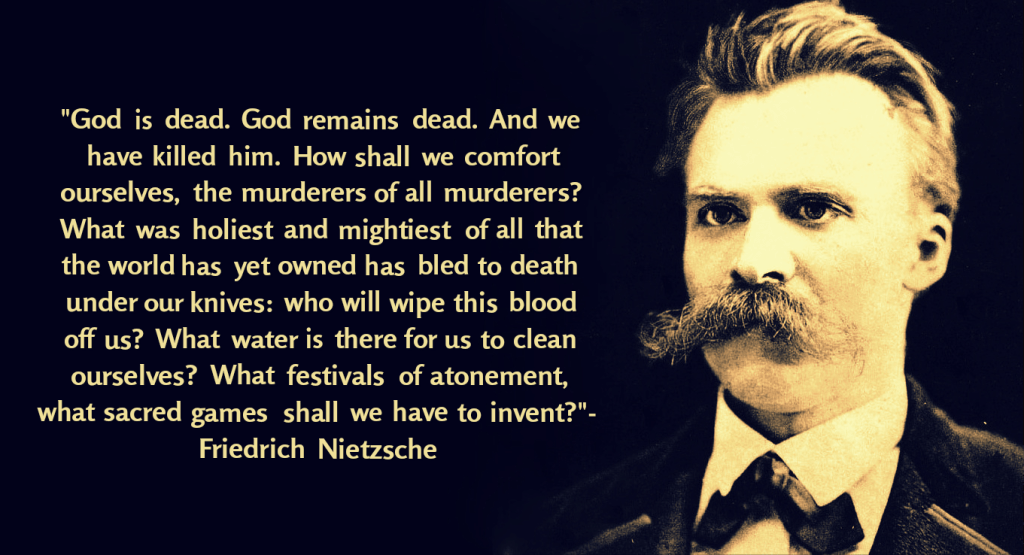















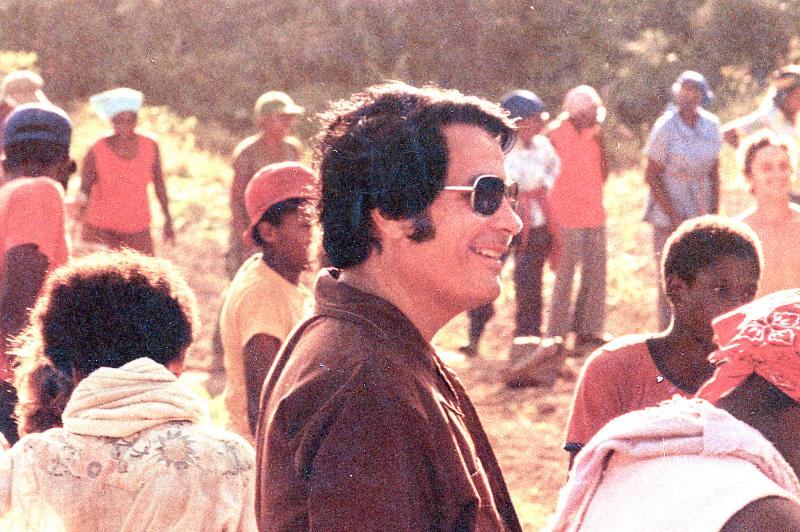











 Irregular Ideation