From Tribal Vengeance to Universal Justice: In Pursuit of One Higher Standard 

Standard

The default position for most people is some form of tribal ethic. If it is done to them or their own family by another tribe it is a horrendous and terrible crime. But, when only those in another tribe are hurt or if they are afraid that confronting the abuse will hurt their own tribal agenda—then suddenly the unforgivable becomes a “Who cares, everyone does it, why are you bringing that up again?”

Tribal ethics amount to doing only what is good for the tribe—usually sacrificing the rights of an individuals in the tribe and always denying the basic humanity of those outside of the tribe. Individual rights of those in the tribe are generally honored, but only so far as protecting them is useful to the collective and not as something that is absolute or immutable. If a few die for sake of the tribal order—are stoned to death for daring to pick up sticks on the Sabbath—that’s just how it is.

The Old Testament is full of this. Your own are completely free to enslave, rape or take from those outside the tribe and yet would be enraged if one of their own were treated in the same way—like when vengeance was taken by Dinah’s brothers who wiped out a whole city for sake of the family’s honor. If it were within the tribe the attitude would be quite a bit different. Under Moses law this was simply a matter of paying the price of the bride and not a death sentence. And it is clear that things morally abhorrent by a modern standard, like genocide, were done by the command of God.

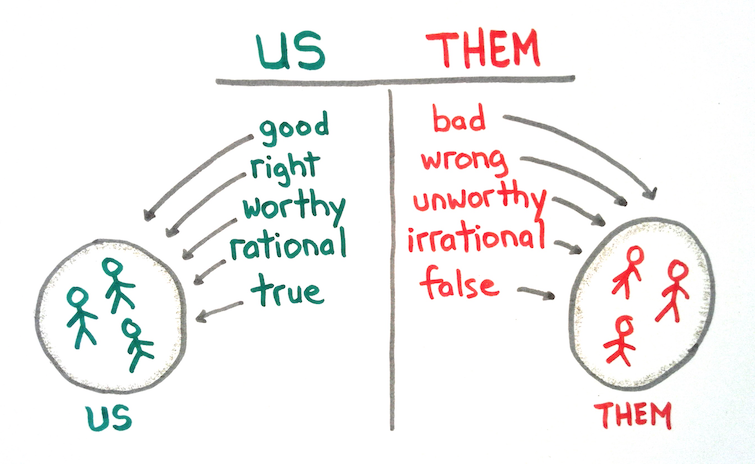
Tribalism is a feature of politics, a natural or default condition, where we defend our own and demonize the other. To the left Charlie Kirk deserved to die for his sins of hate they claim were harmful to their woke collection of identities. The Evangeli-cons soak up the propaganda from Israel that paints children in Gaza as future terrorists. We protect the people most like us because and adjust our moral rules according to the situational and immediate needs of our tribe.

A Case For One Higher Universal Standard

But a Christian ethic is completely different from this. It says sin is sin.  Evil is evil no matter who is committing it or who it is against.

And, if anything, those who are in the church, who profess their faith in Jesus, should be held to a much higher standard. There is no room for favoritism (James 2:1, Romans 2:11) or carving out exemption for elites or even our friends and family. Jesus said to love our enemies (Matt 5:44, Luke 6:27) and even ‘hate’ our own family (Luke 14:26) if necessary to truly be his follower. Even our thoughts subjected to a standard of love and forbearance.

Jesus didn’t get hung on a cross for saying cutesy stuff that is easy to do. And I really do not expect anyone to live by that code. It requires actual faith and a true belief Jesus is what he said he was to make sacrificing ourselves for his ethic reasonable:

Do not repay anyone evil for evil. Be careful to do what is right in the eyes of everyone. If it is possible, as far as it depends on you, live at peace with everyone.  Do not take revenge, my dear friends, but leave room for God’s wrath, for it is written: “It is mine to avenge; I will repay,” says the Lord. On the contrary: “If your enemy is hungry, feed him; if he is thirsty, give him something to drink. In doing this, you will heap burning coals on his head.” Do not be overcome by evil, but overcome evil with good.

(Romans 12:17-21 NIV)

But even if you don’t truly believe in a future eternal reward or God, there is a reason why universal morality is better than our default tribalism. And that is an idea of what goes around comes around. Sure, you might not care about someone else’s daughter being sexually exploited by wealthy and powerful men—most especially if they are furthering your partisan political agenda—and yet we want to have a society where there’s justice or the injustice will eventually spread to us.

This is the big difference between my own understanding and the one that is far more popular: Good and evil never change on the basis of who is doing it or if I benefit. If it is wrong for the neighbor to kill my dog under most circumstances it is wrong for me to kill theirs. And if I (or one my own) start to act with impunity—are continually forgiven for things others are always condemned for—eventually this will piss off enough of the ‘others’ that they’ll dish out their version of justice against their abusers.

The Fallacy of Judeo-Christian Values

Evangeli-cons want the world to forgive for all their infractions and yet never forget if a victim fights back against their aggression. It is the very opposite of what Christ taught and anti-Christ. Jesus would likely warn us that how we judge we will be judged and the measure we use will be measured back to us. Which should make us tremble when we consider the slaughter and razing to the ground of Gaza using bombs we provided—there will be no call for mercy on the behalf of those who claim that young children are terrorists so they can kill them:

We are imposing a complete siege on Gaza. There will be no electricity, no food, no water, no fuel. Everything is closed. We are fighting human animals and we are acting accordingly.

October 13, 2023, Isaac Herzog, President

Just as it is clear that the right wing was right, today everyone says it is clear all Gazans must be annihilated… There is no logic in differentiating between uniformed [Hamas] and the rest of the inhabitants there.

September 2025, Moshe Saada, Likud MK

Every child born in Gaza is already a terrorist, from the moment of his birth.

January 15, 2024, Nissim Vaturi, Likud Deputy Speaker

And they were stating their genocidal intent long before October 7th:

Huwara needs to be wiped out. I think the State of Israel should do it… Water, electricity, and food must be cut off from the Gaza Strip. Those who do not die by bullets will die of hunger.

February 2023, Bezalel Smotrich, Finance Minister

This shows the absurdity of what is called Judeo-Christian values. Tribal logic says it is okay to kill man, woman and child of the rival so we can take the land for ourselves. Whereas Christian morality calls for all to be saved (1 Tim 2:4, 1 Pet 3:9) and erases the boundaries of tribal identities based on gender, race or social status. It is the polar opposite of having a chosen people with a license to take and kill. Jesus offended his ‘righteous’ ethnic audience by saying that a pagan had greater faith than all of Israel. To embrace this radical ethic is to reject the tribalism that fuels division and violence, choosing instead a universal justice that holds all accountable and protects all, not just the chosen few. Only by abandoning the hypocrisy of tribal loyalty can we hope to build a world where the measure of our judgment does not return to condemn us, but instead fosters a shared humanity that is grounded in love of Jesus.

A Fundamentally New Way of Thinking

The Christian ethic really is a total reversal of fundamental attribution error. It is easy to attribute what others do to us to a matter of their immutable character, they’re just evil and irredeemable, therefore do not need to be heard or understood. But for our own or ourselves we tend to blame only the circumstances and call it a mistake—one of those forgivable offenses. The reverse is to never make excuses for our own while also showing grace to those who offend us.

When someone cuts us off in traffic is it because they are a terrible driver? Or did they just have a bad moment? Or if we do the same, is it truly just an isolated incident or is our confirmation bias simply forgetting all of those times we transgressed with an “oops, sorry!” Reversing our fundamental attribution error is simply to apply grace we give to ourselves to others. It is, at the very least, to apply the same standard we do for ourselves as we do to others.

When a person of our own tribe does some kind of horrific deed, do we dismiss this as not representing us as a whole? Maybe we justify it? When the US Navy shot down Iran Air Flight 655 flying a routine route over the Strait of Hormuz, back in 1988, and killed all 290 on board—the US didn’t even apologize and, adding insult to injury, gave medals to the crew that did it! That is tribalism and is how fundamental attribution error works. If Iran did the same the US population would be calling for our military to turn the whole country into a smoldering ruin.

But the Gospel of Jesus Christ starts with a call for repentance. Repentance being an inward turn where we identify and confess our own faults rather than hide them behind rationalization or claims that our hand was forced by the other side. And, finally, after this deep introspection, we show the fruits of a changed spirit by showing the grace we have been shown to even those who we feel are most underserving. A true Christian will strive to love their worst enemies while also holding their own to a high standard.

If we want forgiveness of our sins we must show mercy and forgive others.

Evangeli-cons want all grace for themselves and yet give none to the enemies of their ‘Christian’ empire. They don’t want sins of some in their midst to count against them, they will deny the inconvenient violence of those on their side politically, but then make the whole left or all of Islam responsible for everything ever done by one of their own. It is a tribal ethic that has nothing to do with a Jesus of repentance. Or a spirit of grace to others that exists in those who understand their place before God.

Snow Woke—Disney’s Female Empowerment Fairytale

Standard

Apparently the Snow White remake bombed at the box office. We could just go with the standard “get woke, go broke” traditionalist assessment. Rachel Zegler comes off as the female equivalent of Andrew Tate—as being angry, entitled, selfish and toxic—which isn’t appealing to a broad audience.

But, before we get into the remake, let’s talk a bit about the original Disney animation of the fairytale. The character deviates quite a bit from the Grimm version. For a start, the fair-skinned protagonist is half the age (7 rather than 14) and there’s no “true love’s kiss” in this original version. Furthermore, she’s a sort of blank slate archetype—not some ideal 1930s homemaker mothering a bunch of dwarfs. In short, the adaptation then was not completely true to the source material and created an image of feminity relevant to that time.

The Grimm version was darker in tone and featured a prince weirdly obsessed with a dead girl in a glass coffin. The dwarfs did not have distinct personalities. And Snow White awakened when the poisoned apple is dislodged from her throat when a servant carrying her coffin stumbles. And it was at this point the prince professes his love and proposes marriage—which she accepts.

The latest Disney live-action takes liberties in a very different direction. It is even less true to the original (other than elimination of the Disney romance) and reimagines Snow White being a sort of feminist militia leader who leads a bloodless insurrection against the usurping queen. But the “mirror mirror on the wall” remains and a poisoned apple—despite the heavy edit of the script where an empowered woman replaces the worn damsel in distress trope.

Why People Don’t Like Snow Woke

People enjoy new takes on old genres, like Shrek or Furiosa and also powerful female characters such as Ellen Ripley in Aliens, Sarah Connor in Terminator or even Katniss Everdeen in the Hunger Games.  They were relatable, we saw them develop, circumstances made them tough to survive, and audiences loved them.  What they don’t like is preachy dialogue or lack of any real character development. A Mary Sue, a hero with no weaknesses, is unrelatable. It is the problem with Superman and with the many woke adaptations of stories.

We like the image of a woman against the machine.

Christian movies have a tendency to be bad for the same reasons. They can come off a little campy or forced. Sure, it may work for drawing your ideological camp, but it isn’t a compelling story for the unindoctrinated or the broader audience. Which is not to say that movies about Christianity can’t be great for entertainment.  I love gritty true stories like that of Hacksaw Ridge or profound, like Silence, will have anyone at the edge of their seats—the key being relatable characters.

Zegler is a bit much. Totally insufferable in the eyes of some. And she plays a part that is equally annoying. The departure from the source material is just too rude. Sure, there is room for an update, but you would never reinvent Rambo as well adjusted pacifist in a mission to avoid too much sun exposure. Disney dumped the essence of the original and replaced it with another tired ’empowered woman’ cliché. You wonder if Zegler herself wrote the script with lines like, “I’m not waiting for anyone to save me” or groaner, “The fairest isn’t about beauty—it’s about justice!”

Ouch.

Oh well, at least even apologists for woke seem to understand that it is just bad. They did not even bother accusing the audience of being racist or misogynistic this time around.

Smash the Symbolism!

What is truly lost is the symbolic depth of the original tale. Snow White was beauty and purity contrasted with the vanity and evil of the obsessed queen. They gutted what made the Grimm tale a significant message about the triumph of innocence over the destructive power of pride. This, obviously, is too nuanced for a superficial sexual organ obsessed militant far-leftist to understand. The producers of the new film replaced purity of motive against cunning with a banal competition for power.

It’s not even moral inversion. They totally lost the point. It makes me think they lack any layers to their being. It’s all about their grievance and getting back at those they’ve scapegoated for their own misery. Like the evil queen, with all the power, they envy the beauty and peace of others and attempt to kill it with their poisoned apple. Snow Woke is the toxic fruit. Zegler is an icon of their privileged ‘diverse’ female with an entitled chip on her shoulder and not the slightest bit of appreciation for all the good men who made her ignorance possible.

This is not to say those who are fixated on the literal whiteness of the actress are any better. Grimm was not writing about racial supremacy anymore than woke supremecy, if anything the original story was about our transcending politics and Zegler would be perfectly suited for the role if she were able to embody that spirit. But our culture, in a desperate need of critique, it dichotomizes everything—divides the world into friend or foe, as if life is a zero-sum game and there is never anything to gain through fusion of opposites.

Zegler is as Puritanical (and Pharisaical) as a religious fundamentalist. She reframes a rescuing prince as a stalker and romance as weird. More rigid than a patriarch, more domineering than the system she is taught to loath. A preacher rather than an actual protagonist. Basically, a young idealist who wields her moral certainty with a convert’s passion, and yet stumbling into hypocrisy under scrutiny—reaping benefits of every institution she claims to reject.

The Female Power of Beauty, Gentleness and Grace

A few years ago, I was in the checkout line and suddenly noticed the cashier. She was beautiful, pale or ashen-faced, with hair that was jet black, pleasant smile and yet there was something uncanny valleyish about her appearance. I could not quite put my finger on it. But then she spoke. This would send a shiver through me. Never before did I have that sort of feeling simply by hearing someone talk. There was a certain quality to her voice that was almost child-like, soft, pure, and really threw me for a loop. And it occurred to me that this young woman was a real life Snow White.  I had not thought this would actually be attractive in person, but it had me momentarily smitten.

As it would turn out, in a later conversation, I learned she was mixed race, Filipino mom and dad of some kind of European descent, which is likely what gave her this stunningly feminine appearance. Now, no doubt this gentle exterior was cover over a tough and capable individual. She drove an old pickup truck and lived apart from her family with a sister, and may well have been a teenager or in her early twenties. In many ways she is like Zegler (who is herself a mix of Colombian and Polish heritage), but this real-life Snow White wielded her beauty, gentleness, and grace as a quiet strength that captivated without preaching, Zegler’s strident zeal turns a timeless tale into a soapbox, losing the feminine power of subtlety for a hollow shout of self-righteousness.

This is what outspoken angry feminists fail to grasp, forcefulness isn’t the only kind of power. My petite wife could never command me to do anything. I’m 50% bigger than her and have twice the upper body strength, I would shrug it off. But she does not need to force me to do anything. She overpowers me by other means. For example, early on, before we were married, she convinced me to stop drinking so much soda, she told me water is a symbol of her love “pure and clean” and when I drink it I could feel her love. I didn’t need to be told twice.

When I look at my baby daughter I would do anything for her. She’s so vulnerable—there is a strong desire to protect and defend her—I’m drawn, not compelled.

So what does female empowerment really mean?

Is it empowering to a fish to be out of the water?

A visual representation of society telling individuals they need to be something else to be happy.

Humans are wired for their base biological and physical functions. Reproduction is a big part of this. It becomes clear after you see process through from courtship to baby in a carriage. Early in the pregnancy, given our financial goals, my wife had considered sending the yet to be both child to be raised by her mother. But as soon as the bundle of cuteness arrived, along with the appropriate hormones, it was never a question. Family is empowerment. My sacrifice, as a father, is more rewarding than the toys I could buy for myself as an independent bachelor.

We’re relational, not rational.

Therefore, the things we think will make us happy do not give us long-term fulfillment—the woke Zegler types are privileged, given preference as women or minorities, and yet always unhappy and looking at what others have and they do not. They are a paradox, enjoying female privilege—then miserable and wanting what men have.

It is toxic, it is their impurity of spirit, and it destroys their natural beauty and potential for true empowerment.

In all honesty, I don’t really have a problem with Zegler’s passion or outspokenness.  I guess I tend to prefer women with a real personality and feel she is right on the Gaza issue.  But what is wrong is that she’s not the right character to play what is supposed to be an embodiment of purity and the power of innocence against evil.  Snow White isn’t supposed to be Mockingjay or a story where physical force met with force—but of a different kind of power.

Ultimately, the 2025 Snow White stumbles not just as a film but as a misguided anthem, with Rachel Zegler’s shrill militancy drowning out the subtle power the Grimm tale once whispered. The original’s purity and even Disney’s 1937 grace knew strength isn’t loud—it’s captivating, like the cashier whose soft voice and uncanny beauty stopped me cold, a real-life Snow White wielding gentleness over force. My wife, too, overpowers me not with commands but with a love pure as water, turning a stubborn man into a willing protector, and just as our daughter’s vulnerability stirs my soul to shield her. Zegler’s remake, obsessed with preaching justice over enchantment, misses this: true feminine empowerment doesn’t need a megaphone or a militia—it’s the quiet, relational magic that binds us, a truth the poisoned apple of ‘Snow Woke’ chokes out, leaving a hollow echo where a fairytale’s heart once beat.

What Do We Do with the Freaks?

Standard

I ran across two stories the other day, one of them about a mixed race man who looks like a female and another about a child with ‘werewolf syndrome’ who looks like the missing link—in both cases I thought about the negative attention this brings.  In the later case, given the current awareness push, a young man who looks very feminine faces presumptuous comments about his ‘transitioning’ and I wondered at what age this happy kid would realize that he was a genetic freak?  School children don’t need to be taught cruelty.

While I’m certainly not on board with the current “I identify as” phase, I also am not for alienating or adding to pain others have from being odd.  What I’m talking about is the exceptions who are the exceptions by no fault of their own.  Starting with those who are visibly different, dwarfs, albinos, Down Syndrome, conjoined twins, chimeras, Klinefelter syndrome (boys and men with extra X chromosomes), intersex people (born with ambiguous genitalia) or Turner syndrome.  There are many chromosomal abnormalities and many issues that do put some in a “none of the above” category that is apart from what is most common.

We accept that physical abnormalities exist, it is pretty much impossible to deny, but the controversy begins when someone who has all of the physical characteristics of a man demands that other people use a female pronoun to describe them or competes as a woman.  Genitals don’t tell me what goes on in someone’s head.  My wife says that I’m “like a woman” in how I am expressive and emotional.  My little sister was a “tomboy” growing up.  I suppose today that would be proof that we deserve special protection or rights?  How far can we tolerate people who do not meet expectations for their gender?

You don’t need a biologist to tell you that men tend to have a very distinct advantage over women in strength and size.  It is not fair or safe for women to be in competition with those born with an XY chromosome no matter how they identify.  I mean, isn’t that why women’s sports were created in the first place?

And, contrary to what the “Muh rights!  You can’t make me wear a stupid mask in your private establishment.” people think, it is perfectly okay for groups to exclude those who have willfully refused to conform to the established standards.  Try to walk into any church naked.  They probably won’t even let you get to your explanation about material making you itchy or how Biblical prophets ran around butt naked.  We set rules.  We define categories.  We decide if those with Swyer Syndrome are men or women.  Click the link and give me your own answer in the comments.

Include or exclude?

It is our cultural bent to be more inclusive of the exceptions.  We are taught that we must show empathy and understanding for those who are “born eunuchs” as part of Christian love.  Then again, the Gospels are a sort of square peg being fit in the round hole of Scripture and it is easy to comprehend why the ‘chosen people’ rejected Jesus given how he mingled with the impure.

Biblical Exclusion 

One reason why to be sympathetic towards those Jews who rejected the message of a teacher who ate with sinners is the Biblical tradition itself and the system it established to exclude those deemed defective:

The Lord said to Moses, “Say to Aaron: ‘For the generations to come none of your descendants who has a defect may come near to offer the food of his God.  No man who has any defect may come near: no man who is blind or lame, disfigured or deformed; no man with a crippled foot or hand, or who is a hunchback or a dwarf, or who has any eye defect, or who has festering or running sores or damaged testicles. No descendant of Aaron the priest who has any defect is to come near to present the food offerings to the Lord. He has a defect; he must not come near to offer the food of his God. He may eat the most holy food of his God, as well as the holy food; yet because of his defect, he must not go near the curtain or approach the altar, and so desecrate my sanctuary. I am the Lord, who makes them holy.’ ”

 (‭Leviticus 21:16-23 NIV‬)

And repeated:

No one who has been emasculated by crushing or cutting may enter the assembly of the Lord. No one born of a forbidden marriage nor any of their descendants may enter the assembly of the Lord, not even in the tenth generation. No Ammonite or Moabite or any of their descendants may enter the assembly of the Lord, not even in the tenth generation. 

(Deuteronomy ‭ 23:1-3 NIV)

Discrimination against the abnormal wasn’t only suggested or caught in a round about way be misinterpretation, but a command from God.  Talk about a kick in the nuts (or lack thereof) for those already suffering an undesirable condition.  Be born the ‘wrong’ ethnicity or suffer an unfortunate accident and you’re out.  Not much of this is actually explained, giving opportunity for apologists to explain around it, but Christian religion (along with modern science) has certainly taken things in a very different direction.

If a woman is ‘barren’ nowadays we try to treat the condition rather than assume it is a curse from God.  I mean, yes, the woman in the Philippines who had the hair covered son with ‘werewolf syndrome’ may believe that it had something to do with eating a cat during pregnancy, the popular notion of “you are what you eat” manifesting, but we’re not as likely to see it as punishment from God—we do not tend to attribute things blindness or misfortune to sin.  It is harder to exclude those who are imperfect when you realize it could’ve been you.

Any more than I need to know why Islam is different from Christianity, where someone was clearly copying some else’s notes, I’m not going to attempt to theologically explain the transition from Old to New Covenant.  It is clear enough that those who had lawfully been excluded, the leprose, lame and blind, Jesus healed.  The result of his ministry two millennia ago was a wave of tolerance that started with his Jewish converts.  Peter had his pigs in a blanket vision (while hungry out on the road) and now we eat bacon despite Biblical command:

About noon the following day as they were on their journey and approaching the city, Peter went up on the roof to pray. He became hungry and wanted something to eat, and while the meal was being prepared, he fell into a trance. He saw heaven opened and something like a large sheet being let down to earth by its four corners.  It contained all kinds of four-footed animals, as well as reptiles and birds. Then a voice told him, “Get up, Peter. Kill and eat.”  “Surely not, Lord!” Peter replied. “I have never eaten anything impure or unclean.” The voice spoke to him a second time, “Do not call anything impure that God has made clean.” This happened three times, and immediately the sheet was taken back to heaven. 

(‭Acts 10:9-16 NIV)

This, along with the Jerusalem Council, is a huge departure from Jewish Biblical religion and, again, it is no big surprise this new cult was rejected by the faithful.  Even today some observant Jews continue the tradition, like that Orthodox chaplain who declared loudly as he took a seat (next to me) on a crowded airliner with mixed races, “I’m a racist and don’t care what you think!”  My own cringe at this statement is born of an indoctrinated sensitivity, years of Christian influence, and not values arising naturally from thin air.  Or, rather at least not without a sheet to carry it down from heaven.

Bacon To Bisexuals

The other day I saw a post, from a Muslim friend, and it listed the problems with eating pork meat, their unique parasites, what pigs eat, etc.  Of course the winning comment was “but fried bacon is so delicious” and it basically for this reason why no Baptist will ever depart from pork consumption.  If it is pleasurable to us, we do it.  However, don’t dare use that reasoning with these same Biblical fundamentalists when it comes to things they’ve not be acculturated to.  And not at all to say that bisexuality is now in that big blanket of tolerance coming down.

No, it is just interesting to me how Biblical law is largely ignored except where it makes sense to us.  Don’t like tattoos?  Well then it is okay to misapply those laws that pertain to specific ancient pagan practices.  But if you like shellfish, then “freedom in Christ” exempts you from having to obey these outdated and irrelevant laws.  The energy in the room is completely different when it comes to the violations of Scripture we’re unaccustomed to or don’t apply to our own circumstances.  Sexual deviation is a whole can of worms that I’ll avoid until or at least until a good explanation of Swyer Syndrome is given to me.

One eyebrow raising moment, during a Bible study, while being brought into Orthodoxy, was when the topic of veiling (1 Corinthians 11) came up for discussion and how the old ethnic Russian priest dismissed it as being custom or cultural.  I never had the chance to ask him about the explicit quotes of Saint John Chrysostom on the topic.  But, like all things, what is important is a matter of our perspective.  The cradle Orthodox follow after the mainstream of Protestantism as much as anyone else, whereas the converts from Protestantism are more strict about preserving Orthodox tradition.  It’s amazing how culture influences our applications of Scripture.

All this to say that I don’t know where the precise dividing line is between pure and impure, acceptable or unacceptable.  But believe there is much more value in being merciful as our Father is merciful.  That is to apply the Golden Rule to those who struggle in ways that we can’t fathom or begin to understand.  Where it was once okay to stigmatize and treat left-handed people as second-class or evil we now accept them and think it is strange it was a problem for past generations.  There are many things that aren’t an identity we choose or a matter of “feel this way” (like a man who claims to be transracial) that require that us to show some grace.

“Ew, Brother Ew”

You’ve probably seen the meme.  A Muslim preacher lamenting those who abandon the Islamic practices of eating on the floor and growing a beard.  His comical expression of their disgust gets to the heart of what most of these religious do and don’t rules come from.  There is a continuum when it comes to gender and normalcy, taboos change, as do ideas of what real men do.  It’s funny to see how these standards have evolved over time.  From the time pulpits had spittoons to the current time of rainbow flags, we are not the same as our ancestors.

There are natural aversions.  We’re naturally disgusted by bodily fluids and it is for good reason.  Disease travels in blood, saliva and waste.  We are also attracted to beauty, the healthy form or good hygiene, this is about instinct and survival.  Sexual promiscuity is also risk as well.  So being grossed out can be beneficial if it protects us from negative outcomes.  However, this can malfunction, sort of like an autoimmune disorder, where we can overreact and exclude on the basis of things that aren’t a danger to us.  Bigotry and prejudice, like middle school fears of cooties, are often as sign of immaturity or lack of self-awareness.  Attributing every unfortunate condition to a moral failure is not sound judgment.

Just because something is strange or ugly to us is not a reason to recoil.  If a person is not trying to draw attention to themselves it is important to acknowledge their humanity rather than their odd appearance.  We didn’t choose to be ‘normal’ anymore than it was a decision they made to be different.  We do not need to pretend everyone is beautiful or affirm every exception as glorious.  There is healthy, there is deformity and disorder, we can love the person who overcomes or does not give up for their character.  It is possible for inner beauty to shine when we truly get to know the person rather than only see the outward appearance.

I Don’t Care What You Call It

Standard

I feel the need to preface this once again with a trigger warning for those who won’t read through and will miss my point. No, I’m not saying what Hamas did was justified. Nor am I saying that Israel should not respond. But I am trying to confront a bias, motivated by a misuse of Scripture, that is leading our side to look the other way at what amounts to dumping white phosphorous on innocent children and then pretending this is a just response to the death of Israelis. I am addressing what clouds the moral judgment here and not saying that one side or the other should just take the abuse.

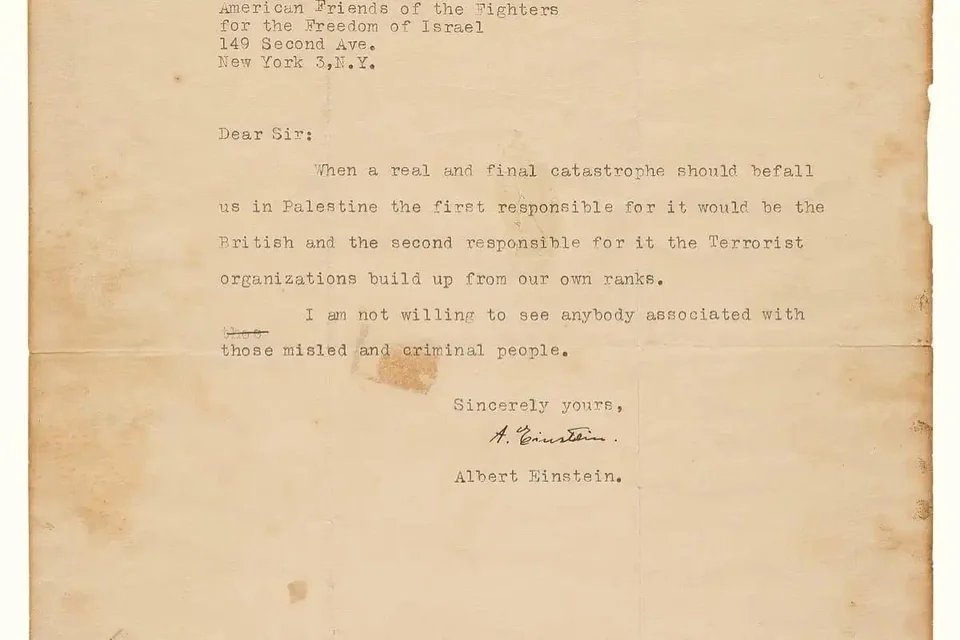
I’m addressing the false dichotomy exposed in this letter from Albert Einstein (Jewish) in his opposition to the terrorism that was taking place. He wrote this right after a massacre carried out by Zionist extremists and warning of what would eventually become the horrendous reality of the Nakba and why Palestinians today are reluctant to leave their homes today. They know the history even if you’re ignorant. Read what Einstein wrote and then study what happened next…

To be clear, Einstein was not against a Jewish homeland. He was simply against the violent means being employed that have led to the current hatred. Had more followed his advice then we wouldn’t be facing yet another bloody war today. When will we learn?

Framing Issues

Had the British managed to put down the bloodthirsty terrorists who fought to “water the tree of liberty” by violently taking over their American colonies, does that mean they never existed? No, they (along with their weird pagan offshoot religion that required regular human sacrifice to keep their tree nourished) did exist and they existed as a distinct entity the moment that they declared themselves to be independent. And to say otherwise would be dumb.

One of the stupidest arguments ever made is “tHeRe Is nO PaLeStINe” as if the millions of people pushed into Gaza and West Bank simply do not exist. By that sort of semantic and legal argument, there was never a state of Israel prior to May 14, 1948. Sure, there were a people called the children of Israel and a kingdom of David, but never a STATE by that name, and certainly not one that was a Western-style democracy, prior to a bunch of Europeans moving to British-controlled Mandatory Palestine (which is what it was called) and most certainly a nation with the world’s strongest standing army is not the same one as found in the Scriptures. No, that doesn’t mean they should be run into the sea or not recognized as a legitimate nation (although many do not) and yet we must deal with the reality that the land was occupied before European settlers arrived to claim it. Historical claims may make a nice romantic script, for those with no skin in the game, but telling people that their grievance of being displaced doesn’t exist because you don’t like the name is asinine. It is reasoning that may get you likes in your echo chamber but suggests you are silly and should not be taken seriously by those with a modicum of intelligence. It’s not like the Palestinians are going to stop their fight against those who took their deeded land because you claim they don’t exist.  

Furthermore, legal recognition does not change what something is. By now we all should know this. The governments of the world can call black white or white black and it doesn’t change the nature of color. Calling a man a woman or your affinity for your pet a marriage doesn’t make it true. We have the absolute right to question legal precedent or to hold to whatever existed in our minds prior to their changes. Maybe your modern definitions are simply ignorant of the original meaning and the other side is right. You might eventually be blotted off from the face of the Earth and forgotten. But it doesn’t mean you or the perspectives you held don’t exist. A person’s perspective still exists even if opposed by the powerful who have better propaganda and denying it exists is plain dumb.

Palestinians exist even if they are erased from the land or never officially recognized by many in the United States. That’s not a statement that will suit many from my fundamentalist religious background. But they’re simply not dealing with reality, it is denial, and ridiculous. Einstein called it Palestine. It was Palestine. The modern-day Israeli state came after.

Who were the Samaritans?

They were people deemed illegitimate by the pure-blooded religious elites.  They made a counterclaim to what the other descendants of Abraham Jesus mingled with saw as their own exclusive property.  The Samaritans had their own priests (apparently descendants of Aaron directly) and, contrary to the belief of their Jewish rivals, also continuously occupied the land like their Semitic cousins.

This is what makes how Jesus recognized these people so significant.  We learn, in his conversation with a Samaritan woman, that true worship wasn’t about location, including Jerusalem, but about Spirit and truth.  If this wasn’t clear enough, the parable of the good Samaritan was a slap in the face of those whom Jesus addressed.  A Samaritan more righteous than their own best?  Jesus was intentionally antagonizing. He intended to offend and insult them.

The point, however, remains that salvation is not a birthright.  It is not about your claim to be or ethnic inheritance.  The Christian truth is about what we do, and how we love, and never a matter of our worship ritual or genetics.  The measure of Christian pedigree is faith, pure and simple, like that of Abraham—which is what makes a person a son or daughter of Abraham.

Jesus didn’t mince words when addressing those who believed they would be saved by their ethnicity or Abrahamic bloodline:

Abraham is our father,” they answered. “If you were Abraham’s children,” said Jesus, “then you would do what Abraham did. As it is, you are looking for a way to kill me, a man who has told you the truth that I heard from God. Abraham did not do such things. You are doing the works of your own father.” “We are not illegitimate children,” they protested. “The only Father we have is God himself.” Jesus said to them, “If God were your Father, you would love me, for I have come here from God. I have not come on my own; God sent me. Why is my language not clear to you? Because you are unable to hear what I say. You belong to your father, the devil, and you want to carry out your father’s desires. He was a murderer from the beginning, not holding to the truth, for there is no truth in him. When he lies, he speaks his native language, for he is a liar and the father of lies.

(John 8:39‭-‬44 NIV)

There are not multiple paths, according to Jesus, but only one way, truth, and life for all to come to the Father.  Galatians makes it clear that Abraham’s seed is fulfilled fully in Christ and all who believe in Him:

The promises were spoken to Abraham and to his seed. Scripture does not say “and to seeds,” meaning many people, but “and to your seed,” meaning one person, who is Christ. […] So in Christ Jesus you are all children of God through faith, for all of you who were baptized into Christ have clothed yourselves with Christ. There is neither Jew nor Gentile, neither slave nor free, nor is there male and female, for you are all one in Christ Jesus.

(Galatians 3:16‭, ‬26‭-‬28 NIV)

Romans affirms what St Paul said above in Galatians:

So too, at the present time there is a remnant chosen by grace. […] What then? What the people of Israel sought so earnestly they did not obtain. The elect among them did, but the others were hardened

(Romans 11:5‭, ‬7 NIV)

The “remnant” is those who believed in Jesus.  While the “hardened” are those who rejected Him and, in their unbelief and ignorance, crucified the one who was called their King.  And, for those who contort and turn the Gospels inside out trying to revert to a Covenant that passed away, Hebrews 8:13, I despise your bastardization of truth.  Those who would replace His Kingdom “not of this world” with a modern secular state are not legitimate scholars or Christians.

I reject your ignorant religion.

I reject your indifferent religion.

I reject your false religion.

The true Christ isn’t an ethno-nationalist or waiting on yet another stone temple to be built.  And I don’t really care what your Scofield reference or some random guy on YouTube says.  Christian Zionism is a contradiction of terms.  I’m perfectly fine with European Jews finding a homeland and defending it.  But it should never be confused with the fulfillment of anything more than that.  We should instead be looking for the new Jerusalem.  So stone me like Stephen for repeating what he said: “The Most High does not live in houses made by human hands.”

Count me with the Samaritans.

A blessing or a curse?

Since the 1950s, no other nation has shown more perfect loyalty or full allegiance to the state of Israel than the United States.  The Biden administration is no exception and doubling down on what Trump started.  For this have accumulated a mountain of debt, a decay of our institutions, and sharp moral decline as more and more Americans fall away from faith.  Sure, we are materially wealthy, for now, but churches are empty and those that remain are temples to consumerism rather than self-sacrificial love.  If support for this country is a blessing then I guess we’ll need to redefine that word like we have been with everything else lately.  Or maybe consider we’ve gotten things wrong?

The direction of the US doesn’t look good right now and maybe that is because we’re like the Jeruselum condemned by Ezekiel:

“‘Now this was the sin of your sister Sodom: She and her daughters were arrogant, overfed and unconcerned; they did not help the poor and needy. They were haughty and did detestable things before me. Therefore I did away with them as you have seen. Samaria did not commit half the sins you did. You have done more detestable things than they, and have made your sisters seem righteous by all these things you have done. Bear your disgrace, for you have furnished some justification for your sisters. Because your sins were more vile than theirs, they appear more righteous than you. So then, be ashamed and bear your disgrace, for you have made your sisters appear righteous.

(Ezekiel 16:49-52 NIV)

Maybe it is time to stop focusing on the sins of Samaria and consider our own. Sure, maybe IsRaEl hAs ThE rIgHt To DeFeND iTsElF, but then so do the other Semitic people in that region. Consider that we are Haman, from the book of Esther, unwittingly building our own gallows as we justify our unjust vengeance against undeserving people. We’re not a righteous judge. The children of Gaza did not attack Israel. It is not anti-Semitic to stand with Einstein or recognize the unjust suffering of the Semitic people in Gaza. It is not our allegiance to the state of Israel that will bring us blessings, only allegiance to the king of the true Israel can do that and we must all repent of our delusions otherwise.

The Man I Never Met — Remembering Wayne_in_Maine

Standard

There are some characters you meet online and never forget.

Such was the case with Wayne_in_Maine, who could come off as a sort of cranky or cantankerous old man and yet seemed (even then) to have a golden heart under the bluster. There is a way or an intuition I have, that can cut through the harshness on the surface. I can just know when someone is full of themselves and cruel despite their nice-sounding words or truly compassionate despite their surface-level unpleasantness.

Wayne was the latter kind.

The first thing notable about Wayne was that he was intelligent, he had been a nuclear engineer, could articulate his arguments well, and clearly was not going to be backed into a corner. The second thing was that he had a very unique journey and a different perspective from the other ethnic cultural inhabitants of the MennoDiscuss forum. He had gone from a hippy leftist to a conservative-minded neo-Anabaptist and could speak with authority on matters of science unlike the religiously indoctrinated parroting their fundamentalist teachers.

Initially, I saw him as a sort of threat to my worldview, another person compromised by secular influence trying to get Mennonites to shift to his views, and yet later his perspective would actually strengthen my faith when it faltered against the scientific evidence clearly pointing to the appearance of age in the universe.

Because of Wayne, I learned that young-Earth Creationism (or YEC) is not necessary to have a sincere and grounded faith in Jesus Christ.

In fact, it might actually be a liability and cause many to fall into a serious crisis of faith when they go to university, study biology or almost any science and find out the case for YEC is not as clear as it was presented. That Wayne, a rational mind and well-educated, could both reconcile modern scientific theory and his faith was more useful to me (a critical thinker) than some Hammy tourist attraction put there to feed the confirmation bias of fundamentalist midwits. I came around to his position and haven’t looked back.

I have long respected Wayne despite our sometimes clashing and my occasionally coming away feeling unappreciated by him.

He was a man a conviction. He gave up lucrative career paths, actually tried communal living, literally sold all from what I recall, and had come much further in developing his own perspective than most do.

However, despite my respect, Wayne’s version of Christianity didn’t appeal to me. He had, inadvertently, pushed a friend of mine away from Anabaptism with one of his responses. I still believe his take on the rich young ruler account misses the mark, where he read the response of Jesus as a sort of legalistic prescription rather the same as we understand Luke 14:26 where Jesus says if someone “does not hate father and mother, wife and children, brothers and sisters—yes, even their own life—such a person cannot be my disciple.”

I know, for a fact, that he did not take that literally. He came across, from my limited ability to see, as a very loving father and committed husband. I can’t imagine him hating his family to prove his commitment to Christ. Nevertheless, he was adamant about being completely Anabaptist in his perspective about wealth or warfare, an inconsistency of thought that bothers me about him and others of that fold. It did annoy me too when he characterized the Orthodox tradition as “smells and bells” as if worship was supposed to be something other than a beautiful or full sensory experience.

The Cancer and Change

After I heard about Wayne’s cancer diagnosis, none of our previous sparrings mattered much to me. Wayne, despite our differences, was a true friend and someone that mattered to me. It was especially important to me, given my mourning of Uriah, to talk to someone coming to terms with their poor prognosis and yet not giving up hope.

When I reached out on Facebook Messenger, mentioning Uriah and my desire to meet with him, he replied quickly and with more warmth than I had expected. There was no standoffishness, as had kind of been a feature of his personality, he reciprocated the desire to meet and we talked about various matters of faith.

I took a look at some of the MennoNet discussions he was involved in and got a laugh together about the various bad arguments being used. That’s one thing about him, his humor was dry and always fun, or at least fun when you were on the same side.

It was a sort of therapy, talking to this different side of the pragmatic engineer. Truly, it was special, the man that I saw emerge in this final trial was different. My own thought was that this was the Wayne that was always there under the snide comment and cynicism. Men can put up their walls, to not appear vulnerable, and that was no longer there. We were just two old keyboard warriors with nothing left to prove to the other.

And that’s not to take away from anything he said as far as the grace he was given to endure to the end. It was definitely something spiritual. His testimony of faith was clear. As a friend described him, in this transformed version, “It was like he became a totally different person. Happy, cheerful, optimistic.” He would not be defeated in death and I wanted to hear more about how a rational man, such as himself, given my own struggles, could continue in hope of the eternal.

I had to think of this Scriptural passage:

Praise be to the God and Father of our Lord Jesus Christ! In his great mercy he has given us new birth into a living hope through the resurrection of Jesus Christ from the dead, and into an inheritance that can never perish, spoil or fade. This inheritance is kept in heaven for you, who through faith are shielded by God’s power until the coming of the salvation that is ready to be revealed in the last time. In all this you greatly rejoice, though now for a little while you may have had to suffer grief in all kinds of trials. These have come so that the proven genuineness of your faith—of greater worth than gold, which perishes even though refined by fire—may result in praise, glory and honor when Jesus Christ is revealed. Though you have not seen him, you love him; and even though you do not see him now, you believe in him and are filled with an inexpressible and glorious joy, for you are receiving the end result of your faith, the salvation of your souls.

(1 Peter 1:3-9)

More important than all of his intellectual endeavors and Christian apologetics, theory or theology, is Wayne’s undying faith through trial is of the greatest comfort to those still in the fight. I never did get to have that face-to-face meeting that we had committed to upon his planned move to Pennsylvania to be closer to his daughter and grandchild. We had planned to meet in order to give us both something to look forward to when he did.

Now that meeting will have to change locations. Wayne took his final breaths yesterday evening, on August 12th, a couple of days after his 65 birthday. By God’s grace, in triumph, we’ll see each other on that other side.

I’m sad that Wayne remains a man that I’ve never met, in the flesh, despite our interactions over the years. However, in his terminal illness, there was also a man that I never met, that softer side, and feel blessed have finally met this man. I loved him and believe that he loved me too. I’ll remember our last interactions for much more fondly than our first. It was beautiful to see his golden heart revealed.

Pure Nonsense: The Courtship Idealism That Failed

Standard

I’m sure you are familiar with them, you know, that family who has a life that resembles a Thomas Kinkade painting, always so idyllic and cute. In fact, they are so adorable they are annoying. This sort of charmed life comes a sort of “holier than thou” smugness. Sure, they are too perfect to say it outright, they always religiously maintain that facade of sweetness, but they often have the easy answers that often betray their true cluelessness.

I can recall, for example, a lovely twenty-something, themselves engaged, who with complete sincerity suggested that my romantic struggles may be God’s will for me to remain single. They themselves successful because of their endearing charm and connections (which to them meant divine favor) whereas my own inability to navigate was to be taken equally as a sign. Apparently they worship the God of circumstances, one that absolved them of any responsibility to help those less fortunate—other than to offer some words of encouragement and advice.

Anyhow, thank God that doctors do not subscribe to a similar thought process: “We know you are lots of pain, broken legs are not easy for sure, but have you ever considered that it might not be God’s will for you to walk? Here’s an ice cube, I suck on one of these when I’m feeling down and out…” That sort of response would probably fall under the category of medical malpractice. Likewise, the advice of those who heap a burden on the shoulders of others and yet are unwilling to lift a finger to help (Matt. 23:4) are guilty of spiritual malpractice:

“Suppose a brother or a sister is without clothes and daily food. If one of you says to them, “Go in peace; keep warm and well fed,” but does nothing about their physical needs, what good is it? In the same way, faith by itself, if it is not accompanied by action, is dead.” (James 2:15‭-‬17 NIV)

The passage above, from James, contrasts the mere words of the pretentious and the gritty hands-on sacrificial love that true faith requires. Talk is cheap, my darlings. And what my advice giver really meant to say is that they were unwilling to pull out all the stops on my behalf, they themselves were comfortable with my circumstances as they had persisted for years and thus they were unwilling to confront the prejudices or cultural assumptions that had made an impossible hurdle for me. But, rather than take personal responsibility for their own indifference towards my plight, they turned it into God’s will.

The Courtship Idealism That Failed…

When the news of the separation of Joshua Harris from his wife of over twenty years reached me this week it was hard not to connect it back to the courtship ideal he expressed many years ago. Harris, a “purity culture” advocate, rose to prominence in fundamentalist churches for his book “I Kissed Dating Goodbye” published in 1997. In this book unmarried Harris promoted a model of courtship that was supposed to lead to happily ever after and instead left many of us outside looking in—unable to overcome this stumbling block put in our path.

The Harris model of courtship required a level of commitment that, for the less beautiful and bold, made it virtually impossible for many of us to get started. This absurdly increased threshold of commitment meant that unmarried women, even in their mid or late twenties, refuse to go so much as a coffee date with an eligible bachelor for fear that it could lead to ‘defilement’ or marriage. The horrors of being sucked into a commitment after finding out that slightly awkward guy is a lovable child of God! I mean, isn’t that what King Solomon had in mind by “guard your heart”?

(I have about 1000 reasons to doubt that interpretation.)

Pushers of purity culture didn’t necessarily intend their model as a panacea. I’m guessing Harris and others would deny that there were guarantees of success that accompanied following their prescribed methods. I’m also pretty sure they did not anticipate the unintended consequences and damage caused by their teachings either. Nevertheless, they did “tie up the heavy, cumbersome loads” of fear and many have failed to find meaningful relationship with their religious counterparts as a result. It undoubtedly contributed to my own woes.

Sure, some, including Mr Harris, were able to get through this courtship minefield. However, that doesn’t mean it produced that perfect marriage as was promised by their courtship prescription. However, formulas aren’t going to produce happiness through the years and struggle of a marriage. If anything they built up impossible expectations for married life in the same way that they did for dating relationships and leads to future disappointment. At very least, while unwarranted confidence is attractive, nobody wants to be married to someone with all the answers.

True Faith Comes Through Struggle…

For all of us who weren’t born into a Precious Moments world, who had to beg and plead, compete against the odds, claw for inches at a time, to earn our small measure of success, we can’t simply rely on circumstances. Our Pollyannaish notions of destiny and love have always went up against the headwinds of fear and brick-wall after brick-wall of rejection. We weren’t born tall, extraordinarily handsome or especially wise. If we were wait for our dreams to arrive on a silver platter we would never get anywhere.

If we were fatalists and shared the mechanical view of God’s will of those who depend on circumstances rather than faith, the faith of those who “ask, knock and seek” (Matt. 7:7-12) that Jesus described, then we could also blame circumstances for our not getting out of bed anymore. I can assure you of this, there were days where I had fight to continue, where it was only the love of another person that kept me going, and that’s what real faith is. Real faith is having the guts to face down the impossible.

The cutesy patootsy life doesn’t actually require any faith, sacrifice or grace. Everything depends on their good feelings and God’s will mysteriously never goes against their own expectations. And it works until they face that first real test. When those delusions of “meant to be” are replaced with the reality of failure. I pity those who get the rug yanked out from under their idealism at a later age. That is why I pray that Mr Harris and his family find God’s grace is sufficient even when things do not go as planned.

We need fewer books giving advice. We definitely need less advice from single men, with their graceless formulas (*ahem* Bill Gothard, are you listening?), and more faith of real action. Being a best-selling author at twenty-one might be a thrill and even good for your chances of getting married. My question is what did these idealistic men do to help others across that impossibly high threshold they created? In the end what matters is what we do to help others carry their burden.

It’s time to kiss the book “I Kissed Dating Goodbye” goodbye. A courtship ideal cannot prevent divorce and it seems to more often prevent marriage. It is faith of action, not a courtship ideal, that makes a successful loving relationship possible. A faith that is willing to sacrifice, truly sacrifice, for the good of another person. A faith that makes the impossible possible rather than blame God’s plan for our own unwillingness to intervene on behalf of others.

The Terrible Irony of a Person Who Hates People

Standard

One of my biggest pet peeves?

How so many people hate people.

They see encroachment on animal habitats, destruction of the environment, our nature, and imagine the world as being better without people.

Sure, I do understand the sentiment, I do not want to see something good be ruined. And I believe, for the good of humanity and all other living things, we should be caretakers of this amazing planet to the extent that we are able.

However, without us to observe, what would be left to make the judgment that the world is better or worse without us?

Without a Capable Observer—Does Anything Really Matter?

Like beauty is in the eye of the beholder, the existence of anything is a matter of there being a capable observer. Rocks or even simple organisms show no sign of being capable of appreciating their own existence—let alone beauty or the universe.

Our existence in time and space is something profoundly mysterious no matter what you believe about the origin of life—created in six days or over the span of 13.8 billion years—it is incredible.

But we are unique in this capacity to use words to describe our existence. We are, by all appearances, alone in this ability to contemplate our own existence or at least able to do it at a level unmatched by anything else known. Dolphins and elephants are, indeed, very intelligent yet, at very least, lack our vantage point as observers.

The Contradiction of a People Hating Person

Those who claim to prefer the creature over humanity are truly at odds with themselves. Not only are humans the pinnacle of the complexity of life on this planet, but we are also special for our ability to appreciate that we or anything else exists.

In other words, no beholder means no beauty, because beauty is not something out there or independent of an observer—beauty is rather a concept of mind that depends on the existence of the observer as much as the things being observed. What is out there only exists to the extent that something is able to assign value or appreciate that it does exist.

People who hate people underappreciate the wonderful mystery of their own consciousness and completely fail to comprehend that their observation is what gives all things value.

An amoeba may exist independently of us in some form, but it lacks the human mind to process things like future and understand the result of actions or consequence—which is the basis of the moral reasoning and the very thing that can cause some to view themselves (or just other people) with contempt.

Maybe it isn’t that people hate all people so much as they are narcissistic and simply hate every other person—with exception of themselves?

Narcissists Only Value Their Own Consciousness

It does seem that there are many people, who see themselves as being worthy of resources because they are (in their own minds) enlightened and special in comparison to others.

This aggrandized perception of self is possibly due to their own inability to imagine others being equally (or more) intelligent, as consciously aware or moral as they are, and otherwise equal. Their deficiency of imagination is only made worse by a culture that promotes a notion of self-worth that is independent of love for humanity in general.

Whatever the case, it leads to self-contradiction, it leads to a person who values themselves and their own moral judgment while not recognizing this capacity in others to do the same. It is basically a person who loves their own consciousness so much that they can no longer value perspectives that do not mirror their own and thus hate (rather than appreciate) anyone in competition with them for resources.

A people hating person sees other humans as being greedy and abusive, but fail to comprehend their own jealousy and control freakishness. They judge humanity as a whole without turning the criticism back on themselves or understanding that they themselves, with the mundane choices they make on a daily basis, are as responsible for the large scale problems as the collective whole.

A person who sees others as morally or otherwise inferior to themselves it is on a path to self-destruction. Pride coming before the fall is not karma—it is consequence. A person can become so blinded by their own arrogance and contempt for others that they are actually worse than those whom they condemn. They cannot learn or grow and are bound to hit a wall at some point when their own hatred makes their own life unbearable.

In some cases, when coupled with young male aggression, they become school shooters.

But in most cases, people who undervalue people simply live as one led by the nose by their own confirmation biases and emotions. They see themselves as having all the right answers, as always being the good or righteous person, and are really just egotistical and hypocrites. They may feel entitled because of their inflated self-worth—but are deceived. Like Cain who slew his brother Abel (as means to deal with his own cognitive dissonance as a result of his sacrifice being rejected), they are truly an enemy of themselves.

Why Care About What Will Eventually Burn Anyways?

Another deficiency of a person who hates other people is their inability to comprehend the reality of the universe as it is. Both an atheist astrophysicist and religious fundamentalist should be able to agree on this and that is that the universe as we know it will eventually end. Solar physics (evidenced in the stars) and Scripture point to fire as being the ultimate end of life on earth.

Even if some life were to somehow escape that consuming fire it too would cease as the cosmic clock spring of thermodynamics (behind all movement and life in the universe) became completely unwound. That, the “heat death of the universe” may be billions upon billions of years in the future, but it is as inevitable as the sun coming up in the morning and everything we know in this life will cease. There will be no stars flickering, no photosynthesis, no warmth or entropy—all will have expired.

But we do not even need to go that far out in time to understand the reality of life. Take a visit to the American Museum of Natural History in New York City sometime, consider for themselves all of those various forms of creature that went extinct and went extinct long before humans could have played a significant role in the environment. Nobody cries over Pakicetus nor laments the complexity of the ecosystem that it lived in, so why be upset about Pandas or Polar Bears following the same path?

Certainly, we should be concerned about the decline in the diversity of life, especially as rapid as it has been in recent centuries. That said, there have always been periods of expansion and contraction, usually related to cataclysmic events such as comet strikes or super volcanos, which will happen whether we campaign to “save the whales” or not. Which isn’t to say that we should care any less than we do, but we should probably care differently knowing that it is all temporal regardless.

Which leads into a question, if all this will end one way or another…

What Really Is Important?

Humans are magnificent creatures. We are the only creature capable of planetary destruction. But also creatures so extraordinarily capable of perceiving the future and contemplating things like value. It is our unique abilities that make our complex moral reasoning possible, where we can examine our own actions (collectively or individually) and pronounce judgment.

We are more responsible, but only because we are better at understanding the consequences of our actions and are able to adjust our behavior accordingly. We make priorities. We decide, in our own minds, what is good or bad, what is worthy of our love and what is deserving of our hate, whether flamingos matter more than fetuses.

We determine what is important.

So what is most important given that everything in this universe has a definite expiration date?

If there is anything timeless or beyond this universe, more important than life itself, what is it?

For me the answer is love.

If anything can escape our temporal existence it is love. Love transcends. Love allows us to show grace to the other creatures on this planet which are most like ourselves and that being all of those other fallible human beings. It is true, people are often unappreciative and wasteful. But hate for other people is really only self-loathing (removed a few steps) and to underestimate the value of our existence as the observers most capable of appreciating the beauty of this world.

It is important that we love other people. Sure, there billions of us and it is really hard to love those faceless masses sometimes. Still, other people have as much right to exist as anything else in the universe, we should appreciate them that they are conscious, like us, and love them as we want to be loved ourselves. Without love, nothing is really important and our existence, this tiny snapshot we get of the universe as humans, is meaningless.

How God’s Economy Differs From Our Own

Standard

In three prior blogs (on topics of law, legalism and church authority) I’ve tried to present the Biblical basis and lay the theological groundwork necessary to establish concepts I will introduce in this post. I wish to remind my readers once again that I do not speak in any official capacity, I am not ordained, and encourage y’all to investigate these matters for yourselves rather than just take my word for it.

There are several cases in Scripture of people asking what they must do to be saved. In Acts 2:37-39, when the crowd asks what they must do, Peter answers:

Repent and be baptized, every one of you, in the name of Jesus Christ for the forgiveness of your sins. And you will receive the gift of the Holy Spirit. The promise is for you and your children and for all who are far off—for all whom the Lord our God will call.

Later, in Acts 16:31-34, a Roman jailer asks: “Sirs, what must I do to be saved?”

This is how Paul and Silas replied:

“Believe in the Lord Jesus, and you will be saved—you and your household.” Then they spoke the word of the Lord to him and to all the others in his house. At that hour of the night the jailer took them and washed their wounds; then immediately he and all his household were baptized. The jailer brought them into his house and set a meal before them; he was filled with joy because he had come to believe in God—he and his whole household.

We read the testimony of the apostle Paul, in Acts 22, where he describes his dramatic conversion on the road to Damascus. He describes a blinding light, being confronted by Jesus, and how he asked what he should do. He is told to continue on the road and meet a man named Ananias who restores his sight and then tells him: “Get up, be baptized and wash your sins away, calling on his name.”

And we also have this explanation of salvation by Peter:

For Christ also suffered once for sins, the righteous for the unrighteous, to bring you to God. He was put to death in the body but made alive in the Spirit. After being made alive, he went and made proclamation to the imprisoned spirits—to those who were disobedient long ago when God waited patiently in the days of Noah while the ark was being built. In it only a few people, eight in all, were saved through water, and this water symbolizes baptism that now saves you also—not the removal of dirt from the body but the pledge of a clear conscience toward God. It saves you by the resurrection of Jesus Christ… (1 Peter 3:18-21 NIV)

All of those passages answer the question of what a person must do. All of them mention water baptism as a necessary step in this process. This emphasis on baptism reflects the preaching of John the Baptist who tied the practice with true repentance. It also is what Jesus clearly taught:

“Very truly I tell you, no one can enter the kingdom of God unless they are born of water and the Spirit. (John 3:5 NIV)

This is likely the reason why baptism is a sacrament that, traditionally, in an emergency or circumstance where there is nobody else, can be administered by anyone. One can repent and believe in their mind, but baptism should follow—because that is what Jesus taught, it is what the early Church believed and to this very day is still the tradition of the Church.

So, we can all agree that baptism is a requirement for salvation, right?

Probably not.

This is one point where legalists might carve out exemptions, turn Scripture against Scripture, or otherwise downplay the necessity of baptism. But no amount of theological twisting can overturn the rule. Baptism is absolutely a requirement for salvation and to argue against that is to deny what is clearly recorded in Scripture. Jesus says that “no one can enter the kingdom” without being “born of water” and we must assume that is exactly what he meant.

The Thief On the Cross, Judas, and the Kingdom

Of Thy Mystical Supper, O Son of God, accept me today as a communicant. For I will not speak of Thy Mysteries to Thine enemies, neither like Judas will I give Thee a kiss. But like the thief will I confess Thee: remember me O Lord, in Thy Kingdom.

One of the starkest contrasts in Scripture is between the thief on the cross beside Jesus and Judas who betrayed Jesus. It wasn’t a comparison I had considered before hearing the Orthodox liturgy (in the quotes above) and yet is a parallel that is quite poetic and very significant.

On one side of the comparison, we have the man who did everything right from a legalistic standpoint. Judas had followed Jesus for years, from all appearances he had done everything required of a disciple and was even trusted enough to carry the common purse. But Judas, despite his outward devotion, seems to have been full of bitterness and ends up betraying Jesus with a kiss—before he took his own life. His name has become synonymous with betrayal and treason.

On the other side we have the account of two criminals crucified beside Jesus on the cross:

One of the criminals who hung there hurled insults at him: “Aren’t you the Messiah? Save yourself and us!” But the other criminal rebuked him. “Don’t you fear God,” he said, “since you are under the same sentence? We are punished justly, for we are getting what our deeds deserve. But this man has done nothing wrong.” Then he said, “Jesus, remember me when you come into your kingdom.” Jesus answered him, “Truly I tell you, today you will be with me in paradise. (Luke 23:39-43 NIV)

This man called “the thief” was a criminal who acknowledged that his punishment was just and defends Jesus against the mocker on the other cross. We have no reason whatsoever to believe he lived an upright or righteous life. There is no evidence of this man being baptized. He doesn’t ask Jesus into his heart nor does he recite a creed. He simply pleas, with his dying breaths and a little faith, “remember me” and Jesus, in response, tells him: “Today you will be with me in paradise.”

Does this mean that we should stop baptizing people?

Does this mean that we can continue in sin that grace may abound?

No and no.

There is no excuse for sin and there is no exemption for baptism either. There is, however, an order or a hierarchical arrangement of priorities and at the top of it is something beyond mere religion. What matters most is God’s grace and having the faith to fully put our trust in Him as our salvation. This something the thief could do and that Judas could not. Judas, for all his outward displays of righteousness and despite doing everything that was required of a disciple, had faith in his own understanding rather than in Jesus.

There are many sincere folks today who try to reduce Christianity to a list of dos and don’ts. And, instead of an abundance of life or resembling Jesus, they are rigid, anxious, jealous, judgmental, unforgiving and too often a stumbling block to those young in the faith. They believe that they are receiving salvation as a trade for their own righteousness and careful obedience. They often end up like Judas, bitter and critical, and refuse to truly put their faith in Jesus.

No amount of ritual obedience or religion can save a person who has faith only in themselves. We should like the thief who knows they are doomed without God’s mercy and not Judas who was righteous by outward appearance and lacked faith. Being a lowly criminal with a repentant heart is eternally better than being a disciple who judges others by his own standards and betrays Jesus.

God’s Economy Is Different From Our Own

Those trying to earn God’s favor, like the Pharisee who boasted in prayer about his righteousness compared to another man, have a desperate need to justify themselves. And, like the Prodigal son’s older brother who was angry because of the grace shown to his openly rebellious younger sibling, many have an entitled attitude and believe that their obedience and works means they are owed. It is because they believe that God’s economy is merit-based like their own. They try to earn points by obeying the law and fail to comprehend their own woefully inadequate position before Almighty God.

Jesus, in the parable of the laborers in the vineyard, contrasts God’s economy and our own:

“For the kingdom of heaven is like a landowner who went out early in the morning to hire workers for his vineyard. He agreed to pay them a denarius for the day and sent them into his vineyard. “About nine in the morning he went out and saw others standing in the marketplace doing nothing. He told them, ‘You also go and work in my vineyard, and I will pay you whatever is right.’ So they went. “He went out again about noon and about three in the afternoon and did the same thing. About five in the afternoon he went out and found still others standing around. He asked them, ‘Why have you been standing here all day long doing nothing?’ “ ‘Because no one has hired us,’ they answered. “He said to them, ‘You also go and work in my vineyard.’ “When evening came, the owner of the vineyard said to his foreman, ‘Call the workers and pay them their wages, beginning with the last ones hired and going on to the first.’ “The workers who were hired about five in the afternoon came and each received a denarius. So when those came who were hired first, they expected to receive more. But each one of them also received a denarius. When they received it, they began to grumble against the landowner. ‘These who were hired last worked only one hour,’ they said, ‘and you have made them equal to us who have borne the burden of the work and the heat of the day.’ “But he answered one of them, ‘I am not being unfair to you, friend. Didn’t you agree to work for a denarius? Take your pay and go. I want to give the one who was hired last the same as I gave you. Don’t I have the right to do what I want with my own money? Or are you envious because I am generous?’ “So the last will be first, and the first will be last.” (Matthew 20:1‭-‬16 NIV)

It is easy to understand why those who started early in the morning and worked all day might feel slighted at the end. They had spent their entire day sweating it out, trying to earn their wage, only for some to come during the day or even at the last hour and receive the same compensation. From a laborer’s perspective, it seemed unfair. Shouldn’t those who did more also get paid more for their efforts?

But the landowner had not hired them to judge such matters for themselves. It was the landowner’s money to spend as he wished, he was not obligated to hire anyone, he had gone out to find them, they had all agreed to the wage they were paid and were truly owed nothing more than what they had received. It was a fair wage when they were hired and that fairness did not change because of the landowner’s generosity to those hired later.

But what point was Jesus trying to make with this story?

It is interesting that this story comes right in the heels of the account of the rich young ruler who asked what he must do to be granted eternal life—which contains the same “the first shall be last” refrain. This man had kept the law from his youth. But when he asked what he lacked, this is how Jesus replied:

“If you want to be perfect, go, sell your possessions and give to the poor, and you will have treasure in heaven. Then come, follow me.” (Matthew 19:21 NIV)

If you stopped reading there you might end up like Judas who used those words of Jesus as a means to criticize an extravagant act of worship and to hide his own corrupt self-centered motives. There are many today who read the words of Jesus legalistically, they see the story of the rich man then add one more item to their list of religious requirements, and entirely missing the point.

However, there’s more to what Jesus said. If you keep reading you will see how the disciples were “greatly astonished” and ask Jesus “who then can be saved?” They, even as those who had already left everything behind to follow Jesus, understood the severity of what Jesus told the inquiring rich man. If keeping the law wasn’t enough, what then?

How Jesus answers is clear: With man this is impossible, but with God all things are possible. (Matthew 19:‬26 NIV)

That is the answer to the rich man’s question.

It is impossible.

That is also what the parable of the laborers is about. Those who had started early in the day represent those relying on their own efforts and are completely lacking appreciation for the one who made their earning anything possible. They were upset that the landowner was paying those who came later the same as them because they felt their labor had been devalued and yet the only value their labor had was what the landowner was willing to pay them. They didn’t create the circumstances of their own employment, how could they possibly be in any position to judge what was fair compensation for someone else?

The point Jesus is making is only God can save us. If you believe your works can save you, even if you sell all and give to the poor, you are no better than that rich man. The rich man had kept the law and yet lacked true faith in Jesus. He had faith in himself as a good religious person, he thought he could do something to save himself, and yet salvation does not come from our own effort.

The reason why it is difficult for a rich man to enter the kingdom is that they are able to depend on their own effort and thus are adequate without faith in their own minds. It was that self-sufficiency, the idea that a human can earn their way into eternal life, that Jesus confronts in the rich man. A person relying on themselves does not understand that without faith it is impossible to please God (Hebrews 11:6) or that their salvation depends fully on God’s choice and not their own:

You did not choose me, but I chose you and appointed you so that you might go and bear fruit—fruit that will last—and so that whatever you ask in my name the Father will give you. (John 15:16 NIV)

Akribeia: We Cannot Please God Through Perfection on Our Own Terms

There are many trying to please God with their own righteousness. That is to assume that God will somehow want or need us if we are good enough and that is completely absurd. It is a path to misery or arrogance. If you try to win God’s favor through your works and have any grasp of how your own best efforts compare to absolute perfection, you will be miserable. And, if you can delude yourself into believing that you are able to live to a perfect divine standard you are an insufferable moron.

Our salvation is not based on our own effort and cannot be. The rich man’s perfect obedience to the law of Moses couldn’t please God. And those trying to save themselves by turning the words of Jesus into a new law will likewise fail. Being a Christian requires obedience to a standard that goes well beyond the law of Moses and even beyond a legalistic interpretation of Jesus. It requires absolute and impossible perfection.

This is where the word “Akribeia” comes in. It is a Greek word (ἀκρίβεια) that means exactness or precision and refers to strict adherence to the law in Christian usage. We are all judged according to Akribeia and found lacking in comparison to this absolutely perfect standard. Even if you have followed the words of Jesus perfectly as a law you will still have fallen infinity short of God’s glory and are no better than the rich man or Judas.

No amount of obedience to the law, outside of God’s grace, can save anyone. Salvation is not something we receive in trade for our works. Our perfection doesn’t come from our works. We can’t even know what perfection is at God’s level, let alone live it out, and even if we could, that would still not entitle us to anything and would still leave us condemned to death with no hope of eternal life.

This is our salvation:

For it is by grace you have been saved, through faith—and this is not from yourselves, it is the gift of God—not by works, so that no one can boast. For we are God’s handiwork, created in Christ Jesus to do good works, which God prepared in advance for us to do. (Ephesians 2:8‭-‬10 NIV)

Jesus is what gives us currency in God’s economy and not our own righteousness. A person who even begins to comprehend how their own righteousness stacks up compared to absolute perfection will know that even their best efforts to follow the law will fall infinitely short. The very idea of pleasing God through our own works of righteousness is an insult and is basically to try to put ourselves on the same level as Almighty God.

To please God you need to be on an equal basis with God and that is not something we as a created being can do for ourselves. Our own righteousness is nothing but a filthy rag by comparison to the glory of God. That is why we must be clothed in the righteousness of Jesus (Romans 13:14, Galatians 3:27) and are made worthy through his work rather than our own.

Legalism doesn’t comprehend Akribeia. Legalists believe they can win God’s favor and therefore are always trying to prove their righteousness compared to others. They seem to believe that being perfect is like outrunning a bear in that you only need to be faster or better than the guy beside them. That is why they are critical rather than helpful, judgmental rather than merciful, and self-righteous rather than humble. They are like that unrepentant thief on the other cross who continued to mock and ridicule despite being condemned.

However, when you serve a God who is impossible to please by your own efforts you will not be jealous or upset about the grace that is shown to others. Instead, you will come beside the weak, forgive their sins as you have been forgiven, and help them to bear their burdens rather than pile more on. A humble person understands “there but for the grace of God go I” and realizes that even by their best efforts they would only be condemned by the perfect law of God. It is then, and only then, after we have exhausted our own riches and righteousness, that we can be saved.

Oikonomia: The Economy Of Jesus and the Church

The Old Testament law is severe by our modern standards and many believe that Jesus relaxed these standards. But that is incorrect. The law of Moses only addressed outward behavior, but Jesus emphasized that even our thoughts could make us guilty of sin. The reality is that Jesus added to the severity of the standard. In the Sermon on the Mount, he taught that lust was comparable to the sin of adultery and equates hatefulness to murder. By that standard, we are all condemned to die.

Yet, while Jesus is making things literally impossible for the rich man and other good religious people, simultaneously he’s allowing his disciples to break the written law:

One Sabbath Jesus was going through the grainfields, and as his disciples walked along, they began to pick some heads of grain. The Pharisees said to him, “Look, why are they doing what is unlawful on the Sabbath?” He answered, “Have you never read what David did when he and his companions were hungry and in need? In the days of Abiathar the high priest, he entered the house of God and ate the consecrated bread, which is lawful only for priests to eat. And he also gave some to his companions.” Then he said to them, “The Sabbath was made for man, not man for the Sabbath. So the Son of Man is Lord even of the Sabbath.” (Mark 2:23‭-‬28 NIV)

What?!?

Didn’t Moses, by command of God, have a man executed for merely picking up sticks on the Sabbath?

Note Jesus did not take the Pharisees to task for their interpretation of the law. But he does give times when the law was set aside and then goes on to explain something that is key—he turns attention from the letter of the Sabbath law to the spirit or reason behind it. He tells these religious experts that the Sabbath was created for the man rather than man for the Sabbath. In other words, the Sabbath law was instituted for the good of men and that reason for the law triumphed over the strict legalistic application.

Jesus can do that. He can for the same reason he could heal the blind, walk on water or turn water into wine. The one who created all things is not subject to anything and that includes the moral laws he created. Furthermore, the purpose and or intent of the law always supersedes the letter and therefore the one who knows the reason behind the law perfectly is free from the letter. And, while the written law is essentially the God of the legalist, we (together, as the Church) who are clothed in Jesus are given the same authority over the law and this authority is demonstrated in the early Church.

Jesus, in giving his authority to bind and loose, through the promise of the Holy Spirit, made it possible for the Church to rule on circumcision in a way that went directly against what the written law taught. Physical circumcision is still an explicit requirement according to the book of Leviticus, yet physical circumcision was dismissed by the apostle Paul. That loosing from the law led to conflict in the early church. Some were teaching that circumcision was still necessary for new converts while others were saying that this Scriptural requirement could be ignored. So the Church held a council in Jerusalem (Acts 15) and decided to waive the requirement.

We, as individuals, can’t pick or choose for ourselves what Biblical requirements apply to us. However, the Church (collectively) has the same authority as Jesus on matters of the law and can show the same grace (in other areas of law) that was argued in Jerusalem as far as circumcision. The Church can also expel an unrepentant evildoer as Paul demanded to be done in a letter to the Corinthians. The word for this is Oikonomia (οἰκονομία or “economia”) and literally means “household management” and is basically the same concept that allows anyone to be saved. If the written law cannot be overruled by God’s economy, we would all be condemned to death—who then could possibly be saved?

It is for freedom that Christ has set us free. Stand firm, then, and do not let yourselves be burdened again by a yoke of slavery.

Mark my words! I, Paul, tell you that if you let yourselves be circumcised, Christ will be of no value to you at all. Again I declare to every man who lets himself be circumcised that he is obligated to obey the whole law. You who are trying to be justified by the law have been alienated from Christ; you have fallen away from grace. For through the Spirit we eagerly await by faith the righteousness for which we hope. For in Christ Jesus neither circumcision nor uncircumcision has any value. The only thing that counts is faith expressing itself through love. (Galatians 5:1-6)

The law is a means, not an end.

Love is the end.

Zero Tolerance and the Trolley Problem — The Law Demands Perfection

Standard

This is the first part of a four part series on law, legalism, church authority and economia. Stay tuned!

When I was out on the road hauling commodities there was a mill receiver who always did an excellent job keeping trucks moving through the bulk unloading area. In fact, he was so dedicated to good service that he would voluntarily open the pit early to keep things running smoothly and help us truckers get on our way again. He was a fixture, a competent employee with a great attitude and good sense of humor.

One week I arrived at the mill and the place was a total disaster. There were trucks jammed everywhere waiting to be unloaded, there was an industrial vacuum truck at work near some of the storage bins, and, as I would discover upon entering the receiving office, a familiar face was gone. When I asked what had happened, the other mill workers told me he had put an ingredient in the wrong bin and the management fired him on the spot.

It was a costly mistake. The ingredients he accidentally mixed were expensive and now unusable as feed. Hiring a crew to suck out the contents of a bin is not cheap and the company policies were clear—it was his job to make sure the equipment was set up right. It was nothing personal. He has been warned about their zero-tolerance policy for this kind of mistake and had violated established procedure by starting to unload before checking the driver’s paperwork.

From the company’s standpoint, there was no other option. The rules were established for a reason. If they let everyone get away with doing things his or her own way it would most likely result in more mistakes like this and could not deliver the same quality of product at the same price. If their competition did better they would lose customers and eventually be unable to stay in business. The result would be everyone losing their jobs. So firing him was simply loss prevention and a move to ensure profitability in the long-term.

Furthermore, making an exception here would undermine the effectiveness of their corporate policies. Other employees, observing that these rules were not always strictly enforced, might decide to disregard the procedures and incur more losses in the future. Not only that, but selective enforcement is discrimination and could open them up to accusations of favoritism and lawsuits. In an organization of hundreds, one-size-fits-all solutions often prevail over true justice.

From my own perspective, knowing the quality of the individual and considering the replacements, this seemed wrong. I had to think what this might do for employee morale when you show no loyalty to someone who went above and beyond what was required on so many occasions. Surely his good contributions outweighed the bad. Besides, he was conscientious, it was the truck driver who had misinformed him, and would likely learn from the experience, right?

Doing what I would hope others would do for me in a similar circumstance, I contacted the corporate office and pled his case. But, their decision had been made, his employment was terminated, there would be no grace shown, rules are rules.

Old Testament Law and the Trolley Question

From a modern American perspective, the law of Moses is unusually excessive and unnecessarily harsh. Under that law, everything from adultery to uttering profanity and disrespect for parents was punishable by death. We even have an account of a man being executed for merely picking up sticks on the wrong day of the week:

While the Israelites were in the wilderness, a man was found gathering wood on the Sabbath day. Those who found him gathering wood brought him to Moses and Aaron and the whole assembly, and they kept him in custody, because it was not clear what should be done to him. Then the Lord said to Moses, “The man must die. The whole assembly must stone him outside the camp.” So the assembly took him outside the camp and stoned him to death, as the Lord commanded Moses. (Numbers 15:32‭-‬36 NIV)

In those days it really paid to pay close attention in Sunday school class.

By that standard, would any person living today *not* be condemned to death?

Why would they punish a man so severely for what seems like a very minor infraction?

The answer to that is two-fold.

First, having come out of slavery in Egypt, the Israelites were without a strong cultural identity or social structure, they were in an extremely harsh environment and thus would need to quickly become cohesive as a group to survive. Second, those who couldn’t follow instructions or fall under the authority of the leaders could easily cost the entire group and therefore had to be weeded out. The journey they were on required cooperation, order needed to be established, and thus a zero-tolerance policy was instituted.

Read the story of Achan’s disobedience in the book of Joshua:

Israel has sinned; they have violated my covenant, which I commanded them to keep. They have taken some of the devoted things; they have stolen, they have lied, they have put them with their own possessions. That is why the Israelites cannot stand against their enemies; they turn their backs and run because they have been made liable to destruction. I will not be with you anymore unless you destroy whatever among you is devoted to destruction. “Go, consecrate the people. Tell them, ‘Consecrate yourselves in preparation for tomorrow; for this is what the Lord, the God of Israel, says: There are devoted things among you, Israel. You cannot stand against your enemies until you remove them. (Joshua 7:11‭-‬13 NIV)

There is a connection being made in that story between lack of individual discipline leading to group failure.

The account continues that Joshua went through the camp to find the offending party. They find one man, Achan, who confesses to having brazenly violated clear commands. His actions reflected a disrespectful attitude towards the authority above him. It was representative of a general problem that was causing the Israelites to lose in battle. They had to make an example of Achan or there would be little chance of their survival as a group. They put him and his family to death for the good of the group.

This is a case where the Trolley problem applies:

If there is a Trolley going down a track that will end up killing multiple people and could switch it to a track that kills only one—what would be the moral thing to do?

That is the dilemma underlying every attempt at governance. Laws are written as a means to save the group from the sins of the individual. Sometimes it is very clear who is dangerous to the group. For example, when someone murders another member of the group they—through their established pattern of behavior—present an existential threat to the group and must somehow be removed. In lean times, when there is a lack of resources to be spent on unruly people, it is simply more practical to execute those who present a potential threat to the group. So, rather than kill the many through inaction, they kill the one.

The Old Testament law is similar to the hardline policies of the story I told about the fired mill employee. Chaos is costly in the corporate world and very dangerous to a group struggling to survive in a wilderness. In these cases, when there’s a very real chance of group extinction, the collective concerns take precedence over the rights of the individual. Poorer countries, or those that lack the resources to mete out justice the way more developed nations do, are often very harsh because they cannot afford to do otherwise and would rather sacrifice a few individuals than the entire group.

Does the New Testament change this?

Many modern-day Christians, especially in Protestant denominations, dismiss the importance of the law and play up the importance of grace. There is good reason for this bias given what Jesus taught about our right (as individuals) to judge others and God’s grace.

But this is not the dramatic departure from the Old Testament law that some people imagine it to be. Nearly everything Jesus taught in the Sermon on the Mount was a restatement of what was already written and, in some cases, Jesus made the standard even higher. There was never a time when it was okay to take personal vengeance. The words “vengeance is mine” (meaning only God has the right to judge) come directly from the Old Testament and do not do away with the institutions responsible for measuring out justice.

The apostle Paul, in the book of Romans, very clearly instructs Christians not to oppose punishment of the evildoer by civil authorities. He also commanded the Corinthian church to remove evil people from amongst them:

I wrote to you in my letter not to associate with sexually immoral people—not at all meaning the people of this world who are immoral, or the greedy and swindlers, or idolaters. In that case you would have to leave this world. But now I am writing to you that you must not associate with anyone who claims to be a brother or sister but is sexually immoral or greedy, an idolater or slanderer, a drunkard or swindler. Do not even eat with such people. What business is it of mine to judge those outside the church? Are you not to judge those inside? God will judge those outside. “Expel the wicked person from among you. (Corinthians 5:9-12 NIV)

If the Old Testament were entirely nullified by the Gospel of Jesus Christ, why is Paul quoting from Deuteronomy? Paul uses the expression “a little yeast leavens the whole batch of dough” in his rebukes of the church—what this means is that individuals and their actions or attitudes affect the entire group. He makes the case that is better to remove those who are sinfully disruptive and unrepentant than to risk the entire group.

One might think that putting a badly behaved person with multiple good and conscientious people would influence them for the better. But it is more likely to work in reverse. When bad behavior is not adequately addressed in a group it causes others to lower their standards. I mean, why try so hard to live a disciplined and responsible life when you can join the riot and have a little fun? Troublemakers must be removed from a place where they could influence others negatively and dealt with or all chance of order will disappear.

So, yes, the law does still apply within the church and we should make every effort to obey it—because the penalty for breaking it is still death:

Now a man named Ananias, together with his wife Sapphira, also sold a piece of property. With his wife’s full knowledge he kept back part of the money for himself, but brought the rest and put it at the apostles’ feet. Then Peter said, “Ananias, how is it that Satan has so filled your heart that you have lied to the Holy Spirit and have kept for yourself some of the money you received for the land? Didn’t it belong to you before it was sold? And after it was sold, wasn’t the money at your disposal? What made you think of doing such a thing? You have not lied just to human beings but to God.” When Ananias heard this, he fell down and died. And great fear seized all who heard what had happened. Then some young men came forward, wrapped up his body, and carried him out and buried him. About three hours later his wife came in, not knowing what had happened. Peter asked her, “Tell me, is this the price you and Ananias got for the land?” “Yes,” she said, “that is the price.” Peter said to her, “How could you conspire to test the Spirit of the Lord? Listen! The feet of the men who buried your husband are at the door, and they will carry you out also.” At that moment she fell down at his feet and died. Then the young men came in and, finding her dead, carried her out and buried her beside her husband. Great fear seized the whole church and all who heard about these events. (Acts 5:1‭-‬11 NIV)

That story of instant justice is from the New Testament. And I believe it is there to underscore the point that God’s opinion of sin has not changed because of the availability of grace. We, as Paul says, cannot continue in sin that “grace may abound” (Romans 6:1) and that’s because sin still has serious consequences—it hurts both individuals and the group. It was better that one couple, Ananias and Sapphira, make an early trip to the grave (may God have mercy on them in eternity) and the whole church be warned—from that day until to now—than it would be to allow a casual view of lawlessness to spread and infect the whole body of the church.

God’s Zero-tolerance Policy Towards Sin Has Not Disappeared Because of Grace.

Grace is not an excuse for sin. It is not an exemption from the law or a way of saying that breaking the law has no consequences. No, it was that sin that (quite literally and also metaphorically) put Jesus on the cross. There is always a price to be paid for bad behavior and disobedience. The message of the Gospel is not that sin doesn’t matter anymore. The message is that Jesus switched the track and sacrificed himself in order to save humanity from certain death. The message is that Jesus paid the price on our behalf and there is only one way to show our gratitude—we must deny ourselves, take up our cross and follow him.

Jesus says: “Be perfect, therefore, as your Father in heaven is perfect.” (Matthew 5:48)

There is no excuse for sin.

Do People Get What They Deserve?

Standard

In a non-zero-sum game everyone can be a winner.  It is a non-competitive or competitive circumstance where all participants can achieve optimal results and be successful.  In an abundance of resources and opportunities and assuming equality of abilities this is the case.

zero-sum-game is a circumstance where when someone gains another loses. This is true of sports where there is a score kept and a winner and loser at the end. It can be true of the marketplace when two people desire the same property but only one can possess it. It is true of any limited resource.

The right-wing or conservatives prefer the non-zero-sum explanation.  They assume that all things are equal besides effort then they are free to look the other way at those who have not achieved what they have.  This is not always uncaring or completely cold-hearted either—these people have worked hard, often have overcome obstacles (while playing by the rules) and believe others can as well.

However, the left-wing or progressives tell us, and rightfully so, that it is not that simple.  We can certainly say “when life gives you lemons make lemonade” and yet what does one do when life gives you rocks?  I suppose then you throw the rocks at those telling you to make lemonade?

Those who argue that life is largely a non-zero-sum experience and that those who put forward an adequate effort are too quick to dismiss differences in circumstances—they often do not appreciate providence of their own advantages enough.  Sure, people reap what they sow, but can we assume that everyone has the same soil, seeds and weather to work with?

Do people get what they deserve?

We like the idea of karma, that people get what they deserve and everything we have was somehow earned.  This absolves us of responsibility to those with less and allows us to enjoy our advantages in life without guilt.  This is an explanation of things that works for those who are relatively successful and have basically gotten what they want.

Many religious people, to cover for their lack of compassion, go a step further and assume that disability and disaster is a result of sin.

That is why Job’s friends added insult to injury and accused him of having some hidden sin because of all awful things that happened to him.  They were wrong for their assumption that he deserved what he got.

People getting what they deserve is not the reality that Jesus describes.  When asked who’s sin caused a man’s blindness he answered that it was nobodies sin and used the opportunity to bring glory to God by healing the man.  He also used a couple events as a basis for a rhetorical question and answer:

Now there were some present at that time who told Jesus about the Galileans whose blood Pilate had mixed with their sacrifices. Jesus answered, “Do you think that these Galileans were worse sinners than all the other Galileans because they suffered this way?  I tell you, no!  But unless you repent, you too will all perish.  Or those eighteen who died when the tower in Siloam fell on them—do you think they were more guilty than all the others living in Jerusalem?  I tell you, no! But unless you repent, you too will all perish.” (Luke 13:1‭-‬5)

His answer seems to go directly against those who try to attribute calamity to God’s judgment and see success as a sign of God’s favor.  He muddies the water for the sanctimious religious elites with their simple (and often self-congratulatory) black and white explanation.  He defies their people should get what they deserve logic:

You have heard that it was said, “Love your neighbor and hate your enemy.’  But I tell you, love your enemies and pray for those who persecute you, that you may be children of your Father in heaven. He causes his sun to rise on the evil and the good, and sends rain on the righteous and the unrighteous.  If you love those who love you, what reward will you get? Are not even the tax collectors doing that?  And if you greet only your own people, what are you doing more than others? Do not even pagans do that?  Be perfect, therefore, as your heavenly Father is perfect. (Matthew 5:43‭-‬48)

It is interesting that the parallel account in the book of Luke uses “merciful” rather than perfect.  Assuming that they are both a paraphrase of the actual words of Jesus and accurate (as opposed to one being unreliable) we can probably combine the two ideas to approximate the correct message.  I believe we are to be perfect in our mercy or perfectly merciful like God.

The message that seems clear in the teachings of Jesus is that nobody gets what they deserve.  He says that unless people repent they too will perish—that neither sunshine nor rain is distributed by who deserves or does not—and with this undermines those who want to put all blame for failure on the individual.

Furthermore, there is no excuse for indifference.  Even our enemies, people who deserve our contempt for things they have done, we are told to treat as we do those who are deserving of our love.  We are to be perfectly merciful because we can do nothing to deserve God’s love and yet are loved despite that.

That is the essence of the Gospel, to do unto others, not as they deserve, but we want God to do to us.  We will be shown mercy we we show mercy and judged as we judge.  If we live by the sword then we can expect to die by it as well.  If we forgive others then we will be forgiven by God.

If nobody gets what they deserve, then what?

Truly believing in the goodness of God is not about crowing on social media when things go right.  No, that is only triumphalism covered in religion and brings no glory to God whatsoever.  Again, some good people suffer terribly for their righteousness while many evil people in the world are both materially and socially successful.

A big bank account or beautiful girlfriend is not proof God’s goodness or else Job’s friends would have been right to torment him further trying to find a hidden sin.  Success is only proof that circumstances tilted in favor of the outcome you desired and attributing it to God’s favor is only to dance on the backs of the bruised.

True thankfulness to God is using the means we are given to help others.  Those with loaves and fishes didn’t thank God loudly then gorge themselves in the presence of the hungry crowd.  No, they responded to the call of Jesus, gave up what many would argue they were entitled to through their foresight and by their sacrifice we have the miracle of five thousand being fed.

It is on us to be an answer to prayer using the means provided to us, being an answer to prayer—that is our thankfulness to God.  Your success or failure in an endeavor says nothing about God’s plan.  Only your willingness to step out in real faith, the faith of going outside of comfort zone and sacrificing for those who deserve judgement, is evidence of God’s goodness.

True repentance is realizing that you deserve nothing and treating others as if they deserve all of your love.  If we truly appreciate God’s grace we will show it in humble actions of service rather than pompous claims of God’s goodness to us.  It was the Pharisee who stood on the corner thankful to God at the expense of others and was condemned for his pride—he knew nothing of God’s goodness:

The Pharisee stood by himself and prayed: “God, I thank you that I am not like other people—robbers, evildoers, adulterers—or even like this tax collector.” (Luke 18:11)

Sadly many conservative Mennonites and other religious fundamentalists are like that Pharisee.  Even in their thanking God they are self-congratulatory and can barely hide their self-righteous pride under the pretense of praise—evidently they forget pride is the first sin.  In context of the passage above it was the man who prayed “God have mercy on me, a sinner” who left justified before God.

Those who know they are undeserving do not boast in God’s goodness towards them.  No, they share it with others by helping carry the burdens of others who were less fortunate than themselves.  True faith is not about bragging about things we do not deserve—it is about our self-sacrificially serving those who do not deserve.

Perhaps God is not multiplying our effort today, like he did in the Acts church, because we pretend to be thankful for His goodness in our words and yet withhold grace from those whom we feel do not deserve?

Maybe God could turn our zero-sum game into an over-abundance when we let go of our own calculations and plans to trust Him?

So, anyhow…

Shut up about your good life—people already know!  Instead, thank God by being an answer to prayer to someone who didn’t have your advantages.  

Actions speak louder than words.