Law as a Tool, Not a Tyrant: Reclaiming the Spirit of Justice

Standard

There are many ways to get things wrong and one of those ways is to detach the law from its most foundational purpose.  That is a part of a legalistic mindset—which always will end up producing bad interpretation and misapplication of law.  

Law is not an entity separate unto itself or something stand alone.  It is a political tool, a guide or instrument for application of an agreed upon principle or cultural value, and application of the intended use requires a common set of assumptions to the creator.  It cannot float in space—never treated as an independent truth—it must be moored to a mission or the common good.

It’s the law!!!

I’ve been in conversations recently where some involved are in denial of the political nature of the law and treat it as if the words on a page somehow have their own life.  It is a misunderstanding of language.  There is nothing static or unassailable about any written code.  Everything depends on having an interpreter with values they are similar or basically the same as the originator of the law—the power of law, therefore, is in the interpretation and application.

When a person assumes that the law can speak for itself they’re delusional, they don’t grasp what law is or what it is for at a very basic level and end up using it to create a system of legalistic prescription rather than understand it through a practical lens.  They have essentially made dead words (applied in any way they want or are most familiar with) a focus rather than cutting through to the underlying principles that make correct application possible.  Their obsession over the letter of the law comes at the expense of following the spirit behind it.

Most people can’t read cursive let alone know what the founders truly intended.

This is what the Pharisees did and Jesus corrected.  He didn’t question the legality of his servants breaking Sabbath rules, rather he gave an example of when David did what was unlawful (only lawful for the priests) to show exceptional circumstances allowed a written law to be set aside.  It is at this point Jesus declared: “The Sabbath was made for man, not man for the Sabbath.” (Mark 2:27 NIV)  This is a higher principle not ever stated in the law but describes a purpose of the law that cannot be separated from the application.

Biblical law may not be relevant to matters of the US Constitution, but both the law of Moses and the law of the Constitution were established to safeguard a nation.  It was a law for the common good of the people and not something absolutely set in stone.  And, in fact, in the earliest days of the US, it was a matter of disagreement how much power should be in the judiciary—which led to the Judiciary Act of 1802 and to courts being dissolved by Thomas Jefferson.  

The point being is the law can’t be properly handled apart from the foundation it is built upon.  Law should serve the common good and needs a reset if it goes astray and ends up becoming a cumbersome burden that is in the way of pragmatic concerns.  Letter of the law people enforce a system for sake of the system alone—they claim the slightest deviation will destroy everything good and right—and end up with ridiculous results.

Don’t cross the street!

Suppose a child is told not to cross a street by their parent.  It is a busy highway and too risky for them to cross.  That’s the law and it is a good one.  However, if some unusual event were to happen, a real emergency, is it important that the child remain on their side of the road even at risk of death?

Those on the legalistic side would argue the law is what it is.  And that making a change based on this circumstance will only lead to more exceptions being made until nothing is left.  This is a slippery slope fallacy based on an assumption there is no authority that is higher than the law and that the system we is basically optimized.  But this idea that the current regime represents some perfect balance that should not ever be challenged is dumb.  There is nothing sacrosanct about the current business as usual.

A system of checks and balances requires some dispute and conflict.  Activist judges that obstruct the role of elected leaders— with an ever expanding definition of “due process” at our expense—hinder progress and might need to be checked.  

Worse yet, when the attention is selective.  It is nothing but loopholes for some and the lawfare for others.  Which is the irony of legalists.  They apply a withering standard for others while always finding exemptions for themselves—they may declare “nobody is above the law” and yet are always given an excuse when it is their turn.

There is a place for precedent or principle, tradition is a better guide than ideology, but then there is a time when a deterioration of values and good faith application bogs the country down and justice becomes slave to a system of perverse priorities.  It is when the application of law no longer serves the common good, but only the lawyers, corrupt prosecutors and jurists who all gain at our expense.  The legal experts claim to uphold the law and yet undermine public trust with their shenanigans that defy our values.

Lawless regimes

Law is a tool, and the hands wielding it are what matter more than what is written in it.  Words on a page are a weak defense when those tasked with applying them are evil or compromised.  A hammer can be used by a carpenter to build or by a criminal to kill and law is no different.  A nation of attorneys is potentially as lawless as country without a written law and enforcement mechanism—our moral constitution matters more than a jot and tittle legalism.

Jesus took on the legal system of his day and not to abolish the law.  No, he exposed the experts.  They strained on gnats while swallowing camels, missed the forest for the trees, and are like those today who will punish us with regulations while rewarding those who flout our laws.  We are shown no mercy while simultaneously the favorites of the political establishment need not worry about a day in court.  Law for thee, not for me.  It serves the elites, not the people.

Law is about setting boundaries and due process depends on the situation.  When the British invaded, in 1812, there was never a thought of applying the Bill of Rights for those who rose in defense of the nation.  In times of war the due process is pointing rifles at the invader.  And foreign gang members who crossed into this country illegally shouldn’t be allowed to abuse asylum laws.  Abraham Lincoln suspended the writ of habeas corpus or due process for citizens during the Civil War—a free ride home for non-citizens is a great deal compared to Union Army detention.

Lincoln was hated by Democrats for his use of executive power

Having dealt with the USCIS, I am not a big fan of paperwork and most especially not when they offhandedly reject your mother-in-law’s tourist visa (as they have done for years, see the time stamps) after all the fees are paid and a visit to the US embassy—and you can rest assured there is no grandstanding by US politicians about due process and assumed right to be in the country on the behalf of those who do it the right way. 

No law might be more fair than our currently convoluted regime—that does many times more to protect gang members than grandmas merely wanting to visit their children or grandchildren.  Sure, we can’t take lawful order for granted and we deal with this inconvenience for the sake of stability and security, but when we show excess concern for those who broke the law while then applying the letter to those trying to abide by it the law has become an immoral instrument and the current corrupt application of law should be set aside for a saner approach.

The perfect law is no law… 

In an ideal world there would be no laws, no borders, no governments.  Instead we would have a law written on hearts—where we voluntarily only do good for people based on internalized values—and have no need for legislation, enforcement or courts.  Borders would be unnecessary and airport screening an unthinkable invasive of personal space.   This is why we have a Bill of Rights to limit the power of government—more law tends to increase injustice rather than serve the common good. 

In the end, just as the Judiciary Act of 1802 sought to realign the law with the common good by curbing an overreaching judiciary, we must continually ensure that our laws remain tools for justice, tethered to their foundational purpose of serving us, not as rigid idols that enslave us to legalism.  We need to understand the limits of resources and get our priorities right.

Biblical Reversionism

Standard

I’m dismayed by the number of people who profess Christ as their Lord and Savior yet fall for the most brazen of heresies.  The one which is the topic of this post turns the Bible on its head.  It diverts attention from what is important and undermines the Gospel Jesus preached first to the Jews, for their salvation, before it was spread throughout the world by way of his disciples.  Biblical reversionist heresy elevates the Old Covenant to be equal with the fulfillment of these promises in Christ. It is, in the end, a rejection and mockery of Christ.

The Resurrection of Old Defies the New…

The reversionist believes that, despite Jesus coming to save both Jews and Gentiles, according to Romans 1:16, the Old Covenant continues in parallel for those who have rejected Christ. It is ignorant of the fact that the New Testament talks about both those who are cut off from the vine (which is Christ) and those who are grafted in:

If some of the branches have been broken off, and you, though a wild olive shoot, have been grafted in among the others and now share in the nourishing sap from the olive root, do not consider yourself to be superior to those other branches. If you do, consider this: You do not support the root, but the root supports you.  You will say then, “Branches were broken off so that I could be grafted in.” Granted. But they were broken off because of unbelief, and you stand by faith. Do not be arrogant, but tremble.  For if God did not spare the natural branches, he will not spare you either.

(Romans 11:17-21 NIV)

The Old Covenant law does not save:

For what the law was powerless to do because it was weakened by the flesh, God did by sending his own Son in the likeness of sinful flesh to be a sin offering. And so he condemned sin in the flesh, in order that the righteous requirement of the law might be fully met in us, who do not live according to the flesh but according to the Spirit.

(Romans 8:3-4 NIV)

It was only ever a shadow:

The law is only a shadow of the good things that are coming—not the realities themselves. For this reason it can never, by the same sacrifices repeated endlessly year after year, make perfect those who draw near to worship. Otherwise, would they not have stopped being offered? For the worshipers would have been cleansed once for all, and would no longer have felt guilty for their sins. But those sacrifices are an annual reminder of sins. It is impossible for the blood of bulls and goats to take away sins.

(Hebrews 10:1-4 NIV)

Which is made obsolete, in Christ:

But in fact the ministry Jesus has received is as superior to theirs as the covenant of which he is mediator is superior to the old one, since the new covenant is established on better promises. For if there had been nothing wrong with that first covenant, no place would have been sought for another. But God found fault with the people and said:

“The days are coming, declares the Lord, when I will make a new covenant with the people of Israel and with the people of Judah. It will not be like the covenant I made with their ancestors when I took them by the hand to lead them out of Egypt, because they did not remain faithful to my covenant, and I turned away from them, declares the Lord. This is the covenant I will establish with the people of Israel after that time, declares the Lord. I will put my laws in their minds and write them on their hearts. I will be their God, and they will be my people. No longer will they teach their neighbor, or say to one another, ‘Know the Lord,’ because they will all know me, from the least of them to the greatest. For I will forgive their wickedness and will remember their sins no more.”

By calling this covenant “new,” he has made the first one obsolete; and what is obsolete and outdated will soon disappear.

(Hebrews 8:6‭-‬13 NIV)

The outdated covenant *did* disappear with the destruction of the Temple.

From John the Baptist:

But when he saw many of the Pharisees and Sadducees coming to where he was baptizing, he said to them: “You brood of vipers! Who warned you to flee from the coming wrath? Produce fruit in keeping with repentance. And do not think you can say to yourselves, ‘We have Abraham as our father.’ I tell you that out of these stones God can raise up children for Abraham. The ax is already at the root of the trees, and every tree that does not produce good fruit will be cut down and thrown into the fire.

(John 8:7-10 NIV)

At no point does Jesus say that there will be multiple paths to salvation or that there will be a tree of salvation that stems only from being biologically linked to Abraham. There is one true vine, that is Jesus, some are cut off and destroyed, others are grafted in and saved. There is nowhere where it is said that the Old Covenant will be resurrected to provide another way for those who have rejected and continue to reject Christ. To preach that is heresy, it is reversionism, and replaces the true Israel (that is to say those who believed or the church) with a secular nation borrowing the name.

The New Covenant is not about an ethnostate or the Haaretz of Israel. No, it is about the heavenly kingdom, a kingdom where there is no Jew or Gentile, that is defined by faith rather than biological pedigrees. Our blessing, eternal life, comes through Christ Jesus alone.

Blessings of the Anti-Christ?

The reversionists base their entire interpretation on a misuse of this blessing given to Abram:

“I will make you into a great nation,
    and I will bless you;
I will make your name great,
    and you will be a blessing.
I will bless those who bless you,
    and whoever curses you I will curse;
and all peoples on earth
    will be blessed through you.”

(Genesis 12:2,3 NIV)

They ignore everything St Paul said to explain the seed of Abraham as being singular (Christ) in his rebuke of the foolish Galatians trying to revert back to the Old Covenant. Over and over again Scripture tells us of the failure of those who try to do things through means of the flesh and yet here we are again.

But even the passage itself is spoken specifically about Abram (later Abraham) and those who bless or curse him. It doesn’t say anything about those who bless or curse this “great nation” promised nor does it seem to be talking about nations period. It is a promise to Abraham specifically and then ends by saying that “all people on earth will be blessed through you” which is to say him or his seed, which again is Christ—who didn’t require blind allegiance to a worldly nation.

Furthermore, the modern state of Israel, with a powerful military and foreign backing, does fit the criteria of the nation God said must be fully dependent on Him. Israel is a progressive state, ranked 7th in the world for gay happiness, and one of the least religious countries in the world, and God’s Covenant with the nation of Israel was always conditional. Both Leviticus and Deuteronomy make this quite clear: If they obey God will bless them and if they do not they will be destroyed. Zionism, the Jewish version, makes the Jews themselves the saviors of the world and totally replaces Christ.

This being our own Christ and denying the true Christ is exactly what is being referred to when New Testament writers use the phrase anti-Christ:

Who is the liar? It is whoever denies that Jesus is the Christ. Such a person is the antichrist—denying the Father and the Son. No one who denies the Son has the Father; whoever acknowledges the Son has the Father also.

(1 John 22-23 NIV)

If there is a temple rebuilt, it will be the seat of the anti-Christ:

Don’t let anyone deceive you in any way, for that day will not come until the rebellion occurs and the man of lawlessness is revealed, the man doomed to destruction.  He will oppose and will exalt himself over everything that is called God or is worshiped, so that he sets himself up in God’s temple, proclaiming himself to be God. […] The coming of the lawless one will be in accordance with how Satan works. He will use all sorts of displays of power through signs and wonders that serve the lie, and all the ways that wickedness deceives those who are perishing. They perish because they refused to love the truth and so be saved.  For this reason God sends them a powerful delusion so that they will believe the lie and so that all will be condemned who have not believed the truth but have delighted in wickedness.

(2 Thessalonians 2:3,4,9-12 NIV)

And what a powerful delusion some believe, that puts the Church established by Christ behind the nation that rejected Him, this we’re told:

Dear children, this is the last hour; and as you have heard that the antichrist is coming, even now many antichrists have come. This is how we know it is the last hour.  They went out from us, but they did not really belong to us. For if they had belonged to us, they would have remained with us; but their going showed that none of them belonged to us.

(1 John 2:18-19 NIV)

Ultimately, choose whatever Israel you want. But you can’t have both. You can’t have your worldy Israel, that is rejected even by observant Jews who call it fraudlent, and then claim to be a part of the kingdom of Christ Jesus. Reversionism is in no way a Covenant with the God of Abraham. It is only a counterfiet of the original promise and one that draws many away from their only means of salvation. Don’t be one who is decieved by this new version of the same old heresy, don’t be like Judas looking for his worldly fulfilment. There is only one Israel where Christ is king and that’s His Church.

The saddest part about reversionism (or ‘Christian’ Zionism) is that it muddies the waters and sends mixed messages to those who need salvation. So many professing Christ and then supporting the brutal reality of what it takes to create a Jewish state on land that was inhabited is a slanderous and degrading witness of Christ who would have had no problem establishing a worldly kingdom through use of violence over two millenia ago. So many are like Gehazi, servant of Elisha, dishonoring the example of their master and inheriting the disease that was healed: “For what shall it profit a man, if he shall gain the whole world, and lose his own soul?”


Who Are Our Kin?

Standard

The book of Ruth is a nice little oasis in the midst of dry and tedious reading.  Up to this point the Bible isn’t all that relatable.  It has some highlights, interesting characters, but is stories of ethnic cleansing, description of weird sacrificial rites, polygamous patriarchs and stonings for picking up sticks, violence and laws, it is cumbersome.  

And then you get this:

But Ruth replied, “Don’t urge me to leave you or to turn back from you. Where you go I will go, and where you stay I will stay. Your people will be my people and your God my God. Where you die I will die, and there I will be buried. May the Lord deal with me, be it ever so severely, if even death separates you and me.” When Naomi realized that Ruth was determined to go with her, she stopped urging her. So the two women went on until they came to Bethlehem. When they arrived in Bethlehem, the whole town was stirred because of them, and the women exclaimed, “Can this be Naomi?”

Ruth 1:16‭-‬19 NIV

What a contrast to the storytelling prior, all of the resistance to racial mixing as well, here a Moabite woman would rather remain with her Israelite mother-in-law than stay with her own people.  It’s personal.  And the romance that follows, while very foreign and featuring many practices which are weird to our own ears, shows a more compassionate side of the legal system instituted by Moses.  Boaz acted both out of love and duty as guardian-redeemer.  Starting with his genuine concern for her safety:

So Boaz said to Ruth, “My daughter, listen to me. Don’t go and glean in another field and don’t go away from here. Stay here with the women who work for me. Watch the field where the men are harvesting, and follow along after the women. I have told the men not to lay a hand on you. And whenever you are thirsty, go and get a drink from the water jars the men have filled.”

Ruth 2:8‭-‬9 NIV

This paternalistic care a sharp contrast to an episode in the book of Judges when a Levite and his host offered their innocent women to please the perverse desires of the men in the local community:

While they were enjoying themselves, some of the wicked men of the city surrounded the house. Pounding on the door, they shouted to the old man who owned the house, “Bring out the man who came to your house so we can have sex with him.” The owner of the house went outside and said to them, “No, my friends, don’t be so vile. Since this man is my guest, don’t do this outrageous thing. Look, here is my virgin daughter, and his concubine. I will bring them out to you now, and you can use them and do to them whatever you wish. But as for this man, don’t do such an outrageous thing.” But the men would not listen to him. So the man took his concubine and sent her outside to them, and they raped her and abused her throughout the night, and at dawn they let her go. At daybreak the woman went back to the house where her master was staying, fell down at the door and lay there until daylight. When her master got up in the morning and opened the door of the house and stepped out to continue on his way, there lay his concubine, fallen in the doorway of the house, with her hands on the threshold. He said to her, “Get up; let’s go.” But there was no answer. Then the man put her on his donkey and set out for home.

Judges 19:22‭-‬28 NIV

While the brutal rape and murder of this poor concubine was later avenged, it is quite clear that the two men were more concerned with saving their own skin than protecting those whom were entrusted to them.  Not saying it would be easy to know what to do in those circumstances.  It isn’t like there was 911 to call or semiautomatic weapons to hold back the lascivious mob.  Still, Boaz stood ready to protect Ruth, a foreign woman, from the other men who would very likely have taken advantage.  How easily we can take our own law and order for granted.

Where the men made the woman vulnerable for exploitation in the book of Judges and in other parts of the Bible, like Abraham claiming his wife was his sister or Jacob putting his family in the front, in Ruth it is the women putting themselves in a vulnerable place to capture the attention of the good man:

One day Ruth’s mother-in-law Naomi said to her, “My daughter, I must find a home for you, where you will be well provided for. Now Boaz, with whose women you have worked, is a relative of ours. Tonight he will be winnowing barley on the threshing floor. Wash, put on perfume, and get dressed in your best clothes. Then go down to the threshing floor, but don’t let him know you are there until he has finished eating and drinking. When he lies down, note the place where he is lying. Then go and uncover his feet and lie down. He will tell you what to do.”

Ruth 3:1‭-‬4 NIV

I’m not sure if the description of Ruth acting out on her mother-in-law’s bold plan to lay at the feet of Boaz is euphemistic language.  Seems risky to be that intimate with a man who was drinking and “in good spirits” as the text tells us.  But, that said, whatever transpired that night, we know that he took responsibility for Ruth and also the welfare of Naomi.  And, in this regard, the guardian-redeemer system worked as designed.  But mostly because of Boaz having genuine care in his heart.  Ruth, for her part, was his equal in that she was loyal to her mother-in-law to the point of leaving her own homeland.

This is a story exceptional in a good way and likely part of the Biblical canon so far as has to do with the lineage of King David.  It also brings us to Bethlehem, where Jesus (of the line of David via his mother) was born.  That both Ruth and Boaz stand out as characters for their abiding love is significant.  In a time when woman were treated as if property or merely objects for male pleasure, we have honorable and caring men.  Boaz took Ruth under his wing in the same way his grandson longed to love his people:

“Jerusalem, Jerusalem, you who kill the prophets and stone those sent to you, how often I have longed to gather your children together, as a hen gathers her chicks under her wings, and you were not willing.

Matthew 23:37 NIV

In this account there is a clear precedent for a family relationship that goes beyond only our biological relatives.  The law of the kinsman or guardian-redeemer, through Naomi, was also applied to Ruth.  And, likewise, through adoption we become sons and daughters of Abraham by our faith (Galatians 3:6-14) and true children unlike those blood relatives of the Patriarch who rejected their Salvation.  Our real kin are those who fulfill the role they have and love in the manner of Boaz or Ruth.

Lost in the Technicalities

Standard

There are many things in life that depend on a smell test or an intuitive sense.  When the religious hypocrites brought a woman before Jesus the legal prescription was simple, she was caught in sexual sin and deserved death according to the law of Moses.  They knew of his compassion for sinners and had hoped to trap him.  If Jesus spared her he would break the law, but if he condemned then he would be just like her judgmental accusers.

What happened next in that narrative totally upended their simplistic conception of the law and application.  To them, it was all very black and white.  They were very thorough in defining the limits, of their legalism, and this adulterous woman fell well outside the bounds of any gray area.  But Jesus defied them.  We don’t know what he wrote in the dust at their feet, but we do know that Jesus, in response to their demands for an answer, told them “let he who is without sin cast the first stone,” and that after this they left one by one.

Growing up in a fundamentalist sect, in the shadow of purity culture teachings, it was always about meeting expectations.  If only you could follow the rules, then you might be accepted, then her dad (or your own) would be pleased and no longer harbor those often unspoken negative opinions.  Sure, maybe those in this culture knew better than to be as open about their disapproval, like the men accusing the woman, but they still miss the point and will attempt to explain away the full significance of what Jesus did.  To them, the goal is to be undefiled enough to cast the first stone.

Those blinded by a legalistic mindset only comprehend the letter of the law without ever understanding the spirit or true purpose behind it.  When they are not onerously enforcing the technicalities of their own  (often errant) interpretations of Scripture then they are carving out special exceptions for themselves and in all circumstances are missing the spirit or intent of the law. (Romans 2:29, 2 Corinthians 2:4-18) They see the law as a means to gain God’s favor or as means to gain rank on their more sinful neighbors rather than what it truly is.

First of all, the law was not established for Pharisees past or present to play morality police.  Yes, we’re told to work out our own salvation.  We need to confess our sins and admit our falling short as often as we do.  But it is the role of the collective body of the Church to apply the law to others and not our own.  In other words, we should stay in our lane, and use the law for introspection rather than as a hammer to beat over the head of our neighbors.  Our obligation to others is to do as Jesus said and learn the meaning of the phrase, “I desire mercy not sacrifice.”

Second, the law isn’t just an arbitrary set of rules to prove our worthiness to God.  No, it is rather something established for our good and as a protection from harm.  As Jesus said, the Sabbath was “made for man” and not the other way around, which is why he let his disciples violate the rules.  In other words, the law is very practical, for our good, and can be bent when need be.  Sure, we may not always understand the reasons and thus we should obey even when we do not, but there is always room for exception.  This is what freedom in Christ entails—the ability to live by the underlying intent rather than only by the technicalities of written codes.

Those in the construction industry know about building inspectors who are ‘by the book’ to the point of being ridiculous.  It isn’t actually making anyone safer.  These types often lack hands-on experience, seemingly even basic comprehension of what makes a structure work, and they just make life harder for everyone.   They can be technically correct, according to line three of page 395 of the code book, while still being clueless and unhelpful.  This kind of expert has the letter of the law and lacks the spirit. This is to say that they have useless knowledge that makes them feel qualified when, in reality, those in the field know better.

And religious fundamentalists all end up like these building inspectors, hung up on details and never adding any real value to the project. They condemn everyone around them, in violation of the commandment of Christ, while they themselves have a beam in their own eyes. They think they are moral people because they can follow a list of “do’s” and “don’ts” and yet fail to comprehend the meaning of “man looks on the outward appearance, but the Lord looks on the heart.”

Indeed, we may not allow our children to cross the street without permission, it may also be jaywalking to cross in certain areas, and yet would the legal statute matter if there was an urgent need to cross?

Politicians and lawyers can find ways to be technically ‘legal’ while also immoral or violating the principle of the law. They can also point out when others do what is right when it is technically illegal or when others fail to dot an ‘I’ or cross a ‘T’ as is required. But they fail to apply the law correctly because they miss the actual intention or purpose behind the law. They do not know the Jesus who makes even our righteousness seem like filthy rags and are trying to earn God’s favor instead.

This is to be lost, like the rich young ruler, who was still trying to save himself through his own works. You can do everything right according to the Scripture (or at least your own understanding of the writing) and still be lost. You can do everything wrong and still be saved. This is because we always depend on the mercy of God rather than our ability to be perfect.

Laws of Love and Attraction

Standard

There is only one kind of love.  Hate to break it to you.  But, once the special categories, warm fuzzy feelings experienced and those pesky mystical overlays are removed, love is attraction.  When we love something we will want more of it, to keep it for our selves, and to protect it.  If we love ice cream, we will work for the opportunity to spend more time with it, there will be cravings and desire.  If we love a fine piece of art we will take great care to preserve it, so we can continue to enjoy it long into the future.

We love other people in the same way—we are drawn to the people we love.

We perform complex rituals to make ourselves more attractive to the target of our affection and in hopes of gaining their attention, thier mutual affection, and possibly a longer commitment.  It is like the pangs of hunger when this is denied.  If only they could see past my shortcomings and see my heart.  Of course, they never do.  Had it been possible he/she would have already been digging into a conversation like a bowl of their favorite ice cream.  I mean, no, that’s not to say that you couldn’t be an acquired taste, as in the asparagus and lard a la mode that just happens to be delicious. But generally if something looks disgusting most will avoid it.

We do not control what we love anymore than we do what we find revolting.  Do you hate snakes?  Did you choose that intense feeling of disgust and that initial recoiling reaction at the first sight of this beady eyed slithering creature?  No, it’s just an instinct.  A primal fear.  And this reaction was probably to the advantage of many generations prior that had avoided the encounter with the deadly venom by their appropriate response to the stimulus.  It is good, as in very beneficial, to be triggered by dangerous critters—having a little anxiety and fight or flight response to something that can and will kill you is a healthy response.

So, love is what triggers the feelings of love and what does this is those things we find to be delectable.  Sure, we can love at different levels.  We often start by loving the object of the person.  Is he tall?  Is she beautiful?  Do they inspire our confidence, motivate us and give a reason to be a better version of ourselves?  Most people, honest about it or not, start romantic pursuit by loving what is visible outwardly, on the surface, and only after that progress onwards to those things of spiritual substance.  We love what gives us the most and despise what only takes from us. 

We will donate our time and devote our energy—be completely okay with delayed gratification—if that final prize at the end of our commitment seems big enough.

Why does absence makes the heart grow fonder?  It is because love is all about things we want to have more of and limited access to. This is why we crave sugar and salt (to our own peril) they were once hard to acquire in the quantities we needed. We don’t love oxygen until we are without it, gasping for breath, and a person who has whatever they want without any effort and sacrifice can’t truly cherish or love anything.  I mean, the saying, “familiarly breeds contempt” points to the reality that availability deceases love and scarcity builds it.  If you happen to be one of the last two humans on the planet there is more reason to spend time with the other one.

If people love you they want to spend more time with you.  Love means willingness to sacrifice one thing for another.  If someone claims to love another, yet avoids them completely or rejects a deeper relationship, then they are a liar.  Sure, we might love people for their appearance, we might love them for their soul, but love is always about attraction and who we want to spend more time with.  This is why I never care about the profession of love some make. I only ever care about the actuality of love. If a person loves us they will call us to make sure we made it home safe.  And it is because they are attracted and want to see you again.

This is why “love your enemy” is really an oxymoron.  If we truly love someone then they aren’t an enemy anymore.  We can’t actually force love, it comes off as fake, all we get is that uncanny valley of niceness and people will see right through it.  Having seen how vicious that the Christian ‘faithful’ can be, I would settle for loving our brothers and sisters.  But I’m not sure we can, we love our own ideologies and sectarian divisions more than we do unity or seeing our own sin or faults as equal to their’s.  If I could see the impossible love that bridges the divides that are within the Church, I might see loving our actual enemies as being possible.

What is more evident is that we’re in love with ourselves   Opposites attract is more or less reserved for the world of sex, at least for those of urge to do what is needed to further the species, otherwise the rule is that birds of a feather flock together.  And it is because we’re mostly in love with ourselves and thus love those who reflect our own base values and/or have things we see as being valuable to us.  The reason why most Christian missions ultimately fail is because the people ‘evangelized’ are a mere tool to get to heaven and not truly loved.

When we love we are attracted.  We want to spend time together, not as an obligation or a religious duty, but as a real impulse.  The divisions of romantic versus familial, or that of crush as opposed to committed, are really not all that important.  What matters is if our love is genuine or a counterfeit that we use in hope of scoring points.  We can mimick loving actions, like a psychopath, but not actual love.  

While there are certainly different ways to love each other, there are no different levels of love.  Without exception we will always want more of what we love, more in quantity, closeness or intimacy, and less of what we do not.  We’ll never say no to a visit with family, our beloved, or those things that we truly love.  We have cravings and a need for the things that we love.  If you don’t love someone like the food you eat, then you’re probably not really all thatloving of them.  If we love someone we’ll fight for them, long to be with them and let nothing come between.

Divorce and the Purpose of the Law

Standard

Much of what we believe is inherited and that includes how we interpret certain passages of Scripture.  It is just the way things are, we do not independently arrive at our own conclusions and could very well have been taught wrong.  Those who believe that the ground they stand on is sacred simply because they’re standing on it have no potential for growth in understanding or perspective.

Many in a purity culture would squeal their displeasure at the term “legalism” being used to describe their ‘Biblical standards’ and hide behind mantras such as “God Said It, I Believe It, That Settles It!”  Unfortunately, while this kind of obstinate stance may be good as far as resisting temptation, it basically amounts to confirmation bias on steroids in a search for truth.

This is exactly the attitude of those who took issue with Jesus breaking the Sabbath and how they absolutely refuse to see their own application of Scripture as entirely missing the point:

At that time Jesus went through the grainfields on the Sabbath. His disciples were hungry and began to pick some heads of grain and eat them. When the Pharisees saw this, they said to him, “Look! Your disciples are doing what is unlawful on the Sabbath.” He answered, “Haven’t you read what David did when he and his companions were hungry? He entered the house of God, and he and his companions ate the consecrated bread—which was not lawful for them to do, but only for the priests. Or haven’t you read in the Law that the priests on Sabbath duty in the temple desecrate the Sabbath and yet are innocent? I tell you that something greater than the temple is here. If you had known what these words mean, ‘I desire mercy, not sacrifice,’ you would not have condemned the innocent. For the Son of Man is Lord of the Sabbath.” Going on from that place, he went into their synagogue, and a man with a shriveled hand was there. Looking for a reason to bring charges against Jesus, they asked him, “Is it lawful to heal on the Sabbath?” He said to them, “If any of you has a sheep and it falls into a pit on the Sabbath, will you not take hold of it and lift it out? How much more valuable is a person than a sheep! Therefore it is lawful to do good on the Sabbath.” Then he said to the man, “Stretch out your hand.” So he stretched it out and it was completely restored, just as sound as the other. But the Pharisees went out and plotted how they might kill Jesus.

(Matthew 12:1‭-‬14 NIV)

The Pharisees, like religious fundamentalists today, believed that they were the experts and examples of righteousness.  They would know that Moses, by order of the Lord according to Numbers 15:32-36, had a man put to death for picking up sticks on the Sabbath.  It is very likely that many of them were very sincere in their saying that Jesus was possessed by a demon.  How dare this teacher allow his followers to break the law and then defiantly double down in response to their concern!!!  Weren’t there six other days to heal?!?

Now some commentators may try to square this legalistically, by claiming that Jesus was not truly going against Scripture.  But I do not believe this is the case.  The Pharisees were obsessed with the letter of the law and technically right in their complaint against his breaking the Sabbath.  Jesus, by contrast, was focused on the reason behind the law, or spirit of the law, and pointed to Hosea 6:6, “I desire mercy, not sacrifice,” to establish the vast difference between the ritualistic devotion to a set of religious rules and genuine love for people.

Legalism, by this standard, is a use of the law that is negligent of the purpose.  What is the purpose of law?  The law is supposed to be for our own good, to protect us from harm, and thus the exceptions that Jesus mentioned in response to his critics.  A legalist, in their strict adherence to rules, loves their rules, and yet they lack love and mercy for people.  Thus, a legalist, in their no-compromise application of the law, defies the actual purpose for which the law was established and, therefore, are no longer under the law themselves:

Speak and act as those who are going to be judged by the law that gives freedom, because judgment without mercy will be shown to anyone who has not been merciful. Mercy triumphs over judgment.

(James 2:12‭-‬13 NIV)

Legalism: Divorced From the Issue

This blog is not meant to be a theological tome.  For a more exhaustive look at the divorce and remarriage topic, especially for those of an Anabaptist background, I would suggest reading Dwight Gingrich who has covered the issue exhaustively in a series of blogs.  I’ve already covered Biblical proof-texts in prior postings as well.  Instead, I’ll stick to a discussion of the hardness of hearts and economia (special exception) as it applies to divorce and remarriage.

First of all marriage, by original intent, is until death do they part and there’s no exception to this.  If men and women would live up to their vows, not make promises they not keep, this would solve the entire issue.  If people would act responsibly and remain faithful in relationships then there would be no broken homes.  That is certainly ideal, it was also the privilege of being born into conservative Mennonite culture for me—in that my parents were encouraged, through peer pressure, to overcome doubts and make it work.

However, this ideal simply is not available to many in the world.  Many do marry, or have children, with someone whom they intend as their soulmate and it doesn’t end in a happily ever after for them.  This failure of adults can have disastrous consequences for the next generation, the less desirable outcomes for children of single-parent homes are the evidence:

Children who live with only one of their parents do less well in school, obtain fewer years of education, and have trouble keeping a steady job as young adults. Children from single parent families are six times more likely to be poor.

“Single Parenthood and Children’s Well-being,” Wisconsin Family Impact Seminars

Now maybe this is genetic, that the children have the same commitment issues as their parents, and this strong correlation of single-parent homes with poor outcomes for children does not automatically equate to environmental causation.  Maybe we need an adopted twin study?  But it is pretty safe to say, without a complex analysis, that the insecurity and chaos of a home with one parent will have an impact on children that is undesirable.

So there’s a question: If the law is there for our good and single-parent homes are bad, what should happen after divorce or abandonment?

In the culture that I came from, there was a hardline stance on divorce and remarriage that even nullified the “exception clause” of Matthew 19:9.  This perspective, from my personal experience as one who defended it, is about the preservation of an ideal and even at the expense of people.  I could reason, like Moses having the man killed for picking up sticks, that allowing one exception would be a slippery slope and lead to far greater social disorder.

And yet this “greater good” logic is exactly why Jesus was put to death:

Then the chief priests and the Pharisees called a meeting of the Sanhedrin. “What are we accomplishing?” they asked. “Here is this man performing many signs. If we let him go on like this, everyone will believe in him, and then the Romans will come and take away both our temple and our nation.” Then one of them, named Caiaphas, who was high priest that year, spoke up, “You know nothing at all! You do not realize that it is better for you that one man die for the people than that the whole nation perish.” 

(John 11:47-50 NIV)

They both missed out on Jesus, their king, and also did not save temple worship. Also equally ironic is that the high priest unintentionally spoke the truth.

Anyhow, maybe, in the time of Moses, sacrifices of animals and the sons of Abraham were needed for the health of the nation.  But now, after the death and resurrection of Christ, we are clothed in his righteousness and thus free from the letter of the law that kills:

He has made us competent as ministers of a new covenant—not of the letter but of the Spirit; for the letter kills, but the Spirit gives life.

(2 Corinthians 3:6 NIV)

You’ll need to read further about the context of that statement to fully grasp what St Paul is saying in that letter.  But the short version is that he’s contrasting the understanding of the law prior to Christ with that which only comes with the Spirit and seeing the intent behind laws as being greater than the laws themselves.  This is different from the Pharisee men who carved out legalistic exceptions for themselves to divorce and were confronted by Jesus for their hardness of heart:

Some Pharisees came to him to test him. They asked, “Is it lawful for a man to divorce his wife for any and every reason?” “Haven’t you read,” he replied, “that at the beginning the Creator ‘made them male and female,’ and said, ‘For this reason a man will leave his father and mother and be united to his wife, and the two will become one flesh’? So they are no longer two, but one flesh. Therefore what God has joined together, let no one separate.” “Why then,” they asked, “did Moses command that a man give his wife a certificate of divorce and send her away?” Jesus replied, “Moses permitted you to divorce your wives because your hearts were hard. But it was not this way from the beginning. I tell you that anyone who divorces his wife, except for sexual immorality, and marries another woman commits adultery.”

(Matthew 19:3‭-‬9 NIV)

The audience is men.  The ideal is marriage until death do they part.  And the rebuke is against the hardness of hearts.  This is what makes it so egregiously wrong that men, in fundamentalist communities, will apply this passage (usually excluding the exception clause) to women who were abandoned by their husbands.  It is, at the very best, taking the words of Jesus out of context and it is too often used rather hard-hearted response to those who have no chance of restoring what is ideal.

Jesus was not answering the question of what a woman is supposed to do when left to raise her children alone.  And I’m also quite confident that he was not intending for his prescription to these men to be applied in the same dogmatic manner as they approached the Scriptures.  It was their lack of mercy and compassion, how these men would misuse of the law of Moses (which did allow divorce) to escape their own responsibilities, that is the focus of his words.

As was explained to me concerning the Orthodox position on divorce and remarriage in contrast to that of fundamentalists:

As to sticking with what is written, I think here you can see the difference in how the Orthodox view the Scriptures—as part and parcel—but never the entirely of the whole Tradition—all of which has been handed down to us. The Orthodox do not take divorce and re-marriage lightly—it’s a complicated process to get a bishop’s blessing to undertake second and third marriages and the blessing is not always given. But the primary issue here is that the Orthodox confess God to be a God of mercy, love, and forgiveness—not a law-obsessed judge who keeps a record of pluses and minuses in order to play “gotcha” with those who fail.

Father Anthony Roeber

That statement above, part of an email that so profoundly reframed my understanding of divorce and remarriage, cuts right to the heart of the issue.  Married or single, first marriage or second, what matters more than anything else is will if help us in the journey of faith or will it hinder.  And that’s the true intent behind the law, it was a tool to steer us in the direction of doing what is good and merciful, like our Father, and yet would never be sufficient to save us.

Be merciful, just as your Father is merciful.

Luke 6:36 NIV

Finding the True Legacy of American Slavery

Standard

As a child, because of my father’s work in construction, my family would travel. My mother, someone as inquisitive and interested in learning as I am, would take us children to the various historic sites and museums near the areas we visited. A significant part of our time in the South was spent surveying Civil War battlefields, exploring plantation homes built in the Antebellum era, and pondering it all from the perspective of a proud Yankee.

At the time the devastation and destruction of the war were justified by the righteousness of the victors. Slavery was an affront to the notion that “all men are created equal” and thus this institution of human ownership remains an indelible stain on that founding ideal of this nation. This perspective made Abraham Lincoln a heroic figure, it made the Union soldiers honorable men, the North was morally superior to the South and that was that.

However, that was actually simplistic.

First, many of the casualties of war are innocent, the wrongs of our enemies not justify our own, and the reasons for a conflict are far more complex than the victor’s narrative, Second, slavery had been an institution since the beginning of human history and a subject of debate for the founders who ultimately decided that the constitutional federation of independent states against the British colonial power required some compromise. Third, the aggression of the North may have resulted in emancipation for slaves in the South, yet it did not improve the conditions of those treated like rented mules in Northern industries and mines nor did come without a cost. Furthermore, both sides in the Civil War relied on conscripts (poor men forced to risk life and limb to further the agenda of the powerful) and in the North disenfranchised whites (mostly Irish immigrants) rioted in New York City against the draft and taking their anger out on black city residents.

The human and economic costs of the Civil War were staggering. It is estimated that 620,000 men died in combat or from disease related to the horrid conditions and that’s not to mention the many more ‘casualties’ who returned physically or psychologically maimed. The direct impact was full 1.5 times the GDP of the time, for comparison, the 2017 GDP distributed per capita (19,485,400/325.7×1.5) is $89,739.33, and the indirect costs were far far greater. The total economic price tag of the conflict is conservatively estimated to be 10,360 million in 1860 dollars or an incomprehensible 315 billion dollars in today’s money and at a time when the US population (and GDP) was a fraction of today’s. Every man, woman, and child in the South lost the equivalent of $11,456 during the war and continued to lose long after the war due to the destruction—the vast majority of them never owned a slave.

Poor whites in America, especially in the South, had the double whammy (or maybe triple whammy?) of being forced to fight on behalf of the rich, of working for very little compensation themselves and then still being called privileged by their actually privileged counterparts. It wasn’t the moralizing Northern abolitionists who freed the slaves nor the Southern slave owners who felt the greatest pain of the brutal conflict. The people who paid the real price were the working class, they were the ones who lost the most in the war, a war over an institution no fault of their own, and are now held as responsible as the slave owners themselves. It is a path to resentment. People who feel powerless often take their feelings out on those with less power than they do. Sadly black Americans have historically been the recipients of this frustration while the true beneficiaries of their exploitation are never held accountable.

Slavery, at its peak, only accounted for a fraction of the nation’s GDP:

In the 1850s, the zenith of the cotton economy, it came to between 1 and 1.5 percent of the nation’s GDP, not a trivial sum. By this period, however, the United States was already the second-largest economy in the world and was investing every year between 13 and 15 percent of GDP in new capital. Even if the entire “slave surplus” were saved (which it wasn’t, because there were mansions to build and ball gowns to buy), it would have made a respectable contribution to growth, but it just wasn’t large enough to be the basis of an empire. (“Was America Built By Slaves?“)

As the quote above suggests, most of that gain likely went to the slave owners themselves, spent on their lavish lifestyles then, on those plantation mansions that still exist in the South, and was not invested back into the economy in general. A significant portion of that wealth evaporated as a result of the war and emancipation. The value of a slave went from being $12,500 to $205,000 (in 2016 dollars) to effectively zero. So, in other words, if the 1860 census were correct that there were 3,953,761 slaves and the average price was around $800 in their dollars (or around $140,000 in our own) then slave owners lost around 554 billion dollars. Slaves, on the other hand, gained something priceless, that being their own freedom, and yet the cost of slavery to black Americans is truly incalculable.

The Incalculable Cost of Slavery…

The cost of slavery to black Americans is incalculable and not in terms of economic impact. It is incalculable because of the lasting social consequences that can’t be assigned a number value. The suffering of black Americans did not end with the Civil War, they faced the lingering resentment of their white neighbors, all forms of discrimination, intimidation tactics and terrorism. Even with Constitutional amendments prohibiting slavery, recognizing their citizenship and granting voting rights, conditions did not improve dramatically for black Americans in the “Jim Crow” South. It took a further effort in the 1960s, the civil rights movement, to finally see some of these Constitutional rights fully realized and not before Dr. Martin Luther King Jr was murdered by an assassin’s bullet.
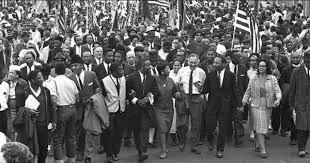
But, perhaps worse than the lynchings and segregation, one time events that can be adjudicated or something that can be addressed through legislation, is the immeasurable impact on the dignity of those who know that their ancestors were once treated as property and sub-human. I can’t really imagine how it would feel to have my own race being counted as 3/5ths of a person in my own country’s founding documents. There is no way to compensate for that psychologically and especially not when the widespread mistreatment was still in full force a mere generation ago. In such a context, it would be hard not to see any misfortune or measurable difference in outcome as somehow related to prior generations being robbed of their dignity and right to self-determination.

However, making matters astronomically worse is the fact that even many of those claiming to want to help often treat black people as their lessor and do more harm than good in their efforts to restore. A prime example of this is the so-called “War on Poverty” and how since then black marriage rates have plummeted and out-of-wedlock births skyrocketed. First, intact families are a greater predictor of future success than race. Second, making a person dependent on government handouts does nothing to restore their human dignity and, in fact, keeps them trapped. The welfare state has more or less enslaved the black community (and many others) to politicians who stoke fear of losing ‘benefits’ as a means to gain votes and maintain their own power.

Affirmative action programs do nothing to help confidence. No, if anything, they only further reinforce feelings of inferiority and, worse, feeds a notion that black accomplishments may deserve an asterisk. I can recall very well the conversation I had with a young man in the Midwest whom I confronted over his racism. He made no apologies, he embraced the description and then blamed his own lack of success in college on his not being given the same opportunities as minorities. Whether true in his case or not, it takes an extra dose of grace for a poor white person to not feel slighted and very easy to take out the frustration on the beneficiaries. I’ve had to fight this myself as someone who never finished college for mostly for financial reasons.

A few years ago I had hope, with the election of Barack Obama, that this would heal some of the wounds, bolster feelings of self-worth, and help us turn the page as a nation. Sadly, it has seemed to do the opposite. My opposition to increased government spending, as a lifelong conservative who doesn’t see more government control as the solution to every problem, was characterized in terms of race as was any opposition to his policies. Rather than be seized upon a moment of reconciliation, Obama’s race was used as political leverage, as a means to ostracized political opponents and advance a leftist policy agenda. The specter of racism is used to control, both to frighten some voters and also to smear others.

A decade ago I had believed that we were on our way to colorblind society, one like that Dr. King had envisioned where people would be judged by the content of their character rather than the color of their skin. Today I’m not even sure that is possible, the current political establishment benefits too much from identity politics and tribalism to allow that kind of society to form. It is hard not to feel cynical in a time when white vs black narratives dominate the headlines. And, while I believe this too shall pass, that the current racial tensions are an aftershock rather than a repeat of the past, there is also the reality that slavery is an unpayable debt.

The Unpayable Debt…

Some have suggested an idea of paying reparations to the descendants of slaves to right this historic wrong and would finally, once and for all, reconcile the injustice. There are those who have gone as far as to suggest a number, between $5.9 and 14 trillion dollars, as being suitable compensation or at least as a “meaningful” symbolic gesture and something that could improve race relations.

Those selling the idea of reparations say is that this is similar to payments made by Germany to those who suffered through the Holocaust at the hands of the Nazis.

However, those promoting the idea fail to mention the significant differences. The first difference being there are actual Holocaust survivors still alive today to receive the compensation for their loss, but there is not one former slave or slave owner still alive. A second big difference is that the abuses against the Jews in Germany were perpetrated directly by the government itself, whereas slavery was a private institution that existed long before the United States was a nation and was eventually ended by the government and at a very great cost. Hitler’s Germany didn’t stop themselves, the government stole directly from people and sent millions to slave labor camps or gas chambers to be killed—it was literal genocide.

But the bigger problem with reparations is who pays, who gets paid and how much?

It is not justice to make one generation pay for the sins of another. There are many in the United States who did not benefit from slave ownership. My own ancestors, for instance, did not own any slaves and the own possible way they might have benefitted is in slightly cheaper cotton. However, I didn’t receive any inheritance of money nor of cotton clothes from my grandparents. In other words, my savings is my own, from my own work, do I owe anyone (besides my cousin who just helped install flooring in my rental and the bank) nor do I feel any guilt for anything I’ve done. So why should the innocent be forced to pay any more than another person should be forced to work? Do two wrongs make a right? It would only be right to target those who actually did benefit directly from slavery and the complexities of that would be enormous. Would we go after the descendants of European and African slave traders as well?

And then there is the matter of determining who gets paid what. The reparations advocates come up with their dollar figure based on a calculation of hours worked, wages at the time, and interest that would be accrued. But that’s not how things really work. Again, the wages of my grandfathers and great-grandfathers were spent in their generation, dispersed into the economy, and there is nothing left for me. The reality is that the modern ancestors of slaves benefit from the economy in the same way that we all do, thus paying them with interest would not make any sense and especially when that money would be taken from their innocent fellow citizens. Then there’s the reality that not all American black people are ancestors of slaves, some of them are recent immigrants from Africa, some have mixed ancestry and others may actually be the ancestors of black slave owners. Yes, there were slave-owning black people in the American South—should their ancestors pay or be paid?

So, what do we do, start compensating based in DNA tests, as in, “You’re 1/5th black and thus entitled to X…”?

Do we prorate based on how much someone benefited from affirmative action?

Will multi-millionaires, those who obviously have done well, be paid?

Do we deduct welfare payments, etc?

Grading everyone based on their ancestors reinforces all the wrong ideas. It is measuring a person’s worth based on their ancestors rather than their own individual merits and exactly the thing we should be getting away from. Besides that, it is severely undervaluing the worth of a US citizenship, there are people fighting for the opportunity to be here, and our economy is much better here than it is in Africa. Yes, certainly a black person born into an urban environment may face unique difficulties. But then there are many immigrants who come here with nothing, who settle in the same neighborhoods and do advance. And where does it end, do we owe the followers of Joseph Smith for the systematic oppression of them and their religion? Do we owe the Republican party for the attacks against them by the KKK and lynchings of party members? It is just not a good direction to go, it is divisive, it will hurt the wrong people, and we are already deep in debt as a nation. Why should our grandchildren (black, white and other) pay interest to the Federal Reserve and other wealthy people for what is only a symbolic gesture and, if we are honest, won’t remove the stain of the past anyway?

The truth is that money won’t change anything as far as the past. Sure, I’m guessing many who would receive reparations like the idea, who wouldn’t take a windfall? But the reality is that all the compensation in the world cannot erase the legacy of slavery and all the wrong people would end up paying the price. A professional sports contract doesn’t make anyone forget injustice, many lottery winners often end up as poor as they were before, and money can’t be used to solve the problems created by money, to begin with. There are times when a financial settlement is the answer, when both parties directly involved (the aggrieved and the accused) are properly adjudicated. But billing the current generation for the sins of the past, especially without due process, is theft no better than slavery at worse and mere revenge at best.

The true legacy of slavery is that some are owed a debt that cannot be paid.

Wake Up, the Matrix isn’t Real!

A matrix, according to Merriam Webster, is “something within or from which something else originates, develops, or takes form.” And we do live in a matrix where our ideas about race, history, advantage and disadvantage matter more than the actual facts. In other words, the matrix is the way we individually or collectively interpret the facts and use them to form our ideas. Our thought matrix, our assumptions based on our own interpretation of facts, plays a significant role in our outcomes. Overcoming the mental processes that keep us bound is key to success in life.

The other week I was driving to a job site and notice some nice new houses with their well-manicured lawns, spiffy two-car garages, and paved drives. I was overcome momentarily with a tinge of envy, a little regret, and mostly befuddlement at how some people could afford such things. The question immediately came to mind, “What did I do wrong?” I thought of my life, my disadvantages, the opportunities missed, and all those things that held me back from reaching my full potential. However, before I went too far along in that thought process, another question countered the first, “What did I do right?” My mind went first to all the thing I did right, but then to all my advantages compared to most people in the world and the things I did not choose.

Did I do anything right, say compared to that Haitian man I saw in Port Au Prince hauling a car body on his back or a woman born in Afghanistan, Saudi Arabia, etc?

Our mental construct, our prejudices, and preconceived ideas, a product of our culture and choices, can make a real difference in our outcomes. Sure, positive thinking cannot change the circumstances of where we are born, a good attitude does not mean that there will be fewer obstacles to our success in life, yet why not make the best of the opportunity we are given and live in gratitude for what we do have rather than envy of others or frustration because of what we lack?

Part of the problem is that there is a system of control, it helps to create our expectations, it feeds our insecurities and can keep us bound. The real systemic oppression is the idea that politics (or more money in our hands and power over others) is the answer to our problems. Money can’t fix what it created, money itself binds us to the system and the things that money buys rarely deliver the happiness that we think they will. Again, look into lottery winners, many people end up as unhappy as they were before their winnings and some worse off. So why do we measure success in terms of things that will not and cannot make us happy?

What we really need to do is reorient ourselves. We must reject the unhelpful categories and classifications that keep us bound and change the way we think. Grievance culture, tribal score keeping and trying to rank people by their outward appearance is a backward-facing, small-minded and, frankly, racist orientation. There is no group guilt for slavery any more than there is for inner-city crime, we need to stop seeing people as white, black, orange or whatever, building our own identities around those superficial things, and aim for something greater—aim for the future that we want, yet hasn’t fully arrived, where all people are judged by the content of their character rather than the color of their skin.

It Is Time to Think and Act Differently…

If I had my own life to do over I may have dithered less (convinced that higher education was the key to success in life because of what my teachers told me) and started driving truck earlier. It was my own pride (and anxieties) that kept me from taking the better options available to me and I suspect there are many who, like me, prevent their own success because of their aim. And I’m not at all saying that we should sell ourselves short or settle for less than our abilities can afford us. However, many do set themselves up for failure because they keep waiting for the big break, the breakthrough when everything they dream of finally comes to them and refuse to take full advantage of the actual opportunities they have.

Another thing I would do differently is stop worrying that other people had it in for me and believing that I was helpless when the reality was that I was unwilling to make the right sacrifices. Part of my difficulty in life was due to my refusal to act differently or accept that my own behavior was part of the problem. Sure, there is something to be said for authenticity and being true to ourselves, but sometimes overcoming requires us to act differently and accept what is truly reality over our own individual construct. To find success in the religious context where I was born I would need to accept their rules and my fighting with that reality, my “kicking against the pricks” or resisting the flow rather than harnessing it, had some undesirable consequences.

Cutting to the chase, we have agency and we do not. There are well-worn paths to success with risks worth taking, call them cultural conventions, and then there are the low-probability high-risk paths that lead many to ruin. For example, finding a profession like teaching, law enforcement, construction or accounting (as opposed to seeking to be a career actor, model, musician or professional athlete) is more likely to produce desirable results for most people. Feeding our insecurities, dwelling on slights (real or perceived), demanding others conform to our wishes or that they respect us for who we are, expecting too much, is a path to long-term disappointment.

Overcoming the matrix means we need to stop seeing things in black and white terms. Sure, things like “black culture” or “white privilege” do exist in some form, at very least as a construct in our minds, but they really are only terms that obscure a far more complex picture and keep us trapped in the problem rather than working towards the solution. The reality is not as simple as the narratives pushed by academics and advocacy groups. There is no one group with all the advantages nor another with all the disadvantages. There is a reason why the suicide rates for middle-aged white people have skyrocketed while black rates have declined and are considerably lower—something (like connections and community) that might be missed in the commonly touted measures of success?

Recently I read the story of a naval aviator, an officer name Thomas J Hudner Jr, who was awarded a Medal of Honor for his actions in the Korean War. His act? He intentionally crash-landed his Corsair to protect and attempt to rescue a comrade, Ensign Jesse L. Brown, whose airplane had been hit by ground fire and was behind enemy lines. Brown, who happened to be the first black naval aviator, did not survive despite the efforts of Hudner, however, what does survive is an example of brotherly love that transcends artificial racial divides and presents a reality worth building upon. That is the legacy that, if built upon, will free us all from the sins of the past.

Loving dangerously, that is my idea of real success in life.

It is also neat, in these hyper-partisan times, to see George Bush Jr and Michelle Obama share some moments of common humanity together and continue this friendly exchange even at his father’s funeral. That is the symbolism that matters, that is the positive interaction we should aim for and the kind that can make a real difference in the world. If we love all people rather than prefer only those who look or act like us and orient ourselves to the hope of a better future rather than cling to our past and present suffering, we may well have a chance to build a better identity for ourselves as a nation. We may not be able to choose our inheritance, but we can work to create a better legacy for the next generation.

We, like Bush and Obama, have far too much in common to be at odds with each other.

Those who have faced hardship past or present should be heard and forgiven of their current insecurities. Those who have been indifferent to the suffering of others, out of ignorance or hardness of heart, should also be forgiven. And those two groups are all of us and have nothing to do with race. We are all victims, enslaved to a past that we didn’t create for ourselves, and all guilty of perpetuating the legacy to some degree. We can’t know what a person has been through by how they look on the outside and therefore we should love all people as we wish to be loved rather than by what we think they deserve. It is time to be courageously human, committed to true Christian love, rather than tribal, fearful and small.

Confessions of the Prodigal’s Older Brother—the Rough Road To Be Free Of Resentment

Standard

I do not call for the judgment of anyone, but it seems only right that good behavior is rewarded. And yet it is often unruly people who get the loving attention when they do bad and then the accolades when they begin to do what the well-behaved have been doing quietly for years.

The conscientious person feels bound to their duty to righteousness. They are driven by loyalties to people, motivated by moral obligation and take responsibility for the welfare of others. It was not out of a desire to be recognized, it is a burden they’ve been carrying since birth, it is never a choice for them, but rather is something inescapable, a prison and hell.

I’ve been that tortured soul. I’ve always wanted to do everything right and for the right reasons. While definitely wanting to be my own person and entitled to my own thoughts, I had no desire to be a troublemaker or disruption. I tried to be cooperative and compliant, to make the lives of my teachers and authorities easier, because I knew the greater social good was dependent upon this and would not be served by my selfish outbursts.

I could never live this ideal out perfectly. I had a standard for myself, a part of the religious inheritance I received as a Mennonite, that was impossible to live out. My frustration with this reality of my own failure would sometimes come bubbling up. Something would set me off and, in the privacy of my parent’s home, I would rage against this awful predicament and the unfairness of it all.

The carefree (and careless) younger brother…

A week or two ago some resentment returned. This change in mood was likely triggered by two things (or rather two conversations) and one of them being an encounter with David Bercot on the topic of divorce and remarriage. The other thing? I had a run-in with my own Prodigal side.

We claim there are consequences for sin. This is how we convince ourselves that our righteous inclinations are correct and there is really no other way to justify depriving oneself of hedonistic pleasure. If it doesn’t matter what we do, no real score kept for right or wrong in the end, then we might as well just have some fun, right?

I’m friends with one of those “bad boys” who (despite his heart of gold) doesn’t care what other people think and has done things at his age that were unimaginable for me. He is a ladies’ man, he’s that guy the young women (yes, even the ‘good’ ones) feel comfortable playing around with, and is basically my antithesis.

I can’t help but love him. He was my true friend a few years ago, heard me spout venom at those who had hurt me with their self-righteous indifference, and never said a word of condemnation. That said, his recklessness and lack of my seriousness, while I was fighting for all I was worth to stay glued together after a devastating announcement, had also sparked my most violent and evil imaginations.

I can’t hold him accountable, though. I look at his freedom with a bit of envy in that at any moment he could decide to settle down, marry the perfect girl (drawn by his charm) and carry no stigma. Me, however, I was always outside looking in, I wasn’t allowed (by character or circumstance) to partake of that “wild” youth nor given the legitimacy that is his for the taking once he decides to settle down.

I’m not jealous of or bitter toward him. Why should I be? But what I do struggle with is anger towards the religious culture that made me, that fed me a steady stream of false promises and left me feeling completely betrayed in the end. Specifically, I’m still upset with the fathers who dismissed me with their cynical calculations and their daughters who continually rejected my sincerest efforts—while meanwhile crawling all over the reckless and indifferent guys.

It is bad enough to go unrecognized. But we seem to live in a world where no good deed goes unpunished, where caring (when others do not) is mischaracterized as creepiness and doing right for the right reasons is often stigmatized. It seems my obeying conscience doesn’t allow me the freedom of rebellion nor does it gain me the approval of those who told me that my conscientious is a good thing when I do what is right in spite of their opinions.

The daddy issues of the Prodigal’s older brother…

The problem with the older brother, in the parable Jesus told about the Prodigal son who returns home, was deeper than his resentment over the celebration for his wayward brother. His indignation was towards his father:

“The older brother became angry and refused to go in. So his father went out and pleaded with him. But he answered his father, ‘Look! All these years I’ve been slaving for you and never disobeyed your orders. Yet you never gave me even a young goat so I could celebrate with my friends. But when this son of yours who has squandered your property with prostitutes comes home, you kill the fattened calf for him!’ (Luke 15:28‭-‬30 NIV)

This anger is likely due to a misconception the older brother had about his father. He obeyed. However, he obeyed for fear of consequences rather than purely as a matter of conscience. His motivation, while in some respects a devotion to his father, was also a desperate effort to secure his place in the family and a mistrust of father’s love. He, like the servant who buried his talent for fear of punishment, couldn’t comprehend being loved for anything other than his performance and had lived in fear rather than faith.

Can you imagine having spent years trying to hold up your own end of the bargain, working hard to produce because that’s how your father’s love is earned, only to have the bubble burst?

In my own case, it was not entirely my own fault that I saw God, my heavenly Father, as this sort of vengeful tyrant. As one raised in a fundamentalist setting there is plenty of reason why I would assume that God’s love is based on my own performance rather than something freely shared to all who accept it and that’s because my earthly fathers often did keep me in limbo. Revivalistic preaching undermined any assurance of salvation, my life could never measure up to their purity standards, and their love for me was limited by what I was able to provide for them.

For years my hopes for love outpaced my resentments. I would tell myself that next time will be different, that my fears of always being on the margins of their paradise were unfounded, and eventually Christian love would triumph over my inadequacies. However that paradigm came crashing down in spectacular fashion when a young woman, someone to whom my hope against hopes (in respect for her professed devotion) were fully invested, said “I can’t love you like that,” which was to say that she really could not love me at all, and destroyed that last hope of a way to her or rather her father’s world.

Trying to please the lawyer’s God…

Over the past weeks, I’ve felt whipsawed. That is to say, I’ve felt pulled between two seemingly opposed views that together undermine my peace with God and the ability to live a victorious life. The first being how the Prodigal gets the embrace while I’ve often been ignored or, worse, had those whose love I had desired recoil as if I was some sort of monster. The second being the inescapable legalistic mindset that is at complete odds with true Christian love.

I have nothing against men like David Bercot personally. In fact, I see them as men very much like myself a few years ago, they diligently search Scripture trying to find their salvation, and yet they are far more capable than I’ll ever be. Their dedication and discipline would seem to be commendable and even something enviable. However, their standard is something I’ve found to be out of my own reach and their religious prescriptions often come at the expense of love.

Bercot, like so many others including myself, is law rather than love oriented. By this I mean we prioritize precise legal interpretation and application of law above the loving purpose behind it. In other words, we are like those religious experts Jesus encountered, who do things like tithe spices, are more concerned with the day someone is healed than the fact that they have been healed, remained as dogmatic even when entering the church and had to be put in their place:

It is for freedom that Christ has set us free. Stand firm, then, and do not let yourselves be burdened again by a yoke of slavery. Mark my words! I, Paul, tell you that if you let yourselves be circumcised, Christ will be of no value to you at all. Again I declare to every man who lets himself be circumcised that he is obligated to obey the whole law. You who are trying to be justified by the law have been alienated from Christ; you have fallen away from grace. For through the Spirit we eagerly await by faith the righteousness for which we hope. For in Christ Jesus neither circumcision nor uncircumcision has any value. The only thing that counts is faith expressing itself through love. You were running a good race. Who cut in on you to keep you from obeying the truth? That kind of persuasion does not come from the one who calls you. “A little yeast works through the whole batch of dough.” I am confident in the Lord that you will take no other view. The one who is throwing you into confusion, whoever that may be, will have to pay the penalty. Brothers and sisters, if I am still preaching circumcision, why am I still being persecuted? In that case the offense of the cross has been abolished. As for those agitators, I wish they would go the whole way and emasculate themselves! (Galatians 5:1‭-‬12 NIV)

Paul’s pun at the end does not take away from the serious warning in his words. Those trying to please God through their careful obedience to the law “have fallen away from grace” and are thus obligating themselves to an impossible standard. They will either end up deluded (like the Pharisee praying loudly about his own superiority to others) or desperately trying to cross all the T’s and dot all of the I’s and ending up in despair when his/her effort falls woefully short of God’s perfection.

Where I’ve found God’s love…

My goal is not to be the rebellious Prodigal son or the one whose careful dedication ended in bitter disappointment. Both of them have fallen short in love for their father or in understanding their father’s love for them and have suffered consequences as a result. The story isn’t intended so that we go out to sow our wild oats, enjoying the pleasures we are afforded us as a result of our inheritance, and then come back to our father’s house again. It isn’t just a warning against a superficial closeness either.

The true meaning of the story is for us to be more like our heavenly Father, who is perfect in mercy and loves even when His love is not reciprocated. Yes, there is a law, not the kind of law that pleases a sanctimonious religious lawyer, but a law summed up by Jesus:

“‘Love the Lord your God with all your heart and with all your soul and with all your mind.’ This is the first and greatest commandment. And the second is like it: ‘Love your neighbor as yourself.’ All the Law and the Prophets hang on these two commandments.” (Matthew 22:37‭-‬40 NIV)

When we love God we do not worry about being stigmatized like Jesus and his disciples were for breaking with the harsh and unloving application of the law. We stop trying to please those impossible to please, stop believing God is some tyrant finger over the “smite” key waiting for us to slip up, and start doing what is possible to do out of love for our neighbors. It is in remembering that Jesus came to save and not to condemn the world—that through his love even the vilest of sinners can find eternal life.

I still struggle with my hurts despite God’s grace towards me. I still find myself trying to please people who have made pretty much zero real investment in my well-being spiritual or otherwise—who absolutely refused to reciprocate my love for them. I could easily become unsettled again, reject the greater blessing I’ve received by pursuing the promises of those who attempt to live by a standard impossible to please.

But I choose to love those whom God has entrusted to me instead and even if it costs me what little remains of my Mennonite reputation. I would rather lose it all for sake of the kingdom than to return to the bondage of fundamentalist expectations. Jesus loved despite the disapproval of his religious peers and that’s the love that will overcome my feelings of resentment as one who followed the rules and got burnt. It is a rough road some days, but we are called to suffer rejection and carry our cross.

Second Marriage: A Second Look At Early Christian Writers…

Standard

Early Christians, like their modern-day counterparts, had a wide variety of opinions and not all of their opinions are trustworthy or canonical. Still, their writings are often taken as 100% reliable and played like a trump card in debates over the correct interpretation of Scripture.

That is the case with some of my conservative Protestant friends when it comes to the topic of remarriage after divorce. If shown where Jesus addresses divorce as causing sin and qualifies his statement adding “except for sexual immorality” (Matt 5:32, 19:9), they will deny the implications of this clear exception and deflect to non-canonical early church writings.

It seems a fairly reasonable approach to a controversy over meaning at first glance. Why would we not trust early church writings as reliable indicators of original intent? What reason would they have to distort the true meaning of what Jesus taught? Shouldn’t we assume that they would know better than us?

However, that is not reasonable to assume. In fact, this idea that the early church was completely pure or free of heresies and false teachings goes completely contrary to Scripture. Indeed there were many errant ideas that circulated then and some very deep disagreements over practice. So, in other words, we should be testing their words against Scripture and not using their words in aid of our own confirmation bias.

Or, at very least, if you are going to quote Tertullian in a debate you should probably know a little about him before you do and also consider what else he believed.

Consider this early church writer…

Athenagoras (circa A.D. 177)

A person should either remain as he was born, or be content with one marriage; for a second marriage is only a specious adultery. “For whosoever puts away his wife,” says He, “and marries another, commits adultery”; not permitting a man to send her away whose virginity he has brought to an end, nor to many again. For he who deprives himself of his first wife, even though she be dead, is a cloaked adulterer, resisting the hand of God, because in the beginning God made one man and one woman, and dissolving the strictest union of flesh with flesh, formed for the intercourse of the race.

Did you catch that?

He just declared *all* second marriages, even those after the death of a spouse, to be “only a specious adultery” and forbidden.

Compare what he says to Saint Paul in the Romans 7:2-3:

For example, by law a married woman is bound to her husband as long as he is alive, but if her husband dies, she is released from the law that binds her to him. So then, if she has sexual relations with another man while her husband is still alive, she is called an adulteress. But if her husband dies, she is released from that law and is not an adulteress if she marries another man.

Athenagoras has clearly gone off the rails. He is in direct contradiction to the canonical teachings of the apostle Paul. Why? Well, the reason for this is that he subscribed to the heretical “New Prophecy” called Montanism.

Montanism arose from the teachings of a man named Montanus, a new Christian convert from paganism, who claimed to have a special new revelation from the Holy Spirit. They taught that their own revelations superseded those of Jesus and the apostle Paul. They ordained women as bishops and basically rejected the authority of Scripture and the established church tradition as well.

And you know who else was under the influence of Montanism and also wrote against *all* second marriages?

Tertullian.

Tertullian, a favorite of sophistical fundamentalist efforts to justify their existing positions, taught that *all* second marriages were forbidden. And by all I mean even second marriages in cases where the first spouse had died and a teaching that is certainly in direct contradiction to Scripture. That contradiction (if one truly believes that Scripture has an authority that supersedes personal revelation and not the other way around) disqualifies Tertullian as an authoritative source.

It is strange, while most Mennonites (and other Protestant fundamentalists) might denounce a modern version of Montanus as a false teacher and regard his adherents as deceived, many do accept old heretical teachings (when these old heresies argue their own established positions) and ideas that are not supported in Scripture.

All second marriages were forbidden by those misled by Montanus. However, according to Scripture, and not my own opinion, marriage can be dissolved for three reasons: Adultery, abandonment, and death of a spouse. In all three cases, a person is no longer bound to the first marriage and therefore is free to marry again.

1) The death of a spouse…

A woman is bound to her husband as long as he lives. But if her husband dies, she is free to marry anyone she wishes, but he must belong to the Lord. (1 Corinthians 7:39 NIV)

There is no allowance for a Christian to divorce their faithful husband or wife. Marriage is supposed to be one man and one woman till death do they part. However, we live in a fallen world and that means sometimes a young married person might lose their husband or wife. For that reason, the apostle Paul provides a provision for widows and, presumably, widowers as well.

2) The abandonment of a spouse…

But if the unbeliever leaves, let it be so. The brother or the sister is not bound in such circumstances; God has called us to live in peace. (1 Corinthians 7:15 NIV)

A Christian is never allowed to divorce a faithful spouse. But, there are times when a couple is “unequally yoked” where one is a believer and the other is not. Paul tells those with a faithful and unbelieving spouse to remain faithful. However, he also provides a provision for brothers and sisters who have been abandoned by their unbelieving spouse. He says they are “not bound” to the marriage in that case.

3) The unrepentant adultery of a spouse…

I tell you that anyone who divorces his wife, except for sexual immorality, and marries another woman commits adultery. (Matthew 19:9 NIV)

Jesus, in response to the Pharisees who asked if it is lawful to divorce for “any and every” reason, first took the opportunity to restate the ideal for marriage as a lifetime commitment, then explains that Moses only allowed divorce because of the hardness of their hearts, and lays down the gauntlet: There is no divorce for any and every reason.

Jesus does, however, give one exception and that is in the case of sexual immorality (or porneia) when the marriage has been broken by unfaithfulness. He significantly narrows the scope for divorce and remarriage. I do not believe he is ruling out forgiveness of the errant spouse either. But marriage can be broken and it is broken by unfaithfulness to the marriage vows.

Isn’t it better to be stricter than Scripture?

The church of my youth allowed remarriage after a spouse had died, yet not when a marriage had ended by other the other means described in Scripture and has turned away those remarried who refused to separate from their second spouse. This kind of hard-line, no exceptions besides death, stance seemed normal to me. I had simply accepted what I had been told.

It would seem like a good thing to exceed a Scriptural requirement. Mennonites do this all the time, they forbidding alcohol, mandate clothing styles and often have a whole list of standards. There seems to be an idea that exceeding the requirements of Scripture makes us safer and there is definitely a case for erring on the side of avoiding things that are questionable.

But, that said, when our own personal conscience (standards in addition to Scripture) is used as a basis to exclude others, then we have become as Diotrephes, the arrogant church leader condemned in 3 John for his refusing welcome other believers, and we will be held to account. It is one thing to have high personal standards, it is quite another to make them a test of membership and reason to slam the door in the face of those trying to enter.

Do not be like those who use their own conscience to overrule the teachings of Jesus and the apostle Paul. Montanism was heretical, a false teaching, and their kind of sophistry remains a stumbling block.

How God’s Economy Differs From Our Own

Standard

In three prior blogs (on topics of law, legalism and church authority) I’ve tried to present the Biblical basis and lay the theological groundwork necessary to establish concepts I will introduce in this post. I wish to remind my readers once again that I do not speak in any official capacity, I am not ordained, and encourage y’all to investigate these matters for yourselves rather than just take my word for it.

There are several cases in Scripture of people asking what they must do to be saved. In Acts 2:37-39, when the crowd asks what they must do, Peter answers:

Repent and be baptized, every one of you, in the name of Jesus Christ for the forgiveness of your sins. And you will receive the gift of the Holy Spirit. The promise is for you and your children and for all who are far off—for all whom the Lord our God will call.

Later, in Acts 16:31-34, a Roman jailer asks: “Sirs, what must I do to be saved?”

This is how Paul and Silas replied:

“Believe in the Lord Jesus, and you will be saved—you and your household.” Then they spoke the word of the Lord to him and to all the others in his house. At that hour of the night the jailer took them and washed their wounds; then immediately he and all his household were baptized. The jailer brought them into his house and set a meal before them; he was filled with joy because he had come to believe in God—he and his whole household.

We read the testimony of the apostle Paul, in Acts 22, where he describes his dramatic conversion on the road to Damascus. He describes a blinding light, being confronted by Jesus, and how he asked what he should do. He is told to continue on the road and meet a man named Ananias who restores his sight and then tells him: “Get up, be baptized and wash your sins away, calling on his name.”

And we also have this explanation of salvation by Peter:

For Christ also suffered once for sins, the righteous for the unrighteous, to bring you to God. He was put to death in the body but made alive in the Spirit. After being made alive, he went and made proclamation to the imprisoned spirits—to those who were disobedient long ago when God waited patiently in the days of Noah while the ark was being built. In it only a few people, eight in all, were saved through water, and this water symbolizes baptism that now saves you also—not the removal of dirt from the body but the pledge of a clear conscience toward God. It saves you by the resurrection of Jesus Christ… (1 Peter 3:18-21 NIV)

All of those passages answer the question of what a person must do. All of them mention water baptism as a necessary step in this process. This emphasis on baptism reflects the preaching of John the Baptist who tied the practice with true repentance. It also is what Jesus clearly taught:

“Very truly I tell you, no one can enter the kingdom of God unless they are born of water and the Spirit. (John 3:5 NIV)

This is likely the reason why baptism is a sacrament that, traditionally, in an emergency or circumstance where there is nobody else, can be administered by anyone. One can repent and believe in their mind, but baptism should follow—because that is what Jesus taught, it is what the early Church believed and to this very day is still the tradition of the Church.

So, we can all agree that baptism is a requirement for salvation, right?

Probably not.

This is one point where legalists might carve out exemptions, turn Scripture against Scripture, or otherwise downplay the necessity of baptism. But no amount of theological twisting can overturn the rule. Baptism is absolutely a requirement for salvation and to argue against that is to deny what is clearly recorded in Scripture. Jesus says that “no one can enter the kingdom” without being “born of water” and we must assume that is exactly what he meant.

The Thief On the Cross, Judas, and the Kingdom

Of Thy Mystical Supper, O Son of God, accept me today as a communicant. For I will not speak of Thy Mysteries to Thine enemies, neither like Judas will I give Thee a kiss. But like the thief will I confess Thee: remember me O Lord, in Thy Kingdom.

One of the starkest contrasts in Scripture is between the thief on the cross beside Jesus and Judas who betrayed Jesus. It wasn’t a comparison I had considered before hearing the Orthodox liturgy (in the quotes above) and yet is a parallel that is quite poetic and very significant.

On one side of the comparison, we have the man who did everything right from a legalistic standpoint. Judas had followed Jesus for years, from all appearances he had done everything required of a disciple and was even trusted enough to carry the common purse. But Judas, despite his outward devotion, seems to have been full of bitterness and ends up betraying Jesus with a kiss—before he took his own life. His name has become synonymous with betrayal and treason.

On the other side we have the account of two criminals crucified beside Jesus on the cross:

One of the criminals who hung there hurled insults at him: “Aren’t you the Messiah? Save yourself and us!” But the other criminal rebuked him. “Don’t you fear God,” he said, “since you are under the same sentence? We are punished justly, for we are getting what our deeds deserve. But this man has done nothing wrong.” Then he said, “Jesus, remember me when you come into your kingdom.” Jesus answered him, “Truly I tell you, today you will be with me in paradise. (Luke 23:39-43 NIV)

This man called “the thief” was a criminal who acknowledged that his punishment was just and defends Jesus against the mocker on the other cross. We have no reason whatsoever to believe he lived an upright or righteous life. There is no evidence of this man being baptized. He doesn’t ask Jesus into his heart nor does he recite a creed. He simply pleas, with his dying breaths and a little faith, “remember me” and Jesus, in response, tells him: “Today you will be with me in paradise.”

Does this mean that we should stop baptizing people?

Does this mean that we can continue in sin that grace may abound?

No and no.

There is no excuse for sin and there is no exemption for baptism either. There is, however, an order or a hierarchical arrangement of priorities and at the top of it is something beyond mere religion. What matters most is God’s grace and having the faith to fully put our trust in Him as our salvation. This something the thief could do and that Judas could not. Judas, for all his outward displays of righteousness and despite doing everything that was required of a disciple, had faith in his own understanding rather than in Jesus.

There are many sincere folks today who try to reduce Christianity to a list of dos and don’ts. And, instead of an abundance of life or resembling Jesus, they are rigid, anxious, jealous, judgmental, unforgiving and too often a stumbling block to those young in the faith. They believe that they are receiving salvation as a trade for their own righteousness and careful obedience. They often end up like Judas, bitter and critical, and refuse to truly put their faith in Jesus.

No amount of ritual obedience or religion can save a person who has faith only in themselves. We should like the thief who knows they are doomed without God’s mercy and not Judas who was righteous by outward appearance and lacked faith. Being a lowly criminal with a repentant heart is eternally better than being a disciple who judges others by his own standards and betrays Jesus.

God’s Economy Is Different From Our Own

Those trying to earn God’s favor, like the Pharisee who boasted in prayer about his righteousness compared to another man, have a desperate need to justify themselves. And, like the Prodigal son’s older brother who was angry because of the grace shown to his openly rebellious younger sibling, many have an entitled attitude and believe that their obedience and works means they are owed. It is because they believe that God’s economy is merit-based like their own. They try to earn points by obeying the law and fail to comprehend their own woefully inadequate position before Almighty God.

Jesus, in the parable of the laborers in the vineyard, contrasts God’s economy and our own:

“For the kingdom of heaven is like a landowner who went out early in the morning to hire workers for his vineyard. He agreed to pay them a denarius for the day and sent them into his vineyard. “About nine in the morning he went out and saw others standing in the marketplace doing nothing. He told them, ‘You also go and work in my vineyard, and I will pay you whatever is right.’ So they went. “He went out again about noon and about three in the afternoon and did the same thing. About five in the afternoon he went out and found still others standing around. He asked them, ‘Why have you been standing here all day long doing nothing?’ “ ‘Because no one has hired us,’ they answered. “He said to them, ‘You also go and work in my vineyard.’ “When evening came, the owner of the vineyard said to his foreman, ‘Call the workers and pay them their wages, beginning with the last ones hired and going on to the first.’ “The workers who were hired about five in the afternoon came and each received a denarius. So when those came who were hired first, they expected to receive more. But each one of them also received a denarius. When they received it, they began to grumble against the landowner. ‘These who were hired last worked only one hour,’ they said, ‘and you have made them equal to us who have borne the burden of the work and the heat of the day.’ “But he answered one of them, ‘I am not being unfair to you, friend. Didn’t you agree to work for a denarius? Take your pay and go. I want to give the one who was hired last the same as I gave you. Don’t I have the right to do what I want with my own money? Or are you envious because I am generous?’ “So the last will be first, and the first will be last.” (Matthew 20:1‭-‬16 NIV)

It is easy to understand why those who started early in the morning and worked all day might feel slighted at the end. They had spent their entire day sweating it out, trying to earn their wage, only for some to come during the day or even at the last hour and receive the same compensation. From a laborer’s perspective, it seemed unfair. Shouldn’t those who did more also get paid more for their efforts?

But the landowner had not hired them to judge such matters for themselves. It was the landowner’s money to spend as he wished, he was not obligated to hire anyone, he had gone out to find them, they had all agreed to the wage they were paid and were truly owed nothing more than what they had received. It was a fair wage when they were hired and that fairness did not change because of the landowner’s generosity to those hired later.

But what point was Jesus trying to make with this story?

It is interesting that this story comes right in the heels of the account of the rich young ruler who asked what he must do to be granted eternal life—which contains the same “the first shall be last” refrain. This man had kept the law from his youth. But when he asked what he lacked, this is how Jesus replied:

“If you want to be perfect, go, sell your possessions and give to the poor, and you will have treasure in heaven. Then come, follow me.” (Matthew 19:21 NIV)

If you stopped reading there you might end up like Judas who used those words of Jesus as a means to criticize an extravagant act of worship and to hide his own corrupt self-centered motives. There are many today who read the words of Jesus legalistically, they see the story of the rich man then add one more item to their list of religious requirements, and entirely missing the point.

However, there’s more to what Jesus said. If you keep reading you will see how the disciples were “greatly astonished” and ask Jesus “who then can be saved?” They, even as those who had already left everything behind to follow Jesus, understood the severity of what Jesus told the inquiring rich man. If keeping the law wasn’t enough, what then?

How Jesus answers is clear: With man this is impossible, but with God all things are possible. (Matthew 19:‬26 NIV)

That is the answer to the rich man’s question.

It is impossible.

That is also what the parable of the laborers is about. Those who had started early in the day represent those relying on their own efforts and are completely lacking appreciation for the one who made their earning anything possible. They were upset that the landowner was paying those who came later the same as them because they felt their labor had been devalued and yet the only value their labor had was what the landowner was willing to pay them. They didn’t create the circumstances of their own employment, how could they possibly be in any position to judge what was fair compensation for someone else?

The point Jesus is making is only God can save us. If you believe your works can save you, even if you sell all and give to the poor, you are no better than that rich man. The rich man had kept the law and yet lacked true faith in Jesus. He had faith in himself as a good religious person, he thought he could do something to save himself, and yet salvation does not come from our own effort.

The reason why it is difficult for a rich man to enter the kingdom is that they are able to depend on their own effort and thus are adequate without faith in their own minds. It was that self-sufficiency, the idea that a human can earn their way into eternal life, that Jesus confronts in the rich man. A person relying on themselves does not understand that without faith it is impossible to please God (Hebrews 11:6) or that their salvation depends fully on God’s choice and not their own:

You did not choose me, but I chose you and appointed you so that you might go and bear fruit—fruit that will last—and so that whatever you ask in my name the Father will give you. (John 15:16 NIV)

Akribeia: We Cannot Please God Through Perfection on Our Own Terms

There are many trying to please God with their own righteousness. That is to assume that God will somehow want or need us if we are good enough and that is completely absurd. It is a path to misery or arrogance. If you try to win God’s favor through your works and have any grasp of how your own best efforts compare to absolute perfection, you will be miserable. And, if you can delude yourself into believing that you are able to live to a perfect divine standard you are an insufferable moron.

Our salvation is not based on our own effort and cannot be. The rich man’s perfect obedience to the law of Moses couldn’t please God. And those trying to save themselves by turning the words of Jesus into a new law will likewise fail. Being a Christian requires obedience to a standard that goes well beyond the law of Moses and even beyond a legalistic interpretation of Jesus. It requires absolute and impossible perfection.

This is where the word “Akribeia” comes in. It is a Greek word (ἀκρίβεια) that means exactness or precision and refers to strict adherence to the law in Christian usage. We are all judged according to Akribeia and found lacking in comparison to this absolutely perfect standard. Even if you have followed the words of Jesus perfectly as a law you will still have fallen infinity short of God’s glory and are no better than the rich man or Judas.

No amount of obedience to the law, outside of God’s grace, can save anyone. Salvation is not something we receive in trade for our works. Our perfection doesn’t come from our works. We can’t even know what perfection is at God’s level, let alone live it out, and even if we could, that would still not entitle us to anything and would still leave us condemned to death with no hope of eternal life.

This is our salvation:

For it is by grace you have been saved, through faith—and this is not from yourselves, it is the gift of God—not by works, so that no one can boast. For we are God’s handiwork, created in Christ Jesus to do good works, which God prepared in advance for us to do. (Ephesians 2:8‭-‬10 NIV)

Jesus is what gives us currency in God’s economy and not our own righteousness. A person who even begins to comprehend how their own righteousness stacks up compared to absolute perfection will know that even their best efforts to follow the law will fall infinitely short. The very idea of pleasing God through our own works of righteousness is an insult and is basically to try to put ourselves on the same level as Almighty God.

To please God you need to be on an equal basis with God and that is not something we as a created being can do for ourselves. Our own righteousness is nothing but a filthy rag by comparison to the glory of God. That is why we must be clothed in the righteousness of Jesus (Romans 13:14, Galatians 3:27) and are made worthy through his work rather than our own.

Legalism doesn’t comprehend Akribeia. Legalists believe they can win God’s favor and therefore are always trying to prove their righteousness compared to others. They seem to believe that being perfect is like outrunning a bear in that you only need to be faster or better than the guy beside them. That is why they are critical rather than helpful, judgmental rather than merciful, and self-righteous rather than humble. They are like that unrepentant thief on the other cross who continued to mock and ridicule despite being condemned.

However, when you serve a God who is impossible to please by your own efforts you will not be jealous or upset about the grace that is shown to others. Instead, you will come beside the weak, forgive their sins as you have been forgiven, and help them to bear their burdens rather than pile more on. A humble person understands “there but for the grace of God go I” and realizes that even by their best efforts they would only be condemned by the perfect law of God. It is then, and only then, after we have exhausted our own riches and righteousness, that we can be saved.

Oikonomia: The Economy Of Jesus and the Church

The Old Testament law is severe by our modern standards and many believe that Jesus relaxed these standards. But that is incorrect. The law of Moses only addressed outward behavior, but Jesus emphasized that even our thoughts could make us guilty of sin. The reality is that Jesus added to the severity of the standard. In the Sermon on the Mount, he taught that lust was comparable to the sin of adultery and equates hatefulness to murder. By that standard, we are all condemned to die.

Yet, while Jesus is making things literally impossible for the rich man and other good religious people, simultaneously he’s allowing his disciples to break the written law:

One Sabbath Jesus was going through the grainfields, and as his disciples walked along, they began to pick some heads of grain. The Pharisees said to him, “Look, why are they doing what is unlawful on the Sabbath?” He answered, “Have you never read what David did when he and his companions were hungry and in need? In the days of Abiathar the high priest, he entered the house of God and ate the consecrated bread, which is lawful only for priests to eat. And he also gave some to his companions.” Then he said to them, “The Sabbath was made for man, not man for the Sabbath. So the Son of Man is Lord even of the Sabbath.” (Mark 2:23‭-‬28 NIV)

What?!?

Didn’t Moses, by command of God, have a man executed for merely picking up sticks on the Sabbath?

Note Jesus did not take the Pharisees to task for their interpretation of the law. But he does give times when the law was set aside and then goes on to explain something that is key—he turns attention from the letter of the Sabbath law to the spirit or reason behind it. He tells these religious experts that the Sabbath was created for the man rather than man for the Sabbath. In other words, the Sabbath law was instituted for the good of men and that reason for the law triumphed over the strict legalistic application.

Jesus can do that. He can for the same reason he could heal the blind, walk on water or turn water into wine. The one who created all things is not subject to anything and that includes the moral laws he created. Furthermore, the purpose and or intent of the law always supersedes the letter and therefore the one who knows the reason behind the law perfectly is free from the letter. And, while the written law is essentially the God of the legalist, we (together, as the Church) who are clothed in Jesus are given the same authority over the law and this authority is demonstrated in the early Church.

Jesus, in giving his authority to bind and loose, through the promise of the Holy Spirit, made it possible for the Church to rule on circumcision in a way that went directly against what the written law taught. Physical circumcision is still an explicit requirement according to the book of Leviticus, yet physical circumcision was dismissed by the apostle Paul. That loosing from the law led to conflict in the early church. Some were teaching that circumcision was still necessary for new converts while others were saying that this Scriptural requirement could be ignored. So the Church held a council in Jerusalem (Acts 15) and decided to waive the requirement.

We, as individuals, can’t pick or choose for ourselves what Biblical requirements apply to us. However, the Church (collectively) has the same authority as Jesus on matters of the law and can show the same grace (in other areas of law) that was argued in Jerusalem as far as circumcision. The Church can also expel an unrepentant evildoer as Paul demanded to be done in a letter to the Corinthians. The word for this is Oikonomia (οἰκονομία or “economia”) and literally means “household management” and is basically the same concept that allows anyone to be saved. If the written law cannot be overruled by God’s economy, we would all be condemned to death—who then could possibly be saved?

It is for freedom that Christ has set us free. Stand firm, then, and do not let yourselves be burdened again by a yoke of slavery.

Mark my words! I, Paul, tell you that if you let yourselves be circumcised, Christ will be of no value to you at all. Again I declare to every man who lets himself be circumcised that he is obligated to obey the whole law. You who are trying to be justified by the law have been alienated from Christ; you have fallen away from grace. For through the Spirit we eagerly await by faith the righteousness for which we hope. For in Christ Jesus neither circumcision nor uncircumcision has any value. The only thing that counts is faith expressing itself through love. (Galatians 5:1-6)

The law is a means, not an end.

Love is the end.