Coddled to Death—How the West Made Weakness a Virtue

Standard

My son complains that he doesn’t get paid enough for household chores.  He feels he is somehow entitled to everything that we’re giving him and more.  It is a struggle trying to explain why we won’t simply hand him all that he wants.  We have plenty, in his eyes, and can just share our wealth with him.  But the reason we hold back isn’t our greed or that we don’t want him to have the best life has to offer.  No, quite the contrary, in fact, it is because we want him to do well life that we resist the urge to coddle him.

What is coddling?

On the surface it is being overprotective and indulgent.  It stems from distrust of another other person’s ability to deal with normal life situations and emotions on their own.  And, while it may appear to be motivated by love or compassion, it only ever empowers those who keep the other confined to the bubble wrapped world.  It is the devouring mother, the one who uses their nurture as a tool of control.  They only care about the target of their efforts so far as it feeds their ego or feelings of self-importance.  It is a virtue signal and degrades those coddled.

Bigotry of Low-expectations

Along with thoughts about parenting and the goal, some of the inspiration for writing this came from the governor of the state of New York, Kathleen Hochul, who declared:

Young black kids growing up in the Bronx, who don’t even know what the word a computer is, they don’t know. They don’t know these things. And I want the world open up to all of them, because when you have their diverse voices, innovating solutions through technology, then you’re really addressing societies broader challenges.

Other than to call this statement what it is: Bigotry (or racism) of low expectations and patronization.  I’ll not pile on.

Many, like Hochul, are isolated.  They have not spent much time in urban communities nor met the people who live there.  From my own first hand experience her claim (which she now claims was misspoken) is absurd, none of the black I met were unfamiliar with or incapable of using computers.  Many of my acquaintances there could afford to go to college and more credentialed than I am, so where does this notion come from that they’re hapless ignorant people in desperate need of government assistance?

The answer, in this case at least, is that it is hard to maintain a bloated state budget (let alone greedily expand it) without somehow justifying it and what better way to do that convince people that they need you to get somewhere in life?

Condescending political elites are not moral paradigms and minority voters are not stupid.  I believe those pandered to know it is insincere and coming from someone who sees them as dumb.  But they also understand it works to their advantage and don’t say no to it.  We naturally take the path of least resistance and rationalize why we are deserving of the help.  By playing up the consequences of slavery and impacts of racial prejudice, a little wealth redistribution (looting or theft) can be redeemed as social justice.

Unfortunately, low expectations produces what it is supposed to remedy, it gives an excuse to wait around for a handout and kills initiative.  This contributes to racism in that it creates the impression that the only way some can compete is by lowering the bar or a double standard.  It diminishes the accomplishments of those who knew what a computer is without the help of those in the the benevolent class.  Now, because of politicians meddling, there is the question, did they earn it by being the best candidate or are they a diversity hire?

Woke is Weak

My conservative friends wouldn’t likely see the link between Christianity and wokism, but it is definitely there.  The woke glorify the victim and reframe accomplishment as unearned privilege.  For those who started a business, “You didn’t build that” they reason, and nullify the hard work and the sacrifice of those who followed the entrepreneurial spirit to success.  Likewise, in church we’re encouraged to tithe generously and be charitable since it is giving back a portion of all that is given to us by God.  The difference being that the woke want us to give to the government, the religious their own organizations.

And there’s nothing wrong with our helping those in need.  I provide for my son and my wife as well.  However, when I give I give to empower rather make them dependent and weaker.  My hope is for my son to grow his strength and ability so that in time he does not need me to survive.  And the same thing is true of my wife, she is my partner not my patron, we both contribute different things to the whole and neither of us is entitled to what the other gives to the relationship.  It is how a real community works, we give and take as necessary, and we do it for the good of the common project.

Wokism, by contrast, is motivated by envy and pity, it encourages fragility by marking off space spaces and enforcement of strict language codes.  Again, this strict regulation has a parallel in religious fundamentalism.  Home schooling parents are terrified of the influence of the ‘world’ on their children.  They, like the woke, overemphasize the role of the environment in the formation of the individual.  The one exempts swaths of the population from the normal civil expectation (while increasing the burden on others) and the other thinks salvation of poor little Johnny depends on them.  Bad behavior always blamed on an external influence rather than a lack of will to do better on the part of their designated eternal victims.
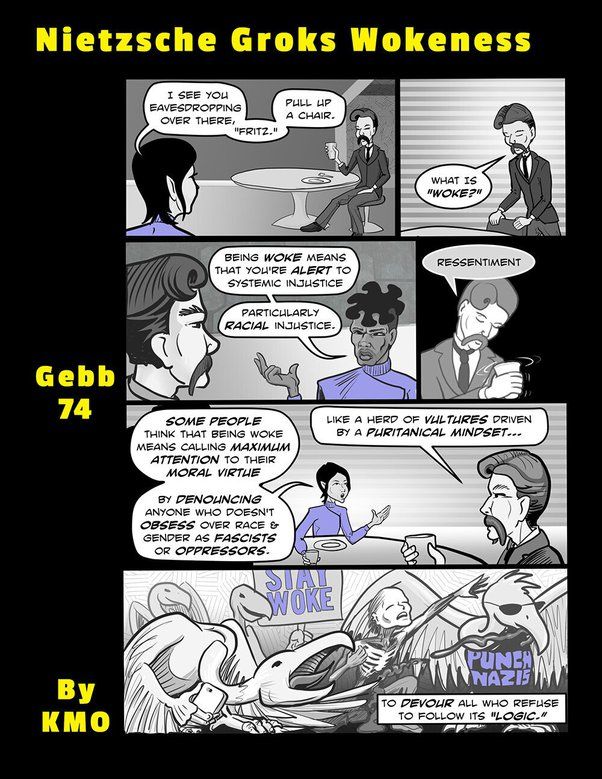
This is what Friedrich Nietzsche critiqued as being a hatred for life.  When we remove temptation rather than ever teach children to resist it—when we are constantly vilifying strength rather than encourage it—when we follow after reasoning or rationality instead of developing our instincts, we are promoting the weakness of our society and degeneration. 

Woke is weak.  It attempts to foster spirits of ressentiment and forms an identity around a person’s fear of being disenfranchised for things completely out of their control.  And in the end it destroys the incentive to find a way to overcome by our own means.

The Meek Shall Inherit 

Neitzsche could be accused of painting with too broad a brush for the dismissal of the Christian ethic as slave morality and an opposition to the powerful.

The message of Jesus and his Apostles was, in part, freedom from those human laws of “Do not handle! Do not taste! Do not touch!” (Colossians 2:21) and very nearly could be the “will to power” that the German philosopher championed once unpacked.  Hedonism wasn’t the goal of the departure from “slave-morality,” the aim was instead for people to exercise will-power and resolve.  In the same manner Jesus and St Paul preached freedom from the law that brought only bondage and death:

But now, by dying to what once bound us, we have been released from the law so that we serve in the new way of the Spirit, and not in the old way of the written code.

(Romans 7:6 NIV)

This is not to suggest that there is any kind of compatibility between the Spirit-led and the Übermensch.  Nevertheless, both would have us abandon a lower morality based on restrictions for a pursuit of our own ultimate form.  To St. Paul the Gospel means we are free from “the flesh” or the unbridled urges, while Nietzsche thinks we’re instinctively at our best, and both men are not opposed to impulse control.  The big difference is that the Apostle’s answer is spiritual whereas the philosopher says that additional layer is not needed and morality a hindrance.  Both would disagree devaluing the attitudes and culture that lead to success.  Being master of ourselves requires strength and never allows for excuses.  

Furthermore, the Jesus of the Bible wasn’t weak, he spoke with authority and we are told that he had power over all things, but he chose a meek posture rather than wield this power destructively.  Now it is a matter of faith if you accept this or not.  I could say that I could strangle Mike Tyson yet choose not to.  Talk is cheap.  But meekness is the ability to restrain ourselves.  Having the power to impose our will is always desirable, nobody wants to be at the mercy of the elements or other people.  However, sacrifice for sake of the next generation is better, to parent is to live beyond ourselves, that is why this is an instinct for those who have children, and it is the role of the Father.

When I wrestle with my son I don’t use all of my strength.  I would hurt him if I employed full power.  My goal is not to destroy him, he is not my enemy or threat to obliterate, but it is to train and strengthen him.  I restrain to protect him currently and also challenge to protect him in the future.  That is the real Biblical kind of meekness, it submission to the greater role we can serve as protectors and builders of civilization.  It is the having all things in balance, which Nietzsche might agree, and using our strength to take on the burden of creating the future.  We do not retreat from life.  Faith requires the we go headlong into the fight rather than hide or be ruled by resentment.

Late-stage Protestantism

I can understand the campaign Nietzsche waged against morality in light of wokeism and virtue signaling nonsense.  Apparently he was very well-versed in theology and did not find answers there.  Which is correct, it is not intellect that brings us life, study for sake of study is vanity, and truth is more in the practical telos than in some theoretical construct.  Nietzsche attacks rationality and reason as an end and those things do implode upon themselves when no longer grounded in a higher life-serving purpose.

The current ideological push for wokeism, and the mindless promotion of diversity, equity and inclusion at the expense of standards, merit or competency, is simply another step down the path of trying to eliminate all suffering and in the process destroying excellence.  I want my son to face some hardship, even if it is only artificial, because his striving will build strength.  It is the thought behind Proverbs 13:24: 

Whoever spares the rod hates their children, but the one who loves their children is careful to discipline them.

Or, as Nietzsche postulates in Beyond Good and Evil:

The discipline of suffering, of great suffering – do you not know that only this discipline has created all enhancements of man so far? 

In the same vein, in The Will to Power, he wrote:

To those human beings who are of any concern to me I wish suffering, desolation, sickness, ill-treatment, indignities – I wish that they should not remain unfamiliar with profound self-contempt, the torture of self-mistrust, the wretchedness of the vanquished: I have no pity for them, because I wish them the only thing that can prove today whether one is worth anything or not – that one endures.

No, I don’t want my son to be last picked for his dark skin.  And yet I also don’t want him to live in a world so sanitized that he’ll need to invent offenses (in the same way that an autoimmune disorder is the body attacking itself) then expects me to always step in on his behalf rather than face it.  Success in life requires some voluntary submission or suffering for sake of our goals.  Coddling and bigotry of low expectations does not serve the long-term benefit of children or civilization.

We need to discard this ugly paradigm of late-stage Protestantism.  There are great men, powerful and worthy of our respect, then there are those in desperate need of improvement.  We don’t help the latter by going soft and changing the requirements to make everything easier.  There is nothing radical or reforming about the direction the church in the West has gone.  This “have it our way” drive has led to a fracturing of the church, a consumerist mentality in worship and a new religion without obligation to the fathers or their commands.

Woke is simply the latest development in the direction.  It is the child with imperfect parents now thinking they know better and don’t need the silly disciplines of their parents to thrive.  Whether Anglican or Anabaptist, it is always about rejection of authority and the hierarchies established by the early church and originating with Christ.  We think we can do better, that the home is better if there is equal with no patenting or need for development of conscience.  In the end we get the complete agnosticism which goes further and to destroy everything the generations of faithful built for our good. 

Attainment and success doesn’t need to be made more accessible.  My son may think he deserves everything without effort, that we’re hoarding a kind of wealth just given to us and undeserved.  But that’s his ignorance.  There are no shortcuts to heaven and you can only keep the benefits of civilization if you continue to maintain the very foundation it is built upon.  We think that we will be saved by technology and the vague notions of progress of those who think power comes from the stroke of a pen—but that’s not how we got here nor is it a path to a better future.

What Is a Woman?

Standard

Put away those pink vagina hats, feminists, 2017 might as well be 17 BC, this is the current year, now wearing such a monstrous thing on your head is a clear sign of bigotry and transphobia.  How would those ‘women’ with penises feel?  A pussyhat is worse than a Confederate battle flag or MAGA hat and completely insensitive.

Transphobic sign from 2017?

A decade ago answering the question of what a woman is would be easy for most people.  My mom is a woman.  That’s what we call the part of mankind that is able to give birth: A womb-man.  

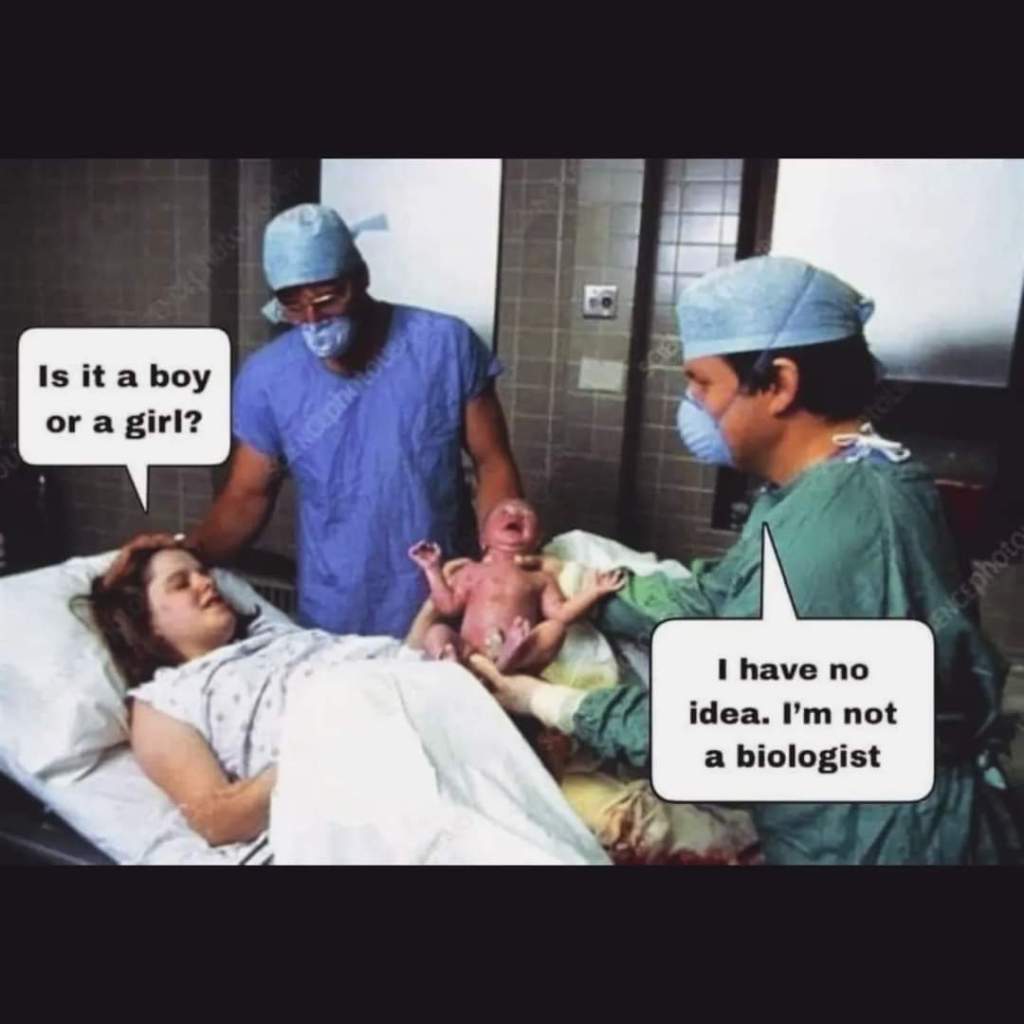
But, in the age of far-left ‘woke’ politics, this isn’t so easy anymore.  And this is the reason why, Ketanji Brown Jackson, a Supreme Court nominee, when asked, “Can you provide a definition for the word woman?” replied, “I can’t, not in this context, I’m not a biologist.”

Now, some are calling this question a trap, which it is.  It is a question intended to reveal the true character of Brown Jackson and it has.  Brown Jackson has shown herself as someone beholden to far-left extremism and unwilling to state a basic understanding that doesn’t need a biologist to get it right.

This is someone whom we are supposed to trust to make judgements on such matters, being interviewed for a job that is all about providing the final legal interpretations.  Will she also refuse to weigh in on the language of the law because she’s not one of the writers?  “I’m sorry, but I can’t rule on this, I didn’t write the Constitution.”

Alas, I think this is a selective lack of basic comprehension of what even children can figure out.  And we all know that it is not fair for a biological male to change his name, take some hormones, and then dominate women.  However, in the current ‘woke’ political paradigm one must pretend that a man competing as women is somehow stunning and brave.

The true irony of all this is that the pushers of the very same identity politics that moved Brown Jackson to the front of the line, which is completely about dividing people up into categories as a means to exploit their base tribal instincts, nominated someone who claims to suddenly be unable to distinguish women from men.

Man, I Feel Like A Women

And as far as the appeal to credentialism, I’m not sure any biologist would want to be declared to be transphobic and a bigot.  It would be a quick route to losing their job or funding, being cancelled, to risk offending the most powerful of marginalized.  Let’s hope this USA Today clip doesn’t represent a scientific community consensus or we’re in for a rough ride:


If this is indeed true, if there is “no sufficient way to clearly define what makes someone a woman,” then the solution to the alleged pay gap is to have more men identify as women, right?

If Jeff Bezos becomes Jen instead, would that be a huge victory for women?

Would it then be sexist to question the business practices of Amazon?

All of this is absurd.  A word that can’t be defined is meaningless.  We might as well remove it from the census form as it would be impractical to consult a biologist to help decide what gender we on a given day.  If it is that difficult to define woman, then we may all be women and who can say otherwise?  Who hasn’t sang along with Shania Twain, “Man, I feel like a woman”?

Transgenderism is truly a bigger threat to the special privileges of women than anything patriarchal.  It is essentially to say that the category does not exist, that anyone who identities as a woman can be a woman, and therefore all should have access to those spaces typically reserved for women.  Lia Thomas has arrived to erase the best efforts of women.

Loss of Meaning and Purpose

The one thing that is hard to define in this postmodern age, where a woman can’t even say what it actually means to be a woman, is our direction.  Even with the rejection of God and questioning of truth, a prior generation of academics and scientists could agree on basic definitions enough to advance.   

However, as this nihilistic deconstruction of meaning (and thus purpose) continued, as the very things that built civilization have become progressively eroded over time, it is become increasingly difficult to form a productive consensus.  If many can’t even be objective about gender and what it means to be a woman anymore, how will we decide anything if this goes further?

Language is becoming detached from the meaning.  This is a wedge driven by those perpetually stuck in dithering indecision, who are often insulated from real world consequences, who can afford to live in abstraction and denial.  But it is not sustainable, we can’t build strong and safe bridges while declaring engineering and mathematics to be racist. 

At some point there is reality, cold and harsh, that doesn’t care about our feelings.

Our elites are basically like those ridiculed for their debates about how many angels could dance on the head of a needle.  They have become totally impractical, useless as far as executive decision making and a real threat to social order.  Those unable to settle any matter definitively, let alone those truly more complex and nuanced, can’t build a future together.

It is a luxury, the ultimate privilege, to never have to define or decide anything and still be able to live.

The guy, trying to impress his date with his wokeness beside me, doesn’t actually live by the dogmas he is spouting, he can yammer on endlessly about his theories, but to sustain a relationship he’s going to have to make a commitment to something, eventually, or no woman will keep him around for long.

A Mixed Bag of Medical Results

Standard

Part of my personal myth is that I was a “miracle baby,” spared from a very early demise by the medical intervention of nurses and physicians, including my uncle Elam, a pediatrician, who hand pumped air into my lungs while being transported to Geisinger Medical Center.  

I had been born premature, suffered from a condition called Hyaline Membrane Disease due to my underdeveloped lungs, suffered a collapsed lung due to my hard breathing, and likely would have died without the advanced care that I received.  I was a fighter, for sure, but my survival would depend on the skilled intervention of medical professionals.

My mother would tell me that story and also use it to remind me that God had a special purpose for my life.  But what she didn’t tell me, until much later, is that my early trauma was actually caused by her doctor who induced labor. 

Oopsies.

My Medical Family

My mother had aspired to be a nurse.  Even worked in a nursing home prior to marrying my dad.  But life, including my sister and your’s truly, changed her plans. 

However, as often is the case, these dreams of parents are sometimes fulfilled by the next generation and sometimes double.  Both of my sisters are employed in the medical field and eventually even my mom found her way into a doctor’s office before eventually playing an instrumental role in the opening of Compassion Parochial Clinic.

My own role in all of this was to be my eldest sister Olivia’s first patient.  Using her Fisher Price Medical Bag, she would check and treat my various imaginary ailments, and had her mind set on being a pediatrician like her well-respected uncle.  And, after graduating high school, then acquiring a biology degree, she continued her education at Albert Einstein College of Medicine on Bronx, NY.

In fact, l feel that I may deserve a partial credit for having attended a lecture on the heart.  Although, I may have missed the second half due to a terrible bout of drowsiness and was not the only one sleeping.  Although, as a courtesy, I will not say whether or not my sister had succumbed.

Anyhow, my younger sister Lilian also picked a medical career, eventually became an RN, continued her education, and is now working on her licensing as a midwife.  Her passion is welcoming babies into the world and is someone with a personality well suited for the job.

All of that to say that this exposure causes me to have deep respect those in this profession.  One way to get on my bad list very quickly is to suggest that those in the medical field are only in it for the money and would deliberately keep people sick to cash in.  Sure, there are bad eggs in every profession, some terrible doctors, but my sisters (like many of their colleagues) are there to help people get well.

That said, having family in medicine also removes some of the aura.  My sisters are far more qualified to give opinions on medical issues than I am and yet they also are still human. 

Doctors make mistakes, they’re fallible like the rest of us, with blindspots and bias.  Plus they’re used to having totally ignorant people, who “did their own research,” challenge them on things they’ve spent years of their life studying, and can become tired of answering these inane statements—appear arrogant.

Physician: “Heal Thyself…”

People have very high expectations in regards to modern medicine.  We’re supposed to go to the doctor and be completely healed. 

But the reality is quite different from that.  Once you get past the buzzing technology and laboratory developed chemical cures, the sterile well lit halls of institutions, our actual abilities are still quite primitive.  Science may have given us better bandaid solutions than were available to our ancestors, yet there really aren’t that many miracles to be had.

My own expectations have lowered considerably after two injuries requiring expert examinations.  

The first, diagnosed as Degenerative Disc Disease, brought me to the office of the renowned neurosurgeon, Dr. Rajjoub.  I had terrible pain, loss of strength and feeling on my right side, my neck was really bad from what my family doctor saw on the MRI.  My parents, after we waited what seemed hours, finally were escorted into the examination room and were full of anticipation.

Having done our own research, knowing the seriousness of my injury, it was quite certain that I would be under the knife soon.  They would open things up, remove the bad, and fix me up better than new!  

The physician strode into the room.  He looked over the charts and images with intensity and then, without hesitation, “physical therapy” and started to turn towards the door.  Stunned, my mom, speaking for the three of us, our mouths agape, “Wait, what?!?”  It was as if he just told a blind man to rub mud in his eyes and was simply going to leave.  He explained further, telling us about the risks of the procedures, how my neck movement would be limited after, and restated his recommendation.

Dr. Rajjoub was right.  After weeks of therapy and further exercise at home, I was able to regain feeling and the use of my right arm.  Sure, I occasionally have painful flare ups and may need the surgery some day, but the doctor had given me the right answer even if it was not the one that I wanted to hear at the time.  Modern medicine has advanced, yet it is our body that still does most of the healing.

A Comical Contradiction

After tearing my ACL I met with an orthopedic surgeon to discuss the options available.  Still active, I expressed my desire to get back in the game and he responded by recommending surgery.  They grafted a part of my hamstring tendon in where the ACL had been and I spent the next few months becoming good friends with Rob and Bob at Keystone Care Physical Therapy and impressing the old folks there with my vertical leap.

Unfortunately, after a year of intense rehab, I was playing basketball and reinjured the repaired knee.  So I went back to the orthopedic surgeon for a consultation and his advice?  He suggested that maybe I slow down a bit, that I was no spring chicken anymore (a paraphrase) and should probably avoid strenuous activities.  Excuse me?!?  I had thought I went through the surgery and physical therapy so that I could actually use the limb, right???

But that’s typical of a doctor’s advice.  He was trying to minimize the risk of my reinjuring my knee, to cover his own butt, and could I really expect him to say anything otherwise?  To tell me to go full throttle again?  I can understand why he would urge my caution.  And still I can’t deny being disappointed.  My thought had been that this surgery would allow me to pick up where I had left off and instead I got a cease and desist notice.

The Undiagnosed Nightmare

I’ve reconnected with an old school friend.  I rode the bus with him for many years and we shared a first name. 

It is quite astounding, actually, how we got reconnected.  That being a story for another time.  But one thing memorable about this old classmate is how he was always complaining about pain in his feet.  At a younger age I had thought of him as being weak or a whiner.  He had been diagnosed as being flat-footed.  

However, it was a little clearer that there was something more seriously wrong when, in middle school, a fall, after a playful shove in the hall, resulted in a broken hip.

Anyhow, at our one-on-one reunion he would let me in on his the true source of his suffering and something that the medical professionals had missed.  Something that doctors had initially told him was all in his head, that the genetic department of an area research hospital refused to even test,  turned out to be Fabry’s Disease, a rare genetic disorder where the body is unable to produce a particular enzyme, which means the body is unable digest certain proteins, and is a death sentence if not properly treated.

He had gone through hell.  A breeze on his skin felt like torture.  They had treated him with addictive painkillers that basically turned him into a junkie.  And his proper diagnosis came from an uncle who read a story about someone with similar symptoms, a revelation that prompted my friend to demand the diagnostic tests for the genetic disorder and only then did he finally receive the necessary treatment.  The medical system had both failed and saved him.

The Miracle Hoped For…

Then there’s my cousin Uriah.  Nothing, not the most advanced treatment in the world, could save him.  The prognosis was never good, Synovial Sarcoma, but I held on to the hope that some new cure might come along, some miracle might happen, and he would survive.

It was hard to watch.  First after one round of him taking poison, called chemotherapy and the only thing that will keep the corrupted human cells called cancer from growing, they decided that he would need to sacrifice his leg.  This Uriah and his family did everything they could, he received top notch medical care at Walter Reed and elsewhere.  But there was not much that could be done for him.

The limitations of modern medicine is a bitter pill.  And those seeking ‘alternatives’ do not fare any better if diagnosed with an aggressive form of cancer.  I know many strong-willed individuals, in partial denial of the graveness of their condition, who traveled to places like Mexico for some kind of breakthrough treatment and suffered the same fate.  Better technology may come along soon and yet disease and death is as natural as health and life.

There is a myth, popular in some circles, that if a person eats right and exercises they will be rewarded with long life.  Uriah was one of the most fit and disciplined people I know, there was nothing he could have done better, he was dealt a bad card.

Having Correct Expectations

We see the headlines, “The third-leading cause of death most doctors don’t want you to know about,” discussing medical mistakes, like this one:

“In 2002 James lost his 19-year-old son after he collapsed while running. He had been diagnosed with a heart arrhythmia by a cardiologist a few weeks prior and was released from the hospital with instructions not to drive for 24 hours.

“His death certificate said he died of a heart arrhythmia,” he said, but my son really died as a result of “uninformed, careless, and unethical care by cardiologists.” He explained: “If you have a patient with heart arrhythmias of a certain level and low potassium, you need to replace the potassium, and they did not. And they didn’t tell him he shouldn’t go back to running.” Communication errors, he said, are “unfortunately very common.”

What is left out of this story is that a century ago he would have simply died from the arrhythmia. 

In fact, only half a century ago my great-grandfather died, a middle-aged man, of a heart attack because there were no surgeries widely available. 

So, truly, modern medicine is a victim of it’s own success, things have improved so much from the time when many people died of many diseases, even at a young age, that we now expect perfection.  Our ancestors, not too long ago, would have no treatment options, whereas we demand answers when the treatment fails.

Those who expect too much will be the most sorely disappointed.  Those who expect to be saved from suffering by science will some day be faced with a harsh reality and, likewise, those who believe that there’s a cure for cancer being withheld are equally delusional.  This idea that we have complete control, that there should somehow be a cure for everything, is a product of our success in medicine and also ignorance of what this success actually means.  

Sure, some of us, like my grandpa, may have died on multiple occasions had it not been for medical advancements like Penicillin, prostrate surgery and pacemakers.  But, even now, with the great progress we’ve made, we’re still all eventually going to wear out.  Our bodies have a shelf life and all the intervention in the world isn’t going to do much to change that.  Eat healthy, exercise enough, avoid getting hit by a truck, and you might see eighty years, maybe more if you have good genetics.  But we won’t live forever.

So, before we become too critical, rather than only dwell on the failures, we should look at the advancement and appreciate the success.  Results will always be a mixed bag, even those who have received the very best care, men like Steve Jobs, do not live forever nor will you.  Even Lazarus, brought back to life by Jesus, eventually died.  And my friend, the one with the missed diagnosis, would long ago have joined Lazarus had it not been for modern medicine.

Awaiting Resurrection…

Standard

Nobody enjoys waiting and especially not for an indefinite period of time. This is why “progress bars” were invented to give hope to the user of electronic devices, through visual means, that their patiently waiting for the completion of a download, file transfer or update will eventually be rewarded and they can be on their way again.

There is nothing worse than waiting with no indication when or if the wait will end. Even a false assurance of an end (many progress bars do not speak the truth and are there simply to keep us from giving up) is better than waiting for an indefinite period of time.

As a truck driver, there was nothing worse than the undefined waiting period. I hated when someone would give me an ambiguous answer rather than a defined period. I would rather hear something concrete, even if it meant hours of waiting, than “soon” or “we’ll let you know” because those are words without commitment, that both keep you tied down and discontented.

Knowing when a wait will end or, at very least, that there is something at the end of a long wait, goes a long way towards making the wait more bearable. It can help one be prepared for that moment when the end of the wait arrives. At very least one can know how long they must distract themselves, if it is worth sleeping or when to set the alarm.

Currently, I’m stuck, once again, in one of those indefinite waiting periods and wondering if this one is indeed different from the others or just another delusion that will end in pain. So far I have busied myself in making necessary preparations, stubbornly holding back any doubts, but it is impossible to know if there’s any progress towards an end or if this too will end in catastrophe.

The next couple of years promise to be the launch of a new phase of my life and a close to a chapter that ended in devastation. In a very literal sense, something died in me a few years ago, having my sincerest faith so casually cast aside by those whom I had trusted my life with is a mortal wound, made it impossible to know my up from down, and I’m still awaiting resurrection.

Hope or heartbreak, only time will tell where this all ends…

Nuclear Fusion and a Positive Vision of Love

Standard

Many people, whether they realize it or not, love for what they get in return and essentially are in love with their own image reflected in another person.  This can be dressed up in many ways, it can be hidden under religious motives or romanticized, but it is (once all the layers of rationalizations are removed) a selfish love.

For three years now I’ve sought after a different kind of love.  For three years I’ve sought after the kind of love that sacrificed personal ambitions and loved another purely out of love for God.  It was a love of faith, a love that transcends differences rather than be divided by them, and a love made possible only through God.

The impossible love meets human reality…

I set out to do the impossible in belief that the words “with God all things are possible” were true and pursued the love of someone who was completely different from me in everything but faith.

Unfortunately, this person—being that they are fundamentally different from me (despite our both being Mennonites)—did not see faith as a good enough basis and could not see the potential for love and refused even a friendly relationship.

I don’t blame her.  It was what she inherited from her parents and religious culture.  Mennonites, despite their bluster, are really no different from their secular neighbors and promote the same perspective of love.  That is to say Mennonites give advice like “find someone running the same direction you are” and centers on the wants of the two individuals.  You don’t need God to explain that kind of love.

But I sought something entirely different.  I sought a love that was not self-seeking and shallow.  I was seeking a deeper bond of a love that was truly self-sacrificial and put God at the center rather than the wants of individuals.  Instead of two people choosing each other because they are similar, a narcissistic love, I hoped to find the love of two people who formed their ambitions together in a spiritual union with God.

I met a wall of resistance.  Mennonites may claim to love their enemies and practice non-resistance, but don’t try to be their friend unless you fit their list of requirements.  I was not up to her standards.  She told me she couldn’t love me the way that I wished to be loved, except I didn’t ask for love—all I wanted was a little faith and a chance.

Imagine the exasperation of being told “hearts don’t change” by someone who plans to commit their life to missionary service.  It makes me wonder why they would even bother going over land and sea?  Evidently they aren’t going with actual faith in a God that makes the impossible possible.  Perhaps they are going for the excitement or for the praise of religious peers?

Anyhow, it is impossible to love someone who refuses to receive it.  In her mind, as one who was “thirty years old living in Milton” I had absolutely nothing to offer her.  She, taking cues from her father and religious peers, treated me more like a rabid dog than a brother in faith.  They actually denied me a means to love or be needed by them.

Meet Sarah, my sister from Congo-Brazzaville…

Severe disappointment leads to depression and many days I wished that I could disappear into my bed forever.  I was hurting and not in the mood to be sociable when the notification “Sarah Zinia has sent you a friend request” popped up on Facebook.

My initial thought was to ignore it.

However, I decided not to use my own pain as an excuse.  I remembered, “Do unto others as you would have them do to you,” and decided to apply that reasoning to this circumstance.

I clicked “accept” not knowing what to expect.

I was not kept in suspense.

Immediately thereafter a message “hey” came from this mysterious new friend.  So, still fighting the urge to ignore and deciding to apply the Golden Rule again, I said “hey” in reply.  We exchanged our “how are you’s” and that marked the beginning of a very special friendship between two very different people.

Sarah, I would soon learn, was in dead end of a town, living in a group home, a mother to a one month old baby Anthony, and had no car or public transportation.  It was obvious she was very bored, and I knew that if I were in her shoes I would want to get out a little.  So, in a moment of impulse, I offered to take her somewhere and she enthusiastically accepted.

After a first meeting (and being a good Mennonite by too carefully explaining my platonic intent) we were regularly going out to eat, hiking trails, visiting parks and even shopping!  She didn’t seem to care that I was a mildly miserable guy in his mid-thirties, she was simply glad to have a friend.

Our conversations were light at first, usually about the food we ate or the weather, but soon I was learning about the struggles of a teenage single mother and life from the perspective of a refugee from Africa.  Her story touched my heart and made my life seem like a walk in the park by comparison.

Sarah was pulled away from her home country, taken from her mother (who she has lost all contact with) in a new strange country, raised by the state system, treated as a slave and bullied.  I can’t go into details out of respect for her privacy and yet can assure you that she has gone through many awful experiences in her life.

Mennonites, like many others who are so privileged, take for granted the security that a family provides for them.  Sarah, by contrast, has been separated from her family and has been a half step from homelessness.  Yeah, sure, there are many government programs and private organizations to help, but none of that can replace family.  She needed real family and that is why she decided to accept me as her brother from another mother.

I treated her with respect.  She did not need to ask, it was easy to recognize the void in her life and that she needed someone she could trust to be there for her no matter what.  I tried to help her with her insecurities by assuring her that she would have a place to live even if I needed to give her my home and move back to my parent’s house.  

The friendship we have is impossible by a conservative Mennonite standard.  I’ve had various people in the church express their ‘concern’ to me.  Apparently, in their minds, a guy and girl can’t spend time together without bad things happening?  And then there were those who advised me to practice some ‘tough love’ and cut her off when she went against my advice and moved back to Arizona.

But I stopped caring what other people thought.  I trusted my heart and knew my intentions were right.  Sarah might be a net loss for my bank account, I’ve had to answer those late night calls, tune out a screaming baby (who had been perfectly delightful until alone with us in the car) and yet it was well worth it.  The moments of laughter, the happy and sad tears, seeing her progress—priceless.

She made my life meaningful again.  I probably needed her as much or more than she needed me.  She gave me a reason to care enough to get out of bed and her success has become my own.  Witnessing her accomplishments over the past couple years has encouraged me not to lose hope because the odds are against me.

Sarah has a positive outlook despite all the evil she’s endured—she still smiles with a big goofy grin and that brightens my day…

Helping my little lost sheep find God’s love again…

Last year I met another dear soul through social media.  I will never forget the first message where she apologized because she felt unworthy to be my friend.  She was a poor little lost sheep, shivering in the cold dark world, a nameless number to the machinery of capitalism, and had lost all hope.

Her family and her young son were far away in the Philippines.  She was working to support her son, and (because the wage was a little better than in her home country) she was pressured to take a three year contract in an electronics factory in Tiawan.  She lived in a dormitory with strangers.  Her life had fallen apart.

After her first message my heart ached with compassion.  I tried to convince her that she was indeed worthy to be my friend and assured that I would be there for her as long as she needed me.  But her descent from dreams of a simple happy life to the pit of despair was not overnight and restoration of hope would also take time.

Despite being on complete opposite ends of the planet (exactly twelve hours apart) we had the same schedule because she was on night shift.  So it worked out that every day she could be the first person I would greet and the last one I would talk to before going to bed.

There were many times early on where she would come away from work forlorn.  I would see the sad puppy sticker come across on Messenger and that was my signal to put everything down to get to the bottom of what was troubling her.  My mission was not accomplished until she smiled.

One day she asked me if it was okay if she called me “bhest” and, not seeing a reason why not, I granted permission.  Since then I’ve been her bhest and tried to live up to that special distinction.  My bhest has looked to me for assurance, for forgiveness when she made mistakes, and has privileged me with her faithful companionship.

The sad puppy sticker has not made an appearance for quite some time now.  Our daily reminders to each other to smile and be happy seem to create a sort of synergy or positive feedback loop.  It seems that we get more out than we put in.  We might be on complete opposite ends of the globe, but somehow we are twins and share one heart.

She has transformed from a sad puppy to a bouncy dancing and happy puppy—that is a great source of happiness for me.  It is my goal to continue to provide her with hope of that simple and happy life as long as I am able.

And, for the first time in my life, following her lead, I’ve started to call someone “bhest” and that makes me smile…

Anyhow, what does nuclear fusion have in common with a sister, a sheep, and the love I seek?

Nuclear fusion is a process in which two (or more) different atoms are pushed together with enough force that they overcome the forces that would normally keep them apart and they become one.  The result is a release of energy and particles.  Nuclear fusion is the process occuring in stars (like our sun) that continuously converts hydrogen atoms into helium and creates light.

There is research underway to replicate the conditions necessary for nuclear fusion to occur.  The reason for the effort is the tremendous potential for nuclear fusion to be a renewable and clean energy source.  Once the reaction was started (using a tremendous amount of energy) it would create far more energy than was used to start it and solve many problems of how to power our future.

My vision is for a love like nuclear fusion.  A love that takes two very different people who are not naturally attracted and bonds them together through a faith greater than the differences.  The idea would be a composite of two people of like faith with normally incompatible strengths and ambitions who are held together through a supernatural love.

That is why I set out a few years ago praying for the impossible to be made possible.  It was my hope to see this fusion of very different people who transcended their own independent dreams, sacrifice themselves completely (rather than find someone like themselves) and became bonded in a faith greater than themselves.  I had a vision of a tremendous potential yield.

And, I suppose, I may have gotten part way there.  I’ve seen people as different as black and white become family.  I’ve also found a love that can literally reach around the globe, and bridge east to west.  I’ve seen relationships that produce a synergy and seemingly more output than the energy put in.

But what remains to be seen and impossible?

I have yet to see a good Mennonite from the in-group make a commitment of love to someone outside their exclusive club.  Yes, I’ve seen them love a good project, I’ve seen them budge when hammered and make small concessions.

But, for these good religious people to truly reach for faith in something beyond their own comprehension and current abilities?

That, like nuclear fusion, remains out of reach (at least for this man) and impossible.

So what is my positive vision for love?

I asked God to make the impossible possible, and when I asked, I was seeking after that greater love—the fusion love of faith.  And, I’m not sure I’ve arrived at an answer yet.  I have many questions.

However, what I do know is that I have been changed over the past few years and now things that were impossible are closer to reality for me.  I have lived to be an answer to prayer even while my prayers seem to have gone unanswered.  I’m determined to help others see their own visions of a greater life become their reality.

 
The picture above is my family.  Not a family caused by biology or religious culture either, but one formed of obedience to conscience and love.  Do you share my vision for a transcendent love?

Rudolf Diesel: Thoughts about Idealism, Despair, Progress, Politics and Hope

Standard

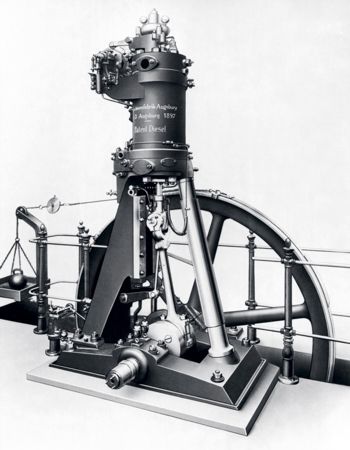
Diesel powers the world economy.  I never considered the extent to which that is true until watching a documentary (click here to view it) about this type of internal combustion engine.  It is named after the inventor, a French-German mechanical engineer, Rudolf Diesel, and is the reason why global trade is possible to the extent it is.

Early Diesel design, circa 1897

In considering the story of Diesel, his brilliant invention and the results, I could not help but see the pattern all too common with innovators.  Diesel’s life turned tragic, he was found floating in the North Sea, dead of an apparent suicide, and likely a result of his despair over the unintended consequences of his own design.

According to biographical accounts, Diesel was a utopian idealist who had hopes that his invention would be a catalyst for social change, free the common man and break corporate monopolies.  Unfortunately, while a revolution for transportation, Diesel power did not achieve the lofty social vision. 

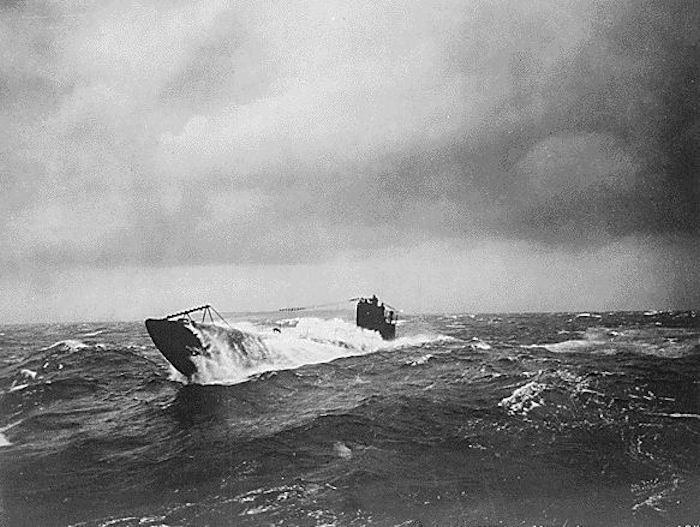
Worse, the Diesel engine found use as a part in an efficient killing machine, the German U-boat, and this no doubt grieved the pacifist inventor.

Here are some observations…

#1) What is intended for good can often be used for evil.

Diesel had never intended his invention be used as a means of terrorizing North Atlantic shipping lanes.  And, likewise, many scientists and inventors had regrets related to their greatest contribution to the world.

German U-boat, the original stealth weapon 

There are lists from K-cups to A-bombs online and many others.  For example, Henry Ford seemed to dislike the vast social changes and consumerist mindset made possible by his manufacturing revolution that helped automobiles become a fixture of American life.  Even this media, the internet, once thought to be the beginnings of an information age, has become a cesspool of pornography and ill-founded claims.

I worry about this as a blogger.  Once my thoughts are out there they cannot be contained again.  Will someone pick up my words and run with them in a direction I never intended?  It is a potential outcome that could scare a sensitive soul into silence and is at least a reason for me to be prayerful in what I post here.

I believe there are many people who do not thoroughly think through the potential unintended consequences of the ideas they promote.  There are many government programs and social movements intended for good that might actually be creating more problems than the one that they were intended to solve.

Which takes me to a second point…

#2) Yesterday’s revolution is today’s loathed source of inequality and evil.

It is ironic that the invention that did actually outcompete coal for market supremacy is now enemy #1 for many.  The internal combustion engine won in the marketplace because it was by far the cheapest most efficient means to power transportation and still remains. 

Given there are no steam powered cars, tractors, trains and ships anymore, it is clear that internal combustion is the best bang for the buck and remains to be rivaled.  Diesel powered locomotives and ocean going container ships are extremely powerful while being very economical.    

109,000-horsepower Wärtsilä-Sulzer RTA96-C

Diesel power still outperforms hybrid technology—A loaded Diesel powered class 8 truck is more efficient pound for pound than a Prius.

Think about it: It takes one gallon of fuel to move an 80,000lb truck five to seven miles.  A 2016 Prius, by comparison, carries a weight of around 4000lbs can go anywhere from 50 to 58 miles on a gallon of fuel.  It may seem the Toyota is greener until you consider that it is moving twenty times less weight.  Twenty Prius cars combined together, after dividing their individual consumption by twenty, would consume 2.5 to 2.9 gallons of fuel.  Now, obviously, combining Diesel and hybrid technology on the scale of class 8 truck would undoubtedly yield even greater results if fuel economy were the only concern, but the point remains that Diesel power is extremely efficient and effective—and only more so the larger the application.

So what’s the problem?

Well, the current popular perception is that the petroleum industry “big oil” is the enemy and conspires to hold back technology that would dramatically increase efficiency.  Worse than that, we are told that petroleum power is a source of global climate change and a threat to the global ecology.  Poor Diesel would be driven even further into despair if half this is true.  We fight over oil.

 #3) Progressive aims of our time are at odds with each other or self-contradictory.

Globalism, higher standard of living for more people and environmentalist ‘green’ movements are at odds with each other.  Pushing one direction will almost invariably come at the cost of the others. 

Progressive politicians may tout an idea of a ‘green economy’ as a jobs creator, but the reality has been that wind and solar energy can only remain competitive through heavy use of government subsidies.  Beyond that, even with the help, domestic ‘green’ manufacturing is unsustainable against foreign competition.  At best we will merely replace jobs lost by the heavy regulations placed on fossil fuels and raise costs of living across the board.

Furthermore, it was the progressive policies of the past century that have created the current conditions.  Government policies like the Rural Electrification Act, the Interstate highway system and trade agreements have actually moved us away from a more sustainable less polluting lifestyle.  Our cheap and easy movement from place to place has harmed community and local markets.

Rural Electrification Act propaganda poster.

It is hard to know how the current landscape would look had the progressives of yesterday had not literally paved the way for suburban sprawl, the trucking industry (that currently employs me) and driven us to embrace a coal powered grid.  But I do suspect more of our food would be locally grown, more of our products locally produced and solar energy far more the norm in places utilities would be to costly to maintain unless mandated by law.

In final analysis things might not be as dismal as they seem.

It is easy to focus on the negative without considering the good.  The means of today are likely as unsustainable as the means of yesterday and therefore the progress of the past century might not be the end of us after all.  The only consistent reality in the past two centuries has been that markets constantly change.

Canal boats an all the infrastructure to support them were soon replaced by steam power and railroads.  In Pennsylvania the lumber industry rose in prominence before a rapid decline after the states wooded mountains were reduced to stubble.  The coal industry once put food on the table for boat loads of immigrants before cheap efficient oil and a multitude other factors conspired against it.

Bay State Mills, Lawrence, built 1845.

Manufacturing, from the once mighty water powered textile mills of the New England states to the formerly unstoppable domestic steel industry, has also migrated following cheaper labor and energy.  Each time promoting deep consternation and fear.  But so far the Luddites have yet to have the last laugh and a new balance is eventually found that usually benefits everyone.

Certainly the overconfidence and optimism about today’s new solution may become the big disappointment of tomorrow.  Yet, do we really wish to go back to a time when a transatlantic voyage was only something a religious zealot or crazy Viking explorer would do?  Would we really rather spend most of our time scrounging for just enough to eat as to avoid the possibility of mechanized warfare?

Nobody knows for certain why Diesel died... 

However, what is certain is that his invention changed the world and provided a means for interstate commerce and global trade that never existed before.  The pacifying effect of global trade, economic benefits of an expanded market place and inexpensive power are largely unappreciated.  But we probably do have Diesel to thank for helping create the long peace and prosperity of our time.

Maersk, Triple-E design, Diesel powered, container ship

In an age of information overload, where we know about beheadings in the Middle East before the people the next town over would have heard a century ago, it is difficult for our finite minds to contextualize and easy to become overwhelmed.  This, with an accompanying loss of faith, could be why middle-aged American white males are committing suicide (supposedly the most privileged in the world) and at an alarmingly increasing rate. 

Diesel’s pessimism about the future in retrospect seems to have been premature and his nightmarish perception of reality overstated.  In like manner many of our modern fears and despair inducing thoughts about the future could be negativity bias and nothing more.  Every generation seems to believe that the world is falling apart and still here we are.

Whatever the case, ignore the fear-mongering propaganda of the punditry and politicians.  Embrace temperance, a spiritual quality developed through faith, over mindless reaction and fearful impulse.  Trust God to secure the future, we can only live one day at a time and never ever lose hope!  If you are depressed about events in the world today, I invite you to see the higher perspective:

“Therefore we do not lose heart. Though outwardly we are wasting away, yet inwardly we are being renewed day by day. For our light and momentary troubles are achieving for us an eternal glory that far outweighs them all. So we fix our eyes not on what is seen, but on what is unseen, since what is seen is temporary, but what is unseen is eternal.” (2 Corinthians 4:16-18)

Perhaps the greater of two evils will be elected come November and drive the nation to complete ruin.  

Who knows besides God?

We may all die tomorrow, we will all die eventually, our work blown away in the wind of time and forgotten.  Everything comes to pass, nothing will remain as we know it today, but there is hope beyond all hope found in an eternal perspective.  So look up, because the sun is still shining and the future remains bright!

Do you see the light and feel the warmth of hope eternal?

If not, my prayer is for the blind to see…

Keeping Things In Perspective

Standard

The problem with writing about a complex topic is that anything I write often feels incomplete. 

Good writing is succinct.  However, some ideas are hard to reduce to a few words.  The difficulty of writing for me is often knowing what to include in an explanation and what to leave out.  A writer can simultaneously say too little and too much.

When I finished my post last night I felt I had rambled a bit.  Part of the problem is that I’m writing on a smart phone.  I write between distractions and editing is not my forte.  I know I have more I could say, but that post was already long and I could probably have left stuff out of it without losing much.

Besides that, I worried about alienating parts of my audience by speaking about a political figure and would rather not lose one of the handful of readers.  I was dissatisfied with the result and enough that I nearly removed the post, but then I do not want to be a coward who only says what will win him the approval of peers or takes positions where he is most comfortable.

One of those things I did leave out was context.  The history I mentioned of Christian and Biblical violence needs to be understood in the context of the times it took place.  For example, the Crusades were not inexplicable or unusually brutal for the time, they were a response to the rapid expansion of another religion.  Likewise, in Bible times, things like child sacrifice, slavery and exploitation of women were the norm—even more than today.  Lest we forget, crucification was used by the ‘civilized’ Romans to punish crimes like theft. Torture was not a crime for much of human history.

I do believe, in context, the treatment of women, slaves and children was improved vastly by the teachings of Jesus.  I believe Christian thought, despite the corrupted use of the religion, is a large part of why we in the west are experiencing the long peace that we are.  That’s how movements work, results aren’t instant, there are relapses, counter movements and yet it is the long term trajectory that matters.

The more I study history the more I feel privileged to live in the world I do.  In times past, even many places in the world today, I would have little time to fret about my writing skills or lack thereof.  If it wasn’t shortage of food to worry about it would be the constant threat of being killed by the rival tribe or clan across the river.

Progress, like my writing, is always incomplete, but hopefully it is headed in the right direction and there are some things in the world worth celebrating.  That these words could potentially reach someone on the other side of the world one of them.

God bless!