Too Cruel To Be Coincidence

Standard

There is this sort of silly thought I have had, which has some legs, about the true nature of the universe and how unlikely it seemed that our friend’s daughter would fall victim to the currents of the Susquehanna river.  I realize this is more just a hiccup of my own mind than an actual reality, but what are the chances?  What are the actual probabilities we would know another Filipino-American couple with so many similarities and has a tragedy like this happen?

I ran my hunch through Grok.  What are the chances that another couple, one of them a German-American with neck or back issues (like me) the other a recent immigrant from the Philippines who came with a child and has also (like my wife) recently given birth to a second child, losing their ten-year-old daughter in a drowning incident just a week prior to Mother’s Day?  And how likely is it that I would have experienced the loss of a close friend’s child twice?  The probabilities are so infinitesimal that the very existence of life is more likely than this:

The probabilities of the specific scenarios you described—knowing an ethnic German man in Pennsylvania with a Filipino wife and children matching your family’s profile (0.00462%), his 10-year-old daughter drowning in the Susquehanna River on a specific weekend (1 in 2.82 trillion), and being friends with two women who lost children tragically (0.566%)—are all significantly lower than the probability of life existing in the universe, which is nearly certain (1) due to the vast number of planets (10²²). Even in an extreme pessimistic scenario where life is exceedingly rare (0.36%), only the third scenario approaches or slightly exceeds it, while the others remain far less likely. The universe’s immense scale makes life’s existence highly probable, whereas the hyper-specific nature of your scenarios, especially the drowning event, drives their probabilities to near-zero.

All this is just an extended version of that age-old question: “Why me?”  

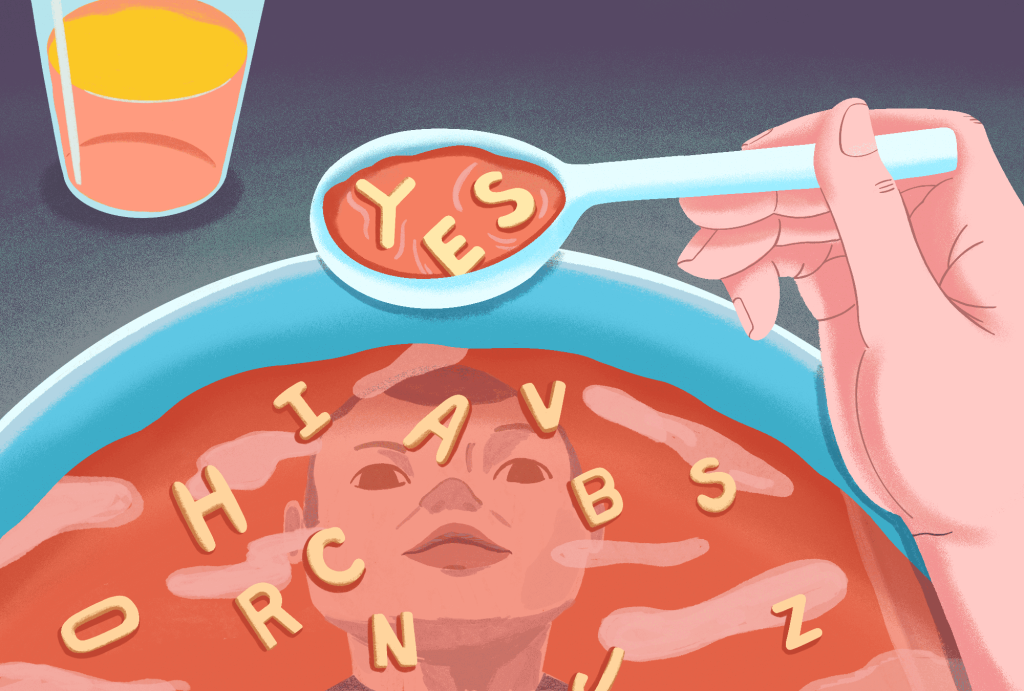
This weird feeling of this being a tragedy too perfectly scripted to be real is simply the hallucination of a mind searching for meaning where there is none.  

It is no different from when I—in delusion of religion and looking for answers—had assigned meaning to the ‘impossibility’ (a romantic interest) randomly picking up a paper, leftover from Sunday school class in the same location, and then reading from it “with God all things are possible” right as she walked past me—renewing my hope to continue my foolish pursuit of faith and love.  Belief in a divine plan only led to more disappointment.  It is what it is—as she told me as an answer.  A coincidence is no more meaningful than we have made it.  

apophenia

Truly, we could throw our lasso around any circumstance, any set of facts, and find it to be highly improbable.  But, after the fact, if it has happened, the probability is always 100%.  Basically everything is unlikely right before it has happened and this why those Lee Strobel type of apologetic ‘cases’ aren’t very compelling for a critical thinker.  They are too based on assumptions and deciding what matters based on our own window of understanding—never considering the other possibilities.  

It is actually very likely that I know another Filipino-American couple, involving a single mother and a lonely guy similar to me, given that we deliberately connected to the local Pinoy community for sake of my wife.  And it was our similarities that always gave us something to talk about.  He was employed in an engineering related field, same as me, and going through the visa process.  As far as the tragedy, around 4000 unintentionally drown in the US per year (900 children) and spring weather (near Mother’s Day) is just likely to bring people to the river.

My foreign-born friends, in retrospect, were more vulnerable.  Those who grew up in the Susquehanna valley have a bit more fear of the river.  The waters may appear to placid, but we also know about those floods which have ripped through communities and how it respects nobody.  You’ll try to pet a bison up until you see the first person gored.  We simply don’t know risk until we have seen it for ourselves.  But then I also know that the mother, in this case, was always extremely cautious and only looked away for seconds before hearing the commotion.

What is so hard to accept is that reality that this world is full of danger.  Both conspiracy theorists and left-wing control freaks refuse to deal straight up with a world where death can occur without some dark plot and that this won’t be solved with politics.  I’ve never been under that delusion.  However, I have had this good things happen to good people expectation going in to life.  My Pollyannish hopes have been rebuffed too harshly and consistently to continue holding to them.  In truth, the natural world does not care about your morality—if you follow all the rules or are evil incarnate—the universe is utterly indifferent.  It just is what it is.

There is no evidence of a grand design, as I had been indoctrinated to believe, and fully embraced—before falling flat.

It is pareidolia, a mirage or projection of our own desire to find explanation or reason for everything.  People want this singular thing to blame for all bad things and yet there is not in the case of this drowning.  The mom was not negligent, the water is neutral and neither good nor evil.  Trying to find design is only me choking on a reality we all should face: We all leave this world the same as we entered it—dust to dust.  Some depart on a different schedule than expected.  But many children have died before their parents and long before history recorded it.

To have no cosmic force orchestrating our suffering is a big comfort.  It eliminates the cognitive dissonance of the loving God that then subjects Creation to torment.  Pain is a survival mechanism.  It helps to correct our behavior and train us, but also misfires (ask those with chronic pain) and hurts us for no good reason.  There is no need for a perfect system, one where only those who deserve punishment are punished, merely one that functions well enough.  There is no intent to be cruel, no special message to glean from the loss of a precious daughter a weekend before Mother’s Day—she slipped on a rock and that’s all there is to it.

We desire a director behind all events good or bad to make it easier to understand.

If fantasy helps you cope with grief then by all means embrace it.  We could theorize it was part of a hidden divine plan to gain the salvation of her parents, a punishment for lack obedience to Allah, and that she is playing up in heaven with those millions of aborted fetuses Evangeli-cons care about (or the children of Gaza they don’t) and if the thought comforts then pull it up over your head like a warm blanket.  Nature can be cruel, cruel in a way that seems very much too improbable to be unplanned, but good people suffer just as the wicked do, and the universe offers no explanation or apology for it.

Models That Shatter: Air Crashes, Dental Bills, and the Burden of Bad Ideas

Standard

Last time around, I dismantled the myth of indestructible buildings—people dream of granite fortresses, their mental models blind to necessary trade-offs—meanwhile ballooning the cost of new construction and keeping more people are stuck in older less safe buildings.  That same flawed thinking now fuels a frenzy over air disasters and my wife’s legitimate grumble over dental bills and paperwork that could choke a horse.  Whether it’s planes plummeting or crowns now costing thousands, folks cling to busted models—piles of regulations, their wild conspiracies, or broken systems—that splinter when reality bites. In my truss design world, I double-check software because it’s half-baked; we should also scrutinize the narratives and red tape the same way, and not add more wreckage.

Air Disasters and the Partisan Haze

The wacky left, not to be outdone by the kook conspiracy right, keeps blaming air disasters on deregulation. Start with January 29, 2025: a Bombardier CRJ700, American Airlines Flight 5342, slammed into an Army Black Hawk over D.C.’s Potomac River, claiming 67 lives. Then a Canadian Dash 8 skidded off a snowy Quebec runway—no deaths, but headlines aplenty. 

Now the April 10, 2025, Bell 206L-4 chopper crash in New York’s Hudson River, six gone, including Siemens exec Agustín Escobar and his family. X posts scream Trump’s crew gutted FAA rules. Never let truth get in the way of a partisan narrative, right? But the facts don’t bend. D.C. hit nine days into his second term—too soon for policy shifts to ripple. The Hudson chopper passed a March 1, 2025 inspection, clean as a new nail. NTSB points to D.C.’s air traffic staffing woes, Canada’s pilot error, New York’s likely mechanical failure—not slashed budgets.

Stats cut the haze. FAA data shows U.S. aviation incidents down since 2020, though Potomac’s toll spiked fatalities. Crashes in media hubs like D.C. or NYC feel like a deluge, but it’s perception, not reality. I’ve seen this hysteria before—folks panicked over food processing fires, but as someone who supplies building components we see many ‘fire jobs’ and not a surge.  Fires due to hot bearings, bad wiring, heaters or dust are quite common and to be expected.  The funny thing none of these food processing fire alarmists reported on the new feed mill near me—non-confirming news doesn’t go viral.  

Then the tinfoil-hat crowd spins BlackRock plots because Escobar was aboard. What are the chances a Siemens exec’s on a chopper? Pretty high, honestly—they’re the ones dropping $500 a seat, not me touring the harbor for free, with my family, on the  Staten Island Ferry. BlackRock’s got stakes everywhere; a link’s no bombshell. As far as the in-flight breakup of the Bell helicopter, my pilot brother snorted, “Never buy an air frame that does 30+ takeoffs and landings per day.”  That is to say there’s a difference between a vehicle with highway miles and the one used as a weekend racer.  Seized gearbox or stress fractures, not sabotage. The SEAL pilot’s fuel call was logistics, not a scream. Yet they weave a blockbuster rather than look at a shop log.

This echoes the indestructible building myth—deregulation won’t make planes drop tomorrow, nor do cabals rig bolts. More FAA rules don’t sharpen mechanics’ wrenches, just like overbuilt trusses don’t scoff at storms. That ELD mandate for trucks?  It jacked costs, no safer roads. D.C.’s staffing gaps brewed for years; New York’s airspace is a madhouse, and always has been. Good design—trusses or aviation—leans on more clarity: sharpen skills, focused goals, while also acknowledging the risk baked in. Pilots should scan skies, not bury their heads in binders. But folks expect oceans to swallow us if one desk job’s cut, their models deaf to reality’s groan.  Failures aren’t a secret plot nor will more rules prevent them all.

Healthcare’s Paperwork Quagmire

That same broken model—thinking more rules fix it all—bleeds us dry in healthcare, where compliance piles up and costs push higher.  My Filipino wife got sticker shock: Over $2,000 for a crown!  What???  Her gut said yank the tooth, but the doc—and me—aren’t keen on losing one of those original equipment food grinders. Before we hit the chair, she was annoyed by those butt-covering forms—shields for liabilities (“We asked about novacaine allergies!”) and traps to hunt you down if you don’t pay their yacht lease. 

Earlier this year, my son’s middle school emailed another form, they’re playing dental cop to prove his exam. We lucked out—they took our word his Philippines checkup happened, sparing me need to send their paperwork to Baguio for my in-laws to wrangle.  There, we’d stroll into a clinic, no appointment, $20 for a cleaning or filling. Ain’t swanky, but it’s sterile, does the job, and fits a $8/day wage world. Here, insurance bloats costs like student loans—dentists hike prices ‘cause the check’s guaranteed.  The poor folks get Medicaid, rich get their implants—me: never had dental insurance in my life, other than my couple year subscription to a scam “discount” that did squat unless I was already shelling out.

Since the Affordable Care Act (ACA) was turned into law, healthcare costs per capita soared from $10,620 in 2010 to $14,570 in 2023—37.2% up, inflation-adjusted, per CMS. Life expectancy sagged, 78.7 to 77.5 years, says CDC, while costs kept climbing. Rather than keep your own doctor was the promise, choice is diminished.  Big players like UnitedHealthcare—had controlled 15% market share, Statista—grew hungrier and doubled it.  Locally, Evangelical Community Hospital is now under WellSpan, and Geisinger sold to Kaiser Permanente, a $95 billion beast, both 2023 deals. Less choice, more denials, like truss software spitting out only one overpriced and deficient design.

https://paragoninstitute.org/paragon-pic/american-life-expectancy-fell-for-three-straight-years-after-acas-key-provisions-took-effect/

It is easy to forget the undemocratic way the ACA was formed. It was rushed to get around the results of a special election that would cost Democrats their filibuster-proof Senate. The Democrat Congress rammed through a trainwreck bill to circumvent their loss of Ted Kennedy’s seat.  The last thing we needed, in healthcare, was another layer of management.  Upset Americans—54% of the country wanting repeal—rose up in the mid-terms in opposition to this government takeover of their healthcare choice. 

Unfortunately the oligarchy won and we were stuck with a deeply flawed bill, sold with lies, passed in the dark of night, that nobody wanted—results in more mergers while costs continue to explode.

Obama, getting creative to deal with the botched rollout of HealthCare.gov, created what was called United States Digital Service to fix the issues. This basically gave the Executive Branch a backdoor access to the newly minted government agency that was convenient for the Democrats at the time it was formed. And this, ironically, is now what gives DOGE the authority to do what they have been doing over the past few months.  Whether you see DOGE as a phoenix rising from the ashes or a monster coming from the abyss—you have Obama to thank for it. 

It’s like engineers, for compliance, ditching practical talks for nonsense specs that lead to an incoherent mess of conflicting interpretation—it produces more hassle for everyone downstream, not a sturdier roof or better structure.  This compliance Kabuki—fancy waiting rooms, school nurse cops—doesn’t make better teeth or safer streets, it just bloats our bills and increases our taxes for nothing in return. Philippines clinics run lean on cash, keep it real. Here, we’re buried under a pile of paper. 

Good design—trusses, planes, healthcare—cuts the fat, bets on need of good judgment over more forms.  Models that preach more rules will save us or seeing secret plots are as off as thinking properly engineered roofs can never cave.   The FAA didn’t fix Boeing’s focus on DEI over properly installed bolts in doors and the ACA only added to the cost of healthcare.  We must quit chasing fixes that will only add more dead weight to an already strained structure—and ask: what’s propping this whole mess up? And why’s it heavy enough to crush a man’s soul?

A Different Blueprint: Stripping Away the Myths

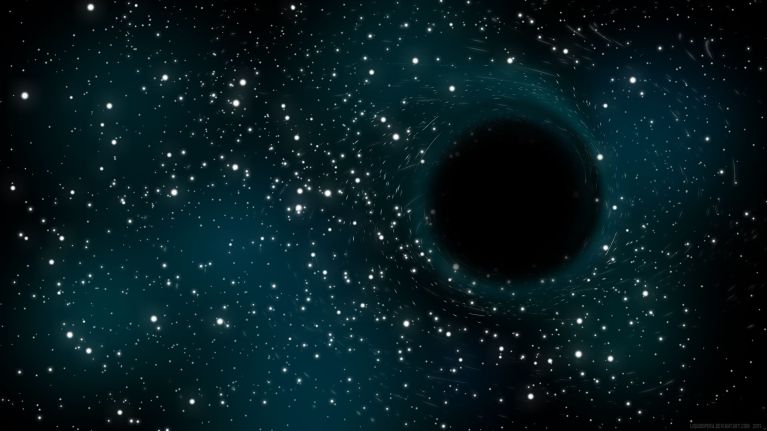
Things on the periphery are tough to flesh out, like trying to find out what is happening beyond the event horizon of a black hole. We all live in this big bubble—a commonly shared safe space—where folks will bicker over set topics, blind to how both sides are tangled in a bigger myth. The structures we take for granted, holding us up, are just assumptions we gotta question. These bad models—rules to save planes, forms to fix teeth—are flawed assumptions like thinking buildings never fall. If we want to see reality clear, we’ve got to strip away these biases, prejudices, blind spots, layer by layer. That’s my design philosophy: ask silly questions, and then take ‘em seriously. I mean, why don’t banks handle healthcare instead of employers? Why can’t we get checkups at the local bar? No rule says payers have to be governments or bosses.

Most folks can’t see past their battle lines, let alone a third path. But if we look beyond the forms we know, we might find a better way. It’s about exploring our foundations—digging into the functional fixedness of old ideologies, dusty processes, and our creaky systems. In truss work, I don’t simply trust software math ‘til I test it; in life, and I don’t buy models ‘til I poke ‘em. We can do better by imagining something different—say, healthcare that’s cash-simple, like Baguio, or an aviation culture that trusts pilots over paper. Models preaching conspiracy plots or encouraging more red tape are as wrong as thinking roofs don’t cave. 

In Japan, the electronic toll system on the Tomei Expressway and other routes crashed for 38 hours across Tokyo and six prefectures. The toll gates froze, smart interchanges shut, congestion piled up. And the operator, Central Nippon Expressway Company, had no fix in sight, so they threw open the gates, let drivers pass free, and simply asked them to pay later online. Most places, you’d expect folks to floor it and forget it. But over 24,000 drivers—some say 28,000—went online and paid up, no cops, no fines.  An honor system.

That’s not just a country; that’s a different approach to problem solving. They didn’t lean on a coercion model—chasing violators or piling on rules. The culture is what made the difference.  They could trust people to square up and people did. It’s a glimpse of what happens when you question our own status quo.  Why are our systems so heavy, so distrustful, in the first place?  Why does a Christian nation need government to solve all problems yet Japan does not?  This may be a difference between our individualistic frontier mindset and their group harmony formed of rice cultivation.  But it’s also the communal approach of Amish as well.

Mutual aid in Amish country is organic, not institutionalized, they don’t need bulky and wasteful organizations.  They have built an identity together (like the Japanese have) and thus they voluntarily go along with the program.  This may sound stifling, but is it really?  Americans pay a boatload of taxes so that their bought off national leadership can bomb Gaza’s hospitals.  Did we ever vote for that?  No.  The general public is just as indoctrinated and controlled by ideologies as a strict religious sect.  The big difference is that Amish get their barn back days after a fire whereas the rest of us will spend the year sifting through insurance paperwork. 

It isn’t just the Amish who self-organize for sake of immediate needs in their community.

A sustainable future requires effective and efficient resource allocation that does not rely on costly bureaucracy or enforcement agencies.  Governance is best internalized—something we do voluntarily as part of our collective identity or being part of a larger group.  This will require discarding models and myths that aren’t beneficial.  This idea that the world’s problems are either solved by some undefined ideal regulatory regime or are all caused by it’s evil twin of a secret world spanning scheme is simply fantasy that prevents reasonable discussions and pushes away from solutions that will better harness our human potential.

Cooperation doesn’t need to be top down or cumbersome and artificial.  No, love for our own and self-sacrifice love is as coded into human DNA as conflict.  And we should be taking a closer look at Japanese and Amish blueprint.  Honor, a common code of ethics, shared cultural values, an internalized joint identity and being respectful to others can’t outsourced.  Diversity is only strength when it harmonizes and follows the same tune.  It is a combination of building a familial trust, deeper human relationships, and a societal mission that is worthy of fuller investment—not more programs, systems and rules.  

The Myth of an Indestructible Building

Standard

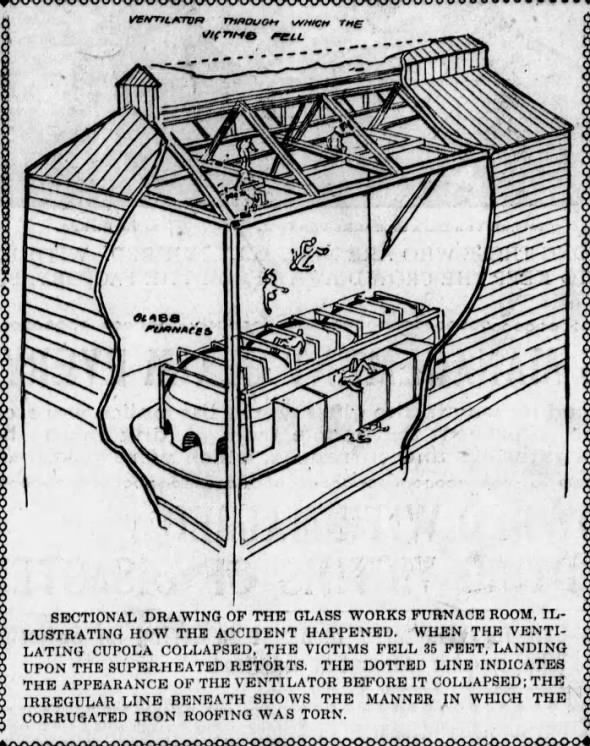
It was November 29, 1900, and fans filled the stadium in San Francisco for the annual Thanksgiving Day game between California Golden Bears and Stanford Cardinal. Some, not wanting to pay the entry fee (one dollar then, $40 in today’s money), climbed on a nearby glass factory roof to get their view of the action on the field.

The newly built factory roof collapsed about twenty minutes into the game. One hundred people fell as it gave way and plunged four stories down—many landing on the 500° F oven below. It was a horrific scene. Young people being cooked alive. What happened? The building roof wasn’t designed to hold a mass of spectators. It failed. Those who had climbed up were oblivious or did not have enough concern for the stress they were adding to the structure.

This tragedy wasn’t just a failure of design; it revealed a deeper misconception that buildings should be invincible, a myth that shapes our reactions to collapses even today. It goes further than engineering or physical buildings as well. Our models of reality are oversimplified at best and flat-out wrong in too many cases.

There is a common misconception and an unrealistic expectation about structures—many people seem to assume they are like blocks of granite. From those who believe that every building collapse is a conspiracy to those who think every failure demands stricter government regulations, the myth of an indestructible building continues due to a lack of understanding of engineering and the limitations.

Design Limits Are Not Defects

One key misunderstanding is design limits. Engineering is not about making a building too strong to ever fail. Unless we’re talking about the Great Pyramids, it’s all about trying to meet certain established parameters. An engineered building is designed to meet the expected conditions as defined by regional building codes. If the wind, snow, or loads exceed the designated standards, then there will likely be a collapse.

Earlier this year, after a heavy snowfall in upstate New York, many buildings had their roofs cave in (including this fire hall) because the weight of the snow was that much greater than the design weight. Sure, most engineers build an extra safety margin into their components, but eventually these limits are too far exceeded and you’ll end up with a tangled mess. This is why there are sideline roof shoveling businesses in these places where large snow accumulations are a regular occurrence.

Sure, code could force people to build to a much higher standard, making a collapse due to snow load virtually impossible. But this would increase the costs so much that it would price many people out of building a new house or barn. Engineering is all about compromise, more precisely about making the right compromises given the expected conditions. Yes, there is a case for making adjustments based on observation or after studies, but ultimately we build for what will work most of the time.

More Is Not Always Better

In the aftermath of the earthquake that had struck Myanmar and neighboring Thailand, there was a comment made to me in a chat hoping for more layers of regulation. This is a sentiment, in the specific context of rapid development of Bangkok, that seems more reflexive than reflective. It is a progressive impulse to believe that more interventions and rules are the answer.

The collapse of an unfinished tower in Bangkok, during the earthquake, sparks questions about building codes.  Was it missing sheer walls?  Did the contractor rush to ‘top it off’ quickly?  I want to know what the investigation finds.

But, for me, as someone who works in the construction industry and has occasionally needed to sift through these layers, I could not disagree more. Sure, better regulations may be needed. However, legalism doesn’t work in building standards any better than it does in churches. Sure, you need a code of some kind. And yet onerous regulation will add to the cost of construction, not necessarily improving the end results, and only making new housing less accessible.

It is, at best, the same trade-off discussion we can have about self-driving cars and the need for LIDAR. Sure, this expensive laser ranging system may marginally improve the results, but at what cost? Self-driving cars with cameras alone are already safer than human drivers. Keeping these systems at a price that is affordable will save more lives than pricing them out of reach for average people. It is, therefore, optimal to rollout the less expensive and safer tech even if it could be slightly improved.

At worst there is only more expense and no benefit to more layers of red tape. The real problem with rules is that they are written in language that needs interpretation. Unlike a classroom theoretical setting, in the real world you can’t just memorize the correct answers and pass the test. The ability to make a judgment call is far more important than adding to the pile of regulations. More rules can mean the more confusion and the truly critical matters get lost in the mess.

I see it over and over again, when different customers send the same job for a quote and all of them interpreting the engineering specifications their own way. It is the tire swing cartoon, a funny illustration of when the customer wants something simple and yet the whole process distorts the basic concept until it is unrecognizable. That is where my mind goes when we talk about adding layers. Is it increasing our safety or merely adding more points of failure?

This one stuck with me and should be standard equipment in every design department.  I first saw it as a child while visiting the engineering department of the construction company my dad worked for.

Some of it is just that some people are plain better at their jobs than others with the very same credentials. I am impressed by some engineers, architects, contractors, and code officers—not so much by others. I’m willing to bet the intuition of some Amish builders is probably more trustworthy than a team of engineering students’ textbook knowledge, full of theory, with no real or practical world experience. In the end any system is only ever as good as the users.

Theory Is Not Reality

My work relies on truss design software. I enter information and it does those boring calculations. When I started, I assumed that it was more sophisticated than it really is. I thought every load was accounted for and nothing assumed. But very soon the limits of this tool started to reveal themselves. It is only as accurate or true to reality as the engineers and developers behind it—and on the abilities of the user (me) understanding the gaps in the program.

When it comes to mental models—the kind of physics involved in engineering—only a few people seem able to conceptualize the force vectors. Things like triangulation, or compression and tension loads, are simply something I get. Maybe from my years of being around construction or that curiosity I had, as a child, that made me want to learn what holds a stone arch up or why there are those cables running through that concrete bridge deck. My model was built off of this childhood of building Lincoln Log towers (arranging them vertically) and occasionally making mini earthquakes.

I’m exasperated by this expectation that people have for skyscrapers to be indestructible or to topple over in the same manner of a tree—as if they’re a solid object. It also seems that the big difference between static and dynamic loads is lost on most people. They don’t understand why a building could start to pancake, one floor smashing the next, or how twisting due to extreme heat could undermine the structural integrity of a building without ever melting the steel. Of course this has to do with their beliefs or mistrusts that are not related to engineering—nevertheless it shows their completely deficient understanding of how the science works.

The concept in their head is off, their brain modeling is inaccurate, and their resolution may be so low they simply can’t grasp what the reality is. You try to explain basic things and their eyes glaze over—sort of like when Pvt. John Bowers tried to explain why the plants need water, and not the electrolytes in Brawndo, in the movie Idiocracy. Ignorant people will scoff before they accept a view different from their model of the world. The theory they believe rules over all evidence or better explanation.

On the other side are those who trust every established system without understanding it. They “believe science” and see more as an answer to every question. More rules, a larger enforcement apparatus, faith in their experts, without any feel for the problems encountered by the professionals or those in the field. If they had, they would question much more than they do. Human judgment is still at the base of it all. Or at least that is what the lead engineer told me while we discussed the limits of software and the need to be smarter than the tool.

Not even AI can give us the right balance of efficiency in design versus safety factor or what should be written in the code. It may be a better reflection of our own collective intelligence than any individual, but our own limits to see the world how it actually is are not erased by the machines we create. We are amplified, never eliminated, by the tools we create. So we’ll be stuck wrestling with our myths and theories until we take a final breath—only our flaws are indestructible.

Models of a Messy World

If truss software taught me anything, it’s that no model nails reality perfectly—not beams, not buildings, not life. We lean on these frameworks anyway, because the world’s too wild to face without a map. But just like those fans on that San Francisco roof in 1900, we often climb onto flimsy assumptions, mistaking them for solid ground. The myth of an indestructible building is just one piece of a bigger distortion: we think our mental models—of faith, of power, of people—are unshakable truths, when they’re really sketches, some sharper than others, of a reality we’ll never fully pin down.

Take religion. For some, it’s a cathedral of certainty, every verse a load-bearing beam explaining why the world spins. Others see it as a rickety scaffold, patched together to dodge hard questions. Both are models—ways to grapple with life’s big “why.” Politics is messier still. It’s like designing a city where everyone’s got their own codebook. One side swears by tight regulations, convinced they’ll keep the streets safe. Another group demands open plans, betting that freedom builds stronger foundations. Both sides act like their own ideological model is bulletproof, shouting past each other while the ground shifts—economies wobble, climates change, and people clash.

Then there’s prejudice, the shoddiest model of all. It’s like sizing up a beam by its color instead of its strength. Prejudice, always a shortcut to save us from the effort of real thought, fails because it’s static, blind to the dynamic load of human individuals. Good perception, like good engineering, adjusts to what’s real, not what’s assumed.

All these—religion, politics, prejudice—come down to how we see. Perception’s the lens we grind to make sense of the blur. Some folks polish it daily, questioning what they’re fed. Others let it cloud over, stuck on a picture that feels safe but warps the view. I think of those fans in 1900, not asking if the roof could hold them. They didn’t mean harm—they just saw what they wanted: a free seat, a clear view. We do the same, building lives on models we don’t test, whether it’s a god we trust, a vote we cast, or a snap judgment we make. The distortion isn’t just in thinking buildings won’t fall—it’s in believing our way of seeing the world is indestructible.

What makes a model reliable? Not that it’s right—none are. It’s that it bends without breaking, learns from cracks, holds up when life piles on the weight. In construction, we double-check measurements because we know plans lie. In life, we’d do well to double-check our certainties—about the divine, the ballot, the stranger next door. The San Francisco collapse wasn’t just about a roof giving way; it was about people trusting a picture that didn’t match the world. We’re still climbing those roofs, chasing clear views on shaky frames. Maybe the only thing we can build to last is a habit of asking: what’s holding this up? And what happens when it falls?

BAY-BEE, Identity Language and Oppression Narratives

Standard

The nurse pronounced baby as “BEE-bee” in our prenatal class and it got me thinking of how language develops.  Words will shift to reflect their usage.  The meaning eventually match with the reality when we attempt to disguise unpleasantness in flowery speech or try moral inversion.  Cultural values will shine through and snap understanding back where it was prior to the manipulation.

How did “bAy-bee” become “BEE-bee”?  

The latter evolution in pronunciation is cuter and therefore a better representation of the subject matter.  The word never will change the thing it describes.  Yes, words influence our perception, they also change to reflect a new understanding of the things that we are describing.  For example, the word “baby” only changed in pronunciation for me when considering the little human now within my wife’s belly.  It was no longer an abstraction or vague category, but a tiny vulnerable ball of loveable life.

When we experience something firsthand it is harder to deny what it is.  We can use the terms detached and technical to distance ourselves from the emotional content.  Say that a baby is just a clump of cells or some kind of parasite—up until the moment when we finally hold it in our hands.  To keep up the charade after this would be delusional or psychopathic.  It is not human to see an infant as anything other than precious.  The political lexicon becomes irrelevant.

A Tangled Ball Of Words 

Words trigger emotions.  I was thinking of this as a tear formed while the instructor in a prenatal class described the ideal of “skin to skin” and a soothing environment.  Some of this reaction may be feeling the weight of my wife’s pregnancy.  But it also has a lot to do with my own identity as the “premie” and “fighter” who struggled for life.  Discussion of baby care today compared to what it was for me.  The thing is, while my experience certainly impacted my development, I don’t have memories of the trauma.  It probably only looms large as a part of my personal identity because my mom told me what I went through and reinforced it.  The I gave further shape and form to it by attributing many of my struggles to the events of my birth—everything from my delayed growth to difficulties with focus in school.

However, it is impossible to know, outside of creating a genetic clone, if I would have been much better off with a normal birth or with more human touch rather than being in a plastic box with ‘stimulating’ music.  This had some impact, no doubt, and yet there is the bigger psychological complex I’ve built on top of this named thing.  Like an irritant in an oyster, it provided a nucleus to attach all of my insecurities to and blame for my failures and shortcomings.  With a normal birth would I have been more like my more accomplished siblings and less a mess?

However, it is very easy to reverse cause and effect to give ourselves an excuse for our being lazy and taking of exceptions.  We become the label that we apply to ourselves as much as it truly describes us.  We act the part.  Things of identity, like race, sexuality, religion, are as much a construct or fantasy as they are facts.  We live up to our name to an extent.  My mom would often tell me that my name meant “strong-willed” and it might be one of those self- fulfilling prophecies.  If we tilt confirmation bias in a direction it isn’t a big surprise if our character develops that direction.  It is like strapping a young tree to influence where it grows.

In a sense, nobody is truly “born this way,” it is a statement discredits conditioning and culture too much. But the environment itself doesn’t make us where we are as much as those descriptive words that reverberate in our heads.  A child that is called “stupid” by a parent or teacher may spend many years trying to sort through their doubts.  My dad letting me look over his blue prints and then giving some affirmation when spotted an error made by the engineers is likely what led to my being confident in my abilities and a career in design.  Our reality is influenced by use of language.

These are just personal observations, but it is also backed up by other sources that put it more succinctly:

Language is not just a medium of communication; it’s a lens through which we view the world and a mold that shapes our identity. From shaping cultural perceptions to influencing personal identities, language’s role is pivotal in constructing our social and personal realities.

Language as a Mirror and Molder of Reality and Identity

Language is more than a mere tool for communication.

It’s a portal through which we perceive and interpret the world.

Imagine how our understanding of colors evolves when we learn names for shades we previously couldn’t distinguish.

With each new word we acquire, a facet of reality emerges from obscurity, offering us a richer tapestry of experiences.

The Dynamic Relationship Between Language and Reality

 Neither of those sources are academic or truly authoritative, but do say what I’m saying in a different way and thus useful so far as my goal here which is to provoke thought.  New use of language reframes the world.  It can amplify our efforts and transform society as more people begin to see the world through the lens we provided.  Memes do this, as do pounding of propaganda headlines, it is why “fact-checkers” exist—all to reinforce a particular narrative.

With so much power in our words there is plenty of reason for cunning and conniving people to exercise this for their own selfish ends. 

They take advantage of insecurities and level accusations to shame or confuse the innocent. 

Wordsmiths, they could turn a baby into a villain and murderer into a saint—beware. 

His talk is smooth as butter, yet war is in his heart; his words are more soothing than oil, yet they are drawn swords. 

(Psalms 55:21 NIV)

There are some use the guise of compassion to gain control.  Their promises are about attaining power.  They seek only to bind us and yet many people are blinded to these motives because their identity has been hijacked by these nefarious actors.

Categories Are Social Constructs 

The structures and constructs of language are entirely fabricated.  There is no person who is “black” or “white” by birth, no, rather these are categories we create, clans that we join, and always artificial divisions.  We are often grouped by others using various label words and internalize the divisions as being inseparable from our own experience, in that we identify with other “rednecks” or “blue-collar” types as those ‘like us’ and yet also *become* like that.  Nothing requires a rural person to use country slang or go buy a massive diesel pick-up truck, some of the markers of this lifestyle (chewing tobacco or dress) can impact opportunities.  This is about politics, not genetics.  It is about the strength of an identity group that helps us gain power for ourselves.  Being a victim of an “ism” is a lever, a social tool or means to build a coalition against others.  

The individual without these groups, that is denied the right to put their fist in the air in solidarity with others ‘like them’ is weakest and most disadvantaged in this game.  That is the irony of the “systems of oppression” language.  Those who describe this kind of problem are actually creating it more than they are simply observing.  In the same way that observation in quantum mechanics is an influence of reality (collapses the wave function), the ‘study’ of human interaction is an interaction and is a product of our bias as much as it has basis in reality.  Those who are concerned with the existing ideas (of racism, sexism, or heterosexism) steal attention (and thus disenfranchise) victims of systemic heightism and those who lack privileges in ways not discussed, defined or even recognized.  The individual is the most vulnerable, a minority of one, and frequently abused by recognized groups.  Bullies travel in big groups—victims are often alone.

This line of questions quoted below is most likely well-intended, but is exploitative:

1) “Language both mirrors reality and helps to structure it” (2). Explain and give an example.

2)Racism, sexism, heterosexism, and class privilege are all interlocking systems of oppression that ensure advantages for some and diminish opportunities for others, with their own history and logic and self-perpetuating relations of domination and subordination (3). Explain what this means. Do you agree/disagree? Why?

3)What are the economic impacts of constructing race, class, and gender?

Sandwiched between the lines of this effort to build awareness (indoctrinate) are a pile of assumptions that, in the end, only serve to darken these artificial dividing lines. 

It is rewarmed class warfare rhetoric, Marxism, and is basically designed to feed envy or feelings of being an other and disenfranchised.  No, this is not to say that prejudice or abuse is entirely a social construct.  What it is to say, rather, is that their worldview, segregated by these simple binaries, is too compartmentalized and minimizing of other factors.

There isn’t one group of oppressor and one group of oppressed. 

There is no hierarchy of victimhood. 

Everything depends on the context or situation.  A Jewish student that is harassed on a college campus because of the IDF dropping bombs on Gaza is not privileged in this moment even if they are ‘white’ and rich.  Nor is it anti-Semitic to characterize the decades long campaign against the Palestinian people as an ethnic cleansing.  Labeling terms like “terrorist” or “occupier,” while useful to an extent, rarely explain accurately and are dehumanizing ends of conversation.

The whole point of claiming the existence of “interlocking systems of oppression” is to make anyone who dares to question their narrow perspective a part of a monolithic enemy rather than an individual with life experience to be respected.  It is truly the educated left’s own version of a conspiracy theory where anything they don’t like is part of some invisible system that can teased out of the statistical categories they created to emphasize identities based on color and physical features.  If some in one of these groups lag behind then some other group must be at fault.

Building humanity requires the de-emphasis of meaningless boundaries and formation of bonds based on behavior.  Skin color is not synonymous with culture or the choices one makes that shape their outcomes.  Yes, we must identify mistreatment of people on the basis of appearance, but this isn’t black and white, nor is it oppression to apply the same standard to all.  Indeed, some people are treated unfairly, but many end up being marginalized for antisocial behavior and yet claim to be victims of oppression when the chickens come home to roost.

Call A Turd a Baby…

Bringing this full circle, the word “baby” is cute (and the pronunciation of the word is becoming cuter) because babies are cute.  The language of description is merging more and more with the reality adorableness that we perceive in a human child by our instincts.  Using the word “baby” to describe an adult does not make them cute.  Albeit pet names, used to convey fondness, do imdue the quality a bit or at least will hijack some of the sentiment that associated with babies.  However, this is something that can only be stretched so far before the absurdity is too obvious.  

In this regard language that is used in an attempt to counter popular perspective, or overrule accurate description, will eventually take on the meaning that it was supposed to erase.   The language police can only temporarily remove a stigma (albeit never long enough to make the effort worthwhile) and it is because the unpleasant reality will always bubble to the surface again.  In fact, “special needs” today probably carries more negative baggage than the use of the words slow or retarded in the past.  

Likewise when a person is accepted at the university or get your job simply as a result of the particular identity group they belong to rather than only on the basis of equal qualifications this leads to an asterisk with the accomplishment—even when equally earned.  New terms like “diversity hire” will spontaneously and organically come into existence as a result of need to delineate between identity and merit based.  These, sadly, are far more damaging stereotypes applied to minorities who are outstanding by their own right.

Just as one cannot relabel a turd as a baby and expect people to cradle it once the truth is revealed, one can’t just apply credentials or distinguished titles to someone thinking this will change a lack of qualifications.  It will only degrade the meaning of words and in the long-term will do nothing to solve the socio-economic divide. 

Calling someone a fisherman and giving them a pile of fish is not the same thing as teaching them how to fish.  You can’t simply declare reality as the left believes they can.  Turds are only cute when the term is used ironically to describe something truly cute.

God, Suffering and Salvation

Standard

I have complete sympathy for atheists and agnostics.  I’ve wrestled with questions my entire life and whether or not there is a God is always one of them.  But the one thing that I can’t understand is being angry about human suffering, from a rational basis, if God does not exist.  If there is no ultimate good, no greater purpose or meaning to life, on what basis do we make a moral judgment about suffering?

Okay, let’s back up a second.  I’m here at my local establishment drinking another Long Island, one of many since the death of Uriah, and it hasn’t given me an answer as to why he would die of cancer at twenty-four.  The medical diagnosis is simple enough.  He had cancer.  The aggressive kind.  It started with the lump on his ankle during boot camp.  I still have the picture on my phone taken out of morbid curiosity and never dreaming it was a death sentence.

Uriah and I, despite our difference in age, got along in a way that only cousins do.  He was like me.  We didn’t simply accept those easy cliché answers.  He was someone who was both determined and also full of doubts.  He was also the six-foot tall and better version of everything I ever was.  The best part was that I could claim some of his success for myself given that I had encouraged him to continue his college education, telling him that it was better to keep going than to live a life of regrets.

Watching Uriah sacrifice a leg only to have the cancer be found in his lungs a year later. It was a gut punch.  I think I stopped praying, at some point, because I just knew what the prognosis was.  

The hardest part, however, is that Uriah was not the first of his family that I had to carry out of the church on a cold winter day.  His parents had already lost one of their children to a seizure disorder.  His two other siblings are severely disabled and will need constant care.  Judy, his mom, is an incredible woman and has extraordinary faith.  Ed too has great strength of character.  And neither of them wastes any time feeling sorry for themselves despite losing the one healthy child they had to this terrible disease.

Where was God?

When my little Saniyah died, unexpectedly, it was a really big struggle for me.  It took me years to get my feet back under me again, spiritually and emotionally speaking, and I had both doubted my own faith along with the existence of a loving God.  The death of Uriah, along with my disappointments with those whom I put my trust in, and my long wait for Charlotte, have really tested me the past few years.  But, I have those who need me to be strong this time around and, for this reason, have had to push back against falling into despair again.

Nevertheless, I totally get why someone who has encountered suffering in a personal way is angry and denies the existence of God on this basis.  I mean why would this kind of pain and loss be allowed if there is an all-powerful good in the universe, right?  Why would God not intervene and stop this all rather than let us go through such terrible experiences?  It doesn’t make much sense, does it, that we should be left so lonely and struggling if God is good.

However, if we eliminate totally God from the equation, then we dismiss religious morality and must acknowledge that there is nothing written in the fabric of the universe that says our existence entitles us to good feelings.  I mean, as far as evolution goes, pain is more or less a survival tool, a feedback system to tell us what to avoid.  Feeling sad about the death of a friend or family member is, by this logic, a malfunction. 

In this harsh environment, where everything is out to kill us, why would we ever expect anything more than suffering?

The moral reasoning that makes this bad, if you are truly an atheist, is nothing other than a construct.  In terms of pure biology, it is good that fire hurts or we might burn our arms off.  That is pain for a very practical and utilitarian purpose.  Undeniably good if there is such a thing.  But what reasonable good is there in mourning those already dead?  No point in crying over spilled milk, right?  A totally rational being would simply move on to the next social resource and not be so attached or sentimental.

Being upset over suffering and death, if there is no God, is irrational.  And, if there is a God, like that of Christianity, then suffering and death are exactly what we’re promised in this life.  Sheesh.  Did you read the story of Jesus and how he was betrayed, beaten, and then unjustly killed in the most brutal fashion all as part of a redemptive plan?  If you actually believe in eternity then why be angry about a few years living out this rich narrative we call life? 

At the very least, how can we judge anything, especially a fictional character, on the basis of a moral standard that doesn’t exist? 

If there is no God, then there is no basis for morality either.  That too, including the idea that suffering is bad or pleasure is good, is entirely a construct.  Pain is good in some circumstances, it protects us from injury and causes us to change behavior in ways that are beneficial.  In other words, without the discomfort of hunger or thirst, we would not correctly prioritize our life.  Pleasure can be bad when it makes us eat too many donuts and become diabetic.  So how does one truly know that their own interpretation of these signals is the correct one?

From what I’ve observed in myself and in others, unbelief stems from disappointment when things do not go as expected.  It is about who is in control.  We can cling, in our own arrogance, to this notion that the universe should bend to our will.  Or realize that our own perceptions, based on senses which are not very reliable and a brain prone to making mistakes in judgment, are not infallible or ever actual truth.

The thing is we only ever know if suffering is good or bad if it is properly contextualized if we understand the end.  For example, feeling the burn of exercise is good pain because it is what accompanies muscle development and so we embrace this.  So what is the real context of our life?  To what end, or for what reason, did we become conscious?  What is behind this ‘accident’ if it is one? 

How do we contextualize our existence enough to judge what is good or bad?

If there is such a thing as an eternal reward, that would change the calculus, right?  It would mean that all pain can be gain, and all suffering can draw us closer as much as it drives us away because defining the moral character of any experience depends on the end.  I am willing to subject myself to many hardships if the reward is big enough.  No, this doesn’t take away the question of why we must go through here to get there.  But seeing past our immediate feelings is pretty much the only way to make progress.

Angry is a feeling, not a guide for life…

I was at this time living, like so many Atheists or Antitheists, in a whirl of contradictions. I maintained that God did not exist. I was also very angry with God for not existing. I was equally angry with Him for creating a world.

C.S. Lewis

People don’t walk away from Christianity for rational or scientific reasons.  Sure, they may guard their emotion-based unbelief behind a wall of post hoc justification.  But the reality is that they’re upset about something.  They had expectations and are now disappointed and acting as wounded people do.  It’s just strange that anyone at all Biblically literate would suddenly lose faith over our suffering when that’s literally the only we’re promised in this life.

What really doesn’t make any sense is why anyone would rather suffer with no hope at all of eternity.  If God is dead, then nihilism is the logical next stop and that life has no real meaning or purpose.  But the suffering does not go away simply because we’re angry at the giver of life.  No, it will only intensify and become a spiral of despair.  Our salvation is in our understanding that, smart as we may think we are, we’re truly quite ignorant and even our most ‘concrete’ reality is not real:

The first gulp from the glass of natural sciences will turn you into an atheist, but at the bottom of the glass God is waiting for you. 

Werner Heisenberg

For those who don’t know who that is, Mr. Heisenberg was awarded the Nobel Prize in Physics, in 1932, for the creation of quantum mechanics.  Materialism, despite the zombie corpse of this thing staggering on, died with the discovery of things in defiance of this entirely too simplistic conception.  Sure, this kind of physics is well-beyond most, but it does support a notion of reality that requires a Universal Perceiver (as described in this article) and we could call that God.

So, if you’re actually serious about science, then the hard science of physics is the place to start and, with its mathematical origin and proofs, is much less likely to be clouded by emotion one way or another.  We can’t run from God.  But we may need to leave behind the baggage of our own misconceptions and learn the value of true repentance.  Maybe Uriah died, and went to his reward, so some of us would have our flawed thinking broken and seek our salvation in Him?

Maybe some of us are just too stubborn, or too needing of control being in our own hands, to admit we can’t save ourselves?

I’ll tell you this.  The universe, without God, is an infinitely dark and lonely place.  It is that starring abyss of which Friedrich Nietzsche warned, the existential horror H.P. Lovecraft describes.  Highly intelligent men, both of them, and understood the implications that come with true unbelief in God.  You will not escape your suffering simply by denying that the Divine all-powerful good exists.  No, rather you will just remain in that hell of your own creation.

Postscript: Questions Remain

I still grieve Uriah, as I do Saniyah, uncle Roland, and others that seem to have been taken before their time. I’ve long struggled against sources of trauma much more basic, the lack of unconditional love in the church that could make up for my shortcomings, and much of that is unresolved. At the time of my writing, the impossibility is something yet to be fulfilled. I do not have answers for any of this nor do I expect to. I’m not the arrogant kid who argued with his high school biology teacher, not a Bible-thumping fundamentalist at all, and yet must believe.

The Rationalist’s Delusion and the Most Fundamental Problem of Fundamentalism

Standard

Those born into decent homes and immersed in a particular ideology have no reason to question what they’ve been taught. I was no exception in this regard, as one raised in a functional Mennonite home, and had believed the whole “we-aren’t-perfect-but-are-better-than-the-alternatives” (a self-congratulatory mantra repeated when anything bad comes up as to prevent a full examination of our fundamental assumptions) until that paradigm became untenable for me.

This assumption of being right in our foundation, even if the details are not quite right, is not only something true of Mennonites. No, it is a feature of those indoctrinated into religious systems or political ideologies of all types. The college educated ‘progressive’ is not any more free of bias than the average Amishman—both reflect the cultural institutions that created them and, if anything, the ‘smarter’ of the two is likely more subject to bias than the humbler or that is what the current research indicates. At very least, nobody is completely free of bias and oftentimes our most base assumptions are the most difficult to honestly examine—most difficult because we have so much invested in them emotionally or otherwise.

My ‘Rational’ Foundation

Of these foundational assumptions, in Western culture there is one assumption that stands out above the rest and produces the strongest reactions when challenged. It is an assumption that is especially hard to root out of the most intelligent and knowledgeable people. It is a sincerely held belief about the nature of reality that is so prevalent that it underlies the most secular ‘progressive’ or religiously conservative and fundamentalist thinking of our times—from those espousing climate change and those pushing flat-earth theories, both share this same underlying assumption in common.

This assumption being the idea that we (either individually or as humanity collectively) are rational creatures, able to determine truth for ourselves and can essentially save ourselves through our capacity for logic and reason.

If you would have asked me, as a Mennonite, what my foundation was I would have likely answered by saying, “Jesus Christ, of course!” That, after all, is the theologically correct answer to give, something easily reference in the Bible, and a reasonable conclusion based on the available evidence, right? Of course, as an adherent to Anabaptist “believer’s baptism” and Arminianism, I would insist that my church membership was a choice. It couldn’t be any other way, could it? I mean, it couldn’t possibly have been because I was raised in a Mennonite home, born in a nation where most people identified as Christian and was fully immersed in a culture where even non-believers affirm Christian values, right?

Nah, it had to be my own careful consideration of the evidence that led to an inevitable conclusion and from that I made a rational choice to believe that man, born two millennia ago in some Palestinian backwater to a teenage virgin mother, who was actually the creator of the entire universe, allowed himself to be brutally murdered, offering himself as a means to spare us from his own wrath and then, according to those most invested in his teachings, rose from the dead and that not believing this is a one way ticket to eternal torment.

And I believe all this for reasons… [Insert circular reasoning here]

Hmm…

When Christian apologetics fail to provide satisfactory answers, which they inevitably do for anyone beyond the intellect of an adolescent, those steeped in rationalism must either abandon the enterprise of faith entirely or live in denial and ignore the cognitive dissonance.

For example, there is no way to prove the resurrection account in Scripture through rational scientific means, it is completely irrational and yet the entire Gospel of Jesus Christ rests on this miraculous event being true. How does one reconcile such an extraordinary claim with science? By a reasonable standard this is impossible to believe, right?

Is Christianity Rational?

Some, like St Thomas, who would not believe until he saw the risen Christ in the flesh, doubt until they have personal experience and thus choose what is entirely rational. Many others, however, are content to compartmentalize, they partition the miraculous to another time and place (to history or the future) and try to have things both ways.

Truth be told, the resurrection of the dead is not a rational proposition and never will be, it is logically, reasonably and scientifically impossible and thus is, by definition, totally irrational. There is nothing rational about the central premise of Christianity, where a man who is actually God’s son is born of a virgin woman to save the world from sin, and you did not acquire this belief through rational means either. No, according to Scripture, the means used are irrational in terms of material reality and from a normal human logical perspective.

Faith, according to Jesus in his conversation with Nicodemus, originates from an immaterial spiritual source and does not follow our own rules of logic and reason:

Jesus replied, “Very truly I tell you, no one can see the kingdom of God unless they are born again.” “How can someone be born when they are old?” Nicodemus asked. “Surely they cannot enter a second time into their mother’s womb to be born!” Jesus answered, “Very truly I tell you, no one can enter the kingdom of God unless they are born of water and the Spirit. Flesh gives birth to flesh, but the Spirit gives birth to spirit. You should not be surprised at my saying, ‘You must be born again.’ The wind blows wherever it pleases. You hear its sound, but you cannot tell where it comes from or where it is going. So it is with everyone born of the Spirit.” “How can this be?” Nicodemus asked. “You are Israel’s teacher,” said Jesus, “and do you not understand these things? Very truly I tell you, we speak of what we know, and we testify to what we have seen, but still you people do not accept our testimony. I have spoken to you of earthly things and you do not believe; how then will you believe if I speak of heavenly things? (John 3:3‭-‬12 NIV)

Nicodemus is being entirely rational and rightly perplexed. Jesus presents a riddle, he tells Nicodemus he “must be born again” (in reference to a spiritual second birth) but then tells him the Spirit is like the wind and goes wherever it pleases. However, earlier in the passage Jesus does tie the work of the Spirit to being “born of water” or Baptism.

So, does entering the kingdom start as something rational—as the product of a human choice to believe something they’ve been told—or does it originate from a source inexplicable as the wind and as involuntary as our physical birth?

For years I believed what I was taught, that Christianity started as an intellectual acceptance of a particular proposition, that one should recite the “sinner’s prayer” (often in a moment of emotional upheaval) and later, upon their confession of faith, would be Baptized. There was no reason for me to question this indoctrination, it made sense to me, I mean how else does someone change except they make a deliberate choice? And how else do we make a choice besides through the faculties of logic and reason?

Unfortunately for me (and others from my fundamentalist/Evangelical background), that’s not what the Gospels tell us. For example, when Peter reveals the identity of Jesus as “the Messiah, the Son of the living God” he is told directly, “this was not revealed to you by flesh and blood, but by my Father in heaven.” (Matt. 16:16‭-‬17) If the true identity of Jesus was revealed to Peter through normal or rational means, why do we expect anything different for ourselves?

Or, explain why the unborn John the Baptist “leaped” in the womb when his mother Elizabeth first encountered Mary who held the incarnate Logos within her own body as we read at the beginning of St Luke’s Gospel—Was that response a rational choice, this leap of joy due to John’s careful study of the available evidence and coming to a reasonable conclusion? Of course not! The unborn do not have the freedom or cognitive ability to weigh the evidence and make a rational choice.

This assumption that Christian faith is something of rational origin simply does not comport with what we see recorded in Scripture nor does the idea that conversion is the product of an adult choice to believe. It goes completely contrary to what Jesus said about those who would and would not enter the kingdom:

Let the little children come to me, and do not hinder them, for the kingdom of God belongs to such as these. I tell you the truth, anyone who will not receive the kingdom of God like a little child will never enter it. (Luke 18:16; NIV)

We believe we are motivated through rational means of the mind, that is a foundational assumption of modern thought, and have turned Christianity into something it was never intended to be: merely an intellectual proposition. But this is wrong, the human mind is never described as the prime mover, the choice to follow Jesus is never said to be an adult decision or even something born of human will. Yes, certainly we are to participants in our own salvation or St Paul would not urge Christians to “work out” their salvation with due seriousness in Philippians 2:12, but there is something about it all that goes beyond all human rationality and this is a truth not hidden in Scripture.

A Fundamentally Flawed Perspective of Faith

Many Protestant fundamentalists seem to see themselves as a fusion of rationality with faith, they paint themselves as objective and their religion as something a reasonable person should accept but are neither rational nor faithful. No, they are compromised and inconsistent. They do not strictly follow the scientific method, having arrived at their conclusions well in advance of their studies, nor are they faithful for trying to prove something beyond the realm of science with their extra-Biblical theories. They show, with their actions, that they do not actually comprehend science or the rational nor do they truly accept spiritual and supernatural things.

Fundamentalism is, in essence, the bastard child of modernism and the Protestant religion. Both modernism and fundamentalism are products of the Enlightenment and Age of Reason (so-called) that arose from Roman Catholic Scholasticism. And this Scholasticism, much like modern Protestant fundamentalism, started as a means of “articulating and defending dogma in an increasingly pluralistic context” or, in other words, is an appeal to a person’s intellect and mind rather than their heart or soul. It has since developed into what amounts to a denial of the latter things that becomes completely absurd in the Christian context.

While there is little doubt that the turn towards science and reason has led to the development of technology and understanding of the physical world, we can be thankful for modern medicine based in experimentation for extending our life, this shift has done absolutely nothing for spiritual well-being or our pre-rational human needs. A gaze into the night sky through a telescope, for example, could be awe-inspiring and yet it can’t answer those existential questions of meaning and purpose. And, unfortunately, rather than stick to the means of love or the “greater things” that Jesus promised to the faithful, fundamentalists try to compete (albeit fail miserably) with their secular counterparts in the realm of science and reason.

Fundamentalists, as Protestants, have put all of their eggs in the Bible basket and also—as knee-jerk conservatives—cling to an untenable version of literalism that puts their religious dogma in direct conflict with modern scientific observation. But, as an end around to their paradigm being made obsolete, they turn to pseudoscience and apologetics that barely keep their own children let alone convince anyone outside of their circles. They have no choice, they’ve painted themselves into a corner, they believe that the Bible must be completely reliable, but in the same way as a scientific textbook rather than reliable for spiritual truths, and try to rationalize around the many obvious problems with that perspective.

Meanwhile, while insisting on a young Earth and six days literal days of Creation despite the mountain evidence to the contrary, these same fundamentalists become dismissive when speaking of things like sacraments. This, unfortunately, is a tradition that dates back around five hundred years to a man named Huldrych Zwingli and others who with him lowered the status of such things as Baptism and Communion to mere symbols—reasoning that things of spiritual import originate in the mind, as intellectual acceptance, and with this completely reasoned away possibilities beyond their rational capabilities.

The difference between a fundamentalist and an irreligious secularist is that one has taken their logic the full way to a reasonable conclusion while the other thinks they can have it both ways—accepting the irrational over the rational when it suits them and their personal agenda. Then, simultaneously, rejecting what they cannot comprehend, like their secular counterparts, simply because it goes against their own experience and cannot be scientifically proven. They take Jesus literally only when it is convenient for them or when it makes sense them from their own rational perspective and then reject literalism when it goes against their own religious indoctrination.

Here are some cases to consider…

1) What Saves, Preaching or Baptism?

While writing this blog I ran across an article, “The Sacrament of Preaching,” that addressed a glaring blindspot of many in the Protestant fundamentalist world, and amongst Revivalists and Evangelicals in particular, and it shows in what is emphasized in their tradition. In the church that I grew up in, for example, the order of the service centered on the preaching, often an affair intended to provoke, guilt-trip or convict. There’s a reason why Evangelical churches tend to have venues like lecture halls and that’s because preaching, an appeal to the mind or emotions, is perceived as the primary means of bringing salvation to the lost.

There is little doubt that preaching the Gospel of Jesus Christ is important.

After all, didn’t St Paul tell us as much?

How, then, can they call on the one they have not believed in? And how can they believe in the one of whom they have not heard? And how can they hear without someone preaching to them? (Romans 10:14 NIV)

Yet that passage is in the context of a lament about those who have heard and yet did not accept the message of the Gospel, here is that missing context:

But not all the Israelites accepted the good news. For Isaiah says, “Lord, who has believed our message?” Consequently, faith comes from hearing the message, and the message is heard through the word about Christ. But I ask: Did they not hear? Of course they did: “Their voice has gone out into all the earth, their words to the ends of the world.” Again I ask: Did Israel not understand? First, Moses says, “I will make you envious by those who are not a nation; I will make you angry by a nation that has no understanding.” And Isaiah boldly says, “I was found by those who did not seek me; I revealed myself to those who did not ask for me.” But concerning Israel he says, “All day long I have held out my hands to a disobedient and obstinate people.” I ask then: Did God reject his people? By no means! I am an Israelite myself, a descendant of Abraham, from the tribe of Benjamin. God did not reject his people, whom he foreknew. Don’t you know what Scripture says in the passage about Elijah—how he appealed to God against Israel: “Lord, they have killed your prophets and torn down your altars; I am the only one left, and they are trying to kill me”? And what was God’s answer to him? “I have reserved for myself seven thousand who have not bowed the knee to Baal.” So too, at the present time there is a remnant chosen by grace. And if by grace, then it cannot be based on works; if it were, grace would no longer be grace. What then? What the people of Israel sought so earnestly they did not obtain. The elect among them did, but the others were hardened, as it is written: “God gave them a spirit of stupor, eyes that could not see and ears that could not hear, to this very day.” (Romans 10:16-21,11:1‭-‬8 NIV)

If preaching saved in and of itself, then why didn’t the people who heard simply believe? Why did others, according to the quote of Isaiah in the passage above, believe through revelation despite not seeking it and never having been preached to?

St Paul makes it clear that it is only through the grace of God, not by preaching or through human understanding, that anyone is saved.

It is a rationalist’s delusion that preaching is the only way that someone can possibly be saved. Unfortunately, that is an idea that has been pounded into Protestant heads for centuries now and this comes at the expense of the other means of grace used by God and described in Scripture. In fact, many ‘great’ Revivalist preachers, in contradiction to Scripture and the reality that preaching is as physical a means as any other sacrament, basically mocked the idea that anything besides means of the mind could bring someone to salvation.

But it is St Peter whom they mock, who clearly likens Baptism to the waters surrounding Noah’s ark in 1 Peter 3:21, “this water symbolizes baptism that now saves you also—not the removal of dirt from the body but the pledge of a clear conscience toward God.” Like king Naaman having to dip in the river Jordan seven times to be healed, we are also told that Baptism washes sins away, brings forgiveness and new life (Acts 2:38, 22:16, Col. 2:11-12), which is to make these acts as much of a means of salvation as accepting the words spoken by a man about Jesus Christ.

Part of the problem here is the soteriology of fundamentalist “Evangelicals” who typically portray salvation as a once and done event. This confusion is the result of salvation being thought of something in the future only, as in salvation from death, and not also salvation from sin in the present. But Scripture describes salvation both in terms of having been saved (Titus 3:4-5), also in being saved (2 Cor. 2:15) and will be saved (Rom 5:9-10) which suggests something a little different from the “born again” sinner’s prayer form of salvation preached by some.

In other words, our salvation is not this moment or that experience, our salvation is rather a continuing work of God’s grace that comes to us through preaching, revelation, Baptism, the prayers of the faithful, and the many other ways that the work of the Holy Spirit is made manifest. In a sense, nobody is saved through the visible means themselves, nevertheless, these things are the necessary physical expressions of the spiritual work of grace and thus inseparable. Yes, the prime mover is always God and yet there is always evidence of this moving in hearts that takes physical form.

2) Communion, True Presence or Mere Symbolism?

It is very strange, a year or so ago a fundamentalist friend, a sort of logically minded sort, got very emotional and angry when I refused to back down from taking Jesus at his word. Mind you, as far as I know, this is a man who would not question Ken Ham’s interpretation of the Genesis account nor the resurrection of the dead and yet ended up blocking me for suggesting that the words of Jesus could be understood without needing to be rationalized away their literal meaning or any additional explanation.

The discussion was about partaking of the body and blood of Jesus Christ (or Holy Communion) and how this was one of the sacraments downplayed and reinvented as ordinances by Anabaptists under the Zwinglian influence. But the curious part was how a rationally minded guy would get so emotionally bent out of shape over simply taking Jesus at face value or as a child would. He insisted, despite Biblical description completely to contrary to his position, that there was no sacramental value to Holy Communion, that it was merely symbolic and to say otherwise was ridiculous. In his mind, Jesus had to be speaking metaphorically and there was no convincing him otherwise.

This is what Jesus said:

I am the living bread that came down from heaven. Whoever eats this bread will live forever. This bread is my flesh, which I will give for the life of the world.” Then the Jews began to argue sharply among themselves, “How can this man give us his flesh to eat?” Jesus said to them, “Very truly I tell you, unless you eat the flesh of the Son of Man and drink his blood, you have no life in you. Whoever eats my flesh and drinks my blood has eternal life, and I will raise them up at the last day. For my flesh is real food and my blood is real drink. Whoever eats my flesh and drinks my blood remains in me, and I in them. Just as the living Father sent me and I live because of the Father, so the one who feeds on me will live because of me. This is the bread that came down from heaven. Your ancestors ate manna and died, but whoever feeds on this bread will live forever.” He said this while teaching in the synagogue in Capernaum. On hearing it, many of his disciples said, “This is a hard teaching. Who can accept it?” Aware that his disciples were grumbling about this, Jesus said to them, “Does this offend you? Then what if you see the Son of Man ascend to where he was before! The Spirit gives life; the flesh counts for nothing. The words I have spoken to you—they are full of the Spirit and life. Yet there are some of you who do not believe.” For Jesus had known from the beginning which of them did not believe and who would betray him. He went on to say, “This is why I told you that no one can come to me unless the Father has enabled them.” From this time many of his disciples turned back and no longer followed him. “You do not want to leave too, do you?” Jesus asked the Twelve. (John 6:51‭-‬67 NIV)

Many of the rational folks in the crowd evidently had enough hearing Jesus double-down on this bizarre-sounding claim. Had Jesus been speaking figuratively why would he have let so many walk away without stopping them and saying with a chuckle, “Oh, you guys think I’m being literal! Come on now, it’s all just a big metaphor!” But Jesus did not. When the eyebrows raised and murmurs began, he repeated himself all the more emphatically and lets the chips fall as they may rather than back down from this “hard teaching” and, rather than explain his words as being anything but literal. he even asked the disciples if they were going to abandon him as well.

If it weren’t clear enough in John, this is the account of the “Last Supper” and first partaking of Holy Communion:

While they were eating, Jesus took bread, and when he had given thanks, he broke it and gave it to his disciples, saying, “Take and eat; this is my body.” Then he took a cup, and when he had given thanks, he gave it to them, saying, “Drink from it, all of you. This is my blood of the covenant, which is poured out for many for the forgiveness of sins. I tell you, I will not drink from this fruit of the vine from now on until that day when I drink it new with you in my Father’s kingdom.” (Matthew 26:29 NIV)

Is this mere symbolism?

Again, the words do not hint to metaphor. No, they are words of substance as much as his command, “Lazarus, come forth!” was received by dead flesh causing it to reanimate and Lazarus to be resurrected. I mean, if you can’t take Jesus at his word as far as his body and blood, why believe that God could speak anything into existence—let alone literally form mankind out of dust as is claimed in the Genesis creation narrative?

From a perspective of human logic and understanding, one of those events is no more rational than the others, a rotting corpse does not come back to life, our flesh is not the same as dust, and bread is bread is bread. Again, there is nothing rational about the claims foundational to Christianity and it is rather odd that anyone would insist otherwise. I mean, at very least, one might want to consider the serious physical and spiritual consequences of partaking casually of what is supposedly only a symbol:

So then, whoever eats the bread or drinks the cup of the Lord in an unworthy manner will be guilty of sinning against the body and blood of the Lord. Everyone ought to examine themselves before they eat of the bread and drink from the cup. For those who eat and drink without discerning the body of Christ eat and drink judgment on themselves. That is why many among you are weak and sick, and a number of you have fallen asleep. (1 Corinthians 11:27‭-‬30 NIV)

It is interesting that many from my own Protestant roots take the first half of that chapter concerning the veiling of women quite literally, not once expressing doubt of the spiritual significance of a piece of cloth being draped on a woman’s head, and then have their eyes glaze over when the mystical significance of Holy Communion is discussed in the latter part of the chapter quoted above. You would think that the same sects that require women to cover their heads all of their waking hours would want to partake of the body and blood more than once or twice a year, and yet they strain on one while swallowing the other.

Anyhow, is it any wonder we are weak and not seeing the promises of “greater things” (John 14:12) fulfilled in us when we are too ‘rational’ to take Jesus seriously about his own body and blood?

Rational or Faithful, the Choice is Yours!

Obviously, we are given an ability to use logic and reason. We should not waste or neglect this rational ability in the name of faith either. However, it would be wise to realize the limits of our rationality and at least entertain the possibility that there are things of true substance beyond what our minds are able to comprehend. One may want to consider that God, being God, does not need to be rational according to our own rules.

In fact, even for a complete non-believer, at the edge of reality as we know it there is a realm where things do not act accordingly to our rational intuitions based in time and space. For those who have gone down the rabbit hole of Quantum Mechanics, it is quite clear that matter does not behave in the manner would expect it to and becomes irrational from a normal human perspective. The discoveries of the past century have basically turned the concreteness of the physical world, as we know it, into a mere wave of probabilities and a place where particles may very well pop into and out of existence.

So, in short, this is absolutely the wrong time in history to double down on rationalism at the expense of transcending spiritual truth. This idea that things must make rational sense, from a human perspective, is to undermine the very substance that faith rests on, one committed to that might as well end the farce and go the full way to denying everything outside of the realm of material science. However, a person who goes that route is truly only lacking in the humility to know their own limitations. Your inability to wrap your head around something does not make it any less true.

In a time when secular scientists are even beginning to see the end of their own abilities to comprehend, many fundamentalists are still stuck in a watered down modernist paradigm they’ve inherited and rely on a horribly convoluted/inconsistent/selective rationalism rather than simply accept Jesus at his word. In their insistence on their fundamentals and understanding of things, they are like one who has traded his birthright for a bowl of stew—are you still stuck in a rationalist’s delusion, unknowingly governed by emotions or confirmation bias, and missing out on true spiritual sustenance?

The Terrible Irony of a Person Who Hates People

Standard

One of my biggest pet peeves?

How so many people hate people.

They see encroachment on animal habitats, destruction of the environment, our nature, and imagine the world as being better without people.

Sure, I do understand the sentiment, I do not want to see something good be ruined. And I believe, for the good of humanity and all other living things, we should be caretakers of this amazing planet to the extent that we are able.

However, without us to observe, what would be left to make the judgment that the world is better or worse without us?

Without a Capable Observer—Does Anything Really Matter?

Like beauty is in the eye of the beholder, the existence of anything is a matter of there being a capable observer. Rocks or even simple organisms show no sign of being capable of appreciating their own existence—let alone beauty or the universe.

Our existence in time and space is something profoundly mysterious no matter what you believe about the origin of life—created in six days or over the span of 13.8 billion years—it is incredible.

But we are unique in this capacity to use words to describe our existence. We are, by all appearances, alone in this ability to contemplate our own existence or at least able to do it at a level unmatched by anything else known. Dolphins and elephants are, indeed, very intelligent yet, at very least, lack our vantage point as observers.

The Contradiction of a People Hating Person

Those who claim to prefer the creature over humanity are truly at odds with themselves. Not only are humans the pinnacle of the complexity of life on this planet, but we are also special for our ability to appreciate that we or anything else exists.

In other words, no beholder means no beauty, because beauty is not something out there or independent of an observer—beauty is rather a concept of mind that depends on the existence of the observer as much as the things being observed. What is out there only exists to the extent that something is able to assign value or appreciate that it does exist.

People who hate people underappreciate the wonderful mystery of their own consciousness and completely fail to comprehend that their observation is what gives all things value.

An amoeba may exist independently of us in some form, but it lacks the human mind to process things like future and understand the result of actions or consequence—which is the basis of the moral reasoning and the very thing that can cause some to view themselves (or just other people) with contempt.

Maybe it isn’t that people hate all people so much as they are narcissistic and simply hate every other person—with exception of themselves?

Narcissists Only Value Their Own Consciousness

It does seem that there are many people, who see themselves as being worthy of resources because they are (in their own minds) enlightened and special in comparison to others.

This aggrandized perception of self is possibly due to their own inability to imagine others being equally (or more) intelligent, as consciously aware or moral as they are, and otherwise equal. Their deficiency of imagination is only made worse by a culture that promotes a notion of self-worth that is independent of love for humanity in general.

Whatever the case, it leads to self-contradiction, it leads to a person who values themselves and their own moral judgment while not recognizing this capacity in others to do the same. It is basically a person who loves their own consciousness so much that they can no longer value perspectives that do not mirror their own and thus hate (rather than appreciate) anyone in competition with them for resources.

A people hating person sees other humans as being greedy and abusive, but fail to comprehend their own jealousy and control freakishness. They judge humanity as a whole without turning the criticism back on themselves or understanding that they themselves, with the mundane choices they make on a daily basis, are as responsible for the large scale problems as the collective whole.

A person who sees others as morally or otherwise inferior to themselves it is on a path to self-destruction. Pride coming before the fall is not karma—it is consequence. A person can become so blinded by their own arrogance and contempt for others that they are actually worse than those whom they condemn. They cannot learn or grow and are bound to hit a wall at some point when their own hatred makes their own life unbearable.

In some cases, when coupled with young male aggression, they become school shooters.

But in most cases, people who undervalue people simply live as one led by the nose by their own confirmation biases and emotions. They see themselves as having all the right answers, as always being the good or righteous person, and are really just egotistical and hypocrites. They may feel entitled because of their inflated self-worth—but are deceived. Like Cain who slew his brother Abel (as means to deal with his own cognitive dissonance as a result of his sacrifice being rejected), they are truly an enemy of themselves.

Why Care About What Will Eventually Burn Anyways?

Another deficiency of a person who hates other people is their inability to comprehend the reality of the universe as it is. Both an atheist astrophysicist and religious fundamentalist should be able to agree on this and that is that the universe as we know it will eventually end. Solar physics (evidenced in the stars) and Scripture point to fire as being the ultimate end of life on earth.

Even if some life were to somehow escape that consuming fire it too would cease as the cosmic clock spring of thermodynamics (behind all movement and life in the universe) became completely unwound. That, the “heat death of the universe” may be billions upon billions of years in the future, but it is as inevitable as the sun coming up in the morning and everything we know in this life will cease. There will be no stars flickering, no photosynthesis, no warmth or entropy—all will have expired.

But we do not even need to go that far out in time to understand the reality of life. Take a visit to the American Museum of Natural History in New York City sometime, consider for themselves all of those various forms of creature that went extinct and went extinct long before humans could have played a significant role in the environment. Nobody cries over Pakicetus nor laments the complexity of the ecosystem that it lived in, so why be upset about Pandas or Polar Bears following the same path?

Certainly, we should be concerned about the decline in the diversity of life, especially as rapid as it has been in recent centuries. That said, there have always been periods of expansion and contraction, usually related to cataclysmic events such as comet strikes or super volcanos, which will happen whether we campaign to “save the whales” or not. Which isn’t to say that we should care any less than we do, but we should probably care differently knowing that it is all temporal regardless.

Which leads into a question, if all this will end one way or another…

What Really Is Important?

Humans are magnificent creatures. We are the only creature capable of planetary destruction. But also creatures so extraordinarily capable of perceiving the future and contemplating things like value. It is our unique abilities that make our complex moral reasoning possible, where we can examine our own actions (collectively or individually) and pronounce judgment.

We are more responsible, but only because we are better at understanding the consequences of our actions and are able to adjust our behavior accordingly. We make priorities. We decide, in our own minds, what is good or bad, what is worthy of our love and what is deserving of our hate, whether flamingos matter more than fetuses.

We determine what is important.

So what is most important given that everything in this universe has a definite expiration date?

If there is anything timeless or beyond this universe, more important than life itself, what is it?

For me the answer is love.

If anything can escape our temporal existence it is love. Love transcends. Love allows us to show grace to the other creatures on this planet which are most like ourselves and that being all of those other fallible human beings. It is true, people are often unappreciative and wasteful. But hate for other people is really only self-loathing (removed a few steps) and to underestimate the value of our existence as the observers most capable of appreciating the beauty of this world.

It is important that we love other people. Sure, there billions of us and it is really hard to love those faceless masses sometimes. Still, other people have as much right to exist as anything else in the universe, we should appreciate them that they are conscious, like us, and love them as we want to be loved ourselves. Without love, nothing is really important and our existence, this tiny snapshot we get of the universe as humans, is meaningless.

Salvation from the Dark Cave — 5 Parallels Between the Rescue in Thailand and Spiritual Transformation

Standard

When I first heard the news about the Wild Boars, a youth soccer team, having gone missing in Thailand, I assumed these twelve boys along with their young coach were hopelessly lost in the flooded cave system and probably already dead or likely would be before anyone reached them. It had been over a week since they had disappeared and there seemed to be little hope of finding them alive.

For that reason, I was very happy to read the news of their being discovered by two British divers who were aiding the rescue efforts. Somehow, despite their ordeal of having to flee deeper into the cave to avoid the rising flood waters and having been trapped in the pitch blackness without food or light for over a week, these players and their coach were still alive. And what a great relief it must’ve been for them to see a person from the outside emerge from those murky waters that had entombed them.

However, that moment of joy was soon replaced by a new fear when considering the perilous journey they now had to face in order to make their escape. The divers who found them were some of the best in the world and many of these boys didn’t even know how to swim—let alone swim in conditions that experts described as extremely dangerous and conditions that tragically did cost one of their rescuers his life.

The question became one of could these boys be saved without a miracle?

This World Is A Dark Cave

We, unlike those boys who had been outside the cave, have never been beyond this world. While we can imagine that there could be something beyond, we are truly bound by what we can touch, taste, see or perceive in our minds. For many reality only extends as far as they are able to fathom. And yet science has discovered spectrums of light beyond our vision and philosophy has long challenged us to go beyond even ourselves, our rational minds, in our thinking.

Greek philosopher Plato imagined a scenario, the Allegory of the Cave, in which we were all born bound in a cave where most are chained where they can only see a shadow of greater reality projected onto the wall in front of them and some of these life-long prisoners are eventually freed. Those freed, we discover, have great difficulty explaining this greater perspective to those still bound. This scenario is pretty much describing our own perception of reality in a nutshell.

Some desire to look beyond the shadows and find a measure of freedom. However, there are many others who are content to live with the shadows and in denial. They are bound by religion, ensnared by the entertainment industry, distracted the pursuit of wealth, blinded by the daily grind or unable to see for any number of reasons and never realize that they are in a cave and chained to a wall and only seeing shadows of something greater.

There are also those who have realized they are trapped in a cave and yet also see the waters, have probed the escape routes from this reality and have understood the true impossibility of their predicament. They have lost hope. They are depressed and living in despair because they know that they are trapped and there’s nothing they can do about it.

Jesus Emerged From the Murky Waters

Those Thai boys and their coach had to know that they were doomed without divine intervention or outside help. During the rainy season (that started early and caught them by surprise) lasts into October and they only had supplies for an afternoon. The coach seems to have did his best to look after the boys, withholding rations from himself to give them a better chance of survival, and yet what he could provide was never going to save them from death in the darkness.

Even a strong swimmer had no chance to escape the under water labyrinth that separated them from the outside world. To find another path or dig their way out was impossible given their lack of necessary tools and provisions. Their resources (besides the water they could lick off the walls) were already exhausted. Even their oxygen supply was starting to dwindle and would disappear long before the flood waters would recede. They only had their prayers and hope for a rescue mission to hold back despair—without a savior were doomed.

That is essentially the story for all of humanity and the background for the Gospel of Jesus Christ. We are born, our forefathers having wandered deep into a cave of sin and our escape from this blocked by the waters of death. This whole world, the entire universe, in fact, is bound by physics to eventually run out of energy and our descendants, no matter how technologically advanced, will not escape that. This is a reality that can cause an intelligent forward-thinking person to wonder what is the point of living if death is all the future holds.

Drawing by Manatsawin Mungsungnoen

If one can imagine how welcomed a sight those British cave divers were for the boys and coach trapped in complete darkness and facing imminent death, then they can also imagine the feeling of elation that the disciples of Jesus felt having seen him after his emergence from the murky waters of death—His resurrected body, their resurrected hopes, and proof positive of his claim that there is eternal life for those who follow after Him.

We Must Take the Plunge of Faith

The happiness about those lost being found was soon replaced with a big question about how to get them from the cave to freedom. How could this half starved group of youngsters and their coach (who was even worse for the wear after selflessly giving his rations to the boys) get out of their subterranean prison?

Many options were discussed and ruled out one by one. There simply was not enough time for other solutions when oxygen levels began to drop, with the fullness of the monsoon season about to begin, and the consensus became clear: They would need to dive out like their saviors or die in the cave. This was something that had been impossible for them before, it was something extremely dangerous even for a veteran cave diver, and would be absolutely terrifying for someone claustrophobic. None of them were swimmers, let alone in any physical condition to match the world class athletes who found them, and I’m sure their fears could keep them paralyzed.

Where does one find the faith to do the impossible?

That was my question a few years ago.

You jump in, that’s how…

We Cannot Save Ourselves

The truth is, while we must take the plunge under the murky waters and swim for all we are worth, the journey out of the cave is not one we are able to do on our own strength. Like the rescue in Thailand took the coordinated effort of many men and women, we cannot possibly complete our journey to freedom without a community or the help of others. Rather we need to partake of the provisions left for us by those who have followed after Christ. We need to firmly grasp the guiding rope of the written and spoken tradition that the Church (2 Thessalonians 2:15) has left for us. And must also submit to those ordained to lead us to safety and who are responsible for leading us to salvation:

Have confidence in your leaders and submit to their authority, because they keep watch over you as those who must give an account. Do this so that their work will be a joy, not a burden, for that would be of no benefit to you. (Hebrews 13:17 NIV)

We live in an age where purported authorities are questioned, and rightly, for their abuses. There are many self-proclaimed (and self-promoting) religious experts who claim to have spiritual knowledge and have yet to truly take the plunge of faith themselves. These false teachers. They are ordained only by themselves, by their own arrogance, and are whom Jesus describes as being blind guides. You can know them by their fruits:

“Watch out for false prophets. They come to you in sheep’s clothing, but inwardly they are ferocious wolves. By their fruit you will recognize them. Do people pick grapes from thornbushes, or figs from thistles? Likewise, every good tree bears good fruit, but a bad tree bears bad fruit. A good tree cannot bear bad fruit, and a bad tree cannot bear good fruit. Every tree that does not bear good fruit is cut down and thrown into the fire. Thus, by their fruit you will recognize them. (Matthew 7:15‭-‬20 NIV)

Be sure that those who lead you have a true connection to the world beyond. Do they shine a light that pushes back against the darkness? Do they bring you nourishment and spiritual air? For those trapped in the cave in Thailand, it is clear who came from the outside and why they are there. The rescuers come with provisions, they administered first aid to those in need and built the trust of the boys to follow their lead and instructions.

These teachers, without a doubt, played a critical role in the salvation of those trapped in the cave and we too need those who have experience beyond our own to provide calm and guide us through the fog, currents, and confusion of life.

We Must Die to Save Others

As I entered the church building on Sunday the final act of the rescue mission started. The Gospel text was, interestingly enough, about some friends of a paralytic and their faith that carried him to Jesus:

Jesus stepped into a boat, crossed over and came to his own town. Some men brought to him a paralyzed man, lying on a mat. When Jesus saw their faith, he said to the man, “Take heart, son; your sins are forgiven.” (Matthew 9:1‭-‬2 NIV)

The account goes on with Jesus first addressing the naysayers and critics for their evil thoughts before going on to fully heal this man. But this detail about Jesus seeing the faith of these men is something I had missed before. It was their carrying him, like the divers leading the boys out of the hopeless depths, that led to this man being forgiven and freed from his paralysis. It is our job to carry each other back to Christ and that is the purpose of a Christian community and the Church. It is our faith that leads to the healing of others.

Like these men carrying their friend or the “buddy system” of experienced divers leading the young boys through the darkness to the light, we too must serve a role in the salvation of others. The Christian mission is to participate in the salvation of others in much the same way as those, who came from around the world and volunteered to risk their own lives—not for financial gain, not for their own biological children and not compelled by force. They simply saw a need, a desperate need, and became the solution.

Sgt Major Saman Kunan

Many have sacrificed time and volunteered their talents to aid in the search and rescue effort in Thailand. But one man, Sgt Major Saman Kunan, a retired Thai Navy diver, gave his own life so those boys could be saved. This hero, after delivering oxygen canisters needed for the daring escape, ran out of oxygen himself and perished.

And that is the responsibility of all Christians. We are to find lost sheep, feed them, heal their wounds, lead them out of harm’s way, and even give our lives for them. We are to be Christ in every sense of the word and that means dying to ourselves and saving the lost from their dark cave.

We need to be faithful to those who are lost without a hope.

The Two Types of Truth-tellers

Standard

There is a story about two con artists who convince a vain emperor that they’ve made a garment for him so fine that it is only visible to the smartest and most competent people. The emperor, more concerned with what other people think that what is own eyes tell him, plays along with the tricksters as not to appear unfit and stupid.

The emperor pretends to put on the imaginary new clothes. His ministers, also fearful of appearing unfit for their positions, ignore the emperor’s true nakedness, go along with the charade and allow him to parade through town in his make-believe garment. The townsfolk, while uncomfortable, do not dare offend the emperor and keep up the pretense.

The collective self-delusion comes crashing down when a young child, lacking social awareness, blurts out the truth: “But he hasn’t got anything on!” His father first tries to hush him, but the word is whispered through the crowd and, eventually, the townsfolk erupt into laughter. The emperor suspects they are right and yet he with his ministers continues on the ridiculous procession.

This ironic story about willful blindness to reality is an accurate description of how social pressure works. It is extremely relevant in our age of political correctness. Today, like in that fictional account, scientific evidence is ignored in favor of popular narratives and many smart people lack the courage to face down the social elites.

But there are truth-tellers…

1) Those too socially unaware to know the ‘correct’ answers. These are people, who like the child who blurts out the truth, are those of lower social status and a little stupid. They are unable to rationalize their way around the obvious reality like smart people do, they do not know (or care about) the socially “right” answer and simply blurt out the truth. They are easily ridiculed, they are often unsophisticated in their use of language and uncouth, they might not be morally upstanding individuals or always truth-tellers, but they are often brutally honest in ways that the polite people are not because they lack a filter their thoughts. They, in their lowly position, do not care about what the elites think of them and might even be empowered by offending their superiors.

2) Those unwilling to ignore the consequences of living a lie. These are the rarest of people. They are socially aware, they are able to see through the propaganda and brave enough to speak out against the popular narrative. They are able to see beyond what the socially smart people do, they are too principled to play along with the delusion and yet also understanding of the consequences of speaking an unpopular truth. Still, because it is dangerous to have social leadership that is divorced from the truth, conscience compels them to speak out. So they do, albeit carefully and using their intelligence, by telling stories about naked emperors in the hopes that others will read then awake to the lies that have ensnared them.

What part do you play in the story?

Most people, at least those intelligent, like to think that they are the ones who see reality as it is and are above delusion. Unfortunately, that is the first lie that blinds a person to the truth. Even the brightest minds are not entirely rational. We all suffer from a problem called “confirmation bias” where we select or ignore evidence-based in our established beliefs.

Many people eventually lose their sight because of fear, social pressure or indoctrination. They see themselves as smart and savvy for their ability to give the socially correct answers, but they are really only parrots of popular opinion and puppets to the status quo.

There are many taboo topics in the public discourse. There are many whom we are supposed to shield from certain truths lest they become outraged when their nakedness is exposed. They may call you “hateful” or many other nasty names if you dare to challenge their protected status. They attempt to use social pressure rather than logic and reason to defeat counterarguments.

The emperor’s new clothes story is only inaccurate in that it doesn’t depict what often happens to truth-tellers when they humiliate the emperor. In reality, speaking unpopular truth often leads to social alienation and sometimes to persecution. Speak out against patriarchal abuses in a fundamentalist church, for example, and you might be unfairly labeled a “Jezebel” or feminist agitator.

There are many social domains—religious, denominational, secular or otherwise. Our keen awareness in one domain doesn’t make us immune from being deceived and deluded in other domains. Our only defense is humility and understanding the limits of our own ability to see beyond ourselves. We must first realize that we are ourselves not above being fooled individually or as part of the collective group.

The first step to being a real truth-teller is to be humble and see your own moral blindness. Once you understand the limits of your own vision you will be able to help others overcome their blindness. And, at very least, don’t walk around naked because you are too vain to admit that a ‘truth’ you were convinced of is a lie.  Being a truth-teller means first being brutally honest about your own vulnerability.

There Is No Such Thing As Selfless Love

Standard

I had an idea of a supernatural love.  It was a love that would overcome differences in ambition, personality, experience, etc.  I had imagined a spiritual bonding of two people united only in their faith, going against their natural preferences and depending fully on God.

My pursuit of this greater love came as a result of what I had considered a spiritual experience and my desire to do God’s will.  I had a comfortable life and no real desire to disrupt my secure existence, but I sought to be uncomfortable and decided to step out in faith to pursue what was impossibility to me.

After a journey of a few years (and going against the flow of advice of people who claim to have faith yet live as if agnostic) I’ve realized something about love.  First, love is not supernatural, there is nothing inexplicable about love, and my chasing after more was a waste of time.  Second, we only love when we gain from it.

Not even Jesus loved selflessly…

Altruism, or selfless love, is an idea that doesn’t work in the real world and is not even a Christian ideal.

Jesus didn’t love altrustically.  Jesus loved as an investment, in a hope that he could gain followers, and with the intent to build a kingdom where he would be Lord.  He encouraged others to love as he did as a means of gaining his favor and inheriting eternal life.  Eternal life is a really big incentive.

All sustainable love is either a repayment for something already done or delayed gratification in hopes of future gain.  We love because we owe a debt or in anticipation of receiving a return on investment.  Yes, in some love relationships there is no balance sheet kept (because it would be cumbersome and ruin the mood) and yet all love is, at some level, about self-gratification.

We cannot live separate from our own desires.  Not even Jesus had an endless supply of unconditional love for those who went against his teachings, we see that expressed in his words of condemnation in Matthew 23, and his abiding love was only shown to those who continually submitted to his will.

Now, it can be argued that this demand of submissive love is only for our own good, as in a parent’s chastisement of their child in order to get the best from them, and yet ultimately the proposition was to love me or else you die.  That isn’t altruism nor is it extraordinary or inexplicable.

What love is and is not…

Love is a feeling of pleasure we get.  This feeling is a product of brain chemistry—the result of natural chemical substances, such as oxycotin, that underlie our emotional experiences and all human behavior.  Love is something involuntary, a natural attachment we get towards something or someone attractive to us.  Love requires no special spiritual explanation.

When a Mennonite woman told me she couldn’t love me as I wished to be loved it was true.  What I was hoping for was a supernatural love, the kind that is impossible by human standards, and only possible with faith in God.  I figured that two faithful people, equally in pursuit of God’s will, would be able to overcome their own differences and ambitions.

However, what I didn’t realize, despite my sincere feelings and delusion of faith, is that my love for her was nothing special or supernatural.  Sure, I believed it was something of God and was deeply offended when people would suggest I was driven by sexual desire.  Yet, at some subconscious level, it was all completely natural and my confirmations from God all hallucination.

What made it seem bigger was what it represented as far as acceptance in my birth culture.  There are first and second tier Mennonites.  The father and family that this young woman belonged to was squarely in the first tier.  They are popular, connected and sought after because of the pleasant feelings they produce in other Mennonites.

In reality, other than my being a second tier Mennonite and therefore not as pleasurable to her senses, I’m no different from the young man who did finally meet her criteria.  The only real difference is that he will be able to continue on in his delusion.  He can go on seeing her love as something supernatural and proof of God’s​ perfect plan.

Perhaps some day he will be oblivious (like her dad) and share, to a crowd of those craving love, that his dear wife made him who he is?

Love and conservative Mennonite idealism…

All that sounds pretty negative and depressing considering the high ideals that I had for love.

I believe we prefer to frame our love as a divine mystery because it makes us feel better about ourselves.  Who really wants to think of themselves as governed by their biological impulses and base desires?

And still, when we divorce ourselves from the reality of who and what we are, we do more harm than good.  The religious culture I was born into created many unrealistic expectations in me and this idealism has played a large part in my recent disappointments.

It was actually the father (of the girl that rejected my love) who had advised me against a relationship with a faithful woman outside the Mennonite denomination citing our cultural differences.  And, truth be told, it was advice that resonated only because I shared his ideals and was seeking after a perfect little Mennonite world like his.

Unfortunately that is the bad advice many Mennonite young people have taken and, in their uncompromising​ impractical pursuit of some kind of supernatural experience, they miss out on the best opportunities for love they may ever have.

One example is the attractive single woman who asked me to blog about how to fend off unwanted suitors.  This same girl later publically expressed her deep longing for children, as if she had no opportunity to make that happen, and yet she will go on rejecting the possibilities that exist because she is unwilling to compromise her own ideals for love.

It is sad that unrealistic ideals prevent so many Mennonite young people from taking those first steps that allow love to grow and why so many are choosing singleness over sacrifice—which is a trend will continue so long as we reject what is suitable to chase after our own grandiose delusions.

We can’t develop feelings because we are too carefully “guarding our hearts” to truly love people who don’t meet our own personal standards.  That is probably why we will never be very effective as missionaries.

The love I have found…

Over the past couple years, while in pursuit of a Mennonite ideal, I had opportunity to lower my barriers and be friends with people who didn’t meet Mennonite standards.

I have found true love in the crowd of misfits on the edge and outside of the Mennonite denomination.  I loved those who, like me, were lonely and in need of a friend.  As a result I feel I’ve gained more than I have in all my years amongst my spoiled and self-congratualtory religious peers.

The family of misfits I’ve gained might not know the right things to say and do to appear righteous, but they have a heart similar to my own.  My new friends, unlike my pretty-on-the-outside religious peers, are like me in the ways that really matter and that is why I love them.

Most Mennonites, like other religious fundamentalists, will not make a lifetime commitment to those whom they consider less than themselves and are not at all like the Jesus they claim to follow after.  They can’t love me because I am not like them and I’ve given up wasting my time with them because there are many others who do appreciate what I have to offer.

The irony is that I probably have more and deeper connections formed through social media than many who have had their face on a prayer card and spend thousands to fly around the world.  In fact, I pick up the pieces for the fly-by missionaries who seem motivated by passion for adventure more than compassion for people.  We could do more staying home using social media and MoneyGram.

We really only love ourselves. We love only the people who we can identify with and can only patronize those who we do not. This is why Mennonites are bad missionaries, their love (beyond their own clique) is often disingenuous or out of religious duty rather than true humility and real identity with the downtrodden, their love for the outsider is a fly-in-fly-out superficial kind.

I have found my twin, a special person who doesn’t meet a Mennonite standard and yet mirrors me in her simple devotion to love.  It is not supernatural or mysterious, nor is it adorned with the typical triumphalism of those who always get everything they want, but it is genuine.