Perspectives, Not Truth: Why Our Moral Codes Are Always Incomplete

Standard

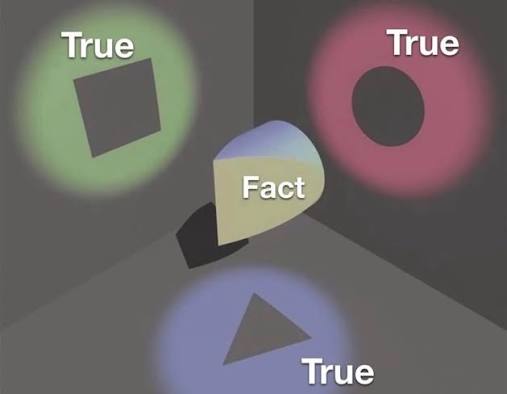
Everything we hear is an opinion, not a fact. Everything we see is a perspective, not the truth.

Marcus Aurelius

I will attempt to bring multiple threads together in this blog and the quote above is a good starting point. If there is objective reality it’s not going to be something possessed by one human. We do not know all circumstances nor can we vet and independently verify every fact we receive.  Or at least not without becoming totally hamstrung by the details. We put our trust in parties, traditions, systems, credentials and the logic which makes sense to us.

The deeper we dive into our physical reality the murkier it all gets. The world ‘above’ that we encounter feels concrete. But there is not a whole lot of substance to be found as we get beneath the surface. The rules that we discovered—of time and space—end up dissolving into a sea of probabilities and paradoxes at a quantum level that we don’t have an answer to. And this is the ‘concrete’ observable reality. We all see our own unique perspective, a slice, and build our model of the world from it.

But it is even murkier when we get to topics of social science. Morality and ethics, built often from what we believe is fact or truth, is more simply opinion and perspective than it can be hammered out in words everyone is able to agree on. Even for those who are of the same foundational religious assumptions—despite even having the same source texts—do not agree on matters of interpretation or application. So who is right? And who is wrong? How do we decide?

1) Patrick: We Don’t Need God To Be Moral

My cousin, Patrick, a taller, better looking and more educated version of myself, an independent thinker, and has departed from his missionary upbringing—gives this great little presentation: “Where Do You Get Your Morality?

His foundation for a moral value system is concepts of truth, freedom and love which he describes in the video. I find it to be compelling and compatible with my own basic views. Our cooperation is as natural as competition, it is what makes us human, and a conscience gives potential for better returns.

However, while I agree with his ideal, there is also reason why deception, tyranny and indifference are as common in the world—they are natural—and this is because it can give one person or tribe an advantage. Lies, scams, and political propaganda all exploit trust and can be a shortcut for gaining higher status or more access.

No, cheating doesn’t serve everyone. But the lion has no reason to regret taking down a slow gazelle. By removing the weak, sick, or injured, it inadvertently culls the less-fit genes from the herd, strengthening the prey population over time and even preventing overgrazing of the savannah. It’s just a raw service to ecosystem balance, much like a short seller who exposes those overvalued stocks, forcing the market corrections and greater efficiency—acts of pure self-interest yielding a broader good.


Herd cooperation or predator opportunism are different strategies, both 100% natural and amoral in their own context. I’m neither psychopath nor a cannibal, but I do suspect those who are those things would as readily rationalize their own drives and proclivities. Nature doesn’t come with a rulebook—only consequences.

I’m certainly not a fan of the “might makes right” way of thinking and that is because my morality and ethics originate from the perspective being disadvantaged. But I also understand why those who never struggled and who have the power to impose their own will without fear of facing any consequences often develop a different moral framework.

We need to be invested in the same moral and civilizational project. Or else logic, that works for only some who have the strength or propaganda tools, will rule by default. I don’t disagree with Patrick, but his core message caters to a high IQ and high empathy crowd—which does leave me wondering how we can bring everyone else on board?

2) Kirk: A Way To Focus Our Moral Efforts

Charlie Kirk wasn’t a significant figure to me before his death. It may be a generational thing or just a general lack of interest in the whole conservative influencer crowd. I feel dumber any time I listen to Steven Crowder and assumed Kirk was just another one of the partisan bomb throwers. But, from my exposure to his content since, I have gained some appreciation.


Arguing for the Ten Commandments has never been a priority for me. It’s a list with a context and not standalone. Nevertheless it is a starting point for a moral discussion and also one that it seems Charlie Kirk would go to frequently in his campus debates.  The two most difficult of these laws to explain to a religious skeptic are certainly the first two: “I am the Lord your God; Have no other gods before me and do not make idols.”

We generally agree on prohibition of murder and theft, or even adultery, but will disagree on one lawgiver and judge.

Why?

Well, it is simply because divine entity is abstract compared to things we have experienced—like the murder of a loved one or something being stolen from us. You just know this is wrong based on how it makes you feel. The belief in celestial being beyond human sight or comprehension just does not hit the same way as events we have observed. And it’s also the baggage the concept of a God carries in the current age. I mean, whose God?

It seems to be much easier just to agree the lowest common denominator: Don’t do bad things to other people.

But then we don’t. We justify killing others if it suits our political agenda, labeling people as bad for doing what we would do if facing a similar threat to our rights. If I’ve learned one thing it is that people always find creative ways to justify themselves while condemning the other side for even fighting back against an act of aggression.

Self-proclaimed good people do very bad things to good people. Like most people see themselves as above average drivers (not mathematically possible), we tend to distort things in favor of ourselves. Fundamental attribution error means we excuse our own compromises as a result of circumstances while we assume an immutable character flaw when others violate us. We might be half decent at applying morality to others—but exempt ourselves and our own.

So morality needs a focal point beyond us as individuals. There must be a universal or common good. Which might be the value of a theoretical ‘other’ who observes from a detached and perfectly unprejudiced point, the ideal judge. Not as a placeholder, but as the ultimate aim of humanity. One God. One truth. One justice. This as the answer to double standards, selective outrage and partisan bias. If we’re all seeking the same thing there is greater potential of harmony and social cohesion where all benefit.

At very least it would be good to promote an idea of an ultimate consequence giver that can’t be bought or bribed.

3) The Good, the Bad and the Aim for What Is Practically Impossible

The devil is always in the details. And the whole point of government is to mediate in this regard. Unfortunately, government, like all institutions, is merely a tool and tools are only as good as the hands that are making a use of them. A hammer is usually used to build things, but can also be used to bash in a skull. Likewise, we can come up with that moral system and yet even the best formed legal code or enforcement mechanism can be twisted—definitions beaten into what the current ruling regime needs.

The United States of America started with a declaration including the words “all men are created equal” and a Constitution with that starts: “We the people…” This is reflection of the Christian rejection of favoritism and St. Paul telling the faithful “there is no Jew or Greek” or erasing the supremacy claims of some. An elite declaring themselves to be exempted or specially chosen by God is not compatible with this vision. We never ask a chicken for consent what we take the eggs. We do not extend rights to those who we consider to be inferior to us or less than human. Human rights hinge on respect for the other that transcends politics.

That’s where the labels come in. If we call someone a Nazi, illegal, MAGAt, leftist or a Goyim we are saying that they are less than human and don’t deserve rights. This is the tribal and identity politics baseline. Those in the out-group are excluded for decency, their deaths celebrated as justice (even if there’s no due process) and we’ll excuse or privilege our own. All sides of the partisan divide do this—we create a reason to deny rights to others often using things like truth, freedom and love (Patrick’s foundation) as our justification: “Those terrorists hate our freedom and democracy, we must fight for those we love and our truth!”

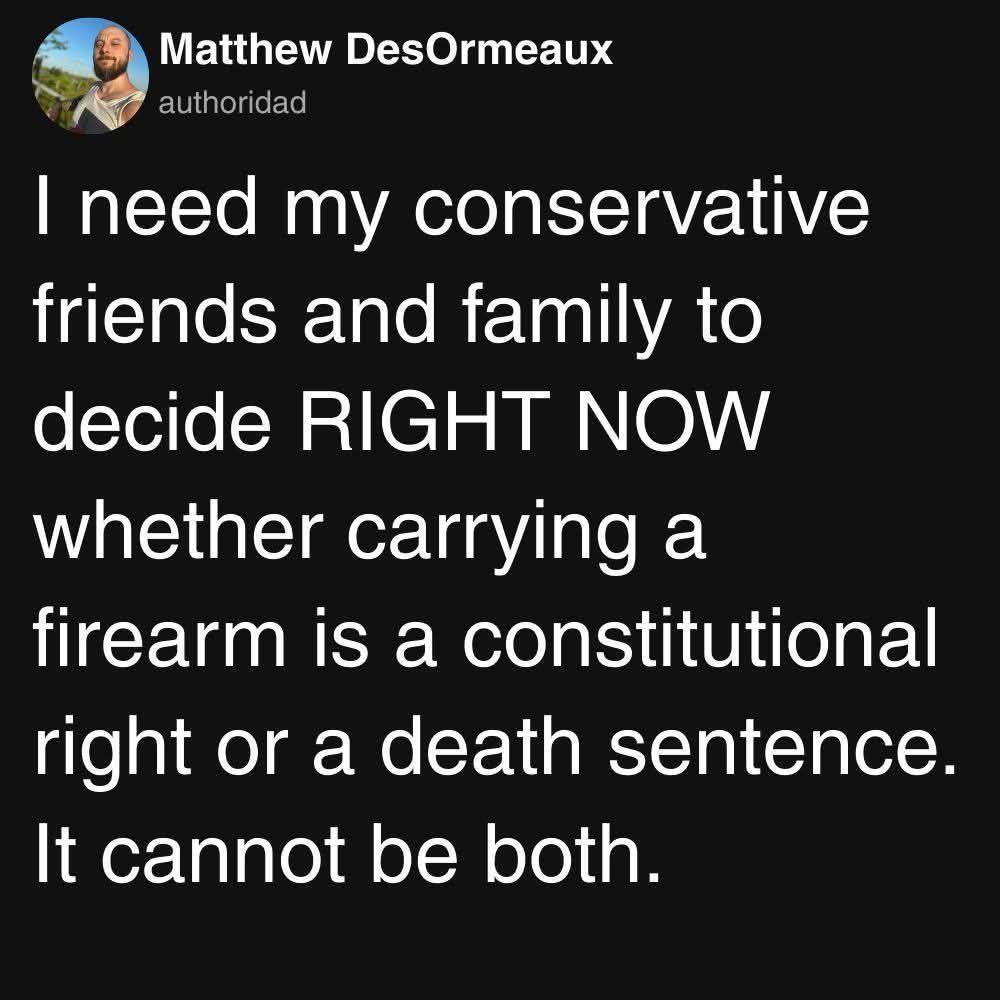
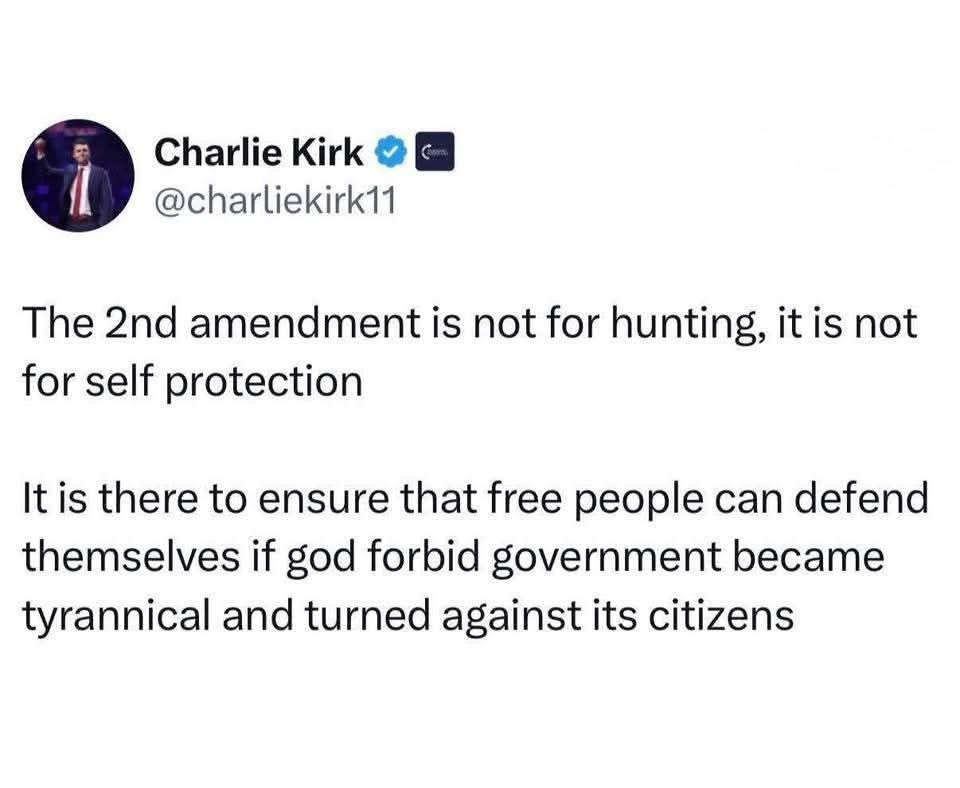
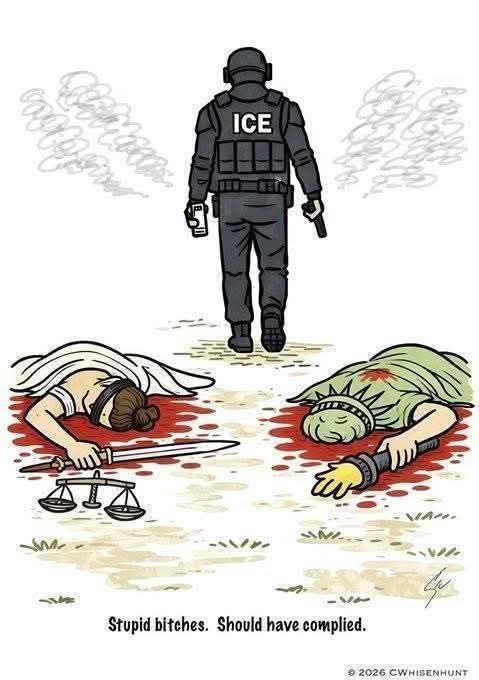
Bringing this to a practical level: Looking at Minneapolis, the ICE and anti-ICE activities, we have competing moral narratives and a different vision for application of American values. On one side of the debate you have those who say that “one is one too many” if an illegal immigrant kills a US citizen—then suddenly do not care when Federal agents shoot a fellow American. The defiant “don’t tread on me” opposition to mandates and masks during Covid somehow shifting to “comply or die!” On the other side you have those outraged about Kyle Rittenhouse and who have been traditionally opposed to the 2nd Amendment defending Alex Pretti while the Trump administration condemns a man for carrying a permitted firearm.
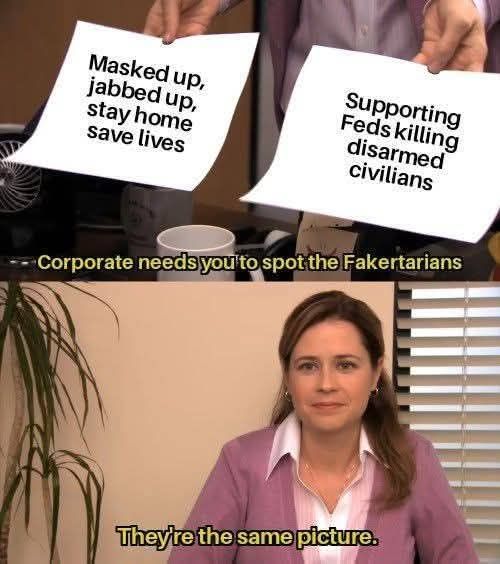

Judgment is for the other, it seems, rights for those who look like us or agree. It’s this inconsistent eye, the call for understanding of our own and grace for ourselves with the harsh penalties applied to those within the forever shifting lines of our out-group, that shows how our political perspectives cloud our moral judgment. The ‘sin’ is not the act itself, but whether or not the violation suits our broader agenda. This is why ‘Christian’ fundamentalists, who will preach the love of Jesus on Sunday, can be totally indifferent to the suffering of children with darker skin tones—their God is about national schemes not a universal good or a commonly applied moral standard.

The aim needs to be justice that is blind to who and only considers what was done. If pedophilia is excused for powerful people who run our government and economy, then it should be for those at the bottom as well. If the misdemeanor of crossing an invisible line is bad, a justification for suspension of due process for all Americans, then why is it okay to violate the sovereignty of Venezuela or Iran over claims of human rights abuse?

The US fought a war of independence, took the country for the British and yet has been acting as a dictator, installing kings, when it suits our neo-colonial elites.

That’s immoral.

We’re all immoral.

The moral code of Patrick, Charlie or myself is incomplete—because every moral code is incomplete when filtered through human eyes. We start from our different premises: Patrick’s secular triad of truth, freedom, and love; Kirk’s religious appeal to the Ten Commandments and a divine lawgiver as the only reliable check on self-deception; my own reluctant recognition that empathy and cooperation are real, yet fragile, against the raw arithmetic of power and advantage. Yet all of our approaches circle the same problem: without some external, impartial standard that transcends our biases, tribes, and self-justifications, our morality devolves into competing opinions dressed as facts—exactly as Aurelius observed.

We cannot fully escape the murk. Objective reality, if it exists, slips through our fingers like quantum probabilities—and moral truth fractures along lines of culture, experience, and interest. Even when we agree on broad principles (don’t murder, don’t steal), the application often splinters: whose life counts as being worthy of protection? Whose borders, laws, or children deserve a defense? And whose “justice” is merely revenge in better lighting?The temptation is cynicism—just declare all values relative, retreat to my own personal pragmatism, and then let might (or votes, or algorithms) sort the rest. But that is a path leads to the very outcomes we decry—dehumanization, selective outrage, and the erosion of the entire civilizational project that allows agnostic high-empathy and high-IQ arguments like Patrick’s to even exist. Yes, nature may be amoral, but us humans build societies by pretending otherwise, by our aiming higher than baser ‘animal’ instincts—reaching for God.

So perhaps the most honest conclusion is not to claim possession of the full truth, but to commit to pursuing it together—knowing we’ll never quite arrive. We definitely need focal points that force some accountability beyond ourselves: whether that’s a concept of one ultimate observer who sees without favoritism, or by a shared commitment to universal human dignity rooted in principle beyond biology or tribe, or simply just the hard-won habit of applying the same rules to our side as to the other. Blind justice isn’t natural or self-evident—it’s cultivated. Morality is an aim which requires vigilance against our own double standards, humility before the limits of our perspective, and courage to defend principles we claim even when they inconvenience us.

In the end, we don’t need perfect agreement on the source of morality to agree that inconsistency in application is poisonous.  What goes around will certainly come around and if we live by the sword we’ll die by it.  If we can at least hold each other (and ourselves) to a standard higher than “what works for my group right now,” preserve the space for mutually beneficial cooperation over cruel predation—a shared conscience over mere convenience. Anything less, and the gazelle never outruns the lion for long—and neither does the society which forgets why it tried.

Cautionary Tales About Pigeons, Sparrows and Ideological Extremes

Standard

For those who still remember Paul Harvey and miss his “and now you know the rest of the story” delivery style, Lance Geiger will scratch the itch. His episodes, on “The History Guy” YouTube channel, have been my entertainment in the morning before work and enjoy the storytelling adventure before his “forgotten history that deserves to be remembered” wrap-up at the end.

His show is not political. But two of the episodes sparked my thinking about the danger of ideological extremes and the need for checks and balances. One story an example of the central planning gone seriously awry, the other about the unfortunate consequences of technological development combined with market forces, and both stories involve the extinction or near extinction of a species of birds.

Socialized Sparrows and Starvation

The first video, “When China went to war with sparrows” is about the “Four Pests Campaign” that was part of the “Great Leap Forward” from 1958 to 1962. The idea was to eliminate certain types of critters as a way to increase hygiene and reduce disease. The targets, mosquitoes, rodents, flies, and sparrows, were picked by the Socialist regime of Mao Zedong. Claiming that “birds are the public animals of capitalism,” armed with a population bound to statist fervor, they dramatically reduced the numbers of sparrows.

The end result of this sparrow control campaign was an ecological disaster. As it turns out, holding to Marxist ideals does not make a person an expert on economic development or biological science, and this deliberate elimination of sparrows came with some very serious consequences. This misguided policy is believed to be a leading cause of the Great Chinese Famine, a catastrophe that cost between 15 to 45 million human deaths and was abandoned when Chinese authorities, on the advice of an actual ornithologist, finally realized their terrible mistake.

Che Guevara T-shirt wearing, professional far-leftist ‘rabble-rousers’ may celebrate “people power” when it aligns with their personal prejudices. They often sit smugly and sanctimonious, on their intellectual ivory towers, confusing their book acquired knowledge and ideological indoctrination for wisdom. But given real power these people are dangerous. Mao Zedong, the well-educated son of a wealthy farmer, was not an idiot or especially ignorant. But the masses he controlled (with his anti-Capitalist rhetoric) amplified his mistakes, caused great suffering and claimed many innocent lives.

Sparrows, as it turns out, help to control locust populations. These bugs, now unrestrained by the sparrows, quickly proliferated and went on a crop-destroying rampage. This, along with the reckless use of pesticides and poisons by the Chinese government, was all well-intentioned. Likewise, there are many Socialist policies, championed in the past century in this country, that have failed us as miserably and yet continue to be touted as solutions. Unlike Mao, however, our crop of ‘progressives’ more often doubles down on their mistake, hiding behind their ever more convoluted logic, rather than ever reconsider.

Capitalized Pigeons and Profitable Purges

The second video, “How the extinction of a species affected whiskey production,” deals with the plight of the passenger pigeon. This North American species was once so numerous that the flocks would blot out the sun was hunted to extinction, the last of the birds dying September 1, 1915.

Native Americans had hunted passenger pigeons as they were plentiful and a good source of protein. But, because of the limits of their technology and smaller population size, never put a dent in the numbers of pigeons. But this would all change with the newly arrived settlers from Europe. Trains, telegraphs, and gunpowder enabled more people to join the hunt at pigeon nesting grounds. One well-aimed blast from a two barrelled shotgun could kill as many as 61 birds and tens of thousands were slaughtered with great ease.

The real compounding factor was not the hunters, not the tools that they used, but was rather the money and markets that gave them motivation. Unlike in times past where it only made sense to hunt for only enough to sustain your own family or village, the railroads made it possible to ship vast quantities of the fowl meat to city markets back East. The apparent plentifulness of the birds masked the severe drop in their numbers and the cheap source of protein (or profit) they provided ensured the hunts would continue.

That is not to say that nobody was aware of the decline of the species. There were indeed attempts to reign in the slaughter in the mid-1800s. But these conservationist efforts never gained enough traction to make a difference, the legislation introduced too little too late, and extinction followed.

It would be easy to say this plunder of natural resources was a product of greed. But, insomuch as greed is a selfish excess, that is not an accurate diagnosis of the problem. If it were greedy or selfish for one to merely act in their own self-interest then we would all be equally guilty for breathing. The real problem is that no individual accounted for more than their own harvest. There was not nearly enough consideration for the big picture and market forces took care of the rest.

In a Capitalistic system, productive behavior rewarded. That reward is distributed to those who have the ability and motivation to work. But, without anything to hold this motivation in check, a mass of humanity can quickly become like a swarm of locust devouring everything in its path. The beauty of the Capitalistic system is that it allows people to do more to advance their own self-interests and that is also the downfall of Capitalism as well.

What Is the Moral to the Story?

“Are not two sparrows sold for a penny? Yet not one of them will fall to the ground outside your Father’s care.” (Matthew 10:29 NIV)

Perhaps if God cares about the sparrows we should as well?

In the two stories economic systems that could not be more different and produced nearly the same results. Both cases demonstrate the power of a mass of people and remind me of the demotivational poster in my bedroom (gifted from my awesome little sister) featuring a circle of skydivers and the text: “Idiocy: Never underestimate the power of stupid people in large groups.”

The poster, a satirical take on motivational posters, is meant as tongue in cheek humor and not to be taken too serious.

Nevertheless, as there is truth to every joke, the useful message is that it is prudent to stand apart from the crowd, to resist conformity and ask questions. Had enough people questioned the party propaganda or the collective actions of their profit-seeking neighbors the death of millions of Chinese and the extinction of passenger pigeons could have been avoided.

These accounts of pigeons and sparrows are also cautionary tales about two opposite ideological extremes. In Socialism the stupid decisions of a small group of people can be vastly magnified by the subjugated masses. In Capitalism the masses, motivated by profit and market forces, can become a source of terrible devastation. The central planning of collectivists and the lack thereof in individualistic and free-market systems both come with their own unique manifestations of the same risk.

It is worthwhile to note that the unchecked power of the central state, in the path century, is responsible for more deaths (due to wars, genocides, famines, etc) than any one person or group of people motivated by profit. Government policies, often favoring big corporations or particular individuals, at very least contribute as much to the problem as individual desire to profit and are, in fact, responsible for some of the worst man-made ecological disasters in modern times.

However, the properly restrained state can provide a good counterbalance to market forces, to keep the masses from acting like a runaway train unaware of the destruction at the end of the tracks and offers some necessary protection for endangered species. It is for our own long-term good that there are limits to our freedoms.

In the end, I’m not for unrestrained Capitalism anymore than I am for unrestrained government power. As much as possible I prefer to let people make their own choices and therefore, for that reason, shade towards free markets—which, when not interfered with by governments through subsidies or social programs, are the most democratic institution known to men. It is better to allow mistakes to be corrected at a lower level through bankruptcy and individual loss. That said, the extinction of the passenger pigeon speaks to the need for a collective consciousness to hold back our self-interested impulses.

Much destruction can be caused by taking a good thing too far or not keeping it properly restrained by other equally valid principles and concerns. Do not repeat the mistakes of these competing ideological extremes and their equal potential for economically or ecologically disastrous results. Remember the sparrows. Remember the pigeons.

On Cynicism, Courage and the Real War On Christmas

Standard

A week ago someone had called my grandpa and identified himself as being my younger brother. He needed to be bailed out after some kind of traffic law infraction. My grandpa, not one quick to give vast sums of money over a phone call, quizzed his ‘grandson’ and inquired as to why he did not ask his parents first. The spoof caller answered that he wasn’t getting with his parents, at which point it was obviously a scam and my grandpa hung up.

The other day my grandpa called to inform me that someone had just called claiming to be me, his eldest grandson. This time he hung up without hearing another word.

On the same day my grandpa told me about this I had a plea for help, on social media, from an orphanage in Pakistan. Their profile pictures featured a bunch of dear children and those images momentarily tugged at my heartstrings. However, there was no way to verify who they really were. So, I tried to kindly explain my brotherly assistance was required elsewhere. When continued to repeat the request for a Christmas donation, like a broken record, I blocked them. I’ll probably be slower to accept a similar friend request in the future to avoid the need to try to reason with someone only interested in my wallet.

The communication era has brought the world together in ways unimaginable a century or two ago. And, with that development, predatory hoards from around the world can now invade our personal space at any given moment. The marauders no longer need to travel in longboats over dangerous seas, they simply pick up the phone and pretend to be your grandchildren.

This is frustrating for me. There are so many legitimate needs, including that of my family in the Philippines, and these are the real victims of the scammers and schemers. Those who exploit our kindness and generosity do a great disservice to the people around the world who work hard, experience hardship, and could use a little help. It is easy to become callous and uncaring under the deluge of requests. But we must have the courage to care even when there’s a chance of being exploited.

What is the real war on Christmas?

Political activists are constantly claiming a war here or a war there. The left claims that not providing women with free stuff constitutes a “war on women” and the right, not to be left out of the grievance culture fun, whines about the words “Merry Christmas” not being on Starbucks cups—who can forget Joshua Feuerstein’s coffee cup fury and the backlash?

But the real war on Christmas has little if anything to do with corporate marketing and tit-for-tat politics.

Christmas is not about compelling others to use a particular greeting or ensuring that religious displays are allowed in public spaces.

Christmas is a celebration, for the Christian faithful, of the most incredible gift ever given, that being the incarnation of God’s logos in the person of Jesus Christ and the opportunity for our divine adoption. This miraculous birth, to a virgin mother, represents a new hope for humanity and a reason to change ourselves. The true Christmas spirit is our being filled with this same spirit of love and giving of life for the good of others that Jesus embodied.

Turning Christmas into the latest battleground of a broader culture war is to entirely miss the point. Giving Starbucks hell isn’t going to further the message of glad tidings and joy, that’s for certain, and is not likely to win any hearts or minds either. Pettiness is never going to convince a skeptic to consider the Gospel of Jesus Christ. It is a distraction at best.

The commercialization of the holiday also takes away from the true reason for the season. The birth of our Lord and Savior wasn’t really intended to inspire stampedes of shoppers hoping to wrestle a few dollars of savings from their neighbors. But Christmas has become a marketing boon for retailers and they (along with the rest of our culture) push people to spend money they don’t have for things they don’t need—things manufactured using underpaid foreign workers while the bulk of the profits enriching a few globalist elites. It is a scheme nearly as exploitative as the telephone scammers, but completely legal.

However, those two things (culture wars and commercialization) are mere symptoms of the bigger disease and the one thing that can undermine the Christmas spirit in us—the soul-eating disease called cynicism. If Christmas has a true enemy in this world it is cynicism. Cynicism is a cancerous attitude. It is natural (albeit unhealthy and inhumane) response to a world full of self-interested people and corrupt institutions. The cynical person is one who has seen behind the curtain, who may have been taken advantage of once or twice and is now too overtaken by their skepticism to truly love their neighbors.

It is often the disillusioned idealist who becomes a bitter, critical, and faithless or cynical. Cynicism is, in that sense, a product of those who exploit trust for financial gain, a result of fatigue of being hit from all angles, and a retreat to a position of disengagement. But it is not dispassionate, as it often claims to be with a shrug, nor is this retreat from personal involvement a moral high ground. No, in reality, cynicism is an excuse for being uncaring, cold-hearted and self-centered.

The clever trick of the cynic is to be uncharitable while presenting oneself as being someone concerned about morality or morally upright for being able to identify the evil intentions of others. But the reality is that cynic is a hypocrite merely using the abuses of others as a cover for their own true self-interested indifference. They might cite scams as a reason why not to care and yet will always have another excuse waiting in the wings if that one isn’t applicable. They are simply unwilling to give of themselves.

Truly the cynic is a coward. They are too cowardly to do good in the face of evil, to be vulnerable and take a chance of being exploited. They are also too cowardly, fearing the social cost of revealing the full truth of their real underlying lack of concern for others, to make a full commitment to the evil they truly envy and yet claim to despise. The irony of the cynic is that they are as selfish and as much a part of the problem as the people that they claim has caused their cynical condition.

Caring requires courage and courage requires commitment…

It takes courage to have life experience and not be cynical. I’ve held back on giving to many charitable causes because some of them did seem more like self-interested scams. There is definitely a case for good stewardship, we should be “wise as serpents” because there are “wolves” (Matthew 10:16) who would devour us and lay waste to our hard-earned savings. It does the world no good to empower criminals or encouraging laziness in those who could learn to help themselves.

However, the dividing line between a person desperately in need of love and one merely taking advantage of the generosity of others is razor-thin. In fact, in many cases, there are overlapping motives in those asking for help, some genuine and others corrupt, and knowing how to respond requires a great deal of wisdom and discernment.

For example, a single mother, raised by the system, may indeed be inclined to take advantage of the charity offered and especially the half-hearted kind that comes out of religious obligation rather than a full commitment to love. They might simply intend to get what they can get before moving on. In those cases, it is easy to dismiss such a person, to conclude that they are unwilling to make the changes necessary to be free of their current circumstance, wash our hands, and move on.

Unfortunately, while there is a time to let people learn from their mistakes, the salvation of those who are mired in generational poverty (or otherwise unable to help themselves) often requires an investment that is beyond reasonable. In other words, it takes an investment of faith rather than of mere religious obligation. It requires the courage and commitment to look beyond the risk of being exploited and to unconditionally love another person before they have proven themselves worthy of our help. Faith means being the hands and feet of Jesus.

Had God waited for us to be worthy of his love, he would not have sent his son, we would still be waiting for a Savior and be hopelessly lost in our sin forever. The true Christmas story is God showing us how to love by becoming personally involved and being completely willing to sacrifice himself as an example for us to follow:

Do nothing from selfishness or empty conceit, but with humility of mind regard one another as more important than yourselves; do not merely look out for your own personal interests, but also for the interests of others. Have this attitude in yourselves which was also in Christ Jesus, who, although He existed in the form of God, did not regard equality with God a thing to be grasped, but emptied Himself, taking the form of a bond-servant, and being made in the likeness of men. Being found in appearance as a man, He humbled Himself by becoming obedient to the point of death, even death on a cross. (Philippians 2:3-7)

Christianity and cynicism are completely at odds with one another. They might be similar in that both see the chance of being taken advantage of and exploited, but are completely different in how they respond to that chance. The cynical person lives based on fear and uses their knowledge of the risk as a reason to do nothing for those in need. The Christian, by contrast, makes a commitment to do good despite the strong possibility they will suffer great loss for their efforts.

A Christian must go to war with their cynicism, they must help that diseased man heaped at their doorstep, they must aid the broken traveler discarded along the path they trod and must make an unreasonable commitment to overcome evil with good. That is how soldiers win wars, they understand the risk and are still willing to sacrifice themselves for the cause. It takes courage to overcome our fears, to give ourselves as a sacrifice for the good of others, and live out the true meaning of Christmas.

Be courageous and don’t let the scammers and schemers turn your Christmas spirit into cynicism!

L-O-V-E

Standard

Love.  It is a four letter word.  It is something often talked about, a thing sought after by most people, but seemingly rarely understood. 

I am speak specifically about the love that is the bond between two people.  It is something elusive, difficult to define and mysterious in some ways, but a very real part of our human existence.

I’m sure there are as many perspectives on love as there are people.  However, I can think of three main categories that describe tendencies or common landing spots for many people when it comes to the topic of love.

A Cynical (Scientific) View of Love

This is the idea that reduces love to a function of biology.  It is hard to deny sexual attraction as a factor in who people select and who they reject as potential partners.  Base desires (like those described crassly in this article) could seem to explain love away as little more than two people acting in their own mutual self-interest or selfishness.

This is jaded view.  It is backed by scientific evidence.  Statistics do show that factors like height, economic status and appearance do play a significant role.  It would be easy to conclude that who we love is a mere product of pheromones, playing ‘the game’ right and nothing more than that.  It is not an idea without merit.

A ‘Romantic’ (Emotional) View of Love

This is the love of middle school girls (pardon the stereotype) and those starry-eyed idealists who never mature.  This is the territory of the “meant to be” people who confuse their current feelings with “happily ever after” fantasies.  I say fantasies, because I’ve seen these types of relationships based on initial attraction and tingly feelings fail miserably.

Certainly some of these relationships do survive and grow.  But I put the word romantic in apostrophes because this is a very shallow and childish view of love.  It is also a view of love that leads to disappointment both for the prince(sse)s who discover Mr(s) Perfect isn’t actually and also for those who never do find ‘the one’ and miss opportunities right under their nose.

A ‘Christian’ (Transcending) View of Love

Love is a choice.  This goes against conventional and popular ideas of love that put emphasis on the feelings, predestined and chemical side of things.  It is an idea that we can rise above animal instincts, that there is an aspect of our reality not determined by fate and that love can be something more.

I use apostrophes around Christian because the behavior many who profess faith is better described by the views of love I listed prior.  Christian love is supposed to follow the example of Jesus Christ and self-sacrifice.  Sure, some may hide their self-seeking under a layer of righteous sounding excuses and rationales, but underneath the religious veneer there is nothing that separates them from their secular counterparts.

Higher Love Requires Sacrifice

The appropriate Christian view of love centers on commitment over immediate feelings and base sexual urges.  It is not something defined by fleeting teenage hormones or unrealistic Disneyland expectations, but something that develops and slowly grows stronger over time.  It is a mature kind of love that looks beyond outward appearance and sees a heart.

“Love is patient, love is kind. It does not envy, it does not boast, it is not proud. It does not dishonor others, it is not self-seeking, it is not easily angered, it keeps no record of wrongs. Love does not delight in evil but rejoices with the truth. It always protects, always trusts, always hopes, always perseveres.”  (1 Corinthians 13:4-7 NIV)

The views of love that focus on youthful passions is not the kind of love I seek.  I do not want love that is actually lustful desire nor that based on some fairytale perfectionistic delusion.  Instead, the love I see as worth study and emulation is that of an old couple. 

I think of my grandparents who have seen each other through the best and worse of life.  They have a love built on time, experience and wisdom.  They have remained faithful to each other despite their quirks, mistakes and shortcomings.

I sometimes wonder if this kind of love is even possible in this impractical and superficial age.  Still I do hold out hope.

God bless!