Perspectives, Not Truth: Why Our Moral Codes Are Always Incomplete

Standard

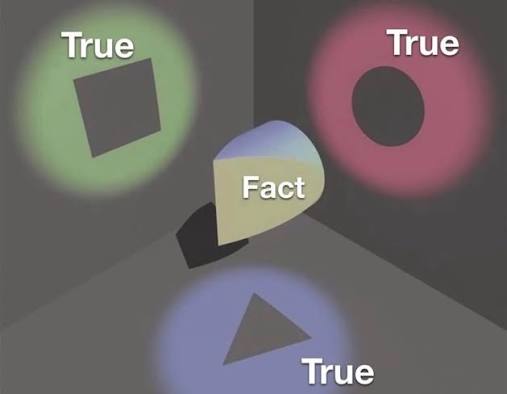
Everything we hear is an opinion, not a fact. Everything we see is a perspective, not the truth.

Marcus Aurelius

I will attempt to bring multiple threads together in this blog and the quote above is a good starting point. If there is objective reality it’s not going to be something possessed by one human. We do not know all circumstances nor can we vet and independently verify every fact we receive.  Or at least not without becoming totally hamstrung by the details. We put our trust in parties, traditions, systems, credentials and the logic which makes sense to us.

The deeper we dive into our physical reality the murkier it all gets. The world ‘above’ that we encounter feels concrete. But there is not a whole lot of substance to be found as we get beneath the surface. The rules that we discovered—of time and space—end up dissolving into a sea of probabilities and paradoxes at a quantum level that we don’t have an answer to. And this is the ‘concrete’ observable reality. We all see our own unique perspective, a slice, and build our model of the world from it.

But it is even murkier when we get to topics of social science. Morality and ethics, built often from what we believe is fact or truth, is more simply opinion and perspective than it can be hammered out in words everyone is able to agree on. Even for those who are of the same foundational religious assumptions—despite even having the same source texts—do not agree on matters of interpretation or application. So who is right? And who is wrong? How do we decide?

1) Patrick: We Don’t Need God To Be Moral

My cousin, Patrick, a taller, better looking and more educated version of myself, an independent thinker, and has departed from his missionary upbringing—gives this great little presentation: “Where Do You Get Your Morality?

His foundation for a moral value system is concepts of truth, freedom and love which he describes in the video. I find it to be compelling and compatible with my own basic views. Our cooperation is as natural as competition, it is what makes us human, and a conscience gives potential for better returns.

However, while I agree with his ideal, there is also reason why deception, tyranny and indifference are as common in the world—they are natural—and this is because it can give one person or tribe an advantage. Lies, scams, and political propaganda all exploit trust and can be a shortcut for gaining higher status or more access.

No, cheating doesn’t serve everyone. But the lion has no reason to regret taking down a slow gazelle. By removing the weak, sick, or injured, it inadvertently culls the less-fit genes from the herd, strengthening the prey population over time and even preventing overgrazing of the savannah. It’s just a raw service to ecosystem balance, much like a short seller who exposes those overvalued stocks, forcing the market corrections and greater efficiency—acts of pure self-interest yielding a broader good.


Herd cooperation or predator opportunism are different strategies, both 100% natural and amoral in their own context. I’m neither psychopath nor a cannibal, but I do suspect those who are those things would as readily rationalize their own drives and proclivities. Nature doesn’t come with a rulebook—only consequences.

I’m certainly not a fan of the “might makes right” way of thinking and that is because my morality and ethics originate from the perspective being disadvantaged. But I also understand why those who never struggled and who have the power to impose their own will without fear of facing any consequences often develop a different moral framework.

We need to be invested in the same moral and civilizational project. Or else logic, that works for only some who have the strength or propaganda tools, will rule by default. I don’t disagree with Patrick, but his core message caters to a high IQ and high empathy crowd—which does leave me wondering how we can bring everyone else on board?

2) Kirk: A Way To Focus Our Moral Efforts

Charlie Kirk wasn’t a significant figure to me before his death. It may be a generational thing or just a general lack of interest in the whole conservative influencer crowd. I feel dumber any time I listen to Steven Crowder and assumed Kirk was just another one of the partisan bomb throwers. But, from my exposure to his content since, I have gained some appreciation.
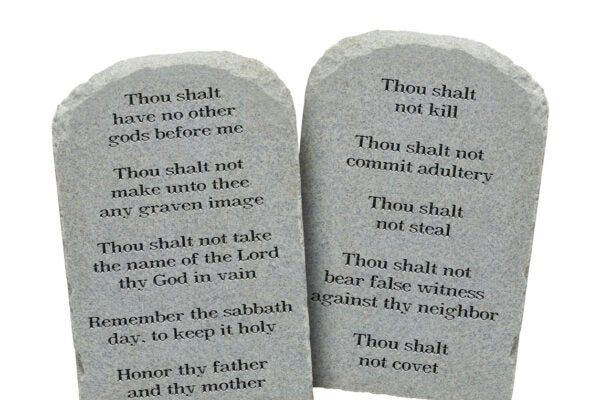
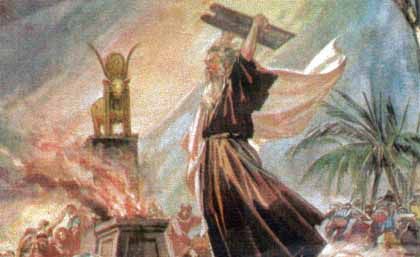
Arguing for the Ten Commandments has never been a priority for me. It’s a list with a context and not standalone. Nevertheless it is a starting point for a moral discussion and also one that it seems Charlie Kirk would go to frequently in his campus debates.  The two most difficult of these laws to explain to a religious skeptic are certainly the first two: “I am the Lord your God; Have no other gods before me and do not make idols.”

We generally agree on prohibition of murder and theft, or even adultery, but will disagree on one lawgiver and judge.

Why?

Well, it is simply because divine entity is abstract compared to things we have experienced—like the murder of a loved one or something being stolen from us. You just know this is wrong based on how it makes you feel. The belief in celestial being beyond human sight or comprehension just does not hit the same way as events we have observed. And it’s also the baggage the concept of a God carries in the current age. I mean, whose God?

It seems to be much easier just to agree the lowest common denominator: Don’t do bad things to other people.

But then we don’t. We justify killing others if it suits our political agenda, labeling people as bad for doing what we would do if facing a similar threat to our rights. If I’ve learned one thing it is that people always find creative ways to justify themselves while condemning the other side for even fighting back against an act of aggression.

Self-proclaimed good people do very bad things to good people. Like most people see themselves as above average drivers (not mathematically possible), we tend to distort things in favor of ourselves. Fundamental attribution error means we excuse our own compromises as a result of circumstances while we assume an immutable character flaw when others violate us. We might be half decent at applying morality to others—but exempt ourselves and our own.

So morality needs a focal point beyond us as individuals. There must be a universal or common good. Which might be the value of a theoretical ‘other’ who observes from a detached and perfectly unprejudiced point, the ideal judge. Not as a placeholder, but as the ultimate aim of humanity. One God. One truth. One justice. This as the answer to double standards, selective outrage and partisan bias. If we’re all seeking the same thing there is greater potential of harmony and social cohesion where all benefit.

At very least it would be good to promote an idea of an ultimate consequence giver that can’t be bought or bribed.

3) The Good, the Bad and the Aim for What Is Practically Impossible

The devil is always in the details. And the whole point of government is to mediate in this regard. Unfortunately, government, like all institutions, is merely a tool and tools are only as good as the hands that are making a use of them. A hammer is usually used to build things, but can also be used to bash in a skull. Likewise, we can come up with that moral system and yet even the best formed legal code or enforcement mechanism can be twisted—definitions beaten into what the current ruling regime needs.

The United States of America started with a declaration including the words “all men are created equal” and a Constitution with that starts: “We the people…” This is reflection of the Christian rejection of favoritism and St. Paul telling the faithful “there is no Jew or Greek” or erasing the supremacy claims of some. An elite declaring themselves to be exempted or specially chosen by God is not compatible with this vision. We never ask a chicken for consent what we take the eggs. We do not extend rights to those who we consider to be inferior to us or less than human. Human rights hinge on respect for the other that transcends politics.

That’s where the labels come in. If we call someone a Nazi, illegal, MAGAt, leftist or a Goyim we are saying that they are less than human and don’t deserve rights. This is the tribal and identity politics baseline. Those in the out-group are excluded for decency, their deaths celebrated as justice (even if there’s no due process) and we’ll excuse or privilege our own. All sides of the partisan divide do this—we create a reason to deny rights to others often using things like truth, freedom and love (Patrick’s foundation) as our justification: “Those terrorists hate our freedom and democracy, we must fight for those we love and our truth!”

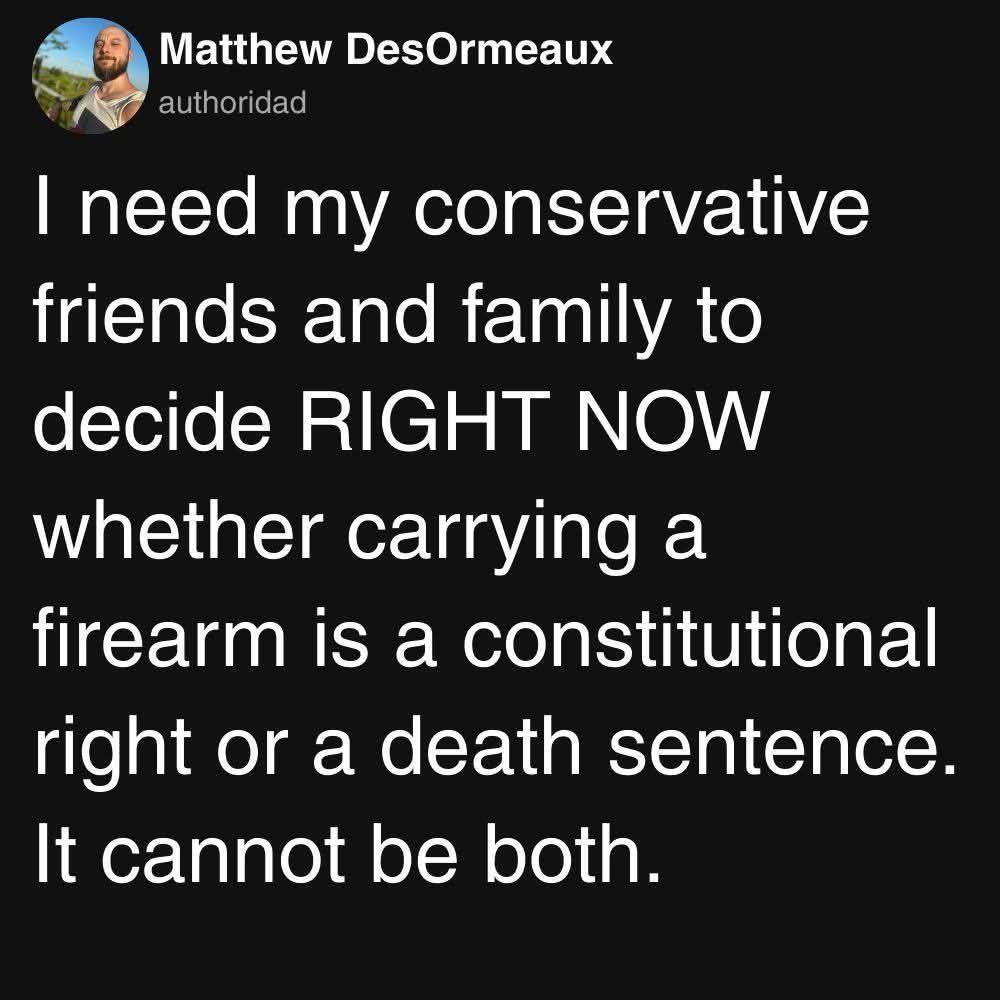
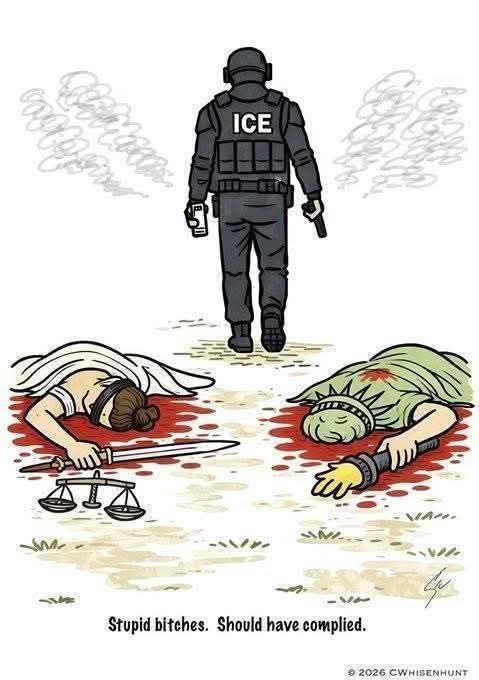
Bringing this to a practical level: Looking at Minneapolis, the ICE and anti-ICE activities, we have competing moral narratives and a different vision for application of American values. On one side of the debate you have those who say that “one is one too many” if an illegal immigrant kills a US citizen—then suddenly do not care when Federal agents shoot a fellow American. The defiant “don’t tread on me” opposition to mandates and masks during Covid somehow shifting to “comply or die!” On the other side you have those outraged about Kyle Rittenhouse and who have been traditionally opposed to the 2nd Amendment defending Alex Pretti while the Trump administration condemns a man for carrying a permitted firearm.
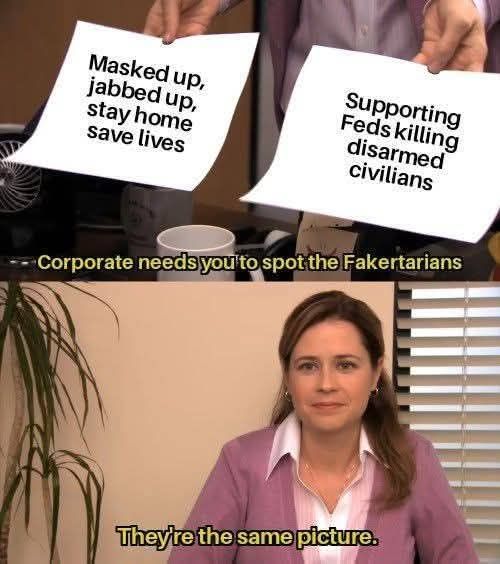
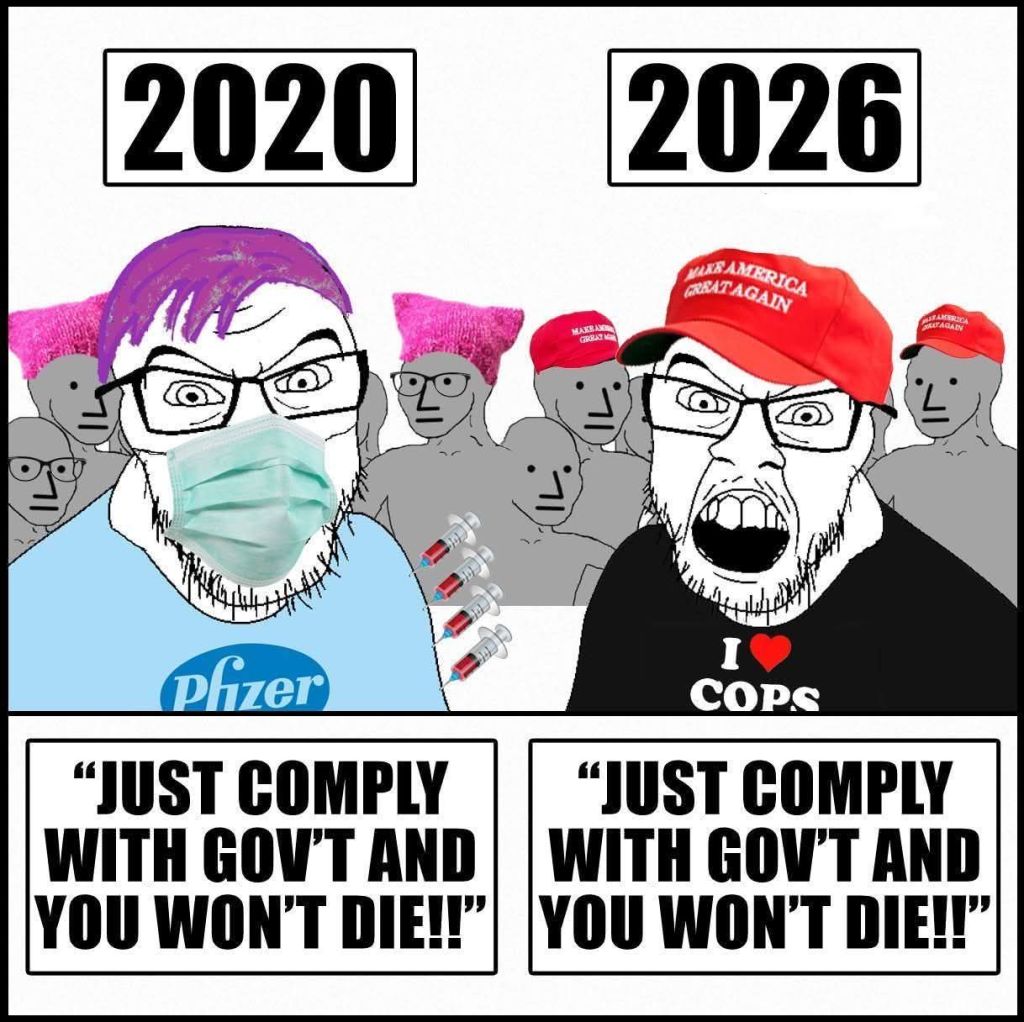
Judgment is for the other, it seems, rights for those who look like us or agree. It’s this inconsistent eye, the call for understanding of our own and grace for ourselves with the harsh penalties applied to those within the forever shifting lines of our out-group, that shows how our political perspectives cloud our moral judgment. The ‘sin’ is not the act itself, but whether or not the violation suits our broader agenda. This is why ‘Christian’ fundamentalists, who will preach the love of Jesus on Sunday, can be totally indifferent to the suffering of children with darker skin tones—their God is about national schemes not a universal good or a commonly applied moral standard.

The aim needs to be justice that is blind to who and only considers what was done. If pedophilia is excused for powerful people who run our government and economy, then it should be for those at the bottom as well. If the misdemeanor of crossing an invisible line is bad, a justification for suspension of due process for all Americans, then why is it okay to violate the sovereignty of Venezuela or Iran over claims of human rights abuse?

The US fought a war of independence, took the country for the British and yet has been acting as a dictator, installing kings, when it suits our neo-colonial elites.

That’s immoral.

We’re all immoral.

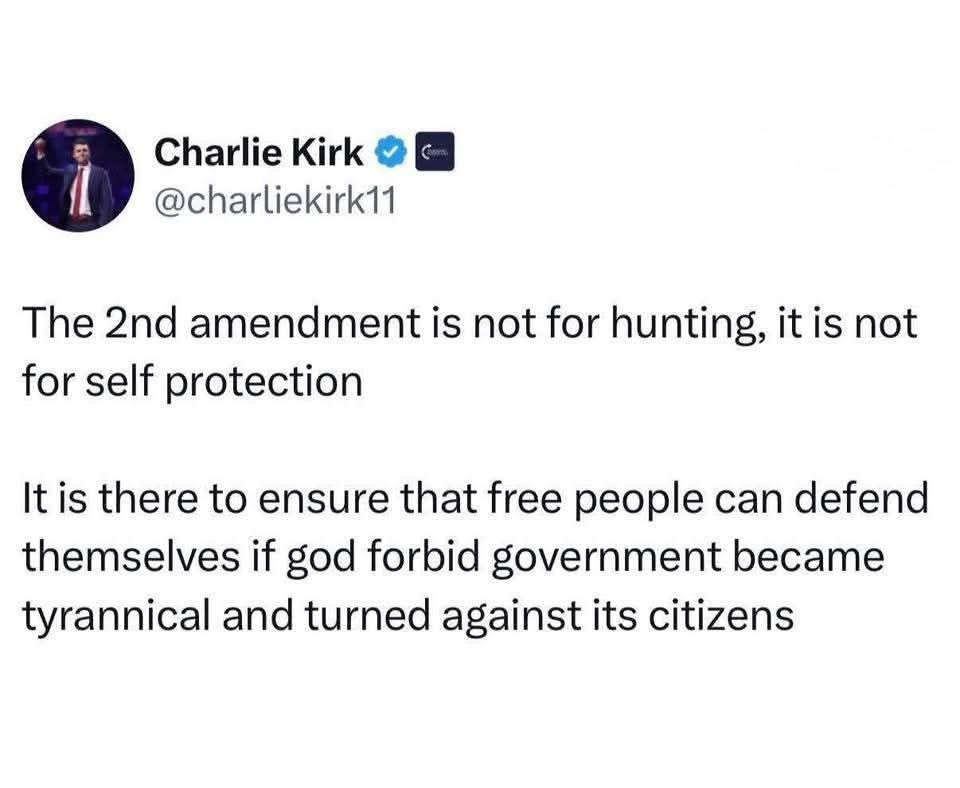
The moral code of Patrick, Charlie or myself is incomplete—because every moral code is incomplete when filtered through human eyes. We start from our different premises: Patrick’s secular triad of truth, freedom, and love; Kirk’s religious appeal to the Ten Commandments and a divine lawgiver as the only reliable check on self-deception; my own reluctant recognition that empathy and cooperation are real, yet fragile, against the raw arithmetic of power and advantage. Yet all of our approaches circle the same problem: without some external, impartial standard that transcends our biases, tribes, and self-justifications, our morality devolves into competing opinions dressed as facts—exactly as Aurelius observed.

We cannot fully escape the murk. Objective reality, if it exists, slips through our fingers like quantum probabilities—and moral truth fractures along lines of culture, experience, and interest. Even when we agree on broad principles (don’t murder, don’t steal), the application often splinters: whose life counts as being worthy of protection? Whose borders, laws, or children deserve a defense? And whose “justice” is merely revenge in better lighting?The temptation is cynicism—just declare all values relative, retreat to my own personal pragmatism, and then let might (or votes, or algorithms) sort the rest. But that is a path leads to the very outcomes we decry—dehumanization, selective outrage, and the erosion of the entire civilizational project that allows agnostic high-empathy and high-IQ arguments like Patrick’s to even exist. Yes, nature may be amoral, but us humans build societies by pretending otherwise, by our aiming higher than baser ‘animal’ instincts—reaching for God.

So perhaps the most honest conclusion is not to claim possession of the full truth, but to commit to pursuing it together—knowing we’ll never quite arrive. We definitely need focal points that force some accountability beyond ourselves: whether that’s a concept of one ultimate observer who sees without favoritism, or by a shared commitment to universal human dignity rooted in principle beyond biology or tribe, or simply just the hard-won habit of applying the same rules to our side as to the other. Blind justice isn’t natural or self-evident—it’s cultivated. Morality is an aim which requires vigilance against our own double standards, humility before the limits of our perspective, and courage to defend principles we claim even when they inconvenience us.

In the end, we don’t need perfect agreement on the source of morality to agree that inconsistency in application is poisonous.  What goes around will certainly come around and if we live by the sword we’ll die by it.  If we can at least hold each other (and ourselves) to a standard higher than “what works for my group right now,” preserve the space for mutually beneficial cooperation over cruel predation—a shared conscience over mere convenience. Anything less, and the gazelle never outruns the lion for long—and neither does the society which forgets why it tried.

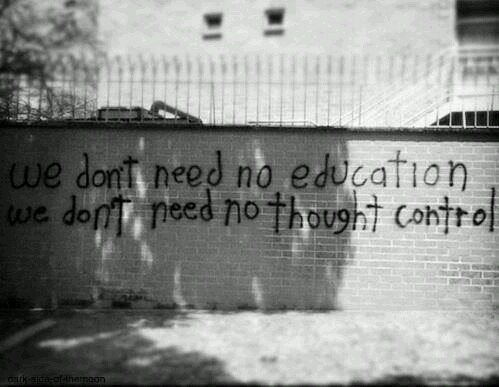
Do Not Muzzle the Ox or Canadian Truck Drivers

Standard

When a convoy of trucks descended upon Ottawa to protest the imposition of mandates, Justin Trudeau, the ever so prim and polished Canadian Prime Minister took to the screen to disparage the effort as a “small fringe minority” with “unacceptable views.”

If that sounds like a school teacher scolding a class of 8th graders, that is because teaching was Trudeau’s former occupation before being elected to office on the basis of his good looks, smooth speech, and all-around nice guy appearance. There is a certain demographic that swooned after this young charismatic figure, despite his far-left disposition.

Of course, what works in the classroom doesn’t necessarily make the best approach for leading a diverse nation. A teacher is an authoritarian, they rule over the children either buy their superior knowledge or simply by the hierarchical structure needed to keep order in a school. But that’s not how a liberal democracy with elected representatives is supposed to work.

It is not Trudeau’s job to decide what views are and are not acceptable. And that is the very tone that is starting to provoke a response. People are getting tired of politicians, with no moral authority (see: Trudeau in blackface) or real expertise forcing them to comply and lecturing them about what views are or are not acceptable.

It is fitting that a chaotic sea of truck drivers has risen up to challenge this would-be dictator. Ironically, 90% of the drivers are already in compliance according to Newsweek, and yet they are standing up for their rights as Canadians and saying “enough is enough” after two years of being pushed around by those who have long ago overstepped their mandate to govern.

What Makes A Truck Driver Special?

There is some truth to the idea that truckers are on the fringe. The word “fringe” carries a negative connotation when used in a political context, but is defined generally as “the border or outer edges of an area or group.”

Truckers are strong and independent people who face brutal extremes so that those within the borders of their effort are protected.

Like feminine traits (like compassion and nurturing) are ideal for careers like nursing or teaching, it takes a rugged masculine individual to go out and brave all weather and conditions. Truckers occupy that space between order and disorder. They deal with mud, freezing cold and ice, long hours. They can be out weeks at a time, sleeping in a box behind the cab, living in a solitary space so that everyone else can have their comfortable lives.

It doesn’t matter how you feel when there is work to be done. A trucker’s life is pass or fail. Either you clear the snow off the dump trailer tarp and get loaded or you don’t get home. There is no one to hold your hand, nobody out on the edge in this wilderness cares that you’re offended. You’re on your own, buddy, and better be able to deal with loneliness, make your own decisions, overcome the disorder, and find a way to get moving again.

At the same time, a trucker, a real trucker, is not just a dumb brute holding a steering wheel. They need to understand the machinery that they operate, how to properly secure and balance their loads, how to predict their trip and make their appointment times, many are small business owners and need to keep up with the onerous compliance regime imposed upon them.

Professional truckers are some of the most meticulous and detailed people when it comes to their work and their vehicles. Many spend their free time shining the rims, their weekends doing maintenance work, and are extremely skilled.

One skill truckers have is the ability to think for themselves. They form their own opinions and aren’t going to be pushed around by the popular narratives and certainly not by some coward who will not face them while still collecting a check at taxpayers’ expense.

Meanwhile, truckers go out on the road every week to keep the economy going and support their families, facing adversity on the open road and now in front of the parlament, it is costing them a great amount of money to stand up for freedom.

Which is the true form of a truck driver: They are self-sacrificial.

The Contrast Of Fringe Minorities

Political elites and truck drivers occupy opposite sides of society and only one of them is essential. Truckers could survive, on their own, without Trudeau to lead them and may actually do better without the expense of bloated governments bearing down on their shoulders. The elites, on the other hand, would not be able to live their lifestyle without the workers.

For years, especially the past two, the privileged elites, with their access to political power and ability to broadcast their opinions, have encroached more and more on the freedoms of their fellow citizens. Even before the outbreak of disease they always had a ready excuse why their influence and control should be expanded. They will have us believe that they “follow the science” and represent the expert opinions, that they are more qualified.

And yet, these people at the topmost fringe of the social hierarchy often are far removed from the practical implications of their policies. They may say things like “we’re in this together” and pretend to be one of the people when that is convenient to their ends, yet they never do suffer to the extent that those at the bottom do. In fact, there are many pictures of politicians, who issued strict restrictions, not following their own rules.

It would be one thing if they had faithfully led by example, refused to travel and go out themselves, or at least did not hypocritically attack leaders who allowed freedom while they indulged themselves, but it was always “rules for thee and not for me.” They scared and coerced everyone else into compliance, economically ruinous policies for small businesses while being totally exempted from the pain they inflicted.

The truckers, by contrast, simply did their job, rain or shine, deadly virus or not, delivering the goods that are necessary for civilization to exist. And for this, they are mocked, falsely (and bizarrely) characterized as being racist or sexist for standing up to the rich powerful corporate and state actors. I mean, maybe the media thinks that we don’t see the Sikhs or Native people cheering on and joining their fellow Canadians?

How anyone continues to see these fusspot fakes as being credible is beyond me. But then many are divorced from the harsh realities beyond the safe spaces that others provide for them. Unlike truckers, they are controlled by fear, suffer from a kind of Stockholm syndrome where they believe that those exploiting them (for political or other gains) are their protectors.

The elites are the fringe in Canada. The majority of their countrymen want the restrictions to end and thus, spiritually, are on the side of the truckers rather than Trudeau. Sure, many have been misled by corporate media and mischaracterizations of the trucker convoy by those trying to cast this protest in a negative light. But more are starting to see through the blinders of partisanship and propaganda, they should go meet the friendly truckers.

Do Not Muzzle The Ox

St. Paul, on several occasions, makes reference to Deuteronomy 25:4, the law of Moses: “Do not muzzle an ox while it is treading out the grain.” He uses it in the context of being allowed to work for pay and applies it as a general principle. So much for strict literalism and lawyerly application, right?

The ox treading out the grain is used as an analogy of a worker. It is wrong to deny the ox some of the fruit of their labor and it is also wrong to deny a person their fair wages. It makes sense, we should treat those working for our benefit with appreciation and respect.

Sure, a draft animal might not be the smartest creature. But it does deserve what it is due.

And, speaking of muzzles being removed and speaking out against unjust beating, remember the comical story of Balaam’s donkey, where self-important Balaam has a conflict with his transportation. The donkey, seeing an angel with a sword in hand unseen to Balaam, refused to continue down the path and for this suffers abuse. This happens three times before God finally allows the ‘dumb’ animal to speak:

Then the Lord opened the donkey’s mouth, and it said to Balaam, “What have I done to you to make you beat me these three times?

”Balaam answered the donkey, “You have made a fool of me! If only I had a sword in my hand, I would kill you right now.”

The donkey said to Balaam, “Am I not your own donkey, which you have always ridden, to this day? Have I been in the habit of doing this to you?”

“No,” he said.

Then the Lord opened Balaam’s eyes, and he saw the angel of the Lord standing in the road with his sword drawn. So he bowed low and fell facedown.

(Numbers 22:28-31 NIV)

The hilarious part is that the donkey starts to talk back against the abuse and yet that’s not enough for arrogant Balaam to stop and reconsider.

The donkey, like our trucker friends, reminds his rider that he has been completely reliable up until that point, never complained or caused problems, and was refusing to continue for reasons that his master could not see.

Balaam had spiritual blindness, too caught up in his own dignity, assuming his own superiority to the animal, and was very fortunate to not be killed. The Bible is full of stories about tyrants who refused to listen to the people under their rule and suffered severe consequences.

In a time of mask mandates and slanderous lies against the working class ‘deplorables’ it seems fitting that those of spiritual vision stand up together with the Canadian truck drivers.

May the walls of this modern Jericho come down with the honking of many horns.

Let the Idiot Speak!

Standard

This morning I came across an article reporting Facebook’s sudden about face on the matter of whether Covid-19 came from a lab in Wuhan.  The established narrative was that this debunked, a wild conspiracy theory, and thus the social media giant took it upon themselves to protect us from this misinformation. 

Had you posted some speculation about the possible man-made origin of the pandemic prior to this it is likely it would be demoted by Facebook’s algorithms or removed entirely from the platform.  This, like questions about the election results or the Biden laptop scandal, deemed to be fake news by Big Tech monopolies, present a prime examples of why I oppose all censorship.

Their supposedly independent fact-checkers, who somehow never found the time to flag some false claims (including the Russian collusion narrative, that ‘kids in cages’ started with the last administration, and the myth that Trump praised white supremacists), somehow instantly debunked the New York Post’s big scoop in the weeks prior to the election.

Of course, the Twitter CEO, Jack Dorsey, did issue an apology for this “total mistake” and yet long after it could impact the election.

All this to say that, no matter your politics or perspectives, these Silicon Valley elites did a rather poor job of playing impartial arbiters of truth and really can’t be trusted to police the national conversation.  Sure, maybe it was an honest effort, confirmation bias can make a fool of the best of us, they were relying on the experts, yada yada, but clearly they can be wrong and can be wrong again.

Wisdom of the Crowds

A few months back I had planned to write a blog on an interesting phenomenon called wisdom of the crowds.  

In an experiment, Sir Francis Galton, a statistician, had the visitors to a country fair guess the weight of a dressed ox.  He also had some experts independently assess the weight.  Many of the non-expert guesses were wild and yet, when taken collectively, as a mean average, do you know who came out on top?

That’s right!  

The crowd beat the experts and actually came within 1% of the true weight of the slaughtered animal.

Now this wisdom, when manipulated, say by someone claiming to know the weight, is no longer accurate.  And this is not to be dismissive of expertise.  There is certainly a place for doctors, lawyers and engineers, professionals, those who have spent years in careful study or ‘know the math’ so to speak.

Still, maybe just maybe we should rethink this idea that some kind of central body, especially in matters of partisan politics, should have complete control over what information is or is not fit for public consumption.  I mean, do you really believe that smart people are immune to things like group think, that there’s no echo chamber or chance that they miss something in their ‘expert’ analysis?

It is absolutely fact that well-educated people can get things wrong.  Remember that deadly collapse of a bridge under construction in Florida, someone in the FAA approved the 737 Max to fly before it was grounded after two plunged killing all board, surgeons sometimes remove the wrong leg and there’s a good reason malpractice insurance exists. 

Even the best of us make mistakes.  Add political agenda to the mix and there can be tremendous blindspots.  

A friend of mine suffers from a rare genetic disorder.  But it had gone misdiagnosed for years.  A local hospital even refusing to consider the possibility of a genetic cause by running tests.  Well, it turns out, a relative of his, a layperson, reading in publication about someone with the same disorder, put two and two together, my friend finally demanded the tests and that is likely the only reason he’s alive.

So why, again, should we blindly trust a small team of experts when we can open it up to the entire crowd?

Let the Idiots Speak!

One of the things that bugs me most about the whole censorship regime is that truth can come from complete idiots.  Yes, I get tired of crackpot conspiracy theories, critical thinking often seems to be in very short supply, and yet I would rather have the open conversation than to arrogantly assume that the unwashed masses have nothing of value to contribute.

First of all, as previously discussed, the established ‘expert’ consensus can be wrong.  The problem with experts is that they often have a very narrow focus and rely on other experts rather than research everything for themselves.  So, in other words, incorrect knowledge can be repeated over and over again, taken as fact, because everyone trusts their colleagues too much and sometimes, even after peer review uncovers the error, the myth persists.

For example, the Lancet, a renown medical journal, was forced to retract a study they published that came out against use of hydroxychloroquine as a Covid-19 treatment option.  How this got past their editors is anyone’s guess, but this shows the danger of relying too heavily on a few experts.

Second, idiots, being less knowledgeable, can be at an advantage as far as telling the truth as they see it.  Confirmation bias, as it turns out, is something that plagues the intelligent or those who are more able to rationalize their way around the problems with their perspective.  It is far less likely that an idiot will come up with wrong (yet plausible sounding) explanation which sways public policy in the wrong direction—like a PhD college professor could.

Third, children, who are idiots due to their lack of education, are less prone to functional fixedness, they often speak in an unfiltered way and have a fresh perspective that should be heard.  The story of the Emperor’s New Clothes describes this well, the child in the tale didn’t know what they weren’t supposed to say and blurted out the truth that the socially pressured adults refused to see.

So, in conclusion, the established ‘truth’ can be wrong, the child (or unsophisticated mind) can sometimes see through the knowledge others have, and therefore we should allow all to speak no matter how stupid they sound to us.  No, that doesn’t mean we should let the idiots lead or ignore the experts, but there is great danger in shutting even their incorrect and sometimes offensive ideas out of the conversation.

At the very least, nobody is safe when the tyrant king murders the court jester.  When the idiots can be silenced it won’t be very long before the powerful begin to use the label “idiot” for anyone challenging their authority, including you, and who will dare to speak up for you after that?