Do Not Muzzle the Ox or Canadian Truck Drivers

Standard

When a convoy of trucks descended upon Ottawa to protest the imposition of mandates, Justin Trudeau, the ever so prim and polished Canadian Prime Minister took to the screen to disparage the effort as a “small fringe minority” with “unacceptable views.”

If that sounds like a school teacher scolding a class of 8th graders, that is because teaching was Trudeau’s former occupation before being elected to office on the basis of his good looks, smooth speech, and all-around nice guy appearance. There is a certain demographic that swooned after this young charismatic figure, despite his far-left disposition.

Of course, what works in the classroom doesn’t necessarily make the best approach for leading a diverse nation. A teacher is an authoritarian, they rule over the children either buy their superior knowledge or simply by the hierarchical structure needed to keep order in a school. But that’s not how a liberal democracy with elected representatives is supposed to work.

It is not Trudeau’s job to decide what views are and are not acceptable. And that is the very tone that is starting to provoke a response. People are getting tired of politicians, with no moral authority (see: Trudeau in blackface) or real expertise forcing them to comply and lecturing them about what views are or are not acceptable.

It is fitting that a chaotic sea of truck drivers has risen up to challenge this would-be dictator. Ironically, 90% of the drivers are already in compliance according to Newsweek, and yet they are standing up for their rights as Canadians and saying “enough is enough” after two years of being pushed around by those who have long ago overstepped their mandate to govern.

What Makes A Truck Driver Special?

There is some truth to the idea that truckers are on the fringe. The word “fringe” carries a negative connotation when used in a political context, but is defined generally as “the border or outer edges of an area or group.”

Truckers are strong and independent people who face brutal extremes so that those within the borders of their effort are protected.

Like feminine traits (like compassion and nurturing) are ideal for careers like nursing or teaching, it takes a rugged masculine individual to go out and brave all weather and conditions. Truckers occupy that space between order and disorder. They deal with mud, freezing cold and ice, long hours. They can be out weeks at a time, sleeping in a box behind the cab, living in a solitary space so that everyone else can have their comfortable lives.

It doesn’t matter how you feel when there is work to be done. A trucker’s life is pass or fail. Either you clear the snow off the dump trailer tarp and get loaded or you don’t get home. There is no one to hold your hand, nobody out on the edge in this wilderness cares that you’re offended. You’re on your own, buddy, and better be able to deal with loneliness, make your own decisions, overcome the disorder, and find a way to get moving again.

At the same time, a trucker, a real trucker, is not just a dumb brute holding a steering wheel. They need to understand the machinery that they operate, how to properly secure and balance their loads, how to predict their trip and make their appointment times, many are small business owners and need to keep up with the onerous compliance regime imposed upon them.

Professional truckers are some of the most meticulous and detailed people when it comes to their work and their vehicles. Many spend their free time shining the rims, their weekends doing maintenance work, and are extremely skilled.

One skill truckers have is the ability to think for themselves. They form their own opinions and aren’t going to be pushed around by the popular narratives and certainly not by some coward who will not face them while still collecting a check at taxpayers’ expense.

Meanwhile, truckers go out on the road every week to keep the economy going and support their families, facing adversity on the open road and now in front of the parlament, it is costing them a great amount of money to stand up for freedom.

Which is the true form of a truck driver: They are self-sacrificial.

The Contrast Of Fringe Minorities

Political elites and truck drivers occupy opposite sides of society and only one of them is essential. Truckers could survive, on their own, without Trudeau to lead them and may actually do better without the expense of bloated governments bearing down on their shoulders. The elites, on the other hand, would not be able to live their lifestyle without the workers.

For years, especially the past two, the privileged elites, with their access to political power and ability to broadcast their opinions, have encroached more and more on the freedoms of their fellow citizens. Even before the outbreak of disease they always had a ready excuse why their influence and control should be expanded. They will have us believe that they “follow the science” and represent the expert opinions, that they are more qualified.

And yet, these people at the topmost fringe of the social hierarchy often are far removed from the practical implications of their policies. They may say things like “we’re in this together” and pretend to be one of the people when that is convenient to their ends, yet they never do suffer to the extent that those at the bottom do. In fact, there are many pictures of politicians, who issued strict restrictions, not following their own rules.

It would be one thing if they had faithfully led by example, refused to travel and go out themselves, or at least did not hypocritically attack leaders who allowed freedom while they indulged themselves, but it was always “rules for thee and not for me.” They scared and coerced everyone else into compliance, economically ruinous policies for small businesses while being totally exempted from the pain they inflicted.

The truckers, by contrast, simply did their job, rain or shine, deadly virus or not, delivering the goods that are necessary for civilization to exist. And for this, they are mocked, falsely (and bizarrely) characterized as being racist or sexist for standing up to the rich powerful corporate and state actors. I mean, maybe the media thinks that we don’t see the Sikhs or Native people cheering on and joining their fellow Canadians?

How anyone continues to see these fusspot fakes as being credible is beyond me. But then many are divorced from the harsh realities beyond the safe spaces that others provide for them. Unlike truckers, they are controlled by fear, suffer from a kind of Stockholm syndrome where they believe that those exploiting them (for political or other gains) are their protectors.

The elites are the fringe in Canada. The majority of their countrymen want the restrictions to end and thus, spiritually, are on the side of the truckers rather than Trudeau. Sure, many have been misled by corporate media and mischaracterizations of the trucker convoy by those trying to cast this protest in a negative light. But more are starting to see through the blinders of partisanship and propaganda, they should go meet the friendly truckers.

Do Not Muzzle The Ox

St. Paul, on several occasions, makes reference to Deuteronomy 25:4, the law of Moses: “Do not muzzle an ox while it is treading out the grain.” He uses it in the context of being allowed to work for pay and applies it as a general principle. So much for strict literalism and lawyerly application, right?

The ox treading out the grain is used as an analogy of a worker. It is wrong to deny the ox some of the fruit of their labor and it is also wrong to deny a person their fair wages. It makes sense, we should treat those working for our benefit with appreciation and respect.

Sure, a draft animal might not be the smartest creature. But it does deserve what it is due.

And, speaking of muzzles being removed and speaking out against unjust beating, remember the comical story of Balaam’s donkey, where self-important Balaam has a conflict with his transportation. The donkey, seeing an angel with a sword in hand unseen to Balaam, refused to continue down the path and for this suffers abuse. This happens three times before God finally allows the ‘dumb’ animal to speak:

Then the Lord opened the donkey’s mouth, and it said to Balaam, “What have I done to you to make you beat me these three times?

”Balaam answered the donkey, “You have made a fool of me! If only I had a sword in my hand, I would kill you right now.”

The donkey said to Balaam, “Am I not your own donkey, which you have always ridden, to this day? Have I been in the habit of doing this to you?”

“No,” he said.

Then the Lord opened Balaam’s eyes, and he saw the angel of the Lord standing in the road with his sword drawn. So he bowed low and fell facedown.

(Numbers 22:28-31 NIV)

The hilarious part is that the donkey starts to talk back against the abuse and yet that’s not enough for arrogant Balaam to stop and reconsider.

The donkey, like our trucker friends, reminds his rider that he has been completely reliable up until that point, never complained or caused problems, and was refusing to continue for reasons that his master could not see.

Balaam had spiritual blindness, too caught up in his own dignity, assuming his own superiority to the animal, and was very fortunate to not be killed. The Bible is full of stories about tyrants who refused to listen to the people under their rule and suffered severe consequences.

In a time of mask mandates and slanderous lies against the working class ‘deplorables’ it seems fitting that those of spiritual vision stand up together with the Canadian truck drivers.

May the walls of this modern Jericho come down with the honking of many horns.

A More Wonderful Love

Standard

What is the highest form of a loving relationship? Many would probably say marriage. Marriage is the recognition of two committing to oneness, involves physical intimacy, and is supposed to last “till death do us part.” What could be more wonderful than romantic love?

But, truth be told, people get into romantic relationships for some very biological reasons. As in pheromones and sexual attraction play a large role. It is why Mennonites marry young, they burn for sexual gratification, and there’s nothing wrong with that. However, while this can develop into something deeper, it does not always and marriage can very quality become an unwanted obligation. Divorce rates would be much lower if people married for deeper reasons than merely getting something for themselves.

And that is why marriage and romance is not the ultimate expression of love. Admitted or not, it usually centers on sexual appetites, this special person may become your best friend and yet that does not negate the start. It began with physical attraction and is tied up in our reproductive instincts. So what is more wonderful?

The Love of David and Jonathan

I grieve for you, Jonathan my brother; you were very dear to me. Your love for me was wonderful, more wonderful than that of women.

(2 Samuel 1:26 NIV)

This lament of David, in the quote above, the phrase “more wonderful than that of a woman” in particular, is supposed to stand out. It is a comparison for sake of showing how special and significant this relationship was to David.

But what made it so wonderful?

David, the Biblical character known for his fight with a Philistine giant among other things, had been secretly picked and annointed to be the next king of Israel. King Saul, despite his unusually tall stature, was a cowardly man and poor leader who blamed the people for his own incompetence. He was jealous and identified David as a rival for the throne.

But Jonathan, Saul’s son, who potentially had more to lose than his father immediately showed fondness towards the newly arrived giant slayer:

After David had finished talking with Saul, Jonathan became one in spirit with David, and he loved him as himself. From that day Saul kept David with him and did not let him return home to his family. And Jonathan made a covenant with David because he loved him as himself. Jonathan took off the robe he was wearing and gave it to David, along with his tunic, and even his sword, his bow and his belt.

(1 Samuel 18:1-4 NIV)

They were “one in spirit” and made a covenant to express their love. Which became more important as David’s popularity, as a heroic military leader, grew:

When the men were returning home after David had killed the Philistine, the women came out from all the towns of Israel to meet King Saul with singing and dancing, with joyful songs and with timbrels and lyres. As they danced, they sang:

“Saul has slain his thousands, and David his tens of thousands.”

Saul was very angry; this refrain displeased him greatly. “They have credited David with tens of thousands,” he thought, “but me with only thousands. What more can he get but the kingdom?”

And from that time on Saul kept a close eye on David.The next day an evil a spirit from God came forcefully on Saul. He was prophesying in his house, while David was playing the lyre, as he usually did. Saul had a spear in his hand 11and he hurled it, saying to himself, “I’ll pin David to the wall.” But David eluded him twice.

(1 Samuel 18:6-11 NIV)

King Saul was, quite evidently, a very insecure man and couldn’t stand being shown up. Despite David being loyal, rage would get the better of Saul, as in the account above, and this would become a theme.

But Jonathan warned David and stood up to his father on behalf of his friend:

Saul told his son Jonathan and all the attendants to kill David. But Jonathan had taken a great liking to David and warned him, “My father Saul is looking for a chance to kill you. Be on your guard tomorrow morning; go into hiding and stay there. I will go out and stand with my father in the field where you are. I’ll speak to him about you and will tell you what I find out.”

Jonathan spoke well of David to Saul his father and said to him, “Let not the king do wrong to his servant David; he has not wronged you, and what he has done has benefited you greatly. He took his life in his hands when he killed the Philistine. The Lord won a great victory for all Israel, and you saw it and were glad. Why then would you do wrong to an innocent man like David by killing him for no reason?

(1 Samuel 19:1-5 NIV)

Jonathan, unlike his spiritually corrupt father, Saul, recognized that David had done no wrong and had actually secured their power. He put his neck out for David by standing up to his moody and unpredictable father. He had as much reason to be threatened by the rise of David, he could have simply kept his mouth shut to save his own skin, but instead he risked being the next to have a spear chucked at him defended his spiritual brother.

What Made This Love More Wonderful?

Some modern commentators try to pervert and sexualize the love between David and Jonathan. To them any intimate relationship must revolve around gratification of physical desires. But there is nothing in the text that suggests this was the case.

The fundamentalist religious types also dismiss love and intimacy that does not revolve around romance. They may not try to redefine the relationship of these two characters, but it is also an anomaly and mystery to them. Where I came from, there was no true brotherly or sisterly relationship, it was expected that people find their intimate connection in biological family or marriage.

David and Jonathan had a spiritual connection. It was a love that wasn’t self-centered. Jonathan was loyal, he eventually died beside his father in battle. Likewise, David had solid character, he absolutely refused to kill king Saul, the Lord’s annointed, despite being unjustly hunted and having to run for his life. Their love was more wonderful because it defied expectations, it went beyond the typical and was deeper connection.

Correction To My Last Post

Standard

Well, as it turns out, I misunderstood Fr. Anthony and must now issue a correction to my last post, this is part of his explanation of the true position on vaccines:

The Patriarchate of Antioch’s Holy Synod has indicated that decisions about vaccines or medical issues in general are a matter of personal conscience and decision.

Fr. Anthony

So, thankfully, there is less conflict than I thought, this basically agrees with what my own bishop has stated, and now I can rest easy again.  

That said, the whole matter of vaccines does make for a good thought experiment.

St. Paul is quite clear about respecting the conscience of others over having our own way, that is what it means to follow after Christ who died as an example of self-sacrificial love.  

If we can’t give an inch, always have to fight tooth and nail finding every excuse we can muster to be defiant, then I do start to wonder about the truth of that commitment to love.  

It would sort of be like the husband who claims to love his wife and then absolutely refuses to respect her wishes in anything because he’s too perfect (in his own mind) to let her preference trump his own.

How far will you go in love?

[Don’t] Trust The Narrative

Standard

The truth of a story is not proportional to our investment in it.  The Marvel Cinematic Universe, for example, is a movie franchise worth nearly 23 billion dollars and has no basis reality other than locations.  And still, despite being complete fiction, people are obsessed.  We treat the characters as if they’re real, repeat their lines, cosplay to participate in the fantasy, and it does seem that many would rather be lost in this exciting world of make-believe than live their actual lives.

It is really interesting how outside observers of religions (other than their own) have no difficulty dismissing the beliefs and practices.  The claims of L. Ron Hubbard, or Joseph Smith, or Muhammad ibn Abdullah aren’t all that compelling to non-adherents.  I mean, come on, riding through the sky on a horse with a woman’s head and the tail of a peacock sounds more like a crazy acid trip than something to take seriously, right?  But for this raised in an Islamic country, this makes more sense than Trinity or resurrection.

I’m quite certain that the Biblical narrative, whether Genesis or the Gospels, would have been far less believable had I not been indoctrinated as a child.  I mean, it made sense to me then.  My parents and every other respectable adult that I knew held to this belief system.  It would actually be rather strange had I rejected this outright.  It was only later that the vast differences between even various Mennonite sects, and facing challenges to my assumptions, that I even knew how to question.

Of course, this doesn’t make those raised outside of organized religion any more rational.  Secular ideas, like Evolution and Global Warming, have taken on their own narrative framework, similar to religion, that far exceeds the actual evidence.  Not all of the gaps can be explained by Natural Selection.  And climate apocalypticism has strange similarities to the “end times” prophecies common with many caught up in Evangelicalism.  Al Gore is basically Harold Camping with corporate sponsorship.

Most of these narratives can’t be entirely falsified.  The decades and decades of dire predictions from climate alarmists haven’t come true, yet they keep moving the goal posts, even making claims in contradiction to those prior, and the next generation of conscientious young people are none the wiser.  Likewise, the doctrines and practices of traditional religions evolve and get twisted every which way, to the point that you can’t get people raised in the same denomination to agree.  

The strangest thing is how these various movements never die even when their claims are falsified.  For example, the Seventh-day Adventists arose from the false Millerite prophecy that Jesus would return on October 22, 1844.  The date came and went without event.  But, despite this Great Disappointment, some who saw their central claim proven false still regrouped and continued on their way again.  Perhaps the investment made was too much to simply give it up?  

It’s sort of like I don’t expect the “believe science” midwits to ever comprehend how many times the experts get it wrong or reconsider.  They’ll probably go on praising Dr. Fauci as a saint even after the puppy experimentation scandal, even after the NIH now admits to funding of gain-of-function research, and probably because it would cause too much discomfort to consider that their trust may have been misplaced.

It takes a boatload of evidence to overturn these narratives we have built up in our minds.  Bad ideas, like Marxism, even if they fail miserably in one place, are often recycled and reintroduced.  At the same time, credit for plain luck is given to whatever a person wants to have credit.  A boom economy, with the President you voted for, and it is obviously a product of wise leadership, right?  The sun came up right after you prayed?  Must be the grace of God.

All religion, all political ideologies, the trust we have in certain institutions or people, is part of our embracing narratives.  Whether you believe vaccines cause autism or ended Polio depends more on who (or what) you accept as an authority than the actual evidence.  Past narratives might seem irrational to you, like the idea that autism was caused by “refrigerator moms,” yet made complete sense to many influential and intelligent ‘scientific’ people at one time.  Those who go against the currently popular ‘expert’ consensus can expect persecution.

All this to say that we aren’t as good at discerning truth as we imagine.  In many cases what we believe is nearly as much fiction as Captain America fighting against Hydra.  It isn’t just the conspiracy theorist kooks buying into narratives despite evidence to the contrary, we all do, we all believe a blend of religious propaganda, political indoctrination, and out-of-context or unqualified facts stitched together, and much of it as absurd as the narratives we reject.

Dangerous Complexity — Supply-Chain Breakdown Edition

Standard

In 2019, before the pandemic insanity, I wrote a blog, “Dangerous Complexity: What To Do About the Complex Problem of Complexity,” which explored various systems where human operators were unable to correctly diagnose a problem leading to disaster. 

In each case a small glitch led to a spiral out of control.  The problem being our capacity, as finite creatures, to sift through all of the alarm bells going off and come to the right answer before the clock runs out.

As I write, countless container ships loiter offshore and waiting to be unloaded.  It is a logistics nightmare directly the result of lockdown mandates.  It is something I had warned about way back when governors were arbitrarily declaring livelihoods to be “essential” or “nonessential” and playing out currently as the slow motion trainwreck of predictable consequences.  

To those seeing conspiracy in this, I would suggest Hanlon’s razor: “Never attribute to malice that which is adequately explained by stupidity.”

This is what you get when you elect lawyers, with the most political experience, rather than those who understand the basics of business, trade, and supply-chains.  Many who hold office, like their constituents, are economic illiterates and can only see what is right in front of their face.  

As a TWIC card holder with a long time interest in economics and logistics, I do feel qualified to explain.  We have been heading this way for a for decades.  The economy has become extremely complex and also increasingly in fragile.

How did we get here?

From Locally Produced To Corporate Globalism

There was a time when most things were produced for local consumption.  For most of human history transportation had been very slow and costly.  Sure, there was the silk road and the spice trade between the continents.  But it was simply impractical, and unnecessary, to ship things long distances. Food was grown close enough to market that it could be brought by horse and cart.  Towns had their own millers, tailors and blacksmiths.

Comparatively to modern times, this was very inefficient.  In the 1800s one farmer could only feed three to five people and 90% of population lived on a farm.  Today one farmer can feed 128 people and only around 1% live on a farm.  This is due, in large part, to the internal combustion engine, as well as advancements in agricultural science, and also the ability (with refrigeration) to move vast amounts of fresh produce to far away markets.  Meat can be trucked from Texas slaughterhouses to New York City grocery shelves in a matter of hours.

But the bigger revolution has been the imperishable items, the gadgets that require labor intensive manufacturing processes, and generally are produced by the lowest bidder.  This is mostly for our benefit.  If an iPhone might cost $2000 if it was produced in the United States and thus outsourcing production means that more people can afford to buy this technological wonder.  Of course Apple and big corporations are the biggest beneficiaries of this global trade paradigm, still the consumer does get a lower prices.

Slowly, but surely, due to the advantages of economies of scale, small local mom and pop businesses are bought out by ever more expansive corporate conglomerates.  Like that old abandoned dairy farm I used to see, from the interstate highway, on the outskirts of Richmond or in upstate NY. Once thriving farms, within miles of the market, are simply unable to compete with those bigger (and oftentimes further away) producers.

Our Very Fragile “Just-In-Time” Supply-chain

Manufacturing our complex technology takes a large variety of materials and components, these are sourced through a tangled web of suppliers.  If parts don’t come in from Taiwan, then automobile factories in Michigan sit idle.  And you don’t just go out and build a semiconductor industry overnight.  Even if it were possible, the raw materials would need to come from somewhere.   All it takes is couple links in the chain to be broken, even just one, and whole swaths of the economy will grind to a halt.  

In the past there were droughts and famines, countless people died of starvation due to changes in climate.  But then the problem was often local, like the potato blight that hit Ireland hard from 1845 to 1852, and contained.  The overall system was robust because it was decentralized and full of redundancies.  There were places to flee to, like the United States, where there was a chance.

But that’s not the case anymore.  Not only are supply lines stretched very thin and delicate, with many moving parts, we also have the ‘just-in-time” manufacturing concept where inventories are kept low as a cost saving measure.  Inventory is a big business expense and “lean manufacturing” has been the rage for this reason. The end result being there is no extra capacity in the system.  

Ports lack the additional capacity and should never have been shutdown.  A minor disruption of an already overtaxed system will very quickly lead to major backlogs and a cascade of failures down the line.  It’s not only unloading the ships, but finding space for containers, having the rail cars and chassis to put them on.  There was already a shortage of CDL drivers before this started and there is no fast or easy way to fix the situation.

We Need Local Production and Built-in Resilience

We are seeing the weakness of the current economic paradigm in full display and it will likely get worse before it gets better.  I would expect slim pickings when it comes to the Christmas season.  No, it is not likely that we’ll run out of food or fuel here in the United States.  We do produce those things locally and therefore have some security in that regard.  However, that doesn’t mean there will be no pain.  Prices are likely to continue to rise.

It is a good time to reflect on where we’re headed.  Do we really want to continue to outsource our blue collar jobs to countries that do not follow our environmental standards or labor laws?  If climate change is an issue, why not use tariffs to bias the market in favor of domestic and local production?  Sure, it makes sense for big corporations and their bottom lines to chase cheap labor overseas, but does it serve national security or the betterment of Americans who aren’t privileged with college degrees?

Efficiency is a good thing.  It is of some benefit for us to have access to the lower priced labor in the developing world.  But then this is not coming at a cost.  It may relatively inexpensive to ship things around the globe in some regards, it certainly has made big corporations very powerful (with a lobbying and propaganda arm to match), yet it does come at an environmental cost and has also left the whole economic system vulnerable to collapse.

It is totally wrongheaded to increase taxes on domestic manufacturing and then remove tariffs on imported goods.  Sure, this might slow economic growth and possibly even lead to a small recession.  But real leadership is about seeing a little further down the road, and being prepared, rather than always doing what is politically expedient.  We need a new crop of elected leaders who are locally, and not globally, oriented.  

The Lie of Sexual Liberation

Standard

My parents, like my grandparents have remained faithfully devoted to one person their entire lives.  This was not always easy, people grow and change, there were failures and financial hardships along the way, and those initial feelings of love faded long away ago.  And yet, through these trials of life and tribulations, there has been a stronger bond of love that emerged that is far more profound.

My own life experience has been different from that of my father and grandfather, both whom married in their early twenties and never looked back.  They remained fully one woman men.  And it doesn’t even seem as if the serious possibility of another woman has ever crossed their minds.  That is what I had wanted.  Unfortunately, life had different plans for me, I have both imagined myself with many women and have had none.  I’m a virgin, having never been married, but have also had my thoughts of liberation from this system that has disadvantaged me.

Call it egalitarian or call it egotistical, but there has also been this alternative of being intimate with multiple women does have some appeal.  For me, outside looking in, it could feel a bit unfair that some men could hoard for themselves what some of us could not have at all.  So wouldn’t it be better to erase this patriarchal structure entirely and make manifest that heavenly ideal of Matthew 22:30, when we “will neither marry nor be given in marriage” and all are one?

It is no big surprise that sexual liberation is a feature of many ‘Christian’ reformation attempts, including a more radical faction of the early Anabaptist movement in Münster, where they indeed shared more things in common than mere material possessions in their rejection of stuffy tradition.  And such things, polygamy and sexual sexual orgies, have been a regular feature of various contemporary cults as well.  For whatever reason it does feel right, in theory, but in reality is a self-serving disaster.

From ‘Free Love’ To Hook-up Culture

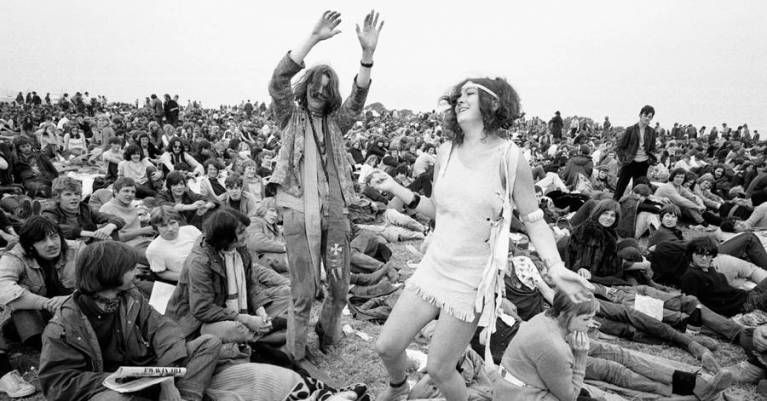
The 1960s and 70s were supposed to introduce this wonderful new age, free from the bonds of organized religion and stifling tradition.  The communal living, the flower children, Woodstock, it all seemed so wonderful in that generation.  But, besides music, it has left very little in terms of true positive legacy and ended up an ideal as naïve as the 1950s culture it was supposed to replace.  The old hippies are a sort of comical absurdity anymore.

The only actually lasting legacy of that era is the American cultural institution of marriage becoming a mockery of the relationship that my parents and grandparents maintained throughout their decades.  Fewer young people are even bothering to say vows as they’ve basically become meaningless in this age governed by immediate feelings and shunning of any type of binding commitment.  Many today have never experienced the stability that I have had with two parents who didn’t quit on each other when times got tough.

Worse many in the current generation have gone a step further and pretty much entirely given up on love.  They go to Tinder looking for a hook-up, or the whole “Netflix and chill” short-term sexual liaison, which makes very little attempt to treat physical intimacy as something special.  It is crass, it is completely centered on the body and cares nothing about the soul.  The young and beautiful can trade partners as casually as deciding what fast-food to order in.

Most young people today, even if they do not hook-up per se, think nothing about serial monogamy or living with multiple sex partners over their lifetimes.  I’ll hear things like, “how can anyone really know what they want in their early twenties?”  It is simply an expectation now that relationships are transitory and not meant to last.  Although, for some reason, most do seem to cling to exclusive rights or at least so far as they themselves can’t find anything better.

The Harsh Realities of the Sexual Economy

In the religious subculture that formed me there was always this idea of “meant to be” that accompanied romantic relationship that ended in marriage.  Divorce was not an option.  The relationship of a man and woman was spiritual.  We would barely talk about sexual attraction as a factor in this decision making process.  We were told that our being pure and being the right one would bring about success.

This denial of the sexual motivation is what would later lead to my disillusionment when I discovered things truly weren’t as they were being framed.  The reason I had been overlooked did not have to do with my character, the impossibly (before I had expressed any interest in her) had told me I would make a “great husband” and wasn’t the first to say so either, but for some reason they weren’t lining up for the opportunity to experience my greatness first-hand.

The reality is that marriage is not only about the completely virtuous pre-destined love of two people as advertised.  It is also about climbing the social ladder, gaining access to the resources that another person has, and basically being able to routinely do the nasty with the hottest piece of Mennonite asset available.  Yes, it is sexual.  Yes, there’s a reason why my Mennonite marriageability rating blog struck a chord with so many in my former religious culture.

Marriage is a type of economic transaction, there is a sexual economy, and some simply bring more to the table in terms of excitement than others.  There areas where some of us got the short end of the stick and could not compete.  This was not spoken about honestly, for many years it felt like a judgment of my character rather than what it was and would have been much better if it had been acknowledged.  At least hook-up culture is honest and doesn’t pretend to be about more than it is.

Why Hook-up Culture Does Not Work

On the surface being able to sleep with anyone seems like freedom.  I know it would not take much convincing for me to have sexual relations with multiple women.  I mean, there are many different women that I appreciate, with unique personalities, black, white or Asian, all beautiful.  Why not take turns, spread the love and share a little, right?

Unfortunately it doesn’t work like that.  First, there’s this thing of STDs, multiple partners means a wildly increased chance of an incurable and painful disease.  Second, hook-up culture is not free love.  No, it is actually more exclusive than traditional monogamy in that only the most superficially desirable specimens have a chance of success.  Fall under the height requirement, have a few too many extra pounds, and you’re out of luck with no chance at all.

Yeah, sexual promiscuity may have been good to Wilt Chamberlain, who claimed to have had twenty thousand female sexual partners, but it doesn’t work out the same for the average guy who ends up going home with nothing.  This is, in fact, the biggest issue with polygamy, some men get more of what they want, even the women may be satisfied with the arrangement, and yet there are also many disgruntled men without a chance.  Marriage increases equity by helping with the fairer distribution of a limited resource.

And, considering how many young women get chewed up and spit out by a world full of guys willing to say anything to “get in her pants” only to change their tune later, the traditional arrangement doesn’t seem so bad after all.  It is simply mind-blowing how many women, otherwise intelligent, believe that giving a guy what he wants upfront, without anything in writing to prove he is not simply playing around, will help their chances of securing his continued interest in them.

Marriage is About Equity and Protection

Multiple partners and sexual liberation only benefits some.  The current paradigm favors attractive men, who are able to select from a large group of willing women, they get what they want and then are on their way again to the next hot body as soon as things become a little difficult.  Meanwhile the guys who fall a bit short of female aspirations get nothing at all, permanently friend-zoned, with no chance of sex.

With traditional marriage there’s also some equity there, or at least in theory, in that the hottest players don’t get everything for themselves.

More importantly, saving sex for real commitment means that a woman is not stuck raising a child alone.  It also helps to establish consent.  Marriage is truly a safeguard against the exploitation of women.  Women literally bear a larger burden from sexual relations, emotionally or otherwise, and are often better off with the less flashy faithful men than those more likely to sweep them off their feet.

Lastly, it is also an arrangement that considers the long-term good.  And not only of the children who are provided security from a stable established relationship, but also of an aging woman who no longer has that youthfully attractive body and would be left with nothing.  Sure, traditional marriage never guarantees success, nevertheless it is better than the alternative of loveless sex and no commitment.

The nail in the coffin of sexual liberation is that sex is more fulfilling in the context of a committed relationship.  This is what makes me most sad about the current pursuit of carnal appetite over a selfless and more satisfying (over time) alternative.  My parents and grandparents had it right, that’s what I want more than anything else.

The Man I Never Met — Remembering Wayne_in_Maine

Standard

There are some characters you meet online and never forget.

Such was the case with Wayne_in_Maine, who could come off as a sort of cranky or cantankerous old man and yet seemed (even then) to have a golden heart under the bluster. There is a way or an intuition I have, that can cut through the harshness on the surface. I can just know when someone is full of themselves and cruel despite their nice-sounding words or truly compassionate despite their surface-level unpleasantness.

Wayne was the latter kind.

The first thing notable about Wayne was that he was intelligent, he had been a nuclear engineer, could articulate his arguments well, and clearly was not going to be backed into a corner. The second thing was that he had a very unique journey and a different perspective from the other ethnic cultural inhabitants of the MennoDiscuss forum. He had gone from a hippy leftist to a conservative-minded neo-Anabaptist and could speak with authority on matters of science unlike the religiously indoctrinated parroting their fundamentalist teachers.

Initially, I saw him as a sort of threat to my worldview, another person compromised by secular influence trying to get Mennonites to shift to his views, and yet later his perspective would actually strengthen my faith when it faltered against the scientific evidence clearly pointing to the appearance of age in the universe.

Because of Wayne, I learned that young-Earth Creationism (or YEC) is not necessary to have a sincere and grounded faith in Jesus Christ.

In fact, it might actually be a liability and cause many to fall into a serious crisis of faith when they go to university, study biology or almost any science and find out the case for YEC is not as clear as it was presented. That Wayne, a rational mind and well-educated, could both reconcile modern scientific theory and his faith was more useful to me (a critical thinker) than some Hammy tourist attraction put there to feed the confirmation bias of fundamentalist midwits. I came around to his position and haven’t looked back.

I have long respected Wayne despite our sometimes clashing and my occasionally coming away feeling unappreciated by him.

He was a man a conviction. He gave up lucrative career paths, actually tried communal living, literally sold all from what I recall, and had come much further in developing his own perspective than most do.

However, despite my respect, Wayne’s version of Christianity didn’t appeal to me. He had, inadvertently, pushed a friend of mine away from Anabaptism with one of his responses. I still believe his take on the rich young ruler account misses the mark, where he read the response of Jesus as a sort of legalistic prescription rather the same as we understand Luke 14:26 where Jesus says if someone “does not hate father and mother, wife and children, brothers and sisters—yes, even their own life—such a person cannot be my disciple.”

I know, for a fact, that he did not take that literally. He came across, from my limited ability to see, as a very loving father and committed husband. I can’t imagine him hating his family to prove his commitment to Christ. Nevertheless, he was adamant about being completely Anabaptist in his perspective about wealth or warfare, an inconsistency of thought that bothers me about him and others of that fold. It did annoy me too when he characterized the Orthodox tradition as “smells and bells” as if worship was supposed to be something other than a beautiful or full sensory experience.

The Cancer and Change

After I heard about Wayne’s cancer diagnosis, none of our previous sparrings mattered much to me. Wayne, despite our differences, was a true friend and someone that mattered to me. It was especially important to me, given my mourning of Uriah, to talk to someone coming to terms with their poor prognosis and yet not giving up hope.

When I reached out on Facebook Messenger, mentioning Uriah and my desire to meet with him, he replied quickly and with more warmth than I had expected. There was no standoffishness, as had kind of been a feature of his personality, he reciprocated the desire to meet and we talked about various matters of faith.

I took a look at some of the MennoNet discussions he was involved in and got a laugh together about the various bad arguments being used. That’s one thing about him, his humor was dry and always fun, or at least fun when you were on the same side.

It was a sort of therapy, talking to this different side of the pragmatic engineer. Truly, it was special, the man that I saw emerge in this final trial was different. My own thought was that this was the Wayne that was always there under the snide comment and cynicism. Men can put up their walls, to not appear vulnerable, and that was no longer there. We were just two old keyboard warriors with nothing left to prove to the other.

And that’s not to take away from anything he said as far as the grace he was given to endure to the end. It was definitely something spiritual. His testimony of faith was clear. As a friend described him, in this transformed version, “It was like he became a totally different person. Happy, cheerful, optimistic.” He would not be defeated in death and I wanted to hear more about how a rational man, such as himself, given my own struggles, could continue in hope of the eternal.

I had to think of this Scriptural passage:

Praise be to the God and Father of our Lord Jesus Christ! In his great mercy he has given us new birth into a living hope through the resurrection of Jesus Christ from the dead, and into an inheritance that can never perish, spoil or fade. This inheritance is kept in heaven for you, who through faith are shielded by God’s power until the coming of the salvation that is ready to be revealed in the last time. In all this you greatly rejoice, though now for a little while you may have had to suffer grief in all kinds of trials. These have come so that the proven genuineness of your faith—of greater worth than gold, which perishes even though refined by fire—may result in praise, glory and honor when Jesus Christ is revealed. Though you have not seen him, you love him; and even though you do not see him now, you believe in him and are filled with an inexpressible and glorious joy, for you are receiving the end result of your faith, the salvation of your souls.

(1 Peter 1:3-9)

More important than all of his intellectual endeavors and Christian apologetics, theory or theology, is Wayne’s undying faith through trial is of the greatest comfort to those still in the fight. I never did get to have that face-to-face meeting that we had committed to upon his planned move to Pennsylvania to be closer to his daughter and grandchild. We had planned to meet in order to give us both something to look forward to when he did.

Now that meeting will have to change locations. Wayne took his final breaths yesterday evening, on August 12th, a couple of days after his 65 birthday. By God’s grace, in triumph, we’ll see each other on that other side.

I’m sad that Wayne remains a man that I’ve never met, in the flesh, despite our interactions over the years. However, in his terminal illness, there was also a man that I never met, that softer side, and feel blessed have finally met this man. I loved him and believe that he loved me too. I’ll remember our last interactions for much more fondly than our first. It was beautiful to see his golden heart revealed.

My Suspicions Confirmed

Standard

I’ll have to concede, I was wrong about face masks.  Early in the pandemic, in January of 2020 while the corporate media ‘experts’ were saying that we should be more concerned about the seasonal flu.  I was worried about this mystery virus in Wuhan and decided to get a box of N95 masks in case my fears were confirmed.  I was ridiculed, at the time, for my warnings and telling people to be prepared.

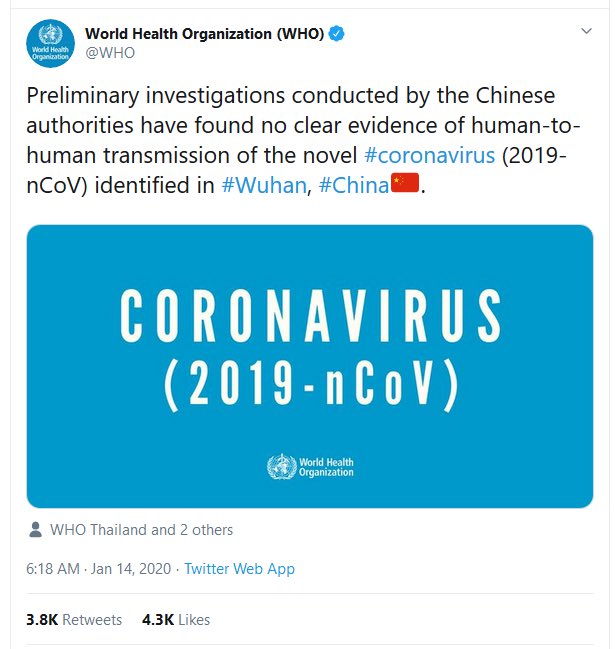
Months later, as the “no human-to-human transmission” claim of WHO became too obviously false to ignore and the glib urgings of politicians for their constituents to visit China were replaced with terror, that confirmed my warnings.  But now, with mask mandates and recommendations rolling out, many friends began to resist the idea.  They weren’t going to wear a “face diaper” and ridiculed the idea that a bit of cloth would be effective against a virus.

Of course, they were a little right, cloth masks aren’t at all effective against stopping the spread of the virus and now the corporate media is finally conceding this.  But still, based on laboratory experiments and filtration level, I believed my N95 masks were effective.  However, laboratory conditions are not the real world and, eventually, even that became a question mark for me.  Many countries also require facemasks with the masks because the masks are not adequate.

A few weeks ago, I may have overstated, I said that masks were completely ineffective at stopping the spread.  Technically correct since the virus spread as much (or even more) in states with strict requirements and yet I’ve also ran into some convincing data that suggests the good masks, the N95’s with a decent seal, may make an 10% difference overall.  So on this basis I’ll admit there could be marginal benefit.

The Wishy-washy Way To Truth

Many people, once they’ve made up their minds, never reconsider their stance.  If they believe masks are stupid then they will use every excuse in the book not to wear one.  I’ve heard them all.  The fear about being dehumanized.  That breathing carbon dioxide is dangerous.  But then they’ll contradict by calling people who disagree “sheeple” and claiming that something that can stop carbon dioxide from leaving can’t stop a virus from entering, hmm?

This is called confirmation bias.  People are emotionally invested in their ideas.  It is not easy to admit being wrong after making strong statements one way or another. So, rather than be on an unbending quest for the truth, most people (including your’s truly) will seek out the information that ‘confirms’ an established position and ignore what does not.  It takes much more effort to take an honest (and critical) look at the evidence and go wherever it leads.  Few actually do.

Confirmation (or my side) bias is powerful because it is hidden under layers of fact and explanation that sounds rational.  The position being guarded seems completely reasonable to the holder of the opinion, in their eyes they own the moral high ground, and those who disagree are simply ignorant, selfish or otherwise deficiencient.  It is often this moral stake in the ground that makes it so hard to back off from an established opinion, we would rather continue in the righteous delusion than deal with the possibility the other side was right.

As the saying goes, “a man convinced against his will is of the same opinion still.”  Even a mountain of evidence cannot uproot an established position.  It is the same as a fortification on a hill that can hold off waves of an assault with few defenders.  That hill being our ego, the banner flying our identity, and we cling to this ground because to lose it would cause us to question ourselves, ask the hard questions of if we are truly virtuous and good, if we are actually intelligent or fooled by our own desire to be right?

It is far easier to remain in the comfort of our own righteous delusion than to consider that the very foundation of our citadel of reason could be sand.  We fear changing our perspective will mean we’re wishy-washy or, worse, might require us to examine the underpinnings of other long held beliefs and leave us with no bedrock to build on.  Most of all, we fear the ridicule and abuse of our ideological enemies, we can’t let them win!

Powerful Propaganda to Innoculate the Masses

The point of propaganda is to build confirmation bias.  The propagandist tries to encourage an emotional bond to an idea, often through appeals to popular prejudice, and yet not overtly or in a way that the targets know they’re being used.  Almost every war is fought for the financial benefit of a few and yet sold as some righteous common cause.

For example, both sides of the American Civil War felt they were fighting for civil rights.  Both sides used labor that was either property outright or treated like a rented mule.  The Northern elites, for all their moralizing abolitionist hubris, depended on an industrial machine that exploited poor European immigrants, taking them right off the boat to send into dark mines, dangerous factory conditions or conscript them into the meat grinder of Lincoln’s war.  The South, obviously, was fighting for the privilege of the slaveholding elites and yet convinced they were depending themselves from Northern tyranny and aggression.

Propaganda is about framing an issue in terms favorable to a particular side without ever appearing to be biased to the target audience.  It is subversive by design, aims to overwhelm the true complexity of debatable mathers with simple sloganeering, refrains meant to be picked up by the midwits in media and then spread by the unsuspecting masses.  The point is to convince the enforcers of the order, the common folk, that they are doing God’s work, being patriots, on the side of irrefutable science or what have you, when in reality they’re serving some undisclosed agenda.

Hitler did not rise to power by being the caricature of evil that we see him as on the other side of the conflict.  No, rather, he had convinced enough of the German people that he was on the side of progress, that he would remove the causes of disease and suffering, then build their country back better than ever.  The Nazis dressed up in a magnificent authoritarian style, it might look bad in retrospect, knowing where it was leading, yet was hope for a nation emerging from years of crisis.

The Safe and Effective Deception

As part of the propaganda campaign, to convince people to inject the controversial new vaccines, news articles repeated the “safe and effective” mantra over and over again.  Both of those words are, of course, subjective.  However, they are assuring and have a sort of sophisticated ring.  Surely this sort of confident declaration is the result of rigorous science and more or less an unquestionable truth, right?

Those in support of vaccine mandates completely ignore the known risks, Big Tech monopolies literally removing groups of people who had encountered adverse effects, and seem to have no awareness of the great potential of unknown risks that come with any new technology hastily introduced.  I mean, somehow the 737 Max got through the approval process, was essentially declared safe and effective, despite a serious defect.  So, in short, we can’t possibly know that there are no long-term health consequences of these experimental vaccines and are only now starting to study that potential.  

But the thing most egregious propaganda is not the downplaying and dismissal of the documented deaths or reasonable concerns of those who have studied history enough to know how quickly narratives change.  They are simultaneously attacking treatment options, like Ivermectin, that are truly effective, cheap and present less of a risk than Tylenol.  It is actually this that makes me distrust them as far as the vaccines.  Why are they so adamantly against things that are actually safer than the vaccines and with a proven record?

Even as the new vaccines have proven to be ineffective as far as stopping the spread and preventing infection, despite the natural immunity of those who had the disease being up to thirteen times stronger than the vaccines, the current propaganda narrative continues that it is the unvaccinated are the real cause of the suffering.  Nevermind that Pfizer, Moderna and Johnson & Johnson all have financial ties to big media and make a windfall off of this new product.


Far Should Our Trust Go?

The real question is why should we trust the same political and media establishment that lied about where the virus originated, initially downplayed it as less a threat than the seasonal flu, parroted the Chinese regime that was no human-to-human transmission, and even had the audacity to encourage people to visit the crowded streets of Chinatown?

At what point do we start to question their bold declarations?

Can we really trust the same people who, in a complete panic after being wrong, first said “two weeks to stop the spread” and then somehow transitioned this into months of lockdowns?  Can we trust the people who, months ago, laughed off the concerns about vaccine cards being turned into a sort of passport and are now pushing for that very thing?  What can be for a President who is on record, before the election, saying he would not mandate vaccines and is now trying to impose that very policy?  

Supposedly they’re completely trustworthy this time around?

Anyhow, each day I hear stories, that man a friend knew who faithfully wore a mask, had two shots, and then died after becoming sick from the Covid virus.  We have the trickle of stories about vaccine related health complications, contaminated injections resulting in deaths and recalls of millions of doses, warnings from the very inventors of the mRNA technology, and yet told that we’re a conspiracy theorist to question.  Those blinded by confirmation bias will never see.

Raped — But Not Devalued

Standard

I was on the elevator down from the psych ward, having visited a friend in a bit of a rough patch and struck up a conversation with one of the other riders.

As it turned out, she was a psychologist, visiting a friend (not her patient) who was not doing so well.  This young man, now catatonic, had once had it all together. He was a standout athlete, had a girlfriend who was gorgeous, and then something happened that turned his world upside down.

What would take the feet out from under a strong and healthy male?

He was raped.  

While in the military, the Navy as I recall, he was forced by another man and this started his downward spiral.  It is not possible to know, having never gone through anything similar myself, what happened in this young man’s mind.  But one can imagine, if he had an identity and self-worth built around his ability to protect, being overpowered in this way would have to be absolutely devastating to him.

How could he provide security for a woman if he couldn’t even defend himself from an assault?

His relationship, his life, his will to live, crumbled.  This one experience, possibly over in minutes, probably not doing him lasting physical harm, broke him mentally and turned him into a shell.  I have no idea of what became of him.  Did he find a way to bounce back, form a new identity, move on from the trauma and overcome?  Or has he withered away into nothing?

More Common Than Thought

One of my first encounters with a victim of sexual abuse was in school.  A friend of mine, from elementary school all the way through high school, told me that he had been molested by his stepbrothers while living in Texas with his biological dad.  I had always felt bad for Justin. He was socially awkward and bullied by classmates, had a domineering mother, and came out of the closet later on as a teenager.

I’m also had some very close female friends that have told me about being raped.  Their stories are very similar.  A trusted male, often a boyfriend, talks them into a place where they are unable to escape his sexual aggression.  In all of these cases, to head off any assumptions, there was no alcohol involved.  They were good morally upright girls who were too trusting of a male ‘friend’ who stole their innocence and left them feeling completely broken.

Then there’s Adam, the school friend who took his life a few years ago, victimized as a child by a predator college professor.  His alcoholism and failed relationship no doubt, in part, linked to this experience.  I mean he let me in on this secret, and many years after it happened, so it was obviously still part of his thought process.

At one point in my life all of this was unthinkable.  I was in a home that offered stability and protection, with two good parents.  I’m sure there were things that I did not know about, but my community seemed mostly healthy and safe.  There was simply no reason for me to assume this sort of violating behavior was common.  So statistics about 1 out of 5 women being victims of rape seemed impossible.

It is truly understandable that many who were raised in sheltered homes are in denial of the extent of this problem.  It makes sense that they would try to explain it away as the promiscuous putting themselves in a compromised position.  It is probably a good thing when the reaction is disbelief. Most men aren’t rapists and would be horrified, like I was, if they heard a story firsthand from someone they love.

Boundaries and Consent

As part of my culture, and also my lingering shyness, it is difficult for me to so much as give a woman a hug.  It’s actually very frustrating to me, that I’m so awkward in this regard and would almost need to ask permission rather than simply make the read.  Why is this?  Well, it only seems right to respect another person’s space.  Intimacy is supposed to be reserved for special people, right?

It actually makes me livid to see even a boy too grabby with a girl too early, even if she seems to be enjoying it, because he’s treating her as an object.  And yet this sort of ‘confidence’ is often rewarded.  The women who think that every man is a rapist may have simply spent way too much time with men who do not respect their or any boundaries. 

And, yes, men who pressure with “if you love me you will…” are evil. 

Period.

Rape is a product of an entitled mind, a psychopath, someone who sees other people as something to be exploited for their pleasure.  Sure, maybe they can turn on the charm and blend into normal society, but their true character is revealed when there is nothing to stop them.  Be it in a back alley or her bedroom that he talked himself into while her parents were away, rapists exploit the vulnerable.

Incidentally, this is why I’m still in favor of at least one aspect of traditional courtship.  If a man can’t keep his hands off of your body for a few dates, if there is any unwanted pressure whatsoever to be physically involved, then maybe find someone who is interested in you rather than merely sexually attracted to your physical form.  If a man can’t commit to a relationship without sex, he certainly isn’t the type to commit after sex.

Lust and Self-control

In the animal kingdom there is no such thing as consent.  Often the strongest, most competitive, male gets to mate and by simply overpowering the female.  He runs on instinct, male hormones, testosterone, and is basically acting out his natural programming.  We don’t generally describe a buck “in the rut” as being a rapist because we do not see the animal as capable of complex moral reasoning.

And humans do have these similar underpinnings too.  Men, for the most part, are more aggressive, and women tend to be more submissive, agreeable, etc.  It is simply the substance we’re made of in the same way it is for any other animal.  We’re instinctive creatures that seek out, and imagine, the things we want.  But we also have a layer beyond this, a large frontal lobe in our brain, which gives us an extra capability for self-control.

Lust is often confused with simple desire for something.  Many in a strict religious upbringing, like my own, are made to feel extremely guilty for looking upon a fair maiden and finding her desirable.  But that’s not lust, that’s healthy sexual attraction and not a sin.  What is lust is when we dwell on something that’s not ours to take. That is a path that can lead to rape, as in this Biblical account:

Amnon became so obsessed with his sister Tamar that he made himself ill. She was a virgin, and it seemed impossible for him to do anything to her. […]
So Amnon lay down and pretended to be ill. When the king came to see him, Amnon said to him, “I would like my sister Tamar to come and make some special bread in my sight, so I may eat from her hand.” David sent word to Tamar at the palace: “Go to the house of your brother Amnon and prepare some food for him.” […] 
But when she took it to him to eat, he grabbed her and said, “Come to bed with me, my sister.” “No, my brother!” she said to him. “Don’t force me! Such a thing should not be done in Israel! Don’t do this wicked thing. What about me? Where could I get rid of my disgrace? And what about you? You would be like one of the wicked fools in Israel. Please speak to the king; he will not keep me from being married to you.” But he refused to listen to her, and since he was stronger than she, he raped her.

(2 Samuel 13:2‭, ‬6‭-‬7‭, ‬11‭-‬14 NIV)

Awful!

The sad part is that when Amnon’s lust was satiated, he discarded his half-sister (not biologically related) as if his sin were somehow her fault.  Incidentally, this violence did not go unavenged. Amnon was eventually killed by the victim’s brother, Absalom.  But this lack of self-control seemed to plague David’s house.

Considering what king David did to have another man’s wife, we could say “like father like son” to explain what happened here. 

Rabid Dogs Are Put Down

In the end, we all have sexual desires. Attraction is natural and not something to be ashamed about.  But, when this crosses over into lust, when we choose to dwell on something unattainable and scheme to have it through immoral means, that’s a choice and what separates us from animals.  The reprobate tries to hide behind their urges and impulses. 

If a dog can’t keep from biting we’ll put it down. 

Should a person with no self-control, who harms others because of their unwillingness to rein in their lusts, be treated any differently?

I know Jesus said, pertaining to those who harm the “little ones” (referring to those young in the faith, not necessarily children), that it would be better that a millstone be hung around the neck of those who do these things and they be cast into the sea.  He may not have been talking specifically about sexual abuse and yet, knowing what this sin does to those who have fallen prey, I’m quite certain it’s included.

Jesus never said, “if she’s wearing a skimpy outfit, then she shares some of the blame,” but he did say, in the context of lust, If your right eye causes you to stumble, gouge it out…” (Matthew 5:29a NIV) 

Good people do not create scapegoats.

Godly men do not blame women.

Your Body Is Not Your Worth

The more important message of this blog, and my main reason for writing it, is to tell those who have been through this kind of trauma this: Your rape is not a reflection of you or your value.

As one who fully appreciates the human form, especially that of the female body, and completely desires physical intimacy, it could be easy to treat our bodies as being one and the same as our being.  We show preference based upon stature, beauty, shape and other matters of outward appearance.   So it can feel as if this form we reside in is of greatest importance and, therefore, what happens to it a reflection of ourselves.

Women, traditionally, put value in their cleanliness or purity, men in their strength and ability to protect.  Our identity is often wrapped up in this external image.  Rape is an attack on the physical manifestation of these things and causes the victim to question their identity or value at a deeper level.  This is why, in mere moments, someone can be shattered.  They now see themselves as dirty or defiled, inadequate or weak, and thus of less value.

But the truth is that our human value has nothing to do with what others have done to our bodies and everything to do with how we choose to live.  

I’ve encountered toxic and nasty people, bitter, who have used the abuse they’ve experienced as an excuse to mistreat others.  I have also met those who have not been defeated, who are able to put the unpleasantness behind them, and even become a better person in the end.  This idea that we’re damaged goods or have lost our worth because of something that happened, through no fault of our own, is choosing to put our own value in our bodies.

Do not be afraid of those who kill the body but cannot kill the soul.

(Matthew 10:28a NIV)

There is so much more to our being than our physical form.  We might convince ourselves, based on the world’s obsession with the external, that our worth is in only these physical things.  But what matters, the real value we have, is our soul and that thing that can’t be touched. 

Age will eventually destroy our bodies. The tall youth will some day be hunched over, the strong man’s muscles will atrophy, wrinkles will spread on that angelic face.  The world abuses us, we will all likely face trauma even if not rape, and yet—if we know that value is something other than the physical—our worth will increase.

At the very least, no matter what anyone has done to your body, whether you were abused as a child, raped or whatever, I do not look at you as damaged or inferior. 

No, you are strong to keep going. There is a special beauty to a survivor that is not found in those sheltered.  And I believe there are more who agree with me than do not. 

Your value is in who you are and not what was done to you!

Are not five sparrows sold for two pennies? Yet not one of them is forgotten by God.
(Luke 12:6 NIV)

Broken Records: The Choice To Be Healed

Standard

Adam is a friend of mine.  We have gone out to eat on multiple occasions since being introduced.  He’s a bit eccentric, he carries a notebook everywhere, has humor that doesn’t quite hit the mark, spiritual rather than religious, dresses a little like an old-school hippie and is sort of alt-right conspiracy-minded. 

Adam is also depressed and a broken record.  Time and time again he goes back to his relationship with his father and wants some sort of validation that he never does receive.  His father, his opposite politically, left when he was a child, seems to have some mental issues of his own and can be very degrading when things don’t go his way.  It is quite evident that the sins of the father have visited upon the son.

I have urged Adam to move on, told him that his biological father will never give him what he so desperately wants, and have suggested that he do as I have done when let down.  Namely, I have told him to come to Holy Cross.  The Orthodox have fatherly figures who represent the Heavenly Father for the fatherless. 

Unfortunately, Adam, despite his desperation, is stuck on doing things his own way.  From the first time we met until now there is a wall of resistance that goes up against Christian religion and even what seems like an inability to understand simple explanations.  For example, I used the illustration of Naaman having to dip in the river Jordan to be healed, thought I had explained well, and got nothing but a blank look of his being genuinely perplexed.

There’s truly not much hope for Adam until he is able to let go of his disappointments and hope of some sort of resolution on his own terms.  And, quite frankly, even if his dad would miraculously transform into the father he envisions as ideal, that would not fix what broken in Adam.  He will try drugs, he asks for my “fellowship” with him, but absolutely refuses to dip in those healing waters of the Church.

It’s sad because his repeatedly going back to this makes me feel as if I’m wasting time on a lost cause.  I mean, it’s hard not to do that inner “here we go again” eye roll when there seems to be no progress.  And it does certainly work on my patience too.  But there’s one big reason why I do not write him off entirely.  What is that reason?  Well, maybe because I’m not all that different from him.
 
My Own Skipping Record

In the days of vinyl records there was nothing more annoying than the skip.  It was what happened when the record had been mishandled and the surface grooves scratched.  The needle would travel down the groove, reach the scratched area, and jump back into the prior groove.  The result is that the music abruptly stops and makes an unpleasant transition over and over again.

Being stuck in a rut is not fun.  Ending up in the same place no matter how hard you try will exhaust the strongest person.  Worse, when others try to help pull a mired soul out, and the stuck person goes sideways rather than forward, many will leave concluding that they do not want to be helped.  And sometimes that is indeed the case.  Some do enjoy the pity party attention and are simply a drain of resources that could be used for those who truly want out.

Those who have read my blogs over the past few years have probably started (long ago) to wonder if any progress has been truly made.  And, believe me, some days I do wonder myself as I give a slightly different angle on the same themes over and over again.  I mean, you get it.  I had some really big expectations and ended up really disappointed at the end.  So move on already, right?

And the truth is, I have in many regards.  I’m not the same person as I was a year ago.  I have gained confidence, continue to attend to my responsibilities, and the feelings of loss grow less intense with each repeat cycle.  That said, the recent setbacks, the physical pain, along with the unresolved situation with Charlotte, can very quickly lead to that spiral back into those past hurts.  There was no real resolution or closure there, to survive I simply pivoted to new hopes.   

Completing the transition, out of the wilderness of broken glass to my new promised land, means seeing a fulfilment of the impossibly.  That means Charlotte being here.  Until that moment when we meet in the airport terminal, her safely on US soil, there will be that cloud of uncertainty hanging over me.  It does cause me to skip at times, to go back to those feelings of helplessness and worries that my hopes are still entirely delusion.

I choose to believe. But not because it is easy to believe.

As the man with the sick son who came to Jesus, “I believe; help my unbelief!”

Do You Want To Be Healed?

A year or two ago, this was the text for the Homily one Sunday morning:

One who was there had been an invalid for thirty-eight years. When Jesus saw him lying there and learned that he had been in this condition for a long time, he asked him, “Do you want to get well?” “Sir,” the invalid replied, “I have no one to help me into the pool when the water is stirred. While I am trying to get in, someone else goes down ahead of me.” Then Jesus said to him, “Get up! Pick up your mat and walk.”

(John 5:5‭-‬8 NIV)

It really struck me, more than ever before while hearing this passage, that Jesus asks the man if he wants to be healed.  Imagine that, a man, waiting for nearly forty years, nobody helping this unfortunate man into this healing pool.  He, like Adam, like myself before the pursuit of the impossibly, had been waiting on rescue by the means that he could understand.  His days must’ve passed an increasing nightmare of his own paralysis and being surrounded by other hurting people more concerned with their own needs.

Jesus asks, almost as if knowing the man’s will to be healed is permission.  And the incredible part?  After hearing the man’s complaint about no help, simply commands him “get up” and the man does.  His faith set him free.

That in contrast with this:

Jesus left there and went to his hometown, accompanied by his disciples. When the Sabbath came, he began to teach in the synagogue, and many who heard him were amazed. “Where did this man get these things?” they asked. “What’s this wisdom that has been given him? What are these remarkable miracles he is performing? Isn’t this the carpenter? Isn’t this Mary’s son and the brother of James, Joseph, Judas and Simon? Aren’t his sisters here with us?” And they took offense at him. Jesus said to them, “A prophet is not without honor except in his own town, among his relatives and in his own home.” He could not do any miracles there, except lay his hands on a few sick people and heal them.

(Mark 6:1‭-‬5 NIV)

The disbelief of those who knew Jesus as merely a man, the carpenters son, limited what he was able to do.  Spiritual healing is, and has always been, a matter of our own choice.  So many of us insist on doing things our own way, we refuse to dip in our muddy Jordan rivers because of pride, we wait on rescue believing that our salvation comes from other people, yet all we need is to look up in faith and then healing is possible.

No, this does not mean we will be spared physical ailment or live forever in our current form.  Even Lazarus, raised from the dead, passed from this life.  But we can be made spiritually whole.  That is why I keep writing, maybe I sound like a broken record, maybe this is too much for many people who stopped reading this blog long ago, still I write so that my most faithful friends may someday also share in my joy having known of my sorrows.