Who Are Our Kin?

Standard

The book of Ruth is a nice little oasis in the midst of dry and tedious reading.  Up to this point the Bible isn’t all that relatable.  It has some highlights, interesting characters, but is stories of ethnic cleansing, description of weird sacrificial rites, polygamous patriarchs and stonings for picking up sticks, violence and laws, it is cumbersome.  

And then you get this:

But Ruth replied, “Don’t urge me to leave you or to turn back from you. Where you go I will go, and where you stay I will stay. Your people will be my people and your God my God. Where you die I will die, and there I will be buried. May the Lord deal with me, be it ever so severely, if even death separates you and me.” When Naomi realized that Ruth was determined to go with her, she stopped urging her. So the two women went on until they came to Bethlehem. When they arrived in Bethlehem, the whole town was stirred because of them, and the women exclaimed, “Can this be Naomi?”

Ruth 1:16‭-‬19 NIV

What a contrast to the storytelling prior, all of the resistance to racial mixing as well, here a Moabite woman would rather remain with her Israelite mother-in-law than stay with her own people.  It’s personal.  And the romance that follows, while very foreign and featuring many practices which are weird to our own ears, shows a more compassionate side of the legal system instituted by Moses.  Boaz acted both out of love and duty as guardian-redeemer.  Starting with his genuine concern for her safety:

So Boaz said to Ruth, “My daughter, listen to me. Don’t go and glean in another field and don’t go away from here. Stay here with the women who work for me. Watch the field where the men are harvesting, and follow along after the women. I have told the men not to lay a hand on you. And whenever you are thirsty, go and get a drink from the water jars the men have filled.”

Ruth 2:8‭-‬9 NIV

This paternalistic care a sharp contrast to an episode in the book of Judges when a Levite and his host offered their innocent women to please the perverse desires of the men in the local community:

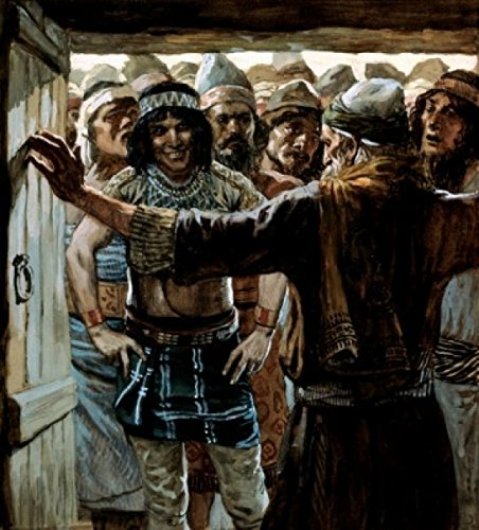
While they were enjoying themselves, some of the wicked men of the city surrounded the house. Pounding on the door, they shouted to the old man who owned the house, “Bring out the man who came to your house so we can have sex with him.” The owner of the house went outside and said to them, “No, my friends, don’t be so vile. Since this man is my guest, don’t do this outrageous thing. Look, here is my virgin daughter, and his concubine. I will bring them out to you now, and you can use them and do to them whatever you wish. But as for this man, don’t do such an outrageous thing.” But the men would not listen to him. So the man took his concubine and sent her outside to them, and they raped her and abused her throughout the night, and at dawn they let her go. At daybreak the woman went back to the house where her master was staying, fell down at the door and lay there until daylight. When her master got up in the morning and opened the door of the house and stepped out to continue on his way, there lay his concubine, fallen in the doorway of the house, with her hands on the threshold. He said to her, “Get up; let’s go.” But there was no answer. Then the man put her on his donkey and set out for home.

Judges 19:22‭-‬28 NIV

While the brutal rape and murder of this poor concubine was later avenged, it is quite clear that the two men were more concerned with saving their own skin than protecting those whom were entrusted to them.  Not saying it would be easy to know what to do in those circumstances.  It isn’t like there was 911 to call or semiautomatic weapons to hold back the lascivious mob.  Still, Boaz stood ready to protect Ruth, a foreign woman, from the other men who would very likely have taken advantage.  How easily we can take our own law and order for granted.

Where the men made the woman vulnerable for exploitation in the book of Judges and in other parts of the Bible, like Abraham claiming his wife was his sister or Jacob putting his family in the front, in Ruth it is the women putting themselves in a vulnerable place to capture the attention of the good man:

One day Ruth’s mother-in-law Naomi said to her, “My daughter, I must find a home for you, where you will be well provided for. Now Boaz, with whose women you have worked, is a relative of ours. Tonight he will be winnowing barley on the threshing floor. Wash, put on perfume, and get dressed in your best clothes. Then go down to the threshing floor, but don’t let him know you are there until he has finished eating and drinking. When he lies down, note the place where he is lying. Then go and uncover his feet and lie down. He will tell you what to do.”

Ruth 3:1‭-‬4 NIV

I’m not sure if the description of Ruth acting out on her mother-in-law’s bold plan to lay at the feet of Boaz is euphemistic language.  Seems risky to be that intimate with a man who was drinking and “in good spirits” as the text tells us.  But, that said, whatever transpired that night, we know that he took responsibility for Ruth and also the welfare of Naomi.  And, in this regard, the guardian-redeemer system worked as designed.  But mostly because of Boaz having genuine care in his heart.  Ruth, for her part, was his equal in that she was loyal to her mother-in-law to the point of leaving her own homeland.

This is a story exceptional in a good way and likely part of the Biblical canon so far as has to do with the lineage of King David.  It also brings us to Bethlehem, where Jesus (of the line of David via his mother) was born.  That both Ruth and Boaz stand out as characters for their abiding love is significant.  In a time when woman were treated as if property or merely objects for male pleasure, we have honorable and caring men.  Boaz took Ruth under his wing in the same way his grandson longed to love his people:

“Jerusalem, Jerusalem, you who kill the prophets and stone those sent to you, how often I have longed to gather your children together, as a hen gathers her chicks under her wings, and you were not willing.

Matthew 23:37 NIV

In this account there is a clear precedent for a family relationship that goes beyond only our biological relatives.  The law of the kinsman or guardian-redeemer, through Naomi, was also applied to Ruth.  And, likewise, through adoption we become sons and daughters of Abraham by our faith (Galatians 3:6-14) and true children unlike those blood relatives of the Patriarch who rejected their Salvation.  Our real kin are those who fulfill the role they have and love in the manner of Boaz or Ruth.

The Russo-Ukraine War—A Timeline

Standard

As with most reporting of current events, the presentation of the ongoing conflict between Russia and Ukraine is distorted.  Both sides are engaged in their own propaganda.  It is said that truth is the first casualty of war and, in the case of this one, the falsehoods span many decades.  The first thing to do, to get beyond this, is explore the history leading to to the present…

862 —1242 

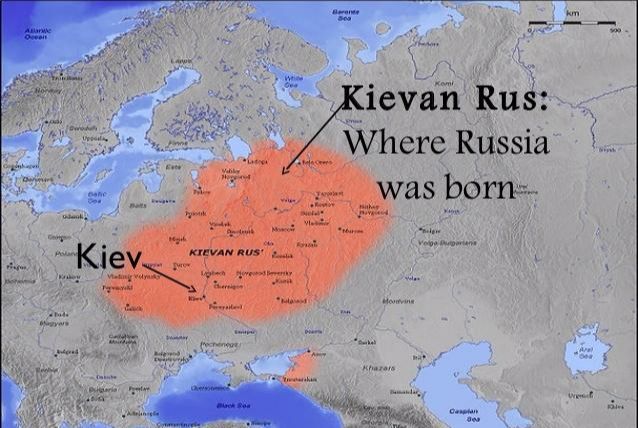
East Slavic tribes, in the area of modern-day Ukraine, Belarus, and Russia unite to become the Kievan Rus’ people.

980 — 1015

Vladimir the Great brought Christianity to the Kievan Rus’ people.  Often referred to, in the West, as the Eastern Orthodox, this tradition (practiced from Egypt all the way to Greece) broke from the Roman Catholics in 1054.

1237 — 1480

The Mongols invaded and, laying siege to Kiev in 1240, came out victorious.  This begins a period of Mongol rule.

1547 — 1721.

Mongol rule fades.  The Muscovy dynasty rises.  This Tsarist Russia, with periods of chaos and conflict, including what is referred to as a Time of Troubles from 1598 to 1613, ends with the rise of Peter the Great and brings us to the modern age.

1721 to 1917

The Russian Empire expanded from historical Kievan Rus’ territory and, stretching around 8,800,000 square miles, became the third largest empire in history behind the British and Mongol empires.

An empire spans West to East

March 22, 1917

Tsar Nicholas II and his family are murdered by Bolshevik revolutionaries.  Their dynastic rule over the people of Ukraine, Moscow, and the entire Russian Empire, which had been weakened by their involvement in WW1, was replaced by a Communist state.  The USSR (Union of Soviet Socialist Republics, aka the Soviet Union) was very antagonistic towards Christians.

Orthodox Cathedral demolished by Soviets

1922–1952

Joseph Stalin, an ethnic Georgian, becomes the General Secretary and begins his rule over the Soviet Union.  His reign is marked by the Great Purge, from 1936 to 1938, when from 700,000 to 1.2 million people are killed, the number including many Orthodox priests, and political dissidents are rounded to be sent to Gulags.

1929

The Organization of Ukrainian Nationalists (OUN) is formed in Vienna.  This group was known for the assassinations of Poles, Russians, and Jews.  It was later supported by the CIA as part of an effort to undermine the Soviet Union and led to a bloody insurrection.

1932-33

Of Stalin’s atrocities, the Ukrainian famine or Holodonor, when 3.9 million were starved to death, stands out.  This suffering is directly the result of a collectivist plot against successful private farmers.  This murderous Soviet campaign was covered up with the help of the New York Times and Walter Duranty, a Pulitzer Prize-winning journalist, who wrote glowing reports about Stalinism.

June 23, 1941

Stepan Bandera, the leader of the far-right Ukrainian nationalism, reaches out to Nazi invaders offering his support in exchange for an independent Ukrainian state.  Bandera is responsible for the brutal massacre of ethnic Poles, from 1943 to 1945, and is celebrated today as the father of Ukraine.  Ukrainian paratroopers (and nationalist priests) today chant “Our father is Bandera, Ukraine is our mother!”

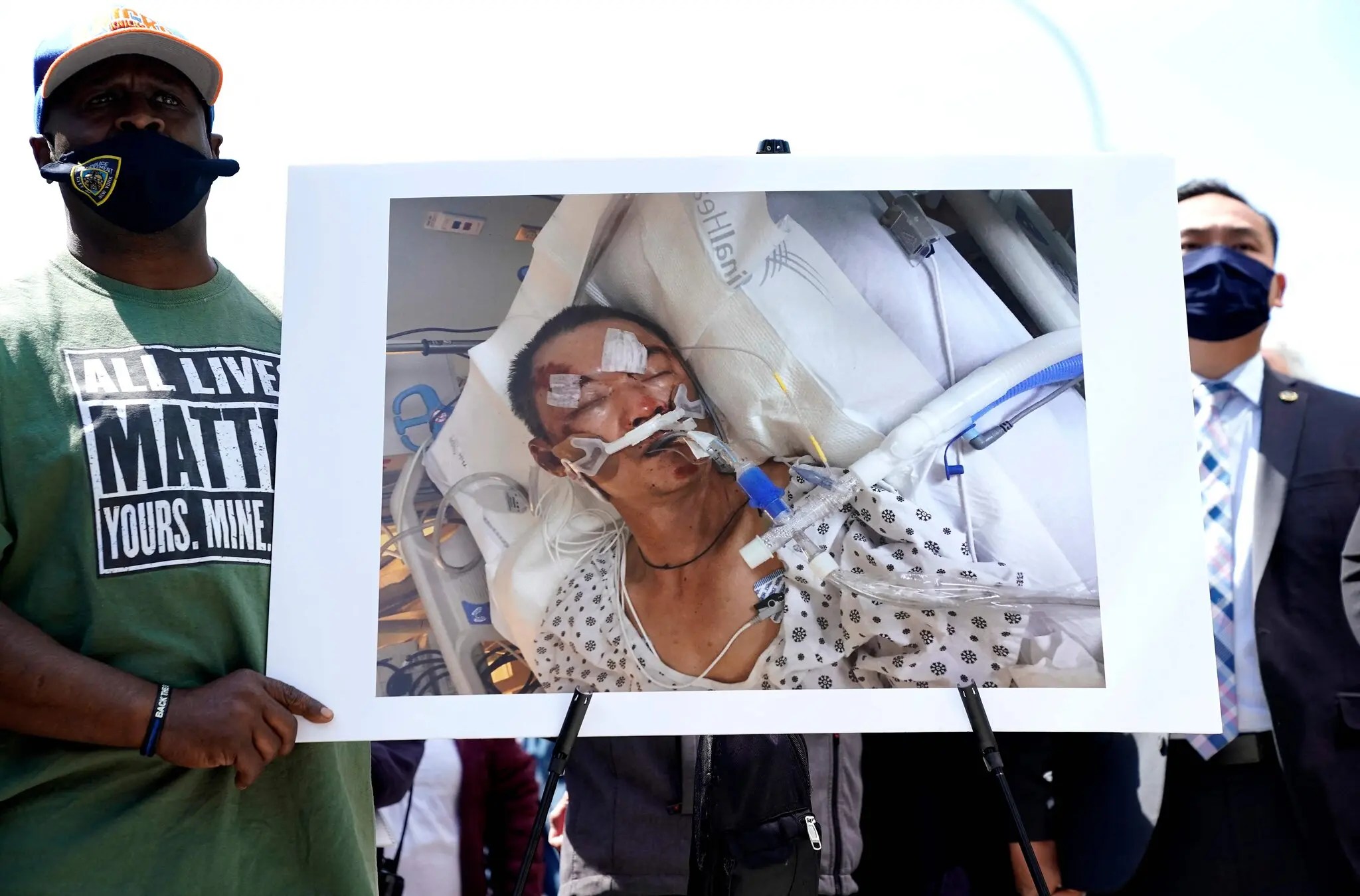
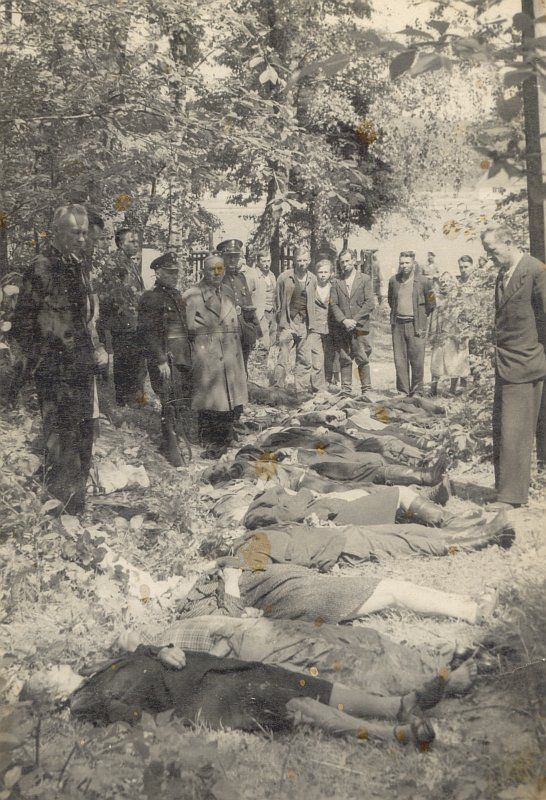
Poles murdered by Ukrainian nationalists

1941—1944

Vladimir Spiridonovich Putin and Maria Ivanovna Shelomova struggle to survive the brutal German siege of Leningrad (now the city of St Petersburg) and are nearly killed.  Vladimir, who lost a couple brothers in the battles, was wounded by a grenade in the fighting and crippled for life.  The pair met after the war, got married, and had a son named Vladimir Putin in 1952.

April 4, 1949

The North Atlantic Treaty Organization (or NATO) is formed in Washington DC as an alliance to oppose the Soviet Union.  The Warsaw Pact was created in May of 1955 as a response.

February 19, 1954

Crimea, which was part of Russia since being annexed from the Ottomans back in 1783, was gifted to Ukraine by the Soviets as a gesture of friendship.  This ethnically Tatar and Russian-speaking region is the site of a key warm-water Russian naval base.

Oct 16, 1962—Oct 29, 1962

The Soviet Union responded to the United States putting nuclear missiles in Italy and Turkey by sending their own missiles to Cuba.  The Kennedy administration, after the failed Bay of Pigs invasion, authorized a CIA campaign of terrorism and sabotage within Cuba, answered with a naval blockade.  The Cuban Missile Crisis ended when Moscow backed down after a secret deal where the offending US missiles were removed from Europe.

Nikita Khrushchev, Fidel Castro, and JFK

1979—1989

A pro-Soviet government took power in Kabul in 1978 and tried to counter Islamic traditionalism with steps towards modernization.  They invited Soviet military advisors and this led to troops being deployed to help the Afghans suppress the insurgency.  The CIA supplied the Afghan rebels and foreign fighters (including a Saudi named Osama Bin Laden) the Mujahideen, with weapons.  The Soviets withdrew after a humiliating costly affair.

December 26, 1991

The Soviet Union collapsed, the Warsaw Pact dissolved, and Soviet republics (including Ukraine) given their independence.  NATO begins an eastward expansion, absorbing former Soviet republics.  Russia falls into disarray as oligarchs partner with the West to exploit the vast resources of that country—Ukraine also becomes known for extreme corruption.

March 24, 1999—June 10, 1999

NATO intervened on behalf of Kosovo rebels, who had been resisting Serbian authorities, and then demanded that the country be partitioned along ethnic lines.

December 31, 1999

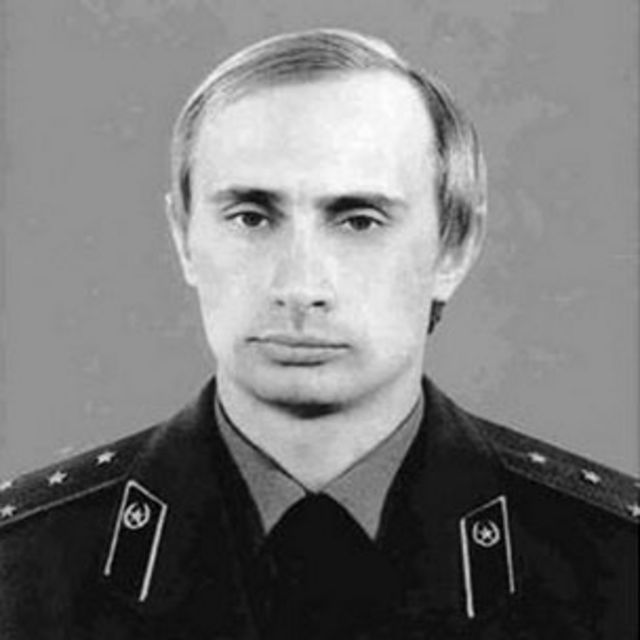
Vladimir Putin became the acting President of the Russian Federation when Boris Yeltsin unexpectedly resigned.  From 2000 to 2004, after winning a special election, he begins to reform the country and reign in the oligarchs forcing them to answer to his government to keep their power.  Putin opposes the expansion of NATO to his border, regarding it as a threat to Russian sovereignty, and makes this red line clear.

Vladimir Putin, a former KGB officer.

Nov 21, 2013—Feb 22, 2014

The democratically elected President of Ukraine, Viktor Yanukovych, decided to keep closer ties with Moscow over the European Union.  This leads to protests in Maidan Nezalezhnosti (Independence Square) in Kiev.  The protestors occupied the square, they had their own food production, medical, and broadcasting facilities, along with that, stages for speeches and performances, as well as their own security forces.  This boiled over when snipers, still unidentified, fired on the crowd.  Both police and protesters were killed in this attack.  Before this escalation high-ranking US officials, then Secretary of State Victoria Nuland and the Ambassador to Geoffrey Pyatt, picked the replacement of Yanukovych who was later overthrown in the Maidan coup.

May 12, 2014

Hunter Biden, son of the then US Vice-President, Joe Biden, is given a seat on the board of Burisma Holdings, as a “legal advisor” and is paid over a million for this service.  He gave Burisma executives access to his politically powerful father and later the elder Biden would brag, live on television, about a quid pro quo that got a Ukrainian prosecutor fired—who had been investigating Burisma corruption.

Like father, like son

Feb 20, 2014 – Mar 21, 2014

The Russians, believing their naval base in Crimea would be threatened by the new pro-West government, moved quickly to secure it from the Kievian nationalists.  They already had a significant military presence there, it is a Russian-speaking area, and the Crimean status referendum, held on March 16, 2014, had an 87% turnout and was 97% in favor of reunification with Russia.  

April 6, 2014–February 24, 2022

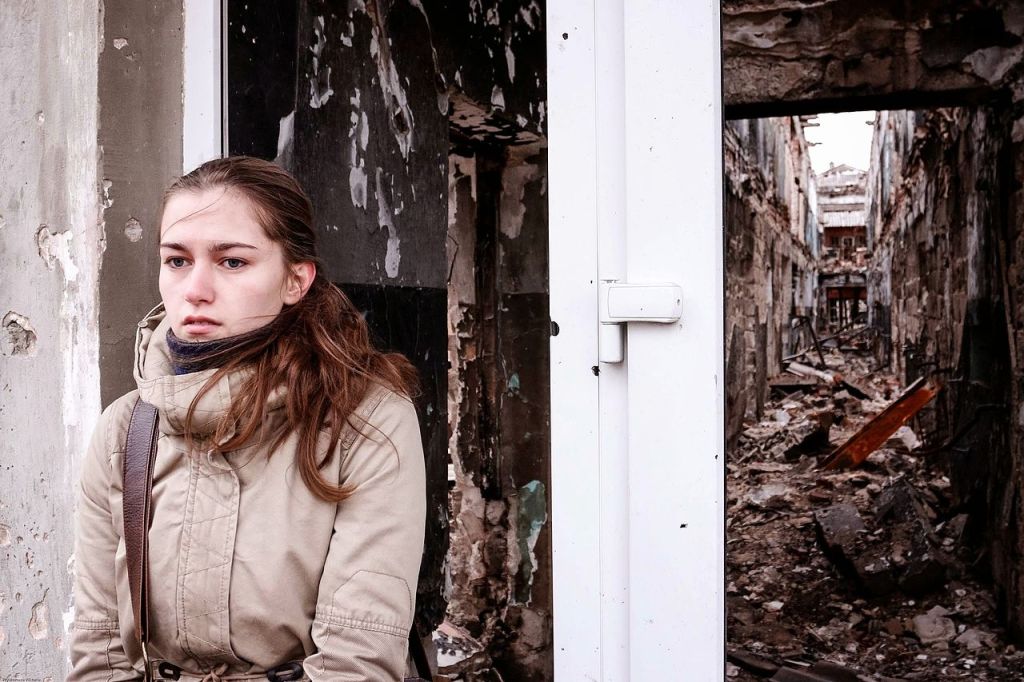
The Russian-speaking Donbas region also wanted more autonomy, they opposed Kiev’s efforts at “Ukrainianization,” which sought to erase their Russian heritage, and eventually declared their independence.  These breakaways were invaded by the Kievan regime, starting a war that killed over 14,000 and lasted nearly eight years before the current Russian intervention.

Donbass, when nobody outside Ukraine cared about the war.

May 2, 2014

Protests around the country became violent again when the right-wing nationalists, who favored the new post-coup government that had been installed in Kiev, forced opposition demonstrators into a building that was set ablaze.  This incident, the Odessa Massacre, burned alive 48 people, some of those who did manage to escape were beaten by the mob.  Like the shootings used to justify the Maiden insurrection, nobody was arrested or charged for this mass murder.

April 21, 2019

Volodymyr Zelenskyy, a comedian, groomed by an oligarch, wins the second round of voting in a landslide victory and becomes the President of Ukraine.  He promised to bring peace and end corruption.  There was not much success on either front.  Human rights abuses have only increased during his presidency and especially after the start of the Russo-Ukraine War.

Zelenskyy, the other Vlad.

February 24, 2022

After massing their troops on the Ukrainian border, Russia demands that the shelling of Donbas cease.  When the attacks continue, the “special military operation” begins, which is condemned in the West as an “unprovoked invasion,” and is now effectively a proxy war between NATO and Russia.  The bloodshed continues to the time of this writing.

Vladimir versus Volodymyr

While many commentators, on both sides, want to present this as a battle of good and evil, it is really a fight between spiritual (even actual) cousins.  Those who say that Russia is the aggressor neglect that the war began years ago with the Ukrainian nationalists and their campaign against separatists, that this came about as a result of a coup apparently orchestrated by or at least with the direct aid of the US State Department.  If Ukraine can be independent of Russia, or Kosovo from Serbia, why not Donbass?  And who says that the Soviets handing over Crimea, in the 1950s, is more valid than the referendum that brought it back?

The US “rules-based international order” only makes sense for those who share the bias of those spoon-fed by US media.  The legacy of CIA support for terrorism abroad and the violent overthrow of democratic leaders makes anything done by Russia seem like child’s play.  The US acts with impunity around the world—provoking sanctioning, and invading with destructive campaigns of “shock and awe” anyone who dares to oppose its imperial aims.  The US really had no business playing kingmaker in the backyard of Russia.  The US enforces the Monroe Doctrine in the Western Hemisphere, why would Russia (or China) be happy with our military expansion in their own areas of national interest?

Us-rules based order

Sure, Russia isn’t faultless, by any means, and Putin is no St. Vladimir either.  But, that said, neither is Zelenskyy or the Kievan (Kyivan) nationalist regime he represents. 

Truthfully, the most significant difference between the two sides of the war may actually be their Slavic language dialects.  Which is to say it isn’t much.  Both sides commit war crimes, both lie about the other side, and both also share the same religious and ethnic heritage.  They are natural allies, given their shared Kievan Rus’ history, which is probably why Western powers want to instigate and encourage the division.  It is a family feud, a fratricidal war, and benefits only the US military-industrial complex.

9/11 In Retrospect—Collapse of the New World Order

Standard

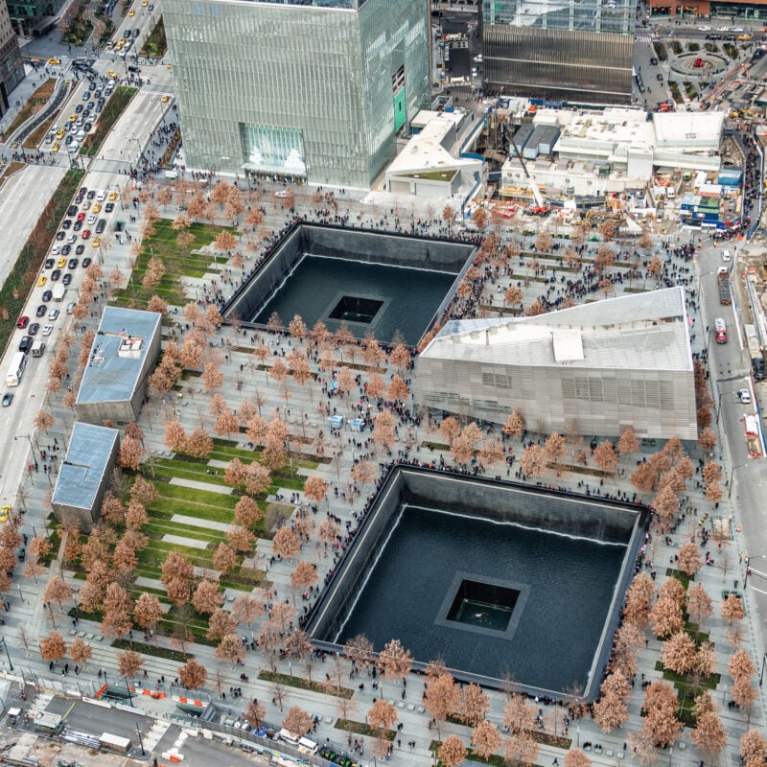
Visiting the site of the Twin Towers again has revealed how much my perspective of the has changed over the past few decades since the attacks.  The World Trade Centers, built in the 1970s, had once dominated the Financial District of Manhattan and represented both the pinnacle of engineering and the economic might of the American empire. 

Like the Pentagon struck the same day, they were symbols of American dominance.  Pillars of a system that, prior to that sunny September day, had seemed invulnerable.  The United States had won the Cold War, demonstrated unrivaled military might in the Gulf War (all but erasing the bitter aftertaste of Vietnam) and the 1990s felt almost as if it was the ‘end of history‘ with the final victory of liberal democracy over the world.

The NYC skyline is impressive even today, yet that September day the delusion of being untouchable had been wiped away and the trust of the system has continued to degrade as more are seeing the truth:  

1) Our government can’t keep us safe.  Many forget now that 9/11 was not the first attack on the World Center twins.  In 1993 a truck bomb had been detonated in the parking garage of the South Tower and could’ve taken down the towers had it been better placed.  But despite this, despite the billions we spent on intelligence agencies, the US had missed multiple opportunities to take down Osama Bin Laden.  All of our military strength was useless against a small group of dedicated men using box cutters and airliners.

2) They made us bleed.  While many around the world were horrified at the images, there were others who danced with glee as shock and awe covered Manhattan in dust.  It was a propaganda coup for those who opposed US hegemony as much as anything else, it proved that there could be repercussions for our policing and globalist policies.  Sure we would go on to kill Bin Laden.  But he more than accomplished his goal.  Not only did he bring down the towers, and strike the Pentagon, but he also goaded us into spending trillions on a fruitless war on terror.

But, beyond this, in the past twenty years, I have gone from being an apologist for the second invasion of Iraq to now being very deeply disillusioned.  And I’m not alone.  The world is no longer what it was in the 1990s where the US leads the way to a new age.  Rather many are starting to see through the shiny facade and realize that the system in its current form serves a few at the top.  But our banks, our government, and corporations routinely conspire to rob us.  There is no free market or true representatives of the people, it is a rigged game and the ‘house’ always wins.

Walking past Wall Street I remarked “This is the heart of the beast” and it is.  The money flowing through this place is the lifeblood of a nation, the very center of the current world order, and what enables the endless wars of our political regime.  The towers were not random targets.  Nor was the attack because they hate freedom and democracy, but rather it was a response to the imposition of US policies on their countries and the never-ending presence of our military in their own backyard to serve US economic interests that they resented. 

As wrong as it was to murder 2,977 people, this ‘collateral damage’ has long been a part of war, many Americans have no moral qualms about nuking the cities of Hiroshima or Nagasaki, and the US has killed hundreds of thousands of non-combatants.  So why is it such an outrage if others in the world employ a similar total war strategy against us?

If America once represented an ideal, that is fading due to relentless attacks by the left and the growing disillusionment of everyone else.  There has been a transition, over the last few decades in particular, from the time when athletes would wrap themselves in the flag to this time it has become controversial and even contemptible.  Even conservatives no longer trust national institutions and have embraced a myriad of conspiracy theories—including many about the 9/11 attacks.

Personally, I do not believe that the official narrative is entirely a lie.  I believe a group of men, funded by Al Qaeda, hijacked four fuel-laden airliners, two of them were flown into the towers, one struck the Pentagon and a fourth crashed into a field in Pennsylvania.  I do not see a need for a controlled demolition to explain why the buildings collapsed.  No this is not to say that our government didn’t know more prior, opportunistically exploit or even facilitate the attacks.  There’s simply a better explanation of everything that happened that day and since.

The fragility of our world order

As a young person everything that was had this feeling of permanence.  My parents and other adults were fixtures in my life.  It all felt robust and unchangeable.  But as time went on, grandparents passed away, trends came and went, seasons changed and I began to learn that nothing is forever.  Even concrete will degrade in strength and eventually, it will crumble away into dust.  Institutions are no different, they tend to have a lifecycle, at the very least require constant maintenance, and all these systems we rely upon to create order in our world are surprisingly fragile.

The New York City skyline has a robustness of appearance.  It is built off of the bedrock, the skyscrapers seemingly carved out of a single piece of polished granite.  This is by design.  The architects and engineers who built these monolithic-looking structures do want them to feel secure and safe.  And, for the most part, or under typical conditions, it is true—they are reliable.

However, they’re not indestructible.  

The Word Trade Centers, while massive and certainly marvels of engineering, under that shiny metal and glass veneer, were as flimsy as a stack of cards.  What made them great also created unique vulnerabilities.  Unlike the Empire State Building, a grid of I-beams and tapers in towards the top, the enormous twins had a center trunk section with long clear spanning trusses that were supported by the outer ‘skin’ of the buildings.  This had given them a large and unobstructed office space.  This was practical, but in retrospect became a fatal flaw in their design.

The WTC design was innovative, unusually lightweight construction with wide open floor spaces supported by trusses.

The impact of the airliners removed some of the structure.  No, this was not enough to cause a collapse, yet this was enough to add strain and reduce the load-carrying capacity of the buildings. The towers, despite getting hit by aircraft larger than the 124-ton Boeing 707, had exceeded expectations and absorbed the impact.  It was only after fires raged, out of control, that the heat had reduced the tensile strength of the steel enough that the floor trusses would deflect and could no longer hold the upper floors—at which point the top of the buildings began to fall into the lower—smashing one floor at a time until nothing but a cloud of dust and pile of rubble remained.

The popular meme “Jet fuel can’t melt steel” is clearly ignorant of the reality that you do not need to turn steel into liquid before it will fail.  An inferno of jet fuel mixed with office materials is more than enough to weaken a structure to the breaking point.  There is no need to explain this as controlled demolition or building 7, where there was damage to the structure, fires burning on ten floors, and the sprinkler systems disabled due to water main breaks.  

Still, many Americans have a huge problem accepting that these symbols of our strength could be taken down by a handful of zealots with box cutters.  It makes us feel insecure.  We want it to be more.  And thus it must be some kind of massive concerted effort, with an enormous cover-up, right?

This is, ultimately, a form of denial. 

Most Americans know that manufacturing jobs have been continually outsourced. But many do not fully comprehend the economic reasons why the US has gone from the nation that won WW2 with industrial power to the current situation nor how much they have benefitted. It is the status of the US Dollar as the world reserve currency and the Petrodollar arrangement that give US consumers the edge. Basically, in order to buy their oil from Saudi Arabia, other countries around the world needed to get their hands on our money and for this reason would sell us goods they produced at a bargain price.

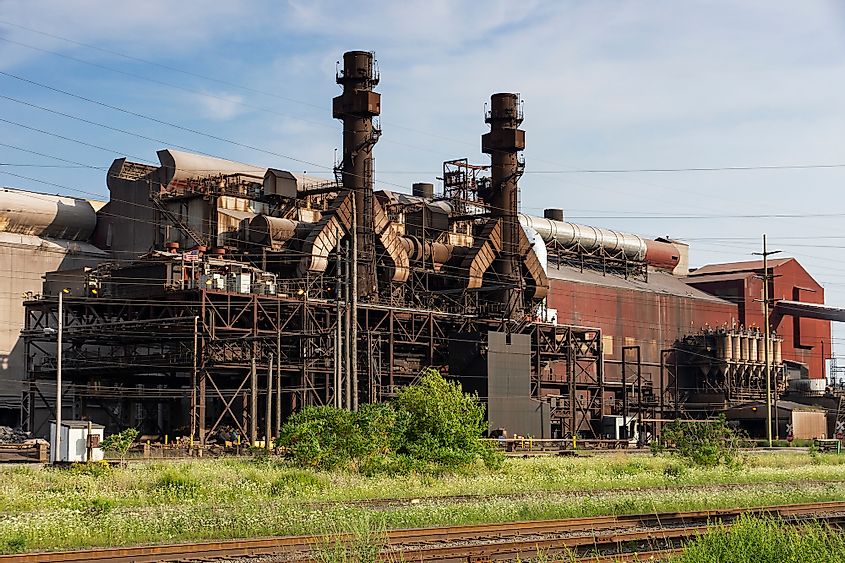
The manufacturing backbone no longer exists.

The “new world order” George HW Bush hypothesized was never to be.  Bin Laden had answered and won on multiple fronts.  He caused us to question our own American identity, whether our leaders actually represent our good, and if their endless wars truly benefit us—which they don’t.  More importantly, he penetrated the illusion of permanence and strength that kept us blindly pulling the weight of empire for our masters.  Even 9/11 truthers, in their rejection of the official narrative, are part of this new anxiety undermining the tower of world dominance built in the post-WW2 era.

After two more wars where only the defense contractors and their political proxies came out as victors, after bailouts for the “too big too fail” and current institutional protection of the hedge fund billionaires against retail ‘Ape’ insurgents, more are waking up.  How the elites and political establishment gang up on populists, like Donald Trump or Bernie Sanders—brazenly rigging the DNC primary in 2015 and the Big Tech election interference this past cycle—has damaged faith in the democratic process.  And, lastly, having endured the Covid lockdowns, more question the notion of us being exceptionally free people.

Even if enough Americans remain under the spell and continue to support the collapsing regime, the rest of the world (at least beyond Western Europe and Australia) is not fooled by our propaganda.  After decades of BS and bullying, like those WMDs never found, many are rejecting the monopolar order and ready to work on plan B.  China, India, Middle-Eastern and African nations do not want to be perpetually subject to US economic threats and warfare.  And, after the Ukrainian sanctions, they’re taking steps to protect their own sovereignty against this imperial aggression.  BRICS is here and the supremacy of the Petrodollar, which is what has enabled the half-century US reign, is being challenged.

The pillars upon which the US economic might was built are now shaking and yet nobody seems to be focused on shoring up this foundation. The tower sways, but hubris blinds those who could prevent the collapse.

From confidence to doubt…

Bin Laden knew his 9/11 attacks would lead to massive overreach.  He understood that the arrogance of our leaders would lead to a flailing angry response.  No, the attacks were not enough to bring it all down but they did put the cracks in the base of this order and the future is no longer as certain as it was prior to that moment of horror and disbelief—when a bustling city and the most powerful country in the world was brought to a standstill. 

Those feelings of horror and helplessness and disbelief remain, like those abyss-like holes in the ground where the towers once stood.  We have all seen the writing on the wall.  The party may have continued, on the surface, but something has fundamentally changed underneath it all, the ground has shifted—as has our perception of our own untouchable position in the world.

History is not an end, the new world order is starting to look as frail as those geriatrics who rule us afraid to die and desperately cling to their power.   

The juggernaut of the US-led world order, which had briefly appeared to be an impenetrable fortress, is now unraveling and all it took is a little push.

Forget Gas Stoves—Why Are Pets Legal?

Standard

The Biden administration has recently floated the idea of banning all gas stoves.  Richard Trumka Jr., son of the powerful union boss of the same name and nepotistic selection for Commissioner of the CPSC, has made this proposal and cited potential long-term health issues (due to using them in homes without proper ventilation) as the reason.  Very quickly, in the typical hive mind far-left fashion, various state governors have followed suit and very soon we can expect that Democrats will once again be limiting consumer choices.

When qualifications are more about favors to political cronies than expertise.

This move is more driven by the current climate change ideological cult than actual concern for people.  And the climate change hysteria is primarily driven by political propaganda rather than true science.  All of which has an underlying goal of giving more power and control to a few billionaires (who meet in Davos annually) and own many of our elected (or selected) leaders.

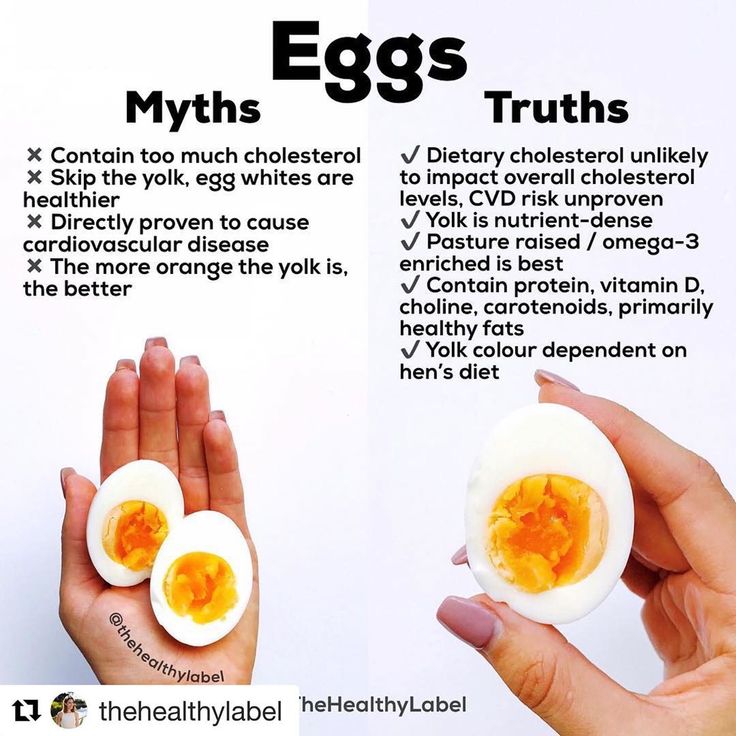
Another hidden reason for why now could be to lower gas prices to make exports to Europe viable.  Currently the billionaire owned world government, centered in the US and Western Europe, is at war with Russia and must keep gas dependent countries, like Germany, from total economic collapse due to untenable energy costs.  This would be manipulation similar to how the Lyndon B. Johnson administration deceptively used cholesterol warnings as an answer to an egg shortage and price inflation.

Eggs: Then and now

However, as a thought experiment: If we were to assume this is honestly about public health and climate change, not some cynical move motivated by geopolitics and commodities markets, why start with gas stoves?

Why not start with pets instead?

In this progressive age of believe science and consumer protection, can we really continue to ignore the well-established risks associated with pet ownership and especially the health risks to children?

Cull the Biological Menace: Save the Children!

Anyone who has had to clean cat poo deposited on the living room carpet has learned a hard lesson.  As cuddly and cute as these furballs seem to be, they are basically walking, sneezing, crapping, and puking biohazard containers. 

At risk of a fact-check claiming that cats also vomit on tile and linoleum.

The Chinese, during the Covid pandemic, knowing that pets were vectors of human disease, euthanized scores of dogs and cats as part of their pragmatic response to the pandemic.  And it just makes sense.  Pets are super-spreaders, next to impossible to mask properly, being exposed to their feces and urine can be dangerous, and that alone is a reason to ban these incubators of deadly disease.

A person who, as a result of exposure to cat excrement, has suffered from Toxoplasmosis, will think twice about having a pet in their home. 

Then there’s the issue of animals attacking humans.  It is terrifying to be out on a peaceful walk and suddenly be set upon by a snarling beast and knowing how many die from dog attacks.  The President’s own dog has bitten several people, and this is okay?  Dogs alone account for 4.5 million bites a year and many of the victims are our most vulnerable.  Think of the children! 

If we are to save grandma by wearing masks and getting mRNA injections, why allow these disease carrying clumps of cells (with claws and teeth) that serve no practical purpose and fit the definition of a parasite?

Add to all of that the unnecessary carbon footprint of Fido and Fifi.  Feeding and watering millions upon millions of animals used for human entertainment comes at an enormous environmental cost.  Many popular pets are fed with meats, which is especially burdensome, and will accelerate global cooling warming very scary climate change.  We must do the right thing for the planet!

And, more importantly, why are we allowing this obvious menace to continue when there are alternatives?

Pet Reform: The Green Answer

In the spirit of progressive politics and Democrat party paternalism, l propose that we introduce common sense pet reform and ban all emissions producing pets and replace them with purring and barking electronic animals.  There would be no need for kitty litter or toxic carpet cleaner after the transition.   The green alternatives could be programmed to only knock over household items at a safe predetermined rate and will attack only those who our wise and tolerant revolutionary leaders call Nazis.

Only shoots insurrections wearing MAGA hats, not a threat to humans.

Think of how many lives may be changed or improved by removing this pet-stilence!

It would protect children from pet allergies, dangerous infections, cat-induced insanity (could this impact female voting patterns?), and prevent spread of other serious diseases.  Just the elimination of bites leading to emergency room visits alone would justify this as a cost-saving measure.  During the Covid pandemic we were told that saving only one life justified every new mandate.  Has that ethical math changed?

If it antivaxx to oppose boosters that have only been tested on eight mice or dare to resist the products coming from a corporation staffed by those who make a very bold display of their questionable ethics to a date, then it is extremely anti-science to be in favor of pet ownership.  I mean, how many more studies do we need for these Neanderthals who think animal ownership is a right to understand, right? 

Is there a reasonable argument against banning pets?

Who Determines Acceptable Risk and How?

The point, of course, is that we accept the health risks of pets.  Why?  Well, many have decided that the intangible benefits of a living companion outweigh the risk to their own health and also that of the general public.  Sure, we do have leash laws and liabilities assessed when people who have pets do not take proper precautions. 

And no doubt pet ownership will be the next stop for the climate change alarmists, like the very privileged Greta Thunberg, when their handlers tell them this is the scientific consensus.   I mean, they’re already taking steps against farm animals and telling us to eat bugs as an alternative, do you think they’ll stop there?  Not a chance, if they get their way on gas stoves, soon pets will be only for elites.  These professional Karens, the petty administrative tyrants running this country, can’t be satisfied ever.  There’s no reasonable compromise with them.

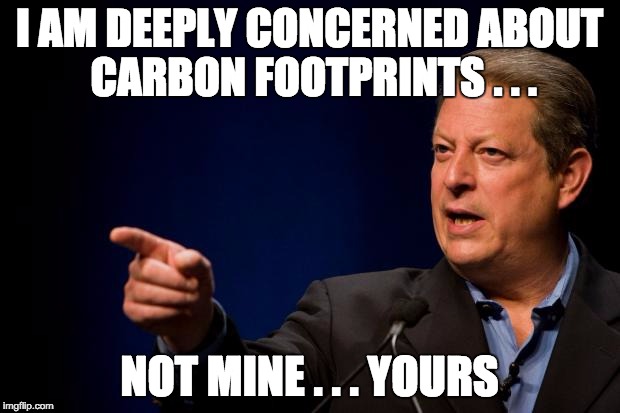
These bans in American politics stem from a Puritanical impulse.  It is the very same thing that was behind the Prohibition, this desire to control, often sold with some kind of apocalypse tied to it as justification.  Where it was once Johnathan Edwards preaching “Sinners in the Hands of an Angry God,” the early American sermon delivered in a monotone, it is Albert Gore’s “An Inconvenient Truth” for this new secular version of the same old cult religion.  We all must do our penance and pay the ministers of this new era—it is hard work to keep the population in line and in perpetual fear of destruction. 

Al Gore knows as much about science as a Televangelist knows about theology…

Banning gas stoves isn’t driven by science anymore than witch-hunts or eugenics. Sure, it is rationalized by their own beliefs about cherry-picked data and the purported implications. But water can be made to look awful if a person wants to make that case. It is the midwits, with rudimentary understanding of all things, that have this mistaken idea that life can be free of all risk, completely safe, and strive for perfect pure solutions. They accept the ‘experts’ opinion uncritically as if it is Gospel and become the “sources please” zealots which make truly intelligent conversation impossible.

Risk can’t be eliminated. Removing one risk only ever creates another. That is the real problem with complex systems. Poke in one place, to fix this problem, and the unintended consequences of a prescribed solution can vastly outweigh the benefits. The noxious invisible gas that is more a threat than nitrogen dioxide is the ceaseless and incurable arrogance of those who think it is their job to save the world or manage the lives of others. We cannot risk anymore of what remains of our freedom to please their whims, they will consume it all in the name of protection.

Of all tyrannies, a tyranny sincerely exercised for the good of its victims may be the most oppressive. It would be better to live under robber barons than under omnipotent moral busybodies. The robber baron’s cruelty may sometimes sleep, his cupidity may at some point be satiated; but those who torment us for our own good will torment us without end for they do so with the approval of their own conscience.

C. S. Lewis

Politicians have long abused science as a means to gain power for themselves. It is what had, a century ago, inspired notions of superior race and now is what arms a new generation of young activists—indoctrinated by leftist parents, mass media and their government funded schools. It is no different from any other moral panic where critical thinking made someone an enemy of the sanctimonious mob.

Fundamentalist Anti-fragility Training

Standard

Years ago my mom decided to stop in at the local public elementary school.  Impressed, after talking to the staff, my parents sent my older sister there and soon I would follow—along with the rest of my siblings.

This might not seem strange to most.  But, for a conservative Mennonite child this was highly unusual—or at least in the past few decades.  It bucked the trend of religious parents, afraid of secular influence, pulling their children out.  Private schools and home schooling becoming the preferred ‘safe’ options.

Anyhow, maybe as a result of my positive experience, or from inheriting my mom’s genetics, I have always thought differently than my peers.  That is to say, for better or worse, I stood apart from both my public school and Mennonite peers, basically a third culture kid or non-conformed in both settings.  So, when I had to consider where to send my own children, public school was not something I feared.

This post is not saying that everyone should follow in my footsteps nor suggesting that every child should go to public schools.  No other situation is exactly the same as mine, some schools are better or worse and every student different.  My intent in this blog is simply to give an explanation of what is now unthinkable to most fundamentalist Christians.

A Stranger in a Strange Land

Public school did not mean assimilation for me.  My religious identity was always visible enough for me to be given nicknames like “Micro Mennonite” or basically any Amish sounding name my classmates could come up with.  The small things, like wearing pants in the hot weather or the side part of my hair were enough for some to take notice.

I was sometimes subjected to what could be called microaggressions.  As in I had one or two classmates who would inform me what I should or should not do, as a Mennonite, and this often included the idea that we did not pay taxes or the assumption that we needed a horse and buggy for transportation.  This kind of banter was mostly benign, or at least taken that way, but still served as a continual reminder of my outsider status.

The end result is that I seemed to have a stronger Mennonite identity than many of my religious peers.  I learned, at a young age, that I was different and it was okay to be my own person.  I was never ashamed to be Mennonite nor stopped from following my own conscience so far as things like pledge of allegiance (I always stood respectfully) or abstaining from other activities that went against my cultural standards.  

A child private or homeschooled does not truly know, first hand, the alternative to their own community and home.  It is easier for them to believe that the grass is greener on the other side of the fence and many of my religious peers did jettison the indoctrination they received in a pursuit of the prevailing culture.  But, being the witness of single parent homes, the chaos of the world and consequences suffered, it made me more thankful for what I had.

Exposure made my home more desirable, it also made the failures of parents my community feature less prominently in my mind.  There were many who, raised in the  religious cloister, became disillusioned with Christianity as a result of their overbearing dad or as the result of school administrators showing extreme favoritism.  Had the same thing happened to them in public school, had they been bullied or abused there instead, at least it would not come in direct conflict with their walk of faith.

No, certainly we don’t want to put children in a harsh environment so that our own home or community contrasts favorably, but some healthy perspective is good.  Not taking for granted the food or shelter over our heads by being a little exposed and feeling some hunger pains for home is not a bad thing at all.  A big benefit of my public schooling was appreciation for my heritage and a strong desire to preserve the Mennonite culture.  I could not afford to be myopic or ignorant, throwing out tradition recklessly because it didn’t suit me.

I had to weigh things more carefully rather than react and throw the baby out with the bathwater.  Many of my religious peers have this feeling of having missed out and some had to learn the hard way from their own experiences.  

Walk In Faith, Not Fragility!

Conservatives love to laugh about the ‘woke’ and their safe spaces.  They are very quick to ridicule those families still wearing face masks and call people snowflakes for their sensitivity.  The great irony is that many of these same people withdrew their children from public schools, decades ago, because they “took God out of the schools” by ending prayer led by state employees.  The reality is that it isn’t just the fringe far-left that tries to hide themselves and their children from all contrary opinions.

You may work where your employer doesn’t lead prayer, can you handle it?

The problem is that without challenge there is no growth.  Yes, part of the job of a parent is to protect and yet it is equally important to prepare a child for the real world.  I know, I know, someone out there is saying right now, “he’s saying to throw my precious darling to the wolves!”  And then we wonder why, with that kind of attitude, when we assume all of our neighbors are dangerous predators, we are not more successful reaching them with the Gospel?

Jesus, our Lord and Savior, and example to follow, had no problem detouring into the Samaritan lands nor with standing on his own two feet with elders as a child.  And I, likewise, had no difficulty standing toe to toe with my high school biology teacher or with seeing through leftist propaganda even back in elementary school.  I remember scoffing, even then, at the blatant manipulation on Earth day or that faulty “haves vs have nots” construction of my fresh out of university social studies teacher.

Hint to the homeschoolers: Your neighbors aren’t demons and your children aren’t little saints either.  In fact, many of my younger home or privately schooled religious cousins were doing drugs, drinking hard and partying, even sleeping around, long before I had so much as a sip of alcohol.  As Jesus said to a prior generation of contamination obsessed religious people, according to Mark 7:14–23:

"Nothing outside a person can defile them by going into them. Rather, it is what comes out of a person that defiles them."  

We can’t save our children by sheltering them.

I know, but what about the “groomers’ and the brainwashing?  No, I’m not going to say it is all hysteria.  Indeed, the far-left is targeting children, they’re making no secret of their agenda and it is cause for concern.  We see all of those sensational headlines of abuse and it is easy to be full of anxiety and fear about this.  But, for perspective, there are over 3,800,000 teachers in the United States and the vast majority are simply doing their job.  Some extreme example, from an urban hellhole or California, is not representative of the whole.  Yes, your child going to a public school will be exposed to other perspectives and yet why would they choose lies over the truth?

It is no coincidence that the greatest Biblical examples of faith are those, who as children, faced pagan influence.  Moses, trained as an Egyptian, was bolder than his other Israelites and faced down Pharaoh.  Daniel refused to bend to social pressure, a Jewish child in the Babylonian court, and stands as an example of faith.  And who can forget that trial by fire of three young men, Shadrach, Meshach, and Abednego, who would not bow to the statue of the powerful Nebuchadnezzar II?

It is so strange that fundamentalists can read these stories to their children in their Sunday school classes and then be terrified by the thought little Johnny being away from them for a few hours a day.  It makes me wonder if they truly believe these stories are true.  Maybe they do not think that the God who called Samuel as a child or emboldened young David to slay a giant is still capable of the same today?  Apparently they think God is getting weak in old age and only they are able to save their children from the world? 

In the World, Not of the World

Part of the problem with the fundamentalist “purity culture” mindset is that they believe that Holiness is achieved through means of physical separation.  Many parents think that they will keep their children safe from harm by keeping them in their protective enclave and away from all other influence.  But, the truth is, if Adam and Eve could fall even in the garden of Eden, why would we believe that the serpent can’t find it’s way into our own homes and communities?

For as much as my religious peers would try to keep evil out, pulling their children out of even the church school to guard them from the influence of other Mennonite children, it is no defense from the most dangerous sin of all which is pride and this accompanying idea that we can be fully righteous by our own efforts.  But, in the economy of Jesus, it is better to be the woman caught in adultery or thief on the cross who repents than the rich young ruler who kept the law perfectly yet isn’t able to live in faith.

They say more is caught than taught.  We can say we believe “greater is He that is in me than He that is in the world” (1 John 4:4) and that God is our strength, but our actions betray us.  The conservative Christian retreat from the public sphere is pretending that if they ignore the deterioration somehow the problem will go away.  They are training their children to be cowards, afraid to effectively confront the culture or fully contend with the reality that they’re losing ground.

It is true, a Christian is not to be of this world and yet this is all about the spirit in which we are approaching life.  The exact phrase “in the world but not of it” is not in Scripture, but we also see where Jesus didn’t avoid people simply because they were Samaritans, tax collectors or others that his religious peers carefully avoided.  Unlike the parachute in ‘missionary’ compassion of today, he spent his time amongst his own people, rubbing shoulders with the unwashed masses and even being touched by a woman made into an outcast for her illness.

If we go out in strength, trusting that God is still able to protect us and our children from the teeth of lions, we would possibly see the change of culture that will make the world a place liveable for a Christian.  But right now we’re teaching our children to be weak and, when the world finally does come to snatch them from the safety of their homes, many will be fragile and unprepared to stand.  This is why so many get caught in the false social justice Gospel, they weren’t properly trained to identify the counterfeit.

“Train up a child in the way he should go, and when he is old he will not depart from it.”

(Proverbs 22:6 KJV)

Why would I send my son into the lion’s den?

Because Daniel continued to pray, despite the risk of severe punishment, and precisely as a result of his childhood faith and learning to resist peer pressure at a young age. 

Contrast that with the religious experts who had rejected Jesus for the unclean who he mingled with. Or with Israelites who prospered in their own promised land, absent of persecution, and only went through the religious motions of faith in God. They voluntarily brought idols into their homes and folded before their enemies. 

Complacency is a bigger threat to a Christian’s child than lions. 

We should not teach our children to run from the giants of our time or they’ll become king Saul.

Instead we should be helping them polish those giant slaying stones and trust God.

My First Two Weeks Of Fatherhood

Standard

My decades of being single came to a rather abrupt end on November 3rd.  Two people, a mother and son, arrived at JFK after a trip around the world and our lives will never be the same.  

A few years ago, I was worried about how it may be to be a stepfather and hoped Charlotte’s son, CJ Y-dran, would accept me.  One day, soon after this thought, and out of the blue, Y-dran told his mom he had something that he wanted to ask me.  

The voice on the other end of the video call gave me the assurance that I needed:

“Can I call you daddy?”

Crazy, right?

More amazingly, after I told him he could, he asked if we could pray together.  That was, of course, another request granted and the whole thing a wonderful confirmation.  But, that said, it is one thing to be called “daddy” and another to be a good father.

CJ Y-dran is now ten years old.  

A Crash Course In Parenting Begins

Saturday, after our arrival together in central Pennsylvania, we visited Ed and Judy, my aunt and uncle.  Ed surprised us with an early Christmas gift by getting Uriah’s bike out and offering it to Y-dran.  

It was fun to see a young boy’s face light up in amazement.  Y-dran rode around happily while we all enjoyed the unseasonally warm weather.  Later we were able to secure the bike in the trunk of my car and then brought it home.

It was the first Monday back to work after the trip to the airport and I was just settling in for the day when a message notification popped up.  It was Y-dran.  What did Y-dran want at this early hour of the day?

“I cen not bike naw”

“Becos momi not let me”

“Lets pot it back to ante”

“I can not yos it”

Uhoh.  

Unwittingly, having missed some details he had included, namely that he was allowed to ride albeit only in the yard, I answered him exactly as his mom did and said he could ride in the yard and only in the alley after I was home from work.  So it was great to be on the same page with his mother.

The Knife At School Incident

Y-dran found a small Leatherman-type tool in my utility drawer and was fascinated. He wanted to whittle away at the banister, which was immediately discouraged, and directed to a cardboard box to satisfy his stabbing need.

Boys love tools and especially tools used as weapons.

The blades on this multi-tool were too small to be lethal and yet were enough to keep a ten-year-old’s imagination captive.

But, when I discovered this tool in his backpack after coming home from his fourth day in school, I very quickly gave a stern warning to never ever bring a knife to school. I took the tool and returned it to the drawer to emphasize the point.

It was around nineteen hours later, at my desk during lunch, when I got that dreaded phone call from the school office. It was the principal. He told me Y-dran was in his office and went on to say how my son was displaying a knife to classmates.

The irony of this situation struck me. I had bought a house and moved across the river, in anticipation of Y-dran’s arrival, and the thought of him being expelled in the first week was not one that I had entertained until this moment.

Making matters worse, when confronted by his teacher about this, Y-dran, thinking he was helping himself, he tried to justify carrying the bladed instrument and claimed it was for self-defense.

In his defense, his citing potential “kidnappers” as a reason to be armed is not completely without cause. In his home country that is something that parents are concerned about given stories of human trafficking and thus part of his own thought process.

However, this explanation was also more incriminating than had he just kept his mouth shut or said he just thought it was a fun thing to play with. Never give away intent like that! /Facepalm

Fortunately, while having a zero-tolerance policy, they didn’t do like they did to a co-worker’s grandson, also a 5th-grader, who was not only expelled from his elementary school but was also fined and had a court date—all for having a knife discovered by other students rifling through his backpack!

Lord have mercy!

The real dilemma for me, after learning that this wasn’t going to be taken further than reprimand and confiscation of the tool (which I told the principal to dispose of rather than hold for me to retrieve), was how to handle this at home.

I wasn’t sure that I should involve his mom or just take him aside and tell him that I would keep his secret so long as it didn’t ever happen again.

Thankfully, returning after work, I didn’t have to decide. Y-dran had already confessed to all believing that I would eventually spill the beans on him anyways.

I really need to teach this kid how to read the room better.

What Have I Learned About Fatherhood?

The first thing I have to come to terms with is that I’ll make mistakes. Right now everything has been so new and uncharted that there is no way for me to map my progress.

He is a handful. He weighs as much as I did when I graduated from high school and has the tenacity of a rabid gorilla too. He just does not stop when he gets going. But then he’s also appropriately gentle with younger children and, despite some wildness, has a great heart underneath it all.

Things have gone relatively well so far.

Still, I keep thinking of the verse:

“Fathers, do not exasperate your children; instead, bring them up in the training and instruction of the Lord.”

(Ephesians 6:4 NIV)

The KJV may say it better using the words “provoke not your children to wrath,” but what does this Biblical commandment truly mean in practical terms. Does it mean I give him everything he wants to keep him from being angry or upset? What exactly is the training and instruction of the Lord?

Y-dran can be very persistent. When we’re out shopping he seems to feel entitled to a sugary drink or whatever else he can grab from the shelves. What he does not realize is that this constant pestering, needing to even be in control of what gifts he gets at Christmas, really takes the joy out of giving and makes us less likely to oblige the request.

I suppose there is no systemic or cut-and-dried answer to these things. It isn’t about balancing either. It takes wisdom, and putting them first (that doesn’t come easy), to gain and keep the credibility required to guide a son. Children see our inconsistencies. He will tell me if I look at my cell phone at the table or forget the prayer before we eat. He’ll know if I care about him or not.

Maybe the more important thing is to realize that I don’t know what I’m doing and can only do my best. My success or failure as a parent will not be a product of my perfection. I mean, even if I could check all of the right boxes and make no mistakes, that does not mean he’ll be reasonable or accept that as enough, right?

I’ll try to be consistent, to give him the best opportunities and all the good for him that I am able to do. But, ultimately, I’ll fail as a father if it is all about my own effort. In the end, I can only depend on the grace of God (generous uncles and lenient principals) to even have the slightest chance.  Otherwise, I’m already well over my head without any hope. 

What Does IQ Measure and Why Does This Matter?

Standard

There are many alt-right types who use IQ statistics to distinguish between groups of people, and yet they themselves do not seem to grasp statistics or even understand what IQ actually measures. They suggest their own lack of intelligence through this. And, given that their use of IQ is most often directed at those whom they deem to be inferior races and is what makes them feel superior, this is deliciously ironic.

Yes, certainly IQ does matter. But it matters in the same way that hitting a golf ball and bench pressing do as being a measure of overall athleticism. Sure, it does differentiate natural ability for those with equal training, and yet says very little about the inborn abilities of those coming from vastly different circumstances. In other words, I can out bench many bigger men who never saw a gym. But not because they couldn’t outperform me if they put the same time in. And, likewise, the kind of intelligence that IQ tests measure is built on practice.

So, basically, without a multi-variant analysis, the results of IQ tests tell us very little. A person can score high because they are genetically gifted. They could score high because they had a stable home, good nutrition, and high-quality education. And, like Koreans getting taller on average, lower average IQ today does not mean the same will be true tomorrow or if all circumstances were equal. In fact, IQ tests are increasing generation by generation, this is called the “Flynn Effect” and not necessarily a result of people actually getting smarter than their grandparents.

No, IQ tests tend to focus on a kind of abstract reasoning that has no practical application for prior generations or those who are raised outside of an advanced economic system. My ability to reason through engineering problems may unlock earning potential in a very controlled environment and yet doesn’t mean I would survive a day in the Amazon basin or on the streets of Rio. So this assumption that my test scores prove something about my superiority is basically nonsense.

Sure, not everyone has the mental capacity to solve differential equations. But that doesn’t mean everyone who couldn’t solve them prior to Isaac Newton and Gottfried Leibniz was an idiot.

The really crazy thing about racial supremacist mid-wits (or at least those who I know of European ancestry) is that they will so often make fun of the pointy-headed intellectuals (those who outscore them in IQ while lacking street smarts) only to turn around and use IQ statistics to create a racial pecking order. I mean, if IQ is a reason for some to rule, why do these same people turn to wild conspiracy theories to explain why many Ashkenazi Jews are disproportionately more successful (academically) and in positions of power or influence? Why not just assume they are the next stage of human evolution?

The truth is culture and environment have a large part to play in our development. What is prioritized in homes and communities can make a huge difference in outcomes. If my dad was an attorney and I was sent to a prep school, I would probably be more likely to score higher and go further in pursuit of a professional career. Alternatively, if I was raised in a place where everyone was obsessed with track speed and achieving celebrity status, I doubt I would’ve grown up playing with Legos or visiting various museums with my parents. My own 97th percentile IQ was likely built on experience as much as anything else.

Lastly, it is worth noting that outliers do not tell us a whole lot. Interestingly enough, men are both smarter and dumber than women and this has to do with standard distribution or how the bell curve works. What this means is that there can be more or less diversity within categories. Or, put otherwise, some Kenyans being excellent long-distance runners doesn’t mean all are and this superiority of some Kenyans will tell us even less about those on the other end of the African continent. Too often we look at the cream of the crop (or bad actors) as an indication of the whole and yet group statistics never tell us about individuals.

A Rose By Any Other Name

Standard

It is hard to feel unique in a world of 7.75 billion people.  Due to mass media we are also more aware of this and also now have all of the best in the world there to compare ourselves to.  We see the best athletes, the most beautiful bodies, those with wealth and power day in and day out.

I am insignificant

At the same time, many young people did not have siblings to share the attention of their parents, only were given affirmation in their formative years, a participation trophy for showing up and—special as they are—don’t need to follow rules or ever answer to anyone.  

In other words, we have a generation with deep insecurities, worried about their place in the vast sea of humanity, and then also raised to be self-absorbed narcissists.  

Unlike the past generations, where you could be a big fish in a small pond, yet also needed to learn respect for boundaries and how to share or negotiate with others. 

Unlike the meritocracy of the past, where you needed real accomplishments to earn privileges or praise, we have conditioned young people to believe that their satisfaction should come without sacrifice or effort.

It is very little wonder why so many of them are unfulfilled, dissatisfied with life, and out there seeking cheap distinction.

Distinction—Cheap or Valuable

We all know names like Elon Musk, Serena Williams, or Ron DeSantis.  They are leaders in their realms of popular culture and sport, business or politics.  And we can probably agree that some of their success is an inheritance of genetics, good fortune or the opportunities granted them.

However, what they are doing, like them or not, is producing results and with this are being rewarded for the things they do.  They have outcompeted many, they distinguished themselves by showing up for work and by putting the time in.  It is for that reason their recognition is earned.  They do the things we care about and we make them famous for this unique resume.

Earlier this week I saw a story about Rose Namajunas, a diminutive female UFC fighter with a very big attitude that earned her the nickname “Thug Rose” in school, and how she’s being featured in a Victoria’s Secret ad campaign.  The message “all expressions, no definitions,” with the word “undefinable,” do certainly fit her outsized personality and the mean head kicks she can deliver, all the while being very emotional.

The point a marketing strategy is cynical, it is to tickle ears and encourage more consumption of a particular good or service.  Those who produced this advertising campaign did it trying to target a certain demographic in the hope of profit.  And that target is probably not those who will ever have the same work ethic and skills as Rose, but is those who crave the same notoriety and ‘undefinable’ uniqueness.

We all wish to be significant, to distinguish ourselves from the pack, to be appreciated and loved.  There are many who are looking for a shortcut or feel entitled to these things, they want the same acceptance, recognition and rewards as those at the top.  They buy expensive clothes, the latest smart phones or cars beyond their budget, all trying to gain attention through their appearance rather than actual character.  

There is hard-earned distinction and there is the cheap kind.  There is the content creator who shares of their substance and then the one who destroys things for clicks.  There is the pleasing gift of Abel and that unworthy offering of Cain.  There is that real fulfillment which comes from making contribution and then the imitation that is outwardly prideful, expresses itself loudly, while truly being an envious, bitter and impoverished soul.

Personal Pronouns and No-name Jerseys

Penn State football has a long tradition of not putting the names of players on jerseys and this is to reinforce the notion of selfless team effort over a bunch of individuals only in it for themselves.  

No name, all game

Success on the field and in life depends on our plugging in and sometimes putting aside our own preferences for the good of others.  We can get more done by working together, respecting the established system, rather than demand that everyone makes special accomodations for us.

Yes, there is a time for grievances.  We also should be a reasonable give and take so far as how individuals and the members of the group interact with each other.

And yet this idea that we should rewrite cultural conventions, negotiated over many centuries, simply so some ‘woke’ Karens can have power over others, is not a grievance I can ever honor.  It is not reasonable for a person to decide the pronouns that apply to them or force us to go along with their newly invented categories.  

We don’t need to be Amish, severely limiting individual expression to maintain community cohesion, but we also don’t want to keep on this path of total atomization either.  There’s a reason why the barn raising religion is able to flourish while the rest of us are headed for Babal, confusion and collapse.

Rose By Any Other Name

This morning, pondering how the categories of mental illness are a bit arbitrary and how much I dislike how these labels pigeonhole  people, there was the thought that my given name was the best possible diagnosis of me.  I mean, I’m Joel.  I don’t need a personal pronoun when I already have my own name and identity completely my own.  

Ironically, the same people who want to have new pronouns for themselves also seem to revel in their mental illness as well.  Anything to be different.  It is a sort of humble-brag, a title of distinction of our era, to talk about your PTSD or bi-polar disorder.  If you are the right person, if you can make yourself a part of the right identity group, then your self-declared victimhood will be treated as a virtue.

It goes beyond moral inversion.  People think that you can slap the right label on a person and it will make up for their deficiencies.  If only they were described right, if we would see their pink hair as an accomplishment, then they would love themselves.  Of course, this is a lie, people so into themselves are always a black hole and no amount of love given will fill their deep void.

It is the spirit of those who are content to remain nameless, who get their numbers called for what they do for the whole, that actually matters.  People will know what is great and what is not no matter what label is applied.  I can never forget what W.E.B Du Bois wrote to a student:

Do not at the outset of your career make the all too common error of mistaking names for things. Names are only conventional signs for identifying things. Things are the reality that counts. If a thing is despised, either because of ignorance or because it is despicable, you will not alter matters by changing its name.

The Name “Negro”

We can manipulate and massage language all we want, give people all the fancy titles they wish for, but in the end none of this word play can take away or lend to their value. If you want recognition contribute to the whole and your name will be known. Not to the whole world, but to those helped by your deeds. A rose called by any other name is still a rose.

Going to the Well One Too Many Times

Standard

We had one of the best running backs in the state and had successfully run many toss sweeps during the year—probably a dozen times every game. 

It was the first round of the playoffs, and up against a rival that we had beaten handily earlier in the season.  The O-line dropped into their stance, the quarterback took the snap as our star took his step right, and—oh no!  

A linebacker, who had timed the cadence, anticipated the toss, plucks the ball out of the air, and a few seconds later turned this defensive prowess into six points.  And we never recovered.  We lost.

This is where the expression, “going to the well one too many times,” comes from.  A play can work hundreds of times, it can be the go-to option—until that one time when it becomes too predictable and the other team takes advantage.

Click here for a very similar play, not my own team, but close enough to trigger the bad memories.

Yes, Poles Can Shift

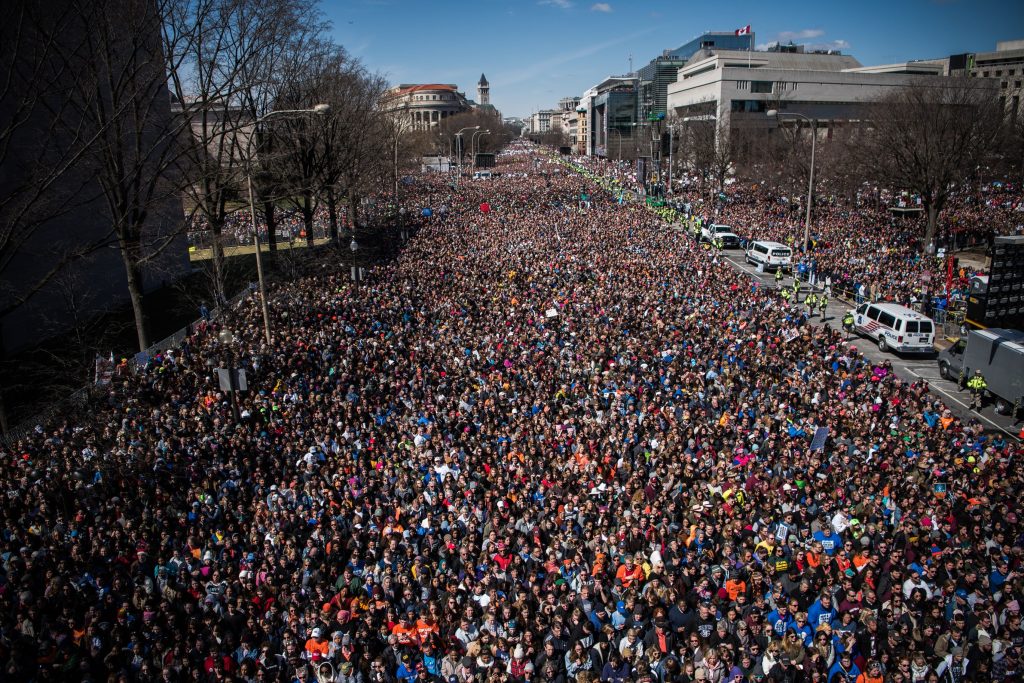
One of the big misunderstandings of current trends there is that they will go on forever.  If one is part of the cult of progress, change is seen as a march forward.  To the traditional there are endless cycles and seasons, the sun goes up and down.  To the cynical, humanity is on a downward trajectory, this slippery slope of social decay and spiral to the collapse of civilization.
In almost every case people expect that the current rules (or roles) can’t be flipped.  The winners today will keep on winning or what worked yesterday will keep on working as it always did—ad infinitum.

But long-term trajectories do change, cycles can be broken, powerful empires faded away into nothing and there have also been those massive breakthrough-type events that have completely changed expectations.  North is North, the compass is true as it always has been, and yet there is evidence that even this magnetic reference can flip.  

Things can go one way for a long time and feel very predictable and unchangeable.  But in one moment some threshold is crossed that upends the well-worn expectations.  The end of the epoch.  A critical mass is reached, the dam is finally breached, and the established paradigm blows up, and is washed away, like the linebacker running with the ball after picking off the toss.

Of course, in retrospect, we all claim to have seen it coming, that the signs were there, but few actually do.  If we did we would have invested better, acted differently, and taken full advantage.

Please Capitulate, Charlie!

In the Peanuts cartoon, there is the infamous football gag.  Lucy tells Charlie that she’ll hold the ball for him to kick and, despite her having tricked him many times before—by pulling the ball away right as he is wound up to kick, he is always fooled again.

Retail investors capitulating to short sellers.

This is how institutions have treated retail investors in the stock market.  In the past, when the market would downturn, the ‘smart money’ would short popular stocks, then spread FUD through hired shills to scare their ignorant counterparts who would then sell at a loss and move on.  When this retail capitulation would finally happen the market would finally be ready for the next cycle.

But now, in the meme stock era, the ‘Apes’ or those who learned from the 2008 crash, now hold, buy the dip, and refuse to sell.  This is not what the hedge funds and big banks had planned when they started to short AMC and GameStop.  They had planned to drive these companies into bankruptcy, and collect on their bets.  Instead, after over a year and a half of price manipulation (FTDs, dark pool abuse, naked shorts) and bashing, the selling has not happened.  This means they need to continue to pay the interest to maintain their short positions.

He’s hoping to wish this into reality…

It is a battle of wills, one retail rallying call being “I can be retarded longer than they can remain solvent,” and retail does control all of the exits in some heavily shorted stocks.  If retail does not throw in the towel, eventually the institutions will run out of new ways to kick the can down the road, they will get margin called and will have to cover.

At this point, retail investors have figured out the game.  They know how bashers are paid to scare them, they know how the price is manipulated, and they’re angry and not going to do what they’re ‘supposed’ to do.  Apes are not leaving.  And, at this point, this is a movement to expose the corruption in the market rather than simply an investment in a company we like.

If you want to be part of this history AMC and the new preferred equity called APE are trading for mere dollars.  You can even get free stocks by opening an account following this link.  This blog is not financial advice and investment is a risk, but we would love to have you as part of the Ape fam.

Maybe the pole shift won’t happen. Maybe Lucy has another trick up her sleeve. The future can’t be predicted. But we can be certain that trends almost always come to an end. Retail investors are no longer as easily fooled. This time Charlie Brown isn’t playing the game as expected.

How to get paid to write?

Standard

I’ve had so many people tell me that I’m a great writer and should be getting paid to do it.  But, thus far, I’ve had no real ideas how to monetize this talent and it can be frustrating at times.  Anyhow, right now, due to some medical bills, it would be nice to be able to earn some extra income and that’s why I’m making this request to share this post.  If enough people do, maybe the right person will find this blog and give me an idea of where to put my abilities to use.  Note, most of what I do here is completely unedited and written on my phone in my spare time.  If I was doing this as a professional I would do more to get the grammar right.  My interests are history, current events, politics, theology, psychology and any practical application of such things.  Maybe I could be someone’s speech writer or do a column? 

Your suggestions are welcomed!  I would really love to hear the personal experiences of writers who get paid.

And, of course, likes and reshares are certainly appreciated!