Someone with the name “Fitzwater” came across my social media feed the other day and made me think of someone I had met years ago. She was a waitress at a local Thai restaurant. I’m not sure of the exact circumstances, but we ended up going on friendly date together. We talked about her autistic son. She was a single mom. And how she struggled to make ends meet. Life eventually took us different directions, she fell off my radar as her presence on social media ended, and I had forgotten about the “Nikki” in my phone contacts.
That is up until Friday, when I decided to do a deeper look into her whereabouts. Since we lacked any common friends (other than Adam Bartlett who is deceased) and maybe that is why I never got the news. My hope was that she was married, got her feet back under her, and wondered about that kid she loved so much that she borrowed money to give him an exceptional Christmas. It was a total shock to come across an obituary for Nicole E. Welton. I opened the link and the picture was the Nikki I had known. She was dead for over five years now—only 32 at the time of her passing.
Was it a drug overdose?
She never told me she was a user. She did tell me I was “too good” for her and was so thin that I had to wonder.
So I continued my search, and pondered a bit about what had come of her son after she passed?
And a few clicks later I would find the tragic truth. This kind and wonderful human being died in a murder-suicide. She shot her own son before turning the gun on herself in the motel room two hours south. Her son was her faithful companion, she told me, “My son is with me. So I never feel alone” That is where her heart always was—which made wince when I saw this in the article:
Diamantoni said he was not releasing the boy’s name. He said the boy was living with his father not his mother.
She lost custody?
What a terrible thing for a single mother, in her thirties, to lose a child she brought into the world even if it was for good reason. It does not justify what she did. And yet she was in despair and her 11-year-old boy was probably the only reason she had holding her back from suicide. In that she couldn’t leave him behind as the only soul that she felt loved her anymore. Selfish? Perhaps. But maybe a distorted effort to ‘protect’ him, an autistic (ADHD according to an article I’ve read since) child, from having to deal with her choice to end it all. I’ll never know, I just feel she was never going to leave him behind.
I had to go read through our conversations and several things jumped out. First, what she told me about her nasty C-section scar and how unattractive it made her. Although I never saw for myself, she was a beautiful and attractive person—both physically and otherwise. This struggle with body image came up several times. Second, I had more or less friend zoned her from the beginning, wuth my impossibility obsession then being a topic in the thread. I never led her on—but I never gave her a chance either.
It’s just so jarring considering how my life has gone since then. I’ve finally emerged from the wilderness. My wife, my 13-year-old son, the baby daughter that brightens my world, all that has happened since that brief moment of connection with Nikki. It makes me wish I could have done more to change the trajectory she was on, although I don’t know what I could have done for her. With her dies someone who said I was an angel and the single platonic moment we had shared. This the second suicide of a relatively young person that I had invested time in trying to help—and could easily have been me had my Bhest not intervened.
Two lives cut tragically short. How else can the tribute to them read? A young boy, born the way he was, the apple of his mother’s eye, and then killed by the one who bought him into the world. His mom, never quite able to get around that corner, dreaming of the fairytale and stuck in the bog of single parenthood—burdened by her lack of self-confidence.
Why someone who was always so kind and considerate to me was not more generous to herself?
My mind simply can’t compute such things.
One thing, before I finish, is the other victim in all of this and that is the father of the boy who was left reeling. She never told me she was married. All I had ever known was her maiden name. And I don’t know what led to their separation. What I do understand now is that relationships are hard work and that we’ll never find the ‘perfect’ one. There are many miserable marriages and I don’t think people should stay in an abusive situation. But being alone to face the world isn’t ideal either. I wish Nikki, Dante, and the grieving dad I’ve never met could have had their own happily ever after together.
I have lost all of my heroes. The expression, “Never meet your heroes, because they’re sure to disappoint you,” describes the painful realization that those great people you imagined are not as special as you believed they were. It could be the letdown a friend had when he heard Matt Walsh speak. It could be a family that learned their eldest brother was cheating on his wife for many years and was not some image of virtue. For me it was a process and a very long grinding away of faith in these figures.
I was never one for human idols. I never put posters of celebrity faces on my bedroom wall and would never be as impressed with figures like Ravi Zacharias as some of my friends. It wasn’t a religious thing nor something just to be ornery. I simply didn’t have a feeling of awe about these personalities that were mid. The people I most admired tended to be local—my blue collar dad, my missionary cousin, or that perfect girl I would marry some day. But time has removed all from the pedestals.
Those women of my youth would end up as the cheating wife or more interested in status than my sincerity. My dad no longer looks like that man I remember who could carry me on his shoulders (with me hanging on for death life) up a silo ladder, and that zealousness of the ‘compassionate’ types tends to morph into a noxious ideological alignment that is really anything but they profess. They say that they want the Kingdom, but have replaced faith in God with fraudulent human institutions.
And I’m not just talking about the apologists for CAM in the wake of the Jeriah Mast and years of coverup aftermath. “Oh, but this is an organization that does such good!” What I’m talking about is something fully revealed since the DOGE ax has fallen on USAID. I grew up believing in the strict separation of church and state—that a colonial expansion of Christianity was tainted and this at completely odds with the teachings of Jesus about His kingdom not being of this world.
My views have certainly evolved—having left my religious cloister—but I’m still appalled by the thoughtlessness of people who I had once thought were smart and uncompromised.
Banality of Evil: When Ends Justify the Means
The Anabaptists, after the disaster of Münster, had committed to a quiet life of separation. It is why those in Old Order groups have refused participation in Social Security and other kinds of government benefits. Mutual aid should be voluntary and Christian charity is not obtained through coercion. Sure, the power of the state is alluring, that temptation (driven by our ego) to rule over others because we know what is best or they are undeserving of the resources they have—I have had many of those “if I were king” moments—but there is no stopping point when you fail to resist the siren song.
Left-wing politics always clothe themselves in a kind of compassion. Surely you will not oppose helping these children, right? And I am pragmatic to the extent I’m glad starving children are fed by any means. But opening the Pandora’s box of leftist means is always a slippery-slope to more use of state power and, inevitably, to leftist utopian cost-benefit analysis where everyone who opposes us is a literal Nazi and, therefore, we’re justified to stop them with violence. When coercion is allowed as a means of obtaining the ends we desire there is no stopping point.
The worst form of evil has good intentions. It is that of those who imagine themselves as the hero of their own narrative and thus allowed to bend the rules. This explains the extreme narcissism of Luigi Mangione who saw himself as a worthy judge of a father of two and a husband to a practicing physical therapist. There was no need for this leftist murderer to look inward, he had completely externalized evil and turned other men into caricature representatives of truly complex multi-faceted problems. When the ends can justify the means we’ll justify any means.
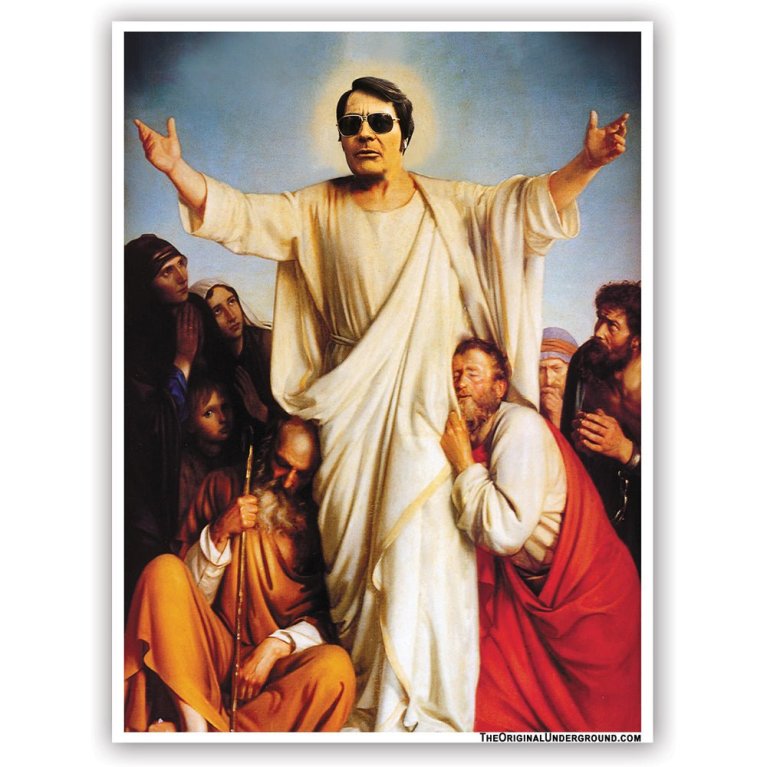
Pastor Jim Jones preaches his counterfeit Gospel before being abandoned by the US government and having to free his cult from bondage with some poison laced Kool-aid.
Seeing someone I thought was a Christian missionary lament how the United States had “abandoned” them was a reminder of how the great have fallen. There was not a shred of gratitude expressed towards the American taxpayers who financed them nor acknowledgement of the misappropriation of funds that has wearied voters to foreign aid. But more stunning to me was unholy alliance between this person of faith and agencies of US imperialism. Since when has the love of Jesus become an extension of the US regime abroad? Are they of the kingdom, as they proclaim, or agents of empire?
USAID, despite the name, is certainly not a charitable organization and was formed in 1961, at the height of the Cold War, with an aim of promoting the interests of the US political regime. That’s fine. But it has long ago gone off the rails even as far as what it was originally imagined. The Soviet Union had fallen and the Federal agency created to oppose it morphed from something most would support into a beacon of wokeness—pushing transgenderism and abortion.
Break the Yoke of Fraudulence
The reason why USAID is being dismantled is because we can’t sort the legitimate from illegitimate function of the agency. Sure, it may help people in need, but funding it also is enabling of evil and maintained through a system of coercion we call taxes. Anything good that it did can be done through other means. This functional fixedness of those who depend of government, especially on the part of those professing Christ, makes me wonder where their faith lies and what their actual mission is.
The merger of a Christian charitable cause with government doesn’t purify government—it taints the witness:
Do not be yoked together with unbelievers. For what do righteousness and wickedness have in common? Or what fellowship can light have with darkness? What harmony is there between Christ and Belial? Or what does a believer have in common with an unbeliever? What agreement is there between the temple of God and idols? For we are the temple of the living God. As God has said: “I will live with them and walk among them, and I will be their God, and they will be my people.” Therefore, “Come out from them and be separate, says the Lord. Touch no unclean thing, and I will receive you.” (2 Corinthians 6:14-17 NIV)
The accusations of “Christian nationalism” against those who want a government that performs basic functions were always just a smear by those in alliance with imperialism and Godless globalism. While I’m not a fan of God and country, at least the flag waving religious patriot knows there is a difference between their Christian mission and secular state. The left, by contrast, confuses these categories and would have social program replace true charity and community aid. In one case you have those who may tend to overreverence nation, but in the other there are those who truly represent empire and yet tell us they their only citizenship is the kingdom of heaven.
The truth is that the ‘Christian’ left is simply the left merely wearing the words of Christ as a disguise for ideological agenda. Those decrying the reduction of empire and return to responsible governance never said thank you to those funding their do-gooderism. It was, for them, all about holding those “chief seats in the synagogue” and their own glory as humanitarians. They may speak against Trump, but then have never uttered a word against the waste, fraud and abuse that has made these broad sweeping cuts popular with common people.
The true Christian spirit is that of a Federal employee who told me about the enormous amount of inefficiency and waste in his own agency and—while making no profession of faith—supports the effort of DOGE knowing it may impact his employment. That, to me, is someone who understands self-sacrifial love more than someone feeding the poor on another person’s dime and then going to social media to complain when their funds are cut. They’re grandstanding. While my Federal employee friend is a truly humble public servant who is grateful and not biting the hand that feeds him.
None of this to say this “abandoned” former hero of mine is a bad person. They clearly are using their abilities to help other people in desperate need. I applaud that. And yet their public statement betrays. There is an attitude or spirit there that is different from Christ. I would much rather they just be a secular humanist—subscribed to partisan leftist politics—and own it. They should just admit that they’ve abandoned faith in Jesus and are looking for a worldly system. Judas Iscariot is the patron saint of faithless social justice, guilt trips and envy—when you betray your calling just own it.
There was a time when I could simply say “I’m Mennonite.” That is what I was. It was my religion, culture and ethnicity wrapped up into one tidy package. It was as real to me as my gender and first name. But now, having left the denomination of my youth behind, it is really difficult to buy-in to a new identity or at least not to the extent of feeling a significant attachment to the distinguishing title.
We live in a great identity crisis. We might celebrate more identities than ever, and yet somehow along the way, we have lost the very meaning of the words that we use to define these identity categories.
What is an identity?
An identity is a word used to distinguish one from another. Or a statement of what we are in comparison to the whole group. Are you Catholic or Protestant? Black or white? A Republican, Democrat or Independent? And whether it is identity or not has much to do with the emotional weight that we place on these categories and terms. In other words, blue-eyed is certainly a category that some of us belong to, but is not currently an true identity marker.
There are also various kinds of identity, there are those inborn or assumed—Charlotte, due to her inherited genetics, is Kankanaey, and would be no matter what she believed about herself or if she prefers that another term be used. Then there are those types of identities that are less about our immutable being and more about what we are doing. By contrast, trucker or truck driver is an identity, and even comes with a license to prove it, but it is not something that is actually written in a CDL holder’s DNA.
Trump ‘identifies’ as a trucker…
Identity is never something we can select for ourselves. I can claim to be a Dill Pickle and even legally require the moniker be used in reference to me. But this is never going to change what other people will perceive me to be. Identity is something that others construct, with us, and not only a thing that we independently choose for ourselves. Put another way, a rose by any other name is still a rose and even if we paint it blue. And blue does not become yellow because we switch the color identity labels either.
Our “I am” identity…
I’m sexually attracted to the female form and this has dictated my priorities and activities throughout the years. But, as important as it is to me, I don’t tout my ‘straight’ preference as being my identity. I am many things, but my sexuality is not something to hang my sense of who I am on. There are no hetero pride parades for this reason and no need to fly a special banner in front of my house to announce my preferences either. Sexuality is not who we really are.
So, when someone says “I am gay,” my mind always must go to the question, “you are a sexuality?” The reality is that this identity is about far more than what they do in bed. It is about the community or lifestyle and an identity built around being their status as an exception. Being “gay” is just as much about the social aspect as the orientation. It is not just something you only do in private. No, it requires a public display and solidarity with others like you. If it were simply about sex there would be no parades or neverending need to be legitimized by others. Identity is bigger than the individual.
And trans is simply the next level. Those calling themselves “trans” may (in direct contradiction with their biological gender assignment) self-identify as a man or a woman. But those who are truly male or female simply are and there is no need for hormones, reconstruction of genitals or to exaggerate gender stereotypes with weird provocative displays. On the other hand, no matter how much surgery is performed on the body of a ‘trans’ person they will always be trans. The more trans people try to force others to recognize them (despite our own eyes) the more they will stand out as being different. Which is truly the point.
Identity is about our distinguishing ourselves from the larger group. It is also about what is the most important thing to us. If a person were ask who I am I would probably start with my given name. That is where I am oriented in society, as a product of my parents, and also gives others a shorthand to address my person. Then I might mention my role as a husband and father as those things are currently the most meaningful parts of my life. Of course, also in the mix is my religious affiliation and occupation. Sexuality, while very important, wouldn’t even make the top of the list.
Furthermore, there is no need for anyone to defy their own eyes or be forced to recognize anything about me against their will. Identity is not only about what I declare. A large part of real identity is what others recognize with no coercion. If I had to demand that my son call me daddy or that my wife appreciate my bad cooking the same as she did the work of a master chef, would their bending to my will really make me any more legitimately those things? No, it would certainly not! It would make me a bully and look very insecure.
The Identity Gambit…
Special identity is a way to gain advantage over others. In the past it was about having the right privileging title or family pedigree. Now it has become a no holds barred fight between various victim categories. But in both cases it was about unearned respect, about people who did not do anything noteworthy enough in their lives to be recognized and thus invent illegitimate reasons why others must genuflect to them. These frauds are enabled by those who have twisted morality and a corrupted political system.
Stop. I look like a police officer!
People can lie about their identity for many reasons. Impersonation of a police officer, for example, gives a person false authority and ability to manipulate the unsuspecting. Or stolen valor, in the case of those who, for attention, dress like and pretend to be a military veteran. Sure, the act is usually off, since these posers don’t have the requisite qualifications, but it fools enough people that they get the payoff of the true identity—or at least until caught. Then again, prancing around and pathologically pretending to be a girl is now extremely lucrative for some men.
Pretending to be a doctor or airline pilot is something children do innocently and yet it would be silly to legally recognize this as not to make them feel bad. True identity is not an act or a costume we put on.
Shedding identity…
Identity is powerful. For example, a person calling themselves a “gangsta” or “thug” is declaring a whole package of behaviors and dress styles. It is a choice as well as a habit, they could change and yet their momentum is in a particular direction. They have been conditioned, for years and years, by culture and peers, to assume this posture towards the world.
There is some truth to the statement, “you can take the boy out of the country, but you can’t take the country out of the boy.” We have many things instilled in us, accents to tastes, but this is not written into our DNA and doesn’t mean it is an “I am what I am” excuse. We will send children to speech therapy if they have an impediment rather than let them be their true selves. We can and should modify things that an identity is built from. This notion of a genuine self that can’t be changed is ridiculous.
Right now there is a Ukrainian vs. Russian war. The narrative we’re being sold is that there is a vast difference between the two sides—that this is a fight between freedom and democracy or authoritarian rule. We are told the Russians are barbaric and cruel, the Ukrainian’s heroic and capable. But both are from the same Kievan Rus origins, speak a dialect of the same language, and truly have much more in common with each other than they do with us. Furthermore, the regime in Kiev is hopelessly corrupt, and had been shelling those trying to escape this rule for years prior to the Russian invasion—it isn’t a distinction worth dying over.
Ukraine vs. Russia is more like the US Civil War than WW2.
The reality is we are not bound to identity, especially not to those that are more about what we are currently doing rather than our actual being. We choose our divisions as much as we are born with them. Sure, we can’t help what side of a border we are born on nor if our personality traits are judged as being masculine or feminine. But we can decide what is most important to us. And, more importantly, we can pick identities that are greater than sexuality or gender. We must reject this idea that we can’t change or improve while also accepting what we are and were born to be.
Many people get off from being contrarian and offending others, they especially enjoy being able to force others to go along with their language games. But, in the end, their ‘preferred pronoun’ is a distinction without a difference. We will remain what we are no matter how we dress it up or how much we compel others to go along with the delusion and falsehoods we peddle. It is only in our spiritual transformation, in finding a bigger purpose, that we can be free from needing the approval and attention of others.
More and more I have no identity to cling to outside of being who I am. I am what I am and don’t need to hide behind a special label or find my place in the world. While many in my religious past hold conference in search of their identity and as many converts in the tradition in which I currently participate tout the Orthodox adjective in the manner some do they/them pronouns, I have little interest in joining them in this inane competition. St Paul, in Galatians 2:38, would have us shed our divisive identities for a joint identity in Christ.
I have complete sympathy for atheists and agnostics. I’ve wrestled with questions my entire life and whether or not there is a God is always one of them. But the one thing that I can’t understand is being angry about human suffering, from a rational basis, if God does not exist. If there is no ultimate good, no greater purpose or meaning to life, on what basis do we make a moral judgment about suffering?
Okay, let’s back up a second. I’m here at my local establishment drinking another Long Island, one of many since the death of Uriah, and it hasn’t given me an answer as to why he would die of cancer at twenty-four. The medical diagnosis is simple enough. He had cancer. The aggressive kind. It started with the lump on his ankle during boot camp. I still have the picture on my phone taken out of morbid curiosity and never dreaming it was a death sentence.
Uriah and I, despite our difference in age, got along in a way that only cousins do. He was like me. We didn’t simply accept those easy cliché answers. He was someone who was both determined and also full of doubts. He was also the six-foot tall and better version of everything I ever was. The best part was that I could claim some of his success for myself given that I had encouraged him to continue his college education, telling him that it was better to keep going than to live a life of regrets.
Watching Uriah sacrifice a leg only to have the cancer be found in his lungs a year later. It was a gut punch. I think I stopped praying, at some point, because I just knew what the prognosis was.
The hardest part, however, is that Uriah was not the first of his family that I had to carry out of the church on a cold winter day. His parents had already lost one of their children to a seizure disorder. His two other siblings are severely disabled and will need constant care. Judy, his mom, is an incredible woman and has extraordinary faith. Ed too has great strength of character. And neither of them wastes any time feeling sorry for themselves despite losing the one healthy child they had to this terrible disease.
Where was God?
When my little Saniyah died, unexpectedly, it was a really big struggle for me. It took me years to get my feet back under me again, spiritually and emotionally speaking, and I had both doubted my own faith along with the existence of a loving God. The death of Uriah, along with my disappointments with those whom I put my trust in, and my long wait for Charlotte, have really tested me the past few years. But, I have those who need me to be strong this time around and, for this reason, have had to push back against falling into despair again.
Nevertheless, I totally get why someone who has encountered suffering in a personal way is angry and denies the existence of God on this basis. I mean why would this kind of pain and loss be allowed if there is an all-powerful good in the universe, right? Why would God not intervene and stop this all rather than let us go through such terrible experiences? It doesn’t make much sense, does it, that we should be left so lonely and struggling if God is good.
However, if we eliminate totally God from the equation, then we dismiss religious morality and must acknowledge that there is nothing written in the fabric of the universe that says our existence entitles us to good feelings. I mean, as far as evolution goes, pain is more or less a survival tool, a feedback system to tell us what to avoid. Feeling sad about the death of a friend or family member is, by this logic, a malfunction.
In this harsh environment, where everything is out to kill us, why would we ever expect anything more than suffering?
The moral reasoning that makes this bad, if you are truly an atheist, is nothing other than a construct. In terms of pure biology, it is good that fire hurts or we might burn our arms off. That is pain for a very practical and utilitarian purpose. Undeniably good if there is such a thing. But what reasonable good is there in mourning those already dead? No point in crying over spilled milk, right? A totally rational being would simply move on to the next social resource and not be so attached or sentimental.
Being upset over suffering and death, if there is no God, is irrational. And, if there is a God, like that of Christianity, then suffering and death are exactly what we’re promised in this life. Sheesh. Did you read the story of Jesus and how he was betrayed, beaten, and then unjustly killed in the most brutal fashion all as part of a redemptive plan? If you actually believe in eternity then why be angry about a few years living out this rich narrative we call life?
At the very least, how can we judge anything, especially a fictional character, on the basis of a moral standard that doesn’t exist?
If there is no God, then there is no basis for morality either. That too, including the idea that suffering is bad or pleasure is good, is entirely a construct. Pain is good in some circumstances, it protects us from injury and causes us to change behavior in ways that are beneficial. In other words, without the discomfort of hunger or thirst, we would not correctly prioritize our life. Pleasure can be bad when it makes us eat too many donuts and become diabetic. So how does one truly know that their own interpretation of these signals is the correct one?
From what I’ve observed in myself and in others, unbelief stems from disappointment when things do not go as expected. It is about who is in control. We can cling, in our own arrogance, to this notion that the universe should bend to our will. Or realize that our own perceptions, based on senses which are not very reliable and a brain prone to making mistakes in judgment, are not infallible or ever actual truth.
The thing is we only ever know if suffering is good or bad if it is properly contextualized if we understand the end. For example, feeling the burn of exercise is good pain because it is what accompanies muscle development and so we embrace this. So what is the real context of our life? To what end, or for what reason, did we become conscious? What is behind this ‘accident’ if it is one?
How do we contextualize our existence enough to judge what is good or bad?
If there is such a thing as an eternal reward, that would change the calculus, right? It would mean that all pain can be gain, and all suffering can draw us closer as much as it drives us away because defining the moral character of any experience depends on the end. I am willing to subject myself to many hardships if the reward is big enough. No, this doesn’t take away the question of why we must go through here to get there. But seeing past our immediate feelings is pretty much the only way to make progress.
Angry is a feeling, not a guide for life…
I was at this time living, like so many Atheists or Antitheists, in a whirl of contradictions. I maintained that God did not exist. I was also very angry with God for not existing. I was equally angry with Him for creating a world.
C.S. Lewis
People don’t walk away from Christianity for rational or scientific reasons. Sure, they may guard their emotion-based unbelief behind a wall of post hoc justification. But the reality is that they’re upset about something. They had expectations and are now disappointed and acting as wounded people do. It’s just strange that anyone at all Biblically literate would suddenly lose faith over our suffering when that’s literally the only we’re promised in this life.
What really doesn’t make any sense is why anyone would rather suffer with no hope at all of eternity. If God is dead, then nihilism is the logical next stop and that life has no real meaning or purpose. But the suffering does not go away simply because we’re angry at the giver of life. No, it will only intensify and become a spiral of despair. Our salvation is in our understanding that, smart as we may think we are, we’re truly quite ignorant and even our most ‘concrete’ reality is not real:
The first gulp from the glass of natural sciences will turn you into an atheist, but at the bottom of the glass God is waiting for you.
Werner Heisenberg
For those who don’t know who that is, Mr. Heisenberg was awarded the Nobel Prize in Physics, in 1932, for the creation of quantum mechanics. Materialism, despite the zombie corpse of this thing staggering on, died with the discovery of things in defiance of this entirely too simplistic conception. Sure, this kind of physics is well-beyond most, but it does support a notion of reality that requires a Universal Perceiver (as described in this article) and we could call that God.
So, if you’re actually serious about science, then the hard science of physics is the place to start and, with its mathematical origin and proofs, is much less likely to be clouded by emotion one way or another. We can’t run from God. But we may need to leave behind the baggage of our own misconceptions and learn the value of true repentance. Maybe Uriah died, and went to his reward, so some of us would have our flawed thinking broken and seek our salvation in Him?
Maybe some of us are just too stubborn, or too needing of control being in our own hands, to admit we can’t save ourselves?
I’ll tell you this. The universe, without God, is an infinitely dark and lonely place. It is that starring abyss of which Friedrich Nietzsche warned, the existential horror H.P. Lovecraft describes. Highly intelligent men, both of them, and understood the implications that come with true unbelief in God. You will not escape your suffering simply by denying that the Divine all-powerful good exists. No, rather you will just remain in that hell of your own creation.
Postscript: Questions Remain
I still grieve Uriah, as I do Saniyah, uncle Roland, and others that seem to have been taken before their time. I’ve long struggled against sources of trauma much more basic, the lack of unconditional love in the church that could make up for my shortcomings, and much of that is unresolved. At the time of my writing, the impossibility is something yet to be fulfilled. I do not have answers for any of this nor do I expect to. I’m not the arrogant kid who argued with his high school biology teacher, not a Bible-thumping fundamentalist at all, and yet must believe.
One of my favorite love stories, the BBC adaptation of a Victorian era novel, North & South, features two very strong and compelling characters.
The first, Margaret Hale, the cherub-faced daughter of an English clergyman, is forced to move to the industrial North after her father’s resignation over a matter of conscience. The other is John Thornton, a mill-owner, a handsome man with piercing eyes, brooding and intense, and interest in the demure young woman.
Things started fairly well. But, that doesn’t last as the differences in their perspectives becomes clear. Margaret, compassionate and having lived a sheltered life, interprets the actions of John in a negative light and pulls away after witnessing his harshness towards an employee caught smoking. What she sees as just cruelty was actually Thornton’s concern for the safety and wellness of his workers given the extreme risk of fire.
It is in the last and final act where there’s a scene where the tension between the two finally disappears. Throughout the middle-act Thornton’s truly good character is slowly revealed. And, Margaret, having returned South, has reconsidered her own idealistic notions, now sees the merits to living in Milton, and decided to return North again. Meanwhile, John is going South, the two cross paths at a station near the midpoint and cue the music.
North & South
There is this wonderful part of the soundtrack in this climatic station scene, Northbound Train (listen here), that so perfectly accompanied the moment. It is understated and elegant, reflective, that builds in waves to crescendo and then slips away as wistfully as it came. Thornton’s steadfast devotion is finally rewarded with a kiss and happily ever after begins despite the painful struggle to get there.
When the Story Goes South…
During my pursuit of the impossibly (a preacher’s daughter, like Margaret) this story brought a little hope with the similarities to my own. It wasn’t that we were so terribly different in our desires as it was she never heard me. Her conclusions formed before the conversation even began. She had pronounced “you’re thirty years old living in Milton” (the actual name of the town) meaning, in translation, that I would hinder her big plans. And could not understand it was her boldness and ability to get out that attracted me.
My thesis then was that a composite of our unique strengths, seemingly incompatible, bound together by Christian love, would exceed what those of similar abilities could accomplish. My thinking outside the box combined with her represention of the Mennonite standard. And, while I’m never good at getting things started (hence being stuck in Milton) I’m extremely loyal and willing to sacrifice for the team. I knew my age and life experience was an asset. But she could not see my value.
Still, for the year or so following her initial rejection I believed. What a wonderful story we would have when all was said and done, right?
Anyhow, that music, Northbound Train, had seemed like the perfect bridal march. Partly in innocent faith, partly to bolster my failing confidence against the deluge of rational fears, this image of the impossibly walking the church aisle dressed in white. As would be the case in real life, tears would stream down my cheeks as the nightmare of the past decade was replaced by this wonderful dream of marital companionship and completeness.
The strong emotions that came with that gentle harp being replaced with one violin and then two, have now disappeared. The music is still beautiful, but my feelings of numbness have long replaced that panging desire for a well-defined conclusion to over a decade of struggle. What I got instead was a world more complex. The cynicism that I had fought tooth and nail was confirmed.
The sunshine through the clouds, endings sweet and perfect are not for everyone. And the reason we tell such lovely tales is probably because they’re so uncommon, the exception, and not the rule. Sure, we can see ourselves as the characters. But the impossibly will likely go on seeing me as the villain in her movie, her conventional guy as the hero, and has never once shared in my fairytale that love would prevail over our differences.
As Far As the East is From the West
It is hard to believe that nearly another decade has passed and I’m still alone. I’ve moved from Milton, left the religion of my childhood behind, even traveled to the complete opposite side of the world twice, and have changed from that guy perpetually unsure of how to find direction. No, I’m not a missionary, but I do genuinely love people and probably accomplish more of actual value than those duty-bound Evangelical types who see ‘the lost’ as their get-into-heaven projects.
More importantly, I’ve found another impossibly, a beautiful Filipina flower, a little lost sheep when I found her (struggling abroad, in Taiwan, to support her son back home) and now the one who keeps me strong despite our torturous wait. Unlike the Mennonite impossibility, we do not share a cultural or ethnic identity, our lives have been very different, yet we have our simple and devoted love in common—which has been just enough to sustain us through these past years.
East & West
However, after all I’ve been through, holding on to hope is hard. Could my visions of her arrival at the airport, on American soil, with Y-dran in tow, also be a delusion?
It has been over two years and eight months since we’ve held each other that one last time before we parted ways in Taoyuan International Airport. I had known the immigration process would be difficult, but could not have anticipated the pandemic and travel bans that make it nearly impossible to be with Charlotte. It really does start to bring those worries that I might be cursed to the forefront again and sometimes the despair does win.
The eternal optimism of youth wiped away by the rejection of the Mennonite ideal, now facing my rational fears and the fact that I’ve been hoping longer than Jacob worked for Rachel and without so much as a Leah in between, I can now fully identify with the wife of Job, “Are you still trying to maintain your integrity? Curse God and die.” The frustration is real. How long does one go on dreaming? When is it justified to wither away into bones, with life never to return again?
As far as the East is from the West is an expression, in Psalms 103:12, used to describe an impossible distance that cannot be bridged. And it could seem that, despite the abiding love of my bhest to encourage me onwards, I’ve jumped straight from the frying pan into the fire. We have had a bit of good news since I’ve last published a blog here, the USCIS approved the application, and yet will this impossibly ever become possible?
I see the successful couples. So lovely together. To them it feels preordained, meant to be, a dream come true. For me, on the outside looking in, there is now more uncertainty than certainty, not everyone gets that music at the end.
“See, I will send the prophet Elijah to you before that great and dreadful day of the Lord comes. He will turn the hearts of the parents to their children, and the hearts of the children to their parents; or else I will come and strike the land with total destruction.”
(Malachi 4:5-6 NIV)
That end to the Old Testament has intrigued me. It contains a very clear either/or option. Either the people heed the message of Elijah or the land will be totally destroyed. God desired all to be saved, to be united in love for each other, and yet also doesn’t force the relationship and eventually the opportunity for reconciliation will end.
This is how John the Baptist was introduced in the New Testament:
He will bring back many of the people of Israel to the Lord their God. And he will go on before the Lord, in the spirit and power of Elijah, to turn the hearts of the parents to their children and the disobedient to the wisdom of the righteous—to make ready a people prepared for the Lord.”
(Luke 1:16-17 NIV)
Very aspirational.
Unfortunately, we see how this would eventually work out for the nation, as a whole, of those who didn’t repent or turn from their religious elitism. We see it in the following pronouncement of Jesus:
“Do not suppose that I have come to bring peace to the earth. I did not come to bring peace, but a sword. For I have come to turn “ ‘a man against his father, a daughter against her mother, a daughter-in-law against her mother-in-law—a man’s enemies will be the members of his own household.’
(Matthew 10:34-36 NIV)
Many picked or else.
They choose their own destruction rather than heed the message and accept the offer of repentance and life.
I’m convinced it didn’t need to be that way, that had the people accepted their Lord and Savior, the city of Jerusalem would’ve stood and would not have been destroyed by the Romans. It was political division, the insanity of the zealots (including Judas) pursuing their own version of social justice, the complacent ruling class unable to make up their minds, that ultimately doomed the city to destruction.
Jesus is uniting or divisive. The choice is ours. Like it or not, the Gospel lays out a choice between unity or division. The truth will set you free or you’ll stay in bondage to your sin, to your preferences, your prejudices and perish. If we would truly choose Jesus then we would let go of all of our other identities, grievances and special privileges, we would be united in love.
Many who profess Christ today are more like those who rejected him. They choose tribe over unity, they choose political gain over peace, they accuse others while being as guilty or more guilty themselves. We would be wise to do as Jesus told his disciples regarding those who refuse to hear, to kick the dust from our sandals and move on to those more receptive.
Peace Through Separation
This theme of peace through separation is throughout Scripture, one example being Abram and Lot:
“…quarreling arose between Abram’s herders and Lot’s. The Canaanites and Perizzites were also living in the land at that time. So Abram said to Lot, “Let’s not have any quarreling between you and me, or between your herders and mine, for we are close relatives. Is not the whole land before you? Let’s part company. If you go to the left, I’ll go to the right; if you go to the right, I’ll go to the left.”
(Genesis 13:7-13 NIV)
Lot picked the area close to the city, pitching his tent towards Sodom, Abram went the other way, and the strife between their clans ended. Nobody was offended, there was no reason to be offended, seperation to avoid unnecessary conflict is a peaceable solution.
We see the same happen in the New Testament:
Some time later Paul said to Barnabas, “Let us go back and visit the believers in all the towns where we preached the word of the Lord and see how they are doing.” Barnabas wanted to take John, also called Mark, with them, but Paul did not think it wise to take him, because he had deserted them in Pamphylia and had not continued with them in the work. They had such a sharp disagreement that they parted company. Barnabas took Mark and sailed for Cyprus, 40 but Paul chose Silas and left, commended by the believers to the grace of the Lord. He went through Syria and Cilicia, strengthening the churches.
(Acts 15:36-41 NIV)
Imagine that. A sharp disagreement, even within the early church, leading to a parting of ways. And it actually seemed to work for the best. Sometimes the best solution to an irreconcilable difference is to go different ways. It seems that actually enhanced rather than take way from their respective ministries. At the very least, we see this affair being stated matter of factly and not a cause for additional drama.
There is, however, at least one case of separation gone awry and that’s when Pharoah refused to let the children of Isreal go. He had refused after first bring asked nicely, relented only after a series of plagues that increased in severity, then changed his mind once again and pursued those seeking freedom from him. Why? Well, because he was exploiting their labor and knew letting them go would cost him.
That is also how an abusive spouse acts. They simply can’t tolerate someone wanting to get away from them, they’re insecure, they need to have control, and would sooner murder the other person than allow them to go in peace. They can’t stand that someone would dare to expose their own ugliness and will slander the other party rather than repent of creating the conditions that led to the other party being uncomfortable remaining with them.
A Christian is able to walk away in peace, without things ending on their own terms, but those who are exploiting others or trying to advantage themselves cannot. Is it better that there is no seperation? Sure. Is separation wrong when remaining together becomes unbearable? Absolutely not! In short, seperation is a peaceable solution for peaceable people. But tyrants, who must have their own way, will refuse to leave others be.
Two Groups, Presenting an A-B Option
About six months ago, in response to the increased promotion of tribalism, I started a group on social media “One Nation Under God…” The point was to present an alternative to these divisive forces. A place where people of all colors, creeds, genders, or orientations could celebrate our common humanity together. The idea being that we could act “one nation” rather than allow our differences to divide us. I featured a picture of a diverse group of American children and posted feel-good stories of people overcoming conflicts, Good Samaritan acts, and kindness.
Love Thy Neighbor
That group, which is representative of my highest aspirations and my desire to be unified with all, only attracted a handful of friends and remains at only a few dozen members. I would rather that we learn to get along, to hear each other’s perspectives, to find our common humanity, and respect our differences.
That’s definitely my option A.
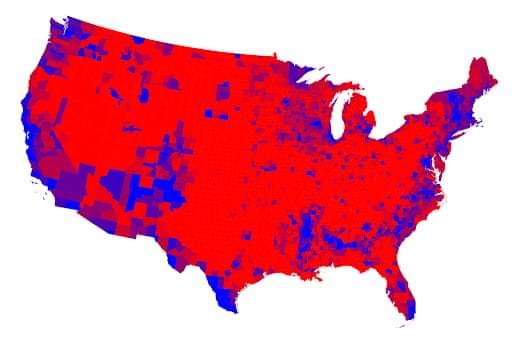
However, around the start of the new year, after a contentious election season and continuing strife, seeing some voices were not being represented, I decide (on a whim) to start a group where disenfranchised rural people could find a home. My group description contrasted “two different Americans” and went on to note the differing cultural values between rural and urban people, with a lament of double standards, and a call for a peaceful resolution.
The point?
Well, on one level, it was option B, to advocate for an amicable divorce rather than continue the perpetual conflict and subjugation of one half of the country or the other every four years.
Let My People Go!
But, on another level, it was still in hopes of option A, to make those on the ‘other side’ aware of this grievance, to hopefully find a listening ear, and then find an understanding together. In other words, it was the same reason that any other peaceful advocacy group exists, to give some a voice in the conversation, to say our culture matters, to stop sweeping our issues under the rug, and have a dialogue.
First and foremost, the group was created as a haven for rural people, who tend to be more reserved and too often get dominated by their socially adept, politically powerful, urban counterparts. There was no hate or contempt for those on the other side of the divide, only a listing of different cultural values, a lament of double-standards, and a call for a peaceful resolution to irreconcilable differences. Rural people have the same desire to feel safe, to feel reasonably represented, and speak against the cultural imperialism of the truly privileged as anyone else.
Many people are fleeing urban areas to escape tyranny and violence. And they are all welcome to live in rural areas. But, that said, those bringing their problems with them, their tribalism and hate, are best staying where they are rather than have them bring their divisiveness to us. Little old Asian women aren’t being physically assaulted by grown men in central Pennsylvania and some of us would rather keep it that way. We believe in equal justice under the law, merit and not quotas, and no special treatment for some over others.
Respect our values or let us go our separate ways. That’s all. Option A and B. Hear the grievance and maybe we can patch things up. That’s always possible. But, respond with more accusations and hate? Yeah, that will only confirm my own reason to leave.
Pharaoh’s ‘Woke’ Army Is Outraged
I was blindsided by it. A friend went me a private message to alert me. The eye of Sauron had found The Rural Divide and the legions of far-left sympathizing, the hoards of apologists for wokeism and closed social justice warriors were on their way to overrun this resistance to their totalitarian agenda. Behind the buttery smooth words, of well-trained passive-aggressive Mennonite-borns, there was seething rage—a sea of hatred, irrationality and nasty accusations
Murder in words.
Only one person reached out for an explanation. A few others to heap condemnation and clearly unwilling to listen. Even some old friends were unwittingly used as pawns. But the truly disappointing part is that those who led this campaign know me enough to know that their characterization of the group was a lie.
For those who don’t know me, I was the religious odd ball at my school (as a conservative Mennonite) and found my place amongst the other misfits. One of my close friends, throughout my school years, came out of the closet in highschool and never once did I think of him as less a person than me. My cafeteria clique consisted of the only Roman Catholic and Mormon guys in the school, an ethnic Indian Hindu, a Filipino Seventh-day adventist. My other closest friend was an atheist fellow.
After school, I’ve only ever dated women categorized as “people of color” according to the current jargon. I’ve punched an openly racist Kansan (not my finest moment) and lost my job as a result. I was obsessed with the Civil Rights Era and fully embraced what Martin Luther King Jr said about content of character over color of skin. My assailants are mostly whites who grew up in ethically homogeneous enclaves, homeschooled, often privileged over me and extremely gullible too. They, like their forbearers, seem to believe that their own poop don’t stink.
So Woke.
Anyhow, back to the present drama, one particularly sanctimonious religious elite, likely trying to impress his peers with this virtue signaling display, suggested that those who joined the group were not even Christian.
Imagine that, you get a random request for a group, decide to accept the invite to see what it is, and bam suddenly you’re out of the Kingdom. Wow! Yeah, I’m thinking this extremely judgmental elite confuses Christianity with cancel culture. Or maybe it is that they are from a conservative Mennonite background where a marriage partner who separates from their abuser is often treated as the guilty party? The apple doesn’t always fall far from the tree, does it?
I’m sure they are too ‘woke’ to carry on the prior generation’s opinions regarding abused women leaving their abusers. And yet, under this new facade of social justice, they carry on the exact same attitude in regards to those who wish to be separated from those that routinely accuse, slander, and belittle them?
Reminds me of this:
“Woe to you, teachers of the law and Pharisees, you hypocrites! You build tombs for the prophets and decorate the graves of the righteous. And you say, ‘If we had lived in the days of our ancestors, we would not have taken part with them in shedding the blood of the prophets.’ So you testify against yourselves that you are the descendants of those who murdered the prophets. Go ahead, then, and complete what your ancestors started! “You snakes! You brood of vipers! How will you escape being condemned to hell? Therefore I am sending you prophets and sages and teachers. Some of them you will kill and crucify; others you will flog in your synagogues and pursue from town to town. And so upon you will come all the righteous blood that has been shed on earth, from the blood of righteous Abel to the blood of Zechariah son of Berekiah, whom you murdered between the temple and the altar. Truly I tell you, all this will come on this generation. “Jerusalem, Jerusalem, you who kill the prophets and stone those sent to you, how often I have longed to gather your children together, as a hen gathers her chicks under her wings, and you were not willing. Look, your house is left to you desolate. For I tell you, you will not see me again until you say, ‘Blessed is he who comes in the name of the Lord.’ ”
(Matthew 23:29-39 NIV)
It is interesting, first, that this passage above contains both a loving lament and harsh condemnation, both in the same thought. This goes back to the either/or proposition of Malachi. Second, those who killed Jesus, along with the other prophets, thought they were the enlightened and righteous ones. Saul, who latter become St Paul, harassed, pursued and killed Christians thinking this was God’s work. He found fault in others despite being murderous himself and it was only after repentance that he could see.
The very same people today, who are heroes in their own eyes for attacking peaceable people today, would likely be cheering loudly for Jim Crow laws a few generations ago, or aligned with Bolsheviks in Russia and Nazis in Germany before their atrocities were fully known. It’s amazing the similarities between abusers, both then and now, rather than live and let live or leave when unwelcomed, they “pursue to town to town” and demand their piece of God’s people like the mob of degenerates in Sodom wanting a to ‘know’ Lot’s angelic visitors:
Before they had gone to bed, all the men from every part of the city of Sodom—both young and old—surrounded the house. They called to Lot, “Where are the men who came to you tonight? Bring them out to us so that we can have sex with them.”
(Genesis 19:4-5 NIV)
The far-left is equally aggressive today in pursuit of anyone who would rather not be with them. If you’re putoff by their nastiness they’ll accuse you of an “ism” or being “phobic” and harass and lie in an effort to have their way with you. To them you have no rights as an individual, you belong to them, and if you refuse their advances they will break your door down…
Or crack your skull!
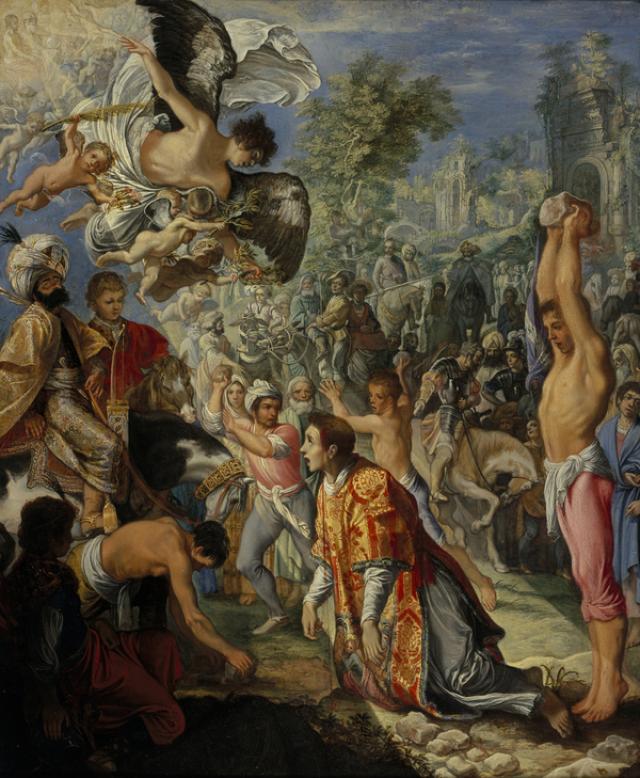
And those outraged about The Rural Divide acted in the same manner. They attacked in a swarm, relentless, demanding to know why the group existed, trying to infiltrate, and were no different than that enraged mob picking up stones to murder St Stephen for his paraphrasing of what Jesus said:
“Was there ever a prophet your ancestors did not persecute? They even killed those who predicted the coming of the Righteous One.”
(Acts 7:52 NIV)
A Time To Reconcile, A Time To Choose A Side
If anyone in that cabal of hate and hysteria would like to approach me and apologize, I’m more than willing to forgive the slanderous attacks. Unlike the far-left, I believe in repentance, that people should be forgiven of their faults and can change. I’m willing to reconcile with any of those who participated in this spreading of malicious nonsense about me. A simple apology admitting that they misunderstood or were misled into believing my group was something it was not would be sufficient enough.
There are those whom I blocked on social media for their racism or otherwise rude and elitist behavior that I would gladly welcome back into my life if there was a hint of repentance. That’s option A.
This is option B:
But now I am writing to you that you must not associate with anyone who claims to be a brother or sister but is sexually immoral or greedy, an idolater or slanderer, a drunkard or swindler. Do not even eat with such people.
(1 Corinthians 5:11 NIV)
St Paul prefaces this by saying that he’s not speaking against association with sinful non-Christians, who God will judge. But he’s talking about those who profess Christ and yet refuse to repent of their sin. This excommunication is necessary to maintain our own integrity and as not to confuse our non-believing neighbors. It applies, not in cases of different preferences, but in cases of clearly defined sin and lack of repentance. In case I’m unclear:
If anyone teaches otherwise and does not agree to the sound instruction of our Lord Jesus Christ and to godly teaching, they are conceited and understand nothing. They have an unhealthy interest in controversies and quarrels about words that result in envy, strife, malicious talk, evil suspicions.
(1 Timothy 6:3-4 NIV)
I’m sure this was just St Paul’s white cisgender male privilege speaking right?
More toxic masculinity, I suppose?
Whatever the case, if even Paul and Barnabas had to go their separate ways over a dispute, both early church missionaries and leaders, then why is it so offensive or wrong that some would rather peaceably divide rather than continue in a quarrel? Isn’t that what happened with Abram and Lot when their groups were in conflict? Abraham going the way of the country and Lot picking the life of the city?
Separated, but still Christian. Imagine that!
In the end, it is laughable that any Protestant religious separatist, especially these proud social justice preaching types who still identify as “Anabaptist” and refuse to seek membership with the universal church, would be at all critical of those rural folks who wish to have a separate space for themselves. Their hateful reaction confirmed every reason why The Rural Divide exists.
The Rural Divide is a group open to all shades of skin color, even those of other cultures, but only where there is mutual respect and not cultural imperialism. And, yes, the unrepentant ‘woke’ nationalists can stay out.
Relax, folks, it is just a Facebook group.
Everyone else has their safe space, wants their communities and values to be respected.












 Irregular Ideation