Filipino Christians Forced To Convert, Raped.

Standard

In an article, “Filipino Diaspora: Modern-day Missionaries of the World,” the plight of Overseas Filipino Workers (OFWs) is put in a positive light as a way that the Gospel is being spread throughout the word:

Mary Jane Soriano, a 25-year college-graduate Filipino domestic worker, has been working in Hong Kong for some years. During her stay there, she always made a point to attend the Sunday Mass in a local church, even if her employer and his family belonged to another religion. Besides Mary’s humility, simplicity, hard work, honesty and other human qualities that inevitably impressed her employer is her indomitable Catholic faith the way she practiced—simple ways to keep her life and faith going and always trusting in God and pray daily, and be good and do good to others.

Indeed, God moves in mysterious ways, Christianity swept through the Roman empire as “a religion of woman and slaves” (probably because it gave hope to these disenfranchised people) and in that way this diaspora of Filipinos is bringing Christianity to the world. The message of Jesus, and the cross, is that we will suffer for the sake of his kingdom—but that, in the end, the sacrifice we make is going to be rewarded:

“So the last shall be first, the first last.” (Matthew 20:16 KJV)

I have deep respect for those who aren’t missionaries as an extension of their privilege, living in behind compound walls, and entirely supported by the generosity of others. OFWs may indeed be the greatest missionaries of our time.

However, there is also a flipside, according to AsiaNews.it, in an article from 2010:

“In my tens in Saudi Arabia, I have witnessed several Catholic or Christian Filipino migrants accept Islam under duress,” said Joselyn Cabrera, a Filipino Catholic nurse working at Riyadh hospital. Because of high unemployment levels in the Philippines, more than ten million Filipinos have left to seek jobs abroad. Every day, about 3,000 leave the country. Recently, a majority has gone to Arab countries—some 600,000 in all, 200,000 in Saudi Arabia alone.

And continues:

The most recent case involves a woman who was raped at work. Because of the incident, Saudi authorities accused her of unlawful extramarital sex and on 11 September jailed her in the capital.

That doesn’t sound much like missionary service. It sounds like the vulnerable being exploited, forced to convert under duress, and is unacceptable.

Yes, the New Testament is full of stories of Christians ensuring terrible persecution for their faith. Yes, by their example of suffering example Christianity did spread to the world. But, no, that reality does not mean there is not a terrible cost nor does it absolve us of our own responsibility to intervene.

Suffer With Those Who Suffer

We should never allow our brothers and sisters to continue to endure hardships due to our own negligence or lack of compassion. No, as Christians, we are called to be their advocate, to care for them as we would for a member of our own families, and act on their behalf of them—like St Paul did in pleading for Onesimus:

Therefore, although in Christ I could be bold and order you to do what you ought to do, yet I prefer to appeal to you on the basis of love. It is as none other than Paul—an old man and now also a prisoner of Christ Jesus— that I appeal to you for my son Onesimus, who became my son while I was in chains. (Philemon 1:8‭-‬10 NIV)

St Paul, in taking action on behalf of this runaway slave, was practicing what he preached:

If one part suffers, every part suffers with it; if one part is honored, every part rejoices with it. (1 Corinthians 12:26 NIV)

This is what it means to be Christian:

Love must be sincere. Hate what is evil; cling to what is good. Be devoted to one another in love. Honor one another above yourselves. Never be lacking in zeal, but keep your spiritual fervor, serving the Lord. Be joyful in hope, patient in affliction, faithful in prayer. Share with the Lord’s people who are in need. Practice hospitality. Bless those who persecute you; bless and do not curse. Rejoice with those who rejoice; mourn with those who mourn. Live in harmony with one another. Do not be proud, but be willing to associate with people of low position. (Romans 12:9‭-‬16 NIV)

Incidentally, the description “low position” in the passage above means those who do menial tasks. That is to say the domestic worker, the migrant laborer, and all those toiling away in the factories, that make our electronic gadgets, for wages a fraction of our own. We should love them, suffer with them, and share out of our own abundance as need be. Those of us living in peace and prosperity have an obligation to help those who are currently endure terrible circumstances and especially those of the household of faith.

To be a part of the body of Christ means not being too busy with our own lives to care. It means being willing to intervene in love on behalf of OFWs around the world, to carry their cross and be an example of Christ.

Carrying the Cross of the Overseas Worker

We live in a culture that has been Christianized to the point that even secular artists now encourage Christian values. We now act as if compassion for those who are not part of our own biological families, national identity or ethnic tribe and race is something normal. That we should care about these others rather than use them as had been common prior to Christ. Take the lyrics of Pink Floyd’s, “On the Turning Away,” for example:

On the turning away
From the pale and downtrodden
And the words they say
Which we won’t understand
“Don’t accept that what’s happening
Is just a case of others’ suffering
Or you’ll find that you’re joining in
The turning away”

A Christian should never turn away from those in desperate need. We should feel the loneliness of an OFW, as those who are far from home and are separated from their families (including their own young children) for years at a time, and share their sadness. We should think about their fears, mourn the trauma of those who have been sexually assaulted and are being held captive, as slaves, by their abusive employers. We should pray, encourage and absolutely—by all means available to us—work to deliver them from their captivity and bring them home to the families they love.

Sure, it may be the job of the OFW to be a witness to the world of Christ’s love. But it is also our responsibility as fellow Christians, their brothers and sisters in Christ, to be a witness of the Gospel to them by helping to carrying their cross. If Christ himself, according to Scripture, needed help to carry his cross—then how much more does an OFW need our intervention for them? It is for this very purpose that Jesus told the disciples he would go, so that we (who are part of his body and filled with the Holy Spirit) will do greater things in his name.

But What Can We Do?

Many do have compassion. However, the problem is, how do we effectively do anything to change the circumstances for millions of people on the opposite side of the world? Even if we spent every nickel and dime we earned trying to support them and their families it would only help a fraction of those who are in need and it would do absolutely nothing to solve the actual underlying causes of this grim reality for countless Filipino people.

There is not much we as individuals can do as individuals. However there is much we can do in our working together towards a particular end. It is my hope that in my bringing awareness to this issue that others will partner with me, willing to contribute in their own small part, and together we can bring an end to the abuse.

That is why I’ve started the Filipino American Coalition of Trade (FACT) to give opportunity to those who want to make a difference for those who bear the cross as the truest missionaries of our time.

Like and follow FACT both on Facebook and also at the new blog site.

Pray for those who will spend this Christmas as slaves, sojourners in foreign lands, and victims of circumstances beyond their own control. Pray for the well-being of the OFW and their families, pray for their freedom from the economic conditions that keep them bound and separated from their loved ones, and may God be glorified in us all.

Sorry, Revivalists, Personal Relationship Implies Religious Devotion

Standard

There are many who claim to have a personal relationship with Jesus. This profession, which never appears anywhere in Scripture, has become a popular cliché amongst revivalists (over the past century) and is often used as a means to distinguish themselves from other Christians.

Those of this Protestant persuasion will, as part of their evangelical effort, ask strangers, “Do you have a personal relationship with Jesus?”

The question, a litmus test, suggests that they do have this personal relationship and that you must be able to mirror their own language or you are not a real Christian like them.

Those asking have a religious devotion to a particular kind of relationship for a particular reason. The reason is that they are reacting to something, namely dead religion, and they are not totally wrong for saying that religious devotion is not enough. I’ll go further into the reasons for their emphasis later on. But if you break it down, nor is a personal relationship without religious devotion enough. No, in actuality, a person needs more than a personal relationship with Jesus to be truly saved.

Judas, for example, had a personal relationship with Jesus. Judas, in fact, spent years in the inner circle of the disciples, physically right beside Jesus all the time, and was close enough to Jesus to give him a betrayer’s kiss. The relationship of Judas clearly lacked a necessary component. He was literally in the presence of Jesus, having actual conversations with Jesus, yet that personal relationship did not equate to salvation. Judas was with Jesus, he had a personal relationship with Jesus, but he was not religiously devoted to Jesus.

So why is a personal relationship important if it does not mean salvation?

Relationships can be good or bad. Relationships can start well and sour later on. Relationships can be based on a misunderstanding, an idea that we share something in common with another person, and then fall apart as the disparate reality sets in. We have many personal relationships, but what we really need is a good relationship, a relationship that can stand the test of time and bring us closer together.

What Is A Good Relationship?

Many young people “fall in love” with another person and get married. They are in love with each other, but more than that they are in love with an idea of what that other person represents. They have become closer through dating and eventually, through their physical intimacy, become one flesh. But this kind of love does not last, the initial feelings fade, the responsibilities increase, and many quit the relationship altogether once it starts to require more of them than they are willing to give.

Good relationships are self-sacrificial. Is it enough for a husband to tell his wife he loves her once, on their wedding day, and then go on with his life as he pleases?

No, relationships take work, they take a kind of religious devotion, an effort to remember special days, consistently doing things in a manner that respects the other. For example, if she wants the toilet seat down, then putting that seat down becomes a test of the commitment to love and cherish her. And, conversely, if a woman constantly undermines her husband, treats him as unworthy and pathetic, is her love real?  No, love prefers the other person, it encourages and strengthens.

A good relationship means a loving relationship and a loving relationship is always self-sacrificial. A personal relationship, without a religious devotion to love, is not enough to sustain a marriage and it is not enough in the context of Christian faith either. No, Jesus asked for far more than a personal relationship. In fact, he asked for religious devotion as a prerequisite to a true relationship:

If you love me, keep my commands. And I will ask the Father, and he will give you another advocate to help you and be with you forever—the Spirit of truth. The world cannot accept him, because it neither sees him nor knows him. But you know him, for he lives with you and will be in you. I will not leave you as orphans; I will come to you. (John 14:15‭-‬18 NIV)

Jesus said, “if you love me, keep my commandments.” It is then, and only then, does he promise that the Spirit will come. In other words, the personal relationship is contingent on our keeping the commandments, a religious devotion to be a fulfillment of his words, and not simply on our profession of having a relationship. Indeed, Jesus warned of those who never knew him, despite their use of his name, and it is because they did not put his words to practice. Having a good relationship with Jesus implies having a religious devotion to keeping his commandments.

How Do We Keep the Commandments of Christ?

Many are turned off by Christian tradition when the rituals and religious practices become separated from real love. They, rightfully so, see this sort of devotion as lacking a critical element and that being the indwelling of the Spirit. That is where the emphasis on “personal” and “relationship” came into the revivalist’s lexicon, they were confronting a kind of devotion that was separated from spiritual life and had a good reason for this.

Unfortunately, this newfound freedom from religion has often come at the expense of needed accountability and a true understanding of what a true commitment to Christ really is. Too many who claim a personal relationship, they claim to love Jesus, but do not keep his commandments and thus this personal relationship that they claim is really nothing more than the feedback of their own ego. A relationship with an imaginary friend based on their own personal ideas and not on the true person of Christ as they believe.

I’m not here to judge the authenticity of any commitment to Jesus Christ. However, like a marriage union produces children, there should also be signs of our commitment to Christ being more than something superficial, more than something we talk about. Those who truly love Jesus do not simply profess his name or claim to have a personal relationship, but they will also keep his commandments.

But what does that even mean?

What does it mean to keep the commandments of Christ?

I know some, from my Anabaptist roots, who try to turn the words of Jesus into a new law. When they say “keep the commandments of Jesus” they mean being duty-bound to a particular legalistic prescription (based on their own understanding of his words) and totally miss the point. In the end, those who do this, who exclude and refuse accountability to anyone besides themselves, are no different from Diotrephes who refused to fellowship with the actual Apostles of Christ. Legalism, a concern with words that supersedes relationships, is not keeping the commandments of Christ.

Rather, keeping the commandments boils down to simply this:

A new command I give you: Love one another. As I have loved you, so you must love one another. By this everyone will know that you are my disciples, if you love one another. (John 13:34‭-‬35 NIV)

Ah-ha!

To truly keep the commandments of Jesus means to love as he loves and to love those whom he loves. In other words, to have a good relationship with Jesus means to have a good relationship with his Church and your fellow man. Can a person who claims to love Christ, but can never get along with their brother and sister, be telling the truth?

True Relationship Bears Fruit Of Love

I’ve struggled recently over things related to money and relationships. We do not wish to be taken advantage of, especially not by other Christians, and I was beginning to have a bad attitude. I mean, am I not entitled to compensation, an explanation, a better attitude and more appreciation from them, etc?

In was in the midst of this that various family members, asking nothing in return, allowed me to use their vehicles, even accompanied me and gave hours of their time. Upon reflecting on this, and recalling the story that Jesus told of a man forgiven a great debt who goes on to try to get a little owed to him, I have endeavored to correct my attitude. If I were to demand everything owed I would be showing my lack of appreciation for God’s mercy towards me and set myself up for judgment.

My knowledge of that story of the ungrateful servant did not come to me through Jesus personally by some special revelation. No, rather it came to me through the religious devotion of those who taught me that story and by my continued desire to live by a Christian example, that this story was able to bear spiritual fruit. The seed was planted, it was watered by the work of the Spirit in me, and bore fruit in my actions. It is this kind of fruit that indicates a true relationship with Jesus, that which is described by St Paul:

But the fruit of the Spirit is love, joy, peace, forbearance, kindness, goodness, faithfulness, gentleness and self-control. Against such things there is no law. (Galatians 5:22‭-‬23 NIV)

It is interesting to note that Judas, despite his personal relationship with Jesus, did not demonstrate the fruit above. Instead, he was sharply critical of a woman for her extravagant display of worship, for her pouring out a year of her wages onto the feet of Jesus, and even used the words of Jesus in his rebuke, “Why wasn’t this perfume sold and the money given to the poor?” But this was not out of genuine love for the poor nor was it born out of true love for Jesus. To Judas, the commandments of Jesus were merely a political tool, a way for him to prove his superiority to others or gain resources for himself, and a disguise for his true corruption.

Those who truly love Jesus bear the fruit of his love in their lives and that spiritual fruit is manifested in their personal relationships with those whom Jesus loves. It means esteeming others to be better than ourselves and having true humility (Philippians 2:3-5) rather than always be right. It also means being accountable to each other, holding fast to the traditions passed both in word or letter (2 Thessalonians 2:15) and being in Communion together with each other. We cannot claim to love God or have a true relationship with Jesus if we do not heed this warning:

Whoever claims to love God yet hates a brother or sister is a liar. For whoever does not love their brother and sister, whom they have seen, cannot love God, whom they have not seen. And he has given us this command: Anyone who loves God must also love their brother and sister. (1 John 4:20‭-‬21 NIV)

Can we really claim to love those who we want nothing to do with, refuse to associate with, etc?

True Relationship Means Real Communion

The one potential issue that I have with the “personal relationship with Jesus” emphasis is where it reflects the individualism of our current age. Not everyone preaching Jesus is preaching the same Jesus and there are many who use their own personal version of Jesus as a means to their own ends.

To some, it seems “personal relationship” means they do not need to answer or be accountable to anyone besides themselves or those who mostly agree with them. They have a personal relationship with Jesus and, therefore, don’t dare ever question their understanding of Scripture or lifestyle choices! Nope, no matter how far their interpretations deviate from what has been long-established, they believe that their authority (as an individual) trumps all Christian tradition before them.

For if someone comes to you and preaches a Jesus other than the Jesus we preached, or if you receive a different spirit from the Spirit you received, or a different gospel from the one you accepted, you put up with it easily enough. (2 Corinthians 11:4 NIV)

Ultimately, this claim of a personal relationship too often implies that an individual need not answer to anything besides their own personal interpretation of the Bible and/or feelings. It is indeed strange, given how even revivalists claiming personal relationships with Jesus can’t agree, that Jesus seems to tell his various personal friends contradictory things. But that’s not a problem, I suppose, those with a personal relationship can simply assume that others who disagree with them don’t have the same special connection that they do, that other people who disagree are either deceived or lying and go on believing their own Jesus?

This idea that Christians are all independent contractors, accountable only to their own personal Jesus, flies directly in the face of what the Apostle Paul taught about Christian love and the need for unity in the Church:

Make every effort to keep the unity of the Spirit through the bond of peace. There is one body and one Spirit, just as you were called to one hope when you were called; one Lord, one faith, one baptism; one God and Father of all, who is over all and through all and in all. (Ephesians 4:3‭-‬6 NIV)

And goes on to explain:

So Christ himself gave the apostles, the prophets, the evangelists, the pastors and teachers, to equip his people for works of service, so that the body of Christ may be built up until we all reach unity in the faith and in the knowledge of the Son of God and become mature, attaining to the whole measure of the fullness of Christ. Then we will no longer be infants, tossed back and forth by the waves, and blown here and there by every wind of teaching and by the cunning and craftiness of people in their deceitful scheming. Instead, speaking the truth in love, we will grow to become in every respect the mature body of him who is the head, that is, Christ. (Ephesians 4:11‭-‬15 NIV)

A true relationship with Jesus should bring a person into the body of Christ, which is the Church, where they can become mature and reach that unity in the faith that. But you can’t do that while playing lone-ranger or imagining yourself to be some special remnant and claim to “love one another” as Christ commanded. Unity requires agreement and agreement requires seeking each other out, it means submission to the entire body of believers, especially our elders, and being accountable to more than ourselves or only those who agree with us.

A person can profess anything, they can claim to have a personal relationship with Jesus all day long, but the truth of their profession rests on their keeping the commandments of Christ and that is to love those whom he loves, to humbly submit to each other in love, and realize that the world does not revolve around us or our own understanding of things. We should prefer unity over having things our own way, love requires sacrifice, love means religious devotion to the good of another (as in a marriage) and even admitting that we need other people in our lives to be accountable to for our own good. Our love for Jesus is expressed in our love and devotion to those whom he loves.

The short version is that we need each other to be strong, so we are no longer tossed about by every new teaching (or repackaged heresy) that comes along, and that is how we (the body) are connected to Christ, our head. In other words, it is through our Communion with the body of Christ, the Church, by our religious devotion to study and pray together, that we have our real relationship with Jesus. Therefore, it is through our partaking Communion together, by our real connection to the body of Christ, not only our professing of a personal relationship, that we show our love for God, our Father, his son Jesus and the Holy Spirit.

Why Do People, Including Anabaptists, Repeat Their Mistakes?

Standard

With the conviction of Jeriah Mast, the Anabaptist father and missionary to Haiti whose years of sexual abuse were finally brought to light, there has been another round of handwringing on social media. There is a definite desire for change, I’ve seen some express the need for repentance, and that is good.

However, in reading some of the response, a proverb kept coming to mind:

As a dog returns to its vomit, so fools repeat their folly. (Proverbs 26:11)

The idea of the dog eating its own vomit is repugnant. It is most likely reingesting the very poison that caused it to vomit in the first place. Would any of us knowingly do this? Probably not. But many do exactly this, they continue to lap up the very things, the errant ideas, the poison, that will keep them repeating the same mistakes generation after generation.

We see this kind of doubling-down in politics all the time. Many ideological partisans, rather than admit what actually led to their failures, blame everything but themselves and go on to repeat the same mistakes over and over again. This is how confirmation bias works. Most people, rather than deal with the discomfort of being wrong about something close to their core identity, find a scapegoat to blame. People cling to the ideas they’ve most heavily invested in even after suffering through repeated failures.

With that in mind, as a product of both the culture that produced Mast and also produced the reaction to his evil deeds, I’m not convinced that this desire for positive change on the part of some Anabaptists in the wake of the scandal will bear fruit unless we can get to the true root of the problem. If anything, many who claim to be discontent with the status quo, because they do not understand the problem, will double-down on the very religious pride and cultural assumptions that produced it.

Many would like to blame organizations for failing to properly address Mast’s abuse. And it is true, CAM’s administrators really did drop the ball in dealing with Mast and then, rather than accept the full consequences, they went into damage control mode, lawyered up and attempted payoffs to victims. It is also true that his church seems to have enabled him rather than hold him accountable. However, it is quite easy to see the failures of others while never comprehending the cultural reasons behind the repeated bad decisions.

There is a folly here, grounded in pride, that needs to be addressed. It will be difficult to explain without offending some. But please do bear with me as someone who was an insider and is now viewing things with a different perspective.

What Is the Folly Of Modern Anabaptism?

Do you see a person wise in their own eyes? There is more hope for a fool than for them. (Proverb 26:12)

The first thing that fits the bill of folly is this better-than assumption. Modern Anabaptists are well-trained enough not to make an ostentatious display of their pride. However, it takes a great deal of pride to hold on to the very premise that makes them Anabaptist and that premise being that they (and they alone) represent some sort of radical reformation of the Church.

Since the time of Martin Luther and the many divisions that followed shortly thereafter, the answer to any problem has been to disavow and attempt to distance ourselves from it through creating yet another division. That is Protestantism 101 and Anabaptists, as those who couldn’t even agree with the other reformers or amongst themselves, are no exception. So, it is no surprise that those upset about Mast being enabled to abuse take aim at their institutions, that is exactly what their forefathers would likely do, and never realize the problem isn’t CAM or the Mennonite name.

It is a purity spiral that never identifies the real problem.

The irony is that the slice of Anabaptist that Mast belongs to is a group that has prided itself as being the “remnant” for their rejecting some aspects of Mennonite culture (including the Mennonite name) while doubling down on the Protestant revivalism that only entered Anabaptism a century ago. This, the “Charity” movement, has a great zeal for a particular version of the Gospel of Jesus Christ. They are the self-styled Anabaptists of our day as much as anyone else.

Mast, much to the ire of some, has continued to receive a great deal of support from his home church, Shining Light Christian Fellowship, in Millersburg, Ohio. Their “church statement” regarding him highlighting his emotional display and further voluntary confessions after being caught in his sin and present their “Restoration Plan” to hold him accountable. His pastor, according to news reports, speaks of the transformation he has “witnessed” in these few months since Mast fled Haiti. His wife testified to a “radical change” in her husband. And I’m pretty sure they are quite sincere about this assessment. To them, this is, no doubt, the radical forgiveness required of all Christians and what makes them truly Anabaptist.

Meanwhile, on the other side of this debacle, are those who are horrified, rightfully so, and think they need to reclaim the Anabaptist identity by rejecting the form above. They see his home church as enabling him and an example of failure all too common in their denominational context. To them, this is an egregious misrepresentation of Christ that shouldn’t be associated with true Anabaptism.

These two groups may see themselves as being complete opposites. However, in reality, they are two sides of the same coin. Both claim to want to do away with various religious forms (including the Mennonite name) and desire to be authentic Christians. Both see repentance and revival as the solution. But neither side is willing to question their own assumptions about themselves and the history behind their core religious identity—rather than question or reconsider their identity, they continue to repeat the mistake of turning back to the Anabaptist ‘wisdom’ they’ve inherited.

A very intelligent and incredibly talented friend of mine, in lamenting the Mast case, had this to say:

In my observation, we’ve come a long way from the early Anabaptists who understood the error of the church which was bent on formalities and conformity to their own “one church”. They said, “No, we choose instead to put our trust in the living God and trust the Holy Spirit for guidance, regardless of the cost.” Have we slipped back into idolatry? Conformity to a religion? A religion that must be protected for fear it will crumble?

This sounds right to a person indoctrinated into the Anabaptist mindset.

Unfortunately, it is also an assessment of the problem that completely ignores the reality of the situation. Mast’s church doesn’t seem fearful, rather they most likely see themselves as being very courageous for what they see as their uncompromising Christ-like stand on forgiveness. In their embrace of Jeriah’s confession, they see themselves as doing right no matter the cost. CAM, likewise, is not protecting a religion, but rather they are protecting assets they believe should go to a particular mission—that being the mission those who entrusted the funds in them intended it for—and thus the trying to settle quickly/quietly is simply, in their minds, good stewardship.

The statement, “the early Anabaptists who understood,” is practically an article of faith for modern Anabaptists. Sadly it is the very idolatry they project onto any Christian tradition that they reject. It is an accusation full of pride in that authentic Anabaptist identity they see as represented in themselves. Instead of considering the words of St Paul urging unity or considering the case of Diotrephes who arrogantly cast even the Apostles out of his church, they point to their ancestors as if this connection to a glorified past will somehow justify their next move. The folly is pride, pride in our ancestors, a belief that they were completely justified in what they did and is believing, without ever considering the negative consequences, that we should be more like them.

In reality, modern Anabaptists, like those who enabled Mast, are not acting any different from early Anabaptists. Modern Anabaptists, like their forefathers, do not feel a need to be accountable to any established authority that doesn’t conform to their own understanding of things. They reject institutions, they reject each other, they submit only to their own interpretations and believe they are more spiritual for this.

But is that really what Christ taught?

Did he tell us to run from problems and try to reinvent the church every time we disagreed with the established tradition?

When will modern Anabaptists repent of the pride that keeps the Church divided and them unaccountable?

To Save Sinners, Of Whom I Am First

Every Sunday, before partaking of communion, the Orthodox pray:

I believe, O Lord, and I confess that Thou art truly the Christ, the Son of the Living God, Who camest into the world to save sinners, of whom I am first.

That prayer, using the words of St Paul in 1 Timothy 1:15, shows what it truly means to be oriented towards humility and should be how we understand ourselves in relation to our peers. This is in contrast to the example of the Pharisee, that Jesus described in Luke 18:9-14, who boasted about his righteousness in comparison to another man.

If we believe that we are first amongst sinners it will change our response to when others fail. No, that doesn’t mean there will be no accountability for sins either. St Paul was forceful in telling the Corinthian church to cast the wicked man from amongst them and we should have a similar attitude to his. But our being first amongst sinners does mean letting go of hindering pride.

When we can stop saying “I follow [insert name of leader],” “I follow the Holy Spirit,” “I follow the Bible,” or even “I follow Christ,” (1 Corinthians 1) and instead be a part of the Church together and unified in our love, that is when we are being truly humble and understanding our place before God.

This idea that we or our ancestors could somehow create the more perfect Church is pure folly and keeps us bound to repeat the same mistakes in different forms. Sure, one generation may use forgiveness in a way that enables while the next will be ashamed of the enabling of the prior and seek to distance themselves from the others. But both are turning to themselves, to the cultural assumptions implanted in them, and never allow themselves to be accountable to anyone besides themselves.

The folly of modern Anabaptists is the same as their forefathers. They believe they can escape corruption by rejecting established institutions and traditions. And yet their ancestors end up as bad or worse than the groups they left. If they weren’t leading polygamous rebellions they excommunicating each other over things they couldn’t agree on (including, ironically enough, the practice of excommunication itself) and, incidentally, nobody was excommunicated for their participation in the violent uprising at Münster.

Nope, on matters of polygamy and use of force, early Anabaptists simply agreed to disagree.

Anyhow, is it a surprise that Jeriah Mast’s abuse has spawned two contradictory sides who both position themselves as the authentic Anabaptists?

There is a great deal of pride in the Anabaptist name. It gives the user a right to exclude those who disagree, to forgive those who know how to play the system right and avoid any accountability to a Church greater than themselves. It takes humility to realize that we aren’t special, that our ancestors were as flawed as we are today and that we are indeed sinners in need of salvation. It is time to stop repeating the mistakes of our Anabaptist forefathers, renounce the spirit of Diotrephes that divides the body of Christ, and start reconnecting with the Church bigger than our own ideas.

The Terrible Irony of a Person Who Hates People

Standard

One of my biggest pet peeves?

How so many people hate people.

They see encroachment on animal habitats, destruction of the environment, our nature, and imagine the world as being better without people.

Sure, I do understand the sentiment, I do not want to see something good be ruined. And I believe, for the good of humanity and all other living things, we should be caretakers of this amazing planet to the extent that we are able.

However, without us to observe, what would be left to make the judgment that the world is better or worse without us?

Without a Capable Observer—Does Anything Really Matter?

Like beauty is in the eye of the beholder, the existence of anything is a matter of there being a capable observer. Rocks or even simple organisms show no sign of being capable of appreciating their own existence—let alone beauty or the universe.

Our existence in time and space is something profoundly mysterious no matter what you believe about the origin of life—created in six days or over the span of 13.8 billion years—it is incredible.

But we are unique in this capacity to use words to describe our existence. We are, by all appearances, alone in this ability to contemplate our own existence or at least able to do it at a level unmatched by anything else known. Dolphins and elephants are, indeed, very intelligent yet, at very least, lack our vantage point as observers.

The Contradiction of a People Hating Person

Those who claim to prefer the creature over humanity are truly at odds with themselves. Not only are humans the pinnacle of the complexity of life on this planet, but we are also special for our ability to appreciate that we or anything else exists.

In other words, no beholder means no beauty, because beauty is not something out there or independent of an observer—beauty is rather a concept of mind that depends on the existence of the observer as much as the things being observed. What is out there only exists to the extent that something is able to assign value or appreciate that it does exist.

People who hate people underappreciate the wonderful mystery of their own consciousness and completely fail to comprehend that their observation is what gives all things value.

An amoeba may exist independently of us in some form, but it lacks the human mind to process things like future and understand the result of actions or consequence—which is the basis of the moral reasoning and the very thing that can cause some to view themselves (or just other people) with contempt.

Maybe it isn’t that people hate all people so much as they are narcissistic and simply hate every other person—with exception of themselves?

Narcissists Only Value Their Own Consciousness

It does seem that there are many people, who see themselves as being worthy of resources because they are (in their own minds) enlightened and special in comparison to others.

This aggrandized perception of self is possibly due to their own inability to imagine others being equally (or more) intelligent, as consciously aware or moral as they are, and otherwise equal. Their deficiency of imagination is only made worse by a culture that promotes a notion of self-worth that is independent of love for humanity in general.

Whatever the case, it leads to self-contradiction, it leads to a person who values themselves and their own moral judgment while not recognizing this capacity in others to do the same. It is basically a person who loves their own consciousness so much that they can no longer value perspectives that do not mirror their own and thus hate (rather than appreciate) anyone in competition with them for resources.

A people hating person sees other humans as being greedy and abusive, but fail to comprehend their own jealousy and control freakishness. They judge humanity as a whole without turning the criticism back on themselves or understanding that they themselves, with the mundane choices they make on a daily basis, are as responsible for the large scale problems as the collective whole.

A person who sees others as morally or otherwise inferior to themselves it is on a path to self-destruction. Pride coming before the fall is not karma—it is consequence. A person can become so blinded by their own arrogance and contempt for others that they are actually worse than those whom they condemn. They cannot learn or grow and are bound to hit a wall at some point when their own hatred makes their own life unbearable.

In some cases, when coupled with young male aggression, they become school shooters.

But in most cases, people who undervalue people simply live as one led by the nose by their own confirmation biases and emotions. They see themselves as having all the right answers, as always being the good or righteous person, and are really just egotistical and hypocrites. They may feel entitled because of their inflated self-worth—but are deceived. Like Cain who slew his brother Abel (as means to deal with his own cognitive dissonance as a result of his sacrifice being rejected), they are truly an enemy of themselves.

Why Care About What Will Eventually Burn Anyways?

Another deficiency of a person who hates other people is their inability to comprehend the reality of the universe as it is. Both an atheist astrophysicist and religious fundamentalist should be able to agree on this and that is that the universe as we know it will eventually end. Solar physics (evidenced in the stars) and Scripture point to fire as being the ultimate end of life on earth.

Even if some life were to somehow escape that consuming fire it too would cease as the cosmic clock spring of thermodynamics (behind all movement and life in the universe) became completely unwound. That, the “heat death of the universe” may be billions upon billions of years in the future, but it is as inevitable as the sun coming up in the morning and everything we know in this life will cease. There will be no stars flickering, no photosynthesis, no warmth or entropy—all will have expired.

But we do not even need to go that far out in time to understand the reality of life. Take a visit to the American Museum of Natural History in New York City sometime, consider for themselves all of those various forms of creature that went extinct and went extinct long before humans could have played a significant role in the environment. Nobody cries over Pakicetus nor laments the complexity of the ecosystem that it lived in, so why be upset about Pandas or Polar Bears following the same path?

Certainly, we should be concerned about the decline in the diversity of life, especially as rapid as it has been in recent centuries. That said, there have always been periods of expansion and contraction, usually related to cataclysmic events such as comet strikes or super volcanos, which will happen whether we campaign to “save the whales” or not. Which isn’t to say that we should care any less than we do, but we should probably care differently knowing that it is all temporal regardless.

Which leads into a question, if all this will end one way or another…

What Really Is Important?

Humans are magnificent creatures. We are the only creature capable of planetary destruction. But also creatures so extraordinarily capable of perceiving the future and contemplating things like value. It is our unique abilities that make our complex moral reasoning possible, where we can examine our own actions (collectively or individually) and pronounce judgment.

We are more responsible, but only because we are better at understanding the consequences of our actions and are able to adjust our behavior accordingly. We make priorities. We decide, in our own minds, what is good or bad, what is worthy of our love and what is deserving of our hate, whether flamingos matter more than fetuses.

We determine what is important.

So what is most important given that everything in this universe has a definite expiration date?

If there is anything timeless or beyond this universe, more important than life itself, what is it?

For me the answer is love.

If anything can escape our temporal existence it is love. Love transcends. Love allows us to show grace to the other creatures on this planet which are most like ourselves and that being all of those other fallible human beings. It is true, people are often unappreciative and wasteful. But hate for other people is really only self-loathing (removed a few steps) and to underestimate the value of our existence as the observers most capable of appreciating the beauty of this world.

It is important that we love other people. Sure, there billions of us and it is really hard to love those faceless masses sometimes. Still, other people have as much right to exist as anything else in the universe, we should appreciate them that they are conscious, like us, and love them as we want to be loved ourselves. Without love, nothing is really important and our existence, this tiny snapshot we get of the universe as humans, is meaningless.

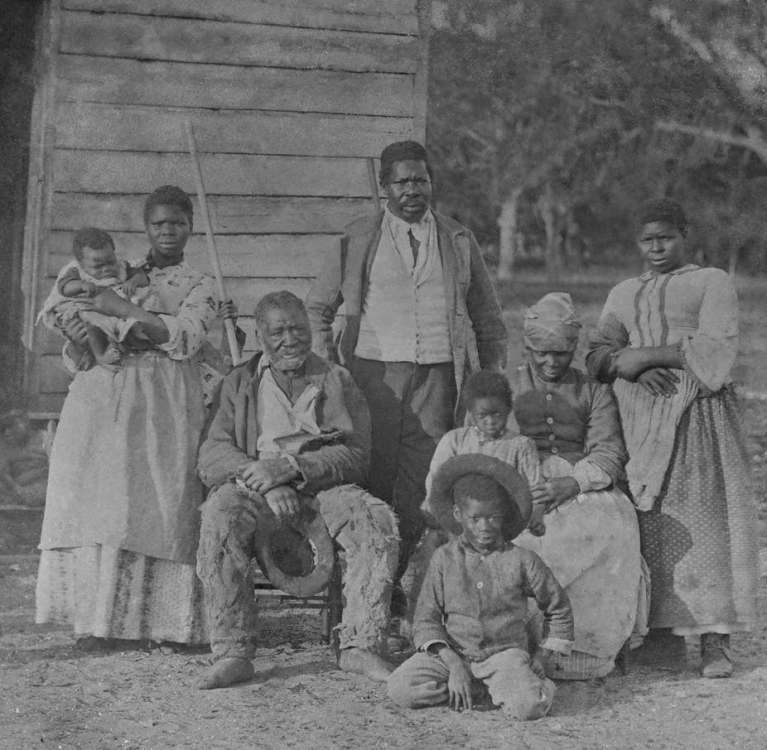
Finding the True Legacy of American Slavery

Standard

As a child, because of my father’s work in construction, my family would travel. My mother, someone as inquisitive and interested in learning as I am, would take us children to the various historic sites and museums near the areas we visited. A significant part of our time in the South was spent surveying Civil War battlefields, exploring plantation homes built in the Antebellum era, and pondering it all from the perspective of a proud Yankee.

At the time the devastation and destruction of the war were justified by the righteousness of the victors. Slavery was an affront to the notion that “all men are created equal” and thus this institution of human ownership remains an indelible stain on that founding ideal of this nation. This perspective made Abraham Lincoln a heroic figure, it made the Union soldiers honorable men, the North was morally superior to the South and that was that.

However, that was actually simplistic.

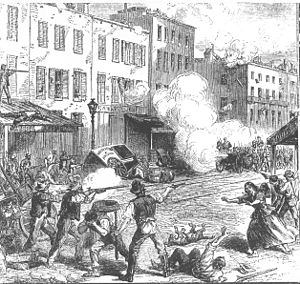
First, many of the casualties of war are innocent, the wrongs of our enemies not justify our own, and the reasons for a conflict are far more complex than the victor’s narrative, Second, slavery had been an institution since the beginning of human history and a subject of debate for the founders who ultimately decided that the constitutional federation of independent states against the British colonial power required some compromise. Third, the aggression of the North may have resulted in emancipation for slaves in the South, yet it did not improve the conditions of those treated like rented mules in Northern industries and mines nor did come without a cost. Furthermore, both sides in the Civil War relied on conscripts (poor men forced to risk life and limb to further the agenda of the powerful) and in the North disenfranchised whites (mostly Irish immigrants) rioted in New York City against the draft and taking their anger out on black city residents.

The human and economic costs of the Civil War were staggering. It is estimated that 620,000 men died in combat or from disease related to the horrid conditions and that’s not to mention the many more ‘casualties’ who returned physically or psychologically maimed. The direct impact was full 1.5 times the GDP of the time, for comparison, the 2017 GDP distributed per capita (19,485,400/325.7×1.5) is $89,739.33, and the indirect costs were far far greater. The total economic price tag of the conflict is conservatively estimated to be 10,360 million in 1860 dollars or an incomprehensible 315 billion dollars in today’s money and at a time when the US population (and GDP) was a fraction of today’s. Every man, woman, and child in the South lost the equivalent of $11,456 during the war and continued to lose long after the war due to the destruction—the vast majority of them never owned a slave.

Poor whites in America, especially in the South, had the double whammy (or maybe triple whammy?) of being forced to fight on behalf of the rich, of working for very little compensation themselves and then still being called privileged by their actually privileged counterparts. It wasn’t the moralizing Northern abolitionists who freed the slaves nor the Southern slave owners who felt the greatest pain of the brutal conflict. The people who paid the real price were the working class, they were the ones who lost the most in the war, a war over an institution no fault of their own, and are now held as responsible as the slave owners themselves. It is a path to resentment. People who feel powerless often take their feelings out on those with less power than they do. Sadly black Americans have historically been the recipients of this frustration while the true beneficiaries of their exploitation are never held accountable.

Slavery, at its peak, only accounted for a fraction of the nation’s GDP:

In the 1850s, the zenith of the cotton economy, it came to between 1 and 1.5 percent of the nation’s GDP, not a trivial sum. By this period, however, the United States was already the second-largest economy in the world and was investing every year between 13 and 15 percent of GDP in new capital. Even if the entire “slave surplus” were saved (which it wasn’t, because there were mansions to build and ball gowns to buy), it would have made a respectable contribution to growth, but it just wasn’t large enough to be the basis of an empire. (“Was America Built By Slaves?“)

As the quote above suggests, most of that gain likely went to the slave owners themselves, spent on their lavish lifestyles then, on those plantation mansions that still exist in the South, and was not invested back into the economy in general. A significant portion of that wealth evaporated as a result of the war and emancipation. The value of a slave went from being $12,500 to $205,000 (in 2016 dollars) to effectively zero. So, in other words, if the 1860 census were correct that there were 3,953,761 slaves and the average price was around $800 in their dollars (or around $140,000 in our own) then slave owners lost around 554 billion dollars. Slaves, on the other hand, gained something priceless, that being their own freedom, and yet the cost of slavery to black Americans is truly incalculable.

The Incalculable Cost of Slavery…

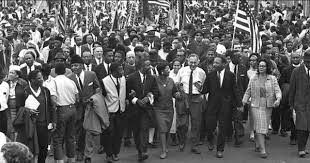
The cost of slavery to black Americans is incalculable and not in terms of economic impact. It is incalculable because of the lasting social consequences that can’t be assigned a number value. The suffering of black Americans did not end with the Civil War, they faced the lingering resentment of their white neighbors, all forms of discrimination, intimidation tactics and terrorism. Even with Constitutional amendments prohibiting slavery, recognizing their citizenship and granting voting rights, conditions did not improve dramatically for black Americans in the “Jim Crow” South. It took a further effort in the 1960s, the civil rights movement, to finally see some of these Constitutional rights fully realized and not before Dr. Martin Luther King Jr was murdered by an assassin’s bullet.

But, perhaps worse than the lynchings and segregation, one time events that can be adjudicated or something that can be addressed through legislation, is the immeasurable impact on the dignity of those who know that their ancestors were once treated as property and sub-human. I can’t really imagine how it would feel to have my own race being counted as 3/5ths of a person in my own country’s founding documents. There is no way to compensate for that psychologically and especially not when the widespread mistreatment was still in full force a mere generation ago. In such a context, it would be hard not to see any misfortune or measurable difference in outcome as somehow related to prior generations being robbed of their dignity and right to self-determination.

However, making matters astronomically worse is the fact that even many of those claiming to want to help often treat black people as their lessor and do more harm than good in their efforts to restore. A prime example of this is the so-called “War on Poverty” and how since then black marriage rates have plummeted and out-of-wedlock births skyrocketed. First, intact families are a greater predictor of future success than race. Second, making a person dependent on government handouts does nothing to restore their human dignity and, in fact, keeps them trapped. The welfare state has more or less enslaved the black community (and many others) to politicians who stoke fear of losing ‘benefits’ as a means to gain votes and maintain their own power.

Affirmative action programs do nothing to help confidence. No, if anything, they only further reinforce feelings of inferiority and, worse, feeds a notion that black accomplishments may deserve an asterisk. I can recall very well the conversation I had with a young man in the Midwest whom I confronted over his racism. He made no apologies, he embraced the description and then blamed his own lack of success in college on his not being given the same opportunities as minorities. Whether true in his case or not, it takes an extra dose of grace for a poor white person to not feel slighted and very easy to take out the frustration on the beneficiaries. I’ve had to fight this myself as someone who never finished college for mostly for financial reasons.

A few years ago I had hope, with the election of Barack Obama, that this would heal some of the wounds, bolster feelings of self-worth, and help us turn the page as a nation. Sadly, it has seemed to do the opposite. My opposition to increased government spending, as a lifelong conservative who doesn’t see more government control as the solution to every problem, was characterized in terms of race as was any opposition to his policies. Rather than be seized upon a moment of reconciliation, Obama’s race was used as political leverage, as a means to ostracized political opponents and advance a leftist policy agenda. The specter of racism is used to control, both to frighten some voters and also to smear others.

A decade ago I had believed that we were on our way to colorblind society, one like that Dr. King had envisioned where people would be judged by the content of their character rather than the color of their skin. Today I’m not even sure that is possible, the current political establishment benefits too much from identity politics and tribalism to allow that kind of society to form. It is hard not to feel cynical in a time when white vs black narratives dominate the headlines. And, while I believe this too shall pass, that the current racial tensions are an aftershock rather than a repeat of the past, there is also the reality that slavery is an unpayable debt.

The Unpayable Debt…

Some have suggested an idea of paying reparations to the descendants of slaves to right this historic wrong and would finally, once and for all, reconcile the injustice. There are those who have gone as far as to suggest a number, between $5.9 and 14 trillion dollars, as being suitable compensation or at least as a “meaningful” symbolic gesture and something that could improve race relations.

Those selling the idea of reparations say is that this is similar to payments made by Germany to those who suffered through the Holocaust at the hands of the Nazis.

However, those promoting the idea fail to mention the significant differences. The first difference being there are actual Holocaust survivors still alive today to receive the compensation for their loss, but there is not one former slave or slave owner still alive. A second big difference is that the abuses against the Jews in Germany were perpetrated directly by the government itself, whereas slavery was a private institution that existed long before the United States was a nation and was eventually ended by the government and at a very great cost. Hitler’s Germany didn’t stop themselves, the government stole directly from people and sent millions to slave labor camps or gas chambers to be killed—it was literal genocide.

But the bigger problem with reparations is who pays, who gets paid and how much?

It is not justice to make one generation pay for the sins of another. There are many in the United States who did not benefit from slave ownership. My own ancestors, for instance, did not own any slaves and the own possible way they might have benefitted is in slightly cheaper cotton. However, I didn’t receive any inheritance of money nor of cotton clothes from my grandparents. In other words, my savings is my own, from my own work, do I owe anyone (besides my cousin who just helped install flooring in my rental and the bank) nor do I feel any guilt for anything I’ve done. So why should the innocent be forced to pay any more than another person should be forced to work? Do two wrongs make a right? It would only be right to target those who actually did benefit directly from slavery and the complexities of that would be enormous. Would we go after the descendants of European and African slave traders as well?

And then there is the matter of determining who gets paid what. The reparations advocates come up with their dollar figure based on a calculation of hours worked, wages at the time, and interest that would be accrued. But that’s not how things really work. Again, the wages of my grandfathers and great-grandfathers were spent in their generation, dispersed into the economy, and there is nothing left for me. The reality is that the modern ancestors of slaves benefit from the economy in the same way that we all do, thus paying them with interest would not make any sense and especially when that money would be taken from their innocent fellow citizens. Then there’s the reality that not all American black people are ancestors of slaves, some of them are recent immigrants from Africa, some have mixed ancestry and others may actually be the ancestors of black slave owners. Yes, there were slave-owning black people in the American South—should their ancestors pay or be paid?

So, what do we do, start compensating based in DNA tests, as in, “You’re 1/5th black and thus entitled to X…”?

Do we prorate based on how much someone benefited from affirmative action?

Will multi-millionaires, those who obviously have done well, be paid?

Do we deduct welfare payments, etc?

Grading everyone based on their ancestors reinforces all the wrong ideas. It is measuring a person’s worth based on their ancestors rather than their own individual merits and exactly the thing we should be getting away from. Besides that, it is severely undervaluing the worth of a US citizenship, there are people fighting for the opportunity to be here, and our economy is much better here than it is in Africa. Yes, certainly a black person born into an urban environment may face unique difficulties. But then there are many immigrants who come here with nothing, who settle in the same neighborhoods and do advance. And where does it end, do we owe the followers of Joseph Smith for the systematic oppression of them and their religion? Do we owe the Republican party for the attacks against them by the KKK and lynchings of party members? It is just not a good direction to go, it is divisive, it will hurt the wrong people, and we are already deep in debt as a nation. Why should our grandchildren (black, white and other) pay interest to the Federal Reserve and other wealthy people for what is only a symbolic gesture and, if we are honest, won’t remove the stain of the past anyway?

The truth is that money won’t change anything as far as the past. Sure, I’m guessing many who would receive reparations like the idea, who wouldn’t take a windfall? But the reality is that all the compensation in the world cannot erase the legacy of slavery and all the wrong people would end up paying the price. A professional sports contract doesn’t make anyone forget injustice, many lottery winners often end up as poor as they were before, and money can’t be used to solve the problems created by money, to begin with. There are times when a financial settlement is the answer, when both parties directly involved (the aggrieved and the accused) are properly adjudicated. But billing the current generation for the sins of the past, especially without due process, is theft no better than slavery at worse and mere revenge at best.

The true legacy of slavery is that some are owed a debt that cannot be paid.

Wake Up, the Matrix isn’t Real!

A matrix, according to Merriam Webster, is “something within or from which something else originates, develops, or takes form.” And we do live in a matrix where our ideas about race, history, advantage and disadvantage matter more than the actual facts. In other words, the matrix is the way we individually or collectively interpret the facts and use them to form our ideas. Our thought matrix, our assumptions based on our own interpretation of facts, plays a significant role in our outcomes. Overcoming the mental processes that keep us bound is key to success in life.

The other week I was driving to a job site and notice some nice new houses with their well-manicured lawns, spiffy two-car garages, and paved drives. I was overcome momentarily with a tinge of envy, a little regret, and mostly befuddlement at how some people could afford such things. The question immediately came to mind, “What did I do wrong?” I thought of my life, my disadvantages, the opportunities missed, and all those things that held me back from reaching my full potential. However, before I went too far along in that thought process, another question countered the first, “What did I do right?” My mind went first to all the thing I did right, but then to all my advantages compared to most people in the world and the things I did not choose.

Did I do anything right, say compared to that Haitian man I saw in Port Au Prince hauling a car body on his back or a woman born in Afghanistan, Saudi Arabia, etc?

Our mental construct, our prejudices, and preconceived ideas, a product of our culture and choices, can make a real difference in our outcomes. Sure, positive thinking cannot change the circumstances of where we are born, a good attitude does not mean that there will be fewer obstacles to our success in life, yet why not make the best of the opportunity we are given and live in gratitude for what we do have rather than envy of others or frustration because of what we lack?

Part of the problem is that there is a system of control, it helps to create our expectations, it feeds our insecurities and can keep us bound. The real systemic oppression is the idea that politics (or more money in our hands and power over others) is the answer to our problems. Money can’t fix what it created, money itself binds us to the system and the things that money buys rarely deliver the happiness that we think they will. Again, look into lottery winners, many people end up as unhappy as they were before their winnings and some worse off. So why do we measure success in terms of things that will not and cannot make us happy?

What we really need to do is reorient ourselves. We must reject the unhelpful categories and classifications that keep us bound and change the way we think. Grievance culture, tribal score keeping and trying to rank people by their outward appearance is a backward-facing, small-minded and, frankly, racist orientation. There is no group guilt for slavery any more than there is for inner-city crime, we need to stop seeing people as white, black, orange or whatever, building our own identities around those superficial things, and aim for something greater—aim for the future that we want, yet hasn’t fully arrived, where all people are judged by the content of their character rather than the color of their skin.

It Is Time to Think and Act Differently…

If I had my own life to do over I may have dithered less (convinced that higher education was the key to success in life because of what my teachers told me) and started driving truck earlier. It was my own pride (and anxieties) that kept me from taking the better options available to me and I suspect there are many who, like me, prevent their own success because of their aim. And I’m not at all saying that we should sell ourselves short or settle for less than our abilities can afford us. However, many do set themselves up for failure because they keep waiting for the big break, the breakthrough when everything they dream of finally comes to them and refuse to take full advantage of the actual opportunities they have.

Another thing I would do differently is stop worrying that other people had it in for me and believing that I was helpless when the reality was that I was unwilling to make the right sacrifices. Part of my difficulty in life was due to my refusal to act differently or accept that my own behavior was part of the problem. Sure, there is something to be said for authenticity and being true to ourselves, but sometimes overcoming requires us to act differently and accept what is truly reality over our own individual construct. To find success in the religious context where I was born I would need to accept their rules and my fighting with that reality, my “kicking against the pricks” or resisting the flow rather than harnessing it, had some undesirable consequences.

Cutting to the chase, we have agency and we do not. There are well-worn paths to success with risks worth taking, call them cultural conventions, and then there are the low-probability high-risk paths that lead many to ruin. For example, finding a profession like teaching, law enforcement, construction or accounting (as opposed to seeking to be a career actor, model, musician or professional athlete) is more likely to produce desirable results for most people. Feeding our insecurities, dwelling on slights (real or perceived), demanding others conform to our wishes or that they respect us for who we are, expecting too much, is a path to long-term disappointment.

Overcoming the matrix means we need to stop seeing things in black and white terms. Sure, things like “black culture” or “white privilege” do exist in some form, at very least as a construct in our minds, but they really are only terms that obscure a far more complex picture and keep us trapped in the problem rather than working towards the solution. The reality is not as simple as the narratives pushed by academics and advocacy groups. There is no one group with all the advantages nor another with all the disadvantages. There is a reason why the suicide rates for middle-aged white people have skyrocketed while black rates have declined and are considerably lower—something (like connections and community) that might be missed in the commonly touted measures of success?

Recently I read the story of a naval aviator, an officer name Thomas J Hudner Jr, who was awarded a Medal of Honor for his actions in the Korean War. His act? He intentionally crash-landed his Corsair to protect and attempt to rescue a comrade, Ensign Jesse L. Brown, whose airplane had been hit by ground fire and was behind enemy lines. Brown, who happened to be the first black naval aviator, did not survive despite the efforts of Hudner, however, what does survive is an example of brotherly love that transcends artificial racial divides and presents a reality worth building upon. That is the legacy that, if built upon, will free us all from the sins of the past.

Loving dangerously, that is my idea of real success in life.

It is also neat, in these hyper-partisan times, to see George Bush Jr and Michelle Obama share some moments of common humanity together and continue this friendly exchange even at his father’s funeral. That is the symbolism that matters, that is the positive interaction we should aim for and the kind that can make a real difference in the world. If we love all people rather than prefer only those who look or act like us and orient ourselves to the hope of a better future rather than cling to our past and present suffering, we may well have a chance to build a better identity for ourselves as a nation. We may not be able to choose our inheritance, but we can work to create a better legacy for the next generation.

We, like Bush and Obama, have far too much in common to be at odds with each other.

Those who have faced hardship past or present should be heard and forgiven of their current insecurities. Those who have been indifferent to the suffering of others, out of ignorance or hardness of heart, should also be forgiven. And those two groups are all of us and have nothing to do with race. We are all victims, enslaved to a past that we didn’t create for ourselves, and all guilty of perpetuating the legacy to some degree. We can’t know what a person has been through by how they look on the outside and therefore we should love all people as we wish to be loved rather than by what we think they deserve. It is time to be courageously human, committed to true Christian love, rather than tribal, fearful and small.

I Prefer Representatives, Sound Doctrine and the Holy Spirit Over False Choices

Standard

I was speaking with a friend a week or two ago (a conservative Mennonite searching for his place in the church) and he shared this quote:

“Doctrine is dead as a doorknob without the presence of the Holy Spirit in an individual’s life.” (Paul Washer)

That quote drop of a Calvinist commentator was annoying to me. It was annoying because it was shared in the context of a conversation about Orthodox worship and prayers. The clear implication being that established doctrine is somehow in conflict with spiritual life.

So, without hesitation, I asked my friend: “How do you know Washer’s doctrines (like the one you just quoted) are inspired by the Holy Spirit?”

My question was based on my own experience as one who had put his full confidence in the Holy Spirit and has since learned (the hard way) the need to be grounded in sound doctrine as well. In fact, it was my desire to follow the Spirit without compromise which had led to my pursuit of the impossibility, which led to my eventual disillusionment with the Mennonite denomination, which led me to the ancient faith of Orthodoxy and new spiritual life.

So, getting back to Washer’s quote, he presents a false choice between doctrine and the Holy Spirit. He, like many Protestant commentators, seems to equate established religious dogma with spiritual deadness. His quote suggests that we devalue church traditions (those pertaining to worship and prayer in the case of my friend) based in an assumption that what is new or spontaneous is somehow more authentic and real than something that has been passed down through many generations.

But is that truly the case?

Do we ever need to choose between established doctrine and authentic faith?

From what I can tell, church doctrine and real spiritual life originate from the same source (that source being the Holy Spirit) and thus we should not ever have to choose between the two. The traditions passed down by the church (including the canon of Scripture) and the Holy Spirit are never at odds. To deny the importance of church doctrines and tradition is basically to speak against the authority of Scripture:

“For the time will come when people will not put up with sound doctrine. Instead, to suit their own desires, they will gather around them a great number of teachers to say what their itching ears want to hear. They will turn their ears away from the truth and turn aside to myths.” (2 Timothy 4:3‭-‬4 NIV)

Nowhere in Scripture do I see sound doctrine being presented in contrast with living according to the Holy Spirit. However, I do see James tells us “faith without works is dead” (James 2:14-26) and also know, according to the Gospel (Matthew 7:22-24), that there will be those who have professed faith in Jesus, even worked miracles in his name, whom he will tell to depart because he never knew them and therefore authenticity of faith is about more than making a claim.

Thus I do question the basis for this commentator’s opinion and the many others out there of those who speak with a similar confidence about spiritual matters. By what authority do they speak? How do we know that they, along with their devoted followings, are not deceived? I mean these ‘spiritual’ commentators are often at complete odds with one another. Don’t believe me? Do a Google search “Paul Washer false teacher” and you’ll find dozens of articles denouncing him and his teachings.

So who is right? Who is wrong? How do we know?

My contempt for commentators…

My reaction to the Washer quote isn’t something unusual for me. I have a near-universal contempt for commentators and especially those who can’t at least ground their statements directly to something found in Scripture. And perhaps that strong aversion is because I have enough strong opinions of my own, more than my fill, and therefore seek something a little more grounded than mere opinions?

Not to be misunderstood, that’s not to say that I find no value in reading commentators. I do believe we can gain many valuable insights from listening to various men and women sharing their personal perspectives on spiritual issues.

But, that said, not all commentators are equal and anyone can say anything and our feelings (one way or another) about what someone says doesn’t make it any more or less true. There are likely false teachings that would resonate with any one of us and we should guard against being closed off to truth based on our emotions. We should remember that all religious groups are able to justify their own understanding of spiritual matters, many of them live morally upright lives, and can be very convincing to those who don’t know any different.

And, to be clear, I’m not just talking about those commentators who say “the Holy Spirit tells me thus and such” without offering any corroborating evidence from church history or Scripture. Being a Bible scholar or well-educated and intelligent does not make a person less susceptible to confirmation bias. No, if anything, being well-studied and smart brings a danger of pride and pride can prevent us from seeing our own biases and the many things we have missed in our studies.

Proof-texting, when a person soundbites Biblical texts at the cost of context, is a real problem for any commentator. That is why we have a multitude of denominations all claiming their authority comes from Scripture and, yet, can’t agree on some very basic issues. It isn’t that one side is more ignorant of the book than another nor that one side is less sincere about their profession of faith than another either—the problem is a lack of accountability to anything more than what feels right to us.

My own commentary on spiritual life…

Going back to Washer’s quote, I believe we can all agree that there is no life in the church or elsewhere without the Holy Spirit.

As the Orthodox pray on a regular basis:

“O Heavenly King, the Comforter, the Spirit of Truth, Who art everywhere and fillest all things; Treasury of Blessings, and Giver of Life – come and abide in us, and cleanse us from every impurity, and save our souls, O Good One.”

We know, from the creation narrative, that “the Spirit of God was hovering over the waters” (Genesis 1:2) and is also the “breath of life” (Genesis 2:7) that entered Adam. Life, both physical and spiritual, comes from the Holy Spirit, and we see this pattern throughout Scripture and even at the end of the Gospel when Jesus empowered the disciples to continue his ministry of forgiveness:

And with that he breathed on them and said, “Receive the Holy Spirit. If you forgive anyone’s sins, their sins are forgiven; if you do not forgive them, they are not forgiven.” (John 20:22‭-‬23 NIV)

Note how that parallels with the Genesis account where God breathes life into Adam. Note also that this being “breathed on” comes after the resurrection, after Jesus spent years teaching these men, and is what enabled them to fully understand what he had taught:

Then he opened their minds so they could understand the Scriptures. He told them, “This is what is written: The Messiah will suffer and rise from the dead on the third day, and repentance for the forgiveness of sins will be preached in his name to all nations, beginning at Jerusalem. You are witnesses of these things. I am going to send you what my Father has promised; but stay in the city until you have been clothed with power from on high. (Luke 24:45‭-‬49 NIV)

The disciples being “clothed with power from on high” (a step that should happen before we go out on our own commission) is something that happened in the book of Acts, on the day of Pentecost, when they received an outpouring of the Spirit and many came to believe in Jerusalem.

Truth, according to Paul’s commentary, in 1 Corinthians 2:6-16, is something revealed by the Holy Spirit. That is something that mirrors what Jesus said in his promise of a “Comforter” that would “guide you (his disciples) into all the truth” (John 16:13), and there is no way around it. All the Bible study and religious knowledge in the world cannot breath spiritual life into anyone.

All that said, sound doctrine and spiritual life are never at odds with each other. That it took a special outpouring of the Spirit before the disciples could understand what Jesus taught doesn’t make his prior effort useless. His teachings, if anything, provided substance, like the dust God formed up into a man in Genesis, and his breath the catalyst.

Furthermore, those waiting on the right feelings, or teachings that resonate with them and their own prior experience, will likely be like the rich young ruler who left disappointed after asking what he must do to be saved. Faith demands we go outside of our own comfort zone, that we go beyond our own understanding, preferences or calculations, and begin to walk before we have our eyes opened. In fact, the Spirit is something promised only to those who those who love Jesus and keep his commandments:

“If you love me, keep my commands. And I will ask the Father, and he will give you another advocate to help you and be with you forever—the Spirit of truth. […] “Anyone who loves me will obey my teaching. My Father will love them, and we will come to them and make our home with them. (John 14:15‭-‬17a‭, ‬23 NIV)

So, what comes first, belief and obedience to Jesus or is it the revelation of truth via the Holy Spirit that enables us to understand what we read?

That is a paradox and something that has always made me uncomfortable. Jesus appears to make obedience a prerequisite to spiritual revelation, which ran counter to my own intuition, and why I had always stressed the second half of the teaching rather than the first part. How could I know what is sound doctrine (as in the correct understanding of what Jesus taught enabling my obedience) without the Holy Spirit coming first?

My understanding was clouded by an individualistic filter…

One would think that I, as one raised in a church with Anabaptist heritage, would understand that interpretation of Scripture and establishing doctrine is something we do together, empowered by the Holy Spirit, as a church.

But somewhere along the line (somewhere between urban myths being shared from the pulpit and men like Bill Gothard being given a platform), I had lost trust in the ‘ordained’ leadership and other members to discern truth. And, as a result, I began to look beyond my religious peers for answers. Eventually, after an epiphany about faith, I began to find answers in Biblical passages that had once confounded me and became more confident in my own individual discernment through the Spirit.

However, that paradigm of understanding was incomplete and all came crashing down when my own individual ability to discern spiritual truth came into serious question.

It is easy to claim the Holy Spirit is leading you while you remain safe within the boat of religion. But true faith requires going beyond our own established range of possibilities, to let go of our own human logic and reason, and step out of the boat. I did that. I stepped out. I took a few steps across the waves and then was promptly overwhelmed by doubts—doubts that were, in part, a product of running headlong into the plans, prejudices and cynical calculations of those in the church whom I had still counted on to mirror my faith.

I had questions that I could not answer nor could be answered in the Mennonite context. I had lost faith in my Mennonite identity and Anabaptist heritage to provide reliable guidance. I felt I had been fooled, once again, misled by the desire to find meaning in my struggles and a delusional faith that the impossible would be made possible. I had nothing, besides an obligation to continue to fight for the hopes of my bhest, and needed answers.

Fortunately, I ran into a man, a fatherly figure, who did have answers that I needed and set me right again.

Fr. Anthony, an Orthodox priest, arrived in my life as if by divine appointment. He had the right attitude, asked the right questions, never said a disrespectful word about my Mennonite identity (offering praise for our “peace witness” instead) and could speak with an authority that was missing where I was coming from. There was no pressure. However, he always seemed to show up at the right time and was always able to explain things in a way that made sense to me.

The timing was right for me in the same way it was for the man St. Philip encountered on the road:

The Spirit told Philip, “Go to that chariot and stay near it.” Then Philip ran up to the chariot and heard the man reading Isaiah the prophet. “Do you understand what you are reading?” Philip asked. “How can I,” he said, “unless someone explains it to me?” So he invited Philip to come up and sit with him. (Acts 8:29‭-‬31 NIV)

In an individualistic understanding, this man (the eunuch) should’ve had all he needed to find salvation—I mean, according to what many Biblical fundamentalist commentators put forward, Scripture is basically self-explanatory and all we need to do is believe what we read, right?

But clearly, that is not the case.

The Bible itself tells us that somethings in it are difficult to understand (2 Peter 3:16) and this eunuch, an important and likely very intelligent person, could not discern for himself what was written in Isaiah.

The Holy Spirit did provide him with an interpretation, yet that interpretation came through a man named Philip. Philip did not speak his own “private interpretation” (2 Peter 1:20) as a mere commentator offering an opinion. He was a representative. He was a man both directed by the Spirit and also commissioned by the church in the book of Acts:

In those days when the number of disciples was increasing, the Hellenistic Jews among them complained against the Hebraic Jews because their widows were being overlooked in the daily distribution of food. So the Twelve gathered all the disciples together and said, “It would not be right for us to neglect the ministry of the word of God in order to wait on tables. Brothers and sisters, choose seven men from among you who are known to be full of the Spirit and wisdom. We will turn this responsibility over to them and will give our attention to prayer and the ministry of the word.”

This proposal pleased the whole group. They chose Stephen, a man full of faith and of the Holy Spirit; also Philip, Procorus, Nicanor, Timon, Parmenas, and Nicolas from Antioch, a convert to Judaism. They presented these men to the apostles, who prayed and laid their hands on them. (Acts 6:1-6)

Philip was chosen and ordained to be a representative of the apostles, the apostles who themselves were representatives of Christ. His authority to interpret Scripture went beyond being merely a product of his own religious studies. He was not simply a religious commentator spouting his own opinions. No, rather, he was ordained as a representative, as one judged to be “full of the Spirit and wisdom” by the church, and therefore had an authority greater than a mere commentator with an opinion.

My individualistic filter was wrong, I could not understand everything on my own, we still need those representatives who are sent:

How, then, can they call on the one they have not believed in? And how can they believe in the one of whom they have not heard? And how can they hear without someone preaching to them? And how can anyone preach unless they are sent? As it is written: “How beautiful are the feet of those who bring good news!” (Romans 10:14-15 NIV)

Why I prefer representatives…

Anyone can offer commentary, we hear ‘expert’ commentators tell us their opinions of sports, politics and the economy all the time. Some people prefer Paul Krugman, others Rush Limbaugh, and typically we choose those who confirm our existing biases to those who would challenge them. That is also true of Biblical commentators as well. We like those men whom we choose based on our own feelings, on what resonates with us or provide our itching ears with what we wish to hear. Unfortunately, commentators are not accountable to anything besides their own understanding and too often play to the prejudices of their particular audience.

A representative, by contrast, does not speak on their own authority and is ultimately accountable to the authority that sent, commisioned or ordained them.

For example, in a Republic, like the United States, we elect Representatives to speak on our behalf and represent our interests. There are also representatives of a corporation authorized to act on behalf of the collective group and must also answer to the other representatives of the group.

Jesus, likewise, came as a representative of the Father who sent him, on several occasions he tells his audience that he speaks on behalf of the Father and not by his own authority:

Not until halfway through the festival did Jesus go up to the temple courts and begin to teach. The Jews there were amazed and asked, “How did this man get such learning without having been taught?”

Jesus answered, “My teaching is not my own. It comes from the one who sent me. Anyone who chooses to do the will of God will find out whether my teaching comes from God or whether I speak on my own. Whoever speaks on their own does so to gain personal glory, but he who seeks the glory of the one who sent him is a man of truth; there is nothing false about him. (John 7:14-18 NIV)

Jesus is imploring his audience to test his credentials. He is saying that those who choose to do the will of God, by following his teachings, will find out if his words are true or not. In other words, his teachings are a testable hypothesis, established directly on the authority of the Father, and not just his opinions that can’t be verified one way or another. Jesus is not a commentator speaking by his own authority, but a representative, commissioned by the Holy Spirit (confirmed with a voice from heaven and dove descending upon him at his baptism) and spoke with the authority of the Father rather than his own.

The difference between a commentator and a representative is accountable to an authority beyond their own. If a representative goes beyond their commissioning they can be voted out or brought before a council and condemned. A commentator, on the other hand, only needs to be accountable to their own understanding and the whims of their particular audience—their authority rests on their own credentials rather than on a true commissioning by an authority already established.

Doesn’t the Holy Spirit make us representatives as well?

My answer to this question, with my shift in paradigm, has changed.

The answer is both yes and no.

Yes, in that we do, as individuals, receive authority from the Holy Spirit.

But, no, as far that authority giving us license to be free from accountability and operate apart from what has been established by Christ and his church.

The Holy Spirit, the true spiritual guide sent by the Father rather than a counterfeit spirit, should lead us into unity together rather than to divisions. The early church was full of commentators, some who claimed to have the authority of the Spirit or Scripture on their side, but the book of Acts shows us that not all commentators were equal and some had to be rebuked:

Then some of the believers who belonged to the party of the Pharisees stood up and said, “The Gentiles must be circumcised and required to keep the law of Moses.” The apostles and elders met to consider this question. After much discussion, Peter got up and addressed them: “Brothers, you know that some time ago God made a choice among you that the Gentiles might hear from my lips the message of the gospel and believe. God, who knows the heart, showed that he accepted them by giving the Holy Spirit to them, just as he did to us.

[…]

They chose Judas (called Barsabbas) and Silas, men who were leaders among the believers. With them they sent the following letter: The apostles and elders, your brothers, To the Gentile believers in Antioch, Syria and Cilicia: Greetings. We have heard that some went out from us without our authorization and disturbed you, troubling your minds by what they said… (Acts 15:5‭-‬8,22‭-‬24 NIV)

Heretical teachings in the church have always been sorted out by council and consensus.

Even St. Peter and St. Paul were accountable to the body of believers represented in this coming together of apostles and elders.

It is by this process we were even provided with a canon of Scripture: Councils, representatives of the church, decided what books belong in the Bible and which ones (while possibly still useful) did not meet the criteria of Orthodox teachings. Not every book, not every person, is equally authorized to speak on behalf of Christ and his church. The Holy Spirit does work in the life of the individual, but the Holy Spirit also speaks through the church and especially through those sent, ordained or commissioned by Christ and is church:

But we ought always to thank God for you, brothers and sisters loved by the Lord, because God chose you as firstfruits to be saved through the sanctifying work of the Spirit and through belief in the truth. He called you to this through our gospel, that you might share in the glory of our Lord Jesus Christ. So then, brothers and sisters, stand firm and hold fast to the teachings we passed on to you, whether by word of mouth or by letter. (2 Thessalonians 2:13‭-‬15 NIV)

We are told the church, empowered by the Holy Spirit, is “the pillar and foundation of the truth” (1 Timothy 3:15) and that is to say that the church does have authority over the individual as a representative of Christ. We really do need that—we really do need to be accountable to something more than our own ideas and/or interpretations—and should seek to hold fast to the teachings that have been passed by “word of mouth or by letter” of those who, through Christ and his church, have more authority than their own personal opinion.

Good commentary must be rooted in sound doctrine…

Anyone can claim to have the Holy Spirit, but not all who do are true representatives of Christ or his church, and we must use discernment. There have many heresies throughout the ages of those who felt they individually could discern truth without being accountable to anything besides their own religious knowledge and feelings of spiritual superiority to others. We need to be on the guard against their false teachings and also against being deceived by ourselves.

We are all very fortunate, we do not need to choose between the Holy Spirit and sound doctrine. This is a case where we can both have our cake and eat it. The church has preserved the teachings of Jesus, in traditions both written and spoken, as the basis for sound doctrine and that “breath of life” comes in our Communion together. We are not called to be “Lone Rangers” finding our own way, serving our own preferences, etc. We are called to be a part of the body of the church, representatives of the church past, present and future, this church:

And I tell you that you are Peter, and on this rock I will build my church, and the gates of Hades will not overcome it. I will give you the keys of the kingdom of heaven; whatever you bind on earth will be bound in heaven, and whatever you loose on earth will be loosed in heaven.” (Matthew 16:18‭-‬19 NIV)

“Why Don’t Mennonites Pay Taxes?” And Other Similar Questions…

Standard

Growing up conservative Mennonite and going to a public school opened me up to many questions about my religion. However, while these inquiries were presented in form of a question, they often came off as statements:

“Hey, don’t Mennonites have horse and buggies, where’s yours?”

“Why don’t Mennonites pay taxes?”

Understand, this wasn’t intended as obnoxious, this was in elementary school and these classmates were genuinely curious. They were trying to take what they knew about Mennonites (or thought they knew) with what they observed in me and reconcile the two. I suppose these could be called “micro-aggressions” according to the currently popular terms, but I prefer a more gracious explanation.

Still, while I prefer to be gracious, the presumptions still annoyed me. This exposure might explain my sometimes strong visceral reaction to being pigeonholed in a debate. It might also have contributed to my desire to be a non-conformist in a culture that took pride in being non-conformed and did things a little different from other Mennonites. I’ve always wanted the right to speak for myself and for that reason have tried to give others the same respect and let them speak for themselves.

Anyhow, I’m pretty sure that any conservative Mennonite who spent time outside of their own religious cloister has experienced much of the same thing. The people asking if they are Amish, those inquiring if they ever considered the possibility there is no God, etc. And presumably, this would make us more careful not to do the same others. But that’s not always the case, as I’ve discovered…

Oh No, Not Again!!!

Since becoming Orthodox I’ve encountered the same kind of presumptions in a different form. This time, rather than public school peers, it is Mennonite family and friends. And it is not that I mind the questions either, but when someone starts with “I know a Catholic…” it reminds of those who cannot distinguish conservative Mennonites from Amish or Old Order Mennonites.

So I’ll start with that one…

“Aren’t Orthodox basically Catholics?”

Yes and no.

The word “Catholic” means universal. In the words of St Paul, there is “one body” (Rom 12:5, 1 Cor 10:17, 12:20, Eph 2:16, 4:4, etc.) and that is what universal or catholic means when applied to the Church. There may be multiple denominations, differences, and divisions within the Church, but there is only one universal Christian body of believers and that is what Catholic means. So, yes, all Orthodox Christians believe in a Catholic church, in that they believe there is only one universal Christian Church—that is what Biblical tradition tells us and that is what we must believe is true.

However, no, despite some similarities, we are not *Roman* Catholic. The early church had five patriarchs, one in Jerusalem, one in Alexandria, one in Antioch, one in Constantinople and another in Rome. These were geographic centers and separate jurisdictions of the early church and all were basically in agreement. However, in a similar fashion to how Amish split from other Anabaptists, there was a “Great Schism” in 1054 between the four patriarchs of the “East” and the Roman “West” over a variety of issues—including Rome’s unilateral addition to the creed (called the “filioque“) and the elevation of Papal power.

The Roman side veered towards more authority being granted to “Peter’s seat” in Rome. The Orthodox, by contrast, put more emphasis on maintaining Church tradition both written and spoken (or Orthodoxy) and hold that Peter was the “first among equals” rather than the “Vicar of Christ” in the way that the Romans do. This is a very significant difference of perspective, yet Orthodox and Roman Catholics do recognize each other at some level despite not being in Communion together. Both the Orthodox East and Roman West are Catholic in the sense they are parts of the universal Church, but they are not the same.

“Do Orthodox worship Mary?”

One of the first things a non-Orthodox will notice when entering an Orthodox sanctuary is the many pictures. These are called “icons” (after the Greek word for “image”) and are a visual representation of various saints, scenes, etc. This is a Christian tradition back to depictions in the Catacombs, there are icons of many virtuous Biblical characters, and of those most prominently displayed are those of Jesus and Mary the mother of Jesus. There is also mention of Mary, the mother of Jesus, “with the saints” throughout the divine liturgy and special honor is given to her.

However, Mary, while venerated (or honored) as the mother of our Lord, is never worshipped by an Orthodox Christian. Worship is only for the Trinity (Father, Son, and Holy Spirit) and all others are honored for their various roles. Mary’s role is more significant because her body was quite literally the ark of the new covenant. That is why Mary knew, early on, that “all generations will call me blessed” (Luke 1:48) and why Elizabeth (who were are told was “filled with the Holy Spirit”) loudly proclaims: “Blessed are you among women, and blessed is the child you will bear!” Nowhere in Scripture do we have a similar proclamation made and it is only right that the mother of Jesus is recognized by us in the same manner that she is by Elizabeth.

For Jesus to be fully man he needed a mother and his mother was Mary and that is why we celebrate her role. But that honor is not worship. In Chrismation, one has to make agree and make clear that their recognition of Mary and the saints in form of icons is “not unto idolatry” but for sake of “contemplation” and so that “we may increase in piety, and emulation of the deeds of the holy persons represented.” It is no more idolatry to venerate Mary and the saints than it is to have pictures of your grandparents on the wall or to speak of your own mother glowingly on Mother’s day or to treat your own children or spouse differently than other people. There is a vast difference between honor and worship.

“Why aren’t there Orthodox missionaries?”

This one caught me off guard. First off, every Orthodox Christian is (borrowing the words of Charles Spurgeon) “either a missionary or an imposter” and by this, I mean every member of the body of Christ is sent into the world as his representative. Sure, not every Christian is sent abroad in the manner of Hudson Taylor, but every Christian is called to be an ambassador for Christ (2 Cor. 5:20) and should do this wherever they are in the world. Secondly, Orthodox Christians, from St Paul onward have journeyed physically to spread the Gospel to the four corners of the world. Again, not all traveled to far away places, but every Orthodox believer is a missionary and there are no exceptions.

Some of the confusion of my Mennonite friends (who more or less proclaimed that Orthodox lack missionaries) could a product of Evangelical Protestantism and the influence this movement has had on defining their current practice. It seems many under that influence see missionary service as an activity that Christians do rather than an all-encompassing lifestyle. In other words, according to this mindset, one is only a missionary when shoving a tract in the face of an unsuspecting passerby or when they go with a group to do a project in a country that could use jobs more than donated labor. And yet, while that may be a part of what missionary work entails, this too is how we are to proclaim the good news:

“Slaves, obey your earthly masters in everything; and do it, not only when their eye is on you and to curry their favor, but with sincerity of heart and reverence for the Lord. Whatever you do, work at it with all your heart, as working for the Lord, not for human masters, since you know that you will receive an inheritance from the Lord as a reward. It is the Lord Christ you are serving.” (Colossians 3:22‭-‬24 NIV)

And, as far as Orthodox being missionaries in the forms more celebrated, there are many powerful examples of wonderworkers and martyrs for the faith. Orthodox don’t just travel to tropical paradises, do fun projects, and then jet back home again (back to their privileged lifestyles) after a few days or couple years. No, the Orthodox live in some of the most hostile places for a Christian to live and many have become the truest witness of Christ—they have died as martyrs for their faith, in this century as much as any other, and not only in the history books. It was not Protestant missionaries or Evangelicals being brutalized and beheaded by ISIS.

Furthermore, having entertained (very briefly) proselytizers of a sect widely viewed as heretical (even by Protestants) and having considered the words of Jesus about missionaries that make their converts twice as damned as themselves (Matt. 23:15) or those who will cry “Lord, Lord, have we not” when standing condemned in front of Him (Matt. 7:21-23) and listing their missionary works as if that is their salvation, there is something to be said for correct teachings and practice. The Orthodox, while all over the world (including Africa, where a baptism of 556 took place), seem to be more concerned with quiet and sincere obedience than they are with loud and proud professions.

“I’ve heard Orthodox don’t believe in being ‘born again’ experience, is this true?”

Conservative Mennonites, like other Evangelicals, tend to put much stock in a “born again” salvation experience. They take a phrase out of an analogy Jesus used (while speaking to Nicodemus in John 3:1-20) to explain spiritual transformation that must take place before someone can enter the kingdom of God. He likens being born of the Spirit to the wind, it is something mysterious, and then foretells his dying on the cross by likening it to the brass serpent Moses raised in the wilderness that healed those who looked upon it. And, yes, there is an experience, at the foot of the cross, for those who look up to Jesus and cry out for God’s mercy to them as a sinner.

However, salvation is not simply saying something and having an emotional experience attached or a once and done event, there’s so much more. We are told in the letters of St. Paul to “work out your salvation with fear and trembling” (Phil. 2:12) and then also that we are saved by grace “through faith” and as a “gift from God” (Eph. 2:1-10) rather than by our righteous works, which (with many other Biblical texts) could seem to present a contradictory view of salvation—splitting Protestants into competing camps of works versus faith, eternal security versus potentially losing our salvation, or Calvinist and Armenian. Meanwhile, Orthodox Christians avoid this debate entirely with a view of salvation that transcends easy categorization. We are saved, being saved, and will be saved so long as we continue to believe.

The Orthodox see salvation as a direction, not just a destination, as an intentional alignment with God’s perfect will and the choice we make daily in following after Jesus. In other words, salvation is less about declaring oneself to be “born again” or a singular event in time that we look back on and more about taking up our cross. Salvation is not a mere once-and-done transaction for them, it is a continuous relationship and being in Communion together with the body of Christ. So, yes, we should all be “born of the Spirit” and yet we should also be connected to the vine (John 15:1-8) or we will die as spiritual babies and never bear the fruit of salvation. Ultimately salvation is not a past event or a promised future reward, it is something we choose every day in our being faithful to God and living out the commitment to love each other.

“If we make every effort to avoid death of the body, still more should it be our endeavor to avoid death of the soul. There is no obstacle for a man who wants to be saved other than negligence and laziness of soul.”

+ St. Anthony the Great, “On the Character of Men and on the Virtuous Life: One Hundred and Seventy Texts,” Text 45, The Philokalia: The Complete Text (Vol. 1)

“I know an Orthodox and…”

It is one of the most annoying statements. Annoying because it is usually followed by some sort of negative characterization which they then use their anecdote to generalize about the entire two millennia of Orthodox Christianity and a church made up of hundreds of millions of people. It is a statement many Mennonites have encountered as well, which makes it all the more annoying when the same thing in slightly different form comes from the mouth of a Mennonite. I recall a time, broke down while driving truck, when the service technician (who didn’t know I was Mennonite) went on a long rant about some Mennonites he knew and how hypocritical Mennonites are, etc. Of course, his criticisms weren’t entirely incorrect nor are many of those leveled against the Orthodox (we don’t claim to be a church of perfect people) and yet they were definitely unfair to use as a basis to judge the entire group.

This tendency to remember their worse examples and our own best is a human universal. It is something called in-group-out-group-bias which means we tend to recall good examples of our own group (minimizing our bad) and bad examples of other groups (minimizing their good) or, in a word, favoritism. But this is especially true where the perfect church myth is prevalent or there is a lack of contemplation, introspection, and ownership. The smaller a group is, the easier it is to imagine that you are not like those others—those who do not live up to your own personal standards—and forget that a judgmental, divisive and prideful spirit is as sinful as anything else. Pointing out the faults of others is never a good defense. We should recall the story Jesus told about the confident religious elitist who thought only of his own righteousness in comparison to others and the humble man who begged only for mercy in his prayer:

To some who were confident of their own righteousness and looked down on everyone else, Jesus told this parable: “Two men went up to the temple to pray, one a Pharisee and the other a tax collector. The Pharisee stood by himself and prayed: ‘God, I thank you that I am not like other people—robbers, evildoers, adulterers—or even like this tax collector. I fast twice a week and give a tenth of all I get.’ “But the tax collector stood at a distance. He would not even look up to heaven, but beat his breast and said, ‘God, have mercy on me, a sinner.’ “I tell you that this man, rather than the other, went home justified before God. For all those who exalt themselves will be humbled, and those who humble themselves will be exalted.” (Luke 18:9-14)

So, anyhow, maybe you know an Orthodox Christian and can only recall bad things about them. But I probably know a few more and can tell you that they are just as sincere as any conservative Mennonite or other Evangelical I’ve met. Maybe you know some Orthodox who do not live to your own religious standards or can point to a historical blemish or two from a thousand years ago? Well, I’ll raise you one pedophile ordained by a Mennonite church in the past decade (here’s a list of some other Mennonite sexual abusers, if that’s not enough) and the Münster rebellion. Every denominational group has their less than celebrated moments and members, I can assure you of that. And if a group is too small to have a history of mistakes, that is not a great strength, it is a weakness, it only means they are more vulnerable. So “let he who is without sin cast the first stone” or maybe we should just take the advice of Jesus to be humble about ourselves and understand our own continual need of God’s mercy?

The Orthodox do not run from their history by starting a new denomination (or ‘non-denominational’ group) every time there’s a failure, they have their greater and lesser examples like every other group. But one thing that can be said is that they have maintained their unity centered on Christ and keeping the traditions of the Church from the time of the Apostles to the present moment. Fr Anthony, the Antiochian priest who served during my Chrismation, can trace his ordination all the way back to Peter and the first Gentile church, the church of Antioch (Acts 11:19-30) where believers were first called Christian. There is a great wealth of history to draw from, some cautionary tales, and many who were faithful until the end. Like the church that Paul preached to, the Church today is by no means perfect and yet, as Jesus promised, the “gates of hell” have not prevailed against the Church he founded.

For all of my non-Orthodox friends, the door is open, all people are welcomed, and there are good answers to questions for those who have them. There is truly a wonderful diversity within Orthodoxy, and a beauty of traditions—traditions packed with deep meaning—that span thousands of years. This is not something that one can begin to summarize in a blog post. There are volumes written and many more yet to be written about the Church.

But the best way to start learning about Orthodoxy is first-hand—to come and see.