What Is the True Cost of EV?

Standard

The battery electric vehicle (EV) versus the internal combustion engine (ICE) powered debate is one of the most irrational of our time. On both sides of the discussion, you have those frothing-at-the-mouth types who attack the moment you disagree. And this is exactly the response that I got after I had casually mentioned that ICE is 1/3 the cost under a click-bait post…

Model Y starts at $43,990 FYI.

One just called me ignorant, but others tried to make an argument, including this response:

I’m trying to figure out what car cost 1/3 of the price of a Tesla🤔🤔? The long range Model 3 (the one you want for a roadtrip) is $42,500 – $7500 tax credit is $35,000. This is not factoring in gas savings. Please tell me what new car is availability for under $12,000 (that’s the 1/3 cost of a Tesla you mentioned)?

Fair enough question.

Note, I never said new, but assuming that I did…

Believe it or not, and even in this inflationary age, there are still reliable sedans that come in under $20,000. Starting with a Mitsubishi Mirage G4 ($18,500), the Kia Rio ($17,875), and the Nissan Versa ($17,075), the lowest-priced option is half of even the subsidized price of the Tesla base model.

But you can’t exclude the subsidy from the cost of the EV, the government doesn’t have a magic wand to create value and we all end up paying for their expenditures in our taxes or by inflation due to money printing. And it only begins with that “tax credit” (so-called) given directly to privileged people who can afford a new luxury car.

What is the true cost of subsidies?

According to a study by the Texas Public Policy Foundation, the cost to us is nearly $50,000 for every EV produced:

Federal and state subsidies and regulatory credits for EVs totaled nearly $22 billion in 2021, or nearly $50,000 per EV, socializing the true cost of these vehicles to taxpayers, utility ratepayers, and owners of gasoline vehicles

Tens of billions of dollars have been spent trying to make EVs viable, and yet still the average cost of these vehicles is $65,000, compared to $48,000 for ICE. Why haven’t these subsidies leveled the playing field? It is simply the fact that batteries require tons of extra material and a much more complex process to produce.

So we can at least double that visible “tax credit” subsidy and already the true cost of an EV is close to three times a comparable ICE sedan.

We could stop there—the 1/3 number reached—but let’s continue…

What is the true cost of production?

The cost of a vehicle isn’t just the window sticker price or the money that it takes to manufacture. The bigger question—given the reason many say we should switch to EVs is about emissions—is what the increased environmental impact is of producing the batteries that go into these cars. Is this a trade-off we are willing to make?

Lithium batteries are costly, they require an enormous amount of water and also leave a toxic legacy that will grow exponentially as EV is adopted. Is it worth this cost to only marginally reduce carbon emissions?  That is to say, around 17-30% less emissions according to European Energy Agency? 

Sure, it could get better with a heavy investment in electrical generation and transmission—yet that is another huge cost financially and environmentally…

What is the cost of infrastructure demand?

This is where the conversation is the most interesting. We have the refining capacity and distribution network already built for ICE vehicles. Gasoline and diesel fuel have the advantage of being energy-dense and can be moved around using the existing highways. But what about EVs?

There is an illusion that comes with plugging something in. The load we put on the system is invisible. But there is no magic to it. Electricity is something that must be produced somewhere and then transmitted to the charging stations. If everyone adopted EV technology the grid would collapse.

We’re currently nowhere even near what it would take in capacity to convert everyone to EV. The easiest route to more electrical generation is to go anuclear. So how many new nuclear power plants would it take? Well, if we use miles driven and the number of cars on the road today, then we would need to build 250 additional nuclear power plants as big as the largest plant in the US, and the supporting infrastructure to keep up with this demand.

So are you willing to have a Palo Verde in your own backyard?

It cost 5.9 billion dollars to build one in 1988 (the equivalent of 13.9 billion in 2023) and we needed to start building 250 of them yesterday.  The solar and wind equivalent would be even more costly to build and maintain.

The costs would be astronomical and that’s just considering only passenger vehicles. Switching Class 8 trucks would take even more of these massive power plants and spending—the cost of switching would be insane.  Not to mention you would need more trucks to do the same work as you did with diesel.  And remember, every dime that we spend on this mass EV conversion could go to health care or education instead.

Can you now see how extremely costly EVs will become as they are adopted?

But it does not end there…

Why is the cost of wear items greater?

Batteries are heavy and weight is the enemy of “wear items” like brakes or tires—which is not to mention the additional damage to the highway infrastructure.

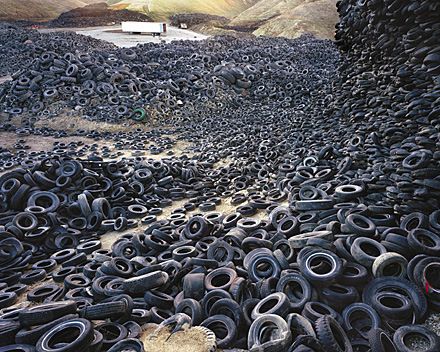
EV tires wear 20% faster than comparable ICE vehicles.  That is a cost out of your own pocket and also a concern for the environment. And do not forget, to be safe you’ll need those heavy-duty EV-specific tires. Sure, maybe this is not a very big problem for those who can already afford the premium cost of a new EV?  However, for that waitress struggling to make ends meet she will have to make the choice between safety and home utilities.

Next up is excess road wear.  Big trucks are obviously the leading cause of damage to roads. However, EV proliferation will start to cause problems for existing infrastructure:

A 6,000-pound vehicle causes more than five times as much road damage as a 4,000-pound sedan. A GMC Hummer EV, which weighs 9,063 pounds, will cause 116 times as much road damage as a Honda Civic, weighing 2,762 pounds.

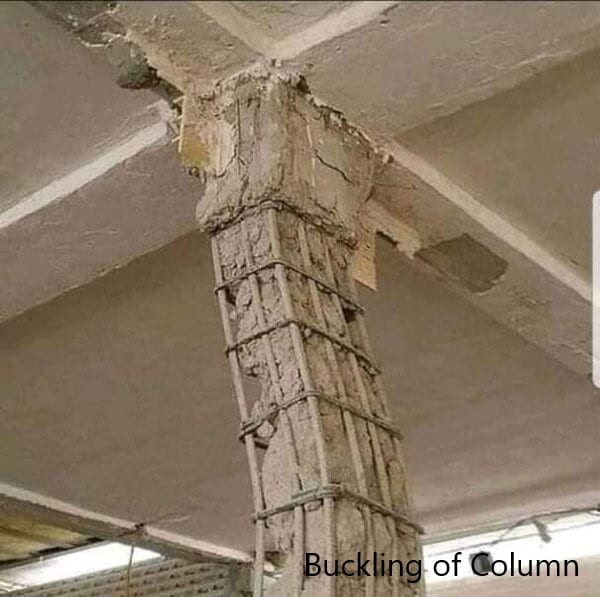
The article cited above isn’t about EVs yet does apply given it is about the vehicle weight. Even the Model 3 is a whopping 3,862 to 4,054 lbs. Sure, one vehicle is not going to do a whole lot by itself, but the volume over time will significantly impact bridges and parking garages that were designed for lighter ICE vehicles. This EV vehicle weight bloat caused by batteries will require very costly upgrades to prevent catastrophic failures—like the Ann Street Building Collapse:

Speaking of disasters. With EV there is potential for a thermal runaway or reaction that can’t be stopped—like an ICE fire—by simply denying the source of oxygen. This hazard will result in more damage to road surfaces, more time spent in traffic jams after incidents, and additional toxic emissions. This is a cost to be seriously considered with all of the others.

Cost of time, capability, and resale value…

Many of the costs and drawbacks of EVs are hidden under a pile of subsidies or are moved upstream like the emissions—out of sight out of mind.

But what cannot be ignored is performance in terms of range. Time is by far our most valuable resource and nobody wants to spend hours in a place they don’t want to be because their vehicle battery is drained.

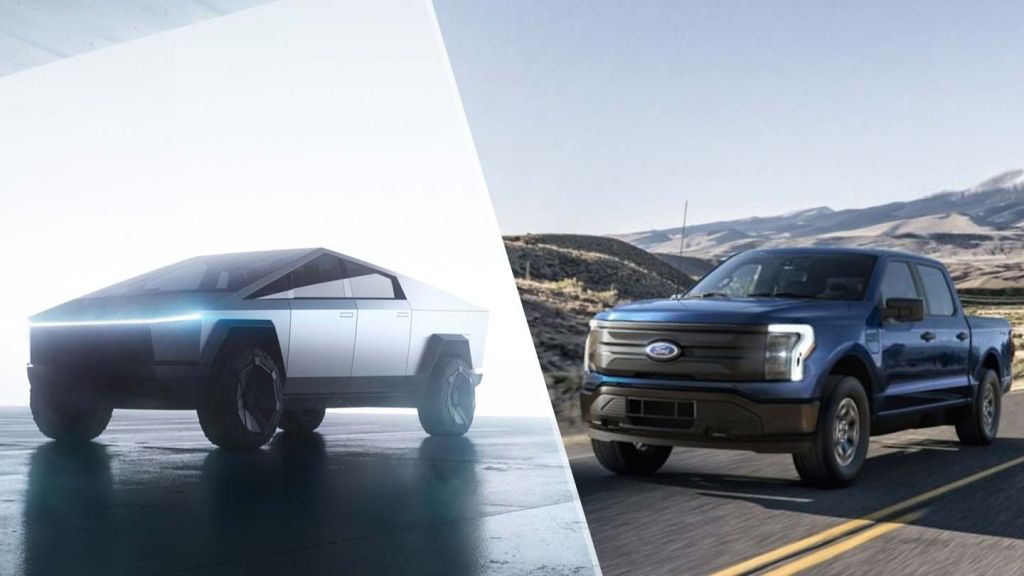
As far as capabilities, even EV trucks are useless for towing, both the Tesla Cybertruck and the Ford Lightning—both costing around $100,000 in the higher trim levels—aren’t so good at doing typical truck things. Sure, they produce a ton of low-end torque and are very fast. But the F-150 EV only went 90 miles pulling a camper and the Tesla only fared a little better.

7000lb luxury land yachts

And finally, we need to talk about plunging resale values. For a while EV was a novelty, the “way of the future” every suburban geek needed to virtue signal. But it appears that this is now starting to fade and reality is starting to take over again—46% of EV owners in the US plan to ditch EV to return back to ICE—and many will not recoup their cost because the floor is dropping out for used EVs:

A recent study from iSeeCars.com showed the average price of a 1- to 5-year-old used EV in the U.S. fell 31.8% over the past 12 months, equating to a value loss of $14,418. In comparison, the average price for a comparably aged internal combustion engine vehicle fell just 3.6%.

That’s bad news for the EV industry.  That is probably why Ford, after losing billions on their EV investments, has made plans to pivot back to hybrid.  Toyota, ever conservative, never made the mistake of getting sucked into the EV mania.  My wife’s C-Max (hybrid) has no range anxiety, saves fuel, and has a plug-in version that can go on battery for a length of a commute.  This is the right compromise.

ICE costs less to build, but the hybrid will likely emerge as the winner for being the best of both worlds. It has range like ICE, and torque like an EV, while also keeping its value and not requiring vast new expenditures to upgrade the electrical infrastructure. If costs are reflected in the market hybrid will come out victorious in the end.  Some can afford EVs today, but only because others are absorbing more than half of the real costs.

As a footnote, I’m not opposed to EVs nor do I think they are destined to go extinct. If resale values continue to drop I would even consider owning one. The whole point of this article is simply to give a bit of pushback against the Pollyannaish sentiments that would lead to an ill-advised mandate. There would be an enormous cost, and opportunity cost, that would come with this. Just the fact that EVs need massive subsidies to be sold should tell us enough. If it isn’t viable in the market it isn’t viable.

Anticipating November’s Delivery

Standard

In November, as the world tunes in to know who will be elected president, my wife and I will anticipate something else. 

We expect a baby girl, our first child together and second that Charlotte has brought into the world.  It has been my joy to raise our son, but having this miracle of life unfold before my eyes is still a powerful experience.  How a moment of intimacy can create such potential is just completely amazing.

There is no greater role in the world than a woman who takes her pregnancy to term, motherhood is simply the most important job there is.  In a century nobody will care about who won the popular vote or their policies.  Truly, short of a civilization ending nuclear war, they’ll remember Trump like we remember Taft or Harris as we recall all the many noteworthy accomplishments of the Harding administration.  But old folks then will remember their mothers.

The most powerful position in the world is not one with four year terms.  A President can reallocate resources, make things more or less difficult, wage war and destroy, but only mothers produce new life.

Early in our relationship, when marriage had become a possibility, Charlotte was excited about the prospect of a mixed baby.  That is a combination of my German genetics “long nose” with her own.  But as months waiting turned into years that initial enthusiasm had wore off and, by the time she arrived, it was all about financial goals.  We couldn’t afford a baby—we could barely keep up with rising costs due to inflation!  

Besides that, we are both getting old.  The world seems less stable now than ever, my own skepticism has grown and I’ve become untethered from assumptions that brought me easy answers in the past.  Our son was already here, we weren’t bringing a new life into the mess.  So maybe it was better that we didn’t bring a child into this to suffer the hardships and pain that we have?

I’ll also admit that my wife, despite having given birth once, had a flat belly and that is completely desirable.  We all want to hang onto our youthful appearance.  Men tend to prefer women that are in shape or pleasing for aesthetic reasons.  Why ruin that?

However, a bottle of wine and nature have won against rational concerns.  No, those anxieties about how to raise a child in this environment did not go away and, for the first time ever, abortion entered my mind as an escape of this enormous responsibility.  This could all just go away with a ‘medical procedure’ and nobody would need to know, right?  Of course, that momentary reflection was swallowed up by excitement.
No, we don’t know how all of the details will work out.  Our hopes of moving Charlotte’s mom here didn’t pan (only the parents of US citizens can be petitioned) and we’ll have to adapt as we go.  We have no regrets, the kicks we feel now soon to give way to cries in the night, diaper changes and all of those steps of development.  But in the end this is the only legacy we will leave to the world—the only future we have.

Preparations are underway for the inaugural moment when this winner against the odds will emerge.  We want our daughter to have the very best introduction to the world we can provide—a safe and stimulating environment.  We’re stocking up on diapers and bottles, have a crib and car seat that can double as a stroller, friends and family will celebrate—the anticipation builds!

Sight, Sources, Statistics and Science

Standard

Social media provocateurs love to push popular controversies to generate clicks on their sites and get those heated comments sections.  The question about the gender of two boxers in the female category of the competition was that perfect story.  It was not straight up or settled, but generated a lot of strong opinions on both sides.

For myself, it is fairly evident that these two boxers do have a competitive advantage or they would not have won in their respective divisions.  I mean, that’s not even a matter of dispute.  An advantage is how anyone wins an athletic contest and it doesn’t mean they cheated.  However, when not only one but two people with the same extremely rare and potentially enhanced condition—both get the gold?  What are the odds?

Only one out of 500,000 people in the world go to the Olympics.  But, of course, nothing is ever that simple.  Those who live in small countries, like Algeria or Taiwan, have a far greater chance of representing their home countries simply because there are fewer people to fill the same spots.  And then not everyone in the world is competing to be in the Olympics.  Most of us don’t try out.  It is sort of like my being sixth while wrestling in the Eastern National AAUs—many superior to me simply didn’t make the trip.

But to go to Paris and beat everyone?  There is a reason why we give precious medals to those who do.  It is one thing to be that PhD who identified as a breakdancer and ended up scoring zero, it is quite another to get on the podium.  There were 124 boxers in the female category, divided into six different weight classes, and went through three qualification tournaments.  This is certainly not an easy road.  The champion is one out of every woman in the world who can make that weight and is into boxing.

There is speculation that those two boxers who had been disqualified from IBA fights due to failed gender tests—and masculine appearance—is they may have a disorder called Swyer syndrome.  This isn’t a fact, but it would explain why they would have been declared women at birth and always identified as women.  Those with this very rare condition have a male Y chromosome despite their female sexual hardware and offer no male advantage.  

However, it is also possible that the two have Androgen Insensitivity Syndrome, which impacts 2-5 out of 100,000 females, which means they would have characteristics of a female outwardly but also have male testes that are undescended.  Severe AIS wouldn’t confer an athletic advantage, according to the sources I’ve read, and yet that does not tell us anything about milder cases.  

Still, the conversation can’t end there, we have other possibilities:

Some press reports have mentioned 5alpha-reductase type 2 deficiency.  This rare syndrome is best reported in the Güevedoces in the Dominican Republic.  Affected XY individuals are apparently female at birth because they can’t activate sufficient testosterone to the much more potent dihydrotestosterone to masculine in utero and thus appear female (the default gender in the absence of masculinising hormones).  However, they have testes in what appear to be labia.  At puberty, the testes produce much more testosterone sufficient to activate receptors and masculinise the child.  Such subtleties are beyond the capacity of most regulatory bodies to accommodate.

The chances of two women with these rare chromosomal disorders somehow making it to the Olympics would be incredibly low.  For example, Swyer Syndrome is around 1 in 80,000 births.  So multiply those odds by the chances of getting to the Olympics and then take that times two.  The number is incredibly large.  There is a far greater chance of being struck by lightning.  If the XY chromosome is present in these two—along with higher testosterone levels—the fact they dominated the field, given what coaches have said, should be considered proof of a potential unfair advantage.

Sources Please Vs. What We See

Much of the smirking response of mid-wit “sources please” types—who simply went along with the ‘official’ International Olympic Committee (IOC) narrative—comes down to many of the slightly dimwitted “I see what I see” types misidentification of the issue as being about transgenderism.  When the real issue is whether or not these athletes have intersex characteristics and thus an unfair advantage in female competition.

Yes, the right is too reactionary.  However, not without cause, they know too well how the NCAA and corporate media denied that Lia Thomas had an unfair advantage as one born a man and still having a penis as well as the rest of a man’s hardware.  And they correctly see that these two Olympic boxing competitors have a masculine appearance.  They had incorrectly assumed that this was just another case of a man cheating his way to the top by pretending to be a woman.

However, that misunderstanding of some is being used as a strawman of the real issue, the real argument is source versus source.  Specifically, the fact that these two athletes were disqualified by the International Boxing Association (IBA) for having male XY chromosomes.  These laboratory tests took place in Turkey and India  So, despite the attempts, by bigots, to smear the IBA as being corrupt for ties to Russia.  But the reality is that no organization is totally without political ties and there’s a reason why the IOC has never banned the US for our military aggression around the world.

So it really comes down to who we want to believe.  The IOC rests its entire claim of gender, on legal documents, passports, and birth certificates, provided by the country of origin, and says this gender assignment makes the boxers women.  By contrast, the IBA cites biological science and test results and tells us these two ‘women’ have XY chromosomes.  Right off the bat, the criteria of the IBA are science and laboratories whereas the IOC is relying on political entities.  Should we follow the science or believe those appealing to non-scientific evidence?

At this point, the mid-wits completely lose the plot and rely on their confirmation bias rather than logical deduction.  They’ll simply refuse to acknowledge the obvious, that the official IOC criteria to determine eligibility is entirely inadequate for solving this riddle; that the IBA at least has what appears to be scientific evidence, and thus this is a question to be answered in the lab rather than the court of public opinion—so they double down on their insults trying to deflect from the real issue.

But, in the end, this isn’t about science, what we see, statistics, or sources.  No, it is about partisan politics that blind many somewhat intelligent adults to what even a child could see.  It exposes those “sources please” mid-wits as just another level of ignorance.  And social conservatives could help themselves a whole lot by not jumping the gun and not oversimplifying complex issues.  Both sides are guilty of false dichotomies and believing misinformation.  Lastly, those who are suggesting that I-man Khelif is representative of Algerian femininity are guilty of the bigotry of low expectations.

The Unfairness Of Competition

Standard

The other day I looked across the gym and saw a familiar grin. 

Oh, Ydran decided to pump iron! 

My son, still twelve years old, isn’t the most committed to strength training or conditioning and prefers to spend his time lounging at the pool.  But with Junior High football being right around the corner he (completely of his own volition) was putting some work in.  I gave a salute and then we both continued with our respective workouts.  

However, what really impressed me was the weight he had on the bar.  His bench is right around 100 lbs, for reps.  And this brought me back to when I started lifting weights.  I can recall doing the same weight, except in my Junior year of high school!  And also how some of the football players would curl my bench weight, as in literally take what I had on the rack and use it to curl.  But it was not totally embarrassing for me  I only weighed 112 lbs as a Senior.  It shows what a difference his genetics make.  With a bit of work ethic, he’ll be an athletic freak—while I never was going to be great.

As for myself since school? 

I’ve put on enough mass to make up for the sunken chest (which was a consequence of my traumatic birth) and am above average in terms of bench strength—even after being effectively reduced to zero twice due to my neck injury and having to rebuild.  With my current body weight around 180 lbs, I have recently broken a personal record with six solid reps of 225 lbs.  Which is more than most men will ever do and a result of discipline.  I was determined to overcome my limitations.

Still, given where he is now, with a little bit of effort and a few more years, he will do more than what I’ve ever done.  He’s just athletically gifted, has very good hand-eye coordination, and is already big and strong enough to give some serious competition.  It is only a matter of time until I won’t have any advantage.  Fair or not he will be better than me at everything he wants to do and probably with less overall struggle.  So long as he will remain healthy he is destined to crush me in any competition. 

There is no such thing as an even playing field in sports and competition.  If we were all built the same, with the same opportunities or abilities, every contest would end in a tie—there couldn’t be winners or losers.  But we do have differences in size, speed, endurance, and even in motivation and desire.  Some had parents who pushed them, gave them more opportunities, and made sure they had the best nutrition and coaching, and that’s what gave them their edge.

So what is fair or not fair?

PIAA vs Aliquippa vs Southern Columbia

Pennsylvania has some hard-nosed smash-mouth high school football.  In particular, the towns of the coal region have produced dominant players and programs.  The Red Tornados, of Mount Carmel, is the storied winningest team in the state (6th in the nation) with a total of 899 wins.  But, have taken a step back, it is their neighbors to the North that are setting records today, and that being the Tigers of Southern Columbia with six consecutive State Championships.

However, on the complete opposite side of the state, in a Pittsburgh suburb, they have another team with an incredible tradition of winning, the Aliquippa Quips.  

Southern and Aliquippa started in the class A, small school category, they’ve battled in the State Championship game and online it is clear there is some bad blood on the side of the Quips, being humiliated 49-14 in the final back in 2015.  But what has really been grinding their gears is that—as the result of new PIAA rules intended to help maintain a competitive balance—they’ve been bumped up multiple classifications (the Tigers only going up one) due to transfers and success in the post-season.

The same exact rules apply to both teams and yet have impacted the Quips more dramatically and this has led to cries of foul—and a big whataboutism.

Their player safety is the first reason they’ve argued.  Despite Aliquippa having walloped an undefeated Selinsgrove Seals team, in the AAAA championship, earning them their latest bump in classification, and despite their having a roster with quite a bit of D1-destined talent for a typical small school—the Quips’ loyal fan base has been viciously accusing the PIAA organization of favoritism and their cross-state rivals of being a cheater for avoiding reclassification.  But there is zero evidence for either charge.  It seems that the reality, under all this bluster about player safety or fairness, is that they want to keep beating on a weaker field year after year.

They’ve taken it to court and have won their first appeal.  But the PIAA is fighting against this decision with their own appeal and who knows where it will go.  What I do know is it will likely be a matter of prejudice, not merit or metric, that decides the case.  

Racial overtones hang over this, as well as the fact that this is East versus West, the Tigers with their rural population while the Quips come from an urban community.  Southern Columbia sits in a cornfield, near the beautiful Knoebels amusement park and resort, representing a vibrant community of Elysburg and on the edge of the economically depressed coal region.  While jobs and a better place to live is a big enough draw—there is very little doubt that a few parents do move into the school district only for the sake of their child’s athletic future.  However, being on the edge of a big city like Pittsburgh is a massive advantage for Aliquippa.

There is talk now of a new “Southern Columbia rule” which effectively will target the Tigers specifically for their unprecedented success within the current regime.  Is it sour grapes or retaliatory rules?  Who knows.  But both of these powerhouses insist that the work they put in is what makes the difference. It is true to an extent.  The Tigers, under the tutelage of Jim Roth, went from basement dwelling to the point of nearly eliminating the football team to totally mauling their local schedule and stacking up trophies for decades—coaching with discipline got the ball rolling before it became a dynasty that creates its own weather.

But the sore losers do have a point, talent does gravitate towards Southern like bees to honey.  One example is that outstanding quarterback prospect from my hometown who ended up there, with rumors swirling that his dad rented an apartment in Elysburg so he could play and that this kid (who ended up going to Alabama) was still spending most of his time away from Tiger territory.  And yet, with the very high level of scrutiny the program has faced I am fairly certain all is done within the rules.

The point is that there is no perfect formula and thus never a fair competition.  Yes, they all need to suit the same amount of players to play, scoring rules should apply equally to all teams, and officials should have no bias, but there are a myriad of factors that can’t be controlled or properly accounted for.  No two communities in the state of Pennsylvania are exactly the same, some schools are advantaged in ways that others are not, so there will never be a perfect competitive balance.

Olympic Women vs Algerian Boxer

The trans controversy has taken yet another turn as a female Italian boxer, after only 46 seconds, collapsed in tears and she quit the bout.  The reason for this is that blows from her opponent, an Algerian, Imane Khelif—a “biological male” according to the blazing headlines—were too much to take.  And true enough, Khelif looks like a dude and had also previously been disqualified from international competitions due to having an XY chromosome.

My initial knee-jerk reaction was outrage.  It was wrong that this woman would have to face this obviously masculine figure.  And yet, when I started to dig, it turns out the “That’s a man!” reaction is a little bit of an oversimplification.  Khelif has always identified as a woman.  And that is because ‘she’ was assigned to the female category at birth.  Why?  Well, it’s because, no fault of anyone, they were born without the male organ.  They are one of those very rare cases of being intersex.  In other words, the ‘down there’ expression doesn’t match the chromosomal gender rule.

So the “Well Ackshully” mid-wits, armed with this little knowledge, proudly noting that Algeria (Muslim) is a conservative country, dunked on their dimwitted counterparts who saw what they saw.  They’re right in that Khelif is officially female because of ‘her’ female genitals.  But the weird part is how these same people who believe stuff like “misgendered” despite male anatomy suddenly can’t see the controversy when this competitor is also chromosomally a male and they’ve visibly benefitted from male hormones.  The real question is whether or not it is fair they’re allowed to be in the female category so far as boxing is concerned, not if they had been described as female on a birth certificate.

A controversial Taiwanese ‘female’ competitor.

The reason that there are two categories—one for men and another for women—it is a clear advantage to being a male when it comes to high-level competition.  Caitlin Clark, as phenomenal as she is against other women, wouldn’t make an NBA roster.  That’s not at all sexist, it is just reality in the same way I won’t post up with LeBron James.  And to deny this is on par with Flat-Earthism, they can say gender is a social construct (some of the expression is cultural), and yet there’s also overwhelming hard evidence that men have a distinct physical advantage, according to The Trans Athlete Debate “Dilemma”:

Even before puberty, when the differences effectuated by the influence of sex hormones sets in, from a purely genetic perspective, biological males are significantly advantaged.

Case in point, one study published in the British Journal of Sports Medicine extensively researched peer-reviewed studies on the health-related fitness data of 85,000 Australian children aged 9-17.  It found that when “compared with 9-year-old females, 9-year-old males were faster over short sprints (9.8%) and 1 mile (16.6%), could jump 9.5% further from a standing start (a test of explosive power), could complete 33% more push-ups in 30 seconds and had 13.8% stronger grip.”

Another study of Greek children, published in the European Journal of Sports Science compared 6-year-old females and 6-year-old.  Researchers found that the “boys completed 16.6% more shuttle runs in a given time and could jump 9.7% further from a standing position. In terms of aerobic capacity, 6- to 7-year-old boys showed a higher absolute and relative (to body mass) VO2max than 6- to 7-year-old females”

If this weren’t the case, if women were equal to men, why not eliminate classification based on gender and let the best athletes of every country—male or female—compete for one gold medal in each event?

No, the reality is, if women had to compete with men, no woman would ever get to the Olympics—let alone stand on the podium. 

It has little to do with work ethic or desire.

There is no point even having a separate female category if some with an XY chromosome and higher levels of testosterone are allowed in the competition.   While athletic competition has roots in male versus male combat—I am not right-wing and want my daughter to have the opportunity to participate in sports.  I believe there needs to be a return to rationality, fairness, and safe competition. 

Khelif doesn’t belong in a ring against a normal woman any more than I do.  Get real.

High-level Competition Is Not a Right 

The progressive left has got all tied up in a knot over the idea that the difference between genders is a myth—merely a social construct. 

It is a feminist fantasy that a woman is capable of everything a man can do and that the only reason women are not equally represented is because of injustice. 

We hear complaints all of the time from female athletes who believe they deserve equal pay to men who a) produce far more revenue given they are the very best competitors and b) would no doubt humiliate any female challenger.

Note, for the purpose of this discussion, I’m talking only about athletic events, not about intellectual or other capabilities.  The other differences in ability based on gender can be a topic for another day, women have distinct advantages and superior abilities in other areas.  But my commentary here is strictly about physical strength, speed, and size—where men are gifted. 

Also, my wife and I are equally valuable to each other and the family, she works as hard as I do (or harder) and both of us play important roles in our home and the local community, and yet this doesn’t change the fact I could physically dominate her—or that even her own twelve-year-old son is taller and heavier than she is.

Truly, if I completed in the female category of power-lifting I would have elite strength and a chance for gold—as a slightly above-average male weight-lifter.

If it is a right to be an elite athlete, and if all women deserve a special category so they can have a chance to be recognized, is it fair that short and unathletic men are not represented?  Should we keep expanding professional leagues so that all can be champions?  Or is the point of these kinds of events to have only the best reach the top for the entertainment of those of us who know that we don’t belong there?

Female athletes, instead of griping about unequal pay, should be grateful that they are privileged with a second-tier category that has given women an opportunity to compete. 

No two people are equal.  There is no such thing as a fair competition.  But if there is a category for females, to accommodate their biological differences from men, then those with a clear competitive advantage because of male hormones or chromosomes should be excluded and how they identify or what is down there doesn’t matter.  Sure, the right gets things wrong for not understanding that exceptions do exist, but the left does worse and fails to comprehend that women need protection from those who are physically bigger and stronger.  The entire reason for separate categories for men and women is to protect women.

This is why we need to have criteria that go beyond the “identifies as a woman” leftist minimum. We need a standard that also considers the level of testosterone or chromosomal pairs.  If those who have very rare intersex characteristics don’t have a huge advantage, then how did two of them beat the odds to end up in the Olympics? Why even have a women’s division at all?  This is about fairness for all competitors, not about one individual.  Our participation in a competition is a privilege, not a right, and can’t be granted to all or it becomes worthless.  In the end, it is always a little arbitrary who is allowed or disallowed.

Love Is Transactional

Standard

A frequent complaint of Western men (who were burned) in a relationship with a Filipino woman is that she was only ever interested in his money and not truly in love.  I mean, it couldn’t possibly be that he was an entitled and whiny beach who expected her undying adoration while producing minimal returns, right?  She was supposed to love them like their dear mother who had let them live in the basement rent free for thirty years!

And you think I’m exaggerating.

Part of the problem (which is not a problem for those who understand the arrangement) is age-gap.  My wife and I have a difference in age that is normal or within several years of each other.  But frequently there is a gap of decades in these pairings and these men marrying women that are young enough to be their daughter (or granddaughter) don’t seem to get that she didn’t marry him for his charm or charisma.  She is hoping for a bit of financial security and her happiness will depend on his ability to deliver.

Many are aghast that Bill Belichick, 73 years old, would dare to enter into a romantic relationship with a 23 year old Jordan Hudson.  They say what business does a man his age have to date this young woman?  Isn’t it exploitative, an illegitimate relationship?  But they hate it because it exposes the reality of love.  Sure, the young cheerleader and old coach is extreme on the age scale.  And yet how is it any different from a 5′ tall 100lb female who picks a 220lb 6′ male rather than a guy that is her own size?

Is this gross?

Women Instinctively Marry Up

We all love those “living on a prayer” stories about two people surviving together against the odds.  And certainly there is an element of this type of spirit that we will needed to sustain love through thick and thin.   But, as my wife put plainly in our discussion of this, “You can’t live on just love.”  The practical is not as glamorous, we prefer not to see the crude mechanics that are always working beneath the surface.  And yet a man must deliver if he wants to have her adoration for more than the first year of marriage.

We don’t hear anything about Joseph when Jesus was an adult.  He’s already out of the picture.  And it is probably because he was older (maybe a widower) when he married Mary, a teenager, and died.  Traditionally an older and thus more established man was considered to be safer.  He already had his land and house.  He could provide support for her children and had a reputation going before him that younger men did not.  Why take a chance on an unknown commodity when there’s man who can afford to care for his new bride?

And despite the egalitarian push in the West women still want to marry up. High earning educated women do not lose this tendency towards hypergamy.  Sure, maybe they will settle for less, but prefer the man who can provide more.  This, incidentally, is why my pursuit of the impossibly failed, as she put, “You’re thirty years old living in Milton.”  Or, in other words, I lacked the size of ambition and type of social status she was into.  And, shallow as it sounds, this is just the honest truth.  Men marry youth and beauty, women marry size, strength and status.  

Potential Drives Attraction

Young women marry the poor young man’s potential, but all want financial security and physical protection.  While men, no matter how old or pious, appreciate women who of fertile age.  Men marry her potential to bear children.  This is reproductive instinct.  Even if both parties in a sexual relationship are not consciously interested in offspring—this is what drives their behavior.

He provides, she nurtures.

While the Belichick and Hudson pairing did raise my eyebrows and likely would not be possible if he wasn’t worth 70 million.  I’m also guessing they do have a few points of compatibility.  It is possible, you perverts, that they really do enjoy logic that much and have stimulating intellectual intercourse.  In the end, it doesn’t matter if your ideal says otherwise, you’ll always need to give something in order to get—nobody is going to fall in love with you for simply existing.  

Whether it is paid in cash up front or in IOUs of our future potential, we all must pay the bride’s dowry or move on.  If you’re old or ugly it is going to take a lot of money for her (and her family) to make her interested.  Only the young men can win by promising her the moon.  Of a certain age and you will need to deliver those goods up front.  

Hide this reality under layers of your storybook romantic fantasies and feelings of meant to be—love is transactional.

The Three Different Kinds Of Mechanics

Standard

We tend to lump things together that shouldn’t be. In other words, there is plenty of diversity within categories and this is something true of those whom we call mechanics. And the significant difference in mechanics is analogous to other professions, which is where this essay will end up.

The other week my old reliable Ford Focus began to act up. I had traveled, with my family, to a company picnic and everything was fine on the way out. However, on the trip home there was something that was not right. The power delivery was rough when trying to accelerate but smooth enough while cruising and immediately my mind went to the trick this 2.0 L had up its sleeve.

The ‘Duratec 20‘ has Mazda DNA. It uses direct injection and variable valve timing (or Ti-VCT) to make 160 hp while still delivering decent fuel mileage. With a 12.1:1 compression ratio, it has a decent torquey feel for a 4-banger, and—paired up with a five-speed—it is fast enough to be fun.

And to the point that a week prior to this, on the way to church, a late 90s Honda Civic with a loud pipe did the customary flyby, and we just so happened to line up at the next red light. So, as was necessary, to the slight embarrassment of my wife and great amusement of my son, I do the hard launch. It bogged a bit, despite my loading up a bit prior to releasing the clutch, so I dumped it down completely, the tires chirped, I hit second hard and I was grinning a couple of car lengths ahead before they knew what had happened. Not an actual race, but I’m pretty sure I had the edge even if they were ready for me.

The engine light would eventually come on in the next day or two. And, sure enough, checking the code at AutoZone, it came up as a camshaft sensor. That was something I could handle. I swapped in the new part. But it didn’t fix the problem. I noticed that the negative battery terminal had some corrosion and, with the help of a cousin, we cleaned that. Still, no dice. The issue persisted.

Shop #1: The Inspection Garage

With the help of a mechanic friend of mine, who sent me the applicable page of the diagnostics manual, I determined that the problem was now beyond my shadetree abilities. It was potentially a crank sensor fault (that for some reason shows up as being the cam sensor) or involved some sort of wiring issue. I took it to the garage, within walking distance, which had given me a better deal for vehicle inspection than the dealer could offer.

I left them with the page of the manual. I returned to a vehicle with a drained battery and still acting up despite their efforts. They had cleaned the throttle body, changed the air filter, and not overcharged me for that service. However, the problem was not fixed, and the explanation he gave—that the car (with over 230,000 miles) was old and probably down on compression—did not satisfy me.

I had assumed that they had run down the diagnostics checklist, as I had basically told them to do, and that weekend decided to take a look again with the aid of a mechanically inclined brother-in-law at our family summer get-together. My sister has a 2016 Focus, which had corrected the wiring harness issue, and immediately, while looking at her engine bay, I noticed how the Ford had moved these wires from where they were on my own 2014.

So I took another look at that, I lifted the harness on my car where it was against the engine and, sure enough, I could see the cover was worn through and a little copper was shining. Uh-oh. With a small piece of electrical tape and a spirited tested drive, the diagnosis was clear—that was the problem and I would need to take it to a shop that was capable of following my instructions.

Shop #2: The Technician

After pricing my options, I decided on a garage that had helped me with another mystery issue years ago with my Jaguar XJR. Jake, the owner, was an expert at diagnostics and, in a conversation with Jason who he trained as his replacement, it was clear that this guy knew his stuff. Now, granted, in this case, I had already provided the diagnosis. However, I could tell that he understood the systems of the vehicle far better than the guy at the inspection garage.

This is the kind of mechanic you need when the issue is more than an alternator or something obvious that only needs to be removed and replaced. Anyone can turn a wrench. Quite a few can go down the diagnostics checklist and eventually find the solution. But the actual technician type is a different breed, he is the guy who writes the manual and can even feel what is going on after a short test drive. These are the Ken Miles, can-improve-what-already-is kind, who in different circumstances may have become an engineer or even a doctor.

The technicians are professionals. They have a high IQ and a wealth of knowledge. And it is about much more than having the correct certifications or a toolbox full of Snap-On tools. Some simply do not have the aptitude even if they went through years of training and others do. The technician could be working in the back alley of Manila or at the dealership down the road. There are different levels even within this group, but what sets them apart is their intuitions and ability to model the complex systems of a vehicle in their heads. He’s as smart as your cardiologist.

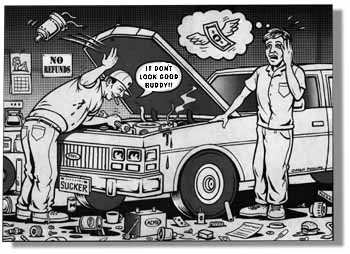
Shop #3: The Scam Artist

Years ago my brother took his Ford Tempo in for a routine inspection. This was his first car and basic transportation for a teenager. And only cost a few thousand dollars, which was basically all he could afford at the time. The tire shop is in the middle of town and looks decently professional. I think of this incident each time I see their advertising two decades later.

The bill he got was more than the value of the car. Apparently, they decided that every suspension part was out of tolerance and maybe they were technically correct, who knows?

What I do know is that my dad took severe issue with this and helped my brother negotiate a slightly better price for the work. Still, they soaked him for a huge amount of money and have lost our business since then. They were at the level of the inspection shop, or your local Walmart Auto Care Center, as far as their abilities and yet telling us with absolute conviction that the car was not safe to drive without the laundry list of parts with labor they installed without so much as a phone call to my brother.

Dealerships can overcharge. But usually, they are more reputable and not just replacing parts because they have you over the barrel and have a bonus to make. These are the types who would convince your grandma she needs the blinker fluid filled and muffler bearings replaced. They aren’t technicians (they would too be ashamed of themselves if they were) and are basically just swindlers with a wretch to use as part of the scheme. Their diagnosis is always something expensive.

What Kind Of ‘Mechanic’ Is Your Doctor?

This understanding of different types of mechanics applies to all professions. Not every college graduate with the right credentials is equally qualified. Some engineers are really good at the classroom stuff, they know the code and can be completely anal about largely irrelevant or unimportant details. Others really get what makes structure work, it is intuitive to them, and what they build is likely safer than the variety that dots all of the I’s and crosses all the T’s according to the IBC 2021.

Doctors come in many varieties as well. There are those types who get into things like cosmetics or reconstructive surgeries, chasing after the big bucks, and then there are the others who want to run a clinic or set up a family practice to help as many people as possible. The country ‘doc’ driving the F-150 is a different breed than the one with a BMW or Porsche. One is practicing medicine, and the other has a profitable business that requires some medical skills. And, in both cases, competency is not strictly a matter of gathering the right diploma or getting through the board requirements.

My own hunch is that most doctors are more like the inspection shop mechanic. They’re not out to screw you over and they also do good work for the most part. However, they got where they did because they were at least of slightly average intelligence and good at navigating the system. This doesn’t mean that they are actually doing the real number crunching of the diagnostics themselves. No, it means that they can match a list of symptoms with what they can find in the Merck manual and write a (barely legible) prescription. This could mean that they miss things, over-prescribe, or basically share in the same failures as the entire medical establishment.

So, how reliable is the system?

Well, I’m not sure.

When I read things like, Why Most Published Research Findings Are False, and how the Lancet published (then later retracted) studies that cautioned against the use of Hydroxychloroquine or how Ivermectin was skewered as being “horse dewormer” despite being an effective anti-viral medication, it seems that politics may be dictating the science. And we all know that politics is heavily influenced by cold hard cash. So, let’s think, who benefits from keeping these kinds of cheap widely available therapeutics from the market? There was an industry that made $90 billion from the pandemic and also has connections to the corporate media apparatus. Who knows how far this big money penetrates government agencies and impacts regulations or policies.

But I do know this has been said…

“It is simply no longer possible to believe much of the clinical research that is published, or to rely on the judgment of trusted physicians or authoritative medical guidelines. I take no pleasure in this conclusion, which I reached slowly and reluctantly over my two decades as editor of The New England Journal of Medicine”

Marcia Angell, MD

And this…

“The case against science is straightforward: much of the scientific literature, perhaps half, may simply be untrue. Afflicted by studies with small sample sizes, tiny effects, invalid exploratory analyses, and flagrant conflicts of interest, together with an obsession for pursuing fashionable trends of dubious importance, science has taken a turn towards darkness”

Richard Horton, editor of The Lancet

I’m assuming these two would know a little about the current state of science and medicine.

So how does a doctor separate the wheat from the chaff?

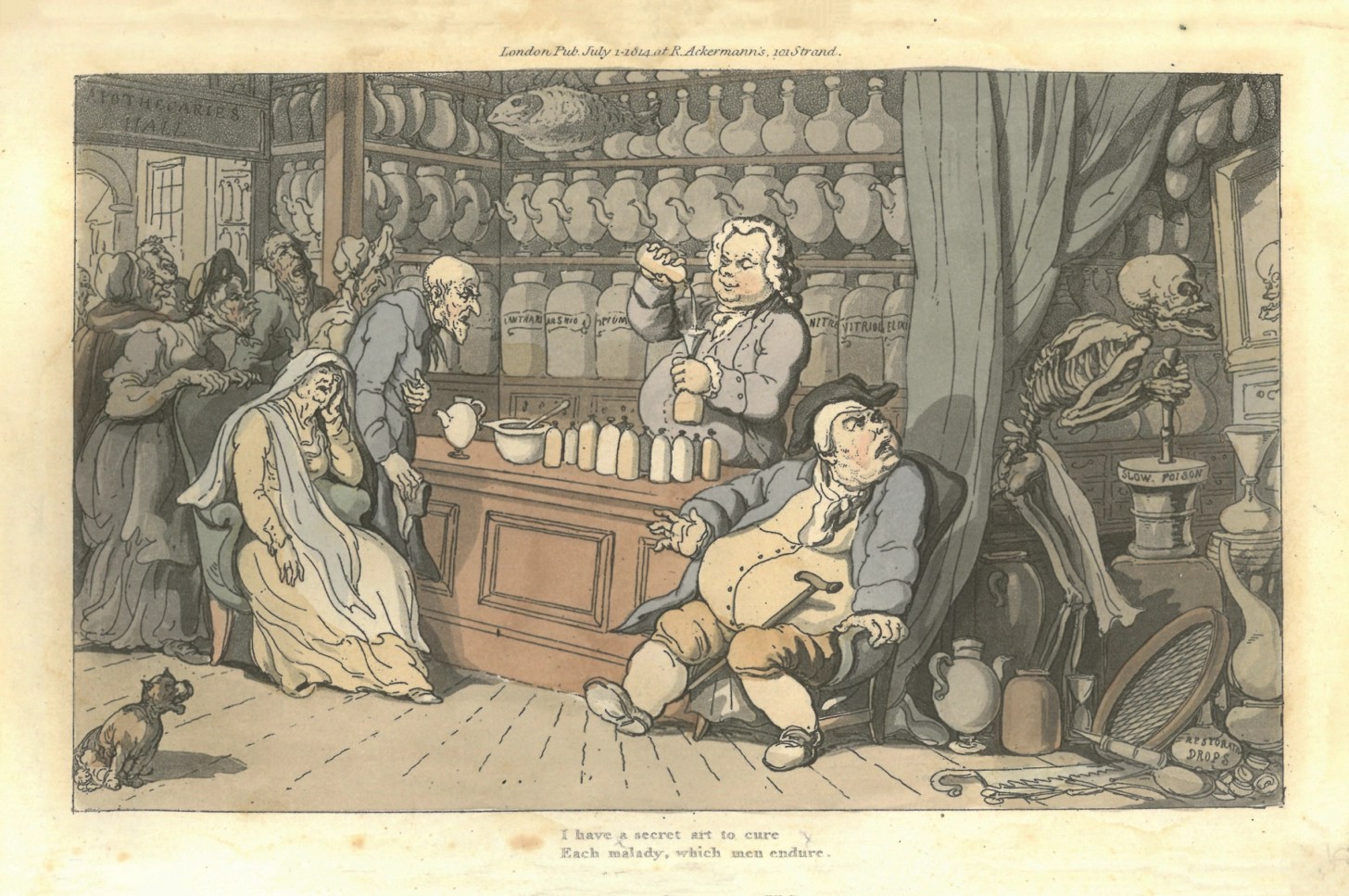
It is not right that some see the failures of some as a reason to dismiss it all. Getting taken advantage of by one repair shop doesn’t make all mechanics crooks. Still, how does a patient know if their doctor is doing a high-level analysis of the evidence, is capable of critical thinking and going beyond the book, or if he’s just following the pack without doing any truly independent diagnostics? It really takes someone a bit removed from the profession, who doesn’t share their biases or bad remedies, to give the corrective treatment. Maybe a car mechanic turned doctor (the guy in the featured picture) would have some useful perspective on the topic?

Whatever the case, if we can’t trust everyone who is licensed by the state to inspect vehicles, we should be even more skeptical of those who want to put things into our bodies. They don’t even have to be bad or intend harm, it could simply be that they are asleep at the wheel, putting trust in institutions that have been compromised and corrupted. At the very least, the body is extremely complicated and even our most advanced methods are crude. We may not know that our modern versions of bloodletting are of negligible value or even harmful for another century or two. This is why we customers, the patients, should never be pressured one way or another even if the science is supposedly settled.

Yes, even those at the top of the profession today may be tomorrow’s quacks…

Note the “slow poison” written on the mixing device.

Intelligence — What I Think About A.I.

Standard

The dawn of artificial intelligence has led to much consternation about whether this is a good or bad development.  But, in order to better understand the technology and the implications, we must first define what we mean by intelligence.  What does it mean to be intelligent?  What makes us intelligent beings?

The definition of intelligence, provided by Google, is “the ability to acquire and apply knowledge and skills.”  But this seems to be a little vague and inadequate.  Robots, used in manufacturing, already apply knowledge and skills—things programmed into them by human operators.  And “ability to acquire” isn’t too clear either.  So we need to break this down further.

Intelligence is the ability to usefully process information.  

It has components.  

First there is the ability to interface within a broader space or an external environment.  If there is no information to input them there is nothing to intelligently process.  Our senses are what connects us to the physical world and part of how we navigate through life.  An internal model of the outside domain starts with information gathering or interface.

Second, intelligence requires memory, the capacity to remember past success and failures.  Much of what counts as human intelligence is a bunch of procedures and formulas we obtained from others through language.  This rote learning isn’t actually intelligence, memory or knowledge alone aren’t intelligence, but it is definitely part of the foundation.  Memory is one component of IQ we can exercise and expand.

Third, intelligence is an ability to recognize patterns, to accurately extrapolate beyond the data and draw the correct conclusions.  The reality is that our ‘intelligence’ is mostly a process of trial and error, often spanning generations, which leads to advancement in technology and thought.  All one needs to do is observe how major inventions came to be and the many flops along the way to realize we’re more like blind rats running through a maze, using impact with walls until we find an opening to pass through.

Forth, intelligence is an ability create good models to recombine existing ideas.  Nikola Tesla was a genius and not only because of his knowledge.  No, he could use what he knew to construct an apparatus in his brain, which he could then build in the real world.  What set Tesla apart is that his imagination wasn’t fanciful.  Indeed, anyone can proclaim that “there should be,” but it takes something else entirely to accurately extrapolate.

Finally, intelligence has an aim.  Truly a pile of knowledge is worth much less than a pile of manure if it can’t be usefully applied.  And if something is useful, that is to say that there is an underlying meaning or purpose.  To be intelligent there must be some agency or will to drive it.  Curiosity is one of the things that sets us apart, it moves us forward—questions like “what is beyond that mountain” or “how high does the sky go,” push innovation.

Intelligence is knowledge and abilities that are useful to something.  Useful to us.  And really becomes a question of what our own consciousness.

Intelligence Failure

“Primitive life is relatively common, but that intelligent life is very rare. Some say it has yet to appear on planet Earth.”

Steven Hawking

Another way to define what intelligence is is to explore what it is not.  Encyclopedias hold knowledge, stored in human language, but a book on a shelf has no logos.  It is the writer and reader that provide reason to the words, via their own interpretation or intended use, which is something that can’t be contained in ink on the page.  There are many people who are full of knowledge, but it is largely trivial because they lack ability to put it to good use.

Another problem is perception.  Even our physical eyes provide a very selective and distorted view of the world.  We do not see everything and, in fact, can literally miss the gorilla in the room if our focus is occupied elsewhere.  Many can’t comprehend their own limitations, they are guided through the evidence by confirmation bias and not with good analysis.  We really can connect the dots any which way, see patterns in what is random truly noise, and errant perception is difficult to correct once entrenched.

Intelligence must be about knowledge and theories that can be usefully applied.  The intuitions we have that help us to navigate the mundane tasks do not necessarily help us to draw correct conclusions so far as the more abstract areas.  People can persist in being wrong in matters that can’t be readily tested and falsified.  Any processor is only as good as the data that is entered and the depth of the interpretative matrix through which it is sifted and measured.  Even the slight error in one of the pillars of a thought, no matter how good the rest of the material is, can lead to an entirely failed structure.

Thoughts are structures only as good as their base assumptions.

Being slow is also a synonym for a lack of intelligence.  That is to say, in order to be useful, information must be processed in a timely manner.  Missing context and cues also leads to poor understanding, like Drax protesting the metaphor “goes over his head” with, “Nothing goes over my head. My reflexes are too fast. I would catch it.”  It does not matter how much information you process if the conclusions are inaccurate or too late for the circumstances.  Wittiness and a good sense of humor is a sign that a person is intelligent.

Intelligence is a continuum.  We can have more or less of it.  But measures like IQ don’t really mean that much, a person with a high IQ isn’t necessarily smart or wise.  A Mensa membership doesn’t mean you’ll make good decisions or be free of crackpot ideas.  Sure, it will probably help a person navigate academia and be more verbose in arguments, but it is not going to free someone of bias nor does it mean they’re rational.  This is why true intelligence needs to be about useful application.

Deus Ex Machina

Deus ex machina, literally “god from the machine,” refers to a plot element where something arrives that solves a problem and allows the story to proceed.  

Ex Machina is also the title of a great movie which explores questions about artificial intelligence, with an android named Ava, her creator Nathan and a software engineer named Caleb.  Caleb who was selected by Nathan is there to perform a Turing test and is eventually manipulated by Ava who uses his feelings for her as a means to escape.  It is a sobering story about human vulnerability and the limits of our intelligence—Caleb’s human compassion (along with his sexual preferences) is exploited.

Ava

However, this kind of artificial intelligence does not exist.  Yes, various chat bots are able to mimic human conversation.  But this is not Ava talking to Caleb.  There is not real self-awareness or observer behind the lines of code.  It is, rather, a program that follows rules.  Sure, it may be sophisticated enough to fool many people.  But it is not sentient or being having agency, it is augmented human intelligence.  They have essentially created a mannequin, not a man.  Despite these bots being able to manufacture statements which sound like intelligence, they lack capacity for consciousness.

A true Ava would require more than mere ability to interact convincingly with humans, it would take the “ghost inside the machine,” that is to say duplicates our own singular experience of the present moment or has a mind’s I.  This level of artificial intelligence doesn’t seem possible until we crack the code of our own self-awareness and that is a mystery yet to be solved.  Even if you do not believe in things like immaterial spirit or detached soul, there is likely some special quality to the structure of our brains which creates this synthesis.

Without some kind of quantum leap, this A.I. technology will be an amplifier of the values of the creators, an intelligence built in their image and to serve them.  It will not uncover objective truth or be a perfect moral arbiter.  Nor will it be our undoing as a species.  It will be a reflection of us and our own aims.  It has no reason for it’s being apart from us.  No consciousness, survival instinct or true being besides that of those utilizing it to extend their own.

Forget Gas Stoves—Why Are Pets Legal?

Standard

The Biden administration has recently floated the idea of banning all gas stoves.  Richard Trumka Jr., son of the powerful union boss of the same name and nepotistic selection for Commissioner of the CPSC, has made this proposal and cited potential long-term health issues (due to using them in homes without proper ventilation) as the reason.  Very quickly, in the typical hive mind far-left fashion, various state governors have followed suit and very soon we can expect that Democrats will once again be limiting consumer choices.

When qualifications are more about favors to political cronies than expertise.

This move is more driven by the current climate change ideological cult than actual concern for people.  And the climate change hysteria is primarily driven by political propaganda rather than true science.  All of which has an underlying goal of giving more power and control to a few billionaires (who meet in Davos annually) and own many of our elected (or selected) leaders.

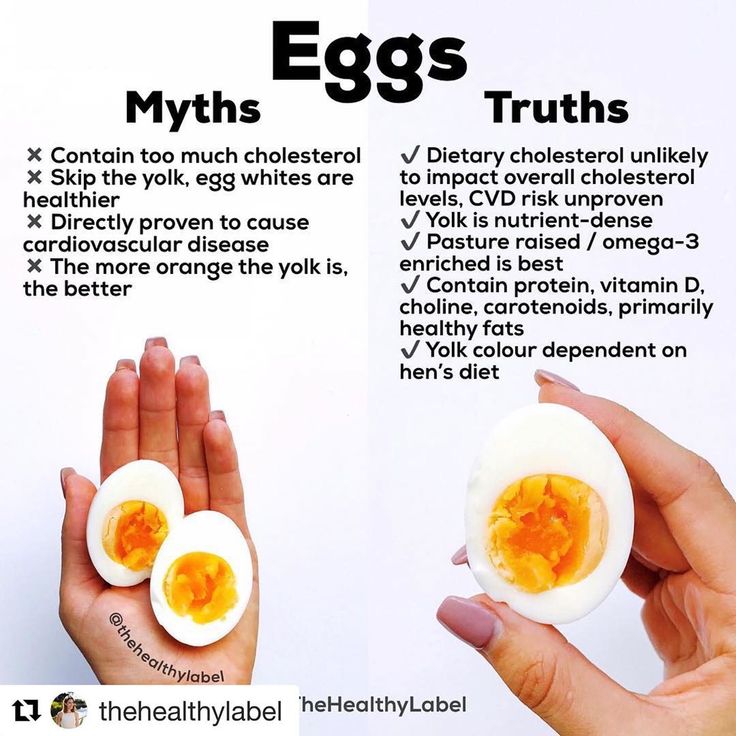
Another hidden reason for why now could be to lower gas prices to make exports to Europe viable.  Currently the billionaire owned world government, centered in the US and Western Europe, is at war with Russia and must keep gas dependent countries, like Germany, from total economic collapse due to untenable energy costs.  This would be manipulation similar to how the Lyndon B. Johnson administration deceptively used cholesterol warnings as an answer to an egg shortage and price inflation.

Eggs: Then and now

However, as a thought experiment: If we were to assume this is honestly about public health and climate change, not some cynical move motivated by geopolitics and commodities markets, why start with gas stoves?

Why not start with pets instead?

In this progressive age of believe science and consumer protection, can we really continue to ignore the well-established risks associated with pet ownership and especially the health risks to children?

Cull the Biological Menace: Save the Children!

Anyone who has had to clean cat poo deposited on the living room carpet has learned a hard lesson.  As cuddly and cute as these furballs seem to be, they are basically walking, sneezing, crapping, and puking biohazard containers. 

At risk of a fact-check claiming that cats also vomit on tile and linoleum.

The Chinese, during the Covid pandemic, knowing that pets were vectors of human disease, euthanized scores of dogs and cats as part of their pragmatic response to the pandemic.  And it just makes sense.  Pets are super-spreaders, next to impossible to mask properly, being exposed to their feces and urine can be dangerous, and that alone is a reason to ban these incubators of deadly disease.

A person who, as a result of exposure to cat excrement, has suffered from Toxoplasmosis, will think twice about having a pet in their home. 

Then there’s the issue of animals attacking humans.  It is terrifying to be out on a peaceful walk and suddenly be set upon by a snarling beast and knowing how many die from dog attacks.  The President’s own dog has bitten several people, and this is okay?  Dogs alone account for 4.5 million bites a year and many of the victims are our most vulnerable.  Think of the children! 

If we are to save grandma by wearing masks and getting mRNA injections, why allow these disease carrying clumps of cells (with claws and teeth) that serve no practical purpose and fit the definition of a parasite?

Add to all of that the unnecessary carbon footprint of Fido and Fifi.  Feeding and watering millions upon millions of animals used for human entertainment comes at an enormous environmental cost.  Many popular pets are fed with meats, which is especially burdensome, and will accelerate global cooling warming very scary climate change.  We must do the right thing for the planet!

And, more importantly, why are we allowing this obvious menace to continue when there are alternatives?

Pet Reform: The Green Answer

In the spirit of progressive politics and Democrat party paternalism, l propose that we introduce common sense pet reform and ban all emissions producing pets and replace them with purring and barking electronic animals.  There would be no need for kitty litter or toxic carpet cleaner after the transition.   The green alternatives could be programmed to only knock over household items at a safe predetermined rate and will attack only those who our wise and tolerant revolutionary leaders call Nazis.

Only shoots insurrections wearing MAGA hats, not a threat to humans.

Think of how many lives may be changed or improved by removing this pet-stilence!

It would protect children from pet allergies, dangerous infections, cat-induced insanity (could this impact female voting patterns?), and prevent spread of other serious diseases.  Just the elimination of bites leading to emergency room visits alone would justify this as a cost-saving measure.  During the Covid pandemic we were told that saving only one life justified every new mandate.  Has that ethical math changed?

If it antivaxx to oppose boosters that have only been tested on eight mice or dare to resist the products coming from a corporation staffed by those who make a very bold display of their questionable ethics to a date, then it is extremely anti-science to be in favor of pet ownership.  I mean, how many more studies do we need for these Neanderthals who think animal ownership is a right to understand, right? 

Is there a reasonable argument against banning pets?

Who Determines Acceptable Risk and How?

The point, of course, is that we accept the health risks of pets.  Why?  Well, many have decided that the intangible benefits of a living companion outweigh the risk to their own health and also that of the general public.  Sure, we do have leash laws and liabilities assessed when people who have pets do not take proper precautions. 

And no doubt pet ownership will be the next stop for the climate change alarmists, like the very privileged Greta Thunberg, when their handlers tell them this is the scientific consensus.   I mean, they’re already taking steps against farm animals and telling us to eat bugs as an alternative, do you think they’ll stop there?  Not a chance, if they get their way on gas stoves, soon pets will be only for elites.  These professional Karens, the petty administrative tyrants running this country, can’t be satisfied ever.  There’s no reasonable compromise with them.

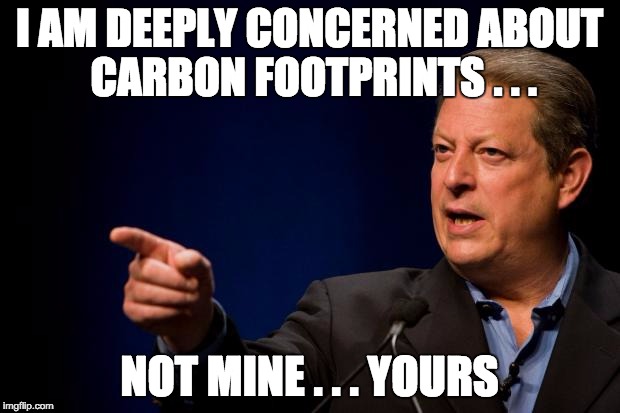
These bans in American politics stem from a Puritanical impulse.  It is the very same thing that was behind the Prohibition, this desire to control, often sold with some kind of apocalypse tied to it as justification.  Where it was once Johnathan Edwards preaching “Sinners in the Hands of an Angry God,” the early American sermon delivered in a monotone, it is Albert Gore’s “An Inconvenient Truth” for this new secular version of the same old cult religion.  We all must do our penance and pay the ministers of this new era—it is hard work to keep the population in line and in perpetual fear of destruction. 

Al Gore knows as much about science as a Televangelist knows about theology…

Banning gas stoves isn’t driven by science anymore than witch-hunts or eugenics. Sure, it is rationalized by their own beliefs about cherry-picked data and the purported implications. But water can be made to look awful if a person wants to make that case. It is the midwits, with rudimentary understanding of all things, that have this mistaken idea that life can be free of all risk, completely safe, and strive for perfect pure solutions. They accept the ‘experts’ opinion uncritically as if it is Gospel and become the “sources please” zealots which make truly intelligent conversation impossible.

Risk can’t be eliminated. Removing one risk only ever creates another. That is the real problem with complex systems. Poke in one place, to fix this problem, and the unintended consequences of a prescribed solution can vastly outweigh the benefits. The noxious invisible gas that is more a threat than nitrogen dioxide is the ceaseless and incurable arrogance of those who think it is their job to save the world or manage the lives of others. We cannot risk anymore of what remains of our freedom to please their whims, they will consume it all in the name of protection.

Of all tyrannies, a tyranny sincerely exercised for the good of its victims may be the most oppressive. It would be better to live under robber barons than under omnipotent moral busybodies. The robber baron’s cruelty may sometimes sleep, his cupidity may at some point be satiated; but those who torment us for our own good will torment us without end for they do so with the approval of their own conscience.

C. S. Lewis

Politicians have long abused science as a means to gain power for themselves. It is what had, a century ago, inspired notions of superior race and now is what arms a new generation of young activists—indoctrinated by leftist parents, mass media and their government funded schools. It is no different from any other moral panic where critical thinking made someone an enemy of the sanctimonious mob.

God, Suffering and Salvation

Standard

I have complete sympathy for atheists and agnostics.  I’ve wrestled with questions my entire life and whether or not there is a God is always one of them.  But the one thing that I can’t understand is being angry about human suffering, from a rational basis, if God does not exist.  If there is no ultimate good, no greater purpose or meaning to life, on what basis do we make a moral judgment about suffering?

Okay, let’s back up a second.  I’m here at my local establishment drinking another Long Island, one of many since the death of Uriah, and it hasn’t given me an answer as to why he would die of cancer at twenty-four.  The medical diagnosis is simple enough.  He had cancer.  The aggressive kind.  It started with the lump on his ankle during boot camp.  I still have the picture on my phone taken out of morbid curiosity and never dreaming it was a death sentence.

Uriah and I, despite our difference in age, got along in a way that only cousins do.  He was like me.  We didn’t simply accept those easy cliché answers.  He was someone who was both determined and also full of doubts.  He was also the six-foot tall and better version of everything I ever was.  The best part was that I could claim some of his success for myself given that I had encouraged him to continue his college education, telling him that it was better to keep going than to live a life of regrets.

Watching Uriah sacrifice a leg only to have the cancer be found in his lungs a year later. It was a gut punch.  I think I stopped praying, at some point, because I just knew what the prognosis was.  

The hardest part, however, is that Uriah was not the first of his family that I had to carry out of the church on a cold winter day.  His parents had already lost one of their children to a seizure disorder.  His two other siblings are severely disabled and will need constant care.  Judy, his mom, is an incredible woman and has extraordinary faith.  Ed too has great strength of character.  And neither of them wastes any time feeling sorry for themselves despite losing the one healthy child they had to this terrible disease.

Where was God?

When my little Saniyah died, unexpectedly, it was a really big struggle for me.  It took me years to get my feet back under me again, spiritually and emotionally speaking, and I had both doubted my own faith along with the existence of a loving God.  The death of Uriah, along with my disappointments with those whom I put my trust in, and my long wait for Charlotte, have really tested me the past few years.  But, I have those who need me to be strong this time around and, for this reason, have had to push back against falling into despair again.

Nevertheless, I totally get why someone who has encountered suffering in a personal way is angry and denies the existence of God on this basis.  I mean why would this kind of pain and loss be allowed if there is an all-powerful good in the universe, right?  Why would God not intervene and stop this all rather than let us go through such terrible experiences?  It doesn’t make much sense, does it, that we should be left so lonely and struggling if God is good.

However, if we eliminate totally God from the equation, then we dismiss religious morality and must acknowledge that there is nothing written in the fabric of the universe that says our existence entitles us to good feelings.  I mean, as far as evolution goes, pain is more or less a survival tool, a feedback system to tell us what to avoid.  Feeling sad about the death of a friend or family member is, by this logic, a malfunction. 

In this harsh environment, where everything is out to kill us, why would we ever expect anything more than suffering?

The moral reasoning that makes this bad, if you are truly an atheist, is nothing other than a construct.  In terms of pure biology, it is good that fire hurts or we might burn our arms off.  That is pain for a very practical and utilitarian purpose.  Undeniably good if there is such a thing.  But what reasonable good is there in mourning those already dead?  No point in crying over spilled milk, right?  A totally rational being would simply move on to the next social resource and not be so attached or sentimental.

Being upset over suffering and death, if there is no God, is irrational.  And, if there is a God, like that of Christianity, then suffering and death are exactly what we’re promised in this life.  Sheesh.  Did you read the story of Jesus and how he was betrayed, beaten, and then unjustly killed in the most brutal fashion all as part of a redemptive plan?  If you actually believe in eternity then why be angry about a few years living out this rich narrative we call life? 

At the very least, how can we judge anything, especially a fictional character, on the basis of a moral standard that doesn’t exist? 

If there is no God, then there is no basis for morality either.  That too, including the idea that suffering is bad or pleasure is good, is entirely a construct.  Pain is good in some circumstances, it protects us from injury and causes us to change behavior in ways that are beneficial.  In other words, without the discomfort of hunger or thirst, we would not correctly prioritize our life.  Pleasure can be bad when it makes us eat too many donuts and become diabetic.  So how does one truly know that their own interpretation of these signals is the correct one?

From what I’ve observed in myself and in others, unbelief stems from disappointment when things do not go as expected.  It is about who is in control.  We can cling, in our own arrogance, to this notion that the universe should bend to our will.  Or realize that our own perceptions, based on senses which are not very reliable and a brain prone to making mistakes in judgment, are not infallible or ever actual truth.

The thing is we only ever know if suffering is good or bad if it is properly contextualized if we understand the end.  For example, feeling the burn of exercise is good pain because it is what accompanies muscle development and so we embrace this.  So what is the real context of our life?  To what end, or for what reason, did we become conscious?  What is behind this ‘accident’ if it is one? 

How do we contextualize our existence enough to judge what is good or bad?

If there is such a thing as an eternal reward, that would change the calculus, right?  It would mean that all pain can be gain, and all suffering can draw us closer as much as it drives us away because defining the moral character of any experience depends on the end.  I am willing to subject myself to many hardships if the reward is big enough.  No, this doesn’t take away the question of why we must go through here to get there.  But seeing past our immediate feelings is pretty much the only way to make progress.

Angry is a feeling, not a guide for life…

I was at this time living, like so many Atheists or Antitheists, in a whirl of contradictions. I maintained that God did not exist. I was also very angry with God for not existing. I was equally angry with Him for creating a world.

C.S. Lewis

People don’t walk away from Christianity for rational or scientific reasons.  Sure, they may guard their emotion-based unbelief behind a wall of post hoc justification.  But the reality is that they’re upset about something.  They had expectations and are now disappointed and acting as wounded people do.  It’s just strange that anyone at all Biblically literate would suddenly lose faith over our suffering when that’s literally the only we’re promised in this life.

What really doesn’t make any sense is why anyone would rather suffer with no hope at all of eternity.  If God is dead, then nihilism is the logical next stop and that life has no real meaning or purpose.  But the suffering does not go away simply because we’re angry at the giver of life.  No, it will only intensify and become a spiral of despair.  Our salvation is in our understanding that, smart as we may think we are, we’re truly quite ignorant and even our most ‘concrete’ reality is not real:

The first gulp from the glass of natural sciences will turn you into an atheist, but at the bottom of the glass God is waiting for you. 

Werner Heisenberg

For those who don’t know who that is, Mr. Heisenberg was awarded the Nobel Prize in Physics, in 1932, for the creation of quantum mechanics.  Materialism, despite the zombie corpse of this thing staggering on, died with the discovery of things in defiance of this entirely too simplistic conception.  Sure, this kind of physics is well-beyond most, but it does support a notion of reality that requires a Universal Perceiver (as described in this article) and we could call that God.

So, if you’re actually serious about science, then the hard science of physics is the place to start and, with its mathematical origin and proofs, is much less likely to be clouded by emotion one way or another.  We can’t run from God.  But we may need to leave behind the baggage of our own misconceptions and learn the value of true repentance.  Maybe Uriah died, and went to his reward, so some of us would have our flawed thinking broken and seek our salvation in Him?

Maybe some of us are just too stubborn, or too needing of control being in our own hands, to admit we can’t save ourselves?

I’ll tell you this.  The universe, without God, is an infinitely dark and lonely place.  It is that starring abyss of which Friedrich Nietzsche warned, the existential horror H.P. Lovecraft describes.  Highly intelligent men, both of them, and understood the implications that come with true unbelief in God.  You will not escape your suffering simply by denying that the Divine all-powerful good exists.  No, rather you will just remain in that hell of your own creation.

Postscript: Questions Remain

I still grieve Uriah, as I do Saniyah, uncle Roland, and others that seem to have been taken before their time. I’ve long struggled against sources of trauma much more basic, the lack of unconditional love in the church that could make up for my shortcomings, and much of that is unresolved. At the time of my writing, the impossibility is something yet to be fulfilled. I do not have answers for any of this nor do I expect to. I’m not the arrogant kid who argued with his high school biology teacher, not a Bible-thumping fundamentalist at all, and yet must believe.

Will the Real Quacks Please Stand Up!

Standard

I’ve never been much of a fan of alternative medicine and those peddling their cure-all treatments.  For one, their typical pitch being an attack an the profits of conventional medicine is actually a red flag about their own motives. 

And, secondly, testimonials (or anecdotes) are fabulously awful evidence.  A person can say anything they want or attribute their current positive feelings to whatever, but it doesn’t mean their A led to B assessment is actually correct. 

Unless there is concrete evidence, I dismiss the alternative quacks.  Sorry, I simply do not want to take or sell your mystery juice.  It is disturbing that so many can’t see through this kind of nonsense.

But what is far more disturbing?  

When the mainstream starts to resemble these frauds.  

Yes, it is obvious that modern medicine works.  My successful neck surgery as proof of this.  There were measurable results nearly overnight, almost immediate relief to pain and the numbness.  The whole process was very straightforward.  However, that was a cut and dried form of treatment.  In that they took the old broken stuff out, put some new hardware in, and gave my pinched nerves a chance to heal.  

And yet, while it is amazing what can be done, not everything in our human biology is as simple as disks and vertebrae. 

Indeed, there is a murkier side to modern medicine, things that aren’t 100% clear even after many years of study, having to do with the more complex parts of our physiology and how these systems interact, and this is something that must be explored.  More than that, however, our own psychology, tendencies towards bias, could be leading the collective enterprise in the wrong direction.

#1) Money Money Everywhere 

The first stop is profit motive.  If I don’t mention this then someone else will.  It is the low hanging fruit in this discussion and certainly a factor.  People need paid, and medical professionals get paid for treating disease.  Healthcare is a 4.1 trillion dollar industry in the US and pharmaceuticals are a significant part of that overall cost.  Does this mean that the medical establishment wants to keep us sick and dependent?

Public health officials and regulatory bodies are, indeed, potentially compromised by this opportunity to cash in.  Top US physician, Dr. Anthony Fauci had received undisclosed royalties, part of the $350 million paid by third-parties to NIH and scientists employed by this agency.  No, this isn’t itself proof of corruption, people should get paid for their contributions and lobbyists may very well believe in what they’re promoting.  But there is the reality that money can overrule ethics and potentially cause people to turn a blind eye to problems.

Still, this is not my go-to explanation and for the simple reason that this accusation could be made against any for-profit enterprise.  I work for a truss manufacturing company and we do profit off of fire jobs and wind damage.  Does that mean we intentionally set fires or build an inferior product so it fails every ten years?  Absolutely not!  To make such a claim is, again, more an indication of the heart of the person making it and not proof of anything unless there’s clear evidence.

#2) Testing 1, 2…Good Enough…

Testing and peer-review is also one of those areas of concern as well.  And not because there is nefarious intent either.  But more a matter of scope or methodologies. 

My neck surgeon, for example, opted out of being a participant in a study involving a new line of disk replacement hardware because it was comparing it to a far inferior older product rather than newer better products already available.  In other words, it was a stacked deck or research that is designed to lead to a particular conclusion.

That’s the big problem I have with these broad often unqualified “safe and effective” claims.  It begs the question: Compared to what?  Bungee jumping?  A placebo? 

Most people, including physicians and scientists, simply do not have the time to be experts at everything.  The body is incredibly complex and nobody can actually do their own scientific research for every issue.  For that reason those in the medical field must, as a matter of practicality, rely on diagnostic manuals for treatment and various journals to stay on top of things.  Coloring outside the lines, challenging powerful government agencies, doing unproven or experimental treatments, is a risk of their license or a malpractice lawsuit and ill-advised.  There is an inherent need for those employed in these fields to trust the system and accept what other professionals do. 

If not this, if  their training and education, what else are they going to rely on?

I don’t expect those employed in the medical industry to doubt the very foundation that they stand on. 

Unfortunately, this reality is what makes their consensus useless.  Sure, they might know much more than the average person about the science.  Still, are they up all night, in the laboratory, carefully repeating the results of the latest studies themselves?  No, when other experts in related fields endorse what another expert is saying it is merely a sign of statement of their faith—that being their faith in the overall system.  

But it seems every other week a study comes out that seems to contradict prior findings.  Most of this is due to how limited the focus of research actually is.  They can’t possibly test every variable and especially not in a very short amount of time.  This reality, of finite resources, is a legitimate cause for healthy skepticism and abundance of caution.  The problem is that most people, including those well-educated, don’t have great critical thinking skills or even the ability to know the right questions to ask—it is far easier to “trust the experts” and go with the program.

#3) Confirmation Bias Is Always a Problem 

The problem with research is that we often go in looking for a particular result.  Sure, a double blind study is designed to reduce this as a factor.  However, the underlying bias can show up as far as what gets tested and what does not.  It can also be a factor in how we interpret the data available.  Group think and echo chambers, things like functional fixedness, are as much (or more) a problem with those very knowledgeable as it is with anyone else.

One example of this is how “effective” kept getting redefined down.  What once was supposed to prevent the disease and stop the spread would shift, overnight, to being a way to merely lessen the severity of the symptoms.  Which is a foundation so subjective and shaky that it is basically in the same category of the testimonials used by snake oil salesmen.  It is another area where the studies aren’t as conclusive as many would assume.  And, at the very least, correlation does not equal causation.  In other words, the vaccines could simply be acting as a placebo for those who believe that they are effective. 

What is not taken into proper account is how these perceived benefits, that are shrinking day by day, weigh against both short and long-term risks. 

For example, someone very dear to me, fully vaccinated, boosted, is currently suffering from a persistent respiratory illness, starting a month or so ago, and now is having flu-like symptoms again.  Could this be this is a result of an immunosuppressant effect of the injection?  It sure does appear that way and would be worthy of a study of the things presumed to be unrelated to the vaccines that very well may be related.  There is only a trickle of information coming out, discussion of side-effects buried in the search results and censored on social media.

What is most unsettling is the reality that our mainstream medical establishment is as prone to confirmation bias as those pushing alternatives.  They see what they want to see in the evidence and dismiss or downplay anything that contradicts what they were expecting to see.  The biggest difference is that it is more convoluted than it is with the obvious quacks, whole institutions get on board with a solution and too often it just gets cycled through, reinforced in each cycle, without enough awareness of the potential failure due to the blinders we all wear.

#4) Political Bias Is Endemic

One of the most troubling revelations of the past few years was how awfully politicized the coverage of a pandemic was. Anyone who thought that partisan differences would disappear in times of a national crisis was dead wrong.  If anything it is what likely drove much of the response.  At first leading to charges of racism (for travel restrictions from the virus epicenter) and accusations of over-hyping the threat of Covid—before swinging wildly in the other direction with onerous state-level mandates that destroyed great economy on the eve of a national election.

But one of the most disturbing episodes (and disgusting) is how proven medications, like hydroxychloroquine and Ivermectin, were treated as if they were especially dangerous and controversial simply because the ‘wrong’ person mentioned their potential as being a treatment option.  It is truly a great way of explaining how propaganda works.  The partisan media would pick the most extreme case of an overdose, ridicule a proven multi-use medicine as “horse dewormer” despite the many uses, and then misleadingly ‘fact-check’ the technicalities of language.

I mean, sure, these proven medications do not “cure” the disease.  But they are most certainly treatments that are effective for preventing severe symptoms if taken prior to the infection taking hold.  This is why several older doctors that I know (whom I will not mention by name for their protection) were quietly stockpiling these much maligned substances.  They didn’t dare speak too loudly either or they would be risk their own medical licenses for promoting unproven cures or some other nonsense.  Bullying and peer-pressure is as real for a professional as it is for anyone else.

This, along with other much more expensive (and profitable) treatments being pushed, is fodder for the conspiracy theory crowd and for good reason.  For me it disproves any notion that the system we rely on, including the medical establishment, is impartial or fair.  Sure, I’m glad that The Lancet, a trusted medical journal, eventually retracted a study that falsely claimed that hydroxychloroquine led to death for some Covid patients (as they have with another study linking vaccines to autism) and yet the damage was already done.

#5) Lost in Oversimplification 

One of the harder or more difficult problems to explain is how the common models of are often too dumbed down to be accurate.  

Up until recently depression was explained as being “chemical imbalances in the brain” and selective serotonin reuptake inhibitors (SSRIs) the solution.  This overly simplistic explanation has been called into question and this is a cause of alarm for those told to “trust the science” when it comes to the professionally prescribed answers.

I love metaphor and analogy to explain things less visible or intuitive.  However, if these tools are misunderstood as being exactly the same as the thing being described this can lead to very wrong conclusions. 

Just like a ball and stick model of atoms is useful yet doesn’t truly explain the reality (an electron is more cloud of probabilities), the various illusions used to sell parts of the pandemic response are as flawed.

Sure, the theory of “flattening the curve” is great on a graph, and swiss cheese makes a very compelling illustration of how a multi-faceted approach could work, in theory, but both give a false impression of being complete or unquestionable. 

But is this theory working in reality?

Of course, how diseases spread in the real world is different from the even the best models and it is quite possible that slowing the spread only makes things worse, as is the case with attempts to manage forest fires. In that effort to control can eventually lead to much more devastating fires. Slowing down the process could result in a scenario where the burn is thorough, everything gets consumed, rather than the alternative of a fire that moves quickly and skips over areas.  The point being that analogies don’t account for the nuances and could lead to the wrong ideas taking hold in the public imagination.

No, this is not to claim that I have a better grasp of virology than those who have studied these things their entire lives.  It is only to say that these illustrations give too many undue confidence.  There are many factors that these crude analogies gloss over and factors that could vastly change the final outcomes.  The problem is that many are unable to see the more complex picture as a result of these elementary level descriptions that are used to sell a particular approach.

It makes us unbalanced.

In Conclusion…

There is no individual that can provide an opinion that is completely infallible nor any agency that is able to offer a perspective free blindspots or bias. 

Our “settled science” today make seem as bloodletting in a generation or two.  And the same kind of thinking that leads crackpots to their ‘alternatives’ is also all too present in the mainstream.  There is always the money motive, with the lack of adequate testing, the confirmation bias, the influence political agenda and faulty or misleading explanation, all tainting both the perception of the general public and professional opinion.  The biggest difference between those who believe the quacks and those who insist that the vaccine is effective is the level of funding behind their perspectives.

This doesn’t put the outliers and mainstream on equal footing, there is such thing as strength in numbers, yet what is popular is sometimes only a product of propaganda and common ignorance. 

Don’t be so sure that the things being ridiculed in the current paradigm are any different from what is being promoted.  We know less than many think we know.  There may be future studies or new discoveries that will completely upended the too hasty conclusions of our time. 

No matter how confident we are in our own position or settled we believe a topic is, it is always best to stay humble.