Have I mentioned that I’m tired of religious people and the prescriptions they give?
The real Jesus was defiant. He upended the systems and standards of his time. He was intentionally offensive to the self-righteous religious elites and then completely gentle with those who were broken. There was no one-size-fits-all, no attempt to simplify the process. Salvation is a walk of faith, not our ability to keep a set of fixed rules or pray a certain way, it is about our heart.
No, I’m not saying this as favoring the more libertine amongst us. Being “free in Christ” is not a license to do whatever we want. It is not about being ‘spiritual’ rather the religious either. Rather it as about love:
It is for freedom that Christ has set us free. Stand firm, then, and do not let yourselves be burdened again by a yoke of slavery. […] You, my brothers and sisters, were called to be free. But do not use your freedom to indulge the flesh; rather, serve one another humbly in love.”
(Galatians 5:1, 13 NIV)
A great deal of my social media connections are unregenerate social conservatives. They love those fading structures that once kept people bound to their moral standards and yet lack any comprehension of grace or their own need of it. They may see themselves as being righteous, for their exceptional ability to keep up certain cultural conventions, but they are very much like those rebuked and condemned by Jesus.
But still the alternative is not to go in the complete opposite direction. It is not better to have no structure, to completely defy all cultural convention or use Christian freedom as an excuse to do whatever we please. No, rather it is to serve and save others:
Though I am free and belong to no one, I have made myself a slave to everyone, to win as many as possible. To the Jews I became like a Jew, to win the Jews. To those under the law I became like one under the law (though I myself am not under the law), so as to win those under the law. To those not having the law I became like one not having the law (though I am not free from God’s law but am under Christ’s law), so as to win those not having the law. To the weak I became weak, to win the weak. I have become all things to all people so that by all possible means I might save some. I do all this for the sake of the gospel, that I may share in its blessings.
(1 Corinthians 9:19-23 NIV)
Which is to reiterate the example of Christ:
…whoever wants to become great among you must be your servant, and whoever wants to be first must be slave of all. For even the Son of Man did not come to be served, but to serve, and to give his life as a ransom for many.”
(Mark 10:43-45 NIV)
Our love for God is always, always, a matter of how we treat each other. If we can’t love the people we see, specifically our brothers and sisters in Christ, then our claim to love God is a lie. (1 John 4:20) Therefore, to be free in Christ, is not to shirk responsibility to each other. It is not worshipful, at least not of God, to go to church (or not go) for own sake:
“Therefore, if you are offering your gift at the altar and there remember that your brother or sister has something against you, leave your gift there in front of the altar. First go and be reconciled to them; then come and offer your gift.
(Matthew 5:23-24 NIV)
This is putting reconciliation with each other, true reconciliation. before or ahead of the ritual worship that religious people do. No, it is not negotiable. This is the command of Jesus. And yet it is so often reversed. It is acceptable to act or go through the motions of righteousness, but not to ask for the same authenticity that put Jesus at odds with the religious authorities.
Had Jesus just followed the rules and did what was expected he would never have been a threat to anyone. The reality is that he saw through the empty gestures. He was not impressed with those pious people who had their performative religion. His call was for genuine love, to be merciful as our Father is merciful:
On hearing this, Jesus said, “It is not the healthy who need a doctor, but the sick. But go and learn what this means: ‘I desire mercy, not sacrifice.’ For I have not come to call the righteous, but sinners.”
(Matthew 9:12-13 NIV)
That’s our true worship, to truly forgive and love those undeserving and broken.
Early Christians had a saying “unus Christianus, nullus Christianus,” which is to say that one Christian is no Christian. This is to say that our Communion together, in Christ, needs to go beyond merely sharing the same physical space for a few hours or it is fake. True Christianity can’t be reduced to mere individualistic pursuit of the Divine. It is not an “only God can judge me” freedom from duty to others.
I could quote two dozen other texts and it would not matter. So many are caught up in their own corrupted ‘traditions’ that they’ll always miss the forest for the trees. But I’m not interested in dime-store Christianity, the kind that only loves in prescribed ways. I want the real deal, the kind that frees and truly forgives. I want what is alive, what has the true Spirit of truth and love in it, not the lifeless self-serving counterfeit form.
It’s not that the wonderful symbolism and designated acts of ‘Christian’ service are unimportant or useless either. But it’s just that none of it really matters if it is not a part of something genuine. As Jesus said, in Matthew 23:15, a person can “travel over land and sea to win a single convert” and only be successful in making their new convert “twice as much a child of hell” as themselves. In that case it would be better to do nothing at all.
Even the mystical “cup of salvation” can be our damnation if we drink unworthily (1 Corinthians 11:29) or in disregard and without care for His body. The body of Christ meaning, at times, our fellow members of the Church or the people we encounter who are in need of love:
For I was hungry and you gave me something to eat, I was thirsty and you gave me something to drink, I was a stranger and you invited me in, I needed clothes and you clothed me, I was sick and you looked after me, I was in prison and you came to visit me.
There was a 1980s cult film about a man who finds a pair of sunglasses which allows him to see subliminal messages in mass media. In this science fiction movie, “They Live,” the protagonist learns that world is run by aliens, along with human collaborators, who use billboards and television to control the population. The protagonist, now that he is awakened to this truth, goes on a mission to free people.
I’m not sure that I’ve ever watched the entire movie. It was before my time. But, from the bits and pieces that I’ve seen, it is basically a commentary on our mind-numbing American consumerism and political propaganda. It is trying to show how mass media is used by social elites to manipulate and manage people.
Anyhow, for a moment, yesterday, I thought somehow I had landed in that movie and posted the following on social media to describe the experience:
“Was out on the road today and saw a billboard with the word “Obey” in large print. I thought, for a moment, that I was in the 1980s movie, “They Live,” in which the protagonist finds special glasses that allow him to see what really is. In the film the world is controlled by aliens who manipulate people to conform. As it turns out this was not my new vision that could see through the propaganda, but was a Christian Aid Ministries (Mennonite) evangelism effort aimed at professing Christians that do not live to their standards.”
Now, given that much of my friends list is still conservative Mennonite, who live mostly in their own religious cloister, I knew the risk of some missing the meaning and intended humor of the cultural reference. However, what I had not expected was the personal attacks against me and bizarre accusations of bashing CAM for stating the plain truth. What led to this severe reaction? Apparently, that last sentence, that this message was “aimed at professing Christians that do not live their standards,” which offended.
Standards are a sore subject for conservative Mennonites and most especially for the neo-Anabaptist types. Perhaps, had I used the word “doctrines” the howls of protest may have been more muted. Why? Well, the word “standards” is often associated with that multitude of extra-Biblical rules that some argue aren’t a matter of salvation and yet, despite this claim, are somehow important enough to be the cause of their countless church splits. But the bizarre part is that I didn’t say anything about their extra-Biblical standards and that’s what made the boisterous denials so interesting.
What does “Real Christians” actually mean?
The billboard proclaimed “Real Christians OBEY Jesus’ teachings,” citing Luke 6:46 as a reference. At face value that is the goal of all Christians, to obey Jesus, right? But it is this qualifying word “real” that indicates this is a loaded statement and more than just a reminder to be good Christians. The writer doesn’t want you to just be any kind of Christian. No, they want you to be a “real Christians” and quite obviously, unless this writer is at odds with themselves, it means to be like them.
There’s nothing wrong with that sentiment, St. Paul urged, “follow me as I follow Christ,” (1 Corinthians 11:1) and that would certainly mean to be a part of the same church body as him. It shouldn’t be a big controversy, when a Mennonite puts up a sign saying to be a “real Christian” they mean to be more like them, an Anabaptist. This would not even be a question if a billboard, with a similar message, were put up by a Mormon or Jehovah’s Witness organization. So it is beyond disingenuous to insist that this use of “real Christian” has nothing to do with being more like Mennonites.
As someone who has spent decades of their own life amongst conservative Mennonites and other Anabaptist types, this notion that “we’re the real Christian” oozes out. And, more precisely, when they say “obey Jesus” what this ultimately means is agreeing with their Mennonite ‘doctrines’ of “non-conformity” and “non-resistance.” To them, this is just Biblical teaching, the clear extension of the commands of Jesus and, therefore, the most essential part of what it means to be real Christians.
So why deny it?
Why do some get up in arms over someone speaking this truth?
Why not be Mennonite and own it?
The real issue goes deeper. Mennonites, for various reasons, do not like to be identified as Mennonites. The term turns them into an ethnic tribe or mere subculture rather than the purer form. Whereas they would rather see themselves as simply being the only genuine Christians. The Holdeman Mennonites, calling themselves the Church of God in Christ, were more forthright in this regard and believed themselves to be the only true church. Other Mennonites aren’t as bold as to outright say that they’re the remnant church, but also do not fully embrace their common denominational label either.
The worst of the deniers try to discard the word “Mennonite” completely, despite this being their religious, cultural, and ethnic heritage. Modify the veil a little, ditch the capedress for another style of conservative dress, change the language, and suddenly they’re now the more authentic ‘Anabaptist’ who arrived at this particular emphasis by their own study of Scripture. This faux conversion is something born of insecurity from knowing that their own religious form is inherited. And yet, despite this, holding to a dogma of “Believer’s baptism” that causes cognitive dissonance if their being Mennonite isn’t completely a choice.
There’s also another possible reason why someone might deny their religious heritage and that is to fool their potential converts. In other words, a bait-and-switch tactic: 1) Tell inquirers that the group is all about following the example of Jesus, 2) shower them with attention and get them invested in the local fellowship, then 3) slowly shoulder them with those expectations that aren’t explicitly stated and yet required to be in Communion with them. This way they can use the established emotional connection as a tool for manipulation to later bring the new person into full compliance.
Let’s talk about those Mennonite doctrines…
What was most striking, and absolutely disturbing, about this recent encounter on social media, was how completely willing some were to question my faith and even to bear false witness to my face. For my infraction of saying that Mennonites are what they are, that they generally promote keeping their standards as being the definition of what it means to be a true Christian—for being an ex-Mennonite—one of their number went as far as to question if I was even a brother in Christ.
This, of course, is the grandest of ironies and starkly illustrates the disconnect between what adherents claim versus the reality of the practice.
First, they (two or more) wrongly interpreted my post as bashing CAM. But, instead of show love or turning the other cheek (as would be truly obeying what Jesus, right?), they attacked me personally and lied. Rather than address me directly and honestly, they would attempt to knock down strawman versions of what I said and pigeonhole me. Which is another reason why I don’t buy into the Mennonite ‘doctrine’ of non-resistant. It seems almost entirely about avoiding military service, giving them something to hold over other believers, and not all that practical or sincere.
In response to this empty non-resistance, it would be better to be the Roman Centurion that Jesus commended for his “great faith” than be the person who is a “conscientious objector” as a matter of cultural inheritance or convenience. It is noteworthy that Jesus, in the “Sermon on the Mount,” says not a word about wars between nations or about police doing their work, the examples given are what amount to insults and it seems to be about how we respond to our own personal enemies. So how this gets reversed, as part of Mennonite ‘doctrine,’ is strange.
And, so far as “non-conformity,” taken from St Paul’s “be not conformed to the world,” (Romans 12) the rest of the context does not at all support the most common ‘Anabaptist’ interpretation or application. In that context, there is no mention of clothing or style, but rather what this means is summed up in the second half of the verse where he says “but be ye transformed by the renewing of your mind.” He goes on in the chapter to define this further, describing what this looks like in practice. It is about looking intentionally different or in-your-face billboards.
The Truth sets free!
The fictional “They Live” speaks of the reality that is hidden beneath political messaging and commercial advertising. It is almost routine now that the name of a new piece of legislation or branch of government is nearly the opposite of what it does. For example, the Defense Department leads the absolutely most aggressive military in the world. The Inflation Reduction Act has nothing to do with reducing inflation and will likely only increase costs as all subsidies tend to do. The ‘right’ words are always manipulation and cover their agenda.
But the reality is, most of us, and especially those brought up in a religious home and community, have great difficulty telling the truth. No, it is not that we set out to lie or mislead people, rather it is we have difficulty fully comprehending how corrupted our own hearts can be. We tend to see ourselves as being righteous and forget that even our Sunday best is filthy rags by comparison to true Holiness. We do not realize how much we are bound to our own confirmation bias and prejudices. This could be why Jesus said we leave behind even our families to follow Him:
“If anyone comes to me and does not hate father and mother, wife and children, brothers and sisters—yes, even their own life—such a person cannot be my disciple." (Luke 14:26 NIV)
Taken literally this would be a contradiction with the many admonitions to love found in Scripture and the Gospels. I’m pretty sure the “hate” means to not be encumbered by or unable to see beyond our own heritage and most familiar to us. This means accepting that we may ourselves have an incorrect understanding of the Biblical texts. When Jesus spoke of those who cry “Lord Lord,” he isn’t speaking to those other “nominal Christians,” but to those who are sure that they represent His truth and do not.
Jesus said, in John 8:32, “the truth will set you free.” And, for this reason, it would be far better that Mennonite-borns embrace, rather than deny, the influence of their culture and tradition so far as the Christ that they are able to see. In doing this, in our understanding that what we received in doctrine or practice is not plain unadulterated Christianity, there is a far greater possibility of discovering our own blindspots and growing in faith. It is more comfortable to assume that we’re the real Christians. It is much harder to deal with our pride and repent.
There was this elegant old structure, in the countryside, a tall pointy steeple beckoning the passers-by to gaze upward at the blue skies. It had been around at least a century, the doors still open to all.
One day a tradesman moved into this rural community and admired this building. He loved the sturdy timbers holding beneath the slightly weathered clapboard siding, and then that ever-reliable stone foundation keeping it all square.
But one concern, as he did his inspection, was the missing roof shingles. The wind and storms having taken their toll. It would be a shame, he thought, to have the contents all get ruined and eventually see the church itself destroyed by this neglect.
So he thought to get involved. He showed up one Sunday morning and met the pastor and congregation. Good people.
The building inside was as beautiful as it was outwardly. Fine craftsmanship at a level rare to non-existent anymore. The stained glass in the sanctuary gave an ethereal feel and the beauty of the whole experience was breathtaking at times. And yet, he could see the signs of a leaking roof, the water spots in the ceiling, and his concerns grew.
It was a few months later, after becoming a regular and joining the church, that there was a members’ meeting. Taking the chance to raise the issue of the roof, he stood up, described the problem, and offered to help coordinate the repairs.
There was a hush that came over the room. An elder thanked him kindly for the suggestion and yet seemed slightly bothered.
A week or two later the minister, a stately yet friendly man, took the tradesman aside, putting an arm on his shoulder, “Hey, brother, we’re glad you come here. We love that you participate in all we do.” He paused, trying to search for the right words. “There has been some concern, umm or rather, I appreciate your perspective, as a man who works with his hands and I don’t want to discourage that.” Stopping again. “However, the church is a spiritual place and, no offense, I know you meant well, but you need to have more faith. If you see a problem, rather than be consumed by doubt or despair, looking for man-made solutions, pray about it, okay?”
Now a bit stunned, but still respectful, the tradesman did not argue. He instead agreed to pray and did.
More time passed, things continued as usual, the roof continuing its deterioration, until one day the congregation was having a service and a chunk of the ceiling fell and squarely on the tradesman’s head. Adding insult to the injury, as he began to brush the debris from his suit jacket, a stream of water from the rain shower outside completely drenched him.
He was now upset. Enough is enough! We really need to do something about the roof, he decided, and approach the pastor again, after some small talk he announced, “You saw what happened today, right?” And then continued, “I know a Christian must remain committed to prayer and that God is always in control, but we have the means to fix that roof and should!”
Disappointment swept over the pastor’s face as he considered this statement. But, rather than lash out, he tried to be diplomatic, “I can hear your frustration. And nobody likes to be humiliated.” Smiling warmly to lighten the mood before getting serious, “Have you ever considered that the roof isn’t the real issue here? I noticed you only wear a suit coat, it is okay and yet a bit underdressed for services. Have you considered wearing a tie?”
The tradesman wore a tie from then on. And, after a few more awkward encounters, where he was eventually forbidden from trying to throw a tarp over the growing holes and told to tithe more instead, he would do his best to keep his exasperation from showing. It was none of his business, he was told, that we come to church to worship God together and prayer would provide all of our needs.
Eventually, the congregation of country folk would be left standing on top of the rubble. They would spend the winters shivering in the cold and wind-driven snow, summers in the blazing heat, wondering why God had taken their wonderful building, yet serenely sure this was just a test of their faith and devotion to Providence.
Composite materials are stronger than their component parts. When two or more materials of unique strengths are blended together the result can be a composite that has the ideal characteristics of all the parts. This is what makes concrete and rebar a formidable pair. The combination gives both the compressive strength of concrete and also the tensile strength of the steel. It is inarguable that diversity is not strength or at least when it comes to material science.
However, as all topics go, it does not end there. Boeing, like all builders of commercial airliners, has two primary goals (besides safety) in their designs: Lightweight and reducing costs. One of their innovations is the use of carbon fiber in their aircraft. The problem with carbon fiber is that it reacts with or is corrosive of aluminum. For this reason, they must use a separating layer of expensive titanium as the solution to this bad material pairing. It works in this case, but diversity is also a source of conflict and potential systemic failure.
Diversity: Good and Bad
First, the good. We’re all unique. I go to work with a group of people with slightly different abilities and backgrounds from my own. It is what allows us to specialize and thus be stronger as a team than if we tried to do it all by ourselves. I would rather Patty do the bookwork, the members of our sales team talk to our customers and stick to my role of designing trusses. This is where diversity is a great strength.
Furthermore, men and women are different, both physically and otherwise, which can make them an ideal pair. Only a male and female can produce offspring together. We can argue over the particulars or against sexist generalities, but there is something special about any diversity of characteristics that can lead to the creation of new life. It is ideal in other ways as well. One of this special partnership can provide and protect from outside threats, the other can nurture their children and organize their shared space. It can be the best of human arrangements.
Unfortunately, with the good comes the bad, and what can be the best of things can also be the worst. The gender wars, that endless battle for control between abusive men and their feminist counterparts, is how the most wonderful kind of diversity can go very badly and be anything but strength. Diversity is, therefore, also a source of deep division and strife. What can make a strong composite can also lead to corrosive interactions and unwanted drama. Sparks flying.
Homogeneity is our strength?
While the West, the ‘woke’ Anglosphere in particular, is obsessed with “diversity and inclusion” as the highest order of priority, not all in the world do.
Japan, for example, is very happy to remain Japanese and feels no need to host foreign refugees on their own ancestral lands. This homogeneity of their culture and ethnicity does seem to help to reduce the friction in their society. Crime is extremely low. During the disaster at Fukushima older engineers were willing to sacrifice themselves for sake of their younger kinfolk. And there’s just a sort of harmony that exists with everyone pulling in basically the same direction.
This has never really been the case in the United States There were wars between the natives and new arrivals. With every new immigrant wave arriving there was mistrust and contempt between these groups. It is what led to sentiments like this:
Only a damn fool can expect the people of one tradition to feel at ease when their country is flooded with hordes of foreigners who — whether equal, superior, or inferior biologically — are so antipodal in physical, emotional, and intellectual makeup that harmonious coalescence is virtually impossible. Such an immigration is death to all endurable existence and pollution and decay to all art and culture. To permit or encourage it is suicide.
H.P. Lovecraft
It is notable that Lovecraft, the famed atheist writer of existential horror, had his strong opinions about various races, including Italians and Jews. His racism, xenophobia, disgust over the intermixing of people or fear of contamination, has the markings of an obsessive-compulsive disorder. And yet he was not entirely wrong about the “melting pot” being chaotic and creating a place that’s lacking social cohesion.
It is no big surprise that after a decades long assault on policing and national symbols that, with the ‘woke’ takeover, military and law enforcement recruitment is falling off a cliff. Nobody, in their right mind, would ever sacrifice themselves for a country or cause that doesn’t represent them and their own values. Participation requires buying into the common vision and is not possible when there’s competition for that spot. Nobody wants to die for those who lack appreciation or are completely divorced from what matters to them.
Unequally Yoked: Understanding Biblical Warnings
There is a sort of distain, even amongst professing Christians, towards the Old Testament law. The various cleansing rituals, dietary prohibitions and other restrictions can seem to be quiet arbitrary our modern ears. Why does it matter if we mix several materials in our clothing, plant diverse seeds or crossbreed different animals?
First, I believe this was more about teaching a concept of Holiness or being set apart for good.
Second, it is a completely practical point about our greater potential when being of the same mind or spirit:
Can two walk together, except they be agreed?
(Amos 3:3 KJV)
Third, this principal didn’t end in the Old Testament:
Be ye not unequally yoked together with unbelievers: for what fellowship hath righteousness with unrighteousness? and what communion hath light with darkness? And what concord hath Christ with Belial? or what part hath he that believeth with an infidel? And what agreement hath the temple of God with idols? for ye are the temple of the living God; as God hath said, I will dwell in them, and walk in them; and I will be their God, and they shall be my people.
(2 Corinthians 6:14-16 KJV)
The whole point of Old Testament law was to reinforce the things that St Paul explains above, we cannot expect good results when we are paired with those who are pulling in a completely different direction. It’s simply reality, we need to have a boundary between ourselves and those who have nothing in common and want to destroy us.
Is Diversity Our Strength?
It depends.
I don’t think complete segregation of sexes or making all people androgynous is a good solution to gender difference. Nor should we erase subcultures in the name of unity either. We want diversity, we want people of different strengths. But there needs to be some kind of common identity or bonding agent, otherwise we end up with a bunch of competing identities and a fight for the supreme position. It takes a powerful adhesive to make composites work and this can mean a national identity that overrides all others.
Christ: The Ultimate Bonding Agent
All composite materials rely on some kind of bonding agent to work. And early Christians, likewise, were also trying to bridge some vast cultural differences. In fact, much of the struggle, in the early church, came down to the difference between the Jewish born and Gentile coverts. Should those newly converted, from non-Jewish background, be required to follow same requirements of faith or be exempted?
Therefore, remember that formerly you who are Gentiles by birth and called “uncircumcised” by those who call themselves “the circumcision” (which is done in the body by human hands)— remember that at that time you were separate from Christ, excluded from citizenship in Israel and foreigners to the covenants of the promise, without hope and without God in the world. But now in Christ Jesus you who once were far away have been brought near by the blood of Christ. For he himself is our peace, who has made the two groups one and has destroyed the barrier, the dividing wall of hostility, by setting aside in his flesh the law with its commands and regulations. His purpose was to create in himself one new humanity out of the two, thus making peace, and in one body to reconcile both of them to God through the cross, by which he put to death their hostility. He came and preached peace to you who were far away and peace to those who were near. For through him we both have access to the Father by one Spirit.
(Ephesians 2:11-18 NIV)
It is Christ who eliminates old social barriers:
So in Christ Jesus you are all children of God through faith, for all of you who were baptized into Christ have clothed yourselves with Christ. There is neither Jew nor Gentile, neither slave nor free, nor is there male and female, for you are all one in Christ Jesus. If you belong to Christ, then you are Abraham’s seed, and heirs according to the promise.
(Galatians 3:26-29 NIV)
So, diversity, if bonded in Christian love, can be an amazing strength. But, when lacking any kind of joint identity it is a horror show, it is corrosive. It leads to a bloody and violent competition for supremacy between rival groups. Without Christ it becomes man versus woman, black versus white, class versus class, and there is no strength in this kind of arrangement. The ‘strength’ of diversity is only possible when all, despite differences, are seeking after the exact same overall goal.
It is okay to have our own separate identities, even to celebrate our own cultural or ethnic heritage. But, when are being black or white, male or female, rich or poor, puts us at enmity with each other, when it is corrosive and causes is to react with hostility to those of a different perspective, then it must be brought under the Lordship of Jesus Christ and repented of rather than to be a source of pride. This is the higher order priority: “Let us therefore make every effort to do what leads to peace and to mutual edification.” (Romans 14:19 NIV) And, “over all these virtues put on love, which binds them all together in perfect unity.” (Colossians 3:14 NIV)
I’ve never been much of a fan of alternative medicine and those peddling their cure-all treatments. For one, their typical pitch being an attack an the profits of conventional medicine is actually a red flag about their own motives.
And, secondly, testimonials (or anecdotes) are fabulously awful evidence. A person can say anything they want or attribute their current positive feelings to whatever, but it doesn’t mean their A led to B assessment is actually correct.
Unless there is concrete evidence, I dismiss the alternative quacks. Sorry, I simply do not want to take or sell your mystery juice. It is disturbing that so many can’t see through this kind of nonsense.
But what is far more disturbing?
When the mainstream starts to resemble these frauds.
Yes, it is obvious that modern medicine works. My successful neck surgery as proof of this. There were measurable results nearly overnight, almost immediate relief to pain and the numbness. The whole process was very straightforward. However, that was a cut and dried form of treatment. In that they took the old broken stuff out, put some new hardware in, and gave my pinched nerves a chance to heal.
And yet, while it is amazing what can be done, not everything in our human biology is as simple as disks and vertebrae.
Indeed, there is a murkier side to modern medicine, things that aren’t 100% clear even after many years of study, having to do with the more complex parts of our physiology and how these systems interact, and this is something that must be explored. More than that, however, our own psychology, tendencies towards bias, could be leading the collective enterprise in the wrong direction.
#1) Money Money Everywhere
The first stop is profit motive. If I don’t mention this then someone else will. It is the low hanging fruit in this discussion and certainly a factor. People need paid, and medical professionals get paid for treating disease. Healthcare is a 4.1 trillion dollar industry in the US and pharmaceuticals are a significant part of that overall cost. Does this mean that the medical establishment wants to keep us sick and dependent?
Public health officials and regulatory bodies are, indeed, potentially compromised by this opportunity to cash in. Top US physician, Dr. Anthony Fauci had received undisclosed royalties, part of the $350 million paid by third-parties to NIH and scientists employed by this agency. No, this isn’t itself proof of corruption, people should get paid for their contributions and lobbyists may very well believe in what they’re promoting. But there is the reality that money can overrule ethics and potentially cause people to turn a blind eye to problems.
Still, this is not my go-to explanation and for the simple reason that this accusation could be made against any for-profit enterprise. I work for a truss manufacturing company and we do profit off of fire jobs and wind damage. Does that mean we intentionally set fires or build an inferior product so it fails every ten years? Absolutely not! To make such a claim is, again, more an indication of the heart of the person making it and not proof of anything unless there’s clear evidence.
#2) Testing 1, 2…Good Enough…
Testing and peer-review is also one of those areas of concern as well. And not because there is nefarious intent either. But more a matter of scope or methodologies.
My neck surgeon, for example, opted out of being a participant in a study involving a new line of disk replacement hardware because it was comparing it to a far inferior older product rather than newer better products already available. In other words, it was a stacked deck or research that is designed to lead to a particular conclusion.
That’s the big problem I have with these broad often unqualified “safe and effective” claims. It begs the question: Compared to what? Bungee jumping? A placebo?
Most people, including physicians and scientists, simply do not have the time to be experts at everything. The body is incredibly complex and nobody can actually do their own scientific research for every issue. For that reason those in the medical field must, as a matter of practicality, rely on diagnostic manuals for treatment and various journals to stay on top of things. Coloring outside the lines, challenging powerful government agencies, doing unproven or experimental treatments, is a risk of their license or a malpractice lawsuit and ill-advised. There is an inherent need for those employed in these fields to trust the system and accept what other professionals do.
If not this, if their training and education, what else are they going to rely on?
I don’t expect those employed in the medical industry to doubt the very foundation that they stand on.
Unfortunately, this reality is what makes their consensus useless. Sure, they might know much more than the average person about the science. Still, are they up all night, in the laboratory, carefully repeating the results of the latest studies themselves? No, when other experts in related fields endorse what another expert is saying it is merely a sign of statement of their faith—that being their faith in the overall system.
But it seems every other week a study comes out that seems to contradict prior findings. Most of this is due to how limited the focus of research actually is. They can’t possibly test every variable and especially not in a very short amount of time. This reality, of finite resources, is a legitimate cause for healthy skepticism and abundance of caution. The problem is that most people, including those well-educated, don’t have great critical thinking skills or even the ability to know the right questions to ask—it is far easier to “trust the experts” and go with the program.
#3) Confirmation Bias Is Always a Problem
The problem with research is that we often go in looking for a particular result. Sure, a double blind study is designed to reduce this as a factor. However, the underlying bias can show up as far as what gets tested and what does not. It can also be a factor in how we interpret the data available. Group think and echo chambers, things like functional fixedness, are as much (or more) a problem with those very knowledgeable as it is with anyone else.
One example of this is how “effective” kept getting redefined down. What once was supposed to prevent the disease and stop the spread would shift, overnight, to being a way to merely lessen the severity of the symptoms. Which is a foundation so subjective and shaky that it is basically in the same category of the testimonials used by snake oil salesmen. It is another area where the studies aren’t as conclusive as many would assume. And, at the very least, correlation does not equal causation. In other words, the vaccines could simply be acting as a placebo for those who believe that they are effective.
Moving the goal posts, a sign the science isn’t as settled as stated.
What is not taken into proper account is how these perceived benefits, that are shrinking day by day, weigh against both short and long-term risks.
For example, someone very dear to me, fully vaccinated, boosted, is currently suffering from a persistent respiratory illness, starting a month or so ago, and now is having flu-like symptoms again. Could this be this is a result of an immunosuppressant effect of the injection? It sure does appear that way and would be worthy of a study of the things presumed to be unrelated to the vaccines that very well may be related. There is only a trickle of information coming out, discussion of side-effects buried in the search results and censored on social media.
What is most unsettling is the reality that our mainstream medical establishment is as prone to confirmation bias as those pushing alternatives. They see what they want to see in the evidence and dismiss or downplay anything that contradicts what they were expecting to see. The biggest difference is that it is more convoluted than it is with the obvious quacks, whole institutions get on board with a solution and too often it just gets cycled through, reinforced in each cycle, without enough awareness of the potential failure due to the blinders we all wear.
#4) Political Bias Is Endemic
One of the most troubling revelations of the past few years was how awfully politicized the coverage of a pandemic was. Anyone who thought that partisan differences would disappear in times of a national crisis was dead wrong. If anything it is what likely drove much of the response. At first leading to charges of racism (for travel restrictions from the virus epicenter) and accusations of over-hyping the threat of Covid—before swinging wildly in the other direction with onerous state-level mandates that destroyed great economy on the eve of a national election.
But one of the most disturbing episodes (and disgusting) is how proven medications, like hydroxychloroquine and Ivermectin, were treated as if they were especially dangerous and controversial simply because the ‘wrong’ person mentioned their potential as being a treatment option. It is truly a great way of explaining how propaganda works. The partisan media would pick the most extreme case of an overdose, ridicule a proven multi-use medicine as “horse dewormer” despite the many uses, and then misleadingly ‘fact-check’ the technicalities of language.
I mean, sure, these proven medications do not “cure” the disease. But they are most certainly treatments that are effective for preventing severe symptoms if taken prior to the infection taking hold. This is why several older doctors that I know (whom I will not mention by name for their protection) were quietly stockpiling these much maligned substances. They didn’t dare speak too loudly either or they would be risk their own medical licenses for promoting unproven cures or some other nonsense. Bullying and peer-pressure is as real for a professional as it is for anyone else.
This, along with other much more expensive (and profitable) treatments being pushed, is fodder for the conspiracy theory crowd and for good reason. For me it disproves any notion that the system we rely on, including the medical establishment, is impartial or fair. Sure, I’m glad that The Lancet, a trusted medical journal, eventually retracted a study that falsely claimed that hydroxychloroquine led to death for some Covid patients (as they have with another study linking vaccines to autism) and yet the damage was already done.
#5) Lost in Oversimplification
One of the harder or more difficult problems to explain is how the common models of are often too dumbed down to be accurate.
Up until recently depression was explained as being “chemical imbalances in the brain” and selective serotonin reuptake inhibitors (SSRIs) the solution. This overly simplistic explanation has been called into question and this is a cause of alarm for those told to “trust the science” when it comes to the professionally prescribed answers.
I love metaphor and analogy to explain things less visible or intuitive. However, if these tools are misunderstood as being exactly the same as the thing being described this can lead to very wrong conclusions.
Just like a ball and stick model of atoms is useful yet doesn’t truly explain the reality (an electron is more cloud of probabilities), the various illusions used to sell parts of the pandemic response are as flawed.
The description is not the same as the real thing.
Sure, the theory of “flattening the curve” is great on a graph, and swiss cheese makes a very compelling illustration of how a multi-faceted approach could work, in theory, but both give a false impression of being complete or unquestionable.
But is this theory working in reality?
Of course, how diseases spread in the real world is different from the even the best models and it is quite possible that slowing the spread only makes things worse, as is the case with attempts to manage forest fires. In that effort to control can eventually lead to much more devastating fires. Slowing down the process could result in a scenario where the burn is thorough, everything gets consumed, rather than the alternative of a fire that moves quickly and skips over areas. The point being that analogies don’t account for the nuances and could lead to the wrong ideas taking hold in the public imagination.
No, this is not to claim that I have a better grasp of virology than those who have studied these things their entire lives. It is only to say that these illustrations give too many undue confidence. There are many factors that these crude analogies gloss over and factors that could vastly change the final outcomes. The problem is that many are unable to see the more complex picture as a result of these elementary level descriptions that are used to sell a particular approach.
It makes us unbalanced.
In Conclusion…
There is no individual that can provide an opinion that is completely infallible nor any agency that is able to offer a perspective free blindspots or bias.
Our “settled science” today make seem as bloodletting in a generation or two. And the same kind of thinking that leads crackpots to their ‘alternatives’ is also all too present in the mainstream. There is always the money motive, with the lack of adequate testing, the confirmation bias, the influence political agenda and faulty or misleading explanation, all tainting both the perception of the general public and professional opinion. The biggest difference between those who believe the quacks and those who insist that the vaccine is effective is the level of funding behind their perspectives.
This doesn’t put the outliers and mainstream on equal footing, there is such thing as strength in numbers, yet what is popular is sometimes only a product of propaganda and common ignorance.
Don’t be so sure that the things being ridiculed in the current paradigm are any different from what is being promoted. We know less than many think we know. There may be future studies or new discoveries that will completely upended the too hasty conclusions of our time.
No matter how confident we are in our own position or settled we believe a topic is, it is always best to stay humble.
The other day, driving home through a picturesque valley on a Sunday afternoon, I came across an Amish buggy with three young women, probably teenagers on their way to some activity after church. When it was my opportunity to pass, I noticed one had checked me out from the corner of my eye, and up the road about 100 yards past, I looked in the rearview mirror and the one girl waved.
So, of course, seizing the chance, with a goofy grin, I waved at my mirror. Instantly the waving girl covers her mouth as if shocked or embarrassed for having been caught. I would love to be a PA Dutch-speaking fly on the wall for that conversation.
Anyhow, I was out with my twenty-something cousin the other night, talking to the nineteen-year-old waitress about her older boyfriend when she declares, “I will never date any guy under thirty again!” it really did floor me. I mean, the complaint of the ‘impossibility’ was that I was “thirty years old living in Milton” and here is a young woman, far more attractive in some regards, saying that she would only date guys that age!
I guess it’s just how the cookie crumbles.
Prior to even considering the ‘impossibility’ I had a teenager who had shown interest and ruled her out simply on the basis of her age. Sure, I really enjoyed her company, we even went out on platonic dates a couple times, but a gorgeous person like her would never want a guy like me, given my age, average looks, and height—especially since I was a truck driver at the time.
Do you know the profile of the guy she married?
Yup, he’s older than me, no taller, very average as far as appearance and—a truck driver.
That’s one of the reasons why I felt confident about the impossibility, that I would not make the same mistake of assuming her disinterest or letting these things be a factor. But I would have no such luck, I would be disqualified by my age, despite my accomplishments, and there was no convincing this young woman otherwise. She felt I was useless concerning her ambitions.
I really can’t figure it out, but maybe I have gained perspective:
“I used to think that my life was a tragedy, but now I realize, it’s a comedy.”
Joker
The absurdity is that when I was serious and sincere the girls that one would think would be most attracted to me ignored me. It really did hurt. My confidence took a serious nosedive after years of this kind of treatment. But since then, I’ve learned that the impossible odds that I faced were a result of false advertising, not reality, those who I thought had great faith were fake.
It’s better to laugh at these kinds of people and move on to those who can appreciate what you have to offer. They aren’t worth your disappointment or tears. Treat them like the absurdity, not an impossibility, and move on. They’re the joke, not you.
And 9 out of 10 giggling Amish girls agree!
Edit 07/16/2022: Upon reflection of my tone, I realized that my fleshly desire for justice had leaked through and had taken the blog down to avoid looking bad. However, it has never been my desire to sugar coat of gloss over my own failures. That is why I have decided to republish this blog with this disclaimer added. The real point is that there has been progress. It is far better to finally see the absurdity of it all than to be so serious and linger in the hurts. Absolutely, I do believe there is unfinished business there, things that would be wonderful to resolve over a cup of coffee with the woman who said I would “make a wonderful husband” and yet my life no longer needs the approval or validation of the culture that she came to represent. No, I’m not 100% free, I have my moments of sadness. Nobody said that leaving father and mother (Matt 19:29) would be easy nor that we wouldn’t foolishly long for Egypt and slavery again. Still, my hints of lingering bitter aftertastes aside, things are going well when I’m able to laugh rather than cry about the devastating events of my past.
Maybe you haven’t heard about the latest visual and verbal contrivance that has been bestowed upon us by the meme lords?
If not, White Boy Summer, has been making an appearance on my news feed, especially popular amongst the disenfranchised right of center males. It is mostly in fun, a poke at the color tribe obsessed, that started with a post by Chet Hanx, and has since evolved into a sort of pushback campaign against divisive identity politics with some actual white supremacist types joining in on the action. It is mostly just the typical alt-right silliness the feeds off far-left identity politics outrage.
As for myself, I’m still principled enough, in my opposition to color identity politics, to not to join in. No, that’s not at all to say I’m any better than those less idealistic and more open to this kind of humor. However, I can’t help but believe this is exactly what far-left fringe elements of the political spectrum had in mind when they started to affix “white” or “black” to various terms. Even as a joke it is reinforcing of their divisive narratives.
The Identity Politics Dilemma
That feedback loop is the insidious part of identity politics and tribalism. When one group of people starts to gang up, then others need to do the same or risk fighting a mob alone. A person doesn’t have to care one bit about skin color to not want to be the next Reginald Denny, a man beaten by four strangers because they hated people who looked like him. So we go down this spiral of increasing mistrust and polarization often leading to an escalation of hostilities.
In my own life time I’ve watched the tension grow between ‘white’ and ‘black’ people. It feels as if we have taken steps back, more people see relations deteriorating, most likely due largely to the intentionally divisive framing of news stories, and yet perception becomes reality as we react to this by being more conscious of color. Those who push racial or other identity division do it cynically, as part of their divide and conquer strategy, winding the two sides up to play them off each other while they use the ensuring chaos to take more power.
White and black should not be identities. It is superficial. It confuses culture with color and goes directly against everything gained in the Civil Rights era. I’m sorry, but a person only needs to be the slightest bit aware and marginally intelligent to realize that there are vast differences between individuals in these too generalized color categories. As someone born into the working class and a small religious subculture, I probably have more in common with most racial minorities than I do the American mainstream.
Call Me Stephanie
Stephanie is a wonderfully energetic and comedic person. She’s the receptionist and all around badass, in heels, employee for the place where I go for physical therapy and friend. Being my inquisitive self, knowing that she’s a cool person who laughs about her love for fried chicken, I had to ask her a little about what it is like for her (as a black woman) growing up in rural Pennsylvania.
The most significant thing that came from that conversation was her answer to the annoying (yet well meaning) questions she fields about her preferences regarding her identity. In other words, does she want to be called “black” or is “African-American” her preference? To which her witty response is “call me Stephanie.”
As a conservative Mennonite kid in a public school, who also had to field dozens of such ‘micro-aggressions’ or ignorant assumptions that undermined my individuality, I wanted to give her a hug. I also admire her for taking such things in stride. I’ll admit, I have not always handled similar things as graciously and let people get under my skin rather than just blow them off as ignorant. And for this reason I love Stephanie, she’s just a great person and all around good example.
To be honest, what she expressed is a big part of my own identity. When classmates tried to pigeonhole, bringing up my then side parted hair as being “Mennonite” style, I would resist their categories and changed to a different hairstyle. Despite my love for my strange religious denomination, I didn’t want to fit their stereotype for Mennonites and allow them to minimize my own uniqueness in the process. I may have been Mennonite, but I was also Joel and had my own mind separate from their generalizations.
Stop Coloring Everything!
There are some who, unlike Stephanie, love to wallow in their assigned categories. They both choose to be and then simultaneously resent being categorized. In other words, if something bad happens to someone who is superficially like them they’ll tribalize around that person and yet also not own the many reasons for differences of outcomes that are less than politically expedient.
Why should a college educated, reasonably law-abiding and responsible person ever see a drug addict or convicted rapist as being their own peer or clan?
That’s what drives me crazy about all of this color division, those who truly have more in common with me or even enjoying privileges that I do not, are so easily bamboozled into believing that our many similarities are less important than the color of our skin. The more troubling part being that to do that they have to ‘other’ me and not accept my own lived experience as equal to their’s. It is the very definition of dehumanization and ends any possibility of finding common ground that transcends our most obvious (most truly meaningless) difference.
I mean, does my exterior veneer actually make my own suffering, my many losses and disappointments, any less valid than that of someone else?
It isn’t fragility to reject the divisive color framing intended to keep us at odds. And, no, taking responsibility for our own future, two-parent homes and a work ethic are not indications of white privilege, rather it is the most probable and proven path out of poverty and laying the foundation for the success of future generations. That’s the big lie of divisive color terms. People, no matter their skin color, are not fundamentally different and those who try to convince us otherwise are only trying exploit our insecurities to keep us trapped under their games.
The following is intended both as serious and satire. The serious part is that the statistics are real, shortness is practically a crime. The satire is how little those who typically decry such things care about forms of discrimination not as popularized and yet as established in fact as any other.
Systemic heightism is everywhere. This discrimination against people on the basis of shorter than average stature is something that is deeply embedded into culture and our institutions. For men, in particular, it means a lifetime of being denied opportunities for some and height privilege for others.
Shortness and Statistics
In terms of available statistics, and actually proven discrimination, short men are most disadvantaged of any group of people both in history and modern times.
There is a distinct wage gap driven by height:
“…researchers estimate that each additional centimeter of height is associated with a 1.30% increase in annual income. In other words, a person who is 5 feet 6 inches making $50,000 per year would expect to make about $2,000 more if they were 5 feet 7 inches, and $4,000 more if they were 5 feet 8 inches.”
It isn’t only a matter of income either, but status: 90% of CEOs are of above average height. Try playing college sports, let alone get an athletic scholarship, if you’re below average height. Even in the Bible a man named Saul was made king simply for being taller than average. Meanwhile, David, a short man, was ridiculed, and had to literally kill a giant to prove his worth.
Many short men are never given the chance to prove themselves and this is especially true in the realm of romance. Women on dating sites openly, and rudely, dismiss short men writing in their profiles things like “must be 5′-10″ or over to ride.” Of course, most women are more covert in their height discrimination and simply ignore potential suitors who who don’t meet their requirements.
Some women say what others conceal, but the preference is proven in the numbers.
A 2006 study, by the University of Chicago, found that a man who is 5’6” needs an additional $175,000 to be as desirable as a man who is approximately 6′ tall and only makes $62,500 a year. Talk about an uphill battle. Not only do short men get paid less, on average, but they also need more money in order to get an equal opportunity to be considered desirable to women.
Deniers of systemic heightism try to explain away the discrimination by victim blaming. They will often claim that lack of confidence that is the real issue. However, this is adding insult to injury. A short man can’t even be confident without risking an attempt to diminish him on the basis of his height. An assertive tall man is considered to be confident, to have leadership potential, while a short man with similar qualities will often be accused of “small man syndrome” or having a Napoleon complex.
Napoleon was often pictured with his tall elite soldiers and not actually unusually short.
Even in language, terms like “great stature” indicate something good, while phrases like “short tempered” are indicative of a flaw in character. And not to forget those many common expressions, like “getting the short end of the stick” or “coming up short” that associate shortness with inadequacy or misfortune. There is even implicit heightism expressed in the statues of famous people being enormous in size. It is inescapable, ‘bigger’ is typically paired with ‘better’ and nobody cares about the harm done.
Over the course of a lifetime a short man will have endured being last picked in gym class despite his tenacity, friend-zoned by women who admire his character and yet are not at all romantically interested. He’ll literally be overlooked by his employers and routinely denied promotions. It will cost him years of his life. But there will never be reparations, never even be a bit of sympathy, because nobody sees shortness the same way that they do gender or skin color.
The Long and Short
We’ll never have social media campaigns to affirm shortness because it would just seem too silly, plus even short men (already self-conscious) would reject the effort. I mean who really wants to be praised, falsely, for a characteristic that makes less attractive than others? It is better to just deal with it, use the disadvantage as motivation, prove that a guy can be short of stature and still a bigger man than most. That is the best and truly the only way to overcome adversity, to show the world who you are.
Johnny Depp with bodyguards
Maybe this is why the most powerful and influential men are actually on the shorter end of the scale? Many actors and a significant number of billionaires are of average or below average height. Maybe it is because they knew that they would be overlooked without going 110% in everything they do? The long and short is that we can forever wallow in our disadvantage or we can turn it into a strength. No, it does not make it fair, nothing ever is fair, still nobody will ever come to the rescue of short men.
The worst thing we can do to anyone is pity them and make them dependent on our help to be actualized. It is the true racist, and the real sexist, who assumes that some need their help or uses their ‘sensitivity’ to such things for their own socal advancement, a person dealing honestly will value character above all else and not allow themselves to be biased one way or another, favorably or unfavorably, on the basis of outward appearance.
Elliott Rogers is a poster child of grievance culture and where he was the real problem.
In the end, hurting people come in all shapes and sizes. It is impossible to quantify and rank such things and completely a fool’s errand to try to compensate people for every disadvantage they face in life. Furthermore, in trying, we make the problem worse in that we actually reinforce the feelings and the perception of inferiority in those we’re trying to help. It also leaves those not receiving this special treatment, and as disadvantaged or more, feeling even more neglected.
Sure, absolutely, a little awareness of the unique difficulties some encounter can go a long way to helping. And yet grievance is often a tool used by toxic and controlling people so they can have their way without putting forth the required effort for success themselves. There’s a vast difference between pity dating a short guy and giving him a chance despite his lack of statute. We should help people because they are people, not because they tall or short, black or white, male or female.
Short men, by dwelling on their grievance, will only exasperate their disadvantage. It may be cathartic to whiny and complain, but it doesn’t bring a person closer to feeling accepted. Having ‘pride’ events, marches declaring we matter, even months where members are extolled, can never actually produce the legitimacy that those snared in their grievances crave. It is only in finding our identity in something else that we’re free.
The pro-choice versus pro-life argument is only one manifestation of a bigger divide in worldviews. For some it may be as simple as dichotomy between Patriarchalism and Feminism, the latest iteration of the gender wars, or an oppressed versus oppressor narrative, but the truth of the matter is a bit more complicated in that the dividing line is not where the two competing ideological extremes put it.
Rather than Patriarchalism versus Feminism, there are actually three distinct hierarchies, two that are openly male-led (and are often lumped together) and one that is covertly male-led in that it both minimizes the most unique female strengths and is almost entirely defined by masculine pursuits of power.
The first is what is what is most commonly referred to as Patriarchalism and refers to a male dominated social structure, it is where the stereotype of men that keep women barefoot and pregnant originates, it is what motivates Feminists everywhere. The second is that of the secular world, the American mainstream, where the focus is career, success is about earning more money, climbing the corporate or political ladder and sacrificing anything that stands in the way of these ambitions. In these first two hierarchies the leadership role is about imposing our own will through brute force or coercion. The third, which I will get to later, is vastly different than these two and inverts the power structure.
The Rejected Patriarchalism
It is no big secret that traditional hierarchy, in the West, has been on the decline since the Protestants pulled out from under the Papal authority and rejected their kings. There is certainly a case to made against Rome and their abuse of power over the centuries. But that hasn’t stopped their wayward children from following in their footsteps.
Like Father, like son, right?
The misuse of authority did not end or begin with the Pontiff and the Patriarchalism of the most defiant fringes of American Biblical fundamentalism is clear evidence. You won’t ever tell these men what to do, but they sure like invoking God’s will to make their wife and children submit to them. The far extreme of this small minority, if they could ever agree on anything, may even resemble the fiction of Handmaid’s Tale if given power.
However, there’s about as much chance of this type of hierarchy gaining prominences as there is of Joseph Smith resurrecting himself from the dead. This is the strata of internet trolls who post memes and enjoy calling women whores for prudently avoiding men like them. And, this, incidentally, is what feminists happily use as a stereotype and strawman version of all men on the religious right. Misogyny is a good term, as these are men threatened by strong women and see their rule as entitlement rather than a respect that is earned. These men *do* stifle women because it is the only way they can feel strong or significant.
Opposition to abortion isn’t really isn’t about the babies, for the loud mouths of this particular patriarchy, rather it is about the competition and gaining back the social position they think they deserve. In their cult groups women play the role of enabler, they must smile sweetly as their dear husband speaks of his superior role. The great irony is that this is the kind of narcissistic man who creates his own mortal enemy, the angry ‘liberated’ woman, because he’s the embodiment of unqualified, irresponsible and just plain bad leadership. No intelligent woman wants to be his baby making machine.
The problem with this hierarchial structure is that it is all about male dominance without male accountability, it is entirely populated by morally (or otherwise) deficient men and abnormally weak women. It always spawns rebellion. It is precisely what has led to the alternative, which has risen up in reaction to abuses, and is the ultimate expression of an American ideal gone off the rails.
The Dominant American/Western Order
Industrialization has changed the world. The United States was once envisioned as an agrarian society, of small communities, but the rapid technological advancements of the past two centuries have rewritten the vision. The American dream of upward mobility and greater economic independence has now inspired generations in the working class. This ideal of more more more has given birth to our age of consumerism. But the thing is, this has not lived up to the promise, those who do achieve find their success to be a hollow victory and those who do not will always be chasing the next fad.
Many believe more money and increased independence will make them happier. It started with men, the bread winner, leaving the home in the wee hours, with lunch pail in hand, working in the factories or mines, but since WW2 it has ‘progressed’ to include women. I mean, Rosie the Riveter, who started her life as cynical war propaganda tool, has taken root as women have both increase labor supply (driving down wages) and have also provided a generally more compliant workforce for our powerful corporate overlords.
The sad reality is that the rapid changes have not provided additional security for women. Women told that their significance can only come from following masculine pursuits are not any more empowered than their grandmothers a couple generations ago. Indeed, this idea that happiness comes earning more money or that empowerment comes from women filling traditionally male roles is the greatest myth of our time.
Worse, unlike husbands or children that have a real emotional connection to their wives or mothers, these corporate and government bosses only see women as ‘human resource’ to exploit. Sure, they might promote this idea and image of the emancipated woman, claim to care about rights, but it’s all a lie to keep women enslaved. We are made to think fulfillment comes from our next paycheck, but it’s all a ruse. The working class is benefitting less and less from their long hours, big corporations make record profits at our expense.
It is no big surprise that corporations are offering to pay for abortion and even the travel expenses. The bottom line is that they can’t make their huge profits without docile and compliant employees. It is simply much cheaper for them to end a pregnancy than it is for them to pay maternity leave benefits and potentially lose the services of a female employee forever. It is never actually about her well-being or the future of the nation, it is always about the parasitic self-serving elites and their political or financial interests.
The whole system is structured to downplay the most uniquely feminine contribution to our future and that being childbearing. Men cannot do this. Sadly, many women, due to corrupted patriarchy and various narratives designed to subdue her potential (climate change, overpopulation, etc.), have been convinced that their most wonderful asset, the ability to bring new life into the world, is a liability and that they should work for ‘the man’ rather than invest in the only ones who would ever truly love them.
Abortion is truly a result of female despair and not empowerment. It is a ‘choice’ that is brought about by insecurity, a fear of being alone raising a child or their own inadequacy, and stifles the real strength of women. The most insidious thing about this patriarchy is that it is sold as Feminism and freedom, but it is truly as denigrating of female achievement as the widely rejected traditional version of patriarchy. In this new order women are simply the lower cost, lower maintenance, rented mules to replace the poor immigrant men of a prior generation.
Unfortunately, many will realize too late that they’ve been fooled into giving up their youth to the soulless industrial machine. Women, in particular, with their narrower reproductive window, will carry regret as their only lasting reward for their academic excellence and being the employee of the month. No, not at all saying that we should not have a career, or that money is unimportant, it is nice to have financial freedom, but who will care for this current generation as they age?Communities and social structures, like marriage, things that provide stability, have faded. The patriarchy of corporate boards and government bureaucracies is only truly concerned with expanding their power or profits. Even if the intent isn’t explicitly to subjugate, this regime run by controlling men and women attempts to monopolize our choices. To corporate bosses even the competition of a baby is too much for them to handle, that’s why they promote and pay for abortion.
The Faithful/Healthy Patriarchy
Patriarchy gets a bad name because most people see the first two manifestations and not the ideal. There are patriarchs just like there are matriarchs, some are very good while others are very bad and, therefore, we must approach the topic with appropriate nuance to sort the better examples from the worse.
The ideal role of the patriarch is to use their male strength as a means to provide and protect. He is not a tyrant nor a pushover, he is never in competition with or threatened by a strong woman. Instead, he lifts everyone around him up, is the model of submission to authority and willing to sacrifice himself fully for the good of others. He is, like the Centurion commended for his faith, “a man under authority,” and a stark contrast to the abusive Patriarchalism of small men. This is an authority that comes through actions and example rather than through his physical stature, his feelings of entitlement or bellicose demands.
It is the way of Jesus, who both spoke with an authority not matched by the religious elites of his day and yet was also gentle to those of lower social status. In saying, “the last will be first, and first will be last,” (Matthew 20:16 NIV) Jesus points to an inverse hierarchial structure—one that is led by humility and repentance, defined love and faithfulness, rather the power to dominate others through brute force or disparaging comments:
Jesus called them together and said, “You know that those who are regarded as rulers of the Gentiles Lord it over them, and their high officials exercise authority over them. Not so with you. Instead, whoever wants to become great among you must be your servant, and whoever wants to be first must be slave of all. For even the Son of Man did not come to be served, but to serve, and to give his life as a ransom for many.”
(Mark 10:42-45 NIV)
Men who do not lead by the self-sacrificial example of Jesus, who as a man equal to God still fully submitted to the will of the Father, are not worthy of their position and make a mockery of the leadership role. We live in an era where there are flamboyant displays of gender stereotypes, but none is more ridiculous or absurd than these grown little boys who try to dress themselves up as men and yet have nothing to offer the world besides shit posting on social media.
Some need the male genitalia dangling from their loud smoke spewing vehicles to try to prove what would otherwise be open to question, they call women whores for being single moms or sexually active (in a way that excludes them) and yet seem to forget for every sexual encounter there is another party involved. Women certainly do not impregnate themselves. And most women would not seek to terminate the life inside their womb if they were in a relationship with an emotionally secure and Godly man.
No, the alternative of soft and sanctimonious men is not better. The enablers of the current political establishment, who appease women in a desperate bid to gain sexual access, are just as much an embarrassment to masculinity as their fake tough guy ‘conservative’ counterparts.
Women could be fully actualized as women if men were adequately filling their role. No, this is not to say that women are incapable of sinning, of being power hungry or evil, but only to say that good men will be like Jesus and even take responsibility for sins that are not their own as a means to bring salvation to the most damaged individuals and lost sheep of this world. Sure, laws to protect the innocent and vulnerable are important, but they themselves cannot hold back the rising tide of self-centered abusive men and angry reactionary women.
True empowerment is about giving life, not in taking life. It is about creating, not controlling others. It is found in the soldier’s sacrifice and also in the woman who bravely and courageously carries her pregnancy to term in an uncertain world. Salvation came through Mary’s womb and was finished by the life-bearing Cross of Christ. Two plus two can become three when men and women both contribute to the whole, by selfless participation in the transcendent space of loving relationship. It is when two are brought together in spiritual union with the Divine that a new generation can find a good home.
Let’s talk about consciousness and infant Baptism, shall we?
My entire life, as a child of Anabaptism, I was taught a doctrine called “Believer’s baptism” (or credobaptism) which a) tied Baptism to church membership and b) teachings that Baptism requires a conscious or adult decision. The irony of that is that many Mennonites are Baptized as children, as a result of indoctrination, and not after an exhaustive search for truth that ends with Christ.
It makes sense, at one level, that a believer in Christ must be able to “count the cost” (Luke 14) of discipleship, right?
And yet, if we look at the Apostles themselves, were any of them actually ready when they were picked by Jesus?
No, if Peter had counted the cost, if he truly understood what it meant to enter the kingdom, he would never have denied Christ. The doubts of Thomas, and the betrayal of Judas, all point to a group of men who did not fully comprehend the words of Jesus prior to their Baptism.
#1) We don’t choose, we’re chosen and drawn to Christ:
No one can come to me unless the Father who sent me draws them, and I will raise them up at the last day. It is written in the Prophets: ‘They will all be taught by God.’ Everyone who has heard the Father and learned from him comes to me. […] The Spirit gives life; the flesh counts for nothing. The words I have spoken to you—they are full of the Spirit and life. Yet there are some of you who do not believe.” For Jesus had known from the beginning which of them did not believe and who would betray him. He went on to say, “This is why I told you that no one can come to me unless the Father has enabled them.”
(John 6:44-45,63-65 NIV)
#2) We did not decide the hour of our first birth nor do we decide the second birth:
Jesus replied, “Very truly I tell you, no one can see the kingdom of God unless they are born again.”
“How can someone be born when they are old?” Nicodemus asked. “Surely they cannot enter a second time into their mother’s womb to be born!”
Jesus answered, “Very truly I tell you, no one can enter the kingdom of God unless they are born of water and the Spirit. Flesh gives birth to flesh, but the Spirit gives birth to spirit. you should not be surprised at my saying, ‘You must be born again.’ The wind blows wherever it pleases. You hear its sound, but you cannot tell where it comes from or where it is going. So it is with everyone born of the Spirit.”
(John 3:2-8 NIV)
#3) We were dead, dead people aren’t conscious to make adult decisions:
As for you, you were dead in your transgressions and sins, in which you used to live when you followed the ways of this world and of the ruler of the kingdom of the air, the spirit who is now at work in those who are disobedient. All of us also lived among them at one time, gratifying the cravings of our flesh and following its desires and thoughts. Like the rest, we were by nature deserving of wrath. But because of his great love for us, God, who is rich in mercy, made us alive with Christ even when we were dead in transgressions—it is by grace you have been saved. And God raised us up with Christ and seated us with him in the heavenly realms in Christ Jesus, in order that in the coming ages he might show the incomparable riches of his grace, expressed in his kindness to us in Christ Jesus. For it is by grace you have been saved, through faith—and this is not from yourselves, it is the gift of God—not by works, so that no one can boast. For we are God’s handiwork, created in Christ Jesus to do good works, which God prepared in advance for us to do.
(Ephesians 2:1-10 NIV)
By adding the requirement of adult comprehension, the teachers of credobaptism turn Baptism into a work and base salvation on our consciousness of the need. That’s rational, yet humanistic and not the process we see outlined in Scripture. Lazarus, dead for four days, did not have the mental capacity to listen to the command of Jesus, “Lazarus, come out!” No, we understand that this would be impossible. And, likewise, when the Rich Young Ruler (asks “what must I do to be saved,” the final answer is not “sell all and give to the poor,” as some Anabaptists believe—it is “with man this is impossible, with God all things are possible.”
The real problem with this idea that Baptism requires a certain level of consciousness (and the invented concept of an “age of accountability”) is that it is totally arbitrary and would exclude those not fully capable of making an adult choice. I mean, truly, will we refuse to Baptize the mentally disabled because they can’t count the cost of discipleship? Should we have an IQ test? Maybe make applicants provide proof of their faith? At the very least, if this notion of Believer’s baptism is correct, and adult consciousness necessary to appreciate Christ, then should we cut this silliness of a baby leaping in the womb (Luke 1:41) out of the Gospel narrative?
There is evidence, in Scripture, of whole households being Baptized. But there is little to support this idea that one must reach a certain level of consciousness to be Baptized. It is really like some people think they’ve saved themselves and this misunderstanding of the significance of Baptism, starting five centuries ago, got turned into theological hubris. If Baptism is about being born again or spiritual rebirth—and our first physical birth was not a willful choice—why would we ever conclude that Baptism must be a choice, a matter of age or adult comprehension?
What is Baptism truly about?
Baptism is the start of a journey of faith, like birth, and something to accompany repentance.
But wait, there’s more…
Baptism and the Nuptial Bath
Up until very recently, being unfamiliar with Jewish wedding traditions, I would never have made the connection between Baptism and a Jewish bride’s nuptial bath. A friend of mine shared a podcast that dove into that topic (listen here) and the parallels seem to be very real. Upon further research, this ‘other” meaning is also something understood historically by the church and quite clearly implied in this passage:
Husbands, love your wives, just as Christ loved the church and gave himself up for her to make her holy, cleansing her by the washing with water through the word, and to present her to himself as a radiant church, without stain or wrinkle or any other blemish, but holy and blameless.
(Ephesians 5:25-27 NIV)
Baptism, in effect, is a symbolic representation of the start of this ritual cleansing that doesn’t end with the act. The Christian life is a life of repentance, of continually turning towards Christ. Our spiritual cleansing doesn’t end with the water of our physical Baptism either.
After this, Jesus and his disciples went out into the Judean countryside, where he spent some time with them, and baptized. Now John also was baptizing at Aenon near Salim, because there was plenty of water, and people were coming and being baptized. (This was before John was put in prison.) An argument developed between some of John’s disciples and a certain Jew over the matter of ceremonial washing. They came to John and said to him, “Rabbi, that man who was with you on the other side of the Jordan—the one you testified about—look, he is baptizing, and everyone is going to him.”
To this John replied, “A person can receive only what is given them from heaven. You yourselves can testify that I said, ‘I am not the Messiah but am sent ahead of him.’ The bride belongs to the bridegroom. The friend who attends the bridegroom waits and listens for him, and is full of joy when he hears the bridegroom’s voice. That joy is mine, and it is now complete. He must become greater; I must become less.”
(John 3:22-30 NIV)
It was directly prior to this that we have the encounter between Jesus and Nicodemus where we get the phrase “born again” and where Jesus tells the perplexed Jewish religious leader about this rebirth “of water and the Spirit” like the wind that goes wherever it pleases. That is an indication of the mysterious origin of Baptism, that it is not something that comes about through our own rational thought processes.
So what is this “ceremonial washing” about?
And how does Baptism relate to brides and bridegrooms?
A few months back I worked on a truss layout for a religious building project, a Mikvah bath, and learned more about the Jewish ritual cleaning process and something observant women of that religion must do on a regular basis.
Mikvah bath
However, most significantly, it is something they do prior to marriage, which seems to be the connection between the quarrel about everyone getting this ceremonial washing and the response of John the Baptist.
The point and purpose of John’s ministry, like the pre-marital ritual washing of a bride when her groom arrived, Baptism was to make people ready for the marriage to Christ. It was not symbolic of the commitment itself—rather it was only a part of the process leading up to the commitment. So, sure, Baptism is the start of an important transitionary moment and yet our salvation comes through a life-long Theosis, through our being washed, sanctified, and justified by the Spirit of God until the time we depart this world.
One last point, and related to this nuptial bath tradition and the parallels to Baptism. Jewish brides did choose their partners nor the time of their wedding like we do. No, they practiced arranged marriage and the arrival of the groom was at the appointed time of his father once the preparations were complete. So again, where does this idea come from that the bride must choose the time or place of this meeting and bath? Wouldn’t responsible Christian parents want to prepare even infant children for their groom?
The expanded consciousness that comes through our prearranged nuptials with Christ can come after the ritual washing of Baptism—as it did for the disciples who didn’t know what they were being signed up for when they began their journey of faith.




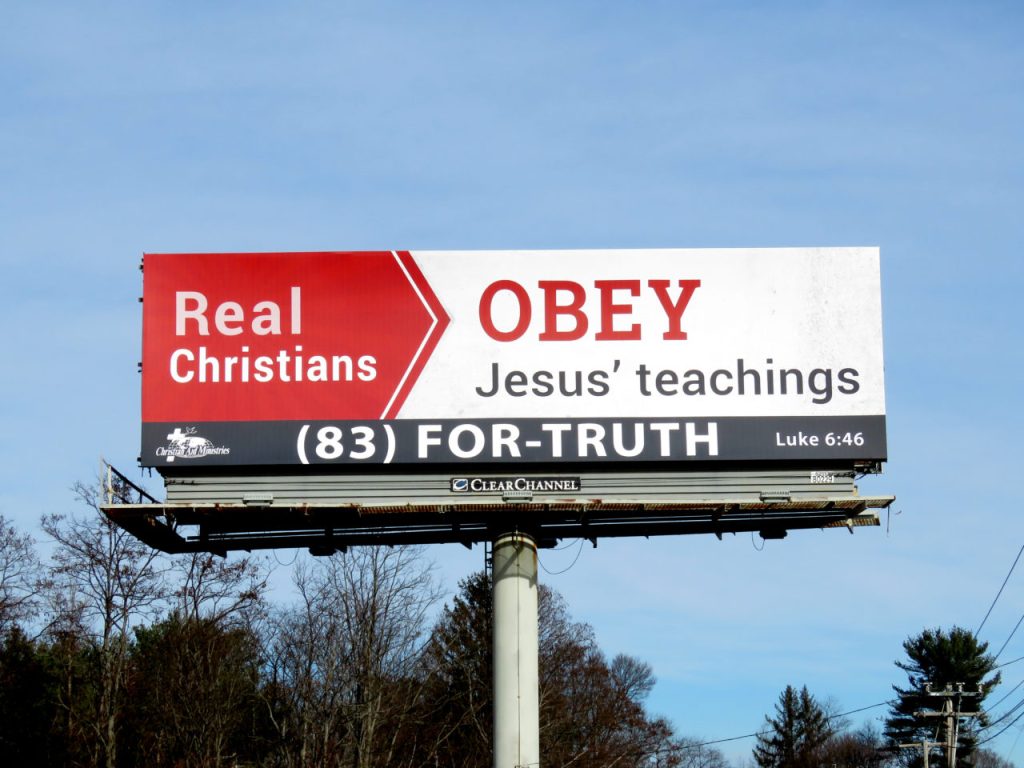








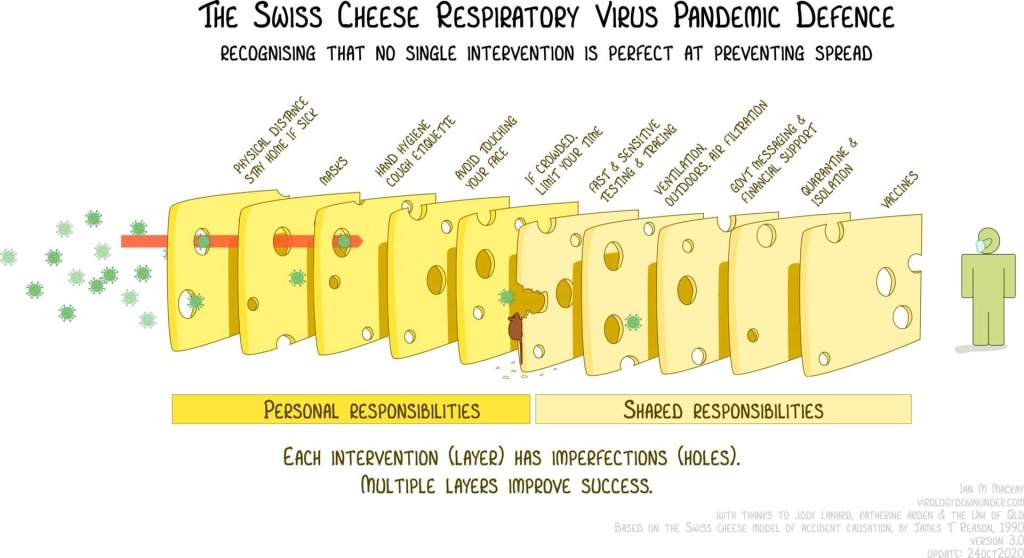





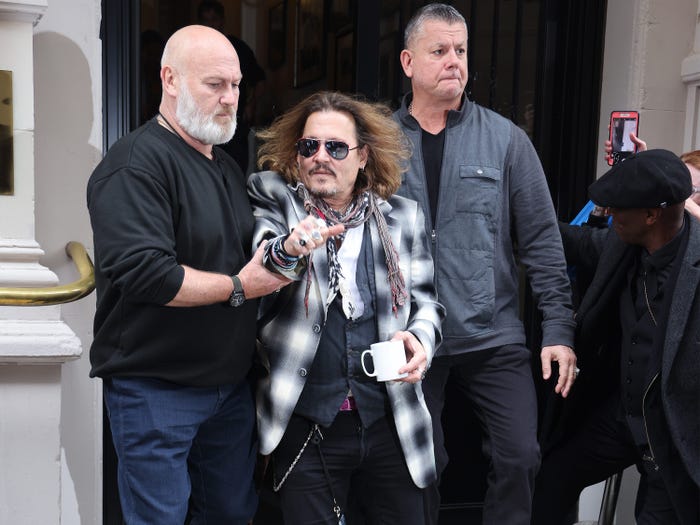





 Irregular Ideation