Suddenly the surprise attack has become cool again. When Hamas launched their incursion, on October 7th of 2023, to take hostages to exchange for Palestinians who were taken by Israel, this was portrayed as proof of their derangement. This was used as an excuse for a brutal air campaign that has turned Gaza into rubble. To this today dozens are being slaughtered, while the rest of the population of over a million souls is subjected to a starvation death. But we’re told even the babies burned head to toe are acceptable collateral damage—Israel has a right to defend itself, right?
The sucker punching lion, Israel, decided to end Trump’s nuclear talks early with what is called a preemptive strike. Netanyahu has been warning, for decades now, that Iran is just two years from a nuclear bomb. Much to his dismay, however, the US population—having been fooled once by his talk of Iraq being an imminent threat—is war weary and was not ready to make a move. So like old Thanos finally saying, “Fine, I’ll do it myself,” and executing his plan to destroy half of the life in the universe, Netanyahu gambled and surprise attacked, Pearl Harbor style, while peace attacks were ongoing and Iran was making major concessions.
Much like the Six-day War, when Israel went on an offensive before a war even started, it is the modus operandi of the IDF to hit first, to simply declare neighboring people to be an imminent threat and then attack. There is no other country in the world permitted to do this. Only Israel can and then, when they draw reprisals, portray themselves as being a victim. This notion that Iran should just surrender it’s sovereignty to Netanyahu or the US is incomprehensibly absurd. I hope this is just part of the “big ask” strategy of Trump before a deal, but all bets are off at this point where this goes.
However, Iran is not an open air prison with only small arms and home-made rockets—if the IDF hoped to send them into complete disarray with this blitzkrieg, then they failed miserably. Yes, Iran is back on its heels, yet even while being struck while having guard lowered by treachery, effectively blinded by a vicious rabbit punch, they will managed to land an effective counterpunch. The bully, accustomed to ‘winning’ against opponents that were virtually fish in a barrel, made a huge miscalculation. Israel can bleed, with parts of Tel Aviv looking like they belong in Gaza, and it ends the illusion of invincibility that has cowed other nations in the region into compliance.
Half of the power Israel has in the Middle-East and the US in the world is a notion of legitimacy, that they can’t be beat, and this is now compromised. How did Israel know where to find the leading nuclear scientists of Iran? Well, the Iranians, had been fully cooperating with the IAEA and thus by this had given the location of these men. It is treachery that won’t soon be forgotten. The US and Israel are losing their credibility on multiple fronts. Decades of reputation are being erased with each broken promise and every thunderous hypersonic impact. Even if Iran is hit with a nuke or the US hangs on to global control for another decade, there is writing of our end on the wall.
Writing on the Wall
Unlike past elective wars where Russia and China remained on the sidelines, both of these countries are signalling that they will not put up with it. In recent days two Chinese surveillance ships have arrived in the region, massive cargo planes also landing in Tehran, and Putin (while chiding the leadership in Iran) for not taking his offer of a more advanced air defense, won’t hesitate to get some payback against the imperial West. It only gets worse if the US, were to employ some tactical nukes in trying to destroy bunkers. It would only open that Pandora’s box in Ukraine. The best option would be stepping back from the brink to save face and move on. Unfortunately this better end is unlikely to happen.
Netanyahu has been arrogant and he is now overextended, Trump betrayed negotiations entered in good faith and he will never be a trusted deal maker anymore. The fallout from Israel’s audacious preemptive strike on Iran, much like the Hamas attack on October 7, 2023, has reshaped the geopolitical landscape in ways that may prove irreversible. Netanyahu’s gamble, driven by a decades-long obsession with Iran’s nuclear program, has not only failed to deliver the decisive blow he envisioned but has also exposed the fragility of Israel’s perceived invincibility. The counterpunch from Iran, though delivered under duress, has left Tel Aviv scarred and the myth of an untouchable Israel in tatters. This was no mere military miscalculation—it was a strategic blunder that has eroded the legitimacy Israel and its ally, the United States, have long relied upon.
The treachery of exploiting Iran’s cooperation with the IAEA to target its nuclear scientists has shattered trust in international negotiations. Iran, far from the disarmed prisoner Gaza has become, proved resilient, landing blows that revealed Israel’s vulnerability. This betrayal, coupled with the U.S.’s complicity in undermining Trump’s own peace talks, has tarnished America’s reputation as a global mediator. Trump’s “big ask” strategy, if that was the intent, has backfired spectacularly, leaving him sidelined as a dealmaker and the U.S. further isolated on the world stage.
“This is the inscription that was written: mene, mene, tekel, parsin “Here is what these words mean: Mene : God has numbered the days of your reign and brought it to an end. Tekel : You have been weighed on the scales and found wanting. Peres : Your kingdom is divided and given to the Medes and Persians.”
(Daniel 5:25-28 NIV)
The broader consequences are dire. Israel’s modus operandi—preemptive strikes justified by vague claims of imminent threats—has long been tolerated by the West, but the world is growing weary of this exceptionalism. The rubble of Gaza, the starvation of its people, and now the reckless escalation with Iran have stripped away the moral veneer Israel once claimed. Each hypersonic missile and broken promise chips away at the credibility of both Israel and the U.S., hastening the decline of their influence. Even if tactical victories are won, the writing is on the wall: arrogance and betrayal have set the stage for a new era where their dominance is no longer assured. The question now is not whether this decline can be stopped, but how swiftly it will unfold and what new powers will rise in its wake.
One of those fun things to do after church, as a child, when the adults had left the auditorium, was to go up and play preacher. We could mimic the motions of our elders in a convincing enough way to be funny and yet really had no idea what we were doing. And this reality would be quite obvious the moment we were asked a serious question.
Part of becoming an adult is the realization that many don’t really know what they are doing. Sure, some might enthusiastically perform their roles, and they have the necessary qualifications, but they either lack practical experience or simple aptitude. Not every doctor or engineer is equal, for example, some are more competent, and others—not so much. But none of these ‘professionals’ have an authority that should be unchallenged.
Reflecting on the priorities, and performative religion, I can’t help but come to the conclusion that some are really only concerned about looking the part and lack any real spiritual substance. It is disheartening when getting customs right is of greater importance than welcoming children. When leaders can answer on matters of trivia but are unable to offer any real wisdom or direction when it comes to the practical application of the clichés they preach, they’re phonies.
I’ve concluded that many participate in church as a sort of social club. And it goes all the way to the top. They have clout in the organization. They can wear the costumes and get the recognition that they so desperately need. But, in the end, they are empty vessels, a noisy gong or a clanging cymbal. It would be better to be a child going through the motions, in play, than to take yourself seriously and offend the little ones in the faith. Jesus wasn’t talking about pedophiles in Matthew 18:6.
The Biden administration has recently floated the idea of banning all gas stoves. Richard Trumka Jr., son of the powerful union boss of the same name and nepotistic selection for Commissioner of the CPSC, has made this proposal and cited potential long-term health issues (due to using them in homes without proper ventilation) as the reason. Very quickly, in the typical hive mind far-left fashion, various state governors have followed suit and very soon we can expect that Democrats will once again be limiting consumer choices.
When qualifications are more about favors to political cronies than expertise.
This move is more driven by the current climate change ideological cult than actual concern for people. And the climate change hysteria is primarily driven by political propaganda rather than true science. All of which has an underlying goal of giving more power and control to a few billionaires (who meet in Davos annually) and own many of our elected (or selected) leaders.
However, as a thought experiment: If we were to assume this is honestly about public health and climate change, not some cynical move motivated by geopolitics and commodities markets, why start with gas stoves?
Why not start with pets instead?
In this progressive age of believe science and consumer protection, can we really continue to ignore the well-established risks associated with pet ownership and especially the health risks to children?
Cull the Biological Menace: Save the Children!
Anyone who has had to clean cat poo deposited on the living room carpet has learned a hard lesson. As cuddly and cute as these furballs seem to be, they are basically walking, sneezing, crapping, and puking biohazard containers.
At risk of a fact-check claiming that cats also vomit on tile and linoleum.
The Chinese, during the Covid pandemic, knowing that pets were vectors of human disease, euthanized scores of dogs and cats as part of their pragmatic response to the pandemic. And it just makes sense. Pets are super-spreaders, next to impossible to mask properly, being exposed to their feces and urine can be dangerous, and that alone is a reason to ban these incubators of deadly disease.
A person who, as a result of exposure to cat excrement, has suffered from Toxoplasmosis, will think twice about having a pet in their home.
Then there’s the issue of animals attacking humans. It is terrifying to be out on a peaceful walk and suddenly be set upon by a snarling beast and knowing how many die from dog attacks. The President’s own dog has bitten several people, and this is okay? Dogs alone account for 4.5 million bites a year and many of the victims are our most vulnerable. Think of the children!
If we are to save grandma by wearing masks and getting mRNA injections, why allow these disease carrying clumps of cells (with claws and teeth) that serve no practical purpose and fit the definition of a parasite?
Add to all of that the unnecessary carbon footprint of Fido and Fifi. Feeding and watering millions upon millions of animals used for human entertainment comes at an enormous environmental cost. Many popular pets are fed with meats, which is especially burdensome, and will accelerate global cooling warming very scary climate change. We must do the right thing for the planet!
And, more importantly, why are we allowing this obvious menace to continue when there are alternatives?
Pet Reform: The Green Answer
In the spirit of progressive politics and Democrat party paternalism, l propose that we introduce common sense pet reform and ban all emissions producing pets and replace them with purring and barking electronic animals. There would be no need for kitty litter or toxic carpet cleaner after the transition. The green alternatives could be programmed to only knock over household items at a safe predetermined rate and will attack only those who our wise and tolerant revolutionary leaders call Nazis.
Only shoots insurrections wearing MAGA hats, not a threat to humans.
Think of how many lives may be changed or improved by removing this pet-stilence!
It would protect children from pet allergies, dangerous infections, cat-induced insanity (could this impact female voting patterns?), and prevent spread of other serious diseases. Just the elimination of bites leading to emergency room visits alone would justify this as a cost-saving measure. During the Covid pandemic we were told that saving only one life justified every new mandate. Has that ethical math changed?
Is there a reasonable argument against banning pets?
Who Determines Acceptable Risk and How?
The point, of course, is that we accept the health risks of pets. Why? Well, many have decided that the intangible benefits of a living companion outweigh the risk to their own health and also that of the general public. Sure, we do have leash laws and liabilities assessed when people who have pets do not take proper precautions.
And no doubt pet ownership will be the next stop for the climate change alarmists, like the very privileged Greta Thunberg, when their handlers tell them this is the scientific consensus. I mean, they’re already taking steps against farm animals and telling us to eat bugs as an alternative, do you think they’ll stop there? Not a chance, if they get their way on gas stoves, soon pets will be only for elites. These professional Karens, the petty administrative tyrants running this country, can’t be satisfied ever. There’s no reasonable compromise with them.
These bans in American politics stem from a Puritanical impulse. It is the very same thing that was behind the Prohibition, this desire to control, often sold with some kind of apocalypse tied to it as justification. Where it was once Johnathan Edwards preaching “Sinners in the Hands of an Angry God,” the early American sermon delivered in a monotone, it is Albert Gore’s “An Inconvenient Truth” for this new secular version of the same old cult religion. We all must do our penance and pay the ministers of this new era—it is hard work to keep the population in line and in perpetual fear of destruction.
Al Gore knows as much about science as a Televangelist knows about theology…
Banning gas stoves isn’t driven by science anymore than witch-hunts or eugenics. Sure, it is rationalized by their own beliefs about cherry-picked data and the purported implications. But water can be made to look awful if a person wants to make that case. It is the midwits, with rudimentary understanding of all things, that have this mistaken idea that life can be free of all risk, completely safe, and strive for perfect pure solutions. They accept the ‘experts’ opinion uncritically as if it is Gospel and become the “sources please” zealots which make truly intelligent conversation impossible.
Risk can’t be eliminated. Removing one risk only ever creates another. That is the real problem with complex systems. Poke in one place, to fix this problem, and the unintended consequences of a prescribed solution can vastly outweigh the benefits. The noxious invisible gas that is more a threat than nitrogen dioxide is the ceaseless and incurable arrogance of those who think it is their job to save the world or manage the lives of others. We cannot risk anymore of what remains of our freedom to please their whims, they will consume it all in the name of protection.
Of all tyrannies, a tyranny sincerely exercised for the good of its victims may be the most oppressive. It would be better to live under robber barons than under omnipotent moral busybodies. The robber baron’s cruelty may sometimes sleep, his cupidity may at some point be satiated; but those who torment us for our own good will torment us without end for they do so with the approval of their own conscience.
C. S. Lewis
Politicians have long abused science as a means to gain power for themselves. It is what had, a century ago, inspired notions of superior race and now is what arms a new generation of young activists—indoctrinated by leftist parents, mass media and their government funded schools. It is no different from any other moral panic where critical thinking made someone an enemy of the sanctimonious mob.
The pro-choice versus pro-life argument is only one manifestation of a bigger divide in worldviews. For some it may be as simple as dichotomy between Patriarchalism and Feminism, the latest iteration of the gender wars, or an oppressed versus oppressor narrative, but the truth of the matter is a bit more complicated in that the dividing line is not where the two competing ideological extremes put it.
Rather than Patriarchalism versus Feminism, there are actually three distinct hierarchies, two that are openly male-led (and are often lumped together) and one that is covertly male-led in that it both minimizes the most unique female strengths and is almost entirely defined by masculine pursuits of power.
The first is what is what is most commonly referred to as Patriarchalism and refers to a male dominated social structure, it is where the stereotype of men that keep women barefoot and pregnant originates, it is what motivates Feminists everywhere. The second is that of the secular world, the American mainstream, where the focus is career, success is about earning more money, climbing the corporate or political ladder and sacrificing anything that stands in the way of these ambitions. In these first two hierarchies the leadership role is about imposing our own will through brute force or coercion. The third, which I will get to later, is vastly different than these two and inverts the power structure.
The Rejected Patriarchalism
It is no big secret that traditional hierarchy, in the West, has been on the decline since the Protestants pulled out from under the Papal authority and rejected their kings. There is certainly a case to made against Rome and their abuse of power over the centuries. But that hasn’t stopped their wayward children from following in their footsteps.
Like Father, like son, right?
The misuse of authority did not end or begin with the Pontiff and the Patriarchalism of the most defiant fringes of American Biblical fundamentalism is clear evidence. You won’t ever tell these men what to do, but they sure like invoking God’s will to make their wife and children submit to them. The far extreme of this small minority, if they could ever agree on anything, may even resemble the fiction of Handmaid’s Tale if given power.
However, there’s about as much chance of this type of hierarchy gaining prominences as there is of Joseph Smith resurrecting himself from the dead. This is the strata of internet trolls who post memes and enjoy calling women whores for prudently avoiding men like them. And, this, incidentally, is what feminists happily use as a stereotype and strawman version of all men on the religious right. Misogyny is a good term, as these are men threatened by strong women and see their rule as entitlement rather than a respect that is earned. These men *do* stifle women because it is the only way they can feel strong or significant.
Opposition to abortion isn’t really isn’t about the babies, for the loud mouths of this particular patriarchy, rather it is about the competition and gaining back the social position they think they deserve. In their cult groups women play the role of enabler, they must smile sweetly as their dear husband speaks of his superior role. The great irony is that this is the kind of narcissistic man who creates his own mortal enemy, the angry ‘liberated’ woman, because he’s the embodiment of unqualified, irresponsible and just plain bad leadership. No intelligent woman wants to be his baby making machine.
The problem with this hierarchial structure is that it is all about male dominance without male accountability, it is entirely populated by morally (or otherwise) deficient men and abnormally weak women. It always spawns rebellion. It is precisely what has led to the alternative, which has risen up in reaction to abuses, and is the ultimate expression of an American ideal gone off the rails.
The Dominant American/Western Order
Industrialization has changed the world. The United States was once envisioned as an agrarian society, of small communities, but the rapid technological advancements of the past two centuries have rewritten the vision. The American dream of upward mobility and greater economic independence has now inspired generations in the working class. This ideal of more more more has given birth to our age of consumerism. But the thing is, this has not lived up to the promise, those who do achieve find their success to be a hollow victory and those who do not will always be chasing the next fad.
Many believe more money and increased independence will make them happier. It started with men, the bread winner, leaving the home in the wee hours, with lunch pail in hand, working in the factories or mines, but since WW2 it has ‘progressed’ to include women. I mean, Rosie the Riveter, who started her life as cynical war propaganda tool, has taken root as women have both increase labor supply (driving down wages) and have also provided a generally more compliant workforce for our powerful corporate overlords.
The sad reality is that the rapid changes have not provided additional security for women. Women told that their significance can only come from following masculine pursuits are not any more empowered than their grandmothers a couple generations ago. Indeed, this idea that happiness comes earning more money or that empowerment comes from women filling traditionally male roles is the greatest myth of our time.
Worse, unlike husbands or children that have a real emotional connection to their wives or mothers, these corporate and government bosses only see women as ‘human resource’ to exploit. Sure, they might promote this idea and image of the emancipated woman, claim to care about rights, but it’s all a lie to keep women enslaved. We are made to think fulfillment comes from our next paycheck, but it’s all a ruse. The working class is benefitting less and less from their long hours, big corporations make record profits at our expense.
It is no big surprise that corporations are offering to pay for abortion and even the travel expenses. The bottom line is that they can’t make their huge profits without docile and compliant employees. It is simply much cheaper for them to end a pregnancy than it is for them to pay maternity leave benefits and potentially lose the services of a female employee forever. It is never actually about her well-being or the future of the nation, it is always about the parasitic self-serving elites and their political or financial interests.
The whole system is structured to downplay the most uniquely feminine contribution to our future and that being childbearing. Men cannot do this. Sadly, many women, due to corrupted patriarchy and various narratives designed to subdue her potential (climate change, overpopulation, etc.), have been convinced that their most wonderful asset, the ability to bring new life into the world, is a liability and that they should work for ‘the man’ rather than invest in the only ones who would ever truly love them.
Abortion is truly a result of female despair and not empowerment. It is a ‘choice’ that is brought about by insecurity, a fear of being alone raising a child or their own inadequacy, and stifles the real strength of women. The most insidious thing about this patriarchy is that it is sold as Feminism and freedom, but it is truly as denigrating of female achievement as the widely rejected traditional version of patriarchy. In this new order women are simply the lower cost, lower maintenance, rented mules to replace the poor immigrant men of a prior generation.
Unfortunately, many will realize too late that they’ve been fooled into giving up their youth to the soulless industrial machine. Women, in particular, with their narrower reproductive window, will carry regret as their only lasting reward for their academic excellence and being the employee of the month. No, not at all saying that we should not have a career, or that money is unimportant, it is nice to have financial freedom, but who will care for this current generation as they age?Communities and social structures, like marriage, things that provide stability, have faded. The patriarchy of corporate boards and government bureaucracies is only truly concerned with expanding their power or profits. Even if the intent isn’t explicitly to subjugate, this regime run by controlling men and women attempts to monopolize our choices. To corporate bosses even the competition of a baby is too much for them to handle, that’s why they promote and pay for abortion.
The Faithful/Healthy Patriarchy
Patriarchy gets a bad name because most people see the first two manifestations and not the ideal. There are patriarchs just like there are matriarchs, some are very good while others are very bad and, therefore, we must approach the topic with appropriate nuance to sort the better examples from the worse.
The ideal role of the patriarch is to use their male strength as a means to provide and protect. He is not a tyrant nor a pushover, he is never in competition with or threatened by a strong woman. Instead, he lifts everyone around him up, is the model of submission to authority and willing to sacrifice himself fully for the good of others. He is, like the Centurion commended for his faith, “a man under authority,” and a stark contrast to the abusive Patriarchalism of small men. This is an authority that comes through actions and example rather than through his physical stature, his feelings of entitlement or bellicose demands.
It is the way of Jesus, who both spoke with an authority not matched by the religious elites of his day and yet was also gentle to those of lower social status. In saying, “the last will be first, and first will be last,” (Matthew 20:16 NIV) Jesus points to an inverse hierarchial structure—one that is led by humility and repentance, defined love and faithfulness, rather the power to dominate others through brute force or disparaging comments:
Jesus called them together and said, “You know that those who are regarded as rulers of the Gentiles Lord it over them, and their high officials exercise authority over them. Not so with you. Instead, whoever wants to become great among you must be your servant, and whoever wants to be first must be slave of all. For even the Son of Man did not come to be served, but to serve, and to give his life as a ransom for many.”
(Mark 10:42-45 NIV)
Men who do not lead by the self-sacrificial example of Jesus, who as a man equal to God still fully submitted to the will of the Father, are not worthy of their position and make a mockery of the leadership role. We live in an era where there are flamboyant displays of gender stereotypes, but none is more ridiculous or absurd than these grown little boys who try to dress themselves up as men and yet have nothing to offer the world besides shit posting on social media.
Some need the male genitalia dangling from their loud smoke spewing vehicles to try to prove what would otherwise be open to question, they call women whores for being single moms or sexually active (in a way that excludes them) and yet seem to forget for every sexual encounter there is another party involved. Women certainly do not impregnate themselves. And most women would not seek to terminate the life inside their womb if they were in a relationship with an emotionally secure and Godly man.
No, the alternative of soft and sanctimonious men is not better. The enablers of the current political establishment, who appease women in a desperate bid to gain sexual access, are just as much an embarrassment to masculinity as their fake tough guy ‘conservative’ counterparts.
Women could be fully actualized as women if men were adequately filling their role. No, this is not to say that women are incapable of sinning, of being power hungry or evil, but only to say that good men will be like Jesus and even take responsibility for sins that are not their own as a means to bring salvation to the most damaged individuals and lost sheep of this world. Sure, laws to protect the innocent and vulnerable are important, but they themselves cannot hold back the rising tide of self-centered abusive men and angry reactionary women.
True empowerment is about giving life, not in taking life. It is about creating, not controlling others. It is found in the soldier’s sacrifice and also in the woman who bravely and courageously carries her pregnancy to term in an uncertain world. Salvation came through Mary’s womb and was finished by the life-bearing Cross of Christ. Two plus two can become three when men and women both contribute to the whole, by selfless participation in the transcendent space of loving relationship. It is when two are brought together in spiritual union with the Divine that a new generation can find a good home.
Want to say “does not respond well to authority” without saying it? Just post a meme proclaiming yourself as a lion and decrying others as sheeple. Of course, the popular origin of this lion meme was a Trump retweet of the quote, “It is better to live a day as a lion than 100 years as a sheep.” The irony being that these ‘lions’ who have used the phrase since are still following someone’s lead.
The reality is, even in this current age of individualism, we are social creatures and are more often responding to the pressure of the crowd than thinking for ourselves. The ideas that motivate us, the narratives and interpretive overlays that we embrace, these aren’t things that we created in our own minds. But rather we have inherited many base assumptions from our homes or communities and will continue to be influenced our entire life.
And, speaking of influence, there was a review of Downfall, a movie about the last days of Adolf Hitler, that got me thinking about leadership. For obvious reasons, this is viewed from a negative light in regard to the Nazi dictator. The faith of the German people in their government is what enabled the atrocities of the regime. Viewing a flawed human being (or any collection of human authorities) as God is something very dangerous.
I’ve written frequently warning against the mob spirit and peer pressure. We should learn how to think for ourselves, make our own decisions, or we may be swept up in the latest propaganda campaign and used for immoral ends.
However, I also had to think that this unique ability of humans to organize around one charismatic personality is also the strength of our species and has given us a great competitive advantage over the strongest individuals. Our hunter-gather ancestors were only able to take down larger animals for food or to protect the themselves from deadly predators by working together. This took leadership, it required someone to be the point man of the group or coordinator of the collective effort.
So, sure, as the video says, “those full of doubts are desperate to follow those who are sure of themselves,” and “view them as shortcuts to prosperity,” yet this urge to fall in behind the Alpha is not always such a bad thing and is actually key to our success in building civilizations. A great leader can empower and get more from the group than the sum of the individual parts. I see this in John, the co-owner and true boss man at my company, without his infectious ambition and decisive confidence I can’t see us being near where we are.
The truth is that there are extraordinary men, there are those who do better embody the collective hopes of their people and thus are granted a right to rule. One only needs to consider the story of David, a lowly shepherd boy, who faced down the giant Goliath and through his courage inspired the armies of Israel to defeat the Philistines. Of course, this is not only a role for men either, the confidence of Deborah (Judges 4) or faithful example of Joan of Arc is what led to the decisive victories of their people over occupiers and oppressors.
People Need Leadership, Not Lords
We can talk about the ideal and imagine a world where everyone is completely able to take initiative, where order is always 100% voluntary and there is no need of authority or a leadership position. That is the design of the Israelite tribes before they demanded a king to rule over them. But even then, in that sort of anarchist system, there were judges that were appointed by Moses to arbitrate disputes and Moses, for his Divine call and standing up to Pharaoh, was the defacto leader of his people.
Every human is flawed. Moses fled into the wilderness after killing an Egyptian and, despite hearing from God, needed Aaron to speak for him. King David, the great warrior leader he was, had a loyal companion, Uriah sent to die in battle in order to cover for his adultery with Bathsheba. The temptation of every person given power over other people is to use it to their own personal advantage rather than for the good of the group. That is why the children of Israel were given this stern warning before appointing a ruler:
Samuel told all the words of the Lord to the people who were asking him for a king. He said, “This is what the king who will reign over you will claim as his rights: He will take your sons and make them serve with his chariots and horses, and they will run in front of his chariots. Some he will assign to be commanders of thousands and commanders of fifties, and others to plow his ground and reap his harvest, and still others to make weapons of war and equipment for his chariots. He will take your daughters to be perfumers and cooks and bakers. He will take the best of your fields and vineyards and olive groves and give them to his attendants. He will take a tenth of your grain and of your vintage and give it to his officials and attendants. Your male and female servants and the best of your cattle and donkeys he will take for his own use. He will take a tenth of your flocks, and you yourselves will become his slaves. When that day comes, you will cry out for relief from the king you have chosen, but the Lord will not answer you in that day.” But the people refused to listen to Samuel. “No!” they said. “We want a king over us. Then we will be like all the other nations, with a king to lead us and to go out before us and fight our battles.”
(1 Samuel 8:10-20 NIV)
Sounds familiar, doesn’t it?
We don’t have kings today, but we do have an all-powerful political class, that is mostly exempted from the laws they apply to us, who never met a new tax they do not like, and always willing to send our children to die to defend their own bloated ego or for the financial gain of the ruling class. Sure, call it ‘democracy’ as you vote for Tweedledee or Tweedledumb, but neither team red nor team blue actually represent you. We’re ruled not even by these visibly elected, but by special interests and those behind the scenes who pull the purse strings.
And therein lies the difference between the good leaders and the bad. The shepherd leader fills the role for the good of the flock, even willing to sacrifice themselves for the life of their sheep. The corrupt leader uses their power and authority as a means to dominate those who are under them. A good leader serves as an example, they encourage and try to get the best out of those looking to them for guidance. The evil politician, on the other hand, delights in creating dependency and keeping others subject to their whims.
In the end, no man is actually worthy to lead of their own authority and it is only through understanding our own place before God, that we ourselves are not God, that we can ever fill the role. Self-belief and narcissism, with a little psychopathy, is often what will get a person to the top spot. But humility and faith, valuing all individuals enough to go find the one lost sheep, that is the mark of a Godly leader. The only person fit to lead is one who is willing to submit to those who have authority over them.
The delusion of the Protestant independent spirit is that every man (or woman) and their Bible becomes their own king. This “you’re not the boss of me” attitude, in response to flawed leadership or simply as rebellion, is precisely why the church is becoming increasingly impotent. The Church, at least the one that Christ founded, had those given the authority to bind and loose, a council to decide important matters and those who acted as fathers. This hierarchy was never comprised of those faultless. No, what made them worthy, and the only thing that makes any of us worthy, is being clothed in the righteousness of the one Great Shepherd.
We need sheep who know they are sheep and shepherds, appointed to feed the flocks, like Peter:
When they had finished eating, Jesus said to Simon Peter, “Simon son of John, do you love me more than these?” “Yes, Lord,” he said, “you know that I love you.” Jesus said, “Feed my lambs.” Again Jesus said, “Simon son of John, do you love me?” He answered, “Yes, Lord, you know that I love you.” Jesus said, “Take care of my sheep.” The third time he said to him, “Simon son of John, do you love me?” Peter was hurt because Jesus asked him the third time, “Do you love me?” He said, “Lord, you know all things; you know that I love you.” Jesus said, “Feed my sheep.
(John 21:15-17 NIV)
In my own spiritual journey, after my own Bible-based authority failed me, God provided me with a man who would end his emails with the phrase “your unworthy priest” and is truly that. Fr Anthony is a very well-educated man, a college professor, and one who could easily flaunt his credentials as a means to humiliate some like me. But what has given him true authority, in my eyes, is how he humbly serves as a true example of Christian leadership.
He is a shepherd and the Church really needs more who are like him.
It is often disheartening to see differences of application within the Church. I’m not only talking about the tens of thousands of Protestant denominations either, no, even those within the Orthodox tradition see things vastly different at times.
A few weeks ago, and adding to my consternation over the past weeks, which included an estrangement from a close friend, another trusted friend caught in his double life, as well as my continuing wait for Charlotte, still indefinite due to Covid restrictions, impending neck surgery, and other painful physical ailments, I had reached out to Fr. Anthony for council.
Now, I have suspected (but do not know and do not need to know) based on hints, that Fr. Anthony’s politics are a little different from mine. So when I shared about my own struggles with relationships within the parish family he shared a bit of his own. It turns out that his diocese is pushing vaccines (oops) and, evidently, he is in full support. My own bishop, by contrast, and fortunately for me, has issued a don’t ask don’t tell policy and basically forbade it from being an issue.
The thing is, I would never argue with Fr. Anthony over something like this, he is a wise and humble man, I have nothing but respect for him. Still, that doesn’t change my own opinion, my own hesitancy is not without good reason and I’m certainly not comfortable with this kind of medical decision being imposed on anyone. So there is a bit of cognitive dissonance while contemplating this difference in perspective. Can I have it both ways?
This was on the back burner until the other day, when a good friend, asked me to parse this:
I’m assuming you’re aware of the sentiment running around right now that Christians are supposed to be compassionate and care for their community. Therefore they should gladly submit to the vaccinations. Assume the vax is as effective as they think it is. What is the CORE philosophical/theological/moral flaw in that thinking?
I never actually answered the question. I honestly don’t know how to answer. But I suppose caring can cut many different ways and including being compassionate with those concerned about the risks of vaccines. My mind immediately went to that email exchange with Fr. Anthony where I had wanted to reconcile the opposite positions on vaccines, within Orthodoxy, and didn’t have the mental energy at the time.
My own rough position was that the whole debate, to vaccinate or not to vaccinate, was a secondary issue and there were others of primary importance.
Early on, last year, aware of the disease, still uncertain about the deadliness, I had stayed home a couple of Sundays because of my feeling sick and wondered about the wisdom of partaking from the Chalice. I’m not ignorant of virology and everyone being served from the same cup seemed to be a potential super spreader event in the making. Despite some saying otherwise, that we can’t get sick, I’m not completely convinced that disease can’t be communicated in this manner.
However, at some point, I decided that life or death, partaking of the body of Christ is more important than my own understanding of the spread of contagious disease. Besides that, my own risk of dying was relatively low, so why give up the practice of my faith on the basis of this risk? To live is Christ, to die is gain, right?
Why worry?
So, here’s the thing, if my parish did require me to vaccinate in order to partake, again, why worry? If faith means not being afraid of disease, then doesn’t it also mean not being fearful of vaccine side effects? New virus or new vaccine, we should not fear death.
But still, how do we reconcile one group using conscience as a reason why we should not even ask others about the vaccine status, while another uses it as a reason why all should vaccinate?
Why can’t Christians agree on this simple matter of application?
Christian Conscience and Meat Offered to Idols
Sometimes it is best to take a step back to gain some perspective. It is very easy to prioritize our own reasoning (and self-righteous indignation) above relationships and should remember what the Christian life is truly about. Is it about winning debates? Having our own way? Can we be technically right, as far as our own position, and wrong in spirit?
Looking back to St Paul, as far as how to handle the vaccine debate or other hot-button issues, I do believe that the answer is clear. In his first letter to the Corinthians he speaks to one of these issues of disagreement, pay attention to how he starts, what he priorities:
Now about food sacrificed to idols: We know that “We all possess knowledge.” But knowledge puffs up while love builds up. Those who think they know something do not yet know as they ought to know. But whoever loves God is known by God.
So then, about eating food sacrificed to idols: We know that “An idol is nothing at all in the world” and that “There is no God but one.” For even if there are so-called gods, whether in heaven or on earth (as indeed there are many “gods” and many “Lords”), yet for us there is but one God, the Father, from whom all things came and for whom we live; and there is but one Lord, Jesus Christ, through whom all things came and through whom we live.
But not everyone possesses this knowledge. Some people are still so accustomed to idols that when they eat sacrificial food they think of it as having been sacrificed to a god, and since their conscience is weak, it is defiled. But food does not bring us near to God; we are no worse if we do not eat, and no better if we do.
Be careful, however, that the exercise of your rights does not become a stumbling block to the weak. For if someone with a weak conscience sees you, with all your knowledge, eating in an idol’s temple, won’t that person be emboldened to eat what is sacrificed to idols? So this weak brother or sister, for whom Christ died, is destroyed by your knowledge. When you sin against them in this way and wound their weak conscience, you sin against Christ. Therefore, if what I eat causes my brother or sister to fall into sin, I will never eat meat again, so that I will not cause them to fall.
(1 Corinthians 8:1-13 NIV)
We have many knowledgeable (and proud) in the church today, they studied theology, they have all the answers and will use “freedom in Christ” to exempt themselves from anything they don’t like. They have their “rights” and don’t you dare tell them otherwise. But they seem to have completely missed on the love part.
St Paul picks up on the meat theme again and drives home the point:
“I have the right to do anything,” you say—but not everything is beneficial. “I have the right to do anything”—but not everything is constructive. No one should seek their own good, but the good of others. Eat anything sold in the meat market without raising questions of conscience, for, “The earth is the Lord’s, and everything in it.”
If an unbeliever invites you to a meal and you want to go, eat whatever is put before you without raising questions of conscience. But if someone says to you, “This has been offered in sacrifice,” then do not eat it, both for the sake of the one who told you and for the sake of conscience. I am referring to the other person’s conscience, not yours. For why is my freedom being judged by another’s conscience? If I take part in the meal with thankfulness, why am I denounced because of something I thank God for?
So whether you eat or drink or whatever you do, do it all for the glory of God. Do not cause anyone to stumble, whether Jews, Greeks or the church of God—even as I try to please everyone in every way. For I am not seeking my own good but the good of many, so that they may be saved.
(1 Corinthians 10:23-10 NIV)
Those who went to the discount rack, who bought the meat offered to idols, had logic and reason on their side. Meat is meat, right? Why not save a little? So it was offered to some false god and the proceeds go to pagans, what difference does it make? He even gives Psalm 24 as a proof text of this position.
However, he doesn’t stop there. He goes on to say that we should respect the conscience of those who do have a problem with the cheap meat and therefore abstain when the origin of the meat is known. In other words, our own personal freedom is secondary to the good of others, and even when our own position is more rational, or even Scripturally correct, than those of a more sensitive conscience.
He never says to argue our side or condemn their lack of knowledge. It’s not even something considered. His focus is on being respectful to others where we agree with them or not. Live or die, we yield in love, as St Paul writes in Romans:
Accept the one whose faith is weak, without quarreling over disputable matters.One person’s faith allows them to eat anything, but another, whose faith is weak, eats only vegetables. The one who eats everything must not treat with contempt the one who does not, and the one who does not eat everything must not judge the one who does, for God has accepted them. Who are you to judge someone else’s servant? To their own master, servants stand or fall. And they will stand, for the Lord is able to make them stand.
One person considers one day more sacred than another; another considers every day alike. Each of them should be fully convinced in their own mind. Whoever regards one day as special does so to the Lord. Whoever eats meat does so to the Lord, for they give thanks to God; and whoever abstains does so to the Lord and gives thanks to God. For none of us lives for ourselves alone, and none of us dies for ourselves alone. If we live, we live for the Lord; and if we die, we die for the Lord. So, whether we live or die, we belong to the Lord. For this very reason, Christ died and returned to life so that he might be the Lord of both the dead and the living.
You, then, why do you judge your brother or sister? Or why do you treat them with contempt?
For we will all stand before God’s judgment seat. It is written:
“ ‘As surely as I live,’ says the Lord, ‘every knee will bow before me; every tongue will acknowledge God.’ ”
So then, each of us will give an account of ourselves to God.
Therefore let us stop passing judgment on one another. Instead, make up your mind not to put any stumbling block or obstacle in the way of a brother or sister. I am convinced, being fully persuaded in the Lord Jesus, that nothing is unclean in itself. But if anyone regards something as unclean, then for that person it is unclean. If your brother or sister is distressed because of what you eat, you are no longer acting in love. Do not by your eating destroy someone for whom Christ died. Therefore do not let what you know is good be spoken of as evil. For the kingdom of God is not a matter of eating and drinking, but of righteousness, peace and joy in the Holy Spirit, because anyone who serves Christ in this way is pleasing to God and receives human approval.
Let us therefore make every effort to do what leads to peace and to mutual edification. Do not destroy the work of God for the sake of food. All food is clean, but it is wrong for a person to eat anything that causes someone else to stumble. It is better not to eat meat or drink wine or to do anything else that will cause your brother or sister to fall. So whatever you believe about these things keep between yourself and God. Blessed is the one who does not condemn himself by what he approves. But whoever has doubts is condemned if they eat, because their eating is not from faith; and everything that does not come from faith is sin.
(Romans 14:1-23 NIV)
The ‘meat’ of St Paul’s point is that the other person’s conscience must be honored over our own, so that we do not create a “stumbling block” through our exercise of freedom. Even though he believes that there’s nothing unclean, in Christ, he strongly argues that we respect the conscience of others. In fact, he says it is sin for those who have a conscience against eating, and therefore we would be causing others to sin through our inconsiderate exercise of freedom.
To Vaccinate or Not to Vaccinate?
We no longer have controversies over meat offered to idols. But we have had some intense debate over vaccines and there are reasonable points made on both sides of the argument.
Generally speaking, vaccines have saved lives. We have, for the most part, eradicated some debilitating and deadly diseases through traditional vaccines and, therefore, we could offer protection to those most vulnerable by being first in line. It could be an act of Christian service to get vaccinated.
However, for some, the idea of using a vaccine derived from aborted fetal cells is completely reprehensible, a terrible evil. Would it be Christian to force these people to comply with our own understanding of science and violate their own conscience?
Is it ever right to tell another person to take on the risk of a medical intervention against their will?
My own position on the new Covid vaccines is that the risks outweigh the rewards and especially for those who already have antibodies through infection. According to some estimates, at least a third of Americans have natural immunity to the virus, and therefore the new vaccines (with the serious side-effects some suffer) are an unnecessary risk for these people. Why would we ever require these people to put their own health at risk for sake of our own conscience? Let people choose for themselves.
At the same time, are the moral objections we have to the vaccines actually as important as we make them. I mean, so some of the vaccines (not all) were tested on a cell line called PER.C6, would we ask as many questions about donated organs or if we should inject blood from another person? Do we raise the same ruckus when shopping for an iPhone, refusing to buy so much as a T-shirt if it may have been manufactured by sweatshop labor? Do we apply the same level of scrutiny to other products that enter our bodies?
Is it actually conscience or is it selective outrage, finding any excuse to be defiant, to stand on the ‘principle’ of our position because we need to win the debate, that keeps us from cooperating on vaccines?
This can cut both ways. One could say that we should never let a bad substance enter us, the temple of the Holy Spirit, and yet Jesus, in Matthew 15, says very clearly that what enters our bodies cannot defile us. Furthermore, in Mark 16 we read an assurance of what is possible with faith, “when they drink deadly poison, it will not hurt them at all.” So should we really be so fixated on accounting for every molecule that enters our body? Are we not going to die eventually regardless? If you weren’t afraid of Covid, why be so terrified of a relatively safe vaccine?
Why do you oppose St. Paul when he says to put the other person’s conscience above your own?
The “You’re Not the Boss of Me” Attitude
If you’re an independent American, who wants to always do things your own way, then you probably won’t like my answer.
Nobody wants to be told what to do and especially not by those whom we do not believe are up to the task of leadership. It is not unusual, amongst siblings, for a child being ordered around by another, for the phrase “you’re not the boss of me” to rise in protest. And, it is true, in most circumstances it is not the role of one child to tell another what to do.
That attitude carries into adulthood, We don’t want to be told what to do. How many times have we heard “this is a free country” and people declaring their rights, as Americans, especially over the past few years?
Now, to be clear, I do not believe that government officials have authority over the law. It seems that many have a misconception about the structure of our government and seem to believe that Presidents or state governors are the equivalents of kings. They are not, this country is supposed to be one where rule of law trumps any official in government. There is nothing ungodly or rebellious about challenging illegal use of power in the courts. St. Paul himself took Roman jailers to task for their abuse of his rights as a citizen.
However, the Church is not a democracy, like it or not, and is ruled by a benevolent dictator with His ordained ministers. It is simply astounding to me that so many people take their understanding of American civics and apply this to the Church. The Church is (and always has been) patriarchal with Christ as the head. And just as a parent may give an elder child the authority to act on their behalf, as a stand-in, the same is true in the Church as well. No, this doesn’t mean that these ministers can rule in a manner different from their Lord. Indeed, they will give a greater account. Still, we are to obey those who are given charge over us:
Have confidence in your leaders and submit to their authority, because they keep watch over you as those who must give an account. Do this so that their work will be a joy, not a burden, for that would be of no benefit to you.
(Hebrews 13:17 NIV)
When Peter spoke, and the Jerusalem council decided, that was what the Church did. They overruled those who were trying to apply Jewish law to converts and, unless you want to throw out this part of New Testament canon, the book of Acts, then this was within their authority to do. This is what Jesus was talking about, in the Gospel of Matthew, as far as giving the Apostles “the keys to the kingdom” and authority to bind and loose. It is the role of the Church, the collective body, led by those ordained by Christ, to help guide us. Many individualize the work of the Holy Spirit and I do believe that it does lead individuals, yet Jesus said where two or three are gathered I am in their midst.
Submit to one another out of reverence for Christ.
(Ephesians 5:21 NIV)
It is not submission if we only go along with what already agrees with us or goes along with our own conscience.
Church shopping to find one that suits you is not obedience.
Ultimately, I’m okay with contrary positions on vaccines from diocese to diocese. For those concerned only about the kingdom, this should amount to little more than a toilet seat up or down type of preference. It should be spiritual death that is our concern, prioritizing those things on a higher plane and not being so caught up in having our own way that we can never submit to those of a different conscience.
Christian love solves the paradox. It doesn’t actually matter vaccinate or unvaccinated. What matters is that we respect each other, that we submit to the conscience of others even when we do not agree. For some this means we love by not imposing a newly developed pharmaceutical product against their objections, for others it means obeying those who are given the responsibility to decide such things.
Many say that they would do anything God asks of them and yet aren’t willing to give an inch in love for their brothers and sisters, maybe they don’t hate and yet they certainly don’t love:
Whoever claims to love God yet hates a brother or sister is a liar. For whoever does not love their brother and sister, whom they have seen, cannot love God, whom they have not seen. And he has given us this command: Anyone who loves God must also love their brother and sister.
Recently, through the Freedom of Information Act, by request of Washington Post and BuzzFeed News, a trove of Dr. Fauci’s emails have been released and the revelations therein causing a great uproar online. On one side there’s the “I told you so” crowd doing their victory lap. While, on the other side, is the supposedly unbiased ‘fact-checkers’ and corporate media denial professionals trying to argue that there’s nothing to see here.
So, is Dr. Fauci a national hero, a seasoned expert who helped the nation navigate a crisis, or should his head be on a pike?
Let’s start with who Dr. Fauci is and why he is the focus of national attention…
Doctor in the Spotlight
Anthony S. Fauci, M.D., was born in Brooklyn, NY, on December 24, 1940, to parents who operated a pharmacy in the city, his grandparents were immigrants, he was raised Catholic and now considers himself to be a humanist. He was a standout basketball player in the private Jesuit high school he attended, went to Holy Cross University for pre-med, and then attended Cornell University’s Medical School. He married Christine Grady, in 1985, who is described as “an American nurse and bioethicist” in Wikipedia, and they have three daughters.
Dr. Fauci is the director of the National Institute of Allergy and Infectious Disease, a role he has served since 1984, through seven presidencies and, while a respected figure in his field of immunology, had not garnered much public attention prior to the emergence of Covid-19.
In early 2020 Fauci was selected to be part of the Trump administration’s White House Coronavirus Task Force (now serves as Biden’s chief medical advisor) and very quickly was singled out by the corporate media for his sometimes seemingly contrarian positions with the President. If anything, his elevated role and becoming the face of the pandemic response has more to do with partisan politics of those desirous use him as a foil against President Trump than it does with anything else. Even Fauci himself, in the emails, seemed confused about his new celebrity status.
There were many stories lauding Fauci. There is no indication that he wanted to become the public figure he has become. He did not have the power to tell states what to do. But now, because he was portrayed as this unquestionable expert, he has become symbolic of the shutdowns and mask mandates to many Americans. Fame, even if unasked for, is a two-edged sword. One can quickly transition from hero to heel once the spotlight begins to reveal their blemishes. By putting Fauci front and center of the Covid response, the partisans have given us ample reason to scrutinize just who he is.
I personally, as someone with a sister who is a medical doctor and another who is a nurse, I am also not comfortable with many of those trashing Fauci’s reputation. I’m equally opposed to demonizing him or trying him in the court of public opinion. That said, as one who has some life experience, I also understand the value of second opinions when it comes to medical interventions. Fauci’s opinion should have been considered one of many, as part of a task force, and should never have been positioned as a rival to the President. That was dirty politics, completely a media creation, and likely hurt the pandemic response.
The Politics of Pandemic
Ideally, in times of national crisis, where many lives are at risk, partisan politics would’ve been put aside and the nation would rally behind the leaders elected no matter their party affiliation. In that world, the President, informed by various economic and medical advisors, would make the executive decisions and government agencies would do their best to put these decisions to practice. However, in the current polarized hyper-partisan environment, and with a Presidential election looming in 2020, the pandemic was treated by many as simply another divisive political tool.
No world leader’s response to Covid-19 was perfect. For example, had European governments followed Trump’s lead and shut down travel from China early on in the pandemic we might have had more time to prepare. It is easy to forget, but before social distancing and shutdowns became vogue, many social elites were minimizing the threat and calling Trump a racist for warning the world about the virus. In Italy, for example, they were urging people to give hugs to Chinese people to prove their own virtue. Our Speaker of the House, Nancy Pelosi, urged her constituents to visit the crowded streets of Chinatown in San Fransico.
Trump was criticized for urging calm and being a cheerleader once the danger of Covid was finally realized. And, before that, was criticized for shutting down travel from China and accused of fear-mongering for speaking out. He could not win. He was resisted at every turn while trying to take steps to prepare and then accused of literal murder for the deaths in this country as if the world was somehow doing better. Few here would know that the US death rate is actually lower than that of Europe, per capita, but the stories here would focus on death totals to build the image of Trump’s failure.
Fauci, on the other hand, was not allowed to be criticized. He was praised endlessly as a representative of science, as bold and unbiased, a source of all truth and wisdom. His word was to be treated as irrefutable, god-like, his perspectives treated as the only one that mattered, and Trump asked over and over again, “will you follow Dr. Fauci’s recommendations?” It was presented as this horrendous thing that Trump may not take this one man’s advice on how to respond, as if there weren’t teams of other advisors to be heard and other concerns to be considered.
Every smart patient knows to get a second opinion on serious matters. Even the best physicians, experts in their fields, can misdiagnose or prescribe the wrong treatment. And this idea that “following the science” means worshipping or never questioning, men like Fauci is pure ignorance. It is dangerous ignorance.
But, as ignorant, is holding Fauci to an impossible standard because others put him on a pedestal.
On one hand, I completely understand the resentment that some hold towards this man that has come to symbolize the economic destruction brought on by state governors following Federal guidelines. However, much of what is being said now, in wake of the released emails, is as unfair as the coverage of the previous administration. Those against mask mandates and economic shutdowns are doing the same thing to Fauci as the corporate media propagandists did to Trump. His comments, like Trump’s comments, are being ripped out of context by many commentators, without explanation, and that’s a problem.
Yes, some of the emails show that Fauci withheld certain ideas about the origin of the virus and was initially dismissive of masking, yet nothing I’ve seen so far is smoking-gun evidence of his wrongdoing. Of particular interest is his involvement in funding the Wuhan lab, during the Obama administration, and whether or not this may have been a conflict of interest. And then there is the ethical issue issue with “gain of function” research that must be explored. My goal is to give fair treatment to the man and offer my own perspective as far as the content of the emails.
To Mask or Not To Mask?
One of the most contentious issues of the pandemic was the mask mandates. These state level policies, following the recommendations of the Federal government, were viewed either as life saving and scientifically proven or as terrible infringements on liberty and pretty much totally ineffective.
My own leanings, as someone who purchased a box of N95 masks in January of 2020, is that masks offer a marginal protection, if the correct type and properly used, and yet the mandates were basically useless. First cloth masks don’t offer the level of filtration that is necessary to trap the water droplets carrying the virus. Second, some countries required both a face shield and mask because they determined that masks alone weren’t effective.
The typical mask you buy in the drug store is not really effective in keeping out virus, which is small enough to pass through the material. It might, however, provide some slight benefit in keep[ing] out gross droplets if someone coughs or sneezes on you. I do not recommend that you wear a mask, particularly since you are going to a very low risk location.
And also saying this:
Masks are really for infected people to prevent them from spreading infection to people who are not infected rather than protecting uninfected people from acquiring infection…
Now, I believe he’s right in both cases. Masks only offer minimal protection. Covid spread through factories where everyone wore masks and states with mask mandates really didn’t fare better than those that did not. I understand that urge people have to “do something” and there are several flawed studies that back up the idea that masking is beneficial. However, I really do not see evidence that it makes a significant difference. Real life doesn’t match up with laboratory conditions. And thus that was likely behind Fauci’s pragmatic first take.
What is a bit unfair about the criticism about this apparent reversal in opinion on masks is that we all change our minds all the time. Sometimes I may disagree with some of my colleagues on something, state my own perspective, and then later amend as new evidence comes in. However, what is disturbing is where Dr Fauci explains this flipflop as being protection of mask supply for medical professionals. In other words, he is basically admitting to having lied to the American people about the effectiveness of masks. If that is the case then he should not be given a free pass.
The ‘Debunked’ Lab Leak Theory
One of those banned topics on social media was the theory that Covid-19 may have come from the lab in Wuhan, China. It made sense, a deadly virus emerges at a market within walking distance of Wuhan Institute of Virology, why not put that laboratory on the list of suspects? But for some reason discussion of this possibility was forbidden until very recently when it was revealed, through US intelligence, that researchers at this lab had become ill shortly before the virus turned the surrounding city into a warzone.
The Fauci emails also reveal that this possibility, even that Covid showed signs of being engineered for “gain of function” research, were discussed. Now, frankly, this is just good forensic science. It would be more shocking had this never been considered at all. And the batting this idea around alone is not proof that this is what had actually happened.
However, that so many literally conspired, with a foreign entity, to suppress this hypothesis (Big Tech censorship stifling the online conversation, corporate media fact-checkers claiming it had been debunked, etc) should be a cause for global outrage.
Of course, the most laughable claim of media propagandists, at the time, was that it was racist to link the virus to the Chinese Communist Party. Nevermind this was from the same people who had no problem with taking aim at wet markets and bat soup. But somehow that criticism of Chinese eating habits wasn’t a problem while taking a closer look at a laboratory that was studying coronavirus and bats was inappropriate.
Uh-huh.
Anyhow, given that Fauci had come out in full support of gain of function research and also been a force behind funding the Wuhan lab. Could it be this history explains the private discussion, in emails, and simultaneous public denial? Possibly, yes. It is very clear there’s a conflict of interest. Of course there’s a reason for him to keep a lid on what could be proof of his culpability for millions of deaths worldwide.
The result of Fauci’s silence, and corporate media stupidity and bias, is that something that should have been thoroughly explored months ago is only now being openly discussed. This has given a totalitarian regime, known for deception, more than enough time to cover up the truth and their role. Precious time has been wasted on what could be the biggest crime against humanity in the history of humankind. We have experienced a death toll and economic damages greater than twenty nuclear bombs, countless innocent lives destroyed, and the likely culprit was protected by a web of denial, collusion between Big Tech, the corporate media and high ranking government officials—like Dr. Fauci.
If the January 6th fracas is worthy of consideration for a Congressional Commission, then we really should dig deeper and investigate the true cause of a global pandemic that killed millions. No, there’s no smoking gun in the Fauci emails, or least none that I could see, and yet there is more than enough reason to suspect that one of our leading experts had tried to keep a lid on the Wuhan lab theory because of his own ties to the research. And still our corporate media speaks glowingly of him, as if he could do no wrong, the fact-checkers scurrying to tell us there is no bombshell revelation in the emails.
Dr. Fauci: Authority or Arrogant?
One thing that the pandemic has revealed and the emails only further confirmed, is the complete arrogance of our institutions. For whatever reason Fauci and others felt it was okay to mislead the American people, to tell the so-called “noble lie,” and then they wonder why trust is waning amongst the people they’ve deliberately deceived? Meanwhile, those who should be holding their feet to the fire, our ‘journalists’ (who now also see themselves worthy to pick winners for us rather than simply report), embarrass themselves with their fauning praise.
Is Fauci the sole source of all real science and truth?
No, absolutely not!
Is he a total fraud unworthy of his position?
Well, that is something worthy of investigation and yet to be determined. Innocent until proven guilty is still the law of the land. And I do not believe in trials in the court of public opinion. Again, while there are questions of ethics and culpability to be answered, that our corporate media should be asking rather than singing his praises, nothing in the emails implicates him of a crime.
My own thought, knowing what is known, is that making Fauci the fall guy would be letting too many others off the hook. Sure, he represents an accountability problem with the political establishment and elites who are protected by their own interests at the expense of the American people. No, they don’t simply “follow the science” nor are they invulnerable to group think or free from all bias. They’re human, like us, they make mistakes, they have political agendas and hidden motivations too. It isn’t about secret conspiracies so much as it is a matter of human fallibility, in general, and arrogance.
Over the course of the past year Fauci’s name has become synonymous with authority and science. But much of that is smoke and mirrors. He is truly only one qualified voice of many and was only made the face of the pandemic as a way to undermine Trump. This is pretty much the only reason why he is loved by one side and loathed by the other. Politics. The politics of the pandemic cloud good judgment. And those caught in this political fray deserve better than to be torn up by the mob or raised up like saints.
Fauci, given the voting patterns of NYC and government lifers, is probably as Democrat as one could be. That could explain some of the looks of tension, and tedious corrections, when Trump used his layman’s terms during press conferences. But, unlike the media narrative that constantly pitted him against the President, the emails showed this conflict between the men was massively overblown.
In the end, Dr. Fauci has the swagger of a Brooklynite, cocky or confident depending on who you ask, and amazing stamina for a man his age. But he should have never been made a celebrity, never turned into this unquestioned authority on matters of science or used as a tool of partisan politics.
At the start of the Covid-19 pandemic shutdowns transportation in the Philippines ground to a halt and left Charlotte with a dilemma. She had started a new job and didn’t want to lose her spot in this highly competitive market where the position would soon be filled. But how would she safely get there from her apartment?
A world away, and definitely sympathetic to her plight, I did not want my ‘bhest’ to throw away the time that she had spent training. She has studied for this new job diligently, had made me proud, and it was not an effort that I wanted her to sacrifice. However, I was also very much concerned about her well-being. Baguio City is not like small-town Pennsylvania, her uncle Roland had been murdered a little over a year ago, and it isn’t recommended to walk in the dark all alone.
How was I supposed to advise her?
In the absence of a firm understanding of all of the dynamics of her circumstances, not wanting to impose too much on her autonomy and push her one way or another, I equivocated. My answer was a meandering non-answer where I expressed my thought that she should do what she could, within reason, to keep her new job. But then, I also restated the risk of her attempting to go try to find a way, in the early morning hours, with the uncertainty of the shutdowns.
She would do what she knew was appropriate, all things considered, right?
Then, in the early evening, her morning, I received her call and was greeted by Charlotte’s harried voice. She had decided, interpreting my indecisive words as an encouragement to go, to set off for work by foot, in the darkness, and was now a little spooked. And, obviously, in no position to offer any form of physical protection.
Now I was both worried and feeling guilty, I had failed in leadership, she had sought my direction and my non-committal tendencies had seriously endangered her.
Anyhow, we were debating, should she continue on or go back when the call abruptly dropped. I tried to call and nobody picked up. She did not respond to messages either. Now, service is spotty in some parts of the city, all of those steep inclines and valleys, and we will routinely need to call again. But this time around there was silence. No message, no nothing. What happened? Something horrible, unthinkable? I tried to keep those thoughts minimized, and prayed, as the minutes became an hour.
As it turns out, she had made her way to work, after the cell service had got spotty, and went right to her duties having arrived a bit late.
All is well that ends well?
But that whole episode made me think very seriously about my role in Charlotte’s life. Had something gone terribly wrong that day, wouldn’t I bear some of the responsibility? She wanted my input, invited me to help her to decide and I refused to offer the clear guidance she needed. That is not a mistake that I wish to repeat. Leaders are called upon to make decisions and should not be neglectful of their duties.
What Does It Mean to Be a Man Under Authority?
The blog title phrase, “a man under authority,” comes from this Gospel account:
When Jesus had entered Capernaum, a centurion came to him, asking for help. “Lord,” he said, “my servant lies at home paralyzed, suffering terribly.” Jesus said to him, “Shall I come and heal him?” The centurion replied, “Lord, I do not deserve to have you come under my roof. But just say the word, and my servant will be healed. For I myself am a man under authority, with soldiers under me. I tell this one, ‘Go,’ and he goes; and that one, ‘Come,’ and he comes. I say to my servant, ‘Do this,’ and he does it.” When Jesus heard this, he was amazed and said to those following him, “Truly I tell you, I have not found anyone in Israel with such great faith. I say to you that many will come from the east and the west, and will take their places at the feast with Abraham, Isaac and Jacob in the kingdom of heaven. But the subjects of the kingdom will be thrown outside, into the darkness, where there will be weeping and gnashing of teeth.” Then Jesus said to the centurion, “Go! Let it be done just as you believed it would.” And his servant was healed at that moment.
(Matthew 8:5-13 NIV)
There is so much going on in that passage that it is very easy to miss the commentary on what makes this man’s faith, a pagan soldier, greater than that of an entire religious nation. This detail, while overshadowed by the response of Jesus, seems to be an extremely significant and is context completely necessary for understanding the statement about “great faith” that follows directly after it. What was it about this man that made him such an extraordinary and commendable example of faith?
The answer, of course, is that he was “a man under authority,” a soldier able to both give orders and also to take orders. He, a good soldier, understood his place, that he was a part of something bigger than himself and was, therefore, able to submit to those in positions of authority greater than his own. He, unlike the faithless Israelites who rejected the authority of Jesus, saw someone who was doing extraordinary things, had a need, had faith, and went to him for help. He realized that the word of Jesus had authority, like that of a military commander, and trusted.
So a pagan soldier knew more about faith than all of the unruly religious snobs who thought of themselves as God’s chosen people and yet rejected that same divine authority come in human flesh when they should have believed. Unlike the Roman centurion, who submitted to something bigger than himself as a way of life, as a soldier, they were too arrogant, elitist, and pig-headed. These sanctimonious religious zealots claimed to have faith in God, but really only believed in their own authority and supposed right to rule.
It is, incidentally, why these unbelieving rebellious hypocrites would eventually get crushed by Rome despite having the fortification of Jerusalem. They, rather than unite against their common enemy, even fought for supremacy amongst themselves, within the walls of the city, rather than submit to each other and do what needed to be done. Sure, they all may have claimed God as their authority, but they truly lacked faith and, for this reason, were routed by the well-disciplined Roman soldiers who did know how to fall into rank and fight together as a unit. A Roman soldier understood that falling under authority was necessary to win battles. They could overcome superior numbers because of their discipline.
Abuse, Neglect and the Leadership Gap
A man unwilling to submit to those whom God ordained is unfit to lead. There are many who fall on this side of the spectrum in the Protestant church, men who demand that their own wives and families submit to their own “headship” in the home while absolutely refusing to fall under the greater authority of the church. It is very little wonder that women and children, raised under such hypocrisy, end up following in this example of rebellion rather than submit. A true leader is someone who leads by example, is someone willing to sacrifice their own privilege, even their life, both for the greater authority and those under their protection. A man who cannot submit to those above or before him and also demands the respect of others below or after him is in it for his own personal gain. They are not leading as Christ led. Period.
However, there’s another type of man, equally unfaithful, possibly in overreaction to the controlling hypocrites, who neglects his duties. He, in his passive approach, also disobeys the authority of God and leaves those under his roof vulnerable. In reality, this kind of leader is as much (or more) in rebellion against his own head (Christ) than the abusive hypocrites. Sure, he may claim that his easy-going and tolerant approach is to demonstrate Christian love. However, that is a lie. Men who refuse to lead, as commanded, force others into chaotic and dangerous situations.
My reluctance to offer clear direction could be some of my own natural disposition and a tendency to be indecisive. It also could be in reaction to patriarchal abuse. I did not want to be one of those domineering and controlling men. I would rather empower others to make their own decisions. But, that is the positive spin, my equivocating was also a product of not wanting to take responsibility for the decision. Instead of putting someone at ease who was looking for advice, by offering them something concrete, a clear “I think you should stay home to avoid the risk,” I forced Charlotte to guess what I truly wanted and made her vulnerable. It was neglectful, weak, and not any better than the patriarchal abuse on the other end of the spectrum.
Yes, a good leader empowers those under them. But this empowerment comes from their offering a hedge of protection, through loving guidance, rather than throw them to the wolves of anxiety, doubt, and indecision.
This running joke about a man asking his wife, “where do you want to eat?” and getting an ambiguous non-committal answer, demonstrates this. This is supposed to highlight a tendency of women, but also perfectly describes a male weakness. It is actually both a symptom of a faithless people pleaser (ie: Adam disobeyed God to eat the apple because Eve handed it to him) and plain old laziness. It takes effort to lead. Sure, the man could’ve taken some time to contemplate what restaurant options there were, came up with his own preference, and then presented the list to his significant other. But it was far easier for him to put her in the hot seat and then pretend that the indecision was her problem.
Male lack of leadership, at least when leadership requires sacrifice, is a chronic issue. Many men need a good hard elbowing in the ribs, like Mary urging Jesus “do something” when the wine ran low at the wedding of Cana, or they will never step up to the plate. Ironically, it does often take a woman to bring out a man’s strength. And yet the chances of a linguini-spined sad excuse of a man getting married or landing a date is in the negative. Most women want to be heard. However, if they wanted a faithful companion and follower, a creature that waited attentively on their every whim or never offered any kind of loving direction, they would get a dog.
Weak Non-commital Men Need Not Apply…
There is this misconception, in this democratic age of female ’empowerment’ and feminism, that sameness of roles will lead to happiness. Many have confused equality of rights or opportunity with the sameness of roles, responsibilities, and outcomes. Both men and women, in this paradigm, have been done a great disservice.
As a reformed “nice guy” who refused to lead for fear of stepping on toes, then complained how women would choose those arrogant self-serving jerks instead, I’ve learned that there is a third and better option.
Women don’t actually want a “yes man” and will, in fact, run from men with insecurities. Sure, they may complain about the opposite extreme, of an overconfident and domineering male specimen, some of those abused by men will decry “toxic masculinity” and find a pushover excuse for a man to feel safe. But most women long for the security of a man that both listens to them and knows who he is enough to kindly tell them when they are wrong. It is sad, this composite of strength and gentleness, of meekness, is a rarity in this world of feminized men and overcompensating fools, but a man who gets it right is irresistible.
There is nothing in this world more pathetic than a man devoid of passion and, rather than take the risk of responsibility, waits on others to make decisions for him. A man who speaks with authoritative power is attractive. Nobody wants that milquetoast, weasel-worded, and non-committal “nice guy,” and too often this display is little more than a lame attempt to curry favor with the female gender anyway. Women want, and frankly need, a man who can say what he means and mean what he says. No, not an authoritarian, not a man lacking in the humility to be wrong either, but someone with the wisdom and discernment that comes from life experience. The man without passion never goes outside of what is familiar and comfortable, is afraid to fail, and has nothing to offer that is uniquely masculine.
I can most certainly understand the frustration of single men. The world is full of mixed media. On one hand, women are demanding power and control for themselves, on the other hand, they are showing up in the millions to watch movies like “50 Shades of Grey” about the perverse and abusive sexual domination of a woman. Secular women fantasize about a “Handmaid’s Tale,” even wear this weird costume as a protest of the patriarchy, and yet these same women apparently long for a government that can exercise absolute control and will keep them safe. It is contradictory and exasperating. Men are told things like “must be 5′-10″ or taller to ride” and then also told not to objectify women. It is a hot mess.
I ran into a different version of this impossible expectation in conservative Mennonite women. They are reminded, ad nauseam, about women needing to submit to men. They are deathly afraid of being stuck with some dude who will stifle their dreams, is unworthy of their respect, and holds the trump card of submission over them. This pushes normal female choosiness to a whole different level. The only control they have is the veto before a relationship even begins. Like the young woman who lamented not being able to pick her own clothes after marriage. Insane! Is it any wonder that many are terrified to date and some flee to leave this nonsense behind?
Here’s a hint: If your religious culture needs to continually pound instruction to women to submit, then you’re 100% without-a-doubt doing it wrong.
In the end, most women do not thrive with a man who isn’t a man. Sure, some women who suffered abuse may gravitate to weak and ineffectual men, as to be in control. But most men value a man who is strong, who is able to protect them from threats (both physical and emotional); one that both listens intently and speaks with a comforting authority that is rare in this tumultuous time. I mean, not every man is cut out to be Keanu Reeves. We can’t all be six feet tall and appear to be chiseled from rock either. However, a man should learn to be reliable and committed, unselfish, and protective.
Christ the Paradox…
Leadership is not about calling the shots, being the boss, or the big man in charge. It does not stifle or rob others of their autonomy and ability to speak to things that matter to them either. No, rather it is being Christ-like, being the strength, and an example of self-sacrificial love, to those more vulnerable. The kingship of Christ is not tyrannical nor passive, firm or gentle depending on the need, he both knew how to submit unto death and also how to speak in an authority unrivaled. He’s both lamb and lion, teacher of the faithful and protector of the flock, merciful to the sinner, and a judge of all.
One of the most interesting icons portraying Jesus is called the “Pantocrator” (Greek for Almighty) shows his face with two different halves. One half shows the compassionate Good Shepherd, giving a blessing, the other shows a stern expression of a mighty ruler. It is very interesting when you cover one half of his face and see the contrast. Many today seem to follow after their own hippy-Jesus, a “you do you” bro dude, but that is not the man we see in Scripture who confronted and will judge the world. He’s Lord of all. That teacher and judge is the image below:
Pantocrator
That in mind, Jesus, while sometimes giving a sharp rebuke, also did not simply bark orders at the disciples while refusing to fall under authority. No, he was also in submission to his own head, the God the Father. One of the most profound statements in Scripture, given the divinity of Christ, is this, “Father, if you are willing, take this cup from me; yet not my will, but yours be done.”
I’m not sure how all of that works, how someone can be both fully human and fully God. But we do know that Jesus, the man, had to submit to God the Father and with that led by example.
Ultimately, the example of leadership Jesus showed is one of self-sacrificial love. Jesus was a man with divine authority, but also a man under authority and willing to suffer for the good of others. He did not lead in a spirit of entitlement nor use his authority to privilege himself at the expense of those under his leadership. He protects his flock, he is their advocate and defender. He prayed alone while his disciples slept. He suffered and died for our salvation rather than take the easy way out. A man following in the example of Christ steps up to the plate. He does his job without complaining. Taking full responsibility for those under his care. He commands respect due to his character, not because he demands it and, like a good soldier, is a man under authority.
Charlotte needs me to man up, take responsibility and not be a pathetic mess of excuses and equivocation. But I can’t expext her to respect me if I’m simply doing everything for myself, addicted to substances or even just my own selfish ambitions. She should have a man who is confident, in his place, and offers her security rather than leave her feeling uncertain. A good man, a true Christian leader, gives others a place to thrive.
As a final thought, men must be allowed to grow into their leadership role, a man never given a chance can’t show his potential. And sometimes those men who appear to have it all together in their teens and twenties aren’t all that they seem. Look at Judas compared to Peter. Judas had his act together, he was trusted with the money, had all the answers, yet betrayed Jesus at the end and took his own life rather than accept his failure. Peter also denied Christ three times. But, unlike Judas, he repented and became the leader of the church. So, don’t lose hope simply because you are not where you want to be and don’t try to do things on your own strength either. We are not worthless nor are we gods, but we are soldiers of faith and only as ever as worthy as the authority we are under.
‘Tis the season for conservative Mennonites to preen on social media about their apolitical “kingdom Christian” stance. These Biblical fundamentalists, with an Anabaptisty twist, talk about worldly politics more than many in the voting public do and never miss an opportunity to distinguish themselves with their rude apologetics.
Any more I try to ignore this noxious grandstanding display of religious elitism. But then I saw a video post, with a title proclaiming a change of mind about voting and featuring someone that I’ve run into, on various occasions, in my travels and as part of an online Mennonite discussion forum. I’m quite familiar with his long-held positions and this claim of transformation astonished me.
Perhaps he had voted in a mock election in grade school or something?
Anyhow, starting in general…
The Utterly Non-Revolutionary Act of Not Voting
Mennonites, like other Anabaptists, have built entire religious doctrines around cherry-picked Biblical phrases. The words “be not conformed to this world,” lifted from Romans 12:2, is used to justify everything from not driving motorized vehicles and dressing like it is still the 1800s to condemning military service and not voting in elections. That is standard fare for all traditional or Old Order Anabaptists.
But Fundamentalized Mennonites, unlike their Amish and Old Order Mennonite cousins, feel this unquenchable need to broadcast and announce all that they do. Ignoring the not letting the right hand know what the left hand is doing advice that Jesus gave while he slammed hypocrites. Mennonite fundamentalists, taking their cues from Protestant fundamentalists, are all about political influence and religious apologetics.
An example?
The disdainful retort of a Mennonite gentleman to those who dared to talk about voting in his presence, “I vote on my knees!” This sanctimonious announcement, alluding to prayer rather than direct involvement in the political process, was met appropriately with a humorous remark to the effect that crawling to the ballot box was an odd way to vote. But it does also describe the strange dichotomy, or rather the inconsistent application, of non-conformity rules.
A man actually voting on his knees
The grand irony is that this kind of political non-participation does not make someone unique from ‘the world’ as religious separatists claim.
Well, voting or not voting is a habit, they do not believe that their vote matters, or simply do not care about the outcome one way or another. So this idea that not participating in elections is some sort of notable stand or great sacrifice is pure delusion. Not voting is literally as much like ‘the world’ as you can get. It is not revolutionary. It is a nihilistic cultural default, a bit Gnostic, and requires doing nothing. However, unlike most non-voters who have no need to explain their apathy for the democratic process, conservative Mennonite fundamentalists have a great need to spiritualize and broadcast their decisions.
Sure, unlike other fundamentalists, who do vote and promote political involvement, the conservative Mennonite variety proudly distinguishes themselves in other ways. But they still go to universities like Bob Jones or Liberty University, fundamentalist bastions, and pick up the Evangelical attitude to apply to their Anabaptist doctrinal defaults. So, rather than simply live out their faith, like their forbearers, they must be “in your face” about their views, constantly propagandizing and promoting their supposedly ‘Anabaptist’ or purportedly ‘kingdom’ perspectives, and otherwise making sure that you notice them. If it seems self-aggrandizing and obnoxious, then it most certainly is. Worse, they are completely arbitrary and inconsistent in how they apply these supposed “Biblical principles” that justify positions they’ve inherited, never seriously reconsidered, and want to ram down your throat.
How do I know?
I was one of them. I would argue my Mennonite fundamentalism confidently with my teachers in high school. In college, I wrote a position paper to explain my inherited non-resistance dogma, thinking that my take would be fresh. But, for my efforts, ended up with a classroom more fully unconvinced of non-resistance than they would have been had I said nothing at all.
Anyhow, while most from my own religious communities lean towards conservative politics. A few got out of this Mennonite intellectual ghetto long enough to read a little Karl Marx and meet some real live Socialists. And, now, armed with this new knowledge, come back to their conservative peers with a superior attitude and a whole new set of empty platitudes, borrowed from ‘the world’ they claim to stand apart from, that require nothing of them. They proclaim themselves to be different, and imagine themselves to be revolutionary thinkers. Yet they are really nothing but a new blend of the same old political ideologies, tired religious dogmas, and general nonsense.
It was one such story of a ‘transformation’ that caught my eye because I actually knew the guy and knew him too well to be bamboozled by his slickly packaged testimonial.
The Completely Non-Transformative Transformation
I’m not going to reveal the source. More clicks will only encourage them. But it did not take long into the apologetics video to reveal that the title was a bit deceptive, when this conservative Mennonite apologist confessed, “The truth is I’ve never actually voted.”
Hmm.
So, I guess a more upfront and honest title, such as “Mennonite-born Confirms His Confirmation Bias,” isn’t propaganda-ish enough to sell the point?
Anyhow, to be clear, he never changed his mind, he might have momentarily been slightly more open to the idea of political involvement before reverting back to the Mennonite default position. And, sure, his political positions may have evolved slightly from right-wing anarchist and anti-government to being slightly more left-wing anarchist, definitely anti-conservative, and even more anti-government. But, in the decades that I’ve known him, he’s always had this smug-sounding “voting only encourages them” signature line.
What is truly interesting is that this particular individual?
Simultaneous to his decrying the violent and coercive means of the state, he had also worked as a government employee and profited from these means for many years. That’s right. This man who claims that voting is some big moral quandary because the government uses force and threats had no issues with taking money obtained by those means for years.
And yet, somehow, to merely cast a ballot is too much for them to stomach?
If voting is wrong, if political solutions are wrong, then how isn’t his taking through this system extremely wrong?
If he really believes that the government is illegitimate, that we should not participate so much as to cast a ballot, then he ought to do as Zacchaeus did. He should return all of his ill-gotten gains, he should pay it all back with interest to us who paid his salary, and put his money where his fundamentalist Mennonite mouth is.
But what is, by far, the most disturbing thing about this video is the shameless promotional for progressive politics it contained. While claiming to be apolitical. He pushed the far-left social justice agenda as if this was what Jesus taught. Confusing what we should do as individuals, as a church, with the obligations of a nation. How disingenuous an argument. How heretical a theological position. How contradictory with his own religious tradition.
In short, the kingdom of heaven, especially their conservative Mennonite version, does not have open borders and will turn people away for falling short of requirements. Scripture lists whole long lists of who will and will not enter the Kingdom of Heaven (false teachers one of them) and this studious fellow would certainly be aware. And, no, it is not cruelty or indifference that keeps some out. Quite the opposite, in fact. The Kingdom has borders to keep unrepentant murderers, rapists, and other abusers away from those whom they exploited. So this criticism of nations for enforcement of reasonable border policies, for the protection of the nation and those trying to escape horrendous conditions, is asinine.
Imagine that, a conservative Mennonite, part of a denomination known for their strict standards for entry (oftentimes over the slightest minutia of application) taking issue with a nation for taking some precautions and vetting immigrants.
I mean, as one practically engaged to a woman who needs to navigate our immigration system, I have every reason in the world to want the current system to be made easier. And, despite that, despite my own personal struggle waiting on the cumbersome process, I still completely understand and appreciate that we have civil authorities to protect citizens and promote peace. I love her, and my neighbors, enough to want to keep evildoers out. Her uncle was murdered in her home country, as was her grandpa, both good men, it would be absolutely immoral for me to open the floodgates so that their murderers could follow her in.
Ultimately, had this fundamentalist Mennonite commentator stayed politically neutral (rather than parrot a leftist ideological position while falsely claiming to be apolitical) I may have let the duplicitous transformation claim slide.
I’m completely okay with someone being apolitical and not voting if they believe that is what their religious beliefs require of them. But what am I completely not okay with? I’m completely not okay with misleading testimonials and phony claims of being apolitical while promoting a political position. I’m especially not okay with the hypocrisy of saying the government is violent, therefore we must not cooperate so much as to vote, while also being on the taking end and unrepentant about it.
This one was a little more personal because I knew the character making the claim and it was so typical of the fundamentalist tainted brand of Mennonitism that I came from. Mennonite Evangelicals love to distinguish themselves from other Evangelicals, both products of Fundamentalism, by pointing to their Anabaptist doctrines (namely non-resistance and non-conformity) as if it is something revolutionary when, in fact, they are often religious promoters of progressive politics who oddly also decide they are also above voting.
Voting bad, taxes good…
Okay.
Drinking the Kool-Aid of Evangelical Humanism
It started so wonderfully, that a charismatic young leader blended concern for the poor and racial inequality with a Gospel message. Eventually this “Peoples Temple of the Disciples of Christ” moved from Indiana to sunny California where this social justice preacher, James Warren Jones, found a more receptive and racially diverse audience. He grew his following to a few thousand members, enough to gain the attention of left-wing political leaders, and hired an African-American preacher to further the social justice message.
Pastor Jim
Jones and his so-called “Peoples Temple” moved progressively in the direction of openly displaying their true Marxist intentions. Their home for senior citizens directly quoted Karl Marx, “From each according to his ability, to each according to his need,” and drew parallels between this political ideology and Christian teachings. Jones became increasingly divisive, increasingly open with his far-left rhetoric, and increasingly controlling as time went on. Jones, the cult leader, preying on the urban poor and minorities, now pushed an idea of “religious communalism” and used various passages of Scripture to justify this aggressive push towards Socialism.
A ‘kingdom’ perspective
Of course, maybe some of you already know how this story ends, at Jonestown, where Jim Jones, the leader of this nasty narcissistic polygamous mess, ordered his followers to drink poisoned Kool-Aid. The infamous Jonestown Massacre, in the Socialist paradise (or rather a hellhole) in Guyana, totaled 909 dead, either by suicide or murdered outright, including a Congressman sent to investigate allegations of abuse. Jones was always only a wolf in sheep’s clothing, he was merely using a twisted version of Biblical texts for his political and personal ends. He was able, with this heretical blend, to lead hundreds of people to their deaths. Sadly, despite this sobering example, many still “drink the Kool-Aid” of social justice and end up spiritually dead having jettisoned the true Gospel.
Jonestown Massacre
Those who fall for the social justice ‘Gospel’ have indeed traded their birthright for a bowl of pottage. They, like Judas, have interpreted the words of Jesus through the lens of their worldly aims. They, like the betrayer of Christ, take the instruction of Christ, “sell all and give to the poor” as some kind of end in itself and not in the context of divine pursuit. It is not because they are far from Jesus. No, in fact, there is only a subtle difference. Judas may well have been the best of the disciples, trusted with the common purse, and able to quote the words of Jesus concerning the poor right back at him. And he was not alone in his confusion about the words of Jesus either. All of the disciples seemed to have worldly power and prestige in mind. They did not anticipate a life of suffering and sacrifice.
Do not drink that social justice Kool-Aid
The close counterfeit is the most dangerous. Many warn of the crude caricatures and obviously flawed copies of the truth. However, when they encounter something that appears, on the surface, to be the genuine article, what do they do? They let down their guard, may even praise the effort, and never realize the missing substance behind the effort. The substance, of course, is that the purpose of everything a Christian does is worship. True, following the instruction to give to the poor, in the context of Christian faith, will create a better world. However, when turned into some legalistic prescription and for the intention of political end, like social justice, it very quickly becomes abusive.
But Jim Jones wasn’t the first to start to push a brand of Socialism and defiance against ordained authority, there was an Anabaptist cult with similar views. The Münster Anabaptists were the true radicals of the so-called “radical reformation” and are the likely cause of the eventual crackdown on all Anabaptists. They too promised ‘the kingdom’ siding with the poor and the peasants, but their “new Jerusalem” very quickly ended up a polygamous nightmare. This disaster is why the “non-resistent” theology won out. This is why conservative Mennonites and Amish have remained relatively apolitical.
Returning to the Vomit of Münster
Modern Mennonites, of all stripes, share a similar antipathy towards authority. Those on the ‘conservative’ end of the spectrum are defiant towards things like COVID-19 restrictions or anything that interferes with their own agenda, while those on the ‘progressive’ side stand against everything from the punishment of evildoers and even national borders. The only significant difference is that the conservatives, like most other conservatives, mostly want to be left alone to practice their religion. While the progressives would be happy to use government to enforce social obligations on their neighbors. Where the conservatives can be neglectful of their neighbors, the progressives (like their worldly counterparts) are enthusiastically abusive.
I’ve noticed many privileged Mennonites, raised in conservative Evangelical/fundamentalist churches, in reaction to their own former ignorance, veer hard to the left.
They were raised in Mennonite homes, lived in Mennonite communities, went to Mennonite schools and a few finished their education in fundamentalist institutions. Most of their lives, unlike my own, they spent in this Mennonite cloister, then they go to the big city somewhere and find out other people see a different perspective from the only one that they knew existed. But rather than apply a grain of salt, or show any spiritual discernment whatsoever, they swallow the newly discovered grievance narratives lock, stock, and barrel. They cheer on, from their ivory towers, the “people power” of those disrupting their neighbors, ignore or justify the violence of those destroying cities, and think their support for Barrabus is doing the Lord’s work.
They are blind guides, more misguided than the Mennonite traditionalists whom they frequently condemn, condescend, and criticize, and yet imagine themselves to be the true standard-bearers for Anabaptism. And they are, but Anabaptist in the same way as Münsterites and of the same spirit as those religious elites whom Jesus taunted in this passage:
Woe to you, teachers of the law and Pharisees, you hypocrites! You build tombs for the prophets and decorate the graves of the righteous. And you say, ‘If we had lived in the days of our ancestors, we would not have taken part with them in shedding the blood of the prophets.’ So you testify against yourselves that you are the descendants of those who murdered the prophets. Go ahead, then, and complete what your ancestors started!
(Matthew 23:29-32 NIV)
Woah!
I mean, woe…
Leftward aligned, and “kingdom Christians” are less committed than their Anabaptist predecessors and yet make the same mistakes. They claim to be above the politics of this age, apolitical even, and pose as enlightened minds, but are really lacking in introspection and this:
These people are springs without water and mists driven by a storm. Blackest darkness is reserved for them. For they mouth empty, boastful words and, by appealing to the lustful desires of the flesh, they entice people who are just escaping from those who live in error. They promise them freedom, while they themselves are slaves of depravity—for “people are slaves to whatever has mastered them.” If they have escaped the corruption of the world by knowing our Lord and Savior Jesus Christ and are again entangled in it and are overcome, they are worse off at the end than they were at the beginning. It would have been better for them not to have known the way of righteousness, than to have known it and then to turn their backs on the sacred command that was passed on to them. Of them the proverbs are true: “A dog returns to its vomit,” and, “A sow that is washed returns to her wallowing in the mud.”
(2 Peter 2:17-22 NIV)
Few Mennonites actually read the writings of Menno Simons, but many are familiar with his poem, “True Evangelical Faith,” a presentation that orients the reader towards the earthy and practical ministries of the church, and some of the reason he is described as an “evangelical humanist” by various sources. No, he would certainly not support the leftist policies of our day nor was he completely aligned with the Anabaptist comrades in Münster. But this understanding of the words of Jesus too easily transforms into left-wing anarchist politics and is very often misconstrued as an endorsement of Socialism.
Couple this with the Zwinglian denial of spiritual and mystical aspects of what Jesus taught, common to all Anabaptists, along with the political ambitions of the historical Anabaptist leftists, who in their zealousness, overthrew the ordained government of a German city named Münster, and you can know where this ‘kingdom’ is headed.
Jan van Leiden baptizes a woman in Münster, painting by Johann Karl Ulrich Bähr.
The contempt for authority is already there, the loss of a truly divine orientation is already there as well, and now they align themselves with those rebellious against all authority and acting out in violence.
This turn towards left-wing politics, those doing apologetics for grievance culture, are urging the faithful to take a big gulp of the same Kool-Aid that was passed around Jonestown. It is the same spirit that led to the horrendous violence of the Münster Rebellion. It is not remotely Christian even if it uses the words of Christ as justification.
Judas too used the words of Jesus. He deceptively used the words of Jesus, “sell all and give to the poor,” as a means to admonish a faithful woman for her impractical worship of pouring out perfume on the feet of the Lord. He, like a Marx-inspired fundamentalist calling ornate houses of worship a waste, told this woman that she should have sold the perfume to give to the poor. He used his position, as a follower of Jesus and disciple, an advocate of the ‘kingdom’ as he understood it, to hide his actual political ambitions. For this smug comment, he earned the sharp rebuke of Jesus.
Those lapping up the radical leftist vomit of Münster Anabaptists, in modern forms, will be worse off than their more traditional Mennonite counterparts. Marxist philosophy is not compatible with the message of the cross nor is this ‘kingdom’ opposition to the established government Christian. They might be sincere. Many are misled by them. But there is no reason for me to suspect that Judas, or others like him who betrayed Christ and the church, were insincere. Had Judas been only a fraud, why would he have despairingly taken his own life?
Oh proud Anabaptist. Oh, fundamentalist with all of the answers and no actual wisdom. Oh you Evangelicals who are all talk and very little understanding, who flail to the right or to the left every time, desperate to be relevant. Oh, you closeted Marxists, with worldly ambitions, posing as agents of the kingdom. Repent now, before it is too late!
Turn Not to the Right or the Left
Every so often a quote pops up, at the right exact time, so poignant, that it appears to be a gift from God. Such was the case when this quote was shared on my news feed while contemplating politics and examining my own stance as far as ideological positions. I tend to be right-wing. I do believe that the role of government is to set some basic boundaries, look out for the “common good,” and stay completely out of my personal business. But I also see the folly of individualism, the need for communities, and voluntary cooperation between people.
I see both right and left-wing extremes, both totalitarianism and anarchism, as unChristian and dangerous. But never had succinct words to describe why this is, at least not before reading this quote:
There are two kinds of ‘atheism’: the atheism of the right, which professes to love God and ignores neighbor; and the atheism of the left, which professes to love neighbor and ignores God.
This quote hits the problems of both sides squarely on the head. The ‘right’ frequently takes their independence too far, they become neglectful in regards to loving their neighbors and in this have rejected God. The ‘left’ on the other hand, professes their compassion for the oppressed and downtrodden, but this often is nothing but human effort that neglects worship. Both the right and left are motivated by selfishness. Both, at different levels, are looking for freedom or control. However, the left is much better at hiding their lust for power and true atheism under a veil of altruism.
It is interesting that frequently, in Scripture, we see passages warning against veering right or left, like this one:
Be strong and very courageous. Be careful to obey all the law my servant Moses gave you; do not turn from it to the right or to the left, that you may be successful wherever you go.
(Joshua 1:7 NIV)
My guess is that partisan alignments, rightward or leftward, take our focus off of the divine. Instead of being focused on Jesus, and theosis, we become mired in political controversy and tribes. It is true, that we cannot serve two masters. And political ideologies, on a horizontal plane, will distract us from the vertical alignment. No, we do not stop eating worldly food or drinking physical water as ambassadors of the Kingdom of Heaven. Nor do we cease to choose McDonald’s rather than Burger King. But, as the Divine Liturgy reminds the faithful, “Put not your trust in princes and sons of man in whom there is no salvation.”
A Christian Perspective of Government
There is a vast difference between the glutton, who looks to food as an end unto itself, and the traveler on the path of repentance who eats to be nourished enough for the day’s work. Political involvement, preferring Candidate A over Candidate B, is not sinful any more than eating or any other choice. We are in the world, even if not of the world, and it is silly to pretend to be aloof from it all. But when politics becomes an obsession, when ideologies become idols, when we veer too much to the right or the left, the lookout. We imperil our own salvation when we turn to the political philosophy and economic systems of men for our help rather than God.
The Kingdom of Heaven is not a rival to any earthly kingdom. No, it is on an entirely different plane from any worldly government and those saying otherwise are false teachers. Sure, yes, the political and religious leaders of the time saw Jesus as a threat to their power, they were confused about the Kingdom as much as the disciples. But never did Jesus show any interest in overthrowing them. Instead, he acknowledged the authority of those who “sit in the seat of Moses” (Matthew 23:21) and told his followers to do what they instructed.
Jesus and those who followed him never once questioned the legitimately applied authority of Rome. St. Paul, despite enduring brutal mistreatment at the hands of Roman authorities, having every reason to be scornful of them, instructed thusly:
Let everyone be subject to the governing authorities, for there is no authority except that which God has established. The authorities that exist have been established by God. Consequently, whoever rebels against the authority is rebelling against what God has instituted, and those who do so will bring judgment on themselves. For rulers hold no terror for those who do right, but for those who do wrong. Do you want to be free from fear of the one in authority? Then do what is right and you will be commended. For the one in authority is God’s servant for your good. But if you do wrong, be afraid, for rulers do not bear the sword for no reason. They are God’s servants, agents of wrath to bring punishment on the wrongdoer. Therefore, it is necessary to submit to the authorities, not only because of possible punishment but also as a matter of conscience. This is also why you pay taxes, for the authorities are God’s servants, who give their full time to governing. Give to everyone what you owe them: If you owe taxes, pay taxes; if revenue, then revenue; if respect, then respect; if honor, then honor.
(Romans 13:1-7 NIV)
It cannot be spelled out any more clearly than that. The authorities, in their capacity to punish evildoers, are divinely ordained, acting on behalf of God, and not to be resisted. To rebel against them, we are told, is to rebel against God.
Of course, this is where some smarmy Anabaptist ‘kingdom’ pusher will interject, to excuse their own topic and rebellious spirit, by saying “Well, America was started by a rebellion,” or “occupies stolen land” and go on to suggest this excuses or exempts them from applying St. Paul’s instruction. They, in their woeful arrogance, have appointed themselves to be the judge of nations rather than simply pray for their leaders and obey Jesus as they ought. And this is because they, like Judas before them, are duplicitous and truly more obsessed with worldly power than they let on. For them, the ‘kingdom’ is merely a front for political ambitions, it is so they can feel righteous in their contempt for what is ordained by God.
The idea of “my kingdom is not of this world” (John 18:36 NIV) and the refusal of Jesus to even stand up to the miscarriage of justice, should put to rest this notion that there should be a rivalry between the Christians and civil authorities. If Jesus even refused to stand up to their abuses, how much more should we be willing to respect and submit to what is truly part of their God-ordained mission?
Both the church and government, are ordained authorities. One is established for our own good as those traveling through this world and the other is a Kingdom that transcends everything in the world. I have no problem with those who do not vote because they do not believe worldly governance is the right place for a Christian. But it is incredible hypocrisy that those who won’t so much as vote will turn the teachings of Jesus into a political message and use this in confrontation with civil authorities. Who are we to judge another man’s servants?
Instead of competition with God’s ordained authorities, snide remarks, or violent protests, try this instead:
I urge, then, first of all, that petitions, prayers, intercession and thanksgiving be made for all people—for kings and all those in authority, that we may live peaceful and quiet lives in all godliness and holiness. This is good, and pleases God our Savior, who wants all people to be saved and to come to a knowledge of the truth.
(1 Timothy 2:1-4 NIV)
In conclusion, those so delusional that they can’t fathom God using imperfect men probably should not vote. In their arrogance and delusion of their own righteousness, they would be incapable of making a sound decision. Again, I have absolutely no problem with anyone who chooses to abstain from political involvement. The further along we are in our faith the more we will trust the means of prayer and leave our worldly concerns behind. But, that said, I likewise do not stand in condemnation of those who, out of love for their own families and neighbors, and appreciation for their nation, participate in the most peaceable manner possible.
I’ve been extremely critical of abusive men in my blogs, taking on things like blame-shifting, patriarchal and purity cultures. Men who use their natural strengths or positions of authority to take advantage of others are reprehensible and should be called out for their abuses of power.
This is not an overgeneralization. No, it seems to be a part of broader misandry campaign and, at very least, is a complete misdiagnosis of the problem. It would be like pulling out crime statistics for a particular racial demographic and applying them as criticism to all within that group. That, of course, is stereotyping and unfair to the many who do not fit the broad brush of statistics.
It is true that men, as a category of gender, do dominate statistics for violent crime. However, what is not true is that all men are equally guilty and should be judged on the basis of the bad examples. The vast majority of men have not murdered, raped or otherwise act violently and would never excuse such behavior. I say this as someone who has been around men his entire life: Most men that I know aim to be protectors, not predators.
The Protector and the Predator…
A few weeks ago, before the APA taking aim at traditional masculinity (and an ill-advised Gillette ad) became a topic of conversation, I had started to write a blog to describe two distinct but related categories of male behavior—the predator vs. the protector—and what makes the difference.
The first category (and the one rightfully called toxic) is that of the predatory male. The predatory man is only concerned about his own wants or needs and will use any power he is given to exploit others for his own gain. This includes men who use religion or other means to manipulate others for their own personal gain and especially those who are coercive in pursuit of sexual gratification.
For example, the boyfriend who pressures his girlfriend into sex. I can understand, with teenage hormones raging, that waiting for sex is not easy for a passionate man and know this from personal experience. But there is simply no excuse for the young man who believes his natural urges entitle him. The young man who makes his commitment to relationship contingent on her compliance with his premarital sexual desires (ie: “If you love me, then you will…”) is a predator.
By contrast, the second category, the protective male, consists of men who use their strengths and abilities to serve others. This is not a man without desires. A protective man is tempted to serve his own needs and wants like anyone else. However, a protector is one who chooses to resist any evil or exploitative impulses and follows an example of self-sacrificial love instead. The protective man is even willing to give his own life for the good of others.
Traditional Masculinity Is Not Toxic…
As long as there have been appetites and differentials in power there have been abuses. Much of human behavior has to do with instincts, it is why we breathe, why we seek food to eat and why we desire companionship. This isn’t something that needs to be trained, we observe similar behavior in animals, and is natural.
There is no concern for morality with animals and in the natural world. When a lion, acting on predatory instincts, stalks, pursues and takes down it’s prey, this is not a cause for consternation. We understand that this and “survival of the fittest” is part of life and even how biological life thrives. If predators were removed, as they have found out in Yellowstone Park after wolves were reintroduced, everything in an ecosystem is thrown out of balance and deteriorates.
A young buck does not need any training to be overcome by hormones, to pursue a doe, fight off the competition, and do his thing whether the female consents or not. His sexual aggression is just part of his natural composition, it is not a choice, he is as controlled by his biological impulses as much as the female is subdued by his physical strength and stamina. We cannot make a moral judgment of a creature incapable of moral reasoning or choice.
However, human society works differently and notions of morality are used to push back against some of our baser instincts. Part of this push back has come in the form of tradition. In fact, our traditional morality, that arose in conjunction with religion, formed to provide protection against predatory behaviors. It is Christian religious tradition that has promoted the idea that behavior is a choice and therefore men, unlike deer, should be held accountable for what they do.
Traditional masculinity is not responsible for the toxic behavior of men who choose to act on their most vile and violent imaginations. Quite the opposite. It was the traditional men in my life who taught me to respect boundaries, to save sex for a marital commitment and to offer my life as a sacrifice to the world. It is traditional masculinity that has stood as a protector against predatory animals and opposed to toxic (or what we would traditionally call immoral) behavior.
With Every Strength There Is Weakness…
I would be remiss to claim that everything the APA says about masculinity is baseless. Men so tend towards certain and some of those behaviors are definitely harmful. However, it is one thing to say that men should not bury their emotions nor ever excuse behavior that is harmful to other people or even themselves. It is quite another thing to declare: “…traditional masculinity—marked by stoicism, competitiveness, dominance and aggression—is, on the whole, harmful.”
First of all, there is the question of what traditional masculinity is and if it is truly defined by stoicism, competitiveness, dominance, and aggression—I would argue that it is not. Second, those characteristics also are part of a two-sided coin, one side positive and the other negative, where stoicism becomes loving restraint, competitiveness is a drive to provide, dominance is an urge to explore (pursue science, innovation, etc) and aggression is merely assertiveness.
Not just that, but those things listed are not all bad in and of themselves. In an age where we are constantly told to embrace diversity, tolerance, and inclusion, on what basis can we declare something to be “on the whole” harmful?
I mean, what is really wrong with some friendly competition, say a game of basketball or a Poker (Rook, if you’re Mennonite) tournament, where everyone gets the exercise or thrill of the experience—despite there being a winner and a loser?
It is a sad day when we can’t discern the difference between a harmless playful tussle between boys and harmful bullying behavior. It is an even sadder day when the negative expressions of masculinity are used as a basis to bash the very thing that channels natural male qualities in a socially beneficial and positive direction. It is traditional masculinity that has long urged young men to use their physical strength and competitive nature to make the world a better place for all people and we have succeeded.
The inability of the APA to see traditional masculinity in a more nuanced and balanced way will likely do more much more harm than any good it accomplishes. It is, in effect, an attempt to bully young men, through quasi-intellectual means, into compliance with their own prejudiced worldview and expectations. They fail to see the good in their focus on the bad and have done a disservice, and not only to traditionally masculine men but also to their own profession and all people.
Everyone Is Hurt When Good Men Are Destroyed…
My conservative Mennonite father, the embodiment of traditional masculinity, gave me an example of a man who didn’t use his emotions as an excuse to lash out. This ‘stoicism’ was for the benefit of not only my mother, myself and my siblings, it was also for the men who worked with him. There are many men today who do not exercise this kind of restraint, they become screaming tyrants when things do not go their way and have neglected the tradition of my father, his fathers and our Father:
My dear brothers and sisters, take note of this: Everyone should be quick to listen, slow to speak and slow to become angry, because human anger does not produce the righteousness that God desires. […] Those who consider themselves religious and yet do not keep a tight rein on their tongues deceive themselves, and their religion is worthless. Religion that God our Father accepts as pure and faultless is this: to look after orphans and widows in their distress and to keep oneself from being polluted by the world. (James 1:19-20, 26-27 NIV)
The tragedy of this new targeting of traditional masculinity is exactly the opposite of what is needed in the world. It is the lack of traditionally masculine role models that has led to more toxic behavior in young men. It is not a coincidence that mass shooters come from fatherless homes. Indeed, fatherlessness is a more reliable predictor of future poverty than race and is linked to many negative outcomes for both male and female children.
The real crisis in this country is not traditional masculinity, the real crisis is the lack of traditional masculine role models that often leads to harmful and self-destructive behavior. The real truth is that traditional values have been under assault for a long time now and we are reaping a crop of toxic behavior as a result. But those who are responsible for this destruction, rather than admit their mistake, have decided to double-down and continue to punish the wrong people.
Traditional masculinity is to serve as a protector and provider, the man who looks after the widows and orphans, as James implores. It is the man who reads and obeys the instruction of John the Baptist to soldiers, in Luke 3:14—and doesn’t use his physical strength to extort or do violence to others. He is a man who follows after Jesus who treated women (including his mother) with absolute respect and told men to serve others rather than exploit them:
Jesus called them together and said, “You know that the rulers of the Gentiles Lord it over them, and their high officials exercise authority over them. Not so with you. Instead, whoever wants to become great among you must be your servant, and whoever wants to be first must be your slave—just as the Son of Man did not come to be served, but to serve, and to give his life as a ransom for many.” (Matthew 20:25-28 NIV)
To conflate toxic behavior with traditional masculinity is not only frustrating to the men who are least deserving of rebuke—it is also convenient cover for abusers and those truly guilty of toxic behavior. Good men do not need to become the scapegoats for predators, but rather need to be appreciated and encouraged to continue to live a healthy and traditional masculine example.
Toxic Behavior Need Not Be Coupled With Masculinity…
I had never liked the term “toxic masculinity” and long suspected that those behind the wording (not the average users of the term) were targeting masculinity itself as much as anything else. But now the cat is out of the bag, the APA and others are lumping my father in with the wolf-whistlers, womanizer’s and Weinstein’s, and I’ve had enough.
My father is not perfect, but he’s not toxic for his traditional masculinity either…
My father spending some toxically masculine time with his grandchildren…
We can and should distinguish between traditional masculinity and toxic behavior. No, that does not mean we bury our heads in the sand and pretend all problems with men started with the social upheaval of the 1960s nor should we deny the reality that extreme expressions of what could be called traditional masculinity are bad. But the extremes of anything are often unhealthy and yet we are able to delineate one from the other.
Furthermore, women can be predatory and violent too. It is true that men are statistically more likely, as a general category, to be violent, but women also can be self-centered and abusive as well. Women, however, often prey on children or other women, usually in less visible or openly violent ways—like destroying reputations through gossip, cyber-bullying or other passive-aggressive means.
Do we call that toxic feminity and blame traditional female expectations?
Sorry Gillette, APA and all others condemning what you do not truly know, but your campaign is picking the wrong target. Traditional masculinity, at least in a Christian cultural context, has Jesus Christ as the ultimate example and not Bruce Willis.
Traditional masculinity is not the problem, immoral behavior is the problem and women are not guiltless when it comes to sin. We all, male or female, need to repent of our selfish instincts and change our bad behavior to good.










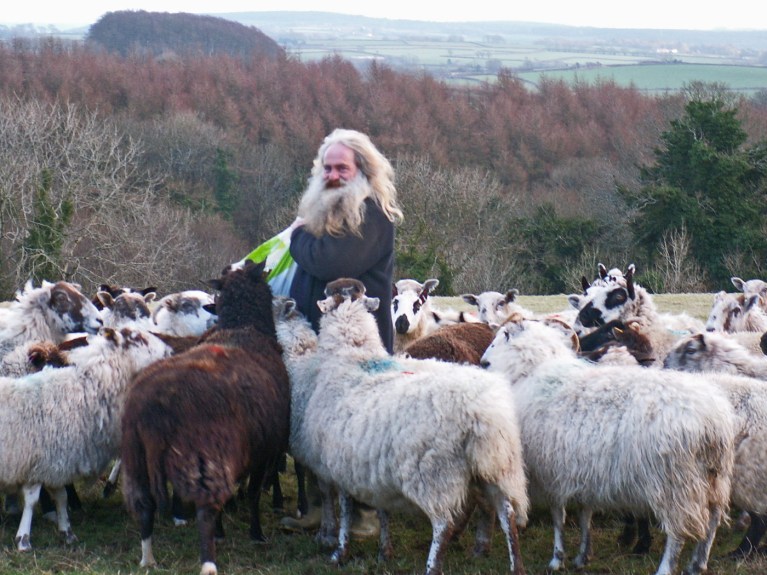


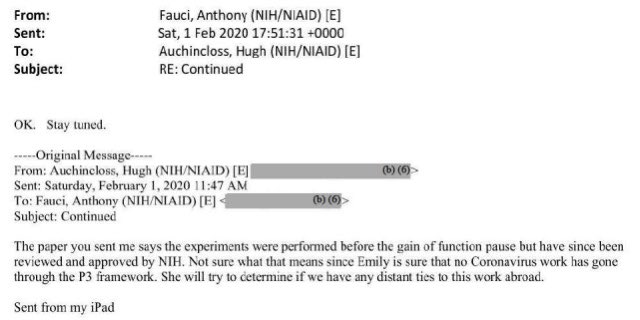



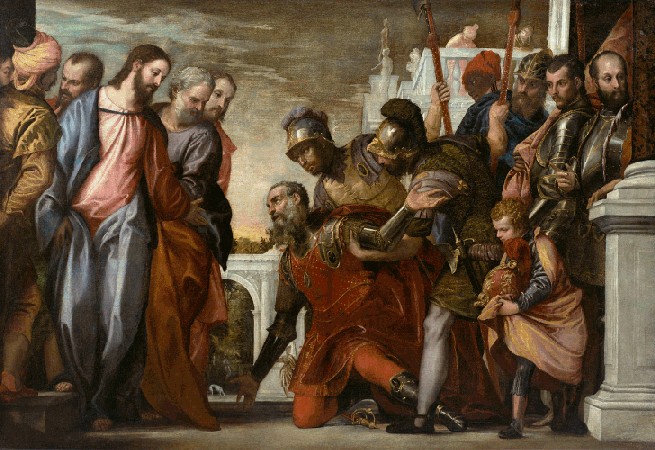

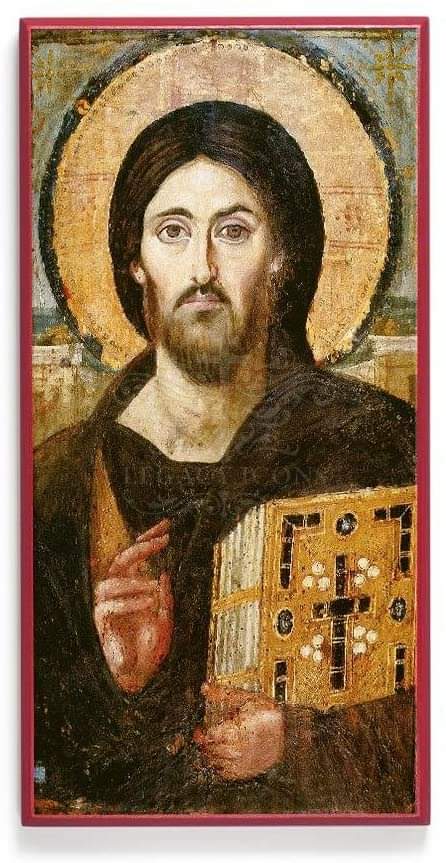







 Irregular Ideation